• About

Brandon Ray Kirk

~ This site is dedicated to the collection, preservation, and promotion of history and culture in my section of Appalachia.

Brandon Ray Kirk

Tag Archives: Battle of Kanawha Gap

Maston Conley Family Cemetery

23 Wednesday Jan 2019

Posted by Brandon Ray Kirk in Cemeteries, Chapmanville, Civil War

≈ Leave a comment

Tags

129th Regiment Virginia Militia, Barney Carter, Battle of Kanawha Gap, Chapmanville, civil war, Confederate Army, Emmazella Conley, genealogy, Henry Conley, history, John Dejernatte, Logan County, Maston Conley, Polly Conley, West Virginia, William H. Farley, William Patton Thompson

img_2098

Maston Conley, son of Henry and Mary “Polly” (Thompson) Conley, is buried here. I descend from his uncles William H. Farley and William Patton Thompson. 11 January 2019

img_2227

Maston Conley, “Confederate Soldier.” The cemetery is located in Chapmanville, Logan County, WV. Visitors must have permission from property owners in order to visit this location. 19 January 2019

img_7195

Maston Conley, private in the 129th Virginia Militia, was a likely participant in the Battle of Kanawha Gap. The battle site is almost visible from the cemetery.

Battle of Kanawha Gap (1861)

03 Monday Dec 2018

Posted by Brandon Ray Kirk in Chapmanville, Civil War

≈ Leave a comment

Tags

Appalachia, Battle of Kanawha Gap, Chapmanville, civil war, Confederate Army, history, Logan County, Union Army, West Virginia

IMG_0339

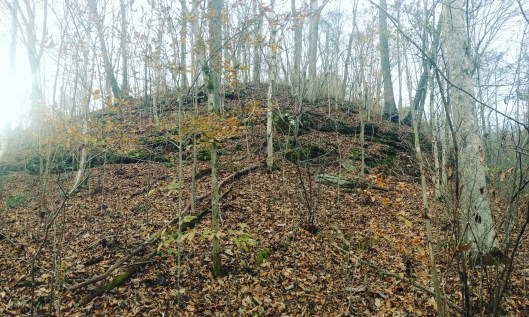
Partial view of the route toward Kanawha Gap, Logan County, WV. Confederates may have viewed the Union advance from this position. 18 November 2018.

IMG_0324

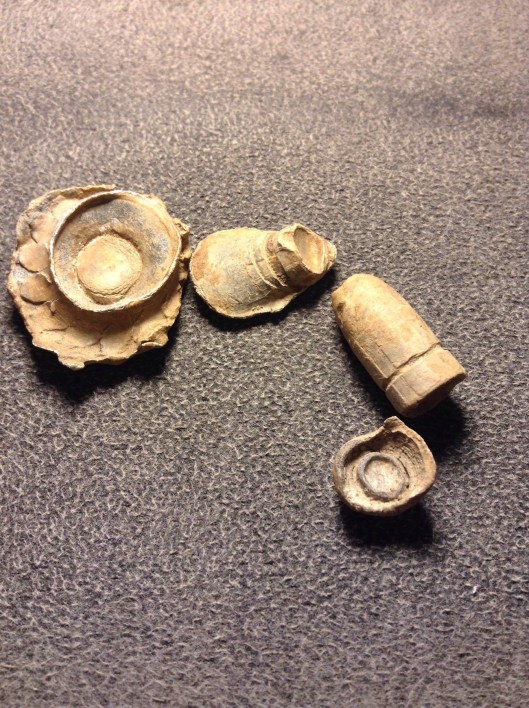
Finding relics and noting their type and location is imperative to understanding what happened in the battle. 18 November 2018.

IMG_0327

A relic! 18 November 2018.

IMG_0444

Items which may or may not be related to the battle. 18 November 2018.

IMG_0340

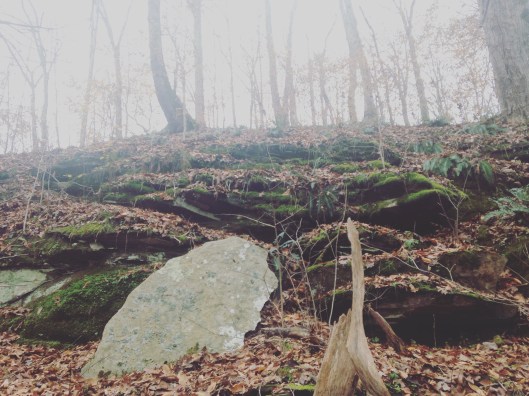
Looking up toward the rocks. Such sites would have made excellent observation points for Confederates. 18 November 2018.

IMG_0341

Looking up toward the rocks. 18 November 2018.

IMG_0342

The rocks. 18 November 2018.

Battle of Kanawha Gap (1861)

10 Sunday Jun 2018

Posted by Brandon Ray Kirk in Barboursville, Big Creek, Boone County, Chapmanville, Civil War, Guyandotte River, Tazewell County

≈ 5 Comments

Tags

129th Regiment Virginia Militia, 1st Kentucky Infantry, 34th Ohio Volunteer Infantry Regiment, 5th Virginia Regiment, Abram S. Piatt, Appalachia, Baltimore & Ohio Railroad, Barboursville, Battle of Kanawha Gap, Big Creek, Big Sandy River, Boone County, Burlington Weekly Hawk-Eye, Camp Enyart, Ceredo, Chapmanville, Charleston, Chicago Daily Tribune, Cincinnati Daily Press, Cincinnati Gazette, civil war, Cleveland Morning Leader, Coal River, Confederate Army, Daily Green Mountain Freeman, David S. Enyart, Eli Thayer, Evening Star, George McClellan, Greenbrier County, Guyandotte River, H.C. Evans, Harpers Ferry, Herman Evans, history, J.V. Guthrie, J.W. Davis, Jacob D. Cox, John Dejernatt, Kanawha River, Kanawha Valley, Logan County, Logan Court House, M.H. Wood, National Republican, O.P. Evans, Ohio, Ohio River, Parkersburg, Pomeroy Weekly Telegraph, Portsmouth, Richmond Whig, Robert E. Lee, Samuel Smoot, Sewell Mountain, Southwestern Times, Staunton Spectator, T.W. Rathbone, Tazewell County, Tug Fork, Union Army, Virginia, West Virginia, West Virginia Division of Culture and History, Wheeling, William Baisden, William Rosecrans, William S. Rosecrans, Zouaves

The following newspaper accounts describe the Battle of Kanawha Gap near present-day Chapmanville, Logan County, WV, which occurred on September 25, 1861:

Cleveland (OH) Morning Leader, 3 October 1861

GALLIPOLIS, Oct. 2.

The expedition planned by Col. J.V. Guthrie of the First Kentucky Regiment, and sent out under Lieut. Col. Enyart and Col. Piatt, has returned. They encountered the enemy at Chapmansville under Col. J. Lucien Davis, of Greenbrier, and utterly routed them. The enemy lost between fifty and sixty killed. Our loss was four killed. The expedition returned to Charleston on the 30th ult.

david s. enyart photo

Col. David S. Enyart, 1st Kentucky Infantry (Union).

Evening Star (Washington, DC), 4 October 1861

A Confederate Camp in Western Virginia Broken Up and Routed

CINCINNATI, Oct. 3 — A body of Federal troops, under Lieut. Col. Enyart, attacked a camp of rebels at Chapmansville, in Logan county, Va., near the Kentucky line, routing them, killing sixty and taking seventy prisoners. The same body of rebels were afterward intercepted in their retreat by Col. Piatt, who killed forty and made a large number prisoners.
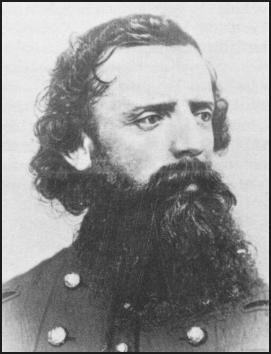
abram s. piatt photo

Col. Abram S. Piatt (1821-1908), 34th Ohio Infantry Regiment.

New York (NY) Herald, 4 October 1861

FIGHT WITH THE REBELS AT CHAPMANSVILLE

Cincinnati, Oct. 3, 1861.

The Kanawha correspondent of the Commercial of this city says that five companies of the First Kentucky regiment, four companies of the Thirty-fourth Ohio regiment and one company of the Fifty Virginia regiment, under Lieutenant Colonel Enyart, surrounded and attacked the rebels at Chapmansville, and after a short engagement completely routed them, killing sixty and taking seventy prisoners. The rebels in escaping were intercepted by Colonial Piatt, who killed forty and took a large number of prisoners. The country between Charleston and Wyandot river is now freed from secession power. This is the most effective blow given the rebels in this part of the valley.

IMG_2256.JPG

One section of the Kanawha Gap Battle Site, Chapmanville, Logan County, WV, 9 June 2018.

Daily Green Mountain Freeman (Montpelier, VT), 7 October 1861

Chapmansville, Va., the scene of the most recent engagement, is a small post village in Logan county, Va. Logan county is in the extreme Western portion of Virginia, the Tug Fork of the Big Sandy being the boundary line between it and the State of Kentucky. It is one of the largest, wildest and most sparsely inhabited counties in the State.

IMG_2238.JPG

Part of the Kanawha Gap Battle Site, Chapmanville, Logan County, WV, 9 June 2018.

National Republican (Washington, DC), 7 October 1861

THE SITUATION.

The two affairs at Chapmansville, reported three or four days since, in which the enemy lost one hundred killed and a proportionate number of wounded, will, it is supposed, restore permanent peace to the Virginia counties western of the Kanawha. Chapmansville is on the turnpike from Charleston to Logan county Court-house, and is about twenty-five miles to the south of Barboursville, the shire town of Cabell county. The secessionists in that part of Western Virginia have been numerous and pertinacious. They have once had possession of Guyandotte on the Ohio river and for a long time they threatened Ceredo (Mr. Thayer’s colony,) which lies on the river between Guyandotte and the Kentucky line. There have been two engagements with them in the rear of Ceredo, one at Barboursville, one at Logan county Court-house, one at Boone county Court-house (which town was burnt by the national troops,) and finally two at Chapmansville. The truth is, that in large portions of numerous, and, but for the early occupation of that region by the National troops, would have controlled it, not because they were the majority, but because one secessionist is, everywhere, a match for three Union men.

The secessionists are reckless, violent, and desperate, while their opponents, if not timid are at any rate remarkably pacific. We doubt, indeed, from all the information we can get, whether throwing out of the account Wheeling and Parkersburg, the terminal on the Ohio river of the Baltimore and Ohio railroad, Western Virginia had more elements of Union strength than the Valley of Virginia. From Harper’s Ferry south for fifty miles, the Union men have been numerous from the first, and it is a matter of deep regret that it did not consist with the plans of military strategy adopted at the headquarters of the army here, to occupy (at least) the northern part of the Valley of Virginia. It is consoling, that a different policy was adopted in retrospect to Western Virginia. That region was promptly taken possession of, cleared of the rebel armies by Gen. McClellan, and has since been victoriously held by Gen. Rosecrans. All attempts of the enemy to affect a re-entrance into Western Virginia are promptly repulsed.

34th Ohio Volunteer Infantry Regiment, Piatt's Zouaves Flag Photo.jpg

Staunton (VA) Spectator, 8 October 1861

Status at Sewell’s Mountain.

The enemy, under Gen. Rozencrantz, and our forces under Gen. Lee, are both upon Sewell Mountain very near each other. A fight has been daily expected there for some time, but the enemy have been fortifying ever since they have been there, and there will not be a fight unless we attack them in their entrenchments. They are afraid to attack us, and it is probable that our force is too weak to risk an attack on them within their fortification. It may, therefore, be some time before an engagement will take place. We understand that we had sent a force of four regiments to their rear for the purpose of cutting off their supplies—that we succeeded in getting around them, but were compelled to return because we did not have sufficient supplies ourselves. We also learn that Col. Jas. W. Davis of Greenbrier, whilst commanding a force of militia in Logan county, attacked a part of the enemy, and was shot down at the first fire. The militia, after several rounds caught the Yankee fever which made their cowardly legs run off with their brave hearts, and they left their commander in the hands of the enemy, who, we fear, has died from his wound.

IMG_2923

New historical sign placed by the WV Division of Culture and History located at the 119 ramp in Chapmanville, WV. 26 April 2017.

Chicago (IL) Daily Tribune, 9 October 1861

A Splendid Achievement of the Ohio Zouaves–“Wood Up” the Battle Cry.

[The following letter is exclusively devoted to the fight which the Piatt Zouaves had with the rebels near Chapmansville, Va. It is distinct from the victorious fight which the command of Lieut. Col. Enyart had with another body of rebels, in the same vicinity. EDS. CINCINNATI COM]

CAMP ENYART, KANAWHA, Oct. 2, 1861. EDS. COM.: The Zouave Thirty-fourth Regimens, Ohio, have had a chance to show their metal. This was on Wednesday, on Kanawha Gap, near Chapmansville, Va. After marching 42 miles, they came upon the enemy, who were behind breastworks, but could not stand our boys’ steady fire, for they retreated in utter consternation, their Col. J.W. Davis, of Greenbrier, Va, (but the traitor is a native of Portsmouth, Ohio,) being mortally wounded. We killed 20, took 3 prisoners, a secesh flag, 20 feet long with FIFTEEN STARS, 4 horses, 1 wagon, 10 rifles (one of which I claim), 12 muskets, and commissary stores (very low.) We lost 3 killed, 9 wounded, one since died. The route of the enemy was complete, although they had a brave, skillful commander, and strong position, with two days’ information of our intentions. They fled the moment their commander fell. The fight lasted about 10 minutes opposite the breastworks, but a running fire was kept up previous to that, by the Bushwhackers and rebel cavalry for two hours. At every turn of the road over the mountains, they would fire upon our advance men, wheel round, and gallop away. This kind of fight was kept up till we came suddenly upon their breastworks, immediately in line of our entire column. It was made on the side of a knoll, between two mountain sides, the road running between the mountain on our left. The wily rebel commander had adroitly cut down the brush on the right, placing a force of 100 men on the mountain top on our right, who raked our column from the front to the center. This was to draw our attention from their breastworks. Our men naturally fired upon the rebels on their right, steadily advancing up the road, until within 20 feet of the enemy’s works, when the rebels suddenly opened fire, from their right, left and center. The order from Col. Piatt and Lieut. Col. Toland, to flank right and left was immediately responded to by the Zouaves with a hurrah, a Zouave yell, and a cry of “wood up” from Little Red; a dash by our boys upon the enemy’s breastworks, above which about 300 rebel heads suddenly appeared, unknown by our men till that moment. They sent a perfect storm of bullets around, over, under, and into our men. A few minutes more and our boys were inside the breastworks, chasing them over the mountains, the enemy running away like cowards as they proved to be. They left 29 dead behind. Their force was 450 infantry and 50 cavalry. Our force was 560.

We buried our three brave dead comrades that night, carried our wounded to the house wherein the rebel Colonel lay, mortally wounded, deserted by all his men but one. Our whole column finally marched into the little town of Chapmansville, formerly headquarters of the enemy, and camped for the night.

34th Ohio Volunteer Infantry Regiment, Piatt's Zouaves Captain Photo.jpg

34th Ohio Volunteer Infantry Regiment, Piatt’s Zouaves, Captain Photo.

Pomeroy (OH) Weekly Telegraph, 11 October 1861

Brilliant Action in the Kanawha Valley.

CHARLESTON, Va., Sept. 30, ’61. Eds. Cin. Com.–Information having been brought to Col. J.V. Guthrie, commanding this post, that a large force of Rebels were gathered at Logan Co., Lt. Col. Enyart, of the 1st Kentucky, was at once sent to engage them. His force was composed of five companies of the 1st Kentucky, four companies of the 34th Ohio–German Regiment–under command of Col. A.S. Piatt, and one company of the 5th Virginia Regiment, under command of Maj. M.H. Wood.

Col. Enyart, with the Kentucky force, surrounded and attacked the Rebels at Chapmanville, and after a short but decisive engagement, completely routed them, killing 60 and taking 70 prisoners. The Rebels, in escaping, were intercepted by Col. Piatt, who surprised them and killed 40 men, and took a large number of prisoners.

The force of the Rebels is now completely broken up, and the country between this point and Guyandotte River is now freed from Secession power. This is the most effective blow given the Rebels in this part of the Valley.

In great haste. Further particulars by next boat.

Very respectfully,

M. CLEMENS,

Lieut. Col. 5th Va. Reg’t.

34th Ohio Volunteer Infantry Regiment, Piatt's Zouaves Soldier Photo

34th Ohio Volunteer Infantry Regiment, Piatt’s Zouaves, Soldier.

Evening Star (Washington, DC), 11 October 1861

THE BATTLE OF KANAWHA GAP.

The Western Virginia correspondent of the Cincinnati Gazette gives the following account of the late engagement at Kanawha Gap:

There were about 1,050 troops under the command of Colonels Enyart and Piatt, who left their camp Monday morning, 30th ulto., and took up their line of march for the enemy.

The forces moved together until they reached Peytona, on Cole river, where they separated; Col. Enyart going up Cole river. Col. Enyart did not meet the enemy in force at any place but his men did meet and ford swollen rivers, and marched on short rations, and were anxious to meet with the running enemy of Old Virginia. Col. Enyart did not meet Col. Piatt until they met on the Kanawha, on their return.

Col. Piatt’s command immediately proceeded thence to Boone Court House, and camped that night one mile beyond. The next day, after proceeding some sixteen miles,t hey came up with the advance guard of the enemy, consisting of cavalry, when a brisk fire was exchanged, the cavalry retreating. After the retreat of cavalry the battalion was immediately put in order of battle. The advance guard of fifteen men was led forward by Adj’t Clarke, proceeding along the road. Scouts were sent out on either side of the road to meet and repulse the sharp-shooters of the enemy.

The force proceeded in this order for about two miles, meeting the pickets of the enemy, exchanging shots with them incessantly, and driving them back with increased confusion at each charge.

Being unable to ascertain the position of the rebels, the entire force halted for a few moments, and Col. Piatt rode in advance and took observations with his glass, but could not ascertain their force and position, as it was covered with a thick growth of underbrush. After these observations a command was issued to forward the column. The scouts moved on the rapidity and enthusiasm, the main body moving up the narrow road cautiously and firmly. The fire continued to increase, and shots were rapidly exchanged from the right and left with the enemy, until our advanced guard reached within sixty yards of their main force. The column was some eighty yards from the enemy when they received a perfect volley of fire upon their right, indicating that the rebels were in force in that direction. Company “A,” commanded by Capt. Rathbone, was ordered to deploy as skirmishers to the right, up the side of the mountain, and if possible to flank the enemy on the left. Company “C,” commanded by Capt. Miller, was ordered to the right, up a similar mountain, to flank the enemy on their left. Company “I,” commanded by Capt. Anderson, was ordered directly up the ravine, on the left. In this position he drew the concentrated fire of the rebels upon his company, who made use of the knowledge thus obtained by rapidly charging upon and destroying the enemy’s breastworks. The center moved directly up the road. With this disposition of the forces, Col. Piatt routed them from their confusion. Capt. Anderson was the first to mount their breastworks, his men following him in the face of a terrible fire without flinching or confusion.

As Capt. Anderson sealed the breastwork, Capt. Miller closed upon the left and Capt. Rathbone came in upon the right, his men crying “Zouave!” The main column moving up the road in double quick–until they were brought to a temporary halt by obstructions placed in the road by the enemy.

The rebels, terrified by the strange bravery and almost wild enthusiasm that was exhibited by each advancing column, ran in confusion, leaving their dead, wounded, clothing, guns, horses, &c., making their escape by Capt. Rathbone’s right; his company being too far up the mountain to cut off their retreat. Capt. West, commanding company F, was detailed to scour the mountain on the west, on the left of the road. Capt. O.P. Evans on the west side of the mountain, on the right side of the road. Capt. Herman Evans, commanding Company H, on the east side of the mountain, on the left of the road.

Each of these companies moved with dispatch, yet such was the knowledge of the rebels of teh by-paths in the mountains, and belonging to the “F.F.V.’s,” and having been drilled at running all summer, that but two were captured.

Among interesting objects captured was a genuine secession flag, captured by Lieut. Brown.

The enemy’s loss was thirty killed and fifty wounded.

We regret to know that four of our men were killed and eight wounded.

34th Ohio Volunteer Infantry Regiment, Piatt's Zouaves Soldiers Photo 2.jpg

34th Ohio Volunteer Infantry Regiment, Piatt’s Zouaves, Soldiers. Here’s a link to Captain T.W. Rathbone’s Civil War diary: http://resources.ohiohistory.org/ohj/browse/displaypages.php?display[]=0071&display[]=33&display[]=56

Burlington (IA) Weekly Hawk-Eye, 12 October 1861

The fight at Chapmansville was a sharp and bloody affair. Five of Piatt’s Zouaves were killed. The rebels lost thirty-five killed.
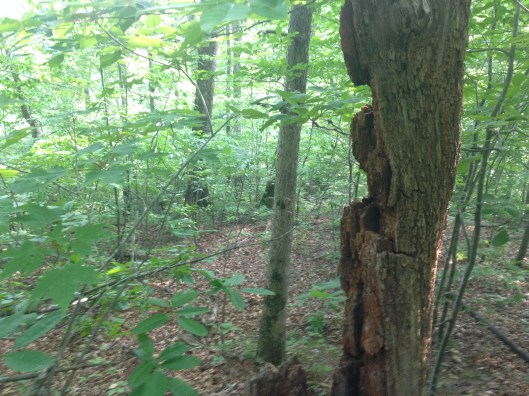
IMG_2235.JPG

Part of the Kanawha Gap Battle Site, Chapmanville, Logan County, WV, 9 June 2018.

National Republican (Washington, DC), 17 October 1861

The thirty-fourth regiment (first Zouaves) have been actively engaged since they came to the Kanawha Valley. Since the glorious victory they won near Chapmansville where the rebel commander, Colonel Davis, was mortally wounded, the Union sentiment has advanced on the Cole River. Two companies have been organized, and are ready to go to work to defend their own homes and give the organized regiments an opportunity to advance into the heart of the enemy’s country.

IMG_2254.JPG

Part of the Kanawha Gap Battle Site, Chapmanville, Logan County, WV, 9 June 2018.

Cincinnati (OH) Daily Press, 22 October 1861

Captain H.C. Evans, of Piatt’s Zouave Regiment, yesterday called in our office and exhibited a Secesh flag, captured at the Chapmansville fight, on the 24th ult.
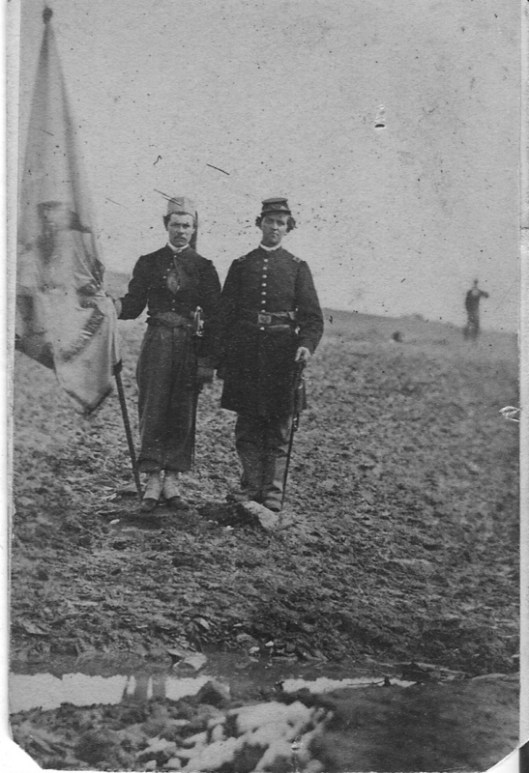
34th Ohio Volunteer Infantry Regiment, Piatt's Zouaves Soldiers Photo

34th Ohio Volunteer Infantry Regiment, Piatt’s Zouaves, Soldiers.

Clarksville (TN) Chronicle, 25 October 1861

The Fight in Logan County, Va.

[From the Richmond Whig of the 15th.]

We yesterday published the Yankee account of a battle in Logan county, which as usual, was manufactured out of whole cloth. The following are the facts as given by the South-western Times, (Tazewell county) of the 10th inst.:

From Samuel Smoot, Esq., of Boone county, who was in the fight, we learn the following particulars of the battle near Chapmanville, Logan county, on the 25th ult: The Yankees numbered 700, and commenced the attack upon our troops–the Logan militia–in a low gap between Guyandotte river and Big Creek, where they were engaged in raising a temporary breastwork. Our troops numbered 220, but there were only about 80 of them engaged in the fight. They were commanded by Col. J.W. Davis, of Greenbrier, a brave and gallant officer, who was severely, but not dangerously wounded, in the arm and breast. As soon as it became known that Col. Davis was wounded, the militia commenced a retreat. The commanding officer of the Lincoln troops afterwards confessed to Col. Davis, who was taken prisoner, that at the same moment a portion of the Yankees were running, and that one more round would have completely dispersed them.

The loss of the Yankees, by their own confession to Col. Davis, was 40 killed and a number wounded; among the former were four Union men, all of whom are represented by the Yankees to be most arrant thieves and cowards. Our loss was two killed and three or four wounded, besides Col. Davis, whose valuable services are at present lost to the Confederacy, being paroled by the enemy.

On the following day our scouts killed one of their pickets, and wounded another, at a point about half way between Logan Court House and Chapmanville, promising to give them particular thunder before daylight next morning. This with some news from a lady on the road, and some account of the militia of the surrounding counties, found on the person of Col. Davis, caused a hasty stampede for their headquarters, in the valley of the Kanawha. It seems that high water, bad roads, nor anything else could impede their rapid flight. They tore down a meeting house in Boone county to make rafts whereon to cross the river. They drowned two of their wounded, lost a wagon containing their entire stock of ammunition, and were fully persuaded that they were followed by two thousand cavalry, of which the Yankees in the West are about as fearful as their Eastern brothers are of masked batteries.

Upon the whole, we are much gratified at the result of this fight. It has, for the present, driven the cowardly thieves from the country, given renewed energy to the true patriots of Logan and the adjoining counties, fully convincing them that with the assistance of two or three hundred of their gallant friends in Tazewell county, they will be fully able to thrash any number that Gen. Cox or his friends shall dare to send against them.”

Note: An almost identical version of this story appeared in the Staunton (VA) Spectator on 22 October 1861.
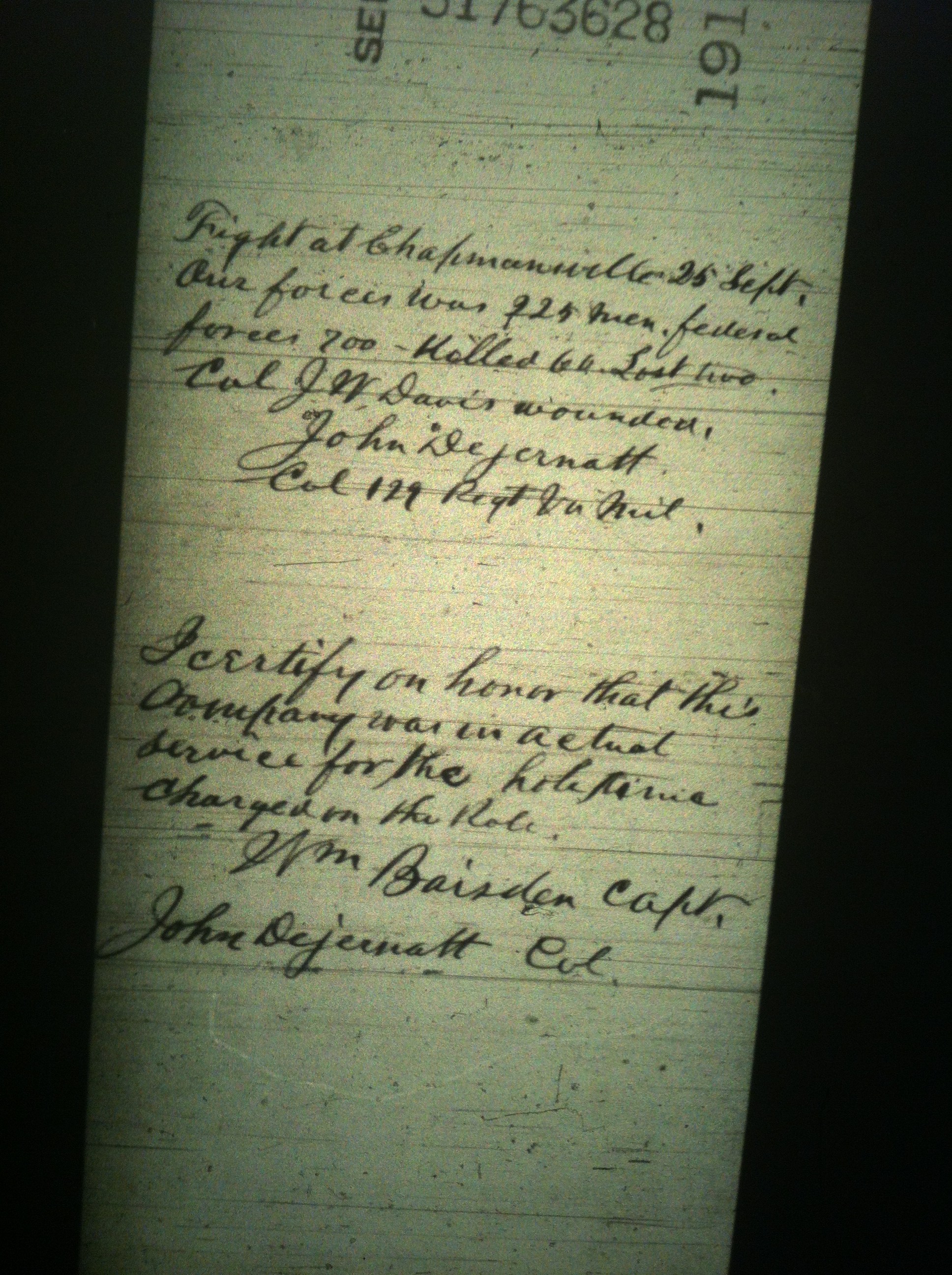
IMG_7149.JPG

Record relating to the 129th Virginia Militia (Confederate), which was present at the Battle of Kanawha Gap.
Chapmanville District Schools (1927) 1

14 Wednesday Jun 2017

Posted by Brandon Ray Kirk in African American History, Banco, Big Creek, Big Harts Creek, Chapmanville, Civil War, Guyandotte River, Holden, Native American History, Stone Branch, Timber

≈ Leave a comment

Tags

36th Virginia Volunteer Infantry Regiment, African-Americans, Appalachia, Battle of Kanawha Gap, Big Creek, Big Creek School, Burley Stollings, Buzzard Hill, Chapmanville District, Chapmanville School, Charles I. Stone, civil war, Confederate Army, Crispin Stone, Daisy Pettit, Daisy School, Dare Devils, Ed Stone School, Edith Richardson, education, Fort Sumter, French Dingess, Garrett Fork, genealogy, George Hill, Godby Branch, Guyandotte River, history, Holden, Hugh Thompson School, Hugh Toney, J.A. Vickers, J.G. Beymer, John Conley, John Garrett, John Godby, John stone, Kitchen School, Lane School, Local History and Topography of Logan County, Logan County, Lot W. Adams, Mabel Lowe, Native American History, Native Americans, Pigeon Mountain, Poplar Camp Creek, Prudential Coal Mine, Rosa Barker, Sid Ferrell, Simon Girty, Spanish-American War, Stone Branch, Stone Branch School, Thomas Huff, Thomas School, Union Army, Vette, Violet H. Agee, West Virginia, World War I

Teachers identified the following schools in Chapmanville District of Logan County, WV, and offered a bit of local history in 1927:

Big Creek School, est. 1852

Edith Richardson, teacher

Big Creek School was built of logs in 1870. Crispin S. Stone taught the first free school in his kitchen in 1870. A log building was erected the next year by the people. A Baptist Church exists here as of 1906. Many soldiers of the Civil War served from here. Two are still living. George Hill of Holden served in the Spanish-American War. Sid Ferrell of Big Creek was wounded in World War I when he left the trenches ahead of his command. The first merchant started here in 1904. Prudential was the first coal mine, just below here, in 1905. The first gas well was drilled here in 1909. Big Creek was formerly named “vette.” On the left of Big Creek (stream) looking downstream is Buzzard Hill and on the right is Pigeon Mountain. Pigeon Hill was named due to the great number of pigeons resting there. Big Creek was formerly called Poplar Camp Creek from a surveyor’s camp made of logs. The town was pretty well built up since 1902.

Lane School, est. 1887

Mable Lowe, teacher

Two room frame building

Four Confederate soldiers and one Union soldier lived here during the war. Garrett Fork was named for John Garrett, an old soldier.

Under the entry for Godby Branch: Godby Branch was named for John Godby. Old settlers claim that Simon Girty who married an Indian squaw lived on Godby Branch for several years. He cut his name on a large beech tree that fell in 1890. John Godby told the story.

Chapmanville School, est. 1892

Lot W. Adams, teacher

Four rooms and two outside rooms

There is a large Indian mound in Chapmanville. French Dingess reportedly fired the first gun at Fort Sumter. The Guyandotte River was reportedly named from the Indian word meaning “narrow bottoms.” Company D, 36th Virginia Infantry, known as the Dare Devils, organized here in May 1861 with Charles I. Stone as captain. Later it combined with Co. C, 36th Virginia Volunteer Infantry and was known as the Logan Wildcats with Hugh Toney as captain. The Battle of Chapmanville Mountain was fought in the fall of 1861 here. Major Davis was wounded and captured and his original is still kept by his relatives. He charged fifty cents a month per pupil and the textbooks were free. A large beech and a large white oak plainly marked a corner trees on the Thomas Huff 850-acre survey made on June 3, 1784.

Stone Branch School (colored), est. 1902

Violet H. Agee, teacher

Kitchen School, est. 1905

Uses three one-room buildings

John Stone said there were a few straggling bands of Indians here when he came to Stone Branch in 1807 but committed no depredations after he settled. John Stone taught the first school in this district and maybe in the county at Stone Branch in 1812. The textbooks were made by him with goose quill pens.

Hugh Thompson School, est. 1916

J.G. Beymer, teacher

One room frame building

A school house erected in 1916 was blown down in a heavy storm, killing John Conley, an old citizen who had taken shelter under the floor. The house was not used for school this year but was rebuilt the following year.

Ed Stone School, est. 1919

Rosa Barker, teacher

One room frame building

One Confederate soldier lived here during the war.

Thomas School, est. 1919

Burley Stollings, teacher

One room frame building

Two Confederate soldiers lived here during the war.

Daisy School, est. 1920

Daisy Pettit, teacher

One room frame house

Source: Local History and Topography of Logan County by J.A. Vickers (Charleston, WV: George M. Ford, State Superintendent, 1927).

William T. Fowler

18 Saturday Feb 2017

Posted by Brandon Ray Kirk in Chapmanville, Civil War, Harts

≈ Leave a comment

Tags

Appalachia, Battle of Kanawha Gap, Benjamin F. Fowler, Bettie Fowler, Bill Fowler, Burning Spring Hollow, Cabell County, Chapmanville, civil war, Confederate Army, Effie Fowler, Elizabeth Adkins, Elizabeth Fowler, genealogy, George W. Fowler, Guyandotte River, Harts Creek, Harts Creek District, Henry H. Hardesty, history, John B. Adkins, Kanawha County, Lincoln County, Martha A. Fowler, Mary Ann Fowler, Mud River, Thomas Fowler, West Virginia, Zattoo Fowler

From “Hardesty’s History of Lincoln County, West Virginia,” published by H.H. Hardesty, we find this entry for William T. Fowler, who resided at Hart in Lincoln County, West Virginia:

Is a merchant, miller and farmer in Harts Creek district, with business headquarters on Guyan river at the mouth of that creek. He was born in Kanawha county, (now) West Virginia, at the mouth of Burning Spring Hollow, June 29, 1825, and his parents, Thomas and Elizabeth (Gillispie) Fowler, are both now deceased. William T. Fowler has been twice married, his first wife Polly Emerine, left him three children, born as follows: Zattoo D., March 28, 1851; Polly A., December 25, 1853; William E., September 15, 1856. In Cabell county, West Virginia, June 10, 1871, W.T. Fowler and Martha A. Adkins were united wedlock, and the children born of this union are: Bettie, May 6, 1875; Effie, June 10, 1876; Benjamin F., December 15, 1878; George W., June 30, 1880. Mrs. Fowler is a native of Cabell county, born December 15, 1839, and her parents are John B. and Elizabeth (Childers) Adkins. Her mother still resides in that county; her father died April 1876. Mr. Fowler enlisted in the Civil War in 1862, serving on the Confederate side, and was a participant in the Chapmansville battle. William T. Fowler settled in Lincoln county in 1847, and now owns 200 acres of land at the mouth of Big Hart creek, and 254 acres on Mud river. That situated on Hart creek produces well, and has a good orchard and a part is heavily timbered with oak, poplar and pine; coal and iron ore are quite abundant. The land on Mud river is heavily timbered. Address, Hart, Lincoln county, West Virginia.

Source: The West Virginia Encyclopedia, Vol. 7 (Richwood, WV: Jim Comstock, 1974), p. 134.

Logan County, WV, Political Commentary and Voting Trends (1824-1900)

05 Monday Sep 2016

Posted by Brandon Ray Kirk in Chapmanville, Civil War, Logan

≈ Leave a comment

Tags

Abraham Lincoln, Andrew Jackson, Arthur I. Boreman, Battle of Kanawha Gap, Boone County, Boone Democrat, Chapmanville District, Charleston Daily Star, Chesapeake and Ohio Railroad Company, civil war, Confederacy, Democratic Party, First Wheeling Convention, Franklin Pierce, Grover Cleveland, Guyandotte Valley Railroad Company, Hardee District, Henry Clay Ragland, history, Horace Greeley, Horatio Seymour, Isaac E. McDonald, James A. Nighbert, James Buchanan, James K. Polk, James Lawson, John Bell, John Breckenridge, Lewis Cass, Logan Banner, Logan County, Logan County Banner, Logan District, Magnolia District, Martin Van Buren, Parkersburg Sentinel, Parkersburg State Journal, politics, Samuel J. Tilden, Second Wheeling Convention, slavery, Stephen Douglas, Triadelphia District, Virginia Ordinance of Secession, West Virginia, West Virginia Statehood Referendum, William H. Crawford, William Jennings Bryan, William Straton, Winfield Scott Hancock, Wyoming County

Democrats who lived in Logan County, West Virginia, prior to 1896 may best be thought of as Democrats of the Jeffersonian and particularly the Jacksonian variety. The earliest settlers and their immediate progeny likely carried popular political viewpoints across the mountains from Virginia. Logan County Democrats appear to have believed in states’ rights, although few residents owned slaves. The old Democrats of the Civil War generation guided Logan County’s political scene until the 1890s, when the national political climate shifted toward issues relating to gold/silver, imperialism, etc. Still, the Confederate veterans of the county continued activity until the 1910s, even raising the Confederate flag over the courthouse as late as 1911. The Logan County Banner (later the Logan Banner), a Democratic organ since its inception in 1889, remained silent about issues that divided the Democratic Party in the 1890s. Based on its editorials, the Banner—operated by men of the Civil War era—was more concerned about industrial progress, particularly the development of a railroad in the Guyandotte Valley, than the national political issues that emerged in the 1890s. Examination of the active participants in the railroad effort include both Democrats and Republicans, locals and outsiders…

Logan County was organized in 1824. Voting trends from 1824 until 1856 reveal a strong preference for Democratic candidates:

1824: William H. Crawford (Democratic-Republican)
1828: Andrew Jackson (Democrat, 90+ percent)
1832: Andrew Jackson (Democrat, 90+ percent)
1836: Martin Van Buren (Democrat)
1840: Martin Van Buren (Democrat)
1844: James K. Polk (Democrat)
1848: Lewis Cass (Democrat)
1852: Franklin Pierce (Democrat)
1856: James Buchanan (Democrat, 80-90 percent)

We know, based on the above presidential tallies, the county was heavily Democratic. Because the Democratic Party was closely linked to slavery during this era, it is useful to consider local slave statistics.

1850 Logan County Slave Census:  26 slave owners in Logan County; 84 slaves (largest slave owner had 10)

1860 Logan County Slave Census:  27 slave owners in Logan County; 80 slaves (largest slave owner had 7)

We know the county voted heavily for John Breckenridge in the 1860 presidential election. What is remarkable to modern residents is this: Logan Countians gave no votes to Abraham Lincoln (see below):

Logan County Presidential Election Results (1860):
John Breckenridge (Southern Democratic), 271
John Bell (Constitutional Union), 100
Stephen Douglas (Democratic), 6
Abraham Lincoln (Republican), 0

We know Logan County’s delegate to the Virginia Secession Convention favored secession. James Lawson, the delegate to the Secession Convention for Logan, Boone, and Wyoming counties, voted in favor of the Ordinance of Secession on 17 April 1861.

We know the county did not favor anti-secession political developments in Wheeling. Logan declined to send delegates to the First Wheeling Convention (May 13-15, 1861).

We know the voters of Logan County favored secession. Here are results for Logan County regarding the Secession Ordinance in Virginia (23 May 1861):
For: 518
Against: 63

We know Logan County did not support the political gatherings in Wheeling. Logan County sent no delegates to the Second Wheeling Convention, First Session (June 11-25, 1861). Likewise, it sent no delegates to the General Assembly of the Reorganized Government of Virginia (July 1-26, 1861) or to the Second Wheeling Convention, Second Session (August 6-21, 1861).

In the mind of local people, Logan County was invaded in 1861. On 25 September 1861, Union soldiers attacked Confederates at the Battle of Kanawha Gap (Chapmanville). The battle was a Confederate loss.

Due to the absence of its men and election irregularities, Logan County did not vote heavily on the question of “West Virginia.” This was true for many counties in western Virginia: West Virginia Statehood Referendum (24 October 1861): 34 percent turnout statewide; 18,408 for statehood and only 781 opposed! We can be sure that Logan did not favor “West Virginia.” Logan County sent no delegate to the West Virginia Constitutional Convention (26 November 1861).

Logan Countians overwhelmingly enlisted to fight for the Confederacy (60-90%). According to one estimate, Logan County contributed over 780 soldiers to the Confederacy. Contributions to the Union Army were less than 60. Based on the 1890 census, the following number of Union veterans lived in Logan County:
Chapmansville District: 7
Hardee District (later Mingo County): 16
Logan District: 13
Magnolia District (later Mingo County): 9
Triadelphia District: 11

During the war, Logan sent delegates to participate in the Confederate government in Richmond. Isaac E. McDonald represented Logan, Boone, and Wyoming counties at the Confederate General Assembly from 1861 to 1863. James A. Nighbert represented Logan, Boone, and Wyoming counties at the Confederate General Assembly from 1863 to 1865.

Because Logan was known as a Confederate stronghold and recruiting station, the town was invaded in 1862. Union troops burned the Logan Courthouse (15 January 1862).

Logan County was one of 15 counties in WV that did NOT vote in the 1864 U.S. presidential election (most were south of the Kanawha River).

After the war, Logan Countians refused to recognize West Virginia as a legitimate state and refused to pay taxes to the new state. Guerillas and gangs were active in the county. Governor Arthur I. Boreman sent troops into the county in order to collect taxes and maintain order.

Ex-Confederate disenfranchisement was common after the war. In 1868, of 888 voters in Logan County, only 125 voted for president. In 1870, 220 voted for the Democratic candidate for governor while 70 voted for the Republican (total 290). In Logan County, it was difficult to find any men who had NOT served in the Confederacy who could hold political office (or practice law, or teach).

Maj. William Straton (namesake of Stratton Street) typified Logan County political leadership during this time.

After the war, Democrats and Republicans largely chose/maintained party identification based on their views of the war. Logan had been heavily Democratic before the war; Logan was pro-Confederate during the war; Logan was strongly Democratic after the war

Logan County in Presidential Elections After the War:
1868: Horatio Seymour (Democrat)
1872: Horace Greeley (Democrat)
1876: Samuel J. Tilden (Democrat, by 90+ percent)
1880: Winfield Scott Hancock (Democrat, by 90+ percent)
1884: Grover Cleveland (Democrat, by 90+ percent)
Winfield Scott Hancock’s victory in Logan County is somewhat noteworthy considering that he was a former Union general.

On 30 October 1886, the Parkersburg Sentinel reported: “Logan county is so intensely democratic that there are thirteen democratic candidates running for the legislature and only one republican. Nevertheless one of the thirteen democrats will be elected.”

In 1888, Logan Countians voted for Grover Cleveland (Democrat).

The Logan County Banner was established on 7 March 1889 by Henry Clay Ragland (editor) and J.A. Nighbert (business manager). On 28 March 1889, it stated:

The paper will be devoted to the best interests of the people of Logan county. To the improvement of the education and morals of its people, and to the development of its great material resources. Politically, the Banner will be Democratic. Every one connected with it is a Democrat, but at the same time it will be fair to the opposition, and will heartily accord to the Republican party due credit for any good work which it may do. In addressing the questions which may arise in the Democratic party, as to its management and its leaders, the Banner will be Independent and will acknowledge no faction or factions, but will labor earnestly and zealously for the success of the party, and not for any individual.

In 1892, it reported: “Three years ago in order to furnish the people of Logan county with a home paper, we unfurled the Banner. We expected neither money nor glory, and our expectations have been fully realized.” On 3 January 1895, Ragland stated: “When I first went into the newspaper business I had no idea of continuing on for any length of time. My only desire was to see a newspaper in Logan county which would truly reflect the character of its people and be able to defend them from the many slanders which have been heaped upon them by the outside world…”

The Banner‘s reputation as a Democratic organ was well-known. In April 1889, the Parkersburg State Journal referred to it as “Democratic to the core.” On 11 July 1889, the Charleston Daily Star said: “The Logan County Banner is being made one of the best country weeklies in the State. As long as it continues as it has begun Logan may be depended upon for her customary Democratic majority.” On 13 January 1898, the Boone Democrat said of the Banner: “We cheerfully hail it, and hope that it may long continue to wave in the vanguard of Logan Democracy.”

The Banner never failed to applaud Democratic gains. On 6 November 1890, it stated: “Glorious old Chapmansville always does her fully duty. The Democratic vote increased from 205 in 1888 to 210, and the Republican vote decreased from 28 in 1888 to 14.”

This editorial, from 15 September 1892, is one example of Banner political commentary:

We have heard that there are several so-called Democrats born and reared in the mountain fastnesses of old Logan who have avowed their intention of ‘scratching’ one or another of the nominees of our party when they ides of November shall roll around, but we hope for the credit of Logan’s ‘rock-ribbed, copper-bottomed’ democracy that such reports are false. It is but natural that bitter feelings should be engendered by the clashing of the claims of rival candidates before our conventions but the conventions have done their work now, well and conscientiously, and every true Democrat in hearty and earnest response to the bugle call of freedom must face about with his brethren and forgetting all private feuds and grievances join in the charge upon our friends the enemy. That Democrat who falters in his duty in this the crisis of our party’s need betrays the trust reposed in him by the party of the people, forfeits his claim upon the confidence and good will of his compeers and deserves to be incarcerated in the bottom-most pit of damnation. You cannot afford to let a petty desire for revenge prevent you from casting a straight Democratic ticket on the 8th day of November. If you have ever harbored such a thought, exorcise the evil spirit that has taken possession of you and come back to the fold on bended knee and ask forgiveness for the wicked thoughts of your heart. The people have spoken and ‘the voice of the people is the voice of God.’ We feel sorry for that Democrat who, when the glorious news flashes over the wires next November that Cleveland, MacCorkle, Alderson and Mahood are elected can’t forget one or more of them was scratched on his ticket. Verily, like the Judas of old, he will feel like sneaking off with down cast eyes and hanging himself to the nearest tree. Logan expects every Democrat to do his whole duty during this campaign. The eyes of friend and foe alike are turned towards the mountains of old Logan whence cometh our help. Every Republican in the county is alert, active and zealous in the support of his whole ticket, and it behooves every Democrat to see to it that he does not prove a traitor in the camp of his friends. Stop a minute, friend, and think of the issues involved in the fight that is now upon us. Do you want the robber tariff barons to keep on heaping up their multiplied millions from your hard-earned dollars? Do you want your polls to be manned by Federal soldiers or maybe negroes from Virginia or North Carolina?

In 1892, Logan Countians voted for Grover Cleveland (Democrat).

During the mid-1890s, the Banner offered more brief political commentary. Here are some examples. On 21 June 1894, it stated: “The Logan Republican club was organized last Saturday night, with 20 members.” On 9 September 1896: “There is a meeting of the W.J. Bryan club at Chapmansville next Saturday evening. Everybody is invited to attend.”

Logan Countians voted for William Jennings Bryan (Democrat) in 1896 and 1900.

Election of 1892 LCB 11.10.1892

Logan County Banner, 10 November 1892.

129th Regiment Virginia Militia (Carter’s Company)

08 Thursday Oct 2015

Posted by Brandon Ray Kirk in Big Harts Creek, Chapmanville, Civil War, Crawley Creek, Green Shoal, Harts, Little Harts Creek

≈ 9 Comments

Tags

129th Regiment Virginia Militia, 34th Battalion Virginia Cavalry, Aaron Adkins, Abbotts Branch, Abijah Workman, Abner Vance, Addison Vance, Admiral S. Fry, Albert Abbott, Alexander Bryant, Alford Tomblin, Allen B. Brumfield, Anderson Barker, Andrew D. Robinson, Andrew Jackson Browning, Andrew Jackson Vance, Arnold Perry, Barnett Carter, Battle of Boone Court House, Battle of Kanawha Gap, Benjamin Adams, Benjamin Barker, Big Branch, Burbus C. Toney, Calahill McCloud, Canaan Adkins, Carter's Company, Charles McCloud, Christian T. Fry, civil war, Crawley Creek, Daniel Bill Nester, David Workman, Douglas Branch, Edward Garrett, Enos "Jake" Adkins, Evermont Ward Brumfield, Fleming Fry, Fulton D. Ferrell, Garland Conley, genealogy, George Bryant, George Godby, Griffin Stollings, Guy Conley, Harts, Harts Creek, Harvey S. Dingess, Henderson Dingess, Henderson Lambert, Henry Conley, history, Hoover Fork, Ira Lucas, Isaac Adkins, Isaac G. Griffith, Jackson McCloud, James Bryant, James Dalton, James Dingess, James Mullins, James P. Ferrell, James Tomblin, Jefferson Thompson, Jeremiah Perry, Jesse W. Carter, John C. Chapman, John DeJarnett, John Dingess, John H. Adkins, John McCloud, John Quincy Adams, John R. Robinson, John W. Workman, Josiah Browning, Lewis Baisden, Lewis Jupiter Fry, Lewis Vance, Logan County, Martin Dalton, Martin Van Buren Mullins, Mastin Conley, Mathias Elkins, Moses Tomblin, Moses Workman, Obediah Workman, Oliver Conley, Peter C. Dingess, Peter Fry, Reuben Conley, Riland Baisden, Robert Bob Mullins, Robert Fry, Rufus Bryant, Russell Fry, Shade Estep, Smokehouse Fork, Spencer A. Mullins, Squire Toney, Thomas Conley, Thompson Perry, Tolbert S. Godby, Weddington Mullins, West Virginia, William A. Dingess, William C. Lambert, William D. Elkins, William S. Dingess, William T. Fowler, William Workman

The 129th Regiment Virginia Militia, commanded by Colonel John DeJarnett, consisted of men primarily from Logan County, (West) Virginia. The 129th existed to protect Logan County. Carter’s Company, captained by Barnett “Barney” Carter, consisted of many Harts Creek men, all of whom enlisted on 27 August 1861 at Logan Court House, Logan County, (West) Virginia. The 129th, including Carter’s Company, participated in the Battle of Boone Court House on 1 September 1861 and the Battle of Kanawha Gap on 25 September 1861. In 1862, Carter’s Company essentially became Company D, 34th Battalion Virginia Cavalry. (This list will be updated periodically.)

Albert Abbott*, Abbotts Branch

Benjamin Adams, Crawley Creek

John Quincy Adams, Harts Creek

Aaron Adkins

Canaan Adkins, West Fork of Harts Creek [Lincoln County Feud]

Enos “Jake” Adkins, 1st Lieutenant, Douglas Branch (Ferrellsburg)

Isaac Adkins, Jr., Harts Creek (Big Branch area)

Isaac Adkins, 2nd Sergeant, Harts Creek (Big Branch area)

John H. Adkins

Lewis Baisden

Riland Baisden

Anderson Barker

Benjamin Barker

James M. Berry

Jacob Browning

Josiah Browning, 4th Sergeant

Andrew Jackson Browning, Harts Creek

Allen B. Brumfield, Big Ugly Creek

Evermont Ward Brumfield, Big Ugly Creek

Alexander Bryant, Harts Creek

George Bryant, Harts Creek

James Bryant, Harts Creek

Rufus Bryant, Harts Creek

Ed Burchett

William F. B_____

Jesse W. Carter

Barnett Carter, Captain, Hoover Fork of Harts Creek

John C. Chapman, 1st Corporal

Garland Conley, Smokehouse Fork of Harts Creek

Guy Conley, Conley Branch (Chapmanville)

Henry Conley, Conley Branch (Chapmanville)

Maston Conley, Chapmanville

Oliver Conley, Crawley Creek

Reuben Conley

Thomas Conley, Conley Branch (Chapmanville)

James Dalton, Harts Creek

Martin Dalton, Harts Creek

Harvey S. Dingess*, Crawley Creek

Henderson Dingess, Smokehouse Fork of Harts Creek [Lincoln County Feud]

James Dingess, 3rd Corporal

John Dingess

Peter C. Dingess, Crawley Creek

William A. Dingess

William S. Dingess

Mathias Elkins

William D. Elkins*, 2nd Corporal

D.J. Estep

Shade Estep, 4th Corporal

Fulton D. Ferrell, 3rd Sergeant

James P. Ferrell, Big Ugly Creek

Samuel Ferrell

Isaac Fleming

William T. Fowler, West Fork/Marsh Fork of Harts Creek

Admiral S. Fry, Green Shoal

Christian T. “Jack” Fry*, Abbotts Branch

Fleming Fry

Lewis “Jupiter” Fry, Big Ugly Creek (Gill)

Peter Fry

Robert Fry

Russell Fry

Edward Garrett, 2nd Lieutenant

Isaac G. Gartin, 2nd Lieutenant, Little Harts Creek

George Godby

Tolbert S. Godby, 1st Sergeant

Isaac O. Jeffrey

Henderson Lambert, Bend of the River

William C. Lambert, Bend of the River area

Ira Lucas

Calahill McCloud, Harts Creek or Twelve Pole Creek

Charles McCloud

Jackson McCloud

John McCloud

B. McNeely

James Mullins

Martin Van Buren Mullins, Harts Creek

Robert “Bob” Mullins, Harts Creek

Spencer A. Mullins, Bridge Branch area (Atenville)

Weddington Mullins, Harts Creek

Daniel “Bill” Nester, Browns Branch

William Owens

Arnold Perry

D.H. Perry

Jeremiah Perry

Thompson Perry

Andrew Robinson, Harts Creek

John R. Robinson

Griffin Stollings

Jefferson Thompson, Thompson Branch of Harts Creek

Alford Tomblin, Sr., Harts Creek

Alford Tomblin, Jr., Harts Creek

James Tomblin

Moses Tomblin

Burbus C. Toney, Green Shoal area (Toney)

Squire Toney, Big Ugly Creek

Andrew Jackson Vance

Abner Vance, West Fork of Harts Creek

Addison Vance

Lewis Vance

James Wills

Abijah “Bige” Workman

David Workman

John W. Workman

Moses Workman

Obediah Workman

William Workman

(*) denotes my direct ancestors

Feud Poll 1

If you had lived in the Harts Creek community during the 1880s, to which faction of feudists might you have given your loyalty?

Categories

  • Adkins Mill
  • African American History
  • American Revolutionary War
  • Ashland
  • Atenville
  • Banco
  • Barboursville
  • Battle of Blair Mountain
  • Beech Creek
  • Big Creek
  • Big Harts Creek
  • Big Sandy Valley
  • Big Ugly Creek
  • Boone County
  • Breeden
  • Calhoun County
  • Cemeteries
  • Chapmanville
  • Civil War
  • Clay County
  • Clothier
  • Coal
  • Cove Gap
  • Crawley Creek
  • Culture of Honor
  • Dingess
  • Dollie
  • Dunlow
  • East Lynn
  • Ed Haley
  • Eden Park
  • Enslow
  • Estep
  • Ethel
  • Ferrellsburg
  • Fourteen
  • French-Eversole Feud
  • Gilbert
  • Giles County
  • Gill
  • Green Shoal
  • Guyandotte River
  • Halcyon
  • Hamlin
  • Harts
  • Hatfield-McCoy Feud
  • Holden
  • Hungarian-American History
  • Huntington
  • Inez
  • Irish-Americans
  • Italian American History
  • Jamboree
  • Jewish History
  • John Hartford
  • Kermit
  • Kiahsville
  • Kitchen
  • Leet
  • Lincoln County Feud
  • Little Harts Creek
  • Logan
  • Man
  • Matewan
  • Meador
  • Midkiff
  • Monroe County
  • Montgomery County
  • Music
  • Native American History
  • Peach Creek
  • Pearl Adkins Diary
  • Pecks Mill
  • Peter Creek
  • Pikeville
  • Pilgrim
  • Poetry
  • Queens Ridge
  • Ranger
  • Rector
  • Roane County
  • Rowan County Feud
  • Salt Rock
  • Sand Creek
  • Shively
  • Spears
  • Sports
  • Spottswood
  • Spurlockville
  • Stiltner
  • Stone Branch
  • Tazewell County
  • Timber
  • Tom Dula
  • Toney
  • Turner-Howard Feud
  • Twelve Pole Creek
  • Uncategorized
  • Warren
  • Wayne
  • West Hamlin
  • Wewanta
  • Wharncliffe
  • Whirlwind
  • Williamson
  • Women's History
  • World War I
  • Wyoming County
  • Yantus

Feud Poll 2

Do you think Milt Haley and Green McCoy committed the ambush on Al and Hollene Brumfield in 1889?

Blogroll

  • Ancestry.com
  • Ashland (KY) Daily Independent News Article
  • Author FB page
  • Beckley (WV) Register-Herald News Article
  • Big Sandy News (KY) News Article
  • Blood in West Virginia FB
  • Blood in West Virginia order
  • Chapters TV Program
  • Facebook
  • Ghosts of Guyan
  • Herald-Dispatch News Article 1
  • Herald-Dispatch News Article 2
  • In Search of Ed Haley
  • Instagram
  • Lincoln (WV) Journal News Article
  • Lincoln (WV) Journal Thumbs Up
  • Lincoln County
  • Lincoln County Feud
  • Lincoln County Feud Lecture
  • LinkedIn
  • Logan (WV) Banner News Article
  • Lunch With Books
  • Our Overmountain Men: The Revolutionary War in Western Virginia (1775-1783)
  • Pinterest
  • Scarborough Society's Art and Lecture Series
  • Smithsonian Article
  • Spirit of Jefferson News Article
  • The Friendly Neighbor Radio Show 1
  • The Friendly Neighbor Radio Show 2
  • The Friendly Neighbor Radio Show 3
  • The Friendly Neighbor Radio Show 4
  • The New Yorker
  • The State Journal's 55 Good Things About WV
  • tumblr.
  • Twitter
  • Website
  • Weirton (WV) Daily Times Article
  • Wheeling (WV) Intelligencer News Article 1
  • Wheeling (WV) Intelligencer News Article 2
  • WOWK TV
  • Writers Can Read Open Mic Night

Feud Poll 3

Who do you think organized the ambush of Al and Hollene Brumfield in 1889?

Recent Posts

  • Logan County Jail in Logan, WV
  • Absentee Landowners of Magnolia District (1890, 1892, 1894)
  • Charles Spurlock Survey at Fourteen Mile Creek, Lincoln County, WV (1815)

Ed Haley Poll 1

What do you think caused Ed Haley to lose his sight when he was three years old?

Top Posts & Pages

  • U.B. Buskirk of Logan, WV (1893-1894)
  • Vance Homeplace and Cemetery on West Fork (2017)
  • Alice Dingess piano
  • Tice Elkins in Ferrellsburg, WV
  • Early Anglo Settlers of Logan, WV (1937)

Copyright

© Brandon Ray Kirk and brandonraykirk.wordpress.com, 1987-2023. Unauthorized use and/or duplication of this material without express and written permission from this blog’s author and/or owner is strictly prohibited. Excerpts and links may be used, provided that full and clear credit is given to Brandon Ray Kirk and brandonraykirk.wordpress.com with appropriate and specific direction to the original content.

Archives

  • February 2025
  • January 2025
  • October 2023
  • September 2023
  • December 2022
  • November 2022
  • May 2022
  • April 2022
  • February 2022
  • November 2021
  • October 2021
  • September 2021
  • June 2021
  • May 2021
  • April 2021
  • March 2021
  • February 2021
  • January 2021
  • December 2020
  • November 2020
  • October 2020
  • July 2020
  • June 2020
  • May 2020
  • April 2020
  • March 2020
  • February 2020
  • January 2020
  • December 2019
  • November 2019
  • October 2019
  • September 2019
  • August 2019
  • July 2019
  • June 2019
  • May 2019
  • April 2019
  • March 2019
  • February 2019
  • January 2019
  • December 2018
  • November 2018
  • October 2018
  • September 2018
  • August 2018
  • July 2018
  • June 2018
  • May 2018
  • April 2018
  • March 2018
  • February 2018
  • January 2018
  • December 2017
  • November 2017
  • October 2017
  • September 2017
  • August 2017
  • July 2017
  • June 2017
  • May 2017
  • April 2017
  • March 2017
  • February 2017
  • January 2017
  • December 2016
  • November 2016
  • October 2016
  • September 2016
  • August 2016
  • July 2016
  • June 2016
  • May 2016
  • April 2016
  • March 2016
  • February 2016
  • January 2016
  • December 2015
  • November 2015
  • October 2015
  • September 2015
  • August 2015
  • July 2015
  • June 2015
  • May 2015
  • April 2015
  • March 2015
  • February 2015
  • January 2015
  • December 2014
  • October 2014
  • September 2014
  • August 2014
  • July 2014
  • June 2014
  • May 2014
  • April 2014
  • March 2014
  • February 2014
  • January 2014
  • December 2013
  • November 2013
  • October 2013
  • September 2013
  • August 2013
  • July 2013
  • June 2013
  • May 2013
  • April 2013
  • March 2013
  • February 2013
  • January 2013
  • December 2012
  • November 2012

Enter your email address to follow this blog and receive notifications of new posts by email.

Join 2,925 other subscribers

Tags

Appalachia Ashland Big Creek Big Ugly Creek Blood in West Virginia Brandon Kirk Cabell County cemeteries Chapmanville Charleston civil war coal Confederate Army crime culture Ed Haley Ella Haley Ferrellsburg feud fiddler fiddling genealogy Green McCoy Guyandotte River Harts Harts Creek Hatfield-McCoy Feud history Huntington John Hartford Kentucky Lawrence Haley life Lincoln County Lincoln County Feud Logan Logan Banner Logan County Milt Haley Mingo County music Ohio photos timbering U.S. South Virginia Wayne County West Virginia Whirlwind writing

Blogs I Follow

  • OtterTales
  • Our Appalachia: A Blog Created by Students of Brandon Kirk
  • Piedmont Trails
  • Truman Capote
  • Appalachian Diaspora

BLOOD IN WEST VIRGINIA is now available for order at Amazon!

Blog at WordPress.com.

OtterTales

Writings from my travels and experiences. High and fine literature is wine, and mine is only water; but everybody likes water. Mark Twain

Our Appalachia: A Blog Created by Students of Brandon Kirk

This site is dedicated to the collection, preservation, and promotion of history and culture in Appalachia.

Piedmont Trails

Genealogy and History in North Carolina and Beyond

Truman Capote

A site about one of the most beautiful, interesting, tallented, outrageous and colorful personalities of the 20th Century

Appalachian Diaspora

  • Subscribe Subscribed
    • Brandon Ray Kirk
    • Join 787 other subscribers
    • Already have a WordPress.com account? Log in now.
    • Brandon Ray Kirk
    • Subscribe Subscribed
    • Sign up
    • Log in
    • Report this content
    • View site in Reader
    • Manage subscriptions
    • Collapse this bar
 

Loading Comments...