Tags
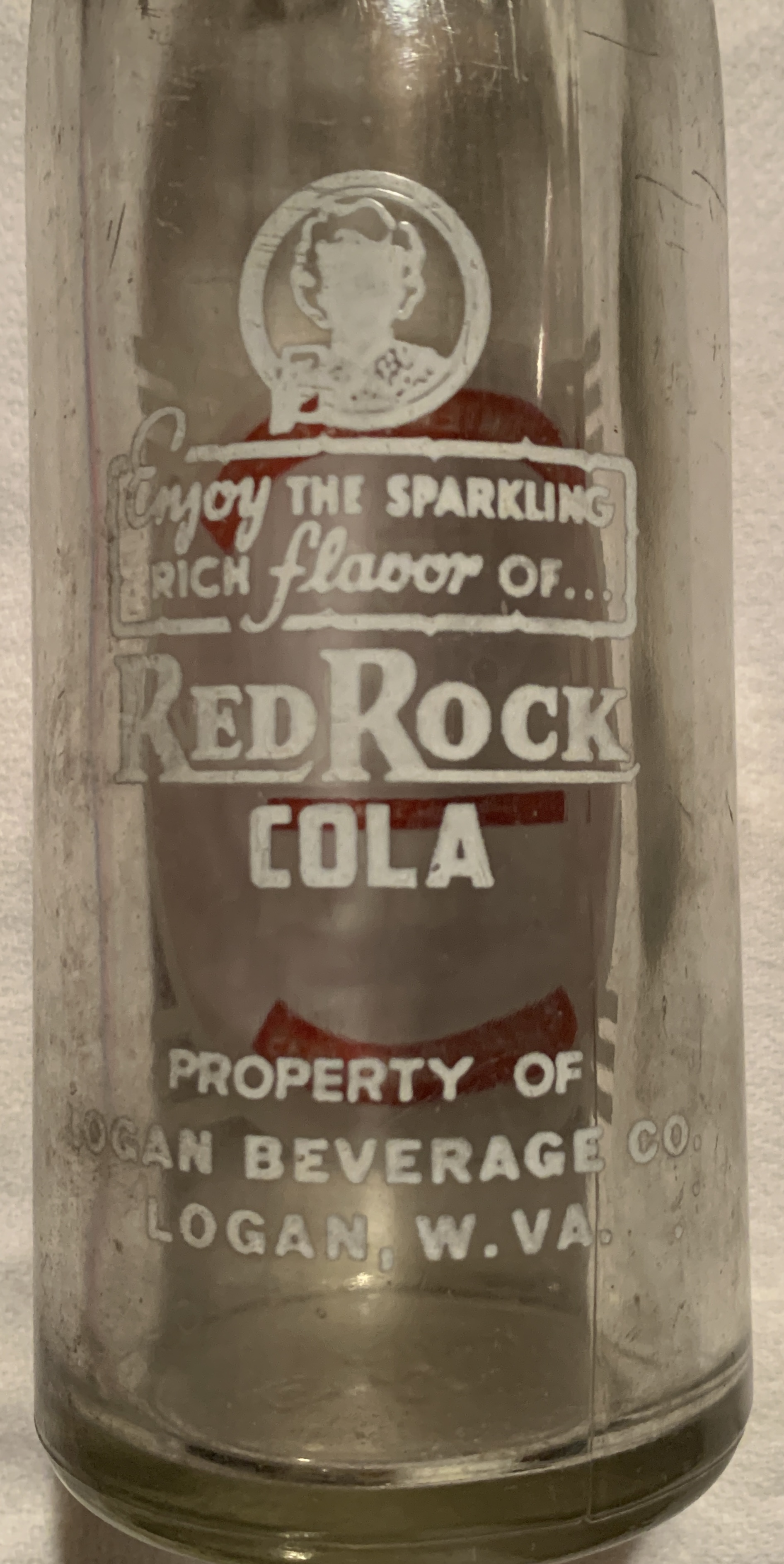
Atlanta, Babe Ruth, Georgia, ginger ale, history, Lee Hagan, Logan, Logan Beverage Company, Red Rock Cola, Red Rock Company, West Virginia


21 Thursday Apr 2022
Posted in Logan
Tags
Atlanta, Babe Ruth, Georgia, ginger ale, history, Lee Hagan, Logan, Logan Beverage Company, Red Rock Cola, Red Rock Company, West Virginia
06 Saturday Oct 2018
Tags
African-Americans, Appalachia, Atlanta, Augusta, genealogy, Georgia, history, J.H. Burns, Logan Banner, Logan County, Morehouse College, Sharples, Shiloh Baptist Church, Walker Baptist Institute, West Virginia
In April of 1929, the Logan Banner profiled numerous prominent African-American residents of Logan County, West Virginia.
Rev. J.H. Burns
Pastor, Shiloh Baptist Church, Sharples
The Reverend Burns has been pastor for five consecutive years. The church of his charge has an enrolled membership of 175, and is one of the best organized congregations in the field. All of its departments, missionary society, Sunday school, B.Y.P.U. and other branches are active and effective. His services in the community and county, as a moral and spiritual influence, are constructive and uplifting. Rev. Burns has been in the ministry for twenty-one years, covering numerous fields of activity in his long period of service to the cause of religion among his people. The reverend’s educational qualifications embrace studies at Walker Baptist Institute, Augusta, and Morehouse College, Atlanta. All matters pertaining to the welfare of his people, enlist Rev. Burns’ support and he wields a large measure of power among his people in the community and county.
Source: Logan (WV) Banner, 16 April 1929
14 Tuesday Aug 2018
Posted in Coal, Huntington, Logan
Tags
Appalachia, Atlanta, Barnabus, Blue Goose Saloon, Democratic Party, Don Chafin, genealogy, history, Huntington, Logan, Logan Banner, Logan County, Mine Wars, Mingo Republican, sheriff, Tennis Hatfield, Wallace Chafin, West Virginia, Williamson
From the Logan Banner of Logan, WV, come these small items relating to former Logan County Sheriff Don Chafin, a prominent figure in the Mine Wars:
Chafin’s Petition For Parole Now In Hands of Sargeant
Attorney General Sergeant has placed the application for parole of former sheriff Don Chafin “on file,” indicating that it has been shelved temporarily according to reports received here.
It is understood, however, that the federal pardon board, sitting at Atlanta prison has recommended Chafin for parole.
Source: Logan (WV) Banner, 11 June 1926.
***
Don Chafin Freed From Prison Is Due Here on Wednesday
Don Chafin, former Logan county sheriff, received his parole from the federal penitentiary at Atlanta this morning at 10 o’clock, according to word received here at noon by Wallace Chafin.
The last obstacle for his parole was removed several days ago when an indictment against him in the federal court at Huntington was nollied.
Chafin left Atlanta immediately upon his release and is expected to arrive in Logan Wednesday night.
Source: Logan (WV) Banner, 24 August 1926.
***
Ex-Sheriff Chafin Returns to Logan Friday From Prison
“Don” Greeted At Station By Many Friends As He Comes Back on Federal Parole.
Don Chafin, former sheriff of Logan county, returned Friday to Logan from the federal penitentiary at Atlanta, after serving eight months of a two-year sentence imposed by Judge McClintic in federal court for violation of the prohibition act.
The former sheriff was paroled after months of strenuous work in his behalf by relatives and friends who contended his conviction was largely political.
A large number of friends met Chafin at the station in Logan on his arrival. At his request there was no demonstration here to greet him. Plans to meet him with a brass band, which had been widely broadcast, were abandoned at his request.
The former sheriff gained weight during his absence and arrived here looking well and hearty. He has consistently refused to make any statement to the press since his release at Atlanta. His only public statement in Logan for the newspaper was as follows:
“I have nothing to say for publication. All I ask is to let and be let alone.”
Source: Logan (WV) Banner, 31 August 1926.
***
Don Chafin Visits Williamson Friends In Trip On Tuesday
Don Chafin, ex-sheriff of Logan county, motored to Williamson last Tuesday morning and spent the greater part of the day here visiting friends. His visit was entirely social, says the Mingo Republican.
He stated that he was in the best of health and was glad to get back with his family and friends.
On the eve of the general election held in 1924, Chafin was indicted and tried in the Federal court at Huntington upon a conspiracy to violate the prohibition law. He had been a dominant figure in Democratic politics for many years, having held respectively the offices of assessor, county clerk and sheriff, to which latter office he was elected twice. He was sheriff of the county during the time of the armed march and gained national prominence because of his stand for law and order. He was a delegate to the Democratic National Convention held in New York City in July 1924.
It was alleged at the trial that the presiding judge was prejudiced against Chafin and several affidavits were filed to prove this. However, the judge did not permit the affidavits to be filed and the case proceeded to trial resulting in the conviction of Chafin. The principal witness against him was Tennis Hatfield, the present sheriff of Logan county, who gained the office by virtue of a decision of the Supreme Court.
The most damaging evidence introduced against Chafin was an alleged receipt which Hatfield testified Chafin had given him showing the payment of a certain sum of money which was supposed to represent the proceeds derived from operation of the once famous Blue Goose Saloon at Barnabus. Chafin alleged this paper to be a forgery and applied for a pardon on this ground.
Pending the application for pardon the Parole Board recommended Chafin’s parole and while Judge McClintic strenuously opposed it the pardon was approved by the Attorney General on Tuesday August 24, and Chafin arrived in Logan on Friday, Sept. 3. He was greeted at Huntington by several hundred of his friends and when he arrived in Logan an enthusiastic reception by friends in his home county.
It was first planned to stage a monstrous celebration but after Chafin learned of this he requested that this not be done and said that he wanted his home-coming to be of a quiet nature and to be received informally by his friends.
Throughout all of his trouble his friends proved their loyalty to him and steadfastly maintained his innocence. Many of those who met him here Tuesday have known him since boyhood.
He expressed to his friends here the intention of devoting his time to his private business. He has many large and various interests which will require constant attention and most of his time. He returned to Logan Tuesday afternoon.
Source: Logan (WV) Banner, 10 September 1926.
30 Friday May 2014
Posted in Big Harts Creek, Culture of Honor
Tags
Allen Martin, Appalachia, Atlanta, Ben Adams, Brandon Kirk, Charley Brumfield, crime, Frank Adams, Georgia, Greasy George Adams, Harts Creek, history, Huntington Herald-Advertiser, Lawrence Haley, Logan County, moonshining, murder, Ward Brumfield, West Virginia, writing
“Greasy George” Adams, a son of Ben Adams, was apparently a notorious character on Harts Creek in the early decades of the twentieth century. Lawrence Haley had mentioned his name to me on my first trip to Ashland, while Brandon said his home was the scene of Charley and Ward Brumfield’s double murder in 1926. A 1953 article from the Huntington Herald-Advertiser titled “HARTS CREEK HOME WHERE FIVE MET DEATH NOW IS OFTEN SCENE OF PRAYER MEETINGS” had this great interview with Adams.
George Adams of Harts Creek in Logan County has his rifle on the wall now and instead of a pistol in his hand he carries a prayer book. He’s given up feuding and fighting and settled down to old-time religion at his neat farm home where five persons were killed in gun fights. Almost never does the tantalizing smell of moonshine cooking in a barrel up a mountain hollow drift down to taunt the nostrils of the man who proudly states he has made thousands of gallons and the law never chopped up one of his stills. “I put ’em high up in the hills and the law got too tired before they reached them,” he said.
THE HONKING of a brood of ducks and the whining of droves of bees busy at work at his 40 honey hives are about the only sounds which disturb the silence around his 25 acres of land today. Land which he says he was able to buy through the sale of bootleg liquor. But it was not always so at George Adams’ place. Several decades ago he recalls that when he heard a rifle singing through the hills he reckoned it was a neighbor shooting at another neighbor. Open season on humans has closed in the area since, and squirrels and rabbits are about the only targets. George Adams misses the sparsity of “shine” from the hill country he loves so well, even though he says he hasn’t touched a drop since the last killing at his home. “Dang revenooers probably don’t know how good moonshine made out of tomatoes is, or they wouldn’t go around bustin’ up all the stills in the country,” he said.
THE MOUNTAIN folk in the Harts Creek area will tell you that there’s many a home along the small stream which flows into the Guyandotte River that’s seen a shooting or a killing. But George Adams’ home is slightly above par for the area — five people have met violent deaths there. As “Greasy George,” which his neighbors call him, puts it: “No trouble for a man to get in trouble but it’s hell to get out!” And he’s a man who should know about trouble. His legs are a little wobbly now because of carrying his six foot of height and weight around for 72 years, and he gets a little short of breath when working too hard, but when he starts talking about his shooting scrapes, he has all the enthusiasm of a country boy walking a country mile to a country house to date a country girl for the first time.
“I FUST got into trouble when I was nineteen. Mail carrier undertook to kill Dad and I went after him. Somebody got him,” he said, hastily adding: “Weren’t too nice a way to treat a man who delivers letters.” George related that his Dad got shot four times in the exchange of lead and “we both went to jail.” A trial in Logan County lasted for three days and he said, “Dad nearly went broke paying off lawyers,” before a verdict of self defense was brought in. That shooting affair took place less than a mile from George’s present home but several years later his kitchen was the scene of a battle where he said “guns were going off like popcorn.” Three participants emptied their guns at each other after George said one of them knocked him down and out of the way. Three burials took place afterwards. Before George built his present frame house over a log cabin, the logs were speckled with the bullets which went wild. The house today is probably the only frame house in the nation which has a cement roof on it three inches thick. “Ran out of lumber and got concrete real cheap,” George said. “While the house is plenty warm in winter time it sure is hot in summer,” he added.
ADAMS recalls that except for getting a year in jail for fighting during the kitchen shooting affair, the only time he strayed from the Harts area was when he went on a three-year vacation in Atlanta, Ga., courtesy of the federal government. Things were peaceful at his house for a while until a relative “up and chased his wife over here,” he said. The relative, according to George, fired and hit the wife with a blast from a 16-gauge shot gun. The next and last time a shooting occurred in the old homestead, Frank Adams, George’s son, lost his life. He said the affair was due to drinking and “since then I haven’t touched a drop unless somebody put it in my food unbeknowst to me.” “My boys were singing a lot of old fool songs and I told ’em to shut up. My son got up and slapped me down. While I was knocked out somebody shot Frank.”
GEORGE SAID he had 18 children. Three are living at home with him now and the rest are in other parts of the state. He says he can’t recall all their names “but they are in the Bible.” During recent years his home which saw so much violence is now the scene of many a religious meeting. He has even constructed benches in his yard to seat the neighbors who come from miles around to hear the services. He’s not filled full of the brine and vinegar he had when he was younger and as he says: “Me and other folks have quit this tomfoolery.” But nevertheless, George remarked that he would “sorta like to git in ‘nuther shakedown if I wasn’t too old.” And on the wall overhanging his bed is his rifle. “Keep it so’s if a man keeps coming in the house at night when I say stop I can stop him,” he said.
18 Sunday May 2014
Posted in Calhoun County, Civil War, Ed Haley, Music
Tags
Ashland, Atlanta, Big Ugly Creek, Birdie, blind, Boatin' Up Sandy, Catlettsburg, Chapmanville, Charleston, Cincinnati, civil war, Clark Kessinger, Coalton, Crawley Creek, Ed Haley, Ella Haley, fiddlers, fiddling, Girl With the Blue Dress On, Godby Branch School, Grantsville, Grayson, Great Depression, Green Shoal, Harts School, history, Hugh Dingess School, John Hartford, Kentucky, Lawrence Haley, Logan, Margaret Arms, Mona Haley, music, Orange Blossom Special, Pat Haley, Ralph Haley, Slim Clere, Sweet Georgia Brown, Tennessee Waggoner, The Old Lady Carried the Jug Around the Hill, Wewanta, writing
We hadn’t played long until Slim was telling me more about his background.
“I came from a line of Irish fiddlers,” he said. “My dad, his brothers, and his dad… The old man was so good on the fiddle — he was in the Civil War — my grandfather — that the soldiers all chipped in and bought him a fiddle and he didn’t have to fight. He was from Coalton on the road to Grayson out back of Ashland.”
Slim said his dad played “The Old Lady Carried the Jug Around the Hill” and “Girl With the Blue Dress On”.
Here comes the girl with the blue dress on, the blue dress on, with the blue dress on.
Everybody’s crazy about the girl with the blue dress on…
I asked him if his father played “Catlettsburg” and he said yes, although it was not the same version as what Ed played.
“My dad played it,” Slim said. “He played ‘Birdie’, ‘Tennessee Waggoner’. He got these two fingers cut when he was working at a steel mill and his fingers stayed stiff so he had to play the rest of his life with these two fingers. I don’t remember when he played with all five ’cause I was too small. He played ‘Boatin’ Up Sandy’.”
Every now and then, Slim would tell me something about Ed.
“Every Saturday Ed would go to a county courthouse someplace,” he said. “Believe it or not, he was in Grantsville one time when I was up there, sitting on the steps up there at the courthouse. I walked over, I said, ‘Ed, aren’t you out of place?’ He said, ‘You’re liable to find me anywhere.'”
I asked Slim if he ever saw Ed drunk and he said, “I don’t think I ever saw him sober. He didn’t get too high. Seemed like it give him more pep.”
I asked Slim if he remembered Sweet Georgia Brown coming to see Ed in Ashland and he said, “He was up in Ashland at one time. We called him Brownie. Well, he wasn’t around Ed too much. Ed was a close guy. He didn’t associate with a lot of people. Now, he liked me pretty well…but most fiddle players don’t like fiddle players.”
Speaking of fiddlers, Slim said he had met a lot of them during his lifetime. I wondered if he ever met any as good as Ed and he said, “Clark Kessinger was the closest. I think Clark learned from him. See when Clark made records for Brunswick — they had a studio down in Ashland — Ed wouldn’t play on it. He wouldn’t make records. Didn’t want to. He wouldn’t play over the radio. He said they wasn’t any money in that. He wanted to be somewhere somebody could throw a nickel or dime in that cup. He was very poor. He wasn’t starving to death, but — his wife was blind, too — there was no way that they could make any money. And he had a 17- or 18-year-old boy — he was a good guitar player, but he wouldn’t play with him. I don’t remember what his name was. He was ashamed of his father and mother — to get out in public. Not for any personal reasons…just the fact he could see and they couldn’t.”
Slim began talking about his own career in music, mostly his Depression-era radio work. He mentioned working with or meeting people like Bill and Charlie Monroe and Earl Scruggs and even credited himself with bringing “Orange Blossom Special” to Charleston from Atlanta in October of 1938. He kind of caught us by surprise when he spoke of having played all through the Guyandotte Valley.
“We played personal appearances up and down through there,” Slim said. “Played schools and theaters: Godby Branch School, up on Crawley Creek — one room school — and Hugh Dingess School — it was about an eight-room red brick building — Green Shoal, Wewanta. Harts School, I guess I must have played that school fifteen times. From about ’39 on up to 50-something. Everybody turned out when we played Harts. It was supposed to be the meanest place they was on the Guyan at that time. Came across Big Ugly Creek there. See, it goes from Lincoln County over into Boone. I used to broadcast down in there. I’d say, ‘All you Big Ugly girls be sure to come out and see us now.'”
I asked Slim if he played with any local musicians and he said, “No, we went in and played the show. Once in a while, we’d have amateur contests and they’d come in. Well, we’d have fiddling conventions at big high schools.”
I asked Slim if he ever saw Ed around Harts and he said, “No, not down there. Only time I ever seen Ed was around Ashland and Logan and Chapmanville. He played at the bank in Chapmanville. Chapmanville was 12 miles from Logan.”
Later that night, Brandon and I found some more family photographs in a box at Pat Haley’s. One was of Ella, while others were of Margaret Arms. Margaret was a real “mystery lady”: nobody seemed clear on her relationship to the Haley family. Lawrence Haley had remembered her as a cousin to either Ed or Ella, while Mona called her “Margaret Thomas” and said she lived in Cincinnati.
16 Friday May 2014
Tags
Ashland, Atlanta, Bert Layne, Bill Day, Blackberry Blossom, blind, Clayton McMichen, Dill Pickle Rag, Ed Haley, Ed Morrison, Ella Haley, fiddle, fiddlers, Gary, Goodnight Waltz, Grand Ole Opry, history, Indiana, Jesse Stuart, John Carson, Kentucky, Lowe Stokes, mandolin, music, Ohio, Over the Waves, Portsmouth, Riley Puckett, Slim Clere, South Charleston, South Shore, Sweet Bunch of Daisies, Theron Hale, Vanderbilt University, Wednesday Night Waltz, West Virginia, World War I, WSM
The next day, after a few hours of sleep at Wilson’s house, Brandon and I drove to see fiddler Slim Clere in South Charleston, West Virginia. Slim was born in Ashland around the time of the First World War and knew a lot about Ed. We were parked behind his two-story house and were unloading our “gear” when he appeared out of a back door and led us inside his house (past some type of home recording studio) and up a flight of stairs. We sat down in the living room where we met his wife, a vivacious middle-aged woman who fetched several scrapbooks at Slim’s request. We flipped through the pages while Slim told us about some of his early experiences.
“I knew Jesse Stuart in 1934,” he said. “He lived at South Shore, Kentucky, across the river from Portsmouth, Ohio. He went to Vanderbilt. I believe he did play football. He used to date Theron Hale’s daughter that used to be at WSM at the Grand Ole Opry. I thought maybe he might marry her but he didn’t. Well anyway, I went away. I left my home and went to Atlanta. Well I went to Gary, Indiana, and everywhere, and worked with Bert Layne and Riley Puckett and some of those old-timers. I knew old Fiddlin’ John Carson. I never did meet Lowe Stokes. He lost an arm in a hunting accident. At one time he was a better fiddle player than McMichen. But Mac come out of it. He really could play. I patterned a lot of my style after him.”
Slim pointed to a picture of himself in his youth and said, “That’s back when I had hair and teeth.”
I was anxious to talk about Ed, so I asked Slim if he could remember the first time he ever saw him.
“I grew up knowing him,” Slim said. “He used to come down to the Ashland Park there every Sunday and sit around and fiddle for nickels and dimes on a park bench and I’d sit on there and watch him play.”
Slim said Ed Haley, Ed Morrison, and Bill Day were his primary influences during his younger days in Ashland.
“He was hot stuff,” Slim said of Haley.
He described Ed as a “loner” but said his wife was always with him.
“The old lady chorded a taterbug mandolin,” he said.
Ed played on a little yellow fiddle, which he wouldn’t let anyone “get a hold of,” and kept a cup between his legs for money. Down at his feet on the ground was his old wooden case, “made like a coffin.”
How much would you have to put in the cup to get him to play a tune?
“Didn’t matter,” Slim said.
Could he tell how much you dropped into the cup?
“He’d know just to the tee what it was,” he said. “He could tell the difference between a penny and a dime.”
Would the length of how long he played the tune depend on how much you dropped in the cup?
“No, he liked to play.”
Slim and I got our fiddles out and played a lot of tunes — or parts of tunes — back and forth for about a half an hour. I wanted to know all about Ed’s technique and repertoire. Slim said he “cradled” his fiddle against his chest (“all the old-timers used to do that”) and held the bow way out on the end with his “thumb on the underneath part of the frog.” He moved very little when playing.
“The only action he had was in that arm…and it was smooth as a top,” Slim said. “He fingered his stuff out. He didn’t bow them out. He played slow and beautiful and got the melody out of it. Now, he could play stuff like ‘Dill Pickle Rag’ where you had to cross them strings and that ‘Blackberry Blossom’ was one of his favorites. He played ‘Goodnight Waltz’, ‘Wednesday Night Waltz’. I don’t think ‘The Waltz You Saved For Me’ had been invented yet. He played ‘Over the Waves’ and ‘Sweet Bunch of Daisies’. He didn’t double-stop it, though.”
Writings from my travels and experiences. High and fine literature is wine, and mine is only water; but everybody likes water. Mark Twain
This site is dedicated to the collection, preservation, and promotion of history and culture in Appalachia.
Genealogy and History in North Carolina and Beyond
A site about one of the most beautiful, interesting, tallented, outrageous and colorful personalities of the 20th Century
 Brandon Ray Kirk