John’s epilogue 1

Tags

, , , , , , , , , , , , ,

For me a “tune” is a specific order of notes played by a certain person on a certain day at a certain time and given a certain name and if you want to really pin it down you could include the latitude and longitude of the event. If you were not there to personally witness this happening then the word of some one else is okay as long as you include that in the triangulation so that when you have put out this information you can lean back and say to your listener, “Now…you know as much about it as I do and you can draw your own conclusions.” This works for events and etc. Sometimes these sort of documented rumors are as close as we can get to the truth and it’s better than nothing.

I’ve been thinking about how much Ed probably wouldn’t like to think about a whole lot of what we have put in this book. For sure he didn’t like to talk about it, especially to his family. I guess I don’t blame him — he lived it. It’s easy for us to get into all of it from our totally secure positions here in 2000 knowing what we know. And from the vantage point of our research, there are probably some areas where we know things that Ed never did.

We decided to call this book “The Search for Ed Haley: Volume One” because we know that after it comes out people will be calling us saying, “Well, you didn’t call me,” and “You didn’t get that right,” and no telling what. But then that gives us fuel for Volume Two. Of course there is the chance (and it has crossed my mind) that when this book comes out that some of the old Harts Creek animosities might still be smoldering and some people might feel hurt. God, I hope not. Everybody has encouraged us and said it was time to bring out the truth.

In case you hadn’t figured it out, Brandon wrote most all of this book and I just went through and “Hartfordized” it. Even though I have my name up top, Brandon is the one who did all the work. A typical day for us would be Brandon back in the office transcribing taped interviews, making chapters out of them, and working and reworking the words. Me, I’ll be sitting at the dining room table out in the other room sawing on a fiddle. At first when Brandon would bring me a chapter I would go through it on the laptop and make corrections and reword some things. Then Brandon very quickly caught on to what it was I was after, and after awhile he would bring me chapters and I would just read them in amazement and not do anything to them, and we would just go on. It really is wonderful, ’cause even though we know every word in the book when we read it back we still learn things. “Oh, that’s why that happened that way. Well I’ll be damned.”

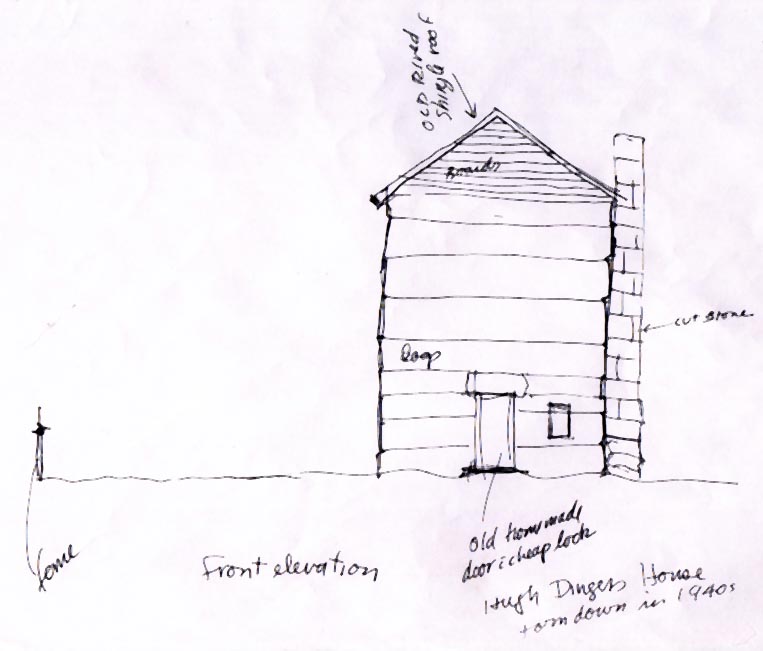
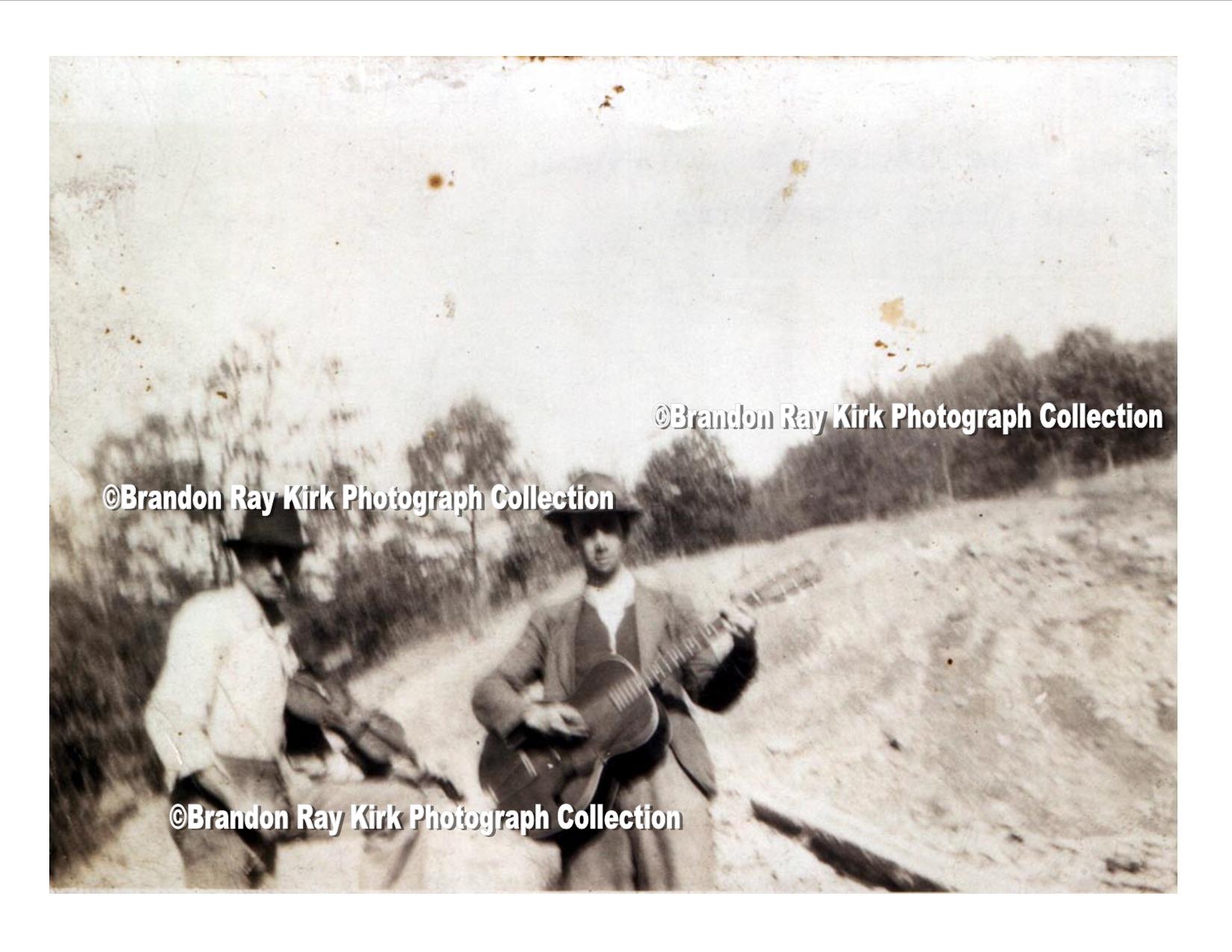
I’ve given this story a lot of thought and most of what I’m about to say is from instinct and gut reaction cause we didn’t necessarily have cold hard facts. I think Ed learned a lot from his mother in the period right after his dad’s death when he and her probably spent a lot of time in that cabin hid out together from the community at large and his only contact was through his mother’s family (his grandparents). Ed found a fiddle that his father had left behind (very possibly the one in the photograph which looks home made) and started sawing around on it. His mother in her grief over her late husband was probably all the time whistling and singing the old melodies, most of which he had played, and Ed picked them up much in the way that Howdy Forrester told me he picked up a lot of melodies from his mom’s whistling and singing around the house. They were the melodies Ed and his mother shared. His unusually natural technique developed because he had such a great ear and naturally not being able to see he was not in a position to pick up bad technical habits from other fiddlers. His mother probably coached him much in the same way that Lawrence coached me a hundred years later…saying things like, “That just don’t sound right.” “Pop never played that many notes.” “Pop’s groups of notes were smaller.” But then because we both could see, Lawrence also said things like, “Your bow hold don’t look like Pop’s” and “Pop held his fiddle down here and turned it.”

Haley-McCoy grave exhumation (1998)

Tags

, , , , , , , , , , , , , , , , , , , , , , , , , , , ,

Sometime during the next few months, we decided that the grave exhumation would take place on May 6, 1998. I rolled into the Harts Fas Chek parking lot on the 4th and hung out with Brandon and Billy until after midnight. Steve and David Haley showed up the next day, as did Jimmy and Bill McCoy and their families. It wasn’t long until Doug Owsley arrived with his crew. His team consisted of four people: Malcolm Richardson, (his former boss and) the field supervisor; John Imlay and Dale Brown, chief excavators; and Rebecca Redmond, recorder. Along to chronicle the event was Chip Clark, a professional photographer; Ted Timreck, a video documentary specialist from New York City; and Ted Park, a writer for Smithsonian magazine.

I knew right away that these guys meant business.

We all went up to the grave that evening, but “the dig” didn’t start until early the next morning.

The weather was perfect and the hillside became alive with people. In addition to myself, the Haleys, the McCoys, Brandon, and Owsley’s crew, there was Billy Adkins, Lawrence Kirk, Bill and Cheryl Bryant (the property owners), and Lara Lamarre and Joanna Wilson of the State Historic Preservation Office.

Most of the day was filled with probing, scraping, talking and then — well — more probing, scraping and talking. Within an hour, the diggers verified that it was a single-shaft grave. As the day progressed, it became obvious that the grave was deeper than the estimated two feet.

Actually, it seemed to just keep “going,” causing us realize that the probes had been a bit deceiving.

At some point, Owsley’s diggers bumped into a coal seam, which had a small underground stream beneath it. Rich said the stream was a bad find because it had probably deteriorated Milt and Green’s bodies in its seasonal cycle of drying up and trickling over the last hundred or so years. He still felt, however, that teeth and certain larger bones might be preserved.

Just before nightfall, Rich said it would be best to stop working and cover the hole because it was supposed to rain sometime in the next few hours. Owsley mentioned that we were only inches away from the shaft floor…only inches — and he was sure of it this time. We were all too excited to go to bed, so we gathered around a big fire up by the grave. The Smithsonian folks requested that I play some fiddle tunes. I played “Brownlow’s Dream” and joked to Brandon that it might help “raise” Milt out of the ground. All jokes aside: it was a little spooky up there, in spite of the twenty or so people clustered around the fire. I remember shining my flashlight up the hill toward the grave every now and then just to make sure…

After about a half an hour, rain began to sprinkle on our gathering. We filed off of the hill and settled in to bed in Harts. Brandon and three of his buddies pitched a tent near the grave and spent the night as “guards.” All were descendants of major participants in the 1889 feud: either mobsters or members of the burial party. The rain soon dissipated, creating a starry night, and left them gathered around a fire and talking about the feud that claimed the lives of Milt and Green. It was an incredible night of stories. So many things had come full circle. For Brandon, it was overwhelming to just think about how he had earlier stood at Milt’s and Green’s grave surrounded by many descendants of the feudists. Expectations and anticipation was at a high water mark. Such was the excitement that Brandon and his friends didn’t go to sleep until around 5 a.m. when a heavy rain forced them into their tent.

Unfortunately, the rain came down in buckets during the early hours of the morning and created horrible working conditions for the forensic team. Their crude covering over the grave was no match for the rain, which whipped in from all angles. Most horribly, the rain caused the underground stream to gush forth and fill the bottom of the grave shaft completely.

After only a few frustrating hours of digging through clay, mud, and several inches of water, Owsley concluded that the crew had reached the bottom of the grave. They had not located a single bone, tooth, belt buckle or bullet fragment.

Even when Brandon fetched a cheap metal detector, the diggers couldn’t come up with anything.

Milt and Green were gone.

Hart Creek 11.30.1923

Tags

, , , , , , , , , , , , , , , , , ,

“Forget Me Not,” an unnamed local correspondent from Harts Creek in Lincoln County, West Virginia, offered the following items, which the Logan Banner printed on Friday, November 30, 1923:

Mr. George H. Adkins is still driving Charley Curry’s mules for him.

Miss Nervie Tomblin and Bill Thompson were guests at Chas. Curry’s Sunday.

Wonder why Mr. Ira Tomblin is visiting the home of Mr. Curry’s so much.

Mattie Carter and Garnett Brumfield were out looking for their boys Sunday.

Mr. Tom Brumfield and Ed. Brumfield are giving out Preacher Curry’s appointment for him.

Chapman Adkins is clerking in Robt. Robinson’s store.

Robert Dingess was calling on Josephine Robinson, Sunday.

Smithsonian preliminary description of the Haley-McCoy grave (1997)

Tags

, , , , , , , , , ,

Just before Christmas, Brandon and I received a letter from Rich, at the Smithsonian, which provided us with some preliminary information on the gravesite:

The burial surface is a large shallow depression in the soil located on a steep slope. The depression is approximately one foot deep. The western side of the burial depression, presumably the head, is marked by two small rock cairns that feature natural upright stone slabs projecting from the tops. The opposite end (foot) is marked by two small rock cairns.

The burial appears to be shallow when probing in the deepest part of the depression, with the burial shaft floor located at a depth of approximately 2 feet. 

The shaft is of sufficient size to have accommodated two persons lying side-by-side. It is very shallow, but this may have been due to haste during excavation of the burial pit, or it could have resulted from termination of the efforts of the grave diggers when they encountered the underlying siltstone strata.

Two items that could effect bone preservation were noted: oak trees are in the vicinity of the burial, and the tannin from these leaves can elevate the acid content of the soil; and the presence of some white clay also indicates soil acidity. However, the burial is on a steep slope and located high up near the brow of the ridge. The slope and wind action at that elevation could retard a significant accumulation of leaves. The slope also prevents any significant amount of water from collecting in the burial depression.

The remoteness of the burial site will make it necessary to complete the disinterment in a single day or else provide overnight guards.

Gill News 06.28.1923

Tags

, , , , , , , , , , , , , , , , , , , , , , , , , , ,

An unnamed local correspondent from Gill in Lincoln County, West Virginia, offered the following items, which the Lincoln Republican printed on Thursday, June 28, 1923:

Miss Fay Gill begins her school here on the 6th of August.

M. Nelson, of Barboursville, preached an able sermon at Gill last Sunday.

Parker Lucas preached a fine sermon here last Sunday night.

Prof. Lee Adkins, of Hager has completed a fine singing school at Sand Creek. He has taught three at Gill, and will teach another one in the near future.

Mr. and Mrs. W.M. Sperry, of Gill, were visiting relatives and friends at Hager last week. They were accompanied by their small daughters, Misses Ada and Maggie.

Miss Maud Gill began teaching the Bradyville school on last Monday.

Brad Gill was a recent visitor in Huntington.

Cesco Messinger caught a 15-pound fish one day last week.

Elmer Fry has been getting our coal bank ties during the past week.

Uncle Harve May was visiting relatives at Big Creek the latter part of last week.

Did you ever notice that when people hear of some little talk that doesn’t amount to anything, how it goes over the country; and then when they hear of anything that amounts to a great deal you hardly ever hear it mentioned?

Smithsonian team visits the Haley-McCoy grave (1997)

Tags

, , , , , , , , , , , , , , , , ,

John and Steve Haley

John Hartford and Steve Haley at the Haley-McCoy grave, West Fork of Harts Creek, Lincoln County, WV, 1997

Near Grave

John Hartford and Steve Haley with the Smithsonian crew, West Fork of Harts Creek, Lincoln County, WV, 1997

Probe

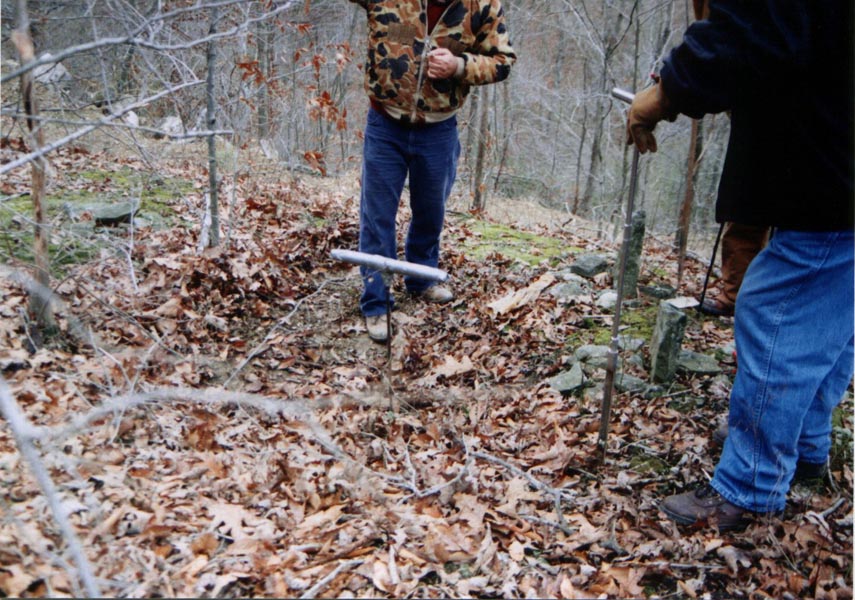
John Imlay and Malcolm Richardson of the Smithsonian Institution probing the Haley-McCoy grave, 1997

Timber

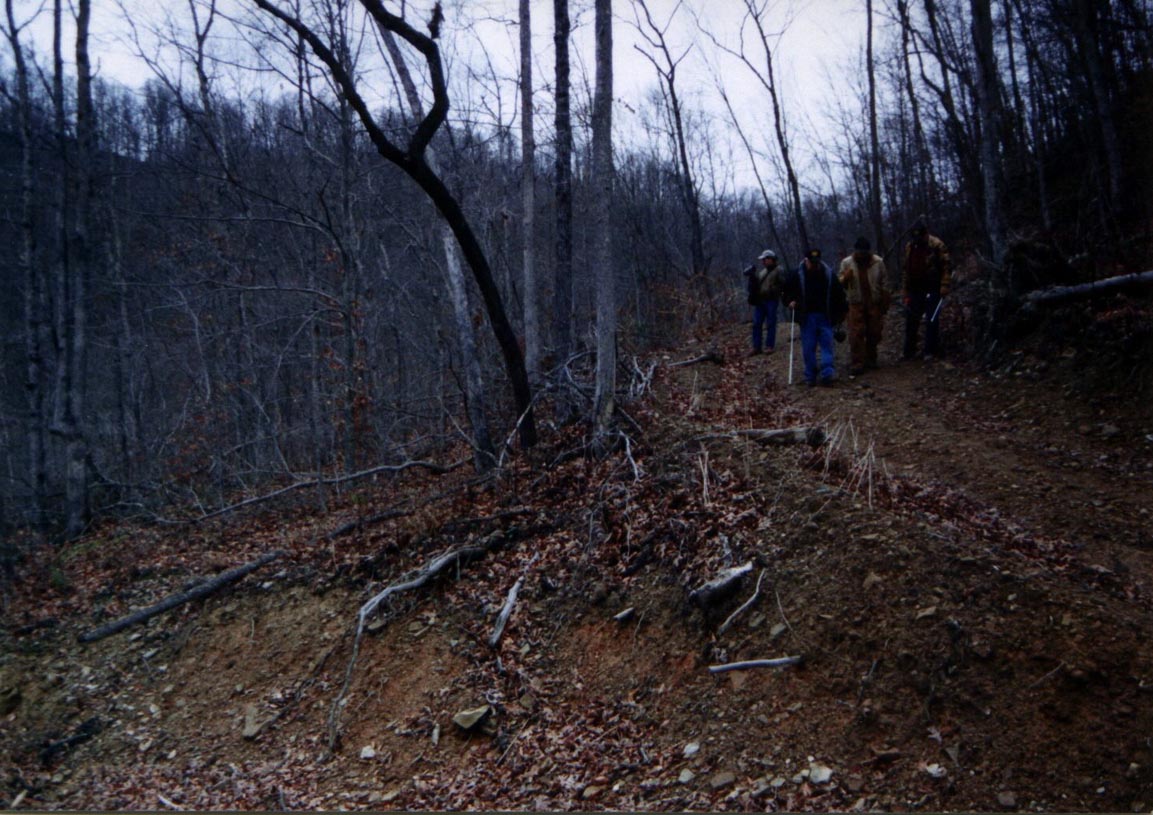
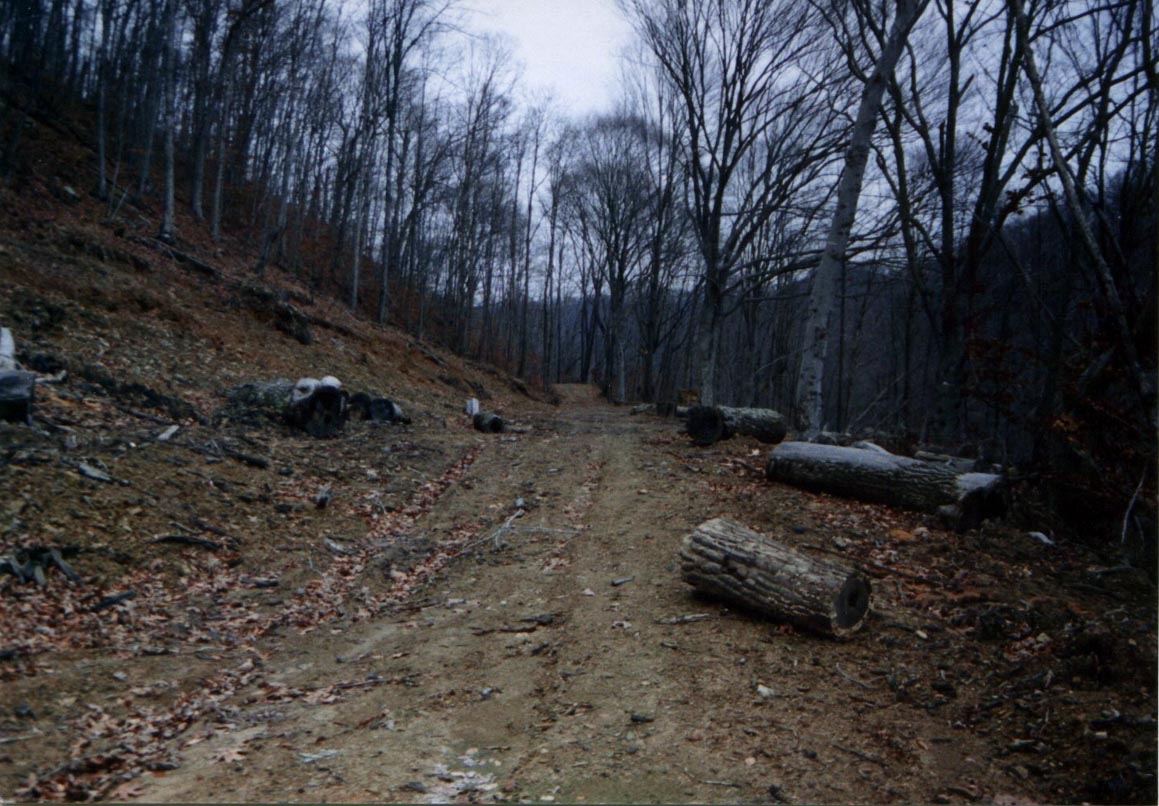
New timber road near the Haley-McCoy grave, West Fork of Harts Creek, Lincoln County, WV, 1997

In Search of Ed Haley 356

Tags

, , , , , , , , , , , , , , , ,

The following morning, Brandon and I met Steve Haley at the bus. Not long afterwards, two men drove up in a white SUV and eased out toward us. The Smithsonian forensic crew had arrived. They were dressed ordinary and casually, except for very “official-looking” black caps adorned with golden seals. The driver, a large man with a rough voice and commanding presence, introduced himself as Malcolm Richardson – or “Rich,” as he preferred to be called. The other fellow, younger than Rich, tall and seemingly jolly, was John Imlay. We almost immediately piled into their vehicle and headed for the grave.

Upon reaching the logging road at Low Gap, Rich decided not to use it to drive up to the grave. Instead, we parked just off the hill near the Walker Family Cemetery and headed up the hill on foot. We were barely there when Lawrence Kirk, who’d shown me the gravesite back in 1993, popped out of the bushes. He’d preferred to “rough it” up the hill, somehow making it up the slope and through the brush in a pair of dress shoes, offering his assistance with any questions Richardson and Imlay might have about the site. It was neat having Lawrence there since his grandfather Melvin Kirk had helped bury Milt and Green in 1889. Steve Haley’s presence also was noteworthy in that it marked the first time, so far as we knew, that any of Ed’s family had ever been to the site. (We don’t know if Ed went there.)

As we watched Rich and Imlay probe their metal rods into the grave, we clung to their every word — every theory, question and comment. I guess it would be fair to say that we were hoping for some kind of “breakthrough revelation” from their probing…but the whole thing was over in about thirty minutes. Still, we were all electrified with excitement. For the rest of the day, we talked about every minute detail of our “probing experience:” the rods, how they worked, what they revealed and so forth. Then came all of the wild theories about what was actually down in the grave. We could hardly wait until spring.

In Search of Ed Haley 355

Tags

, , , , , , , , , , , , , , , , , , , , , , , , , , , ,

The next day, Brandon and I visited Reece Tackett, a banjo-picker who lived in a nice yellow house just up West Fork. Reece was born in 1909 and raised around Grayson in eastern Kentucky. His grandfather, Jim Tackett, was a fiddler from the Red River area of Arkansas who played for square dances in large farmhouses. He taught Reece’s father, John Tackett, how to play the fiddle. Reece said his father played “the old way — not flashy.” He used a homemade fiddle and “had to go to pine trees to get rosin.” He moved to a farm about nine miles from Grayson, where he made fiddles and played close to home, never as far away as Portsmouth, Ohio.

Reece said he moved to Holden in Logan County when he was sixteen to work with his uncle and brother in the coalmines. He used to watch Ed Haley and his wife play “beautiful” tunes like “Arkansas Traveler” on weekends at the Logan Courthouse. He said Ed wasn’t a big man and had fingers “about like a lead pencil.” His wife played the mandolin.

“She was pretty good on her singing,” Reece said. “She was dressed like the real old ladies. She had the long dress on and the apron.”

Ella kept a cup fastened to herself somehow.

“I’ve tossed many a nickel and dime in their cup,” Reece said.

Sometimes, people would pretend to put money in their cup and then steal from it.

Ed was usually paid about ten or fifteen cents per tune. There were no dollars and most of the coal miners were paid in company script.

Reece said he moved to Harts in 1946 and had no idea that Ed was from Trace Fork or even lived in Ashland.

Gill News 06.21.1923

Tags

, , , , , , , , , , , , , , , , , , , , , , , , , , ,

“Reporter,” a local correspondent from Gill in Lincoln County, West Virginia, offered the following items, which the Lincoln Republican printed on Thursday, June 21, 1923:

A large engine with six cars were wrecked on the track at Harts one day last week, but no one was injured.

John Sperry will preach at Gill, Saturday night before the third Sunday in July. Everybody is invited.

Lee Adkins of Hager, will conduct a singing school at the Gill school house beginning the first Sunday in July.

Sons, Brooks, Golden, Peacha and Cassie Hager, of Spears, John Sperry and sons of Price, Lee Spears, and Philip Sperry of Gill, attended the big Lodge celebration at Midkiff last Sunday.

Ward Spears, of this place, attended the baptizing at Leet last Sunday.

Brad Gill has purchased a new camera.

Wm. Sperry and family have recovered from the measles.

Gill News 06.14.1923

Tags

, , , , , , , , , , , , , , , , , , , , , , , , , , , ,

“Reporter,” a local correspondent from Gill in Lincoln County, West Virginia, offered the following items, which the Lincoln Republican printed on Thursday, June 14, 1923:

Miss Janie Thompson was the weekend guest of Mr. and Mrs. Wm. Sperry, and also assisted them while ill with the measles.

Earn Cooper, of Hager, was the guest of his sister, Mrs. W.M. Sperry, and also Mr. and Mrs. Ward Spears, the latter part of last week.

Elmer Fry has been hauling bank posts and ties the past week.

Hal Cyphers has been working at Omar the past week.

Quite a number of people from this section have been going to Logan to hear Billy Sunday preach.

W.M. Sperry and Andy Cyphers attended meeting at Sand Creek last Sunday.

J.E. Gore, Cancer Specialist of Madison, was here recently.

Ferguson Evans has moved to Hubball, where he will have employment in the mines.

The loafers, rats and moonshiners are not so thick around Gill at present as they have been.

Our Ticket Agent, C.M. Adkins, remains on the job at this place and knows business when he sees it.

Will Cyphers, of Wayne county, was the over Sunday guest of Mr. and Mrs. A. Cyphers. He reports the crops in Wayne good. 

Interview with James Davis of Harts, WV (1997)

Tags

, , , , , , , , , , , , , , , , , , , , , , , , , , ,

That evening, Brandon and I met up with Billy Adkins and went to see James Davis on West Fork. James lived on Spring Branch of West Fork, a little hollow just across the creek from Iris Williams. A few years back, his older brother Charlie had told Brandon about seeing Ed win a twenty dollar gold piece in a contest at the old Chapmanville High School.

We found the eighty-something-year-old James laying on the couch with a little fuzzy dog crawling all over him like a monkey. He said he didn’t remember Ed, so I mentioned how he was Milt Haley’s son, which got an immediate reaction. He had heard the story of Milt’s death from Cat Fry, although he didn’t immediately offer up any details. Actually, James was hesitant to talk about the 1889 murders — almost as if the participants were still around and living next door. His answers to our questions were very evasive.

We learned from James that it was Bill Fowler (not John Runyon or Ben Adams) who hired Milt and Green to ambush Al. It was all over competition between businesses. Fowler was a saloon operator and a gristmill operator, while Brumfield ran a log boom.

“They was all there making money,” he said. “You know how that stirs up trouble. Some a making a little more money than others. They was bucking one another, like money men does.”

Milt and Green ambushed Al and Hollena one Sunday as they rode down the creek on a single horse after a visit with Henderson Dingess. In the attack, Mr. Brumfield was shot through the arm, while his wife was shot in the face. Milt and Green were soon captured in Kentucky by the Adkinses and Brumfields, who held them them at Fry. Neither man would admit to anything so John Brumfield shot one of them in the head. He reputedly put his toe at the hole and said, “I put a bullet right there.”

Brumfield was himself shot in the head a few years later.

French Bryant, “who was pretty hard to handle,” was also involved in the killings.

Afterwards, people were afraid to touch Milt’s and Green’s bodies until Ben Walker allowed them to be buried on his property. The whole event “shook people up pretty bad.” Fowler sold out at the mouth of Harts and moved away.