Tags
Appalachia, art, genealogy, Harts Creek, Harve Dingess, history, Hugh Dingess, John Hartford, Logan County, photos, West Virginia
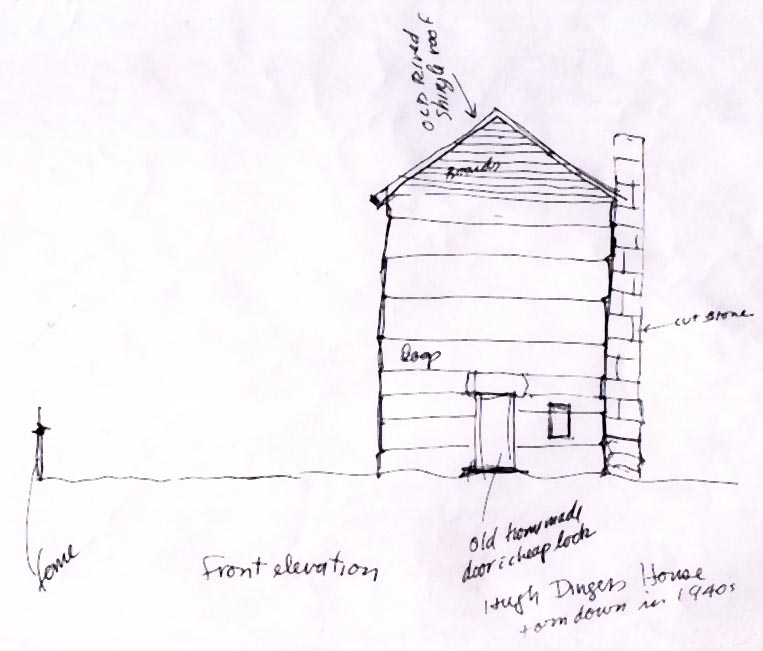
John Hartford’s sketch of the Hugh Dingess home, October 1995
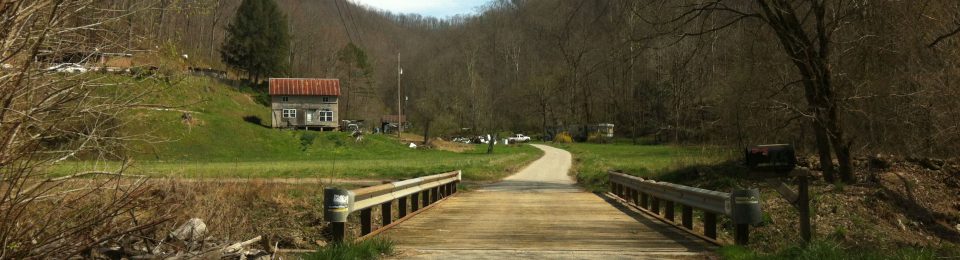
21 Friday Mar 2014
Posted in Big Harts Creek, Ed Haley, John Hartford
Tags
Appalachia, art, genealogy, Harts Creek, Harve Dingess, history, Hugh Dingess, John Hartford, Logan County, photos, West Virginia
John Hartford’s sketch of the Hugh Dingess home, October 1995
09 Sunday Mar 2014
Posted in John Hartford, Music
Tags
Appalachia, bluegrass, country, history, John Hartford, Museum of Appalachia, music, Nashville, photos, Tennessee

Museum of Appalachia, Norris, TN, 2012
08 Saturday Mar 2014
Posted in Dingess, John Hartford
Tags
Appalachia, culture, Dingess, John Hartford, life, Mingo County, photos, West Virginia

John Hartford took this photograph at Dingess, Mingo County, West Virginia, 4 March 1995.
07 Friday Feb 2014
Posted in Ed Haley, John Hartford
Tags
Appalachia, Brandon Kirk, history, Huntington, John Hartford, life, Marshall University, music, photos, West Virginia

My first meeting with John Hartford, Morrow Library, Huntington, West Virginia, 1 March 1995
24 Friday Jan 2014
Posted in John Hartford, Music
Tags
bluegrass, fiddlers, fiddling, Gillian Welch, John Hartford, Larry Cordle, music, Nashville, Nashville Bluegrass Band, photos, Ronnie McCoury, Station Inn, Tennessee
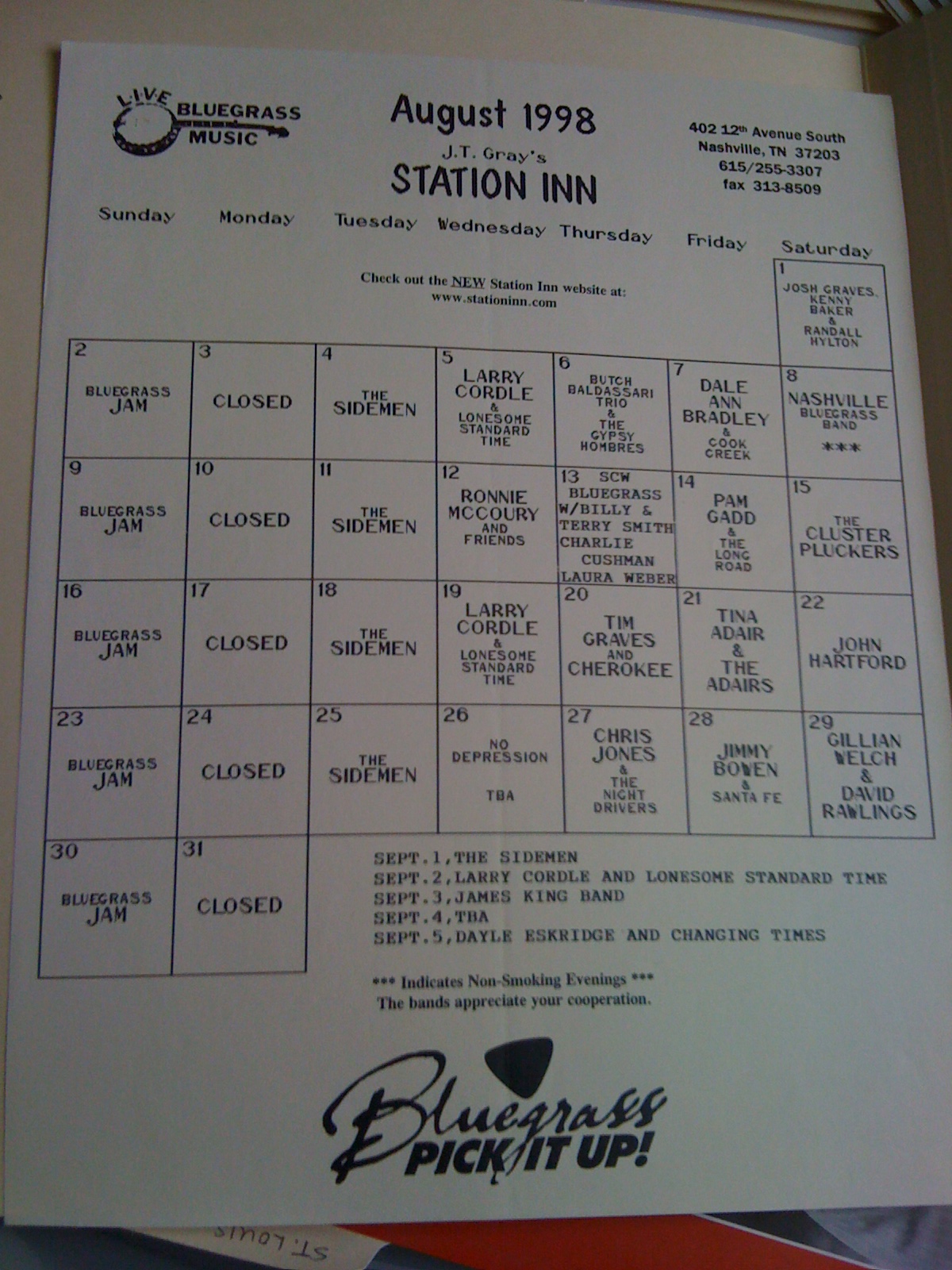
Station Inn, Nashville, TN, August 1998
22 Wednesday Jan 2014
Posted in John Hartford, Music
22 Wednesday Jan 2014
Posted in Ed Haley, John Hartford, Music
Tags
Carol Hardway, Cliff Top, culture, fiddlers, fiddling, history, John Hartford, life, music, photos, West Virginia, Wilson Douglas

Carol Hardway, Wilson Douglas, and John Hartford at the Appalachian String Band Festival in Cliff Top, West Virginia, 1995
20 Wednesday Nov 2013
Posted in John Hartford
24 Saturday Aug 2013
Posted in John Hartford, Music
Tags
Appalachia, banjo, bluegrass, culture, history, John Hartford, life, Museum of Appalachia, music, Norris, photos, Tennessee

John Hartford banjo, Museum of Appalachia, Norris, TN. 15 May 2012
02 Sunday Jun 2013
Posted in John Hartford, Music
Tags
Appalachia, banjo, bluegrass, culture, fiddle, fiddler, history, John Hartford, Museum of Appalachia, music, Norris, photos, Tennessee
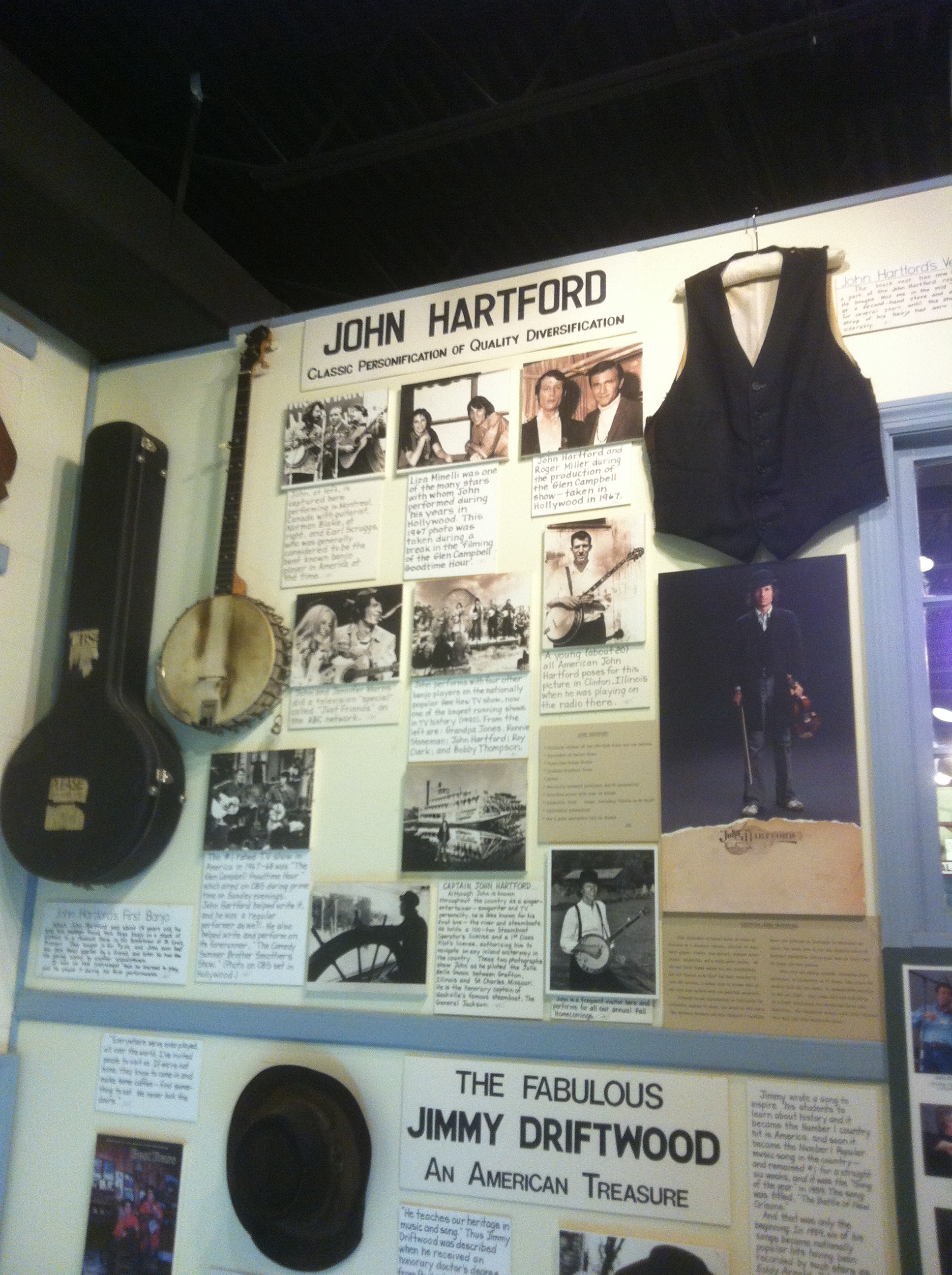
John Hartford display, Museum of Appalachia, Norris, Tennessee, 2011-2012
27 Saturday Apr 2013
Posted in John Hartford
Tags
banjo, bluegrass, culture, fiddler, John Hartford, music, Nashville, photos, Tennessee, U.S. South
1 9 9 5
27 Saturday Apr 2013
Posted in Ed Haley, John Hartford, Music
Tags
Appalachia, Catlettsburg, Clyde Haley, Ed Haley, Ella Haley, fiddle, fiddlers, fiddling, Harts Creek, history, Irish lilt, Kenova, Kermit, Kevin Burke, Lawrence Haley, music, Nashville, Noah Mullins, Norfolk and Western Railroad, Patsy Haley, snap bowing, West Virginia, Williamson, writing
Nestled in Nashville, I worked obsessively on Ed Haley’s music. First, I made a real effort to transcribe it note for note and break it down “under the microscope.” Initially, I had tried to play it generally the way he did while keeping its spirit — with my own twists, of course, which is nearly impossible not to do. This time, though, I wanted to study it as you might a fabulous book — break it down, look at it mechanically… I made a huge discovery regarding Ed’s bowing during that time. With Lawrence’s help via telephone conversations, I deduced that Ed used what Scotch fiddlers call “snap bowing,” which is when you separate notes by applying pressure (“little stops”) with the bow — not by changing its direction. Of course, Ed didn’t use those patterns exclusively and mixed them with more conventional strokes.
I also spent a lot of time listening to Ed’s recordings and playing my versions of his songs into a tape recorder. One of the first things I figured out was that he used what fiddler Kevin Burke calls the “Irish lilt” to give his music a “dotted note feel.” It would be like playing a tune in triplets with the middle note taken out.
I also discovered that Lawrence was right about Ed not playing so many notes; instead, he created the illusion of doing so by phrasing his tunes in a way that gave them a nice “crooked” flavor.
Throughout these discoveries, Lawrence continued his role as my brutally honest fiddle teacher. His comments were surprisingly musical for someone who kept reminding me that he didn’t even play anything. When I played “Yellow Barber” for him over the telephone, he said, “That sounded right except when you get down to that low end, you’re doing a little skipping in there and it seemed to me like Pop played that a little bit smoother. Like he had a roll to his… And I noticed you had a few jumping notes in there that really I don’t remember hearing. Maybe you can hear them. Other than that, it sounded great to me.”
Lawrence seemed pleased with my playing of Ed’s “Catlettsburg”.
“That was good, John,” he said. “That was really good.”
I told him I didn’t know how Ed was able to get up into second position on that tune with the fiddle sitting at his shoulder.
“I always thought that he kinda controlled the violin with his thumb and the meaty part of his hand between his finger and thumb,” Lawrence said. “He could relax that up and down the neck of the violin or he could tighten that and he could still have the flexibility of his fingers, plus that give him the ability to rock that violin body underneath the bow, too.”
I was trying that and eventually got to where I could will my fingers into third position still holding the fiddle at my shoulder, which if you have to play for a long time is sure easier on the neck of the player.
I told Lawrence about talking with Clyde, especially about his memories of Ed mistreating him as a child.
“I don’t know, maybe my dad was mean to him when he was a young’n,” Lawrence said. “But I can’t remember my dad ever laying a hand on me to hurt me. I musta been a rowdy little kid ’cause it seemed like whenever Pop’d pick me up he’d call me ‘muddy duck’ because I was always dirty, I reckon, whenever he’d get a hold of me. He’d just rub my head or something like that and call me his ‘muddy duck.’ I don’t know where Clyde got his story from.”
Lawrence agreed that his dad sometimes abused his mother, although he placed a lot of blame for their marital problems on her.
“Well, he could be temperamental with my mother at times, but I think she was temperamental, too. I think my mother’s people had higher tempers than Dad’s people did. They seemed to be kinda quiet people. Noah Mullins was supposed to killed a revenuer up there at Harts. They waylaid a revenuer and they laid it on Noah, but Noah Mullins always seemed to me like just as quiet and as calm a fella as could be. But I had some of my uncles on my mother’s side, they were a little bit of a temperamental type of people. So I’d put some of the blame on my mother for her treatment of my dad. You know, a woman can upset a man and whip him quicker with words than he can whip her with his fists.”
I totally agreed, then asked Lawrence if he knew anything about the Muncys from Patsy’s genealogy.
“We’d ride the Norfork and Western train up from Kenova and stop at Kermit and stay there with Muncy people,” he said. “They lived in an apartment up over their store and filling station-type thing and they had one of them small monkeys. I went up there one day and got right at the top of the steps and was playing with that monkey and I musta made it mad and it made a rush at me and I musta jumped back and I went to the bottom of them steps. That made me remember it more than anything else. I can’t even remember that Pop played music while he was there for them. They mighta just talked. We used to stop there maybe and stay all night and Pop and Mom and me would go on to Williamson and they’d play at courthouse days or something there. Pop musta had people up in there, but he never said anything to me about it.”
12 Friday Apr 2013
Posted in Ed Haley, John Hartford, Music
Tags
8th of January, banjo, Battle of New Orleans, Black and Jet, blind, Clyde Haley, Ed Haley, Ella Haley, fiddle, history, Indian Squaw, John Hartford, Lawrence Haley, Lost Indian, mandolin, Matilda Ziegler Magazine for the Blind, measles, moonshine, music, Paddy on the Turnpike, Pigeon on the Gate, Portsmouth, Reader's Digest, The Lightning Express, U.S. Army
Clyde paused, then asked, “Did Lawrence show you them pictures of my dad? Did you ever see him in that big coat?”
Before I could answer, he took off again, “He wore that long as I remember about him, and he’d go to the bootlegger and get him a pint of moonshine — one in each pocket in that overcoat — and he’d go over to Portsmouth. I’ve seen him have an old clay pipe in his coat pocket and he smoked that when he was out playing anywhere. He smoked Strader’s Natural Leaf Tobacco. He’d take out his pocketknife and chop it up real fine and put it in his pipe. He also chewed Brown Mule tobacco and he carried a tobacco can in his pocket to spit in. He always had a cane with him. Always. He’d feel with it. That was his ‘seeing eye-dog.’ And if anybody’d look him in the eyes, his eyeballs were real messed up from the measles. That’s exactly what put him blind. My mother had a accident with her daddy’s wagon. He had a carnival wagon. I think she started out in her life teaching kids, but then she had so many kids herself she got away from that. She could’ve been a music teacher.”
Clyde said, “I wish you could’ve known him personally. He could pin you down somewhere and tell you stories that you wouldn’t believe could happen. And I’ve thought a lot of times about things he told, and it had to be true ’cause how else could they happen without somebody really knowing it?”
I kept hearing these references to Ed’s story-telling abilities and was becoming somewhat fascinated. “What kind of stories did he tell?” I asked Clyde.
“Well, just like a hillbilly mountaineer, you’d get him started on a story and he wouldn’t quit,” Clyde said. “He was a storyteller’s storyteller. I tell you, he could tell some big ones. My dad could walk you down talking the Bible and he wasn’t a religious man. Well, my mother would read that Ziegler Magazine, you know, and that was a lot like blind people’s Reader’s Digest. My mother would read to him. They’d sit for hours and hours at a time and he’d drink and she’d read the magazine to him. Used to be so much of it, it would get monotonous.”
Right away, I thought Clyde’s memory of Ella reading to Ed for hours as he drank was one of the best lines I’d heard up to that point. I mean, it really told an incredible amount about their life at home. As I thought about that image, Clyde told about his father playing music on the streets.
“My dad done most of his street playing over there in Ironton,” he said. “And he didn’t like to go out on the street and play with my mother. He didn’t like to go anywhere with her. It made him feel lower than he was. My mother played a mandolin. She had an old five-string Gibson banjo, too. One of them short ones. Banjo-mandolin, they called it.”
Clyde said Ed sometimes put out a hat for money when he was playing on the street, but never a tin cup. Ella did that.
“She had a Army drinking cup — one of those old-time tin cups,” he said. “My mother would put it out because my mother played an accordion, too. Things like ‘Stackolee’, ‘Black and Jet’… My mother and my father sang that. They had a duo, you know. Did you ever hear ‘The Lightning Express’? About the conductor on the railroad and he got run over by that train in the end of it?”
I hadn’t, so I asked Clyde to name more of his father’s tunes.
“‘Forked Deer’, and all the old-timers,” he said. “He was real well-versed in most of them.”
What about “Indian Squaw”?
“‘Indian Squaw’?” he said. “Yeah, yeah. He knew ‘The Lost Indian’ and all the old tunes like ‘Paddy on the Turnpike’ and ‘Pigeon on the Gate’. And he even made one tune for my brother Lawrence called ‘8th of January’ and that was one of the best tunes I ever heard him play.”
Of course, “8th of January” was an old fiddle tune commemorating Andrew Jackson’s victory against the British at the Battle of New Orleans — not Lawrence Haley’s birthday — but it sure was interesting that Clyde made the correlation.
How about waltzes? I asked.
“Well, he knew quite a few of them, you know,” Clyde said. “He was a fiddler’s fiddler. Most of his tunes that he played, my mother played with him on piano or an accordion. And my dad, you could call the name of a tune, and he knew it by heart. He didn’t have to study about it, he just played it.”
04 Thursday Apr 2013
Posted in Big Harts Creek, Ed Haley, John Hartford, Spottswood
Tags
Appalachia, art, genealogy, Harts Creek, history, Jackson Mullins, John Hartford, Logan County, Milt Haley, Turley Adams, West Virginia
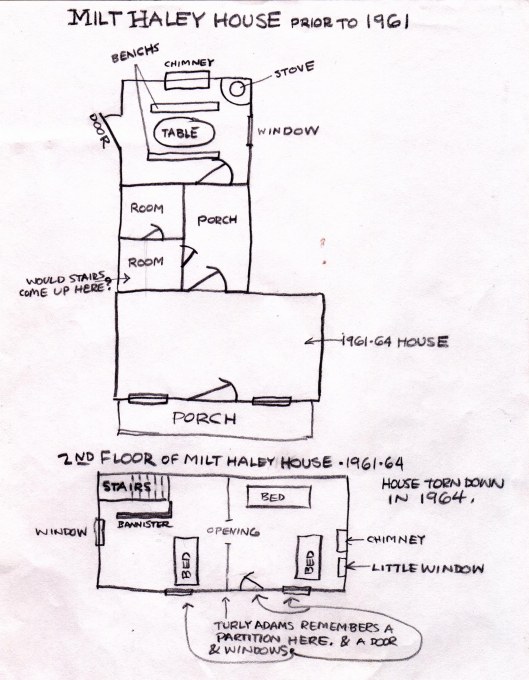
Jackson Mullins Home, Sketch by John Hartford, 1993
04 Thursday Apr 2013
Posted in Big Harts Creek, Ed Haley, Harts, John Hartford
Tags
Appalachia, Bill Mullins, Chloe Mullins, Ed Haley, Imogene Haley, Jackson Mullins, Joe Mullins, John Hartford, Lawrence Haley, Liza McKenzie, Nashville, Peter Mullins, photos, Turley Adams, Violet Adams, West Virginia
I returned to Nashville talking not so much about new musical developments but rambling on to my wife about murders and the people I’d met in Harts. I spent a lot of time studying over Joe’s photographs, especially the faded family group shot. One of the boys in the picture was propped inside a young woman’s arms and appeared very much to be blind. Was it Ed and his mother? Unfortunately, since the woman was almost completely faded away I couldn’t make a positive identification of her, even when I compared it to the photo of Emma Jean found by Lawrence and I on our first trip to Harts.
There was another interesting development: when I removed the picture of Bill and Peter Mullins from its frame, another equally large picture of the “old couple” kind of popped out from behind it. That made three pictures of those folks and it sure seemed logical to me that Joe Mullins would’ve had three pictures of his grandparents — meaning Ed’s grandparents — and not of an uncle and an aunt.
I sent copies of Joe’s old pictures to Turley and Violet Adams to see if they could show them around for identification. A few weeks later, we spoke over the telephone and they said Liza McKenzie had fingered Ed as the child to the right in the faded group picture. She also said the old folks in the back row were Jackson Mullins and his wife, Chloe.
26 Tuesday Mar 2013
Posted in Big Harts Creek, Ed Haley, John Hartford, Lincoln County Feud, Spottswood
Tags
Appalachia, culture, Ed Haley, genealogy, Harts Creek, history, John Hartford, life, Logan County, photos, Sol Bumgarner, Trace Fork, U.S. South, West Virginia

Sol Bumgarner, a key source of information about Ed Haley and the history of Trace Fork of Harts Creek, Logan County, WV, 1993
26 Tuesday Mar 2013
Posted in Big Harts Creek, Ed Haley, John Hartford, Music, Spottswood
Tags
Appalachia, Clifton Mullins, Connie Mullins, Crawley Mountain, Ed Haley, Enslow Baisden, fiddle, Harts Creek, history, Joe Mullins, John Hartford, Lawrence Haley, Logan County, Loretta Mullins, Peter Mullins, Sol Bumgarner, Trace Fork, Turley Adams, West Virginia
I told Turley that Lawrence and I needed to visit Joe Mullins, who had been gone during our last trip to Harts Creek. Turley completely deflated us: Joe, he said, had recently suffered a stroke. He now lived with his daughter Connie Mullins in a trailer just up the creek. Turley pointed the way. Driving a short distance, Lawrence and I parked our car by the creek and walked over a little narrow bridge where an army of barking dogs greeted us. At the porch, Connie introduced us to her brother, Clifton. We stepped on inside and found Joe seated in a wheelchair, surrounded by more dogs. His mind — or at least his ability to communicate a great deal — was all but gone due to the lingering effects of his stroke. Lawrence sat next to him with his hand on his arm. Almost in tears over Joe’s condition, he tried to rekindle Joe’s memories by saying, “I’m Ed Haley’s boy.”
I hung out with Joe’s kids — Connie, Clifton and Loretta. While all were reasonably young, Clifton and Connie had Parkinson’s Disease.
“They’s four of us got it,” Clifton said. “They said it runs through the family some way another. Musta come down the tree somewhere.”
I asked him how old he was.
“38,” he said.
Clifton had just moved back to Harts.
“I got hurt in Michigan and Daddy was sick so I said, ‘Well, it’s a good chance for me to go help my daddy and my sisters.'”
Clifton’s sisters said he was the one who found Ed’s smashed fiddle years ago in the rafters of Uncle Peter’s old smokehouse.
“I was up in there — we was playing around one day — and it fell out on me,” he said. “And I just looked at it and I said, ‘Well, I’ll try to glue it together.’ I started gluing it and it wouldn’t glue so I dumped it into the creek. I didn’t know whose it was. I was about eight but all the pieces wasn’t there to it. When it hit that guy it just splintered everywhere.”
Clifton suggested that we visit Bum and his family just up the hollow. Two years earlier, Bum had told originally Lawrence and I how he had witnessed Ed smash the fiddle over a man’s head while at a tavern on Crawley Mountain. Bum lived only a short distance from Joe’s trailer, up the hollow past Uncle Peter’s old homeplace, in a house situated near Enslow Baisden’s log cabin.
20 Wednesday Mar 2013
Posted in Big Harts Creek, Cemeteries, Ed Haley, John Hartford, Music, Spottswood
Tags
accordion, Bernie Adams, blind, Clifford Belcher, Ed Belcher, Ed Haley, Ewell Mullins, fiddle, guitar, harmonica, history, Hoover Fork, Inez, John Adams, John Hartford, Johnny Adams, Johnny Hager, Kentucky, Liza Mullins, Milt Haley, music, Peter Mullins, Robert Martin, Turley Adams, Violet Adams, West Fork
Satisfied with our stop on West Fork, Lawrence and I said our farewells to the Kirks and went to see Turley and Violet Adams on Trace Fork. After some small talk about new developments, Turley told us about his uncle Johnny Hager and father Johnny C. Adams traveling with Ed in the early days. He said Uncle Johnny was the one who got Haley to take his music on the road, while his father just traveled around with them.
“They left here playing music together,” Turley said. “My father just helped them take care of their musical instruments — carried it around and stuff — but they done the music. He would sing with somebody but he never did sing by hisself. And Ed Belcher, I think, played with them then. He could play anything but played a guitar mostly.”
So where all did they travel to?
“They played up at Logan on the radio at one time,” Turley said. “They had a program on up there, Ed Belcher did. Oh man, that’s been back in the thirties. Maybe ’36, ’35. I was just a little bitty boy. I just heard these tales — I don’t know them for sure.”
I asked about Johnny Hager.
“I was just a great old big boy the last time I seen Johnny Hager,” Turley said. “He came to our house, stayed around a little while and left. He was kindly a small fella. My dad was, too. Ed would make two of ary one of them. He was a great big feller, Ed was. Now Ewell Mullins, they was all buddies. Now Johnny Hager and Ed could play music. I heard an old guy on television one day talking about how him and Ed used to play in front of a church somewhere together. Yeah, he called him ‘Blind Fiddling Ed Haley.’ Said he’s just a real good friend to him. But he lives in Inez, Kentucky, that feller does.”
I said, “Well, isn’t Inez where Milt is supposed to be from?”
Turley said, “Milt, now my dad just could remember him. He said he was a hard-working fellow and when he’d come in home he’d just tell them boys, ‘Right now, we got to have a fight and get everything settled and we’ll be all right.’ They liked to fight. I guess that was Ed and he had how many more — two more?”
I said, “You mean Ed had brothers?” and Turley said, “I think he did. I believe my dad said he had a brother and one of them got in a fight one time and he bit Milt’s ear off right in the yard right down there. Now, they was Milt’s boys. I guess Ed is Milt’s boy, ain’t he?”
Lawrence said he’d never heard of his father ever having any brothers or sisters, but it sure was a strange coincidence that we heard a story about “Milt’s ear” right after hearing Bob Adkins’ account of Green and “the nick.” Maybe Milt had the nick — which would’ve reversed their roles in Bob’s story of their final days.
So Ed had brothers?
“Far as I know, they was two or three more of them from the tales they told, you know,” Turley said. “Uncle Peter and Aunt Liza used to tell it. Said every time they come home — Milt and them boys — said he’d just fight with all of them at one time. Have a good time. Say, ‘Now we’re friends.’ Back then, that’s what they believed in.”
This was a major development.
“I just heard these tales,” Turley said. “I don’t know how true they are. About Milt coming home and say, ‘Now, we’ll straighten ‘er out right now and we won’t have no more problems while I’m here.’ That’s the way he run his family, you know. That old woman said, ‘I’ll agree to that. That’s the way it ought to be done.’ I don’t guess she could do anything with them boys.”
Hoping for clues about Ed’s “brothers,” I asked if any of the old gravestones in the cemetery behind Turley’s had any writing on them. Unfortunately, Violet said all the markers had rolled down the hill in recent years and the land had leveled out to where it didn’t even resemble a cemetery. All she knew about the cemetery was that there was a “big grave” in it at one time that belonged to a woman with the last name of Priest (she was the only person buried there who her mother-in-law had actually known).
Turley said he last heard Ed play the fiddle at Clifford Belcher’s tavern on Harts Creek where he played for money and drinks. Violet remembered him playing music all night at her father’s home on Hoover Fork with Robert Martin (her great-uncle) and Bernie Adams. She described Bernie as a “real skinny” bachelor who sang “a little bit but not much” and who “was a real good guitar player, but he never would hardly play.”
“He’d get to drinking and he’d play but if he wasn’t drinking he wouldn’t play,” she said.
Turley said Bernie could also play the banjo, harmonica, fiddle and accordion.
05 Tuesday Mar 2013
Posted in Ed Haley, John Hartford, Music
Tags
Ashland, blind, Charles Dickens, Cleveland, Ed Haley, Ella Haley, England, Freddie Smith, Great Expectations, Harts Creek, history, Jack Haley, James Hager, John Hartford, Kenny Smith, Kenny Smith Jr., Kentucky, Kentucky School for the Blind, Lawrence Haley, Michigan, Mona Haley, Mona Lisa Hager, Morehead Normal School, Morehead University, music, Noble Boatsman, Ohio, Pat Haley, Patsy Haley, Ralph Haley, Ralph Mullins, Raymond Willis, Robin Hood, Scott Haley, Washington DC, Wilson Mullins, writing
That evening, back at Lawrence’s, I was full of questions about Mona. She had made a real impression. As I spoke about her, I could sense a little hostility from Pat, as if there were years of family trouble between them, barely hidden away.
“Mona was married to Wilson Mullins,” Pat said. “He was from Harts. Mona was fourteen, I guess, when she married and he was 23 years older than her. She had one boy by Wilson Mullins — Ralph Andrew, who was named after Ralph Andrew Haley. When I came over here in 1949, Mona was divorced from Wilson and she was married to a Kenny Smith. She had two boys by Kenny Smith. Freddie lives in Michigan and Kenny Jr. lives in Ohio. Kenny Sr. is dead. Had a heart attack in Cleveland.”
After a brief marriage to Raymond Willis, a railroad engineer in Ashland, Mona married James Hager.
Pat said, “We met him once. I think they lived in Ohio.”
Mona had a daughter by Mr. Hager named Mona Lisa.
Pat seemed to think the most of Lawrence’s brother, Jack.
“Jack was a very devoted husband and father and had a beautiful home,” she said. “He worked very hard. Larry and Jack were very, very close. Jack was five years older than Lawrence.”
Jack’s wife Patsy had done a lot of family research “but found nothing beyond Uncle Peter and Aunt Liza.”
I asked if Patsy had any pictures of Ed and Pat said, “No more than what we have, because when Rounder Records came to Larry and we was getting pictures for them we went up to Pat’s and Larry got records from them. Jack had four or five records left and their son Scott brought those to Washington and whatever pictures they had.”
Pat promised to ask Patsy if she had anything.
Later that night, Lawrence told me more about his mother. He said Ella was a very small person, only about five feet tall. As a young woman, she attended the Kentucky School for the Blind at Louisville and earned a piano teaching certificate at the Morehead Normal School (now Morehead University).
“Mom was very refined,” Pat said. “No matter where she went, you could always tell she was an educated lady. Mom had very good manners. She was very good at speaking. And when you saw her and Pop together, and listening to both of them, you could tell there was a vast difference in the way they were raised.”
“Mom would read Dickens to us,” Lawrence said. “Robin Hood, Great Expectations — all them classical stories that came out of England and places at that time.”
When young, Ella was proficient at playing the piano and organ. After marrying Ed, she learned to play the mandolin and banjo-mandolin so that she could play “his type of music.”
“She used to sing more of the old English-type music,” Lawrence said. “Little nonsense stuff. We’d ask for it a lot of times ’cause we didn’t have anything else but the radio. I remember her singing one that had to do with a sea captain and it went something like this:
There was a noble boatsman.
Noble he did well.
He had a lovin’ wife
But she loved the tailor well.
And then it went on to state that the sea captain had to take his boat and go on a trip and he left his house and kissed his wife and started out. And the local tailor came in. And it just so happened the captain had forgot his sea chest so he came back and when he knocked on the door the wife was trying to find a place for him to hide. Guess where he hid? In the sea chest. And what happened to the tailor, he got chucked into the sea sometime or another on that cruise.”
18 Monday Feb 2013
Posted in Breeden, Ed Haley, Guyandotte River, Hamlin, Harts, John Hartford, Lincoln County Feud
Tags
Al Brumfield, Appalachia, Bob Adkins, Breeden, Cincinnati, crime, feud, feuds, Green McCoy, Guyandotte River, Harts Creek, Henderson Dingess, history, Hollene Brumfield, John Dingess, John Hartford, John W Runyon, Kentucky, Lincoln County Feud, Milt Haley, Norfolk and Western Railroad, Thompson Branch, Tug River, Twelve Pole Creek, West Virginia
Wow. So what about Al Brumfield, the guy who got into the feud with Milt?
“Well, he was a little more tamer fellow than old Paris but he was kind of a rough character — mean as a snake,” Bob said. “All those Brumfields were, you know. They was a tough outfit, all of them was.”
Al and his wife Hollena lived in a large white house at the mouth of Harts Creek, which Bob said had recently burned. They had a store and log boom nearby and kept a boat tied up at the riverbank for easy access across the Guyandotte. Things were going great for them until John Runyon (who Bob called “the root of all evil”) moved in from Kentucky.
“That fellow Runyon, he had a saloon and a store right across the creek there at the mouth of Harts, you know — a shebang,” Bob said. “And Aunt Hollene and Al Brumfield, they had a big store over there on the other side of the creek, over on the lower side of the creek. They was competitors in a way, you know. This fellow Runyon hired these two thugs to kill them, so as to get rid of their competition. And he hired Milt Haley and Green McCoy to kill them. They got a side of bacon and a can of lard and five dollars to do that…each. And these fellows, Milt Haley and Green McCoy, were two characters. I don’t know why they ever took a chance on that. Them boys got into that before they knew what they was into. Them Brumfields was mean as the devil up there.”
Bob spun out the details of Milt and Green’s ambush of Al Brumfield.
“Every Sunday, Al and Hollene would get on their horse and they’d ride up to the Forks of Big Hart about ten miles to visit her father. He was old Henderson Dingess, my great-grandfather. Al had a fine riding horse and he’d get on the horse and she’d ride behind him, see? And they’d been up there on a pretty summer day, and they’d done had dinner with her father.”
Haley and McCoy, meanwhile, laid in wait for them in a sinkhole at Thompson Branch with a .30/.30 Winchester.
“And Al and Hollene came along about three or four o’clock in the evening and those thugs laywaid them on the side of the hill up there as they came back down Harts Creek. They shot at Al’s head. That horse jumped and that bullet missed his head and hit Hollene right in the face right there and the bullet knocked her teeth out and came out this side here. It knocked her off of the horse.”
Al was carried on down the creek by his horse, which “sprang and run” so Milt and Green came off the hill toward his wife.
“They aimed to shoot Aunt Hollene again — and she a laying there in the road, her eyes full of blood. She couldn’t see hardly who it was. But she begged them not to shoot her anymore, because she figured they’d already killed her. She told them she was dying and begged them out of it.”
At that point, Al came back up along the creek bed shooting toward them “and they got scared and they run.”
Bob said, “Well, the Brumfields didn’t know who it was so they watched all around to see who it was. They watched Runyon like a hawk but he changed his name and walked right off. He left his store, his saloon and his family and went back to Kentucky. They hunted for years for him but they never did find him. He never poked his head around there anymore, not even to contact his family.”
Milt and Green also disappeared from the neighborhood — which caused locals to assume that they were guilty of some role in the trouble.
“And these two guys just left their family and went into Kentucky and just deserted their families,” Bob said. “Then they knew who it was. And they started looking for them.”
Al Brumfield put out a $3,000 reward for their capture. Detectives were told to search in river towns, as both men had run rafts out of the Guyan River.
A detective caught Green McCoy first in a Cincinnati restaurant. He identified him by noticing a nick in one of his ears. Just before apprehending him, the detective walked up and said, “I think you’re the man I’m looking for.” Once caught, Green gave the whereabouts of Milt, who was found working a butter churn on a steamboat at the river. Both men were jailed. Al Brumfield was informed of their capture by letter.
Brumfield organized two of his brothers-in-law and perhaps one of his brothers into a posse and rode to the rendezvous point (presumably in the vicinity of Cincinnati). He posed as a sheriff, paid the reward, took possession of the two men, then headed across eastern Kentucky and up the Tug River to Williamson. He and his gang rode a train on the N&W across Twelve Pole to Breeden, where they crossed the mountain and spent a night at the home of John Dingess, Hollena’s brother. Dingess ran a large country store and saloon, Bob said, but “nothing exciting happened around there.”
Writings from my travels and experiences. High and fine literature is wine, and mine is only water; but everybody likes water. Mark Twain
This site is dedicated to the collection, preservation, and promotion of history and culture in Appalachia.
Genealogy and History in North Carolina and Beyond
A site about one of the most beautiful, interesting, tallented, outrageous and colorful personalities of the 20th Century

 Brandon Ray Kirk