Tags
culture, guitar, history, J.M. "Doc" Mullins, life, Minnis "Mink" Mullins, music, Ona "Teaberry" Mullins, Standard Mullins, Vernon Mullins, West Virginia

J.M. “Doc” Mullins and sons, Ferrellsburg, Lincoln County, WV, 1920s.

19 Tuesday Nov 2013
Posted in Ferrellsburg, Music
Tags
culture, guitar, history, J.M. "Doc" Mullins, life, Minnis "Mink" Mullins, music, Ona "Teaberry" Mullins, Standard Mullins, Vernon Mullins, West Virginia
J.M. “Doc” Mullins and sons, Ferrellsburg, Lincoln County, WV, 1920s.
16 Saturday Nov 2013
Posted in Ferrellsburg
Tags
Appalachia, culture, Ferrellsburg, history, Isaac Marion Nelson, life, Lincoln County, photos, West Virginia
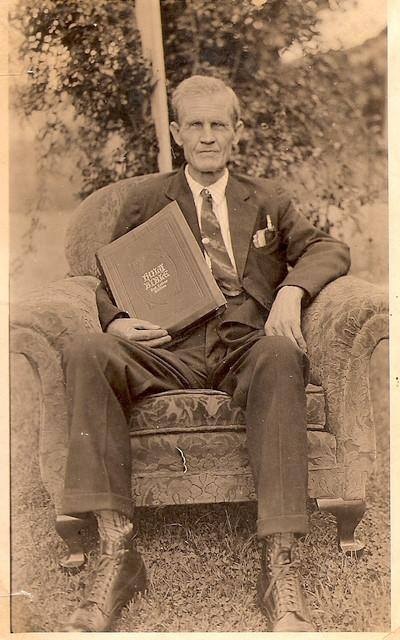
Isaac Marion Nelson, resident preacher of Ferrellsburg, Lincoln County, WV, c.1920s
30 Wednesday Oct 2013
Posted in Ferrellsburg
Tags
Arena Ferrell, Charley Brumfield, Charlie Conley, Ferrellsburg, George W. Ferrell, history, Irene Mitchell, Keenan Ferrell, Lula Fowler, music, The Lincoln County Crew, The Murder of John Brumfield, writing
Keenan S. Ferrell, the adoptive father of George W., had been born in March of 1854 to George and Nancy (Farley) Ferrell in Boone County. He appeared in the 1860 and 1870 censuses for that county in the home of his parents. On April 6, 1877, in Logan County, he married Arena Sanders, a daughter of Martin and Elizabeth (Mitchell) Sanders. Arena, or Rena as she was called, had been born in March of 1861 in Russell County, Virginia. In 1880, the Ferrells lived in the Logan District of Logan County.
In the late 1890s, Keenan and Arena Ferrell moved to the Harts area of southern Lincoln County. In 1895, Rena bought 75 acres of land at Fry, on the east side of the Guyandotte River, from Admiral S. Fry, an early landowner and postmaster at Green Shoal. The following year, she bought 70 more acres on the west side of the river from John Q. Adams. In 1897 she bought a portion of the old Elias Adkins estate, situated on the river between Harts and Green Shoal. Upon this latter piece of property she erected a store building and, in short time, the surrounding area became known as Ferrellsburg. By 1900, the Ferrells had acquired George W., whom they reportedly adopted. Census records for that year show him as an “adopted son.”
Also in the home in 1900 was Lula Vance, the seven-year-old orphaned daughter of John and Columbia (Kirk) Vance. Lula would have practically grown up in the Ferrell home at the time that George W. lived there. Strangely, she never spoke about him to her children. “I don’t remember Mommy ever mentioning anything about George Ferrell,” said daughter Irene Mitchell, of Harts, in a 2003 interview. “That’s kind of strange since Mommy would’ve been raised with him. But she never really talked much about staying with the Ferrells.”
George Ferrell spent his twenties as a bachelor working around the store and making music. He was postmaster at Green Shoal from December 22, 1902 until December 26, 1904, when the office was discontinued to Ferrellsburg. He is credited with the authorship of “The Lincoln County Crew” and “The Murder of John Brumfield,” as well as a song about someone named Harve Adkins. In composing “The Lincoln County Crew,” Ferrell borrowed heavily from “The Rowan County Crew,” assuming this latter tune — documenting events of the Martin-Tolliver Feud in Kentucky — was written first. Ferrell’s version of the song, which primarily draws on local events that happened in Harts between 1889 and 1891, is a warning for men to stop drinking or risk a young, violent death.
“The Murder of John Brumfield” details Brumfield’s murder by Charlie Conley at a Chapmanville Fourth of July celebration in 1900. There is a story that Ferrell was playing this latter song for a crowd of people near the Ferrellsburg train depot when one of Conley’s brothers passed through. According to the story, Ferrell ceased his playing and singing because he feared his tune might cause trouble. But one of the attendants, Charley Brumfield, a brother to the slain John Brumfield, told him to keep the song going — no one would bother him. As Ferrell continued his music, Conley made his way by and on across the river toward his home on the Smokehouse Fork of Big Harts Creek.
George W. Ferrell died on August 6, 1905 at the age of 30 years, reportedly of tuberculosis. His tombstone offers this Biblical quote: “In my father’s house are many mansions.” Also on the stone is the following epitaph:
His last words were Mamma come to me. God bless you. Cease your mourning. Cease to languish o’er the graves of those you love. Pain and death and night anguish, enter not the world above. Sight and peace at once deriving from the hand of God most high. In his glorious presence living, they shall never, never die.
Years later, Fred B. Lambert, noted genealogist and regional historian, published “The Lincoln County Crew” and “The Murder of John Brumfield” in his 1926 edition of The Llorrac. His private notes, now in the hands of the Special Collections Department at Marshall University’s Morrow Library, contain slightly different versions of “The Lincoln County Crew,” as well as a reference to the tune Ferrell wrote about Harve Adkins.
25 Friday Oct 2013
Posted in Ferrellsburg, Women's History
Tags
Appalachia, culture, Ferrellsburg, Guyandotte River, history, life, Lincoln County, photos, West Virginia
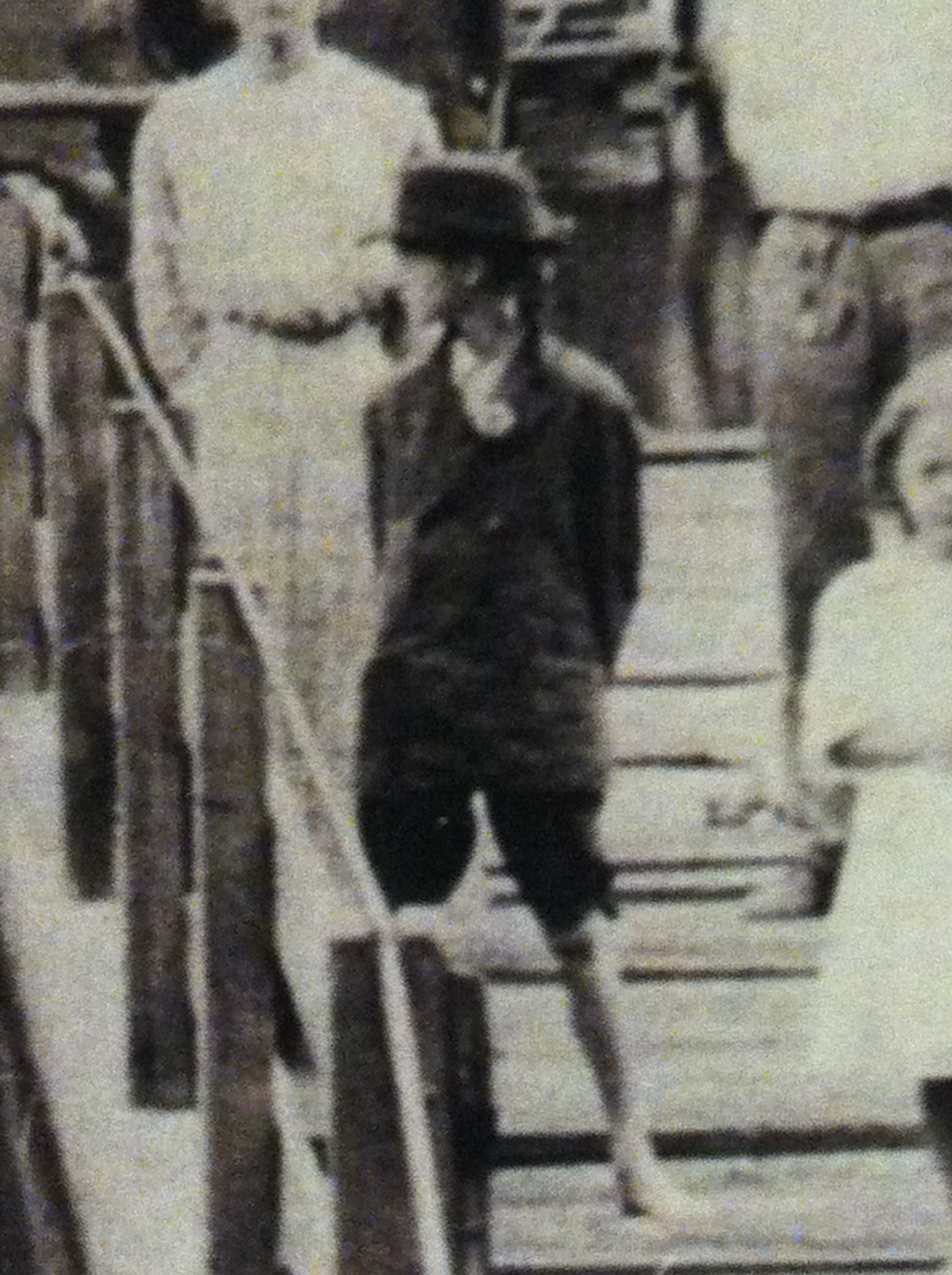
Ferrellsburg Ferry, Lincoln County, West Virginia, 1905-1915
25 Friday Oct 2013
Posted in Big Ugly Creek, Ferrellsburg, Music
Tags
Archibald Harrison, Arena Ferrell, Big Ugly Creek, C&O Railroad, Cleme Harrison, Daniel Fry, Don McCann, Ferrellsburg, genealogy, George W. Ferrell, Guy Harrison, Guyandotte River, Guyandotte Valley, Harold Ray Smith, Harts Creek District, history, Keenan Ferrell, Laurel Hill District, Lincoln County, Logan County, Martha E. Harrison, Martha Harrison, music, Nancy Fry, Nine Mile Creek, Phernatt's Creek, Tazewell County, Virginia, writing
Around the turn of the century, in the years just prior to the arrival of the C&O Railroad in the Guyandotte Valley, George W. Ferrell, a musician in present-day Ferrellsburg, busily wrote songs about local personalities and events. Today, Ferrell’s solitary grave is marked with an ornate tombstone that sits at the edge of what was, until recent years, a garden.
George W. Ferrell was born on October 10, 1874 to Archibald B. and Martha E. (Fry) Harrison. Archibald was the son of Guy P. and Cleme (Harmon) Harrison of Tazewell County, Virginia. Mary was the daughter of Daniel H. and Nancy P. (Bailey) Fry of Logan County. Ferrell’s birthplace is not known because, soon after his parents married in 1865, they left the area, settling at first in Kentucky and then elsewhere.
In 1878, George, then four years old, returned to Lincoln County with his parents. In 1880, his family lived near the mouth of Big Ugly Creek or at the “Bend,” just across the Guyandotte River. Shortly thereafter, they made their home at Phernatt’s Creek, further downriver in Laurel Hill District.
By 1889, Ferrell’s father — who was perhaps recently divorced from his mother — had sold all of the family property in Harts Creek District and at Phernatt’s Creek and relocated to Nine Mile Creek.
Details concerning Ferrell’s early life remain elusive. It is not known who influenced him musically or when he even started writing or playing music. There is no indication of his father or mother being musicians but his mother’s first husband, Jupiter Fry, was a well-known fiddler on Big Ugly. Some of his first songs may have been inspired by his father’s stories of the Civil War.
At some point in his young life, and for reasons unknown, Ferrell was adopted by Keenan and Arena Ferrell, a childless couple at Ferrellsburg in Lincoln County.
“I heard he was just a big old boy when the Ferrells took him in,” said Don McCann, current owner of the property surrounding Ferrell’s grave. “They didn’t have any children of their own.”
In the 1900 Lincoln County Census, Ferrell was listed as their 25-year-old adopted son. More than likely, he was assisting the Ferrells in the operation of their store and business interests.
It is easy to see how Ferrell would have become acquainted with his future foster parents.
“His father worked a lot of timber around Big Ugly or Green Shoal,” said Harold R. Smith, Lincoln County genealogist and historian. “And that would have put him in close contact with the Ferrells at Ferrellsburg.”
But why was he not living with his mother (wherever she was), who died in 1901, or his maternal grandmother, who was alive on Big Ugly? And what was his connection to the Ferrells?
20 Friday Sep 2013
Posted in Ferrellsburg
Tags
Admiral S. Fry, Archibald Harrison, Arena Ferrell, Burl Adkins, Burns Chair Factory, Elmer Evans, Ferrellsburg, Fisher B. Adkins, George W. Ferrell, Georgia Stowers, Hansford Adkins, history, James Stowers, Keenan Ferrell, Kennis Altizer, Lincoln Republican, Martha Harrison, Martin Sanders, Melissa Adkins, Noah Sanders, Walt Stowers, Wilburn Sanders, William Isaacs
Ferrellsburg Post Office was established on December 27, 1904 by George W. Ferrell, a 30-year-old general store merchant and musician.
George W. Ferrell was born on October 10, 1874 to Archibald B. and Martha E. (Fry) Harrison. In the 1890s, Keenan S. and Arena (Sanders) Ferrell, a childless couple who made their home at Fowler Branch, adopted him. The Ferrells were proprietors of a large general store business, which they named G.W. Ferrell & Company. Young Ferrell was active in the family business. According to a 1902-03 business directory, he acted as proprietor of the store. At that same time, from December 22, 1902 until 1904, he served as postmaster of Green Shoal. In 1904, Green Shoal was discontinued to Ferrellsburg. According to postal records, Ferrell served as postmaster of Ferrellsburg from December 27, 1904 until January 23, 1906. “They claimed Ferrellsburg was named after him,” said the late Roma Elkins of Ferrellsburg. On August 6, 1905, Ferrell died of tuberculosis.
On January 23, 1906, Arena Ferrell became postmaster. Arena was born around 1859 to Martin and Elizabeth (Mitchell) Sanders in Russell County, Virginia. She married Keenan Ferrell on April 6, 1877 in Logan County. The Ferrells had come to the Green Shoal area in the late 1890s. In 1895, Arena had bought land on the east side of the Guyan River from A.S. Fry, a postmaster and businessman at the mouth of Green Shoal. The next year, she bought land on the west side of the Guyan River from John Q. Adams. In 1897, she bought land at Fowler Branch, where she occupied a two-story log home and operated a general store. The store was listed in business directories as G.W. Ferrell & Company from 1904 until 1913. Arena served as merchant, while D. Kennis Altizer of Huntington was salesman. In 1913, Ferrell sold out to Hansford Adkins and moved to Green Shoal, where she briefly owned a hotel.
Wilburn Sanders, a nephew to Arrena Ferrell served as Ferrellsburg postmaster from 1906 until 1909. Born around 1882 to Noah Baldwin and Nancy Ann (Haner) Sanders, he married Addie Jones and later moved to Ogden, Utah. In 1906, Ferrellsburg had a population of 200 people and had a telephone connection at the Ferrell store.
Fisher B. Adkins, a popular schoolteacher was postmaster at Ferrellsburg from 1909 until 1914. Born in October of 1879 to Burl and Melissa (Adkins) Adkins of Harts, Fisher lived at West Fork with his wife, the former Beatrice Dingess. The couple had one child, Hope. A 1913 newspaper story in the Lincoln Republican referred to Fisher as “one of the leading educators of the county” who is “well up in educational matters.” Within months, he would win election as county superintendent of schools (1915-1919).
Joseph Walt Stowers became postmaster at Ferrellsburg on February 18, 1914. Born March 1, 1876 to James and Emily (Haner) Gillenwater-Stowers, Walt was raised on Green Shoal and had family connections to nearby Big Creek in Logan County. In 1908 he purchased jointly with Enos Adkins a one-acre tract of land in Ferrellsburg from the Ferrells and opened a store business under the name of Stowers & Adkins. “Walt Stowers bought the old Ferrell store and reworked it…renovated it,” said the late Vergia Rooney of Texas. According to newspaper accounts of that time, Stowers was president of the stockholders in the Burns Chair Factory and considered attending medical school in Louisville. Instead, he improved his store building, increasing its value from $100 in 1910 to $900 in 1912. In June of 1914, Stowers became the sole proprietor of the store. In that same time frame, he married Georgia Adkins, reportedly a daughter of Rayburn Adkins of Wayne County. The couple never had any children but partially raised several nephews. During the next two decades, from the World War I era until the Great Depression, Walt Stowers was the chief businessman in Ferrellsburg. He was also the longest serving postmaster, giving up the position with his death on February 10, 1934. Thereafter, his widow served as postmistress until January 12, 1938.
Following Georgia Stowers’ term, William Isaacs was postmaster from January 12 until April 1, 1938. Isaacs was a resident of upper Ferrellsburg. “Old man Isaacs lived above the schoolhouse in old man I.M. Nelson’s house,” according to Elkins. At the same time that Isaacs became postmaster, he also bought much land from Georgia Stowers. Within a year, he sold most of the land and soon moved to Barboursville where he was involved in the realty business. Georgia was also in Cabell County by 1939, where she lived at 1600 16th Street, Huntington.
Elmer Evans became postmaster at Ferrellsburg on November 28, 1938.
05 Saturday Jan 2013
Posted in Ferrellsburg
Tags
Appalachia, culture, Frank Davis, genealogy, Harts Creek, history, life, Lincoln County, photos, U.S. South, West Virginia, writers
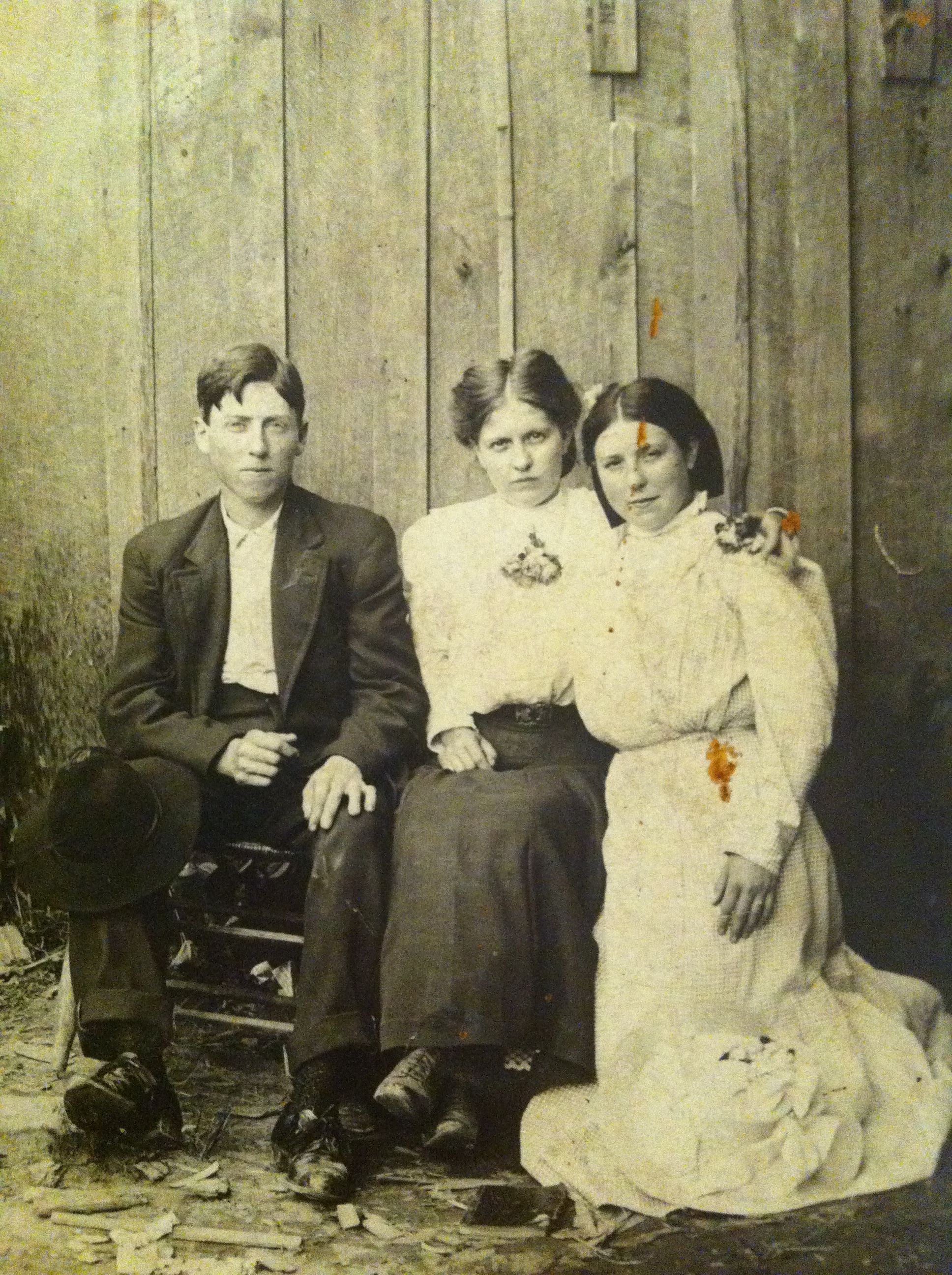
Harts Creek Residents, 1910-1920
09 Sunday Dec 2012
Posted in Ferrellsburg
Tags
Appalachia, culture, education, history, life, Lincoln County, Low Gap School, photos, U.S. South, West Virginia
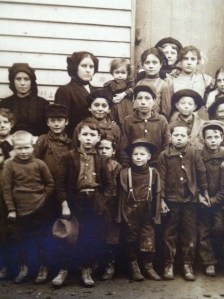
Harts Creek School Children, 1895-1915
05 Wednesday Dec 2012
Posted in African American History, Ferrellsburg
Tags
Appalachia, culture, Ferrellsburg, history, life, Lincoln County, photos, U.S. South, West Virginia, writing

Ferrellsburg Ferry, 1900-1915
Writings from my travels and experiences. High and fine literature is wine, and mine is only water; but everybody likes water. Mark Twain
This site is dedicated to the collection, preservation, and promotion of history and culture in Appalachia.
Genealogy and History in North Carolina and Beyond
A site about one of the most beautiful, interesting, tallented, outrageous and colorful personalities of the 20th Century
 Brandon Ray Kirk