Tags
Appalachia, Burl Farley, Cabell County, culture, genealogy, history, life, Mary Ann Farley, photos, Roach, West Virginia
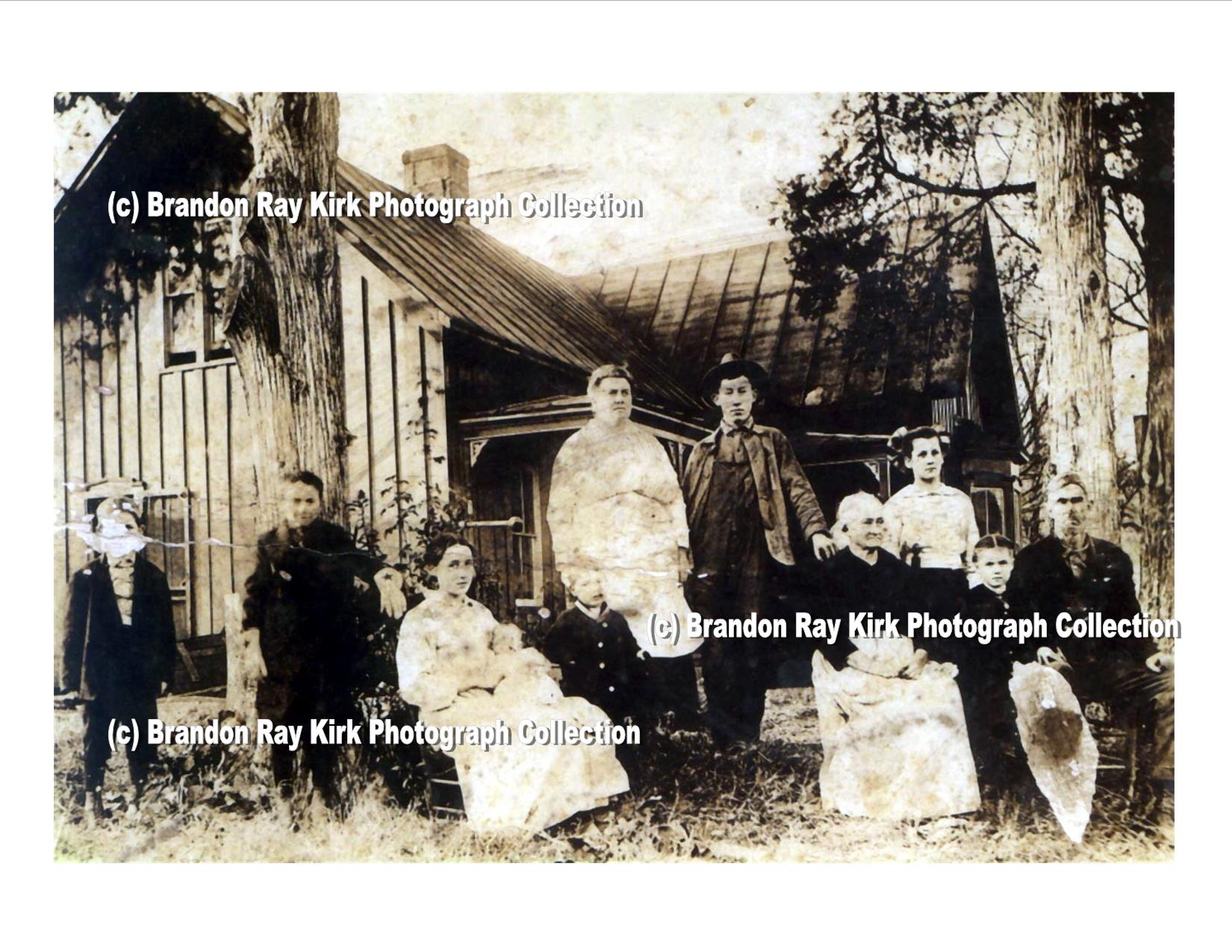
Burl Farley (extreme right), Roach, Cabell County, WV

15 Saturday Mar 2014
Posted in Ed Haley, Lincoln County Feud
Tags
Appalachia, Burl Farley, Cabell County, culture, genealogy, history, life, Mary Ann Farley, photos, Roach, West Virginia
Burl Farley (extreme right), Roach, Cabell County, WV
15 Saturday Mar 2014
Posted in Big Harts Creek, Culture of Honor, Ed Haley, Lincoln County Feud, Timber
Tags
Al Brumfield, Burl Farley, Carolyn Johnnie Farley, Charley Brumfield, crime, French Bryant, George Dump Farley, Green McCoy, history, Hollene Brumfield, Hugh Dingess, Milt Haley, timbering, Wash Farley, writing
Johnnie had also heard a lot about Milt Haley.
“Yeah, I knowed about Milt. Well, as you know, they used to raft timber in this country. That was their work. That’s what they fed their families with. They’d cut their logs and they’d roll them in these bottoms and then they’d back up the creeks till they could get water enough to float those logs into Guyandotte. And my dad — he was a young man — they would all float them into Huntington, you know, to where they could get their pay out of them. My granddad owned everything in here and he had plenty of timber, so somebody got jealous or got mad or some way ‘nother and — if I remember right in what I’ve heard all my life — they hitched Milt and another fellow up to shoot Grandpa Burl Farley and Uncle Al Brumfield. They was together — they was like brothers.
“So they laywaid Grandpa Burl and Uncle Al and some more boys that was a rafting the timber down through there. Well, Aunt Hollene was behind Uncle Al on the horse, so whenever they aimed to shoot Uncle Al they shot Aunt Hollene. And she was Burl’s wife’s sister so they had it out. Somebody took Aunt Hollene on to get her doctor but the men took out after them and catched them. They didn’t wait. They took them down here on the creek at the mouth of Bill’s Branch to Hugh Dingess’ old big log house and they made them cook chickens. Milt Haley and Green McCoy — they were both musicians — and they played a fiddle and a banjo all night. Hugh Dingess took his family and went to his brother’s house whenever this all took place.”
I asked Johnnie who told her that Milt and Green had played music before their deaths and she said, “My grandpaw Burl told us. I was raised right under my grandpaw’s feet. They rode somewhere and got these instruments but I forgot where Grandpaw said it was. They packed instruments into this house.”
Brandon asked about the members of the mob.
“Well, from what I understand, they was my grandpaw Burl, his brother Wash, and his brother Dump, Al Brumfield, Charley Brumfield — a whole bunch of them, all together,” Johnnie said. “French Bryant was in it.”
She looked at me and said, “They tortured them, John. That was my way of looking at it. I’d call it torture. If I shoot you in the leg here and foul you up here some way to you couldn’t do nothing to me and directly take a big drink of liquor and just shoot you again somewhere I’d call that torture. Now they didn’t kill them right in the house. They took them outside to shoot them about four in the morning. They didn’t want no blood or nothing left over in their house.”
Billy asked who fired the first shot.
“I don’t know which one fired the first shot, whether it was Uncle Al or Grandpaw Burl,” Johnnie said. “It was one of the two.”
After Milt and Green were shot, they were hung from a walnut tree.
Johnnie said, “One of my uncles said that was the cruelest thing he ever saw and he crawled back under the bed and hid and said two or three weeks later he had to fight my grandpaw over that. That was Uncle Dump. It hurt that old man, it really did. He crawled under the bed, John. He said that they done them so cruel and mean. They musta been a knocking them around you know.”
Brandon asked why Dump had joined the mob if he had no intentions of participating in Milt’s and Green’s punishment.
“He didn’t have no idea,” Johnnie said. “He just figured they’d be a drinking. From the way he talked, he didn’t know they was a gonna do it. Whenever he’d go to talking about it, tears would just fall down his cheeks. He’d say, ‘You know, people pays for these things.’ Dump was a good man as long as you didn’t try to do something mean to him. If you did, you paid, too. He’d never back talk Grandpaw Burl cause he’d just a knocked him down. Grandpaw was a big man and Dump was a little man.”
We were kinda surprised to hear Johnnie speak so frankly about her Grandpa Burl.
“My grandpaw was wicked, John, and mean. He packed guns and he was the meanest old man I ever heard tell of. Well, anybody that crossed him they had to pay. Grandpaw was mean after women. He ‘bumped’ every woman he could get with. I’ll tell you what. They wasn’t none of us kids loved him good enough to go stay all night with him. We was afraid of him. We actually was afraid of him.”
I said, “Well now, it was talked around that Milt Haley and Green McCoy were pretty mean themselves…”
Johnnie said, “Well, they were from all accounts.”
I continued, “…so there was a kind of a feeling that the guys that killed them had kinda done the neighborhood a favor.”
Johnnie said, “Yeah, they felt that way, John.”
It also seemed as if there was a deliberate attempt for everyone to “get blood on their hands” so no one could talk.
Johnnie said many of the men who participated in Milt’s and Green’s murder hung together after the feud.
“You know, after them killings, I believe that they was afraid they’d be ganged, too, and they was people went to different states.”
Burl always kept a gang of men around him for protection.
Johnnie said, “You never met a man what didn’t have a gun. People drinking would ride horses right up on your porch. I’ve seen them do it.”
14 Friday Mar 2014
Posted in Big Harts Creek, Ed Haley, Music, Women's History
Tags
Appalachia, Carolyn Johnnie Farley, culture, genealogy, Harts Creek, history, life, Lincoln County, music, photos, West Virginia
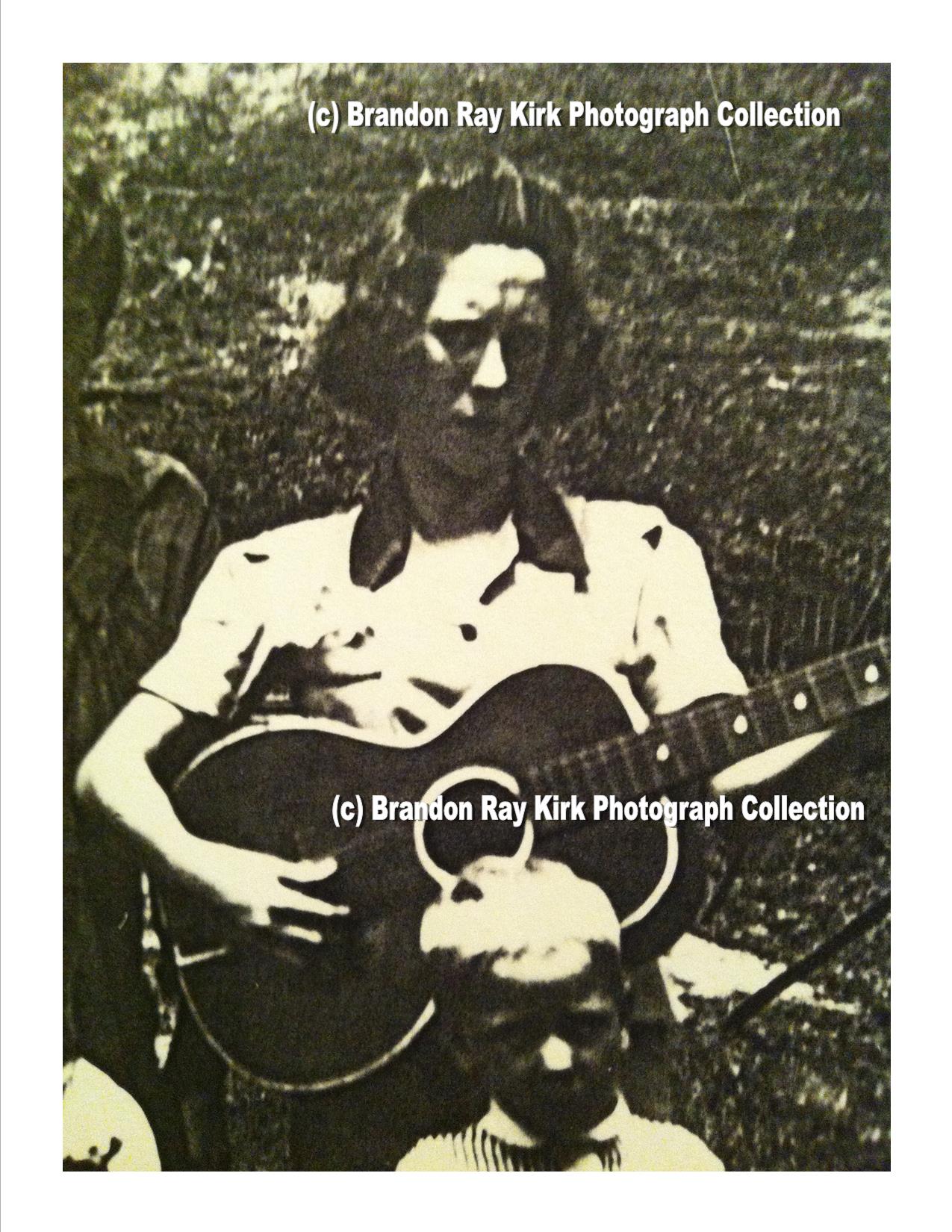
Carolyn “Johnnie” Farley of Brown’s Run of Smokehouse Fork of Big Harts Creek, Logan County, WV.
14 Friday Mar 2014
Posted in Big Harts Creek, Ed Haley, Music
Tags
Billy Adkins, Brandon Kirk, Carolyn Johnnie Farley, Ed Belcher, Ed Haley, fiddler, fiddling, George Mullins, guitar, Harts Creek, Hattie Farley, history, Hollene Brumfield, Lewis Farley, Logan County, Mary Ann Farley, Mason Conley, music, Rosa Mullins, West Virginia, writing
The next day — the 106th anniversary of Milt Haley’s death – Billy Adkins suggested that we go see Carolyn “Johnnie” Farley on Brown’s Run of Smoke House Fork. She was a granddaughter to Burl Farley, one of the ringleaders of the Brumfield mob. There were other interesting connections: her grandmother was Hollena Brumfield’s sister and her mother was Ben Adams’ niece. Her ancestors, then, represented both sides of the trouble, helping to make her a great source on the 1889 feud. Billy said she was old enough to remember Ed, too. His notes showed her as being born in 1924.
Without really hesitating, we went outside through a small rain shower and boarded the car and took off up the creek. We were oblivious to the poor weather and kept pointing to spots that were probably only significant to us.
“Now that was part of the old Al Brumfield farm.”
“There’s where the old boom was.”
“Here’s where the ambush took place.”
Our fascination with all the sites continued after we turned up the Smoke House Fork.
“There’s the Hugh Dingess Elementary School.”
“There’s the old Henderson Dingess place.”
“There’s where the old Dingesses are buried.”
“There’s Cecil Brumfield’s place. Ed used to visit there.”
We finally reached Browns Run. Johnnie Farley’s white house was just up the branch on the left, accessed by a muddy driveway filled with ruts and sharp jutting rocks. We parked behind the house, where several wooly dogs and a flock of tiny chickens surrounded us — three strangers ankle-deep in mud holes.
Almost immediately, Johnnie came out the back door and spotted Billy — one of the most recognized and popular guys in Harts — and told us to come on inside. She led us through the kitchen and a hallway, past a giant photograph of her grandmother, Mary Ann Farley (Hollena’s sister), and into a very dim living room. We all sat down on furniture that was literally surrounded by papers, books and pictures. Johnnie was obviously a packrat — a woman after my own heart.
Billy began introducing Brandon and I, but Johnnie stopped him short and looked at me with her ice blue eyes and said, “Oh I know who you are. I’ve got some of your records.” Her spirit and energy were immediately apparent — she spoke as if we were old friends. Her husband sat quietly nearby in a comfortable chair. He was in poor health.
I asked Johnnie if she remembered Ed and she said, “Yes, I knowed Ed Haley. He used to come through this country and pick and play the fiddle. I knowed Uncle Ed good. That old man could stop at any man’s house and they’d take him in and keep him all night and feed him. And he’d come through and stop you know and Mom and the girls would have a meal on the table. They’d just say, ‘Uncle Ed, come on.’ And they’d help him, show him the wash-pan and stuff, let him wash his hands, and he’d just go sit right down and eat with us. Whenever he’d come through out of the Chapmanville area he’d stay with one of my uncles and aunts that lived across the hill. That was George and Rosa Mullins. He’d go across the mountain ’cause he liked drinking and they had it over there — moonshine. And he stayed there week in and week out. People was good to him. He wasn’t mistreated.”
I asked Johnnie how old she was when Ed used to come around and she said, “I was about 10, maybe 12.”
She tried to describe him.
“Well, Ed was a little bit maybe heavier than you are, ’bout as tall. I know he kinda had a great, big belly on him. He was a great big fat man. I’d say Ed weighed around 170 pound. To my recollection, Ed had slim hands and slim fingers. He wore shaded glasses and he wore an overcoat — a brown one — and he had an old brown hat. I believe he smoked a pipe. He wore real old-fashioned shoes and old yarn socks. Uncle Ed drunk a lot. He was a good person. He was humble. He didn’t bother nobody. The only harm you could say he done was to hisself and that was drinking. He was around a lot of people, but Uncle Ed didn’t talk too much. He wouldn’t confront his own feelings. He wouldn’t open up fully to nobody.”
I asked Johnnie if she ever saw Ed drunk and she said, “I never did see him drunk — really drunk, no. I’ve seen him drink but not drunk.”
What about singing?
“No. I heard him fiddle but never sing. He played old tunes. ‘Turkey in the Straw’ and just quite a lot of the old-fashioned first fiddle player’s tunes. Uncle Ed was a good fiddler. He could make a fiddle talk. Mason Conley played the guitar and he’d get with him and play. And they was an old man traveled a lot with him named Ed Belcher. They had an old tune they played called ‘Sally Goodin’.”
Now, what happened to Ed Haley?
“I believe Ed died up around Ed Belcher and them. He drinked himself to death.”
13 Thursday Mar 2014
Posted in Big Harts Creek, Ed Haley, Music
Tags
Appalachia, culture, Dood Dalton, fiddler, Harts Creek, history, Laura Adkins, life, Lincoln County, love, Nary Dalton, photos, West Virginia
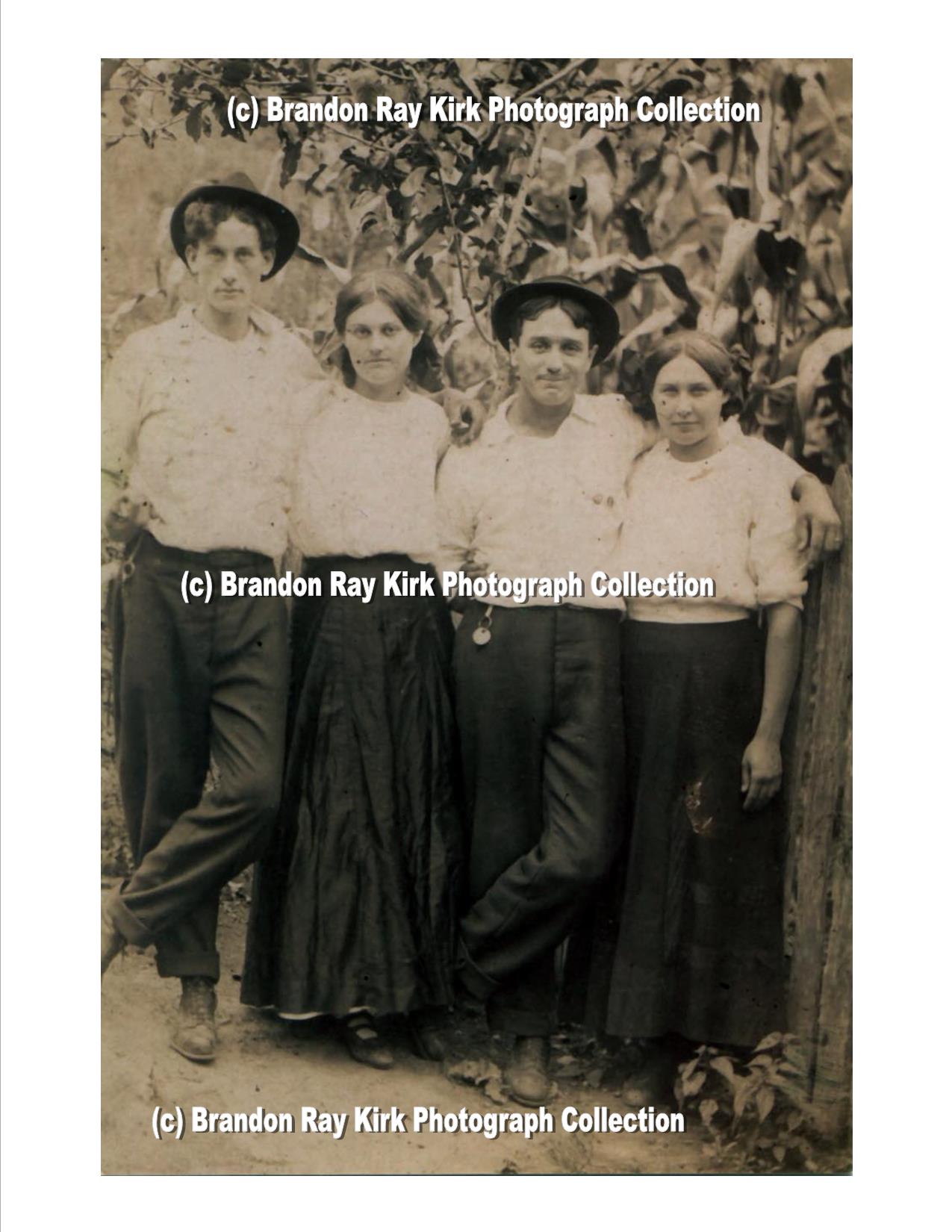
Dood Dalton, Nary (Adkins) Dalton, unknown man, Laura Tomblin
13 Thursday Mar 2014
Posted in Big Harts Creek, Ed Haley, Music
Tags
Clabe Tomblin, Dood Dalton, Ed Haley, Ella Haley, Ezra Jake Dalton, Harts Creek, history, Jeff Mullins, Lincoln County, Liza Mullins, Logan, music, Nary Dalton, Tootsie Tomblin, West Virginia, writing
We later drove to see Tootsie Tomblin, a younger sister to Jake and a neighbor on Big Branch. Tootsie greeted us at the door, flanked by her tall husband Clabe, and a small nut-cracking housedog that barked at our every movement — even after we’d sat down at a large eating table in the dining room.
Tootsie referred to Ed Haley as “Uncle Ed” and said her whole family loved him. She said he was “a great person…so understanding.” Ed was particularly close to her mother, Nary Dalton.
“Ed thought the world of my mother. He thought my mother was the finest woman he had ever laid his eyes on. And he’d tell her, he’d say, ‘Come over here Nary and set down beside me. I want to talk to you a little bit.’ And he’d tell her everything about hisself, and about his wife, his children and everything. He loved her cooking.”
Tootsie laughed.
“Daddy had a whole litter of kids and we all had nicknames but Mommy insisted on calling us by our real names. And Ed, being blind, couldn’t figure out why there were so many kids in the home. He called for Mom. ‘Hey Nary, come in here and set down beside of me.’ Mom went to him and said, ‘What are you a wanting, Ed?’ He said, ‘I’ve listened for three or four days and I’m kind of buffaloed.’ She said, ‘What are you buffaloed on?’ Ed said, ‘You got too many kids. All of these names don’t add up. What are we a doing with all these names?’ Mom laughed and then explained it to him.”
Before we could ask Tootsie any more questions, she showed us several small boxes of old family photographs while feeding us donuts, pie and milk. I asked her if she remembered much about Ed coming to her father’s house.
“They was a funny family of people,” she said. “I mean, they had peculiar ways. They was different. Them people went clean as pins. You never seen them dirty. Ed could take care of them good as I could mine and me with eyes. When Ed spoke, he spoke with authority. They knew he meant what he was saying. He’d say, ‘Now, that’s enough,’ and that was it. He never had to whip his kids.”
Tootsie said Ed mostly visited Dood at his first home (“Jake’s place”) and never brought his wife with him. Later, after her father built his new house in 1951 (her current home), Ed only came a time or two. On his last trip, he had a Jacob Stainer or a Stradivarius violin with him.
“He was here in the fall and died the next summer or maybe that winter,” she said. “One of his boys brought him here.”
When Ed was in Harts, he traveled a lot with Jeff Mullins, a simple-minded man and brother to Aunt Liza who stayed with the Adams family. In Logan, he played with his wife or a colored man.
I asked Tootsie if she remembered a lot about how her father played the fiddle. She said she was sure that he played with the fiddle under his chin. Some of his tunes were “Cacklin’ Hen”, “Wednesday Night Waltz”, and “Bear Dog” — basically what Ed played. He could also play a little on the guitar and sing. Tootsie really bragged on Ed’s singing — like his “Coming Around the Mountain” — and kind of caught us off guard when she said, “Buddy, Ed Haley could dance. He was a chubby fellow but he could move. That old man could move.”
12 Wednesday Mar 2014
Posted in Big Harts Creek, Culture of Honor, Ed Haley, Music
Tags
blind, Cow Shed Inn, Crawley Creek, crime, Dood Dalton, Ed Haley, Ezra Jake Dalton, fiddlers, fiddling, Green McCoy, Green Shoal, Harts Creek, history, Hollene Brumfield, John Hartford, Lincoln County, Milt Haley, music, Rockhouse Fork, Ward Brumfield, West Virginia, World War II, writing
Around that time, I got my fiddle out to see if I could coax Jake into playing a few tunes. He said he couldn’t play anything — he’d quit years ago.
“I got shot through this shoulder with a high-powered rifle during World War II,” he said. “My fingers is stiff and my arm don’t operate just right. You’ve got to have a good bow hand to play a fiddle. I used to fiddle, but I can’t do no good no more.”
I asked Jake if he remembered any of Ed’s tunes and he said, “I don’t know — he played so many. ‘Hell Among the Yearlings’, ‘Wild Horse’, ‘The Cacklin’ Hen’, ‘Cluck Old Hen’, ‘Casey Jones’. They was all kinds — you could just keep naming them. Never did hear Ed sing.”
Thinking back to those times caused Jake to say, “Dad fiddled with Ed, you know. Dad never did own a fiddle. Ward Brumfield gave him one and he kept it all of his life. My dad used to like one called ‘The Blackberry Blossom’. ‘The Money Musk’ — man, it was a fast tune when he played it. They’d play ‘The Sourwood Mountain’. Pluck that string, you know. Play that ‘Sally Goodin’. Called one ‘Bear Dog’. It was something like ‘Bonaparte’s’, more or less. I used to, when my dad fiddled, get me two sticks this a way and beat on the strings of the fiddle.”
I asked Jake if he ever heard a tune called “Pharaoh’s Dream” or “Getting Off the Raft” and he said, “I’ve heard of ‘Pharaoh’s Dream’ but never heard of ‘Getting Off the Raft’. Can you play that ‘Danced all night with a bottle in my hand. Swing around the corner with the other man?'”
I asked Jake if he knew anything about Ed’s father and he said, “His dad was a mean guy. My dad has told me many times that Ed had the measles when he was a kid and his daddy took him out up here on Rockhouse and stuck him in the creek and that’s what made old man Ed Haley blind. His daddy stuck him in the creek. His daddy was a bad character. They went on a rampage, him and Green McCoy. My daddy knowed them from the beginning. They shot old Aunt Hollene Brumfield with a .30/.30 Winchester and it come out in her mouth. Never killed her. These fellers went to Kentucky — Ed’s daddy and Green McCoy — and they went and got them somewhere and took them up to Green Shoal up in there and massacred them. Someone took them up on the West Fork and buried them kindly up on the side of the hill. They probably just dug a hole and put them in it.”
Jake remembered Hollena Brumfield well.
“She was an old lady that run a store,” he said. “She was bad to drink — fell down a stairway and broke both of her thighs. She couldn’t get around very good. She had a big garden right there where Taylor Brumfield’s wife’s home is and she’d get out there… She’d keep every bum that come along and work them. She was good to them — she’d feed them, you know — and put them out there in that garden. She’d have them take her a chair out there and she’d hobble out there and sit in that chair and watch them work that garden. Boy, I dreaded her. When she’d talk, the spit would work out that hole there.”
Just before we left Jake’s, I asked him if he knew anything about Ed’s death. He basically repeated what Stump had told us earlier.
“I don’t know what happened. They killed him on the Crawley Creek side of the mountain over there. They beat him to death over there in a beer joint called the Cow Shed Inn. Some drunks did it, you know.”
I was flabbergasted. I mean, how could those Dalton boys tell such an off-target story?
11 Tuesday Mar 2014
Posted in Big Harts Creek, Ed Haley, Music
Tags
Bernie Adams, Billy Adkins, Dood Dalton, Ed Haley, Ella Haley, Ezra Jake Dalton, fiddlers, fiddling, Harts Creek, history, Lincoln County, Logan, Mona Haley, moonshine, Nary Dalton, West Virginia, World War II, writing
Along the way, we stopped and picked up Billy Adkins, who guided us to Jake’s home on Big Branch. Jake, we found, was a little skinny fellow, somewhat quiet, and — I was told — a decorated World War II veteran.
I asked Jake if he remembered the first time he ever saw Ed.
“I don’t remember that,” he said right away. “I was born in 1916 but I didn’t stay at home like the rest of my family. I’d slip off from home here when I was a little bitty fella and maybe stay a week or two before I come back or they’d come get me or something another. Then after I got up in years, I joined the Army and I stayed over four years in the Army. I was in there nineteen months before they bombed Pearl Harbor. So I didn’t stay home like the rest of the kids.”
A little later in the conversation, Jake made it clear that he remembered more about Ed and his family than he realized.
“He stayed with Mother and Dad a lot, Ed did, and them young’ns,” he said. “She was a music teacher, the old woman was. She was from out of Kentucky and he was off’n Harts Creek. They had about five, six children.”
I asked Jake how long Ed usually stayed with his father and he said, “Aw, he might stay a week. They’d go up there at the courthouse at Logan and play music, him and her, and she had this little boy tied to the rope so she could draw him in you know out on the sidewalk. And somebody give him some pennies and he had them pennies you know and he dropped them and she started drawing them in. He ripped out a big oath, ‘Wait till I get my money!’ You know, they couldn’t see what they done or nothing.”
Sometimes, Ed left his kids with Dood when he was playing in Logan.
“Now them kids, they was pretty mean, but people most of the time helped him correct them,” Jake said. “They raised one girl, Mona. That girl, she was a bad one. She’d run up and down the road with them boys if Dad didn’t get after her. She was just a young gal, you know. Ed, he didn’t care if you corrected them kids. If you busted the hide on one that was all right.”
Jake didn’t remember much about Ed’s appearance other than that his eyes were “milky-looking.”
When Brandon asked him what it was like to hang around with Ed, Jake said, “He talked to Dad a whole lot. He said to my dad one time, ‘Dood, where do you think hell’s gonna be at?’ Dad said, ‘I never thought about where it’s gonna be, Ed.’ He said, ‘I have an idea where it’s gonna be. I believe it’ll be on the outside of this world.’ He was a good ole man in a way, but he was bad to drink in a way.”
Oh…so Jake remembered Ed drinking.
I asked him if Ed drank a lot and he said, “No, I never did see him come to Dad’s drunk. Dad didn’t allow no bad stuff around his house, even when he wasn’t a Christian.”
Jake thought for a second, then said, “Ed was a healthy eater. He’d come in there — get up for breakfast — he’d say to my mother, ‘Nary, have you got ary onion?’ And she’d get him an onion. He’d eat an onion head for breakfast. My mother was a person that would feed anybody that came along. It didn’t make no difference whether he was a drunk, a hobo, or what he mighta been, Mom would feed him. We had a big long table with a bench on one side and about ten people to eat off of it besides who come in. We kept Bernie Adams half the time. He was the puniest feller that ever you saw — a plumb weakling he was — and he’d stay with Dad for maybe two or three weeks.”
Jake tried to describe his memories of Ed and Dood playing around the house.
“We just had an old log house,” he said. “A door over there and one here and one room and Dad had a lot of trees around here. They’d sit out there in the yard. They’d start in on Saturday evening and they’d be a sitting right there when Monday morning come with a half a gallon of moonshine playing music. They’d fiddle that long.”
10 Monday Mar 2014
Posted in Big Harts Creek, Ed Haley
Tags
Appalachia, culture, Dick Adkins, Dood Dalton, Harts Creek, history, John Lambert, life, Lincoln County, photos, Reb Adkins, West Virginia

Moses “Dood” Dalton, Charles “Reb” Adkins, John “Stud” Lambert, and Stonewall “Dick” Adkins, Harts Creek, Lincoln County, WV
10 Monday Mar 2014
Posted in Big Harts Creek, Ed Haley, Timber
Tags
Al Brumfield, Calhoun County, Chicago, coal, Cole and Crane Company, Dood Dalton, Ed Haley, farming, fiddling, Harts Creek, history, Jake Dalton, Laury Hicks, Lincoln County, Logan County, logging, Stump Dalton, timbering, West Virginia, writing
Just before we left, Stump let us borrow a cassette containing a 1976 interview with his father. Surely, we thought, Dood would speak a lot about fiddling and of his friendship to Ed. Instead, he told about his life in Harts. His voice was very melancholy and he spoke loudly and in spurts. Some of his earliest memories were of the timber industry in Harts and of the Cole and Crane Company, which timbered extensively in the LoganCounty area from about 1893-1908. In 1900, he said, Cole and Crane used splash dams to float logs down to the mouth of the creek “where Al Brumfield had a boom in.” The boom was located at the present-day site of the West Fork Bridge.
“And this boom caught them logs all,” Dood said. “Them logs was piled on top of one another from that boom…to the mouth of Big Branch. At that time, if you owned across the creek, you owned the creek. Al Brumfield owned the other side there and he put this boom in there and bought the Cole and Crane Company and when he bought them he kept that timber there and they gave him a contract on rafting it and running it down to Guyandotte.”
Cole and Crane Company once paid Brumfield $2800 to cut his boom loose and let timber out of the creek, he said.
Dood said he went to work cutting timber for Cole and Crane Company when he was seventeen years old. He also drove oxen and cattle and loved to hunt foxes and raccoons.
After marrying, he supported his family by farming and raising cattle, sheep and hogs at his 300-acre farm on Big Branch.
In subsequent years, he worked as a blacksmith, bricklayer and coal miner.
In 1964, he took a three-month visit to Chicago and hated it about as much as an earlier visit to Michigan. He said, “My days is short. I’ve spent 84 years here and I’m figuring on spending the rest of my life here.”
And that was basically it.
Not one reference to fiddling from a guy who had played all of his life.
Well, in spite of the tape, we were pretty sure that Haley’s good friendship to Dood Dalton was authentic and was perhaps as important as his friendship with Laury Hicks in Calhoun County. We wanted to visit more of Dood’s children, so Stump directed us to the home of his oldest brother, Jake Dalton, an old fiddler on the Big Branch of Harts Creek. Jake lived in his father’s old home — the place where Ed had visited so frequently during the last twenty years of his life.
09 Sunday Mar 2014
Tags
Appalachia, blind, Crawley Creek, Ed Haley, fiddle, Green McCoy, Green Shoal, Harts Creek, history, Jacob Stainer, John Hartford, Milt Haley, music, Stump Dalton, Ward Kinser, West Virginia, writing
Stump said Ed would sometimes talk to him and his brothers.
“Well, his fiddle playing of course was the number one thing he talked about but also his rendezvous, like playing on street corners and beer gardens, and the people he associated with playing music. That’s the type of conversations he would have. He’d tell about some fiddle player maybe dying or something happening to them, and he knew them all over the country. Now he’d been around, old Ed had, buddy. Ed stayed on the road practically.”
What about his children?
“I think he had two or three,” Stump said. “He had one boy come to our house one time and stayed three days with him. That’s the only one of his kids I ever seen. I forget his name. He was older than me. He was turned just like his daddy. You’d never know that the boy’d get into anything but I think he drank some.”
What about Ed’s father? Did he ever talk about his father?
“Yeah, he’s talked about his dad, but I don’t remember the things he said about him. Never heard him mention his mother.”
We tried to prod Stump’s memory by mentioning that Milt was killed at the mouth of Green Shoal.
“Yeah, Milt Haley. My dad knowed all about it. They got chopped up with an axe. Do you know that big two-story house? That’s where it’s supposed to’ve happened at — right along in there somewhere. They was him and one other guy killed — McCoy.”
So what do you know about Ed’s blindness?
“He told me he was blind from the time he was three years old,” Stump said. “His eyes wasn’t like our eyes. His eyeballs — instead of the pupils and stuff — was white. Just very faint, you could see the pupils.”
Ed was very good at compensating for his blindness and was able to use his fingers to identify certain types of fiddles.
“Dad bought me a little Jacob Stainer fiddle one time off of a man by the name of Ward Kinser,” Stump said, elaborating. “Ward was a distant relation of ours, lived up above Logan. He come riding a horse up through there with that fiddle and Dad bought that off of him for five dollars and give it to me. Ed come just not long after we’d bought that fiddle. When Dad went out to the road and got him, he said, ‘Come on Ed, I got a fiddle down here I want you to look at.’ And him blinder than a bat. We went down there and Ed took that fiddle and set it right on his belly and he started at the neck up here, just feeling around it at the keys. He felt all around that fiddle then he turned around to my dad and said, ‘My, my, Dood. That’s the first Jacob Stainer I’ve had in my hand in I don’t know how many years.'”
Stump laughed, “I never will forget that.”
We asked Stump about Ed playing at the old post office/store in Harts.
“Yeah, he played down there,” he confirmed. “He played for money down there. He put out a little old can, I believe it was. He used to play a lot up there at Logan at the courthouse. Now, he had more friends around here, like up on Crawley and up on Big Hart, than just our family. He may stay a month with us and stay sober but then he’d get with a bunch up on Crawley and up in the head of the creek here and you wouldn’t see him for a while. He’d stay up in there drinking. He got killed about half way up Crawley.”
What?
“Now, it was after I come out of the army, I know,” Stump said. “The first part of ’53. They was a beer garden up there, like a two story building — seemed to me like a bunch of Butchers owned that, I’m not sure — and they found him dead at that building up there. Somebody beat him to death. I’ve heard somebody robbed him. They was supposed to been three people done it, but it never did come out. I never heard no names.”
I had to stop Stump and say, “Wait a minute. Are you saying that Ed Haley was murdered on Harts Creek?”
“Yeah,” he said assuredly. “We knew where he was at. He’d been at our house. That’s where he said he was going. Well, he’d been gone awhile, ’cause he’d go up Big Hart, maybe, it might take him maybe a month to get on Crawley up there. They took Ed Haley, buddy, and shipped his body back out of here. He never come back to our house after that.”
Wow…
08 Saturday Mar 2014
Tags
Bernie Adams, Brandon Kirk, Dood Dalton, Earl Tomblin, Ed Haley, Ella Haley, Harts Creek, history, John Hartford, Lincoln County, music, Stump Dalton, Uncle Harmon and his Fiddlin Fools, West Virginia, writing
Brandon asked if Ella ever played with Ed at Dood’s and Stump said, “The only time I ever seen her play was when Ed asked her. I’ve seen her come there and not play. Now, she didn’t play a mandolin like I played or say like Bill Monroe or somebody like that. All she done was just chord the thing. Play the second on the guitar you know and strummed it. She was a quiet person and she was a heavy-built woman. She never had much to say to nobody. She sorta give you the impression that she ‘would rather be somewhere else than where I am now,’ you know.”
Thinking of Ed’s accompaniment, Stump said to me, “You ever hear the name Bernie Adams?”
I had, but didn’t know much about him.
“Bernie Adams was a cousin of mine,” Stump said. “Bernie was born and raised up on Hoover and he was one of the best second guitar players I ever heard pick up a guitar. And all he did was drink. He’d been to Nashville maybe twice, I think. Now when Ed Haley come to our house, the first thing he’d ask Dad, he’d say, ‘Dood, where’s Bernie Adams at?’ Back then, you didn’t have no telephone. Big Hart Road was dirt. We’d take a timber truck and hunt Bernie Adams up and bring him down there. If we found him drunk, we’d bring him down there and he’d sober up. Ed told me, he said, ‘I never played with a man that had the timing that Bernie Adams had with that guitar.’ He was one of the best.”
I asked Stump if Bernie played runs and he said, “He could, but he played a follow-up for their music. And you talk about time.”
Stump didn’t know that Bernie ever played over the radio, but we later heard that he played on Logan radio in the mid-40s with a group called Uncle Harmon and his Fiddlin’ Fools.
Bernie died in 1962.
“They found him dead right at the mouth of Hoover when they went down over that little hill next to the creek,” Stump said. “He’d sat down next to a log and they found him laying beside that log. He drank himself to death. He’d left Earl Tomblin’s beer garden up on Big Hart. Somebody probably picked him up and drove him down there and they found him dead the next morning.”
I asked Stump to describe Ed and he said, “Ed was a pretty big man. I’d say Ed Haley woulda weighed 180-185 pounds and I’d say Ed Haley was 5’11” or 6′, too. I particularly noticed his hands. He had long fingers. And he was a fast walker. Ed Haley was the type of feller that would eat anything you put on the table. He liked to cut his onions up in his beans, buttermilk, cornbread, then rub some bacon in it.”
Did Ed do any kind of chores to help out around the house when he was there?
“No, he was just a guest and that was it. We never asked him to do anything, he never done anything. When he come to our house, other than sleep, 75-percent of our time was playing music.”
I asked Stump if Ed ever came around his father’s home drunk and he said no — Ed was always “very mannerly” at the Dalton home.
“Ed Haley was a fine man, buddy,” he said. “He was my idol. Ed Haley was a pretty smart man. He was good when it come to the Bible — he knowed what to do, you know, and they’d sit there and discuss the Bible, but Ed never would accept the Lord as far as being saved. If anybody could’ve ever got Ed to quit drinking, it woulda been Dad.”
Dood Dalton was a moonshiner in his younger days but gave it up just after Stump’s birth.
“Dad was one of the most well thought of men in this country really, if you want to know the truth about it. Dad made a study of the Bible for 62-and-a-half years.”
07 Friday Mar 2014
Tags
Appalachia, Ben France, Cabell County, civil war, Confederate Army, fiddler, fiddling, Fred B. Lambert, genealogy, history, music, photos, West Virginia

Ben France, fiddler and Confederate veteran, Cabell County, West Virginia. From the Fred B. Lambert Papers at Special Collections Department, Morrow Library, Marshall University, Huntington, WV.
07 Friday Mar 2014
Posted in Culture of Honor, Ed Haley, Music
Tags
Bill Adkins, Brandon Kirk, culture, Devil Anse Hatfield, Dingess, Dood Dalton, Ed Haley, fiddlers, fiddling, history, John Hartford, life, music, Nary Dalton, Stump Dalton, Wog Dalton, writing
I got my fiddle out and played for Stump, hoping to generate some detailed memories of what he’d seen Ed and his father do. He watched me play for a while, then said, “You play exactly like the old-time fiddlers played, and I’m gonna tell you why. You’ve got the smoothest bow of anybody I’ve heard in a long time. Now that’s what they strived for, Ed Haley and Dad — them old-time fiddle players. This herky-jerky stuff, they didn’t go for that.”
Brandon asked, “What about Bill Adkins down at Harts? Did he play that style, too?”
Stump said, “He was pretty good. Bill had a little jerk to his. Bill had what I call a stiff wrist. All these players taught themselves. Dad, all of them.”
Dood Dalton, Stump said, started playing the fiddle when he was about six years old. A little later, he played for dances in the town of Dingess and on Mud Fork near Logan.
Brandon asked Stump if he knew the names of any more old fiddlers around Harts.
“My grandpaw, Wog Dalton, he was a fiddle player. One of the best, they said.”
Did Ed Haley know him?
“Ed said there wasn’t a fiddle player in this country could play with Wog Dalton,” Stump said. “Now, I barely can remember him. He was the spitting image of Devil Anse Hatfield.”
Wog was apparently a pretty rough character, too.
“My granddad was playing for a square dance and he and this guy had been into it,” Stump said. “Somebody came in there and told old man Wog, said, ‘Whatcha call it’s out there and he’s gonna cut you with a knife.’ He just kept playing that fiddle and here come this guy through there. He grabbed Granddad Wog and Granddad Wog just pulled his knife out and they just took each other by the hand, son, and started cutting each other.”
Stump laughed and said, “I think Granddad Wog was laid up about two months over that.”
I wanted to know more about Stump’s memories of Ed’s technique and repertoire, so I asked him the same kind of questions I’d asked Lawrence Haley in previous years.
Did Ed hold the fiddle up under his chin or down on his chest?
“He laid his chin right on it, like he was listening to it,” Stump said.
Did you ever see him play standing up, like at a contest?
“No. Now, old man Ed did play in fiddle contests. I know of two. One of them was in Ohio, ’cause he come in our house right after he done it.”
I wondered if Ed sang much.
“I never heard him sing a song in my life. Maybe a verse — just stop along there and sing a verse. Now, him and Dad both would do that. But to put the poetry to it, I never heard him really do that.”
Did he pat his foot a lot when he played?
“He patted both feet,” Stump said. “He’d switch off, and sometimes he’d pat both of them together. He just got himself into it.”
Did Ed ever play tunes in cross key?
“Now that there one I give you, ‘The Lost Indian’, was a cross key,” Stump said. “I remember that real well. That was one of the prettiest fiddle tunes. I asked Dad, ‘How are you tuning that fiddle?’ and he was tuning it in a banjo tuning.”
I asked if Ed traded fiddles much and Stump said, “No, he didn’t do much trading, I don’t think. And a lot of times he’d come without a fiddle. He knowed Dad had fiddles.”
I wondered if Ed brought a different fiddle every time he came to Dood’s and Stump said, “No, he had one fiddle he’d really like. But now, he’d bring an extra one once in a while.”
Stump thought for a second then said, “Now Ed would bring all his bows to Dad, after he’d broke up the hairs in them. Dad had horses, you know, and Dad would re-string that bow.”
How many bows did Ed carry around?
“Well, he’d just have maybe two in his case.”
Did he always have a case?
“No, a lot of times he’d just have a bare fiddle.”
Did you ever see him play anything besides the fiddle?
“I never seen him pick up anything besides a fiddle.”
Brandon asked Stump if he remembered the first time Ed came to see his father.
“I was born in 1929 but he was coming there, I know, in the thirties,” he said.
There were big musical gatherings at the Dalton home in those days.
“I’ve seen people all over the place,” Stump said. “My mother, she had a long table and she would have any kind of meat on that table you wanted to eat, any kind of bread on that table you wanted to eat. We raised all this stuff now. And sometimes you’d feed two tables full of people just through the week. Instead of cooking one pot of beans, she’d cook two. And we raised our own meat. We’d have sheep meat — what they call mutton — and pork and beef. We ground our own meal. The only thing we went to the store for was sugar, salt, and things like that. And I’ve seen people there lined up to eat — just country people gathering to enjoy themselves and that was it.”
Was there any drinking going on?
“Had one incident: this guy, he thought he was mean. My dad had my sister in his lap and we had music a going. This guy shot down in the floor there near my sister. He didn’t last long. Just somebody a drinking.”
06 Thursday Mar 2014
Posted in Big Harts Creek, Ed Haley, Music
Tags
Appalachia, Brandon Kirk, Dood Dalton, Doug Owsley, Ed Haley, fiddlers, Harts Creek, history, John Hartford, Lincoln County, Logan, Starlight Ramblers, Stump Dalton, West Virginia, writing
Late one October night, I rolled into Harts on the bus. I was full of excitement, having just read an article from Smithsonian magazine about Doug Owsley, one of the top forensic anthropologists in the country. According to the article, Doug had worked with the mass graves in Bosnia, identified some of David Koresh’s charred cult members at Waco, and helped to break the Jeffrey Dahmer case in Wisconsin. He was very interested in historical graves, having exhumed western outlaws, Indians, Civil War soldiers and no telling what else. He was known in some circles as “the Sherlock Holmes of Bones.”
The next morning, I told Brandon I had this idea of contacting Owsley to see if he would exhume the Haley-McCoy grave. He thought for a few seconds, then said it was risky. While he was as curious as I in wanting to know what was “down there,” he wasn’t really sure what we would gain by it. Besides, he said, people might think we were taking things a little too far. He could picture us sitting down to interview someone and all of a sudden they say, “Oh, you’re the guys going around digging people up.” He had a point: I wasn’t even sure what we might gain by exhuming the grave. We tabled the notion until later.
Turning our minds to more pressing thoughts, we decided to visit Stump Dalton at Ferrellsburg. Stump had popped onto my bus during my last trip to Harts and, looking very much like a thin-haired George Jones, said, “My family and Ed Haley was close. If he was in Ohio or somewhere and he come here the first place he come was our house. I knowed of Ed to stay as high as two months around there. We had him a bed all the time.”
Stump was a son of Dood Dalton, Ed’s fiddler-friend on the Big Branch of Harts Creek, as well as a former mandolin player for the Starlight Rambers, a local group featured on Logan radio many years ago. He was 66 years old.
“I’ve actually played with Ed Haley,” Stump had told me.
Brandon and I made the short drive to Ferrellsburg where we pulled the car into a wide spot near the railroad tracks. We walked across Route 10 to Stump’s turquoise-colored house. “Come on in, boys,” Stump said at the door. “I’ll tell you what I can about Ed Haley.” Immediately, as we sat down on couches inside, I asked Stump about his father, who was reportedly a great old-time fiddler and a good friend to Ed Haley.
“They called him Dood Dalton,” Stump said. “His real name was Moses. My dad used to play for a lot of them old-time square dances. Music follows the Daltons. Dad could play anything that had strings on it. He was a number one harp player. He could play anything on the French harp.”
Brandon asked Stump if he remembered any of his father’s tunes and he said, “‘Hell Amongst the Yearlings’, ‘Sally Goodin’, ‘Old Joe Clark’, and all that. See, when they would first start playing, Ed would say, ‘Now Dood, I want you to tune that fiddle up and play that ‘Lost Indian’.’ Now they used to take and clamp a little knife on the bridge. It softens that down. Then they would take two little sticks — about the size of straws, you know — and play that ‘Hell Amongst the Yearlings’ and beat on that and man you talk about a tune. Dad would either beat or play it or vice-versa, him or Ed would. That was a favorite tune for them two — that and the ‘Blackberry Blossom’. You know, they revised that ‘Blackberry Blossom’.”
Right away, it sounded a lot like the kind of relationship Ed shared with Laury Hicks, the fiddling veterinarian in Calhoun County.
I told Stump I thought Ed Haley was a master of improvisation and he agreed, saying, “They would play a tune and they’d put their own thing into it, you know. I’ve seen Ed Haley sit down and say, ‘Now Dood, what do you think of this?’ and vice-versa. And they’d sit there all day, all night. They could do about anything they wanted to do with a fiddle, both of them. When they was into fiddle playing, they was into fiddle playing. You didn’t come in there and start a conversation with them.”
I asked Stump if Ed and Dood played at the same time, as he had supposedly done with Hicks, and he said, “Not too much.”
05 Wednesday Mar 2014
Tags
Appalachia, Bill Adkins, culture, Harts, history, life, Lincoln County, love, photos, Vergie Adkins, West Virginia
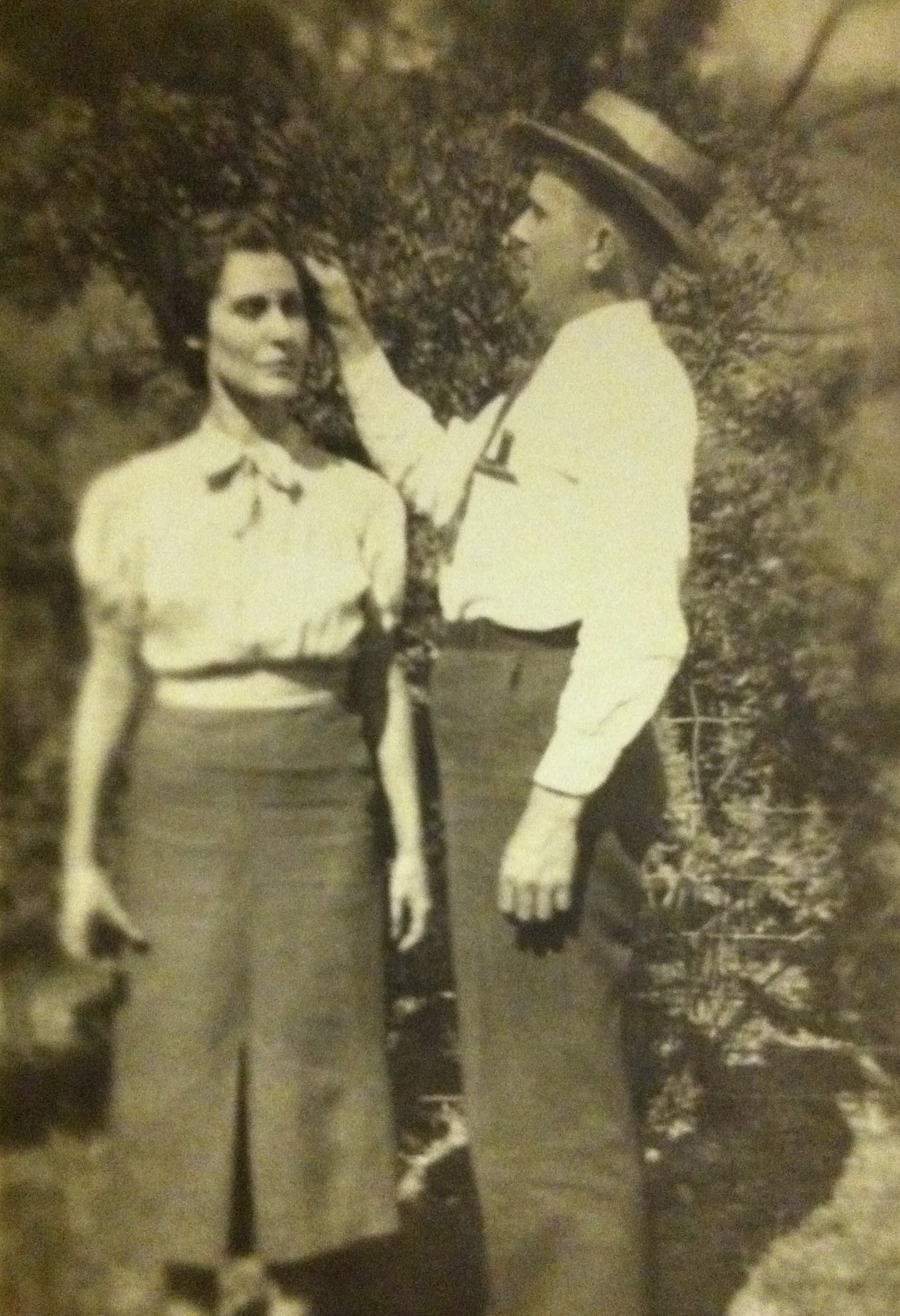
Bill Adkins and wife, Harts, Lincoln County, WV
05 Wednesday Mar 2014
Tags
Appalachia, Bill Adkins, Billy Adkins, Brandon Kirk, culture, Ed Haley, Ella Haley, Harts, history, Lincoln County, music, Noble Boatsman, Watson Adkins, West Virginia, writing
Thinking it might interest me, Brandon sent some cassette interviews Billy Adkins had conducted with his father Bill years earlier. The first one was dated circa 1982 and mostly featured Bill singing “What Shall I Do With the Baby-O”, “The Preacher and the Bear”, “Wild Hog”, “The Arkansas Song”, “Roman Crocodile”, and “The Old Miller”. The last song on the tape was “Noble Boatsman”, a tune that Lawrence Haley had partially remembered his mother singing. Bill learned it from his uncle Samp Davis.
There was a noble boatsman and noble he did well.
He had a loving wife and she loved the tailor well.
The boatsman went away on a board ship cruise.
Away she went for to let the tailor know.
Said, “My husband’s gone on a board ship crew
And this very night I’ll frolic with you.”
So the boatsman returned about three hours in the night,
Knocked at the door and said, “Strike me up a light.”
She began to slip and slide seeking out a place for the tailor to hide.
She put him in the chest and bid him lay still.
Told him he’s as safe as a mousey in the mill.
Then she jumped up and wide open the door
In stepped the boatsman with three or four.
Said, “I never come to rob you or disturb you of your rest.
I’ve come to bid you farewell and take away my chest.”
The boatsman being very stout and strong
Picked up his chest and went a marching along.
He hadn’t got more than half through the town
Till the weight of the tailor caused his steps to slow down.
He said, “My load’s a gettin’ heavy and I’ll put you down to rest
I believe to my soul they’s a devil in my chest.”
Then he set his chest down and throwed open the door
And there laid the tailor like a piggy in the floor.
Said, “I’ll throw you overboard and I’ll serve the Lord our king
And I’ll put an end to your night’s frolicking.”
Toward the end of the interview, Billy asked his father about general life around Harts Creek in the early part of the century. He said he first saw a car when he was eight or nine years old “right down there in a ferryboat. The river was kind of up a little bit then. The road went along the edge of the river. Somebody put it in the ferryboat, brought it out here and landed it. It climbed the bank over there. Seen them start it up. It was a T-Model Ford.”
What about the first radio?
“Watson had one up here operated by battery. Didn’t have no electric then.”
When did electricity come through here?
“1938, I believe.”
04 Tuesday Mar 2014
Posted in Big Ugly Creek, Ed Haley, Green Shoal, Music
Tags
Appalachia, Big Ugly Creek, culture, fiddle, Green Shoal, history, Jim Lucas, life, Lincoln County, music, photos, West Virginia

Jim Lucas fiddle, Green Shoal, Lincoln County, WV. Photo taken in the 1990s.
04 Tuesday Mar 2014
Posted in Big Ugly Creek, Ed Haley, Music
Tags
Big Ugly Creek, Bill Monroe, Boney Lucas, Carl Toney, charlie paris, Clarence Lambert, Durg Fry, fiddler, fiddlers, fiddling, Frank Fry, Grand Ole Opry, Green Shoal, Guyandotte River, history, Irvin Lucas, Jack Lucas, Jim Lucas, Jupiter Fry, Leander Fry, music, Paris Brumfield, Sam Lambert, writing
At the turn of the century, Jim Lucas was the best fiddler on Big Ugly Creek — that peculiarly named creek located a few miles downriver from Harts Creek. Jim was born in 1881 to Irvin Lucas (a fiddler), and was a nephew to Boney Lucas and Paris Brumfield. Based on interviews with Jim’s family, Jim always went clean-shaven and wore an overcoat year round because “whatever’d keep the cold out would keep the heat out.” He was also an avid hunter and cowboy — he could supposedly command cattle from across the Guyan River. As for his fiddling, Jim either cradled the fiddle on the inside of his shoulder or held it under his chin. He gripped the bow with two or three fingers right on its very end, used a lot of bow, and patted one of his feet when playing. He sometimes sang, typically played alone, and devoted a great deal of his time fiddling for children. Every Saturday, he’d get with Clarence Lambert at his home on the Rockhouse Fork of Big Ugly or at Sam Lambert’s porch on Green Shoal. Some of Sam’s daughters sang and played the guitar. Jim’s grandson Jack Lucas said they played a lot of gospel and bluegrass music but could only remember one tune Jim played: “Ticklish Reuben.” Jim had to give up the fiddle when he got old but always put an almost deaf ear up against the radio and listened to Bill Monroe on the Grand Ole Opry. He died in 1956.
Charlie Paris, a long-time resident of the Laurel Fork of Big Ugly Creek, remembered Jim Lucas coming to visit his grandfather Durg Fry in the thirties. He said his grandpa Durg lived on Laurel Fork in a home with cracks between the logs so large that “you could throw a dog through” them. He was a fiddler himself, as were his brothers Leander and Jupiter and his nephew Frank Fry. Charlie said Durg played with the fiddle under his chin and never sang or played gospel or bluegrass. He patted his feet when playing and, in his old age, would hold himself up by a chair and dance to music. One time, when he and Jim were hanging out on Laurel Fork, Jim reached his fiddle to a younger fella named Carl Toney and said, “Your turn.” Carl was a very animated fiddler and when he took off playing “Orange Blossom Special” Jim just shook his head and said, “I’ve quit.”
03 Monday Mar 2014
Tags
Appalachia, Bill Adkins, culture, fiddler, Harts, history, life, Lincoln County, photos, timbering, West Virginia

Bill Adkins of Harts, Lincoln County, WV
Writings from my travels and experiences. High and fine literature is wine, and mine is only water; but everybody likes water. Mark Twain
This site is dedicated to the collection, preservation, and promotion of history and culture in Appalachia.
Genealogy and History in North Carolina and Beyond
A site about one of the most beautiful, interesting, tallented, outrageous and colorful personalities of the 20th Century
 Brandon Ray Kirk