• About

Brandon Ray Kirk

~ This site is dedicated to the collection, preservation, and promotion of history and culture in my section of Appalachia.

Brandon Ray Kirk

Category Archives: Ed Haley

In Search of Ed Haley 328

26 Thursday Jun 2014

Posted by Brandon Ray Kirk in Big Harts Creek, Ed Haley, Lincoln County Feud, Music

≈ Leave a comment

Tags

Andy Mullins, banjo, Bernie Adams, Bill Adkins, Bill Monroe, Billy Adkins, Black Sheep, blind, Bob Dingess, Brandon Kirk, Buck Fork, Claude Martin, Dingess, Dobie Mullins, Drunkard's Hell, Ed Haley, Floyd Mullins, George Baisden, George Mullins, Green McCoy, Grover Mullins, guitar, Harts Creek, history, Hollene Brumfield, John Hartford, Logan County, Maple Leaf on the Hill, measles, Michigan, Millard Thompson, Milt Haley, Mona Haley, moonshine, music, Naaman Adams, Roxie Mullins, Smokehouse Fork, Ticky George Hollow, Trace Fork, West Virginia, Williamson, Wilson Mullins, writing

From Naaman’s, we drove out of Trace and on up Harts Creek to see Andy Mullins, who Brandon had met a few months earlier at Bill Adkins’ wake. Andy had just relocated to Harts after years of living away in Michigan; he had constructed a new house in the head of Ticky George Hollow. Andy was a son to Roxie Mullins, the woman who inspired my fascination with Harts Creek. Andy, who we found sitting in his yard with his younger brother Dobie, was very friendly. He treated us as if we had known him for years.

“I was just catting when you fellas come up through there,” Andy said to us. “One of the girls lost a cat down there over the bank last night — a kitten. This morning I went down there and it was up in that rock cliff and I took its mother down there and it whooped the mother. And I took one of the kittens down there and it whooped the kitten. The old tomcat, he come down there and he whooped it. It went back up under that damn rock.”

I liked Andy right away.

We all took seats in lawn chairs in the front yard where Andy told about Ed Haley coming to see his parents every summer when he was a boy, usually with his wife. He described him as having a “big, fat belly” and weighing about 200 pounds.

“He wasn’t much taller than Dobie but he was fat,” Andy said. “I can remember his eyes more than the rest of him because his eyes was like they had a heavy puss over them or something. It was real thick-like. Not like they were clouded or anything.”

Even though Ed was blind, he could get around all over Harts Creek and even thread a needle.

Andy had heard that Milt caused Ed’s blindness.

“They said that Ed got a fever of some kind when he was a baby and Milt went out and cut a hole in the ice and stuck him under the ice in the creek to break the fever,” he said.

Andy knew very little about Milt.

“Just that Milt got killed, that was it, over shooting the old lady down at the shoal below Bob Dingess’ at the mouth of Smokehouse,” he said.

“All the old-timers that knows anything about his daddy is probably dead,” Dobie said.

Brandon said we’d heard rumors that Milt and Green were innocent of shooting Hollena Brumfield and Andy quickly answered, “That’s what my father-in-law told me.”

Changing the conversation back to Ed, Andy said, “Ed used to go up on Buck Fork to George Mullins’ to stay a lot and up to Grover Mullins’. He lived just above George’s place — the old chimney is the only thing still standing.”

He also went up in the head of Hoover to see George Baisden, a banjo-picker who’d hoboed with him in his younger days. The two of them had a lot of adventures, like the time Ed caught a train at Dingess and rode it over to Williamson to play for a dance or at a tavern. Just before they rolled into town, George pushed him off the train then jumped off himself. It made Ed so mad that George had to hide from him for the rest of the night.

I asked Andy if Ed ever told those kind of stories on himself and he said, “He told big tales, I’d call them, but I don’t remember what they were. Well, he set and talked with my grandmother and grandfather all the time he was here, and Mom. I never paid any attention to what they talked about really. I guess, man, I run these hills. I was like a goat. Hindsight is 20/20.”

Not long into our visit with Andy, he got out his guitar and showed me what he remembered about Bernie Adams’ guitar style. From there, he took off on Bill Monroe tunes, old lonesome songs, or honky-tonk music, remarking that he could only remember Ed’s tunes in “sketches.”

I asked, “Do you reckon Ed would sing anything like ‘Little Joe’?” and he said, “I don’t know. It’s awful old. I heard him sing ‘The Maple on the Hill’. He played and sang the ‘Black Sheep’.”

“He played loud, Ed did,” Dobie said.

“And sang louder,” Andy said immediately. “He’d rare back and sing, man.”

The tune he best remembered Ed singing was “The Drunkard’s Hell”.

I wanted to know the time frame of Andy’s memories.

“1944, ’45,” he said. “I was thirteen year old at that time. Now in ’46, we lived across the creek up here at Millard’s. Him and Mona Mae and Wilson — they wasn’t married at the time — went somewhere and got some homebrew and they all got pretty looped. That was up on Buck Fork some place. Ed got mad at Wilson and her about something that night and that’s the reason they didn’t play music — him and Claude Martin and Bernie Adams.”

I asked Andy about Ed’s drinking and he said, “Just whatever was there, Ed’d drink. He didn’t have to see it. He smelled it. Ed could sniff it out.”

Brandon wondered if Ed ever played at the old jockey grounds at the mouth of Buck Fork. Andy doubted it, although it sure seemed to me like the kind of place for him to go. There was moonshine everywhere and men playing maybe ten card games at once.

“They’d get drunk and run a horse right over top of you if you didn’t watch,” Andy said. “It was like a rodeo.”

The last jockey ground held at the mouth of Buck Fork was in 1948.

Naaman Adams

25 Wednesday Jun 2014

Posted by Brandon Ray Kirk in Big Harts Creek, Culture of Honor, Ed Haley, Lincoln County Feud, Spottswood

≈ Leave a comment

Tags

Ben Adams, culture, feuds, Harts Creek, history, life, Lincoln County Feud, Naaman Adams, photos, Trace Fork, U.S. South, West Virginia, Winchester rifle

Naaman Adams, resident of Trace Fork of Big Harts Creek, Logan County, WV, 1996

Naaman Adams was an excellent source of information regarding the old Adams family feuds, 1996

In Search of Ed Haley 327

25 Wednesday Jun 2014

Posted by Brandon Ray Kirk in Big Harts Creek, Ed Haley, Lincoln County Feud

≈ Leave a comment

Tags

Adams Branch, Ashland, Ben Adams, Billy Adkins, Bob Dingess, Brandon Kirk, Calhoun County, Ed Haley, Eloise Adams, Ernest Adams, Ewell Mullins, feud, Harts Creek, history, Imogene Haley, John Hartford, Logan, Logan County, Luster Dalton, Naaman Adams, Trace Fork, Twelve Pole Creek, West Virginia, writing

After talking with Luster, we drove to see Naaman Adams on Trace Fork. We talked in the yard with Naaman, who wore a straw hat and work clothes. His mother, we knew from Billy’s records, was Imogene Mullins, a first cousin to Ed’s mother and her namesake.

Naaman said his grandfather Ben Adams had lived in an old log cabin at the mouth of Adams Branch on Trace. Ben had feuded frequently with his neighbors and once ordered sixteen rifles for protection — eight .32 Winchesters and eight .38 Winchesters. To our surprise, Naaman said he had one of those very rifles. Disappearing momentarily into his house, he returned outside with a magnificent 1873 model .38 Winchester. Pointing to a dark spot on its butt end, Naaman said it had been caused by rifle fire. Apparently, during a feud, as Ben stood in his doorway shooting at his enemies, someone fired back, striking his rifle and causing the spot. He didn’t know if this incident occurred during the 1889 troubles.

Of the old feuds, Naaman said: “People back then feuded amongst themselves but ganged up on outsiders. People’d be killed and nobody knew who did it.”

Naaman said Ben’s feud “just died out” when a lot of the participants moved away from the area. The law eventually confiscated most of his guns. Someone located one of them in the old Logan Courthouse when it was torn down in the sixties. Bob Dingess had a .32, as did Ernest Adams, while a Hall on Twelve Pole had a .38.

Just before we left, Naaman mentioned that his wife was a daughter of Ewell Mullins, Ed’s first cousin. Ewell, of course, was the man who had bought Ed’s Trace Fork property in 1911. Naaman said when his father-in-law had bought the property, it contained a one-story boxed log house, which stood near a sugar tree toward the branch. Later, Ewell moved the house further up the bottom; old-timers had told Naaman about placing logs under the house and rolling it. In the 1950s, Naaman and several other men demolished the house. They did it in stages: first, the front was removed and rebuilt, then the back was removed and rebuilt. The newer home — the one there now, which we had nicknamed the “red house” — was patterned in its design after the older one.

This was a little disheartening: there didn’t seem to be anything left from Ed’s time on Harts Creek (nor in Ashland or in Calhoun County).

In Search of Ed Haley 326

24 Tuesday Jun 2014

Posted by Brandon Ray Kirk in Big Harts Creek, Ed Haley, Lincoln County Feud

≈ Leave a comment

Tags

Bernie Adams, Big Branch, Billy Adkins, Brandon Kirk, Cacklin Hen, crime, Dood Dalton, Ed Haley, fiddle, fiddler, fiddling, Green McCoy, guitar, Harts, Harts Creek, history, Hollene Brumfield, John Hartford, Logan, Luster Dalton, Milt Haley, Mona Haley, music, Rockhouse Fork, Stump Dalton, Wild Horse, writing

From Harts proper, we headed up Harts Creek to the home of Luster Dalton, a son of Ed’s friend, Dood Dalton. Luster was born in 1924 and used to play the fiddle on weekends for free drinks at local “dives” with his brother Stump and two cousins. I asked him if he learned much from Ed and he said, “Yeah, I learned a lot from the old man Ed. He was a real fiddle player, son.”

I wondered if anybody around Harts played like Ed.

“Not as good as he could, no,” Luster said. “I’d have to say no to that. That old man really knew how to handle that job, buddy.”

Luster tried to remember some of Ed’s tunes.

“Way back in them days, they had one they called ‘Cacklin’ Hen’ and ‘Wild Horse’ and such as that on down the line,” he said.

I got my fiddle out and pointed it toward Luster, who said, “They ain’t a bit of use in me to try that. I’ve had too many bones broke.”

I tried to get him to just show me anything — but he refused.

He chose instead to talk, starting with how Ed came to visit his father on Big Branch.

“He came about onest a year and would maybe stay a month,” Luster said. “He’d maybe stay a week at Dad’s and go to some other family and stay a week and go up Logan and stay a week or so with somebody. Him and his old woman both would come and a couple three of his kids. Mona was one of them’s name. About all of them I guess has been to my dad’s. I don’t see how they raised a bunch of kids — neither one of them could see. That’s something we got to think about. They was good people. And a fella by the name of Bernie Adams used to come with them — he was a guitar picker — and they’d sit up there and sing and pick up at my dad’s till twelve o’clock and go to bed and go to sleep, get up the next morning, go into ‘er again. I went in the army in 1940, I believe it was, and I know I’ve not heard from them since then.”

Luster didn’t know if Milt Haley was a fiddler but had heard the old-timers talk about how either him or Green McCoy had shot Hollena Brumfield through the jaw at the mouth of the Rockhouse Fork on Harts Creek.

“They were murdered in a little log house,” Luster said. “They took a pole axe and beat them to death and then chopped them up.”

In Search of Ed Haley 325

21 Saturday Jun 2014

Posted by Brandon Ray Kirk in Big Harts Creek, Ed Haley, Logan, Music

≈ Leave a comment

Tags

Billy Adkins, blind, Brandon Kirk, Cacklin Hen, Clyde Haley, Dood Dalton, Ed Haley, Ella Haley, fiddle, fiddling, guitar, Harts, Harts Creek, history, Huntington, John Hartford, Lincoln County, Logan, mandolin, Marshall Kelley, music, West Virginia, writing

That night, Brandon and I congregated at Billy Adkins’ house in Harts Bottom.  In ensuing conversation, Billy told us about Marshall Kelley, an old-timer in the community who remembered Ed. He dialed Marshall up, then put me on the telephone. Marshall said he was seventy-three years old, had been born and raised about three miles up Harts Creek and was the son of a Baptist preacher. He was great: I didn’t have to prod him with questions. He just took off, beginning with a story about seeing Ed walking up toward Dood Dalton’s.

“I was about two or three blocks away from him,” Marshall said. “I lived in a house about 100 yards from the road and I could see the people going and coming up and down the road. And I saw a man — a little bit short — going, walking. It looked like he was carrying a guitar — might have been a mandolin — in one hand and his fiddle in the other hand. Somebody said they believed that was Ed Haley and he was being led by a young man that was just a little taller than him. In other words, this man was holding onto his arm. They were walking side by side. And he went down there and went up a hollow then about half a mile — maybe three quarters of a mile — to the home of Dood Dalton. They were acquainted with each other. Ed played the fiddle the biggest part of the afternoon.”

I asked Marshall if he remembered anything specific about Ed’s fiddling.

“I heard him play the ‘Cacklin’ Hen’ on the fiddle and made her cackle,” he said. “Buddy, he could make that sound just almost exactly like a chicken cackling. And I noticed the sound of that fiddle. And down in those little grooves — places where you could look down in the head of his fiddle — I could see some letters down in there, like a little sticker, that said, ‘Made in Germany.’ And his fiddle looked old cause it didn’t have much varnish on it. Dood made mention about putting new varnish on it and he said he didn’t want to. He said they played better — had a better sound — without any varnish on it. None of them sounded just like his fiddle and he wouldn’t change.”

Marshall said he saw Ed play at Logan and Huntington, too.

Then I heard him two or three times in Logan up around the courthouse singing and playing. One time they was a woman with him somebody said was his wife and she was also blind. I believe she was playing a mandolin. Then the next thing, I grew up a little bit and I went to Huntington. And I was a going down one of the streets and I heard a fiddle a playing. It was far enough away that I couldn’t tell what direction it was in. I stopped once and listened. And after a while, I went on down there and here was a gang of people ganged up and there was him and his wife again a playing. And I thought as I went walking down that way, ‘That sounds just like Ed Haley.’ And sure enough it was.”

Just before Marshall and I hung up, he told me what he knew about the Haley children.

“I only got acquainted with the one named Clyde,” he said. “And I saw him there at Dood Dalton’s house. Just talked with him a little bit. Me and him was approximately the same age. He got to sparking Dood’s girl and I was trying to take her away from him and whenever I seen I couldn’t make no headway I just walked away and left and then she quit him.”

In Search of Ed Haley 324

20 Friday Jun 2014

Posted by Brandon Ray Kirk in Big Harts Creek, Culture of Honor, Ed Haley, Lincoln County Feud

≈ Leave a comment

Tags

Al Brumfield, Albert Dingess, Ben Adams, Bill's Branch, blind, Buck Fork, Dorothy Brumfield, Ed Haley, Ella Haley, feud, French Bryant, Green McCoy, Harts Creek, Harve "Short Harve" Dingess, history, Hollene Brumfield, Hugh Dingess, John Brumfield, Lincoln County Feud, Logan County, Milt Haley, Piney, Smokehouse Fork, Ticky George Adams, timbering, Violet Mullins, West Virginia, writing

Sensing that Dorothy had told all she knew about Ed and knowing that she was one-quarter Dingess, we asked her about Milt Haley.

“Some terrible things went on about Ed’s daddy,” she said. “I heard about that.”

Dorothy blamed the trouble squarely on Ben Adams. She said he was a “bully” who wanted to control all the timber on Harts Creek. He hired Milt Haley and Green McCoy to kill Al Brumfield but they accidentally shot Hollena.

“And them men that shot them went back in towards Kentucky somewhere and they put out a reward for them,” Dorothy said.

Haley and McCoy were soon caught and a Brumfield posse took possession of them.

Ben Adams organized a mob to free them at the mouth of Smoke House Fork but the Brumfields were warned by a spy and detoured up Buck Fork and over a mountain to Hugh Dingess’ house.

“The Adamses come a hair of catching them,” Dorothy said. “You can just imagine what kind of war would have been if they had a got them.”

A large number of men gathered in at Hugh’s for protection, including Albert Dingess (her great-grandfather), “Short Harve” Dingess (her great-uncle), John Brumfield, and French Bryant, among others. At some point, they took Milt outside and shot a few times to scare Green into making a confession inside Hugh’s, but Milt yelled, “Don’t tell them a damn thing. I ain’t dead yet!” McCoy yelled back, “Don’t be scared. I ain’t told nothing yet!”

Dorothy said the mob eventually took Milt and Green up Bill’s Branch and down Piney where they “knocked their heads out with axes and the chickens eat their brains.”

Just before we left Dorothy, we asked if she remembered any of Ed’s family. She said his uncle Ticky George Adams (the grandfather of her late husband) was a ginseng digger who spoke with a lisp and loved to heat hog brains. This image contrasted sharply with what others around Harts Creek had said: that he was a moonshiner who’d shoot someone “at the drop of a hat.” Violet Mullins had told us earlier how Ticky George would get “fightin’ mad” if anyone called him by his nickname. The only thing Dorothy knew about Ed’s wife was, “She went in the outside toilet and then after that some woman went in there and said they was a big blacksnake a hanging. They said she went places and played music.”

In Search of Ed Haley 323

19 Thursday Jun 2014

Posted by Brandon Ray Kirk in Big Harts Creek, Ed Haley, Holden

≈ Leave a comment

Tags

Albert Dingess, Alice Dingess, Birdie, blind, Brandon Kirk, Cecil Brumfield, Cripple Creek, Dorothy Brumfield, Ed Haley, fiddler, fiddling, Harts Creek, Henderson Dingess, history, Holden, Hugh Dingess Elementary School, John Brumfield Jr., John Hartford, Kentucky, Logan County, Louisa, Milt Haley, music, Smokehouse Fork, West Virginia, Wildwood Flower, writing

About a half hour later, we drove up the Smoke House Fork of Harts Creek to see Dorothy Brumfield. Dorothy lived in a white one-story home situated on a hillside overlooking the Hugh Dingess Elementary School, just down the stream from the old Henderson Dingess homeplace. Dorothy had been born in 1929 at Louisa, Kentucky, but came to Harts when she was seventeen and soon married John Brumfield, a son of Ed’s friend, Cecil. Her father was a descendant of Albert Dingess, a member of the 1889 mob.

I started the conversation by asking Dorothy about Ed. She said she never knew him personally but heard that he lost his eyesight after his father dipped him in water. She also heard that he was a great fiddler when he got “pretty high” but was mean and eager to fight if he drank too much.

Dorothy knew the story about Ed borrowing a fiddle from her father-in-law Cecil Brumfield; her husband later acquired it. “He had come through here and borrowed a fiddle off of Paw Brumfield, him and Bernie Adams, and went up yonder to Logan and pawned it,” she said. “Paw Brumfield liked to never found it.”

Dorothy said the only time she actually saw Ed was when her husband brought him home early one Sunday morning around 1949-50.

“My husband worked at Holden, and I’d heard tell of Ed Haley but I hadn’t met him,” she said. “So John stopped at the top of Trace Mountain at this place. Back then, they called them saloons. And he was supposed to been in at one o’clock in the morning. He didn’t make it. Oh, did I get mad when four o’clock come in the morning. Here he knocked on the door and I could tell someone was with him, but I couldn’t make out that it was a blind person with him. I thought it was just somebody real drunk that had passed out. He got here in the house with him and I fixed them something to eat.”

“Why didn’t I know you all was over there and got me a babysitter and caught me a ride over there and had me a time?” Dorothy said to her husband. “What would you done if I’d walked in?”

“What, mam?” Ed said.

“All them women John had over there tonight,” she said to Ed.

“Mam, he didn’t have no women,” Ed said.

“Now sir, you told me you couldn’t see,” she said. “How do you know?”

“Well, John sit beside of me,” Ed said.

A little later, Dorothy fixed Ed a bed and she went and asked her husband, “Would you tell me who in the world you’ve brought home with you again?”

John said he’d stopped in at that saloon and found Ed playing music “and a bunch of them women dancing” and he “wouldn’t leave Ed there. When they closed, he brought him here.”

“Well, then they got up the next morning and I said, ‘Now John you help him around and show him around.’ I was already mad at John for laying out. Little bit jealous, too. We hadn’t been married long.”

Dorothy said she cooked a big breakfast for everyone.

“Mam, have you got any onions?” Ed asked her at the table.

“Yes I have but why would you want an onion for breakfast?” she said.

“Don’t you know what onions are good for?” Ed said. “Many a things.”

Dorothy said Ed seemed intelligent by the morning conversation.

After breakfast, Ed went back into the front room and played the fiddle for Dorothy’s kids in front of the fireplace. She said he held his fiddle under his chin and played “Wildwood Flower” and an extremely fast version of “Cripple Creek”.

John said, “Ed, play that there ‘Birdie’ for these children.”

“Well, he stayed around and I think they drunk all the booze up,” Dorothy said. “John, he was wanting more booze, too, so he went off with Ed to Aunt Alice’s or somewhere and got some liquor and he didn’t come back till about dark. I don’t know where all he took Ed. When he come back, he kept telling me why he brought him here. He said that he didn’t want to leave him. If something happened, he wouldn’t forgive hisself. Nobody else wouldn’t take him after all the big time was over with.”

In Search of Ed Haley 322

18 Wednesday Jun 2014

Posted by Brandon Ray Kirk in Big Harts Creek, Ed Haley, Spottswood

≈ Leave a comment

Tags

Brownlow's Dream, Drunkard's Hell, Ed Haley, Harts Creek, history, Lawrence Haley, Logan County, music, Peter Mullins, Roxie Mullins, Vilas Adams, Violet Mullins, West Virginia, writing

After spending a few hours with Vilas, we drove a short distance up main Harts Creek to see Violet Mullins. Violet still lived in her mother Roxie’s little house. I hadn’t seen her since my first visit to Harts with Lawrence Haley in 1991; the home seemed a bit empty without Roxie. Violet began to speak in a voice hauntingly reminiscent of her mother’s.

“I knew Ed well,” she said. “He used to come stay all night at our house when he was traveling through here. I know he played all kinds of music. He’d play tunes and then sing them. He’d sing ‘The Drunkard’s Hell’ and the ‘Brownlow’s Dream’, I’ve heard him play that. They’d always be a big gang with him and I never stayed around with them where they was a playing music very much. He’d drink with them every now and then. He’d get to drinking and they’d get into a racket and have him a talking every once in a while. He never was at our house too much — just come and stay all night, him and his daughter and his son. Now, his son Jack stayed with us a long time. He come here, you see, and stayed with Uncle Peter’s fellers, and with different families around here. He stayed for a year or two.”

In Search of Ed Haley 321

17 Tuesday Jun 2014

Posted by Brandon Ray Kirk in Big Harts Creek, Culture of Honor, Ed Haley, Lincoln County Feud, Timber

≈ Leave a comment

Tags

Allen Martin, Anthony Adams, Ben Adams, Boardtree Branch, Brandon Kirk, Charley Brumfield, crime, Ed Haley, Ewell Mullins, fiddling, Greasy George Adams, Green McCoy, Green Shoal, Harts, Harts Creek, history, Jeff Baisden, John Hartford, Jr., Kentucky, Lincoln County Feud, Logan County, Milt Haley, moonshining, murder, music, Paris Brumfield, Peter Mullins, Sol Adams, Still Hollow, Ticky George Adams, timbering, Trace Fork, Vilas Adams, West Virginia, Will Adkins, writing

Trying to lift our spirits, we went to see Vilas Adams, who lived on the Boardtree Branch of Trace Fork. Vilas was a great-grandson of Ben Adams and a grandson of Ticky George Adams. He was very friendly, inviting us inside his very nice home where his wife fed us a whole mess of good food, which we ate between asking questions.

I first asked him about his memories of Ed Haley, who he said frequented Ewell Mullins’ store during the late 1930s and early forties.

“Down there at old man Ewell’s store, they’d gather in there of an evening and tell tales, old man Jeff Baisden and them,” Vilas said. “My grandpaw Ant Adams and I would walk down there and then Ed would walk down there from Uncle Peter’s. It was a quarter a mile — just a little hop and a jump I call it. Ed would come in there and fiddle for them and if they wanted a certain song, they’d give him a quarter or fifty cents. That was good money I guess back then.”

Vilas’ grandfather Anthony Adams (a brother to Greasy George) always gave Ed a quarter to hear his favorite tune.

“What was Ed like?” I asked.

Vilas implied that he was withdrawn.

“Mostly he stayed with that fiddle,” he said. “He was good.”

Like most of the other older people in Harts, Vilas knew about the Haley-McCoy killings.

“My grandpaw would tell me them tales but I wouldn’t pay no attention,” he said. “He was telling about them fellers — Sol Adams — going over there and locating them and they went back and captured them. Well, his daddy Anthony tried to waylay them and take them back through here somewhere. They thought they’d come through these hills somewhere but they missed them.”

So, Sol Adams — a 20-year-old nephew to Ben Adams who was often called “Squire Sol” because of his status as an officer of the law — “went over and located Haley and McCoy” in Kentucky after the ambush. Meanwhile, his father Anthony and uncle Ben Adams, organized a gang to recapture them as the Brumfields brought them back through Harts Creek. This seemed strange: why would Sol operate against the interests of his family? And why would he have even been compelled to even become involved since he was a Logan County justice and the crime had occurred in Lincoln County?

Brandon asked Vilas if he knew who had been in the Adams gang and he said, “No, I’ve heard my grandpaw talk but I’ve forgot some of it. They was somebody from down around Hart somewhere. He said they took them over around Green Shoal or over in there somewhere and killed them. Grandpaw said they maybe hit them with axe handles.”

Vilas said his grandfather told him something horrible had happened to most of the men who murdered Haley and McCoy.

“He said just about every one of them that was in on that, something bad happened to them,” he said. “I heard one of them’s own boy killed one of them. And one of them got drowned and my grandpaw said the river wasn’t deep. Said he fell off a horse or something right at the mouth of Hart.”

Of course, Vilas was referring to Paris Brumfield, who was killed by his son Charley in 1891, and to Will Adkins, who drowned at the mouth of Harts Creek on November 23, 1889.

Brandon asked Vilas about “old Ben Adams” and he almost immediately started talking about the old timber business.

“See, that was my great-grandpaw,” he said. “They would build splash dams. They had one right out here. They had them tied some way or the other. And they built them up on Hart there, maybe up on Hoover, and they’d work all winter and put them logs in the creek. And in the spring when them floods come, it would wash all them logs down around Hart and then they’d put them together and raft them on down to Kenova. I guess that was all they had to make a living — timber and farm.”

Ben, of course, made his living in timber. He lived at the mouth of Adams Branch, a little tributary of Trace Fork presently referred to as Still Hollow.

“Over there at what we call Still Hollow, they said he had a still-house there and he had a license to make apple brandy back then,” Vilas said. “And he would go with a wagon everywhere and get apples. They was a log house over there in the mouth of that holler — just down the road here a little ways. When I was a boy the old log house was there, but it rotted down. Just one-story as far as I can remember. The old well’s there. He had some kind of an old store or saloon right there.”

Vilas speculated very little on Ben Adams’ personality, but compared him to his son, Greasy George Adams: “always a likeable fella but seemed like trouble followed him.” He heard that after Ben’s first wife died, he lived with first one woman, then the next. He eventually got into a heap of trouble by murdering a local postman, Jim Martin.

“He killed a fella right over there at the mouth of that hollow,” Vilas said. “My grandpaw said he had some sort of an old store or saloon and he was shooting out the door. Right there in the mouth of that holler. It broke him. Lawyers. Lost everything he had.”

It was rumored that Ben’s and Martin’s trouble had something to do with a woman or a right-of-way.

In Search of Ed Haley 320

13 Friday Jun 2014

Posted by Brandon Ray Kirk in Big Harts Creek, Ed Haley, Lincoln County Feud, Timber

≈ Leave a comment

Tags

Appalachia, Billy Adkins, Brandon Kirk, Green McCoy, Haley-McCoy grave, Harts Creek, Harts Fas Chek, history, Lincoln County, Low Gap, Milt Haley, West Fork, West Virginia, writing

In the mid-summer heat of July, I pulled into the Harts Fas Chek parking lot on my bus with the Haley-McCoy grave bearing strongly on my mind. Early the next morning, Billy, Brandon, and I drove over to Presto’s Garden and made our way up the hillside toward Milt’s grave, cringing at the destruction wrought by bulldozers. The land was scarred and brush was everywhere. There was a wide road recently forged into the side of the mountain, which seemed to be sliding gently down the hillside like thick tears or even blood from the earth’s gaping wounds. It led right up to the grave. There was a bulldozer trail leading down below the grave to a pile of scrap wood, a trail cutting beside the grave leading on up into the hollow, and the entire Low Gap side of the grave area was scraped bare. Nearby, a dozer whirred and rumbled, tossing logs in neatly stacked piles. Somehow the grave was safe from destruction, but this special place was violated after one hundred and seven years of peace and solitude.

In Search of Ed Haley 319

12 Thursday Jun 2014

Posted by Brandon Ray Kirk in Big Harts Creek, Ed Haley, Harts, Lincoln County Feud

≈ 2 Comments

Tags

Al Brumfield, Ben Adams, Bernie Adams, Brandon Kirk, Cain Adkins, Caroline Brumfield, Cecil Brumfield, Dave Dingess, Ed Haley, fiddle, French Bryant, Harriet Brumfield, Harts Creek, Henderson Dingess, history, Hollene Brumfield, Hugh Dingess, John Hartford, John W Runyon, Lillian Ray, Logan, Milt Haley, Paris Brumfield, Sallie Dingess, Smokehouse Fork, Tom Martin, writing

A little later, Brandon visited Lillian Ray, a seventy-something-year-old daughter of Cecil Brumfield who lived in a beautiful two-story house on the Smokehouse Fork of Harts Creek. Lilly, he discovered, had a lot of the old Dingess family photographs. To Brandon’s surprise, there were several thick-paged Victorian velvet-covered albums full of tintypes and a few boxes of sepia images on decorative cardboard squares. Only a few were labeled, but he recognized some of the faces: Al Brumfield, Henderson and Sallie Dingess, Hugh Dingess, Mrs. Charley Brumfield, Mrs. John Brumfield, and Dave Dingess. No doubt, there were pictures in the album of Ben Adams and Hollena Brumfield in their youth.

Before leaving, Brandon asked Lilly about Ed Haley. She said she remembered him coming to her father’s house when he lived in the old Henderson Dingess homeplace. He would just show up, leading himself with a cane, and stay for two or three days. Lilly hated to see him come because he was so hateful to the Brumfield children — “always running his mouth.” She described him as a “little short man” who “drank a lot” and told how he and Bernie Adams once borrowed a fiddle from her father and then pawned it off in Logan. The fiddle originally belonged to Tom Martin.

Not long after visiting Lilly, Brandon sent me a letter updating me on his research along with pictures of people we’d only imagined. As they turned up, I wondered if I were to go into a room with Al, Paris, Milt, Green, French, Cain, Runyon — without knowing who any of them were — which ones would I take to strictly on a personality basis? Which ones would I have a gut reaction to think, “Well, he’s a pretty fair good old boy,” or, “Boy, I don’t know about that feller there. Something’s just not right.” I mean, you walk in the room and, “That’s Al Brumfield?” No way. “That’s Cain Adkins?” Nope, I can’t believe that.

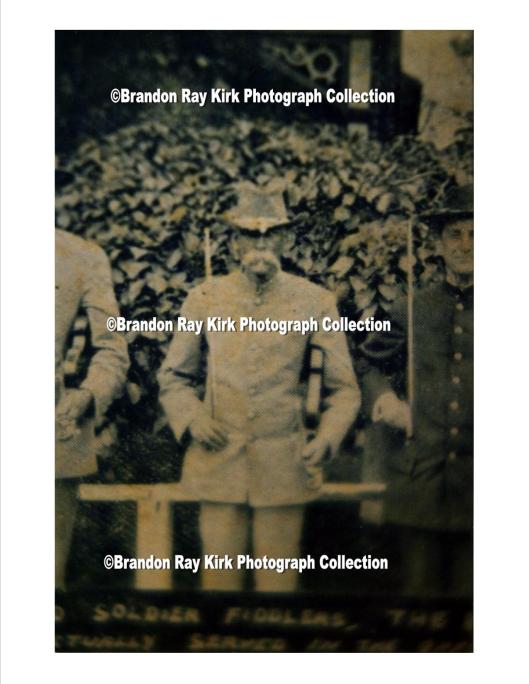
Ben France: Confederate Soldier and Fiddler of Cabell County, WV

11 Wednesday Jun 2014

Posted by Brandon Ray Kirk in Civil War, Ed Haley, Music

≈ Leave a comment

Tags

Ben France, Cabell County, civil war, Confederate Army, fiddler, fiddling, history, Long Branch, music, photos, West Virginia

Ben France

Ben France, a Confederate veteran and fiddler from Long Branch area of Cabell County, WV

In Search of Ed Haley 318

11 Wednesday Jun 2014

Posted by Brandon Ray Kirk in Civil War, Ed Haley, Music

≈ Leave a comment

Tags

Appalachia, Army of Tennessee, Battle of Gettysburg, Ben France, Ben Haley, Brandon Kirk, Cabell County, civil war, Confederate Army, Dave Bing, Ed Haley, fiddler, genealogy, Guyandotte Valley, Henry France Cemetery, history, John D. Rockefeller, John Hartford, Long Branch, Milt Haley, music, Old Soldier Fiddlers, Shenandoah Valley, Stonewall Jackson, Wayne County, West Virginia, writing

Around that same time, Brandon located a picture of Ben France in a newsletter called High Notes: Mountain Music from West Virginia (1996). France was the most famous fiddler in the Guyandotte Valley during the 1850s. He may have been acquainted with Ed’s grandfather, Ben Haley, or even influenced Milt or Ed.

“These are the ‘Old Soldier Fiddlers’ — two Union, two Confederate — who toured the country after the Civil War,” the caption read. “The second fiddler from the left is Ben France of Wayne County, a Confederate courier who was second on the scene after Stonewall Jackson was fatally wounded. France was the great-great-great-great-great-uncle of our own Bing Brothers. Thanks to Dave Bing for the use of the photograph.”

A little later, I called Dave Bing, a West Virginia fiddler pretty well known among the traditional festival circuit, to ask him about the picture.

“Uncle Ben was born in what is now Wayne County, West Virginia, in the 1840s,” he said. “He joined the Confederate Army at the age of seventeen and served as a carrier in the Shenandoah Valley campaign. He was in the area on a mission the night Stonewall Jackson was shot and was said to be the second man to come to his aid. During the Battle of Gettysburg, he was wounded and transferred to the Army of Tennessee where he served until the end of the war. Uncle Ben was known as a fine horseman.”

France became somewhat of a professional musician after the war.

“After the war, Uncle Ben and three other war veterans (all fiddlers) toured the country playing resorts and fine hotels,” Bing said. “The group was known as the ‘Blue and the Gray.’ Uncle Ben once played by invitation for John D. Rockefeller, Sr. at his hotel. He was an outstanding banjo player but was more famous for his fiddling. He was well-dressed and always had his fiddle — which he called ‘Sally.’ He never married but was the father of a daughter. He died in 1917. He was buried in Henry France Cemetery located off of Long Branch in Cabell County.”

In Search of Ed Haley 317

10 Tuesday Jun 2014

Posted by Brandon Ray Kirk in Big Harts Creek, Ed Haley, Music

≈ Leave a comment

Tags

Big Branch, Brandon Kirk, Cacklin Hen, Calhoun County Blues, Dood Dalton, Ed Haley, fiddler, fiddling, Garfield's Blackberry Blossom, Harts Creek, history, John Hartford, Lincoln County, music, Tootsie Tomblin, West Virginia, Wild Horse, writing

In that same time frame, Brandon re-visited Tootsie Tomblin, a daughter of Ed Haley’s friend Dood Dalton. She presented him with a reel-to-reel recording of Dood playing the fiddle around 1971. He knew this was an amazing find, somewhat comparable to finding a recording of Laury Hicks, Ed’s fiddling friend in Calhoun County.

Tootsie warned Brandon that the recording wasn’t great because her father had been very old and somewhat crippled in his left hand.

“He was playing with three fingers on his left hand ’cause his fourth finger wouldn’t bend where he’d got it mashed in the mines,” she said.

Brandon sent me a copy of the Dalton recording and when I played it I found that Dood was just what Tootsie said — a man of advanced years whose fingers were tough, stiff and scarred from years of working in the mines — using what sounded like a bow with three hairs and no rosin and a fiddle that had been refinished with floor varnish and strung up with barbed wire and with an action so high you could probably put your shoe under the strings. Still, there he was playing “Wild Horse”, “Cacklin’ Hen”, “Calhoun County Blues”, and “Garfield’s Blackberry Blossom”…and doing it so slowly, as if he were trying to communicate to me through the years that he’d been one hell of a fiddler earlier in his life. His final number was an unaccompanied vocal rendition of an old gospel tune. I came away from the recording thinking that yes, by god, Dood Dalton had been a good fiddler in his day.

George Fry home

07 Saturday Jun 2014

Posted by Brandon Ray Kirk in Culture of Honor, Ed Haley, Green Shoal, Lincoln County Feud

≈ Leave a comment

Tags

Admiral S. Fry, George Fry, Green Shoal, history, life, Lincoln County, Lincoln County Feud, photos, West Virginia

George Fry home, Green Shoal, Lincoln County, WV

George Fry home, Green Shoal, Lincoln County, WV

In Search of Ed Haley 316

07 Saturday Jun 2014

Posted by Brandon Ray Kirk in Big Creek, Chapmanville, Culture of Honor, Ed Haley, Ferrellsburg, Green Shoal, Lincoln County Feud

≈ Leave a comment

Tags

Addison Vance, Admiral S. Fry, Basil Frye, Big Creek, Billy Adkins, Brandon Kirk, Burbus Dial, Cain Adkins, Chapmanville, crime, Essie McCann, Ferrellsburg, feud, Fry, George Fry, Green McCoy, Green Shoal, Harts Creek, history, John Hartford, Lincoln County Feud, Martha Dial, Milt Haley, West Fork, writing

I told Brandon that I would be coming to Harts at the end of July. In the meantime, he contacted Basil Frye, a grandson to George Fry. Basil, a resident of North Carolina, was old enough to know about the Haley-McCoy killings (he was born in 1925) but admittedly knew very little. He had heard through the family that his grandfather George agreed to let three “guards” stay overnight at his house with two prisoners (Milt and Green). That night, a mob of drunken vigilantes arrived with guns and demanded possession of the prisoners. The three guards allowed the gang to take Milt and Green outside where they were tied to a bush and eventually shot several times. The next morning, after daylight, the Frys and guards went outside and found the dead bodies.

Brandon asked Basil about the location of the old A.S. Fry-George Fry family home. He said he wasn’t sure of its location but always figured it to have been a short distance up Green Shoal, not at its mouth. He based that on the fact that his father, a son of George Fry, had been born in that vicinity in 1888 (a year before the killing). Billy Adkins had always heard that the old Fry home was up in that area, too, which caused a little doubt on our assuredness that the Milt and Green murders had taken place in the Lambert home at the mouth of Green Shoal. Brandon became even more confused when he went back to the Fry history and read how A.S. Fry (father of George) had two homes in the area: “a log cabin at Fry” (a.k.a. the mouth of Green Shoal) and “a stately house near Harts Creek, across the river from the log house.”

A little later, Brandon visited Essie McCann, an elderly neighbor in Ferrellsburg. Essie had been born on West Fork in 1910. She said her mother Martha Dial almost bumped into the 1889 mob as she rode toward her home on Big Creek with her husband. Upon hearing a troop of horses approaching their direction from Chapmanville, she and Mr. Dial knew it was the mob that had been recently sent out to capture Milt and Green. They hid in a patch of weeds near the riverbank and watched the mob ride by doubled up on horses. Essie said her mother recognized Addison Vance (a brother-in-law to Cain Adkins) riding in the group. Afterwards, Haley and McCoy were held in a house at Green Shoal where a group of men came and shot out the lights before killing them.

In Search of Ed Haley 315

06 Friday Jun 2014

Posted by Brandon Ray Kirk in Big Harts Creek, Culture of Honor, Ed Haley, Lincoln County Feud

≈ Leave a comment

Tags

Billy Adkins, Brandon Kirk, Doug Owsley, feud, Green McCoy, John Hartford, Lincoln County, Lincoln County Feud, Milt Haley, Smithsonian, timbering, West Fork, West Virginia, writing

On July 4th, Brandon and Billy learned that a timber crew had been working at the Haley-McCoy grave for several days. Horrified, they raced to the site and found the ground ripped up, trees felled, and huge machinery roaring and chewing all over the mountainside. The Haley-McCoy grave was lost amidst toppled trees and fresh timber roads. Workers said the grave was okay, although property owners had not told them it was there.

When Brandon called me with this news, I told him there might be a positive outcome to the whole mess. Maybe we could now approach some people about exhuming the grave. He was all for it now.

“You know, we could try Doug Owsley at the Smithsonian,” I said. “He could tell us all kinds of things about them just by looking at their bones.”

Brandon had more of a “rescue mentality.”

“I hate to mess with their bodies,” he said. “I mean, they were real people. There’s something historical about them being there. I hate to spoil that.”

He agreed to an exhumation, though, so long as it had the support of Milt and Green’s family and so long as they would be re-buried at the site with a historical marker placed nearby to note the significance of the site and add protection from future bulldozers.

We talked more over the next few days — particularly about getting Doug Owsley, the expert forensic scientist, to conduct such a dig.

The next thing I knew, I was on the telephone with Owsley explaining my interest in Milt’s and Green’s grave. He was enthusiastic about the project but wanted more information, so Brandon gathered up some of our research and fired it off to him.

John Edward “Ed” Belcher

05 Thursday Jun 2014

Posted by Brandon Ray Kirk in Ed Haley, Logan, Music

≈ 4 Comments

Tags

Appalachia, Ed Belcher, fiddler, fiddlers, fiddling, genealogy, history, Logan, Logan County, music, photos, violin, West Virginia

belcher

John Edward “Ed” Belcher (1886-1970), violinist and resident of Logan, WV

In Search of Ed Haley 314

05 Thursday Jun 2014

Posted by Brandon Ray Kirk in Big Harts Creek, Ed Haley, Logan, Music

≈ Leave a comment

Tags

banjo, Brandon Kirk, Buck Fork, Buffalo Creek, Dixie Mullins, Donna Samson, Ed Belcher, Ed Haley, Falling Water, fiddle, fiddler, genealogy, George Mullins, guitar, Harts Creek, history, James Belcher, Logan, Logan County, Logan Theatre, Mary Belcher, music, piano, Putnam County, Rhoda Mullins, Scott District, timbering, West Virginia, writing

Not long after talking with Vergia, Brandon located Donna Samson, a daughter of Ed Belcher, in Logan, West Virginia. Belcher, we were told, was a multi-instrumentalist who played music with Ed Haley at George Mullins’ home on the Buck Fork of Harts Creek.

John Edward Belcher was born in 1886 or 1889, the son of James and Mary (Thomas) Belcher. The Belchers lived in Scott District, Putnam County, in 1900. Donna thought her father was from Buffalo Creek in Logan County. She said her family was once heavily involved in the sawmill business. As a young man, Ed played music with his brother Henry. At some point, he took music lessons and learned to read and write music. He could play the piano, banjo, guitar, and “could make a violin cry.” In the 1910s and 1920s, he played the violin in an orchestra during silent movies at the Logan Theatre. About that same time, he also operated a boarding house near the train station (likely a convenient “stopping off place” for Ed Haley when he came into Logan).

“He always kept music around his home,” Donna said.

Belcher played ragtime and loved to play “Falling Water” on the piano in his later years.

Donna said her father met her mother Rhoda Mullins (1919-1990) while at a dance in Logan. Rhoda was staying in town with her sister Dixie, who was a local schoolteacher. They were the daughters of George Mullins of Harts Creek. Her father, she added, was some thirty years older than her mother, who was his second wife.

Ed Belcher died in 1970. His death record gives his occupation as “Piano repair, tuner.”

Vergia Rooney recalls the “murder house”

03 Tuesday Jun 2014

Posted by Brandon Ray Kirk in Culture of Honor, Ed Haley, Green Shoal, Lincoln County Feud

≈ Leave a comment

Tags

Al Brumfield, Arena Ferrell, blind, Brandon Kirk, Cat Fry, crime, feud, Green McCoy, Green Shoal, Harts, history, Hollene Brumfield, Ida Taylor, J.L. Caldwell, Jake Davis, Jim Brumfield, Lincoln County, Lon Lambert, Mae Brumfield, Milt Haley, Paris Brumfield, Virgie Rooney, Watson Lucas, West Virginia, writing

In the early summer of 1996, Brandon made contact with Vergia Rooney, a daughter of Jim Brumfield and granddaughter of Paris Brumfield. Vergia was born in 1899 (making her the oldest person interviewed in this project) and was raised on Green Shoal. She was an older sister to Ida Taylor, with whom we had spoken in 1995. She had lived in Texas since 1930.

Vergia said Al Brumfield practically raised her father, who was young when his parents died. Later, when Vergia was about five years old, she went with her father to visit Al at his beautiful two-story white house in Harts. As far as she remembered, Al was well-dressed, clean-shaven, and had dark hair. He was blind, so he wore dark glasses and kept a cane near him. “He was suffering from a progressive illness he had which terminated to him being blind,” Vergia said. For much of the visit, Al sat in the first story front room facing the river, what he called the “sitting room.” He eventually adjourned to the kitchen where he sat at the table and had coffee and a piece of cake.

Vergia said Al’s home was nice and had a store built next to it so close that the two buildings almost touched each other. The whole place was busy with workers, all of whom were supervised by Aunt Hollena Brumfield. Vergia didn’t remember Al having a gristmill but he did have a large barn just up the creek in a bottom. A little further, behind Mae Brumfield’s present-day house, was his log boom, which had in earlier years been the scene of a lot of trouble.

This “earlier trouble,” of course, was the 1889 feud, which Vergia said started when some “McCoy outlaws” became jealous over the Brumfield boom and ambushed Al and Hollena as they rode a single horse down the creek. It was never proven, but Milt Haley and Green McCoy were accused of committing the ambush. They were taken to a two-story, log house at the mouth of Green Shoal and beaten to death by a Brumfield mob.

Vergia’s grandmother Cat Fry hid under a bed during the killings.

The morning after Milt and Green’s murder, Vergia’s mother spotted their bodies on her way to school.

“It was an awful sight,” Vergia said. “They were draped on the front steps and yard. One of them lay across the doorstep going into the house.”

There was never a trial because people like Cat Fry, who knew a lot about the killings, seldom discussed it. Vergia didn’t hear anyone mention the names of the participants when she lived in Harts because many of the people involved were still alive in the community.

Vergia said the murders occurred at the present-day Lon Lambert place at the mouth of Green Shoal. It was vacant when she first remembered it and was in terrible condition. At that time, it faced upriver and had a front and back door, which she remembered swinging open at times, with two steps leading into each of the two doorways. There were windows in the front and back of the house. It had, at most, two rooms on the bottom floor. The upstairs was used as a “drying room” for apples and peaches. Around 1905, Al Davis moved in and remodeled it. He tore the downriver side (back) away, which had pretty much collapsed, and boxed in the old door on the front of the house. A new front door was constructed to face the railroad tracks.

Vergia’s memories of Al Davis living in and remodeling the old Fry home were interesting in that he never owned the property. From 1902 until 1915, the property was in the hands of J.L. Caldwell, who likely rented it to Davis and perhaps others. Watson Lucas bought it in 1919 from Arena Ferrell.

“I am unable to remember in detail about the house as I never was inside the home until Watson Lucas brought the property,” Vergia later wrote Brandon. “I was there twice but several times after the Lamberts purchased the property from Watson Lucas. There were 2 BR, 1 LR-Kitchen, DR and bath room downstairs and I believe, there was a ladder [inside the house] utilized to [get] upstairs for awhile. I was never upstairs, but I think there [were] two rooms upstairs later on.”

Watson’s daughter-in-law Mabel Lucas remembered the home when she moved to Harts in 1939-40 as having four rooms downstairs and two rooms upstairs. There was no staircase in the house; to get upstairs, one had to climb a set of steps built outside against the upriver side of the building. So far as Mabel knew, the place was a frame house (not log), insinuating that the old Fry home had been torn down in previous years.

← Older posts
Newer posts →

Feud Poll 1

If you had lived in the Harts Creek community during the 1880s, to which faction of feudists might you have given your loyalty?

Categories

  • Adkins Mill
  • African American History
  • American Revolutionary War
  • Ashland
  • Atenville
  • Banco
  • Barboursville
  • Battle of Blair Mountain
  • Beech Creek
  • Big Creek
  • Big Harts Creek
  • Big Sandy Valley
  • Big Ugly Creek
  • Boone County
  • Breeden
  • Calhoun County
  • Cemeteries
  • Chapmanville
  • Civil War
  • Clay County
  • Clothier
  • Coal
  • Cove Gap
  • Crawley Creek
  • Culture of Honor
  • Dingess
  • Dollie
  • Dunlow
  • East Lynn
  • Ed Haley
  • Eden Park
  • Enslow
  • Estep
  • Ethel
  • Ferrellsburg
  • Fourteen
  • French-Eversole Feud
  • Gilbert
  • Giles County
  • Gill
  • Green Shoal
  • Guyandotte River
  • Halcyon
  • Hamlin
  • Harts
  • Hatfield-McCoy Feud
  • Holden
  • Hungarian-American History
  • Huntington
  • Inez
  • Irish-Americans
  • Italian American History
  • Jamboree
  • Jewish History
  • John Hartford
  • Kermit
  • Kiahsville
  • Kitchen
  • Leet
  • Lincoln County Feud
  • Little Harts Creek
  • Logan
  • Man
  • Matewan
  • Meador
  • Midkiff
  • Monroe County
  • Montgomery County
  • Music
  • Native American History
  • Peach Creek
  • Pearl Adkins Diary
  • Pecks Mill
  • Peter Creek
  • Pikeville
  • Pilgrim
  • Poetry
  • Queens Ridge
  • Ranger
  • Rector
  • Roane County
  • Rowan County Feud
  • Salt Rock
  • Sand Creek
  • Shively
  • Spears
  • Sports
  • Spottswood
  • Spurlockville
  • Stiltner
  • Stone Branch
  • Tazewell County
  • Timber
  • Tom Dula
  • Toney
  • Turner-Howard Feud
  • Twelve Pole Creek
  • Uncategorized
  • Warren
  • Wayne
  • West Hamlin
  • Wewanta
  • Wharncliffe
  • Whirlwind
  • Williamson
  • Women's History
  • World War I
  • Wyoming County
  • Yantus

Feud Poll 2

Do you think Milt Haley and Green McCoy committed the ambush on Al and Hollene Brumfield in 1889?

Blogroll

  • Ancestry.com
  • Ashland (KY) Daily Independent News Article
  • Author FB page
  • Beckley (WV) Register-Herald News Article
  • Big Sandy News (KY) News Article
  • Blood in West Virginia FB
  • Blood in West Virginia order
  • Chapters TV Program
  • Facebook
  • Ghosts of Guyan
  • Herald-Dispatch News Article 1
  • Herald-Dispatch News Article 2
  • In Search of Ed Haley
  • Instagram
  • Lincoln (WV) Journal News Article
  • Lincoln (WV) Journal Thumbs Up
  • Lincoln County
  • Lincoln County Feud
  • Lincoln County Feud Lecture
  • LinkedIn
  • Logan (WV) Banner News Article
  • Lunch With Books
  • Our Overmountain Men: The Revolutionary War in Western Virginia (1775-1783)
  • Pinterest
  • Scarborough Society's Art and Lecture Series
  • Smithsonian Article
  • Spirit of Jefferson News Article
  • The Friendly Neighbor Radio Show 1
  • The Friendly Neighbor Radio Show 2
  • The Friendly Neighbor Radio Show 3
  • The Friendly Neighbor Radio Show 4
  • The New Yorker
  • The State Journal's 55 Good Things About WV
  • tumblr.
  • Twitter
  • Website
  • Weirton (WV) Daily Times Article
  • Wheeling (WV) Intelligencer News Article 1
  • Wheeling (WV) Intelligencer News Article 2
  • WOWK TV
  • Writers Can Read Open Mic Night

Feud Poll 3

Who do you think organized the ambush of Al and Hollene Brumfield in 1889?

Recent Posts

  • Logan County Jail in Logan, WV
  • Absentee Landowners of Magnolia District (1890, 1892, 1894)
  • Charles Spurlock Survey at Fourteen Mile Creek, Lincoln County, WV (1815)

Ed Haley Poll 1

What do you think caused Ed Haley to lose his sight when he was three years old?

Top Posts & Pages

  • New Year's Raid (1888): Randolph McCoy's Testimony
  • Feudist Jim McCoy (1929)
  • Paw Paw Incident: Dan Whitt Deposition (1889)
  • Civil War Gold Coins Hidden Near Chapmanville, WV
  • Paw Paw Incident: Ellison Mounts Deposition (1889)

Copyright

© Brandon Ray Kirk and brandonraykirk.wordpress.com, 1987-2023. Unauthorized use and/or duplication of this material without express and written permission from this blog’s author and/or owner is strictly prohibited. Excerpts and links may be used, provided that full and clear credit is given to Brandon Ray Kirk and brandonraykirk.wordpress.com with appropriate and specific direction to the original content.

Archives

  • February 2025
  • January 2025
  • October 2023
  • September 2023
  • December 2022
  • November 2022
  • May 2022
  • April 2022
  • February 2022
  • November 2021
  • October 2021
  • September 2021
  • June 2021
  • May 2021
  • April 2021
  • March 2021
  • February 2021
  • January 2021
  • December 2020
  • November 2020
  • October 2020
  • July 2020
  • June 2020
  • May 2020
  • April 2020
  • March 2020
  • February 2020
  • January 2020
  • December 2019
  • November 2019
  • October 2019
  • September 2019
  • August 2019
  • July 2019
  • June 2019
  • May 2019
  • April 2019
  • March 2019
  • February 2019
  • January 2019
  • December 2018
  • November 2018
  • October 2018
  • September 2018
  • August 2018
  • July 2018
  • June 2018
  • May 2018
  • April 2018
  • March 2018
  • February 2018
  • January 2018
  • December 2017
  • November 2017
  • October 2017
  • September 2017
  • August 2017
  • July 2017
  • June 2017
  • May 2017
  • April 2017
  • March 2017
  • February 2017
  • January 2017
  • December 2016
  • November 2016
  • October 2016
  • September 2016
  • August 2016
  • July 2016
  • June 2016
  • May 2016
  • April 2016
  • March 2016
  • February 2016
  • January 2016
  • December 2015
  • November 2015
  • October 2015
  • September 2015
  • August 2015
  • July 2015
  • June 2015
  • May 2015
  • April 2015
  • March 2015
  • February 2015
  • January 2015
  • December 2014
  • October 2014
  • September 2014
  • August 2014
  • July 2014
  • June 2014
  • May 2014
  • April 2014
  • March 2014
  • February 2014
  • January 2014
  • December 2013
  • November 2013
  • October 2013
  • September 2013
  • August 2013
  • July 2013
  • June 2013
  • May 2013
  • April 2013
  • March 2013
  • February 2013
  • January 2013
  • December 2012
  • November 2012

Enter your email address to follow this blog and receive notifications of new posts by email.

Join 2,925 other subscribers

Tags

Appalachia Ashland Big Creek Big Ugly Creek Blood in West Virginia Brandon Kirk Cabell County cemeteries Chapmanville Charleston civil war coal Confederate Army crime culture Ed Haley Ella Haley Ferrellsburg feud fiddler fiddling genealogy Green McCoy Guyandotte River Harts Harts Creek Hatfield-McCoy Feud history Huntington John Hartford Kentucky Lawrence Haley life Lincoln County Lincoln County Feud Logan Logan Banner Logan County Milt Haley Mingo County music Ohio photos timbering U.S. South Virginia Wayne County West Virginia Whirlwind writing

Blogs I Follow

  • OtterTales
  • Our Appalachia: A Blog Created by Students of Brandon Kirk
  • Piedmont Trails
  • Truman Capote
  • Appalachian Diaspora

BLOOD IN WEST VIRGINIA is now available for order at Amazon!

Blog at WordPress.com.

OtterTales

Writings from my travels and experiences. High and fine literature is wine, and mine is only water; but everybody likes water. Mark Twain

Our Appalachia: A Blog Created by Students of Brandon Kirk

This site is dedicated to the collection, preservation, and promotion of history and culture in Appalachia.

Piedmont Trails

Genealogy and History in North Carolina and Beyond

Truman Capote

A site about one of the most beautiful, interesting, tallented, outrageous and colorful personalities of the 20th Century

Appalachian Diaspora

  • Subscribe Subscribed
    • Brandon Ray Kirk
    • Join 787 other subscribers
    • Already have a WordPress.com account? Log in now.
    • Brandon Ray Kirk
    • Subscribe Subscribed
    • Sign up
    • Log in
    • Report this content
    • View site in Reader
    • Manage subscriptions
    • Collapse this bar
 

Loading Comments...