Tags
Brandon Kirk, Caleb Headley, cemeteries, Fourteen, Fourteen Mile Creek, genealogy, history, Lincoln County, photos, Sulphur Spring Fork, West Virginia
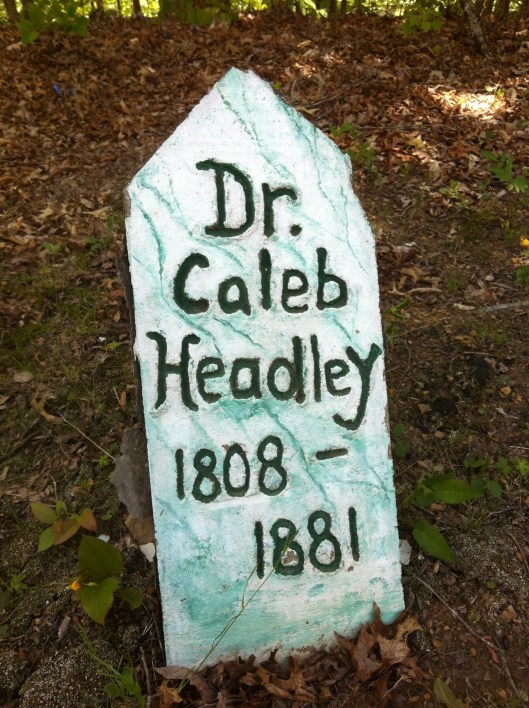
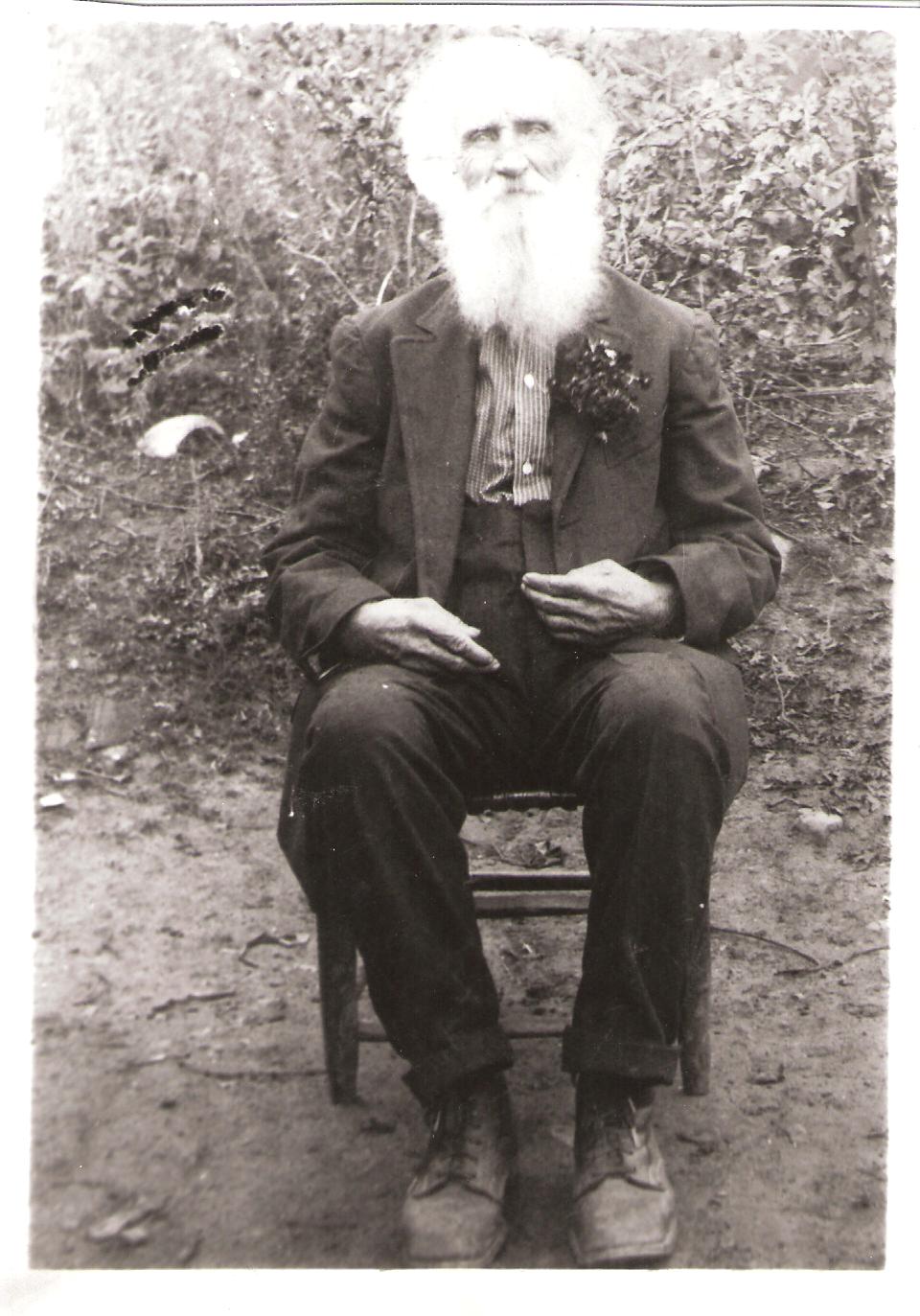
Caleb Headley grave, Sulphur Spring Fork of Fourteen Mile Creek, Lincoln County, WV, 2014

18 Sunday May 2014
Posted in Cemeteries, Civil War, Fourteen, Wewanta
Tags
Brandon Kirk, Caleb Headley, cemeteries, Fourteen, Fourteen Mile Creek, genealogy, history, Lincoln County, photos, Sulphur Spring Fork, West Virginia
Caleb Headley grave, Sulphur Spring Fork of Fourteen Mile Creek, Lincoln County, WV, 2014
18 Sunday May 2014
Posted in Calhoun County, Civil War, Ed Haley, Music
Tags
Ashland, Atlanta, Big Ugly Creek, Birdie, blind, Boatin' Up Sandy, Catlettsburg, Chapmanville, Charleston, Cincinnati, civil war, Clark Kessinger, Coalton, Crawley Creek, Ed Haley, Ella Haley, fiddlers, fiddling, Girl With the Blue Dress On, Godby Branch School, Grantsville, Grayson, Great Depression, Green Shoal, Harts School, history, Hugh Dingess School, John Hartford, Kentucky, Lawrence Haley, Logan, Margaret Arms, Mona Haley, music, Orange Blossom Special, Pat Haley, Ralph Haley, Slim Clere, Sweet Georgia Brown, Tennessee Waggoner, The Old Lady Carried the Jug Around the Hill, Wewanta, writing
We hadn’t played long until Slim was telling me more about his background.
“I came from a line of Irish fiddlers,” he said. “My dad, his brothers, and his dad… The old man was so good on the fiddle — he was in the Civil War — my grandfather — that the soldiers all chipped in and bought him a fiddle and he didn’t have to fight. He was from Coalton on the road to Grayson out back of Ashland.”
Slim said his dad played “The Old Lady Carried the Jug Around the Hill” and “Girl With the Blue Dress On”.
Here comes the girl with the blue dress on, the blue dress on, with the blue dress on.
Everybody’s crazy about the girl with the blue dress on…
I asked him if his father played “Catlettsburg” and he said yes, although it was not the same version as what Ed played.
“My dad played it,” Slim said. “He played ‘Birdie’, ‘Tennessee Waggoner’. He got these two fingers cut when he was working at a steel mill and his fingers stayed stiff so he had to play the rest of his life with these two fingers. I don’t remember when he played with all five ’cause I was too small. He played ‘Boatin’ Up Sandy’.”
Every now and then, Slim would tell me something about Ed.
“Every Saturday Ed would go to a county courthouse someplace,” he said. “Believe it or not, he was in Grantsville one time when I was up there, sitting on the steps up there at the courthouse. I walked over, I said, ‘Ed, aren’t you out of place?’ He said, ‘You’re liable to find me anywhere.'”
I asked Slim if he ever saw Ed drunk and he said, “I don’t think I ever saw him sober. He didn’t get too high. Seemed like it give him more pep.”
I asked Slim if he remembered Sweet Georgia Brown coming to see Ed in Ashland and he said, “He was up in Ashland at one time. We called him Brownie. Well, he wasn’t around Ed too much. Ed was a close guy. He didn’t associate with a lot of people. Now, he liked me pretty well…but most fiddle players don’t like fiddle players.”
Speaking of fiddlers, Slim said he had met a lot of them during his lifetime. I wondered if he ever met any as good as Ed and he said, “Clark Kessinger was the closest. I think Clark learned from him. See when Clark made records for Brunswick — they had a studio down in Ashland — Ed wouldn’t play on it. He wouldn’t make records. Didn’t want to. He wouldn’t play over the radio. He said they wasn’t any money in that. He wanted to be somewhere somebody could throw a nickel or dime in that cup. He was very poor. He wasn’t starving to death, but — his wife was blind, too — there was no way that they could make any money. And he had a 17- or 18-year-old boy — he was a good guitar player, but he wouldn’t play with him. I don’t remember what his name was. He was ashamed of his father and mother — to get out in public. Not for any personal reasons…just the fact he could see and they couldn’t.”
Slim began talking about his own career in music, mostly his Depression-era radio work. He mentioned working with or meeting people like Bill and Charlie Monroe and Earl Scruggs and even credited himself with bringing “Orange Blossom Special” to Charleston from Atlanta in October of 1938. He kind of caught us by surprise when he spoke of having played all through the Guyandotte Valley.
“We played personal appearances up and down through there,” Slim said. “Played schools and theaters: Godby Branch School, up on Crawley Creek — one room school — and Hugh Dingess School — it was about an eight-room red brick building — Green Shoal, Wewanta. Harts School, I guess I must have played that school fifteen times. From about ’39 on up to 50-something. Everybody turned out when we played Harts. It was supposed to be the meanest place they was on the Guyan at that time. Came across Big Ugly Creek there. See, it goes from Lincoln County over into Boone. I used to broadcast down in there. I’d say, ‘All you Big Ugly girls be sure to come out and see us now.'”
I asked Slim if he played with any local musicians and he said, “No, we went in and played the show. Once in a while, we’d have amateur contests and they’d come in. Well, we’d have fiddling conventions at big high schools.”
I asked Slim if he ever saw Ed around Harts and he said, “No, not down there. Only time I ever seen Ed was around Ashland and Logan and Chapmanville. He played at the bank in Chapmanville. Chapmanville was 12 miles from Logan.”
Later that night, Brandon and I found some more family photographs in a box at Pat Haley’s. One was of Ella, while others were of Margaret Arms. Margaret was a real “mystery lady”: nobody seemed clear on her relationship to the Haley family. Lawrence Haley had remembered her as a cousin to either Ed or Ella, while Mona called her “Margaret Thomas” and said she lived in Cincinnati.
23 Wednesday Apr 2014
Posted in Civil War
Tags
Albert Gallatin Jenkins, Appalachia, Cabell County, civil war, Green Bottom, history, photos, U.S. South, West Virginia
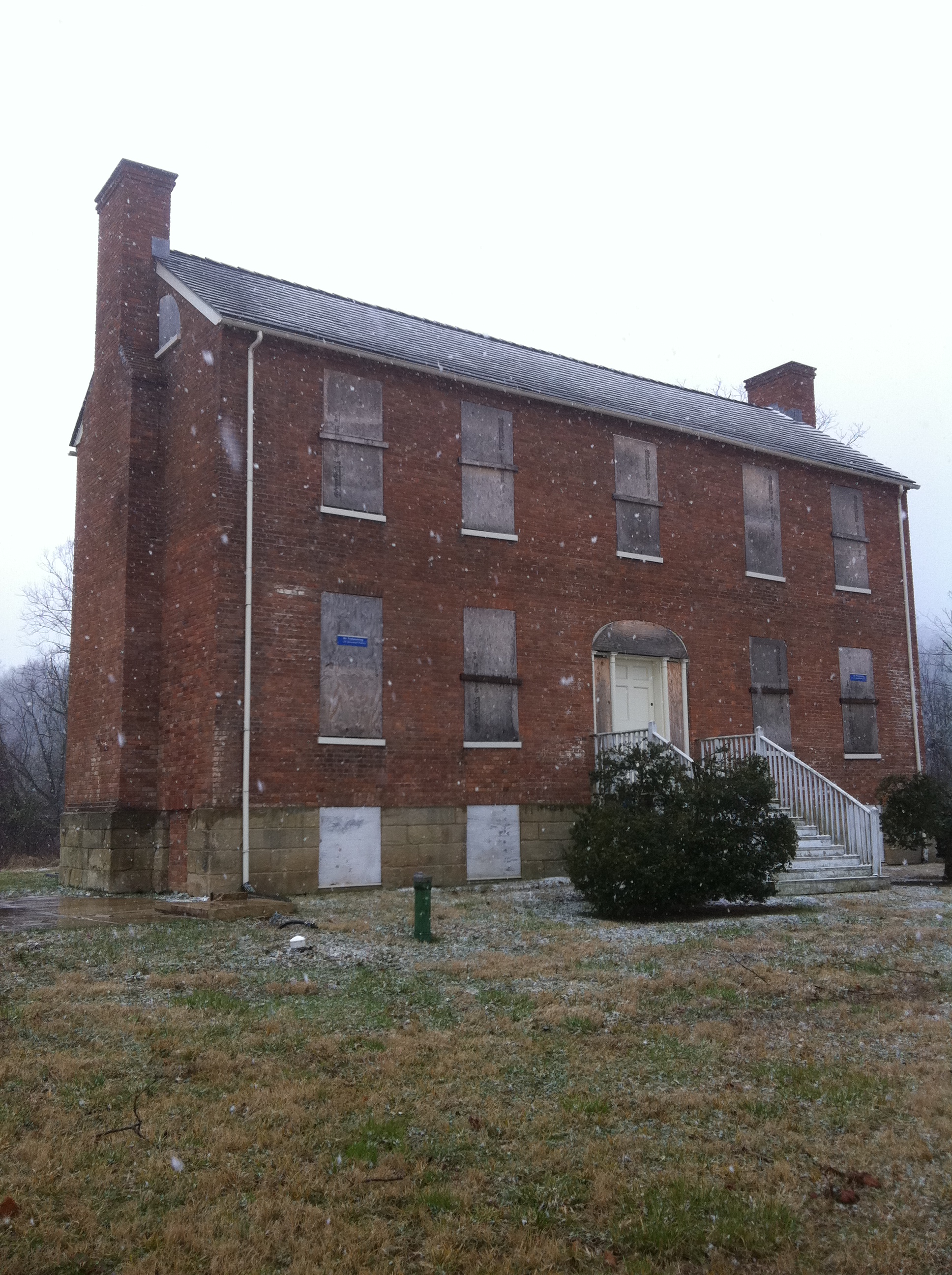
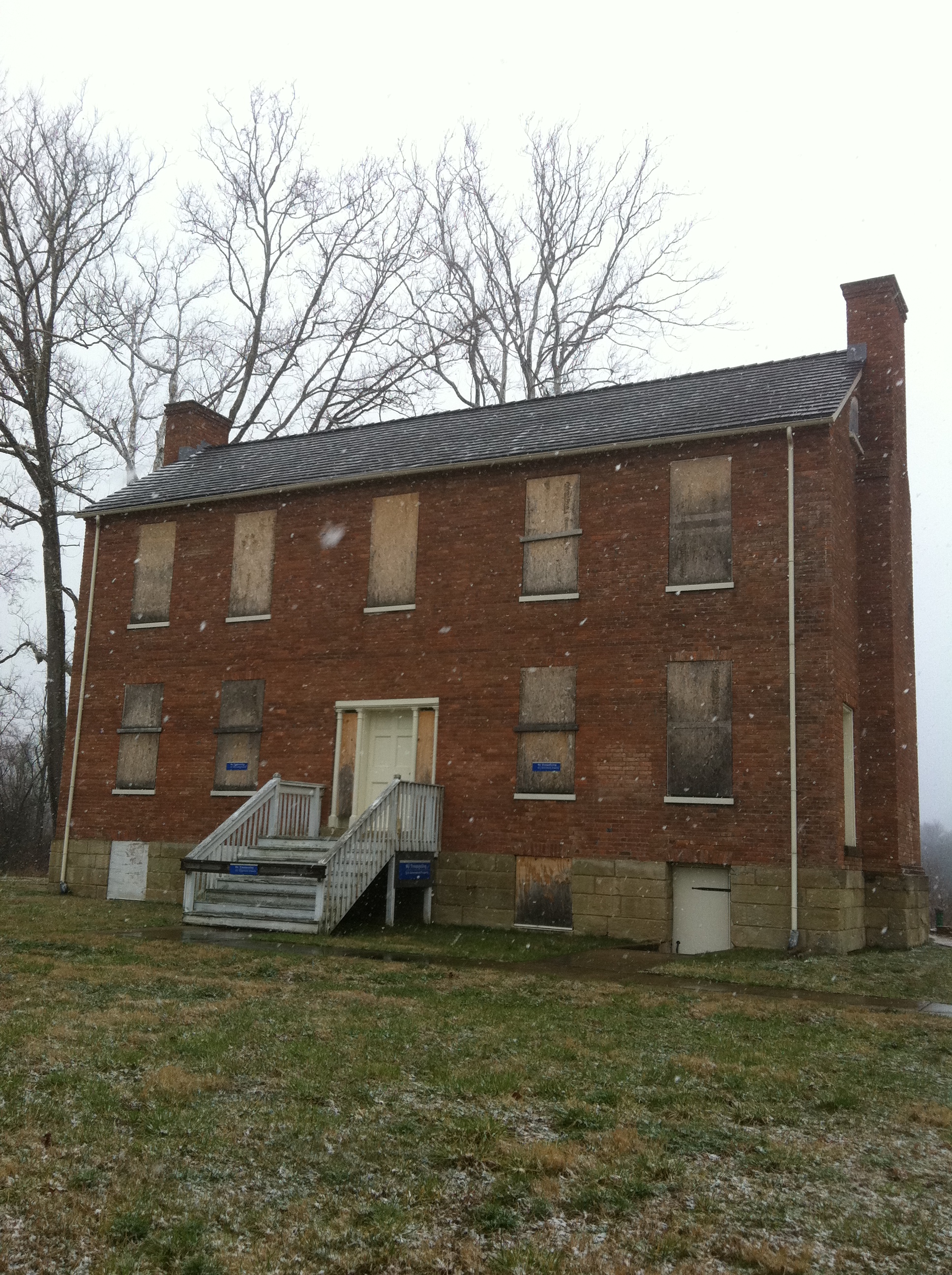
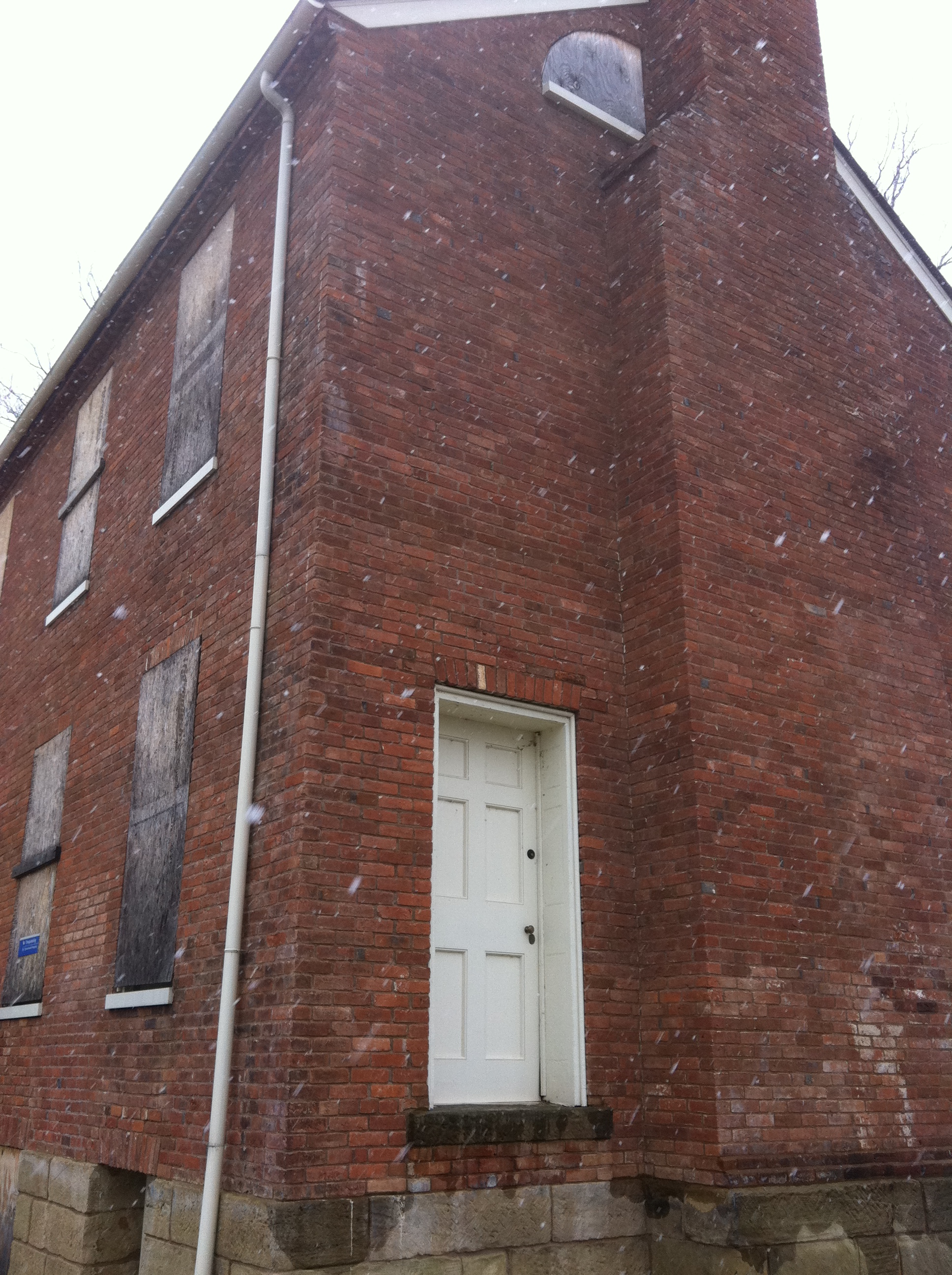
Albert Gallatin Jenkins House, Cabell County, WV, 2013
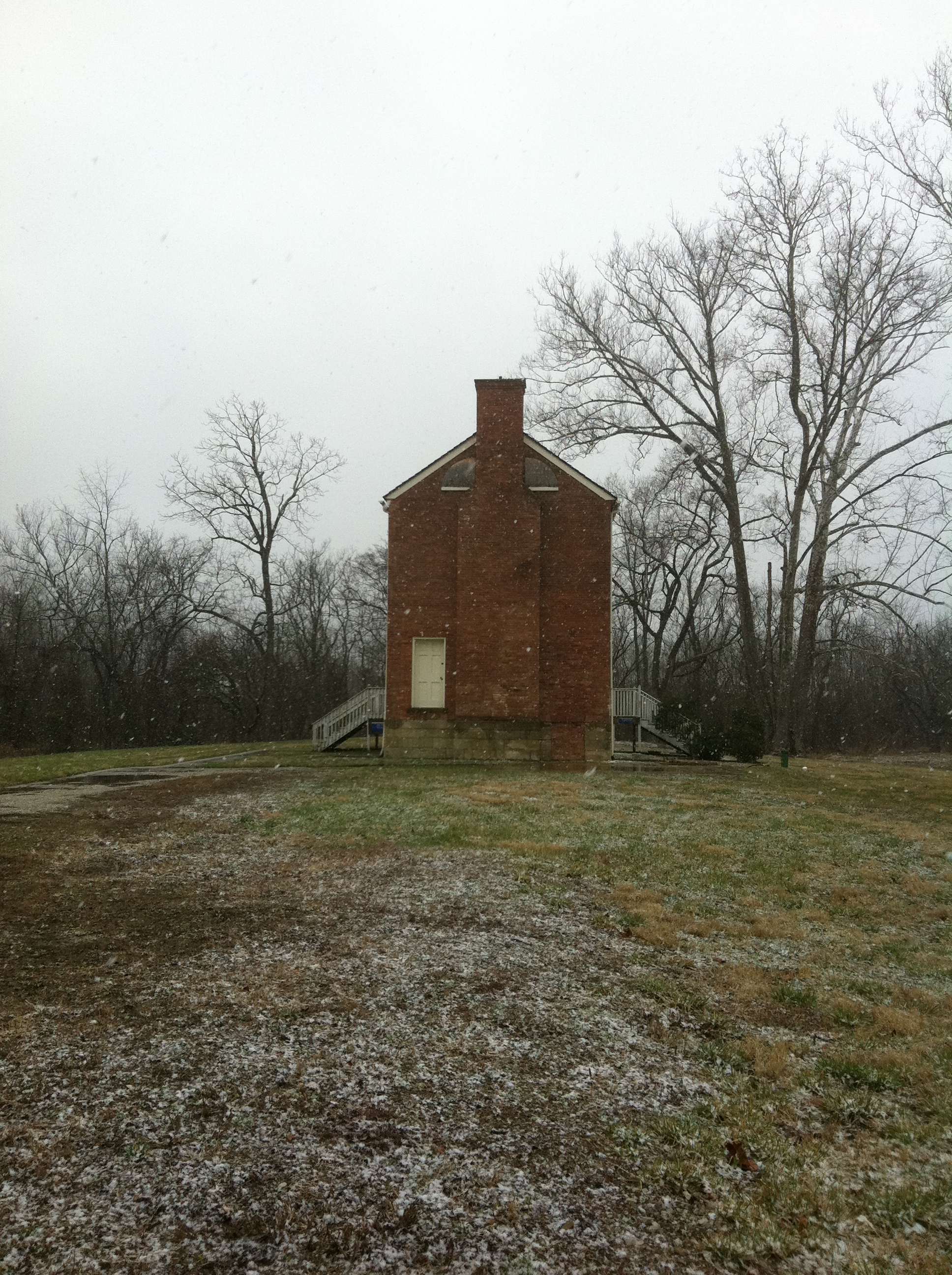

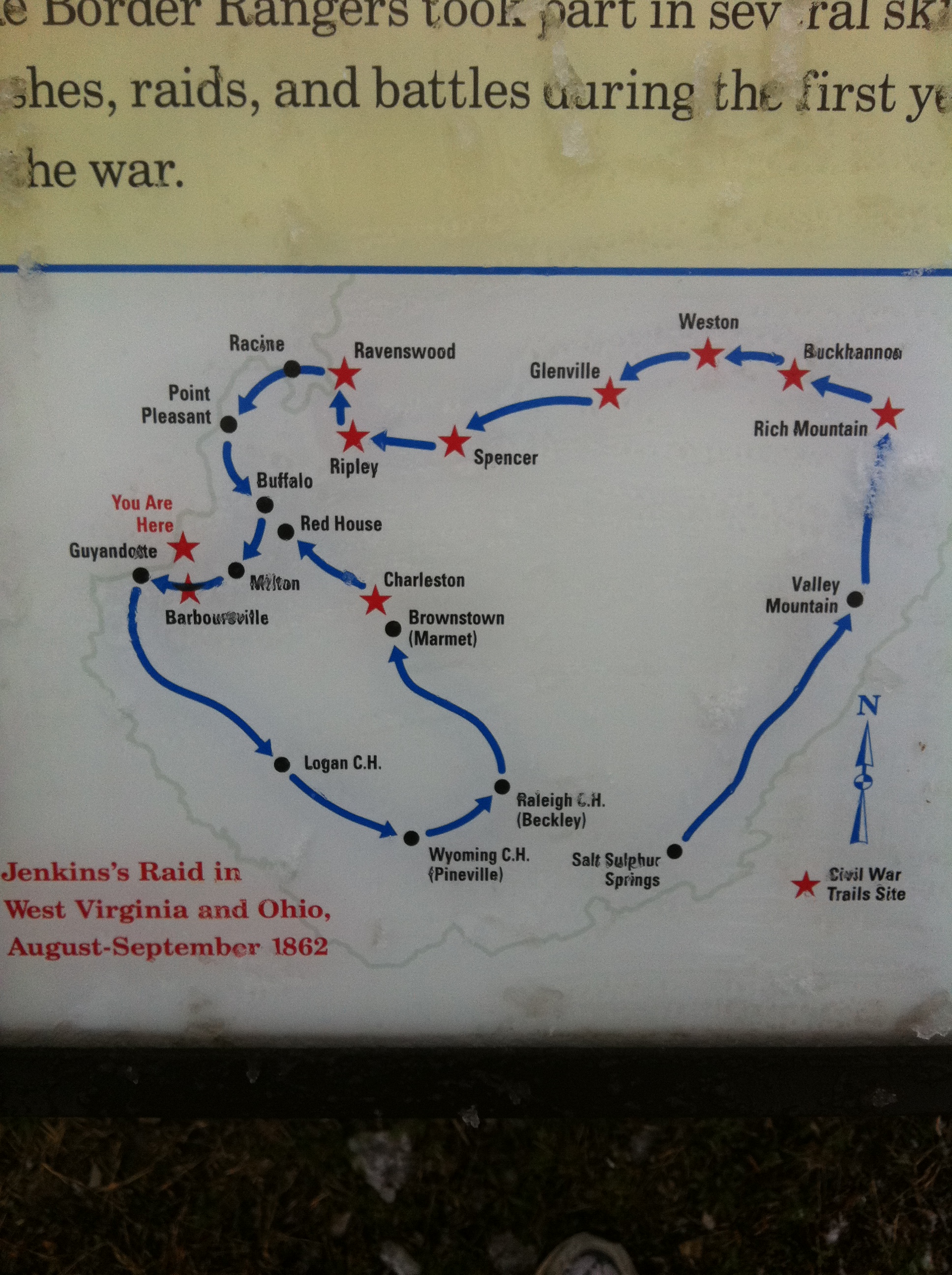
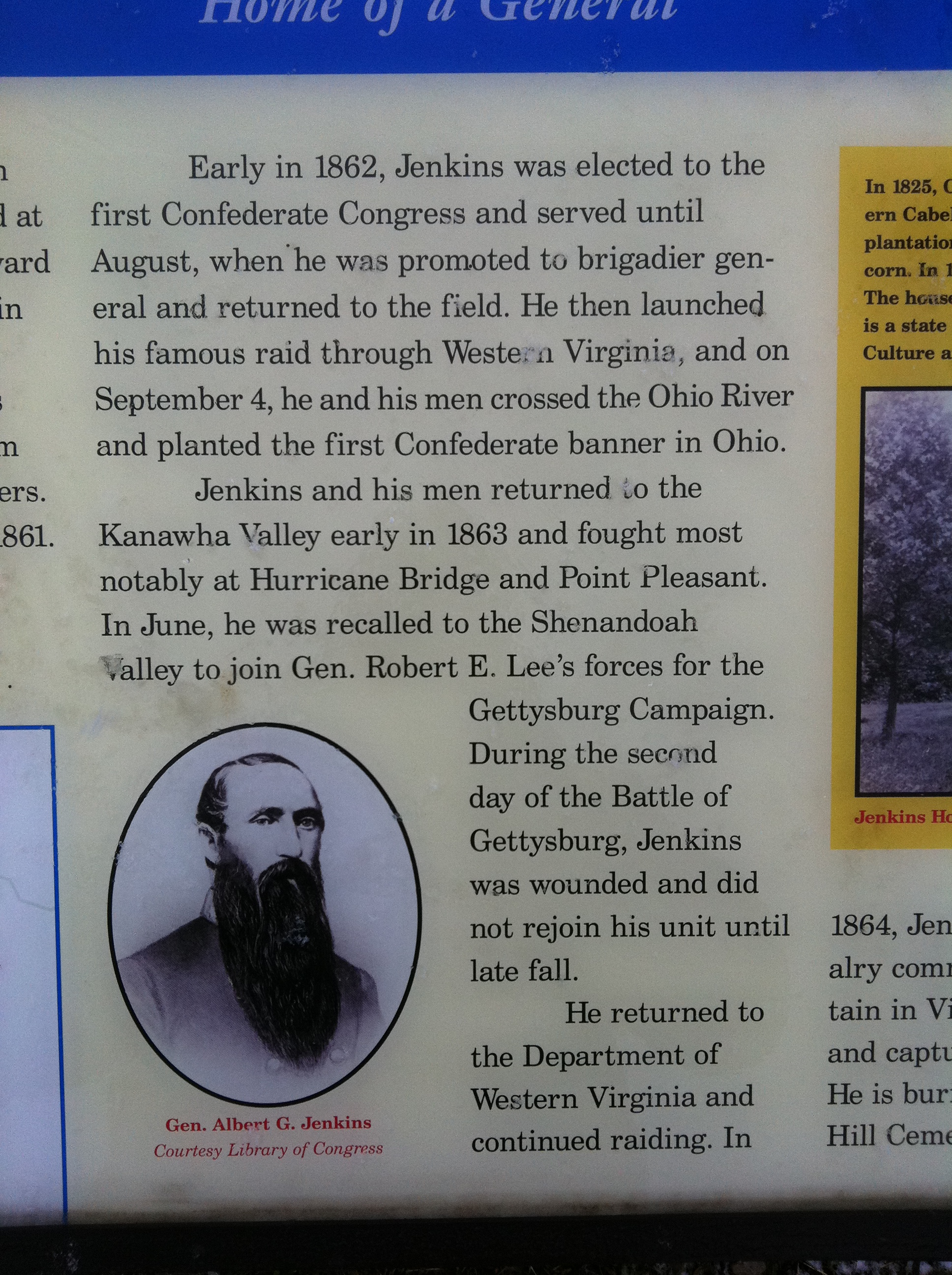
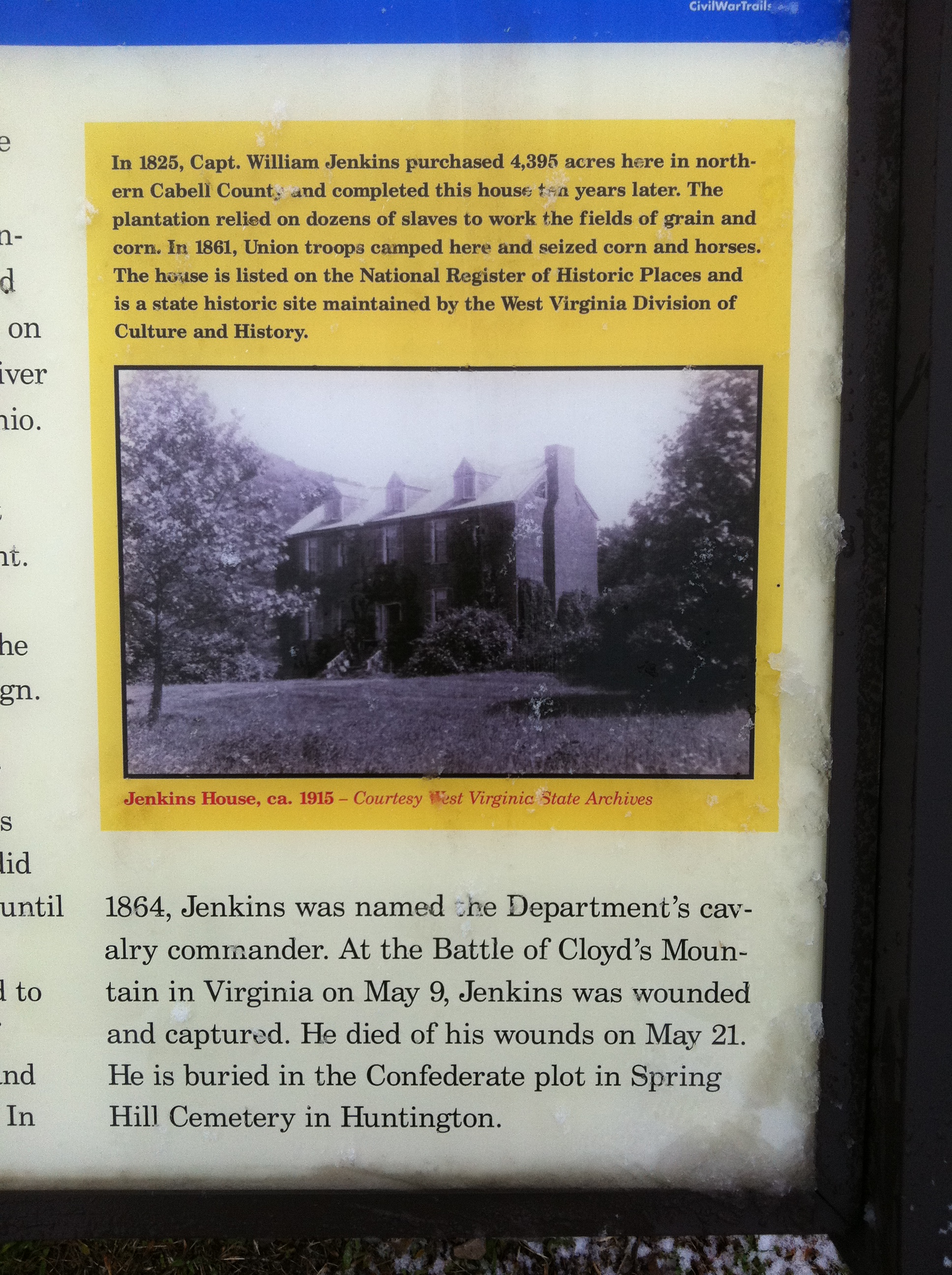

11 Tuesday Mar 2014
Posted in Big Harts Creek, Big Sandy Valley, Civil War, Culture of Honor, Harts, Lincoln County Feud, Music, Timber
Tags
Al Brumfield, Appalachia, Blood in West Virginia, Brandon Kirk, Cain Adkins, feud, Green McCoy, Henderson Dingess, history, John W Runyon, Lincoln County, Paris Brumfield, West Virginia, writers, writing

You may pre-order my book directly at Pelican Publishing Company’s website or at the website of any major bookseller. http://www.pelicanpub.com/index.php
07 Friday Mar 2014
Tags
Appalachia, Ben France, Cabell County, civil war, Confederate Army, fiddler, fiddling, Fred B. Lambert, genealogy, history, music, photos, West Virginia

Ben France, fiddler and Confederate veteran, Cabell County, West Virginia. From the Fred B. Lambert Papers at Special Collections Department, Morrow Library, Marshall University, Huntington, WV.
18 Tuesday Feb 2014
Posted in Big Sandy Valley, Civil War, Ed Haley
Tags
Andersonville Prison, Arthur I. Boreman, Ben Haley, Ben Haley Branch, Bessie Fraley, Bill Smith, Brandon Kirk, Cabell County, Cabell County Scouts, Cain Adkins, Catherine Haley, civil war, Ed Haley, history, Independent Company of Scouts, James H. Ferguson, James Haley, Jane McCoy, Kentucky, Kiahsville, Lick Creek, Lincoln County, Martha Spence, Peter McCoy, Quincy, Thomas McCoy, Wayne County, West Virginia, William A. Haley, writing
On March 20, 1865, Captain Benjamin R. Haley wrote West Virginia Governor Arthur I. Boreman about his capture the previous fall, the disbanding of his independent company of scouts and of his desire to join Captain James H. Ferguson’s Cabell County Scouts.
I have the Honor to Report the condition of my company of Ind. Scouts for Wayn County W.Va on the night of the 15th of Sept./64 we were Surrounded by 115 Rebells under command of Bill Smith in person I having only my Self and Seven of my men on duty when we were captured together with nine citizens whom I had cald in and armed to assist us in case we should be attacked we were all gobbled up with our armes and accouterments making in all Seventeen gunes with there accouterments. on my Return after Being parroled I Lernd that Senator Bowen had Recivd orders from you Excellency to take up the Remainder of the armes and accouterments and to Disband the men that was not captured. I have been bound to keep the parole they gave me for Life Sake not that I hold them a Legal Ware power yet for that and personal Safety I have kept it till now. I ernistly Desire an exchange as I wish to participate in defending my country with James H. Ferguson of Cabell County on whose List my name Shall Shortly appear.
On March 25, 44-year-old Haley enlisted in Ferguson’s Company of Cabell County Scouts at Guyandotte for one year, along with his sons William and 18-year-old James. Ben was appointed 2nd Sergeant on April 1, while William was appointed corporal. James was listed as a private in a muster roll dated May 25. The war, of course, wound down in the spring of 1865 and with it the military career of Ben Haley.
After the war, Haley settled in the headwaters of Ben Haley Branch, a tributary located at a small post office known as Kiahsville near the Wayne-Lincoln county line. In 1870, 50-year-old “Benjamin Hale” was listed with his family in the Sheridan District of newly created Lincoln County with $315 worth of real estate and $200 worth of personal property. His son William was also still in the area, having married Catherine O’Neil of Ireland in 1869. By 1880, 66-year-old Ben was back in Wayne County with 30-year-old Martha Deeryfield Spence and her children. His wife and younger children were no longer in the county.
During the 1880s, Ben Haley relocated to Quincy, Kentucky, perhaps around the time of Ed Haley’s birth in 1885. According to locals, nothing remains of his home on Ben Haley Branch except an old well. Just down the hill is Lick Creek, where Cain Adkins had been born in 1833.
In 1890, Catherine Haley was listed in the Special Union Veterans Census as a resident of the Laurel Hill District of Lincoln County. She gave John’s military information as follows: 9th West Virginia Infantry (Company G) from October 1862 until October 1864 and 1st West Virginia Infantry (Company F) from 1864 until June 1865. He suffered from consumption and was held in prison for nine months and fourteen days in Andersonville and Florence, South Carolina.
By 1900, there were no Haleys living in the Grant District of Wayne County.
Of Ben’s children, only Jane Haley currently has any descendants in the WayneCounty area. Jane married Thomas McCoy, Jr. (no relation to Green) and was the mother of Peter McCoy — the preacher who gave Milt and Green money for their escape in 1889. Peter died in 1963 but his daughter Bessie Fraley lives at the old homeplace on Route 37 near the family cemetery at the Wayne-Lincoln county line. When Brandon called her, she said her grandma Jane McCoy (Milt’s half-sister) was a “great big fat lady” who died before her birth in 1920. She had never heard of Milt Haley or even Ben Haley and had no idea that a Ben Haley Branch was only a few miles from her home.
17 Monday Feb 2014
Posted in Big Sandy Valley, Civil War, Ed Haley
Tags
5th West Virginia Infantry, Arthur I. Boreman, Ben Haley, Bill Smith, Camp Chase, Catlettsburg, civil war, Guyandotte, history, Independent Company of Scouts, James Buskirk, Jim Smith, Kentucky, steamboats, Stephen Strawther, Wash Watts, Wayne, Wayne County, West Virginia, William A. Haley, William T. Sherman, writing
On August 30, 1864, Captain Benjamin R. Haley wrote a letter to West Virginia Governor Arthur I. Boreman:
Sir I have the Honor of reporting to you the Success and condition of my company I have Lost no men tho there is Some ten cases of Sickness in my company owing to exposure in Scouting and Lying out in the night time we have had quiet times for the Last month untill the Last few days we now have Bill Smith and his gang in our midst which gives us much trouble and fatigue Looking out for him we also have Jim Smith the arch trator and a Small gang to Look after which is a great innoiance attended with considerable Trouble and Danger so upon the whole we have our hands full and in deed we may consider ourselves fourtunate if we are able to compete Successfully with them our armes are in good order and ammunition plenty for the ensuing month.
We have Arrested 9 Disloyal citizens which have been Sent away under Gen. Shermans order and two more who are now under trial at Catletts Burg Ky. Also one cofederate Soldier who was sent to Camp Chase whose name was Wash Wats. There has been Recently a trasaction in our county of Some importanc that a cirtain Rebel capt. James Buskerk who was experimenting with uncle Abe pills and took one too many So it worked him out of this wourld and also out of our way for ever and at the Same time there was one Stephen Strawther who took a very Heary Dose which is prooveing it is Supposed pretty fatal to him tho he may recover its affects for any thing we know yet we do hope it may have a good effect Let it work as it will it is an expressed opinion that if this Little company Should be removed the gurillas would be robbing Steam Boats between Catlettsburg & Guyandott and it is threatned Strongly as it is.
Attached to the August 30 letter was this message:
Sir wee are concious that our company is too weak to purform the Duty that is Required oweing to the increased numbers of gurilas and the Disbandment of the other three companies puting all together it becomes dangerous to Scout through the county or even to Hold a position in the County we have time and again Reported to the federal forces and with one Single exception have failed to get Help they invariably tell us to Remain with them and Keep out of Danger which you at once Se gives our County no protection at all now I have conversed with your warmest costituance and just friends and they all think it Due them and the intrust of our county that you Should give an order for more men now I can asure you the men can be recruited in a very Short time. You are aware that the term of Servis of the 5 Va Regt. is now about out and there are quite a number of them who have not nor will not reenlist also quite a number of them who Reside in wayn County and cannot Stay at home under existing circumstanses. They therefore would Readily enlist in a compey of this kind and Defend the Interest of the Loyal people of this county. There are also quite a number of citizens who would becom Souldiers in a Local Company like this be you assured we must have moor men or Suffer great Loss after Runing great Risks of our own Live we are held as usurpers of the Laws of Va and cald Borman Bogus theaves and cut throats by the Rebels and threatened with instantaneous Death when captured.
We are not at all Dismaid or intimidated at there threats not with Standing that there is plenty moor men to Help us we think it nothing more than Right they Should be permitted to do wee know they will do if armed and put at it we therefor petition you to give us the minimum number of a company Say eighty the Rank and file to be paid from the Date of there enlistment and for to be economical Say one Lieutenant.
On September 15, 1864, Haley was captured by a force under the command of Rebel Bill Smith. A few days later, on September 23, he was officially discharged from the 5th West Virginia Infantry, as was his son, William. The following day, the Wheeling Intelligencer reported on his capture:
A RAID: A few days ago the notorious rebel Bill Smith, with about sixty men, made a raid on Ceredo, situated on the Ohio river, in Wayne County in this state. They captured Capt. Ben. Hailey, and eight of his men, who belonged to the West Virginia State Guards, who were stationed at Ceredo for the protection of that point and surrounding neighborhood. They also captured all the male citizens of the place, with the exception of two old men, and robbed the Post Office of stationary and postage stamps, and other valuables, to the amount of about forty dollars, and robbed the citizens of all the horses in the neighborhood, and about seven hundred dollars. The guerillas left Ceredo with their prisoners and booty, going in the interior, in the direction of Wayne Court House, robbing the citizens of their horses and other property. The loyal citizens have been greatly annoyed for the want of necessary protection, ever since March or April last, the country being overrun by guerillas, committing depredations of the most shameful character, such as murdering citizens, robbing houses of bed clothing and their valuables, and taking money from citizens. It would be a great relief to the loyal citizens of Wayne County if the military authorities could possibly spare soldiers sufficient to protect said county from the bands of guerillas that are continually infesting the county, and driving the loyal citizens away from their homes.
16 Sunday Feb 2014
Posted in Big Sandy Valley, Civil War, Ed Haley
Tags
45th Kentucky Volunteer Mounted Infantry, Albert Gallatin Jenkins, Arthur I. Boreman, Ashland, Ben Haley, Buffalo Shoals, Catlettsburg, Ceredo, Cumberland Gap, Flemingsburg, Independent Company of Scouts, James Haley, John Bowen, Kentucky, Louisa, Morgan Garrett, Mount Sterling, Prestonsburg, Saltville, Vincent A. Witcher, Virginia, Wayne County, West Virginia, William A. Haley
On June 8, 1863, Benjamin R. Haley and his son James enlisted for one year of service in the 45th Kentucky Volunteer Mounted Infantry. The 45th was organized in the summer of 1863 as a battalion (four companies) whose purpose it was the protect the Virginia front and the counties of eastern Kentucky. On October 10, the 45th was upgraded to a regiment in Ashland. At that time, Haley was made captain of Company B, while son William A. Haley was made second lieutenant.
“During the early part of 1864 the regimental headquarters were at Mt. Sterling, Ky., from which point the 45th was continually employed in constant and arduous duty, covering the entire Virginia front from Cumberland Gap to Louisa, and keeping in check, by ceaseless activity, the rebel cavalry command concentrated in and about Abingdon, Va.,” according to Union Regiments of Kentucky.
In March of ’64, the 45th moved its headquarters further north to Flemingsburg, Kentucky. Haley, perhaps wishing to remain closer to his home in Wayne County, resigned on March 17, 1864. William absented himself from command at Prestonsburg, Kentucky, on April 24, 1864 while on the march to Saltville, Virginia. James A. was mustered out on December 24, 1864 at Catlettsburg.
On April 8, 1864, John Bowen, a resident of Buffalo Shoals, wrote West Virginia governor Arthur I. Boreman to request that Ben Haley be permitted to organize a company and provide more Union protection in Wayne County.
Dear Sir I wish to inform you that Mr. Morgan Garret has declined to raise a Scouting Company for this part of our county and has gone to Kentucky. Horse Stealing is Still going on here. We need a company for this part of the county very much. They have three companeys upon Sandy and I understand they are trying to get another one. I think if their are to be another company for this county it ought to be for this part of the county. I would recommend either Benjamin Haley or William Nixson for capt. of a company and I request that one of them be commisioned to raise a company as soon as possible as we need protection badly.
Governor Boreman heeded Bowman’s request. On April 28, 1864, 46-year-old Ben Haley organized an Independent Company of Scouts for Wayne County. Some 25 men enlisted at Ceredo to serve in Captain Ben Haley’s Company for twelve months. “The members of my com were organized and Sworn in to the Servis by Abel Segar Esq the only Justice of the Peace that is in the County that will attempt to Edecute his office,” Haley wrote to the governor. On May 7, he requested 25 hats, 25 pairs of boots, 25 woolen blankets, 25 rubber blankets, 25 haversacks, 50 flannel shirts, fifty pairs of drawers and fifty pairs of stockings. He also requested 25 Colt rifles, 4000 bullet cartridges, 25 bayonet scabbards, 25 waist belts, 12 screw drivers and two ball screws, among other items. On May 10, Haley took his oath of office and then signed an oath of allegiance to the United States of America on the following day.
On June 6, Haley wrote Governor Boreman:
Sir I have the Honor of reporting the condition of my co of Independent Scouts for Wayne Co West Va. We are in Camp at present in Ceredo. The men in good condition except 3 cases of sickness disserrtions non captured two rebels prisoners one of Rebel Witcher command & the other of Jenkins turned over to the post at Catllesburg Ky please instruction what to be don with Sick also what is to be don with capturd property horses guns in consequence of the U.S. Troops being Sent to the front we are very much trobled with Strong bands of gurillas which prevents our Scouting very far in the county notwithstanding we have Scouted considerable & have lost no man I think in my next months report I shall be able to give a good account of the Service of my men as they are brace & hardy. Men all Suplied with arms in good condition.
14 Friday Feb 2014
Tags
167th Virginia Militia, 5th West Virginia Infantry, Ben Haley, Camp Parole, Camp Pierpont, Ceredo, City Point, civil war, Cynthia Haley, Doris Miller Papers, fiddler, history, James Baisden, James Haley, James Short, Joseph M. Kirk, Luray, Marshall University, Maryland, Nellie Muncy, New Creek, Parkersburg, Richmond, Russell County, Sperryville, Twelve Pole Creek, Vincent A. Witcher, Virginia, Wayne County, William T. Caldwell, Woodsville, writing
Benjamin R. Haley — Milt Haley’s father — was one of the most ardent Unionists in Wayne County (West) Virginia during the Civil War. He served in at least two companies of infantry (one in West Virginia and one in Kentucky), one company of militia, and two companies of Home Guards. He first enlisted in April of 1861 and remained on muster rolls as late as May 1865. He was twice captured and almost court martialed. He was also, based on his military records, a drinker and a fiddler.
Ben Haley was born around 1820 in Virginia. According to census records, he married Cynthia Dyer around 1843. They were the parents of the following children: Hannah Jane Haley, born about 1844; William A. Haley, born about 1846; John B. Haley; James Haley; Helen M. Haley, born about 1850; Charles Haley, born about 1852; and Margaret Haley, born about 1856. In 1850, the Haleys lived in Russell County, Virginia (as did, incidentally, Bill Duty and the Ferrells). Toward the latter years of the decade, Ben moved to Wayne County in the Big Sandy Valley, where he fathered Milt Haley by Nellie Muncy. What contact he had with Milt is unknown. In 1860, according to census records, Ben and his family lived with James Short in Wayne County, (West) Virginia. Haley had $300 worth of real estate and $250 worth of personal property. At some point, according to the Doris Miller Papers at Marshall University, he lived on the Sweetwater Branch of the East Fork of Twelve Pole Creek.
On April 2, 1861, 40-year-old Haley enlisted as a corporal in Captain Joseph M. Kirk’s Company of the 5th Virginia Foot Volunteers at Ceredo, (West) Virginia, for a period of three years. Ceredo was an abolitionist town established in 1857. On September 2, the 5th was reorganized as the 5th West Virginia Infantry at Camp Pierpont in Ceredo. It was mustered into U.S. service on October 18. On November 1, Haley was appointed 1st lieutenant of Company F (following the death of former lieutenant James Baisden). In December, the 5th was ordered to Parkersburg, while a principal part of the regiment was sent to New Creek, Virginia. Haley was apparently with the Parkersburg group as he left there for home in March of 1862 without permission and was listed in records as “Absent, sick at Ceredo.” He was still AWOL in April.
By late spring, Haley was back with the 5th where he soon found trouble with the U.S. Army. According to papers filed by the army, he was charged with “Conduct unbecoming an Officer and a gentleman; Conduct subversive of discipline; and Violating 77th Article of War.” More specifically, “on the 20th day of June, 1862, at New Creek, Va., the said Lieut. Benj. R. Haley, did drink at a saloon, with a number of enlisted men, of his own and other companies, and was then and there drunk and disorderly, being subversive of good order and discipline at said Post.” Furthermore, “Lieut. Benj. R. Haley, did, when put under arrest, allow a detachment of his company, to resist the demand for his sword, and thereby inciting mutiny. That, at the same time and place, when asked for his name and regiment, he told the Post Adjutant to find out as best he could.” More importantly, “the said Lieut. Benj. R. Haley, after having been placed in arrest and ordered to his quarters, did leave the same without permission and was afterward found in a Beer Saloon, playing the violin for some teamsters and enlisted men to dance.”
On July 16, 1862, Haley wrote a letter of resignation as second lieutenant while camped near Woodsville, Virginia. The 5th had recently been engaged at Luray, Virginia, from July 5-11 and at Sperryville, Virginia, on July 11. “I have the honor to tender my resignation as Second Lieut. Fifth Regt. Va. Inf. for the following reasons. Charges are herewith enclosed prepared by Major Burtnett agst myself, parts of which are true and I prefer that my resignation should be accepted than be tried by Court Martial. In the second place I feel my incompetency to discharge the duties of the Office which I hold.” Haley’s resignation was approved and finalized on July 30, 1862.
On August 7, 1862, Ben Haley and his son James enrolled as privates in William T. Caldwell’s Company of the 167th Virginia Militia in Wayne County. On November 29, Haley was captured in Wayne County and confined at Richmond on April 1, 1863. He was paroled on April 3 at City Point, Virginia, and reported to Camp Parole, Maryland, on April 6. He and his son James were back on muster rolls for the 167th on May 7. Captain Caldwell referenced Haley in a letter dated May 17 (“Your favor of the 14th inst has just been handed me by Mr. B.R. Haley…”) Ben’s son James was wounded later that fall, probably in an October 20 skirmish near the Logan-Wayne County line with Vincent “Clawhammer” Witchers’ troops.
09 Sunday Feb 2014
Posted in Civil War, Logan, Music, Women's History
Tags
Appalachia, banjo, Cathy Grant, Chief Logan State Park, civil war, fiddler, fiddling, life, Logan, Logan County, music, photos, Union Army, West Virginia
 A Civil War re-enactor plays the banjo while Cathy Grant plays the fiddle at Chief Logan State Park in Logan County, WV, September 2002.
05 Wednesday Feb 2014
Posted in Big Ugly Creek, Civil War
Tags
Archibald Harrison, Arena Ferrell, Burbus Clinton Spurlock, Elizabeth Scites, Ferrellsburg, George W. Ferrell, Guy Fry, history, James D. Cummings, John M. Harrison, Keenan Ferrell, Lincoln County, Logan County, Martha E. Harrison, Micco, Nine Mile Creek, Phernatt's Creek, timbering, Vinson Spurlock, West Virginia, William T. Harrison, writing
In the latter part of the 1880s, Archibald Harrison sold much of his property. In 1886, he sold 30 acres of his 120-acre tract at Nine Mile Creek in Lincoln County, West Virginia, to A.E. Callihan. The next year, he sold his 360-acre tract in Harts Creek District to an unknown party. In that same year, he bought 100 more acres on Nine Mile.
Around that time, Mr. Harrison and his wife Martha may have separated or divorced, based on indications provided by tax records. In 1888, he sold 150 acres of his 230-acre tract at Phernatt’s Creek to D.B. Keck, while Martha sold the 100-acre tract on Nine Mile to Guy Fry. The following year, Martha sold 90 more acres to Fry on Nine Mile and the remaining acreage on Phernatt’s Creek (recorded as 125 acres, not 80) to James D. Cummings.
At that juncture, Martha disappears from local records.
In the 1890s, Mr. Harrison — perhaps recuperating from a second divorce — centered his property acquisitions on Nine Mile Creek. In 1890, he bought 59 acres worth $1.00 per acre from Elizabeth Scites. In 1891, he bought 150 acres worth $3.00 per acre from Guy Fry and 75 acres also worth $3.00 per acre from an unknown party. This latter tract of land he immediately deeded to his son, William T. Harrison, who married Charlotte F. Sias around 1892.
In 1892, Mr. Harrison deeded A.B. Staley 86 acres from the 150-acre tract, which tax records document as being on Fourteen Mile Creek, not Nine Mile. Four years later, William T. sold his 75 acres to Eliza J. Hager. Harrison probably died in that frame of time. His remaining property on Nine Mile was sold by D.E. Wilkinson, special commissioner, to Clinton Spurlock in 1898.
By 1900, Archibald and Martha Harrison were absent from local census records. Their children Daniel H., age 31, Guy French, age 24, and Louisa J., age 21, were also gone from the area. While the fate of Martha, Daniel and Louisa remains unclear, there is some evidence that Guy, who later lived at Micco in Logan County in 1920, moved to Virginia just after the turn of the century.
In 1900, three of Archibald’s sons were still listed in local census records. William T. Harrison and his family were residents of the Laurel Hill District. John M. Harrison was boarding nearby in the home of Vinson Spurlock and was reportedly engaged in some type of timber business. George W. Harrison was at present-day Ferrellsburg in Harts Creek District with his adopted parents, Keenan and Arena Ferrell.
Martha Harrison, the wife of Archibald, reportedly died in 1901.
27 Monday Jan 2014
Posted in Big Ugly Creek, Civil War, Timber
Tags
Archibald Harrison, Big Ugly Creek, Daniel Fry, fiddler, Francis Brumfield, genealogy, George Marshall Fry, Harold R. Smith, Henry H. Hardesty, John H Fry, Jupiter Fry, Levi Rakes, Martha E. Harrison, Nine Mile Creek, Phernatt's Creek, Sampson Brumfield, timbering, William A. Fry, writing
In 1865, Harrison married Martha E. Fry, the 21-year-old divorced wife of Lewis “Jupiter” Fry, a Confederate veteran and well-known fiddler in the Big Ugly Creek area of what was then Cabell County. Martha had been born on September 8, 1844 in Logan County. She was the daughter of Daniel H. and Nancy P. (Bailey) Fry, who lived at Big Creek in Logan County and later at the mouth of Big Ugly. One of her brothers, William A. Fry, died as a POW in a Delaware prison camp during the Civil War.
Archibald and Martha had seven children: William T., born April 18, 1867 in Kentucky; Daniel H., born September 29, 1869 in Kentucky; John M., born October 18, 1871; Mary L., born February 19, 1875, died August 7, 1875; George W., born October 10, 1874; Guy French, born June 18, 1876 in Virginia; and Louisa J., born February 1, 1879.
The first 23 years of Harrison’s second marriage are somewhat of a mystery. During the late 1860s, based on the birthplace of his two oldest children, he and his wife lived somewhere in Kentucky and, based on the birthplace of another child, they were in Virginia in the mid-1870s.
In 1878 Harrison settled near the Bend of the River or the mouth of Big Ugly Creek in the Harts Creek District of Lincoln County. His neighbors, based on the 1880 census, were Levi Rakes and Francis Brumfield, as well as brothers-in-law John H. Fry and Sampson S. Brumfield. Samp was a timber boss with a log boom at the mouth of the creek. George Marshall Fry, another brother-in-law, lived up Big Ugly where he worked as a farmer, timberman, and general store clerk.
On July 1, 1882, Harrison bought 360 acres of land on the west side of the Guyandotte River (near the Bend) in the Harts District from James I. Kuhn, a land agent for Abiel A. Low and William H. Aspinwall. It was worth $1.50 per acre and contained a $50 building, presumably a house or business.
“All that certain piece and parcel of land containing 260 acres more or less, granted by the commonwealth of Virginia to Wm. C. Miller & John H. Brumfield, assignees of Richard Elkins and Richard Elkins, May 1, 1850, lying on the Guyandotte above the mouth of Buck Lick branch,” the deed began. “Also all that part of a survey of 700 acres made for John H. Brumfield, Sept. 11th, 1854, on the east fork of Fourteen Mile Creek. The above described tract 100 acres of land is not to conflict with the lands conveyed to James Marcum.”
(The Kuhn deeds are interesting. In most cases, Kuhn, the grantor, was merely “selling” the surface rights to property already owned by the grantee. Kuhn’s employers claimed the mineral rights.)
In 1883, Harrison bought a 120-acre tract of land worth $2.50 per acre at Nine Mile Creek and a 230-acre tract of land worth $1.50 per acre on Phernatt’s Creek (at what would later be known as Brady) from W.T. Thompson. Harrison and his family soon settled on this latter property.
“Archibald B. Harrison is extensively engaged in farming, in Laurel Hill district, owning 380 acres of land on Guyan river, at the mouth of Phernats Creek,” Henry H. Hardesty chronicled in his history of Lincoln County, with “good improvements upon the farm, large orchard, heavily timbered, coal and iron ore in abundance.”
While Harrison referred to himself as a farmer in Hardesty’s history, there is also some indication that he was a timberman.
“The fact Archibald Harrison owned so much land at the mouth of Phernatt’s Creek is a clue that he was in the timber business,” said Harold R. Smith, Lincoln County genealogist and historian, in a c.2003 interview. “That was during the timber boom and land at the mouth of these creeks was heavily sought by people in that line of work. You could build a boom there and charge people a fee to get their logs out of the creek.”
At the time Harrison was profiled in Hardesty’s history, he and his wife were members of the Christian Church and received their mail at Hamlin.
“I don’t think he stayed at Phernatt’s Creek too long,” said Smith. “I think I read or heard somewhere that he moved to Big Ugly or Green Shoal and did a lot of timbering.”
24 Friday Jan 2014
Posted in Big Ugly Creek, Civil War
Tags
Archibald Harrison, B.C. Levi, Barboursville, Chambersburg, civil war, Garland Matthews, history, Hurston Spurlock, John McCausland, Mary Harrison, Matt Adkins, Milton J. Ferguson, Monocacy Junction, Murder Hollow, Stephen Lewis, Sylvester Brooks Crockett, Virginia, Wayne, Wayne County, West Virginia, Winfield, writing
In January of 1864, Colonel Milton J. Ferguson’s 16th Regiment, which included Lt. Archibald Harrison, was back in southwestern West Virginia to visit family and restock supplies. On January 1, they crossed a frozen Big Sandy River into Kentucky and attacked a Union force at Buchanan. Eight days later, Ferguson and 150 of his men successfully engaged 75 members of the 39th Kentucky Mounted Infantry at Turman’s Ferry (near Catlettsburg), Kentucky, then made their way to East Lynn in Wayne County, West Virginia, and on to nearby Laurel Creek.
On January 16, a detachment of Union troops arrived in Trout’s Hill (Wayne) to quell the Confederate uprising in the area. Ferguson and the 16th, however, continued to wreak havoc on local Yankees from their base at Murder Hollow. On January 27, Spurlock’s Company (including Harrison) robbed Cabell County’s sheriff. The rebels suffered a mild setback shortly after the robbery: Captain Hurston Spurlock was apprehended by a detachment of the 3rd West Virginia Cavalry at Lavalette in Wayne County.
Early in February, members of the 16th destroyed a Union cargo ship called the B.C. Levi on the Kanawha River near Winfield. They captured General E.P. Scammon, who was sent to Richmond, Virginia, and Captain Pinckard, who was sent to Wayne. (Harrison later claimed to have been present at this event, although history records Company H — not Company E — as being the actual force there.) Colonel Ferguson tried unsuccessfully to exchange Pinckard for Captain Spurlock, who was held at Barboursville.
On February 15, at daybreak, a Union force consisting of the 14th Kentucky Infantry and the 39th Kentucky surprised the 16th Regiment at their camp in Murder Hollow. Historian Stephen Lewis of Wayne records one account of this skirmish: “Garland Matthews told me that when he was a boy an old man by the name of Milt Adkins told him that he, though not a soldier, camped in the hollow with some friends who were Confederate soldiers, and that there were many soldiers camped there. They were attacked at dawn by Federal troops, and four or five Confederates were killed. Many were captured, but some got away. Garland Matthews confirmed that the battle was in winter; bodies froze to the ground and the spring ran red with blood. He also said they carted a number of the bodies away, but some were buried in Murder Hollow.” Colonel Ferguson was one of 42 men taken prisoner at Murder Hollow. Harrison managed to escape.
In July 1864, Lt. Harrison was captured by Union troops at Monocacy Junction, Maryland. Benjamin Dean, a Wayne Countian, wrote of the incident in a letter to his wife dated July 19. “We are under General McCaslin. We have been on a raid ever since the 11th of May. We started at Lynchburgh, from there back to the Valley of Virginia to Winchester, from there to Maryland to Frederick City. We fought 25,000 there. Lt. Harris was wounded and captured. We went near the city of Washington. We came back through East Virginia. I am near Winchester today. We marched all last night. I haven’t had a clean shirt for over five weeks. We manage to get enough to eat. We hook the Yanks at every point we can. We have been commanded by Colonel Graham. He does nothing but drink and curse and if Colonel Ferguson isn’t exchanged by next season I never expect to make another raid in this war.”
Three days after his capture, Harrison escaped and participated in a final engagement at Chambersburg on July 30, when Confederates burned the town.
In 1864, he returned home to Wayne County, at which time he and his wife, Mary Spurlock, were divorced. The former Mrs. Harrison soon remarried to Sylvester Brooks Crockett, who was eleven years her junior, and had several more kids before dying in 1883 on Wilson’s Creek in Wayne County.
22 Wednesday Jan 2014
Posted in Big Ugly Creek, Civil War
Tags
16th Regiment Virginia Cavalry, Albert Gallatin Jenkins, Archibald Harrison, Barboursville, Carnifex Ferry, civil war, Droop Mountain, East Cavalry Battlefield, Fairview Rifles, Ferguson's Battalion, genealogy, Gettysburg, Guy Harrison, history, Hurston Spurlock, Knoxville, Lewisburg, Lincoln County, Mary Harrison, Milton J. Ferguson, Scary Creek, Tazewell County, Virginia, Wayne, Wayne County, West Virginia, writing
For a brief period of time in the 1880s, Archibald Harrison, a veteran officer of the Civil War, made his home in the Harts Creek District of Lincoln County, West Virginia, where he labored as a farmer and timberman.
Archibald was born in January of 1837 to Guy P. and Cleme (Harmon) Harrison in Tazewell County, Virginia. In 1850 census records for Tazewell County, he was listed with his father and stepmother, Nancy Jane Bruster, as well as his brothers and sisters.
By 1860, Harrison had made his way to Wayne County, where he was listed in the census with his older brother, Thomas, aged 35. Later in the year, he married Mary Spurlock, a daughter of Burwell and Nancy Spurlock. Mary’s father was a preacher who, among other things, established a Methodist Episcopal (South) Church at Trout’s Hill (Wayne) in 1846 with 36 charter members.
Archibald and Mary had three children: Laura P., born August 8, 1861, who died in 1879; Nancy C. “Nannie,” born February 1, 1863; and Lemuel, born September 18, 1865, died 1942. Daughters Laura and Nannie apparently spent their lives in Wayne County, while son Lem is probably the same person of that name who shows up in Logan County census records on Mud Fork and at Cherry Tree in 1910 and 1920.
During the Civil War, Harrison served in the Confederate Army and was a participant in many important events: namely General Albert Gallatin Jenkins’ famous march to Ohio in 1862, where his companions became the first Confederates to invade the Buckeye State; at Gettysburg, Pennsylvania under General J.E.B. Stuart in 1863; and at Chambersburg, Pennsylvania under John McCausland in 1864.
In 1861, the first year of the war, Harrison enlisted with the Fairview Rifles, an unorganized Confederate detachment under the command of Captain Milton J. Ferguson of Wayne County. He fought with them at Barboursville (July 14, 1861), at Scary Creek in Putnam County (July 17, 1861) at Carnifex Ferry in Nicholas County (September 10, 1861) and at Lewisburg in Greenbrier County (May 23, 1862). Most of these engagements were Confederate losses.
In August 1862 Harrison and the Fairview Rifles got a huge morale boost when they marched with Colonel Jenkins’s force from Monroe County to the Ohio River, occupying the towns of Buckhannon, Weston, Glenville, Spencer, Ripley, and Ravenswood along the way. At the Ohio, Jenkins and about half of his troops crossed the river and captured Racine (they were the first Confederates to enter Ohio) before re-entering (West) Virginia and heading to Point Pleasant.
On September 15, 1862, the Fairview Rifles were renamed Ferguson’s Battalion and officially mustered into service at Wayne Courthouse. Harrison, who was only 24 years old, was made second lieutenant of Captain Hurston Spurlock’s Company. (Spurlock was probably an in-law.)
On January 15, 1863, the 16th Regiment of Virginia Cavalry was formed when five companies from Ferguson’s Battalion merged with four companies of Major Otis Caldwell’s Battalion. Captain Ferguson was promoted to colonel and placed in command of the 16th, while Lt. Harrison and a majority of Spurlock’s Company were designated as Company E.
In the early summer of 1863, the 16th was attached to General Jenkins’ Brigade and sent north as part of General Robert E. Lee’s invasion force. In June, they moved through the Shenandoah Valley toward Pennsylvania where they fought at 2nd Winchester, Virginia, between June 14-15. They also saw action at Gettysburg on June 26, Harrisburg, Pennsylvania, on June 28-29 and at East Cavalry Battlefield near Gettysburg on July 3.
In the fall of 1863, on November 6, Harrison and the 16th fought at Droop Mountain in Pocahontas County, where the Confederates were defeated by a Union force that helped ensure Union control of the new state. Later in the month, the 16th participated in a siege of Knoxville, Tennessee, until December, 1863.
18 Monday Nov 2013
Posted in Chapmanville, Civil War, Ed Haley, Green Shoal, Guyandotte River, Harts
Tags
Admiral S. Fry, Andrew D. Robinson, Andrew Robinson, Appalachia, Big Branch, Bill Fowler, Chapmanville, Confederate Army, Dicy Roberts, Elias Adkins, Francis Fork, G.S. Fry, general store, Green Shoal, Harts, Harts Creek, Harts Creek District, Henry H. Hardesty, Henry S. Godby, history, Hollena Brumfield, Isham Roberts, Jack Johnson, James P. Mullins, Joseph Workman, Marsh Fork, Martha Jane Brumfield, merchant, Milt Haley, Paris Brumfield, Sallie Dingess, Sand Lick Run, teacher, Thomas H. Buckley, timber, West Fork
The town of Harts — originally named Hart’s Creek — was established at the mouth of Big Harts Creek in the summer or fall of 1870 when Henry S. Godby, a peg-legged Confederate veteran from Chapmanville, petitioned the government for the creation of a post office called “Hart’s Creek.” At that time, Green Shoal was the most thriving spot in the Harts section of the Guyandotte River. A.S. Fry was its chief businessman and postmaster. Godby’s effort to establish Harts as a postal town was a short-lived venture. By 1876, Green Shoal still reigned supreme in local affairs. According to a business directory, it could boast a gristmill, free school and a Baptist and Methodist church. T.H. Buckley and G.S. Fry were physicians, while Joseph Workman was a clergyman.
Around that time, in 1876, Bill Fowler — a local general storekeeper — petitioned the government for the creation of a “Hearts Creek” post office and established his business headquarters at Harts. Fowler had migrated to the area in 1847 and married a daughter of Elias Adkins, an early settler. After a short stint as a schoolteacher in 1871, Fowler was by 1876 a general storekeeper and owner of some 30 acres of land on the Marsh Fork of West Fork. In March of 1877, he became postmaster of “Hearts Creek;” he was also a saloon keeper according to oral tradition. As his business interest generated profits (primarily in timber), he extended his land holdings. In 1878, he purchased 75 acres on the Guyan River from Abner Vance, valued at $5.00 per acre. The following year, he added a 90-acre tract to his estate on the west side of the Guyan River, valued at $3.25 per acre, which he purchased from brothers-in-law, Aaron and Enos Adkins.
Throughout the period, Fowler was unquestionably the chief businessman in Harts. Curiously, Andrew D. Robinson replaced him as postmaster of Hearts Creek in 1879. Robinson was a Union veteran and former township clerk, justice of the peace, and secretary of the district board of education. He was a brother-in-law to Ben Adams, as well as Sallie Dingess (Hollena Brumfield’s mother). In 1881, Robinson shortened the name of the Hearts Creek post office to “Hart.”
The Green Shoal area, meanwhile, fell into a state of decline as a local economic center. A.S. Fry gave up his postmaster position in 1878. He maintained his local business interests well into the next decade, then turned them over to his son George and left to pursue a hotel business in Guyandotte, a town situated at the mouth of the river in Cabell County. The Green Shoal post office was discontinued in 1879.
By 1880 — roughly the time that Milt Haley came to Harts from “over the mountain” — Harts reigned supreme as the hub of local business affairs. In that year, according to census records, the population of the Harts Creek District was 1,116. There were 1,095 white residents, fifteen blacks and six mulattos. 93-percent of locals were born in Virginia or West Virginia, while six percent were born in Kentucky. Most men worked at farming, although A.S. Fry and Paris Brumfield both had stores. In 1882-1883, Brumfield was listed in a state business directory as a distiller.
At that time, Bill Fowler was the undisputed kingpin of the local business scene. According to Hardesty’s History of Lincoln County, published around 1884, Fowler owned 200 acres of land at the mouth of Harts Creek and 254 acres on Mud River. He also owned 200 acres on Sand Lick Run, a branch of Francis Fork, based on land records at the Lincoln County Courthouse. “That situated on Hart creek produces well,” Hardesty wrote, “and has a good orchard and a part is heavily timbered with oak, poplar and pine; coal and iron ore are quite abundant.” Fowler was the father of four small children, recently born to his second wife.
There were other notable business folks in the neighborhood, namely Isham Roberts, who operated a store near Fowler on the Guyandotte River. He was the son of Dicy Roberts and the stepson of Jack Johnson, a local farmer. In the early 1880s, he married Martha Jane Brumfield, a daughter of Paris Brumfield, and opened a store on rental property at the mouth of Harts Creek. By 1884, when Hardesty wrote his history of the county, he referred to Roberts as “a prosperous young merchant in Hart Creek district, having his headquarters on Guyan river, at the mouth of Big Hart creek. His prices are the most reasonable and the business very extensive.” Roberts was the postmaster at Harts from 1883 until 1884, when Dr. T.H. Buckley replaced him.
James P. Mullins, who operated a general store building above Roberts at Big Branch, was also a budding merchant. By 1882, Mullins was the owner of a $200 storebuilding situated on a 203-acre tract of land. Over the next few years, he added another 55 acres on lower Harts Creek and 150 acres on Francis Fork (this latter tract likely acquired for timbering purposes). Hardesty referred to Mullins as being “of good business qualifications and prosperously engaged in merchandising, with business headquarters on Hart creek, one and one-half miles from its mouth.” In that year, Mullins purchased an additional 93 acres on Harts Creek. One year later, the value of his store building increased by $100, hinting at his growing prosperity.
11 Monday Nov 2013
Posted in Big Harts Creek, Civil War, Whirlwind
Tags
34th Battalion Virginia Cavalry, Appalachia, Barney Carter, civil war, genealogy, Harts Creek, history, Hoover Fork, Logan County, photos, West Virginia

Capt. Barney Carter (1821-1902), resident of Hoover Fork of Big Harts Creek, Logan County, West Virginia, served as captain of Company D, 34th Battalion Virginia Cavalry.
09 Wednesday Oct 2013
Tags
Appalachia, civil war, Fourteen, Fourteen Mile Creek, Fourteen Post Office, genealogy, history, James Wilson Sias, Lincoln County, photos, Union Army, West Virginia
James Wilson Sias, Union veteran and postmaster of Fourteen in Lincoln County, WV
08 Tuesday Oct 2013
Posted in Civil War, Little Harts Creek
Tags
Appalachia, civil war, culture, genealogy, history, Isaac Gartin, life, Lincoln County, Little Harts Creek, photos, U.S. South, West Virginia
Isaac G. “Ike” Gartin, Confederate veteran and resident of Little Harts Creek in Lincoln County, West Virginia.
08 Tuesday Oct 2013
Tags
154th Regiment, Appalachia, Caleb Headley, civil war, Fourteen Mile Creek, genealogy, Hardesty's History of Wetzel County, history, Lincoln County, Mexican War, Monongalia County, Nancy Ann Headley, New Jersey, Revolutionary War, Sarah Headley, Thomas Headley, Tyler County, U.S. South, Ward Adkins, West Virginia, Wetzel County, Will Headley
In the years following the Civil War, Caleb Headley migrated from Wetzel County, West Virginia to the Sulphur Spring Fork of Fourteen Mile Creek in Lincoln County, bringing with him a young wife and some degree of knowledge about medicine. Behind him were Pennsylvania roots, a soldier’s experience in the Mexican and Civil wars, as well as a failed marriage. About fifteen years later, he passed away and was buried on a hill near his home.
Today, Ward Adkins, an 81-year-old walking encyclopedia of Sulphur Spring history, is the best source on Dr. Headley’s life. He was partly raised by Headley’s son, Will, his step-grandfather, who told Adkins what little he knew about his father and eventually gave him a very important family heirloom: a geography book containing genealogical information in his father’s handwriting.
Caleb Headley was born on April 11, 1808, the first son and second child of Dr. Thomas and Sarah (Asher) Headlee, in Pennsylvania. Thomas was born around 1775 in New Jersey and was the son of a Revolutionary War veteran. Sarah was born around 1785 in Virginia.
Caleb had seven known or suspected brothers and sisters: Elizabeth Headley, born about 1807, Mary Headley (c.1811-1881), Anthony Headley (August 11, 1812 – January 1, 1894), Jerusha Headley (March 16, 1815 – May 16, 1884), Sarah Headley (August 22, 1817 – June 18, 1900), Elisha Headley (August 24, 1820 – August 2, 1895), and Nancy Headley, born about 1822.
In 1822, according to Hardesty’s History of Wetzel County, Thomas Headley settled in Tyler County, (West) Virginia with his family where he taught young Caleb what he knew about doctoring prior to his death, which reportedly occurred around 1830 in Monongalia County, (West) Virginia.
On November 2, 1826, Caleb married Nancy Ann Wright in Pennsylvania. Nancy was born on October 15, 1808 in Virginia. Her parents were born in Maryland.
Caleb and Nancy had ten children: Charity Headley, born March 1, 1828; Elizabeth Jane Headley, born June 2, 1829; Thomas J. Headley, born November 23, 1831; Joshua Headley, born April 7, 1832; Sarah A. Headley, born December 8, 1833; Caleb Samuel Headley, born March 30, 1836 or 1837; George Washington Headley, born May 21, 1839; Benjamin Franklin Headley (May 31, 1841 – April 11, 1918), Anthony Headley, born June 3, 1844, and Elijah Headley, born August 1, 1850.
During the 1830s and ’40s, Caleb lived in Tyler County where he was, by his own admission, a practicing physician, member of the Methodist Church and for sixteen years a justice of the peace.
“I don’t think Caleb had any schooling to be a doctor,” Adkins said, in a 2003 interview. “As far as I know, the only thing he had as far as a medical education was studying under his daddy. His daddy was a doctor.”
In 1846, the portion of Tyler County occupied by Headley became Wetzel County.
Some time between 1846 and 1848, Headley reputedly served as a lieutenant in the Mexican War. While no military records have been located at the present time to verify his service, one of his sons made the claim that he had been an officer in the war.
“His son Will told me that he was an officer in a war with Mexico,” said Adkins.
In the 1850 Wetzel County Census, Caleb appeared in the Green District as a 40-year-old farmer (not physician) with $200 worth of real estate. His wife was 32 years old, while the children were listed as follows: Thomas (age 17, farmer, in school), Sarah (age 16, in school), Samuel (age 13, in school), Washington (age 10, in school), Franklin (age 9, in school), and Anthony (age 6).
In 1860, the Headleys maintained their residence in Green District.
When the Civil War began in 1861, Headley joined with most of his neighbors and sided with the North.
“Wetzel County, Virginia, was one of the counties which supported the Union during the War Between the States,” Mary Curtis, a genealogist, wrote in 1959. “The large majority of the settlers were from Pennsylvania and the Piedmont areas of Virginia where slaves were not common, so that their interests lay with the North.”
According to Hardesty’s History of Lincoln County, Headley was captain of a company in the Union army. According to military records, he was captain of Company C, 154th Regiment.
“He was captain of a company in the Civil War,” said Adkins. “That’s in Hardesty’s. And Will said he was an officer. He didn’t know what rank, you know. I was told that he was shot in the back. His backbone was just barely hanging together. I think he was discharged in Ohio.”
Several of Headley’s sons fought for the North. Caleb Samuel, later a resident of Porters Falls in Wetzel County, “served a short time in the Union army as lieutenant,” according to Hardesty’s History of Wetzel County. Anthony, later a resident of Pine Grove in Wetzel County, “was a soldier with the Federal army, serving in Company I, 15th West Virginia Infantry, and he participated in all the fortunes of that regiment, engaging in its battles and witnessing the surrender of Lee at Appomattox.” His term of service was from August 24, 1862 until June 30, 1865.
In 1866, 50-something-year-old Headley settled in present-day Lincoln County and joined the Christian church. By that time, he had separated from his wife Nancy and was involved in an intimate relationship with 16-year-old Sarah Farley of Logan County. The two had their first child on May 1 then married on May 25 in Catlettsburg, Kentucky.
Headley’s separation from his first wife has been a hot topic of conversation among his local descendants.
“They had a rumor going that Dr. Caleb run off and left his first wife, but Will said it wasn’t so,” said Adkins. “I heard his wife died when their son Elijah was fifteen years old, which would have been around 1865.”
However, according to Wetzel County census records, Nancy was very much alive after the separation. In 1870 and 1880, she referred to herself in both census schedules as a widow.
28 Saturday Sep 2013
Posted in Civil War
Tags
34th Battalion Virginia Cavalry, Appalachia, civil war, Confederacy, Confederate Army, genealogy, history, photos, U.S. South, Vincent A. Witcher, Wayne County, West Virginia

Lt. Col. Vincent A. “Clawhammer” Witcher, commander of the 34th Battalion Virginia Cavalry
Writings from my travels and experiences. High and fine literature is wine, and mine is only water; but everybody likes water. Mark Twain
This site is dedicated to the collection, preservation, and promotion of history and culture in Appalachia.
Genealogy and History in North Carolina and Beyond
A site about one of the most beautiful, interesting, tallented, outrageous and colorful personalities of the 20th Century
 Brandon Ray Kirk