• About

Brandon Ray Kirk

~ This site is dedicated to the collection, preservation, and promotion of history and culture in my section of Appalachia.

Brandon Ray Kirk

Category Archives: Civil War

Appalachian Heritage Day in Logan, WV (2019)

29 Wednesday Jan 2020

Posted by Brandon Ray Kirk in Civil War, Logan, Music, Women's History

≈ Leave a comment

Tags

Almost Heaven Dulcimer Club, Appalachia, Appalachian Heritage Day, authors, Bobby Taylor, books, Carter Taylor Seaton, Confederate Army, Cooney Ricketts Chapter, culture, fiddler, fiddlers, fiddling, Hatfield-McCoy CVB, Hippie Homesteaders, history, Ken Hechler, Laura Treacy Bentley, Logan, Logan County Commission, Looking for Ireland, M. Lynne Squires, photos, Rebel in the Red Jeep, Southern Coalition for the Arts, Southern West Virginia Community and Technical College, United Daughters of the Confederacy, Urban Appalachia, Vandalia Award, West Virginia

Appalachian Heritage Day occurred on August 25, 2019 in Logan, WV. The event featured authors, scholars, guest speakers, information tables, a genealogy workshop, a writers’ workshop, numerous old-time and bluegrass music workshops, and an all-day concert. Special thanks to the Logan County Commission, Southern West Virginia Community and Technical College, the Hatfield-McCoy CVB, and the Southern Coalition for the Arts for sponsoring the event. For more information, follow this link to the event website: https://appalachianheritageday.weebly.com/

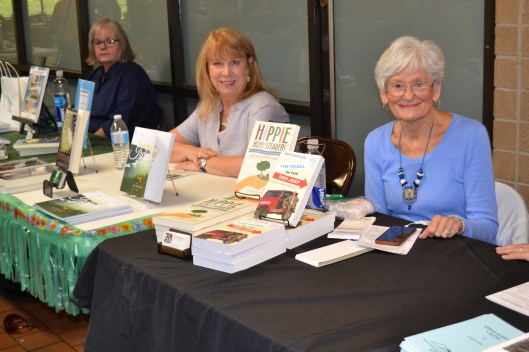
DSC_0832

Authors Carter Taylor Seaton, Laura Treacy Bentley, and M. Lynne Squires offered their amazing books for sale, hosted meet-and-greet sessions at author tables, and presented about Appalachian topics. Each of these ladies has a website providing information about their biographies and books; for more info, give them a Google!

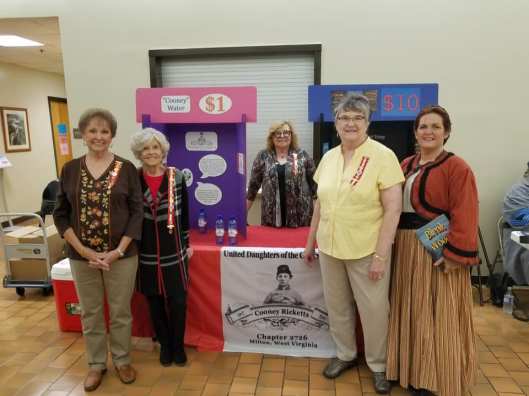
Cooney Ricketts UDC Group

The United Daughters of the Confederacy, Cooney Ricketts Chapter, were featured at Appalachian Heritage Day. This wonderful group of ladies offered history about Confederate soldiers and women on the home front. For more about this group, go here: https://www.herald-dispatch.com/features_entertainment/albert-gallatin-jenkins-united-daughters-of-confederacy-hosts-annual-meeting/article_6d2cdf9e-5ef3-5a75-a22f-69382944e145.html

Bobby Taylor in Old-Time Fiddle Workshop

Master fiddler Bobby Taylor hosted an old-time fiddle workshop. Bobby is the 2010 Vandalia Award winner. For more about Bobby, go here: http://www.wvculture.org/vandalia/award/2010taylor.html

Almost Heaven Dulcimer Club

The Almost Heaven Dulcimer Club made plenty of unforgettable music at Appalachian Heritage Day. For more about them, go here: http://www.davehaasmusic.com/davehaasmusic/Club.html

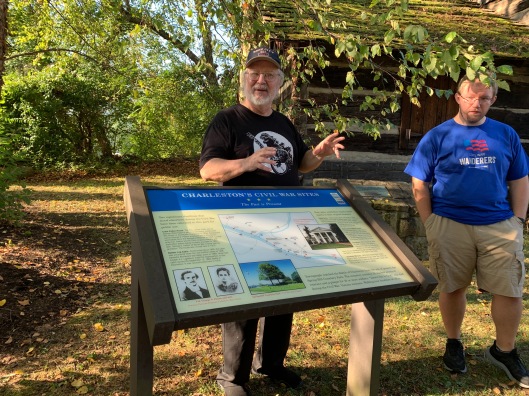
Civil War in the Kanawha Valley: Buffalo Academy (2019)

28 Tuesday Jan 2020

Posted by Brandon Ray Kirk in Civil War

≈ Leave a comment

Tags

Appalachia, Buffalo, Buffalo Academy, Buffalo Presbyterian Church, civil war, Civil War in Charleston, history, Kanawha Valley, photos, Putnam County, Terry Lowry, West Virginia

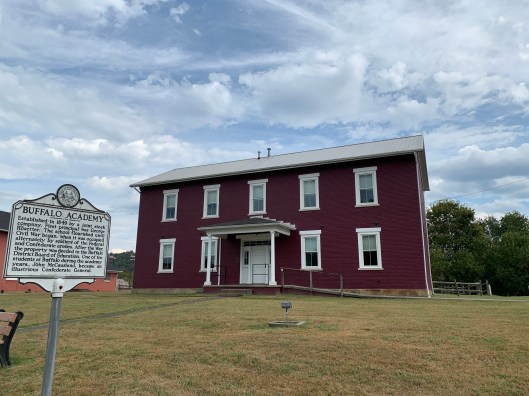
IMG_0725

Terry Lowry is THE authority on the Civil War in the Kanawha Valley. Stop 11 on his tour: Buffalo Academy in Buffalo, WV. 29 September 2019. Here is a link to Terry’s latest book, The Battle of Charleston (2016): https://wvcivilwar.com/now-available-the-battle-of-charleston/

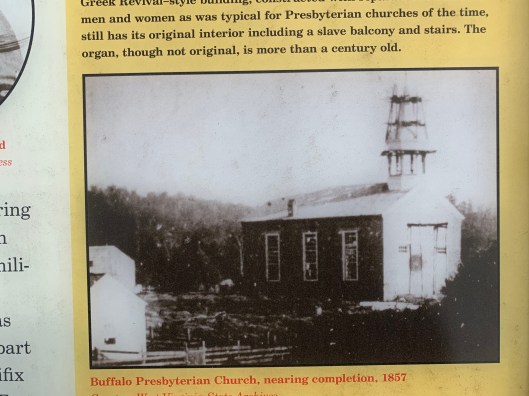
IMG_0730

Buffalo Presbyterian Church, located near Buffalo Academy (1857). 29 September 2019

IMG_0726

Buffalo Presbyterian Church, located near Buffalo Academy. 29 September 2019

IMG_0722

The tour concludes! 29 September 2019

Civil War in the Kanawha Valley: Hoge House (2019)

24 Friday Jan 2020

Posted by Brandon Ray Kirk in Civil War

≈ 2 Comments

Tags

Appalachia, Battle of Charleston, Battle of Winfield, Charles Brown, civil war, Confederate Army, history, Hoge House, James W. Hoge, John Bowyer, Kanawha Valley, National Register of Historic Places, Phillip James Thurmond, Putnam County, slavery, Tallyrand Brown, Terry Lowry, Virginia Secession Convention, West Virginia, Winfield

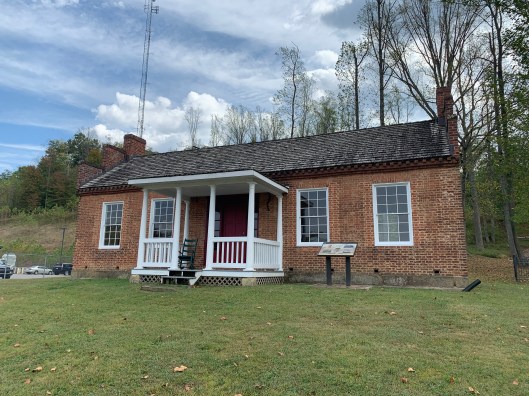
IMG_0694

Terry Lowry is THE authority on the Civil War in the Kanawha Valley. Stop 10 on his tour: James W. Hoge House in Winfield, WV. 29 September 2019. Here is a link to Terry’s latest book, The Battle of Charleston (2016): https://wvcivilwar.com/now-available-the-battle-of-charleston/

IMG_0704

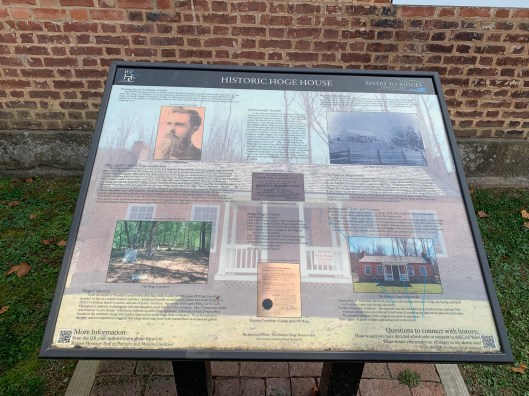
Built in 1838 by Charles Brown, his son Tallyrand sold it to Capt. John Bowyer. James W. Hoge acquired the home in 1857. He represented Putnam County at the Virginia Secession Convention in 1861, voting against secession.

IMG_0686

Moved from its original location in 2004, the home was listed on the National Register of Historic Places in 2007.

IMG_0691

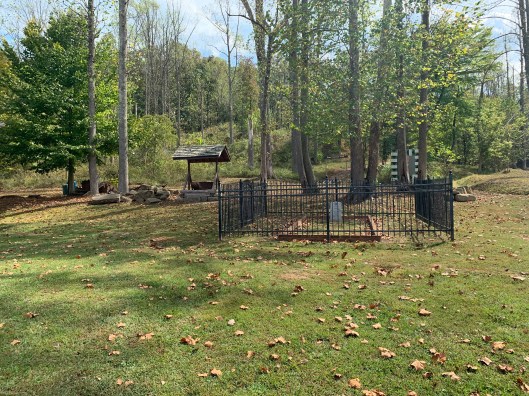
This is the grave of Confederate Captain Phillip James Thurmond, who was mortally wounded in the Battle of Winfield (1864). For more about Capt. Thurmond, follow this link: https://www.herald-dispatch.com/news/putnam_news/confederate-soldier-reburied-with-fanfare-military-rites/article_0c234fe9-6083-5fbf-b7ac-79d2fd87b889.html

Recollections of Laura Hinchman at Combs Addition, WV (1984), Part 1

24 Friday Jan 2020

Posted by Brandon Ray Kirk in African American History, Civil War, Coal, Guyandotte River, Huntington, Logan, Man, Timber, Women's History, Wyoming County

≈ 5 Comments

Tags

African-Americans, Alfred Beckley, Anna Brooke Hinchman, Bruno, Buffalo City, civil war, Claypool, Clean Eagle Coal Company, coal, Combs Addition, Confederate Army, Cyclone, Cyclone Post Office, Davin, Elk Creek, Forkner, genealogy, Guyandotte River, history, Hollow A. Davin, Huntington, John L. Lewis, Lake Claypool, Laura Hinchman, Logan, Logan County, logging, Lorenzo Dow HInchman, Mallory, Man, Man High School, Morris Harvey College, Oceana, Paul Hinchman, Pete Toler, postmaster, rafting, Raleigh County, Rosa Hinchman, splash dams, timbering, Ulysses Hinchman, United Mine Workers of America, Vic McVey, Walter Hinchman, West Virginia, Woodrow Hinchman, Wyoming County

Laura C. Hinchman was born on March 22, 1919 to Walter and Anna Brooke (McVey) Hinchman at Mallory in Logan County, WV. She was an educator for over fifty years and was very active in civic affairs. For more information about her background, see her obituary at this location: https://www.findagrave.com/memorial/140834185/laura-caryl-hinchman

The following interview of Ms. Hinchman was conducted on July 16, 1984. In this part of the interview, she discusses her ancestry, community history, timbering, and coal mining.

***

Miss Hinchman, how did your family first come to this area?

Well, when West Virginia was being settled, people who were willing to come here were given land grants by governors of Virginia over different periods of years. This property was given by the governor of the commonwealth of Virginia at that time, Governor Nicholson. It was given in 1815 to my great grandfather, Dr. Ulysses Hinchman, who was a member of the legislature. He had land holdings in Wyoming County, and he laid out the town of Oceana. He is recorded in a lot of the books of the history of Wyoming and Logan Counties. According to the West Virginia Blue Book, that is how Man got its name. At first it was called Buffalo City. Then they decided to change the name. They thought Hinchman was too long and there was already a place called Hinch, so they named it Man in honor of my great grandfather. Now, that’s according to the West Virginia Blue Book.

Do you remember what your grandparents were like?

Now, both my grandfather and grandmother Hinchman died before I was born, so I don’t remember either of them. At that time, this was all timber land. My grandfather Hinchman, whose name was Lorenzo Dow Hinchman, was a timberman. We have a lot of records here in the house where he kept books of how much he paid the men and how much he sold, and all that. After this was cleared, then, of course, it became farmland. Now, they had no way of getting the logs that were cut to a market. So down there just below Woodrow’s, and this happened several places, they built what was called splash dams. They made a dam and dammed the water up and filled it with logs. Then there would be a great big lot of excitement. Everybody would gather and they would tear the dam lose and let the logs float down to the Guyan River. There were men who went with them, I suppose on rafts, and rafted the logs together, and floated them down the Guyan River to the Guyandotte. Now, my mother’s father, who came from Raleigh County, was Uncle Vic McVey. Of course, I remember him well, he lived here with us until he died at the age of ninety-four. He was one of the men who followed floating those logs down the river, and then they would walk back from Huntington. They had places that they stayed on their way back. I don’t know how many days it took.

Now, my grandmother Hinchman was a Chambers, which is also one of the early settler families in this area. She was a schoolteacher. At that time, it was possible to teach school when you got through the eighth grade, you were given a certificate. All first teachers in the one room schools here were just graduates of the eight grade, because the high school at Man was not built until 1919 or 1920, and that’s all they had. Now some people taught after they finished the eighth grade, and then went on when it was possible. I have a cousin Lake Claypool–that’s another old family in this area for which Claypool is named–that she taught after she finished the eighth grade then she went on to Man and finished high school and then went to Morris Harvey. But all the older teachers were just eighth grade. There was a one room school down here at Claypool. There was a one room school up at Vance’s. There were several one room schools on Buffalo Creek. There was a one room school up–what’s that creek up Bruno called–Elk Creek. My grandmother was a teacher, but as I say, both died before I was ever born. Now then, this place was called Cyclone. This is where Cyclone was. My grandmother Hinchman kept the Cyclone Post Office here for forty years. After she passed away, my mother–she was a McVey–and she married my father, Walter Hinchman, in 1910, and came here. I had Aunt Rosa Hinchman, who had never married at that time, who helped her keep the post office. The mail was carried on horseback from Huntington and the West, came that way, and from Oceana, from that direction they carried it. The postmasters met here, and they ate dinner here every day. My mother–ever who all was here, and at that time, you never knew who might be there for dinner… But when this house was built, this part wasn’t part of it. The kitchen and the dining room were in separate buildings. Now, of course, in the south they had slaves and all, but I do recall their talking about on black man, by the name of Sam. I don’t remember much about him but that’s the only black person that they ever had here, you know, on the farm.

I do remember my granddad McVey quite well, and my great-grandfather came to Raleigh County with General Beckley and settled there. Then my mother’s grandfather was a Confederate soldier in the Civil War. His name was Zirkle, which is the German word for circle. He ran away from home during the Civil War and joined the Confederate Army. After the war he came here and settled. He also lived with us until he was in his nineties. But my mothers’ mother, my grandmother McVey, died when my mother was only, maybe two years old, so I never knew any of my real grandparents except, you know, my granddad McVey.

Were you born here, at this house?

I was born here on March 22, 1919. My father passed away in February of 1920 when I was eleven months old. There were three of us Hinchman children: Woodrow, Paul, and I was the youngest, of course. I don’t remember my father, but Woodrow does. Then my mother married Pete Toler when I was twenty-three months old, a year after my father died. I remember his as my real father because he reared me. He worked this farm and I remember the first time I called him Daddy, now I don’t know how old I was.

There was a mine at Davin that was first called Forkner, and it was changed to the name of Davin after Hollow A. Davin, a prominent man in Logan who probably owned the mine, and that started in 1923. Then the post office was taken up the creek and then we had a post office at Davin. Then my dad ran a coal cutting machine. Men took those jobs by contract and they were paid for the number of cars that they cut. They could work as many hours as they wanted. The men who loaded the coal–they may have loaded themselves, I don’t know–they loaded the coal into wooden cars. Now, in order to get credit of the coal car that they had loaded they had a–what was it called? Well, it was a little round piece of metal with a number on it that they hung on that coal car. The coal was hauled out of the mine by mule or ponies. There was a tipple and everything there at Davin. Then the Clean Eagle mine went in later, I don’t remember when, but my dad worked there, and he also worked at Mallory. But when we were children, we never saw our dad until the weekend because he went to work before daylight, before we ever thought of getting up and he never came in until after we had gone to bed. That sort of thing kept up with miners until John L. Lewis, you see, organized the union.

Civil War in the Kanawha Valley: Battle of Scary Creek Monument (2019)

23 Thursday Jan 2020

Posted by Brandon Ray Kirk in Civil War

≈ Leave a comment

Tags

Albert Gallatin Jenkins, Appalachia, Battle of Charleston, civil war, Confederate Army, George S. Patton, history, Kanawha Valley, Putnam County, Saint Albans Chapter, Terry Lowry, United Daughters of Confederacy, West Virginia

IMG_0677

Terry Lowry is THE authority on the Civil War in the Kanawha Valley. Stop 9 on his tour: Battle of Scary Creek Monument near Saint Albans, WV. 29 September 2019. Here is a link to Terry’s latest book, The Battle of Charleston (2016): https://wvcivilwar.com/now-available-the-battle-of-charleston/

IMG_0678

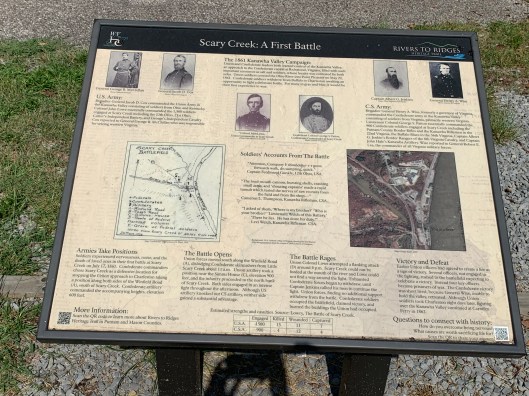
Confederates led by Colonel George S. Patton supported by Captain Albert Gallatin Jenkins won the Battle of Scary Creek.

IMG_0680

For more information, go here: https://www.wvencyclopedia.org/articles/190

Civil War in the Kanawha Valley: Morgan Kitchen Museum (2019)

22 Wednesday Jan 2020

Posted by Brandon Ray Kirk in Civil War

≈ Leave a comment

Tags

Albert Sidney Johnston Morgan, Appalachia, Battle of Charleston, Battle of Scary Creek, civil war, history, Jacob D. Cox, John Morgan, Kanawha County, Morgan Kitchen Museum, St. Albans, Terry Lowry, Union Army, West Virginia

IMG_0671

Terry Lowry is THE authority on the Civil War in the Kanawha Valley. Stop 8 on his tour: Morgan Kitchen Museum in Saint Albans, WV. 29 September 2019. Here is a link to Terry’s latest book, The Battle of Charleston (2016): https://wvcivilwar.com/now-available-the-battle-of-charleston/

IMG_0675

Morgan kitchen was built in 1846 near the present-day location of John Amos Power Plant. During the war, the kitchen was used to serve meals to Union soldiers wounded at the Battle of Scary Creek. It was moved to this site in 1972.

IMG_0673

For more information about the kitchen, go here: http://www.stalbanshistory.com/morgans-kitchen.html

Civil War in the Kanawha Valley: Littlepage Mansion (2019)

20 Monday Jan 2020

Posted by Brandon Ray Kirk in Civil War, Women's History

≈ Leave a comment

Tags

Adam Littlepage, Appalachia, architecture, Camp Two Mile, Charleston, civil war, Confederate Army, Gallipolis, George B. McClellan, Henry Wise, history, Kanawha County, Kanawha Valley, Littlepage Mansion, National Register of Historic Places, Ohio, Rebecca Littlepage, Ripley, Terry Lowry, The Battle of Charleston, Two Mile Creek, Union Army, West Virginia

IMG_0669

Terry Lowry is THE authority on the Civil War in the Kanawha Valley. Stop 7 on his tour: Littlepage Mansion in Charleston, WV. 29 September 2019. Here is a link to Terry’s latest book, The Battle of Charleston (2016): https://wvcivilwar.com/now-available-the-battle-of-charleston/

IMG_0670

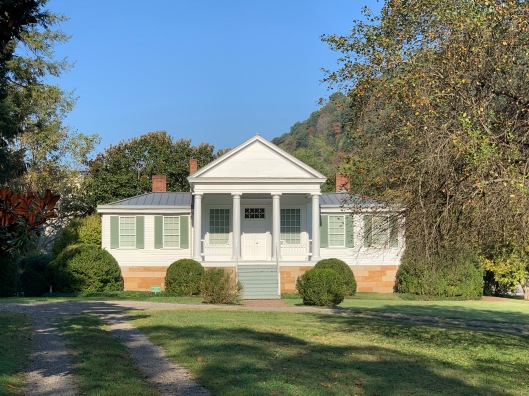
Built in 1845, the Littlepage mansion is one of only six antebellum houses remaining in Charleston, WV. It is listed on the National Register of Historic Places. 29 September 2019

IMG_0667

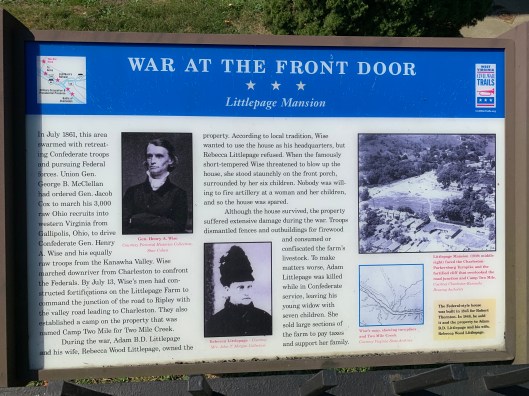
Rebecca Littlepage reportedly refused to allow Confederate General Henry A. Wise to occupy her home as a headquarters. According to the historical marker: “When the famously short-tempered Wise threatened to blow up the house, she stood staunchly on the front porch, surrounded by her six children. Nobody was willing to fire artillery at a woman and her children, and the house was spared.” For more history about the Littlepage mansion, go here: https://www.wvencyclopedia.org/exhibits/23?section=7

Civil War in the Kanawha Valley: Glenwood Estate (2019)

12 Sunday Jan 2020

Posted by Brandon Ray Kirk in Civil War

≈ Leave a comment

Tags

Appalachia, Charleston, civil war, Glenwood Estate, history, Kanawha County, Kanawha Valley, Terry Lowry, The Battle of Charleston, West Virginia

IMG_0665

Terry Lowry is THE authority on the Civil War in the Kanawha Valley. Stop 6 on his tour: Glenwood Estate in Charleston, WV. 29 September 2019. Here is a link to Terry’s latest book, The Battle of Charleston (2016): https://wvcivilwar.com/now-available-the-battle-of-charleston/

IMG_0666

For more information about Glenwood, go here: https://www.marshall.edu/graduatehumanities/the-glenwood-project/

Civil War in the Kanawha Valley: Magic Island Park (2019)

16 Saturday Nov 2019

Posted by Brandon Ray Kirk in Civil War

≈ Leave a comment

Tags

Appalachia, Battle of Charleston, civil war, Confederate Army, history, Jacob D. Cox, Joseph A. Lightburn, Kanawha County, Kanawha Valley, Magic Island Park, Point Pleasant, Terry Lowry, Union Army, West Virginia, William W. Loring

IMG_0662.JPG

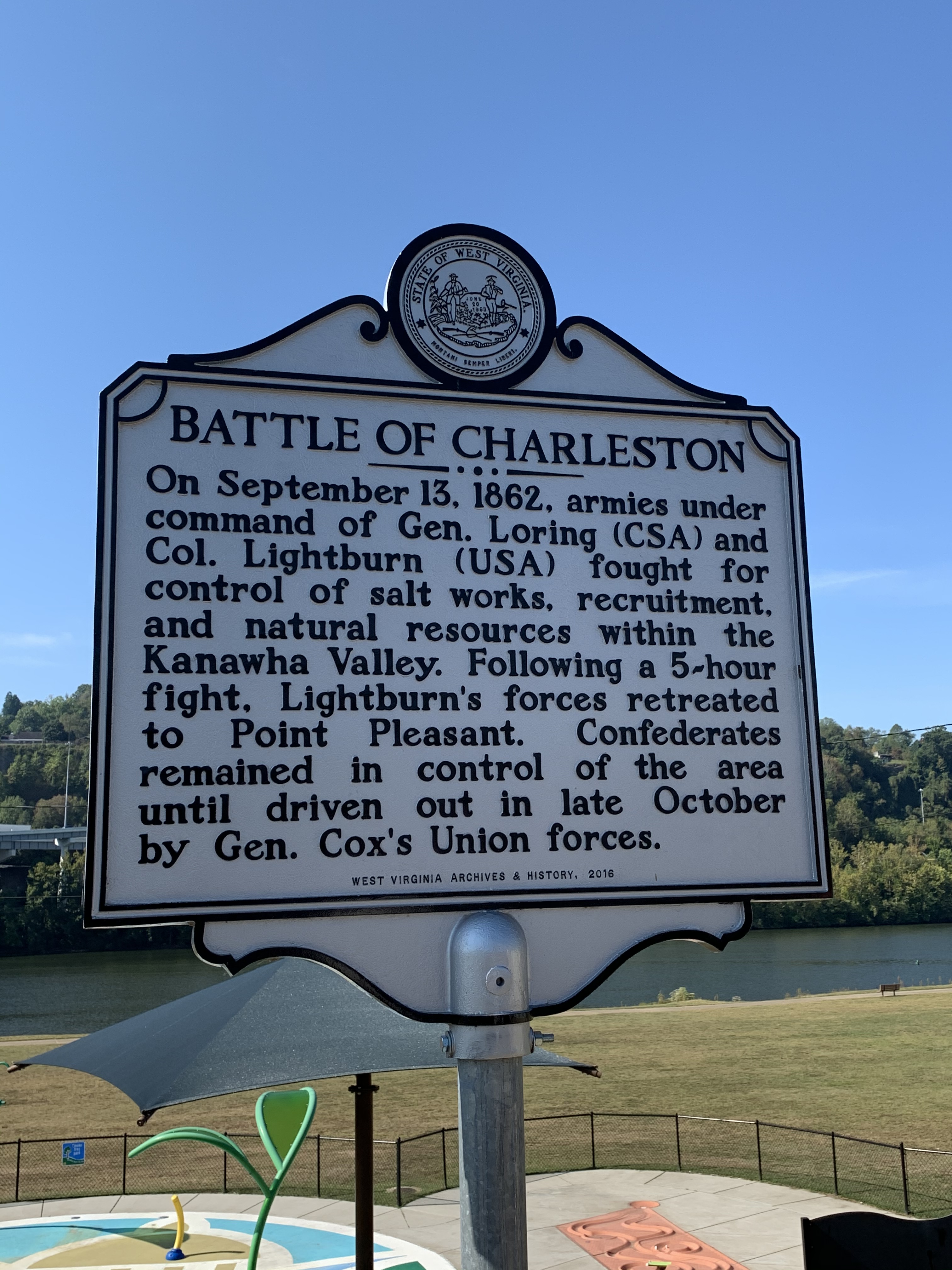
Terry Lowry is THE authority on the Civil War in the Kanawha Valley. Stop 5 on his tour: Magic Island Park in Charleston, WV. 29 September 2019. Here is a link to Terry’s latest book, The Battle of Charleston (2016): https://wvcivilwar.com/now-available-the-battle-of-charleston/

Civil War in the Kanawha Valley: Spring Hill Cemetery (2019)

09 Saturday Nov 2019

Posted by Brandon Ray Kirk in Cemeteries, Civil War

≈ Leave a comment

Tags

50th Virginia Infantry, Appalachia, Battle of Charleston, Camp Garnett, Charleston, civil war, Confederate Army, Confederate Cemetery, genealogy, history, Joseph H. Conley, Kanawha County, Sons of Confederate Veterans, Spring Hill Cemetery, Stonewall Jackson Camp, Terry Lowry, United Confederate Veterans, West Virginia

IMG_0660

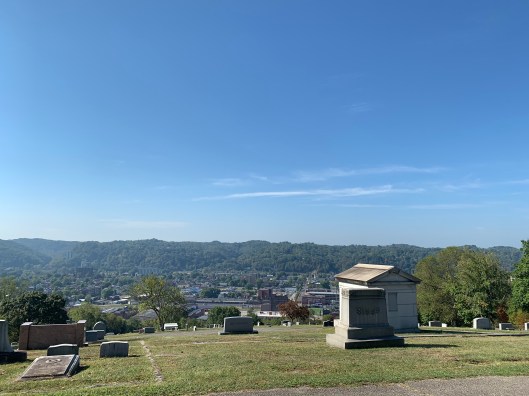
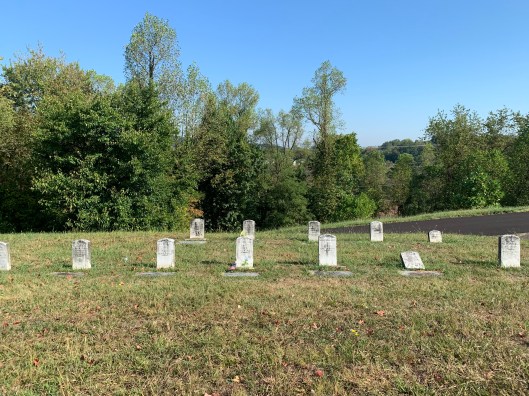
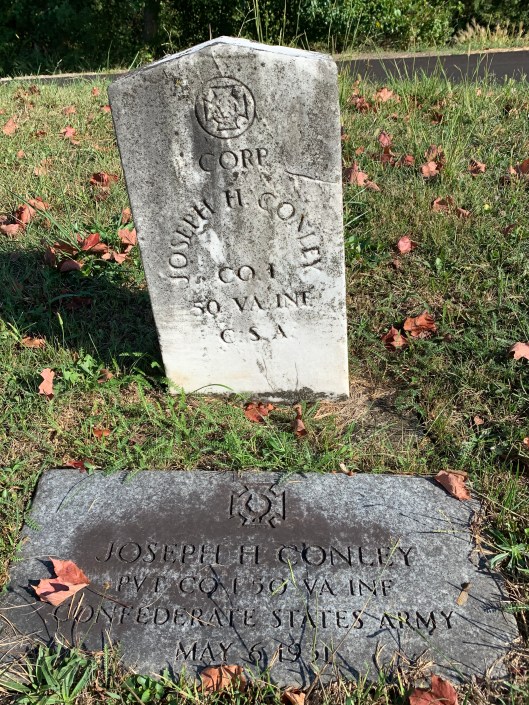
Terry Lowry is THE authority on the Civil War in the Kanawha Valley. Stop 4 on his tour: Spring Hill Cemetery in Charleston, WV. 29 September 2019. Here is a link to Terry’s latest book, The Battle of Charleston (2016): https://wvcivilwar.com/now-available-the-battle-of-charleston/

IMG_0657

Confederate Cemetery at Spring Hill Cemetery in Charleston, WV. 29 September 2019. For more information about the cemetery, go here: https://www.wvencyclopedia.org/articles/539

IMG_0656

Confederate Cemetery at Spring Hill Cemetery in Charleston, WV. 29 September 2019. For more information about the cemetery, go here: https://wvtourism.com/company/spring-hill-cemetery/

IMG_0661

Confederate Cemetery at Spring Hill Cemetery in Charleston, WV. 29 September 2019

Civil War in the Kanawha Valley: MacFarland-Hubbard House (2019)

31 Thursday Oct 2019

Posted by Brandon Ray Kirk in Civil War

≈ Leave a comment

Tags

Appalachia, Battle of Charleston, Charleston, civil war, history, Kanawha County, Kanawha Valley, MacFarland-Hubbard House, photos, Terry Lowry, West Virginia

IMG_0652

Terry Lowry is THE authority on the Civil War in the Kanawha Valley. Stop 3 on his tour: MacFarland-Hubbard House in Charleston, WV. 29 September 2019. Here is a link to Terry’s latest book, The Battle of Charleston (2016): https://wvcivilwar.com/now-available-the-battle-of-charleston/

IMG_0653

MacFarland-Hubbard House in Charleston, WV. 29 September 2019. For house history, go here: https://www.wvencyclopedia.org/exhibits/23?section=6

IMG_0654

MacFarland-Hubbard House in Charleston, WV. 29 September 2019. During the Battle of Charleston (1862), a cannonball struck in the house. It also served as a hospital. For history about house restoration, go here: http://wvhumanities.org/about/our-historic-house/macfarland-hubbard-house-restoration/

IMG_0655

MacFarland-Hubbard House in Charleston, WV. 29 September 2019. 

Civil War in the Kanawha Valley: Ruffner Memorial Park (2019)

29 Tuesday Oct 2019

Posted by Brandon Ray Kirk in African American History, American Revolutionary War, Cemeteries, Civil War

≈ Leave a comment

Tags

22nd Virginia Infantry, Appalachia, Charleston, Confederate Army, Daniel Ruffner, French and Indian War, gas, George S. Patton, George Washington, Henry D. Ruffner, history, Holly Mansion, John McCausland, Joseph Ruffner, Kanawha County, Kanawha Riflemen, Kanawha River, Kanawha Street, oil, Revolutionary War, Richard Laidley, salt, Thomas Bullitt, United Daughters of the Confederacy, West Virginia

IMG_0648

Terry Lowry is THE authority on the Civil War in the Kanawha Valley. Stop 2 on his tour: Ruffner Memorial Park in Charleston, WV. 29 September 2019. Here is a link to Terry’s latest book, The Battle of Charleston (2016): https://wvcivilwar.com/now-available-the-battle-of-charleston/

IMG_0649

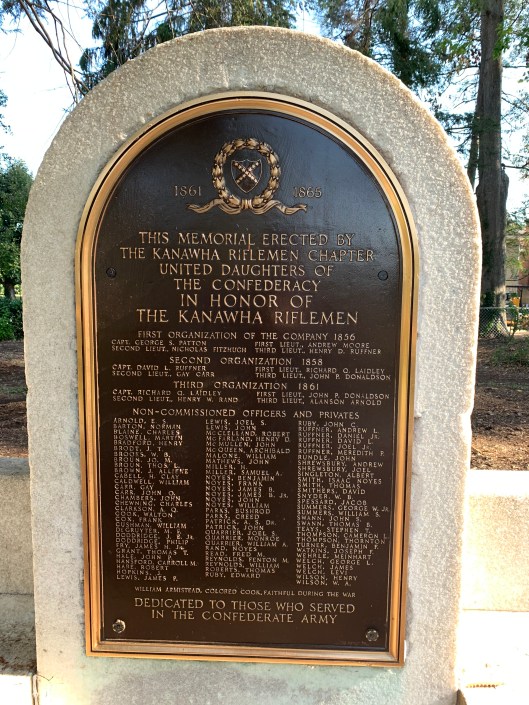
Kanawha Riflemen: “Hometown Boys in Gray.” 29 September 2019

IMG_0646

Kanawha Riflemen Memorial at Ruffner Memorial Park. In 1831, Joseph Ruffner deeded this cemetery to the city. In 1920, the site became a city park. Some graves were relocated but many are still here with their headstones buried beneath the surface. The UDC memorial was placed in 1922. 29 September 2019

IMG_0647

Thomas Bullitt grave. Ruffner Memorial Park. In 1776, George Washington wrote of him: “Bullet (sic) is no favourite of mine, & therefore I shall say nothing more of him, than that his own opinion of himself always kept pace with what others pleas’d to think of him—if any thing, rather run a head of it.” 29 September 2019

Civil War in the Kanawha Valley: Ruffner Log Cabin and Craik-Patton House (2019)

29 Tuesday Oct 2019

Posted by Brandon Ray Kirk in Civil War

≈ Leave a comment

Tags

22nd Virginia Infantry, A.J. Lightburn, Appalachia, Battle of Charleston, Charleston, civil war, Confederate Army, Craik-Patton House, George S. Patton, history, James Craik, Kanawha Boulevard, Kanawha County, Kanawha Rifleman, Kanawha Valley, lawyer, Ruffner Log Cabin, Terry Lowry, The Battle of Charleston, Union Army, West Virginia

IMG_0641

Terry Lowry is THE authority on the Civil War in the Kanawha Valley. He began his tour at the Ruffner Log Cabin and the Craik-Patton House. 29 September 2019. Here is a link to his latest book, The Battle of Charleston (2016): https://wvcivilwar.com/now-available-the-battle-of-charleston/

IMG_0643

Ruffner Log Cabin. Constructed about 1800 at 1536 Kanawha Boulevard; discovered in 1969; reconstructed here in 1976. Union General Joseph A.J. Lightburn made his headquarters in the cabin during the Battle of Charleston (09.13.1862). 29 September 2019

IMG_0644

Craik-Patton House. Rev. James Craik constructed this home in downtown Charleston in 1834. George S. Patton, a lawyer and leader of the Kanawha Riflemen, later lived in the home. Patton led the 22nd Virginia Infantry before his mortal wounding in 1864. The house was moved to this location in 1973. 29 September 2019

Stephen Hart and Harts Creek (1937)

14 Sunday Jul 2019

Posted by Brandon Ray Kirk in Big Creek, Big Harts Creek, Civil War, Hamlin, Harts, Logan, Midkiff, Ranger, Spurlockville, Toney

≈ 5 Comments

Tags

Appalachia, assistant postmaster, Big Creek, Cabell County, Charles Spurlock, Cheat River, Cincinnati, civil engineer, civil war, doctor, genealogy, gunsmith, Hamlin, history, Jane Spurlock, John Spurlock, Lifas Spurlock, Lincoln County, Logan Banner, Logan County, Logan Post Office, Marshall Spurlock, Midkiff, Montgomery County, Omar, Pete Spurlock, preacher, Ranger, Robertson Spurlock, Seth Spurlock, Sheridan, sheriff, Spurlockville, Stephen Hart, surveyor, Union Army, Virginia, West Virginia

From the Logan Banner of Logan, WV, comes this bit of history about Stephen Hart and Harts Creek in Lincoln and Logan counties, West Virginia. The story is dated April 14, 1937.

Stephen Hart Settled at Cheat River, Pete Spurlock, A Great Grandson, Reveals

P.A. (Pete) Spurlock, assistant postmaster at the Logan post office, this morning revealed the destination of Stephen Hart, who went went after he had lived for a short time at the forks of the creek in the lower end of Logan county which now bears his name.

Spurlock said that Hart went to the Cheat River and settled permanently there to hunt deer and rear a family. He said the family name of Hart is as familiar there as the name Dingess is familiar in Logan county.

A daughter of Stephen, Jane, was Spurlock’s grandmother. She lived until 1913 and told her grandson much of the early history of the family which made its home in and around Spurlocksville, Sheridan, Ranger, and Midkiff.

Charles Spurlock, the progenitor of the Spurlock family, came to what used to be the Toney farm below the mouth of Big Creek in 1805 from Montgomery county, Virginia.

“Uncle Charley was a funny old cuss,” his great grandson Pete said this morning. “The story is told that a sheriff of Cabell county was given a capias to serve on the old codger for some minor offense when he was growing old and rather stout.

“Meeting him in the road one day, the sheriff informed Uncle Charley he had a capias to serve on him.

“None abashed, the old man informed the sheriff he was a law-abiding citizen and laid down in the middle of the road and told the sheriff to take him to jail.

“The ruse worked, for the sheriff chose to look for less obstinate prisoners,” Uncle Charley’s grandson said, chuckling.

Another story about the eccentric “Uncle Charley Spurlock” which has gone down in history, whether true or not, was that he lived for a short time below Big Creek under a rock cliff (known as a rockhouse) during the early summer while he was getting his cabin in shape for winter.

The tale is out that “Uncle Charley” explained his strange dwelling place in this way to his neighbors:

“Well I took Sarah (his wife) in a good substantial frame house in Virginia and she wasn’t quite satisfied. I took her to a log house and she wasn’t satisfied. I took her to a rail pen and still she grumbled. Then I took her to a rock house built by God Almight and still she wasn’t satisfied.

“I don’t know what I’m going to do with Sarah.”

Sarah evidently became accustomed to “Uncle Charley” for the couple reared four sons. They were John, Seth, Lifas and Robertson. There were no daughters.

Seth was P.A. Spurlock’s grandfather. His father, Marshall, is 78 and lives on his farm near Cincinnati.

Spurlock says “Uncle Charley” is buried on a point at Spurlocksville overlooking the haunts of his early manhood.

Robertson was a gunsmith and lived near Hamlin. Seth was a civil engineer and helped survey much of Logan county. He was a Union soldier. John was a country doctor who practiced at Ranger.

Lifas was a preacher for sixty years and lived at Sheridan.

Charles Spurlock, of Omar, is a distant cousin, the assistant postmaster said. He is the only relative that lives in this section of Logan county, Spurlock said.

Spurlock, at Omar, was born at Spurlocksville and is a grandson of one of the original “Charley’s” boys.

Cotton Production in Antebellum Pike County, KY

28 Tuesday May 2019

Posted by Brandon Ray Kirk in Civil War, Pikeville

≈ 1 Comment

Tags

Appalachia, civil war, cotton, farming, history, Kentucky, Magoffin County, Pike County

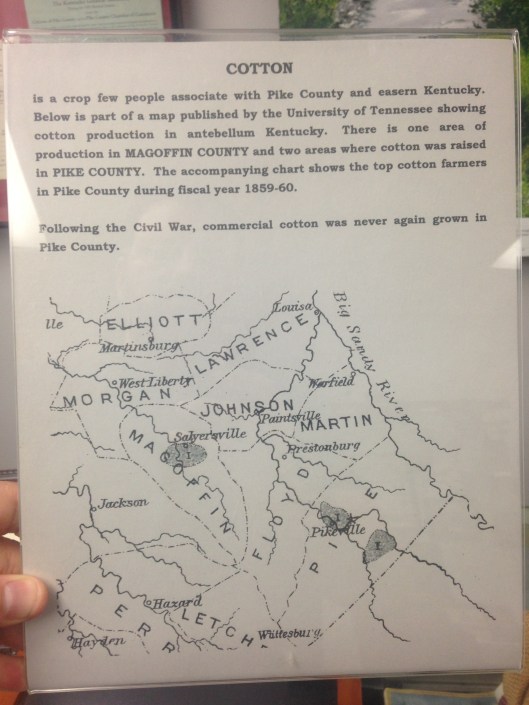
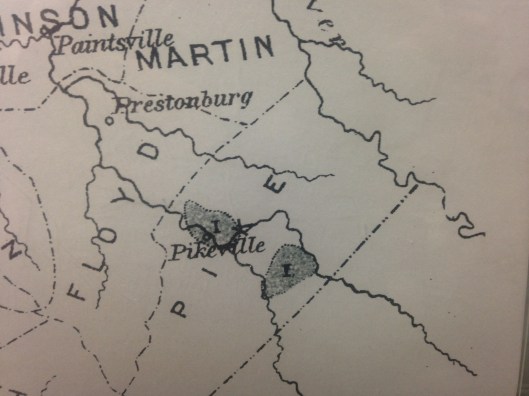
IMG_6884

Cotton in Eastern Kentucky, Big Sandy Heritage Center Museum, Pikeville, KY. 11 May 2019

IMG_6885

Cotton in Eastern Kentucky, Big Sandy Heritage Center Museum, Pikeville, KY. 11 May 2019

IMG_6886

Cotton in Eastern Kentucky, Big Sandy Heritage Center Museum, Pikeville, KY. 11 May 2019

Interview of Jean Hatfield at Sarah Ann, WV (2001), Part 2

28 Tuesday May 2019

Posted by Brandon Ray Kirk in Civil War, Hatfield-McCoy Feud

≈ 2 Comments

Tags

Altina Waller, Appalachia, Asa Harmon McCoy, Betty Caldwell, Bob Hatfield, Bob Spence, Brandon Kirk, Cap Hatfield, Cincinnati, civil war, Coleman Hatfield, crime, Devil Anse Hatfield, Don Chafin, Ellison Hatfield, feud, feuds, Frank Phillips, genealogy, Hatfield-McCoy Feud, Henry Hatfield, history, History Channel, hunting, Jack Hatfield, Jean Hatfield, Joe Hatfield, Johnson Hatfield, Levisa Hatfield, Logan Banner, Logan County, logging, Mingo County, Nancy McCoy, Otis Rice, Perry Cline, Preacher Anse Hatfield, Rosa Browning, Roseanne McCoy, Sarah Ann, Tennis Hatfield, The Hatfield and McCoy Feud After Kevin Costner, The McCoys: Their Story, The Tale of the Devil, Thomas Dotson, timbering, tourism, Truda Williams McCoy, West Virginia

In 2001-2002, I wrote a series of popular stories for the Logan Banner that merged aspects of well-known Hatfield-McCoy books written by Otis Rice and Altina Waller in the 1980s. I had previously enjoyed Rice’s narrative and Waller’s analysis; I did not conduct any new research. Even though I believed the definitive Hatfield-McCoy Feud book remained unwritten, my purpose in writing these stories was not a step toward writing a book; my purpose in writing these stories was to revisit the narrative with some analysis for Banner readers. My hope was that readers would see what I saw: first, fascinating history (or folk story) for its own sake; second, the power of history to create a popular type of tourism.

I was fortunate during this time to meet Jean Hatfield. Jean, born in 1936, operated a Hatfield family museum at Sarah Ann, WV. Jean was not a native of West Virginia but had lived her entire adult life locally and had personally known several of Anderson Hatfield’s children. I really appreciated her desire to promote regional history. She “got it.” She inspired me. Anytime that I drove up Route 44, I stopped to visit Jean at the museum. She was always welcoming. Knowing her reminded me that every Hatfield (and McCoy) descendant is a source of information–-and that for the most part they have yet to tell the story in their own words. Three notable exceptions include The McCoys: Their Story by Truda Williams McCoy (1976), The Tale of the Devil (2003) by Coleman Hatfield and Bob Spence, and The Hatfield and McCoy Feud After Kevin Costner: Rescuing History (2013) by Thomas Dotson.

What follows is Part 2 of my interview with Jean, which occurred on August 7, 2001:

What year was your husband born in?

He was born in ‘25. Grandpa died in 1921. He didn’t remember him but he remembered his grandmother. Grandma died in ’28.

Where did Devil Anse’s house sit here?

It’s up above the cemetery. There’s a ranch-style house there now. There’s a concrete bridge going over there. And a big bottom. And where the ranch style house is, that’s where the old homeplace was.

Is it still in family hands?

No. It’s been out of the family for I guess fifty years or more.

Now, Devil Anse having that many kids, do the grand-kids mingle pretty well?

They’re scattered. We really need to get back to the tradition of having a family reunion where they could all come in. But they’re scattered all over the country. Some in Florida, some in Ohio.

Are there other pictures like this that other branches of the family have?

I would say they all have some. There’s always pictures hidden back in attics and things like that. You never know. There’s one… Bob Hatfield from Cincinnati, he has an extensive family also. He’s through Anderson Hatfield. Preacher Anderson.

Do you know any stories about Anse and bear?

He was a bear hunter. And he killed a momma bear and brought the baby cubs home and raised them. They had them for years. A male and a female. Their names was Billy and Fanny. And Grandma would have to go out and run them out of the well house because they was out there slurping all of the cream off of the milk. They were down-to-earth people. They planted their gardens and things like that.

What about Don Chafin?

He was distant relation to the Hatfields. Grandma was a Chafin so he would have come in on her side. Maybe cousins. There’s a picture over there of Grandpa and him together.

The pictures of Johnse that I’ve seen, I don’t think he’s the best looking of the boys.

Well, I don’t either. Some of the pictures doesn’t do him justice either. This is the one that I like of him. It’s a little bit better. As he got older, he didn’t age very well. But then he had about five wives, too. That has a tendency to age you a bit.

If you have just one wife and she’s no good that can be enough.

I was lucky in that respect. We had 47 good years together. Now that top picture there is Joe and Cap and one of the deputies. His name was Lilly.

Devil Anse’s home burned, right? Did they lose a lot of things in it?

Uh huh. It had a lot of things in it. Somebody said Tennis had stored a lot of guns and ammunition and things like that in it. People were afraid to go by there for a week afterwards because the shots was going off. I would say it was something else because at that time there was no fire departments or anything. It probably just burned out.

Did you ever hear what year it was built?

1889. That’s a replica of it there. It was a seven-room two-story. Cap’s was built on the same pattern.

Did your husband read a lot about the feud?

Mostly, but he disagreed with a lot of it. The Altina Waller book, he liked that. It was a good one. They interviewed him on the History Channel. She never interviewed anyone. She went with public record on everything. And I think a lot of it was Perry Cline pushed a lot of it. Grandpa had sued him because he got on Grandpa’s land and timbered it. Grandpa won 5000 acres of land off of him. After that, all the warrants and the bounty hunters started looking for Grandpa and the boys. Grandpa decided all of a sudden that he was just going to sell him the land and get rid of it and when he did that everything just stopped. She thought in the book too that Perry Cline was the one really instigating the Hatfields and the McCoys and he was taking money off both sides of the family for things. He would buddy up to one side and then do something for someone and they’d pay him and then he would go to the other one and do the same thing.

Did you say you had something of his?

No. Frank Phillips. A pocket knife. We got it through one of our friends way back there. And he didn’t want it because he said it was too grisly. And it is rusty but you know the blade is razor sharp. And it has to be way over 100 years old.

Didn’t he marry Nancy McCoy?

She was Johnse’s first wife. She left Johnse for Frank Phillips. Well now, Asa Harmon McCoy was her father. And he was the one… Grandpa wounded him in the Civil War. And when they all come back from the Civil War he was found dead in the Hatfield territory and they blamed the Hatfields for the killing. But I think years later on they found out that one of his own people had killed him and just throwed him in the Hatfield territory. But now it was his daughter that married Johnse and from what I can understand she made Johnse live pretty rough, which he probably deserved for treating Roseanne the way he did. But now, I talked to Aunt Betty and Aunt Rosie both about Roseanne and they were living at the house with her and they loved her. They said she was a beautiful person. She had coal-black hair, she had a good turn. She was just a nice person. And I think they kind of got mad at Johnse because he was running around and chasing women and things like that.

Now, I’ve heard that Devil Anse wouldn’t allow them to be married.

He wouldn’t. But years later he said he wished he had’ve because Roseanne saved Johnse’s life a couple of times there. That is true. And he did say that he wished he had let them marry. But back at that time there was so much hatred going on between the families. Her father, as far as I know, never spoke to her again. Just because she did take up with Johnse.

What about the shirt that Ellison wore when he was stabbed?

As far as I know, it’s in a museum in New Orleans. There’s a picture there. Uncle Joe had it and he sold it to one of his sister’s grandsons and he passed away and his wife has it. I heard that it was on display in a museum. Henry tried to buy it back after his cousin died but we never did get an answer back from them. I would still like to have it back. Actually, it belonged to Henry’s father and he left it in storage at Uncle Joe’s and Uncle Joe sold it. It should have come down to Henry or Jack. But that’s life.

Gov. Simon Bolivar Buckner Grave in Frankfort, KY (2019)

26 Sunday May 2019

Posted by Brandon Ray Kirk in Cemeteries, Civil War, Hatfield-McCoy Feud

≈ Leave a comment

Tags

Brandon Kirk, cemeteries, civil war, Confederacy, Confederate Army, Frankfort, Frankfort Cemetery, genealogy, governor, history, Kentucky, Phyllis Kirk, Simon B. Buckner, U.S. Military Academy

IMG_7414.JPG

Simon Bolivar Buckner grave at Frankfort Cemetery, Frankfort, KY. Governor Buckner, a veteran of the Confederate Army, played a role in the Hatfield-McCoy Feud. Located in Section I of the cemetery. Photo by Mom. 21 May 2019

Civil War Items at the Big Sandy Heritage Center Museum (2019)

25 Saturday May 2019

Posted by Brandon Ray Kirk in Civil War, Pikeville

≈ 1 Comment

Tags

15th Kentucky Cavalry, Appalachia, Battle of Middle Creek, Big Sandy Heritage Center Museum, civil war, E. Everett McMurray, Floyd County, history, Kentucky, Pike County, Pikeville, Samuel Duncan

IMG_6851.JPG

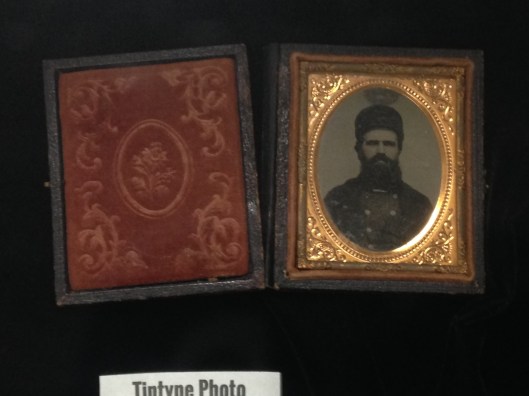
Captain Samuel Duncan, Company A, 15th Kentucky Cavalry. On loan by E. Everett McMurray of Duquoin, IL. 15 May 2019

IMG_6717

Pikeville, KY. 15 May 2019

IMG_6718

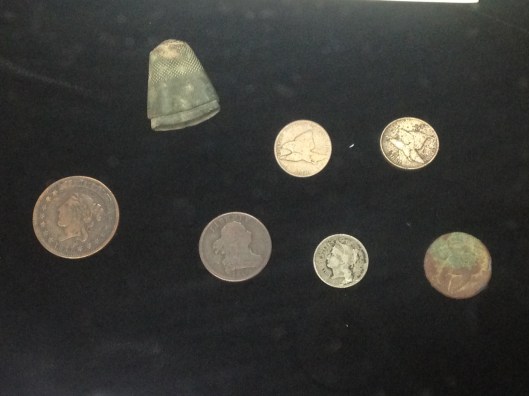
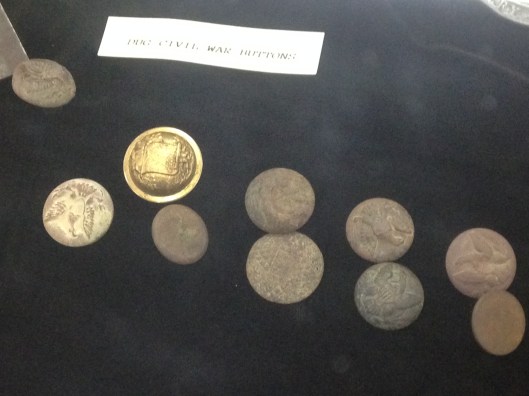
Civil War buttons, Pikeville, KY. 15 May 2019

IMG_6719

Pikeville, KY. 15 May 2019

IMG_6720

Pikeville, KY. 15 May 2019

IMG_6858

.58 caliber 3-ring bullet minie ball from the Middle Creek Battlefield in Floyd County, KY. 15 May 2019

Old Hinchman Book at Pecks Mill in Logan County, WV (1936)

04 Monday Mar 2019

Posted by Brandon Ray Kirk in Civil War, Pecks Mill

≈ Leave a comment

Tags

129th Regiment Virginia Militia, 12th Regiment Virginia Militia, Abner Vance, Adam Browning, Appalachia, Barney Carter, Big Creek, Calvary Hatfield, Chapmanville District, Charles Staton, civil war, David Mullins, Eli Gore, Evans Ferrell, genealogy, George Avis, George Bryant, Gilbert Creek, Gordon Riffe, Granville Riffe, Green A. Clark, Guyandotte River, Hardy District, Harts Creek, Harvey Ellis, history, Huff's Creek, Jack Dempsey, James H. Hinchman, James J. Hinchman, John Chapman, John DeJournett, John Dempsey, John Hager, John Hatfield, John Starr, Joseph B. Browning, Joseph Hinchman, Logan Banner, Logan County, Louis White, Magnolia District, Martin Doss, Mingo County, Nathan Elkins, Pecks Mill, physician, Reece Browning, Triadelphia District, Ulysses Hinchman, Union District, Virginia, West Virginia, Wheeling, William Dempsey, William McDonald, William Stollings, Wyoming County

From the Logan Banner of Logan, WV, comes this bit of history for Logan County printed on November 3, 1936:

Time-Dimmed Record of Early Logan County Families in 1852-1877 Period in Old Books Found at Pecks Mill

Thumbing the now-dimmed pages of a yellowed book which recently came to light in old Peck’s Mill, members of Logan county’s oldest families may read in a painstakingly-kept record of the years 1852 to 1877 how their forefathers were brought into the world, married, educated, governed.

The record is written in pen and ink with the quaint flourishes and old-fashioned double letters of the 1800s by James J. Hinchman, who was clerk of the 12th regiment of the Virginia militia from 1852 to 1858; and by one, Ulysses Hinchman, who was clerk of the 129th regiment from 1858 to the Civil War; and later pastor, doctor, and trader.

The first entry, dated Nov. 3, 1852, records the meeting “at the house of Wm. McDonald near the mouth of Huffs Creek” of the Twelfth regiment of the Virginia militia in the days when Logan county was the property of Virginia.

Among the officers present were Major John Hager and Capt. James J. Hinchman, who was also clerk.

Most of the records at the first, which deal entirely with the regiment, are devoted to the salaries paid for “drumming and fifing,” the fines of 50 cents each for failure to report at meetings, and the excuse of members from duty “because of physical infirmities.”

Among the interesting entries is one relating, it is believed, to an ancestor of ex-champion Jack Dempsey, which reads:

“William Dempsey for fifing one day in Capt. Miller’s company.”

Two dollars, according to numerous accounts, was the regular salary paid for a day of fifing or drumming. For three days training, officers received $10.

Among regiment members mentioned are Calvary Hatfield and Reece Browning, forefathers of the Hatfield and Browning families of today.

On Sept. 10, 1858, the record is transferred to that of the 129th and is kept by Ulysses Hinchman. His first entry tells of a meeting at which John De Journett was elected colonel; K. McComas, first major; Reece Browning, second major; and Ulysses Hinchman, clerk. Officers attending were Captains George Avis, James H. Hinchman, John Starr, John Hatfield, John Chapman, and Barnabus Carter; and Lieutenants Martin Doss, George Bryant, Granville Riffe, Louis White, Charles Staton and Green A. Clark.

Interesting in these pages are the forming of new companies in which the names of the creeks and localities are for the most part the same as today. Among the familiar names are Huffs, Gilbert, Harts and Big Creek, Guyandotte river, and Trace Fork.

There is no mention of the Civil War, but it is mutely attested to by two entries, the first, dated 1862 at the bottom of one page and the second dated 1866 at the top of the next, which read:

“Apr. 5, 1862—Abner Vance and Nathan Elkins received their claims.

1866—Rec’d of Eli Gore, county treasurer for my last year’s services, $50.

“Ulysses Hinchman, superintendent of schools.”

The next year, we are gratified to learn, his salary has increased to $300.
We learn that Logan, which then included Mingo and Wyoming counties, was at that time composed of five districts, Union, Triadelphia, Hardy, Chapmanville, and Magnolia; and that the county’s finances were all handled through Wheeling, then the only city of size in West Virginia.

The records contain long lists of certificates awarded to teachers for $1, among the recipients being John Dempsey, Eli Gore, Joseph Hinchman, Harvey Ellis and Evans Ferrell.

In the midst of the records of 1866 and ’67 we come upon the terse paragraph which informs that:

“The sheriff failed to settle for taxes of 1861.”

The board of education’s budget for 1869 was $2077.60 and was apportioned to these clerks of the various townships; Union, David Mullins; Triadelphia, Gordon Riffe; Magnolia, Joseph B. Browning; Hardy, Adam Browning; and Chapmanville, Wm. Stollings. Increased expenses that year made it necessary to levy a tax of “5 cents on $100.”

An enumeration of all children “between the ages of 6 and 21” in 1868 totaled 2139.

In 1871, our patient scribe becomes “Dr. U.S. Hinchman” and the record his personal account book. We learn much of the practices and hardships of the first country doctors and that his troubles in collecting the pitifully small fees of those days were as great as those of any “specialist” of today.

Dr. Hinchman had no set rates, but based on his charges upon the number of miles traveled (usually 50 cents per mile); the number of days and nights spent, and—quite evidently—the circumstances of his patient.

His customary charge for a delivery, if it chanced to come in the day time, appeared to be $5.50; but if the child arrived in the night and required many miles of travel it was a more expensive proposition—the fees sometimes reaching as high as $9.

The birth of one of these $9 babies is graphically recorded as follows:

“Labor two nights and days–$7

10 miles at 50 cents–$5

Administering–$1

Received $5.”

The doctor’s highest charge was one of $10 on a case which required three days and nights.

Interspersed freely with the accounts of births, and sicknesses are frequent entries of marriages at $2 each.

Toward the last of the book, in 1877, the author’s handwriting becomes more labored and the fine shadings and flourishing gradually disappear—evidence that his years of soldiering, school teaching, and doctoring were taking their toll.

At this time, too, he begins to record not only his receipts, but his expenditures and trades, and we read, not without envy, of purchases of “one bushel of sweet potatoes, 50 cents,” and “one and a half bushel of Irish potatoes, 75 cents.”

One of the last entries, dated Aug. 1877, tells of his receiving for his professional services a large amount of coffee which he traded for $5 cash, a suit, and a round of shoes,” the latter evidently referring to horseshoes.

As, regretfully, we close the book; we feel that we know that patient and prolific old settler of Logan County, Ulysses Hinchman—his honor as a soldier and officer, his strict accounting of himself as a public official, his hardships and struggles as a country doctor; and through all, his conscientious, faithful keeping of records. And we share, with his descendants, a great pride in him.

Somehow we know that when, with failing hand, he concluded his long accounts in another book; his record was clear and straight—his house was in order.
Maston Conley Family Cemetery

23 Wednesday Jan 2019

Posted by Brandon Ray Kirk in Cemeteries, Chapmanville, Civil War

≈ Leave a comment

Tags

129th Regiment Virginia Militia, Barney Carter, Battle of Kanawha Gap, Chapmanville, civil war, Confederate Army, Emmazella Conley, genealogy, Henry Conley, history, John Dejernatte, Logan County, Maston Conley, Polly Conley, West Virginia, William H. Farley, William Patton Thompson

img_2098

Maston Conley, son of Henry and Mary “Polly” (Thompson) Conley, is buried here. I descend from his uncles William H. Farley and William Patton Thompson. 11 January 2019

img_2227

Maston Conley, “Confederate Soldier.” The cemetery is located in Chapmanville, Logan County, WV. Visitors must have permission from property owners in order to visit this location. 19 January 2019

img_7195

Maston Conley, private in the 129th Virginia Militia, was a likely participant in the Battle of Kanawha Gap. The battle site is almost visible from the cemetery.

← Older posts
Newer posts →

Feud Poll 1

If you had lived in the Harts Creek community during the 1880s, to which faction of feudists might you have given your loyalty?

Categories

  • Adkins Mill
  • African American History
  • American Revolutionary War
  • Ashland
  • Atenville
  • Banco
  • Barboursville
  • Battle of Blair Mountain
  • Beech Creek
  • Big Creek
  • Big Harts Creek
  • Big Sandy Valley
  • Big Ugly Creek
  • Boone County
  • Breeden
  • Calhoun County
  • Cemeteries
  • Chapmanville
  • Civil War
  • Clay County
  • Clothier
  • Coal
  • Cove Gap
  • Crawley Creek
  • Culture of Honor
  • Dingess
  • Dollie
  • Dunlow
  • East Lynn
  • Ed Haley
  • Eden Park
  • Enslow
  • Estep
  • Ethel
  • Ferrellsburg
  • Fourteen
  • French-Eversole Feud
  • Gilbert
  • Giles County
  • Gill
  • Green Shoal
  • Guyandotte River
  • Halcyon
  • Hamlin
  • Harts
  • Hatfield-McCoy Feud
  • Holden
  • Hungarian-American History
  • Huntington
  • Inez
  • Irish-Americans
  • Italian American History
  • Jamboree
  • Jewish History
  • John Hartford
  • Kermit
  • Kiahsville
  • Kitchen
  • Leet
  • Lincoln County Feud
  • Little Harts Creek
  • Logan
  • Man
  • Matewan
  • Meador
  • Midkiff
  • Monroe County
  • Montgomery County
  • Music
  • Native American History
  • Peach Creek
  • Pearl Adkins Diary
  • Pecks Mill
  • Peter Creek
  • Pikeville
  • Pilgrim
  • Poetry
  • Queens Ridge
  • Ranger
  • Rector
  • Roane County
  • Rowan County Feud
  • Salt Rock
  • Sand Creek
  • Shively
  • Spears
  • Sports
  • Spottswood
  • Spurlockville
  • Stiltner
  • Stone Branch
  • Tazewell County
  • Timber
  • Tom Dula
  • Toney
  • Turner-Howard Feud
  • Twelve Pole Creek
  • Uncategorized
  • Warren
  • Wayne
  • West Hamlin
  • Wewanta
  • Wharncliffe
  • Whirlwind
  • Williamson
  • Women's History
  • World War I
  • Wyoming County
  • Yantus

Feud Poll 2

Do you think Milt Haley and Green McCoy committed the ambush on Al and Hollene Brumfield in 1889?

Blogroll

  • Ancestry.com
  • Ashland (KY) Daily Independent News Article
  • Author FB page
  • Beckley (WV) Register-Herald News Article
  • Big Sandy News (KY) News Article
  • Blood in West Virginia FB
  • Blood in West Virginia order
  • Chapters TV Program
  • Facebook
  • Ghosts of Guyan
  • Herald-Dispatch News Article 1
  • Herald-Dispatch News Article 2
  • In Search of Ed Haley
  • Instagram
  • Lincoln (WV) Journal News Article
  • Lincoln (WV) Journal Thumbs Up
  • Lincoln County
  • Lincoln County Feud
  • Lincoln County Feud Lecture
  • LinkedIn
  • Logan (WV) Banner News Article
  • Lunch With Books
  • Our Overmountain Men: The Revolutionary War in Western Virginia (1775-1783)
  • Pinterest
  • Scarborough Society's Art and Lecture Series
  • Smithsonian Article
  • Spirit of Jefferson News Article
  • The Friendly Neighbor Radio Show 1
  • The Friendly Neighbor Radio Show 2
  • The Friendly Neighbor Radio Show 3
  • The Friendly Neighbor Radio Show 4
  • The New Yorker
  • The State Journal's 55 Good Things About WV
  • tumblr.
  • Twitter
  • Website
  • Weirton (WV) Daily Times Article
  • Wheeling (WV) Intelligencer News Article 1
  • Wheeling (WV) Intelligencer News Article 2
  • WOWK TV
  • Writers Can Read Open Mic Night

Feud Poll 3

Who do you think organized the ambush of Al and Hollene Brumfield in 1889?

Recent Posts

  • Logan County Jail in Logan, WV
  • Absentee Landowners of Magnolia District (1890, 1892, 1894)
  • Charles Spurlock Survey at Fourteen Mile Creek, Lincoln County, WV (1815)

Ed Haley Poll 1

What do you think caused Ed Haley to lose his sight when he was three years old?

Top Posts & Pages

  • About
  • Perry A. Cline Deed to Anderson Hatfield (1877)
  • Civil War Hanging in Logan County, WV (1937)
  • Ran'l McCoy's Final Months (1914)
  • Hatfield-McCoy Feud Prisoners (1889-1890)

Copyright

© Brandon Ray Kirk and brandonraykirk.wordpress.com, 1987-2023. Unauthorized use and/or duplication of this material without express and written permission from this blog’s author and/or owner is strictly prohibited. Excerpts and links may be used, provided that full and clear credit is given to Brandon Ray Kirk and brandonraykirk.wordpress.com with appropriate and specific direction to the original content.

Archives

  • February 2025
  • January 2025
  • October 2023
  • September 2023
  • December 2022
  • November 2022
  • May 2022
  • April 2022
  • February 2022
  • November 2021
  • October 2021
  • September 2021
  • June 2021
  • May 2021
  • April 2021
  • March 2021
  • February 2021
  • January 2021
  • December 2020
  • November 2020
  • October 2020
  • July 2020
  • June 2020
  • May 2020
  • April 2020
  • March 2020
  • February 2020
  • January 2020
  • December 2019
  • November 2019
  • October 2019
  • September 2019
  • August 2019
  • July 2019
  • June 2019
  • May 2019
  • April 2019
  • March 2019
  • February 2019
  • January 2019
  • December 2018
  • November 2018
  • October 2018
  • September 2018
  • August 2018
  • July 2018
  • June 2018
  • May 2018
  • April 2018
  • March 2018
  • February 2018
  • January 2018
  • December 2017
  • November 2017
  • October 2017
  • September 2017
  • August 2017
  • July 2017
  • June 2017
  • May 2017
  • April 2017
  • March 2017
  • February 2017
  • January 2017
  • December 2016
  • November 2016
  • October 2016
  • September 2016
  • August 2016
  • July 2016
  • June 2016
  • May 2016
  • April 2016
  • March 2016
  • February 2016
  • January 2016
  • December 2015
  • November 2015
  • October 2015
  • September 2015
  • August 2015
  • July 2015
  • June 2015
  • May 2015
  • April 2015
  • March 2015
  • February 2015
  • January 2015
  • December 2014
  • October 2014
  • September 2014
  • August 2014
  • July 2014
  • June 2014
  • May 2014
  • April 2014
  • March 2014
  • February 2014
  • January 2014
  • December 2013
  • November 2013
  • October 2013
  • September 2013
  • August 2013
  • July 2013
  • June 2013
  • May 2013
  • April 2013
  • March 2013
  • February 2013
  • January 2013
  • December 2012
  • November 2012

Enter your email address to follow this blog and receive notifications of new posts by email.

Join 2,925 other subscribers

Tags

Appalachia Ashland Big Creek Big Ugly Creek Blood in West Virginia Brandon Kirk Cabell County cemeteries Chapmanville Charleston civil war coal Confederate Army crime culture Ed Haley Ella Haley Ferrellsburg feud fiddler fiddling genealogy Green McCoy Guyandotte River Harts Harts Creek Hatfield-McCoy Feud history Huntington John Hartford Kentucky Lawrence Haley life Lincoln County Lincoln County Feud Logan Logan Banner Logan County Milt Haley Mingo County music Ohio photos timbering U.S. South Virginia Wayne County West Virginia Whirlwind writing

Blogs I Follow

  • OtterTales
  • Our Appalachia: A Blog Created by Students of Brandon Kirk
  • Piedmont Trails
  • Truman Capote
  • Appalachian Diaspora

BLOOD IN WEST VIRGINIA is now available for order at Amazon!

Blog at WordPress.com.

OtterTales

Writings from my travels and experiences. High and fine literature is wine, and mine is only water; but everybody likes water. Mark Twain

Our Appalachia: A Blog Created by Students of Brandon Kirk

This site is dedicated to the collection, preservation, and promotion of history and culture in Appalachia.

Piedmont Trails

Genealogy and History in North Carolina and Beyond

Truman Capote

A site about one of the most beautiful, interesting, tallented, outrageous and colorful personalities of the 20th Century

Appalachian Diaspora

  • Subscribe Subscribed
    • Brandon Ray Kirk
    • Join 787 other subscribers
    • Already have a WordPress.com account? Log in now.
    • Brandon Ray Kirk
    • Subscribe Subscribed
    • Sign up
    • Log in
    • Report this content
    • View site in Reader
    • Manage subscriptions
    • Collapse this bar
 

Loading Comments...