• About

Brandon Ray Kirk

~ This site is dedicated to the collection, preservation, and promotion of history and culture in my section of Appalachia.

Brandon Ray Kirk

Category Archives: African American History

Rev. J.H. Burns (1929)

06 Saturday Oct 2018

Posted by Brandon Ray Kirk in African American History, Battle of Blair Mountain

≈ Leave a comment

Tags

African-Americans, Appalachia, Atlanta, Augusta, genealogy, Georgia, history, J.H. Burns, Logan Banner, Logan County, Morehouse College, Sharples, Shiloh Baptist Church, Walker Baptist Institute, West Virginia

In April of 1929, the Logan Banner profiled numerous prominent African-American residents of Logan County, West Virginia.

Rev. J.H. Burns

Pastor, Shiloh Baptist Church, Sharples

The Reverend Burns has been pastor for five consecutive years. The church of his charge has an enrolled membership of 175, and is one of the best organized congregations in the field. All of its departments, missionary society, Sunday school, B.Y.P.U. and other branches are active and effective. His services in the community and county, as a moral and spiritual influence, are constructive and uplifting. Rev. Burns has been in the ministry for twenty-one years, covering numerous fields of activity in his long period of service to the cause of religion among his people. The reverend’s educational qualifications embrace studies at Walker Baptist Institute, Augusta, and Morehouse College, Atlanta. All matters pertaining to the welfare of his people, enlist Rev. Burns’ support and he wields a large measure of power among his people in the community and county.

Source: Logan (WV) Banner, 16 April 1929

Sheriff Joe Hatfield (1928-1929)

06 Saturday Oct 2018

Posted by Brandon Ray Kirk in African American History, Hatfield-McCoy Feud, Logan

≈ Leave a comment

Tags

African-Americans, Appalachia, Devil Anse Hatfield, genealogy, history, Joe Hatfield, Logan, Logan Banner, Logan County, politics, Republican Party, sheriff

Joe D. Hatfield LB 05.25.1928 3.JPG

Republican Joe Hatfield, son of Anse Hatfield. Logan (WV) Banner, 25 May 1928.

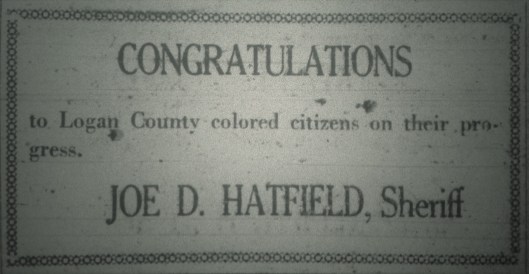
Joe Hatfield Congratulates Colored People LB 04.16.1929.JPG

Logan (WV) Banner, 16 April 1929.

Willa Lipscomb Deering (1929)

28 Friday Sep 2018

Posted by Brandon Ray Kirk in African American History, Women's History

≈ Leave a comment

Tags

African-Americans, Appalachia, Columbia University, genealogy, history, Logan Banner, Logan County, Lundale Stowe School, National Teacher Association, teacher, West Virginia State College, West Virginia State Teachers' Association, Willa Lipscomb Deering

In April of 1929, the Logan Banner profiled numerous prominent African-American residents of Logan County, West Virginia.

MRS. WILLA LIPSCOMB DEERING

Teacher, Lundale Stowe School

Graduate West Virginia State College; has done summer work in the same institution and Columbia University; member West Virginia State and National Teachers Associations. She has taught for fourteen years in Logan county, twelve of which has been engaged in her present position. Mrs. Deering has a splendid record of achievement in her labors, seeing the result of her efforts in the growth and improvement of the community. She is thorough and precise in her work and is numbered in the profession among the best grade teachers. Because of her labors among the people, she holds a large place in their affections and esteem.

Source: Logan (WV) Banner, 16 April 1929

Dr. J.S. Carter (1929)

27 Thursday Sep 2018

Posted by Brandon Ray Kirk in African American History, World War I

≈ Leave a comment

Tags

African-Americans, Alpha Phi, Appalachia, Athens, Dental College, dentist, genealogy, history, Howard University, Logan Banner, Logan County, McDowell Dental Clinic, Ohio, Ohio University, University of Pittsburgh, West Virginia, World War I

In April of 1929, the Logan Banner profiled numerous prominent African-American residents of Logan County, West Virginia.

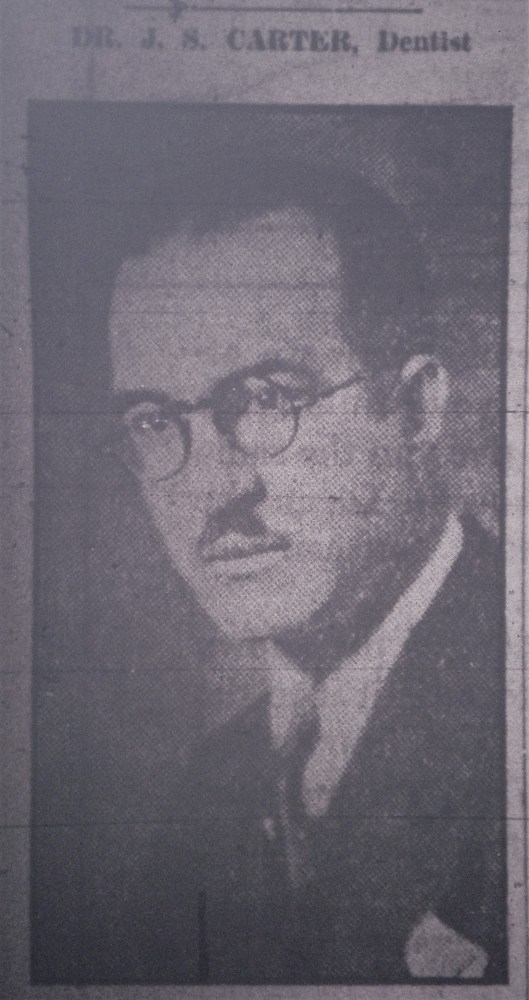
Notable Blacks of Logan County LB 04.16.1929 5

DR. J.S. CARTER, DENTIST

Washington Hotel, Logan, W.Va.

Graduate: Dental College of Howard University; did work at Ohio University, Athens, and the University of Pittsburgh; member of Alpha Phi fraternity. Dr. Carter served his country in the late World War. The doctor has practiced medicine six years, all of which has been done in West Virginia, his native state. The doctor has a modernly equipped office, engaged a large and profitable practice in Logan county. He is studious and alert to bring to his profession any scientific discoveries or new appliances that will benefit his patients. Dr. Carter has former connection with the McDowell Dental Clinic. The doctor encompasses a generous field of activities outside of his profession. He is prominent in fraternal and civic organizations in his county and state.

Source: Logan (WV) Banner, 16 April 1929

Confederate Pensions in West Virginia (1929)

24 Monday Sep 2018

Posted by Brandon Ray Kirk in African American History, Big Creek, Big Harts Creek, Boone County, Civil War, Crawley Creek, Holden, Logan, Man, Pecks Mill, Whirlwind

≈ Leave a comment

Tags

A.B. White, A.L. Browning, A.V. Pauley, African-Americans, Andrew Jackson, Appalachia, Band Mill Hollow, Big Creek, Boone County, C.H. Gilkinson, civil war, Confederacy, Confederate Army, Crawley Creek, Curry, Dave Bryant, Dyke Bryant, Dyke Garrett, Ethel, genealogy, Gettysburg, Green Thompson, Harrison White, Harts Creek, Harvey Chafin, Henlawson, Henry Mitchell, history, Holden, House of Delegates, Hugh Avis, J. Matt Pauley, Jackson McCloud, James Zirkles, John Bryant, John Neece, Joseph Lowe, Judy Bryant, Kistler, Leslie Mangus, Logan, Logan Banner, Logan County, Lucinda Spry, M.T. Miller, Madison, Man, Martha Jane Smith, Melvin Plumley, Mingo County, Monaville, Mt. Gay, Pecks Mill, preacher, Shegon, Slagle, slavery, Steve Markham, Stollings, Union Army, W.C. Turley, Wade Bryant, Wayne County, West Virginia, Whirlwind, William C. Lucas, William Chafin, William Workman, Zan Bryant

In 1929, the State of West Virginia nearly opted to allocate a monthly pension to its Confederate veterans, as well as blacks who had served the Confederate Army in service roles. In covering the story, the Logan Banner of Logan, WV, compiled a list of its remaining Confederate veterans.

HOW MANY VETERANS?

A pension of $20 a month is provided for Confederate veterans of the state by a bill passed by the Senate last week and sent in the House for concurrence. Senator M.T. Miller, of Boone county, who said he could not vote to pension men who had carried arms against their government, cast the only vote against the proposal.

A Charleston paper says there are only about 60 Confederate veterans living. This paper cannot believe that, although it has no information on the subject. How many are there in Logan county? Does anyone know? Has anyone an approximately correct list? If so, will he or she make the fact known? Uncle Dyke Garrett probably knows most of them.

The Banner would like to obtain a list of both Confederate and Union veterans still living in the county, together with their post office address.

Source: Logan Banner, 26 February 1929.

***

AS TO OLD SOLDIERS

The Banner’s request for information about old soldiers living in Logan county has not been in vain, nor has the response been satisfactory. The names of four confederate veterans have been turned in, as follows:

Rev. Dyke Garrett, Curry, beloved and venerable minister; William Workman, Shegon, who fought at Gettysburg and is now 88; Steve Markham, Holden No. 20, who has been blind for 20 years; and William Chafin, who lives with his son Harvey, at Holden 5 and 6.

Who are the others? Send in their names and addresses and any information you deem of interest concerning their careers as soldiers and citizens. The same information about Union soldiers, residents of the county, is likewise desired.

Logan Banner, 5 March 1929.

***

PREPARING THE ROLL

Another name has been added to the list of old soldiers that The Banner has undertaken to compile. Reference is to J. Matt Pauley, residing in Band Mill Hollow, post office Stollings. He was in the Confederate army, fought throughout the war and was wounded, writes Mrs. A.V. Pauley of Ethel. He is of the same age as Uncle Dyke Garrett.

The names of four survivors of the War Between the States, all living in Logan county, were published in Tuesday’s paper. There must be others. Who are they?

Today, W.C. Turley brought in a list of eight Confederate veterans, including the following new names: Wm. C. Lucas, Big Creek; Henry Mitchell, Henlawson; Hugh Avis, Green Thompson and John Neece, Logan; Harrison White, Pecks Mill.

Logan Banner, 8 March 1929.

***

On Confederate Roll

Two more names have been added to the roll of Confederate veterans that The Banner is preparing. These are James Zirkles of Man, whose name was sent in by Leslie Mangus, of Kistler, and Zan Bryant of Whirlwind, whose name was recalled by County Clerk McNeely. Are there not others besides nine or ten previously published?

Logan Banner, 12 March 1929.

***

Confederate Veterans Living Here Number at Least 17

There Are Probably  Others–Will You Help to Enroll Them–All Merit the Tender Interest of Younger Folk

Seventeen names of Confederate soldiers, residents of the county, have been collected by The Banner. Wonder if any have been overlooked, or if the appended list is in error in including any Union veterans? If any reader knows of a Confederate soldier not listed here, please send in the name and address AT ONCE. There will be no further request or reminder.

This paper undertook to make up a list of these old soldiers for two reasons. Chief of these was a desire to prevent any of them being overlooked in case a bill to pension them was passed by the legislature–but the writer does not know yet whether or not that bill was enacted into law. Another reason for assuming the task was to test in a limited way a statement in a Charleston paper that there were only 60 Confederate veterans left in the state. That statement was doubted, and with good reason judging from the number polled in this county. Anyhow, the ranks have become terribly thinned. Every few days we all read of taps being sounded for another one here and there.

Middle-aged men and young folk should esteem it a privilege to do something to brighten the lives of these old soldiers. As the years roll by our pride will increase as we recall our acquaintance with and our kindness toward the “boys of ’61 and ’65.”

Here is the list. Look it over, and if there is a name that should be added or a name that should be stricken out, or any error or omission that should be corrected or supplied, speak up:

James Zirkles, Man; Zan Bryant, Whirlwind; J. Matt Pauley, Ft. Branch; Uncle Dyke Garrett, Curry; William C. Lucas, Big Creek; Henry Mitchell, Henlawson; Hugh Avis, Green Thompson and John Neece, all of Logan; Harrison White, Pecks Mill; Melvin Plumley, Crawleys Creek (post office not known); William Workman, Shegon; Steve Markham, Holden No. 20; William Chafin, No. 5 and 6.

Logan Banner, 15 March 1929.

***

Two Names Added Confederate Roll

Bill to Pension Them is Defeated By Parliamentary Tactics in House

Names of two more Confederate soldiers living in the county have been sent to The Banner. They are: C.H. Gilkinson, minister, resident of Holden, who was born and reared in Wayne county, and is the father of Dr. L.W. Gilkinson. Jackson McCloud, a resident of Whirlwind on Harts Creek. His name was supplied by A.L. Browning of Monaville, who says he feels sure that Mr. McCloud was in the Confederate service and fought at Gettysburg.

Assuming both names should be added to the roll, it means that there are at least 19 Confederate veterans still living in Logan county, seventeen names having been listed and published a week ago.

For many of them there will be disappointment in the information that the bill to pension them did not pass. Sponsored in the Senate by ex-governor A.B. White, the son of a Union soldier, the bill passed, that body, Senator M.T. Miller of Madison casting the only vote against it. In the House of Delegates it was amended, by a majority of one, to include Negroes, whether slave or free, who had served in the Confederate army of cooks, personal servants, or otherwise, and later tabled.

Source: Logan Banner, 22 March 1929.

***

Slagle Man 17th in Confederate List

Zan Bryant Probably Oldest Veteran In County–Born in Jackson’s Time

Joseph Lowe of Slagle is the latest name to be added to the list of Confederate veterans that has been compiled by The Banner. However, that leaves the count at 17, as the name of Melvin Plumley of Crawleys Creek was erroneously included in the published list. He was a Union soldier, it seems.

Of all those listed Zan Bryant of Whirlwind must be the oldest. He is said to be 98 years old and his wife, Judie Hensley Bryant, 91. They have been married for 75 years and have a son, Dave Bryant, who is 73. There are five other children, Dave, John, Wade and Dyke all live on Harts Creek, most of them near their parents; Mrs. Martha Jane Smith at Gay, and Mrs. Lucinda Spry of Mingo county.

This venerable couple have spent all their years in the isolated Harts country, their home being on White Oak fork, and can be reached only by a long horseback ride.

When Zan was born Andrew Jackson was president and Logan county as a political subdivision was but five years old. He was 23 years old when married and 30 when the War Between the States began.

Logan Banner, 26 March 1929.


Lillian Samons (1929)

17 Monday Sep 2018

Posted by Brandon Ray Kirk in African American History, Logan, Women's History

≈ Leave a comment

Tags

African-Americans, Appalachia, education, genealogy, Harpers Ferry, history, Lillian Samons, Logan Banner, Logan County, Myrtilla Miner Normal School, National Teachers' Association, Storer College, teacher, Washington, West Virginia, West Virginia Parent-Teacher Association, West Virginia State Teachers' Association

In April of 1929, the Logan Banner profiled numerous prominent African-American residents of Logan County, West Virginia.

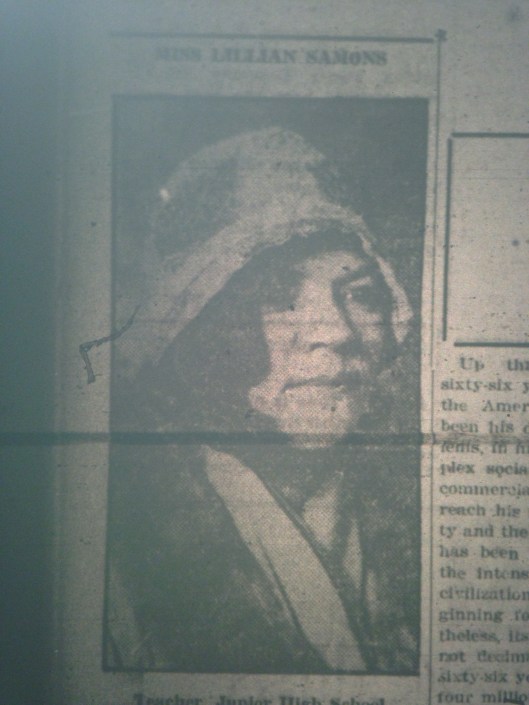
Notable Blacks of Logan County LB 04.16.1929 3

LILLIAN SAMONS

Miss Samons is a graduate of Storer College, Harpers Ferry, and Myrtilla Miner Normal, Washington, D.C. She has done summer work at West Virginia State College. Miss Samons has taught for ten years, all of which have been engaged in Logan county. She is a member of West Virginia State and National Teachers’ Association, and also a member of the State Parent-Teacher Association. Steady and methodical as a teacher, Miss Samons grasps the problem of the school room with a keen sense of its requirements. She obtains results immediate and direct, knowing forthwith at what she is aiming. Probably among the teachers of the county and state, Miss Samons takes her place among the foremost, this from a knowledge of the theory and practice and by that peculiar adaption to the work at hand. She has placed high dignity upon the profession, both in her high sense of honor and moral acumen, and her disposition to ever reach forward to a greater efficiency and the discovery of a more exact method to advance her pupils. Miss Samons has an engaging manner and has endeared herself in the hearts of the large number of pupils that have come under instruction, and with the patrons and citizens of the communities in which she has taught. She has a wholesome interest in the welfare of her people and responds actively to any movements that are devoted to their advancement.

Source: Logan (WV) Banner, 16 April 1929.

Richard T. Jordan (1929)

15 Saturday Sep 2018

Posted by Brandon Ray Kirk in African American History, Logan, World War I

≈ Leave a comment

Tags

25th Infantry, African-Americans, Alpha Phi Alpha, Appalachia, Aracoma High School, Columbia University, education, genealogy, history, Logan, Logan Banner, Logan County, Ohio State University, Red Cross Ambulance Corps, Richard T. Jordan, teacher, West Virignia, Wilberforce University, World War I

In April of 1929, the Logan Banner profiled numerous prominent African-American residents of Logan County, West Virginia.

Notable Blacks of Logan County LB 04.16.1929 1

RICHARD T. JORDAN

Graduate: Wilberforce University with B.A. degree; will take master’s work at Columbia University the coming summer session. Prof. Jordan has done work at Ohio State University; is a member of Alpha Phi Alpha, a national college fraternity. Honorary fraternities: Sword and Shield and Boule, and is an Elk and Mason. Prof. Jordan served his country in the late World War, doing overseas service; he was connected with the Red Cross Ambulance corps also enlisted in the U.S. Twenty-Fifth Infantry immediately following the World War, assigned to Mexican border service. The Aracoma school of which Prof. Jordan is principal has a corps of seven teachers, carrying an average enrollment of 150, and under his guidance the system is organized into an effective working unit, developing a definite educational program in the pupil enrollment. Prof. Jordan is a young man of high ideals, sterling character, studious and enterprising, and will make his mark in the profession.

Source: Logan (WV) Banner, 16 April 1929.

Recollections of McKinley Grimmett of Bruno, WV 1 (1984)

31 Friday Aug 2018

Posted by Brandon Ray Kirk in African American History, Coal, Dingess, Guyandotte River, Holden, Logan, Man, Timber, Wyoming County

≈ 4 Comments

Tags

African-Americans, Alva Grimmett, Appalachia, Austin Grimmett, Baileysville, Big Cub Creek, Bruno, Buffalo Creek, Christian, Cole and Crane Company, Devil Anse Hatfield, Dingess, Edith Grimmett, education, Elk Creek, Ettie Grimmett, farming, genealogy, general store, Green Perry, Guyandotte River, Guyandotte Valley, Henderson Browning, Henderson Grimmett, history, Holden, Horse Pen Mountain, Johnny Grimmett, Landsville, Lilly Grimmett, Logan, Logan County, logging, Madison Creek, Mallory, Man, McGuffey Readers, McKinley Grimmett, Mingo County, Mud Fork, Nancy Grimmett, rafting, Ralph Grimmett, Rose Grimmett, Sand Lick, Sanford Grimmett, Slater Hatfield, Tennis Hatfield, Thomas Hatfield, Tilda Hatfield, timber, timbering, Travis Grimmett, Verner, Walter Buchanan, West Virginia, whooping cough, World War I, Wyatt Belcher, Wyoming County

McKinley Grimmett was born on November 30, 1896 to Henderson and Nancy (Hatfield) Grimmett at Sand Lick, Logan County, WV. On May 14, 1916, Mr. Grimmett married a Ms. Plymale, who soon died, in Logan County. One child named Alva died on June 21, 1919 of whooping cough, aged fourteen months. His World War I draft registration card dated September 12, 1918 identifies him as having blue eyes and light-colored hair. He was employed by Mallory Coal Company at Mallory, WV. On November 13, 1919, he married Matilda “Tilda” Hatfield, daughter of Thomas Hatfield, in Logan County. He identified himself as a farmer in both of his marriage records. During the 1920s, he served as a deputy under Sheriff Tennis Hatfield.

The following interview of Mr. Grimmett was conducted at his home on July 17, 1984. In this part of the interview, he recalls his family background and early occupations. Logging and rafting in the Guyandotte Valley are featured.

***

Would you mind telling me when and where you were born?

Right here. I was born about a mile up above here. I was borned in Logan County. The post office was Christian at that time. Christian, WV. It’s changed now. They throwed Christian out – it was over here at Christian – and they throwed it out and moved it over here to Bruno. Christian went… The mines stopped over there. And that’s where I was born, right here at Bruno, Logan County. Been here all my life.

What day were you born?

November 30, 1896.

Who were your parents?

Henderson Grimmett and Nancy Hatfield Grimmett.

What kind of work did they do?

They did logging work. All they had that day and time. Mule teams and ox teams.

Where did your dad do his work?

All over Logan County.

Did he have his own farm?

Oh yeah. Yeah.

How big was his farm?

It was about 287 acres.

Can you describe his house?

Well, the house was a two-story building. But he never did get… He took the fever and he never did get the upper story, all of it completed. He died at a very early age of 74. He put him up a little store. Got ahead a little bit. Had a store here. Come down and bought this place off Walter Buchanan and he deeded his five kids the homeplace up there. And then he stayed on it from ’21 to ’29. He died 19th day of January, 1929.

Who were your mother’s parents?

Oh, Lord, I can’t… Slater Hatfield was her daddy’s name. And I don’t know my grandma. My daddy, now they both was born in Wyoming County. Baileysville or somewhere in there. I think my mother was born over there in Big Cub Creek. She was a Hatfield. I don’t know where…

How many brothers and sisters do you have?

I had three brothers and three sisters. Sanford was the oldest one. Austin and Johnny. They’re all dead. I’m the only one that’s living. All my three sisters… Lilly was the oldest one, and Rose was the next one, and Ettie was the youngest. They’re all dead. All of ‘em but me.

Were you educated in Logan County schools?

Yeah, that’s all we got. Free schools. I believe we started off about three months out of the year. Right over there where that first house is sitting – a one-room school house. All of us kids.

What was the last year of school you completed?

I believe it was about 1914, I’m not right sure. ’15.

Did you use the McGuffey Readers?

That’s all we had. And the spelling books. And in the late years, why we had a U.S. history… A small one. Most of it was just about West Virginia. It wasn’t about the whole United States. And geography, we had that. Arithmetic. That was about all we had in free schools. We had to buy them all then. They weren’t furnished.

How did you meet your wife?

She was born and raised over here at Horse Pen in Mingo County. And that’s how we met. We were just neighbors.

What was her maiden name?

She was a Hatfield, too. But now they were… There’s three or four sets of them.

Was her family related to Devil Anse Hatfield?

Well, they was some… Not very close, though, I don’t think.

Which church did you belong to?

I don’t belong to any.

Did you belong to a church when you were younger?

No, never did. If I ever would have joined, I’d have stayed with it.

Do you remember the year of your marriage?

Yeah, I sure do. November 13, 1919.

How many children do you have?

Four. We have two boys and two girls. Travis Grimmett is the oldest. And Ralph, Edith, and Nancy.

What was your wedding like?

Well, we just got married and come right home. At that time, they didn’t have such things, to tell you the truth.

Who was the preacher?

Green Perry. Rev. Green Perry on Elk Creek. Rode a horse back when I went up there to get married. A pair of mules. I rode them mules.

Where did you first live after you married?

Right about a mile above here at the old homeplace.

You have lived here all of your life?

All of our life.

Was it always this populated?

No, no. Wasn’t three or four houses on this creek at that day and time. It was farm land. It’s all growed up now. All them hills was put in corn, millets, and stuff like that. If they couldn’t get a machine to it, they cut it by hand. Some of them raised oats and some of them raised millet, corn. Raised hogs and cattle and sheep and selling ‘em.

Who owned this property back then?

Burl Christian owned this here, but I don’t know… My daddy bought his… A fellow by the name of Wyatt Belcher. Wait a minute. Browning. I can’t think of his name. He lived over here on Christian and he bidded in… It sold for back taxes and he bidded in. Henderson Browning.

What kind of work did you do after you married?

Just the same thing as I worked at before I got married. I first started out – my daddy was a boss for Cole and Crane on this river. I first started out working in the log business. I worked two years at that and then I decided… Mule team – I worked about eighteen months at that. Then in 1913 the coal company started in and I went to work in carpenter work. I helped build all of these houses down here at Landville. The superintendent, we got done, they was wanting to hire men, he give me a job keeping time for a while. And he wanted me to learn to run the drum – that’s letting coal off the hill. I learned it and about the third day I was up there, a preacher was running it, and he told me they’d just opened up and they didn’t have much coal to run off the hill, he told me, that preacher, he rolled out two cards and he said if that preacher fails to go out and work on that side track today you give him one of these cards. Well, I didn’t give him a card. But he come out that evening, the boss did. And he said, did the preacher work. And I said, no he refused. He said, I’ll fix him. He fired him. And I took the job and stayed with it four years and then I got married and then I went to work over here at Christian running a drum and I stayed there 34 years.

When you worked for Cole and Crane, did either of those men ever come up here?

Oh yeah. One of them was. Cole was. I don’t think Crane was ever here. A little slim fella.

Did you get a chance to talk to them?

No, they wouldn’t talk to us working men. They’d talk to the boss. They’d go away from us and talk to theirselves. We just got a $1.10 for ten hours. Eleven cents an hour.

What kind of a person did Cole seem to be?

Well, he knowed how the men was. They’d raft timber and go down this river to Guyandotte. Had what they called locks and dams there to catch the logs. This river was full of logs. He bought timber everywhere. Plumb at the head of it.

Did you ever ride a raft?

Oh, yeah. I went with my daddy. I wasn’t grown.

Can you describe it?

Oh, they’d raft the logs, poplar. Now they didn’t raft hardwoods. They’d sink on them. Some rafts, a big one would be 160 to 200 feet long, about 24 to 26 feet wide. Oar on each end of it. If it was a big raft, they had two men up front all the time plumb in to Guyandotte. I was the second man on it when I got to go out on it. My dad had timber and he rafted it, took it there and sold it. Took what they called dog wedges and cut little basket oaks and rafted them, stringers across ‘em, you know. Lots of people get drowned, too.

Were you ever in an accident?

No, I never was in no big one. I’ve seen about six or eight drown.

Could you describe how it happened?

Oh, if he couldn’t swim, sometimes the best swimmer drowned, you know, if he got under a lot of logs or something. According to whatever happened there with him. He could get out if there wasn’t no logs on top of him no where to hold him under, you know. If logs were on top of him, he was gone. Now about the last ones I seen drowned was two colored people. They was building a railroad from Logan to Man up Buffalo Creek. So we was working on a log gorge down there at the lower end of Landville. And there was four colored men… 1921. Had a saloon up here at Verner. They wouldn’t allow one in Logan County. And they went up there on the 21st day of December to get ‘em a load of whisky. And they come back… They’d seen white people ride these logs. Some county people would get on one log and ride it plumb to Logan, as far as you wanted to go. And they thought they could ride it. And they got on. Rode ‘em off the gorge and they was running into eddy water and they would hit the back end, it would, and the other end would swarp out and they’d pull out that way. And they got on ‘em with their whisky and everything and two of ‘em got out and two of ‘em drowned.

When you rode the raft to Guyandotte, how did you get back to Logan?

Oh, we had to walk. We’d get a train up to Dingess over here. You know where that’s at? We’d ride down up to there. And then we’d have to get off and walk across the hill there and come right straight out at the mouth of Mud Fork, Holden there, and up another little drain and down Madison Creek down here. And walk… Man alive, our feet would be so sore, I’d be up for two or three weeks I couldn’t walk, my feet would be wore out so.

NOTE: Some names may be transcribed incorrectly.

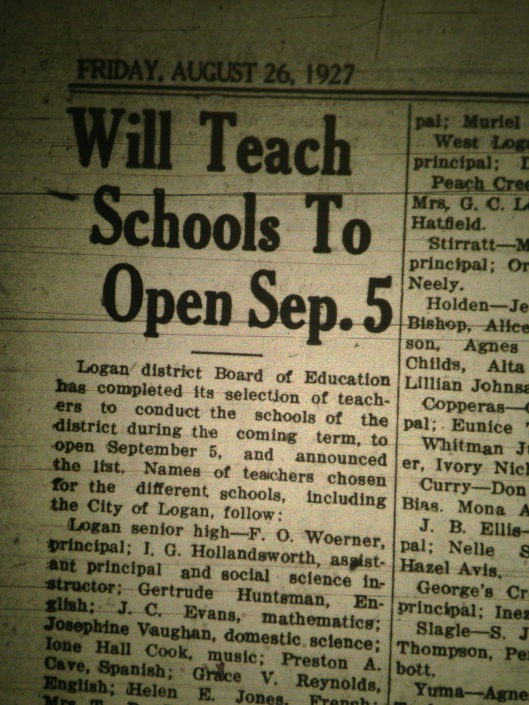
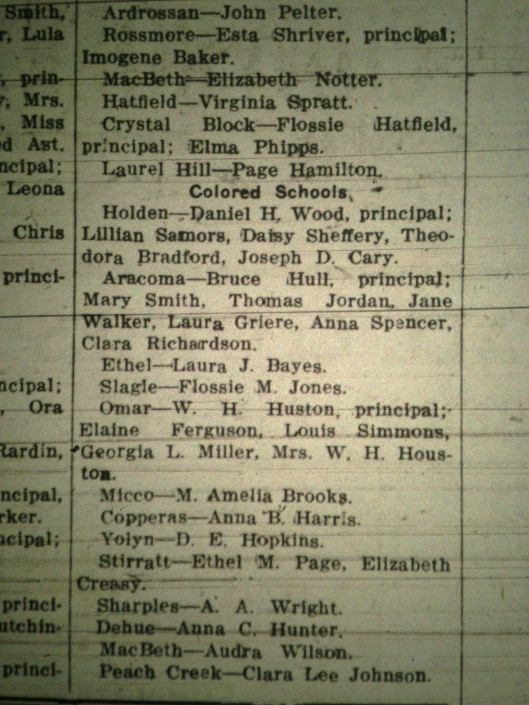
African-American Schools in Logan County, WV (1927)

21 Tuesday Aug 2018

Posted by Brandon Ray Kirk in African American History, Huntington

≈ Leave a comment

Tags

A.A. Wright, A.D. Robinson, A.V. McRae, African-Americans, Albert Meade, Anna B. Harris, Anna C. Hunter, Anna Spencer, Appalachia, Aracoma, Ardrossan, Audra Wilson, B.H. Hall, board of education, Bruce Hull, Clara Lee Johnson, Clara Richardson, Clothier, Coal River, Copperas, Cora, Crystal Block, D.E. Hopkins, Daisy Sheffery, Daniel H. Wood, Dehue, Doratha Withers, education, Elaine Ferguson, Elizabeth Creasy, Elizabeth Notter, Elma Phipps, Esta Shriver, Ethel, Ethel M. Page, F.O. Woerner, Flossie Hatfield, Flossie M. Jones, Garlands Fork, Georgia L. Miller, Gertrude Huntsman, Grace V. Reynolds, Harold Starcher, Hatfield, Helen E. Jones, history, Holden, Huntington, I.G. Hollandsworth, Imogene Baker, Ione Hall Cook, Island Creek, J.C. Evans, Jane Walker, John Pelter, Joseph D. Cary, Josephine Vaughan, Laura Griere, Laura J. Bayes, Laurel Hill, Lillian Samors, Logan County, Logan District, Logan High School, Logan Junior High School, Louis Simmons, M. Amelia Brooks, Macbeth, Mary Smith, Matilda Wade, Micco, Omar, Page Hamilton, Peach Creek, Preston A. Cave, Rossmore, Sharples, Slagle, Stirratt, teacher, Theodora Bradford, Thomas Jordan, Virginia Spratt, W.H. Houston, W.H. Huston, West Virginia, Yolyn

New Colored School at Crystal Block LB 08.12.1927 1

Logan (WV) Banner, 12 August 1927.

Logan District Colored Schools LB 08.26.1927 1

Logan (WV) Banner, 26 August 1927. This photo is meant to show the headline of the story; teachers named here are “white.”

Logan District Colored Schools LB 08.26.1927 2

Logan (WV) Banner, 26 August 1927. The list of “colored” teachers begin here and continue in the photos below.

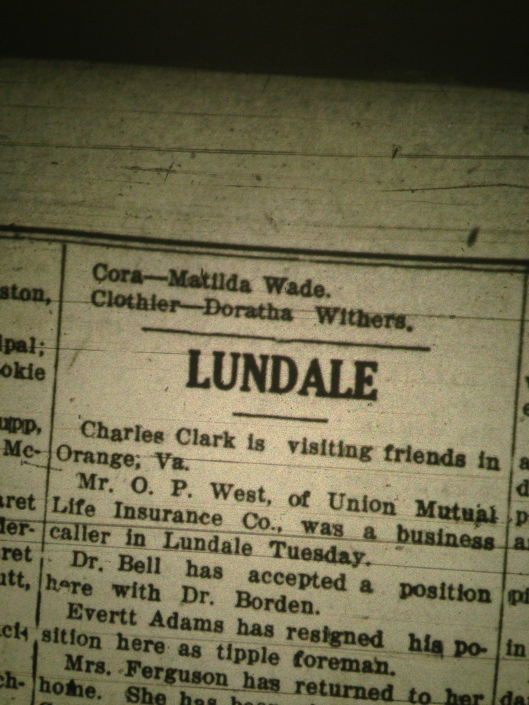
Logan District Colored Schools LB 08.26.1927 3

Logan (WV) Banner, 26 August 1927.

History of the West Virginia Penitentiary (1901), Part 1

31 Tuesday Jul 2018

Posted by Brandon Ray Kirk in African American History, Civil War, Culture of Honor, Timber

≈ Leave a comment

Tags

African-Americans, Alabama, Appalachia, Arthur I. Boreman, civil war, history, J.W. McWhorter, Moundsville, North Carolina, Ohio River, Potomac River, South Carolina, Virginia, West Virginia, West Virginia State Penitentiary

HISTORY OF THE WEST VIRGINIA PENITENTIARY.

WRITTEN BY A PRISONER.

In 1863 the state was admitted as one of the constellation of states of the union. Virginia had seceded from the union by a majority vote. The strong and indomitable minority citizens of the Old Dominion residing in the western part of it, many of whom were Scotch and Irish descendants and natives of the adjoining states, who had taken up their homes in the valleys and on the hillsides, were loyal to the Union, loved well the flag, and reverenced with an undying affection the builders of the union of states for the greater blessing of the people, and stood firm and unyielding for an indivisible united country. By their hands and brave hearts they built a state stretching from the Potomac to the Ohio river, carved out of the Old Dominion. The war-born daughter of the historical commonwealth proved, in subsequent years, to be rich in the production of materials in active demand in the marts of commerce, and she now outstrips her mother state in the race for greatness, prosperity, and happiness.

Many regions of the state are mountainous, and the principal industries are lumbering, mining, and oil production. Many of the white people are typical mountaineers and somewhat rough and uncouth in manner, while the negroes, many of them, have drifted from North and South Carolina, Alabama, and other southern states to be employed in the development of these industries.

There are very many respectable farmers, professional and business men, and cultured ladies residing in these almost inaccessible parts; but the rough element in many places predominates, and the order of the day and night is drinking and brawling, ending as a rule in desperate encounters and murder. Most of the white and black inmates of the penitentiary have been and are now composed of the lawless men from these regions, from the time it was only a stockade of ten acres in 1866, when Hon. J.W. McWhorter of the Tenth Judicial District was appointed warden by Governor Boreman. He resigned this position after viewing it. In a letter to Warden Hawk he states it was for the reason that there was not so much as a building erected for the shelter of the inmates, and he thought he could not work the convicts to advantage under the circumstances. The penitentiary has been improved from time to time to the present, by additions, until it is a massive structure of stone and iron, with a high stone surrounding wall. It has 695 inmates at the present writing.

The center, or main building, is built after the old baronial castellated style of architecture, and with its several stories height, it makes an imposing appearance. It is flanked on the north and south by the stone and strongly-barred buildings, wherein the old and first built stone cells and the modern steel ones–900 in all–are placed. Entrance is to be had into the prison proper by means of a round turning iron-barred cage in the main hallway of the central building.

Source: E.E. Byrum, Behind the Prison Bars: A Reminder of Our Duties Toward Those Who Have Been So Unfortunate as to Be Cast Into Prison (Moundsville, WV: Gospel Trumpet Publishing Co., 1901), pp. 73-75.

African-American Life in Logan County, WV (1926-1927)

22 Friday Jun 2018

Posted by Brandon Ray Kirk in African American History, Music

≈ Leave a comment

Tags

Appalachia, Brown's Hotel, Charles Kelley, history, Joe Glenn, L. Jean Bayes, Logan Banner, Logan County, Music Lovers Club, Republican Party, Stirrat, Stirrat Republican Colored Club, W.J. Glover, West Virginia

The following two items gleaned from the Logan Banner provide insight into African-American life in Logan County, WV, in 1926 and 1927.

CANDIDATES GIVE FLAG TO STIRRAT REPUBLICAN COLORED CLUB SATURDAY

A handsome American flag was presented Saturday night to the colored Republican club at Stirrat by Joe Glenn of the county assessor’s office in behalf of Republican candidates as an award for the precinct making the biggest Republican registration this year and for this club being the largest in point of numbers in the county. Charles Kelley is the president.

Six candidates were at the meeting and made brief talks. An enthusiastic meeting was held presaging a warm campaign when the battle of ballots opens for the November election.

Source: Logan (WV) Banner, 7 September 1926

COLORED MUSICAL CLUB BEING ORGANIZED HERE

Announcement is made by W.J. Glover, president, and L. Jean Bayes, secretary, for the organization of the Music Lovers Club among colored citizens, formed at a meeting held in the reception room of Brown’s hotel. It is their purpose, they promise, to do some very constructive work in the county, “using as a method for success the reaching of the hearts of the people by having them respond to the musical concords of sounds.” All those approaching the object of the movement are invited by these officers of the club to meet this newly organized body at Brown’s hotel, Friday evening at 8 o’clock, to assist in creating a musical appreciation and community interest.

Source: Logan (WV) Banner, 13 September 1927.

John R. Browning Debt to James A. Nighbert (1860)

07 Thursday Jun 2018

Posted by Brandon Ray Kirk in African American History, Logan

≈ Leave a comment

Tags

African-Americans, Appalachia, genealogy, history, James A. Nighbert, John R. Browning, Logan County, slavery, Virginia, West Virginia

IMG_1355

John R. Browning Check to James A. Nighbert, Logan County, (W)VA, 1860.

IMG_1356.JPG

John R. Browning Promissory Note to James A. Nighbert, Logan County, (W)VA, 1860-1861. Note reference to “Negro boy” named Simon.

For more information about John R. Browning, follow this link: https://www.familysearch.org/ark:/61903/3:1:33S7-9BSZ-9N3H?i=46&cc=1473181

Dils Cemetery in Pikeville, KY (2018)

29 Sunday Apr 2018

Posted by Brandon Ray Kirk in African American History, Cemeteries, Civil War, Hatfield-McCoy Feud, Pikeville

≈ Leave a comment

Tags

39th Kentucky Infantry, African-Americans, Ann Dils, Appalachia, Basil Hatfield, cemeteries, civil war, Dils Cemetery, genealogy, Hatfield-McCoy Feud, history, John Dils Jr., Kentucky, Martha Hatfield, Martha McCoy, National Register off Historic Places, photos, Pike County, Pikeville, Randolph McCoy, Roseanna McCoy, Sam McCoy, Sarah McCoy, slavery, Union Army

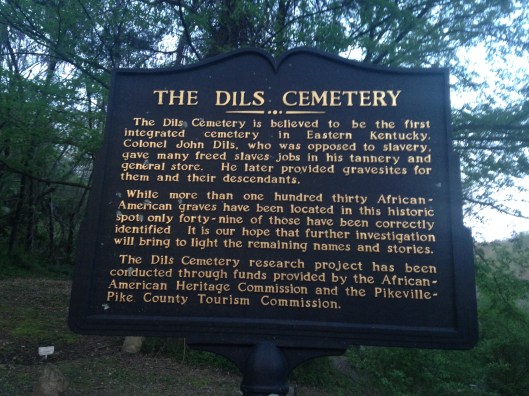
IMG_9093

The Dils Cemetery Sign, Pikeville, KY. 27 April 2018.

IMG_9170

McCoy Family wreath, Dils Cemetery, Pikeville, KY. 27 April 2018.

IMG_9095

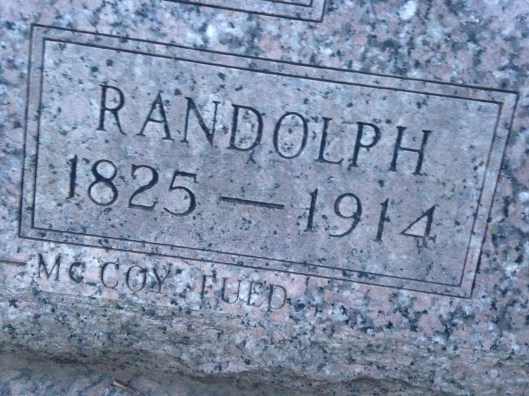
Randolph and Sarah McCoy graves, Dils Cemetery, Pikeville, KY. 27 April 2018.

IMG_9096

Randolph McCoy grave, Dils Cemetery, Pikeville, KY. 27 April 2018.

IMG_9171

Roseanna McCoy grave, Dils Cemetery, Pikeville, KY. 27 April 2018.

IMG_9172

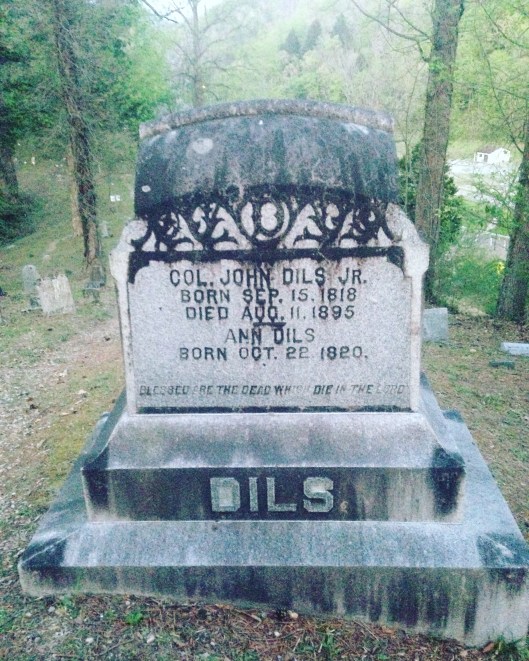
Col. John Dils grave, Dils Cemetery, Pikeville, KY. 27 April 2018.

IMG_9110

History Marker, Dils Cemetery, Pikeville, KY. 27 April 2018.

IMG_9174

Dils Cemetery, Pikeville, KY. 27 April 2018.

IMG_9101

Basil Hatfield grave sign, Dils Cemetery, Pikeville, KY. 27 April 2018.

IMG_9100

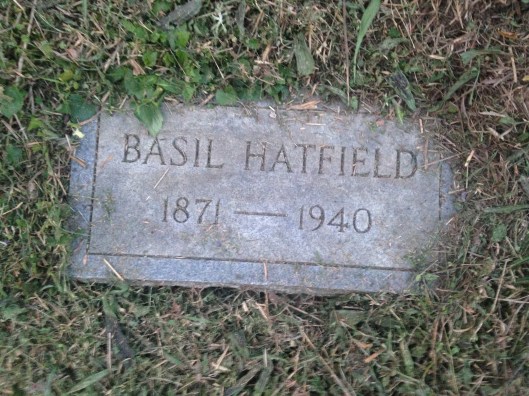
Basil Hatfield grave, Dils Cemetery, Pikeville, KY. 27 April 2018.

IMG_9113

Sam and Martha McCoy grave, Dils Cemetery, Pikeville, KY. 27 April 2018.

World War I Casualties for Logan County, WV (1927)

25 Wednesday Apr 2018

Posted by Brandon Ray Kirk in African American History, Cemeteries, Logan, World War I

≈ Leave a comment

Tags

16th Infantry, 4th Infantry, African-Americans, Albert Adams, Albert Jeffrey, Alfred Prichard, Allen Bryant, Allen Tabor, American Legion, Appalachia, Argonne Woods, Arle J. Price, Armistice Day, Bee Stewart, Ben H. Gosney, Ben Maynard, Bert Rayborn, Bill Manville, Bird Dingess, Burnie G. Sanson, Burton W. Gore, Calvin Coolidge, Carl Ellis, Charles Brewster, Charles Burton Litten, Charlie M. Munsey, Charlie Warcovies, Clarence Bartram, Clarence Smith, Clarence W. Parkins, Clifton Manns, Clyde Jeffrey, Coal Branch, Crooked Creek Cemetery, Dan Craft, David Hensley, Dennie Robertson, Denver Mullins, Doc Workman, Earl Hager, East End, Edward Gunther, Elbert Billups, Elbert Carter, Elisha Ball, Ella Craddock, Elmer Cook, Everett Blankenship, Finne Walter Pugh, Floyd Chambers, Floyd Johnson, Floyd W. Clay, France, Frank Bell, Frank C. Reynolds, Frank C. Wilcoxen, Frank Ferrell, Frank J. Bell, Frank Ward, Fred E. Hahne, genealogy, George E. Covey, George F. Breeden, George Luty, George Meadows, Greenway Christian, Guy T. Conley, Harold Thompson, Haskell Phillips, Henan Jarrell, Henry H. Runyon, Herbert L. McKinney, Hill Brewster, Hirse C. Brown, history, Hoboken, Homer Hobbs, Homer Vance, James Chapin, James E. Peters, James G. Cyrus, James Jackson, James L. Robinson, James Linford Brown, James M. Ellis, Jasper Wooten, Jennings Robinson, Jim F. Crawford, Joe Hardy, John A. Shepherd, John B. McNeely, John B. Wilkinson, John H. Crittenden, John H. Harris, John L. Blankenship, John L. Ward, John Martin, John Roberts, John Smith, Johnie Johnson, Joseph White, Keefer Jennings Whitman, Lawrence Marcuzzi, Lee Cox, Lee Shelton, Levi J. Vance, Logan, Logan Banner, Logan County, Lovel H. Aldredge, Luther Lacy, Mack Smith, Meddie Graley, Mike Tarka, Ned Johnson, Newton Cook, Nick Malozzo, Noble J. Lax, Orvil Grubb, Oscar Dial, Otto Sanders, Patsy Vance, Peter White, Rector H. Elkins, Robert L. Gore, Roy Lowe, Roy Simms, Sam McNeely, Shellie Moxley, Sidney Ferrell, Spencer Mullins, Stonewall Hensley, Thomas J. Cox, Thomas P. Justice, Thomas R. Newman, Thomas Weir, Thomas Y. Davis, Tom Boring, Tom Williams, Tony Curia, Tony Ladas, Ulysses B. Vance, Walter S. Blake, West Virginia, Will Wilson, Willard Ball, William D. Maynard, William E. Hanshaw, William F. Munsey, William H. Adkins, William Harris, William O. Bailey, William R. Nowlan, Willie Allen, Willie F. Smith, World War I, Zatto Adkins

From the Logan Banner of Logan, WV, comes this story titled “Logan County Boys Killed or Wounded,” dated November 8, 1927:

Logan County Boys Killed or Wounded

Prayers in behalf of peace are suggested for Armistice Day by President Coolidge. It will likewise be proper to recall the names of those who sacrificed most in the cause of peace, who died or were wounded in the dreary days before the signing of the Armistice ended the most colossal conflict of all history. Twenty young men from Logan county were killed in action. Half that number died of wounds. Their names and the names of others who died in the service of their country a decade ago are reproduced from the official records:

Killed in Action

Willard Ball

Clarence Bartram

Floyd W. Clay

Newton Cook

Tony Curia

Oscar Dial

Edward Gunther

David Hensley

Roy Lowe

John B. McNeely

John Martin

William F. Munsey

James L. Robinson

Roy Simms

Willie F. Smith

Bee Stewart

Mike Tarka

Ulysses B. Vance

Peter White

Keefer Jennings Whitman

Died of Wounds

John L. Blankenship

Elmer Cook

Homer Hobbs

Noble J. Lax

Lawrence Marcuzzi

Denver Mullins

William R. Nowlan

Haskell Phillips

Henry H. Runyan

Harold Thompson

Died of Disease (A.E.F.)

Thomas J. Cox

Fred E. Hahne

Joe Hardy (colored)

Clyde Jeffrey

Johnie Johnson (colored)

Allen Tabor

Homer Vance

Levi J. Vance

Died of Disease in U.S.

William O. Bailey

Elbert Billups

James Linford Brown

Elbert Carter

Wounded in Action

Albert Adams

Zatto Adkins

William H. Adkins

Lovel H. Aldredge

Willie Allen

Frank Bell

Elisha Ball

Frank J. Bell

Walter S. Blake

Everett Blankenship

Tom Boring

George F.  Breeden

Hill Brewster

Charles Brewster

Hirse C. Brown

Allen Bryant

Floyd Chambers

James Chapin

Greenway Christian

Guy T. Conley

George E. Covey

Ella Craddock

Dan Craft (colored)

Jim F. Crawford

John H. Crittenden

James G. Cyrus

Thomas Y. Davis

Bird Dingess

Rector H. Elkins

James M. Ellis

Carl Ellis

Frank Ferrell

Sidney Ferrell

Robert L. Gore

Burton W. Gore

Ben H. Gosney

Meddie Graley

Orvil Grubb

Earl Hager

William E. Hanshaw

John H. Harris

William Harris (colored)

Stonewall Hensley

James Jackson (colored)

Albert Jeffrey

Henan Jarrell

Ned Johnson

Floyd Johnson

Thomas P. Justice

Luther Lacy

Tony Ladas

Charles Burton Litten

George Luty

Herbert L. McKinney

Nick Malozzo

Clifton Manns

Bill Manville

Ben Maynard

William D. Maynard

George Meadows

Shellie Moxley

Charlie M. Munsey

Spencer Mullins

Thomas R. Newman

Clarence W. Parkins

James E. Peters

Arle J. Price

Alfred Prichard

Finne Walter Pugh

Bert Rayborn

Frank C. Reynolds

John Roberts

Dennie Robertson

Jennings Robinson

Otto Sanders

Burnie G. Sanson

Lee Shelton

John A. Shepherd

Clarence Smith

John Smith (colored)

Mack Smith

Patsy Vance

Frank Ward (colored)

John L. Ward

Charlie Warcovies

Thomas Weir

Joseph White

John B. Wilkinson

Frank C. Wilcoxen

Tom Williams

Will Wilson (colored)

Jasper Wooten

Wilson Workman

It seems likely there are errors of spelling in the foregoing list, and perhaps some names have been omitted from the roster from which this list was copied. Desiring a complete and perfect list The Banner will appreciate having its attention called to any omissions or misspellings.

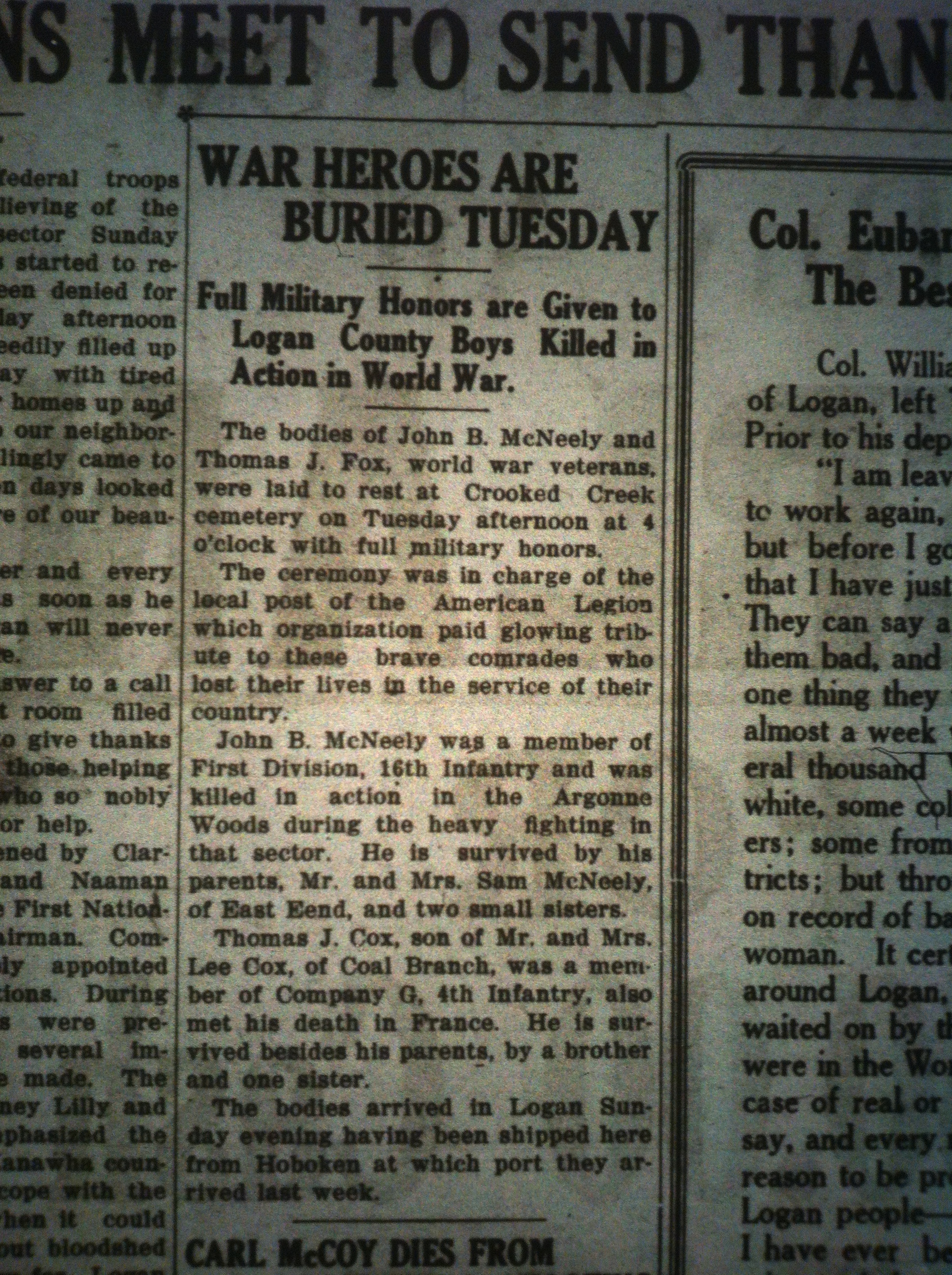
War Heroes are Buried LB 09.09.1921.JPG

Logan (WV) Banner, 9 September 1921.

Aracoma High School in Logan, WV (1927)

11 Sunday Mar 2018

Posted by Brandon Ray Kirk in African American History, Logan

≈ Leave a comment

Tags

African-Americans, Appalachia, Aracoma High School, Bruce H. Hull, education, history, Logan, Logan Banner, Logan County, Logan High School, North Central Association of Secondary Schools, teachers, West Virginia

From the Logan Banner of Logan, WV, comes this interesting item about Aracoma High School dated September 2, 1927:

ARACOMA HIGH OPENS SEPT. 5th

Principal Hull Announces Some New Features Since Last Term, Adding To the Facilities

Plans are about completed for the opening of the Aracoma high school for the coming year. The principal, Mr. Bruce H. Hull, states that an annex will be fitted up for use this year giving an additional room for high school purposes. This annex will be equipped as a science laboratory. Equipment, including special furniture, has already been ordered for this department and is expected to be in place for the beginning of the year. The additional room and added facilities thus provided should enable the high school to be classified as second class.

Mr. Hull further stated that the board of education will furnish transportation to all students living in the district who wish to attend the high school up to and including the eleventh grade. Parents are urged by him to have their boys and girls enter school on the first day for purpose of classification.

The faculty for the school will be composed of five members holding baccalaureate degrees from standard and approved colleges and two members who are graduates of the standard normal course. It will be recalled that when Mr. Hull came to Logan two years ago there was no accredited senior high school for Negroes, but now plans have been completed for a new building which the board expects to complete before the end of the present term. The completion of this unit in the system of education together with the entrance of the Logan high school into the North Central Association of Secondary Schools will be tangible evidence of the progress of Logan county in the field of education.

Mountain Folk (1927)

02 Friday Mar 2018

Posted by Brandon Ray Kirk in African American History, Logan

≈ 1 Comment

Tags

Alvin York, Appalachia, Arthur Davenport, Babe Ruth, Banastre Tarleton, Battle of Cowpens, Battle of King's Mountain, Charles Darwin, Charleston, Charleston Daily Mail, Charlie Chaplin, Chicago, culture, Jack Dempsey, Kentucky, Logan, Logan Banner, R.H. Martin, Tennessee, Virginia, West Virginia

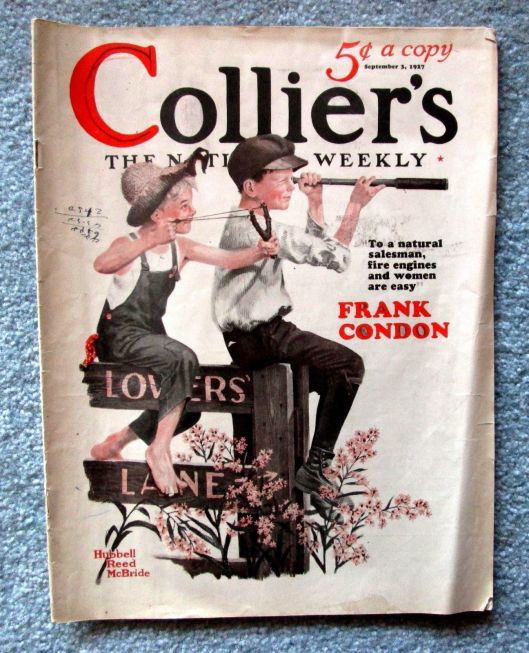
From the Logan Banner of Logan, WV, dated August 5, 1927, comes this editorial about the “mountain folk” of Appalachia, printed in response to a piece in Collier’s:

collier's

MOUNTAIN FOLK

Observations By R.H. Martin, Editor of Charleston Mail, In Rejoinder to Collier’s Article

Some West Virginia newspapers are both indignant and aroused over an article printed in Collier’s recently under the name of Arthur Davenport and having for its theme the sad and deplorable conditions of the mountain dwellers in Southern Appalachia. The general tenor of the article can be fairly judged by the introductory synopsis:

We Americans are fond of tilting our noses and giving the rest of the world the superior eye.

Anybody going about in that fashion is pretty sure to overlook an unpolished heel or a rip in the clothing where it makes others laugh most.

Here is the story of the unpolished heel. Here are Americans of nearly two hundred years’ breeding who never heard the names Roosevelt, Wilson, Ford, Babe Ruth, Charlie Chaplin; who never saw a —

But never mind. Read and cease marveling for a few moments that the Chinese can be dedraggled, the Hottentot so naked, the mukhik so ignorant and the Hindu so impoverished. Here are all of these calamities within a few hours train ride from our own golden Capitol.

If the conditions are as Mr. Davenport has painted them, then it would appear to be a case where pity and help were needed rather than sneers and laughter. In fact, Mr. Davenport in the introduction, or Collier’s editor who may have written it, gives some indications of “nose-tilting” that might provoke a rather loud guffaw from some unlettered mountaineer whose forbears were possibly among, and certainly of the same type, of those mountaineers who won the battles of the Cowpens and King’s Mountain, which victories some historians consider the turning point in the American revolution. They were probably of the same type as that Col. Washington, who, although he could not make a letter, yet left the mark of his sword on a certain Col. Tarleton.

It may be true–we shall not attempt to deny it–that there are mountaineers who never heard of Babe Ruth. We have not the slightest desire to detract one iota from all laurels due to the famous batsman, but, like most mountaineers, probably we should, if it simmered down to that, prefer Sergeant York as our hero to the idol of the howling grandstand that throws pop-bottles at umpires.

Nor shall we repine if it is true that some of these mountaineers never heard of Charlie Chaplin. We fail to see where knowing him as most Americans know him would be intellectually or otherwise uplifting. Perhaps, such mountaineers, as have missed long-distance acquaintance of either of these gentlemen just mentioned have not lost so much after all. As for other names mentioned there may be in the deepest mountain recesses persons who have not heard of them. If Mr. Davenport knows of his own personal knowledge of such cases, his statement stands.

There are mountain folk in the great ranges of Southern Appalachia who have been cut off from this modern civilization of ours that produces bandits in Gotham and gunmen in Chicago, the nauseous scandals of Hollywood, the commercial orgies of Dempsey and Sharkey, and other highly moral and refining manifestations of the literates, and their ignorance of the outside world may be large. But as to whether a more intimate contact with this outside world which we boastfully call civilized would improve the mountaineer or not, would, it seems to us, depend a good deal upon that part of it with which he came in contact.

Mountaineers in the innermost recesses of the elevations of the elevations are poor as well as deficient in general knowledge. We admit as much. Their wants are few, and they are able to get along with what to satisfy their forefathers who at infinite toil conquered the wilderness and blazed the paths of those whose “culture” takes on “nose-tilting” sneering and laughing. Perhaps Mr. Davenport might get a new insight into real values if he should read what Bobbie Burns wrote about “honest poverty.”

Illiteracy still exceeds 90 percent in the mountains of Kentucky, Virginia, West Virginia, Tennessee and North Carolina, which states contribute to the four million of which I write. Poverty of a sort unbelievable in the cities is so commonplace as not to be impressive: the amount of money passing through the hands of the old mountaineer in any year is often less than eight dollars.

The term, “mountains of Kentucky, West Virginia, Tennessee and North Carolina” is ambiguous. Practically all West Virginia is mountainous, or semi-mountainous. Taking the states named as a whole the percentage of illiteracy among native-born whites is as follows: Kentucky, 7.3; North Carolina, 8.2; Virginia, 6.1; West Virginia, 4.8; Tennessee, 7.4. These figures are slightly increased by adding to them foreign illiterates and illiterates among the negro population. The latter two elements present special problems that are being gradually worked out and the percentages from now on will rapidly diminish. To say therefore, that mountain folk are 90 percent illiterate, one would have to restrict the term “mountain folk” to a very small proportion of the population.

But Mr. Davenport seems to apply his percentage to the “four million of which I write.” It possibly may be that if Mr. Davenport has that same passion for facts as animated Charles Darwin, and is as careful in testing his data, he will revise his figures.

The entire story is exaggerated and weird; but it is nothing to worry about. The people of the states named know the causes and the difficulties and are remedying the situation as rapidly as possible. Fastidious refinement may halt at the lofty mountain ranges and at the mouth of the deep and dark defiles, but from these same mountain folk have come some of the strongest type of Americans despite educational handicaps. When we think of Sergeant York and his folk, we do not despair of the mountain folk nor depreciate their sturdy virtues. We neither feel like sneering nor laughing. And we hope modern “culture” and “civilization” has the good breeding not to tilt the nose at supposed inferiors who may in some essentials actually be superiors.

For more about Collier’s, follow this link: https://en.wikipedia.org/wiki/Collier%27s

Coontown 400 Advertisements (1913)

06 Tuesday Feb 2018

Posted by Brandon Ray Kirk in African American History, Logan

≈ Leave a comment

Tags

A Song by Two Girls, A Visit to a Couple of Girls, African-Americans, Appalachia, Coontown 400, Dance by Old Ham Bones, history, Holden, Holden Opera House, I Want to Buy a Dog, John Easley, Logan County, Logan Hippodrome, Miss Bessie and Her Sweetheart, Mr. Brown, West Virginia

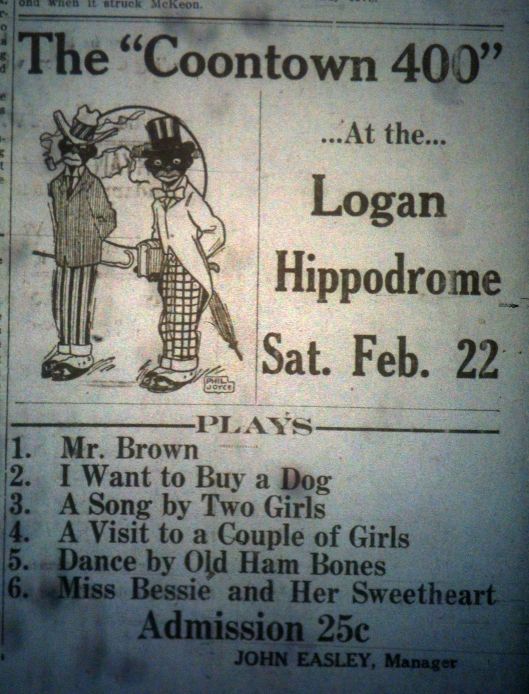
Coontown 400 Advertisement LB 01.31.1913

Logan (WV) Banner, 31 January 1913.

Coontown 400 LB 02.21.1913

Logan (WV) Banner, 21 February 1913.

Thomas Farley Last Will and Testament (1796)

21 Sunday Jan 2018

Posted by Brandon Ray Kirk in African American History, American Revolutionary War, Montgomery County

≈ 2 Comments

Tags

American Revolution, Appalachia, Christiansburg, genealogy, Henry Farley, history, John Farley, John Kirk, Judith Farley, Logan County, Montgomery County, slavery, Thomas Farley, Virginia, West Virginia

During a recent visit to the Montgomery County Courthouse in Christiansburg, Virginia, I viewed the Last Will and Testament of my great-great-great-great-great-great-grandfather Thomas Farley (c.1730-1796). Thomas was a veteran of the American Revolutionary War.

IMG_2575

In the Name of God Amen

I Thomas Farley of the County of Montgomery and State of Virginia being sick in Body but of a good and sound memory calling to mind the uncertain estate of this Temporary(?) life and knowing that all flesh must yield to death when it shall pleas God to call. I commit my soul to almighty God that give it and my Body to be buryed as my Friends Shall See cause. In the first place I desire as much of my Estate may be sold as shall pay all my Just debts, Such things as my Dear wife shall think fit. Secondly I give and bequeath to my Dear wife three Negros and all my Pertional estate to dispose of as she Shall See fit and Likewise all Bonds Notes and demands. In the third place I give and Bequeath unto my Dear Sons Such Lands and I have heretofore given them agreeable to Such lines as I have directed and this I believe to be my Last Will and Testament this thirty first day of  May one thousand seven hundred and ninety six.

Thomas Farley

Signed and Sealed

In the presence

Test

John Kirk

John Farley

?Winney Thomp (her mark)?

I also leave Gordon Cloyd and John Kirk my true(?) Friend as Executors

IMG_2576.JPG

NOTE: Henry Farley, pioneer settler of Logan County, WV, is the son of Thomas Farley.

Aracoma High School in Logan, WV (1927)

14 Sunday Jan 2018

Posted by Brandon Ray Kirk in African American History, Battle of Blair Mountain, Logan

≈ Leave a comment

Tags

African-Americans, Appalachia, Appalachian Power Company, Aracoma High School, Battle of Blair Mountain, board of education, Buskirk & Kayser, Coal Branch, Coal River, E.F. Scaggs, education, Elaine Ferguson, Georgia Miller, history, Island Creek Bridge, J.F. May, J.W. Beckett, K.F. Deskins, L.E. Farnsworth, Logan, Logan Banner, Logan County, Logan High School, Lois Simmons, Omar Colored School, Opperman, R.H. May, W.H. Houston, West Virginia, White & Browning Building

In 1927, the Logan County Board of Education discussed construction of a new high school building for the county’s black pupils. At this time, Republicans held many county offices by narrow majorities.

aracoma high school

Board of Education Favorable to Providing New Building for Colored Pupils.

NEEDS OF BLAIR POINTED OUT

Colored Teachers Hired For Omar

–Board Meets Again Friday–

Other Matters.

That negotiations for the purchase of a site for a centralized colored high school for Logan district have been under way was disclosed at the regular monthly meeting of the Logan district board of education last Saturday. At an adjourned meeting to be held Friday of this week a further step toward this end may be taken.

The site under consideration is a two-acre tract fronting on the north shore of Island creek in Coal Branch. It lies between Coal Branch (stream) and the Island Creek bridge and roadway, and to which the only access at this time is through the alley along side and back of Buskirk & Kayser’s store. The upper half of it is now a weed patch; the other half is under cultivation.

This tract belongs to K.F. Deskins and has been priced to the board at $21,000. The ground is low and often overflows, but the board has been advised that the Appalachian Power Company will fill it with its own refuse up to the level of the road at no cost to the purchaser. Thus it would be made virtually flood proof.

Saturday’s meeting was attended by all three members, President J.F. May, Dr. L.E. Farnsworth and J.W. Beckett. Though convinced the price is high, Dr. May and Dr. Farnsworth said, everything considered, they believed the tract to be the most suitable for the purpose that could be found; and they further made it clear that in their opinion a new high school for the colored pupils is imperative and should be made available just as soon as possible. While admitting there are many things that should and must be done, they doubt whether any other contemplated improvement is more urgent than this.

The Aracoma high school building, a rickety, wholly unsuitable two-story frame, is characterized as a fire-box that must be abandoned. This property would be sold, if the other is bought, it is said, but the proceeds of the sale would doubtless be negligible compared to the price of the Dingess tract.

Central Location

The Dingess tract is believed to be ideally located with reference to the colored population of the district. Besides, it is easily accessible from various directions and is ample in dimensions; and if necessary, one or more lots could be sold, though nothing of that sort is now contemplated.

Just how this proposed purchase and the proposed new wing for the Logan high school are to be financed was not explained at Saturday’s meeting. But there were many other matters demanding attention.

Conditions of school buildings and equipment at Blair and other Coal River points were discussed at length and definite action will be taken soon, it was promised. The two Richardson brothers, coal operators at Opperman, took a hand in these discussions and urged a program of improvements. Blasting done by road contractors nearly wrecked the Blair school building a good while ago.

The following teachers were hired for the Omar colored school: W.H. Houston, principal; Mrs. Georgia Miller,  Mrs. Lois Simmons, Mrs. Elaine Ferguson, Mrs. W.H. Houston. The last three are new ones.

Prof. Houston was given a contract to paint some parts of the building for 10 cents a yard, the board to furnish the paint. He was told he could not make wages at that price but said he did not care about that, adding that he wanted the work done and would do it right or would not expect to receive even the low contract price for his work.

Many bills, many of them small and incurred by the old regime, were ordered paid. Among these was one for $40 for two months rent for an office in the White & Browning building for E.F. Scaggs. That contract was declared canceled.

R.H. May was appointed janitor of the Logan high school building, effective August 1.

Source: Logan (WV) Banner, 26 July 1927.

John Jacob Cornwell, WV Governor-Elect (1916)

02 Tuesday Jan 2018

Posted by Brandon Ray Kirk in African American History, Coal, Matewan

≈ Leave a comment

Tags

coal, governor, history, John Jacob Cornwell, Logan Democrat, Mine Wars, politics, West Virginia, World War I

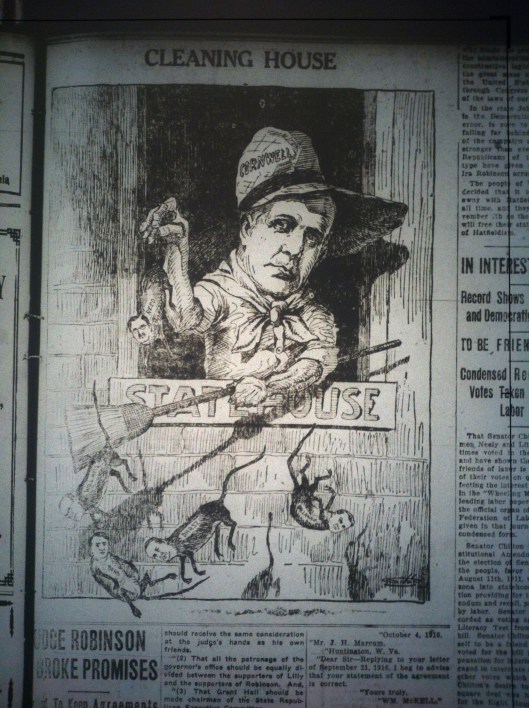
Cornwell Political Cartoon LD 10.26.1916

Logan (WV) Democrat, 16 October 1916. Narrowly elected in 1916, Mr. Cornwell served as the fifteenth governor of West Virginia (1917-1921).

Cornwell Image LD 11.09.1916

Logan (WV) Democrat, 9 November 1916. Mr. Cornwell served as governor during World War I.

Fore more history about Governor Cornwell, visit this site: https://www.wvencyclopedia.org/articles/1604

← Older posts
Newer posts →

Feud Poll 1

If you had lived in the Harts Creek community during the 1880s, to which faction of feudists might you have given your loyalty?

Categories

  • Adkins Mill
  • African American History
  • American Revolutionary War
  • Ashland
  • Atenville
  • Banco
  • Barboursville
  • Battle of Blair Mountain
  • Beech Creek
  • Big Creek
  • Big Harts Creek
  • Big Sandy Valley
  • Big Ugly Creek
  • Boone County
  • Breeden
  • Calhoun County
  • Cemeteries
  • Chapmanville
  • Civil War
  • Clay County
  • Clothier
  • Coal
  • Cove Gap
  • Crawley Creek
  • Culture of Honor
  • Dingess
  • Dollie
  • Dunlow
  • East Lynn
  • Ed Haley
  • Eden Park
  • Enslow
  • Estep
  • Ethel
  • Ferrellsburg
  • Fourteen
  • French-Eversole Feud
  • Gilbert
  • Giles County
  • Gill
  • Green Shoal
  • Guyandotte River
  • Halcyon
  • Hamlin
  • Harts
  • Hatfield-McCoy Feud
  • Holden
  • Hungarian-American History
  • Huntington
  • Inez
  • Irish-Americans
  • Italian American History
  • Jamboree
  • Jewish History
  • John Hartford
  • Kermit
  • Kiahsville
  • Kitchen
  • Leet
  • Lincoln County Feud
  • Little Harts Creek
  • Logan
  • Man
  • Matewan
  • Meador
  • Midkiff
  • Monroe County
  • Montgomery County
  • Music
  • Native American History
  • Peach Creek
  • Pearl Adkins Diary
  • Pecks Mill
  • Peter Creek
  • Pikeville
  • Pilgrim
  • Poetry
  • Queens Ridge
  • Ranger
  • Rector
  • Roane County
  • Rowan County Feud
  • Salt Rock
  • Sand Creek
  • Shively
  • Spears
  • Sports
  • Spottswood
  • Spurlockville
  • Stiltner
  • Stone Branch
  • Tazewell County
  • Timber
  • Tom Dula
  • Toney
  • Turner-Howard Feud
  • Twelve Pole Creek
  • Uncategorized
  • Warren
  • Wayne
  • West Hamlin
  • Wewanta
  • Wharncliffe
  • Whirlwind
  • Williamson
  • Women's History
  • World War I
  • Wyoming County
  • Yantus

Feud Poll 2

Do you think Milt Haley and Green McCoy committed the ambush on Al and Hollene Brumfield in 1889?

Blogroll

  • Ancestry.com
  • Ashland (KY) Daily Independent News Article
  • Author FB page
  • Beckley (WV) Register-Herald News Article
  • Big Sandy News (KY) News Article
  • Blood in West Virginia FB
  • Blood in West Virginia order
  • Chapters TV Program
  • Facebook
  • Ghosts of Guyan
  • Herald-Dispatch News Article 1
  • Herald-Dispatch News Article 2
  • In Search of Ed Haley
  • Instagram
  • Lincoln (WV) Journal News Article
  • Lincoln (WV) Journal Thumbs Up
  • Lincoln County
  • Lincoln County Feud
  • Lincoln County Feud Lecture
  • LinkedIn
  • Logan (WV) Banner News Article
  • Lunch With Books
  • Our Overmountain Men: The Revolutionary War in Western Virginia (1775-1783)
  • Pinterest
  • Scarborough Society's Art and Lecture Series
  • Smithsonian Article
  • Spirit of Jefferson News Article
  • The Friendly Neighbor Radio Show 1
  • The Friendly Neighbor Radio Show 2
  • The Friendly Neighbor Radio Show 3
  • The Friendly Neighbor Radio Show 4
  • The New Yorker
  • The State Journal's 55 Good Things About WV
  • tumblr.
  • Twitter
  • Website
  • Weirton (WV) Daily Times Article
  • Wheeling (WV) Intelligencer News Article 1
  • Wheeling (WV) Intelligencer News Article 2
  • WOWK TV
  • Writers Can Read Open Mic Night

Feud Poll 3

Who do you think organized the ambush of Al and Hollene Brumfield in 1889?

Recent Posts

  • Logan County Jail in Logan, WV
  • Absentee Landowners of Magnolia District (1890, 1892, 1894)
  • Charles Spurlock Survey at Fourteen Mile Creek, Lincoln County, WV (1815)

Ed Haley Poll 1

What do you think caused Ed Haley to lose his sight when he was three years old?

Top Posts & Pages

  • Halcyon 4.10.1919
  • Halcyon-Yantus 12.08.1911
  • Civil War Gold Coins Hidden Near Chapmanville, WV
  • Ran'l McCoy's Final Months (1914)
  • Buskirk Cemetery at Buskirk, KY (2015)

Copyright

© Brandon Ray Kirk and brandonraykirk.wordpress.com, 1987-2023. Unauthorized use and/or duplication of this material without express and written permission from this blog’s author and/or owner is strictly prohibited. Excerpts and links may be used, provided that full and clear credit is given to Brandon Ray Kirk and brandonraykirk.wordpress.com with appropriate and specific direction to the original content.

Archives

  • February 2025
  • January 2025
  • October 2023
  • September 2023
  • December 2022
  • November 2022
  • May 2022
  • April 2022
  • February 2022
  • November 2021
  • October 2021
  • September 2021
  • June 2021
  • May 2021
  • April 2021
  • March 2021
  • February 2021
  • January 2021
  • December 2020
  • November 2020
  • October 2020
  • July 2020
  • June 2020
  • May 2020
  • April 2020
  • March 2020
  • February 2020
  • January 2020
  • December 2019
  • November 2019
  • October 2019
  • September 2019
  • August 2019
  • July 2019
  • June 2019
  • May 2019
  • April 2019
  • March 2019
  • February 2019
  • January 2019
  • December 2018
  • November 2018
  • October 2018
  • September 2018
  • August 2018
  • July 2018
  • June 2018
  • May 2018
  • April 2018
  • March 2018
  • February 2018
  • January 2018
  • December 2017
  • November 2017
  • October 2017
  • September 2017
  • August 2017
  • July 2017
  • June 2017
  • May 2017
  • April 2017
  • March 2017
  • February 2017
  • January 2017
  • December 2016
  • November 2016
  • October 2016
  • September 2016
  • August 2016
  • July 2016
  • June 2016
  • May 2016
  • April 2016
  • March 2016
  • February 2016
  • January 2016
  • December 2015
  • November 2015
  • October 2015
  • September 2015
  • August 2015
  • July 2015
  • June 2015
  • May 2015
  • April 2015
  • March 2015
  • February 2015
  • January 2015
  • December 2014
  • October 2014
  • September 2014
  • August 2014
  • July 2014
  • June 2014
  • May 2014
  • April 2014
  • March 2014
  • February 2014
  • January 2014
  • December 2013
  • November 2013
  • October 2013
  • September 2013
  • August 2013
  • July 2013
  • June 2013
  • May 2013
  • April 2013
  • March 2013
  • February 2013
  • January 2013
  • December 2012
  • November 2012

Enter your email address to follow this blog and receive notifications of new posts by email.

Join 2,927 other subscribers

Tags

Appalachia Ashland Big Creek Big Ugly Creek Blood in West Virginia Brandon Kirk Cabell County cemeteries Chapmanville Charleston civil war coal Confederate Army crime culture Ed Haley Ella Haley Ferrellsburg feud fiddler fiddling genealogy Green McCoy Guyandotte River Harts Harts Creek Hatfield-McCoy Feud history Huntington John Hartford Kentucky Lawrence Haley life Lincoln County Lincoln County Feud Logan Logan Banner Logan County Milt Haley Mingo County music Ohio photos timbering U.S. South Virginia Wayne County West Virginia Whirlwind writing

Blogs I Follow

  • OtterTales
  • Our Appalachia: A Blog Created by Students of Brandon Kirk
  • Piedmont Trails
  • Truman Capote
  • Appalachian Diaspora

BLOOD IN WEST VIRGINIA is now available for order at Amazon!

Blog at WordPress.com.

OtterTales

Writings from my travels and experiences. High and fine literature is wine, and mine is only water; but everybody likes water. Mark Twain

Our Appalachia: A Blog Created by Students of Brandon Kirk

This site is dedicated to the collection, preservation, and promotion of history and culture in Appalachia.

Piedmont Trails

Genealogy and History in North Carolina and Beyond

Truman Capote

A site about one of the most beautiful, interesting, tallented, outrageous and colorful personalities of the 20th Century

Appalachian Diaspora

  • Subscribe Subscribed
    • Brandon Ray Kirk
    • Join 789 other subscribers
    • Already have a WordPress.com account? Log in now.
    • Brandon Ray Kirk
    • Subscribe Subscribed
    • Sign up
    • Log in
    • Report this content
    • View site in Reader
    • Manage subscriptions
    • Collapse this bar
 

Loading Comments...