Tags
Appalachia, Edden Hammons, fiddler, history, life, music, photos, West Virginia

Edden Hammons (1875-1955), West Virginia fiddler
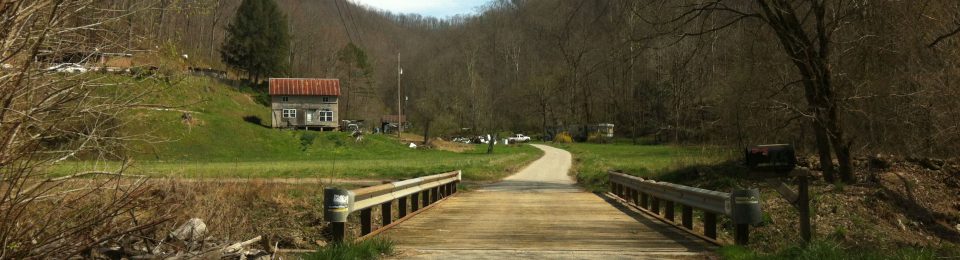
13 Tuesday Aug 2013
Posted in Ed Haley
Tags
Appalachia, Edden Hammons, fiddler, history, life, music, photos, West Virginia
Edden Hammons (1875-1955), West Virginia fiddler
13 Tuesday Aug 2013
Tags
Burl Hammons, Ed Haley, Edden Hammons, fiddling, history, Jack McElwain, Laury Hicks, Sherman Hammons, Tom Cheneth, Tom McCune, West Virginia, Wilson Douglas, writing
After speaking with Maxine, I called Wilson Douglas to ask him about Edden Hammons, regarded by many as a top old-time fiddler in the early part of the century.
“Well now, I’m gonna tell you about Edden Hammons, John,” he said. “Now I heard him fiddle one time in Webster Springs, I believe it was, about ’48 or ’49. And something happened. They broke the concert up and he went home. Now that’s the only time I ever heard him in person, but by god he was one of the best old-time fiddlers in the state. And Burl Hammons, his nephew, I don’t think anybody coulda beat him on the old tunes. And Sherman — they could all play to tell you the truth.”
I asked if Ed knew Hammons.
“Well, I’d say distantly he did,” he said. “He had a lot of Ed Haley’s bow in a way, but he didn’t know the tunes that Ed Haley knew. But now Edden Hammons had a lot of bow power.”
What about Uncle Jack McElwain?
“Yeah, I knew about him, John,” he said. “But now I never heard the man play, but my father said he was a powerful fiddle player. My dad was around him a lot. However, he said he was in no comparison with Edden Hammons.”
I asked Wilson if Ed ever played for dances without any second, and he said, “Well, I seen him play about an hour one time over at Hicks’ and he didn’t need no second. You know, playing the fiddle for a square dance, Haley taught me something there I’ve never forgot: you’ve got to get the fiddle with the rhythm and the fiddle with the caller. You’ve got to get them all in coordination, and Haley done just that.”
In those days, did the caller dance while he called or did he call from the side?
“Well now, they was an old gentlemen — he was a hell of a banjo player — by the name of old man Tom McCune. Now brother, he could call and dance right along with it. He was the best I ever heard. That banjo player that played with Ed Haley, I believe it was Tom Cheneth. Lived down Walker. Him and that Tom McCune I guess, was two of the best in the state that was clawhammer, you know. He lived at what’s called the mouth of Walnut. Then he turned over, I think maybe he lived over in what they call that Nicut country. You know, Ed Haley didn’t have no bad musicians with him.”
Wilson said, “I’ll tell you what, John. Ed Haley would not play a lick if they was somebody else a fiddling. He’d sit there and work his fingers and listen like a fox a listening for a bunch of chickens, you know. By god, he had an ‘awful’ ear. He’d just sit there, and he’d command them sometimes. Sometimes he wouldn’t say nothing. It depended on how he felt, you know?”
13 Tuesday Aug 2013
Posted in Big Sandy Valley, Coal, Matewan
Tags
Appalachia, culture, history, Matewan, Mingo County, photos, West Virginia
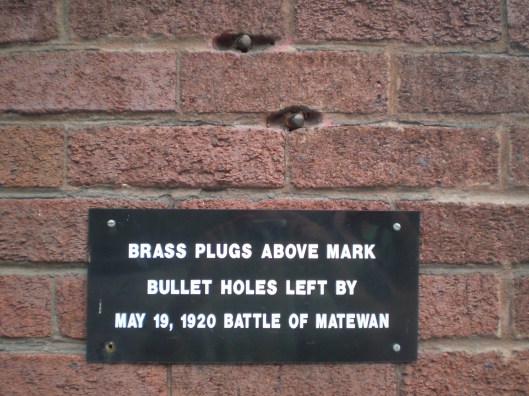
Matewan, West Virginia, 2008
12 Monday Aug 2013
Posted in Ed Haley
Tags
Appalachia, Clay County, Ed Haley, fiddling, history, life, Lindsay Morris, Maxine McClain, music, Ralph Haley, Roane County, West Virginia, writing
During the time I was in touch with Lawrence Haley, I received a letter in the mail from Maxine McClain of Newton, West Virginia.
“When I was 12 yrs. old there was a blind Ed Haley and blind wife Ella, would travel from Ashland, Ky. to our region in Roane Co. and spend a lot of time with my family,” she wrote. “They were wonderful people and we loved them dearly. They had a son Ralph who traveled with them. I am 76 years old now so that has been a long time ago but I remember them very well.”
I gave Maxine a call and she said, “I always loved music and I do still. My daddy, Lindsay Morris, was a musician and he used to travel in Clay County and he fiddled at what they called fiddlers’ contest.”
I asked her if Ed ever played with her father and she said, “Yes, he would play with him there at home. Ed would have me to sit down by him and he’d want to feel my fingers and he always told me I had fiddling fingers, but I don’t believe I did for I never could fiddle very much. They’d stay for days you know and my dad and mom would take them around. Back then, people would gather at the old country store at a place called Elana. People would come for miles to hear them because it was just sort of unusual to have someone that way in the neighborhood. They wasn’t room in the store to dance. I remember Ella singing ‘Are You From Dixie’? We was kinda raised up with music.”
11 Sunday Aug 2013
Posted in Ed Haley
Tags
Clay County, Ed Haley, Ella Haley, fiddling, Harts Creek, history, Kentucky School for the Blind, Lawrence Haley, Liza Mullins, Minnie Hicks, music, West Virginia, writing
Ella provided most of the family entertainment.
“Pop never tried to sing any songs to us,” Lawrence said. “Mom sang songs. She had one she called ‘The Coo Coo’s Nest’. A lot of religious songs, little nonsense songs and rhymes, like ‘The Watermelon’. She had a principal, I guess, or the headmaster of the school — Dr. Huntington, or something like that — he’d come into the class and he’d have a reading session with them. Read them a story and he would read all the parts in different voices. And my Mom kinda got to using inflections a lot more than any of us would. Like, she used to read us Robin Hood from her Braille magazine.”
I wondered if Ed ever entertained the kids with stories.
“Ah, maybe a ghost story or two,” Lawrence said. “He’s telling one time about somebody a riding a… I guess it was a story he heard when he was a kid, too. Somebody was coming down Trace Fork from somewhere riding a horse way up above where Aunt Liza and them lived. Said they began to hear this rattling kind of sound, this guy did. And they said he began to speed up his horse a little bit, and this rattling kept getting louder and louder and he’s a going faster and faster. Said all at once this thing jumped right up on the horse behind him and locked its arms up around him and just stayed with him forever it seemed like. And just all at once got off. Pop could tell stories like that, now. Those stories kinda filled our lonely days, too. That was the thing that they did back in them days, I guess, was tell stories, but Aunt Liza never told any stories like that, or Uncle Peter didn’t.”
I asked Lawrence if Ed “worked on” tunes at home and he said, “Well, yeah, he’d kinda play the general outline and then maybe start working on some of the real, I guess, it would be the depth of a piece of music that he wanted to put in there. Depth or body to it. He’d add to it. But mostly he might just hear a piece of music and maybe just hit every fifth or sixth note or something just to get an outline of how he wanted to play it.”
I don’t think Lawrence realized what an important and sophisticated piece of musical insight that was. What he meant by saying that Ed hit “every fifth or six note” was that he was coming down on the big accent notes that made up the “spine” of the tune. I later wondered if Lawrence’s statement was based on observations or genetic memory or both.
I asked him about Ed playing for dances, but he said those memories had left his mind years ago.
“I was walking from Clay over to Clay Junction there that one night and there was nothing but the moon — it was a full moon — but it was a hazy… It had a big ring around the moon. It was the first time I ever noticed that. Now I can’t remember where we came from, but I know that they had their instruments with them. I guess we’s a gonna go back up on Stinson up there to Aunt Minnie’s. I think this was after the time of Laury’s death, so I guess we’s heading back that way. And if we could get to Clay Junction there, we’s supposed to get a ride or something, I think. Like I say, I can’t remember what kind of function we’d come from, and what we did after that. My recollection of that was walking down this highway — a dark night, except for a hazy, ringed moon. Now that hazy ringed moon kept that in my mind all these years. The rest of it I don’t know. So there’s a lot of stuff that you forget and you never remember.”
11 Sunday Aug 2013
Posted in Big Harts Creek, Whirlwind
Tags
Appalachia, Chapmanville, Dingess, Ernestine Tomblin, Guyandotte River, Harts Creek, history, James Mullins, Kirk, Lawrence Riddle, Lindsey Blair, Logan, Logan County, McCloud Post Office, Mingo County, Moses Tomblin, Pearl Lowe, Shirley Smith, Shively, Sol Riddle, Tema Workman, Verdunville, Verlie Smith, W.J. Carle, West Virginia, Whirlwind, writing, Zama
Between 1909 and 1952, Whirlwind Post Office served the postal needs for residents of Upper Hart. What follows is an attempt to reconstruct a history of its postmasters and its locations. All information is based on official post office records located in Washington, DC.
In 1908, Lawrence W. Riddle petitioned the Postmaster General for the creation of a post office called “Zama” in the Upper Hart section of Logan County, West Virginia. This proposed post office would be situated twenty feet west of Harts Creek, three miles west of the Norfolk & Southern Railway, six miles northwest of McCloud Post Office, seven miles south of the town of Dingess in Mingo County, and eight miles east of the Guyandotte River. The total population to be supplied with mail would be 200 persons. In January 1909, the First Assistant Postmaster General responded in a letter that marked out the proposed name of this post office, “Zama,” and replaced it with “Whirlwind.”
Early postmasters at Whirlwind included: Lawrence W. Riddle (March 31, 1910, appointed; April 25, 1910, commissioned; May 16, 1910, took possession), Moses Tomblin (February 13, 1911, appointed), Sol Riddle (May 7, 1913, order; May 25, 1911, appointed; June 12, 1911, commissioned; June 30, 1911, took possession), and James Mullins (April 30, 1914, confirmed; May 19, 1914, commission signed and mailed; May 23, 1914, assumed charge). On June 26, 1925, Mr. Mullins requested to change the site of the post office to a spot 600 feet southwest of its current location.
Lindsey Blair next served as postmaster (April 28, 1938, confirmed; May 6, 1938, commission signed and mailed; May 11, 1938, assumed charge; resigned without prejudice). On July 15, 1938, Mr. Blair requested to relocate the post office to a spot 1652 feet east of its present location.
Shirley Smith replaced Mr. Blair (October 22 or 23, 1940, assumed charge; October 26, 1940, appointed acting postmaster). In a letter dated October 1940, Smith requested a relocation of the post office. The new post office location would be 5/10th of a mile southeast from the old location, 100 feet west of Harts Creek, nine miles southwest of Dingess, ten miles north of Harts, twelve miles southeast of Verdunville, and fourteen miles from Logan. Ms. Smith asked that the post office be relocated “so I can take care of it at my own home.” Twenty-eight patrons resided within a one-mile radius. Postmasters in this era include: Shirley Smith (December 5, 1940, confirmed; December 27, 1940, commission signed and mailed; December 31, 1940, took possession; January 1, 1941, assumed charge; resigned without prejudice) and Pearl Lowe (July 11 or 12, 1941, assumed charge).
In a letter dated August 19, 1941, Pearl Lowe wrote the Postmaster General requesting that Whirlwind Post Office relocate to a new site. The proposed location would be one mile north of its present location, about forty feet west of Harts Creek, two miles southwest of a county line, nine miles southwest from Dingess, nine miles south of Verdunville, ten miles from the Guyandotte River, and ten miles from Chapmanville. This location was approved and became effective as of September 18, 1941.
Pearl Lowe served as the only postmaster at this location: (September 19, 1941, appointed acting postmaster; November 5, 1941, appointed postmaster; January 2, 1942, commission signed and mailed; January 22 or 23, 1942, assumed charge). On April 14, 1942, Mrs. Lowe requested that the post office be relocated to a new site 1500 feet east of the present location. Shortly thereafter, on July 6, she requested that it be relocated to a site 1/8 mile away. This new spot would be 300 feet east of Harts Creek, nine miles southwest of Dingess, eleven miles northeast of Harts, and twelve miles southeast of Verdunville. On April 8, 1944, Ms. Lowe requested the site be moved 1/2 mile to the east. This latter site became effective May 1, 1944.
On July 15, 1944, someone (the paperwork does not specify who) requested that the post office be relocated 1/4 mile south of the old post office, about forty feet east of Harts Creek, two miles from Mingo County, nine miles southwest of Dingess, ten miles north of Harts, eleven miles south of Verdunville, thirteen miles east of the Guyandotte River, and thirteen miles northeast of Chapmanville.
Tema Workman took possession of the Whirlwind Post Office on February 28, 1947 and was “appointed” on March 12, 1947. On April 22, 1947, Ms. Workman requested that the post office be relocated to a site one mile north of the old location. The new post office would be 1/2 miles from Mingo County, 7 1/2 miles south of Dingess, 8 1/10 miles northeast of Shively, 9 1/2 miles north of Harts, and 10 8/10 miles southeast of Verdunville. This letter cites another name which the community was then known: Bulwark.
Subsequent postmasters included: Tema Workman (June 16, 1947, confirmed; July 11, 1947, commission signed and mailed; September 30, 1947, took possession; October 1, 1947, assumed charge; removed) and Verlie Smith (November 5, 1947, assumed charge; November 5, 1949, took possession; November 15, 1949, appointed).
On November 16, 1949, W.J. Carle, Post Office Inspector, wrote a letter requesting the post office be moved to a site one mile southeast. The new location would be situated two miles from Mingo County, 6 1/2 miles east of Shively, 8 1/2 miles north of Harts, ten miles south of Dingess, and fourteen miles west of Kirk.
Ernestine Tomblin served as the final postmaster at Whirlwind (March 31, 1951, assumed charge; April 17, 1951, appointed).
Whirlwind Post Office was discontinued on January 5, 1952, effective January 31, 1952, “mail to Harts.” Documents cite the post office as “unnecessary.” An investigation determined “reestablishment unnecessary” on May 1, 1953.
09 Friday Aug 2013
Posted in Ed Haley
Tags
Appalachia, Blue Goose, Brandon Kirk, Ed Haley, Harts Creek, history, Imogene Haley, Joe Mullins, Kentucky, Lawrence Haley, Noah Haley, Wrigley, writing
Throughout the summer of 1994, Lawrence Haley and I spoke frequently on the telephone. I was excited about some of the information I’d been getting in the mail from Brandon Kirk, the Harts genealogist. Lawrence seemed curious about it too, since Ed’s family background was something he’d never known a lot about.
“I don’t know that much about it, because you know how ignorant I was about the whole affair when I first went up there with you,” he said. “I didn’t know a heck of a lot about my dad’s people or anything. I seen their faces and heard them talked about, but I wouldn’t know them if I’d walk nose to nose with some of them. We never probably asked a lot of the questions we should have asked of Mom and Pop while they were still alive. I know my mother would have told me a heck of a lot more. They wasn’t no reason why I shouldn’t have asked her questions. It was just one of those things you accept, I guess, and don’t question.”
Lawrence paused, then said, “So we didn’t find out a lot about the history of our families. I really didn’t know that much about my mother’s people, either. I know she had some people out in Wrigley, Kentucky. We used to go up there every now and then. Go to a little self-contained train — back in them days, it was just a one-car thing; they called it the ‘Blue Goose’ — and it run on a little ol’ track up into Elliott County, and up through there. And that’s about all I knew. That’s the place where I found the ‘milk well.’ I thought this gal was bringing that milk right up out of the milk well in the yard. And I told Mom about it and she said, ‘Well, that’s the way they keep the milk cool. They stick it in a bucket or something — a lard bucket — and put the lid on it, stick it down in the well, and let it cool like that.’ Anyway, that’s the reason that I guess we just accepted things as children mostly, because they weren’t like that. We accepted it as, ‘That’s life.'”
Lawrence and I got on the subject of Ed’s mother, which led us into a whole variety of topics. I asked if he knew what year she was supposed to’ve been killed and he said, “I really couldn’t tell you that, John. If it happened that way, I imagine they’d been something in The Logan Banner or The Huntington Herald-Dispatch.”
Lawrence said he wasn’t even sure where he got the story of her death.
“No, I never heard Pop talk about it,” he said. “I don’t know where it came from. I don’t know who told who and how it got started. Between me and Mona and Jack and Patsy and Noah, I guess. Noah didn’t seem like he showed as much interest in things like that as… I know whenever he’d go up there he’d get homesick. He didn’t like it up there too much. I remember there used to be a paw paw patch we’d all go down to where Trace and Harts join there. We’d go down there and cut slips of that paw paw — eat the paw paws when they’s in season — and make whistles out of them, you know. They had a slick bark. You could skin off a chunk of bark at the right time of the year and then you’d take and plug each end of that bark and make you a nice little whistle out of it. Then take the bark and plaid it into whips and things. Just something to occupy a kid’s time that didn’t have a heck of a lot to do. We invented a lot of things like that. I guess Joe showed us a lot of that stuff.”
08 Thursday Aug 2013
Posted in Culture of Honor, Hatfield-McCoy Feud
Tags
Appalachia, culture, Devil Anse Hatfield, feud, life, photos, Tug River, West Virginia
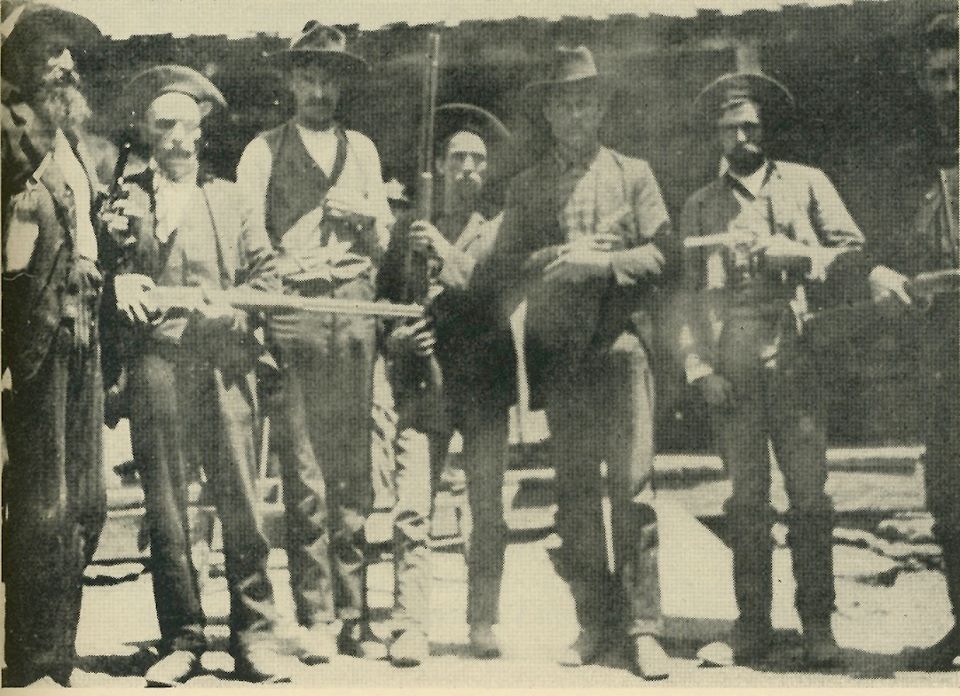
Devil Anse Hatfield (left)
08 Thursday Aug 2013
Posted in Ed Haley
Tags
Burbus Toney, Cain Adkins, Caleb Headley, civil war, education, Elias Adkins, Green Shoal, Harts Creek, history, Philip Hager, Thomas H. Buckley, West Virginia, writing
In 1855 Green Shoal became the first post office in the Harts area, with Burbus C. Toney acting as postmaster. At that time, the Kiah’s Creek United Baptist Church in nearby Wayne County served the religious needs of the community. Politically, the area was overwhelmingly Democratic and aligned itself with the South during the War Between the States. One study of veterans places the percentage of Harts-area Confederate veterans at 90 percent. Locals were more concerned with states’ rights than slavery; there were fewer than thirty slaves in the entire area just prior to the war. Likewise, in 1890, there were only seven Union veterans living in Harts; most had arrived after the war.
In the late 1860s, Harts residents continued their efforts to improve educational opportunities for young people by constructing a school on the West Fork of Harts Creek.
“The school started in 1865 in an old hunter’s cabin,” said Kile Topping. “The teacher had to take guns with him to school because there were wild animals in the woods. All the students studied out loud and listened to the squirrels jump off of trees on to the top of the cabin. There was no floor in the school and students would stump their toes on briers.”
In 1867 Lincoln County was formed from Cabell County and, within two years, had pulled the lower section of Harts Creek within its boundaries from Logan County and Wayne County. The formation of this new county bisected the community of Harts into halves: those who lived on the upper part of the creek — such as Jackson Mullins — were in the Chapmanville District of Logan County and those who lived along the lower portion of the creek — such as Al Brumfield — were in the Harts Creek District of Lincoln County.
Within a short time, the people of Harts were caught in the industrial wave overtaking the nation. The arrival of the timber industry changed the community forever from a stereotypical mountain agricultural-oriented place to one of small-scale commerce. Settlements with impressive store buildings and homes formed along the riverbank and at the mouth of local creeks. New people moved into the area from eastern Kentucky looking for work in timber, helping to change the genealogical make-up of the community. Flatboats, pushboats, small steamboats, ferry boats, and rafting were all themes from this era.
Things were looking up in terms of education as well. “Harts Creek Township has never had a fair opportunity to place her schools in good condition,” wrote county superintendent James Alford in 1871. “A portion of this township formerly belonged to Logan county, and a portion to Wayne county, and school affairs became considerably confused in making this township. But the citizens are manifesting great interest in their schools, and will no doubt, at no distant day, have their schools in full operation; and, with the assistance of competent teachers, make great improvement in the youth of the township.” It was worse in Logan County: “Chapmansville Township, in which I reside, has had no schools taught in it until the last year,” wrote county superintendent C.S. Stone. “The opposers of the free schools fought the thing back until last year, when the cause of education gained the ascendancy.”
In 1871, Harts area teachers were Canaan Adkins, Stephen Lambert, and William T. Fowler, and (likely) Elisha W. Vance and J.W. Gartin. All had No. 5 Certificates (the lowest) except for Lambert, who had a 4. Teachers listed in educational directories for the following year were: Caleb Headlee, Thomas P. Moore, Isaac Nelson, Henry Spears, V.B. Prince and (possibly) Elias Adkins, Philip Hager and J.B. Pullen. Moore, Prince and Spears had a No. 4 Certificate, while Nelson had a 5 and Headlee had “no grade on certificate.”
The county superintendent was full of compliments for the Harts area in his 1872 report. “Hart’s creek has also built two school houses this year,” wrote Superintendent J.W. Holt. “The buildings are of logs, but are really neatly and substantially gotten up, and reflect credit upon the contractors and the township. This township is exhibiting a very commendable spirit upon the subject of education, and in the course of another year will have her school affairs in good working order.” Attendance was low in the region. In 1872, Superintendent C.S. Stone of Logan County wrote: “It appears that the mass of the people do not take hold of the thing right; they do not appreciate properly the great benefit of a general education. They generally admit that schools are the thing they want, and that public schools are the only means that will diffuse a general education, but there is something in its operative influences not altogether right.”
In the late 1870s, an agitated superintendent Marion Vickers wrote of the educational situation: “There is a great irregularity in the attendance of our children. Is not this non-attendance too large for an enlightenend community? How can the children of our country receive the many benefits of our school system, unless they are sent to school. Should not parents consider that they are depriving their children of that which will be of more benefit to them than anything else within their power to give? While passing around and seeing so many naturally intelligent youths growing up in ignorance, with almost every possible opportunity offered for improvement, I am almost ready to say: ‘Give us a compulsory system of education.'” In that time frame, 1877-1878, the Harts teachers were: John Gore, T.H. Buckley and Canaan Adkins and (maybe) Henry Shelton. Buckley and Adkins had No. 2 Certificates.”
Writings from my travels and experiences. High and fine literature is wine, and mine is only water; but everybody likes water. Mark Twain
This site is dedicated to the collection, preservation, and promotion of history and culture in Appalachia.
Genealogy and History in North Carolina and Beyond
A site about one of the most beautiful, interesting, tallented, outrageous and colorful personalities of the 20th Century
 Brandon Ray Kirk