• About

Brandon Ray Kirk

~ This site is dedicated to the collection, preservation, and promotion of history and culture in my section of Appalachia.

Brandon Ray Kirk

Tag Archives: West Virginia

In Search of Ed Haley 127

11 Tuesday Jun 2013

Posted by Brandon Ray Kirk in Ed Haley, Music

≈ 1 Comment

Tags

Ashland, banjo, Bernard Postalwait, Calhoun County, Clay County, Clay Court House, Doc White, Ed Haley, fiddler, fiddlers, fiddling, Ivydale, Kim Johnson, Laury Hicks, Lawrence Haley, Minnora, music, Riley Puckett, Roane County, Steve Haley, West Virginia, Wilson Douglas, writing

In mid-summer of 1994, I was back in Ashland visiting Lawrence Haley. Lawrence, I noticed right away, was indeed in poor health. His overall appearance wasn’t good; actually, he seemed convinced that he probably wouldn’t get any better. Pat was ever so cheerful, saying that he would be back to his old self soon enough. Lawrence’s son Steve had driven in from Hendersonville, Tennessee, to serve as his replacement on any “Ed Haley trips.”

Early the next morning, Steve Haley and I left Ashland to see Wilson Douglas, the old-time fiddler who remembered Ed Haley in Calhoun County, West Virginia. We drove east on I-64 past Charleston, West Virginia, where we exited off onto a winding, two-lane road leading to Clendenin, an old oil town on the Elk River. We soon turned onto a little gravel driveway and cruised up a hill to Wilson’s nice two-story home. We parked and walked up to the porch where we met Wilson and his banjo-picker, Kim Johnson. Inside, he told me more about seeing Ed at Laury Hicks’ home. He was a great storyteller, so we naturally hung onto his every word.

“Laury Hicks got in touch with Ed Haley,” he began. “So, in them days, you come to Charleston by train and from Charleston to Clay Court House by train. All right, when you got to Clay Court House, you caught the B&O train on up to Otter, which is Ivydale. Well, the word would come out and they’d be somebody there in an old car or something to pick him up and take him about fifteen, 20 miles over to Hicks’ in Calhoun County. Well, the word’d get around, you know, and my god, it was just like a carnival a coming to town. And my dad had an old ’29 model A Ford pick-up truck. Well, gas was 11 cents a gallon. So, what we’d do, we’d take our pennies or whatever we had, we’d get us that old truck up — had a big cattle rack on it — and everybody’d load in that thing. Say, ‘Well, Ed Haley’s over at Laury Hicks’. Let’s go, boys!’ Everybody would grab their loose pennies, which were very few, and we’d get over there.

“Well, it’d be probably dark, or a little before, when he would start fiddling — about maybe eight o’clock — and last until three in the morning. And he would never repeat hisself unless somebody asked him. We just sat and never opened our mouth and he’d scare [them other fiddlers]. I’d sit there till I’d get so danged sleepy, I’d think I couldn’t make it. He’d start another tune and it’d just bring me up out of there. And that Chenneth on that banjo. And then they was a fellow, he lived down the road about seven or eight miles, a fellow by the name of Bernard Postalwait. And this man was a “second Riley Puckett” on the guitar. Well, Ed’d send for him. By god, they’d never miss a note. Ed had a little old tin cup sitting there. Everybody’d put some money in it, you know. And they was some rich feller, but I can’t think of that danged guy’s name, he liked fiddle music. He’s the only man in Roane County that had any money. Well, he’d give a few one-dollar bills, you know, and he’d mention a tune. Well, if he give him a dollar, he’d play it for fifteen minutes. Well, by the time the night ended, he’d have five or six dollars, which was equivalent to fifty now. Well the next night, we’d go over — all of us’d work that day. Next night, the same thing: we’d be right back over.”

Wilson said Ed would get drunk with Bernard Postalwait and “disappear” to some rough establishments. Bernard was with Ed when he played his fiddle at Laury Hicks’ grave.

Ed also ran around with a casual fiddler named Benjamin F. “Doc” White (1885-1973) of Ivydale. Doc was a banjo-picker, veteran of the Indian Wars, schoolteacher, midwife, doctor, photographer, local judge and dentist (he even pulled his own teeth). He took Ed to “court days” and other events where he could make money.

“I was around old Doc a lot,” Wilson said. “God, he was a clown. He had kids all over West Virginia. He couldn’t fiddle much but he tried.”

Doc asked Ed one night, “Ed, how do you play them tunes without changing keys?” and Ed said, “Well Doc, I change them with my fingers!”

Wilson said Ed wasn’t being sarcastic.

It seemed like Wilson knew a lot of stories about Ed’s “running around days” with guys like Postalwait and White — which would have been great to hear to get a better understanding of him — but he refused to be very specific. He did tell one story:

They went over to a place called Minnora. That’s over where Laury Hicks lived. Doc White and Ed. Somebody else was with them, I think that Bernard Postalwait. They went down there to a Moose Lodge or something and they had a little fiddle contest or something. Well, now, Ed said, “I ain’t gonna play in this contest.” Said, “I’d ruther be a judge.” Now Old Doc White, you know, he had quite a bit of money. I don’t know, they’s four or five fiddlers that played. Old Doc played a tune, you know. They said, “What do you think, Ed?” Well, Ed said, “Boys, I hate to say it. By God, old Doc’s gotcha all mastered.” Course Ed was wanting a drink of liquor, you know. After it was over, by God, they got drunk, all of them. Doc couldn’t play much, but Ed said, “Well, that old Doc’s got you boys bested.”

In Search of Ed Haley 126

10 Monday Jun 2013

Posted by Brandon Ray Kirk in Ed Haley

≈ 2 Comments

Tags

Abe Glenn, Bob Glenn, Bob Kessinger, Clark Kessinger, Ed Haley, fiddler, Georgia Slim Rutland, history, Logan County, music, Sam Virus, West Virginia, writing

At some point, no doubt at a festival, I bumped into Bob Kessinger, a mandolin-playing nephew of Clark Kessinger and a Church of Christ preacher. Bob looked a great deal like Clark and was a very jovial guy, eager to plug the family musicians. I told him about my interest in Ed Haley and he said he first heard of him about 1944 from Smokey Harless, a smooth fiddler out of Boone County, West Virginia.

“When I was about seventeen or eighteen, I was at his house one time and he asked me if I ever heard Ed Haley play,” Bob said. “I said, ‘No,’ and he said, ‘Well, your uncle says he’s the best he ever heard.’ And I went home and the first thing I asked, I said, ‘Dad, can Ed Haley play a fiddle?’ He just stopped everything and he said, ‘Can he play a fiddle? Your uncle Clark says he’s the best he’s ever heard.’ And he told me about it and then after that I never heard Clark sit down to play if he played very long that he didn’t mention Ed Haley. Well, I’ve heard Clark say, ‘I betcha Ed Haley knew more tunes than anybody I ever heard in my life.”

Bob said Clark first heard Haley play in Logan County in the 1930s.

“Did you ever hear of Abe and Bob Glenn?” he asked.

I mistakenly said no, forgetting what I had heard from Roger Cooper and others.

“They were two brothers and they were from Kentucky,” he said. “Clark was influenced a whole lot by them. They musta been good, too. And then there was a Sam Virus, a blind man that used to play in Charleston down on the levee. It was a whole lot like Ed Haley’s case: his wife played with him. Now, Clark said he was in the class of Ed Haley. Said he didn’t know as many tunes. But he musta been good because I heard Clark mention him several times.”

I told Bob I had read that Georgia Slim Rutland knew Haley.

“I first met him when I was living in Kentucky in ’63, ’64,” Bob said of Rutland, catching me a little by surprise. “I found out he’d moved back to Valdosta and I was staying with this Richard Black — he lives in Valdosta — and I asked if he knew him and he said yes. I said, ‘Well, would you introduce me to him?’ He took me over. He had two or three taxis and he started with just a little hole in the wall music store. And Richard introduced us. He said, ‘Robert, I want you to meet Robert Kessinger.’ He said, ‘Kessinger, Kessinger. Are you from West Virginia?’ I said, ‘Well, originally. I’m a nephew to Clark.’ He turned around to Richard Black and he said, ‘One of the greatest old-time fiddlers I ever heard in my life.’ But every time I’d go in that section, he’d go to church with me. The last time I was there, I was in a meeting at Jasper, Florida, and I stopped on the way down there and we played together for about an hour. He died unexpectedly. He just had a massive heart attack and he’d been dead about six months before I knew it and his wife apologized. She said she didn’t know how to get in touch with me.”

I told Bob how Mrs. Rutland had recently told me that Slim had never known Haley, which he discounted.

“Yeah, he stayed at Ed Haley’s house for a while,” Bob said. “He did. In fact, I was talking to him one day about good fiddlers that Clark didn’t like and I mentioned Ed Haley. He said, ‘He didn’t tell you that Ed Haley couldn’t play, did he?’ I said, ‘No, he thought he was the best.’ He didn’t tell me that he was there, but I’ve got it from someone. See Ed lived in Logan County, West Virginia, part of the time. That’s where Clark heard him. I think that’s where Slim spent time with him ’cause he spent some time in West Virginia back in the early thirties.”

In Search of Ed Haley

05 Wednesday Jun 2013

Posted by Brandon Ray Kirk in Ed Haley

≈ Leave a comment

Tags

Appalachia, culture, fiddle, fiddler, history, life, music, photos, U.S. South, West Virginia, Wilson Douglas

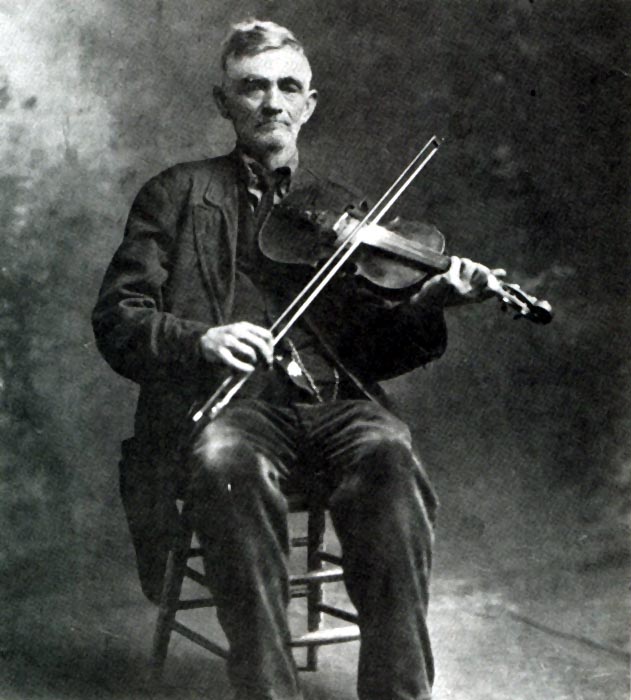
Wilson Douglas, West Virginia fiddler

Wilson Douglas, West Virginia fiddler

In Search of Ed Haley 124

05 Wednesday Jun 2013

Posted by Brandon Ray Kirk in Ed Haley

≈ Leave a comment

Tags

Appalachia, Bobby Taylor, Ed Haley, fiddle, fiddler, Forked Deer, history, John Hartford, music, Webster County, West Virginia, Wilson Douglas, writing

I told Wilson about working on Ed’s long bow and the Scotch snap — about the little stops between notes — and he said, “Right, right. That’s hesitation in the notes. That is correct. He talked about ‘chopped notes.’ That’s a quick note. But you know, what I liked about Haley, whenever he would settle down and fiddle… I like to hear a fiddle drive a straight, hard, flat note. A clear note. This skipping over the notes, I don’t go for that. And Haley didn’t do that. Every note he got was clear, or he would make a ‘chopped note,’ he called it, and the hesitation was with the — well the hand was quicker’n the eye. He could make a quick hesitation with the bow.”

I was very impressed with Wilson’s memory of such details, which improved with each passing minute. Apparently, Bobby Taylor was right: after he thought about something for a while his memories became sharp as a knife.

Wilson said, “But now I didn’t tell you about the kind of strings he played, did I? He played the old Blue Bird. They quit making them back in ’42 or ’43. They was a steel string, something like a Black Diamond. I believe they’s a little better toned. They wasn’t so sharp. And they cost one quarter in them days, for I bought one as a kid. Now that was the string that Ed Haley played. He liked these solid bone keys in his fiddle, white bone keys. And I always thought about where he got that dang fiddle bow, but it must’ve been four-and-a-half foot long. I never will forget it: that’s the longest fiddle bow I ever saw. I’ve thought about that many a times. It looked to me like it was six inches longer than any other kind of bow, and he played it from one end to the other.”

I said, “You don’t reckon it was just the way he was pulling it that made it look long, do you?”

“No, it was long,” Wilson answered. “You know, a boy sixteen years old don’t miss nothing for he’s eager to learn, you see? I know a fiddler over here in Webster County, and he’s good, too. He’s a top fiddler. And me and him talked about that, and he said, ‘Ed Haley pulled the longest fiddle bow I ever saw.’ And he said his notes was plain. I said, ‘Absolutely.’ Now the frog on that bow was some kind of a bone, if that means anything. White bone.”

Wilson really bragged on Ed’s repertoire.

“Now the man, John, what amazed me, he would play all night and maybe not play the same tune twice,” he said. “And he told me, said, ‘I know over a thousand fiddle tunes.’ Old Ed played ‘Callahan’ out of this world. I can’t remember the key. I wasn’t far enough along. But now, Ed sometimes would put that B-flat in the ‘Forked Deer’ and sometimes he wouldn’t. He would run that B-flat in there if he was showing off, you know. He played the ‘Paddy on the Pike’ in standard tuning. ‘Paddy on the Handcar’, Ed played that cross-key. Two different tunes. And he played ‘Poplar Bluff’ and the ‘Hole in the Poplar’ and all that kind of stuff.”

In Search of Ed Haley

03 Monday Jun 2013

Posted by Brandon Ray Kirk in Ed Haley

≈ Leave a comment

Tags

Appalachia, Bertha Mullins, culture, Ewell Mullins, genealogy, Harts Creek, history, life, Logan County, photos, West Virginia

Bertha (Adams) Mullins family, Harts Creek, Logan County, West Virginia, 1925-1940

Bertha (Adams) Mullins and siblings, Harts Creek, Logan County, West Virginia, 1920s

In Search of of Ed Haley 123

03 Monday Jun 2013

Posted by Brandon Ray Kirk in Ed Haley

≈ Leave a comment

Tags

Appalachia, Calhoun County, Ed Haley, Harts Creek, history, John Hartford, Josie Cline, Laury Hicks, Logan County, music, West Virginia, Wilson Douglas, writing

     I spent the spring of 1994 triangulating the many different versions I had heard of Ed Haley’s life and trying to make some sense of the direction of my research. There were so many avenues to explore: Ed’s background and the story of his father’s death on Harts Creek; Ed’s family and professional life in Ashland; Ed’s experience in places like Portsmouth or Calhoun County… Really, I seemed to only be scraping the tip of the iceberg — and it appeared to be a large one at that. It was amazing to consider how much I might learn about someone who I had first read about as being “a misty legend.” Almost daily, some little scrap of information came in.

     I called Wilson Douglas several times with very specific questions in mind. I asked him if Ed played a lot in the second and third position and he said, “Oh, yeah, he did a lot of that. Well, you know it’s like this, John. When he wanted to show off he would play in the standard position then he would let loose and get down the violin neck — way down — and play down there a while. He’d do a lot of that where he had competition, you know, and more or less to show off. That is, if somebody provoked him that’s the way he would do. I don’t know how he did it, but you wouldn’t detect any change, any hesitation, any loss of time, or nothing like that. But the man was a genius, they’s no question about it. He played the fiddle so many different ways, you had to listen close to tell what he was a doing.”

     I asked Wilson if he knew anything about Ed’s personal history.

     “No, not too much,” he said. “You know, he had the measles when he was two or three years old and that put him blind. He told me, ‘Wilson, where I was born and raised there on Harts Creek in Logan County, we almost starved to death.’ Said, ‘All we had was greens and green onions to eat of a summer and practically nothing of a winter.’ He said, ‘Now you know what the Depression is.’ I said, ‘Yeah.’ He said, ‘Well that was a picnic to what I was raised on .'”

     I said to Wilson, “Well, let me tell you a little bit about Ed’s background and see if that rings any bells. His daddy was lynched.”

     “Right,” he interrupted. “They was mean people. They were mean, violent people.”

     I asked if Ed ever talked about his father.

     “Not too much,” he said. “He didn’t want you to ask him too many questions about a thing like that, you know? He did mention one thing to me one time — said something about his dad, but he didn’t comment much, you know. Not enough to make any sense of it. Ed Haley wouldn’t tell you too much. You had to be in his confidence strongly before he’d tell you much of anything.”

     When I mentioned my theory about Josie Cline being Ed’s half-sister, Wilson said, “Well, I heard him telling Laury Hicks that he had a sister, but he didn’t say his ‘half.’ He said his sister.”

In Search of Ed Haley

02 Sunday Jun 2013

Posted by Brandon Ray Kirk in Ed Haley

≈ Leave a comment

Tags

Appalachia, culture, fiddle, fiddler, history, Jack McElwain, life, music, photos, U.S. South, Webster County, West Virginia

Lewis Johnson "Uncle Jack" McElwain (1856-1938), fiddler from Webster County, West Virginia

Lewis Johnson “Uncle Jack” McElwain (1856-1938), fiddler from Webster County, West Virginia

In Search of Ed Haley 122

02 Sunday Jun 2013

Posted by Brandon Ray Kirk in Ed Haley

≈ Leave a comment

Tags

Al Brumfield, Bill Fowler, Charley Brumfield, genealogy, George Ward, Guyandotte River, Henderson Dingess, history, Hollene Brumfield, John Brumfield, Paris Brumfield, West Virginia, writing

Allen Brumfield — the man Milt Haley supposedly ambushed — was born in March of 1860 at Harts, in what was then Logan County, Virginia. His parents were Paris and Ann B. (Toney) Brumfield. Paris was a Confederate veteran, storekeeper and local politician — and one of the most notorious figures in the early history of Harts. Ann was a red-haired orphan raised by a property-rich school-teaching aunt. In 1880, 20-year-old Al Brumfield was listed in census records as living with his cousin, W.T. “Bill” Fowler, the chief businessman in Harts. Al was recorded as a farmer but was likely watching Fowler’s business closely, learning everything he could. His father, meanwhile, a heavy-drinking violent sort, had recently moved his mistress (and her illegitimate children) near the family home.

Upon reaching manhood, Brumfield was relatively tall with sandy-colored hair. He was a Democrat in politics. He married Hollena Dingess around 1881, presumably in Lincoln County. Hollena was the daughter of Henderson and Sarah (Adams) Dingess, somewhat wealthy residents of the Smoke House Fork of Big Harts Creek. Al and Hollena had six known children: Henry Beecher Ward Brumfield (born April 1883), Grover Cleveland Brumfield (born January 1884), Hendrix Brumfield (born November 29, 1886), George Brumfield (born c.1888), Belle Brumfield (born January 19, 1892), and Shirley Brumfield (born May 1, 1894).

Soon after marrying, Al built a small, boxed house on the bank of the Guyandotte River at the Shoals just below Harts. Nearby, he ran a whiskey boat. He and his wife were equally ambitious in their desire to accumulate wealth and political power. In a bold move to corner the timber market in Harts, Brumfield constructed a boom at the Narrows on Harts Creek to catch all logs coming out of the creek. Each logger was assessed a ten-cent per log tax. In a short time, he was on his way to amassing a small fortune.

In the early 1890s, he forced his cousin Bill Fowler to sell him his important property at the mouth of Harts Creek, where he began construction of a beautiful two-story white home. It was completed in two years and was a real mansion in its day. Illuminated with carbide lighting at a time when few people in the valley had the monetary power to afford such a luxury, it was dubbed “The Light House” by loggers who plied the river.

Throughout the 1890s, Brumfield was the business kingpin in Harts. He complemented his timber business by operating a store, saloon, ferry, sawmill and gristmill — and protected his entire business interest by serving as leader of the local vigilante group. In 1899, he successfully petitioned the government to reinstate the Harts post office, which had been discontinued in 1894, and served as its postmaster from 1900 until 1905.

“There is a postoffice in Hart’s creek now, and Al Brumfield is the postmaster,” wrote The Cabell Record on Thursday, April 5, 1900.

Almost simultaneous with Brumfield’s successes were his personal tragedies. On November 3, 1891, his brother Charley murdered his father, which had numerous implications within the family. In that same time frame, Al took on a mistress who bore him two illegitimate children and caused a great deal of spousal grief. And poor Hollena — who had already been shot in the face — was severely crippled when a steam-operated gristmill exploded with her inside, throwing her sixty feet into the air and breaking her hip. A little later, around 1900, Brumfield’s son George died of stomach trouble. And on July 4, 1900, his brother John was murdered by Charley Conley at a Fourth of July celebration in Chapmanville.

Just after the turn of the century, Al began to suffer from some debilitating disease, which eventually caused him to go blind. “Al Brumfield, of Hart, recently returned from Cincinnati, where he had his eyes treated, says that his sight is better,” according to The Cabell Record of Thursday, May 2, 1901. “He was almost blind.” Hollena hired George Ward, a local Negro, to care for him. In 1904, perhaps sensing that he might not survive the sickness, he deeded much of his property to his wife.

In Search of Ed Haley

31 Friday May 2013

Posted by Brandon Ray Kirk in Ed Haley

≈ Leave a comment

Tags

Appalachia, culture, folk medicine, Harts Creek, history, life, Logan County, photos, U.S. South, West Virginia

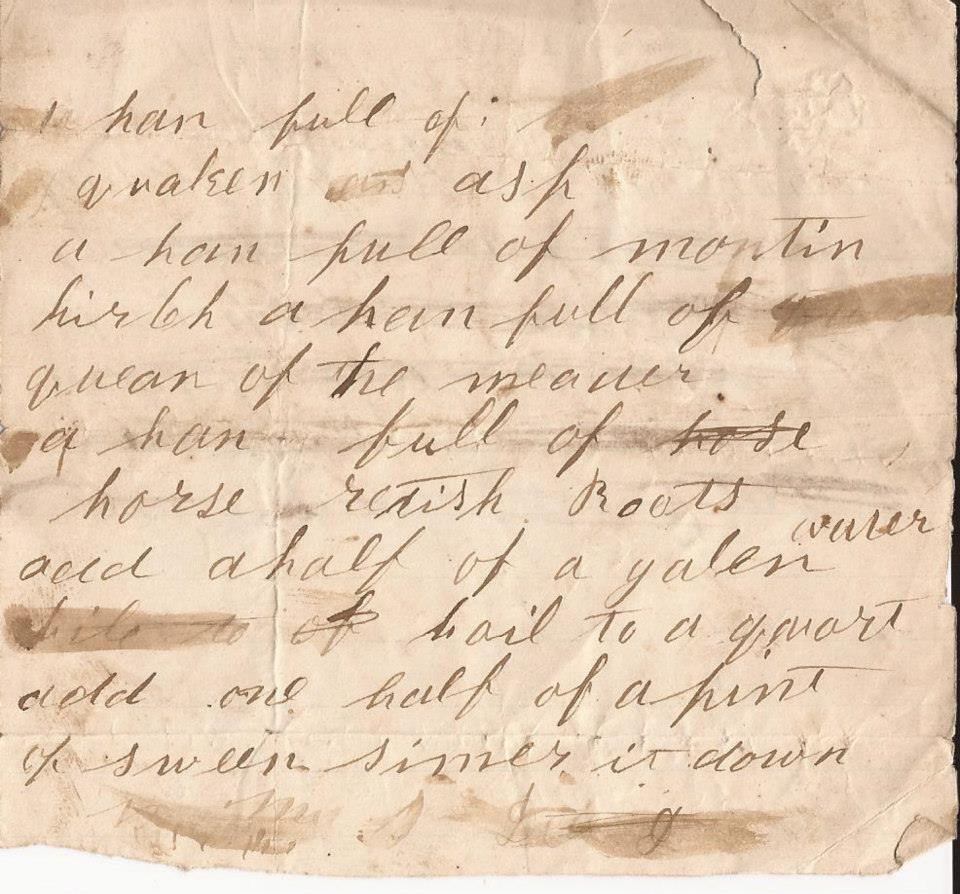
Old Mullins herbal remedy, Harts Creek, Logan County, West Virginia

Old Mullins herbal remedy, Harts Creek, Logan County, West Virginia

In Search of Ed Haley

28 Tuesday May 2013

Posted by Brandon Ray Kirk in Ed Haley

≈ 1 Comment

Tags

culture, Ewell Mullins, genealogy, Harts Creek, history, life, Logan County, photos, West Virginia

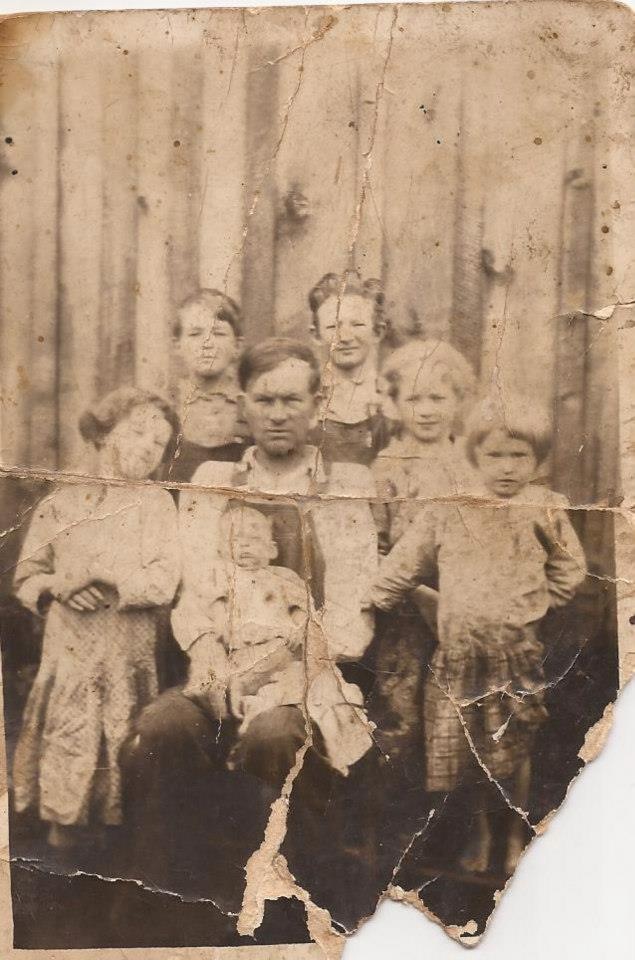
Ewell Mullins family, Harts Creek, Logan County, West Virginia, circa 1928

Ewell Mullins family, Harts Creek, Logan County, West Virginia, circa 1928

Rifle 2

26 Sunday May 2013

Posted by Brandon Ray Kirk in Culture of Honor

≈ Leave a comment

Tags

Appalachia, culture, Harts Creek, history, life, Logan County, Mason Adams, photos, U.S. South, West Virginia

Harts Creek child, 1916-1920

Harts Creek child, 1916-1920

In Search of Ed Haley 118

26 Sunday May 2013

Posted by Brandon Ray Kirk in Ed Haley

≈ Leave a comment

Tags

Appalachia, blind, Ed Haley, fiddler, genealogy, history, Josie Cline, Kermit, Mont Spaulding, music, U.S. South, West Virginia, writing

Later that night, I got back on the phone with Grace Marcum. I just had to know more about Josie Cline.

“She was a little round-faced woman…a little short, chubby woman,” Grace said. “And she wore her hair twisted up on top of her head, a little roll, you know, in a pin. Seem to me like she was blue-eyed, as good as I can remember. Josie Cline’s been dead for years. She collected bridge toll on this here… Well, it’s a free bridge now. They freed it, but when it was first built, they let Josie collect the toll. And she lived there in that little house, her and her husband. Her husband was a paralyzed man, and he couldn’t talk. I don’t know what happened to him.”

I asked Grace if Josie was supposed to be Ed’s older or younger sister and she said, “I guess she was an older sister. She was a funny old woman. She could make anybody laugh. Fine person.”

I asked her again about Josie being a fiddler and she said, “Oh yeah, her and Mont both.”

     Who?

“Her and her brother Mont.”

So she had another brother?

“Oh yeah. Seemed to me like — Mont Spaulding. He wore colored glasses. He wasn’t very tall.”

How could Josie be a sister to Ed and Mont Spaulding when everyone all had different last names? Was she a half-sister?

“Well, she could’ve been, yeah,” Grace said. “But I know they was awful close. Yeah, they had a time. Mont was a pretty good fiddler, and Josie was, too. I couldn’t say which one was the best, but now they played at square dances and everything. Yeah, my dad hired them to play a many a Saturday night down there at the hotel.”

I asked Grace how often Ed came through the area and she said, “Oh, I don’t know. You know, I was just a small girl, and I couldn’t tell you nothing like that ‘cause my father had a grocery store on this side of the railroad — between the railroad and the county road — and I worked there with Dad. He put us all to work. Raised a big family of us, so we all worked, you know, we all helped out.”

After hanging up with Grace, I formulated a theory that maybe Milt Haley had Josie Cline by another woman before coming to Harts and marrying Ed’s mother. It was just a hunch, like the “Emma Jane Hager-Emma Jean Haley” thing. I also wondered if Grace hadn’t partially confused Ed with Mont Spaulding or if Ed was in fact a boyfriend to the widowed Josie.

In Search of Ed Haley 117

25 Saturday May 2013

Posted by Brandon Ray Kirk in Ed Haley

≈ Leave a comment

Tags

Clyde Haley, Ella Haley, John Dillinger, John West, Josie Cline, Kermit, Logan, Logan County, music, Pretty Boy Floyd, Sarah West, West Virginia, writing

I gave Clyde Haley a call to ask him about this Josie Cline, who was somehow connected to Ed Haley. Was it his sister, half-sister…or even a girlfriend?

“No, I don’t recall him ever having anybody by that name around the house,” Clyde said. “I’ve just heard my dad talk about her. He didn’t womanize, if that’s what you’re talking about. He didn’t bring any women around the house or anything like that.”

I mentioned that Josie Cline was supposedly Ed’s sister and he wasn’t surprised.

“He might have,” he said. “I never did get acquainted with her. Josie Cline — I recall the name real well. I don’t recall any Clines personally. We went up around Kermit and Logan and up in that area quite a bit, you know. My dad took me with him all the time. I was his pet. I wasn’t around that area too much. The only time I went over there was one time I run off from home and went over that way and scrounged, you know. I couldn’t have been over ten, eleven, twelve years old.”

I asked Clyde why he ran away and he said, “Well, mostly because I was just that type of a guy. I didn’t always stay around the home. A lot of the times when I was away from home that way, it was because I was in dutch with the law, you know. I had to get away from Ashland. And we’d go different places, you know, me and my dad.”

I asked if Ed ever got “in dutch with the law” and he said, “Not too often, not too often. The only time he ever got in dutch was one time when he was whooping us kids in school you know and he whooped me so hard using a thin, brown belt — and he was using the buckled end of it to whip me with… He wrapped that belt around my body and accidentally hit my tally-whacker you know and put me out of commission for about three months. Yeah, I remember that pretty well. He wouldn’t never whip the other boys like he whipped me. But as I look back on my lifetime, I see that he did things that he wouldn’t ordinarily have done if he had been a normal man. He was blind and he done these things to us and my mother — he beat my mother quite a bit, you know. If he could have seen like a normal person, I think he’d been an altogether different person. I forgave him a lot of that stuff but he was awful mean to my mother.”

Clyde elaborated.

“He’d come in drunk sometimes and beat on her and every time he’d do that, when I was big enough, I’d hit him with something. I hit him with a milk bottle one time, one of those big old heavy milk bottles. But I conked him with one of them one time and cut a pretty good gash in the top of his head. If he’d ever found out that that was me that done that, he’d a beat me half to death. But we all told him that Sarah West done that. She stayed with us. John West’s wife. John West stayed with my mother and dad a lot of times too, because I remember him pretty well. And he did things around the house that my mother and father couldn’t do. He was like a handyman. But Sarah West got the blame for that milk bottle because I blamed her. I told him, I said, ‘Pop, that was Sarah done that, hit you in the head with that milk bottle.’ And he got on her about it. And I remember she couldn’t talk real well. She had a hesitant speech. She says, ‘Mr. Haley that was Clyde did that. Wasn’t me. That was Clyde.’ Trying to tell him it as me. And he wouldn’t believe her. She took the blame for that, poor girl. I was a regular hellion.”

I asked Clyde if he remembered any of the other people who worked around Ed’s house and he said, “We had so many people stayed around in my house. My mother and father were hospitality plus. You know, anybody that came around the house they were just like family. There was a lot of them that was at my house because they knew my mother’s part of the family, like John Dillinger and Pretty Boy Floyd. Those people in that category. They were from right there in the area. Their homes were right around in Logan and West Virginia. My dad was from Logan County. They’d come and listen to my dad play the fiddle. There’s stories that I could tell you that you wouldn’t believe about my dad — those things that we done when he was away from home. Things that were mean, pertaining to the family. He wasn’t a nice person to be around. If you come down this a way and we get together and talk, I can tell you things that I wouldn’t tell you on the phone.”

In Search of Ed Haley 115

23 Thursday May 2013

Posted by Brandon Ray Kirk in Big Harts Creek, Ed Haley, Spottswood, Warren, Whirlwind

≈ Leave a comment

Tags

Andrew Jackson, Ben Adams, Bill Abbott, Bob Mullins Cemetery, Buck Fork, Chloe Mullins, civil war, Confederate Army, Dicy Adams, Ed Haley, Elizabeth Mullins, Enoch Baker, genealogy, Harts Creek, Henderson Dingess, history, Hollene Brumfield, Imogene Haley, Imogene Mullins, Jackson Mullins, Jane Mullins, Jeremiah Lambert, John Frock Adams, John Gore, John Q. Adams, Joseph Adams, Kentucky, Logan County, Margaret Gore, Mathias Elkins, Peter Mullins, Riland Baisden, Spencer A. Mullins, Tennessee, Ticky George Adams, timbering, Trace Fork, Turley Adams, Van Buren Mullins, Weddie Mullins, Weddington Mullins, West Virginia, writing

Ed Haley’s grandfather, Andrew Jackson Mullins, was born about 1843 to Peter and Jane (Mullins) Mullins. Jackson, as he was called, was named in honor of President Andrew Jackson, that early American icon. Like many folks in those days, Peter and Jane Mullins appear to have been caught up in the Jackson mystique. They even named one son Van Buren, after his vice president. Jackson Mullins was the first child born to Peter following the family exodus from Kentucky or Tennessee to Logan County, (West) Virginia. The 1850 Logan County Census listed him as seven years old. In 1860, he was eighteen. During the Civil War, Jackson served in the Confederate army. Brothers Weddington and Van Buren served as Confederates. In the late 1860s, Jackson married the slightly older Chloe Ann (Gore) Adams, a widow. Chloe had been born around 1840 to John and Margaret (Dingess) Gore, pioneer residents of Harts Creek. She had first married John Quincy “Bad John” Adams, a first cousin to Jackson, with whom she had four children: Dicy (born 1857), Joseph (born May 1858), John C. “Frock” (born c. 1861) and George Washington “Ticky George” (born 15 Jul 1864). She and Jackson had three children: Imogene Mullins (born c.1868), Peter Mullins (born May 1870), and Weddington Mullins (born April 10, 1872). Jackson and Chloe are thought to have lived on Trace Fork, perhaps at the present-day site of the Turley Adams home where they certainly lived in later years.

What little is known of Jackson Mullins — the man who partially raised Ed Haley — comes through deed records and census records. On February 13, 1869, his uncle Spencer A. Mullins wrote him a note that read: “Mr. A.J. Mullins and wife: you will pleas Come down and git your Deed for the Buck fork Land. I will not pay the taxes any longer.” In 1869 he purchased 200 acres of land on the creek from Riland Baisden. The next year he was listed in the 1870 census as 27 years old with 700 dollars worth of real estate and 200 dollars worth of personal property. His daughter — Ed Haley’s mother — first appeared in that record as “Em. Jane Mullins,” age two.  An April 1871, Justice Jeremiah Lambert provided a receipt to him for $2.80 “in the cost of the peace warrant in favor [of] him against Benjamin Adams.” An 1871 Logan County tax receipt listed A.J. Mullins as a resident of “Hearts Creek.” On February 28, 1877, the Logan County Court appointed him as “Surveyor of Roads in Precinct No. 76 in place of Weddington Mullins for the time of two years commencing April 1, 1877.” On December 17, 1877, the Logan County Clerk provided a receipt to him for recording a deed from Henderson Dingess and wife (parents to Hollene Brumfield). An 1878 tax receipt shows him in charge of six tracts totaling 244 acres under the ownership of “John Adams Heirs.”

The 1880 Logan County Census listed Jackson as 37 years old, while his wife was 40. Children in the household were John C. Adams (aged eighteen), George Adams (aged 15), “Emagane Mullins” (aged 12), Peter Mullins (aged 9), and Weddington Mullins (aged 6). That same year, Jackson sold five tracts of land totaling over 200 acres to brother-in-law Mathias Elkins for 3,000 dollars. He also sold 50 or so acres on Buck Fork to his father Peter and stepmother Elizabeth for 600 dollars. In February 1881, the Logan County Court reappointed him to relieve his brother Weddington as Surveyor of Public Roads for Precinct No. 76 “commencing April 1st, 1881.” That same year, he secured land from the John Q. Adams estate and bought 100 acres on Trace Fork from A.A. Low, attorney. On August 7, 1883, Enoch Baker, a timber boss on Harts Creek,  provided a receipt to him for fifteen dollars “in payment for a Stove.” In 1886, Jackson deeded 37 tracts on Trace Fork to stepsons Joseph and John Adams. On April 2, 1888, he signed a promissory note agreeing to pay William Abbott $41.75 plus interest within a year. Because he was illiterate, he signed the note with an “X.”

In March 1891, Jackson and Chloe Mullins deeded their property on Trace Fork to their three children: Imogene Haley, Peter Mullins, and Weddie Mullins.

In the 1900 Logan County Census, Jackson gave his birth date as March of 1845, while Chloe gave hers as July 1834. Ed Haley first appears in the 1900 Logan County Census as “James E. Haley, born August 1885,” and living in their home. His birth date of 1885 was two years later than what was given by the Haley family records. By 1910, Jackson lived with son Peter Mullins, while Chloe was in the home of Weddie Mullins’ widow, Mag. Ed was absent from the census entirely, indicating that he was gone from Harts by that time. A few years later, in 1915, Jackson Mullins died and was buried in an unmarked grave at the Bob Mullins Cemetery on main Harts Creek. His widow died in 1919.

Ella Haley postcard (1934)

21 Tuesday May 2013

Posted by Brandon Ray Kirk in Big Harts Creek, Calhoun County, Ed Haley

≈ Leave a comment

Tags

Appalachia, blind, Ella Haley, genealogy, Harts Creek, history, Jack Haley, life, Liza Mullins, photos, Stinson, West Virginia

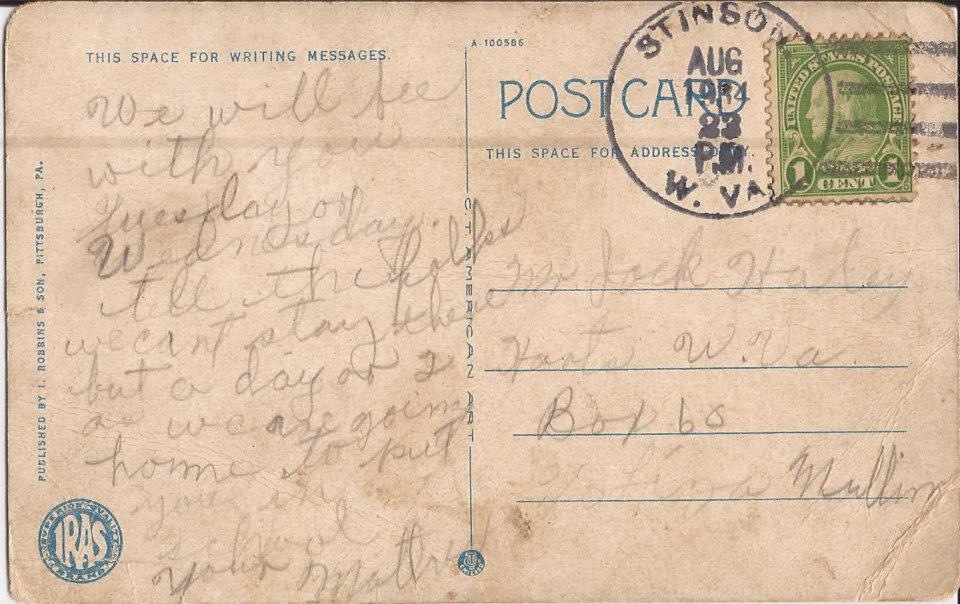
Postcard from Ella Haley to Jack Haley, 1934

Postcard from Ella Haley to Jack Haley, August 1934

In Search of Ed Haley 114

21 Tuesday May 2013

Posted by Brandon Ray Kirk in Ed Haley

≈ 3 Comments

Tags

Barney Carter, Ed Haley, genealogy, Harts Creek, history, Jackson Mullins, Jane Mullins, Kentucky, Mathias Elkins, Peter Mullins, Pike County, Solomon Mullins, West Virginia

Ed Haley’s roots, at least on his mother’s side, originated in the high mountains of Appalachia somewhere in that wild section of country situated along the Virginia-Kentucky state line. Peter Mullins, Haley’s great-grandfather, was born around 1804 in Kentucky or, according to one source, in North Carolina. The son of a notorious counterfeiter, “Money Makin’ Sol” Mullins, and reported descendant of those mysterious people the Melungions, Peter chose for his wife Jane Mullins, a first cousin. Between 1830 and 1858, he and his wife had at least eleven children. The sixth child, Andrew Jackson Mullins, was Ed Haley’s grandfather. Peter and his wife initially lived in Pike County, Kentucky, near Clintwood, Virginia. Based on census records, the family remained in Kentucky throughout the 1830s. Family tradition, however, states that Peter relocated to Marion County, Tennessee, due to his involvement in a counterfeiting operation. Around 1841-42, he traveled north to Upper Hart in what was then Logan County, Virginia, and settled near a sister, Dicy Adams. In 1842, he bought 25 acres of land from Abijah Workman and Mekin Vance on Hoover Fork. Deed records indicate that he operated a mill on Hoover. Two years later, he acquired 50 acres on the “first lower branch” of Trace Fork.

There are no stories chronicling Peter’s life on Harts Creek, nor any photographs to reveal anything about his physical features. All we have are census records and deed records — somewhat dry but noteworthy. In the 1850 Logan County Census, he was 46 years old and had 200 dollars worth of real estate. Three years later, in 1853, he bought 40 acres of land on Hoover from John and Sarah Workman and 37 additional acres on Trace. That same year, he sold a 35-acre tract (that included a “mill built by Mullins”) and a 25-acre tract on Hoover to son-in-law Barney Carter for 400 dollars. In 1854 he bought 30 acres on the Gunnel Branch of Trace Fork and another 1/4 acre on Hoover from Carter. On this latter property, he acquired a mill and dam, referenced in the deed. Three years later, he purchased three tracts of land totaling 97 acres on Trace. In 1858 he sold land on Hoover to son-in-law Mathias Elkins for 400 dollars. The next year, he sold a small acreage on Hoover to Carter for 100 dollars. In 1860, Peter appeared in Logan County Census records as 54 years old with 1,500 dollars worth of real estate and 2,000 dollars worth of personal property. In 1869, he bought 29 acres from Elkins for 100 dollars located “10 poles above the Alfred Tombline House” on Harts Creek.

In 1870, 63-year-old Peter Mullins appeared in the Logan County Census with his wife Jane and four of their children. Within in the next few years, Jane Mullins died. In 1874, Peter remarried to the much-younger Elizabeth (Johnson) Bryant and settled on Buck Fork. That same year, he sold a tract on the Bills Branch of Trace to son-in-law William Jonas, then bought 50 acres of land on Harts Creek above Lick Branch from Carter the following year. The 1880 Logan County Census listed him as a 68-year-old farmer; his wife Elizabeth was aged 40. That same year, he sold 80 acres on Trace to son Jackson Mullins — Ed Haley’s grandfather — who simultaneously sold him 50 acres of land on Buck Fork for 600 dollars. In 1882, he bought surface rights to a 100-acre tract and a 30-acre tract on Buck Fork and a 25-acre tract on Trace. Thereafter, in 1883, he sold 35 acres to son Solomon Mullins on Buck Fork for 250 dollars and 20 acres to Mary D. Mullins on Trace Fork for 100 dollars. In 1886, he sold 30 acres to Dicy Blair on Buck Fork.

Peter died around 1888 and was buried on Buck Fork under a large stone slab. In March of 1889, just a few months before the outbreak of the Haley-McCoy trouble, his heirs sold 20 more acres of his property on Buck Fork to Dicy Blair.

Harts Creek Banjo Player (1940s)

19 Sunday May 2013

Posted by Brandon Ray Kirk in Music

≈ Leave a comment

Tags

Appalachia, banjo, Cush Adams, Harts Creek, history, Logan County, music, photos, U.S. South, West Virginia

Shermie Baisden with banjo

Baisden family members, Trace Fork of Big Harts Creek, Logan County, West Virginia, 1940s.

Low Gap Timber Scene

19 Sunday May 2013

Posted by Brandon Ray Kirk in Timber

≈ 2 Comments

Tags

Appalachia, culture, Ferrellsburg, genealogy, life, Lincoln County, logging, Low Gap, Pat Kirk, photos, timbering, U.S. South, West Virginia

Pat Kirk hauling timber, Low Gap, Lincoln County, West Virginia, 1908-1920

Pat Kirk hauling timber, Low Gap (near Ferrellsburg), Lincoln County, West Virginia, 1908-1920

West Virginia Timber Contract

18 Saturday May 2013

Posted by Brandon Ray Kirk in Timber

≈ 1 Comment

Tags

Alex Burton, Bill Farley, Catlettsburg, Crawley Creek, culture, history, Kentucky, Logan County, logging, Samuel S. Vinson, timbering, Vinson Goble and Prichard, West Virginia

Bill Farley timber contract (page 1 of 3), 1882

Bill Farley timber contract (page 1 of 3), 1882

Clifford Dalton, James Browning, and Jake Dalton

18 Saturday May 2013

Posted by Brandon Ray Kirk in Big Harts Creek, Music

≈ Leave a comment

Tags

banjo, Clifford Dalton, culture, Ezra Jake Dalton, fiddler, Harts Creek, history, James Browning, life, Lincoln County, music, photos, West Virginia

Clifford Dalton, James Browning, and Ezra "Jake" Dalton of Harts Creek, Lincoln County, West Virginia, 1935-1950

Clifford Dalton, James Browning, and Ezra “Jake” Dalton of Harts Creek, Lincoln County, West Virginia, 1935-1950

← Older posts
Newer posts →

Feud Poll 1

If you had lived in the Harts Creek community during the 1880s, to which faction of feudists might you have given your loyalty?

Categories

  • Adkins Mill
  • African American History
  • American Revolutionary War
  • Ashland
  • Atenville
  • Banco
  • Barboursville
  • Battle of Blair Mountain
  • Beech Creek
  • Big Creek
  • Big Harts Creek
  • Big Sandy Valley
  • Big Ugly Creek
  • Boone County
  • Breeden
  • Calhoun County
  • Cemeteries
  • Chapmanville
  • Civil War
  • Clay County
  • Clothier
  • Coal
  • Cove Gap
  • Crawley Creek
  • Culture of Honor
  • Dingess
  • Dollie
  • Dunlow
  • East Lynn
  • Ed Haley
  • Eden Park
  • Enslow
  • Estep
  • Ethel
  • Ferrellsburg
  • Fourteen
  • French-Eversole Feud
  • Gilbert
  • Giles County
  • Gill
  • Green Shoal
  • Guyandotte River
  • Halcyon
  • Hamlin
  • Harts
  • Hatfield-McCoy Feud
  • Holden
  • Hungarian-American History
  • Huntington
  • Inez
  • Irish-Americans
  • Italian American History
  • Jamboree
  • Jewish History
  • John Hartford
  • Kermit
  • Kiahsville
  • Kitchen
  • Leet
  • Lincoln County Feud
  • Little Harts Creek
  • Logan
  • Man
  • Matewan
  • Meador
  • Midkiff
  • Monroe County
  • Montgomery County
  • Music
  • Native American History
  • Peach Creek
  • Pearl Adkins Diary
  • Pecks Mill
  • Peter Creek
  • Pikeville
  • Pilgrim
  • Poetry
  • Queens Ridge
  • Ranger
  • Rector
  • Roane County
  • Rowan County Feud
  • Salt Rock
  • Sand Creek
  • Shively
  • Spears
  • Sports
  • Spottswood
  • Spurlockville
  • Stiltner
  • Stone Branch
  • Tazewell County
  • Timber
  • Tom Dula
  • Toney
  • Turner-Howard Feud
  • Twelve Pole Creek
  • Uncategorized
  • Warren
  • Wayne
  • West Hamlin
  • Wewanta
  • Wharncliffe
  • Whirlwind
  • Williamson
  • Women's History
  • World War I
  • Wyoming County
  • Yantus

Feud Poll 2

Do you think Milt Haley and Green McCoy committed the ambush on Al and Hollene Brumfield in 1889?

Blogroll

  • Ancestry.com
  • Ashland (KY) Daily Independent News Article
  • Author FB page
  • Beckley (WV) Register-Herald News Article
  • Big Sandy News (KY) News Article
  • Blood in West Virginia FB
  • Blood in West Virginia order
  • Chapters TV Program
  • Facebook
  • Ghosts of Guyan
  • Herald-Dispatch News Article 1
  • Herald-Dispatch News Article 2
  • In Search of Ed Haley
  • Instagram
  • Lincoln (WV) Journal News Article
  • Lincoln (WV) Journal Thumbs Up
  • Lincoln County
  • Lincoln County Feud
  • Lincoln County Feud Lecture
  • LinkedIn
  • Logan (WV) Banner News Article
  • Lunch With Books
  • Our Overmountain Men: The Revolutionary War in Western Virginia (1775-1783)
  • Pinterest
  • Scarborough Society's Art and Lecture Series
  • Smithsonian Article
  • Spirit of Jefferson News Article
  • The Friendly Neighbor Radio Show 1
  • The Friendly Neighbor Radio Show 2
  • The Friendly Neighbor Radio Show 3
  • The Friendly Neighbor Radio Show 4
  • The New Yorker
  • The State Journal's 55 Good Things About WV
  • tumblr.
  • Twitter
  • Website
  • Weirton (WV) Daily Times Article
  • Wheeling (WV) Intelligencer News Article 1
  • Wheeling (WV) Intelligencer News Article 2
  • WOWK TV
  • Writers Can Read Open Mic Night

Feud Poll 3

Who do you think organized the ambush of Al and Hollene Brumfield in 1889?

Recent Posts

  • Logan County Jail in Logan, WV
  • Absentee Landowners of Magnolia District (1890, 1892, 1894)
  • Charles Spurlock Survey at Fourteen Mile Creek, Lincoln County, WV (1815)

Ed Haley Poll 1

What do you think caused Ed Haley to lose his sight when he was three years old?

Top Posts & Pages

  • Levisa Hatfield (1927-1929)
  • Empire Books & News in Huntington, WV (2017)
  • Civil War Gold Coins Hidden Near Chapmanville, WV
  • Banco News 07.27.1926
  • Josiah Marcum v. Anderson Hatfield (1878)

Copyright

© Brandon Ray Kirk and brandonraykirk.wordpress.com, 1987-2023. Unauthorized use and/or duplication of this material without express and written permission from this blog’s author and/or owner is strictly prohibited. Excerpts and links may be used, provided that full and clear credit is given to Brandon Ray Kirk and brandonraykirk.wordpress.com with appropriate and specific direction to the original content.

Archives

  • February 2025
  • January 2025
  • October 2023
  • September 2023
  • December 2022
  • November 2022
  • May 2022
  • April 2022
  • February 2022
  • November 2021
  • October 2021
  • September 2021
  • June 2021
  • May 2021
  • April 2021
  • March 2021
  • February 2021
  • January 2021
  • December 2020
  • November 2020
  • October 2020
  • July 2020
  • June 2020
  • May 2020
  • April 2020
  • March 2020
  • February 2020
  • January 2020
  • December 2019
  • November 2019
  • October 2019
  • September 2019
  • August 2019
  • July 2019
  • June 2019
  • May 2019
  • April 2019
  • March 2019
  • February 2019
  • January 2019
  • December 2018
  • November 2018
  • October 2018
  • September 2018
  • August 2018
  • July 2018
  • June 2018
  • May 2018
  • April 2018
  • March 2018
  • February 2018
  • January 2018
  • December 2017
  • November 2017
  • October 2017
  • September 2017
  • August 2017
  • July 2017
  • June 2017
  • May 2017
  • April 2017
  • March 2017
  • February 2017
  • January 2017
  • December 2016
  • November 2016
  • October 2016
  • September 2016
  • August 2016
  • July 2016
  • June 2016
  • May 2016
  • April 2016
  • March 2016
  • February 2016
  • January 2016
  • December 2015
  • November 2015
  • October 2015
  • September 2015
  • August 2015
  • July 2015
  • June 2015
  • May 2015
  • April 2015
  • March 2015
  • February 2015
  • January 2015
  • December 2014
  • October 2014
  • September 2014
  • August 2014
  • July 2014
  • June 2014
  • May 2014
  • April 2014
  • March 2014
  • February 2014
  • January 2014
  • December 2013
  • November 2013
  • October 2013
  • September 2013
  • August 2013
  • July 2013
  • June 2013
  • May 2013
  • April 2013
  • March 2013
  • February 2013
  • January 2013
  • December 2012
  • November 2012

Enter your email address to follow this blog and receive notifications of new posts by email.

Join 2,927 other subscribers

Tags

Appalachia Ashland Big Creek Big Ugly Creek Blood in West Virginia Brandon Kirk Cabell County cemeteries Chapmanville Charleston civil war coal Confederate Army crime culture Ed Haley Ella Haley Ferrellsburg feud fiddler fiddling genealogy Green McCoy Guyandotte River Harts Harts Creek Hatfield-McCoy Feud history Huntington John Hartford Kentucky Lawrence Haley life Lincoln County Lincoln County Feud Logan Logan Banner Logan County Milt Haley Mingo County music Ohio photos timbering U.S. South Virginia Wayne County West Virginia Whirlwind writing

Blogs I Follow

  • OtterTales
  • Our Appalachia: A Blog Created by Students of Brandon Kirk
  • Piedmont Trails
  • Truman Capote
  • Appalachian Diaspora

BLOOD IN WEST VIRGINIA is now available for order at Amazon!

Blog at WordPress.com.

OtterTales

Writings from my travels and experiences. High and fine literature is wine, and mine is only water; but everybody likes water. Mark Twain

Our Appalachia: A Blog Created by Students of Brandon Kirk

This site is dedicated to the collection, preservation, and promotion of history and culture in Appalachia.

Piedmont Trails

Genealogy and History in North Carolina and Beyond

Truman Capote

A site about one of the most beautiful, interesting, tallented, outrageous and colorful personalities of the 20th Century

Appalachian Diaspora

  • Subscribe Subscribed
    • Brandon Ray Kirk
    • Join 789 other subscribers
    • Already have a WordPress.com account? Log in now.
    • Brandon Ray Kirk
    • Subscribe Subscribed
    • Sign up
    • Log in
    • Report this content
    • View site in Reader
    • Manage subscriptions
    • Collapse this bar
 

Loading Comments...