• About

Brandon Ray Kirk

~ This site is dedicated to the collection, preservation, and promotion of history and culture in my section of Appalachia.

Brandon Ray Kirk

Tag Archives: timbering

Toney News 05.18.1911

25 Friday Apr 2014

Posted by Brandon Ray Kirk in Big Creek, Big Ugly Creek, Leet, Timber

≈ Leave a comment

Tags

Appalachia, Big Creek, Big Ugly Creek, Clerk Lucas, Evana Fry, genealogy, history, James B. Toney, Leet, Lincoln Republican, Lottie Lucas, Lottie Toney, Maggie Lucas, Minnie Lambert, Pumpkin Center, Rome Lambert, timbering, Toney, Viola Lambert, Watson Lucas, West Virginia, Wilburn Adkins

“Violet,” a local correspondent from Toney in Lincoln County, West Virginia, offered the following items, which the Lincoln Republican printed on Thursday, May 18, 1911:

We are having some very pleasant weather and our farmers are busy planting corn.

The men who have been timbering in this vicinity, floated their timber to market last week and received very low prices.

The Sunday School recently organized at this place, was attended by a large crowd on last Sunday. We hope all the parents will get interested and bring the little ones out next Sunday.

Mr. Messinger, Deputy Assessor, was calling on the citizens in this section last week.

Watson Lucas is hauling logs for the construction of the new Railroad up Big Ugly Creek.

Miss Minnie, the accomplished daughter of Mr. and Mrs. J.B. Lambert, of Leet, was calling on Misses Maggie and Lottie Lucas Sunday afternoon.

Mr. and Mrs. J.B. Toney and children, of Big Creek, were visiting at Toney Saturday evening and Sunday.

Messrs. Clerk and Wilburn Adkins, two jovial republicans of this place, were calling on friends in “Pumpkin Center” last Sunday.

Miss Evana Fry is suffering with a felon on her finger.

We are all anxious to get hold of THE REPUBLICAN.

Toney News 1.26.1911

15 Tuesday Apr 2014

Posted by Brandon Ray Kirk in Big Creek, Big Harts Creek, Ferrellsburg, Leet, Rector, Toney

≈ Leave a comment

Tags

Anthony Fry, Blackburn Lucas, education, Ettie Baisden, Ferrellsburg, Fisher B. Adkins, genealogy, history, Irvin Workman, James B. Toney, John Lambert, Keenan Toney, Leona Pauley, Lincoln County, Lincoln Republican, Lottie Lucas, Maggie Lucas, Peter M. Toney, timbering, Toney, Ward Baisden, West Virginia, writing

“Ding Dong,” a local correspondent from Toney in Lincoln County, West Virginia, offered the following items, which the Lincoln Republican printed on Thursday, January 26, 1911:

Winter still remains and there is lots of sickness in this vicinity. The Doctors are kept quite busy.

Miss Lottie Lucas closed her school on Hart Saturday. She gave general satisfaction in her school work in the report.

Fisher B. Adkins, of Ferrellsburg was a caller here Sunday.

Miss Leona Pauley visited Miss Maggie and Lottie Lucas Sunday.

The Lucas Bros. are hauling some fine timber for Ward Baisden.

Born: To Mr. and Mrs. John Lambert, Friday, a big girl.

K.E. Toney and Anthony Fry killed a fine fox Saturday.

Peter M. Toney made a business trip to Leet Monday.

John Toney, of Rector, was a business visitor here Monday.

Ed Reynolds, the “war horse” Republican of Leet, bought a fine yoke of oxen from Keenan Toney Saturday. Paid $1200.

J.B. Toney, of Big Creek, was visiting here Sunday.

Irvin Workman made a business trip to the West Fork of Hart, Saturday.

B.B. Lucas passed here Saturday with a fine gang of cattle.

Miss Ettie Baisden visited here Friday.

K.E. Toney’s new residence is nearing completion.

If this escapes the waste basket, will come again next week.

Sisters and brothers all come together and make the REPUBLICAN more interesting.

Philip Hager

08 Tuesday Apr 2014

Posted by Brandon Ray Kirk in Big Ugly Creek, Rector

≈ Leave a comment

Tags

Appalachia, Big Ugly Creek, county road engineer, genealogy, Hamlin, history, life, Lincoln County, merchant, Philip Hager, photos, Rector, senator, surveyor, timbering, U.S. South, West Virginia

Philip Hager (1872-1966), prominent resident of Hamlin, Lincoln County, WV

Philip Hager (1872-1966), surveyor, road engineer, timber man, merchant, and state senator of Hamlin, Lincoln County, WV

Ferrellsburg Items 12.2.1909

05 Saturday Apr 2014

Posted by Brandon Ray Kirk in Ferrellsburg, Green Shoal, Toney

≈ Leave a comment

Tags

Appalachia, Big Ugly Creek, Charley Tomblin, Coon Tomblin, education, farming, Ferrellsburg, genealogy, Green Shoal School, Guyandotte River, Harts Creek, Joseph Gartin, Keenan Ferrell, Keenan Toney, Lincoln County, Lincoln Republican, logging, Lottie Lucas, Low Gap School, Nancy Alford, Strawder Tomblin, timbering, typhoid fever, Ward Lucas, Watson Lucas, West Fork, West Virginia

“Grey Eyes,” a local correspondent at Ferrellsburg in Lincoln County, West Virginia, offered the following items, which the Lincoln Republican printed on Thursday, December 2, 1909:

The tobacco barn of Ferrell & Altizer burned a few days ago. Loss about $1200. It is supposed that it caught from a passing train.

Keenan Toney is doing a very good business with his store, P.O. and grist mill.

The Lucas boys, Ward and Watson, are running a good job of logging on Big Ugly.

Miss Lottie Lucas is teaching the Green Shoal School this year and is having fine success.

The people over this county, are well worked up. They think the Court House will be built on the Guyan River side. Petitions are flying here like straw in a whirl-wind for a chance to get to vote on the question.

Farmers are busy gathering corn.

The sons of Charley Tomblin, Coon and Strawder are getting over a severe spell of typhoid fever.

Rev. Jos. Gartin preached to a large congregation at the Low Gap School House on last Sunday.

Mrs. Nan Alford died at her home on the West Fork of Big Hart the other day.

Whirlwind 2.27.1919

28 Friday Mar 2014

Posted by Brandon Ray Kirk in Big Harts Creek, Timber, Whirlwind

≈ 2 Comments

Tags

Bryant School, Buck Fork, Burlie Riddle, Dave Bryant, Doke Tomblin, genealogy, George Hensley, George Hutchinson Lumber Company, Hall School, Harts Creek, history, Holden, influenza, Isaac Workman, Jesse Blair, John Bryant, John Dalton, John Taylor Bryant, K.K. Thomas, Logan County, Logan Democrat, timbering, W.J. Bachtel, Wade Bryant, West Virginia, Whirlwind, White Oak, Will Farley

“Blue Eyed Beauty,” a local correspondent at Whirlwind in Upper Hart, Logan County, West Virginia, offered the following items, which the Logan Democrat printed on Thursday, February 27, 1919:

We have been having some rainy weather the past week.

Several of our farmers are fencing and clearing ground for this year’s crops.

The Bryant school, taught by W.J. Bachtel, closed on Friday, and the Hall school, taught by R.H. Thomas, closed on Saturday.

Dave and Wade Bryant have gone into the mercantile business at the head of Whiteoak, and Will Farley recently put up a store two miles below Whirlwind post office.

John Dalton is preparing to build himself a new house.

“Doke” Tomblin purchased a cow of Miss Burlie Riddle Thursday.

We hear that Isaac Workman accidentally cut his foot with an axe while working for Geo. Hutchinson Lumber Company.

Rev. George Hensley and John Bryant conducted religious services on Buckfork Sunday.

Jesse Blair was a business visitor at Holden Saturday.

John Taylor Bryant is on the sick list this week. He has not been in good health since having an attack of influenza in the fall.

Whirlwind 1.23.1919

24 Monday Mar 2014

Posted by Brandon Ray Kirk in Big Harts Creek, Timber, Whirlwind

≈ 2 Comments

Tags

Doskie Sargent, George Hensley, Harts Creek, Harve Smith, history, Island Creek Coal Company, J.H. Workman, K.K. Thomas, Logan, Logan County, Mose Tomblin, Reece Dalton, Rhoda Jane Sargent, Rockhouse Fork, Shade Smith, Taylor Blair, timbering, West Virginia, William Tomblin, World War I, writing

“Blue Eyed Beauty,” a local correspondent at Whirlwind in Upper Hart, Logan County, West Virginia, offered the following items, which the Logan Democrat printed on Thursday, January 23, 1919:

Harve Smith and Reece Dalton were business visitors to Logan Monday.

Mrs. Rhoda Jane Sargent went to Buffalo Sunday to stay with her sister, Mrs. Doskie Sargent.

William and Mose Tomblin are cutting timber on Rockhouse for the Island Creek Coal Co.

Prof. K.K. Thomas is getting along nicely with his school on Twelvepole since his return from the army.

Shade Smith is at Logan this week serving on the petit jury.

Rev. George Hensley preached at McCloud Sunday.

Taylor Blair and family spent a few days this week with his mother.

J.H. Workman passed this way Friday, enroute to Logan.

In Search of Ed Haley 271

23 Sunday Mar 2014

Posted by Brandon Ray Kirk in Big Harts Creek, Culture of Honor, Ed Haley, Lincoln County Feud, Timber

≈ Leave a comment

Tags

Al Brumfield, Albert Dingess, Ben Adams, Billy Hall, Brandon Kirk, Burl Farley, Charlie Dingess, crime, Dave Dingess, feud, Floyd Dingess, Harts Creek, Harve Dingess, Harvey "Long Harve" Dingess, Henderson Dingess, Hollene Brumfield, Hugh Dingess, John W Runyon, Logan County, Maude Dingess, Milt Haley, Rockhouse Fork, Sallie Dingess, timbering, West Virginia

Brandon asked Maude Dingess about her grandparents, Henderson and Sallie (Adams) Dingess. Maude said Grandpap Henderson was “kindly the leader of his family” but he had a real time keeping his older sons — Charlie, Floyd, and Hugh — in line. They ran around a lot with their uncle Ben Adams, who was Sallie Dingess’ youngest brother. Uncle Ben Adams was pretty tight with the Dingesses in the early years (he named his first three children after them) but was reportedly a bad influence on the Dingess boys. At some point, Maude said, her uncles “turned their meanness on him.”

One time, after Charlie Dingess whipped Ben in a fight, Ben came to complain to Sallie. Henderson saw him coming and told her, “Go out there and tell him to go home. We don’t want no trouble with them.” Sallie went outside and said to her brother, “Now Ben. You just go right back home. Don’t you get off here. There’s no use to quarrel at Charlie and Floyd ’cause you’ve made them what they are. You taught it to them.”

In subsequent years, Henderson tried to “distance” himself from Ben. He often made snide comments, like telling his son Dave that he was “all Adams” when he wouldn’t work.

“If I knew where the Adams vein was in your body, I’d drive a knife in it and let it run out,” Henderson would say.

Brandon asked Maude if her uncle Floyd Dingess was killed over timber in 1888.

“Floyd was tough,” she said. “Floyd was killed there at the mouth of Rock House. He had some logs there and that was his brother-in-law he was into it with, Bill Hall. They just got to quarreling over the logs, I guess. Floyd was bent down to drive the dregs in the logs and Bill Hall run up behind him and knocked him in the head with a pole axe.”

“I’ve heard Maude’s father talk about it,” Harve said. “He said when they’d be a floating the logs out of here — you know, huge water — Floyd Dingess would run them logs like a gray squirrel.”

Maude said, “He was a small man. Dad said Floyd was much of a man to be a little fella like that. He said he saw him do things a big man couldn’t do.”

As soon as we asked about Milt Haley’s death, Harve said, “It was all over timber. The Adamses around in the other creek yonder, they was all wanting to make a dollar out of timber, no doubt. Ben Adams and them had their own dam built somewhere up main Hart — splash dam. Well now, up in this fork, old Albert Dingess had a big one up there. Burl Farley had one too on up above it. They kept a huge dam there and when they’d get ready to float their logs, everybody would turn their dams out at once and let them go. When they would knock them there dams off and everybody had their timber ready to float out of here the timber would get mixed a going down. Naturally, it would. When they’d get down there at Hart — the Brumfields had the boom in there that caught the timber and hold it out of the river and then they’d make up their rafts there — and they’d have to pick through that and sort their timber out. They had their brands on it, but they’d slip and change their brands. Maude’s father, I heard him talk that they’d get down there and they’d get in the awfulest arguments ever was over whose logs were whose and whose belonged to what. I guess they had a time with it.”

In addition to all the hard feelings over people stealing logs, there was a lot of animosity toward Al Brumfield — even among his in-laws — because of the toll he charged at his boom.

“They was having to pay a toll down there at Hollene’s and they didn’t want to pay any toll,” Maude said. “And that’s what Al’s wife was shot over.”

“The Mullinses put this old guy [Milt Haley] up to doing the dirty work, I think,” Harve said. “Now, I ain’t sure on that. I’ve heard that talked a little bit.”

Brandon told Harve and Maude how Ben Adams was supposedly the one who hired Milt and Green to kill Al Brumfield and Maude confirmed, “He did. I thought it was Ben ’cause, you know, they talked that here.”

“That’s what the word was,” Harve said. “The Adamses and Mullinses around there. See, the Adamses and Mullinses was always locked in through marriage. They said that old Ben was the head of it. I just heard Maude’s brothers talking, you know, that he was a pretty ruthless man.”

Maude said, “He was awful hidden in his ways but Dad always bragged on him. Ben was his uncle.”

Brandon said, “People that live in Harts, down at the mouth of the creek, they’ve all been told that John Runyon hired those two men. People up here on the creek have always been told it was Ben Adams. What it looks like is that they both were in on it.”

Harve said, “It’s possible that they were in cahoots because now… Seems to me like, something I did hear… Somebody talked that in the past — might have been Maude’s father — that there was another person or some other people — which could have been the very people you’re talking about — tried to horn in on the Brumfields there at the mouth of the creek at one time and they had some problems with it. Like they tried to put a boom in of their own and squeeze old Hollene out.”

“I think Ben did that,” Maude said.

“Well, Ben could have been in on it with this other guy like he’s talking about,” Harve said.

In Search of Ed Haley 268

16 Sunday Mar 2014

Posted by Brandon Ray Kirk in Big Harts Creek, Culture of Honor, Ed Haley, Lincoln County Feud, Timber

≈ Leave a comment

Tags

Anthony Adams, Appalachia, Ben Adams, Burl Farley, Cabell County, Carolyn Johnnie Farley, culture, Ed Haley, Green McCoy, Harts Creek, Hattie Farley, history, Imogene Haley, James Pig Hall, John Frock Adams, Lewis Farley, life, Logan County, Milt Haley, moonshine, Roach, timbering, West Virginia, writing

After the Milt Haley murder, Burl Farley was involved in several other feuds on Harts Creek. Around 1910, he and his brother-in-law Anthony Adams “had it out” over a “mix-up” of logs.

“The Adamses were mean,” Johnnie said. “They’d kill each other.”

Burl also beat up a neighbor named Pig Hall and dared him to ever frequent his property again.

Eventually, Burl left Harts Creek. He timbered briefly at Bluewater in Wayne County then sold his property on Brown’s Run to Johnnie’s father in 1918. He settled at Roach, near Salt Rock, in Cabell County.

Burl’s involvement in Milt Haley’s death apparently haunted him in his later life. Johnnie remembered him being drunk and talking about it.

“I believe it bothered his mind,” she said. “When you do something dirty, it usually hurts your mind. And the cancers eat his face up and killed him. It eat him completely — his ears off, nose off.”

We asked Johnnie if she ever heard what happened to Ed’s mother and she said, “I always thought from what I heard that she stayed with some people around in the Harts Creek area until she died. Before she died and after he died, she was able to work some and she’d go out and work for the neighbors to keep herself up and not ask nobody for nothing. She was an independent person. Don’t know where she’s buried nor nothing.”

Billy wondered if maybe Emma had remarried and Johnnie said, “Well, I’d say — going by some experiences I’ve saw — my dad died when my mother was 48 years old — you can’t call that old — and she never married nor never looked at a man and she lived to be 75 years old on the day she was buried.”

Was there a chance that Ed’s mother might have shacked up with someone?

“No, I don’t believe so,” Johnnie said. “The old women back then was different from the women today. I’ll just put it like I believe it: they were not sex crazy and they lived their life decent. They believed the Bible. They believed one man to one woman and when death parted them…stay single. I’d say my mother was happily married — she had twelve children and to have twelve children she musta loved him or she wouldn’t a stayed with him, would she? My dad, he drank a lot and he abused her a lot, but you know what? When he died and was put in the ground, my mother made a statement. She says, ‘I’ll never be married again.’ She said, ‘There goes my first love and that’s it.’ I’ve saw men ask my mother if she was ready to get married. She said, ‘I wouldn’t look at a man.’ She had the opportunity to marry into some good families, but she wouldn’t do it. And Mom raised nine of us children by herself and buddy she worked hard to raise us. She taught school.”

We asked Johnnie if she’d heard anything about Ben Adams hiring Milt and Green to ambush Al Brumfield.

“I never could get the full details on who was the ringleader behind it,” she said. “They always got to be a leader, and he’s the one that agitates and gets them out and gives them the whisky that gets them drunk. I’m gonna tell you something. Old Ben Adams was mean as a snake, honey. He didn’t care. And old man John Adams was just as mean. Ben was a brother to Grandpaw Anthony.”

Times were pretty wild on Harts Creek in those days.

“They’d go have associations and campaign rallies and they’d kill all kinds of hogs and sheep and stuff you know and have a big dinner set out for them,” Johnnie said. “And buddy they’d just go there and campaign and fight like dogs and cats. Get drunk. I remember in elections and stuff about what they’d do to my dad. They’d get him drunk and he’d walk up and take a knife and just cut a man’s tie off’n his neck as though it wasn’t nothing. Everybody with a big half a gallon of moonshine under his arm. Pistol in his pocket. Now that went on around here, honey. In the sixties, they stopped.”

I asked Johnnie where the old association grounds were and she said, “Well, they’d have one here at Grandpa Burl’s farm and then they’d go on down in Lincoln County and post another’n and they’d ride mules and horses and run them to death.”

Johnnie figured Ed played at the association grounds “because he liked to drink and he was where the action was. He played wherever he could find him a drink.”

In Search of Ed Haley 267

15 Saturday Mar 2014

Posted by Brandon Ray Kirk in Big Harts Creek, Culture of Honor, Ed Haley, Lincoln County Feud, Timber

≈ Leave a comment

Tags

Al Brumfield, Burl Farley, Carolyn Johnnie Farley, Charley Brumfield, crime, French Bryant, George Dump Farley, Green McCoy, history, Hollene Brumfield, Hugh Dingess, Milt Haley, timbering, Wash Farley, writing

Johnnie had also heard a lot about Milt Haley.

“Yeah, I knowed about Milt. Well, as you know, they used to raft timber in this country. That was their work. That’s what they fed their families with. They’d cut their logs and they’d roll them in these bottoms and then they’d back up the creeks till they could get water enough to float those logs into Guyandotte. And my dad — he was a young man — they would all float them into Huntington, you know, to where they could get their pay out of them. My granddad owned everything in here and he had plenty of timber, so somebody got jealous or got mad or some way ‘nother and — if I remember right in what I’ve heard all my life — they hitched Milt and another fellow up to shoot Grandpa Burl Farley and Uncle Al Brumfield. They was together — they was like brothers.

“So they laywaid Grandpa Burl and Uncle Al and some more boys that was a rafting the timber down through there. Well, Aunt Hollene was behind Uncle Al on the horse, so whenever they aimed to shoot Uncle Al they shot Aunt Hollene. And she was Burl’s wife’s sister so they had it out. Somebody took Aunt Hollene on to get her doctor but the men took out after them and catched them. They didn’t wait. They took them down here on the creek at the mouth of Bill’s Branch to Hugh Dingess’ old big log house and they made them cook chickens. Milt Haley and Green McCoy — they were both musicians — and they played a fiddle and a banjo all night. Hugh Dingess took his family and went to his brother’s house whenever this all took place.”

I asked Johnnie who told her that Milt and Green had played music before their deaths and she said, “My grandpaw Burl told us. I was raised right under my grandpaw’s feet. They rode somewhere and got these instruments but I forgot where Grandpaw said it was. They packed instruments into this house.”

Brandon asked about the members of the mob.

“Well, from what I understand, they was my grandpaw Burl, his brother Wash, and his brother Dump, Al Brumfield, Charley Brumfield — a whole bunch of them, all together,” Johnnie said. “French Bryant was in it.”

She looked at me and said, “They tortured them, John. That was my way of looking at it. I’d call it torture. If I shoot you in the leg here and foul you up here some way to you couldn’t do nothing to me and directly take a big drink of liquor and just shoot you again somewhere I’d call that torture. Now they didn’t kill them right in the house. They took them outside to shoot them about four in the morning. They didn’t want no blood or nothing left over in their house.”

Billy asked who fired the first shot.

“I don’t know which one fired the first shot, whether it was Uncle Al or Grandpaw Burl,” Johnnie said. “It was one of the two.”

After Milt and Green were shot, they were hung from a walnut tree.

Johnnie said, “One of my uncles said that was the cruelest thing he ever saw and he crawled back under the bed and hid and said two or three weeks later he had to fight my grandpaw over that. That was Uncle Dump. It hurt that old man, it really did. He crawled under the bed, John. He said that they done them so cruel and mean. They musta been a knocking them around you know.”

Brandon asked why Dump had joined the mob if he had no intentions of participating in Milt’s and Green’s punishment.

“He didn’t have no idea,” Johnnie said. “He just figured they’d be a drinking. From the way he talked, he didn’t know they was a gonna do it. Whenever he’d go to talking about it, tears would just fall down his cheeks. He’d say, ‘You know, people pays for these things.’ Dump was a good man as long as you didn’t try to do something mean to him. If you did, you paid, too. He’d never back talk Grandpaw Burl cause he’d just a knocked him down. Grandpaw was a big man and Dump was a little man.”

We were kinda surprised to hear Johnnie speak so frankly about her Grandpa Burl.

“My grandpaw was wicked, John, and mean. He packed guns and he was the meanest old man I ever heard tell of. Well, anybody that crossed him they had to pay. Grandpaw was mean after women. He ‘bumped’ every woman he could get with. I’ll tell you what. They wasn’t none of us kids loved him good enough to go stay all night with him. We was afraid of him. We actually was afraid of him.”

I said, “Well now, it was talked around that Milt Haley and Green McCoy were pretty mean themselves…”

Johnnie said, “Well, they were from all accounts.”

I continued, “…so there was a kind of a feeling that the guys that killed them had kinda done the neighborhood a favor.”

Johnnie said, “Yeah, they felt that way, John.”

It also seemed as if there was a deliberate attempt for everyone to “get blood on their hands” so no one could talk.

Johnnie said many of the men who participated in Milt’s and Green’s murder hung together after the feud.

“You know, after them killings, I believe that they was afraid they’d be ganged, too, and they was people went to different states.”

Burl always kept a gang of men around him for protection.

Johnnie said, “You never met a man what didn’t have a gun. People drinking would ride horses right up on your porch. I’ve seen them do it.”

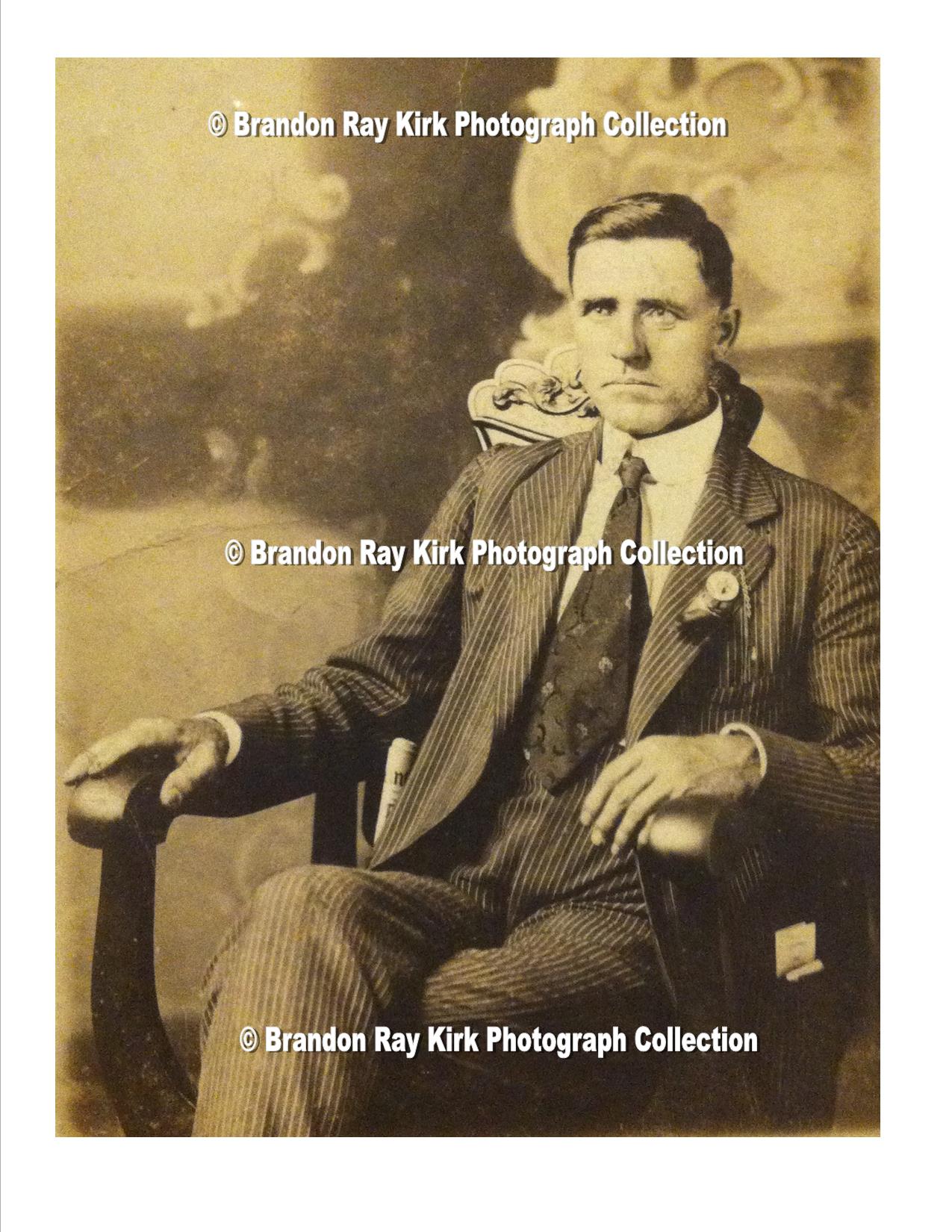
In Search of Ed Haley 262

10 Monday Mar 2014

Posted by Brandon Ray Kirk in Big Harts Creek, Ed Haley, Timber

≈ Leave a comment

Tags

Al Brumfield, Calhoun County, Chicago, coal, Cole and Crane Company, Dood Dalton, Ed Haley, farming, fiddling, Harts Creek, history, Jake Dalton, Laury Hicks, Lincoln County, Logan County, logging, Stump Dalton, timbering, West Virginia, writing

Just before we left, Stump let us borrow a cassette containing a 1976 interview with his father. Surely, we thought, Dood would speak a lot about fiddling and of his friendship to Ed. Instead, he told about his life in Harts. His voice was very melancholy and he spoke loudly and in spurts. Some of his earliest memories were of the timber industry in Harts and of the Cole and Crane Company, which timbered extensively in the LoganCounty area from about 1893-1908. In 1900, he said, Cole and Crane used splash dams to float logs down to the mouth of the creek “where Al Brumfield had a boom in.” The boom was located at the present-day site of the West Fork Bridge.

“And this boom caught them logs all,” Dood said. “Them logs was piled on top of one another from that boom…to the mouth of Big Branch. At that time, if you owned across the creek, you owned the creek. Al Brumfield owned the other side there and he put this boom in there and bought the Cole and Crane Company and when he bought them he kept that timber there and they gave him a contract on rafting it and running it down to Guyandotte.”

Cole and Crane Company once paid Brumfield $2800 to cut his boom loose and let timber out of the creek, he said.

Dood said he went to work cutting timber for Cole and Crane Company when he was seventeen years old. He also drove oxen and cattle and loved to hunt foxes and raccoons.

After marrying, he supported his family by farming and raising cattle, sheep and hogs at his 300-acre farm on Big Branch.

In subsequent years, he worked as a blacksmith, bricklayer and coal miner.

In 1964, he took a three-month visit to Chicago and hated it about as much as an earlier visit to Michigan. He said, “My days is short. I’ve spent 84 years here and I’m figuring on spending the rest of my life here.”

And that was basically it.

Not one reference to fiddling from a guy who had played all of his life.

Well, in spite of the tape, we were pretty sure that Haley’s good friendship to Dood Dalton was authentic and was perhaps as important as his friendship with Laury Hicks in Calhoun County. We wanted to visit more of Dood’s children, so Stump directed us to the home of his oldest brother, Jake Dalton, an old fiddler on the Big Branch of Harts Creek. Jake lived in his father’s old home — the place where Ed had visited so frequently during the last twenty years of his life.

In Search of Ed Haley

03 Monday Mar 2014

Posted by Brandon Ray Kirk in Ed Haley, Harts, Music, Timber

≈ Leave a comment

Tags

Appalachia, Bill Adkins, culture, fiddler, Harts, history, life, Lincoln County, photos, timbering, West Virginia

Bill Adkins of Harts, Lincoln County, WV

Bill Adkins of Harts, Lincoln County, WV

In Search of Ed Haley 237

09 Sunday Feb 2014

Posted by Brandon Ray Kirk in Coal, Ed Haley, Harts, Timber

≈ Leave a comment

Tags

Atenville, Bob Lewis, Cabell Record, Eden Park, education, Ferrellsburg, Fry, Guyandotte River, Harts, Harts Creek, history, Lincoln County, moonshine, oil, rafting, timbering, Toney, West Virginia, writing

For the moment, timber remained king of the local economy. There were saw mills, large-scale timbering and news of a “firm from the East” locating in the area. “A firm from the East is getting ready to put men at work in the woods making barrel staves in the near future, near the Logan and Lincoln county line,” the Cabell Record reported in June of 1900. “Twenty thousand logs went out from Big Ugly and Hart’s creek last week,” it reported later in December. “There is a general activity in the timber business on Hart’s creek this winter,” the paper reported in January of ’01. “About fifty men are at work there getting out logs.”

With the coming of the railroad, Harts residents were also excited about the potential of extractive industries, like coal, natural gas, and even oil. “Everyone along the valley is talking coal these days,” the Record reported on December 6, 1900. “People with coal on their lands are jubilant over the prospects.” In January of 1901, the Record stated, “Hart’s creek people are enthusiastic over the prospects of striking oil or gas in that section. They have been encouraged very much by experienced oil men, who will work more wells in the spring on Little and Big Hart.”

Unprecedented economic opportunity seemed to be at everyone’s fingertips. “The valley will soon be dotted with small towns,” the Record accurately predicted on January 24, 1901. “Every day people are coming in to locate, and the future of the Guyan valley is promising.” On April 4, 1901, the Record wrote: “More timber went out of the valley in the late rise than has gone down in several years. Rafts followed one right after the other for several days. Bob Lewis is doing a lot of work on Hart’s creek now. He has got a large number of men in the woods chopping and has now on hand a grand lot of timber for the market.”

A major problem during this prosperous time involved an overabundance of alcohol. “A man claiming to be a Deputy U.S. Marshal or Revenue officer, was along the river the most of past week investigating reports regarding the sale of liquor without the proper Government permit,” the Record reported on April 5, 1900. “It is said that he ‘hooked’ on to plenty of clues and found where cider was ‘spiked’ quite heavily.”

On April 25, the Record offered this: “The past few days have been busy ones along the river. Timber men have been busy trying to save their stuff. At Nine, Fourteen, Big Ugly and Hart the stream has been filled with men rafting and working about logs. The river was higher than it has been for many years, and much damage was done to property along the streams and the big creeks.” On May 2, it stated: “Considerable dressed timber that was lying in the mouth of Big Ugly broke loose during the high water last week, but was caught below the Falls. The stuff is very valuable and is used in ship building, being transported to various ports in the East, and it is reported that some of it gets to England and Scotland.”

Alcohol continued to plague the valley. In June 1901, the Record offered this small dispatch: “From all reports plenty of ‘kill me quick’ liquor is being sold along the river these days. A big batch of indictments and arrests may result from it.” By fall, the Record wrote of the moonshiners and distillers: “They do business despite all protest.” Essentially giving up its attack upon the liquor men, it suggested that the Lincoln County Court “grant licenses to the saloons that do business openly near Big Ugly and Hart’s creek” because it “might as well get the revenue from this source.” In December, the Record reported, “It is said that the coming Lincoln county court may grant license to some saloons. Will it extend to those who openly violate the law along the river and don’t care?”

Once the railroad was completed in 1904, the newspaper’s predictions about “small towns dotting the valley” became a reality. In 1904, Ferrellsburg and Toney were established in Harts Creek District, followed by Atenville, Eden Park, and Fry in 1908. In 1904, there were 15 schools in the district and 482 students enrolled (out of 714 enumerated).

In Search of Ed Haley 236

08 Saturday Feb 2014

Posted by Brandon Ray Kirk in Ed Haley, Harts, Timber

≈ Leave a comment

Tags

Al Brumfield, Andrew Elkins, Bill Fowler, Cabell Record, Harts, history, Isaac Adkins, John Dingess, John W Runyon, timbering, Warren, writing

By that time, according to land records, Al Brumfield was the chief businessman in Harts. In 1890, he bought 150 acres of property, including a 100-acre tract from John W. Runyon valued at 188 dollars. (For some reason, deed records imply that Hollena bought it from John Dingess and not Runyon for $525 on August 7, 1891.) The following year, he bought 272 acres on Frances Creek, probably for timbering, and improved the value of a building on his land to 200 dollars (likely a home, store or sawmill). In 1892, his recently widowed mother deeded him 100 acres on Guyan River. That same year, he bought 50 acres on Fourteen Mile Creek (presumably for timbering) and improved the value of his building to 500 dollars. In June, he acquired the old 330-acre Toney farm at the mouth of Harts Creek. He bought out all of the heirs (including his mother), then paid Bill Fowler and Isaac Adkins $1550. Thereafter, he spent three years building that beautiful white home I saw on my first trip to Harts with Lawrence Haley in 1991.

By the early 1890s, the local timber industry was in full swing. “Considerable poplar timber has been cut out of Lincoln county for the last twenty years, and all the walnut that ever was, but there still remain magnificent tracts of tens of thousands of acres of timber which have never been touched by the woodman’s axe,” according to The Mountain State: A Description of the Natural Resources of West Virginia (1893). “Fully one-half the county is yet covered with magnificent oak forests, and the greater portion of this with poplar also. There is also much ash, beech, some chestnut, a little pine, and some other timber, all of which may be easily gotten to market by means of the Guyandotte. Little timber has ever been sawed at home, it being cheaper to float the logs out and saw them closer to market. Even staves are taken out in this way, not being sawed or split till they have reached a railroad point. The northern portion of the county has been cleared and settled to a greater extent than the southern [Harts], where the greater part of the timber that is still standing is to be found.”

Cashing in on the timber boom was Al Brumfield. In the mid-1890s, however, Brumfield and his capitalistic ventures suffered a minor setback: at that time, the traditional post offices were discontinued and relocated in the backcountry away from the Guyandotte River. (Harts was discontinued in 1891 and Warren in 1894.) For a brief time, Harts residents were left with a Fourteen address, named after nearby Fourteen Mile Creek. Andrew Elkins, an old Confederate veteran, served as postmaster there from 1880 until 1898. But there was hope for Brumfield and Harts: there was talk of a railroad coming to the Guyandotte Valley, scheduled to pass smack dab through town, connecting Logan County with Cabell County towns near the Ohio River.

By 1899, Brumfield owned nine tracts of land totaling 714.5 acres worth $2,774. On his property were three buildings valued at $150, $150 and $750 — all of these figures not including the money he was making from his log boom, store, saloon, ferry, gristmill, and orchard. The next year, in 1900, he re-established the Harts Post Office and, within a few years, the local economy shifted back to the banks of the Guyan. It was a prosperous time: timber was in its hey-day and the railroad was on its way. “Allen, son of the late Paris Brumfield, who has a big lot of property at and near the mouth of Hart’s creek, says times have been good,” according to The Cabell Record of July 26, 1900. “He has a pretty home and one of the finest store-houses along the river.” Later in October, The Record reported: “Times were never in better shape along the river. Timbermen are active and saw mills are busy. The farmers are doing well, and the new railroad is giving employment to many.”

Archibald Harrison 4

05 Wednesday Feb 2014

Posted by Brandon Ray Kirk in Big Ugly Creek, Civil War

≈ Leave a comment

Tags

Archibald Harrison, Arena Ferrell, Burbus Clinton Spurlock, Elizabeth Scites, Ferrellsburg, George W. Ferrell, Guy Fry, history, James D. Cummings, John M. Harrison, Keenan Ferrell, Lincoln County, Logan County, Martha E. Harrison, Micco, Nine Mile Creek, Phernatt's Creek, timbering, Vinson Spurlock, West Virginia, William T. Harrison, writing

In the latter part of the 1880s, Archibald Harrison sold much of his property. In 1886, he sold 30 acres of his 120-acre tract at Nine Mile Creek in Lincoln County, West Virginia, to A.E. Callihan. The next year, he sold his 360-acre tract in Harts Creek District to an unknown party. In that same year, he bought 100 more acres on Nine Mile.

Around that time, Mr. Harrison and his wife Martha may have separated or divorced, based on indications provided by tax records. In 1888, he sold 150 acres of his 230-acre tract at Phernatt’s Creek to D.B. Keck, while Martha sold the 100-acre tract on Nine Mile to Guy Fry. The following year, Martha sold 90 more acres to Fry on Nine Mile and the remaining acreage on Phernatt’s Creek (recorded as 125 acres, not 80) to James D. Cummings.

At that juncture, Martha disappears from local records.

In the 1890s, Mr. Harrison — perhaps recuperating from a second divorce — centered his property acquisitions on Nine Mile Creek. In 1890, he bought 59 acres worth $1.00 per acre from Elizabeth Scites. In 1891, he bought 150 acres worth $3.00 per acre from Guy Fry and 75 acres also worth $3.00 per acre from an unknown party. This latter tract of land he immediately deeded to his son, William T. Harrison, who married Charlotte F. Sias around 1892.

In 1892, Mr. Harrison deeded A.B. Staley 86 acres from the 150-acre tract, which tax records document as being on Fourteen Mile Creek, not Nine Mile. Four years later, William T. sold his 75 acres to Eliza J. Hager. Harrison probably died in that frame of time. His remaining property on Nine Mile was sold by D.E. Wilkinson, special commissioner, to Clinton Spurlock in 1898.

By 1900, Archibald and Martha Harrison were absent from local census records. Their children Daniel H., age 31, Guy French, age 24, and Louisa J., age 21, were also gone from the area. While the fate of Martha, Daniel and Louisa remains unclear, there is some evidence that Guy, who later lived at Micco in Logan County in 1920, moved to Virginia just after the turn of the century.

In 1900, three of Archibald’s sons were still listed in local census records. William T. Harrison and his family were residents of the Laurel Hill District. John M. Harrison was boarding nearby in the home of Vinson Spurlock and was reportedly engaged in some type of timber business. George W. Harrison was at present-day Ferrellsburg in Harts Creek District with his adopted parents, Keenan and Arena Ferrell.

Martha Harrison, the wife of Archibald, reportedly died in 1901.

Archibald Harrison 3

27 Monday Jan 2014

Posted by Brandon Ray Kirk in Big Ugly Creek, Civil War, Timber

≈ 6 Comments

Tags

Archibald Harrison, Big Ugly Creek, Daniel Fry, fiddler, Francis Brumfield, genealogy, George Marshall Fry, Harold R. Smith, Henry H. Hardesty, John H Fry, Jupiter Fry, Levi Rakes, Martha E. Harrison, Nine Mile Creek, Phernatt's Creek, Sampson Brumfield, timbering, William A. Fry, writing

In 1865, Harrison married Martha E. Fry, the 21-year-old divorced wife of Lewis “Jupiter” Fry, a Confederate veteran and well-known fiddler in the Big Ugly Creek area of what was then Cabell County. Martha had been born on September 8, 1844 in Logan County. She was the daughter of Daniel H. and Nancy P. (Bailey) Fry, who lived at Big Creek in Logan County and later at the mouth of Big Ugly. One of her brothers, William A. Fry, died as a POW in a Delaware prison camp during the Civil War.

Archibald and Martha had seven children: William T., born April 18, 1867 in Kentucky; Daniel H., born September 29, 1869 in Kentucky; John M., born October 18, 1871; Mary L., born February 19, 1875, died August 7, 1875; George W., born October 10, 1874; Guy French, born June 18, 1876 in Virginia; and Louisa J., born February 1, 1879.

The first 23 years of Harrison’s second marriage are somewhat of a mystery. During the late 1860s, based on the birthplace of his two oldest children, he and his wife lived somewhere in Kentucky and, based on the birthplace of another child, they were in Virginia in the mid-1870s.

In 1878 Harrison settled near the Bend of the River or the mouth of Big Ugly Creek in the Harts Creek District of Lincoln County. His neighbors, based on the 1880 census, were Levi Rakes and Francis Brumfield, as well as brothers-in-law John H. Fry and Sampson S. Brumfield. Samp was a timber boss with a log boom at the mouth of the creek. George Marshall Fry, another brother-in-law, lived up Big Ugly where he worked as a farmer, timberman, and general store clerk.

On July 1, 1882, Harrison bought 360 acres of land on the west side of the Guyandotte River (near the Bend) in the Harts District from James I. Kuhn, a land agent for Abiel A. Low and William H. Aspinwall. It was worth $1.50 per acre and contained a $50 building, presumably a house or business.

“All that certain piece and parcel of land containing 260 acres more or less, granted by the commonwealth of Virginia to Wm. C. Miller & John H. Brumfield, assignees of Richard Elkins and Richard Elkins, May 1, 1850, lying on the Guyandotte above the mouth of Buck Lick branch,” the deed began. “Also all that part of a survey of 700 acres made for John H. Brumfield, Sept. 11th, 1854, on the east fork of Fourteen Mile Creek. The above described tract 100 acres of land is not to conflict with the lands conveyed to James Marcum.”

(The Kuhn deeds are interesting. In most cases, Kuhn, the grantor, was merely “selling” the surface rights to property already owned by the grantee. Kuhn’s employers claimed the mineral rights.)

In 1883, Harrison bought a 120-acre tract of land worth $2.50 per acre at Nine Mile Creek and a 230-acre tract of land worth $1.50 per acre on Phernatt’s Creek (at what would later be known as Brady) from W.T. Thompson. Harrison and his family soon settled on this latter property.

“Archibald B. Harrison is extensively engaged in farming, in Laurel Hill district, owning 380 acres of land on Guyan river, at the mouth of Phernats Creek,” Henry H. Hardesty chronicled in his history of Lincoln County, with “good improvements upon the farm, large orchard, heavily timbered, coal and iron ore in abundance.”

While Harrison referred to himself as a farmer in Hardesty’s history, there is also some indication that he was a timberman.

“The fact Archibald Harrison owned so much land at the mouth of Phernatt’s Creek is a clue that he was in the timber business,” said Harold R. Smith, Lincoln County genealogist and historian, in a c.2003 interview. “That was during the timber boom and land at the mouth of these creeks was heavily sought by people in that line of work. You could build a boom there and charge people a fee to get their logs out of the creek.”

At the time Harrison was profiled in Hardesty’s history, he and his wife were members of the Christian Church and received their mail at Hamlin.

“I don’t think he stayed at Phernatt’s Creek too long,” said Smith. “I think I read or heard somewhere that he moved to Big Ugly or Green Shoal and did a lot of timbering.”

Blood in West Virginia: Brumfield v. McCoy (2014)

24 Friday Jan 2014

Posted by Brandon Ray Kirk in Big Harts Creek, Culture of Honor, Harts, Lincoln County Feud, Timber

≈ 10 Comments

Tags

Al Brumfield, Appalachia, Brandon Kirk, crime, feud, Green McCoy, Harts Creek, history, logging, Milt Haley, Pelican Publishing Company, photos, timbering, true crime, West Virginia, writers, writing

Blood in WV

In June of 2014, Pelican Publishing Company will release my book detailing the true story of the Lincoln County feud.

In Search of Ed Haley 231

24 Friday Jan 2014

Posted by Brandon Ray Kirk in Ed Haley

≈ Leave a comment

Tags

Andrew D. Robinson, Ben Adams, Boney Lucas, Chloe Mullins, Ed Haley, Harts Creek, Henderson Dingess, history, Imogene Haley, Jackson Mullins, Logan County Banner, logging, McCloud & Company, Paris Brumfield, Peter Mullins, timbering, Turley Adams, Van Prince, Warren, Weddie Mullins, West Virginia, writing

Ed Haley was born in 1885 at Warren, a small post office established the previous year five miles up Harts Creek just below the mouth of Smoke House Fork. It was a place of 300 to 500 people chiefly led in its daily affairs by Henderson Dingess, Andrew Robinson, Anthony Adams, Ben Adams, and Burl Farley — all connected genealogically through the Adams family. At Warren, in 1884, the primary business was a general store called McCloud & Company. Henderson Dingess, father to Hollena and the patriarch of the clan, was a distiller and storekeeper. Ben Adams, a brother-in-law to Dingess, was a general store operator. Andrew Robinson was the local postmaster. Van Prince was a physician, perhaps assisting in Ed Haley’s birth or in the treatment of his measles.

Henderson Dingess, a prominent personality from that era, was the son of pioneer parents, born in 1829 to John and Chloe (Farley) Dingess. His wife, Sarah Adams (1833-1920), was a daughter of Joseph and Dicie (Mullins) Adams, who settled on Harts Creek from Floyd County, Kentucky, in the late 1830s. Henderson and Sarah lived in a two-story log house on land partly granted to him by the Commonwealth of Virginia in 1856. There, at the mouth of Hog Pen Branch, they raised eleven children, many of whom were active in the 1889 troubles. In the late 1880s, roughly the time of Milt Haley’s murder, Henderson and Sarah owned a 93-acre tract of land on Smoke House with a building valued at $100. They also owned an additional 350 acres on main Harts Creek and a 44-acre tract on nearby Crawley Creek worth $6.00 per acre with a $20 building on it.

At that time, Harts was caught up in the regional timber boom. According to The Logan County Banner, an estimated one million dollars worth of timber went out of the area in 1889. Perhaps prompted by this capitalistic invasion of the local economy, violence became the norm in Harts. Beginning with Paris Brumfield’s murder of Boney Lucas “over logs” in the early 1880s, there were at least six area killings before the turn of the century. (The Brumfields were involved in four of them and the Dingesses in three.) It was an era when Harts lost its innocence and began to earn the rough reputation it still carries today.

More than likely, following the horrific events of 1889, little Ed Haley and his mother lived for a brief time with Jackson and Chloe Mullins on Trace Fork. This changed a little later when, in 1891, Jackson and Chloe began to deed property to their three children. On March 18, they deeded their homestead to son Peter for 25 dollars. Deed records specify the property as a 20-acre tract of land, which began somewhere around the mouth of Trace and continued up to the Jackson Mullins Branch (basically the present-day Turley Adams property). The following day, Jackson and Chloe deeded another 20-acre tract to son Weddie Mullins for 25 dollars. This tract basically included everything from Jackson Mullins Branch to Jonas Branch.

On March 19, 1891, Jackson and Chloe deeded Imogene Haley 20 acres of land on Trace Fork for 25 dollars. In the property index, Imogene’s surname was spelled as “Hauley”, while the deed referred to her as “Immagin A. Haley.” Her land began at Jonas Branch and continued on up the creek. In the original deed, it was described as follows:

Beginning at the mouth of William Jonas branch thence up the Branch with the center of the branch to a _______ tree on the right hand side of the Branch as you go up the branch near a Chestnut that ________ on the left side of said branch thence acrosf the fields to some willow bushes at the front of the hill thence up the point with the center of the point to the brow of the Mountain thence with the brow of the Mountain to Mary Mullins line thence down the mountain to a bush thence a strate line crosfing the creek to a ash thence up the hill to the back line of the parties of the first part thence down the creek with the line of the said opposite the mouth of William Jonas branch thence down the hill a strate line to the Beginning supposed to contain 20 acres more or less.

An 1891 tax book listed “Emigene Hawley’s” property as being worth $2.00 per acre and having a total worth of $40. Records do not indicate if there was a house or building located on the property. In any case, Emma died soon after: an 1892 tax book lists her property under the name of “Immogen Hailey heirs”, which would have been Ed Haley. More than likely, seven-year-old Ed remained living in the home of his grandparents, Jackson and Chloe, for several more years.

At that time, Logan County was in the middle of a timber boom, which gave employment to Ed’s family on Trace Fork. “Some of the finest timber in the State is found in Logan county,” writes The Mountain State: A Description of the Natural Resources of West Virginia (1893). “Magnificent forests of oak, poplar, ash, lynn, maples, beech, birch, pines, hickory and other varieties still cover the greater part of the county in their primitive state. For thirty years timber men have been at work, destroying the forests and still in all this time not over a fourth of the timber has been removed. As an estimate of the value of the timber still standing in Logan county, three million dollars will not be far amise.”

In Search of Ed Haley 229

21 Tuesday Jan 2014

Posted by Brandon Ray Kirk in Ed Haley

≈ Leave a comment

Tags

Al Brumfield, Ben Walker, Billy Adkins, Brandon Kirk, Burl Adkins, Cain Adkins, Fed Adkins, Harts, history, John Hartford, John W Runyon, Mose Adkins, timbering, writing

The next day, Billy directed Brandon and I up Walker Gap to the old Ben Walker farm. Walker was the man who reportedly organized the Haley-McCoy burial party in 1889. Once there, we found no buildings remaining so we stopped at the family cemetery, which was just off the hill from the Haley-McCoy grave. Ben’s grave was marked by a simple rock.

From there we headed to “Runyon’s Branch,” a small stream emptying into the Guyandotte River just above the mouth of Harts Creek. Supposedly, John Runyon once lived near the mouth of this branch while operating a sawmill at its head. It was a great set-up: Runyon owned his own hollow and could float his timber directly into the Guyan River, thus avoiding Al Brumfield’s boom and tax. Nearby on a bluff was the probable site of his “blind tiger,” where he would’ve had a great view of Brumfield’s timber operations just across the mouth of Harts Creek. At this location, Runyon was surrounded by members of the Adkins family. Some of his neighbors were Burl Adkins (a brother-in-law to Fed Adkins), Mose Adkins (Fed Adkins’ brother), Ben Walker, and Cain Adkins.

In Search of Ed Haley 227

17 Friday Jan 2014

Posted by Brandon Ray Kirk in Ed Haley

≈ Leave a comment

Tags

Al Brumfield, Ben Adams, Bob Dingess, Brooke Dingess, Burl Farley, Cat Fry, Dave Dingess, feud, French Bryant, genealogy, history, Hollene Brumfield, Hugh Dingess, John W Runyon, Milt Haley, moonshine, Peter Mullins, timbering, writing

I asked Bob about Milt and he said, “I don’t know too much about the first Haley. I think he was a rambler and just traveled here and there and got in with them Mullinses up there making liquor and moonshine and stuff. I’ve been told that he married Peter Mullins’ sister and he stayed there among them a long time. They was two or three clans of them Mullinses. They was a bunch of horse-thieves and stealers who come out of Kentucky. Well, they run them out of Kentucky. They aimed to kill them and they got into Harts Creek in that wilderness section back in there. They was gamblers, they was moonshiners and they was always in a fight and trouble with each other. They couldn’t trust each other. The men wouldn’t work a lick and the poor old women did the work and the men just sat in the yard or played cards or drunk liquor and that was the way they done it.”

Talking about Milt got us into the story of his feud with the Brumfields.

“See, that all happened before I was born,” Bob said. “That happened in ’89 you see and all I know is what my mother and what Aunt Cat down at Hart told me. Now, I was told this: that Al Brumfield controlled all timber that went out of Harts Creek down there and he had an apparatus put in right above the mouth of the creek to catch the timber and not let them go in the river. All right. Ben Adams up here was a millionaire nearly at that time and had all of this big poplar timber in this creek for miles up and down here. Ben Adams had a lot of timber down there and the way I got it some logs got lost. Well, he undertook to make Al pay for the timber since Al was responsible for it and taking the ten-cents-a-log to hold it in the creek for them till they got it rafted and Al wouldn’t do it. And Al went to get a gun to kill him and Ben Adams run up Harts Creek and took the Big Branch and took that ridge on back home. He got away from Al. Well, it was always figured that Ben Adams hired these two men to kill Al so he could get that timber out of here. Now, I’ve been told that.”

I asked Bob about John Runyon and he said, “I never heard of John Runyon. But, somehow, down yonder in that curve… You see, these men had done gone there and planted themselves waiting for these people to come.”

Bob said Milt and Green were laying in ambush when Al and Hollena Brumfield came riding along. Al rode one horse, while Hollena and Bob’s father Dave rode another.

“My dad was a riding behind Aunt Hollene and Al was in front and somehow when them men started he saw the gun and he fell over on the other side of his horse and hung to the saddle till he got around that point. He put his arms around the horse’s neck and had his leg up so they couldn’t… They was two shots fired. I don’t know which one of them was shot first but they shot Aunt Hollene right through the cheek. The bullet went in right on the left side of her cheek right at her ear and come out right above her nose. Dad jumped off the horse when they shot her and throwed his hand up and they shot him through his hand then they got away. And Dad took part of his shirt and tore it up and tied it and put it around her head to keep her from bleeding to death. I don’t guess he paid too much attention to that hand as long as he got her took care of.”

I said to Bob, “So, did Al gallop off at that point?” and he answered, “As far as I know, he made a get-away. He went on down the hollow, fast speed I imagine. He knowed they was a gonna kill him.”

“Well now, what about Haley and McCoy?” I asked.

“So far as we know, they run and took the mountain,” Bob said. “They was hid in the bushes, see? But Dad recognized them and knowed who they was. Aunt Hollene did, too. They never did get along in here after that. They run them men back through that country back yonder and caught them almost at Dingess on the N&W. And they was a clan of Dingesses back in there and they headed them off for them and they caught them. Ah, they was a mean bunch of men in here, then. Of course, I knew old man French Bryant — he was a ringleader in it. Old man Burl Farley. A lot of Brumfields and Dingesses and everything else involved in it. And they brought them back to Uncle Hugh’s up here.”

Samp Davis

19 Thursday Dec 2013

Posted by Brandon Ray Kirk in Big Harts Creek, Ferrellsburg, Timber

≈ Leave a comment

Tags

Appalachia, Ferrellsburg, genealogy, history, life, Lincoln County, photos, Samp Davis, timbering, U.S. South, West Fork, West Virginia

Samp Davis, an old timberman from West Fork, Lincoln County, WV.

Samp Davis, an old timber man from West Fork, Lincoln County, WV.

← Older posts
Newer posts →

Feud Poll 1

If you had lived in the Harts Creek community during the 1880s, to which faction of feudists might you have given your loyalty?

Categories

  • Adkins Mill
  • African American History
  • American Revolutionary War
  • Ashland
  • Atenville
  • Banco
  • Barboursville
  • Battle of Blair Mountain
  • Beech Creek
  • Big Creek
  • Big Harts Creek
  • Big Sandy Valley
  • Big Ugly Creek
  • Boone County
  • Breeden
  • Calhoun County
  • Cemeteries
  • Chapmanville
  • Civil War
  • Clay County
  • Clothier
  • Coal
  • Cove Gap
  • Crawley Creek
  • Culture of Honor
  • Dingess
  • Dollie
  • Dunlow
  • East Lynn
  • Ed Haley
  • Eden Park
  • Enslow
  • Estep
  • Ethel
  • Ferrellsburg
  • Fourteen
  • French-Eversole Feud
  • Gilbert
  • Giles County
  • Gill
  • Green Shoal
  • Guyandotte River
  • Halcyon
  • Hamlin
  • Harts
  • Hatfield-McCoy Feud
  • Holden
  • Hungarian-American History
  • Huntington
  • Inez
  • Irish-Americans
  • Italian American History
  • Jamboree
  • Jewish History
  • John Hartford
  • Kermit
  • Kiahsville
  • Kitchen
  • Leet
  • Lincoln County Feud
  • Little Harts Creek
  • Logan
  • Man
  • Matewan
  • Meador
  • Midkiff
  • Monroe County
  • Montgomery County
  • Music
  • Native American History
  • Peach Creek
  • Pearl Adkins Diary
  • Pecks Mill
  • Peter Creek
  • Pikeville
  • Pilgrim
  • Poetry
  • Queens Ridge
  • Ranger
  • Rector
  • Roane County
  • Rowan County Feud
  • Salt Rock
  • Sand Creek
  • Shively
  • Spears
  • Sports
  • Spottswood
  • Spurlockville
  • Stiltner
  • Stone Branch
  • Tazewell County
  • Timber
  • Tom Dula
  • Toney
  • Turner-Howard Feud
  • Twelve Pole Creek
  • Uncategorized
  • Warren
  • Wayne
  • West Hamlin
  • Wewanta
  • Wharncliffe
  • Whirlwind
  • Williamson
  • Women's History
  • World War I
  • Wyoming County
  • Yantus

Feud Poll 2

Do you think Milt Haley and Green McCoy committed the ambush on Al and Hollene Brumfield in 1889?

Blogroll

  • Ancestry.com
  • Ashland (KY) Daily Independent News Article
  • Author FB page
  • Beckley (WV) Register-Herald News Article
  • Big Sandy News (KY) News Article
  • Blood in West Virginia FB
  • Blood in West Virginia order
  • Chapters TV Program
  • Facebook
  • Ghosts of Guyan
  • Herald-Dispatch News Article 1
  • Herald-Dispatch News Article 2
  • In Search of Ed Haley
  • Instagram
  • Lincoln (WV) Journal News Article
  • Lincoln (WV) Journal Thumbs Up
  • Lincoln County
  • Lincoln County Feud
  • Lincoln County Feud Lecture
  • LinkedIn
  • Logan (WV) Banner News Article
  • Lunch With Books
  • Our Overmountain Men: The Revolutionary War in Western Virginia (1775-1783)
  • Pinterest
  • Scarborough Society's Art and Lecture Series
  • Smithsonian Article
  • Spirit of Jefferson News Article
  • The Friendly Neighbor Radio Show 1
  • The Friendly Neighbor Radio Show 2
  • The Friendly Neighbor Radio Show 3
  • The Friendly Neighbor Radio Show 4
  • The New Yorker
  • The State Journal's 55 Good Things About WV
  • tumblr.
  • Twitter
  • Website
  • Weirton (WV) Daily Times Article
  • Wheeling (WV) Intelligencer News Article 1
  • Wheeling (WV) Intelligencer News Article 2
  • WOWK TV
  • Writers Can Read Open Mic Night

Feud Poll 3

Who do you think organized the ambush of Al and Hollene Brumfield in 1889?

Recent Posts

  • Logan County Jail in Logan, WV
  • Absentee Landowners of Magnolia District (1890, 1892, 1894)
  • Charles Spurlock Survey at Fourteen Mile Creek, Lincoln County, WV (1815)

Ed Haley Poll 1

What do you think caused Ed Haley to lose his sight when he was three years old?

Top Posts & Pages

  • Early Schools of Logan County, WV (1916)
  • Jack Dempsey’s Broadway Restaurant Location in New York City (2019)
  • Cotton Production in Antebellum Pike County, KY
  • Blood in West Virginia
  • Anthony Lawson founds Lawsonville

Copyright

© Brandon Ray Kirk and brandonraykirk.wordpress.com, 1987-2023. Unauthorized use and/or duplication of this material without express and written permission from this blog’s author and/or owner is strictly prohibited. Excerpts and links may be used, provided that full and clear credit is given to Brandon Ray Kirk and brandonraykirk.wordpress.com with appropriate and specific direction to the original content.

Archives

  • February 2025
  • January 2025
  • October 2023
  • September 2023
  • December 2022
  • November 2022
  • May 2022
  • April 2022
  • February 2022
  • November 2021
  • October 2021
  • September 2021
  • June 2021
  • May 2021
  • April 2021
  • March 2021
  • February 2021
  • January 2021
  • December 2020
  • November 2020
  • October 2020
  • July 2020
  • June 2020
  • May 2020
  • April 2020
  • March 2020
  • February 2020
  • January 2020
  • December 2019
  • November 2019
  • October 2019
  • September 2019
  • August 2019
  • July 2019
  • June 2019
  • May 2019
  • April 2019
  • March 2019
  • February 2019
  • January 2019
  • December 2018
  • November 2018
  • October 2018
  • September 2018
  • August 2018
  • July 2018
  • June 2018
  • May 2018
  • April 2018
  • March 2018
  • February 2018
  • January 2018
  • December 2017
  • November 2017
  • October 2017
  • September 2017
  • August 2017
  • July 2017
  • June 2017
  • May 2017
  • April 2017
  • March 2017
  • February 2017
  • January 2017
  • December 2016
  • November 2016
  • October 2016
  • September 2016
  • August 2016
  • July 2016
  • June 2016
  • May 2016
  • April 2016
  • March 2016
  • February 2016
  • January 2016
  • December 2015
  • November 2015
  • October 2015
  • September 2015
  • August 2015
  • July 2015
  • June 2015
  • May 2015
  • April 2015
  • March 2015
  • February 2015
  • January 2015
  • December 2014
  • October 2014
  • September 2014
  • August 2014
  • July 2014
  • June 2014
  • May 2014
  • April 2014
  • March 2014
  • February 2014
  • January 2014
  • December 2013
  • November 2013
  • October 2013
  • September 2013
  • August 2013
  • July 2013
  • June 2013
  • May 2013
  • April 2013
  • March 2013
  • February 2013
  • January 2013
  • December 2012
  • November 2012

Enter your email address to follow this blog and receive notifications of new posts by email.

Join 2,927 other subscribers

Tags

Appalachia Ashland Big Creek Big Ugly Creek Blood in West Virginia Brandon Kirk Cabell County cemeteries Chapmanville Charleston civil war coal Confederate Army crime culture Ed Haley Ella Haley Ferrellsburg feud fiddler fiddling genealogy Green McCoy Guyandotte River Harts Harts Creek Hatfield-McCoy Feud history Huntington John Hartford Kentucky Lawrence Haley life Lincoln County Lincoln County Feud Logan Logan Banner Logan County Milt Haley Mingo County music Ohio photos timbering U.S. South Virginia Wayne County West Virginia Whirlwind writing

Blogs I Follow

  • OtterTales
  • Our Appalachia: A Blog Created by Students of Brandon Kirk
  • Piedmont Trails
  • Truman Capote
  • Appalachian Diaspora

BLOOD IN WEST VIRGINIA is now available for order at Amazon!

Blog at WordPress.com.

OtterTales

Writings from my travels and experiences. High and fine literature is wine, and mine is only water; but everybody likes water. Mark Twain

Our Appalachia: A Blog Created by Students of Brandon Kirk

This site is dedicated to the collection, preservation, and promotion of history and culture in Appalachia.

Piedmont Trails

Genealogy and History in North Carolina and Beyond

Truman Capote

A site about one of the most beautiful, interesting, tallented, outrageous and colorful personalities of the 20th Century

Appalachian Diaspora

  • Subscribe Subscribed
    • Brandon Ray Kirk
    • Join 789 other subscribers
    • Already have a WordPress.com account? Log in now.
    • Brandon Ray Kirk
    • Subscribe Subscribed
    • Sign up
    • Log in
    • Report this content
    • View site in Reader
    • Manage subscriptions
    • Collapse this bar
 

Loading Comments...