• About

Brandon Ray Kirk

~ This site is dedicated to the collection, preservation, and promotion of history and culture in my section of Appalachia.

Brandon Ray Kirk

Tag Archives: Mingo County

In Search of Ed Haley 310

26 Monday May 2014

Posted by Brandon Ray Kirk in Big Harts Creek, Ed Haley, Ferrellsburg, Lincoln County Feud

≈ Leave a comment

Tags

8th of January, Arkansas Traveler, Big Branch, Billy Adkins, Billy in the Lowground, Blackberry Blossom, Brandon Kirk, Dood Dalton, Ed Haley, Ferrellsburg, fiddling, Green McCoy, Green Shoal, Harts Creek, Henderson Dingess, history fiddle, Lop-Eared Mule, Milt Haley, Mingo County, Soldiers Joy, Ward Browning, West Fork, West Virginia, writing

A week or so later, Brandon and Billy visited Ward Browning, an older gentleman in Ferrellsburg whose wife was a descendant of Henderson Dingess. Ward said Milt Haley was from “back in the country at the head of Harts toward Mingo County.” The first year of Ed’s life, Milt dipped him repeatedly in water because someone told him it would make a baby healthy; instead, it made him go blind. Milt was hired with Green McCoy to kill the Brumfields. Later, they were captured and taken across the river from Green Shoal and kept under a dogwood bush where they were beaten through the night and then killed around daylight.

Ward said he used to see Ed Haley at Dood Dalton’s home on Big Branch in the late 1930s. Ed would stay around Dood’s place for two or three weeks at a time. He was a “star” — the best around. He and Dood sat on the porch and played for crowds of people in the yard who clapped their hands and had a good time. There was never any trouble. No one took him for granted. He sometimes made up to four dollars a day playing there in hard Depression times.

Ward said Ed carried his fiddle in a case and kept a stick to find his way in the road. He had a great personality and would tell wild stories of his exploits. He drank heavily and was “bad to fight,” but was always sober at Dood’s. Ward said he played “Billy in the Lowground”, “Lop-Eared Mule”, “Arkansas Traveler”, “Soldiers Joy”, “Blackberry Blossom”, and ‘8th of January”.

Brandon was also busy at the Haley-McCoy grave on West Fork. He seemed to be coming around on my idea to exhume Milt Haley and Green McCoy. I’d joked him relentlessly that we might do it only to find it completely empty. He was still against the idea, although his curiosity was getting the better of him.

“As I had been dwelling a lot on the Haley-McCoy grave recently, I finally decided to satisfy my curiosity to a limited extent,” he wrote. “I borrowed a metal detector and raced up to the grave on West Fork at the edge of dark to see what it would pick up (belt buckle, handcuffs, perhaps even the murder weapon). I first tested it on my keys, which I laid upon the ground. Running the detector over them caused a loud buzz. I then placed a pile of leaves over the keys and the detector still buzzed. As a last preliminary test, I laid a thick rock on top of my keys and ran the machine over it and it still registered the buzz. Content that the machine worked fairly well, I then eagerly began gliding it over the grave. Unfortunately, I picked up no real buzz. There was one spot that seemed to repeatedly register a slight buzz but nothing conclusive.”

Brandon signed his letter, “Digging Around (Almost Literally)…”

Spottswood Items 10.16.1903

23 Friday May 2014

Posted by Brandon Ray Kirk in Big Harts Creek, Chapmanville, Dingess, Green Shoal, Spottswood, Timber

≈ Leave a comment

Tags

Augusta Bryant, Belle Dora Adams, C.J. Plaster, Chapmanville, Dicy Adams, Dingess, Doc Turner, Enel Deskins, genealogy, George Bryant, Green Jackson, Green Shoal, Harts Creek, Henderson Dingess, history, Hugh Evans, Isaac Marion Nelson, John Workman, Kentucky, Logan, Logan Banner, Logan County, Major Adams, Mingo County, Ollie Bryant, Peter Carter, Smokehouse Fork, Solomon Adams, Solomon Adams Sr., Spottswood, Sr., timbering, W.J. Bachtel, West Virginia, William Kelley, Zack Williams

“DeLay,” a correspondent from Spottswood in Logan County, West Virginia, offered the following items, dated October 12, 1903, which the Logan Banner printed on Friday, October 16, 1903:

As no one wrote to The Banner from this place last week, I will write a few items this week. Some of the correspondents from this place seem to write more to throw mud in their neighbors’ faces than to give the news of the place.

Mrs. Augusta Bryant, after an illness of some weeks died last Friday night at the home of her parents at this place. The bereaved relatives have our sympathy.

Sol Adams, Sr., made a business trip to Logan Friday.

Green Jackson of Logan was visiting friends and relatives here Sunday.

Miss Belle Dora Adams spent Saturday and Sunday with her parents at this place.

Enel Deskins of Dingess was a visitor at this place Sunday.

Rev. I.M. Nelson preached a fine sermon last Sunday in memory of Henderson Dingess at the home of the deceased.

W.J. Bachtel is on the sick list.

William Kelly and another man from Kentucky passed through the ville Sunday enroute for Greenshoals.

Jesse Carter made a business trip to Logan Friday.

Major Adams while cutting timber the other day almost cut his foot off, but we are glad to announce that he is improving fast, and we hope to see him out again soon.

C.J. Plaster sold his land to Hugh Evans for $390 and went to Dingess. On awaking one morning he discovered that he had in some way been relieved of $65. He at once swore out a warrant for Zachary Williams, who was arrested and bound over to answer an indictment.

Dr. Turner of Chapmanville has the contract to build the schoolhouse at John Workman’s for $375.

Peter Carter was in Logan on business Monday.

Harts c.2000

20 Tuesday May 2014

Posted by Brandon Ray Kirk in Big Harts Creek, Ed Haley, Harts, Spottswood, Whirlwind

≈ 6 Comments

Tags

Adams Branch, basketball, Beecher Avenue, Ben Walker, Billy Adkins, Bob Adkins, Bob Mullins Cemetery, Brumfield Avenue, Buck Fork, Bulwark Branch, Charles Brumfield, Crawley Creek Mountain, CSX Railroad, Ed Haley, Eden Park, genealogy, Guyandotte Valley, Hannah Baptist Church, Harts, Harts Creek, Harts High School, Heartland, Henderson Branch, history, Hoover Church of the General Assembly, Hoover Fork, Huntington, Ivy Branch, John Hartford, Kiahs Creek, Lambert Branch, Lincoln County, Logan County, McCloud Branch, Mingo County, Mount Era Baptist Church, Mountaineer Missionary Baptist Church, Pilgrims Rest Church, politics, Railroad Avenue, Republican, Rockhouse Fork, Route 10, Sand Creek, Smokehouse Fork, Trace Fork, Trace Old Reguarl Baptist Church, Twelve Pole Creek, Upper Trace Fork School, Ward Avenue, Wayne County, West Fork, Whirlwind, Workman Branch, writing

The community of Harts sits indiscreetly in the narrow section of the Guyandotte Valley on land that makes up the northernmost region of the Logan County coalfield and what was once “feud country.” Located some ten miles from a four-lane federal corridor linking the state capital to eastern Kentucky and fifty miles up a two-lane rural highway from Huntington, the second largest city in West Virginia, it is a settlement just on the cusp of modernization. It is a treasure trove of hidden history, quickly disappearing even in the minds of its locals, who have little if any recollection of its booming timber era or the exciting times of the railroad hey-day. It’s really the kind of place you might drive through without noticing much — or never have a reason to drive through at all.

Basically, Harts is an old timber town divided in the center by a lazy muddy river and intersected by a two-lane highway, Route 10. On the west side of the river — site of the old Brumfield business headquarters — is an empty store, a tavern-turned-church-turned-beauty shop, a garage, and a brick tabernacle. On the east side is an old brick general store, a nice video rental establishment, a state highways headquarters, an old wooden general store, a small brick post office, a fire department, a grocery store, a hardware store, a general merchandise store, a Victorian general store-turned-restaurant, and a new brick Head Start center. Running between those buildings on the east side is a track owned by CSX (formerly C&O) Railroad. Just behind the businesses are a few dozen houses of all vintages: brick, wooden, single-story, two-story… There are no street signs or traffic lights or even stop signs.

Route 10 connects Harts with the city of Huntington to the north and with the Logan coalfields to the south. From town, Big Harts Creek Road heads west up the creek to West Fork or Smokehouse Fork, while a little unnamed road diverges north past the tracks toward extinct post offices named Eden Park and Sand Creek. The four streets in town are paved but very few locals even know their proper names, which are Railroad, Beecher, Ward, and Brumfield Avenues. Just down the river is a brick house-turned-bank, a rural health clinic, a brick construction company headquarters, a new coalmine development area called Heartland, and a mechanic shop/gas station (owned incidentally by one Charles Brumfield).

Culturally, Harts might be thought of as an inconspicuous Harlequin romance and Wild West show gone wild, at least in its not-so-distant past. Many of the rabble rousers and roustabouts are long since dead. Actually, somewhat to my disappointment, a lot of the old families are gone completely from the area and no one really feuds any more. Many residents seem to work as schoolteachers or run small stores or work in the coalmines or draw government relief. People are nice and treat each other well. Most are related or at least seem to be. They watch TV or go to church or tend their yards or hunt or fish or ride four-wheelers or hop on the four-lane at Chapmanville and drive to Wal-Mart some 45 miles away. Old-timers are quick to say that Harts has a bad reputation for no reason — the only two murders within town limits occurred almost a century ago. There are no parks, museums or movie theatres — and only a few registered Republicans. It’s the kind of place where you can leave your doors unlocked at night or if you’re gone all day…and feel safe about it.

I have to admit, after several visits to Harts, I loved it. On one visit, I learned from Billy Adkins that the old Ben Walker farm was for sale…and seriously considered buying it. (I passed on the idea when I realized that my wife would never forgive me for it.) Harts, then, would remain a place to “see.” I began telling folks out on the road that it was “my Ireland.” It represented a desire on my part to get back to the kind of places where (at least in my romantic imagination) a lot of fiddle playing originated. A lot of my friends were from these kind of places. For them, when they wanted to tap into that ancestral ancient tone, they thought of Ireland, whether they were Irish or not. For me, coming from St. Louis, Harts was the closest I could ever hope to get to that. Such places are at the heart of the music I love.

Venturing up Harts Creek, the first thing you really notice is Harts High School, a forty-some-year-old two-and-a-half-story yellow brick structure near the mouth of West Fork with a gymnasium, annex building, and a baseball field, all situated on what was a prison camp during the early fifties and, a little further back in time, the upper reaches of the Al Brumfield property (and, a little further still, an Indian camp). In many ways, this school is the lifeblood of the community — at least in the lower section of the creek. In the mid-sixties, just as Harts began to turn away from its violent past, the high school basketball team won a state championship and began building a program known regionally for its successes. Today, basketball is what this community is best known for — not the murders or moonshining traditions of years past — with crooked politics maybe finishing a close second.

A little further up the creek, just below the Logan County line, a few miles past an old country store, a little restaurant, another baseball field, and a place of worship named the Cole Branch Church of Jesus Christ of the First Born. From there, the road forks left onto the Smoke House Fork of Big Harts Creek, location of the Hugh Dingess Elementary School and Dingess, Butcher, Farley and Conley country; or the road forks right into the head of Harts Creek to “Ed Haley country.” Of course, no one calls it that. People think of it as “Adams country” or “Mullins country” and really, that’s about all there ever was in that section. Ed himself is often identified with the Mullins family — his mother’s people. The adults in this part of Harts Creek vote in Logan County — not Lincoln — and send their kids on buses over Crawley Creek Mountain to Chapmanville High School. This section of the creek — where gunshots once rang out regularly and where moonshine was so readily found — is now remarkably quiet and low-key outside of the occasional marijuana bust. Unfortunately, it seems to have lost its musical tradition as well.

Trace Fork, the site of Ed Haley’s birth, is attributed by Ivy Branch in its head, Adams Branch, and Boardtree Branch toward its middle and Jonas and Dry House Branch toward its mouth. There are several small family cemeteries on Trace, with the maroon-bricked Mountaineer Missionary Baptist Church at its mouth. In previous days, the Upper Trace Fork School (now Trace Old Regular Baptist Church) sat in its headwaters, where the Logan-Lincoln-Mingo county line meets. As a matter of fact, Ivy Branch heads near Kiah’s Creek at the Wayne-Mingo County line, while Boardtree Branch heads at McCloud Branch of Twelve Pole Creek in Mingo County. Adams Branch heads at Rockhouse Fork in Lincoln County.

A little further up the main creek is Buck Fork, an extensive tributary comparable to West Fork or Smokehouse in size. It is the ancestral home of the Mullins, Bryant, and Hensley families whose names still dominate the mailbox landscape. In previous decades, it was the location of the Hensley School and Mt. Era Church. Just below Buck Fork on main Harts Creek is a large Adams family cemetery, while just above it is the equally large Bob Mullins family cemetery.

Continuing up Harts Creek is Hoover Fork, home of the Mullins, Adams, and Carter families as well as the Hoover Church of the General Assembly. Henderson Branch, home seat for Tomblins and Mullinses is the next tributary, followed by Lambert Branch (at Whirlwind) and Workman Branch. Bulwark Branch follows (populated by Carters and Workmans), trailed by Brier Branch (Smiths) and Tomblin Branch. In the headwaters of Harts Creek are Tomblins, Daltons, and Blairs, as well as the Pilgrims Rest Church and Hannah Baptist Church.

In all sections of Harts, gossip reigns supreme as a source of local entertainment. (This in spite of Bob Adkins’ warning that people should “tend to their own business.”) Maybe that’s why we hear so much about a 100-year-old murder when we ask about it and a bunch of other things we don’t ask about. Genealogy is super important. When you sit down to talk with someone, the first thing they want to know is how you fit into the community pedigree. It’s a way of squaring you up.

Gideon Marcum Home

26 Saturday Apr 2014

Posted by Brandon Ray Kirk in Dingess, John Hartford

≈ 1 Comment

Tags

Appalachia, Dingess, Gideon Marcum, history, John Hartford, Mingo County, Moses Marcum, photos, U.S. South, West Virginia

John Hartford took this photograph of an old cabin at Dingess in Mingo County, WV, March 1995

John Hartford took this photograph of the Gideon Marcum home at Dingess in Mingo County, WV, March 4, 1995

Log Structure

08 Saturday Mar 2014

Posted by Brandon Ray Kirk in Dingess, John Hartford

≈ Leave a comment

Tags

Appalachia, culture, Dingess, John Hartford, life, Mingo County, photos, West Virginia

John Hartford took this photograph at Dingess, Mingo County, West Virginia, 4 March 1995.

John Hartford took this photograph at Dingess, Mingo County, West Virginia, 4 March 1995.

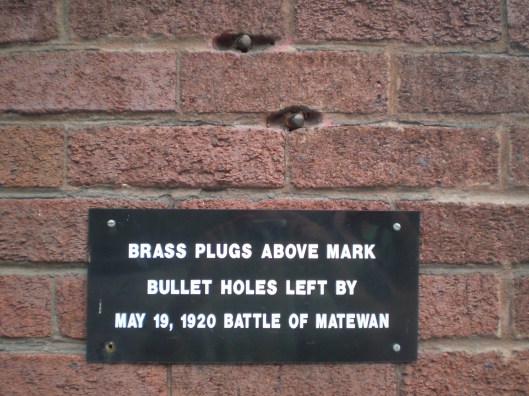
Matewan Massacre Brass Plugs (2008)

13 Tuesday Aug 2013

Posted by Brandon Ray Kirk in Big Sandy Valley, Coal, Matewan

≈ Leave a comment

Tags

Appalachia, culture, history, Matewan, Mingo County, photos, West Virginia

Matewan Bullet Holes

Matewan, West Virginia, 2008

Whirlwind Post Office

11 Sunday Aug 2013

Posted by Brandon Ray Kirk in Big Harts Creek, Whirlwind

≈ 3 Comments

Tags

Appalachia, Chapmanville, Dingess, Ernestine Tomblin, Guyandotte River, Harts Creek, history, James Mullins, Kirk, Lawrence Riddle, Lindsey Blair, Logan, Logan County, McCloud Post Office, Mingo County, Moses Tomblin, Pearl Lowe, Shirley Smith, Shively, Sol Riddle, Tema Workman, Verdunville, Verlie Smith, W.J. Carle, West Virginia, Whirlwind, writing, Zama

Between 1909 and 1952, Whirlwind Post Office served the postal needs for residents of Upper Hart. What follows is an attempt to reconstruct a history of its postmasters and its locations. All information is based on official post office records located in Washington, DC.

In 1908, Lawrence W. Riddle petitioned the Postmaster General for the creation of a post office called “Zama” in the Upper Hart section of Logan County, West Virginia. This proposed post office would be situated twenty feet west of Harts Creek, three miles west of the Norfolk & Southern Railway, six miles northwest of McCloud Post Office, seven miles south of the town of Dingess in Mingo County, and eight miles east of the Guyandotte River. The total population to be supplied with mail would be 200 persons. In January 1909, the First Assistant Postmaster General responded in a letter that marked out the proposed name of this post office, “Zama,” and replaced it with “Whirlwind.”

Early postmasters at Whirlwind included: Lawrence W. Riddle (March 31, 1910, appointed; April 25, 1910, commissioned; May 16, 1910, took possession), Moses Tomblin (February 13, 1911, appointed), Sol Riddle (May 7, 1913, order; May 25, 1911, appointed; June 12, 1911, commissioned; June 30, 1911, took possession), and James Mullins (April 30, 1914, confirmed; May 19, 1914, commission signed and mailed; May 23, 1914, assumed charge). On June 26, 1925, Mr. Mullins requested to change the site of the post office to a spot 600 feet southwest of its current location.

Lindsey Blair next served as postmaster (April 28, 1938, confirmed; May 6, 1938, commission signed and mailed; May 11, 1938, assumed charge; resigned without prejudice). On July 15, 1938, Mr. Blair requested to relocate the post office to a spot 1652 feet east of its present location.

Shirley Smith replaced Mr. Blair (October 22 or 23, 1940, assumed charge; October 26, 1940, appointed acting postmaster). In a letter dated October 1940, Smith requested a relocation of the post office. The new post office location would be 5/10th of a mile southeast from the old location, 100 feet west of Harts Creek, nine miles southwest of Dingess, ten miles north of Harts, twelve miles southeast of Verdunville, and fourteen miles from Logan. Ms. Smith asked that the post office be relocated “so I can take care of it at my own home.” Twenty-eight patrons resided within a one-mile radius. Postmasters in this era include: Shirley Smith (December 5, 1940, confirmed; December 27, 1940, commission signed and mailed; December 31, 1940, took possession; January 1, 1941, assumed charge; resigned without prejudice) and Pearl Lowe (July 11 or 12, 1941, assumed charge).

In a letter dated August 19, 1941, Pearl Lowe wrote the Postmaster General requesting that Whirlwind Post Office relocate to a new site. The proposed location would be one mile north of its present location, about forty feet west of Harts Creek, two miles southwest of a county line, nine miles southwest from Dingess, nine miles south of Verdunville, ten miles from the Guyandotte River, and ten miles from Chapmanville. This location was approved and became effective as of September 18, 1941.

Pearl Lowe served as the only postmaster at this location: (September 19, 1941, appointed acting postmaster; November 5, 1941, appointed postmaster; January 2, 1942, commission signed and mailed; January 22 or 23, 1942, assumed charge). On April 14, 1942, Mrs. Lowe requested that the post office be relocated to a new site 1500 feet east of the present location. Shortly thereafter, on July 6, she requested that it be relocated to a site 1/8 mile away. This new spot would be 300 feet east of Harts Creek, nine miles southwest of Dingess, eleven miles northeast of Harts, and twelve miles southeast of Verdunville. On April 8, 1944, Ms. Lowe requested the site be moved 1/2 mile to the east. This latter site became effective May 1, 1944.

On July 15, 1944, someone (the paperwork does not specify who) requested that the post office be relocated 1/4 mile south of the old post office, about forty feet east of Harts Creek, two miles from Mingo County, nine miles southwest of Dingess, ten miles north of Harts, eleven miles south of Verdunville, thirteen miles east of the Guyandotte River, and thirteen miles northeast of Chapmanville.

Tema Workman took possession of the Whirlwind Post Office on February 28, 1947 and was “appointed” on March 12, 1947. On April 22, 1947, Ms. Workman requested that the post office be relocated to a site one mile north of the old location. The new post office would be 1/2 miles from Mingo County, 7 1/2 miles south of Dingess, 8 1/10 miles northeast of Shively, 9 1/2 miles north of Harts, and 10 8/10 miles southeast of Verdunville. This letter cites another name which the community was then known: Bulwark.

Subsequent postmasters included: Tema Workman (June 16, 1947, confirmed; July 11, 1947, commission signed and mailed; September 30, 1947, took possession; October 1, 1947, assumed charge; removed) and Verlie Smith (November 5, 1947, assumed charge; November 5, 1949, took possession; November 15, 1949, appointed).

On November 16, 1949, W.J. Carle, Post Office Inspector, wrote a letter requesting the post office be moved to a site one mile southeast. The new location would be situated two miles from Mingo County, 6 1/2 miles east of Shively, 8 1/2 miles north of Harts, ten miles south of Dingess, and fourteen miles west of Kirk.

Ernestine Tomblin served as the final postmaster at Whirlwind (March 31, 1951, assumed charge; April 17, 1951, appointed).

Whirlwind Post Office was discontinued on January 5, 1952, effective January 31, 1952, “mail to Harts.” Documents cite the post office as “unnecessary.” An investigation determined “reestablishment unnecessary” on May 1, 1953.

In Search of Ed Haley 64

12 Tuesday Feb 2013

Posted by Brandon Ray Kirk in Ashland, Big Sandy Valley, Ed Haley, Music

≈ 1 Comment

Tags

Ashland, Big Sandy River, Blackberry Blossom, Blaze Starr, Bluegrass Meadows, Boyd County, Clark Kessinger, Dave Peyton, Delbarton, Duke Williamson, Ed Haley, fiddle, fiddler, fiddlers, fiddling, Georgia Slim Rutland, Grand Ole Opry, Hank Williams, Herald-Dispatch, history, Huntington, Jennies Creek, John Fleming, John Hartford, Kentucky, Lawrence Haley, Lynn Davis, McVeigh, Mingo County, Minnie Pearl, Molly O Day, Molly O'Day, music, Parkersburg Landing, Pike County, Pond Creek, Short Tail Fork, Shove That Hog's Foot, Skeets Williamson, Snake Chapman, Texas, West Virginia, Williamson

Early that summer, I was back at Lawrence Haley’s in Ashland with plans to visit Lynn Davis in Huntington, West Virginia. Lynn had been mentioned in the Parkersburg Landing liner notes as a source for Haley’s biographical sketch and was the widower of Molly O’Day, the famous country singer. Snake Chapman had told me that Molly and her family were close friends to Haley, who visited their home regularly in Pike County, Kentucky. I was sure Lynn would have a lot of great stories to tell about Ed. At our arrival, he was incredibly friendly — almost overwhelming us with the “welcome mat.” All we had to do was mention Ed’s name and he started telling us how he and Molly used to pick him up in Ashland and drive him up the Big Sandy Valley to see Molly’s father in southeastern Kentucky.

“That was back in the early forties,” he said. “We’d come to Ashland and get him at his home up on Winchester about 37th Street. They was a market there or something you turned up by and we’d go there and pick him up and take him up to Molly’s dad and mother up in Pond Creek, Kentucky — above Williamson. There’s an old log house up there — it’s been boarded up and sort of a thing built around it so people couldn’t get in and tear it up or something — but it’s falling down. He’d stay up there with Molly’s dad and mother for several days. They’d take him to Delbarton, a coal town over there from Williamson, and they’d just drive him around, buddy. Now Molly’s brother, he really loved Ed’s fiddling.”

Lynn was referencing Skeets Williamson, Molly’s older brother and a good fiddler by all accounts. Lynn showed me an album titled Fiddlin’ Skeets Williamson (c.1977), which referenced him as “one of country music’s more skilled fiddlers during the 1940’s — one of the best in his day.”

Skeets was born in 1920 at McVeigh, Kentucky, meaning he was approximately 35 years younger than Haley. As a child, he played music with Molly and his older brother Duke Williamson, as well as Snake Chapman. “During these years, the famous fiddler of Eastern Kentucky, Blind Ed Haley, became a tremendous influence on him,” the album liner notes proclaimed. “Skeets (along with Clark Kessinger) still contend that Haley was the greatest fiddler who ever played.” During a brief stint on Texas radio, Skeets met Georgia Slim Rutland, the famous radio fiddler who spent a year listening to Haley in Ashland.

I asked Lynn more about his trips to Haley’s home on 37th Street.

“We used to go down to his house and Molly’d say, ‘Uncle Ed, I’d just love to hear you play me a tune.’ Well he’d be sitting on the couch and he’d just reach over behind the couch — that’s where he kept his fiddle. He always had it in hand reach. So he would get it out of there, man, and fiddle.”

Sometimes Lynn and Molly would join in, but they mostly just sat back in awe.

“You’ve seen people get under the anointing of the Holy Ghost, John,” Lynn said. “Well now, that’s the way he played. I mean, I’ve seen him be playing a tune and man just shake, you know. It was hitting him. I mean, it was vibrating right in his very spirit. Molly always said, ‘I believe that fiddlers get anointed to the fiddle just like a preacher gets anointed to preach.’ They feel it. Man, he’d rock that fiddle. He’d get with rocking it what a lot of people get with bowing. It was something else. But he got into it man. He moved all over.”

Lynn said Ed was a “great artist” but had no specific memories of his technique. He didn’t comment on Ed’s bowing, fingering or even his fiddle positioning but did say that he mostly played in standard tuning. Only occasionally did Ed “play some weird stuff” in other tunings.

Lynn’s memories of Haley’s tunes seemed limited.

“Well, he played one called ‘Bluegrass Meadows’,” he said. “He had some great names for them. Of course one of his specials was ‘Blackberry Blossoms’. He liked that real good, and he’d tell real stories. He would be a sawing his fiddle a little while he was telling the story, and everybody naturally was just quiet as a mouse. You know, they didn’t want to miss nothing.”

What kind of stories?

“Well, I know about the hog’s foot thing. He said they went someplace to play and they didn’t have anything to eat and those boys went out and stole a hog and said they brought it in and butchered it and heard somebody coming. It was the law. They run in and put that hog in the bed and covered it up like it was somebody sleeping. And Ed was sitting there fiddling and somebody whispered to him, said, ‘Ed, that hog’s foot’s stickin’ out from under the cover there.’ So he started fiddling and singing, ‘Shove that hog’s foot further under the cover…’ He made it up as he went.”

The next thing I knew, Lynn was telling me about his musical career. He’d been acquainted with everybody from country great Hank Williams to Opry star Minnie Pearl. We knew a lot of the same people — a source of “bonding” — and it wasn’t long until he started handing me tapes and records of Molly O’Day and Georgia Slim Rutland. He said he had a wire recording of Ed and Ella somewhere, but couldn’t find it. He promised me though, “When I find this wire — and I will find it — it’s yours.”

Sometime later, he called Dave Peyton, a reporter-friend from the Huntington Herald-Dispatch, to come over for an interview. With Peyton’s arrival, Lynn (ever the showman) spun some big tales.

“Now, Molly’s grandfather on her mother’s side was the king of the moonshiners in West Virginia and he was known as ‘Twelve-Toed John Fleming’,” Lynn said. “He had six toes on each foot. Man, he was a rounder. Little short fella, little handlebar mustache — barefooted. He was from the Short Tail Fork of Jenny’s Creek. And the reason they called it that, those boys didn’t have any britches and they wore those big long night shirts till they was twelve or fourteen years old.”

Lynn was on a roll.

“I preached Molly’s uncle’s funeral. Her uncle is the father of Blaze Starr — the stripper. That’s Molly’s first cousin. In her book, she said she would walk seven miles through the woods to somebody that had a radio so she could hear her pretty cousin Molly sing. She was here in town about three or four months ago. We had breakfast a couple times together. She’s not stripping anymore. She makes jewelry and sells it. She’s about 60 right now.”

In Search of Ed Haley 60

30 Wednesday Jan 2013

Posted by Brandon Ray Kirk in Big Sandy Valley, Ed Haley, Huntington, Music, Pikeville, Williamson

≈ 2 Comments

Tags

Appalachia, Beaver Creek, Big Sandy River, Bill Necessary, Carter Caves State Park, Curly Wellman, Ed Haley, Ella Haley, fiddler, fiddling, Floyd County, Fraley Family Festival, Grayson, history, Huntington, J P Fraley, John Hartford, Kentucky, Lawrence Haley, Levisa Fork, Lynn Davis, Mingo County, Molly O Day, Molly O'Day, Mona Hager, music, Nashville, Paintsville, Prestonsburg, Snake Chapman, Tug Fork, U.S. South, Ugee Postalwait, West Virginia, Williamson, writers, writing

A few months later, I met Lawrence Haley at the Fraley Family Festival at Carter Caves State Park near Grayson, Kentucky. Lawrence and I spoke with Bill Necessary, a musician who saw Ed and Ella all over the Big Sandy Valley when he was about twenty years old. He said they rode a train up Levisa Fork to Paintsville, the seat of government for Johnson County, where they spent the day playing music at the courthouse. From there, they continued by train to Prestonsburg, county seat of Floyd County. At times, they went into the nearby coal camps of Beaver Creek and played at theatres. From Prestonsburg, they took the train to Pikeville, the county seat of Pike County, and then continued over to the Tug River around Williamson, county seat of Mingo County, West Virginia.

“Aw, they took in the whole dern country up through there,” Bill said. “By the time they made that circuit, why it’d be time for them to come again. I guess they’d tour a couple of weeks. By God, I just followed them around, son.”

Lawrence didn’t remember going to all of those places with Ed but did remember staying with Molly O’Day’s family around Williamson. Bill said Molly’s widow Lynn Davis was still living around Huntington, West Virginia.

Bill said Ed always wore a long overcoat — “rain or shine” — and even played in it. He never sang or entered contests.

“He was pretty up to date on music at that time,” Bill said. “His notes were real clear, boy.”

Back in Nashville, I worked really hard trying to figure out Ed’s bowing. There was a lot of contradictory information to consider. Snake Chapman said he bowed short strokes, indicating a lot of sawstrokes and pronounced note separation. J.P. Fraley, Slim Clere, Lawrence and Mona said that he favored the long bow approach and only used short strokes when necessary, like for hoedowns. Preacher Gore, Ugee Postalwait and Curly Wellman spoke about how smooth his fiddling was, which kind of hinted at him being a long bow fiddler. All were probably accurate in some respect. It seemed plain to me that one reason why there were so many contrasting and sometimes completely opposite accounts of how or even what Ed played was that everyone I’d talked to witnessed him playing at different times and places during his musical evolution. All along the way, he was experimenting, looking for that “right combination” or playing the style needed to create the sounds popular in a certain area. Even what I could actually hear on his home recordings was really just a glimpse into the world of his fiddling as it existed at that moment toward the end of his lifetime.

Newer posts →

Feud Poll 1

If you had lived in the Harts Creek community during the 1880s, to which faction of feudists might you have given your loyalty?

Categories

  • Adkins Mill
  • African American History
  • American Revolutionary War
  • Ashland
  • Atenville
  • Banco
  • Barboursville
  • Battle of Blair Mountain
  • Beech Creek
  • Big Creek
  • Big Harts Creek
  • Big Sandy Valley
  • Big Ugly Creek
  • Boone County
  • Breeden
  • Calhoun County
  • Cemeteries
  • Chapmanville
  • Civil War
  • Clay County
  • Clothier
  • Coal
  • Cove Gap
  • Crawley Creek
  • Culture of Honor
  • Dingess
  • Dollie
  • Dunlow
  • East Lynn
  • Ed Haley
  • Eden Park
  • Enslow
  • Estep
  • Ethel
  • Ferrellsburg
  • Fourteen
  • French-Eversole Feud
  • Gilbert
  • Giles County
  • Gill
  • Green Shoal
  • Guyandotte River
  • Halcyon
  • Hamlin
  • Harts
  • Hatfield-McCoy Feud
  • Holden
  • Hungarian-American History
  • Huntington
  • Inez
  • Irish-Americans
  • Italian American History
  • Jamboree
  • Jewish History
  • John Hartford
  • Kermit
  • Kiahsville
  • Kitchen
  • Leet
  • Lincoln County Feud
  • Little Harts Creek
  • Logan
  • Man
  • Matewan
  • Meador
  • Midkiff
  • Monroe County
  • Montgomery County
  • Music
  • Native American History
  • Peach Creek
  • Pearl Adkins Diary
  • Pecks Mill
  • Peter Creek
  • Pikeville
  • Pilgrim
  • Poetry
  • Queens Ridge
  • Ranger
  • Rector
  • Roane County
  • Rowan County Feud
  • Salt Rock
  • Sand Creek
  • Shively
  • Spears
  • Sports
  • Spottswood
  • Spurlockville
  • Stiltner
  • Stone Branch
  • Tazewell County
  • Timber
  • Tom Dula
  • Toney
  • Turner-Howard Feud
  • Twelve Pole Creek
  • Uncategorized
  • Warren
  • Wayne
  • West Hamlin
  • Wewanta
  • Wharncliffe
  • Whirlwind
  • Williamson
  • Women's History
  • World War I
  • Wyoming County
  • Yantus

Feud Poll 2

Do you think Milt Haley and Green McCoy committed the ambush on Al and Hollene Brumfield in 1889?

Blogroll

  • Ancestry.com
  • Ashland (KY) Daily Independent News Article
  • Author FB page
  • Beckley (WV) Register-Herald News Article
  • Big Sandy News (KY) News Article
  • Blood in West Virginia FB
  • Blood in West Virginia order
  • Chapters TV Program
  • Facebook
  • Ghosts of Guyan
  • Herald-Dispatch News Article 1
  • Herald-Dispatch News Article 2
  • In Search of Ed Haley
  • Instagram
  • Lincoln (WV) Journal News Article
  • Lincoln (WV) Journal Thumbs Up
  • Lincoln County
  • Lincoln County Feud
  • Lincoln County Feud Lecture
  • LinkedIn
  • Logan (WV) Banner News Article
  • Lunch With Books
  • Our Overmountain Men: The Revolutionary War in Western Virginia (1775-1783)
  • Pinterest
  • Scarborough Society's Art and Lecture Series
  • Smithsonian Article
  • Spirit of Jefferson News Article
  • The Friendly Neighbor Radio Show 1
  • The Friendly Neighbor Radio Show 2
  • The Friendly Neighbor Radio Show 3
  • The Friendly Neighbor Radio Show 4
  • The New Yorker
  • The State Journal's 55 Good Things About WV
  • tumblr.
  • Twitter
  • Website
  • Weirton (WV) Daily Times Article
  • Wheeling (WV) Intelligencer News Article 1
  • Wheeling (WV) Intelligencer News Article 2
  • WOWK TV
  • Writers Can Read Open Mic Night

Feud Poll 3

Who do you think organized the ambush of Al and Hollene Brumfield in 1889?

Recent Posts

  • Logan County Jail in Logan, WV
  • Absentee Landowners of Magnolia District (1890, 1892, 1894)
  • Charles Spurlock Survey at Fourteen Mile Creek, Lincoln County, WV (1815)

Ed Haley Poll 1

What do you think caused Ed Haley to lose his sight when he was three years old?

Top Posts & Pages

  • Civil War Gold Coins Hidden Near Chapmanville, WV
  • Red Rock Cola in Logan, WV (1939)
  • George Fry Last Will and Testament (1793)
  • Lincoln Court House (1911)
  • Chapmanville Depot (c.1915)

Copyright

© Brandon Ray Kirk and brandonraykirk.wordpress.com, 1987-2023. Unauthorized use and/or duplication of this material without express and written permission from this blog’s author and/or owner is strictly prohibited. Excerpts and links may be used, provided that full and clear credit is given to Brandon Ray Kirk and brandonraykirk.wordpress.com with appropriate and specific direction to the original content.

Archives

  • February 2025
  • January 2025
  • October 2023
  • September 2023
  • December 2022
  • November 2022
  • May 2022
  • April 2022
  • February 2022
  • November 2021
  • October 2021
  • September 2021
  • June 2021
  • May 2021
  • April 2021
  • March 2021
  • February 2021
  • January 2021
  • December 2020
  • November 2020
  • October 2020
  • July 2020
  • June 2020
  • May 2020
  • April 2020
  • March 2020
  • February 2020
  • January 2020
  • December 2019
  • November 2019
  • October 2019
  • September 2019
  • August 2019
  • July 2019
  • June 2019
  • May 2019
  • April 2019
  • March 2019
  • February 2019
  • January 2019
  • December 2018
  • November 2018
  • October 2018
  • September 2018
  • August 2018
  • July 2018
  • June 2018
  • May 2018
  • April 2018
  • March 2018
  • February 2018
  • January 2018
  • December 2017
  • November 2017
  • October 2017
  • September 2017
  • August 2017
  • July 2017
  • June 2017
  • May 2017
  • April 2017
  • March 2017
  • February 2017
  • January 2017
  • December 2016
  • November 2016
  • October 2016
  • September 2016
  • August 2016
  • July 2016
  • June 2016
  • May 2016
  • April 2016
  • March 2016
  • February 2016
  • January 2016
  • December 2015
  • November 2015
  • October 2015
  • September 2015
  • August 2015
  • July 2015
  • June 2015
  • May 2015
  • April 2015
  • March 2015
  • February 2015
  • January 2015
  • December 2014
  • October 2014
  • September 2014
  • August 2014
  • July 2014
  • June 2014
  • May 2014
  • April 2014
  • March 2014
  • February 2014
  • January 2014
  • December 2013
  • November 2013
  • October 2013
  • September 2013
  • August 2013
  • July 2013
  • June 2013
  • May 2013
  • April 2013
  • March 2013
  • February 2013
  • January 2013
  • December 2012
  • November 2012

Enter your email address to follow this blog and receive notifications of new posts by email.

Join 2,925 other subscribers

Tags

Appalachia Ashland Big Creek Big Ugly Creek Blood in West Virginia Brandon Kirk Cabell County cemeteries Chapmanville Charleston civil war coal Confederate Army crime culture Ed Haley Ella Haley Ferrellsburg feud fiddler fiddling genealogy Green McCoy Guyandotte River Harts Harts Creek Hatfield-McCoy Feud history Huntington John Hartford Kentucky Lawrence Haley life Lincoln County Lincoln County Feud Logan Logan Banner Logan County Milt Haley Mingo County music Ohio photos timbering U.S. South Virginia Wayne County West Virginia Whirlwind writing

Blogs I Follow

  • OtterTales
  • Our Appalachia: A Blog Created by Students of Brandon Kirk
  • Piedmont Trails
  • Truman Capote
  • Appalachian Diaspora

BLOOD IN WEST VIRGINIA is now available for order at Amazon!

Blog at WordPress.com.

OtterTales

Writings from my travels and experiences. High and fine literature is wine, and mine is only water; but everybody likes water. Mark Twain

Our Appalachia: A Blog Created by Students of Brandon Kirk

This site is dedicated to the collection, preservation, and promotion of history and culture in Appalachia.

Piedmont Trails

Genealogy and History in North Carolina and Beyond

Truman Capote

A site about one of the most beautiful, interesting, tallented, outrageous and colorful personalities of the 20th Century

Appalachian Diaspora

  • Subscribe Subscribed
    • Brandon Ray Kirk
    • Join 787 other subscribers
    • Already have a WordPress.com account? Log in now.
    • Brandon Ray Kirk
    • Subscribe Subscribed
    • Sign up
    • Log in
    • Report this content
    • View site in Reader
    • Manage subscriptions
    • Collapse this bar
 

Loading Comments...