Around that same time, I called Brandon Kirk, a great-nephew to Lawrence Kirk. Brandon was into genealogy and local history; for the past several years, he had been heavily researching the Brumfields. A college student and library assistant at Marshall University in Huntington, West Virginia, he spent his weekends at Harts interviewing neighbors, gathering up old photographs and documenting cemeteries. He said his family had told him about my recent trip to Harts; he was eager to make contact and compare notes on the story of Al Brumfield’s trouble with Milt Haley, especially since I represented a “non-Brumfield, non-Harts Creek” perspective.
After my initial call, Brandon sent me detailed letters in giant manila envelopes full of information about the Brumfields, the death of Milt Haley and the Adams and Mullins families on Harts Creek. It went a long way in explaining who some of the people were in the stories Lawrence and I had been hearing. It was clear that Brandon had a lot of information to offer. He knew all the genealogies, geography, and chronology that we’d been lacking to completely understand the story of Milt Haley and Ed’s connection to Harts Creek.
At the time of the Haley-McCoy murders, according to Brandon, Harts was in the midst of a timber boom. It was a tumultuous time: a whole new economic system had descended on locals who’d previously been primarily small farmers. Competition and the desire to accumulate wealth and status had created a lot of jealousy among and within local families. This new way of life was made worse by the arrival of “new faces” in town, many of whom were transients from Kentucky looking for work. Brandon figured that Milt Haley and Green McCoy were among these immigrants, as their family names were absent from the old records around Harts Creek. In his estimation, Milt and Green may have been like so many of the new arrivals: outlaws trying to escape a seedy past in a somewhat isolated but moderately booming town. He cited at least one such example in his own family tree.
As for the Haley-McCoy murders, Brandon and I seemed to have traced down roughly the same versions of the story. He said it was just one of many murder stories in Harts’ past that had caught his interest — and only one of several involving his ancestors. As a result, he had neglected to hunt down many possible leads regarding it. It was one of probably a hundred incredible stories pertaining to Harts.
I told Brandon about my recent trip, how I had gone to Milt and Green’s grave with Lawrence Kirk. He said he had never been to the grave but had heard that Milt and Green were buried together in a single hole. I wondered why they were buried together and he suggested that if they were handcuffed together at the time of the murders maybe it was a practical decision; or maybe their mutilated bodies warranted a “rushed job.” There may have also been a customary aspect to the burial: in 1882, during the Hatfield-McCoy feud, three of Randolph McCoy’s sons were buried together after their single-night execution.
Around that time, I compiled Xerox versions of my notes on Ed’s life and sent it to Lawrence Haley and Dr. Wolfe. Dr. Wolfe showed his copy to Judy McCollough of the University of Illinois Press who immediately called and told me that I had a book in the works and that she wanted to print it. It was the first time I had really thought about my research regarding Ed Haley as anything more than an obsession to totally immerse myself in his life. I told her that it wasn’t a book yet, but if it was gonna be there was a tremendous amount of work that needed to be done.
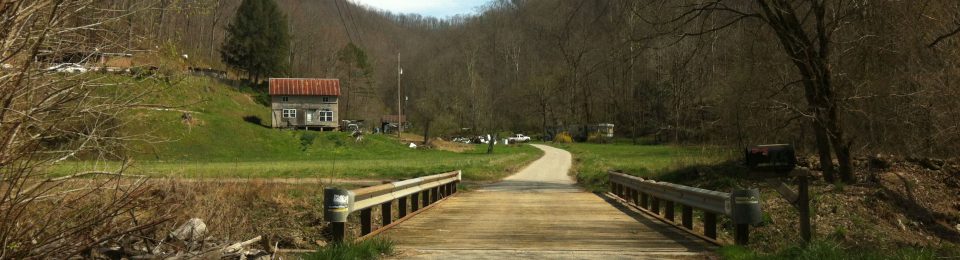
 Brandon Ray Kirk