• About

Brandon Ray Kirk

~ This site is dedicated to the collection, preservation, and promotion of history and culture in my section of Appalachia.

Brandon Ray Kirk

Tag Archives: Lincoln County

Love

14 Friday Dec 2012

Posted by Brandon Ray Kirk in Pearl Adkins Diary

≈ 1 Comment

Tags

Appalachia, Harts Creek, history, inspiration, life, Lincoln County, love, Pearl Adkins, thoughts, U.S. South, West Virginia, writers, writing

     “Alone in my cuddy with no one near me I and my thoughts are struggling with each other,” Pearl wrote in late fall or early winter. “My thoughts have drifted off in a dream world. They have got the better of me. They keep drifting to that Nobody. In twilight hours my thoughts form swiftly of one fancy and then the other of him. They have woven a strong cord around my heart which seems never to be broken. I keep thinking of him and can’t help it. Aw shucks, he is in mind morning, noon and night. What makes me keep picturing him in my mind — his look, his ways, his talk and every thing about him — and what it all means, I can’t tell. I never thought of any one else as I do him. I can’t account for the uneasy feeling around my heart unless it is, I love him. Oh God, can it be I love him? Lord this has slipped upon me unexpected. Oh what sorrow it brought. It would have been a blessing to any one else, but to me it will eat my heart away. I guess I have loved him from urchin days but never realized it till just now. No hopes what ever of winning his love. God, what I have to suffer and why it is I can’t tell. I haven’t done any thing to any one that I would be chasened for, but God’s will be done. It’s a higher power above that controls our nature. We love whether it’s our wishes our not. I know it isn’t my will to love the one I do. It came with such a shock as if from the streaks of lightning. It shot through my weak body and unnerved me so I haven’t hardly recovered from the shock yet for it was all so strange and new and I’m not quite used to it yet.”

     “Winter passed on with her sleet and snow,” Pearl continued, perhaps in the spring. “I care but a little for the wind’s loud roar for I’m near the old fire place. I sit there sadly dreaming of my one love here no more. Aw, I dream of a bright future of happy moments I may spend with him when he returns home. My, the winter is gone before I hardly knew it for I heard every few days some thing of my Ideal man but I didn’t know he was till long after he had gone. As you know from girlhood days, I have had my Ideal for he is the one boy for me by and by. I have pictured my sweet many times — his height, his eyes, his weight, and last of all the color of his hair, but never dreamed of him being in miles of here, but when I did awaken I awoke with a shock to think I had known him a many a long day and had learned to love him very dearly before I knew it.”

     “Well, spring is here,” Pearl next wrote. “I have changed places but he is in my mind all the long spring days but I love him better each day and each day that passes I think I can’t love him any better but the dawning day brings on a stronger love than the preceding day. I guess there’s no limit to this love of mine.”

     “Spring days are slipping by as if on wings,” Pearl wrote, a little later. “The fleeter they are, the closer the summer draws nearer, the quicker I will get to see my honey for I have heard he will be here about the 26th of July.”

Nobody Comes and Goes

13 Thursday Dec 2012

Posted by Brandon Ray Kirk in Pearl Adkins Diary

≈ Leave a comment

Tags

Appalachia, Harts Creek, inspiration, life, Lincoln County, love, Pearl Adkins, thoughts, U.S. South, West Virginia, writers, writing

     “Here comes Nobody,” Pearl wrote in an undated entry. “He has gone again but not for long this time. I guess I will get to see him Friday or Saturday one. This old place is lonesome and dreary. I know I will get to see his sweet face and smiles. They are like the rays of sun shine drifting through the dark clouds (for his life seems as dark as the dark clouds).”

     “It was a cold winter night,” Pearl wrote later. “He stopped in a for a while to warm and what he said made me think he would make good some day but that hope was shattered long ago. From what I heard, he had a chance to make good his words but let it slip. But I don’t believe he done the things I heard. By hopes, I mean of him ever having any thing only as he works it out and by day labor.”

     “Well, the kid is back for a long stay this time, so I think,” Pearl wrote next. “No, oh no, I am mistaken.”

     “Well, the guy has gone to some distant city for a while but he won’t stay long,” Pearl wrote in July. “He likes his friends too well to go away finally and never return. I miss him so much and deeply regret his quick departure. Oh, I feel a sharp twinge around my heart to know it will be weeks and probably months before I see him again. Gee, how I wish he hadn’t gone away.”

     “They have been house cleaning all day,” Pearl wrote later. “I have been alone for hours. Some of them may have come out and stayed with me some. How well I remember that day my dress and all — it was a white dress. I thought I looked good or rather pretty in it. I can now imagine how funny I looked in that rig. Ha. Ha. We were eating supper and all of a sudden he appeared on the scene. It gave me such a shock I couldn’t eat any more supper for I didn’t know he was in 200 miles of here. Well, the whole reaon I didn’t eat any more, he came right in and seated his self at the end of the table, facing me, and right beside me at that end and began to tell of his travels. When I would look up from my plate he would be looking at me, his laughin eyes fairly dancing with delight. But believe me, he looked sweet in his new out fit. I would describe him here but I dare not for I’m afraid Cora will find and read this for I’ve heard her say if she was to find one’s diary she would read it. She would sure know who I’m writing this nonsense about. If she does bother her little head to read she won’t know any more than if she hadn’t. Hee hee.”

     “There’s going to be a big meeting,” Pearl wrote in September, “so my Nobody heard of it and came back. I’m tickled pink to see him again. We have had lots of company but none I would have rather seen than him. A friend and I were sitting by the window when he passed by. She asked who he was. I smiled and said, ‘The one in a word omitted? Aw, that is name omitted.’ She said, ‘Why, that’s the ugliest boy I ever saw.’ Ha, Ha. I said, ‘I think not. I think he’s the best looking boy round here.’ He has gone back now and my thoughts have gone with him. Oh God, help him. He is in trouble. I hope it won’t be nothing serious. It was just a little word omitted. That is all. Of course, I would rather it had never happened but it has so it doesn’t change my liking for him.”

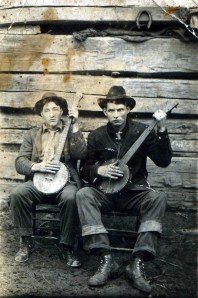
West Virginia Banjo Players

13 Thursday Dec 2012

Posted by Brandon Ray Kirk in Music

≈ Leave a comment

Tags

Appalachia, banjo, culture, Harts Creek, history, life, Lincoln County, music, photos, U.S. South, West Virginia, writing

Dockie Vance and John Alan Farley, West Virginia banjo players

Dockie Vance and John A. Farley, 1910-1920

Mr. Nobody

12 Wednesday Dec 2012

Posted by Brandon Ray Kirk in Pearl Adkins Diary

≈ Leave a comment

Tags

Appalachia, Harts Creek, history, inspiration, life, Lincoln County, love, Pearl Adkins, thoughts, U.S. South, West Virginia, writers, writing

     The third volume of Pearl’s diary is almost entirely void of dates, although it does appear to reflect chronological writing.

     “This is Spring,” Pearl began. “This is a beautiful place with its birds and flowers. It would be an Ideal home if it wasn’t such an out away place. I like the inhabitants but don’t like the location of the site with all of its beauty. I don’t want to make my home here forever. Every one wants to be so good to us but for all their kindness I don’t like here by no means. I have a few friends but a very few they are. I have one that’s every thing to me. His name, that will never do to tell. Well, his name will be Mr. Nobody here.”

     About that time, Mr. Nobody became ill.

     “Spring yet. Mr. Nobody is quite sick,” she wrote. “I have prayed that he might get well.”

     “We have had company all day and have had a nice time in the afternoon,” Pearl wrote one Sunday. “Mr. Nobody came and he was so weak he could hardly walk.”

     “He is a lot better now,” Pearl wrote in an undated entry. “My, his loss of weight, parched lips and all symptoms of a sick person made a scarecrow of him. He has gone. Wished he had stayed longer. This is the first place he’s gone since he got better. The kid has left and gone some where or other.”

     Whatever illness it was that plagued Pearl’s “crush” proved to be of a lingering nature.

     “He is sick again,” she worredly wrote. “The Lord knows whether he will have strength to get over this.”

     “He’s worse,” she wrote, yet still. “Oh Lord, can’t he never get well? Oh, he is bad — worse, he’s just as bad as can be to live. In fact, there seems to be no better in this life for him.”

     And then, to Pearl’s relief, Mr. Nobody’s condition improved.

     “He is better after all. If he did narrowly escape the clutches of death, he is well and strong again. I’m so thankful that my prayer has been answered.”

     Not long thereafter, Mr. Nobody took off on a road trip, giving Pearl nothing much to write about until his return to Harts.

     “Nobody has come back,” she wrote. “My, oh, he looks like I don’t know what with his hair growed out in his temples. He had some pictures made while some where and brought them and showed them to me. They were the ugliest things I ever seen but I told him they were real nice looking and that they looked just like him and that he couldn’t have had one more like him than those were. Ha.”

     “Well, he is now back for a long stay,” Pearl again wrote at a later date. “I guess this old place won’t be quite so desolate now. Just to get a glimpse of him makes the long summer days seems shorter.”

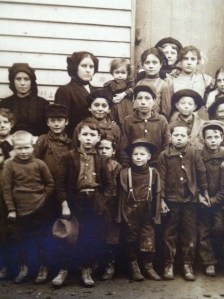
Low Gap School

09 Sunday Dec 2012

Posted by Brandon Ray Kirk in Ferrellsburg

≈ Leave a comment

Tags

Appalachia, culture, education, history, life, Lincoln County, Low Gap School, photos, U.S. South, West Virginia

Low Gap School Children, 1895-1915

Harts Creek School Children, 1895-1915

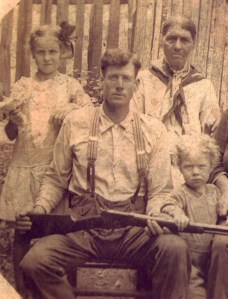
Rifle 1

09 Sunday Dec 2012

Posted by Brandon Ray Kirk in Culture of Honor

≈ Leave a comment

Tags

Appalachia, crime, culture, Harts Creek, history, life, Lincoln County, photos, U.S. South, West Virginia, writing

Ed Dalton, about 1915

Ed Dalton, about 1915

Deep Secrets

08 Saturday Dec 2012

Posted by Brandon Ray Kirk in Pearl Adkins Diary

≈ Leave a comment

Tags

Appalachia, culture, Harts Creek, history, inspiration, life, Lincoln County, love, Pearl Adkins, thoughts, U.S. South, West Virginia, writers, writing

     “Diary dear, I can tell you many things I can’t no other,” Pearl wrote on October 31. “You keep secrets that no one knows. I’m going to confide in you. I love another. I have said I could no other but one, but I’m not quite sure now. Kindness goes a long way to create love. It’s not good looks. I never knew til now. Oh Lord, what makes me always love some body that don’t love me. But they are so kind I can’t help but love him some but I don’t want to. I never thought of loving him until a certain thing happened. I dreamed so often of him making love to me. Oh Lord, let that love for him cease for I don’t want it ever to be. I want my one I always loved.”

     “This is the last day of our beautiful October weather,” Pearl continued. “Many here to day. October month here me. Oh Lord let us all meet again. Goodby October’s bright blue weather and sad the crimson autumn leaves but sadder that one of her sisters was sick. She was fixing to go and leave me dirty and as always my heart told me Dear was coming and I didn’t want to be so dirty. She quarreled at me for wanting to be cleaned up. I cried till my eyes was all swollen up and red. So you see how it is when you can’t do any thing for yourself. You go blank. Well, after I cried she went and cleaned me up but before I got my slipper on he came. It seems that he is always in a hurry. After he was gone I couldn’t help but think of a song: ‘I grieve that ere I met three, Faith fair would I forget thee. Can river thee? Never! Farewell, farewell forever! We have met, and we have parted yet uttered scarce a word like a guilty thing, Started when thy well-knowing voice I heard,’ Oh, how well those words are formed. I couldn’t have wrote my feelings better if I had tried.”

     “Sunday morning again,” Pearl wrote a little later. “Word came to Mother as I expected but I never seen him — only his well loved voice I heard. He sit down out in the yard and stayed a long time but being an old cripple I couldn’t go out to even get a look at his sweet face. Oh Lord, how I would like to speak his dear name as I can write it but I dare not for none of the folks don’t like him a great deal. So I love him on in secret as I have so long. Dear boy, I love you — love you as I can love no other.”

West Virginia Timberman

07 Friday Dec 2012

Posted by Brandon Ray Kirk in Timber

≈ Leave a comment

Tags

Appalachia, Boone County, culture, genealogy, history, John P Fowler, life, Lincoln County, photos, timbering, U.S. South, West Virginia, writing

John P. Fowler, West Virginia timberman

John P. Fowler of Lincoln and Boone counties

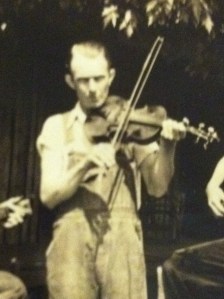
West Virginia Fiddler 1

07 Friday Dec 2012

Posted by Brandon Ray Kirk in Music

≈ Leave a comment

Tags

Appalachia, Bill Adkins, culture, fiddler, Harts Creek, history, life, Lincoln County, music, photos, West Virginia

Bill Adkins, West Virginia fiddler

Bill Adkins, West Virginia fiddler

Ferrellsburg Ferry

05 Wednesday Dec 2012

Posted by Brandon Ray Kirk in African American History, Ferrellsburg

≈ Leave a comment

Tags

Appalachia, culture, Ferrellsburg, history, life, Lincoln County, photos, U.S. South, West Virginia, writing

Ferrellsburg Ferry, 1900-1915

Ferrellsburg Ferry, 1900-1915

What happened to John Fleming? 3

02 Sunday Dec 2012

Posted by Brandon Ray Kirk in Big Harts Creek

≈ 6 Comments

Tags

Appalachia, crime, feud, Harts Creek, history, Jacob D Smith, John Fleming, Lincoln County, Virginia, West Virginia, Wise, writers, writing

On February 28, 1912, I.J. Beverly, sheriff of Wise County, Virginia, wrote Jacob D. Smith, assistant prosecuting attorney in Lincoln County, West Virginia, to inform him that John Fleming — a fugitive on the run — was living in a nearby town called Glamorgan and using the alias of George Fleming. The letter read as follows:

Wise, Va., March 7th

           Prosecuting Attorney Lincoln county, Hamlin, W.Va.

           Have John Fleming in custody. He agrees to come without requisition if I will bring him but refuses to go with your officer. I will bring him if you will pay all expenses and Two Fifty per day. Answer.

            I.J. Beverly

            Sheriff Wise County

On March 8, Smith received Sheriff Beverly’s letter. Three days later, he left Hamlin, seat of government for Lincoln County, for Richmond, Virginia as an agent to secure requisition papers from Virginia Governor W.H. Mann. A little later, he hired G.A. Lenz, a C&O special agent in Huntington, West Virginia, to accompany him to Wise County as a guard. By March 16, Smith and Lenz had delivered Fleming to the Lincoln County jail. On March 30, Fleming’s bail was set at $2,000.

Early in May, the following witnesses were called to appear before the Circuit Court in the State v. John Fleming, scheduled for June 4: Caleb D. Headley, Lewis Cass Gartin, Andrew Sias, Paris Brumfield, Tilden Gartin, W.A. Adkins, M.E. Nelson, Joe Gartin, Tilman Adkins, John Gartin, Grover Gartin, E.C. Lucas (Sr.), Jeff Lucas, Alvin Sias, Harrison Neace, Bob Fleming, Bud Workman, Jessie Adkins, Lewis Lucas, Ben Noe, Levi Rakes, Flora Lucas, Thomas Sias, Samp Davis, Lona Neace, Albert Neace, George Fleming, Robert Adkins, T.B. Hatfield, Peter Mullins, Ike Fry, William Adkins, Floyd Mullins, Harlan Mullins, Mary Burns, Lula Burns, Jane Moore, Zack Neace, Bill Neace, Abe Noe, Floyd Workman, Wiley Lucas, Dr. Jenks Adkins and Little Cane Lucas.

Days later, John Fleming escaped from the county jail using tools given to him by his brother, Willard. A warrant was issued for the arrest of Willard and placed in the hands of Boyd S. Hicks. According to records maintained at the Lincoln County Circuit Clerk’s Office: “Whereas Burnie Smith has this the 4 day of June 1912 made complaint upon oath before M.D. Hilbert, Justice of said county that one John Fleming was confined in the Lincoln county Jail, being so confined to answer to a charge of shooting with the attempt to kill Caleb Headley, and while in said Jail as a prisoner awaiting trial on said charge, one Willard Fleming did on or about the 10 day of May 1912 willfully and feloniously give and cause to be given the said John Fleming prisoner as aforesaid certain saws, chisels, and other implements for use of said John Fleming in effecting escape from said Jail, and by means of which said saws and other implements he the said John Fleming did saw the bars in said Jail and make his escape there from.” On June 5, Willard Fleming, Matthew C. Farley, Lewis Maynard and Zac Williamson posted Fleming’s $1000 bond.

In an effort to re-arrest Fleming, the Lincoln County Circuit Court issued capias warrants for him on October 29, 1913, December 21, 1914 and March 29, 1915. Fleming was no where to be found.

With John out of the way, his former wife, Lizzie Fry, felt safe enough to remarry. On November 8, 1915, she married Boss Keith. It’s not clear if she had ever married Charley McCoy, the man whose cuckling of Fleming had prompted the ’09 shootout.

In the years following Fleming’s escape, surprising details surfaced about his role in the shootout at Fourteen. “The Fryes and Headleys were blamed for Grandpa Hariff’s death,” said one local man in a 2003 interview, “but an old Frye woman sent word on her deathbed who killed him. She said it was his first cousin, John Fleming.”

Meanwhile, the court continued to issue capias warrants for Fleming on November 14, 1916, February 16, 1917, April 11, 1919, April 5, 1921, April 19, 1922 and December 29, 1922.

Finally, on March 26, 1923, according to Law Order Book 17 at the Lincoln County Courthouse, prosecuting attorney Jacob D. Smith, “with the assent of the court says that he will not further prosecute the defendant John Flemmings, of the Felony of which he now stands charged in this Court. It is therefore considered by the court that the defendant John Flemmings be acquitted, discharged and go thereof without delay.”

By that time, Fleming was probably dead.

“John Fleming went back to Virginia with someone,” said Willard Frye, a nephew to Lizzie, in a 2003 interview. “He got off his horse at a stream to get a drink of water and when he bent down at the stream this man shot him in the back of the head.”

More dreams

02 Sunday Dec 2012

Posted by Brandon Ray Kirk in Pearl Adkins Diary

≈ Leave a comment

Tags

Appalachia, culture, dreams, Harts Creek, history, inspiration, life, Lincoln County, love, Pearl Adkins, superstitions, thoughts, West Virginia

     “I had a dream last night,” Pearl wrote in July. “I dreamed he came here and I thought several were here too. They were enjoying their selfs but he didn’t have any thing to say and I thought he was the saddest looking boy I ever seen. He was sitting by the door.”

     “I dreamed he was here again,” she continued in a later entry. “He was sad. That time he was handling a pistol some how. I think he was just as sad in my dream as he told me he was. I think them two dreams has a meaning and what it is I don’t know.”

     “October is bright blue weather,” Pearl wrote a few months later, “but I could enjoy it if it wasn’t for this sad old heart of mine. But it will rejoice some day by and by. It’s sad so sad for me. I have thought for many many days I would get my one desire but all hopes have fled. But I pray on and on. My prayers have been for those sweet moments when the wonder of your love was fully known. I seem to feel your loving strong arms again and then — I miss you so my darling!”

Introduction (July 2002)

01 Saturday Dec 2012

Posted by Brandon Ray Kirk in Harts, Pearl Adkins Diary, Women's History

≈ Leave a comment

Tags

Adkins Conspiracy Case, Appalachia, Beecher Avenue, Billy Adkins, Custer McCann, Fed Adkins, Ferrellsburg, Guyandotte River, Harts, history, Isaac Adkins Branch, Lincoln County, Pearl Adkins, polio, Rinda Adkins, Sand Creek, U.S. South, Watson Adkins, West Virginia, writers, writing

Some years ago, I located a diary kept by Pearl Adkins, a physically handicapped and romantically frustrated intellect. A life-long resident of Harts, West Virginia, Pearl was born on August 1, 1904 to Fed and Rinda (Davis) Adkins. At the time of her birth, her parents resided in a two-story plank house situated at the mouth of Isaac Adkins Branch on Guyandotte River. Her father’s involvement in the famous Adkins conspiracy case of 1907 and subsequent incarceration in the West Virginia state penitentiary and loss of property disrupted her childhood and prompted a move. In 1908, the family relocated to a rental dwelling situated above the Adkins store, just back of the original homeplace. Between 1914 and 1916, Pearl and her family lived elsewhere in Hart Bottom. Thereafter, they resided at Sand Creek (1916-1921), then Ferrellsburg — a community above Hart. At this latter location, the Adkins clan briefly operated a store.

“I knew Pearl real well,” said Custer McCann, an 83-year-old retired schoolteacher and Harts resident in June 2002. “I worked for her brother Watson Adkins and stayed around there a lot. She was Watson’s half-sister. She was highly intelligent and she read widely. I’d say she was self-educated. She was a very kind-hearted person. I never did hear her say a bad word about any one.”

Polio crippled Pearl at a young age.

“I’ve always heard my sister Inez [Pearl’s friend and sister-in-law] say that Pearl walked until she was twelve years old,” said McCann. “She had a sick spell and never got over that. But her mother did a real job taking care of her. When she got out of bed, they’d put her in a wheelchair. She had no control with her legs at all.”

According to the genealogy notebooks of nephew Billy Adkins of Harts, “Pearl was five feet, one inch tall and had brown hair and blue eyes. She was a very intelligent woman. She read a lot. She was a very wise woman and counseled people. She was a good listener.”

Pearl’s three volume diary appears to chronicle thoughts and events from January 30, 1922 until May 6, 1928, although it is full of undated or vaguely dated entries. At the time of her writing, Pearl was a young woman approximately eighteen to twenty-four years old still living at home with her parents. The family resided on Beecher Avenue in a small single-story house situated on property owned by Watson Adkins.

What happened to John Fleming? 1

30 Friday Nov 2012

Posted by Brandon Ray Kirk in Big Harts Creek, Big Sandy Valley, Fourteen, Harts

≈ Leave a comment

Tags

A.L. Smith, Adkins Conspiracy Case, Albert Adkins, Arty Fleming, Bill Brumfield, Charleston Gazette, Charley Brumfield, Christian Fry, Cosby Fry, crime, Dan Cunningham, Elizabeth Fry, Elizabeth Lizzie Fleming, Elliott Northcott, Emory Mullins, Fed Adkins, Fourteen Mile Creek, Harts Creek, Henry Mullins, history, J.P. Douglas, Jake Davis, John Fleming, John H. Mullins, John Henan Fry, Kentucky, Lace Marcum, Lillie Fleming, Lincoln County, Logan County, Luraney Fleming, Man Adkins, Margaret Adkins, Pike County, Preston Fleming, Raleigh County, Robert Fleming, Rosa Mullins, Squire Dial, Thomas H. Harvey, Upper Elkhorn Creek, West Virginia, Willard Fleming, Willard Frye, William Brumfield, William Fleming, William M.O. Dawson, writers, writing, Wyoming County

Over one hundred years ago, John Fleming, a desperado twice sentenced to serve time in the West Virginia State Penitentiary, escaped from the Lincoln County jail and disappeared forever in the mountains of the Big Sandy Valley.

John P. Fleming was born in February 1868 to Preston and Arty (Mullins) Fleming at Upper Elkhorn Creek in Pike County, Kentucky. Nothing is known of his early life except that he had a daughter named Roxie by Lucy Mullins in 1887. In the late 1880s, John and his family migrated to West Virginia and settled in the Abbott Branch area of Logan County, just above Harts Creek. In 1891, his brother William married Luraney Frye, a daughter of Christian and Elizabeth (Hunter) Frye, in Logan County. In 1897, his sister Sarah married Squire Dial in Logan County. The next year, brother Robert, or Bob, married Lillie Dempsey, also in Logan County.

On December 25, 1892, Fleming murdered his uncle, John H. Mullins, at Big Creek, Logan County. Essentially, the story went like this: Mr. Mullins’ sons, Henry and Emory, were in a quarrel and Fleming intervened. The elder Mullins came to settle the matter and Fleming fled across a creek. Mullins pursued, knife in hand. At the creek, Fleming shot his uncle. He was immediately taken before Squire Garrett, who discharged him. When a new warrant was sworn out for him, he fled the county. In March of 1893, his wife attempted to meet him but became ill and died at Dunlow, Wayne County. Fleming was at her bedside when authorities arrested him. A Logan County jury found him guilty of second degree murder and Judge Thomas H. Harvey sentenced him to eighteen years in the West Virginia state penitentiary in Moundsville. In the 1900 census, he is listed there under the name of “J.P. Flemons,” inmate. Curiously, he claimed to have been married for one year.

During Fleming’s incarceration, his siblings continued to marry into local families. In 1900, brother Willard married Caroline Caldwell, a daughter of Floyd Caldwell, in Logan County. In 1902, sister Lucy married James F. Caldwell, a son of Hugh Caldwell, in Logan County. Around 1903, brother George married Minnie Tomblin.

After his release from prison, John married Sarah Elizabeth “Lizzie” Frye, a daughter of John Henan and Ida Cosby (Headley) Frye. The Fryes lived on Sulphur Springs Fork of Fourteen Mile Creek, several miles below Harts Creek. Lizzie, born around 1887, was roughly eighteen years younger than John. They may have become acquainted through John’s brother, William, who had married Lizzie’s aunt, Luraney Frye, in 1891.

“Aunt Lizzie was married to John Fleming,” said Willard Frye, an elderly resident of Frye Ridge, in a 2003 interview. “John was a mean man who packed two .45 pistols. He was a member of Charley Brumfield’s gang. He was mean to Aunt Lizzie.”

Fleming’s involvement in the Brumfield gang soon led to more prison time. In the summer of 1907, the “feudist,” as newspapers would later call him, became entangled in the peculiar “Adkins conspiracy case.”

A little earlier, in December of 1906, Margaret Adkins, Fisher B. Adkins, Floyd Enos Adkins, Albert G. Adkins and Fed Adkins — all associates in an Adkins general store business in Harts — took out a four-month loan for $600 from the Huntington National Bank. By April 1907, they had not paid any money toward the loan and asked for a four-month extension. In late June or July, Margaret Adkins, sister to Fed, filed a bankruptcy petition. On July 3, the District Court of the United States for the Southern District of West Virginia adjudged her bankrupt. J.P. Douglass (later a Speaker of the West Virginia House of Delegates) was appointed as receiver in the case and arrived in Hart to survey the business. A.L. Smith stood guard at the store.

On July 5, after the government had taken control of the merchandise in the store, a vigilante group called the Night Riders robbed the store and hid the various goods in neighbors’ homes and barns.

Following the robbery, detectives descended on Harts in an effort to unravel the details of the crime. The most famous of these detectives was Dan Cunningham, a one-time participant in the Hatfield-McCoy Feud. More recently, Mr. Cunningham had been employed by Governor William M.O. Dawson in Raleigh and Wyoming Counties. During his Harts Creek investigation, he boarded with locals and eavesdropped on conversations between suspects. Those involved in the store heist, meanwhile, used various means to suppress information. But as the pressure of the investigation bore down on locals, neighbors began to snitch on each other.

By December of 1907, the State had evidence against eleven men in what the Charleston Gazette called “the celebrated Adkins Bankruptcy Case” which “if proven by witnesses for the government, will equal any novel ever written by Victor Hugo.” Those accused — described by the Huntington Herald-Dispatch as “eleven brawny mountaineers” — were Fed Adkins, Charles Brumfield, Albert “Jake” Davis, Manville Adkins, John Fleming, Willard Fleming, Robert “Bob” Fleming, John Adkins, Albert G. Adkins, Floyd Enos Adkins and William “Bill” Brumfield. The state charged the gang with “conspiracy to defraud the government and to impede the administration of justice after the government had taken possession of Adkins store.”

U.S. District Attorney Elliott Northcott prosecuted the case, while Lace Marcum argued for the defendants. In opening remarks on December 5, according to the Herald-Dispatch, District Attorney Northcott fiercely denounced “the eleven men who have been a terror to the country surrounding the village of Hart, in Lincoln county, for the past six months. He stated in words burning with bitterness that the government expected to prove beyond any reasonable doubt that crimes that would narrow the very souls of every juror had been committed in the vicinity of Hart, and had the story been told him three weeks ago he would have thought it a piece of fiction pure and simple… He also alluded to the fact that the government would prove by witnesses who would tell of the horror that had been created in the neighborhood: houses burned, men shot down from ambush, houses with unprotected women had been shot up and the inmates terrorized until they were afraid to venture outdoors. It was a thrilling recital of the worst crimes that have taken place in this state in a decade.” According to the Herald-Dispatch, the eleven defendants “showed but little interest except to look at each other and smile when the crimes were talked of.”

In Marcum’s opening remarks on December 5, he stated that he would prove the goods found at the homes of the defendants were there several weeks before the Adkins store went bankrupt.

On December 6, Northcott questioned Rosa “Sis” Mullins, a sister to Emory and a resident of Abbotts Branch, who swore that she saw John Fleming’s brothers — Bob and Willard — go by her house the night of the robbery on their way to the Adkins store.

“Nearly every witness who testified yesterday,” the Charleston Gazette reported on December 7, “showed just how desperate these defendants are, and the testimony of Capt. Dan Cunningham unraveled a tale of horror that was realistic in every sense of the word.”

On December 7, Lace Marcum began his defense of John Fleming and the ten other Harts men. Bob Fleming, John’s brother, was the second witness called to the stand. He swore that he knew nothing of the robbery until the day after it happened and that he never saw any of the stolen goods. Willard Fleming, John’s other brother, said he stayed with Charley Brumfield the night of the robbery and saw no one armed. John, referenced in one newspaper account as being a “paroled prisoner,” testified along the same lines, as did all the defendants who were called to the stand. “The entire list of defendants swore to very near the same thing,” reported the Gazette.

For the most part, Marcum’s defense of the eleven Harts men had little chance of success considering the evidence against them. In his closing remarks, he was forced to put them at the court’s mercy by claiming that they had acted the way they did because they didn’t know any better. In the end, ten of the accused were sentenced to twelve- or eighteen-month terms in the West Virginia state penitentiary.

Newer posts →

Feud Poll 1

If you had lived in the Harts Creek community during the 1880s, to which faction of feudists might you have given your loyalty?

Categories

  • Adkins Mill
  • African American History
  • American Revolutionary War
  • Ashland
  • Atenville
  • Banco
  • Barboursville
  • Battle of Blair Mountain
  • Beech Creek
  • Big Creek
  • Big Harts Creek
  • Big Sandy Valley
  • Big Ugly Creek
  • Boone County
  • Breeden
  • Calhoun County
  • Cemeteries
  • Chapmanville
  • Civil War
  • Clay County
  • Clothier
  • Coal
  • Cove Gap
  • Crawley Creek
  • Culture of Honor
  • Dingess
  • Dollie
  • Dunlow
  • East Lynn
  • Ed Haley
  • Eden Park
  • Enslow
  • Estep
  • Ethel
  • Ferrellsburg
  • Fourteen
  • French-Eversole Feud
  • Gilbert
  • Giles County
  • Gill
  • Green Shoal
  • Guyandotte River
  • Halcyon
  • Hamlin
  • Harts
  • Hatfield-McCoy Feud
  • Holden
  • Hungarian-American History
  • Huntington
  • Inez
  • Irish-Americans
  • Italian American History
  • Jamboree
  • Jewish History
  • John Hartford
  • Kermit
  • Kiahsville
  • Kitchen
  • Leet
  • Lincoln County Feud
  • Little Harts Creek
  • Logan
  • Man
  • Matewan
  • Meador
  • Midkiff
  • Monroe County
  • Montgomery County
  • Music
  • Native American History
  • Peach Creek
  • Pearl Adkins Diary
  • Pecks Mill
  • Peter Creek
  • Pikeville
  • Pilgrim
  • Poetry
  • Queens Ridge
  • Ranger
  • Rector
  • Roane County
  • Rowan County Feud
  • Salt Rock
  • Sand Creek
  • Shively
  • Spears
  • Sports
  • Spottswood
  • Spurlockville
  • Stiltner
  • Stone Branch
  • Tazewell County
  • Timber
  • Tom Dula
  • Toney
  • Turner-Howard Feud
  • Twelve Pole Creek
  • Uncategorized
  • Warren
  • Wayne
  • West Hamlin
  • Wewanta
  • Wharncliffe
  • Whirlwind
  • Williamson
  • Women's History
  • World War I
  • Wyoming County
  • Yantus

Feud Poll 2

Do you think Milt Haley and Green McCoy committed the ambush on Al and Hollene Brumfield in 1889?

Blogroll

  • Ancestry.com
  • Ashland (KY) Daily Independent News Article
  • Author FB page
  • Beckley (WV) Register-Herald News Article
  • Big Sandy News (KY) News Article
  • Blood in West Virginia FB
  • Blood in West Virginia order
  • Chapters TV Program
  • Facebook
  • Ghosts of Guyan
  • Herald-Dispatch News Article 1
  • Herald-Dispatch News Article 2
  • In Search of Ed Haley
  • Instagram
  • Lincoln (WV) Journal News Article
  • Lincoln (WV) Journal Thumbs Up
  • Lincoln County
  • Lincoln County Feud
  • Lincoln County Feud Lecture
  • LinkedIn
  • Logan (WV) Banner News Article
  • Lunch With Books
  • Our Overmountain Men: The Revolutionary War in Western Virginia (1775-1783)
  • Pinterest
  • Scarborough Society's Art and Lecture Series
  • Smithsonian Article
  • Spirit of Jefferson News Article
  • The Friendly Neighbor Radio Show 1
  • The Friendly Neighbor Radio Show 2
  • The Friendly Neighbor Radio Show 3
  • The Friendly Neighbor Radio Show 4
  • The New Yorker
  • The State Journal's 55 Good Things About WV
  • tumblr.
  • Twitter
  • Website
  • Weirton (WV) Daily Times Article
  • Wheeling (WV) Intelligencer News Article 1
  • Wheeling (WV) Intelligencer News Article 2
  • WOWK TV
  • Writers Can Read Open Mic Night

Feud Poll 3

Who do you think organized the ambush of Al and Hollene Brumfield in 1889?

Recent Posts

  • Logan County Jail in Logan, WV
  • Absentee Landowners of Magnolia District (1890, 1892, 1894)
  • Charles Spurlock Survey at Fourteen Mile Creek, Lincoln County, WV (1815)

Ed Haley Poll 1

What do you think caused Ed Haley to lose his sight when he was three years old?

Top Posts & Pages

  • Big Coal Deals for Logan County, WV (1917)
  • Civil War Gold Coins Hidden Near Chapmanville, WV
  • White Family History at Pecks Mill, WV (1937)
  • West Virginia Banjo Player 5
  • William Lucas, Revolutionary War Veteran of Giles County, VA

Copyright

© Brandon Ray Kirk and brandonraykirk.wordpress.com, 1987-2023. Unauthorized use and/or duplication of this material without express and written permission from this blog’s author and/or owner is strictly prohibited. Excerpts and links may be used, provided that full and clear credit is given to Brandon Ray Kirk and brandonraykirk.wordpress.com with appropriate and specific direction to the original content.

Archives

  • February 2025
  • January 2025
  • October 2023
  • September 2023
  • December 2022
  • November 2022
  • May 2022
  • April 2022
  • February 2022
  • November 2021
  • October 2021
  • September 2021
  • June 2021
  • May 2021
  • April 2021
  • March 2021
  • February 2021
  • January 2021
  • December 2020
  • November 2020
  • October 2020
  • July 2020
  • June 2020
  • May 2020
  • April 2020
  • March 2020
  • February 2020
  • January 2020
  • December 2019
  • November 2019
  • October 2019
  • September 2019
  • August 2019
  • July 2019
  • June 2019
  • May 2019
  • April 2019
  • March 2019
  • February 2019
  • January 2019
  • December 2018
  • November 2018
  • October 2018
  • September 2018
  • August 2018
  • July 2018
  • June 2018
  • May 2018
  • April 2018
  • March 2018
  • February 2018
  • January 2018
  • December 2017
  • November 2017
  • October 2017
  • September 2017
  • August 2017
  • July 2017
  • June 2017
  • May 2017
  • April 2017
  • March 2017
  • February 2017
  • January 2017
  • December 2016
  • November 2016
  • October 2016
  • September 2016
  • August 2016
  • July 2016
  • June 2016
  • May 2016
  • April 2016
  • March 2016
  • February 2016
  • January 2016
  • December 2015
  • November 2015
  • October 2015
  • September 2015
  • August 2015
  • July 2015
  • June 2015
  • May 2015
  • April 2015
  • March 2015
  • February 2015
  • January 2015
  • December 2014
  • October 2014
  • September 2014
  • August 2014
  • July 2014
  • June 2014
  • May 2014
  • April 2014
  • March 2014
  • February 2014
  • January 2014
  • December 2013
  • November 2013
  • October 2013
  • September 2013
  • August 2013
  • July 2013
  • June 2013
  • May 2013
  • April 2013
  • March 2013
  • February 2013
  • January 2013
  • December 2012
  • November 2012

Enter your email address to follow this blog and receive notifications of new posts by email.

Join 2,927 other subscribers

Tags

Appalachia Ashland Big Creek Big Ugly Creek Blood in West Virginia Brandon Kirk Cabell County cemeteries Chapmanville Charleston civil war coal Confederate Army crime culture Ed Haley Ella Haley Ferrellsburg feud fiddler fiddling genealogy Green McCoy Guyandotte River Harts Harts Creek Hatfield-McCoy Feud history Huntington John Hartford Kentucky Lawrence Haley life Lincoln County Lincoln County Feud Logan Logan Banner Logan County Milt Haley Mingo County music Ohio photos timbering U.S. South Virginia Wayne County West Virginia Whirlwind writing

Blogs I Follow

  • OtterTales
  • Our Appalachia: A Blog Created by Students of Brandon Kirk
  • Piedmont Trails
  • Truman Capote
  • Appalachian Diaspora

BLOOD IN WEST VIRGINIA is now available for order at Amazon!

Blog at WordPress.com.

OtterTales

Writings from my travels and experiences. High and fine literature is wine, and mine is only water; but everybody likes water. Mark Twain

Our Appalachia: A Blog Created by Students of Brandon Kirk

This site is dedicated to the collection, preservation, and promotion of history and culture in Appalachia.

Piedmont Trails

Genealogy and History in North Carolina and Beyond

Truman Capote

A site about one of the most beautiful, interesting, tallented, outrageous and colorful personalities of the 20th Century

Appalachian Diaspora

  • Subscribe Subscribed
    • Brandon Ray Kirk
    • Join 789 other subscribers
    • Already have a WordPress.com account? Log in now.
    • Brandon Ray Kirk
    • Subscribe Subscribed
    • Sign up
    • Log in
    • Report this content
    • View site in Reader
    • Manage subscriptions
    • Collapse this bar
 

Loading Comments...