
• About

Brandon Ray Kirk

~ This site is dedicated to the collection, preservation, and promotion of history and culture in my section of Appalachia.

Brandon Ray Kirk

Tag Archives: labor

Huntington Editorial about the UMWA (1925)

05 Friday Feb 2021

Posted by Brandon Ray Kirk in Coal, Huntington, Logan, Williamson

≈ 1 Comment

Tags

Appalachia, Charleston, coal, Herald-Dispatch, history, Huntington, John L. Lewis, John Mitchell, Kanawha Field, labor, Logan, Logan County, Mingo County, New River Field, Ohio, Portsmouth, Samuel Gompers, United Mine Workers of America, West Virginia, Williamson

From the Logan Banner of Logan, WV, comes this editorial regarding a visit to the region by UMWA officials in 1925. The story is dated September 4, 1925.

A STATEMENT OF INDISPUTABLE FACTS

The Sunday issue of the Huntington Herald-Dispatch contained a most interesting editorial which told the unvarnished truth about the recent visit the officials of the United Mine Workers to the Logan and Williamson coal fields. The editorial follows.

Disappointed Visitors

Within the past three days officials of the United Mine Workers of America have visited Logan and Williamson and some of the mining operations near these prosperous West Virginia cities. Up to the hour of this writing the visitors have made no statement either as to the purpose of their visit or the impressions they have gained from the conditions encountered.

It may be taken for granted, however, that the gentlemen representing the United Mine Workers are not highly pleased. They did not find in the miners of the Logan and Williamson fields the “serfs” and downtrodden creatures professional agitators have described. They did not find beleaguered camps of concentrados crying out for release through the medium of membership in the U.M.W. They did not find gunmen and desperadoes awaiting them at the train to turn them back with broken heads and verbal abuses. The absence of these things were disappointing.

But for the purpose of the U.M.W. the things these visitors did find were even more disappointing. They found for example miners who earn more dollars per year than any others in the bituminous fields in the world. They found more miners living in better houses than are to be found in any of the mining camps of Pennsylvania, Ohio, Indiana or Illinois. They found miners and their wives and children better fed, better clothed and with better living conditions surrounding them than any others in the United States.

They found in Logan and Williamson fields men who are content and who are unwilling to leave steady employment, good wages, and good homes with all the comforts of life, to take up a miserable existence in the tents of professional strikers there to subject their wives and children to unwanted hardships and deprivations.

In short, they were not welcomed as needed deliverers. The miners in these fields know that it is not the purpose of these gentlemen to bring about a betterment of the conditions under which they live, but to create a condition which will cause coal production to cease. Organization is a fine thing and should be encouraged when it is for the good of the organized. But the proposal of the United Mine Workers, as it affects these miners and the business and labor interests of this section in general, is sinister and destructive. The unionization at this time of any considerable part of the Williamson and Logan fields would mean a strike. A strike, if effective, would paralyze business in all of Logan county, and in Huntington the result would be almost disastrous. An effective strike in these fields would paralyze Huntington’s wholesale and jobbing business. It would close many of the factories and worst of all would almost immediately result in unemployment for hundreds of railway shop workers and scores of train crews all the way from Charleston to Portsmouth with the brunt of the blow falling upon Huntington.

The United Mine Workers is no longer the helpful, constructive organization it was twenty years ago. Its ranks have been decimated and its policies have been so radical and unreasonable in many cases as to bring it into disrepute with the public, including the legitimate labor organizations whose members are ruled by reason. In West Virginia dues paying members have dwindled to almost the vanishing point. In strikes, fomented in an effort to destroy West Virginia coal in the interest of Ohio, Indiana and Illinois mines and the mine workers in those states, West Virginia has cost the U.M.W. millions and the officials now face the impending anthracite strike with a sadly depleted treasury.

The desperate plight of Mr. Lewis, his organizers, and well paid cabinet naturally produces its own results. The strike in northern West Virginia has had no effect other than to keep some thousands of men out of employment and deprive thousands of women and children of the comforts the pay envelope would provide. The mining of coal in the Kanawha and New River fields the Miners Union has, to use a baseball term, “struck out.” Attempts to force upon the operators a wage scale which prohibited the mining and marketing of coal at a price less than a ruinous loss have resulted in strike after strike in those fields until the union is but a band of disorganized stragglers whose representatives, when they bolted the State Federation of Labor convention in this city two weeks ago, went away unwept and were not urged to return.

If the miners of this district had any prospect, even remote, of gaining anything by organization, no self-respecting man could afford to oppose or discourage the movement. But the weight is all on the other side. If they needed the union, public sentiment would see that they got it. We are living like that today. But since they do not need it, since the movement is directed against their welfare and against the thousands of legitimate unionists and all business and all industry in this great tri-state area, the organization effort, if it is being seriously contemplated–which we very greatly doubt–has no appeal either to the miners or to public sentiment.

The Logan and Williamson miners do not want to exchange the well filled pay envelope for the miserable weekly doe from the U.M.W. treasury. They do not want to trade their comfortable, well furnished and well lighted homes for leaky tents with tallow candles. They do not want to take their families from places and stations of comfort and respectability to sloth and degradation.

Organization means strike. Strike means starvation and, if the bloody history of Mingo’s experience with the United Mine Workers is to be repeated, bloodshed, terror, and bold assassination. Mr. Lewis, by a blind and unreasoning insistence upon the impossible Jacksonville agreement, has gotten himself into a dilemma of the most embarrassing kind. He is at end of his tether. The treasury is low. The organization is in a state of decay, with miners every day discovering they are better off without it than with it.

If, instead of uttering strike threats; if, instead of trying to enforce a wage scale which is a grotesque economic absurdity and rank impossibility; if, instead of leading the miners into hardship and strike, he would lead them in the ways of peace by consenting to wage adjustments in keeping with the state of the coal market, the organization might regain public confidence, recover its vitality, and reclaim its usefulness. And Mr. Lewis himself, instead of facing the imminent danger of becoming a discredited industrial adventurer, would be acclaimed a leader, as was John Mitchell, and as was Samuel Gompers.

United Mine Workers of America (1925)

02 Saturday Jan 2021

Posted by Brandon Ray Kirk in Coal

≈ Leave a comment

Tags

Barrackville, Charleston, District 17, Harold Houston, Henry Warrum, history, Indiana, Indianapolis, labor, Logan, Logan Banner, Philadelphia, secretary, Sullivan, United Mine Workers of America, West Virginia, William C. Thompson, William Petry

From the Logan Banner of Logan, WV, comes this story dated August 28, 1925 regarding the United Mine Workers of America:

OFFICERS RECEIVE LION’S SHARE OF UNION CHECK OFF

Report Shows 35 Cents of Every Union Miner’s Dollar Goes to Pay Overhead Costs

Virtually 35 cents of every dollar paid into the United Mine Workers of America treasury at Indianapolis goes for overhead expenses, chief of which is salaries, according to the report of the auditors who went over the books of the international’s accounts from January 10 to June 1 of this year. They report that the union had $1,191.991.64 on deposit on various banks on the latter date, despite the payment of some very large sums of money about which little is said.

West Virginia ranks high in the list of expenditures with the statement made that $411,475 was given somebody in connection with the Charleston headquarters of district 17, for the relief of Kanawha miners, for the relief of men who declined to work under the American plan of mining. As this was for 110 days, according to the report, it amounts to virtually $3,750 a day for every day reported. This sum was in addition to the $124,000 given somebody in the Fairmont field, for the aid of strikers there.

Administration Costs High

The “aid” money was also aside and apart from administration expenses in Charleston, because the audit shows the payment of $22,849.05 to William C. Thompson, secretary of District 17, for administrative expenses. Legal salaries were also apart from both of these figures, as the payment of $8.606.57 to Thomas Townsend for work during that period, and $602.11 to Harold Houston, another Charleston attorney, were listed separately. The settlement of claims for back salary, made by William Petry, former vice president of the district is also listed separately, the settlement being made for $500 cash.

The salaries and expenses of officers are lumped in one sum as $254,808.94, or 20.9 per cent of the disbursements for the 110 day period. These salaries and expenses are clear entirely of any incidental office expenses, supplies, etc. Mr. Townsend, the Charleston attorney, received the largest salary of the few listed separately, as Henry Warrum, the Philadelphia attorney received $4.672.73 during the 110 days and John Campbell but $4,250. Several other lawyers received from $2,000 to 3,000 fees.

Gift to Sufferers

Gifts of $250 to the tornado sufferers in Indiana; $500 to the victims of the Barrackville mine disaster; $500 to Illinois tornado sufferers and $1000 to sufferers in the Indiana explosion at Sullivan are also reported, being a very small portion of the disbursements listed.

Recapitulation of the figures show that the balance on hand January 16, 1924 was $1,048,044.40. The incoming from members of the union for the 110 days was $1,362,201.28. This made a total of $2,410,245.78. From this is deducted expenditures of $1,216,254.14 for the 110 days, leaving a balance June 1, of $1,191,991.64.

Armed March: Federation of Labor Seeks Pardon for Killer (1925)

13 Friday Nov 2020

Posted by Brandon Ray Kirk in Battle of Blair Mountain

≈ Leave a comment

Tags

Appalachia, Battle of Blair Mountain, Blair Mountain, Charleston, crime, deputy sheriff, Edgar Combs, Ephraim Morgan, genealogy, governor, Harold Houston, history, Howard Gore, Huntington, J.E. Wilburn, John Gore, John Wilburn, labor, Logan, Logan Banner, Logan County, Moundsville, prosecuting attorney, United Mine Workers of America, West Virginia, West Virginia Federation of Labor, Wheeling Metal and Manufacturing Company

From the Logan Banner of Logan, WV, in a story dated August 14, 1925, comes this bit of history relating to the “armed march” on Logan and Mingo counties in 1921:

FEDERATION ASKS PARDON FOR MAN WHO KILLED GORE

The West Virginia Federation of Labor has been holding its annual convention in Huntington during the past week.

On Tuesday morning the convention unanimously passed a resolution calling upon Governor Howard M. Gore to pardon or parole Edgar Combs who is serving a sentence imposed in connection with the murder of John Gore who was killed on Blair mountain when the “Red Necks” made their famous “armed march” in an attempt to invade Logan and unionize this field.

The resolution was presented Monday by Attorney Harold Houston, of Charleston, counsel for the United Mine Workers in District 17.

The resolution was as follows:

“Whereas Edgar Combs is now confined in the state penitentiary at Moundsville serving a life sentence imposed by the circuit court of Logan county for the alleged murder of John Gore, killed on Blair mountain during a clash between members of the ‘armed march’ of 1921 and a posse of Logan county; and

“Whereas he is now the only person serving in the penitentiary for an offence connected with said uprising, the Rev. J.E. Wilburn and John Wilburn, his son, having turned so-called ‘state’s evidence’ and been pardoned by Governor Ephraim H. Morgan, the said pardon to take effect early in the year 1926; and

“Whereas all of the many hundreds of prosecutions growing out of said trouble have been dismissed and abandoned by the prosecuting attorney of Logan county; and

“Whereas Edgar Combs has a wife and five infant children dependent upon him for maintenance and support, his wife at the present time working for the Wheeling Metal and Manufacturing company in an effort to keep her family together.

“Therefore, be it resolved by the eighteenth annual convention of the West Virginia Federation of Labor assembled at the city of Huntington W.Va. that we earnestly petition the Honorable Howard M. Gore, Governor of West Virginia, to grant and extend executive clemency to Edgar Combs, and either pardon or parole him for said alleged offense.

“And be it further resolved, that a copy of this resolution be immediately forwarded to Governor Gore for its consideration.”

Battle of Blair Mountain (1921)

27 Tuesday Oct 2020

Posted by Brandon Ray Kirk in Battle of Blair Mountain, Logan

≈ Leave a comment

Tags

Appalachia, Battle of Blair Mountain, Bilton McDonald, C.S. Minter, crime, Don Chafin, F.O. Woerner, F.R. Remlinger, F.S. Schuster, First National Bank, Fulton Mitchell, H.C. Hill, history, justice of the peace, labor, Logan, Logan Banner, Logan County, Mine Wars, Naaman Jackson, sheriff, Sidney B. Lawson, true crime, United Mine Workers of America, W.S. Bradshaw, West Virginia

From the Logan Banner of Logan, WV, comes this item dated September 9, 1921 about the “armed march” on Logan County by union miners:

TROOPS END GREAT CONFLICT

CITIZENS MEET TO SEND THANKS TO SISTER COUNTIES WHO SO NOBLY HELPED

The war is over!

With the arrival of federal troops Saturday and the relieving of the boys along the battle sector Sunday morning Logan citizens started to regain rest which has been denied for two weeks. All Sunday afternoon special trains were speedily filled up and started on their way with tired but happy men, for their homes up and down the county and to our neighboring counties who so willingly came to our help at a time when days looked very black for the future of our beautiful county.

Every man a volunteer and every one ready for action as soon as he arrived in Logan. Logan will never forget the sacrifice made.

Monday evening in answer to a call issued, the circuit court room filled with citizens of Logan to give thanks and offer resolutions to those helping us and to the counties who so nobly responded to our calls for help.

The meeting was opened by Clarence McD. England and Naaman Jackson, president of the First National Bank was elected chairman. Committees were immediately appointed to draw up the resolutions. During the time the committees were preparing the resolutions several impromptu speeches were made. The speakers included Attorney Lilly and Chafin. Mr. Chafin emphasized the fact that it was due to Kanawha county’s failure to properly cope with the situation at the time when it could have been handled without bloodshed that it become necessary for Logan to mobilize an army under arms to protect its rights as a county. He brought forth rousing cheers when he stated that Logan county has a sheriff who had made the statement that “they shall not pass” and now they could say “THEY DID NOT PASS!” The fighting parsons were called for. They were the Reverends Coffey and Dodge.

Rev. Dodge said we had taught the rednecks the meaning of “Love” as it had been taught to him when a child–that of the application of a slipper to a part of his anatomy. He said it was in this manner he preached the meaning of the word and felt in this way Logan had showed her love for those who were fighting under the red flag through ignorance but who have now laid down their arms to resume the more peaceful pursuit of “live and let live.”

Justice of the Peace Fulton Mitchell was called on for a speech relative to the treatment received at the hands of the enemy when he and his three companions were captured and held for more than a week. His remarks were of the same content as will be found in another column of this issue.

In due time the resolutions had been prepared and read to those present and were speedily adopted and have been sent to the counties specified.

They are as follows:

Logan, Logan County, West Va.,

September 5, 1921

To the Officials and Citizens of our Neighboring West Virginia Counties, and the Western Counties of Virginia, whose Aid and Counsel was so Freely and Generously given to us at the time of the threatened invasion of our boundaries:

GREETING:

The representative citizenship of Logan county, West Virginia, in mass meeting on this day assembled, do hereby earnestly and publicly express to you and each of you, our sincere and hearty thanks and appreciation for the substantial, timely and very valuable aid and assistance rendered to our county and our citizenship during the recent attempted invasion of our boundaries by a misguided and hostile mob, imbued with the spirit of anarchy and fighting under the red flag.

The value of the help brought by the men who came to us from your counties cannot be overestimated. The organization was soon perfected and proved effective in holding back the invaders.

While your men were with us they showed fine courage and devotion to duty; their bearing was always that of courteous gentlemen, and the citizens of Logan county most heartily thank you and your gallant men for the splendid help given.

We hope the occasion will never arise when you will need similar assistance, but, if such a crisis should occur, our men will be found ready to respond.

Respectfully,

REV. W.S. BRADSHAW

F.S. SCHUSTER

F.O. WOERNER

C.S. MINTER

DR. H.C. HILL

Resolutions Committee.

The foregoing resolution was unanimously adopted at a mass meeting held in the City of Logan, September 5, 1921.

NAAMAN JACKSON, Chairman.

F.S. SCHUSTER, Sec’y.

In mass meeting assembled at County Court House in Logan, September 5th, 1921:

The citizens of Logan county–

RESOLVED: That the actions and efforts of the Logan county officials as well as those of the loyal men and women, are most heartily commended and approved, and it is further

RESOLVED: That the final results of such are most gratefully acknowledged and appreciated, and be it

RESOLVED: That a copy of these resolutions be printed in our local newspapers.

DR. S.B. LAWSON

F.R. REMLINGER

BILTON McDONALD

Committee.

C&O Railroad — Ferrellsburg section

10 Thursday Jul 2014

Posted by Brandon Ray Kirk in Ferrellsburg

≈ Leave a comment

Tags

Appalachia, C&O Railroad, Ferrellsburg, history, J.M. "Doc" Mullins, labor, Lincoln County, Minnis "Mink" Mullins, photos, railroad, U.S. South, West Virginia

J.M. "Doc" Mullins (section foreman), M.C. "Mink" Mullins,

(L-R) J.M. “Doc” Mullins (section foreman), M.C. “Mink” Mullins, and two unidentified men

Dr. Ronald L. Lewis endorses “Blood in West Virginia”

28 Saturday Jun 2014

Posted by Brandon Ray Kirk in Lincoln County Feud, Timber

≈ Leave a comment

Tags

Appalachia, Blood in West Virginia, Brandon Kirk, Coal Iron and Slaves, ethnicity, feud, Harts, Historian Laureate of West Virginia, history, industrialization, Kentucky, labor, Ronald L. Lewis, timbering, Transforming the Appalachian Countryside, West Virginia, West Virginia University, writing

I proudly announce Dr. Ronald L. Lewis’ endorsement of my book, Blood in West Virginia: Brumfield v. McCoy. Dr. Lewis, professor emeritus of history at West Virginia University and Historian Laureate of West Virginia, ranks as one of Appalachia’s most distinguished and recognized historians. Best known for his award-winning book, Transforming the Appalachian Countryside (1998), an unsurpassed study of the timber industry in West Virginia, Dr. Lewis is author of five books, beginning with Coal, Iron, and Slaves (1979), as well as numerous articles. Throughout his long career in academia, he has consistently offered top-notch scholarship on the subjects of ethnicity, labor, industrialization, and social change, particularly as they apply to West Virginia and Appalachian history. While I would recommend any one of Dr. Lewis’ writings, his Transforming the Appalachian Countryside remains a personal favorite. Receiving praise from such an outstanding scholar (and personal hero) means a great deal to me.

Here is Dr. Lewis’ endorsement of Blood in West Virginia:

“The family feud is indelibly linked with Appalachia in American popular culture. As portrayed by sensationalist reporters and local color writers of the late 19th century, feuding was evidence of the genetic and/or cultural degeneracy of a people whose lack of social institutions and isolation had arrested their culture in a frontier state as American progress bypassed the region on its way westward. Appalachia was ‘a strange land with peculiar people’ and ‘a place where time stood still.’ Unfortunately, there is not a shred of evidence for this social construction of the region or the ‘hillbilly’ stereotype: that Appalachians were governed by an irrational predisposition to violence. Since the 1980s, scholars have rejected the popular-culture view of drunken hillbillies ready to shoot at the drop of a hat to protect family honor. Brandon Kirk’s Blood in West Virginia is one of the modern community studies that obliterate the stereotype; his intensive research of the Brumfield-McCoy feud that occurred in 1889-90 at Hart, West Virginia, reinforces the revisionist view that feuds occurred as the result of industrial capitalism, rather than the lack of it. Most Appalachian feuds occurred in the mountain counties of southern West Virginia and eastern Kentucky during the last two decades of the 19th century when railroad, timber, and coal development virtually transformed the region’s economy from its traditional agricultural economy into a rural-industrial one. Kirk clearly demonstrates that the Brumfield-McCoy feud was a struggle between rival factions to control the area’s economic and political development. Family ties among the feudists were incidental. Motives for the feud were, therefore, not peculiar to Appalachian culture; after all, violence for economic and political control in industrializing America was as American as apple pie. Blood in West Virginia is an exciting story well-told; fortunately, it is one that preserves the truth rather than perpetuates the stereotypes.”

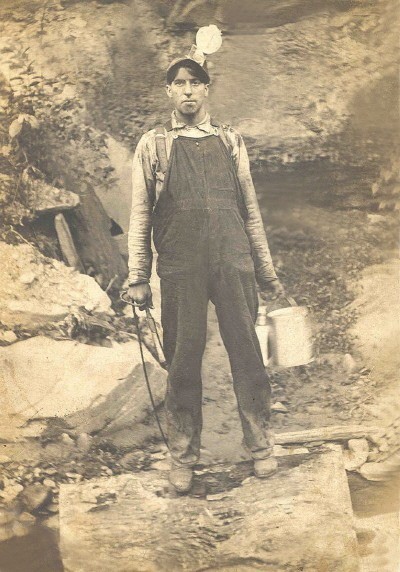
West Virginia Coal Miner 1

18 Wednesday Sep 2013

Posted by Brandon Ray Kirk in Coal

≈ Leave a comment

Tags

Appalachia, coal, culture, history, labor, life, photos, U.S. South, West Virginia

Harrison Smith

Harrison Smith

Feud Poll 1

If you had lived in the Harts Creek community during the 1880s, to which faction of feudists might you have given your loyalty?

Categories

  • Adkins Mill
  • African American History
  • American Revolutionary War
  • Ashland
  • Atenville
  • Banco
  • Barboursville
  • Battle of Blair Mountain
  • Beech Creek
  • Big Creek
  • Big Harts Creek
  • Big Sandy Valley
  • Big Ugly Creek
  • Boone County
  • Breeden
  • Calhoun County
  • Cemeteries
  • Chapmanville
  • Civil War
  • Clay County
  • Clothier
  • Coal
  • Cove Gap
  • Crawley Creek
  • Culture of Honor
  • Dingess
  • Dollie
  • Dunlow
  • East Lynn
  • Ed Haley
  • Eden Park
  • Enslow
  • Estep
  • Ethel
  • Ferrellsburg
  • Fourteen
  • French-Eversole Feud
  • Gilbert
  • Giles County
  • Gill
  • Green Shoal
  • Guyandotte River
  • Halcyon
  • Hamlin
  • Harts
  • Hatfield-McCoy Feud
  • Holden
  • Hungarian-American History
  • Huntington
  • Inez
  • Irish-Americans
  • Italian American History
  • Jamboree
  • Jewish History
  • John Hartford
  • Kermit
  • Kiahsville
  • Kitchen
  • Leet
  • Lincoln County Feud
  • Little Harts Creek
  • Logan
  • Man
  • Matewan
  • Meador
  • Midkiff
  • Monroe County
  • Montgomery County
  • Music
  • Native American History
  • Peach Creek
  • Pearl Adkins Diary
  • Pecks Mill
  • Peter Creek
  • Pikeville
  • Pilgrim
  • Poetry
  • Queens Ridge
  • Ranger
  • Rector
  • Roane County
  • Rowan County Feud
  • Salt Rock
  • Sand Creek
  • Shively
  • Spears
  • Sports
  • Spottswood
  • Spurlockville
  • Stiltner
  • Stone Branch
  • Tazewell County
  • Timber
  • Tom Dula
  • Toney
  • Turner-Howard Feud
  • Twelve Pole Creek
  • Uncategorized
  • Warren
  • Wayne
  • West Hamlin
  • Wewanta
  • Wharncliffe
  • Whirlwind
  • Williamson
  • Women's History
  • World War I
  • Wyoming County
  • Yantus

Feud Poll 2

Do you think Milt Haley and Green McCoy committed the ambush on Al and Hollene Brumfield in 1889?

Blogroll

  • Ancestry.com
  • Ashland (KY) Daily Independent News Article
  • Author FB page
  • Beckley (WV) Register-Herald News Article
  • Big Sandy News (KY) News Article
  • Blood in West Virginia FB
  • Blood in West Virginia order
  • Chapters TV Program
  • Facebook
  • Ghosts of Guyan
  • Herald-Dispatch News Article 1
  • Herald-Dispatch News Article 2
  • In Search of Ed Haley
  • Instagram
  • Lincoln (WV) Journal News Article
  • Lincoln (WV) Journal Thumbs Up
  • Lincoln County
  • Lincoln County Feud
  • Lincoln County Feud Lecture
  • LinkedIn
  • Logan (WV) Banner News Article
  • Lunch With Books
  • Our Overmountain Men: The Revolutionary War in Western Virginia (1775-1783)
  • Pinterest
  • Scarborough Society's Art and Lecture Series
  • Smithsonian Article
  • Spirit of Jefferson News Article
  • The Friendly Neighbor Radio Show 1
  • The Friendly Neighbor Radio Show 2
  • The Friendly Neighbor Radio Show 3
  • The Friendly Neighbor Radio Show 4
  • The New Yorker
  • The State Journal's 55 Good Things About WV
  • tumblr.
  • Twitter
  • Website
  • Weirton (WV) Daily Times Article
  • Wheeling (WV) Intelligencer News Article 1
  • Wheeling (WV) Intelligencer News Article 2
  • WOWK TV
  • Writers Can Read Open Mic Night

Feud Poll 3

Who do you think organized the ambush of Al and Hollene Brumfield in 1889?

Recent Posts

  • Logan County Jail in Logan, WV
  • Absentee Landowners of Magnolia District (1890, 1892, 1894)
  • Charles Spurlock Survey at Fourteen Mile Creek, Lincoln County, WV (1815)

Ed Haley Poll 1

What do you think caused Ed Haley to lose his sight when he was three years old?

Top Posts & Pages

  • U.B. Buskirk of Logan, WV (1893-1894)
  • Vance Homeplace and Cemetery on West Fork (2017)
  • Tice Elkins in Ferrellsburg, WV
  • Alice Dingess piano
  • Civil War Gold Coins Hidden Near Chapmanville, WV

Copyright

© Brandon Ray Kirk and brandonraykirk.wordpress.com, 1987-2023. Unauthorized use and/or duplication of this material without express and written permission from this blog’s author and/or owner is strictly prohibited. Excerpts and links may be used, provided that full and clear credit is given to Brandon Ray Kirk and brandonraykirk.wordpress.com with appropriate and specific direction to the original content.

Archives

  • February 2025
  • January 2025
  • October 2023
  • September 2023
  • December 2022
  • November 2022
  • May 2022
  • April 2022
  • February 2022
  • November 2021
  • October 2021
  • September 2021
  • June 2021
  • May 2021
  • April 2021
  • March 2021
  • February 2021
  • January 2021
  • December 2020
  • November 2020
  • October 2020
  • July 2020
  • June 2020
  • May 2020
  • April 2020
  • March 2020
  • February 2020
  • January 2020
  • December 2019
  • November 2019
  • October 2019
  • September 2019
  • August 2019
  • July 2019
  • June 2019
  • May 2019
  • April 2019
  • March 2019
  • February 2019
  • January 2019
  • December 2018
  • November 2018
  • October 2018
  • September 2018
  • August 2018
  • July 2018
  • June 2018
  • May 2018
  • April 2018
  • March 2018
  • February 2018
  • January 2018
  • December 2017
  • November 2017
  • October 2017
  • September 2017
  • August 2017
  • July 2017
  • June 2017
  • May 2017
  • April 2017
  • March 2017
  • February 2017
  • January 2017
  • December 2016
  • November 2016
  • October 2016
  • September 2016
  • August 2016
  • July 2016
  • June 2016
  • May 2016
  • April 2016
  • March 2016
  • February 2016
  • January 2016
  • December 2015
  • November 2015
  • October 2015
  • September 2015
  • August 2015
  • July 2015
  • June 2015
  • May 2015
  • April 2015
  • March 2015
  • February 2015
  • January 2015
  • December 2014
  • October 2014
  • September 2014
  • August 2014
  • July 2014
  • June 2014
  • May 2014
  • April 2014
  • March 2014
  • February 2014
  • January 2014
  • December 2013
  • November 2013
  • October 2013
  • September 2013
  • August 2013
  • July 2013
  • June 2013
  • May 2013
  • April 2013
  • March 2013
  • February 2013
  • January 2013
  • December 2012
  • November 2012

Enter your email address to follow this blog and receive notifications of new posts by email.

Join 2,925 other subscribers

Tags

Appalachia Ashland Big Creek Big Ugly Creek Blood in West Virginia Brandon Kirk Cabell County cemeteries Chapmanville Charleston civil war coal Confederate Army crime culture Ed Haley Ella Haley Ferrellsburg feud fiddler fiddling genealogy Green McCoy Guyandotte River Harts Harts Creek Hatfield-McCoy Feud history Huntington John Hartford Kentucky Lawrence Haley life Lincoln County Lincoln County Feud Logan Logan Banner Logan County Milt Haley Mingo County music Ohio photos timbering U.S. South Virginia Wayne County West Virginia Whirlwind writing

Blogs I Follow

  • OtterTales
  • Our Appalachia: A Blog Created by Students of Brandon Kirk
  • Piedmont Trails
  • Truman Capote
  • Appalachian Diaspora

BLOOD IN WEST VIRGINIA is now available for order at Amazon!

Blog at WordPress.com.

OtterTales

Writings from my travels and experiences. High and fine literature is wine, and mine is only water; but everybody likes water. Mark Twain

Our Appalachia: A Blog Created by Students of Brandon Kirk

This site is dedicated to the collection, preservation, and promotion of history and culture in Appalachia.

Piedmont Trails

Genealogy and History in North Carolina and Beyond

Truman Capote

A site about one of the most beautiful, interesting, tallented, outrageous and colorful personalities of the 20th Century

Appalachian Diaspora

  • Subscribe Subscribed
    • Brandon Ray Kirk
    • Join 787 other subscribers
    • Already have a WordPress.com account? Log in now.
    • Brandon Ray Kirk
    • Subscribe Subscribed
    • Sign up
    • Log in
    • Report this content
    • View site in Reader
    • Manage subscriptions
    • Collapse this bar
 

Loading Comments...