• About

Brandon Ray Kirk

~ This site is dedicated to the collection, preservation, and promotion of history and culture in my section of Appalachia.

Brandon Ray Kirk

Tag Archives: Kentucky

Paw Paw Incident: Andrew Ferrell Deposition (1889)

27 Sunday May 2018

Posted by Brandon Ray Kirk in Culture of Honor, Hatfield-McCoy Feud, Matewan

≈ Leave a comment

Tags

Andrew Ferrell, Appalachia, Bud McCoy, Doc Mayhorn, Elias Hatfield, feuds, G.W. Pinson, Hatfield-McCoy Feud, history, Kentucky, Pharmer McCoy, Pike County, Plyant Mahorn, Tolbert McCoy

The killing of Tolbert, Pharmer, and Bud McCoy by a Hatfield-led gang on August 8, 1882 represented one of the most sensational events of the Hatfield-McCoy Feud. What follows is Andrew Ferrell’s deposition regarding the affair:

COMMONWEALTH VS DOC MAYHORN &C

Bill of Exceptions

FILED Sept. 1889

G.W. Pinson, Clk

IMG_9715.JPG

I staid up at Elias Hatfield’s the night the McCoy boys were killed. I was awoke when Wall and others came there. Dock Mayhorn nor Plyant Mahorn was either of them there. If they were I didn’t see them. I am & have been acquainted with the General Moral character of the Defendants in the neighborhood in which they live and their character for peace is good.

For more information about this incident, follow these links:

http://explorekyhistory.ky.gov/items/show/785?tour=55&index=3

http://wvpublic.org/post/three-mccoys-killed-hatfields-kentucky-august-8-1882#stream/0

http://hatfield-mccoytruth.com/2017/04/22/in-hatfield-country-blackberry-creek-in-the-1880s/

Paw Paw Incident: Joe Davis Deposition (1889)

27 Sunday May 2018

Posted by Brandon Ray Kirk in Culture of Honor, Hatfield-McCoy Feud, Matewan

≈ Leave a comment

Tags

Appalachia, Blackberry Creek, Bud McCoy, county clerk, Doc Mayhorn, Elias Hatfield, Elijah Mounts, feuds, G.W. Pinson, Hatfield-McCoy Feud, history, Joe Davis, Kentucky, Pharmer McCoy, Pike County, Plyant Mahorn, Tolbert McCoy, Tug Fork, Wall Hatfield, West Virginia

The killing of Tolbert, Pharmer, and Bud McCoy by a Hatfield-led gang on August 8, 1882 represented one of the most sensational events of the Hatfield-McCoy Feud. What follows is Joe Davis’ deposition regarding the affair:

COMMONWEALTH VS DOC MAYHORN &C

Bill of Exceptions

FILED Sept. 1889

G.W. Pinson, Clk

IMG_9709.JPG

The Commonwealth then introduced as a witness Jo Davis who Proves that he lives at the mouth of Blackberry Creek in Pike County Ky and was at home on the 9th day of August 1882. the mouth of Blackberry is about one mile above the mouth of Sulphur. knows Deft Plyant Mayhorn. saw him on Aug 9 1882 with with (sic) Wall and Elias Hatfield and Lige Mounts. Wall ask me if the little McCoy boy cut his brother. I told him he did and Wall said that was all right. it was all he wanted to know or something to that effect. They all turned and went back down the river. from the mouth Sulphur to mouth Mate Creek it is something over ½ mile. As soon as Wall and the others left him he turned and got in his skiff and sailed(?) across the river and went up first Bank(?) 8 or 10 steps and stopped and talked with Fanan(?) for about 3 or 4 minutes. walked on 10 or 12 steps to a fence. throwed his leg across it and heard guns or Pistols firing down the river. There is 3 fords in the river between Blackberry & Sulphur. Wall spoke to him in an ordinary tone of voice. Wall, Elias, Elijah Mounts and deft. Plyant Mayhorn wen(t) just opposite my house where Wall asked me about the little boy stabbing his brother. It was nearing dusk.

Written on left margin: In giving the distance from my house [corner torn] I have reference to the distance on the Ky shore [page torn]. It is nearer on the WVa side. I rowed the skiff ____ up the river about 25(0?) yds. Tug River is the boundary line between Ky & WVa and the river was low. I went down in the morning and saw the boys dead and the little one that Wall inquired about had the top of his head shot off.

For more information about this incident, follow these links:

http://explorekyhistory.ky.gov/items/show/785?tour=55&index=3

http://wvpublic.org/post/three-mccoys-killed-hatfields-kentucky-august-8-1882#stream/0

In Hatfield Country–Blackberry Creek in the 1880s

Coal Development on Island Creek (1927)

04 Friday May 2018

Posted by Brandon Ray Kirk in Coal, Holden, Huntington

≈ Leave a comment

Tags

Appalachia, Boston, Cincinnati, coal, F.W. Batcheler, history, Holden, Huntington, Island Creek, Island Creek Coal Company, James D. Francis, Kentucky, Logan, Logan Banner, New York, Norfolk and Western Railroad, Ohio, Pine Creek, Pond Creek, R.S. McVey, Thomas B. Davis, West Virginia

From the Logan Banner of Logan, WV, comes this story titled “Boston Coal Men Pleased with Island Creek Development–New Town of Pine Creek Planned For,” published on October 25, 1927:

BOSTON COAL MEN PLEASED WITH ISLAND CREEK DEVELOPMENT–NEW TOWN OF PINE CREEK PLANNED FOR

Wish that more of the men at Boston, who talk about “mining camps” could come to West Virginia and see the flourishing cities and towns which dot the coal fields and ride over the hard roads which connect them was expressed Friday by F.W. Batcheler of Boston, treasurer of the Island Creek Coal Company. Mr. Batcheler, for 25 years in his present capacity, had just arrived in Huntington after his first visit to his company’s properties in Logan county and on Pond Creek in Kentucky. He said frankly that the experience had been a revelation to him, familiar as he already was in theory with the activities of his and other companies in these fields, reports the Herald-Dispatch.

Thomas B. Davis of New York, the Island Creek president, who has observed personally the development of the coal fields, was no less enthusiastic than Mr. Batcheler in his comment off the changes which have been wrought since his first visit to Island Creek.

“At first,” he said, “we had to go up the Norfolk & Western, using an accommodation train, and go across the mountains on horseback. Now we can inspect both Pond Creek and Island Creek properties in less time than it took them to get into the field.”

His enthusiasm and that of his fellow travelers was heightened by the fact that the party came to Huntington from Holden, by automobile, in two hours and twenty minutes.

With the president and Mr. Batcheler were R.S. McVey of Cincinnati, vice president in charge of sales, and James D. Francis of Huntington, vice president. Other members of the sales force took part in the inspection visit to the fields.

President Davis spoke in an optimistic strain of business conditions, which he feels are going to continue good despite a “let down” tendency now manifest.

“We can’t go at top speed all the time,” was his comment.

One of the chief points of interest to the inspection party while in Logan was operation No. 22, a new shaft mine which is being opened by the Island Creek company at an outlay of several million dollars.

15-Foot Seam at No. 22

“The shafts are down,” Mr. Davis said, “and we have found a 15-foot seam of coal as good as any found anywhere. The hoists are being raised and the first houses are being built.”

The preliminary housing in the new town of Pine Creek will include about forty buildings. The complete program, the officials explain, includes 600 houses to care for a population of 3,500. To reach this operation a railroad extension was built and a hard road, running for much of the seven-mile distance, was built by the company to connect Pine Creek with Holden.


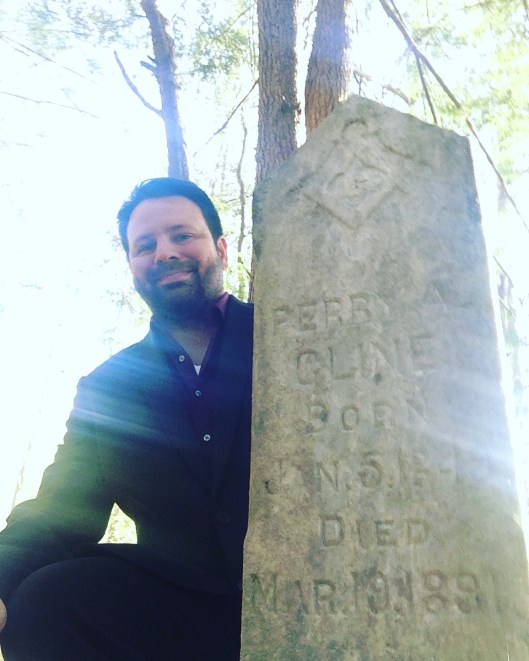
Perry Cline Grave (2018)

30 Monday Apr 2018

Posted by Brandon Ray Kirk in Big Sandy Valley, Hatfield-McCoy Feud, Pikeville

≈ Leave a comment

Tags

Appalachia, Brandon Kirk, genealogy, Hatfield-McCoy Feud, history, Kentucky, Perry Cline, photos, Pike County, Pikeville

IMG_9160

Perry Cline grave, Pikeville, KY. 27 April 2018.

IMG_9162

Perry Cline grave, Pikeville, KY. 27 April 2018.

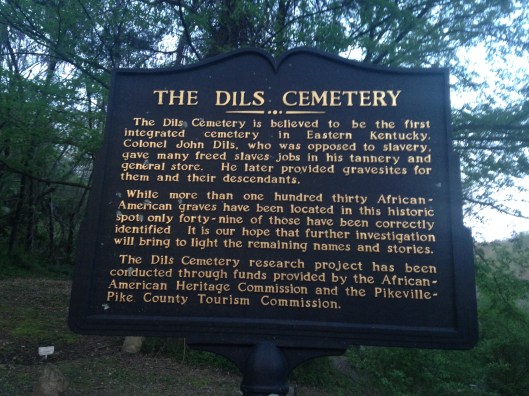
Dils Cemetery in Pikeville, KY (2018)

29 Sunday Apr 2018

Posted by Brandon Ray Kirk in African American History, Cemeteries, Civil War, Hatfield-McCoy Feud, Pikeville

≈ Leave a comment

Tags

39th Kentucky Infantry, African-Americans, Ann Dils, Appalachia, Basil Hatfield, cemeteries, civil war, Dils Cemetery, genealogy, Hatfield-McCoy Feud, history, John Dils Jr., Kentucky, Martha Hatfield, Martha McCoy, National Register off Historic Places, photos, Pike County, Pikeville, Randolph McCoy, Roseanna McCoy, Sam McCoy, Sarah McCoy, slavery, Union Army

IMG_9093

The Dils Cemetery Sign, Pikeville, KY. 27 April 2018.

IMG_9170

McCoy Family wreath, Dils Cemetery, Pikeville, KY. 27 April 2018.

IMG_9095

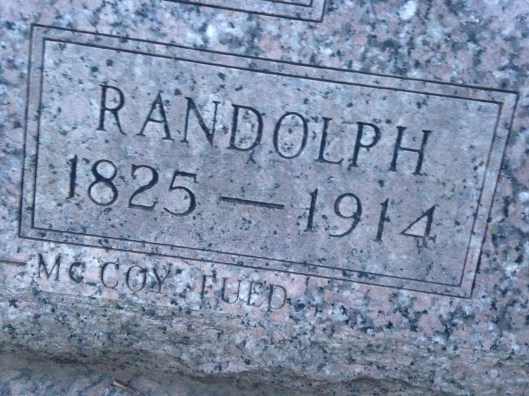
Randolph and Sarah McCoy graves, Dils Cemetery, Pikeville, KY. 27 April 2018.

IMG_9096

Randolph McCoy grave, Dils Cemetery, Pikeville, KY. 27 April 2018.

IMG_9171

Roseanna McCoy grave, Dils Cemetery, Pikeville, KY. 27 April 2018.

IMG_9172

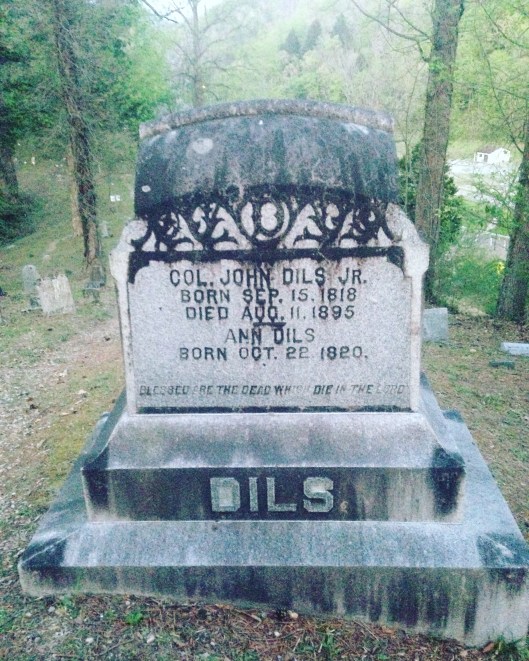
Col. John Dils grave, Dils Cemetery, Pikeville, KY. 27 April 2018.

IMG_9110

History Marker, Dils Cemetery, Pikeville, KY. 27 April 2018.

IMG_9174

Dils Cemetery, Pikeville, KY. 27 April 2018.

IMG_9101

Basil Hatfield grave sign, Dils Cemetery, Pikeville, KY. 27 April 2018.

IMG_9100

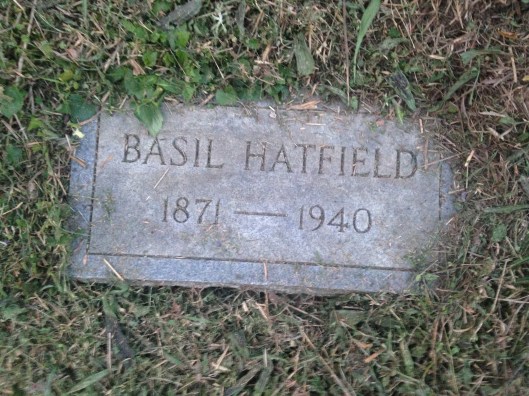
Basil Hatfield grave, Dils Cemetery, Pikeville, KY. 27 April 2018.

IMG_9113

Sam and Martha McCoy grave, Dils Cemetery, Pikeville, KY. 27 April 2018.

Banco News 09.17.1926

21 Wednesday Mar 2018

Posted by Brandon Ray Kirk in Banco, Battle of Blair Mountain, Big Creek, Cemeteries, Chapmanville, Estep, Logan

≈ Leave a comment

Tags

Anna Ferrell, Banco, Battle of Blair Mountain, Big Creek, Borda Lucas, Braxton County, Broad Branch School, Chapmanville, Chapmanville High School, Clara Harmon, Crites, D.H. Harmon, Ellis Fork, Estep, Eva Ellis, Everette Justice, F.L. Estep, Fannie McKinney, Fry Lucas, Gay Pettit, genealogy, H.F. Lucas, history, Ida Rene Lucas, J. Green McNeely, J.A. Stone, J.V. Lucas, Jesse Justice, Julia Toney, Kentucky, Lake, Logan, Logan Banner, Logan County, Louisa Pardue, Lucas Cemetery, Marea Lucas, Mary Hager, Mollie Vance, Ohio, Okey Justice, Pearl Hager, R.L. Ellis, Ralph Lucas, Robert L. Lucas, Robert Sanders, Rosa Barker, Ruby Bowling, Sadie Ball, Ted Hager, Trace Fork, Vergie Turner, Vickers Branch, West Virginia, Whitman

An unknown correspondent from Banco on Big Creek in Logan County, West Virginia, offered the following items, which the Logan Banner printed on September 17, 1926:

Mr. F.D. Lucas of Trace Fork died at his home Tuesday, Sept. 14, after a long illness. Mr. Lucas had seen the frosts of many winters, being near eighty years of age. He is survived by a wife of eight children and a host of grandchildren and one brother known as “Uncle Bill” Lucas. The four daughters are Mrs. Julia Toney of Chapmanville, Mrs. Mollie Vance of Banco, Mrs. Fannie McKinney of Crites, Mrs. Vergie Turner of Chapmanville. The four sons are J.V. Lucas of Trace Fork, B.R. Lucas of Banco, R.L. Lucas of Banco, Ralph Lucas of Vickers Branch. Interment took place at the family graveyard. The bereaved family have our heartfelt sympathy.

The school at this place is progressing nicely under the management of Mrs. Rosa Barker.

Miss Ida Rene Lucas of Logan has been visiting her parents, Mr. and Mrs. J.V. Lucas on Trace Fork the past week.

Everette and Jesse Justice motored to Kentucky last week.

Mr. H.F. Lucas of this place and his girlfriend of Estep motored to Chapmanville last Sunday and attended the basket meeting held by Rev. Green McNeely.

Miss Louisa Pardue of Banco was visiting her sister, Mrs. Sadie Ball at Lake last week.

Mr. and Mrs. F.L. Estep and children of this place motored to the head of Ellis Fork last Sunday and were the guests of Mrs. Estep’s parents, Mr. and Mrs. R.L. Ellis.

Okey Justice of Whitman was calling on homefolks near Banco this week.

Miss Marea Lucas of this place left for Chapmanville last Sunday where she will attend high school. She will be missed by her many friends.

Miss Gay Pettit of Braxton county was the dinner guest of Mrs. D.H. Harmon last Sunday and was also accompanied to Big Creek by Miss Clara Harmon.

Miss Eva Ellis of Estep was the guest of her sister Mrs. F.L. Estep last Wednesday evening.

Mrs. Mary Hager of this place was a business caller in Big Creek last Tuesday and was the dinner guest of her son, Ted Hager.

Mr. and Mrs. J.A. Stone of Blair was the guest of Mr. and Mrs. Robert Sanders last Tuesday.

Miss Ruby Bowling of Ohio, teacher of Broad Branch school, was a business caller in Banco and Big Creek Monday.

Miss Anna Ferrell of Estep was the weekend guest of Miss Pearl Hager.

Good luck to The Banner readers.

Banco News 09.14.1926

19 Monday Mar 2018

Posted by Brandon Ray Kirk in Banco, Big Creek, Big Ugly Creek, Estep, Harts, Huntington, Logan

≈ Leave a comment

Tags

Appalachia, B.R. Lucas, Banco, Basil Duty, Big Creek, Big Ugly Creek, Billy Lilly, C.E. Justice, Clara Harmon, Clarence Ferrell, Ed Stone Branch, Egbert Mullins, Elbert Ferrell, Elm Street, Emma Bell, Estep, F.L. Estep, Fallsburg, genealogy, H.F. Lucas, Harts, history, Huntington, Hurricane, John Hager, John Justice, Journey Ferrell, Kentucky, L.A. Ellis, Logan, Logan Banner, Logan County, Louise Pardue, Marea Lucas, Needmore, Rispa Stone, Roma Estep, Ruby McGraw, Spring Dale, Ted Hager, West Virginia, Whitman, Willie Ellis

An unknown correspondent from Banco on Big Creek in Logan County, West Virginia, offered the following items, which the Logan Banner printed on September 14, 1926:

Everything is quiet in Banco at present. The traffic cops are getting some rest this week as traffic is not so thick as it was last Sunday.

Billy Lilly and Miss Louise Pardue of this place, Miss Emma Bell and Miss Stevens of Big Ugly all motored to Needmore Sunday to church.

Mr. H.F. Lucas of Elm street motored north last Sunday. Wonder why?

Misses Marea Lucas and Clara Harmon of this place made a business trip to Big Creek last Saturday.

Mr. Journey Ferrell of Banco was the Saturday night guest of his brother Elbert Ferrell of Estep.

Mr. and Mrs. Willie Ellis of Logan attended the basket dinner at Needmore last Sunday.

Mr. Roma Estep and cousin of Hurricane were the Monday night guests of his brother in Banco.

Mr. and Mrs. F.L. Estep and children of this place motored to Hart last Sunday evening.

Among those who were the guests of Mrs. B.R. Lucas Saturday night were: Mr. and Mrs. Egbert Mullins and her boyfriend of Huntington. They also attended the basket meeting at Needmore on Sunday.

Mr. and Mrs. Clarence Ferrell of Huntington were the Saturday and Sunday guests of Aunt Rispa Stone on Ed Stone Branch.

Mr. and Mrs. Ted Hager of Big Creek were the all night guests of Mrs. Jno. Hager at this place last Wednesday.

Wonder why Basil Duty of Spring Dale looked so blue while Miss Ruby McGraw of Logan was in town. Bob was all smile, Basil.

Mr. and Mrs. L.A. Ellis sure did do their bit for the meeting at Needmore last Sunday. They spread two large tables with good eats and invited everybody to partake.

Mr. and Mrs. Brewster of Whitman was visiting their uncle, Mr. John Justice, of Elm street the last weekend.

Mrs. C.E. Justice’s grandmother of Fallsburg, Kentucky, has returned home after an extended visit on Elm street.

Martin County Courthouse in Inez, KY (2018)

04 Sunday Mar 2018

Posted by Brandon Ray Kirk in American Revolutionary War, Big Sandy Valley, Civil War, Huntington, Inez

≈ Leave a comment

Tags

American Revolution, Appalachia, Ashland, author, banker, Battle of Blue Licks, Battle of Bryan Station, books, Brandon Kirk, Charleston, Chillicothe, Democratic National Convention, Flem Sampson, Florida, Floyd County, Henry L. Clay, history, Huntington, Inez, Inez Deposit Bank, James Ward, John P. Martin, Kentucky, lawyer, Lewis Dempsey, Martin County, Ohio, Old Sandy Valley Seminary, Outline of U.S. History, Paintsville, photos, Phyllis Kirk, Piqua, Pleasant, Rockcastle Creek, Saltwell Cemetery, State Textbook Commission, teacher, The Mountain Journal, The New Day, U.S. Congress, Virginia, Warfield, West Virginia, William B. Ward, William McCoy Sr., Williamson

IMG_5764.JPG

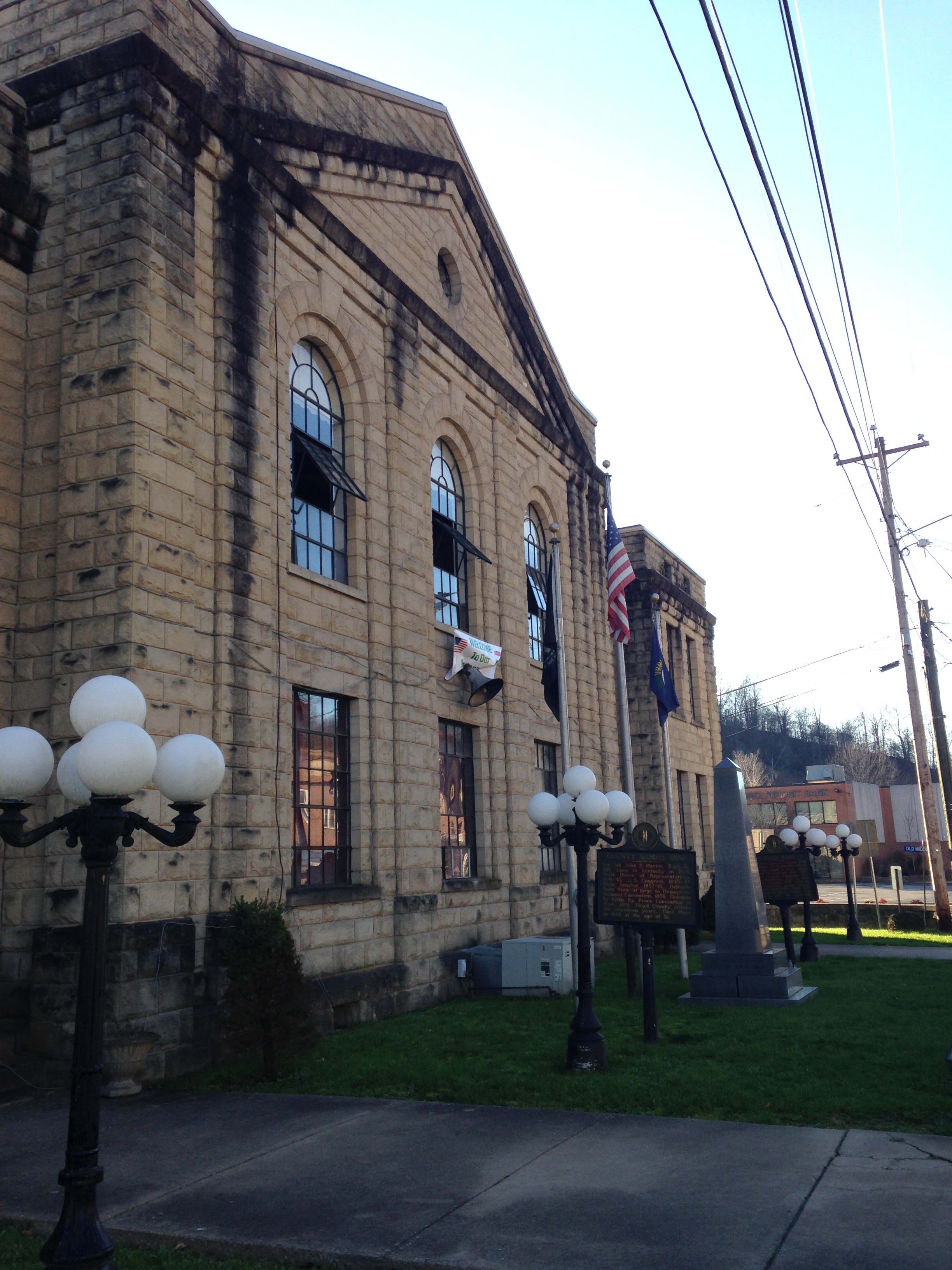
Martin County Courthouse in Inez, KY. 3 March 2018.

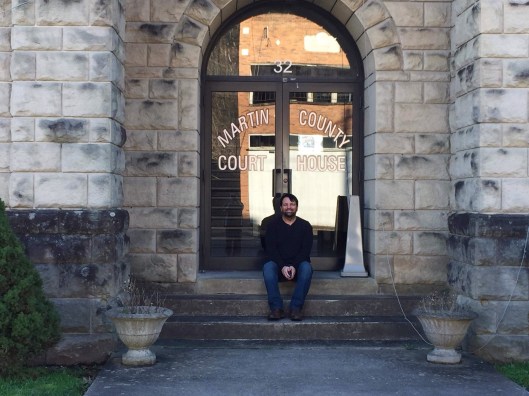
IMG_5822 Martin County Courthouse in Inez, KY. 3 March 2018. Photo by Mom.

IMG_5821

Martin County Courthouse in Inez, KY. 3 March 2018. Photo by Mom.

IMG_5762

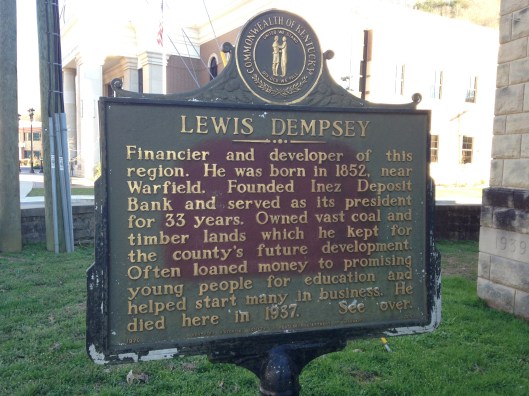
Lewis Dempsey Historical Marker, Martin County Courthouse in Inez, KY. 3 March 2018.

IMG_5763

William McCoy Historical Marker, Martin County Courthouse in Inez, KY. 3 March 2018.

IMG_5765

County Named (1870) Historical Marker, Martin County Courthouse in Inez, KY. 3 March 2018.

IMG_5767

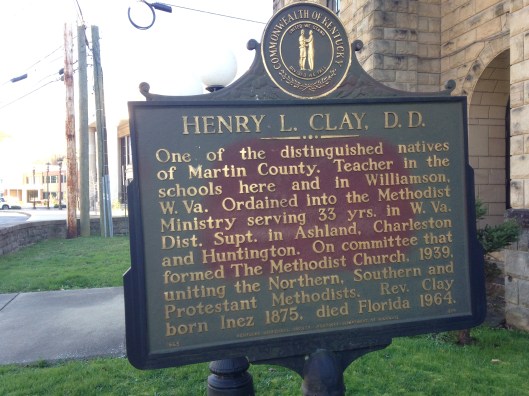
Dr. Henry L. Clay Historical Marker, Martin County Courthouse in Inez, KY. 3 March 2018.

IMG_5768

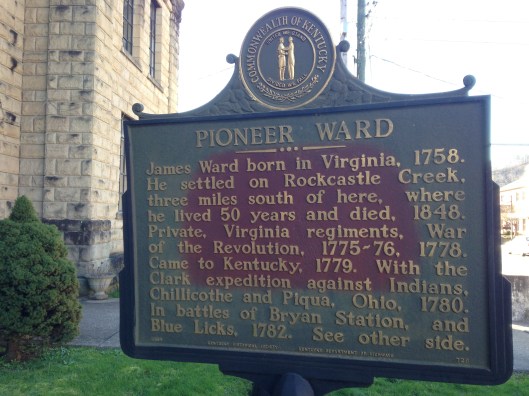
James Ward Historical Marker, Martin County Courthouse in Inez, KY. 3 March 2018.

IMG_5769

William B. Ward Historical Marker, Martin County Courthouse in Inez, KY. 3 March 2018.

IMG_5772

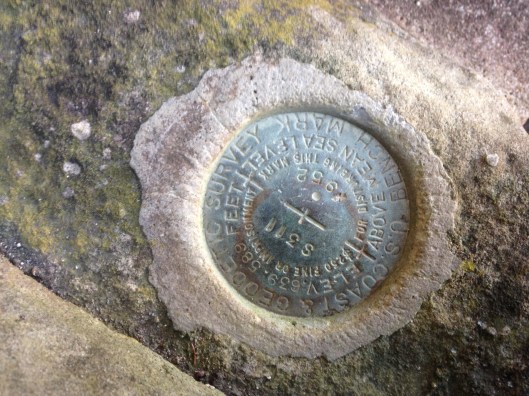
U.S. Coast Guard Geodetic Survey Bench Mark, Martin County Courthouse in Inez, KY. 3 March 2018.

IMG_5775

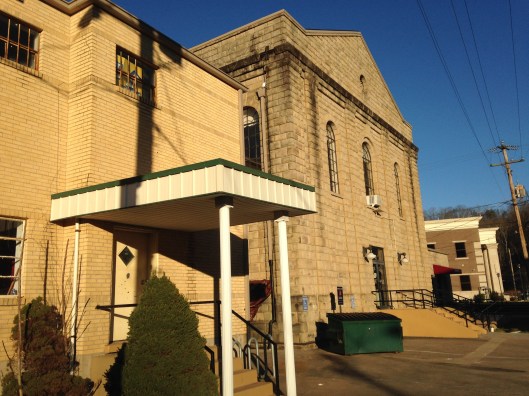
Old Jail, Martin County Courthouse in Inez, KY. 3 March 2018.

IMG_5778

Martin County Courthouse in Inez, KY. 3 March 2018.

IMG_5780

Martin County Courthouse in Inez, KY. 3 March 2018.

Thomas Kirk Grave in Pilgrim, KY (2018)

04 Sunday Mar 2018

Posted by Brandon Ray Kirk in Cemeteries, Civil War, Pilgrim

≈ 1 Comment

Tags

Appalachia, Brandon Kirk, cemeteries, civil war, Clara Kirk, Davis Cemetery, genealogy, history, John Kirk, Kentucky, Martin County, Phyllis Kirk, Pilgrim, Thomas Kirk, Union Army, Wolf Creek

IMG_5746.JPG

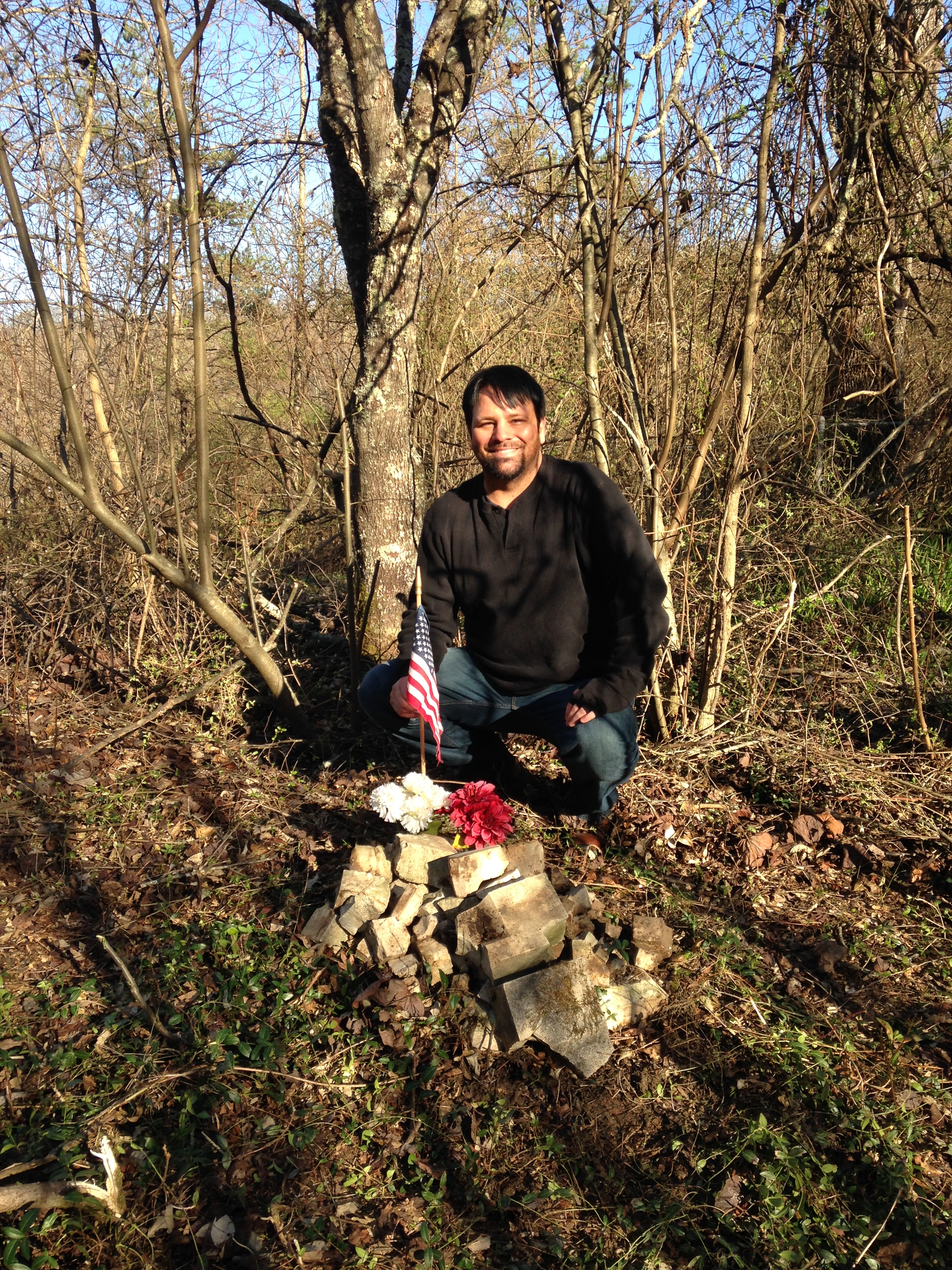
Thomas Kirk (c.1834-1912), a son of John and Clara (Marcum) Kirk, was reportedly an officer in a Union Home Guard unit during the Civil War. He is my great-great-great-grandfather. Tom is buried in the Davis Cemetery on Wolf Creek in Pilgrim, Martin County, KY. 3 March 2018. Photo by Mom.

Mountain Folk (1927)

02 Friday Mar 2018

Posted by Brandon Ray Kirk in African American History, Logan

≈ 1 Comment

Tags

Alvin York, Appalachia, Arthur Davenport, Babe Ruth, Banastre Tarleton, Battle of Cowpens, Battle of King's Mountain, Charles Darwin, Charleston, Charleston Daily Mail, Charlie Chaplin, Chicago, culture, Jack Dempsey, Kentucky, Logan, Logan Banner, R.H. Martin, Tennessee, Virginia, West Virginia

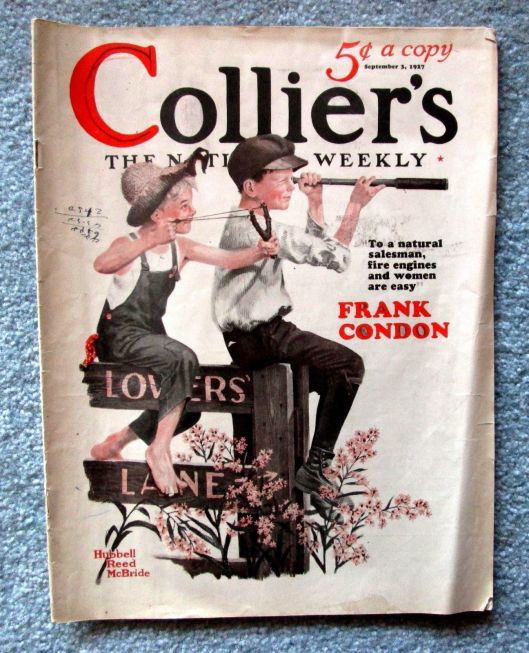
From the Logan Banner of Logan, WV, dated August 5, 1927, comes this editorial about the “mountain folk” of Appalachia, printed in response to a piece in Collier’s:

collier's

MOUNTAIN FOLK

Observations By R.H. Martin, Editor of Charleston Mail, In Rejoinder to Collier’s Article

Some West Virginia newspapers are both indignant and aroused over an article printed in Collier’s recently under the name of Arthur Davenport and having for its theme the sad and deplorable conditions of the mountain dwellers in Southern Appalachia. The general tenor of the article can be fairly judged by the introductory synopsis:

We Americans are fond of tilting our noses and giving the rest of the world the superior eye.

Anybody going about in that fashion is pretty sure to overlook an unpolished heel or a rip in the clothing where it makes others laugh most.

Here is the story of the unpolished heel. Here are Americans of nearly two hundred years’ breeding who never heard the names Roosevelt, Wilson, Ford, Babe Ruth, Charlie Chaplin; who never saw a —

But never mind. Read and cease marveling for a few moments that the Chinese can be dedraggled, the Hottentot so naked, the mukhik so ignorant and the Hindu so impoverished. Here are all of these calamities within a few hours train ride from our own golden Capitol.

If the conditions are as Mr. Davenport has painted them, then it would appear to be a case where pity and help were needed rather than sneers and laughter. In fact, Mr. Davenport in the introduction, or Collier’s editor who may have written it, gives some indications of “nose-tilting” that might provoke a rather loud guffaw from some unlettered mountaineer whose forbears were possibly among, and certainly of the same type, of those mountaineers who won the battles of the Cowpens and King’s Mountain, which victories some historians consider the turning point in the American revolution. They were probably of the same type as that Col. Washington, who, although he could not make a letter, yet left the mark of his sword on a certain Col. Tarleton.

It may be true–we shall not attempt to deny it–that there are mountaineers who never heard of Babe Ruth. We have not the slightest desire to detract one iota from all laurels due to the famous batsman, but, like most mountaineers, probably we should, if it simmered down to that, prefer Sergeant York as our hero to the idol of the howling grandstand that throws pop-bottles at umpires.

Nor shall we repine if it is true that some of these mountaineers never heard of Charlie Chaplin. We fail to see where knowing him as most Americans know him would be intellectually or otherwise uplifting. Perhaps, such mountaineers, as have missed long-distance acquaintance of either of these gentlemen just mentioned have not lost so much after all. As for other names mentioned there may be in the deepest mountain recesses persons who have not heard of them. If Mr. Davenport knows of his own personal knowledge of such cases, his statement stands.

There are mountain folk in the great ranges of Southern Appalachia who have been cut off from this modern civilization of ours that produces bandits in Gotham and gunmen in Chicago, the nauseous scandals of Hollywood, the commercial orgies of Dempsey and Sharkey, and other highly moral and refining manifestations of the literates, and their ignorance of the outside world may be large. But as to whether a more intimate contact with this outside world which we boastfully call civilized would improve the mountaineer or not, would, it seems to us, depend a good deal upon that part of it with which he came in contact.

Mountaineers in the innermost recesses of the elevations of the elevations are poor as well as deficient in general knowledge. We admit as much. Their wants are few, and they are able to get along with what to satisfy their forefathers who at infinite toil conquered the wilderness and blazed the paths of those whose “culture” takes on “nose-tilting” sneering and laughing. Perhaps Mr. Davenport might get a new insight into real values if he should read what Bobbie Burns wrote about “honest poverty.”

Illiteracy still exceeds 90 percent in the mountains of Kentucky, Virginia, West Virginia, Tennessee and North Carolina, which states contribute to the four million of which I write. Poverty of a sort unbelievable in the cities is so commonplace as not to be impressive: the amount of money passing through the hands of the old mountaineer in any year is often less than eight dollars.

The term, “mountains of Kentucky, West Virginia, Tennessee and North Carolina” is ambiguous. Practically all West Virginia is mountainous, or semi-mountainous. Taking the states named as a whole the percentage of illiteracy among native-born whites is as follows: Kentucky, 7.3; North Carolina, 8.2; Virginia, 6.1; West Virginia, 4.8; Tennessee, 7.4. These figures are slightly increased by adding to them foreign illiterates and illiterates among the negro population. The latter two elements present special problems that are being gradually worked out and the percentages from now on will rapidly diminish. To say therefore, that mountain folk are 90 percent illiterate, one would have to restrict the term “mountain folk” to a very small proportion of the population.

But Mr. Davenport seems to apply his percentage to the “four million of which I write.” It possibly may be that if Mr. Davenport has that same passion for facts as animated Charles Darwin, and is as careful in testing his data, he will revise his figures.

The entire story is exaggerated and weird; but it is nothing to worry about. The people of the states named know the causes and the difficulties and are remedying the situation as rapidly as possible. Fastidious refinement may halt at the lofty mountain ranges and at the mouth of the deep and dark defiles, but from these same mountain folk have come some of the strongest type of Americans despite educational handicaps. When we think of Sergeant York and his folk, we do not despair of the mountain folk nor depreciate their sturdy virtues. We neither feel like sneering nor laughing. And we hope modern “culture” and “civilization” has the good breeding not to tilt the nose at supposed inferiors who may in some essentials actually be superiors.

For more about Collier’s, follow this link: https://en.wikipedia.org/wiki/Collier%27s

Timber in Wyoming County, WV (1887)

15 Monday Jan 2018

Posted by Brandon Ray Kirk in Timber, Wyoming County

≈ Leave a comment

Tags

Appalachia, Catlettsburg, Charles Cook, Guyandotte Herald, H.H. Cook, history, Kentucky, logging, New York, timber, timbering, West Virginia, Wyoming County

Wyoming County Timber HuA 05.21.1887.JPG

Huntington (WV) Advertiser, 21 May 1887.

Rowan County Feud Letter (1887)

08 Monday Jan 2018

Posted by Brandon Ray Kirk in Culture of Honor, Rowan County Feud

≈ 1 Comment

Tags

Appalachia, Cabell County, Cook Humphrey, Craig Tolliver, Democratic Party, history, Huntington, Huntington Advertiser, John Martin, Kentucky, Morehead, politics, Republican Party, Rowan County, Rowan County Feud, sheriff, Solomon Bradley, West Virginia

From the Huntington Advertiser of Huntington, WV, dated July 2, 1887 comes this letter about the Rowan County Feud:

The Rowan County War.

Editor Advertiser:

The writer is not surprised that your paper of last week fell into the current of popular opinion and denounced the Toliver gang, of Morehead, Kentucky, as the guilty ones in the celebrated feud which has caused the killing of about thirteen persons. Later advices appear at least to throw doubt on the subject of who is really to blame. Let us see. Here is the Cincinnati Enquirer’s account of the origin of the trouble, taken from that journal of the 23d inst.:

“The beginning of the trouble dates from the August election of 1884, when Cook Humphrey, a Republican, was elected sheriff by a trifling majority. He was a young, spare-built man, fresh from the country, and unsophisticated in appearance and manner. Craig Toliver, at the head of a party of friends, declared that Humphrey should not serve as sheriff. On the evening of the election a row occurred. Pistols were drawn and used, and Solomon Bradley (Democrat), a friend of Toliver’s, was shot and killed. The killing was charged against John Martin, and Toliver swore to be avenged. Subsequently Floyd Toliver and Martin got into a fight and the former (Toliver, Democrat) was killed on the street. From this time it may be said that the Martin (Republican) and Toliver (Democrat) factions were organized in deadly array, both sides determined never to yield, one to the other.”

The analysis of the above is, that the Republicans, having carried the election, became more or less insolent towards the opposition, who were correspondingly depressed and sore over their defeat, and gave utterance to their disappointment, and Craig Toliver used a very foolish expression to the effect that the Republican sheriff elect should not be installed. It is probable that this was accompanied by charges of fraudulent voting on the part of the Republicans–at any rate it was not such an offense as to justify Martin, Republican, in shooting Sol. Bradley, a partisan of Toliver’s. Subsequently Floyd Toliver denounced Martin for having killed Bradley without sufficient provocation and in an unmanly way, and was himself shot by Martin on the instant. So that a war of extermination seems to have been inaugurated by the Martins and their Republican following, against the Bradleys and Tolivers and their Democratic following, and signalized by the cold blooded murder of two of the latter. If this is true, and the record seems to bear it out as true, then the Tolivers were simply defending themselves and their households and party friends against the tumultuous murder of the Martins and their Republican following.

The subsequent getting possession of the person of John Martin (already a double murderer) and his killing at the hands of the Tolivers, whose brother and friend he had slain, was in the nature of retribution, and justified by the circumstances. Later, killings on both sides followed from the hot blooded feud which these had aroused, and while some of them appear to have been barbarous in the extreme, yet they legitimately came of a war of extermination such as had been initiated by the Martins and responded to, and not by the Tolivers and their friends.

A prominent citizen of Cabell Co., now sojourning near the scene of the disorder, in Rowan County, says:

“I suppose the dispatches have told you the war news; how 300 Republicans succeeded in killing four Democrats; but the war has only begun. I hear, to-day, that the Democrats are organizing a company near —— to put down the mob at Morehead who did the killing. He is more than sanguine who thinks the trouble ended.”

Our fellow-citizen, on the ground in Kentucky, evidently thinks the late killing of the three Tolivers unjustified by the facts as they are known to him. Let us wait for the facts.

BEN.


Cole’s Studio in Logan, WV (1913)

11 Monday Dec 2017

Posted by Brandon Ray Kirk in Logan

≈ Leave a comment

Tags

A.S. Sizemore, Appalachia, Cole's Studio, Draper Building, history, Kentucky, Logan, Logan Banner, Logan County, photography, The Cole Studio, West Virginia

Cole's Photo Studio LB 02.28.1913.JPG

Logan (WV) Banner, 28 February 1913.

Johnson Hatfield (1890-1900)

28 Tuesday Nov 2017

Posted by Brandon Ray Kirk in Culture of Honor, Gilbert, Hatfield-McCoy Feud, Matewan, Pikeville

≈ Leave a comment

Tags

Alifair McCoy, Appalachia, Beech Creek, Calvin McCoy, Chafinsville, crime, Dan Cunningham, Devil Anse Hatfield, Dollie Hatfield, feud, feuds, Floyd County, Frank Phillips, genealogy, George Hatfield, Gilbert Creek, Greek Milstead, Hatfield-McCoy Feud, Henry Clay Ragland, history, Huntington Advertiser, Johnse Hatfield, Johnson Hatfield, Kentucky, Logan County, Logan County Banner, Matewan, Mingo County, murder, Nancy Hatfield, Norfolk and Western Railroad, Oakland Hotel, Pikeville, Portsmouth Blade, Prestonsburg, Southern West Virginian, T.C. Whited, Thomas H. Harvey, true crime, Vanceville, West Virginia

From the Logan County Banner of Logan, WV, and the Huntington Advertiser of Huntington, WV, come the following items relating to Johnson Hatfield:

Johnson Hatfield Notice of Deposition LCB 02.20.1890.JPG

Logan County Banner (Logan, WV), 20 February 1890. Also appeared on 13 March 1890.

***

Johnson Hatfield v. N&W RR LCB 07.30.1891.JPG

Logan County Banner (Logan, WV), 30 July 1891.

***

We are glad to see that Johnson Hatfield, who has been confined to his room for the last ___ weeks, is able to be on the street again.

Source: Logan County Banner (Logan, WV), 2 March 1893.

***

There was an unfortunate difficulty at Matewan on Sunday last in which Mr. Johnson Hatfield was severely wounded through the hand. His son had become involved with an officer which drew his father into the trouble.

Source: Southern West Virginian via the Logan County Banner (Logan, WV), 1 January 1896.

***

Johnson Hatfield, accompanied by his daughter, Miss Dollie, left on Monday last for a visit to friends and relatives in Mingo county.

Source: Logan County Banner (Logan, WV), 23 January 1897.

***

Johnson Hatfield and daughter, Miss Dollie, have returned from a visit to friends on Sandy.

Source: Logan County Banner (Logan, WV), 6 February 1897.

***

Johnson Hatfield, the genial proprietor of the Oakland Hotel, is visiting friends at Pikeville, Kentucky.

Source: Logan County Banner (Logan, WV), 28 August 1897.

***

Johnson Hatfield has returned from a visit to Pikeville, Ky.

Source: Logan County Banner (Logan, WV), 9 October 1897.

***

Johnson Hatfield is at Williamson this week.

Source: Logan County Banner (Logan, WV), 23 October 1897.

***

The many friends of Mrs. Johnson Hatfield will regret to learn of her serious illness. She has a very bad attack of rheumatism.

Logan County Banner (Logan, WV), 13 November 1897.

***

Johnson Hatfield and wife, of Mingo, passed through here [Chafinsville] last Sunday en route for Vanceville, where they will make their future home.

Source: Logan County Banner (Logan, WV), 21 April 1898.

***

HATFIELD KIDNAPPED.

TAKEN TO KENTUCKY ON A SERIOUS CHARGE–NOW IN JAIL.

Johnson Hatfield was arrested yesterday and taken to Pikesville, Kentucky, and lodged in jail on a charge of being an accomplice in the murder of Alifair McCoy on New Years night about nine years ago. This murder was committed during the feud of the Hatfields and McCoys.

Source: Huntington (WV) Advertiser, 20 July 1898.

***

Johns Hatfield Captured LCB 07.21.1898

Logan County Banner (Logan, WV), 21 July 1898.

***

Johnson Hatfield Interview LCB 8.11.1898.JPG

Logan County Banner (Logan, WV), 11 August 1898.

***

Johnson Hatfield LCB 10.20.1898.JPG

Logan County Banner (Logan, WV), 20 October 1898.

***

Johnson Hatfield LCB 1.19.1899.JPG

Logan County Banner (Logan, WV), 19 January 1899.

***

Johnson Hatfield Gets Life HuA 01.21.1899.JPG

Huntington (WV) Advertiser, 21 January 1899.

***

Johnson Hatfield LCB 4.12.00.JPG

Logan County Banner (Logan, WV), 12 April 1900.

NOTE: Not all of these stories may pertain to the Johnson “Johnse” Hatfield of Hatfield-McCoy Feud fame. For instance, items relating to the Oakland Hotel and a daughter named Dollie relate to a Johnson Hatfield (born 1837), son of George and Nancy (Whitt) Hatfield.

Mollie Drake: “The Florence Nightingale of Blair Mountain” (1921)

20 Friday Oct 2017

Posted by Brandon Ray Kirk in Battle of Blair Mountain, Coal, Huntington, Logan, Women's History

≈ Leave a comment

Tags

Allen B. Dingess, Alleyne Dye, Appalachia, Ashland, Battle of Blair Mountain, Cabell County, Caroline Dingess, Cattaraugus County, Ceredo, coal, Democratic Party, genealogy, Hannah Mitchell, Henry Street Settlement, history, Huntington, Illinois, Kentucky, Leo Frank Drake, Logan, Logan Banner, Logan County, Mollie Drake, New York, Republican Party, Springfield, Wayne County, West Virginia

Mollie (Dingess) Drake, daughter of Allen B. Dingess and Caroline (Jackson) Dingess, was born on June 30, 1881 in Logan County, WV. She was the wife of Leo Frank Drake, a salesman. She appears in the 1910 Wayne County Census (Ceredo District). Hannah Mitchell profiled her life in the Logan Banner of Logan, WV, on December 30, 1921. Her husband died in 1925. In 1930, Mollie lived at Springfield, IL. In 1940, she made her home in Cattaraugus County, NY. Mrs. Drake died on July 7, 1958 at a nursing home in Huntington, WV.

Mollie Dingess Drake Photo.jpg

It would be easy enough to make a melodramatic start and give her some such extravagant title as “The Angel of the Hills” or “The Mother of the Mines” or “The Florence Nightingale of Blair Mountain.” But if you did and Molly Dingess Drake found it out she might laugh and she might make some sharp remark, but most certainly she would not be pleased.

How she escaped the “war correspondents” who were rushed to the front to cover West Virginia’s recent mine war is more than I can say, for the story is still told of how Molly, like “Sheridan twenty miles away,” when the armed miners were marching on Logan, made all haste not toward safety, as she might very wisely have done, but back to where the bullets were flying.

Her narrowest escape from the feature pages of newspapers was several years ago–two, in fact–when, a woman of some two score years, she was graduated from high school with her sixteen-year-old daughter. That graduation and the attendant high school diploma were in no sense honorary affairs given out of respect for Molly Dingess Drake. They had been earned by this very determined, ambitious woman of the hills after four years of high school work, in which she had enrolled along with her daughter and for which she had attended classes faithfully and with classmates half her age.

On pay day Mrs. Drake is a welfare worker for one of the coal companies operating in the Logan field. Having finished her high school course, she did not go on to college with her daughter. And, as she puts it, one of the coal producers “knew she wouldn’t sit at home and knit and crochet.” So he offered her the job of visiting nurses among the employees of his company. In this job Mollie mothers a large family. It is composed of men and women much older than she and of the children of these older children. True to the mother-type anywhere, she makes their individual troubles, their health, their happiness, a very personal matter.

There was the young Spaniard who lay in the hospital after a severe accident. No friends or relatives rallied to his bedside, and the doctors and nurses could not understand him when he moaned out a word or two in his native tongue. Mollie Drake scoured the hills for an interpreter and found one. She also dug up a cousin of the unfortunate boy. Moreover she made the lives of nurses and doctors miserable until the lad was out of danger, sometimes calling at the hospital late at night to see how the boy was getting on. Was not this foreign born lad one of her children?

It was not the Mollie Dingess Drake, ready to face danger along with other brave women of Logan county when armed miners were marching upon their homes, that interested me most, as you may have guessed already. The World War is too recent proof that American women are not afraid to risk their lives for a cause. It is Mollie Drake and the work of her hands when peace broods over her native hills that make her a woman among women.

Mrs. Drake is a mountain woman herself. She knows the desires, the needs and the hopes of the women and children who live in her hills; in a double sense she is working among her own people.

No serious-minded killjoy is Mrs. Drake, but a large motherly woman with a great capacity for fun and for seeing the human side of things.

It is a common statement among traveling salesmen that they live in a Pullman; Mollie Drake might say she lives in a day coach. Her headquarters are in Logan, and much of her time is spent in riding to and from the little mining towns along the branch lines out of Logan.

Her trips are taken to visit the homes of miners, and no place is too remote for her to visit. Her energy in tramping about and the speed with which she walks over the hills is enough to make a younger woman gasp for breath and all but beg for quarter. That from one who knows.

We started out of Logan one morning on the 10 o’clock train.

Before the train started we were part of the social gathering which greets the all-too-few passenger trains that come into Logan. Mollie Dingess knew everybody.

Arrived at the mining center, our first visit was to the schoolhouse, a substantial two-story building, in front of which were all the latest playground devices for amusing the modern child. The teachers were young and efficient in their schoolroom manners. In Logan county the schools have the advantage of extra good teachers because after the school board has voted what it can afford for salaries the coal companies make up the deficit needed to attract the best.

It was then I learned of Mrs. Drake’s unusual high school career.

“You know I have a high school education,” she remarked as we left the school and strode (at least Mrs. Drake strode) along the dirt road.

“As a girl I went to school till I was thirteen. In the teens I took up nursing and later was married. But I always wanted more education. Sometimes it is the persons who are denied education appreciate it most. Well, when my daughter was ready for high school I decided that I would get my high school education too–not by following her studies at home (I knew that wouldn’t do), but by enrolling in high school with her.

“Some of my friends thought it was an absurd idea. They said I could enroll in college for special courses or take correspondence courses. But the idea of my going to school right along with my daughter and the other young people seemed queer to them. I suppose it was unusual. But what I wanted was a regular education. So I enrolled and went through the four years of high school and was graduated in the same class with my daughter.”

“And how did your daughter feel about it?”

“Oh, she had her young friends and took part in school activities just the same.” Again the twinkle behind the glasses. “It may be that she studied harder than she would have.” I had no doubt of that.

“She is in college now,” continued Mrs. Drake. “When her grades aren’t has high as I think they ought to be she sends them to her father, but a man can’t keep such things secret, and I always find out. She knows I haven’t much patience with students who don’t keep up their grades.

“My daughter is going to be a physician. She didn’t make up her mind until after she entered college. I was rather anxious to know what she would choose. After she started studying biology she was so interested that she decided to go on and study medicine.”

It occurred to me that Mollie Drake was a feminist. I wondered if she had ever been a suffrage worker.

“No,” she answered. “I’ve always been a Democrat, though. My husband says I am what is called ‘a mean Democrat.'”

She paused and then laughed. “I made one rule when I was married. You see, Mr. Drake is a Republican. Well, I told him that if I married him he must keep just one rule. I knew our marriage would be a success if he did. And of course I promised to keep it too. The rule was that we should never talk politics. We never have and we’ve been very happy.

“Of course I voted at the last election, and much good it did so far as the Presidency was concerned. But someway I didn’t care so much for the voting. I’m old-fashioned in many ways. I was brought up in a strict way and I don’t like to hear about folks playing cards on Sunday. I suppose it isn’t wicked, but I can’t get over my bringing-up. And I never take a needle in my hand on a Sunday, only when I just have to mend something, that I don’t feel kind of guilty.”

Our conversation had been interspersed with visits to various miners’ homes, mostly where there were babies. Mrs. Drake’s philosophy had been punctuated by advice on babies and friendly comment upon the little interests of the women we visited. If we weren’t inspecting a baby we were talking with some elderly woman over a fence about her latest “misery.”

As we climbed the trails I was tired, but Mrs. Drake seemed as energetic as when the day began.

“I like the work,” she said, “but I want to study more. Last summer I took a course in New York, and I’d like to go back there for a second at the Henry Street Settlement. I want to study languages, too. There are so many things I want to do.”

Some day I have not a doubt she will do these things she wants to do. In the meantime I think of her in connection with the verse: “Whatsoever thy hand findeth to do.”

Source: “The Florence Nightingale of Blair Mountain,” Logan (WV) Banner, 30 December 1921.

Notes:

To see Mrs. Drake’s photo and entry at Find-A-Grave, follow this link: https://www.findagrave.com/cgi-bin/fg.cgi?page=gr&GRid=20145994

Mrs. Drake’s daughter, Alleyne Howell Dye, died of suicide in Ashland, KY, in 1944. For her death record, follow this link: https://www.familysearch.org/ark:/61903/3:1:3Q9M-C9YV-H7M5-H

To see Mrs. Dye’s photo and entry at Find-A-Grave, follow this link: https://www.findagrave.com/cgi-bin/fg.cgi?page=gr&GRid=20146072


Mrs. Henry Clay Ragland’s Obituary (1914)

25 Monday Sep 2017

Posted by Brandon Ray Kirk in Civil War, Huntington, Logan, Matewan, Women's History

≈ 2 Comments

Tags

5th Virginia Cavalry, Appalachia, Aracoma Baptist Church, B.B. Goings, Blaine Creek, Christian Church, G.B. Hamilton, genealogy, Henry Clay Ragland, history, Huntington, John A. Sheppard, Kentucky, Lawrence County, Logan, Logan Banner, Logan County, Lou Ragland, Matewan, Mingo County, Robert W. Buskirk, Urias Buskirk, Urias Hotel, West Virginia, Williamson

From the Logan Banner of Logan, WV, we find the following story dated April 17, 1914:

“GRANDMA” RAGLAND PASSES TO THE BEYOND

MATE OF MAJOR HENRY CLAY RAGLAND, EDITOR OF THE LOGAN BANNER FOR MANY YEARS, PLACED BESIDE HIM EASTER SUNDAY

Mrs. Lou Ragland, mother of the Buskirk family, of this region died last Friday a.m. at the home of her son, Robert W. Buskirk, in the Urias Hotel at Matewan, Mingo county. She had married Henry Clay Ragland, for a long time editor of the Logan Banner, after the death of her first husband, Urias Buskirk. By her first marriage she raised a most interesting family of sons and daughters who are still residing in this section. Mrs. Buskirk was a most remarkable woman in many respects. She had always lived an exemplary and Christian life and assumed her responsibilities after the death of her first husband with efficiency and diligence. She was true to friend and family and was a good and faithful mother and a loving wife. Through her long life she has retained the confidence and respect of all who knew her. We grieve with her relatives and friends at her death. She was near the ninety-two milestone when she died and had been sick only for a few days.

“Grandma” Ragland’s exact age was 91 yrs. 11 mo. 20 days; born on Blain creek, Lawrence county, Ky., May 1st, 1823. For 30 years a member of the Christian church.

On May 1st also (1911) Major Ragland died. He was born on May 7th, 1844; belonged to Co. B 5th Va. Cavalry; member of the Aracoma Baptist church.

Mrs. Ragland’s last request, to rest one night in her old bedroom–the present residence of Rev. Bradshaw–was complied with. This parsonage now becomes the property of the Baptist church, according to the terms of Major Ragland’s deed, at her death.

Her age indicates her wonderful physical endurance, and while she knew she must die soon, retained her usual discretion and fortitude. She made plans with her kindred as to where her last resting place should be and desired that none of her children and friends be troubled about her demise. Up to the last she kept her mind intact and conversed with those near to her.

The mother of the Buskirks has gone, we hope, to a happier sphere. Mother is the dearest friend on earth. We grieve at the bier of the departed with the bereaved, and shed a tear with them in their desolation as we think of our own dear mother. Our sympathies go out to the bereaved ones in the loss of their one best comforter, but we hope and continue to hope that we may meet again in the unknown hereafter.

***

On April 17, 1914, the Logan Banner offered a small additional item: “Among those in attendance at the funeral of ‘Grandma’ Ragland last Sunday were: B.B. Goings, Williamson; Jno. A. Sheppard, Huntington; G.B. Hamilton, Matewan; in addition to the sons of the deceased.”

Stone Mountain Coal Company Headhouse is Burned in Matewan, WV (1921)

16 Saturday Sep 2017

Posted by Brandon Ray Kirk in Big Sandy Valley, Coal, Matewan

≈ Leave a comment

Tags

Appalachia, Blackberry City, coal, crime, deputy sheriff, fire marshal, history, John Hall, Kentucky, Logan Banner, M.C. Kindleberger, Matewan, Mingo County, P.J. Smith, Stone Mountain Coal Company, Tom Davis, Tug Fork, War Eagle, West Virginia, West Virginia Federationist, Williamson

From the Logan Banner of Logan, WV, we find the following story dated 27 May 1921:

The headhouse of the Stone Mountain Coal Company at Matewan, in the heart of the Tug river battle zone, on the West Virginia-Kentucky border, was burned early today, reports received by Major Tom Davis, acting adjutant general on Governor Morgan’s staff, stated.

P.J. Smith, superintendent of the company in Williamson said until he makes an investigation, he could not estimate the amount of damage. The minimum loss, he added, would not probably be less than $25,000.

M.C. Kindleberger, deputy state fire marshal, here to investigate the recent firing of the headhouse at War Eagle, departed for Matewan immediately. Two automobiles containing members of the state constabulary accompanied him. He said he would report to Major Davis.

The Stone Mountain mine has been abandoned by the miners recently, said Superintendent Smith.

Although Chief Deputy Sheriff John Hall gave out the statement that he had made a personal inspection of the fighting area as far east as Blackberry City, and everything was quiet, and that sniping had ceased, the emergency defense organization composed of former service men and other citizens was said by Captain Brockus, of the state police, to be growing. Seventy-two rifles were issued late Saturday night and more have been ordered. In all, said Captain Brockus, several hundred men are under arms prepared for another outbreak. An organization today issued an order temporarily discontinuing the publication of the West Virginia Federationist, a labor paper.

An incident connected with the recent shooting along the Tug river is the reluctance of taxi-cab drivers to take their passengers east of Williamson. Their invariable call at the railroad station to prospective fares is discontinuing.

Source: “Headhouse in Mingo is Burned,” Logan (WV) Banner, 27 May 1921.

To see a coal company headhouse photograph, follow this link: http://wvhistoryonview.org/catalog/wvulibraries:14752

Chapmanville News 05.20.1921

12 Tuesday Sep 2017

Posted by Brandon Ray Kirk in Chapmanville, Huntington, Logan, Women's History

≈ Leave a comment

Tags

Appalachia, Arda Jeffrey, Beecher Barker, Beecher Curry, C.B. Hainor, Chapmanville, Charlie Garrett, Dr. Stanley, Dyke Garrett, Eliza Garrett, Ella Garrett, Erie Blevins, genealogy, George H. Seagraves, Henry McKinney, Herbert McKinney, history, Huntington, Ida Garrett, J.D. Ball, James Bryant, John Hunter, Kate Barker, Kentucky, Kyle Hill, Lacy Ball, Lacy Browning, Logan, Logan Banner, Logan County, Myrtle McKinney, Nora Stollings, Ohio, Opie Pridemore, P.D. Blevins, Robert Hainor, Rosa Stowers, Russell, Stollie Hainor, tonsilitis, W.G. Willis, Wallace Garrett, Warren, West Virginia, Wilsondale

An unknown correspondent from Chapmanville in Logan County, West Virginia, offered the following items, which the Logan Banner printed on May 20, 1921:

Mrs. George H. Seagraves has returned from a visit with her husband’s relatives in Warren, Ohio. She is preparing for house keeping at Wilsondale.

Miss Rosa Stowers is convalescing from a severe attack of tonsilitis.

Miss Ida Garrett, who is working in Huntington, is spending the week with her parents here.

Most of the boys and some of the men were highly elated over the recent rains which caused a rise in the creek and gave them an excuse to “lay off” the spring work and go fishing.

Miss Kate Barker of Logan spent Saturday and Sunday with relatives here.

Dr. Stanley, veterinarian, of Logan made a professional visit to W.G. Willis’ Saturday.

P.D. Blevins of Logan spent Sunday with his mother here.

Mr. and Mrs. James Bryant of Russell, Kentucky, are visiting relatives here this week.

Lacy Browning, who is working at Logan, spent Sunday with his wife.

The wedding bells were ringing Sunday for two of our young folks. The bride was Miss Arda Jeffrey and the groom Mr. Herbert McKinney. The ceremony was performed at the home of the bride of Rev. W.D. Garrett.

Beecher Curry was calling on Miss Erie Blevins Sunday. It is our opinion that “Uncle Dyke” will be called upon to don his surplice again soon.

C.B. Hainor and family were visiting at J.D. Ball’s Sunday afternoon.

Lacy Ball of Jeffry was seen on our streets Sunday. He seemed to be all smiles. The reason: He was manipulating the “brand new” Ford, and had one of our best looking girls by his side.

Miss Erie Blevins was a charming hostess to a small party of her friends on Saturday night from eight to eleven o’clock. Chocolate fudge was served. Among the invited guests were Misses Eliza and Ella Garrett, Ida Garrett, Nora Stollings and Myrtle McKinney, Messrs. Stollie Hainor, Kyle Hill, Charlie Garrett, Beecher Barker and Henry McKinney. Everyone reported a nice time.

On last Sunday morning at ten o’clock some of the folks of the community under the leadership of Wallace Garrett and Robert Hainor met at the school house for the purpose of organizing a Sunday School. The first meeting of the school will be at 10:30 the 15th. Everybody welcome.

Kyle Hill of Logan was visiting Stollie Hainor Sunday.

Mrs. John Hunter was visiting her daughter Mrs. Opie Pridemore Sunday.

Best wishes for the Banner.

Whirlwind News 04.05.1927

09 Saturday Sep 2017

Posted by Brandon Ray Kirk in Big Harts Creek, Holden, Whirlwind

≈ Leave a comment

Tags

Appalachia, Bernie Adams, Boyd Carter, Buck Fork, Charley Mullins, Chick Dingess, Cumberland Mountains, Ewell Mullins, Florence Adams, Fred Carter, genealogy, guitar, Harmon Carter, Harts Creek, Hendersonville, history, Holden, Hoover Fork, Horatio Adams, Howard Adams, Hubert Adams, Ireland Mullins, James Thompson, Jesse Carter, Julia Tomblin, Kentucky, Lewis Maynard, Logan Banner, Logan County, Mae Robinson, Millard Thompson, music, Peter Carter, Peter Mullins, Peter Tomblin, Sallie Bunn, Trace Fork, Twelve Pole Creek, West Virginia, Whirlwind, whooping cough

An unknown correspondent from Whirlwind in Logan County, West Virginia, offered the following items, which the Logan Banner printed on April 5, 1927:

The Bible school on Trace Fork is progressing nicely and is conducted by Rev. Ratio Adams and Peter Mullins.

Hubert Adams of Holden was visiting relatives on Hoover recently.

Howard Adams and Charley Mullins were visiting Peter Tomblin of Twelve Pole Saturday.

James Thompson and Miss Julia Tomblin were united in marriage on Buck Fork recently. Mr. and Mrs. Thompson are planning a honeymoon trip to the Cumberland Mountains and points in Eastern Kentucky.

Millard Thompson was visiting friends on Harts Creek Monday.

Ezra Farley made a flying trip to Lewis Maynard’s Sunday.

The home of Boyd Carter at Hendersonville was destroyed by fire Monday afternoon.

Chick Dingess was a visitor to Jesse Carter last Sunday.

Ireland Mullins was calling on Miss Sallie Bunn of Hoover Sunday.

Harmon Carter of Buck Fork was calling on Miss Mae Robinson Sunday.

Things seen daily: Philip going to see Aunt Minnie; Howard going to Mollie’s; Florence and her pipe; Bernie and his guitar; Clinton and his whooping cough; Mollie and her forty four; Peter and Fred Carter making toothpicks; Wilburn and his boots; Ewell watching for a car to come up Trace.

Civil War Dispatches From Wayne County, WV (1865-1866)

07 Thursday Sep 2017

Posted by Brandon Ray Kirk in Big Sandy Valley, Civil War, Timber

≈ Leave a comment

Tags

Abel Segur, Abraham Lincoln, Appalachia, Arthur I. Boreman, Bill Smith, Burlington, Cabell County, Cassville, Catlettsburg, Ceredo, Charleston, civil war, Confederate Army, crime, David Bartram, David Frasher, Department of West Virginia, deputy sheriff, G.W. Brown, Gallipolis, Gallipolis Journal, George Crook, Greenbrier County, Guyandotte, history, Ironton Register, Isaac Bloss, J.W. Merricks, Jack Meadows, Jefferson Davis, Jim Turner, John B. Bowen, John W. Holt, Kentucky, Logan County, Monroe County, Ohio, Ohio River, Pete Jeffers, Pike County, Pocahontas County, Point Pleasant, Raleigh County, sheriff, The Weekly Register, Tug Fork, Union Army, Wayne County, Webster County, West Virginia, Wheeling Intelligencer, William Wirt Brumfield

Below are several dispatches relating to the Civil War and immediate post-war era in Wayne County, West Virginia. These dispatches appeared in pro-Union newspapers.

Wheeling Intelligencer, 21 January 1865

WEST VIRGINIA AS A PLACE TO LIVE. I could not conscientiously recommend any one to come here now to live, although investment in farms will surely be profitable. The trouble now, chiefly, is that the guerrillas have broken up their organization, if they ever had any, and scattered into small squads to rob and steal. A schoolmistress, passing along a lonely road not far from Ceredo, was robbed of all her money, the amount she had just received for three months’ teaching, by three ruffians. A few nights ago men went to the house of a quiet farmer, one mile from Ceredo, and robbed him of a few dollars, all he had, and boots and some clothing. Some of the citizens keep arms in their houses, and intend to use them if visited in that way. One of these shot one of a gang of six one night not long ago, but became frightened himself, and ran off, giving the robbers a chance to take their wounded companion away. He has not been troubled since. Geo. Crook, commanding the Department of West Virginia, has issued a circular notifying the people that they must organize for their own protection, and recommends them to hunt the bushwhackers and kill them. Governor Boreman offers to furnish arms and ammunition. It will be done, and the guerrillas will decrease every week, I hope.

The Weekly Register (Point Pleasant, WV), 26 January 1865

GIVING THEMSELVES UP. — We learn that Lieut. Samuels, brother of Judge Samuels, formerly Adjutant General of this State, recently came into Wayne county, accompanied by a dozen or fifteen other rebel soldiers, all of whom took the amnesty oath. They say they are tired of fighting for nothing and freezing to death.

Wheeling Intelligencer, 21 February 1865

A GUERRILLA MURDER. We learn from citizens of Wayne county, who arrived yesterday, that a few days ago a guerrilla murder was committed at Ceredo, on the Ohio river in that county. It appears that a gang of men, under command of the notorious Bill Smith, came down to Ceredo and entered the house of Jack Meadows, a citizen, shot him through the heart, drove his wife and children out of doors, and set fire to the premises. Mrs. Meadows who fortunately armed with a revolver, shot one of the guerrillas dead and seriously wounded another, but not until one of her legs had been broken by a blow with a gun in the hands of one of the rebels. The rebels having completely destroyed the house of Mr. Meadows, and with all its contents, fled to their hiding places, leaving their dead companion unburied. Mrs. Meadows and her children were taken to Catlettsburg, Ky., where she still remains.

Wheeling Intelligencer, 23 February 1865

GUERRILLAS. — During the debate yesterday in the House of Delegates, upon the bill to provide for the better organization of the State Guards, some horrible pictures were presented of the condition of the loyal people of the border counties. Mr. Ferguson said that every part of the county of Wayne on the Ohio river, was held by guerrillas. In the county of Cabell only one two, Guyandotte, was held by the Federal troops. The rebels have their headquarters up in Logan county, and they make forays down toward the Ohio river, stealing, murdering and devastating the country. They enter the houses of loyal people and steal household furniture and bed clothing, and frequently strip women and children of wearing apparel and leave them in an actual state of nudity. Mr. Wells, of Raleigh, and Mr. Gregory, who represents Webster and Pocahontas, gave similar accounts of the condition of things in their respective localities.

Gallipolis Journal, 2 March 1865

CEREDO, WEST VIRGINIA. — Since the breaking out of the rebellion, “I give bread” town has been subjected to many vicissitudes. Its prospects when projected, in 1854, and later, was that of a great manufacturing city. Early in 1862, many of the Yankee citizens anticipated the coming storm, and either disposed of their property or left it to the despoiler. At one time it had a regiment quartered in its midst, but of late no troops have been nearer than Guyandotte. Disloyalty has cropped out under drunkenness and personal hate, until one’s life is endangered at any moment. Guerrillas and rebel sympathizers occupy the principal houses vacated by the owners. Not a public building stands untouched. The window and door frames, flooring and every sleeper of the hotel have been torn out and burned up. The dismantling of the steam saw mill and Glass Factory have long since been accomplished. Night is made hideous by the continued debaucheries of certain desperate characters, such as Jack Meddows and Pete Jeffers. There is not a loyal family left in Ceredo.

The Weekly Register (Point Pleasant, WV), 9 March 1865

A correspondent of the Ironton Register, writing from Burlington, O., says: The murder of Jack Middaughs, at Ceredo, on the 13th inst., was attended with some circumstances that deserve mention. The guerrillas surrounded his house before he knew of their presence. Then with a single revolver he drove them a little, wounding two of them. His wife then seized the revolver and threatened them, while Jack made his motions for escape. It was then that the rebs pressed forward to get up the stairs, Mrs. Middaugh standing at the head. Jim Turner was in advance, and finding Mrs. Middaugh in his way, swung his gun and with a blow smashed her foot. She then shot him through the breast, and he fell. At this moment Jack sprang down the stairs knocking down all in his path. He got out and nearly reached the woods, when he was met by three or four mounted men, who surrounded and killed him. — There were thirty-five men in the gang, with Smith, and it would be safe to say that twenty of them were at the house. Through this crowd Jack heroically fought his way and would have escaped but for the guards near the woods. The treatment of Mrs. Middaugh was barbarous in the extreme. It has been equaled only by the cruelties practiced by the Indians in the early times in this country. After she was disabled they took her and her children out, and made her lie down upon the ground, half dressed, refusing to permit her to get a single article from the house, while they were setting fire to it. On that bitter cold night of the 13th of February, in her condition, she was compelled to remain until the savages left. The conduct of this heroic woman is duly appreciated by the citizens of Catlettsburg and they have generously provided for her and her little ones.

Wheeling Register, 6 June 1865

The following resolutions were passed at a meeting of the citizens of Wayne county, West Virginia, held at the Court House on the 18th ult.:

WHEREAS, Our country is just emerging from civil war, which has laid waste our fields and drenched the land in fraternal blood; and

WHEREAS, It is to the interest of all to restore permanent peace and harmonize the elements necessary to a well regulated society; therefore, we, the people of Wayne county, in Mass Meeting assembled, do Resolve:

1st. That in the preservation and perpetuity of the principles set forth in the Constitution and Government of our fathers, we most sincerely and devoutly acknowledge an all wise Providence, who is the Giver of every good and perfect gift, and the common Father of us all; and we will, in time to come, rely implicitly upon Him for His protection and guidance.

2d. That it is the duty of every individual to lend his active aid and energy to the establishment of civil law, both State and National, and to its enforcement for the protection of life, liberty and property.

3d. That we justify and approve the Amnesty of President Lincoln. Its results have been beneficial, and the croakers and fault finders of the policy are morally arrayed against the Government and its best interest, and are not found among those who have fought its battles and borne it through the ordeal of war with success.

4th. That we concur in the convention called by the citizens of Greenbrier and Monroe, to meet at Charleston on the third day of June next, for the purpose of suppressing the lawless persons, and the restoration of order throughout the State, and do appoint and constitute Messrs. Abel Segur, John B. Bowen, R. Banton, and Isaac Bloss as delegates to represent Wayne county in said convention.

W.W. Brumfield, President

J.W. Merricks, Secretary

Wheeling Intelligencer, 25 April 1866

AFFAIRS IN WAYNE COUNTY. Cassville, Wayne Co., W.Va., March 23d, 1866. To the Governor of the State of West Virginia: Dear Sir: — After respects, I wish to call your immediate attention to some facts, as follows: Sometime last Spring you commissioned me as a notary public, and I was sworn and gave bond as the law directs. I am also assessor of the 2d district of Wayne county. I live and keep my office in Cassville; and it is with extreme difficulty and under great danger and hard threats that I am getting along. My entire neighborhood is rebel with the exception of old Squire Bartram and his boys, one of whom is our high Sheriff and another Capt. David Bartram our deputy Sheriff. I have forborne for a long time calling for men and arms, thinking the rebels would quiet down; but sir, we cannot execute the civil law unless something is done. We have been beaten by mobs and shot at on the streets and dared to help ourselves. They say they can’t have power, and we shan’t have it. Now, Governor, I suggest and absolutely insist that a company of one hundred volunteer militia be raised for our protection. The rebels say if you call out the militia, they will be in the majority but we do not want more than one hundred men. Our county is mostly quiet except around Cassville. A commander and company is not necessary for the enforcement of civil law in the lower end of the county. If in your judgment you see fit to commission and arm men, I would suggest that William Shannon be commissioned Captain. He is an honorable and upright man and knows something of both civil and military matters. Further, that David Frasher be commissioned as Lieutenant, to be stationed at Cassville. We must have from 25 to 50 men here in Cassville, or else we must get out of here. This is the landing place for all lumber that comes down Tug river. Those big buck rebels come down in time of high water sometimes by dozens from Logan county and from Pike county, Ky., with their navies [revolvers] buckled around them, hurrahing “for Jeff Davis,” cursing the Government, cursing Union men, and then we have to get out. Sir, I frequently see men come in here who are indicted for murder in Kentucky, defying everybody. Not more than eight miles from here, as some of the Home Guards were on their way home from being paid off a company of rebels fell on them and beat and abused them severely, calling the party “damned abolitionists,” and swore they would not submit to our laws. A few days ago they gathered in here and raised a riot with our Sheriff, and fell on him with clubs and weights and tried to kill him and his brother. His brother ran into my house for protection. They stoned my window out, knocked two panels out of my door and nearly killed my little child. If you see fit to protect us send the commissions immediately. The men can be raised in a few days. Send full instructions and special orders. You may send arms if you think proper, for there will be no doubt about recruiting the men immediately. We have plenty of guns here which belong to the State that can be gathered up. This company should be armed with revolvers instead of guns. I refer you to Major Brown [Col. G.W. Brown, Q.M. General], the man who came here and paid the home guards. He formed some acquaintance with me when he was here, also with Shannon and Lieut. Frasher. Yours, with respect, John W. Holt.

 

← Older posts
Newer posts →

Feud Poll 1

If you had lived in the Harts Creek community during the 1880s, to which faction of feudists might you have given your loyalty?

Categories

  • Adkins Mill
  • African American History
  • American Revolutionary War
  • Ashland
  • Atenville
  • Banco
  • Barboursville
  • Battle of Blair Mountain
  • Beech Creek
  • Big Creek
  • Big Harts Creek
  • Big Sandy Valley
  • Big Ugly Creek
  • Boone County
  • Breeden
  • Calhoun County
  • Cemeteries
  • Chapmanville
  • Civil War
  • Clay County
  • Clothier
  • Coal
  • Cove Gap
  • Crawley Creek
  • Culture of Honor
  • Dingess
  • Dollie
  • Dunlow
  • East Lynn
  • Ed Haley
  • Eden Park
  • Enslow
  • Estep
  • Ethel
  • Ferrellsburg
  • Fourteen
  • French-Eversole Feud
  • Gilbert
  • Giles County
  • Gill
  • Green Shoal
  • Guyandotte River
  • Halcyon
  • Hamlin
  • Harts
  • Hatfield-McCoy Feud
  • Holden
  • Hungarian-American History
  • Huntington
  • Inez
  • Irish-Americans
  • Italian American History
  • Jamboree
  • Jewish History
  • John Hartford
  • Kermit
  • Kiahsville
  • Kitchen
  • Leet
  • Lincoln County Feud
  • Little Harts Creek
  • Logan
  • Man
  • Matewan
  • Meador
  • Midkiff
  • Monroe County
  • Montgomery County
  • Music
  • Native American History
  • Peach Creek
  • Pearl Adkins Diary
  • Pecks Mill
  • Peter Creek
  • Pikeville
  • Pilgrim
  • Poetry
  • Queens Ridge
  • Ranger
  • Rector
  • Roane County
  • Rowan County Feud
  • Salt Rock
  • Sand Creek
  • Shively
  • Spears
  • Sports
  • Spottswood
  • Spurlockville
  • Stiltner
  • Stone Branch
  • Tazewell County
  • Timber
  • Tom Dula
  • Toney
  • Turner-Howard Feud
  • Twelve Pole Creek
  • Uncategorized
  • Warren
  • Wayne
  • West Hamlin
  • Wewanta
  • Wharncliffe
  • Whirlwind
  • Williamson
  • Women's History
  • World War I
  • Wyoming County
  • Yantus

Feud Poll 2

Do you think Milt Haley and Green McCoy committed the ambush on Al and Hollene Brumfield in 1889?

Blogroll

  • Ancestry.com
  • Ashland (KY) Daily Independent News Article
  • Author FB page
  • Beckley (WV) Register-Herald News Article
  • Big Sandy News (KY) News Article
  • Blood in West Virginia FB
  • Blood in West Virginia order
  • Chapters TV Program
  • Facebook
  • Ghosts of Guyan
  • Herald-Dispatch News Article 1
  • Herald-Dispatch News Article 2
  • In Search of Ed Haley
  • Instagram
  • Lincoln (WV) Journal News Article
  • Lincoln (WV) Journal Thumbs Up
  • Lincoln County
  • Lincoln County Feud
  • Lincoln County Feud Lecture
  • LinkedIn
  • Logan (WV) Banner News Article
  • Lunch With Books
  • Our Overmountain Men: The Revolutionary War in Western Virginia (1775-1783)
  • Pinterest
  • Scarborough Society's Art and Lecture Series
  • Smithsonian Article
  • Spirit of Jefferson News Article
  • The Friendly Neighbor Radio Show 1
  • The Friendly Neighbor Radio Show 2
  • The Friendly Neighbor Radio Show 3
  • The Friendly Neighbor Radio Show 4
  • The New Yorker
  • The State Journal's 55 Good Things About WV
  • tumblr.
  • Twitter
  • Website
  • Weirton (WV) Daily Times Article
  • Wheeling (WV) Intelligencer News Article 1
  • Wheeling (WV) Intelligencer News Article 2
  • WOWK TV
  • Writers Can Read Open Mic Night

Feud Poll 3

Who do you think organized the ambush of Al and Hollene Brumfield in 1889?

Recent Posts

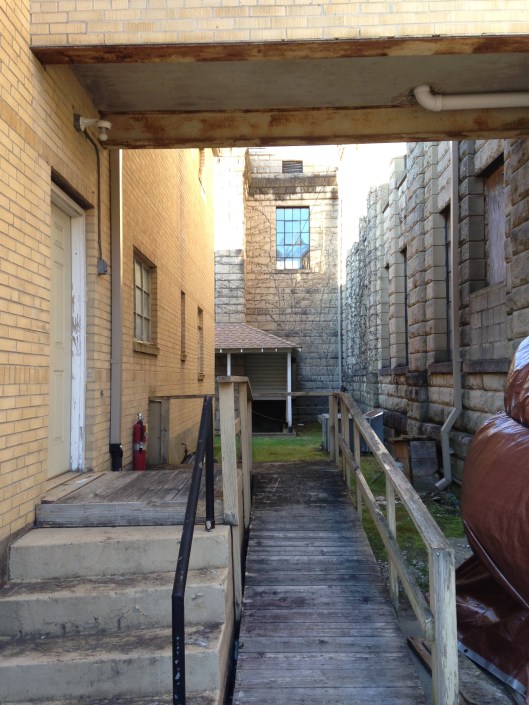
  • Logan County Jail in Logan, WV
  • Absentee Landowners of Magnolia District (1890, 1892, 1894)
  • Charles Spurlock Survey at Fourteen Mile Creek, Lincoln County, WV (1815)

Ed Haley Poll 1

What do you think caused Ed Haley to lose his sight when he was three years old?

Top Posts & Pages

  • Halcyon 4.10.1919
  • Civil War Gold Coins Hidden Near Chapmanville, WV
  • Halcyon-Yantus 12.08.1911
  • Ran'l McCoy's Final Months (1914)
  • Buskirk Cemetery at Buskirk, KY (2015)

Copyright

© Brandon Ray Kirk and brandonraykirk.wordpress.com, 1987-2023. Unauthorized use and/or duplication of this material without express and written permission from this blog’s author and/or owner is strictly prohibited. Excerpts and links may be used, provided that full and clear credit is given to Brandon Ray Kirk and brandonraykirk.wordpress.com with appropriate and specific direction to the original content.

Archives

  • February 2025
  • January 2025
  • October 2023
  • September 2023
  • December 2022
  • November 2022
  • May 2022
  • April 2022
  • February 2022
  • November 2021
  • October 2021
  • September 2021
  • June 2021
  • May 2021
  • April 2021
  • March 2021
  • February 2021
  • January 2021
  • December 2020
  • November 2020
  • October 2020
  • July 2020
  • June 2020
  • May 2020
  • April 2020
  • March 2020
  • February 2020
  • January 2020
  • December 2019
  • November 2019
  • October 2019
  • September 2019
  • August 2019
  • July 2019
  • June 2019
  • May 2019
  • April 2019
  • March 2019
  • February 2019
  • January 2019
  • December 2018
  • November 2018
  • October 2018
  • September 2018
  • August 2018
  • July 2018
  • June 2018
  • May 2018
  • April 2018
  • March 2018
  • February 2018
  • January 2018
  • December 2017
  • November 2017
  • October 2017
  • September 2017
  • August 2017
  • July 2017
  • June 2017
  • May 2017
  • April 2017
  • March 2017
  • February 2017
  • January 2017
  • December 2016
  • November 2016
  • October 2016
  • September 2016
  • August 2016
  • July 2016
  • June 2016
  • May 2016
  • April 2016
  • March 2016
  • February 2016
  • January 2016
  • December 2015
  • November 2015
  • October 2015
  • September 2015
  • August 2015
  • July 2015
  • June 2015
  • May 2015
  • April 2015
  • March 2015
  • February 2015
  • January 2015
  • December 2014
  • October 2014
  • September 2014
  • August 2014
  • July 2014
  • June 2014
  • May 2014
  • April 2014
  • March 2014
  • February 2014
  • January 2014
  • December 2013
  • November 2013
  • October 2013
  • September 2013
  • August 2013
  • July 2013
  • June 2013
  • May 2013
  • April 2013
  • March 2013
  • February 2013
  • January 2013
  • December 2012
  • November 2012

Enter your email address to follow this blog and receive notifications of new posts by email.

Join 2,927 other subscribers

Tags

Appalachia Ashland Big Creek Big Ugly Creek Blood in West Virginia Brandon Kirk Cabell County cemeteries Chapmanville Charleston civil war coal Confederate Army crime culture Ed Haley Ella Haley Ferrellsburg feud fiddler fiddling genealogy Green McCoy Guyandotte River Harts Harts Creek Hatfield-McCoy Feud history Huntington John Hartford Kentucky Lawrence Haley life Lincoln County Lincoln County Feud Logan Logan Banner Logan County Milt Haley Mingo County music Ohio photos timbering U.S. South Virginia Wayne County West Virginia Whirlwind writing

Blogs I Follow

  • OtterTales
  • Our Appalachia: A Blog Created by Students of Brandon Kirk
  • Piedmont Trails
  • Truman Capote
  • Appalachian Diaspora

BLOOD IN WEST VIRGINIA is now available for order at Amazon!

Blog at WordPress.com.

OtterTales

Writings from my travels and experiences. High and fine literature is wine, and mine is only water; but everybody likes water. Mark Twain

Our Appalachia: A Blog Created by Students of Brandon Kirk

This site is dedicated to the collection, preservation, and promotion of history and culture in Appalachia.

Piedmont Trails

Genealogy and History in North Carolina and Beyond

Truman Capote

A site about one of the most beautiful, interesting, tallented, outrageous and colorful personalities of the 20th Century

Appalachian Diaspora

  • Subscribe Subscribed
    • Brandon Ray Kirk
    • Join 789 other subscribers
    • Already have a WordPress.com account? Log in now.
    • Brandon Ray Kirk
    • Subscribe Subscribed
    • Sign up
    • Log in
    • Report this content
    • View site in Reader
    • Manage subscriptions
    • Collapse this bar
 

Loading Comments...