
• About

Brandon Ray Kirk

~ This site is dedicated to the collection, preservation, and promotion of history and culture in my section of Appalachia.

Brandon Ray Kirk

Tag Archives: Johnny Hager

Interview with Frank Hill of Big Creek, WV (2004) 2

20 Saturday May 2017

Posted by Brandon Ray Kirk in Banco, Big Creek, Boone County, Ed Haley, Music

≈ 1 Comment

Tags

Albert Stone, Annie Elizabeth Hill, Appalachia, Big Creek, Billy Adkins, Boone County, Brandon Kirk, California, Carlos Clark, Chapmanville High School, Church of Christ, Civilian Conservation Corps, Ed Haley, education, Edward W. Hill, Ellis Fork, fiddler, fiddling, Frank Hill, genealogy, Great Depression, guitar, Hell Among the Heffers, history, Huntington, Johnny Hager, Lloyd Ellis, Logan, Logan County, Madison, Melvin White, North Fork, Pope Dial, Pure Oil Company, Seymour Ellis, Six Mile Creek, square dances, Stone School, tobacco, Vernon Mullins, Walter Fowler, West Virginia, Whitman Creek

On June 2, 2004, Billy Adkins and I visited Frank Hill. Mr. Hill, a retired farmer, bus driver, and store keeper, made his home on Ellis Fork of North Fork of Big Creek in Boone County, West Virginia. Born in 1923, he was the son of Edward W. and Annie Elizabeth (Stollings) Hill. Billy and I were interested in hearing about Mr. Hill’s Fowler ancestry and anything he wanted to share about his own life. We greatly enjoyed our visit. What follows is a partial transcript of our interview:

FRANK HILL

I was born April 22, 1923 up the Ellis Fork Road. When I was born there, we had a four-room Jenny Lind house. It was an old-timer: double fireplace that burned coal and wood, you know. My mother had eleven children and I was the last one. When she saw me, she give up.

EDUCATION

I went to the Stone School, a one-room school just up Ellis Fork. My wife’s grandpa, Albert Stone, gave them land to build this school. It wasn’t a big lot – it might have been 300 feet square. We played ball there in the creek. We didn’t have much dry ground. Well, I went through the 8th grade around there. Arithmetic was my best subject. I had good handwriting, too. I thought I could go into the 9th at Chapmanville but they wouldn’t let me. They said I hadn’t took this test you were supposed to take as you left the 8th grade.

I walked a mile and six-tenths to school. We’d had bad teachers. They couldn’t get no control over the students. Dad got this old fellow from Madison and he said, “Now, I’ll give you ten dollars extra on the month.” I think the board paid fifty dollars a month. Back then, young men and women went to school. Twenty, twenty-five years old. They were so mean the teachers couldn’t hardly handle them. I had an older brother that was one of them. A teacher whipped a younger brother he had one day and he said, “Old man, wait till I catch you out. I’ll give you a good one.” And he meant it, too.

JOHNNY HAGER

Little Johnny Hager was a fiddle player. He was a little man, never was married. And he never had a home. All he had was a little suitcase with a few clothes in it. He’d stay with people maybe a month or two and the way he paid his keep was he whittled out lids or fed their pigs and stuff like that. He’d stay there a month or two till he felt he’d wore out his welcome then he’d go to another house. He was a well-liked little guy. Us boys, we followed him wherever he went cause he could sure play that fiddle. He played one tune called “Hell Among the Heffers”.

DEPRESSION

We had a hard time in this world. You couldn’t buy a job then. I had a brother-in-law that worked for the Pure Oil Company in Logan that was the only man that had a public job in this whole hollow. People grew tobacco to pay their taxes and bills they had accumulated. It was terrible. I remember my daddy had a little barrel of little potatoes when spring come and this old fellow lived above us, he was a musician. His name was Carlos Clark. He’d come out of the coalfields in Logan and he lost his home. His wife was a cousin of mine. He was trying to teach me to play the guitar. I’d go there and she’d lead the singing and he’d pick the guitar and I’d try to play second. He give me eleven lessons for that barrel of potatoes.

We had two or three around here that went to work in the CCC camps. Lloyd Ellis from Whitman’s Creek was one of them and Seymour Ellis was another one from Six Mile. In his last days, that was all he wanted to talk about. They went plumb into California in the CC camps. Then war broke out and they just switched them camps over to the Army. The Army operated those camps anyhow. That’s why they was so successful. They had control over boys to teach them how to do things.

DANCES

We got just as wild as any of them. Ed Haley used to come over here and play. The Barker family had a full band. Now, they could make the rafters roar. There was an old lady lived in here married to Walter Fowler who called the dances and there wasn’t a one of us really knowed how to dance but we put on a show anyhow. They had them in people’s homes. No drinking allowed but there was always a few that did. They always had a lot of good cakes.

CHURCHES

It was mostly Church of Christ around here. The main preacher up here in these parts was Pope Dial from Huntington. I’ll tell you another one that came in here that followed him sort of was Melvin White. Vernon Mullins followed up years later when he preached in here. I remember the first sermon he ever preached was around here in the one-room Stone School. He established a lot of different churches in the country but that was the first one. He’d talk about how he started here, preached his first sermon. Every funeral he conducted on this creek, he’d tell that story.
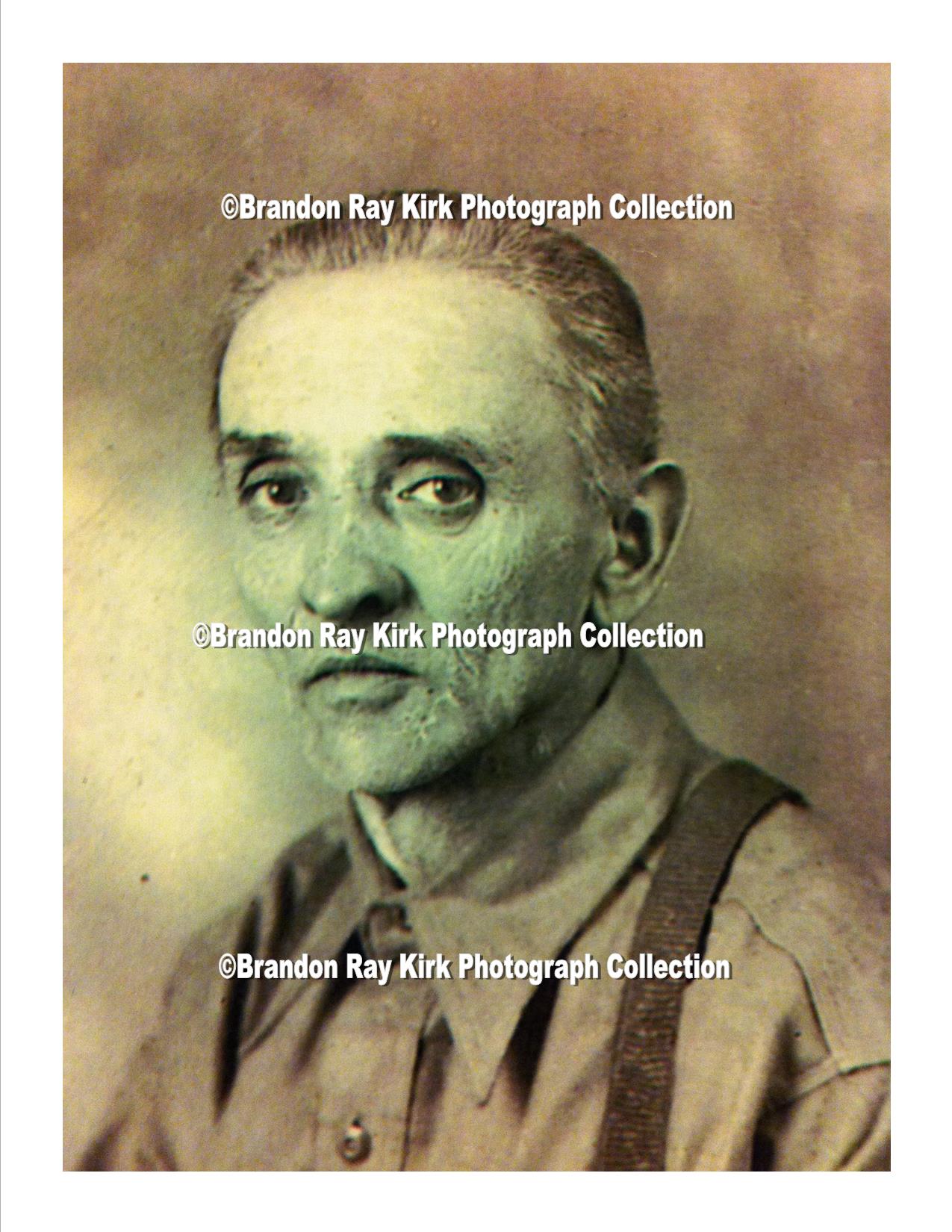
John’s epilogue 2

31 Sunday Aug 2014

Posted by Brandon Ray Kirk in Ed Haley, John Hartford, Music

≈ 2 Comments

Tags

Arthur Smith, banjo, Ben Walker, Benny Martin, Bernie Adams, Billy Adkins, blind, Brandon Kirk, Buddy Emmons, Clayton McMichen, Doug Owsley, Durham, Ed Haley, fiddlers, fiddling, Green McCoy, Haley-McCoy grave, Harts, history, Imogene Haley, Indiana, Jeffersonville, John Hartford, Johnny Hager, Lawrence Haley, Mark O'Connor, Matt Combs, Melvin Kirk, Michael Cleveland, Milt Haley, Mona Haley, music, Nashville, North Carolina, Smithsonian, Snake Chapman, Tennessee, Texas Shorty, Ugee Postalwait, Webster Springs, West Virginia, Wilson Douglas, writing

When Ed first went out into the neighborhood with his dad’s fiddle and armed with his melodies (as interpreted by his mother) I think he probably caused not a small sensation amongst family and neighbors and his ear being as great as it was I think he picked up an incredible amount of other music really fast. I think he played with a lot of ornaments when he was a teenager and up into maybe even his thirties. Snake Chapman and Ugee Postalwait have alluded to this. Snake said the dining room recordings just didn’t sound as old-timey as he remembered Ed playing and Ugee said she remembered him and her dad talking about the little melodies between the notes. Of course Ed had to have been through a lot of subtle changes in style since that time. I think in later years he stripped a lot of the ornaments out of his fiddling in order to appeal to the Arthur Smith-Clayton McMitchen crowd who loved the radio style that was so much in vogue at that time. This might have helped make a little more money on the street. People have always liked to hear someone play and sound just like what they hear on the radio or a record. But I think if someone had asked Ed if he had done that consciously that he would have denied it and if he was in a bad mood they might have even had a fight on their hands.

I keep having this idea of Ed imitating other instruments on the fiddle because I’ve tried it myself and wouldn’t it be something that some of these great parts was really an imitation of John Hager’s banjo playing. I’d love to know where that passage is or whether it even exists.

It’s obvious that when Ed had good firm second that wouldn’t slow down for anything, he really leaned back on the beat and got in that little pocket where so many great musicians like to be. Ella and Mona really held up a good solid beat, but I’ll bet Ed was hard on them — a real taskmaster. It’s all in that rhythm section. Wilson Douglas told me one time that Ed always told him to play it real lazy. Texas Shorty, Benny Martin, and Buddy Emmons refer to it as holding on to the note as long as you can before you start the next one. This is an important part of Ed’s feel and sound and it really comes through on the dining room recordings. I get it by playing as slow as I can against a beat I hope is not gonna move, and then I swing the notes with a dotted note feel — a real lilt if I can get it — and just drag on the beat as hard as I can ’cause I know it’s not gonna slow down. I’d love to know just when Ed figured that out or if it was always there. I always think of Ed in his younger years playing on top of the beat or even ahead of it like I did when I was young and full of piss and vinegar. Actually when you’re playing alone you do hafta pretty well stay on top of the beat to hold the time or at least set it, cause you are the beat but you have to keep from rushing which we will tend do when we get to hard passages in order to get them over with. We’ll not do that no more. Mark O’Connor told me one time that while he is playing a tune he’ll play on top of and behind the beat on purpose. He described playing behind it as letting the beat drag you along…almost like water skiing. Oh, to have known what Ed and John Hager or Bernie Adams sounded like together.

I think Ed worked on his fiddling probably daily most of his life so it is fair to say that it was changing all the time. This would explain the varying descriptions of his playing that have come down. I’m sure they’re probably all accurate. Lawrence, Ugee, and Mona always said Ed played with great smooth long bow strokes and Snake Chapman always was adamant about him playing with short single strokes and Slim Clere said the same thing — that he bowed out everything — no bow slurs. Of course, in the dining room sessions you can hear both ways. It’s amazing how well Ed did without the feedback of working with a tape recorder. What an incredible ear he had. As far as I know, the only time he probably heard himself played back was the recordings we have. I hope there are others out there but I’ve come to doubt it.

Brandon and I have always had a gut feeling that if we’d dug down into the hillside a little further at Milt and Green’s grave we might have found something. We only went down five feet and then we were defeated by the rain. What if we had gone down the requisite six feet? What if, like the probe, Owsley had misjudged the bottom of the grave shaft due to the mud and water? What if it hadn’t rained and muddied up the work area? If Melvin Kirk and Ben Walker went so far as to bury the men in a deep grave, why not assume they would have gone for the standard six feet grave traditionally dug? In the following weeks, old timers around Harts kept telling Brandon and Billy, “If they didn’t dig at least six feet, it’s no wonder they didn’t find anything.” We didn’t want to question the professionalism of experts like the Smithsonian forensic team or seem like we wanted to find Milt and Green so badly that we couldn’t accept the concept that they were gone…but what if? The explanation that Doug Owsley gave us about the coal seam and underground stream made a lot of sense. Needless to say we were really disappointed. I had started to rationalize that not finding anything might indicate that they were buried in the nude and just thrown in the hole with no box or winding sheet or anything.

I was in Durham, North Carolina, the other day and I saw a fiddler on the street and I automatically found myself thinking of Ed. I didn’t have to fill in or rearrange much in my imagination to see him there playing on the street — even though this man was standing up, and played nothing like him. Of course when Ed was younger he probably stood up to play all the time like in the Webster Springs picture…dapper and wearing his derby. I always seem to picture Ed sitting down. Another great thrill for me is a young blind fiddler from Jeffersonville, Indiana, named Michael Cleveland who when he plays I can see Ed at nineteen. He stands up so straight he almost looks like he’s gonna fall over backward the way Lawrence said his dad did. When he plays I can’t take my eyes off of him thinking of Ed. Now my friend Matt Combs, who has done a lot of the transcriptions for this book, sits with me and plays Ed’s notes off of the paper, and I play off the top of my head, so in that sense it’s like playing with him.

I guess it’s time to just leave this alone and get back to my study of the fiddle. Maybe get geared up for “Volume Two.” I spend long hours here at the dining room table with my tape recorder and I can hear Lawrence and feel Ed as I try and play my way back into the past. I find that the study of Ed’s music leads me to the study of all music and the way it’s played.

Johnny Hager

30 Wednesday Jul 2014

Posted by Brandon Ray Kirk in Big Harts Creek, Ed Haley, Music

≈ Leave a comment

Tags

banjo, Boone County, Ed Haley, genealogy, history, Johnny Hager, Johnny Hagter, music, photos, West Virginia

Johnny Hager, banjo player and friend to Ed Haley

Johnny Hager, banjo player and friend to Ed Haley

In Search of Ed Haley 338

19 Saturday Jul 2014

Posted by Brandon Ray Kirk in Calhoun County, Ed Haley, John Hartford, Music, Roane County

≈ 1 Comment

Tags

Akron, Alabama, blind, Brandon Kirk, Calhoun County, Christmas, crime, Ed Haley, Ella Haley, fiddle, fiddling, Harvey Hicks, history, John Hartford, Johnny Hager, Laury Hicks, Marietta, measles, Milt Haley, music, Ohio, Parkersburg, Rogersville, Soldiers Joy, Spencer, Stinson, Ugee Postalwait, Webster Springs, West Virginia, writing

On April 12, 1997, Brandon and I went to see Ugee Postalwait in Rogersville, Alabama. For the most part, she repeated a lot of the same stories I’d heard before, maybe with a new detail or two here and there. We began with her memories of Ed and Johnny Hager, who came to her father’s house around 1913. Brandon asked her specific questions about Johnny, which caused her to say: “He was a little short fella, slender. He was a nice person. Well-mannered. He was a good banjo-player. John Hager was a good friend of Dad and Mom’s both — all of us. Us kids, too. He used to write Mom and Dad. He wrote them from Webster Springs and he wrote them from Greenbrier. Different places where he was at. John wrote a letter back home and said he quit traveling with Ed ’cause Ed drank. He couldn’t take it. I’ve often wondered and studied about what become of him.”

Later, Ed sometimes came with a guitar player, but Ugee couldn’t recall his name.

Brandon was curious to know how far Ed traveled with his music, so he asked if Ed and Ella ever played around Parkersburg.

“I’m pretty sure they have,” Ugee said, “and Marietta, too. Harvey took them up to Akron to play music and they crowded that street so bad up there that they passed a law up there, you couldn’t stand on the corner and play music any more. They wouldn’t allow them to stand on the street. They had to move. See, they was such a crowd got around them.”

I asked, “How much do you reckon Ed would take in of a night?”

Ugee said, “I have seen Ed and Ella take in as much as a hundred dollars right there in Spencer.”

Wow, were they using a cup or a hat to collect money?

“They never used no cup. Just sit a box down or hat down and people come through and throwed money in it. Anyone that come along and dropped money in there, they’d play just the same.”

Would he play me anything I’d ask for?

“Why sure. He’d play it for you and then maybe if you asked for it again he might play you something else and call it that. He didn’t care to rename songs, like ‘Soldiers Joy’. He might call that ‘Runnin’ the Soldier’ or ‘Runnin’ the Track’ or something like that.”

I reminded Ugee that she heard Ed say he just picked up a fiddle and started playing it when he was small and she said, “Oh, yeah. He’d sit in the floor and play on that fiddle. Somebody brought something in that had two strings on it. He wasn’t very old. Just barely a walking, he said. Just like him a talking to me one time, telling me about his dad. Telling about them a lynching him. He said, ‘Goddamn him, they oughta lynched him.’ And I never asked him why. Why would a man say that about his dad? Maybe he was thinking about that man putting him in that barrel of water and causing him to be blind. But Ella’s eyes, they was ate out with blue vitriol.”

Ugee fully believed that measles had caused Ed’s blindness because they almost “put her blind,” too, when she was a girl.

“I must have been about five years old,” she said. “Well, Ed musta been there, too. Musta been the same year he was there that I had the measles and I went blind in my eyes. Couldn’t see nothing for three or four days. Had Granny’s bed set up by the side of the fireplace. I remember that instead of springs, it had rope. And Christmas time come up. And Dad, he played Santa Claus, I reckon. He got me jellybeans. I couldn’t see nothing for two or three weeks. I didn’t think I’d ever see again. Back then, they called them the ‘big’ measles and the ‘little’ measles. The big ones, they called the German measles. And I had them bad. Harvey come around — he was older than I was — he’d say, ‘You stink’, ’cause he could smell that fever on me.”

Brandon asked Ugee what year she was born in, to kind of help us better understand the time frame of her memories.

“I was born in 1907,” she said. “I got married in 1924. I left and went to Akron, but we come back ever month for a long time. If we knowed Ed was a coming in, we was there. I moved back in 1930. We lived on the farm until 1941. Then we went to a farm at the mouth of Stinson.”

At some point, Ugee moved back to Akron, where she lived when I first met her in 1991.

In Search of Ed Haley 334

09 Wednesday Jul 2014

Posted by Brandon Ray Kirk in Calhoun County, Ed Haley, Music

≈ Leave a comment

Tags

Amos Morris, Billy Adkins, Brandon Kirk, Calhoun County, Doc White, Dolly Bell, fiddler, fiddling, history, Ivydale, Jimmy Triplett, John Hartford, John Morris, Johnny Hager, Laury Hicks, Minnie Moss, music, Ocie Morris, Pigeon on the Gate, Stinson, Walker, West Virginia, Wilson Douglas, writing

Around that time, as Billy and Brandon wandered in the woods of eastern Kentucky, I called Jimmy Triplett, a fiddler and protégé of Doc White in West Virginia. Doc, in addition to being Ed’s friend, was a jack of all trades — fiddler, doctor, dentist… I’d recently heard that he was a photographer and wondered if maybe he had pictures of Ed or Laury Hicks. Jimmy wasn’t really sure.

“It was way back when he was a youth that he took pictures,” he said. “I guess he was considered an amateur, but he made a lot of photographs used for postcards.”

I asked Jimmy if Doc ever talked about Ed and he said, “Yeah, he talked about how good he was and everything. He said that he was one of the best that he ever heard.”

What kind of tunes did Doc play?

“The main one Doc plays is ‘Pigeon on the Gate’ — he got that from Ed Haley,” Jimmy said. “I think it would be in standard tuning — it’s a D tune. I don’t know that there’s that many other tunes that he got off of Ed Haley that he played, but he talked about him a whole bunch and then described seeing him and his wife play.”

Jimmy played a tape over the telephone of Doc talking and playing “Pigeon on the Gate”.

“Here’s one they call the ‘Pigeon on the Gate’,” Doc said. “Ed Haley, a blind man, played that tune from Kentucky. Best fiddler that ever I heard draw a bow. His wife was blind and she played the mandolin. They used to come through the country and stop at our houses and stay for days and play with us. You ought to’ve heard him play the fiddle. He’d make them fellas over there sick.”

Jimmy referred me to John Morris, an Ivydale-area fiddler who’d known Doc and even learned “Pigeon on the Gate” from him. John was too young to remember Ed personally (he was fifty-something) but had heard a lot of stories.

“I growed up hearing about Ed Haley from my dad,” John said. “I heard a lot of other stories about him later. He used to come here and stay at my grandparents’ house some. Their names were Amos and Ocie Morris. They just lived about a mile and a half from the train station and it was on the way to Calhoun County and they were from Calhoun County. He’d ride the train to Ivydale. If it was the evening train, usually a lot of people from Calhoun County — the next county back — stayed at my grandparents’ house. He’d stay at my grandpaw and grandmaw’s up here and then go on the next day. He usually, I think, visited with Laury Hicks mostly.”

What about Laury?

“Laury Hicks was evidently a riverman,” John said. “I believe it was Aunt Minnie Moss that said he could take a hog’s head of salt or something under each arm and he poled boats up and down the Elk River and hauled supplies when they used them flatboats. I’ve heard stories of his strength — what a strong and robust kind of a man he was. My dad said that when Laury Hicks died, Ed Haley wasn’t here and the next time he come through they took a chair and set it out at Laury Hicks’ grave and Ed Haley sat out on Laury Hicks’ grave and fiddled for about four hours.”

John said stories abounded about Ed among the people of Calhoun County.

“They told that they was having church over there someplace one night in an old school building or something on top of the hill between Walker and Stinson,” he said. “Ed happened to be in the country and they wanted him to play some hymns. He got started playing and he got off of playing hymns and they wound up breaking up church and having a dance. And they was about to take him up over it — about to get in trouble with the law over it — for breaking up church.”

I asked John if he thought that was a true story and he said, “Well, I’ve heard that. I know Ed cussed all the time. He was bad to cuss and swear. I heard that my Grandmaw Morris about put him away from the table for swearing at the table. Dad said he swore continuously.”

It was coincidental that John would mention Ed’s profanity. A few days later, Brandon met a niece to Johnny Hager at a genealogical meeting and she said Johnny quit traveling with Ed because he used foul language and because he had another woman in Calhoun County. Supposedly, when this woman died Ed played the fiddle at her grave all night. This “other woman” story may have had some merit: Wilson Douglas told me that Ed had an illegitimate daughter in that country.

In Search of Ed Haley 329

28 Saturday Jun 2014

Posted by Brandon Ray Kirk in Big Harts Creek, Culture of Honor, Ed Haley, Lincoln County Feud, Spottswood, Timber

≈ Leave a comment

Tags

accordion, Al Brumfield, Andy Mullins, banjo, Bernie Adams, Billy Adkins, Birdie, Blackberry Blossom, Brandon Kirk, Charles Conley Jr., Chinese Breakdown, Clifford Belcher, Crawley Creek Mountain, Down Yonder, Ed Belcher, Ed Haley, fiddle, fiddler, guitar, Harts, Harts Creek, history, Hollene Brumfield, Joe Adams, John Hartford, Johnny Hager, Logan, Logan County, Milt Haley, music, piano, Pop Goes the Weasel, Raggedy Ann, Soldiers Joy, Spanish Fandango, timbering, Trace Fork, West Virginia, Wirt Adams, writing

Satisfied that we’d taken up enough of Andy’s day, we drove up Trace Fork to see Wirt Adams, an older brother to Joe Adams. Wirt was busy installing a waterbed but took a break to talk with us. “Well, come on in boys, but I’ve only got a few minutes,” he seemed to say. Inside, however, after I had pulled out my fiddle and he had grabbed a mandolin, he seemed ready to hang out with us all day.

I told Wirt that I was trying to find out about Haley’s life. He said old-timers in the neighborhood used to tell stories about Ed playing for dances on Saturday nights with Johnny Hager, a banjo-picker and fiddler. Ed eventually left Harts Creek and got married but came back to stay with his cousins every summer.

Wirt said he sometimes bumped into him in local taverns:

“It was in the forties,” he said. “About ’47, ’48, ’49, ’50 — along there somewhere. We called it Belcher’s beer garden. It was a roadhouse over on Crawley Hill. Well, I just come in there from the mines and Ed was there and he heard somebody say that I was there and he said, ‘Come on over here Wirt and play one.’ I think the fella that’d been playing with him had got drunk and passed out. Well I played one or two with him and then Charley Conley and them boys come in and Charley says, ‘C’mon over here Wirt and get in with us.’ Ed said, ‘Don’t do that, you’re playing with me.’ I really wasn’t playing with him. I had my mine clothes on. I just come in there and picked up Bernie Adams’ old guitar. If you was playing they’d sit you a beer up there — no money in it. Mostly for fun, we thought. We’d gang up on Saturday night somewhere and play a little. Sometimes they’d dance.”

Wirt felt that Ed was “a good fiddler, one of the best in that time.”

I asked him about Ed’s bowing and he said, “It didn’t look like he moved it that far over the whole thing [meaning very little bow usage] but he played tunes where he did use the long stroke. But most of it was just a lot of movement but not no distance. Just hacking, I call it. Him and Johnny Hager were the only two fellas I know who done that.”

Brandon wondered about Ed’s tunes.

“Well, he played that ‘Blackberry Blossom’ — that was one of his favorites — and then he played ‘The Old Red Rooster’ and he played ‘Raggedy Ann’ and ‘Soldiers Joy’. He had one he called ‘somethin’ in the shucks’. I forget the name of it. Anyhow, it was one of the old tunes. And ‘Pop Goes the Weasel’, I’ve heard him play that.”

I asked if Ed played “Birdie” and he said, “Yeah. Now, that’s one of Charley’s favorites. ‘Chinese Breakdown’, that was one of Ed’s. ‘Down Yonder’.”

Wirt told us more about Johnny Hager and Ed Belcher.

“Johnny Hager was a banjo player but he could play the fiddle, too. He played the old ‘overhand’ [on the banjo]. He was a good second for somebody. Now Ed Belcher was a different thing altogether. He played all kinds of stuff. He played classical, he could play hillbilly. He played a piano, he played accordion, he played a banjo, he played a guitar. He was a good violin player. He tuned pianos for a living. Well, I’d call him a professional musician. They had talent shows in Logan. He’d sponsor that. He’d be like the MC and these kids would go in and play. He was a head musician. He was good. He could do ‘Spanish Fandango’ on the guitar and make it sound good. He could play all kinds of tunes. I never could play with him but then he could take the piano and make it talk, too. He was just an all-around musician.”

Brandon asked Wirt if he knew the story about how Ed came to be blind.

“Milt Haley was Ed’s dad,” Wirt said matter-of-factly. “They said his dad was kind of a mean fella and he took Ed out when he was a little kid — held him by the heels — and ducked him in the creek. He had some kind of a fever in wintertime. I’ve heard that, now. Ed never would talk about it. I never heard him mention his dad.”

Wirt had only heard “snippets” about Milt’s death.

“It was pretty wild times,” he said. “I understand the whole thing was over timberworks. These people, they’d have a splash dam on this creek and they’d get their logs and haul them in this bottom at the mouth of Trace — this was one of them. They had a splash dam and when the water got up they’d knock that dam out and that’d carry the logs down to Hart and they had a boom and them Brumfields owned the boom. They charged so much a log. Some way over that, there was some confusion. But I’ve seen Aunt Hollene. She was supposed to been riding behind old man Al Brumfield, her husband, and they shot at him and hit her.”

After Milt was caught, he made a last request.

“They said they asked him if he wanted anything and he wanted them to bring him a fiddle,” Wirt said. “He wanted to play a tune. Now this is hearsay but I’ve heard it several times. They said he played the fiddle and they hung him.”

Boone County’s “Little Johnny” Hager 2

13 Tuesday May 2014

Posted by Brandon Ray Kirk in Big Creek, Big Harts Creek, Big Ugly Creek, Calhoun County, Music

≈ Leave a comment

Tags

Akron, Arthur Smith, banjo, Bertha Bias, Big Creek, blind, Boone County, Boone County Genealogical Society, Broad Branch, Calhoun County, Chapmanville, Clay County, Dave Brumfield, Dicy Thomas, Dolly Bell, Ed Belcher, Ed Haley, Ella Haley, fiddle, fiddler, Garretts Fork, genealogy, Greenview, Harts Creek, Harvey Hicks, Hewetts Creek, history, Hubert Baisden, Irene Hager, Jeff Baisden, Jeff Duty, Jess Chambers, Johnny Hager, Kanawha County, Kansas, Kentucky, Kith and Kin, Laury Hicks, life, Little Coal River, Logan County, Lydia Johnson, Madison, Mary Baisden, Morehead, music, North Fork, Ohio, Powderly, Riland Bias, Robert Martin, Rowan County, Sampson Thomas, Simon Bias, Spruce Fork, Texas, Trace Fork, Turley Adams, Ugee Postalwait, Victoria Adams, West Virginia, Wilson Craddock, writing

After his return to West Virginia, Johnny Hager took immediate notice of the large number of musicians who lived in the head of Big Harts Creek. His first cousin, Jefferson “Jig-Toe” Baisden (1879-1970), was a dancer and banjo-picker. J. E. “Ed” Belcher (1889-1970), who played several instruments, and Robert Martin, an Arthur Smith-style fiddler, were other significant musicians in the area. Ed Haley (1885-1951), a blind fiddler from Trace Fork, particularly caught Hager’s attention. Johnny’s desire to absorb Haley’s music was understandable because, as Jess Chambers stated, “It was a badge of honor to have played with Ed Haley.” Jeff Baisden, a cousin to both men, may have introduced the pair.

Johnny could supposedly play any instrument and his trip out to Kansas allowed him to soak up a variety of western tunes and playing styles which were completely new to folks in Logan County. Both of these qualities, his diverse musical capabilities and his unique musical background, ensured that he an Ed Haley had many intense music sessions. According to Turley Adams, Johnny’s great-nephew, Hager encouraged Ed to take his show on the road and volunteered to serve as Haley’s “eyes” on such trips. This willingness to travel, coupled with his apparent competence as a musician, made Johnny a perfect sidekick to Ed. Haley and Hager were both unmarried, a convenience which allowed them to roam the country with few cares or responsibilities.

Johnny and Ed traveled to various places in West Virginia but are particularly remembered up around the Calhoun-Clay County area north of Kanawha County. Aside from being populated with rural folks similar to Hager’s neighbors in Logan and Boone Counties, the area was also endowed with a host of great musicians. Haley and Hager wintered there as young men with a fiddler named Lawrence “Laury” Hicks (1880-1937). Ugee (Hicks) Postalwait of Akron, Ohio, a daughter of Laury Hicks, said that Ed and Johnny first came and visited her father in the early 1910s. Hager was a tall, slim banjo-picker. When Ed and Johnny left Laury’s home in the spring, with Johnny leading the way, Ugee and her brother stood on the bank by the house and “hollered and cried after them.”

Most agree that Johnny’s travels with Ed Haley ended around 1914 when Haley married Ella Trumbo, a blind music instructor from Morehead in Rowan County, Kentucky. Haley’s habit of cursing and drinking also helped end the partnership. Hager did not care for it.

For the most part, Johnny spent the remainder of his life playing music while boarding with his Baisden kinfolk on the North Fork of Big Creek. Irene Hager, a daughter of Hubert E. and Mary (Pauley) Baisden, remembered Johnny playing music on her father’s front porch in the late 1920s. Her father, a banjo-picker, lived at Greenview and the Big Branch of Spruce Fork of Little Coal River in Boone County. Hubert Baisden was Johnny’s first cousin. Hager boarded with him for several weeks at a time. One of Hager’s chores at the Baisden home was to keep wood in the stove. Irene said that Johnny often talked about his early travels with Ed Haley.

Johnny Hager was a man with little roots and family, a fellow who never had a real home. Many from Harts Creek remember that Hager was simply from the “the North Fork of Big Creek.” Dave Brumfield, a great-nephew, said that Hager stayed in that vicinity with a Thomas family. No doubt, this Thomas family was headed by Sampson Thomas who married Dicy Adams, a sister-in-law to Johnny’s sister Victoria Adams. Incidentally, just over the mountain from North Fork was the Broad Branch of Big Ugly Creek where lived a fiddler named Jefferson “Jeff” Duty (born about 1877). During Hager’s stay on the North Fork, he probably visited this musician (and any others in this locality) to learn a few new licks.

Hager also stayed with Simon and Bertha (Baisden) Bias on Bias Branch in Boone County. Mrs. Bias’ grandfather, Riland Baisden, was a brother to Johnny Hager’s mother. He spent a lot of time on the Garretts Fork of Big Creek with the Barkers before leaving them to stay with Wilson Craddock’s family on Hewitts Creek in Boone County. Mr. Craddock’s widow has a necklace which Johnny gave her during his time there. Lydia (Adkins) Johnson of Powderly, Texas, recalled that Hager lived with her mother and father during her “growing up years at home” in the late 1920s and 1930s. Johnson “was born (around 1923) and raised in Boone Co. just over the hill from Chapmanville.” Hager was a hard worker and was very efficient at “old-time” carpentry jobs and such tasks as digging wells. According to Johnson: “[Johnny] was a handy man, & a fiddle player. (Sometimes) a neighbor would need him to come live with them, to build them an out house for them. He was noted for the best out houses, he earned his keep by living with & helping others.”

Lydia Johson described Johnny as “a very neat man” and Dolly Bell agreed, stating that he always kept his hair cut and his face shaved. He never wore suits and never dated women so far as any of his family knew. In Irene Hager’s words, he “was a pretty straight fellow” and Dave Brumfield said he never drank when visiting his father’s home on Harts Creek.

NOTE: Originally published in “Kith and Kin of Boone County, West Virginia” Volume XXII

Published by Boone County Genealogical Society

Madison, West Virginia, 1997

Dedicated to the late Dolly (Hager) Bell

Boone County’s “Little Johnny” Hager 1

12 Monday May 2014

Posted by Brandon Ray Kirk in Big Creek, Big Harts Creek, Music

≈ Leave a comment

Tags

Aaron Hager, Anna Adams, Armilda Hager, banjo, Battle Hill Township, Big Creek, Big Ugly Creek, Boone County, Boone County Genealogical Society, Dave Brumfield, Dolly Bell, Ed Haley, Edward Hager, Eliza Hager, Geronimo Adams, Harts Creek, history, Jess Chambers, John Baisden, Johnny Canub Adams, Johnny Hager, Joseph Hager, Joseph Hager Jr., Kansas, Kith and Kin, Lincoln County, Logan County, Lola Adams, Lucinda Hager, Madison, Mag Brumfield, McPherson County, Missouri, Mud, music, Olivia Hager, Roxie Mullins, Sanders Branch, Smokehouse Fork, Victoria Adams, West Virginia, William Hager, writing

In the early 1900s, two musicians traveled as a pair throughout West Virginia and spread the influence of their musical talents to fiddlers and banjo-pickers in countless towns and hamlets. One of these men was Ed Haley, a Logan County native, who took up the fiddle after being blinded by his father as a child. The other was Little Johnny Hager who, although born in Logan County, spent a great deal of his life in Boone County.

John Washington Hager was born on December 8, 1876 to Joseph and Lucinda (Baisden) Hager, Sr. on Big Creek in Logan County, West Virginia, near the Boone County line. Johnny was the youngest sibling to Victoria Hager (1869-1942) and Aaron Hager (c.1872-c.1884). During his childhood, his parents moved from their home at the North Fork of Big Creek in Logan County to the Big Ugly Creek area. His family appeared in the 1880 Lincoln County Census. Subsequent years were difficult: Aaron Hager, Johnny’s older brother, died at the age of twelve years old. Victoria Hager married George Washington “Ticky George” Adams and moved to Big Harts Creek in Logan County. Finally, Johnny’s parents divorced due to his father’s infidelity with a local woman named Armilda Adkins. Joseph Hager soon married his mistress and fathered four more children: Edward Hager (1887), Joseph Hager, Jr. (1888-1940), Eliza Hager (1891), and Olivia Hager. Joe Hager lived in the vicinity of the old Mud Post Office near the Lincoln-Boone county line.

Remarkably, Johnny moved to Kansas with his mother, where he spent many years among Hager relatives. Just how long Johnny lived in Kansas has not been determined despite interviews with his close relatives. There is some indication that he and his mother lived in other Western states like Missouri prior to finally settling in Kansas. All the versions regarding Johnny’s stay in Kansas are given below because any one of them might be true. His niece Roxie (Adams) Mullins told that Johnny lived out West for six months. Johnny’s half-niece Dolly (Hager) Bell thought he came home from Kansas when he was twenty years old (circa 1896) or when he was aged in his twenties (circa 1896-1906). Hager’s half-great nephew Jess Chambers said that he had been told that Johnny lived in Kansas for twenty years, meaning that he would have returned to West Virginia around 1905. In the personal opinion of this author, accounts placing Johnny out West for several years seem at this time the most likely scenario simply because Johnny cannot be accounted for in the 1900 West Virginia Census. Instead, he shows up as a farm laborer in the home of a cousin, William Hager, aged 26, in Battle Hill Township, McPherson County, Kansas.

Kansas would have offered a West Virginia boy like Johnny Hager many new adventures. One can be sure that he spent a great portion of his time there working on the farm since he later described plowing fields into mile-long rows. According to family stories, he also chauffeured female cousins into town on wagon rides. Dolly Bell suggested that Hager probably learned to play the banjo while in Kansas and Jess Chambers said of Hager, “He played all his life.” Johnny was self-taught and played the old clawhammer style on the banjo.

According to tradition, Johnny’s mother died during their stay in Kansas. Roxie Mullins stated that Lucinda Hager was buried on the banks of the Wabash River, located along the borders between Illinois and Indiana. Another source said that she died in Missouri. Johnny always cried when he spoke of his mother and said that had lost “everything” when she died.

Some time after 1900, perhaps about 1905, Johnny returned to West Virginia. Although his father Joseph was still alive, Johnny never forgave him for divorcing his mother and refused to associate with him. He also refused to recognize Joseph’s children by his second wife. A story is told how Joe Hager, Johnny’s half-brother, rode to see him at John Baisden’s home on Sanders Branch. He was excited to meet the brother he had never known. When he came into the yard and yelled for him, Johnny wouldn’t even come outside.

In Johnny’s eyes, his sister Victoria Adams was all that remained of his family and he spent a great deal of time boarding at her Harts Creek residence in Logan County. During Johnny’s stay out West, Victoria had give birth to several children in a family which would grow to include Maggie “Mag” Adams (1888-1959), John C. “Johnny” Adams (1891-1965), Anna Adams (1901-1982), Geronimo Adams (c.1903), Roxie Adams (1905-1993) and Lola Adams (1911). It is likely that Johnny spun great stories for the Adams children about his experiences in Kansas. Roxie Mullins remembered him as being “funnier than a monkey,” Jess Chambers said he was a jolly fellow, and Dolly Bell remembered that he loved to joke and laugh. Dave Brumfield, a great-nephew, said that he pranked with the Brumfield children when he visited his parents’ home on the Smoke House Fork of Big Harts Creek in Logan County.

NOTE: Originally published in “Kith and Kin of Boone County, West Virginia” Volume XXII

Published by Boone County Genealogical Society

Madison, West Virginia, 1997

Dedicated to the late Dolly (Hager) Bell

In Search of Ed Haley 279

01 Tuesday Apr 2014

Posted by Brandon Ray Kirk in Ed Haley, Music

≈ Leave a comment

Tags

Annadeene Fraley, Beverly Haley, Calhoun County, Ed Haley, Ella Haley, fiddlers, fiddling, French Carpenter, history, John Hartford, Johnny Hager, Laury Hicks, Lawrence Haley, life, music, Pat Haley, Sol Carpenter, Ugee Postalwait, West Virginia, writing

Ugee also remembered French and Sol Carpenter coming to her father’s house. They were regarded by many as two of the best fiddlers in central West Virginia, so I had to ask, “How did your Dad and Ed regard the Carpenters?”

“There wasn’t nobody as good as Ed and Dad,” she said quickly. “They’d say, ‘Oh, you’re good,’ to the Carpenters and brag on them. Then get away from them and Ed’d say, ‘They didn’t come up with you, Laury,’ and Dad’d say, ‘They didn’t come up with you, either.'”

Ugee said a lot of fiddlers wouldn’t play in front of Ed. When they did, he would usually “listen a while, chew that tobacco and spit and wouldn’t say a thing” — then “cuss a blue streak” after they left. If the fiddler was really bad, though, or “if somebody was a playing something and they butchered it up a little bit — one of his tunes — he’d jump on his feet and stand straight up and say, ‘Goddamn! Goddamn!,'” Ugee said. “You knowed right then that there fella wasn’t playing it to suit him.” Laury would just die laughing over it and say, “Boy, he’s good ain’t he, Ed?”

I wondered if any fiddlers ever asked Ed for tips on how to play and Ugee seemed shocked. “Why, he wouldn’t a showed one how to play,” she said. “He learned music like I did — just a fooling with it.”

I asked Ugee about Johnny Hager, the banjo player she remembered coming with Ed to her father’s house when she was a small girl. I wondered if he was a good banjoist and she said, “Well, he was good for then, about like Grandpa Jones. Dad had a first cousin, Jasper McCune. Me, Dad and Jasper used to go and play music at pie suppers.” Banjos provided most of the second back then, she said. Some of the better players were Willie Smith of Ivydale and Emory Bailey of Shock. Guitars were rare.

I pulled out some of the Haley family photographs, which caused Ugee to ask about Pat Haley, who was coping with Lawrence’s death, her own poor health, and her daughter Beverly’s kidney cancer.

“Well Beverly is in a coma now,” I said. “Pat said she’ll wake up a little bit in the evening and she’ll kind of recognize them a little bit. So in other words, they’ve lost her but she’s still alive. The doctor thinks she’s got about two more weeks. Pat says, ‘We’re taking it one day at a time.’ And Annadeene Fraley, the one who introduced me to Pat, she’s got cancer.”

Ugee said she didn’t know how Pat was making it through all of the grief.

“‘Aunt Ugee,’ she calls me. She’s a fine woman. She’s a strong woman. Well, she had to be strong. She come over to this country married to Lawrence and he didn’t tell her his parents was blind until she got to New York. He said, ‘Well, I’ve got something I’ve got to tell you. My dad and mother is blind and if you want to go back I’ll pay your way back.’ She said, ‘I’ll stay.’ He went to Ed and Ella’s and Lawrence said he was starving to death for a mess of pinto beans. She said she never tasted beans. She didn’t know what they was. They cooked the beans and she tasted them and she thought they was brown mud. Said it tasted just like mud to her. Said they was just eating them beans and bragging on them and she wouldn’t touch them. They made fun of her over it.”

In Search of Ed Haley 275

28 Friday Mar 2014

Posted by Brandon Ray Kirk in Ed Haley, Music

≈ Leave a comment

Tags

Alabama, Arthur Smith, Calhoun County, Clayton McMichen, Douglas, Ed Haley, fiddlers, fiddling, Harold Postalwait, history, Ivydale, John Hartford, John Hicks, Johnny Hager, Josh Joplin, Laury Hicks, Lawrence Haley, Minnie Hicks, music, Rogersville, Ugee Postalwait, West Virginia, writing

Early one fall morning, I loaded up the Cadillac and drove south to the home of Harold Postalwait in Rogersville, Alabama. Harold, I knew, had a very special visitor — his mother, 88-year-old Ugee Postalwait of Akron, Ohio. Ugee remembered Ed Haley as far back as the Bull Moose era when he used to visit her father in Calhoun County, West Virginia. I hadn’t seen her since a visit to her home four years earlier and was anxious to pick her brain for new stories or tunes and show her what I had learned about Ed’s fiddling. Not long after my arrival, after we’d all said our “hellos,” Harold pulled out the picture of Laury Hicks and his family at John Hicks’ in Douglas, West Virginia.

“That’s my dad,” Ugee said, pointing to her father’s image. “I can remember when he wore the mustache.”

I wondered if the picture was taken before Ed was acquainted with Laury.

“Dad met Ed before I can remember,” Ugee said. “I don’t know whether that was before Mom and him was married. It was after Grandpap died, they said. Dad musta been about eighteen or something like that. Josh Joplin brought Ed into that country and told him they was a boy down there he wanted him to hear play the fiddle. Said, ‘He thinks he can play but he can’t play,’ and went in and had Dad to tune up his fiddle and played them two pieces. He played ‘Sally Goodin’ and I think it was the ‘Cacklin’ Hen’. Ed said, ‘Boy he’s showin’ me off.’ That was all they was to it. And that old man you know had told him a lie.”

I asked Ugee, “So Ed was coming to Ivydale before you were born?” and she said, “I have an idea he was because I wasn’t quite old enough to go to school when I first remember him. The first time I ever remember seeing him was when him and John Hager was there. I bet he wasn’t over 27 years old, when I think about it. I would say that was — I was born in 1907 — that was about 1913 or something like that. He was tall, slender. I can remember back when I was four years old real good and I remember him just as plain as if it was yesterday. We had a dirt road to the house and when he went to leave in the spring — they stayed all winter — he was walking behind John Hager and me and my brother Harvey run right to the bank and waved by at him. We’d been crying after him. I can see him walking along… But he carried that there fiddle in a flour bag. I never seen Ed with a fiddle in a case till after him and Ella was married. He always carried it in a flour poke.”

I told Ugee that I had worked a lot with Lawrence Haley in his last days trying to find out about Ed’s technique. Before I could show her what I had come up with, she started telling me what she remembered along those lines. She said Ed played with the fiddle under his chin — he hated when musicians “put the fiddle down low” — and turned it occasionally. He held the bow way out on its end, she said, and played a lot smoother than her father, a tremendous concession for a daughter to make. I asked if Ed played smoothly when she first saw him.

“Oh naturally he got better as years went by, but he was good then,” she said.

She gave me the impression that Ed’s fiddling had a lot of Irish-style “ornaments” in his early days (in the older, more European tradition), which gradually disappeared over the years — probably due to artistic peer pressure from radio fiddlers like Arthur Smith and Clayton McMichen. Smith and McMichen were extremely popular during the last few decades of Haley’s life.

In Search of Ed Haley 272

25 Tuesday Mar 2014

Posted by Brandon Ray Kirk in Big Harts Creek, Ed Haley, Music

≈ Leave a comment

Tags

banjo, Bernie Adams, Bernie Hager, Billy Adkins, Boone County, Brandon Kirk, Ed Haley, fiddle, fiddler, Harts Creek, history, Hubert Baisden, Ike Hager, Irene Hager, John Hartford, Johnny Hager, Low Gap, music, Robert Adams, Roy Dempsey, West Virginia, writing

The next day, I followed a tip from Billy and Brandon and made the short drive to see Irene Hager and her son Ike at Low Gap in Boone County, West Virginia. Irene was the daughter of Hubert Baisden, a close friend to Johnny Hager, and was the widow of Bernie Hager, Johnny’s nephew. Irene said Johnny used to visit her father at nearby Big Branch when she was a girl. Johnny played the fiddle and banjo and talked frequently about his travels with Ed back in the ’20s and ’30s.

“Ed Haley was an ever day word with Johnny,” Ike said.

Ike said Johnny Hager was most known as a fiddler, not a banjo-picker. He said he “cradled” the fiddle in his arms, never put it under his chin and bowed a lot of long strokes. He was primarily a claw-hammer banjoist but “did have a finger style.” Irene said his favorite song was “Joshua’s Prayer”, while Ike remembered him loving “Will There Be Any Stars in My Crown”. He also played “Rosewood Casket”, “Nelly Gray”, “Ballad of Old Number Nine”, “John Hardy”, “In the Pines”, “Cripple Creek”, “Wreck of ’97”, “Mockingbird on the Hill”, and “Little Log Cabin”.

Ike said Johnny taught his father how to play the banjo.

“He wanted a banjo player in the family to play around the houses and the homes with him,” Ike said. “My dad was musically inclined — he could chord a guitar and follow him along on the fiddle and banjo — so he talked Dad into getting a banjo. Dad traded six or seven hens and walked several mile with them hens upside down for this old banjo and Johnny taught him how to play. He picked up on playing pretty fast. I know they used to go over on Big Ugly and play in a school somewhere. Now they was some more boys that played with them. They was Wilcoxes, down on Mud River.”

That evening, I met up with Brandon at Billy Adkins’ house in Harts. Billy said a local man named Roy Dempsey told him earlier that day about having a genuine Ed Haley fiddle. I didn’t have too much time — I was leaving for Nashville later that night — but I wanted to see Roy. Brandon and I drove a little ways up Harts Creek to the Dempsey place, situated on a hill near the mouth of Big Branch. Roy showed us the fiddle, which he said Ed had given to Bernie Adams. Bernie later gave it to Roy’s father-in-law, Robert Adams. It was the first “Ed Haley fiddle” I’d seen on Harts Creek.

In Search of Ed Haley 269

17 Monday Mar 2014

Posted by Brandon Ray Kirk in Big Harts Creek, Culture of Honor, Ed Haley, Lincoln County Feud, Little Harts Creek

≈ 1 Comment

Tags

Ben Adams, Billy Adkins, Bob Mullins Cemetery, Brandon Kirk, Cat Fry, Chapmanville, Eunice Mullins, Ewell Mullins, Greasy George Adams, Green McCoy, Harts Creek, Hell Up Coal Hollow, history, Hugh Dingess, Imogene Haley, John Frock Adams, John Hartford, Johnny Hager, Little Harts Creek, Louie Mullins, Milt Haley, Oris Vance, Peter Mullins, Sherman McCoy, Sol Bumgarner, Spicie McCoy, Ticky George Adams, Turley Adams, writing

Back in the car, I mentioned to Brandon and Billy that we hadn’t made any real progress on learning what happened to Emma Haley. Billy suggested trying to locate her grave in the old Bob Mullins Cemetery at the mouth of Ticky George Hollow on Harts Creek. He said it was one of the largest and oldest cemeteries in the area. I told him that I was all but sure that Emma was buried in one of the “lost” graves on the hill behind Turley Adams’ house but wouldn’t mind checking it out anyway.

We drove out of Smoke House and up main Harts Creek to the Bob Mullins Cemetery, which was huge and very visible from the road. We parked the car and walked up a steep bank into a large number of gravestones. Some were modern and easily legible but most were of the eroded sandstone vintage with faded writing or completely unmarked. I located one stone with crude writing which read “E MULL BOR 69 FEB ?8 DEC 1 OCT 1899.” It could have easily been Emma Haley — who was born around 1868 and died before 1900. However, Brandon read it as “E MULL19 SEP 188?-1? OCT 1891.” We couldn’t agree on the markings well enough to satisfy ourselves.

As we stood at the “E MULL” grave, Brandon pointed across Harts Creek.

“Greasy George lived over there where that yellow house is,” he said.

He then pointed across Ticky George Hollow to Louie Mullins’ house, saying, “That’s where ‘John Frock’ Adams lived.”

John Frock was Ed Haley’s uncle and a suspect in the Al Brumfield ambush at Thompson Branch.

“Ticky George lived on up in the hollow,” Brandon said.

We walked down the hill to speak with Louie but learned from his wife Eunice Mullins that he’d passed away several years ago. Eunice was a daughter of Greasy George Adams. She said Ed used to play music at her father’s home. She also confirmed that Ewell Mullins, her father-in-law, bought Ed’s property on Trace. He lived there for years and was a storekeeper before moving to the site of her present home, where he operated yet another store. Ed played a few times at this latter location before it was torn down around 1950.

From Eunice’s, we went to Trace Fork to take a closer look at Ed’s old property. Along the way, as we drove by Uncle Peter’s place, we bumped into Sol Bumgarner walking near the road. He invited us up to his house, where we hung out for about half an hour on the porch. I played a few fiddle tunes and asked about people like Uncle Peter, Ben Adams, and Johnny Hager.

Bum said Uncle Peter Mullins lived at the present-day location of a tree and swing near the mouth of the hollow in a home that was part-log. Ben Adams, he said, lived further up Trace and hauled timber out of the creek with six yoke of cattle. He remembered Ed’s friend Johnny Hager standing on his hands and walking all over Trace.

I reminded Bum of an earlier story he told about Ed splintering his fiddle over someone’s head at Belcher’s tavern on Crawley Creek. He really liked that story — which he re-told — before mentioning that Ed composed the tune “Hell Up Coal Hollow” and named it after the Cole Branch of Harts Creek. Cole Branch, Brandon said, was the home of his great-great-grandfather Bill Brumfield who kept the hollow exciting around the turn of the century.

After an hour or so on Trace Fork, we decided to see Oris Vance, an old gentleman on Little Harts Creek who Billy said was knowledgeable about early events in Harts. We drove out of Harts Creek to Route 10, then turned a few minutes later onto Little Harts Creek Road. As we progressed up the creek on a narrow paved road past trailers, chicken coops, and old garages, I noticed how the place quickly opened up into some beautiful scenery with nice two-story brick homes.

In the head of Little Harts Creek, near the Wayne County line, we found Oris walking around outside in his yard. He was a slender, somewhat tall fellow, well-dressed, and obviously intelligent. His grandfather Moses Toney was a brother-in-law to Paris Brumfield. Toney and his family had fled the mouth of Harts Creek due to Brumfield sometime before the 1889 feud.

Oris told us the basic story of Milt Haley’s and Green McCoy’s murders as we knew it up to their incarceration at Green Shoal. He said Hugh Dingess, a grandson to the “old” Hugh Dingess, was his source for the tale. At Green Shoal, one of the prisoners begged the Brumfield gang not to kill him so that he could see his children, but the mob gave no mercy and blew Milt’s and Green’s brains out.

“Cat Fry looked out of a window in the top of the house and saw out into the yard,” Oris said, apparently referencing her view of their grisly corpses.

Oris said he saw Green McCoy’s widow at a singing convention in Chapmanville in the early ’30s. She was an alto singer in a gospel quartet with her guitar-playing son. When Oris saw her, she was sitting with songbooks in her lap near a hotdog sale across the road from the old high school.

In Search of Ed Haley 253

01 Saturday Mar 2014

Posted by Brandon Ray Kirk in Big Harts Creek, Culture of Honor, Ed Haley, Music

≈ 1 Comment

Tags

Ben Adams, Billy Adkins, Brandon Kirk, Cas Baisden, Clyde Haley, crime, Dingess, Ed Haley, Ella Haley, Ewell Mullins, genealogy, Greasy George Adams, Harriet Baisden, Harts Creek, history, Jeff Baisden, John Frock Adams, Johnny Hager, Maggie Mullins, murder, music, Peter Mullins, Ticky George Adams, Weddie Mullins, West Virginia, writing

One fall day, Brandon and Billy drove to see 80-something-year-old Cas Baisden, a son of Jeff and Harriet (Jonas) Baisden. Cas lived on a farm near the mouth of Smoke House with a relative of Uncle Peter Mullins. He had been mostly raised by Uncle Peter and had vivid memories of watching Ed Haley play in his yard, as well as in the house. He said Ed didn’t usually have a very big crowd around him. “People didn’t care a bit, even though he was about as good as they was,” Cas said. He said Ed and his wife could play anything. “He was real skinny and would drink anything he could get his hands on.” He added that Ed knew all the roads and trails up around the creek and could walk them as well as a sighted person.

Ed’s uncle Weddie Mullins married Cas’ aunt, Maggie Jonas. Cas said Weddie went to Dingess to get some booze one time and was killed in a shooting scrape. The man who shot him was laid up in bed when Weddie’s half-brother John Adams came in and asked, “Do you think he’ll make it?” Someone said he might live so Adams pulled out his gun and said, “I know he won’t,” and opened fire on him. Later, in unrelated events, Adams “blew his wife’s head off.”

Cas said Ed’s uncle Ticky George Adams was harmless. He was a small man, short and chubby, who dug ginseng a lot on Big Creek. George was a brother-in-law to Ed’s friend Johnny Hager, who came from the North Fork of Big Creek and stayed a lot with Ewell Mullins and others around Harts. Johnny was a good fellow, a musician and a non-drinker.

Cas knew that Ed sold his homeplace on Trace to Uncle Peter’s son, Ewell Mullins. It was a plank building with two long rooms. In the rear of the eating room there was a flat-rock chimney with a long fireplace. The other room was used for sleeping. Later, an old store building was pushed up against the sleeping room to make a kitchen. The house had no porch.

Cas said Ed’s son Clyde Haley was “like a monkey” when it came to climbing trees; one time, he climbed 40 feet up into a tree and all the other kids ran away because they didn’t want to see him fall.

Cas remembered sketches about Ben Adams but didn’t know if he had been involved in the 1889 feud. At one time, he operated a store on main Harts Creek below the mouth of Smoke House. Across the creek, he had a saloon made entirely of rock. Later, he lived on Trace. Cas said part of his old mill-dam could be seen in the creek at the Greasy George Adams place.

In Search of Ed Haley 239

11 Tuesday Feb 2014

Posted by Brandon Ray Kirk in Ed Haley

≈ Leave a comment

Tags

Ashland, Bill Day, genealogy, history, Jack Haley, Johnny Hager, Laury Hicks, Nan Trumbo, Pat Haley, Patsy Haley, Ralph Haley, Rosie Day, writing

Inspired by Louise’s letter, I called Pat Haley, who told me what she knew about Ed’s meeting of Laury Hicks.

“Ed knew Laury Hicks through Bill Day, who was Rosie Day’s husband at that time,” Pat said. “Pop was here in Ashland, I guess. Him and Bill Day got together and then Aunt Rosie and Bill Day took him to Laury Hicks. And that’s the way he got acquainted with him.”

I said, “So he never met Laury Hicks until after Rosie and Bill Day got married? But that doesn’t sound right because Ugee told me that Ed used to come up there with John Hager way back. She’s known Ed since she was a little girl. And the reason John Hager stopped traveling with Ed was because he didn’t like his lifestyle. He said he was drinking too much.”

Pat said, “Well now that makes sense, too.”

I asked her more about the circumstances of Ralph Haley’s illegitimate birth.

“I talked to Mona about there being some confusion over Ralph’s birth,” she said. “Oh, she got very uptight with me about that. She said, ‘Yes, my mother was married because my mother told me so.’ Well, I was explaining this to my sister-in-law, Patsy. She said, ‘No, no, Patricia. That’s not right. Ralph was illegitimate. Payne was a married man and Mom was teaching his daughter piano. That’s how she became pregnant.’ And the reason she’s so sure about that is Patsy had a little girl before she was married and gave her up for adoption and later she told Jack out in California and he said, ‘Well, don’t let it bother you. My mother also had a child out of wedlock.’ We got to wondering why Jack would know that and nobody else would, and then we came to the conclusion that Jack stayed with Ella Haley’s dad and stepmother for many, many years. Patsy said she figured he learned that from Nan, the stepmother.”

In Search of Ed Haley 238

10 Monday Feb 2014

Posted by Brandon Ray Kirk in Ed Haley, Music

≈ 2 Comments

Tags

Appalachia, Billy Adkins, Boone County, Brandon Kirk, Chapmanville, Ed Haley, fiddler, Guyandotte Voice, history, John Hartford, Johnny Hager, Louise Johnson, music, Simeon Bias, West Virginia, writing

As Brandon and Billy dug up more information in West Virginia, I received a letter in the mail from Louise (Adkins) Johnson of Powderly, Texas. She’d read an article about my Ed Haley search in a now-defunct Chapmanville newspaper called The Guyandotte Voice.

“I was so pleased to hear some one mention Blind Ed & his wife,” Johnson wrote. “I’m 72 yrs. old, was born and raised, in Boone Co. just over the hill from Chapmanville, W.V. My Uncle Simeon Bias & his wife Bertha (Baisden) & my family were (I guess you could say backwood singers & musicians) but Ed & his wife came to my Uncle Sim’s often & everyone played. I remember my brother was 3 1/2 or 4 (he’s 65 now) had the most beautiful blonde curls, & Ed would feel his head and say how pretty he was. They would stay a couple of wks. at a time. If you would contact the older people of Bias Branch in Boone Co. you may be able to find out more about them.”

“Now Johnny Hager lived with my mother & Daddy my sister, my Brother & me all our growing up yrs. @ home,” Louise continued. “He was a handy man, & a fiddle player. I also have his picture. He had no family as my Parents knew of, & he stayed more with us, some time’s a neighbor would need him to come live with them, to build them an out house for them. He was noted for the best out houses, he earned his keep by living with & helping others. A very neat man.”

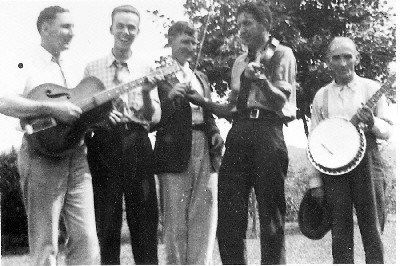
Johnny Hager and friends

10 Friday Jan 2014

Posted by Brandon Ray Kirk in Ed Haley

≈ Leave a comment

Tags

Appalachia, banjo, Boone County, culture, fiddle, fiddler, fiddling, history, Johnny Hager, life, music, photos, U.S. South, West Virginia

Johnny Hager on extreme right holding a banjo, Boone County, WV, 1950s.

Johnny Hager on extreme right holding a banjo, Boone County, WV, 1950s.

In Search of Ed Haley 221

10 Friday Jan 2014

Posted by Brandon Ray Kirk in Ed Haley

≈ Leave a comment

Tags

Appalachia, Arthur Smith, banjo, Ed Belcher, Ed Haley, fiddlers, George Mullins, Geronie Adams, Grand Ole Opry, Harts Creek, history, Joe Adams, Johnny Hager, Logan County, music, Robert Martin, West Virginia, writing

I wondered if people around Trace listened to the radio, especially the Grand Ole Opry, in the early days.

“They was a few radios,” Joe said. “We had one here. We ordered it from a company called Jim Brown. It had five batteries. And like Jerry Clower said, you’d take them and set them in front of the fire and get them hot and then plug them in, they’d play. They was kindly hard to get — they didn’t cost much. I think they was about ten or twelve dollars for all of them. But Robert Martin had one on top of that hill and my brother had one on Twelve Pole, and on Saturday night when the Grand Ole Opry come on, it was a sight to watch these people a going. It come in good and clear. Robert learned a lot of Arthur Smith tunes off the radio. Yeah, Arthur Smith come down there at Branchland and stayed a week with him and I was talking to Robert after he left and he said, ‘I wish you boys’d come down.’ I said, ‘Well, if you’d a let us know, we woulda come.'”

Brandon said to Joe, “I remember you were telling me last time I talked to you that you thought Robert Martin was about the best around.”

Joe said, “In the modern music. Now, in the old-time music, you’d take Ed Haley and Johnny Hager and Ed Belcher. Ed Belcher, he stayed at George Mullins’ and he was like my brother: he was an all around musician. He could tune a piano and play it, he could play an organ. He could play anything he picked up. I never did hear him play a banjo but he could play anything on the fiddle or guitar. He’d note the guitar all the time. He played like these fellers play on Nashville. They was several people around here had banjos and played. Geronie Adams — Ticky George’s boy — he played a banjo a little bit. And they was a fella — Johnny Johnson — played with Robert Martin out on that hill. He was from someplace in Kentucky.”

I asked Joe what kind of banjo style Johnny Hager played.

“He played the old…,” he started. “They’s some of them calls it the ‘overhand’ and some of them call it just ‘plunking’ the banjo. They was several people played like that. Bob Dingess down here, he played that a way a little bit. My dad, he played the banjo and he played that.”

I asked Joe how Ed dressed in the early forties.

“Well, he wore dress pants most of the time,” he said. “He wore mostly colored shirts — blue or green or just any color. Work shirts. Most of the time he wore suspenders with them. And had buttons sewed on them to buttom them with. Buttons on the inside. Mostly he wore slippers. They was a lace-up slipper. Three laces. He could tie his shoes just as good as you could tie yorn. He wasn’t a big man — he was a little small man. About 5’4″, 5’5″.”

Brandon asked what Ed was like when he wasn’t playing and Joe said, “Well, he’d just sit around and talk and tell tales about first one thing and then another. They’d just talk about how hard they was raised and how they come up.”

Did the ladies like him?

Joe said, “They all liked him but they wasn’t girlfriends. If he went into a place to play, they’d all come around and hug him and talk to him.”

In Search of Ed Haley 220

08 Wednesday Jan 2014

Posted by Brandon Ray Kirk in Ed Haley

≈ Leave a comment

Tags

Billy Adkins, crime, Ed Haley, fiddlers, fiddling, George Mullins, Harts Creek, history, Joe Adams, Johnny Hager, music, Peter Mullins, Robert Martin, Ticky George Adams, writing

The next day, Billy and Brandon suggested that we visit 70-year-old Joe Adams on Trace Fork. Joe had all the right genealogical connections to know about many of the major characters in Ed and Milt’s story. According to Billy’s records, both of Joe’s grandfathers were brothers to Ben Adams, a key player in the 1889 feud. Joe’s grandmother was a Mullins, while the other was a half-sister to Burl Farley. (Burl Farley of course was in the Brumfield mob and even “gave the order to shoot” Milt and Green, according to some sources.) Brandon reminded me that he had talked with Joe earlier in the summer and heard him speak about having played music with Ed in his younger days.

As we pulled up to Joe’s nice house at the mouth of Trace, he and his wife met us at the end of their driveway. Joe, I noticed right away, looked a lot like Kenny Baker and was dressed in work clothes, indicating that he was probably in the middle of some project (a garden, working under a truck hood…). When we got out of the car, Mrs. Adams laughed and jokingly said, “Billy, is that you? What are you a doing up here?” Billy told them who I was and the reason for our visit and Joe basically said, “Well, come up to the porch and I’ll tell you boys all I can.” We gathered in chairs and swings under Joe’s carport where the conversation just took off. Joe was born in 1925.

I asked Joe when he first played with Ed and he said, “I’d say that was around ’40 up to ’43. It was before I went in the Army. We was down there at old man Peter Mullins’ — just out in the yard up there. They had a big old porch and they had a bunch of seats out under a bunch of big apple trees and stuff. Big shade. Had a swing out there. And I said, ‘How about bringing your fiddle out and playing a few tunes?’ And he told one of them boys — I forgot which one it was — said, ‘Go in there and bring my fiddle out here.’ He didn’t have it in a case that day but they brought it out and he played ‘Red Wing’ and he played ‘Soldiers Joy’ and he played ‘The Arkansas Traveler’ and he said, ‘Well, I’m tired now,’ and he just laid the fiddle down and we just quit. Sat around and talked a few minutes. He had some of them boys take it back and put it back in the house when he got through playing it. He took good care of his fiddle.”

“Now after I come out of the Army in ’46 and it seems to me like I seen Ed once after that and he left here and I never did see him anymore,” Joe said.

Brandon asked Joe where he remembered Ed staying on Harts Creek.

“I remember him staying up there with old man Peter and Liza and he stayed there off and on for years,” he said. “His wife and some of the children were there. Aunt Rosie married George Mullins on Buck Fork — he stayed up there a lot, too. Johnny Hager stayed with Ticky George Adams — old man George and Vic — that lived up in that holler up here at this store. Greasy George lived across the creek. And old man Ed, he’d go up there.”

What about Johnny Hager?

“Johnny Hager, he played a fiddle, too,” Joe said. “He didn’t play much. Just once in a while maybe he’d pick it up and play one tune. I had an older brother that’s dead, Howard — he played with them a lot. He played a fiddle, a guitar, mandolin, accordion, anything. He played anything he picked up. And we played around here for years.”

Joe said, “I played with a man lived right up in the head of this creek — I don’t know whether you ever heard tell of him — Robert Martin. He lived on top of the hill back there. Him and John Martin was the only two houses back there. He was a good fiddler. Robert played like ‘Lady of the Lake’ and ‘Blackberry Blossom’ and ‘Sugar Tree Stomp’. He had one he said he made it hisself and he made it for old man Will Farley — he called ‘Possom Creek’.”

Robert Martin left Harts, Joe said, after his brother John was murdered at Big Branch.

“You may have heard something about that,” he elaborated. “When they got in that trouble and his brother got killed down here at Big Branch they claimed that Robert cut him, but I don’t think so. I think it was somebody else. And he moved down here at Branchland and me and my brother’d go down there and play with him. He lived on that riverbank and he’d come out there and play with the fiddle till the bow got plum wet and he’d take it in and hang it up and go get another one. We played lots of times till three or four o’clock in the morning with him and then we’d come back to the house.”

In Search of Ed Haley 212

19 Thursday Dec 2013

Posted by Brandon Ray Kirk in Ed Haley

≈ 3 Comments

Tags

Billy Adkins, Cliff Top, Ed Haley, John Hartford, John W Runyon, Johnny Hager, music, Pat Haley, Steve Haley, Tim Wendt, Tom Atkins, West Virginia, writing

Late in the summer of 1995, I boarded my bus and cruised along the familiar Kentucky interstate highway system toward something called the Appalachian String Band Festival at Cliff Top, West Virginia. J.P. Fraley and Wilson Douglas assured me it was of the fastest growing festivals in the region and would be a great place to learn more about Ed Haley. Along the way I picked up Brandon Kirk, who gave me the first draft of the Haley manuscript. Somewhere around Oak Hill, we eased off of the interstate onto a ridiculously curvy road and, after what seemed like hours, we arrived at Cliff Top — a Depression era CCC camp on top of a mountain filled with buses, automobiles, tents, campers, fiddlers, concessioneers, hippies, and just about anything else a person could imagine.

There were a lot of familiar faces milling about the grounds.

Brandon busily snapped pictures and kept saying things like, “So that’s Wilson Douglas?” or “Wow, that’s J.P. Fraley?” or “Virgil Alfrey? Cool.”

I wasted little time getting out my fiddle and playing with folks. There was an “Ed Haley buzz” at the camp. People were curious about my research into his life and music. Once I started playing in jam sessions, a lot of people asked if I was using an “extra-long bow.” At first, I wondered what the hell that was all about. Then, remembering how I had been busy working on Ed’s bowing style — his use of long bow and the Scotch snap (the little “stops”), I realized that I was (like Ed) creating the illusion of a longer bow. Wilson Douglas had once said that Ed’s bow was “six inches longer than any other kind of bow.” He was been sure of it. “A boy don’t miss nothing for he’s eager to learn,” he had said.

At some point Billy Adkins showed up with his teenage son Clint bringing news of new leads. He said he had found references to a “Runyon’s Branch” in old Harts deeds and had made contact with Tom Atkins, a genealogist and great-grandson to Cain Adkins who lived in Williamson. Cain, I remembered, was Green McCoy’s father-in-law. Billy left after a few hours saying that he’d see us in Harts in a couple of days.

At dinner, I met Jess Chambers, a Boone County resident and great-nephew to Ed’s friend, Johnny Hager. Jess didn’t know much about Ed but told us some interesting stories about Johnny’s background. In the late 1880s, Johnny took his mother and left the Mud River country of Boone County and headed West. Roxie Mullins had told me about that venture in 1991. “My mother, she was a Hager, and her mother went to the Western States and died there and was buried on the banks of the Wabash River,” Roxie said. “Uncle John told us — he was with her. Said she just lived there six months till she died.” Johnny returned to West Virginia around the turn of the century, Jess said, and soon persuaded Ed to travel with his music. No doubt, Johnny brought styles and tunes back with him from the West, which may have carried over to Ed. Wilson Douglas had told me Ed played a tune called “Boot Hill” that “came from out West back in the 1880s.” There was another tune in Ed’s recorded repertoire called “Poplar   Bluff”, which I recognized as the name of a Missouri town.

Later that evening, just at the start of a fiddling contest, Pat Haley showed up with her son Steve. Pat’s leg was healing up nicely. She looked much better than when I’d seen her in March, but her spirits were down. The doctors didn’t give her daughter Beverly long to live. Brandon took to Pat right away. He hung out with her for several hours until Steve drove her back to Ashland. Steve returned later that night and hung out till daylight with Brandon and my bus driver, Tim Wendt.

In Search of Ed Haley 137

29 Saturday Jun 2013

Posted by Brandon Ray Kirk in Ed Haley

≈ 2 Comments

Tags

Babe Hale, banjo, Charlotte Spaulding, Ed Haley, fiddler, Grace Marcum, John Hartford, Johnny Hager, Josie Cline, Milt Haley, Mont Spaulding, Tug River, writing

Charlotte Spaulding, Grace’s daughter, guided Lawrence, Pat, and I to see 81-year-old Babe Hale. I told him about my interest in Ed’s life and he started talking about his Aunt Josie. I showed him one picture of Ed and he said, “That looks just like her almost.” I pulled out Ed’s picture from Parkersburg Landing and he said, “Looks more like Uncle Mont.” I was pretty sure that there was some kind of family connection between Ed and Mont and Josie, especially when Babe said his brother George Hale had went by the nickname of “Milt.” Maybe Josie and Mont were somehow Milt Haley’s children by a previous marriage.

“Josie’s mom and dad are buried down here at Grey Eagle,” Babe said. “He was killed in a raft. You know, they used to take logs down the river. They’s big rafts, trees tied together. And he was killed that way. He was killed on a raft.”

Babe told me more about Josie Cline — some very peculiar details.

“Josie collected toll up there, and when I’d go across, I had to pay, too. It didn’t make any difference to her: she’s gonna get three cents some way or other. But she was really manly. She wore men’s shoes and everything.”

So she wore a long dress all the time?

“Oh yeah,” Babe said. “She was really an old-fashioned woman.”

Charlotte said, “She looked like a man, didn’t she, Babe?”

I asked Babe what tunes she and Mont played and he said, “Oh, God, ‘Sourwood Mountain’ and everything. No, they could really knock it off now, both of them.”

We went to Grace’s briefly before heading back to Ashland. I was under the impression that Grace might have confused Ed with Mont Spaulding, although she had claimed to know about Ed’s banjo-picking friend, Johnny Hager.

“Yeah, he played the banjo with her,” she had said. “He was a little man. He was with them. They was two or three people traveled with them.”

← Older posts

Feud Poll 1

If you had lived in the Harts Creek community during the 1880s, to which faction of feudists might you have given your loyalty?

Categories

  • Adkins Mill
  • African American History
  • American Revolutionary War
  • Ashland
  • Atenville
  • Banco
  • Barboursville
  • Battle of Blair Mountain
  • Beech Creek
  • Big Creek
  • Big Harts Creek
  • Big Sandy Valley
  • Big Ugly Creek
  • Boone County
  • Breeden
  • Calhoun County
  • Cemeteries
  • Chapmanville
  • Civil War
  • Clay County
  • Clothier
  • Coal
  • Cove Gap
  • Crawley Creek
  • Culture of Honor
  • Dingess
  • Dollie
  • Dunlow
  • East Lynn
  • Ed Haley
  • Eden Park
  • Enslow
  • Estep
  • Ethel
  • Ferrellsburg
  • Fourteen
  • French-Eversole Feud
  • Gilbert
  • Giles County
  • Gill
  • Green Shoal
  • Guyandotte River
  • Halcyon
  • Hamlin
  • Harts
  • Hatfield-McCoy Feud
  • Holden
  • Hungarian-American History
  • Huntington
  • Inez
  • Irish-Americans
  • Italian American History
  • Jamboree
  • Jewish History
  • John Hartford
  • Kermit
  • Kiahsville
  • Kitchen
  • Leet
  • Lincoln County Feud
  • Little Harts Creek
  • Logan
  • Man
  • Matewan
  • Meador
  • Midkiff
  • Monroe County
  • Montgomery County
  • Music
  • Native American History
  • Peach Creek
  • Pearl Adkins Diary
  • Pecks Mill
  • Peter Creek
  • Pikeville
  • Pilgrim
  • Poetry
  • Queens Ridge
  • Ranger
  • Rector
  • Roane County
  • Rowan County Feud
  • Salt Rock
  • Sand Creek
  • Shively
  • Spears
  • Sports
  • Spottswood
  • Spurlockville
  • Stiltner
  • Stone Branch
  • Tazewell County
  • Timber
  • Tom Dula
  • Toney
  • Turner-Howard Feud
  • Twelve Pole Creek
  • Uncategorized
  • Warren
  • Wayne
  • West Hamlin
  • Wewanta
  • Wharncliffe
  • Whirlwind
  • Williamson
  • Women's History
  • World War I
  • Wyoming County
  • Yantus

Feud Poll 2

Do you think Milt Haley and Green McCoy committed the ambush on Al and Hollene Brumfield in 1889?

Blogroll

  • Ancestry.com
  • Ashland (KY) Daily Independent News Article
  • Author FB page
  • Beckley (WV) Register-Herald News Article
  • Big Sandy News (KY) News Article
  • Blood in West Virginia FB
  • Blood in West Virginia order
  • Chapters TV Program
  • Facebook
  • Ghosts of Guyan
  • Herald-Dispatch News Article 1
  • Herald-Dispatch News Article 2
  • In Search of Ed Haley
  • Instagram
  • Lincoln (WV) Journal News Article
  • Lincoln (WV) Journal Thumbs Up
  • Lincoln County
  • Lincoln County Feud
  • Lincoln County Feud Lecture
  • LinkedIn
  • Logan (WV) Banner News Article
  • Lunch With Books
  • Our Overmountain Men: The Revolutionary War in Western Virginia (1775-1783)
  • Pinterest
  • Scarborough Society's Art and Lecture Series
  • Smithsonian Article
  • Spirit of Jefferson News Article
  • The Friendly Neighbor Radio Show 1
  • The Friendly Neighbor Radio Show 2
  • The Friendly Neighbor Radio Show 3
  • The Friendly Neighbor Radio Show 4
  • The New Yorker
  • The State Journal's 55 Good Things About WV
  • tumblr.
  • Twitter
  • Website
  • Weirton (WV) Daily Times Article
  • Wheeling (WV) Intelligencer News Article 1
  • Wheeling (WV) Intelligencer News Article 2
  • WOWK TV
  • Writers Can Read Open Mic Night

Feud Poll 3

Who do you think organized the ambush of Al and Hollene Brumfield in 1889?

Recent Posts

  • Logan County Jail in Logan, WV
  • Absentee Landowners of Magnolia District (1890, 1892, 1894)
  • Charles Spurlock Survey at Fourteen Mile Creek, Lincoln County, WV (1815)

Ed Haley Poll 1

What do you think caused Ed Haley to lose his sight when he was three years old?

Top Posts & Pages

  • U.B. Buskirk of Logan, WV (1893-1894)
  • Vance Homeplace and Cemetery on West Fork (2017)
  • Early Anglo Settlers of Logan, WV (1937)
  • Alice Dingess piano
  • Tice Elkins in Ferrellsburg, WV

Copyright

© Brandon Ray Kirk and brandonraykirk.wordpress.com, 1987-2023. Unauthorized use and/or duplication of this material without express and written permission from this blog’s author and/or owner is strictly prohibited. Excerpts and links may be used, provided that full and clear credit is given to Brandon Ray Kirk and brandonraykirk.wordpress.com with appropriate and specific direction to the original content.

Archives

  • February 2025
  • January 2025
  • October 2023
  • September 2023
  • December 2022
  • November 2022
  • May 2022
  • April 2022
  • February 2022
  • November 2021
  • October 2021
  • September 2021
  • June 2021
  • May 2021
  • April 2021
  • March 2021
  • February 2021
  • January 2021
  • December 2020
  • November 2020
  • October 2020
  • July 2020
  • June 2020
  • May 2020
  • April 2020
  • March 2020
  • February 2020
  • January 2020
  • December 2019
  • November 2019
  • October 2019
  • September 2019
  • August 2019
  • July 2019
  • June 2019
  • May 2019
  • April 2019
  • March 2019
  • February 2019
  • January 2019
  • December 2018
  • November 2018
  • October 2018
  • September 2018
  • August 2018
  • July 2018
  • June 2018
  • May 2018
  • April 2018
  • March 2018
  • February 2018
  • January 2018
  • December 2017
  • November 2017
  • October 2017
  • September 2017
  • August 2017
  • July 2017
  • June 2017
  • May 2017
  • April 2017
  • March 2017
  • February 2017
  • January 2017
  • December 2016
  • November 2016
  • October 2016
  • September 2016
  • August 2016
  • July 2016
  • June 2016
  • May 2016
  • April 2016
  • March 2016
  • February 2016
  • January 2016
  • December 2015
  • November 2015
  • October 2015
  • September 2015
  • August 2015
  • July 2015
  • June 2015
  • May 2015
  • April 2015
  • March 2015
  • February 2015
  • January 2015
  • December 2014
  • October 2014
  • September 2014
  • August 2014
  • July 2014
  • June 2014
  • May 2014
  • April 2014
  • March 2014
  • February 2014
  • January 2014
  • December 2013
  • November 2013
  • October 2013
  • September 2013
  • August 2013
  • July 2013
  • June 2013
  • May 2013
  • April 2013
  • March 2013
  • February 2013
  • January 2013
  • December 2012
  • November 2012

Enter your email address to follow this blog and receive notifications of new posts by email.

Join 2,925 other subscribers

Tags

Appalachia Ashland Big Creek Big Ugly Creek Blood in West Virginia Brandon Kirk Cabell County cemeteries Chapmanville Charleston civil war coal Confederate Army crime culture Ed Haley Ella Haley Ferrellsburg feud fiddler fiddling genealogy Green McCoy Guyandotte River Harts Harts Creek Hatfield-McCoy Feud history Huntington John Hartford Kentucky Lawrence Haley life Lincoln County Lincoln County Feud Logan Logan Banner Logan County Milt Haley Mingo County music Ohio photos timbering U.S. South Virginia Wayne County West Virginia Whirlwind writing

Blogs I Follow

  • OtterTales
  • Our Appalachia: A Blog Created by Students of Brandon Kirk
  • Piedmont Trails
  • Truman Capote
  • Appalachian Diaspora

BLOOD IN WEST VIRGINIA is now available for order at Amazon!

Blog at WordPress.com.

OtterTales

Writings from my travels and experiences. High and fine literature is wine, and mine is only water; but everybody likes water. Mark Twain

Our Appalachia: A Blog Created by Students of Brandon Kirk

This site is dedicated to the collection, preservation, and promotion of history and culture in Appalachia.

Piedmont Trails

Genealogy and History in North Carolina and Beyond

Truman Capote

A site about one of the most beautiful, interesting, tallented, outrageous and colorful personalities of the 20th Century

Appalachian Diaspora

  • Subscribe Subscribed
    • Brandon Ray Kirk
    • Join 787 other subscribers
    • Already have a WordPress.com account? Log in now.
    • Brandon Ray Kirk
    • Subscribe Subscribed
    • Sign up
    • Log in
    • Report this content
    • View site in Reader
    • Manage subscriptions
    • Collapse this bar
 

Loading Comments...