• About

Brandon Ray Kirk

~ This site is dedicated to the collection, preservation, and promotion of history and culture in my section of Appalachia.

Brandon Ray Kirk

Tag Archives: James A Garfield

History for Jenkins, KY (1928)

04 Tuesday Dec 2018

Posted by Brandon Ray Kirk in Big Sandy Valley, Coal

≈ Leave a comment

Tags

Appalachia, Big Sandy River, C&O Railroad, coal, Consolidation Coal Company, Cumberland Mountains, Devil John Wright, Devil Judd Tolliver, Hazard Herald, history, James A Garfield, Jenkins, John Fox Jr., John W. Wright, Kentucky, Kentucky River, Letcher County, Little Elkhorn Creek, Little Shepherd Amphitheatre, Logan Banner, Nick Dann, photos, Pound Gap, Rocky Branch, Shelby, The Trail of the Lonesome Pine, Virginia, West Virginia

Here is a bit of history for Jenkins, Kentucky, based on a newspaper account provided in 1928:
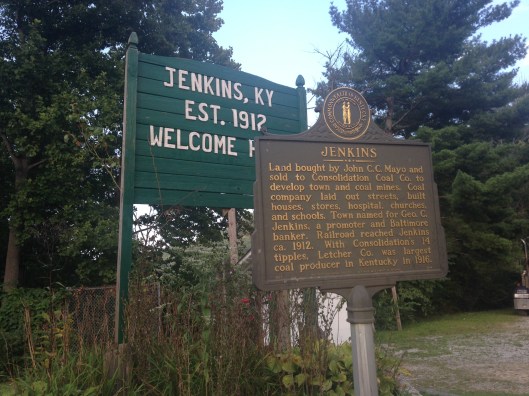
IMG_7109.JPG

Welcome to Jenkins! 26 August 2018.

Nestling in the valley of the Little Elkhorn, within “a stone’s throw” of the famous Pound Gap, is Jenkins, one of the few great mining towns of the world. The term “mining camp” cannot rightly be used when speaking of Jenkins, because it is not a “camp” in any sense of the word, but rather a city built by the great Consolidation Coal Company for the accommodation of its thousands of employees.
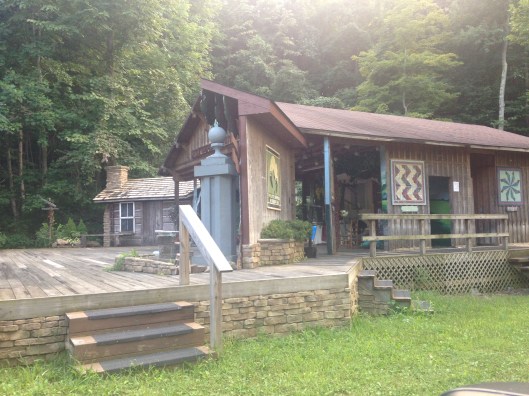
IMG_7106.JPG

Little Shepherd Amphitheatre. 26 August 2018.

Never was a city planned more carefully, says the Hazard (Ky.) Herald. The men in charge of the construction work were chosen from the top of their respective professions, and the building of the plant was carried out to a plan with the health, safety, education, sanitation, convenience and enjoyment of life by the miners, as its chief object cost was a very secondary consideration.

IMG_5964.JPG

Devil John Wright, dubbed Devil Judd Tolliver by John Fox, Jr. in The Trail of the Lonesome Pine. Photo credit unknown.

Twenty years ago this spot was a wild mountain farm, owned by that famous mountaineer, John W. Wright. His home, a hewn log affair, stood near where the Methodist church has since been erected. For miles in every direction the unbroken forest swept away over hill and down valley, some of which had slept undisturbed since the beginning of time.

IMG_7121.JPG

St. George Catholic Church. 26 August 2018.

The mountaineers, on their seldom made visits to this wild region, would look up at the rugged mountains, like giant sentinels guarding the gates of another world, and wonder, what good could ever come of such a land. At night, the few settlers were lulled to sleep by the hoot owl’s call and awakened in the morning by the yelp of the fox.
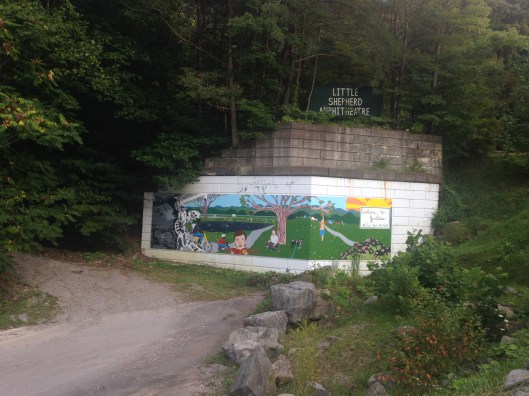
IMG_7108.JPG

This way to Little Shepherd Amphitheatre. 26 August 2018.

Then one day news spread over the hills that Wright had disposed of his lands and that a great town was about to be built by some men from “away off yonder.” Surveying parties were camped on the Kentucky river, and along Elkhorn. Railroads were pushing into the hills from the east and west. Farmers, on their way to mill or meeting, would stop and ask questions of the engineers, learn all they could of the town that “they had heard was going to be” and then hurry home to toll the news to their neighbors, adding to the story until it becomes a fanciful fairy tale.
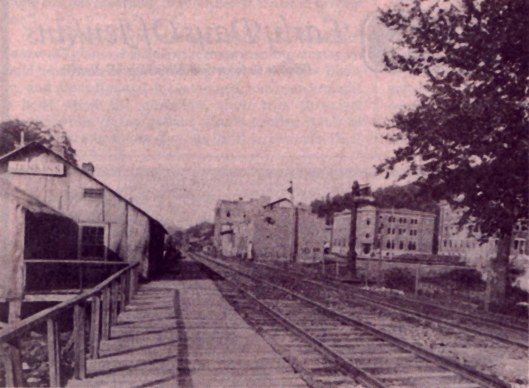
Jenkins KY

Jenkins. Photo credit unknown.

The roars of explosives soon were heard for many miles, children at first would run screaming to their mother [illegible line] skirts asking to be told what it was they had heard “away over yonder,” while old women smoked their pipes and wondered if “Garfield was coming up the Sandy again.”
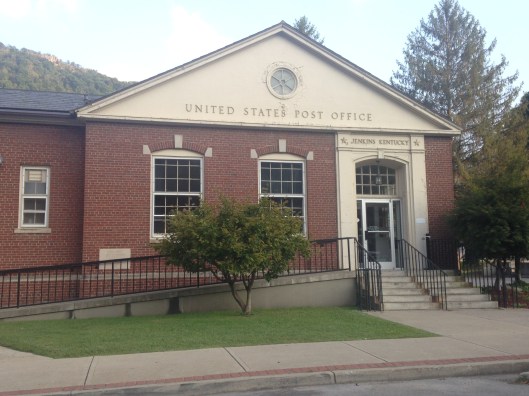
IMG_7123.JPG

Jenkins Post Office. 26 August 2018.

Coming into wild, rugged country like the head of Elkhorn, and laying off and building a city was a feat worthy of the greatest engineering skill, and that was the sort employed by the Consolidation Company.

The nearest railroad was still miles away. Everything needed in construction must be freighted across the Cumberlands, over roads almost impassable by wagon. For 12 months preparation for this gigantic plant went on before the actual construction work began. Roads were graded across the mountain by Pound Gap and a lumbering concern was induced to build their narrow gauge railroad from Glomorgan to Rocky Branch, leaving only about five miles that supplies must be transported by wagon freight. The Pound Gap country was a beehive of activity. Freighters were so numerous on the road that it took the best part of a day to make the trip from Jenkins to Rocky Branch and return. Every few yards the driver would be forced to turn out so that another could pass.
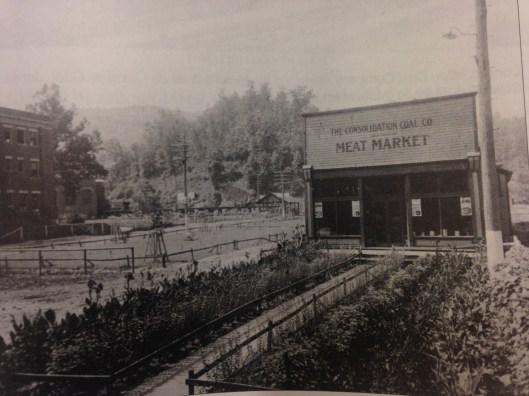
IMG_9322.JPG

Consolidation Coal Company Meat Market. Photo credit unknown.

Hundreds of carpenters, masons and helpers were at work building houses. The houses they constructed were of a type foreign to the coal fields across the mountains in Virginia. A giant power plant was built, the water of Elkhorn were harnesses to create the power to run the greatest mining plant in the south. The dam built across the stream has formed one of the most beautiful lakes in America, it has been stocked with fish and lined with row boats for the recreation of the coal miners and their families.
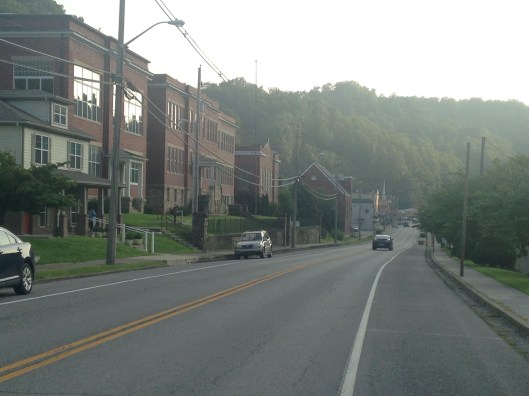
IMG_7122.JPG

Jenkins. 26 August 2018.

Every home was built for convenience and comfort. Sanitation was provided and each house was wired for electricity. Word went out into the mining camps close by in Virginia that the “Jenkins company” would not tolerate kerosene lamps in their houses and required that their employees use electricity for illumination. These “other camps” were forced to remodel their plants in keeping with the pattern on which the great Consolidation plant was built, until today, the old order has been replaced with the new throughout Virginia, West Virginia and Kentucky: thanks to the lead of the Consolidation Coal Company.
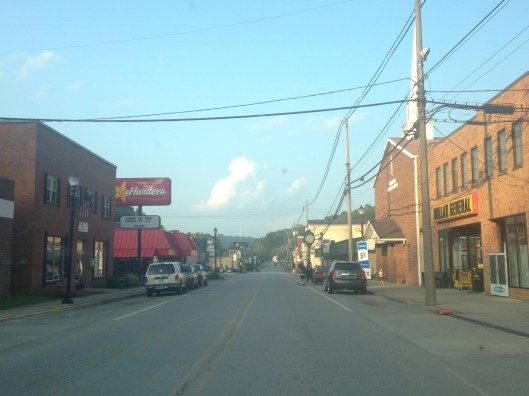
IMG_7112.JPG

Jenkins. 26 August 2018.

Jenkins is well lighted; has an excellent water system; fire department and paved streets in the business section. Many beautiful homes line the handsome drive, skirting the lake. These, unlike the ordinary mining town houses, are set well back from the driveway in park like lawns, well shaded with grand old oaks and other native trees.

Some of the most substantial business buildings to be found in the Cumberland region are here in Jenkins. Among these are the recreation building, housing a drug store, hotel, post office, Western Union office, barber shop, pool room, printing office, and drink stand. The First national Bank building is the most beautiful building in Letcher county; vine-clad with clinging ivy gives it the appearance of having grown there.
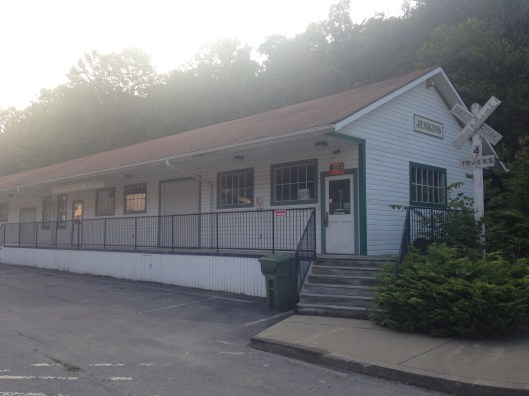
IMG_7114

Jenkins Dept. 26 August 2018.

The most widely known business institutions in Jenkins are the Consolidation Coal Company store, the First National bank, the Jenkins Steam Laundry, the Modern Pressing Shop, Nick Dann’s Auto Sales and Repair Shop, and the numerous businesses housed under the roof of the mammoth recreation building. The town is on the Kentucky state highway and is served by the C. & O. railroad system from Shelby junction.

Source: Logan (WV) Banner, 2 October 1928.

Museum and Log Cabin at Breaks Interstate Park in Breaks, VA (2018)

17 Monday Sep 2018

Posted by Brandon Ray Kirk in Civil War, Hatfield-McCoy Feud, Native American History, Timber

≈ Leave a comment

Tags

Appalachia, Battle of Middle Creek, Brandon Kirk, Breaks, Breaks Canyon, Breaks Interstate Park, civil war, fossils, Hatfield-McCoy Feud, history, James A Garfield, Kentucky, Marion, moonshine, moonshining, Native American History, Native Americans, photos, Phyllis Kirk, rafting, Saltville, Union Army, Virginia

IMG_6831

Video showcasing regional history. 25 August 2018.

IMG_6816

Hammerstone and Polishing Stone. 25 August 2018.

IMG_6818

Fully Grooved Axe. 25 August 2018.

IMG_6819

Lt. James A. Garfield, Union hero at the Battle of Middle Creek, KY. 25 August 2018.

IMG_6825.JPG

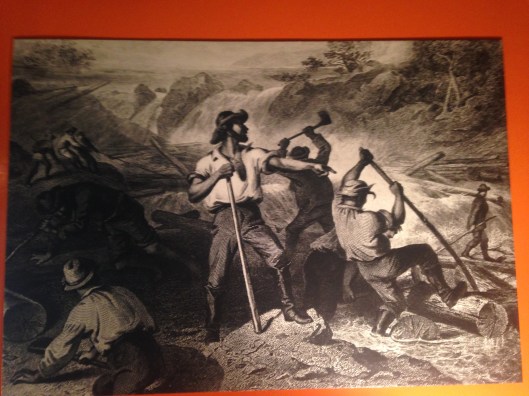
Rafting through Breaks Canyon, c.1885. 25 August 2018.

IMG_6821

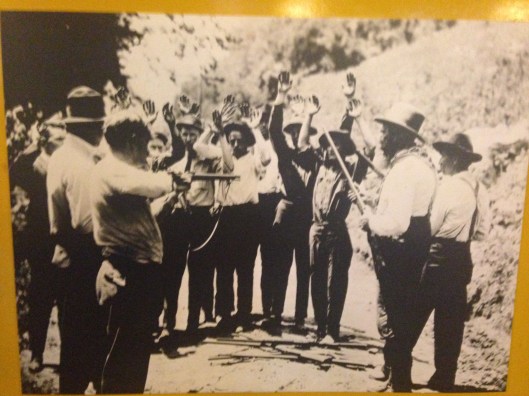
This photo is labeled: “A Confrontation Between the Hatfields and the McCoys.”

IMG_6823

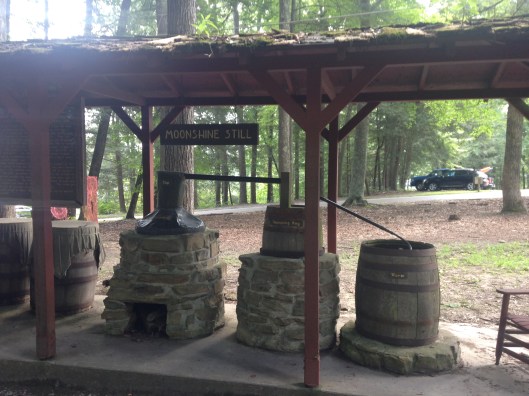
Moonshine still. 25 August 2018.

IMG_6827

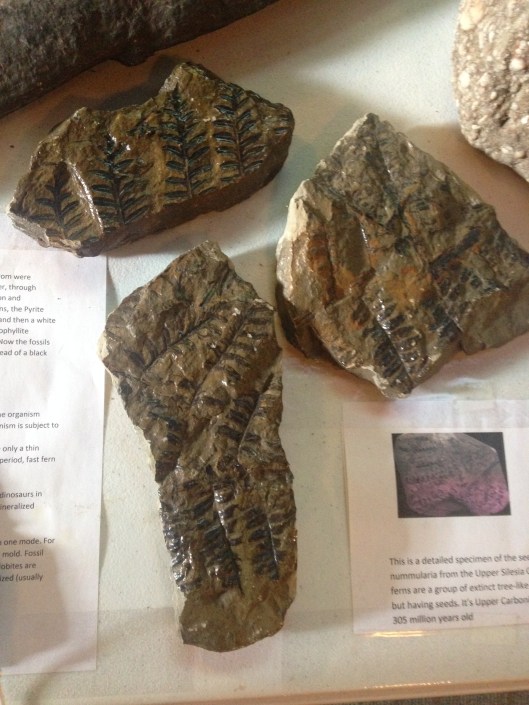
Seed fern fossil, 305 million years old. 25 August 2018.

IMG_6833

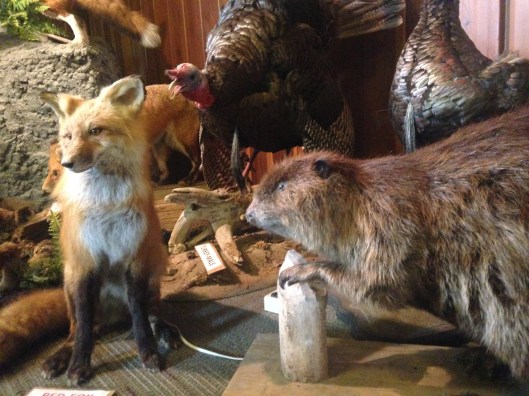
Native wildlife. 25 August 2018.

IMG_6835

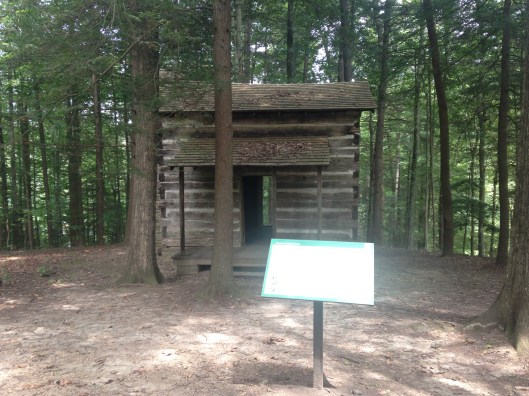
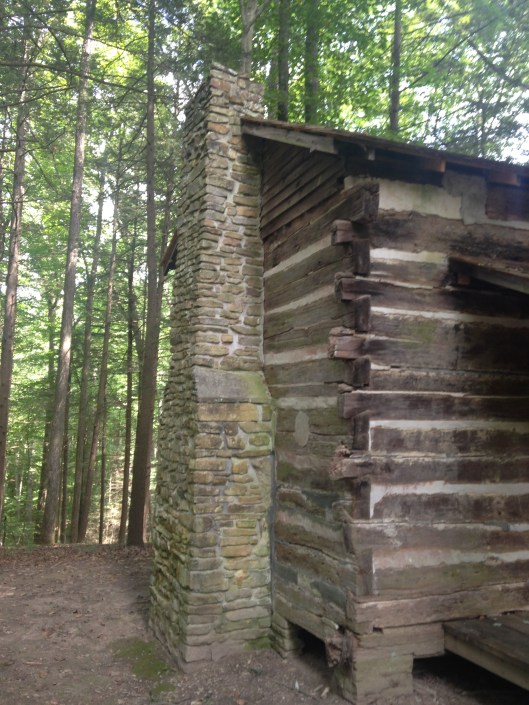
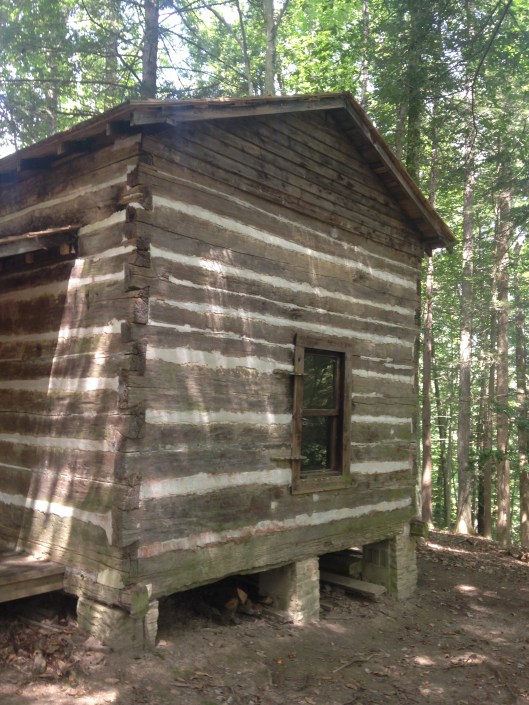
Log cabin. 25 August 2018.

IMG_6839

Log cabin. 25 August 2018.

IMG_6837

Log cabin. 25 August 2018.

IMG_6842

Log cabin. 25 August 2018.

IMG_6840

Log cabin. 25 August 2018.

IMG_6841.JPG

Mom at the cabin. 25 August 2018.

IMG_6844

Moonshine still showing cap, thumping keg, and worm. 25 August 2018.

IMG_6852

Salt kettle cast at Marion, VA, about 1860 and buried to conceal it from Union troops at Saltville, VA, in 1864. 25 August 2018.

Chasing John Runyon (1996)

07 Monday Jul 2014

Posted by Brandon Ray Kirk in Cemeteries, Ed Haley, Inez, Lincoln County Feud

≈ Leave a comment

Tags

Appalachia, Aquillia Porter, Bill Duty, Bill Fields, Billy Adkins, Brandon Kirk, cemetery, Ed Haley, genealogy, Graveyard Point, Hinkle Valley Road, history, Inez, James A Garfield, Jim Webb, Joe Fannin, John W Runyon, Kentucky, Lawrence County, Leonard Porter, Martin County, Mary Runyon, Mary Runyon Fields, Mary United Baptist Church, Milo, Nat's Creek, Peach Orchard, Route 1884, Route 40, Samuel W. Porter, Stidham, Tomahawk, U.S. South, Walt Mollett, Wealthy Fry, Webb Music Store, writing

A month or so after “striking out” on the Ed Haley house, Brandon and Billy drove to Inez, Kentucky, and searched for more information about John Runyon. Venturing north of the county seat, they met Leonard Porter, who lived in a little settlement called Tomahawk. Porter remembered Mrs. Runyon staying with Mary Fields in a small house at the mouth of nearby Hall Branch and said she was likely buried in the Fields family cemetery on a point at nearby Hall Branch Road. Billy and Brandon headed up there, where they found the grave of Bill Fields (1882-1948) and Mary Fields (1888-1985), but none of John Runyon’s family. Just down the hill from the cemetery (presently a trailer court) was the old homestead of Mr. and Mrs. Fields. At one time, they later discovered, the Fieldses ran a store beside of their home. Across the road was the location of the former Mary United Baptist Church — named for Mary Runyon or Mary Fields – now converted into a house. As they stood on the hill, Billy reminded Brandon that Bill Duty’s mother-in-law was a Fields prior to her marriage.

They next tried to find the location of John Runyon’s homeplace. According to the Williamson family history, Runyon lived at the “old Stidham post office,” which they figured was located on Rockhouse Fork. Unfortunately, they found no sign of “Stidham” up the many branches of Rockhouse. There were no mailboxes labeled “RUNYON” or any signs to help them along. Many of the names of local hollows had changed since the time of the old deeds.

Feeling a little desperate, they pulled into a driveway with a mailbox labeled “HINKLE” and spoke with a very nice middle-aged man who told them the exact location of the old Stidham Post Office — actually, all three of them. The first location ran by Joe Fannin was situated at the mouth of Spence Branch near Milo. Around 1935, the office was relocated to a site on what is now called Hinkle Valley Road, just across the creek from a sign reading “Left Fork.” The final Stidham Post Office was in what is today James Webb’s Music Store. Upon viewing the sites, Billy deduced that the old Runyon homeplace had been near the second post office.

While in that vicinity, they talked with an elderly man named Walt Mollett who confirmed that John Runyon had been a local resident. He said Runyon was probably buried down the road in a cemetery on Graveyard Point at Stidham, basically the junction of Route 1884 and Route 40.

A few minutes later they were at the cemetery, parking beside the road in a treacherous curve and tromping through a forest of damp growth. At the center of the cemetery was a single, ancient pine tree. Near the pine, Brandon spotted the grave of Runyon’s daughter, Wealthy Fry. Just below her was Aquillia Porter. And below her was a grave with a new tombstone written as “Mary M. Runyons” and dated “January 28, 1861-January 29, 1958.” Beside of Wealthy Fry’s final resting place was an older stone originally created for “Mary Runyon” dated “January 28, 1861-January 29, 1956.” There were plenty of Williamsons in the cemetery — all relation to Mrs. Runyon — including Sam Porter’s second wife — but absolutely no sign of John Runyon’s grave.

Jim Webb, a gentle middle-aged musician and proprietor of Webb’s Music Store, told Brandon and Billy that someone had wrecked in the cemetery a few years earlier and destroyed many of the tombstones. Equally tragic, the wrecker that removed the vehicle from the cemetery had caused more damage to the stones. The community had organized a fund to restore the graves, Webb said, but it was little consolation. Brandon theorized that John was buried beside of Wealthy — that someone had used Mary’s old tombstone to “sort of” mark the spot. He didn’t rule out, though, that Runyon had been buried with his parents on nearby Nat’s Creek in Lawrence County. (The Graveyard Point cemetery was more oriented toward his wife’s family, the Williamsons.) A quick drive to Nat’s Creek, including a tour of the “town” of Peach Orchard (a virtually abandoned coal town once prominent in business affairs and the site of a General Garfield Civil War story), failed to produce any signs of a Runyon cemetery, although it did offer some of the most serene, peaceful, spooky and haunting countryside found in the locale.

Brandon felt a real frustration in not being able to positively find Runyon’s grave and thus achieve some sense of closure on that facet of the story. It was as if he and Billy, whose ancestors had supposedly spent years looking for Runyon, had also been evaded by ole John — even in his death.

Parkersburg Landing 45

03 Thursday Jan 2013

Posted by Brandon Ray Kirk in Ed Haley

≈ Leave a comment

Tags

Appalachia, Blackberry Blossom, civil war, Ed Haley, fiddler, history, James A Garfield, Jean Thomas, John Hartford, Junius Martin, Kentucky, Lawrence Haley, music, writing

     A few weeks after finding this article, Lawrence Haley called me with the news that he had found four more of his father’s records. These were not from the home recording sessions of the mid-forties. Instead they were from Junius Martin, a man who “ran with Pop some.” Martin had brought them to Lawrence in the late ’70s and traded them for a Parkersburg Landing album. I was extremely excited — what tunes were on these records? Were they dated? Lawrence said two of the Martin records, titled “Blackberry Blossom”/”Poplar Bluff” and “Bluegrass Meadows”/”Ox in the Mud” were dated December 1947. The other two, “Indian Eat the Woodchuck”/Unnamed and “Cabin Creek”/”Indian Eat the Woodchuck”, were undated.

     Inspired by the find, I read up on some history behind “Garfield’s Blackberry Blossom” in Jean Thomas’ Ballad Makin’ in the Mountains of Kentucky. According to Thomas, a French harpist named Christopher Columbus learned the tune from General Garfield in the Big Sandy Valley during the War Between the States. Upon returning home, he told his wife, “Americkee, I’ve learnt another tune! I ketched it from General Garfield his own self. The General whistled it a heap o’ times as he rode ahead of our troops right off yonder at the mouth of Big Sandy.”

     According to Thomas’ account, General Garfield heard Christopher Columbus play the tune on a harp one night at camp.

     “One night I was sent to his headquarters with a message and whilst I was waitin’ for orders I set down on the far end of the stoop and played a tune.  I had not played the piece oncet through till I hear-ed behind me a heavy tread and the clickin’ of sword agin’ boot top. I poked my harp in my pocket quick as I could and riz to my feet in salute. For there stood General Garfield his own self lookin’ down at me. ‘Let’s hear that tune again,’ said the General, as friendly as a private, ‘that’s my favorite tune though I can’t recall the name of it.’ With that, he [the General] let fly a stream of tobacco juice into a clump of blackerry bushes growin’ nigh the foreyard. The amber splattered all over the snow white blossoms on the bush and from then on we called the piece Blackberry Blossom.”

In Search of Ed Haley 7

26 Monday Nov 2012

Posted by Brandon Ray Kirk in Ed Haley

≈ Leave a comment

Tags

Appalachia, Ashland, Billy in the Lowground, Birdie, Blackberry Blossom, blind, books, Catlettsburg, Charleston, Clovis Hurt, Columbus, Doc Holbrook, Ed Haley, fiddle, fiddler, Flannery's Dream, Forked Deer, Grayson, Greenup, history, J P Fraley, James A Garfield, John Hartford, Kentucky, Lawrence Haley, logging, Morehead, music, Ohio, Old Sledge, Parkersburg Landing, Portsmouth, Ralph Haley, Rounder Records, Route 60, Snake Chapman, Soldiers Joy, Tennessee Wagner, The Wild Rose of the Mountain, West Virginia, Wild Wagner, writing

A few days later, while re-reading the liner notes for Parkersburg Landing, I focused in on the name of J.P. Fraley as one of the informants for Ed’s biographical information. Encouraged by my success in contacting Snake, I got J.P.’s telephone number from a mutual friend and just called him up. He lived near Grayson, Kentucky, a small town southwest of Ashland and roughly mid-way between Ashland and Morehead on Route 60. I could tell right away that Ed Haley was one of his favorite subjects.

As soon as I mentioned Haley’s album, J.P. just took off. “You know, he never did make a commercial record. Those little old things, they had a cardboard center. They was home recordings. At the time, Rounder was a making the record that I did, The Wild Rose of the Mountain, and I told them about Ed Haley. And we was lucky with Lawrence, one of his boys…”

J.P. stopped.

“John, I’ll tell you quickly the story of it. Lawrence was really proud of his daddy, but people around Ashland would say, ‘Aw, he was just a bum.’ Well, he wasn’t a bum. Anyway, I got a hold of Lawrence and he was dubious about even letting us make an album of the records. He was pretty well put out because his daddy never did get recognition, but I told him Rounder was legitimate. He said, ‘I’ll go with you and take them records.’ He insisted on it. He was on the verge of being a retired postman. So he went to the Smithsonian and finally come out with the album. It tickled me to death that they did it.”

J.P. paused and then said, “Well, so much for that. I’m on your nickel,” – as if what he’d just told me was something I didn’t really care to hear.

I asked him to tell me more, specifically about his memories of seeing Haley on the street. He said, “You know, he fascinated me. When I was just a kid learning to fiddle, my daddy was a merchant. He’d take me into Ashland and stand me on the street just to listen to this blind fiddler and his boy play. I was about twelve or fourteen. Well, even earlier than that I was listening to him on the street – watching him – and I swear to god, his fingers, when he played the fiddle just looked like they was dancing. It was out of this world. Now, I don’t know which world’s fair it was, but they picked him up – I think it was Mr. Holbrook, the doctor – and took him to the world’s fair and the critics in New York – might have been ’35 or somewhere in there – wrote about him. Said he was a ‘fiddling genius.’ Just what I already knew, and I was just a kid.”

In the 1940s, one of J.P.’s friends, Clovis Hurt, had a run-in with Haley at Murphy’s Ten Cent Store in Ashland. “Clovis Hurt played fiddle in a band. He discovered Ed playing on the street and it just had him washed away. So Clovis told Ed that he was a fiddler. Ed said, ‘Have you got a fiddle?’ He said, ‘Yeah.’ Ed said, ‘Where’s it at?’ He said, ‘It’s in the car.’ Ed said, ‘Get it and play me a tune.'” J.P. chuckled. “Now, this happened. They was several of us around there when this took place. Clovis never did like Ed after what happened. He got his fiddle out and he played a tune called ‘Grandmaw’s Chickens’. It sounded like a whole flock of them – scared chickens. Ed said, ‘Listen, I wanna tell you something. Don’t you play the fiddle in public anymore. You’re just a learning it a little bit.’ Clovis hated him. Well, I mean he didn’t hate him, but he said he didn’t like him. Said he didn’t have any personality. I said, ‘Well, Clovis, he didn’t have to have. He made it with the fiddle.’ But he was nice enough.”

So Ed wasn’t afraid to speak his mind, even though he was blind?

“Oh, no,” J.P. said. “I’ve heard him get loud. He would actually try to fight if somebody bothered him. He’d tell them, ‘Come around here.'”

Haley apparently had a cranky side: according to Parkersburg Landing, he “was known for his irascible moods and anyone who did not properly appreciate music was liable to his scorn.

I asked J.P. about Haley’s fiddle and he said, “Well, Ed wouldn’t fool with a cheap instrument. Over the years, he had several fiddles. This doctor I told you about – Doc Holbrook – he had one of Ed’s fiddles and I got to keep it for two or three years.”

As for Haley’s technique, J.P. said he “leaned” the fiddle against his chest when playing and held the bow at its end. I wondered if he played long or short bow strokes. “He done it both. I know when he played for his own benefit he used more bow. But he played a lot for dances and as they used to say they had to play ‘quick and devilish.'”

Did he play in cross-key?

“Oh Lord, yeah.”

What about bluegrass music? Did he like it?

“I honestly don’t think Ed woulda fooled with it. He didn’t do a whole lot of double-stopping or too many minors and stuff.”

Being an avid collector of fiddle tunes, I was very curious about Haley’s repertoire. J.P. said, “Oh, Lord. I play some of his tunes: ‘Birdie’ and ‘Billy in the Lowground’. And he played tunes like ‘Old Sledge’. He played all the standards like ‘Soldiers Joy’ and ‘Forked Deer’ and all of that. ‘Wagner’. He didn’t call it ‘Tennessee Wagner’, but he called it ‘Wild Wagner’. He played a tune that I woulda loved to learned – one called ‘Flannery’s Dream’. He was limited but now he would play hymns, too – especially on the street, on account of this is the whole Bible Belt. He played some waltzes. They were crudely pretty. I don’t remember him a singing at all, but now I have heard his wife sing and him backing her on the fiddle.”

I asked J.P. if he remembered Haley playing the eastern Kentucky version of “Blackberry Blossom” and he said yes – that he played it, too. He knew a little bit about the tune’s history: “Well, General Garfield was a fiddler. A lot of people didn’t know it. I guess it had to be in the Civil War. The ‘Blackberry Blossom’ – the old one – was General Garfield’s favorite tune. Ed – I never will forget it – he told me that that was General Garfield’s ‘Blackberry Blossom’.” This “Garfield’s Blackberry Blossom”, J.P. said, was a different tune entirely than the one made famous by Arthur Smith. J.P. said local fiddler Asa Neal also played the tune. “He was from around the Portsmouth area. He’s dead, and he was quite a fiddler. Now, he knew Ed. Fact of the matter, he learned a lot from Ed, but he was about Ed’s age.”

J.P. said Haley never talked about where he learned to play. “I have an idea that it was probably a lot like I learned. See Catlettsburg was a jumping off place, I call it, for loggers and coal miners and rousters and so forth, and they was always some musicians in them. And Ed had this ability – he couldn’t read – but he had an ear like nobody’s business. If he heard a tune and liked it, he’d play it and he’d just figure out his own way to do it.”

J.P. was on a roll: “See, Ed has become more or less of a legend now…and rightfully so. His range was from, say, Portsmouth, Ohio to Ashland, Catlettsburg, and up to Charleston, West Virginia. I think he was at Columbus, Ohio, and then he went to the world’s fair. He played consistently up and down the river. He made good money on the boats.”

I asked J.P. how Haley got around to all of those places and he said, “What he would do, especially when that boy was living… He drank all the time and it was easy for him with his cronies. Somebody would move him here or yonder in a car. But now, like if he was a going to Portsmouth or someplace, usually Mr. Holbrook – he lived down at Greenup – he’d take him anywhere he wanted him to. And doctored him. I mean, if he got sick or anything, he took care of him.”

Doc Holbrook “was a pretty famous doctor in the area. He was known pretty well for a pneumonia doctor, which was hard to find then.”

J.P. kept mentioning “that boy” – meaning one of Haley’s sons – so I asked him about Haley’s family, particularly Lawrence. He said, “Fact of the matter, I didn’t know Lawrence at all. I had done something. I don’t know what it was. I think I’d played at the Smithsonian and had given Ed credit for some of the tunes and Lawrence read about it. And he called me and he almost cried thanking me for recognizing his daddy for what he could do. You see, when it comes to his daddy, he’s got up like a shield. He’ll say, ‘You can come this far, but you ain’t gonna go no farther.’ But once you know him, well, he became a good friend of mine. Now Annadeene, my wife, she worked with his wife a little while at a sewing factory and she broke a lot of ice, too. They’re on good terms with us.”

I told J.P. how much I’d like to meet Lawrence and his family sometime and he said, “Well, I’ll tell you, John. You’re welcome to yell at us anytime you want to and we’ll get you in contact with them.”

Feud Poll 1

If you had lived in the Harts Creek community during the 1880s, to which faction of feudists might you have given your loyalty?

Categories

  • Adkins Mill
  • African American History
  • American Revolutionary War
  • Ashland
  • Atenville
  • Banco
  • Barboursville
  • Battle of Blair Mountain
  • Beech Creek
  • Big Creek
  • Big Harts Creek
  • Big Sandy Valley
  • Big Ugly Creek
  • Boone County
  • Breeden
  • Calhoun County
  • Cemeteries
  • Chapmanville
  • Civil War
  • Clay County
  • Clothier
  • Coal
  • Cove Gap
  • Crawley Creek
  • Culture of Honor
  • Dingess
  • Dollie
  • Dunlow
  • East Lynn
  • Ed Haley
  • Eden Park
  • Enslow
  • Estep
  • Ethel
  • Ferrellsburg
  • Fourteen
  • French-Eversole Feud
  • Gilbert
  • Giles County
  • Gill
  • Green Shoal
  • Guyandotte River
  • Halcyon
  • Hamlin
  • Harts
  • Hatfield-McCoy Feud
  • Holden
  • Hungarian-American History
  • Huntington
  • Inez
  • Irish-Americans
  • Italian American History
  • Jamboree
  • Jewish History
  • John Hartford
  • Kermit
  • Kiahsville
  • Kitchen
  • Leet
  • Lincoln County Feud
  • Little Harts Creek
  • Logan
  • Man
  • Matewan
  • Meador
  • Midkiff
  • Monroe County
  • Montgomery County
  • Music
  • Native American History
  • Peach Creek
  • Pearl Adkins Diary
  • Pecks Mill
  • Peter Creek
  • Pikeville
  • Pilgrim
  • Poetry
  • Queens Ridge
  • Ranger
  • Rector
  • Roane County
  • Rowan County Feud
  • Salt Rock
  • Sand Creek
  • Shively
  • Spears
  • Sports
  • Spottswood
  • Spurlockville
  • Stiltner
  • Stone Branch
  • Tazewell County
  • Timber
  • Tom Dula
  • Toney
  • Turner-Howard Feud
  • Twelve Pole Creek
  • Uncategorized
  • Warren
  • Wayne
  • West Hamlin
  • Wewanta
  • Wharncliffe
  • Whirlwind
  • Williamson
  • Women's History
  • World War I
  • Wyoming County
  • Yantus

Feud Poll 2

Do you think Milt Haley and Green McCoy committed the ambush on Al and Hollene Brumfield in 1889?

Blogroll

  • Ancestry.com
  • Ashland (KY) Daily Independent News Article
  • Author FB page
  • Beckley (WV) Register-Herald News Article
  • Big Sandy News (KY) News Article
  • Blood in West Virginia FB
  • Blood in West Virginia order
  • Chapters TV Program
  • Facebook
  • Ghosts of Guyan
  • Herald-Dispatch News Article 1
  • Herald-Dispatch News Article 2
  • In Search of Ed Haley
  • Instagram
  • Lincoln (WV) Journal News Article
  • Lincoln (WV) Journal Thumbs Up
  • Lincoln County
  • Lincoln County Feud
  • Lincoln County Feud Lecture
  • LinkedIn
  • Logan (WV) Banner News Article
  • Lunch With Books
  • Our Overmountain Men: The Revolutionary War in Western Virginia (1775-1783)
  • Pinterest
  • Scarborough Society's Art and Lecture Series
  • Smithsonian Article
  • Spirit of Jefferson News Article
  • The Friendly Neighbor Radio Show 1
  • The Friendly Neighbor Radio Show 2
  • The Friendly Neighbor Radio Show 3
  • The Friendly Neighbor Radio Show 4
  • The New Yorker
  • The State Journal's 55 Good Things About WV
  • tumblr.
  • Twitter
  • Website
  • Weirton (WV) Daily Times Article
  • Wheeling (WV) Intelligencer News Article 1
  • Wheeling (WV) Intelligencer News Article 2
  • WOWK TV
  • Writers Can Read Open Mic Night

Feud Poll 3

Who do you think organized the ambush of Al and Hollene Brumfield in 1889?

Recent Posts

  • Logan County Jail in Logan, WV
  • Absentee Landowners of Magnolia District (1890, 1892, 1894)
  • Charles Spurlock Survey at Fourteen Mile Creek, Lincoln County, WV (1815)

Ed Haley Poll 1

What do you think caused Ed Haley to lose his sight when he was three years old?

Top Posts & Pages

  • Painting: Hatfield-McCoy Feud (2021)
  • Sliger Lumber Company (1895)
  • Ran'l McCoy's Final Months (1914)
  • Stone Mountain Coal Company Headhouse is Burned in Matewan, WV (1921)
  • Alice Adams

Copyright

© Brandon Ray Kirk and brandonraykirk.wordpress.com, 1987-2023. Unauthorized use and/or duplication of this material without express and written permission from this blog’s author and/or owner is strictly prohibited. Excerpts and links may be used, provided that full and clear credit is given to Brandon Ray Kirk and brandonraykirk.wordpress.com with appropriate and specific direction to the original content.

Archives

  • February 2025
  • January 2025
  • October 2023
  • September 2023
  • December 2022
  • November 2022
  • May 2022
  • April 2022
  • February 2022
  • November 2021
  • October 2021
  • September 2021
  • June 2021
  • May 2021
  • April 2021
  • March 2021
  • February 2021
  • January 2021
  • December 2020
  • November 2020
  • October 2020
  • July 2020
  • June 2020
  • May 2020
  • April 2020
  • March 2020
  • February 2020
  • January 2020
  • December 2019
  • November 2019
  • October 2019
  • September 2019
  • August 2019
  • July 2019
  • June 2019
  • May 2019
  • April 2019
  • March 2019
  • February 2019
  • January 2019
  • December 2018
  • November 2018
  • October 2018
  • September 2018
  • August 2018
  • July 2018
  • June 2018
  • May 2018
  • April 2018
  • March 2018
  • February 2018
  • January 2018
  • December 2017
  • November 2017
  • October 2017
  • September 2017
  • August 2017
  • July 2017
  • June 2017
  • May 2017
  • April 2017
  • March 2017
  • February 2017
  • January 2017
  • December 2016
  • November 2016
  • October 2016
  • September 2016
  • August 2016
  • July 2016
  • June 2016
  • May 2016
  • April 2016
  • March 2016
  • February 2016
  • January 2016
  • December 2015
  • November 2015
  • October 2015
  • September 2015
  • August 2015
  • July 2015
  • June 2015
  • May 2015
  • April 2015
  • March 2015
  • February 2015
  • January 2015
  • December 2014
  • October 2014
  • September 2014
  • August 2014
  • July 2014
  • June 2014
  • May 2014
  • April 2014
  • March 2014
  • February 2014
  • January 2014
  • December 2013
  • November 2013
  • October 2013
  • September 2013
  • August 2013
  • July 2013
  • June 2013
  • May 2013
  • April 2013
  • March 2013
  • February 2013
  • January 2013
  • December 2012
  • November 2012

Enter your email address to follow this blog and receive notifications of new posts by email.

Join 2,925 other subscribers

Tags

Appalachia Ashland Big Creek Big Ugly Creek Blood in West Virginia Brandon Kirk Cabell County cemeteries Chapmanville Charleston civil war coal Confederate Army crime culture Ed Haley Ella Haley Ferrellsburg feud fiddler fiddling genealogy Green McCoy Guyandotte River Harts Harts Creek Hatfield-McCoy Feud history Huntington John Hartford Kentucky Lawrence Haley life Lincoln County Lincoln County Feud Logan Logan Banner Logan County Milt Haley Mingo County music Ohio photos timbering U.S. South Virginia Wayne County West Virginia Whirlwind writing

Blogs I Follow

  • OtterTales
  • Our Appalachia: A Blog Created by Students of Brandon Kirk
  • Piedmont Trails
  • Truman Capote
  • Appalachian Diaspora

BLOOD IN WEST VIRGINIA is now available for order at Amazon!

Blog at WordPress.com.

OtterTales

Writings from my travels and experiences. High and fine literature is wine, and mine is only water; but everybody likes water. Mark Twain

Our Appalachia: A Blog Created by Students of Brandon Kirk

This site is dedicated to the collection, preservation, and promotion of history and culture in Appalachia.

Piedmont Trails

Genealogy and History in North Carolina and Beyond

Truman Capote

A site about one of the most beautiful, interesting, tallented, outrageous and colorful personalities of the 20th Century

Appalachian Diaspora

  • Subscribe Subscribed
    • Brandon Ray Kirk
    • Join 787 other subscribers
    • Already have a WordPress.com account? Log in now.
    • Brandon Ray Kirk
    • Subscribe Subscribed
    • Sign up
    • Log in
    • Report this content
    • View site in Reader
    • Manage subscriptions
    • Collapse this bar
 

Loading Comments...