• About

Brandon Ray Kirk

~ This site is dedicated to the collection, preservation, and promotion of history and culture in my section of Appalachia.

Brandon Ray Kirk

Tag Archives: Harts Creek

In Search of Ed Haley 264

12 Wednesday Mar 2014

Posted by Brandon Ray Kirk in Big Harts Creek, Culture of Honor, Ed Haley, Music

≈ Leave a comment

Tags

blind, Cow Shed Inn, Crawley Creek, crime, Dood Dalton, Ed Haley, Ezra Jake Dalton, fiddlers, fiddling, Green McCoy, Green Shoal, Harts Creek, history, Hollene Brumfield, John Hartford, Lincoln County, Milt Haley, music, Rockhouse Fork, Ward Brumfield, West Virginia, World War II, writing

Around that time, I got my fiddle out to see if I could coax Jake into playing a few tunes. He said he couldn’t play anything — he’d quit years ago.

“I got shot through this shoulder with a high-powered rifle during World War II,” he said. “My fingers is stiff and my arm don’t operate just right. You’ve got to have a good bow hand to play a fiddle. I used to fiddle, but I can’t do no good no more.”

I asked Jake if he remembered any of Ed’s tunes and he said, “I don’t know — he played so many. ‘Hell Among the Yearlings’, ‘Wild Horse’, ‘The Cacklin’ Hen’, ‘Cluck Old Hen’, ‘Casey Jones’. They was all kinds — you could just keep naming them. Never did hear Ed sing.”

Thinking back to those times caused Jake to say, “Dad fiddled with Ed, you know. Dad never did own a fiddle. Ward Brumfield gave him one and he kept it all of his life. My dad used to like one called ‘The Blackberry Blossom’. ‘The Money Musk’ — man, it was a fast tune when he played it. They’d play ‘The Sourwood Mountain’. Pluck that string, you know. Play that ‘Sally Goodin’. Called one ‘Bear Dog’. It was something like ‘Bonaparte’s’, more or less. I used to, when my dad fiddled, get me two sticks this a way and beat on the strings of the fiddle.”

I asked Jake if he ever heard a tune called “Pharaoh’s Dream” or “Getting Off the Raft” and he said, “I’ve heard of ‘Pharaoh’s Dream’ but never heard of ‘Getting Off the Raft’. Can you play that ‘Danced all night with a bottle in my hand. Swing around the corner with the other man?'”

I asked Jake if he knew anything about Ed’s father and he said, “His dad was a mean guy. My dad has told me many times that Ed had the measles when he was a kid and his daddy took him out up here on Rockhouse and stuck him in the creek and that’s what made old man Ed Haley blind. His daddy stuck him in the creek. His daddy was a bad character. They went on a rampage, him and Green McCoy. My daddy knowed them from the beginning. They shot old Aunt Hollene Brumfield with a .30/.30 Winchester and it come out in her mouth. Never killed her. These fellers went to Kentucky — Ed’s daddy and Green McCoy — and they went and got them somewhere and took them up to Green Shoal up in there and massacred them. Someone took them up on the West Fork and buried them kindly up on the side of the hill. They probably just dug a hole and put them in it.”

Jake remembered Hollena Brumfield well.

“She was an old lady that run a store,” he said. “She was bad to drink — fell down a stairway and broke both of her thighs. She couldn’t get around very good. She had a big garden right there where Taylor Brumfield’s wife’s home is and she’d get out there… She’d keep every bum that come along and work them. She was good to them — she’d feed them, you know — and put them out there in that garden. She’d have them take her a chair out there and she’d hobble out there and sit in that chair and watch them work that garden. Boy, I dreaded her. When she’d talk, the spit would work out that hole there.”

Just before we left Jake’s, I asked him if he knew anything about Ed’s death. He basically repeated what Stump had told us earlier.

“I don’t know what happened. They killed him on the Crawley Creek side of the mountain over there. They beat him to death over there in a beer joint called the Cow Shed Inn. Some drunks did it, you know.”

I was flabbergasted. I mean, how could those Dalton boys tell such an off-target story?

In Search of Ed Haley 263

11 Tuesday Mar 2014

Posted by Brandon Ray Kirk in Big Harts Creek, Ed Haley, Music

≈ Leave a comment

Tags

Bernie Adams, Billy Adkins, Dood Dalton, Ed Haley, Ella Haley, Ezra Jake Dalton, fiddlers, fiddling, Harts Creek, history, Lincoln County, Logan, Mona Haley, moonshine, Nary Dalton, West Virginia, World War II, writing

Along the way, we stopped and picked up Billy Adkins, who guided us to Jake’s home on Big Branch. Jake, we found, was a little skinny fellow, somewhat quiet, and — I was told — a decorated World War II veteran.

I asked Jake if he remembered the first time he ever saw Ed.

“I don’t remember that,” he said right away. “I was born in 1916 but I didn’t stay at home like the rest of my family. I’d slip off from home here when I was a little bitty fella and maybe stay a week or two before I come back or they’d come get me or something another. Then after I got up in years, I joined the Army and I stayed over four years in the Army. I was in there nineteen months before they bombed Pearl Harbor. So I didn’t stay home like the rest of the kids.”

A little later in the conversation, Jake made it clear that he remembered more about Ed and his family than he realized.

“He stayed with Mother and Dad a lot, Ed did, and them young’ns,” he said. “She was a music teacher, the old woman was. She was from out of Kentucky and he was off’n Harts Creek. They had about five, six children.”

I asked Jake how long Ed usually stayed with his father and he said, “Aw, he might stay a week. They’d go up there at the courthouse at Logan and play music, him and her, and she had this little boy tied to the rope so she could draw him in you know out on the sidewalk. And somebody give him some pennies and he had them pennies you know and he dropped them and she started drawing them in. He ripped out a big oath, ‘Wait till I get my money!’ You know, they couldn’t see what they done or nothing.”

Sometimes, Ed left his kids with Dood when he was playing in Logan.

“Now them kids, they was pretty mean, but people most of the time helped him correct them,” Jake said. “They raised one girl, Mona. That girl, she was a bad one. She’d run up and down the road with them boys if Dad didn’t get after her. She was just a young gal, you know. Ed, he didn’t care if you corrected them kids. If you busted the hide on one that was all right.”

Jake didn’t remember much about Ed’s appearance other than that his eyes were “milky-looking.”

When Brandon asked him what it was like to hang around with Ed, Jake said, “He talked to Dad a whole lot. He said to my dad one time, ‘Dood, where do you think hell’s gonna be at?’ Dad said, ‘I never thought about where it’s gonna be, Ed.’ He said, ‘I have an idea where it’s gonna be. I believe it’ll be on the outside of this world.’ He was a good ole man in a way, but he was bad to drink in a way.”

Oh…so Jake remembered Ed drinking.

I asked him if Ed drank a lot and he said, “No, I never did see him come to Dad’s drunk. Dad didn’t allow no bad stuff around his house, even when he wasn’t a Christian.”

Jake thought for a second, then said, “Ed was a healthy eater. He’d come in there — get up for breakfast — he’d say to my mother, ‘Nary, have you got ary onion?’ And she’d get him an onion. He’d eat an onion head for breakfast. My mother was a person that would feed anybody that came along. It didn’t make no difference whether he was a drunk, a hobo, or what he mighta been, Mom would feed him. We had a big long table with a bench on one side and about ten people to eat off of it besides who come in. We kept Bernie Adams half the time. He was the puniest feller that ever you saw — a plumb weakling he was — and he’d stay with Dad for maybe two or three weeks.”

Jake tried to describe his memories of Ed and Dood playing around the house.

“We just had an old log house,” he said. “A door over there and one here and one room and Dad had a lot of trees around here. They’d sit out there in the yard. They’d start in on Saturday evening and they’d be a sitting right there when Monday morning come with a half a gallon of moonshine playing music. They’d fiddle that long.”

Residents of Lower Hart

10 Monday Mar 2014

Posted by Brandon Ray Kirk in Big Harts Creek, Ed Haley

≈ 1 Comment

Tags

Appalachia, culture, Dick Adkins, Dood Dalton, Harts Creek, history, John Lambert, life, Lincoln County, photos, Reb Adkins, West Virginia

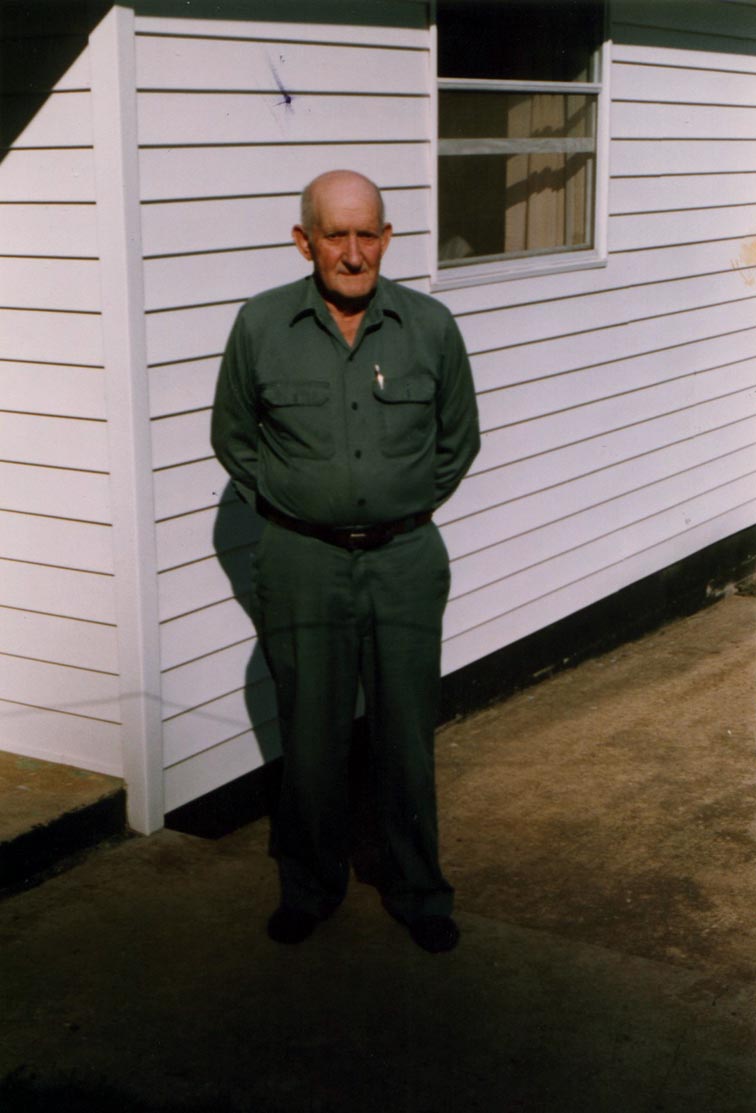
Moses "Dood" Dalton, Charles "Reb" Adkins, John "Stud" Lambert, and Stonewall "Dick" Adkins, Harts Creek, Lincoln County, WV

Moses “Dood” Dalton, Charles “Reb” Adkins, John “Stud” Lambert, and Stonewall “Dick” Adkins, Harts Creek, Lincoln County, WV

In Search of Ed Haley 262

10 Monday Mar 2014

Posted by Brandon Ray Kirk in Big Harts Creek, Ed Haley, Timber

≈ Leave a comment

Tags

Al Brumfield, Calhoun County, Chicago, coal, Cole and Crane Company, Dood Dalton, Ed Haley, farming, fiddling, Harts Creek, history, Jake Dalton, Laury Hicks, Lincoln County, Logan County, logging, Stump Dalton, timbering, West Virginia, writing

Just before we left, Stump let us borrow a cassette containing a 1976 interview with his father. Surely, we thought, Dood would speak a lot about fiddling and of his friendship to Ed. Instead, he told about his life in Harts. His voice was very melancholy and he spoke loudly and in spurts. Some of his earliest memories were of the timber industry in Harts and of the Cole and Crane Company, which timbered extensively in the LoganCounty area from about 1893-1908. In 1900, he said, Cole and Crane used splash dams to float logs down to the mouth of the creek “where Al Brumfield had a boom in.” The boom was located at the present-day site of the West Fork Bridge.

“And this boom caught them logs all,” Dood said. “Them logs was piled on top of one another from that boom…to the mouth of Big Branch. At that time, if you owned across the creek, you owned the creek. Al Brumfield owned the other side there and he put this boom in there and bought the Cole and Crane Company and when he bought them he kept that timber there and they gave him a contract on rafting it and running it down to Guyandotte.”

Cole and Crane Company once paid Brumfield $2800 to cut his boom loose and let timber out of the creek, he said.

Dood said he went to work cutting timber for Cole and Crane Company when he was seventeen years old. He also drove oxen and cattle and loved to hunt foxes and raccoons.

After marrying, he supported his family by farming and raising cattle, sheep and hogs at his 300-acre farm on Big Branch.

In subsequent years, he worked as a blacksmith, bricklayer and coal miner.

In 1964, he took a three-month visit to Chicago and hated it about as much as an earlier visit to Michigan. He said, “My days is short. I’ve spent 84 years here and I’m figuring on spending the rest of my life here.”

And that was basically it.

Not one reference to fiddling from a guy who had played all of his life.

Well, in spite of the tape, we were pretty sure that Haley’s good friendship to Dood Dalton was authentic and was perhaps as important as his friendship with Laury Hicks in Calhoun County. We wanted to visit more of Dood’s children, so Stump directed us to the home of his oldest brother, Jake Dalton, an old fiddler on the Big Branch of Harts Creek. Jake lived in his father’s old home — the place where Ed had visited so frequently during the last twenty years of his life.

In Search of Ed Haley 261

09 Sunday Mar 2014

Posted by Brandon Ray Kirk in Ed Haley, Music

≈ Leave a comment

Tags

Appalachia, blind, Crawley Creek, Ed Haley, fiddle, Green McCoy, Green Shoal, Harts Creek, history, Jacob Stainer, John Hartford, Milt Haley, music, Stump Dalton, Ward Kinser, West Virginia, writing

Stump said Ed would sometimes talk to him and his brothers.

“Well, his fiddle playing of course was the number one thing he talked about but also his rendezvous, like playing on street corners and beer gardens, and the people he associated with playing music. That’s the type of conversations he would have. He’d tell about some fiddle player maybe dying or something happening to them, and he knew them all over the country. Now he’d been around, old Ed had, buddy. Ed stayed on the road practically.”

What about his children?

“I think he had two or three,” Stump said. “He had one boy come to our house one time and stayed three days with him. That’s the only one of his kids I ever seen. I forget his name. He was older than me. He was turned just like his daddy. You’d never know that the boy’d get into anything but I think he drank some.”

What about Ed’s father? Did he ever talk about his father?

“Yeah, he’s talked about his dad, but I don’t remember the things he said about him. Never heard him mention his mother.”

We tried to prod Stump’s memory by mentioning that Milt was killed at the mouth of Green Shoal.

“Yeah, Milt Haley. My dad knowed all about it. They got chopped up with an axe. Do you know that big two-story house? That’s where it’s supposed to’ve happened at — right along in there somewhere. They was him and one other guy killed — McCoy.”

So what do you know about Ed’s blindness?

“He told me he was blind from the time he was three years old,” Stump said. “His eyes wasn’t like our eyes. His eyeballs — instead of the pupils and stuff — was white. Just very faint, you could see the pupils.”

Ed was very good at compensating for his blindness and was able to use his fingers to identify certain types of fiddles.

“Dad bought me a little Jacob Stainer fiddle one time off of a man by the name of Ward Kinser,” Stump said, elaborating. “Ward was a distant relation of ours, lived up above Logan. He come riding a horse up through there with that fiddle and Dad bought that off of him for five dollars and give it to me. Ed come just not long after we’d bought that fiddle. When Dad went out to the road and got him, he said, ‘Come on Ed, I got a fiddle down here I want you to look at.’ And him blinder than a bat. We went down there and Ed took that fiddle and set it right on his belly and he started at the neck up here, just feeling around it at the keys. He felt all around that fiddle then he turned around to my dad and said, ‘My, my, Dood. That’s the first Jacob Stainer I’ve had in my hand in I don’t know how many years.'”

Stump laughed, “I never will forget that.”

We asked Stump about Ed playing at the old post office/store in Harts.

“Yeah, he played down there,” he confirmed. “He played for money down there. He put out a little old can, I believe it was. He used to play a lot up there at Logan at the courthouse. Now, he had more friends around here, like up on Crawley and up on Big Hart, than just our family. He may stay a month with us and stay sober but then he’d get with a bunch up on Crawley and up in the head of the creek here and you wouldn’t see him for a while. He’d stay up in there drinking. He got killed about half way up Crawley.”

What?

“Now, it was after I come out of the army, I know,” Stump said. “The first part of ’53. They was a beer garden up there, like a two story building — seemed to me like a bunch of Butchers owned that, I’m not sure — and they found him dead at that building up there. Somebody beat him to death. I’ve heard somebody robbed him. They was supposed to been three people done it, but it never did come out. I never heard no names.”

I had to stop Stump and say, “Wait a minute. Are you saying that Ed Haley was murdered on Harts Creek?”

“Yeah,” he said assuredly. “We knew where he was at. He’d been at our house. That’s where he said he was going. Well, he’d been gone awhile, ’cause he’d go up Big Hart, maybe, it might take him maybe a month to get on Crawley up there. They took Ed Haley, buddy, and shipped his body back out of here. He never come back to our house after that.”

Wow…

In Search of Ed Haley 260

08 Saturday Mar 2014

Posted by Brandon Ray Kirk in Ed Haley, Music

≈ Leave a comment

Tags

Bernie Adams, Brandon Kirk, Dood Dalton, Earl Tomblin, Ed Haley, Ella Haley, Harts Creek, history, John Hartford, Lincoln County, music, Stump Dalton, Uncle Harmon and his Fiddlin Fools, West Virginia, writing

Brandon asked if Ella ever played with Ed at Dood’s and Stump said, “The only time I ever seen her play was when Ed asked her. I’ve seen her come there and not play. Now, she didn’t play a mandolin like I played or say like Bill Monroe or somebody like that. All she done was just chord the thing. Play the second on the guitar you know and strummed it. She was a quiet person and she was a heavy-built woman. She never had much to say to nobody. She sorta give you the impression that she ‘would rather be somewhere else than where I am now,’ you know.”

Thinking of Ed’s accompaniment, Stump said to me, “You ever hear the name Bernie Adams?”

I had, but didn’t know much about him.

“Bernie Adams was a cousin of mine,” Stump said. “Bernie was born and raised up on Hoover and he was one of the best second guitar players I ever heard pick up a guitar. And all he did was drink. He’d been to Nashville maybe twice, I think. Now when Ed Haley come to our house, the first thing he’d ask Dad, he’d say, ‘Dood, where’s Bernie Adams at?’ Back then, you didn’t have no telephone. Big Hart Road was dirt. We’d take a timber truck and hunt Bernie Adams up and bring him down there. If we found him drunk, we’d bring him down there and he’d sober up. Ed told me, he said, ‘I never played with a man that had the timing that Bernie Adams had with that guitar.’ He was one of the best.”

I asked Stump if Bernie played runs and he said, “He could, but he played a follow-up for their music. And you talk about time.”

Stump didn’t know that Bernie ever played over the radio, but we later heard that he played on Logan radio in the mid-40s with a group called Uncle Harmon and his Fiddlin’ Fools.

Bernie died in 1962.

“They found him dead right at the mouth of Hoover when they went down over that little hill next to the creek,” Stump said. “He’d sat down next to a log and they found him laying beside that log. He drank himself to death. He’d left Earl Tomblin’s beer garden up on Big Hart. Somebody probably picked him up and drove him down there and they found him dead the next morning.”

I asked Stump to describe Ed and he said, “Ed was a pretty big man. I’d say Ed Haley woulda weighed 180-185 pounds and I’d say Ed Haley was 5’11” or 6′, too. I particularly noticed his hands. He had long fingers. And he was a fast walker. Ed Haley was the type of feller that would eat anything you put on the table. He liked to cut his onions up in his beans, buttermilk, cornbread, then rub some bacon in it.”

Did Ed do any kind of chores to help out around the house when he was there?

“No, he was just a guest and that was it. We never asked him to do anything, he never done anything. When he come to our house, other than sleep, 75-percent of our time was playing music.”

I asked Stump if Ed ever came around his father’s home drunk and he said no — Ed was always “very mannerly” at the Dalton home.

“Ed Haley was a fine man, buddy,” he said. “He was my idol. Ed Haley was a pretty smart man. He was good when it come to the Bible — he knowed what to do, you know, and they’d sit there and discuss the Bible, but Ed never would accept the Lord as far as being saved. If anybody could’ve ever got Ed to quit drinking, it woulda been Dad.”

Dood Dalton was a moonshiner in his younger days but gave it up just after Stump’s birth.

“Dad was one of the most well thought of men in this country really, if you want to know the truth about it. Dad made a study of the Bible for 62-and-a-half years.”

In Search of Ed Haley

06 Thursday Mar 2014

Posted by Brandon Ray Kirk in Big Harts Creek, Music

≈ Leave a comment

Tags

Appalachia, culture, Dood Dalton, fiddler, fiddling, genealogy, Harts Creek, history, life, Lincoln County, music, photos, West Virginia, writing

Moses "Dood" Dalton, Big Branch of Big Harts Creek, Lincoln County, WV, c.1905

Moses “Dood” Dalton, Big Branch of Big Harts Creek, Lincoln County, WV, c.1905

In Search of Ed Haley 258

06 Thursday Mar 2014

Posted by Brandon Ray Kirk in Big Harts Creek, Ed Haley, Music

≈ Leave a comment

Tags

Appalachia, Brandon Kirk, Dood Dalton, Doug Owsley, Ed Haley, fiddlers, Harts Creek, history, John Hartford, Lincoln County, Logan, Starlight Ramblers, Stump Dalton, West Virginia, writing

Late one October night, I rolled into Harts on the bus. I was full of excitement, having just read an article from Smithsonian magazine about Doug Owsley, one of the top forensic anthropologists in the country. According to the article, Doug had worked with the mass graves in Bosnia, identified some of David Koresh’s charred cult members at Waco, and helped to break the Jeffrey Dahmer case in Wisconsin. He was very interested in historical graves, having exhumed western outlaws, Indians, Civil War soldiers and no telling what else. He was known in some circles as “the Sherlock Holmes of Bones.”

The next morning, I told Brandon I had this idea of contacting Owsley to see if he would exhume the Haley-McCoy grave. He thought for a few seconds, then said it was risky. While he was as curious as I in wanting to know what was “down there,” he wasn’t really sure what we would gain by it. Besides, he said, people might think we were taking things a little too far. He could picture us sitting down to interview someone and all of a sudden they say, “Oh, you’re the guys going around digging people up.” He had a point: I wasn’t even sure what we might gain by exhuming the grave. We tabled the notion until later.

Turning our minds to more pressing thoughts, we decided to visit Stump Dalton at Ferrellsburg. Stump had popped onto my bus during my last trip to Harts and, looking very much like a thin-haired George Jones, said, “My family and Ed Haley was close. If he was in Ohio or somewhere and he come here the first place he come was our house. I knowed of Ed to stay as high as two months around there. We had him a bed all the time.”

Stump was a son of Dood Dalton, Ed’s fiddler-friend on the Big Branch of Harts Creek, as well as a former mandolin player for the Starlight Rambers, a local group featured on Logan radio many years ago. He was 66 years old.

“I’ve actually played with Ed Haley,” Stump had told me.

Brandon and I made the short drive to Ferrellsburg where we pulled the car into a wide spot near the railroad tracks. We walked across Route 10 to Stump’s turquoise-colored house. “Come on in, boys,” Stump said at the door. “I’ll tell you what I can about Ed Haley.” Immediately, as we sat down on couches inside, I asked Stump about his father, who was reportedly a great old-time fiddler and a good friend to Ed Haley.

“They called him Dood Dalton,” Stump said. “His real name was Moses. My dad used to play for a lot of them old-time square dances. Music follows the Daltons. Dad could play anything that had strings on it. He was a number one harp player. He could play anything on the French harp.”

Brandon asked Stump if he remembered any of his father’s tunes and he said, “‘Hell Amongst the Yearlings’, ‘Sally Goodin’, ‘Old Joe Clark’, and all that. See, when they would first start playing, Ed would say, ‘Now Dood, I want you to tune that fiddle up and play that ‘Lost Indian’.’ Now they used to take and clamp a little knife on the bridge. It softens that down. Then they would take two little sticks — about the size of straws, you know — and play that ‘Hell Amongst the Yearlings’ and beat on that and man you talk about a tune. Dad would either beat or play it or vice-versa, him or Ed would. That was a favorite tune for them two — that and the ‘Blackberry Blossom’. You know, they revised that ‘Blackberry Blossom’.”

Right away, it sounded a lot like the kind of relationship Ed shared with Laury Hicks, the fiddling veterinarian in Calhoun County.

I told Stump I thought Ed Haley was a master of improvisation and he agreed, saying, “They would play a tune and they’d put their own thing into it, you know. I’ve seen Ed Haley sit down and say, ‘Now Dood, what do you think of this?’ and vice-versa. And they’d sit there all day, all night. They could do about anything they wanted to do with a fiddle, both of them. When they was into fiddle playing, they was into fiddle playing. You didn’t come in there and start a conversation with them.”

I asked Stump if Ed and Dood played at the same time, as he had supposedly done with Hicks, and he said, “Not too much.”

In Search of Ed Haley

01 Saturday Mar 2014

Posted by Brandon Ray Kirk in Big Harts Creek, Ed Haley

≈ Leave a comment

Tags

Appalachia, culture, genealogy, Harts Creek, history, Jeff Baisden, life, photos, West Virginia

Jeff Baisden, a resident of Trace Fork of Big Harts Creek, Logan County, West Virginia

Jeff Baisden, a resident of Trace Fork of Big Harts Creek, Logan County, West Virginia

In Search of Ed Haley 253

01 Saturday Mar 2014

Posted by Brandon Ray Kirk in Big Harts Creek, Culture of Honor, Ed Haley, Music

≈ 1 Comment

Tags

Ben Adams, Billy Adkins, Brandon Kirk, Cas Baisden, Clyde Haley, crime, Dingess, Ed Haley, Ella Haley, Ewell Mullins, genealogy, Greasy George Adams, Harriet Baisden, Harts Creek, history, Jeff Baisden, John Frock Adams, Johnny Hager, Maggie Mullins, murder, music, Peter Mullins, Ticky George Adams, Weddie Mullins, West Virginia, writing

One fall day, Brandon and Billy drove to see 80-something-year-old Cas Baisden, a son of Jeff and Harriet (Jonas) Baisden. Cas lived on a farm near the mouth of Smoke House with a relative of Uncle Peter Mullins. He had been mostly raised by Uncle Peter and had vivid memories of watching Ed Haley play in his yard, as well as in the house. He said Ed didn’t usually have a very big crowd around him. “People didn’t care a bit, even though he was about as good as they was,” Cas said. He said Ed and his wife could play anything. “He was real skinny and would drink anything he could get his hands on.” He added that Ed knew all the roads and trails up around the creek and could walk them as well as a sighted person.

Ed’s uncle Weddie Mullins married Cas’ aunt, Maggie Jonas. Cas said Weddie went to Dingess to get some booze one time and was killed in a shooting scrape. The man who shot him was laid up in bed when Weddie’s half-brother John Adams came in and asked, “Do you think he’ll make it?” Someone said he might live so Adams pulled out his gun and said, “I know he won’t,” and opened fire on him. Later, in unrelated events, Adams “blew his wife’s head off.”

Cas said Ed’s uncle Ticky George Adams was harmless. He was a small man, short and chubby, who dug ginseng a lot on Big Creek. George was a brother-in-law to Ed’s friend Johnny Hager, who came from the North Fork of Big Creek and stayed a lot with Ewell Mullins and others around Harts. Johnny was a good fellow, a musician and a non-drinker.

Cas knew that Ed sold his homeplace on Trace to Uncle Peter’s son, Ewell Mullins. It was a plank building with two long rooms. In the rear of the eating room there was a flat-rock chimney with a long fireplace. The other room was used for sleeping. Later, an old store building was pushed up against the sleeping room to make a kitchen. The house had no porch.

Cas said Ed’s son Clyde Haley was “like a monkey” when it came to climbing trees; one time, he climbed 40 feet up into a tree and all the other kids ran away because they didn’t want to see him fall.

Cas remembered sketches about Ben Adams but didn’t know if he had been involved in the 1889 feud. At one time, he operated a store on main Harts Creek below the mouth of Smoke House. Across the creek, he had a saloon made entirely of rock. Later, he lived on Trace. Cas said part of his old mill-dam could be seen in the creek at the Greasy George Adams place.

In Search of Ed Haley

28 Friday Feb 2014

Posted by Brandon Ray Kirk in Big Harts Creek, Ed Haley

≈ 2 Comments

Tags

Anna Adams, Appalachia, culture, genealogy, Harts Creek, history, John Adams, life, Logan County, photos, West Virginia

John and Anna Adams, Trace Fork of Big Harts Creek, Logan County, WV

John and Anna Adams, Trace Fork of Big Harts Creek, Logan County, WV

Joe Adams

26 Wednesday Feb 2014

Posted by Brandon Ray Kirk in Big Harts Creek, Ed Haley, Lincoln County Feud

≈ Leave a comment

Tags

Appalachia, genealogy, Harts Creek, history, Joe Adams, Logan County, photos, West Virginia

Joe Adams, Trace Fork of Big Harts Creek, Logan County, WV, 1998

Joe Adams, Trace Fork of Big Harts Creek, Logan County, WV, 1995

In Search of Ed Haley 249

24 Monday Feb 2014

Posted by Brandon Ray Kirk in Big Harts Creek, Culture of Honor, Ed Haley, Lincoln County Feud, Timber

≈ Leave a comment

Tags

Al Brumfield, Ben Adams, Billy Hall, crime, Ed Haley, Eveline Dingess, feud, Floyd Dingess, Harts Creek, Henderson Dingess, history, Hollene Brumfield, Hugh Dingess, Imogene Haley, John W Runyon, Kentucky, Kiahs Creek, Robinson Creek, West Virginia, writing

At the time of the ambush on Al and Hollena Brumfield, Henderson Dingess and his family were in no mood to see yet another one of their fold die violently. Less than a year before, on November 15, 1888, Floyd Dingess, an older son of Henderson, was murdered while working logs at the mouth of Rockhouse Fork on Harts Creek. It was a horrific deed: Floyd, whose wife was several months pregnant, was murdered by his own brother-in-law, Billy Hall. Floyd had never been popular with the Halls. He reportedly made a habit of bullying Billy. It was said that when he came home from working, his wife would clatter pots and pans in the kitchen just so her family wouldn’t hear his footsteps.

When Billy finally shot Floyd on that fateful day, some of the younger Dingess boys were fishing in the creek nearby. They raced home to tell their family what had happened, while Billy quickly returned home and received instructions to hide out in Robinson Creek, Kentucky. Meanwhile, Floyd’s pregnant wife was floated across the creek to her husband, who died in her arms. Hugh Dingess, Floyd’s brother, tracked Billy to Kiah’s Creek but lost his trail. For years, Hugh was devastated by his brother’s death. He used to get drunk and shoot the Halls’ cattle.

The Dingesses eventually learned the whereabouts of Billy Hall and prepared to fetch him by force. The Halls on Harts Creek caught wind of their plan and sent word to Billy to escape by train to Tennessee, which he did — and was never heard from again.

Surely, when Milt Haley and Green McCoy shot Hollena Brumfield less than a year later, the Dingess family was determined to execute a harsh revenge. It was, after all, the second attack on their clan in several months. We wondered then, why would Milt, Green, Runyon, and Ben Adams — knowing the fate of poor Billy Hall — want to risk their lives (and fortunes) to attack Brumfield? Surely Milt and Green — taking a cue from Billy Hall — were well aware that once they committed their heinous act, the only avenue open to them was to flee the state forever. We also wondered if Milt just abandoned Emma and Ed on Trace Fork or if there was some kind of arrangement to later meet him in Kentucky?

Cousins (2011)

14 Friday Feb 2014

Posted by Brandon Ray Kirk in Big Harts Creek

≈ Leave a comment

Tags

Appalachia, Brandon Kirk, Emmett Dingess, genealogy, Harts Creek, life, Logan County, photos, Shively, West Virginia

Emmet Dingess and Me

Cousin Emmett Dingess and myself, Shively, Logan County, WV, 2011

In Search of Ed Haley 241

13 Thursday Feb 2014

Posted by Brandon Ray Kirk in Big Sandy Valley, Ed Haley, Music

≈ 2 Comments

Tags

Billy Adkins, Cain Adkins, fiddle, fiddler, Grand Ole Opry, Harts Creek, Lincoln County, Mingo Ramblers, Norfolk and Western, Stiltner, Tom Atkins, Wayne County, West Virginia, Williamson, Winchester Adkins, writing

A week later, I followed up on a lead from Billy Adkins and called Tom Atkins. Tom was a great-grandson of Cain Adkins and a genealogist in Williamson, West Virginia. It was a chance lead: Billy had called him to ask about Ed Haley’s genealogical connections in the Tug Valley only to discover that Tom’s grandfather was Winchester Adkins — a son to Cain.

When I called Tom, he said he knew almost nothing about Cain and only a little about his grandfather, Winchester Adkins. He said Winchester left the West Fork of Harts Creek at a young age and settled at Stiltner in Wayne County. He eventually moved to Williamson and worked as an engineer on the N&W Railroad. At that location, after a repeated “mix-up over his checks” he changed the spelling of his surname from “Adkins” to “Atkins.” He was also a well-known fiddler who tried his hand at professional music.

“I heard my mother tell someone here while back how many tunes my grandfather played,” Tom said. “It was a hundred and some. See, he just knew them by ear. And I believe that at one time he had a fiddle that was made by Cain — his father — and I don’t know who has that or whether it’s even in existence now ’cause we’ve had floods here. And I do know at one time he was a member of a group in Mingo County called the ‘Mingo Ramblers’ and they were on the Grand Ole Opry way back in the early days.”

Tom said that was all he knew because his grandfather died when he was four years old.

Piney School

12 Wednesday Feb 2014

Posted by Brandon Ray Kirk in Big Harts Creek

≈ Leave a comment

Tags

Appalachia, culture, education, Harts Creek, history, life, Logan County, photos, Piney, Piney School, West Virginia

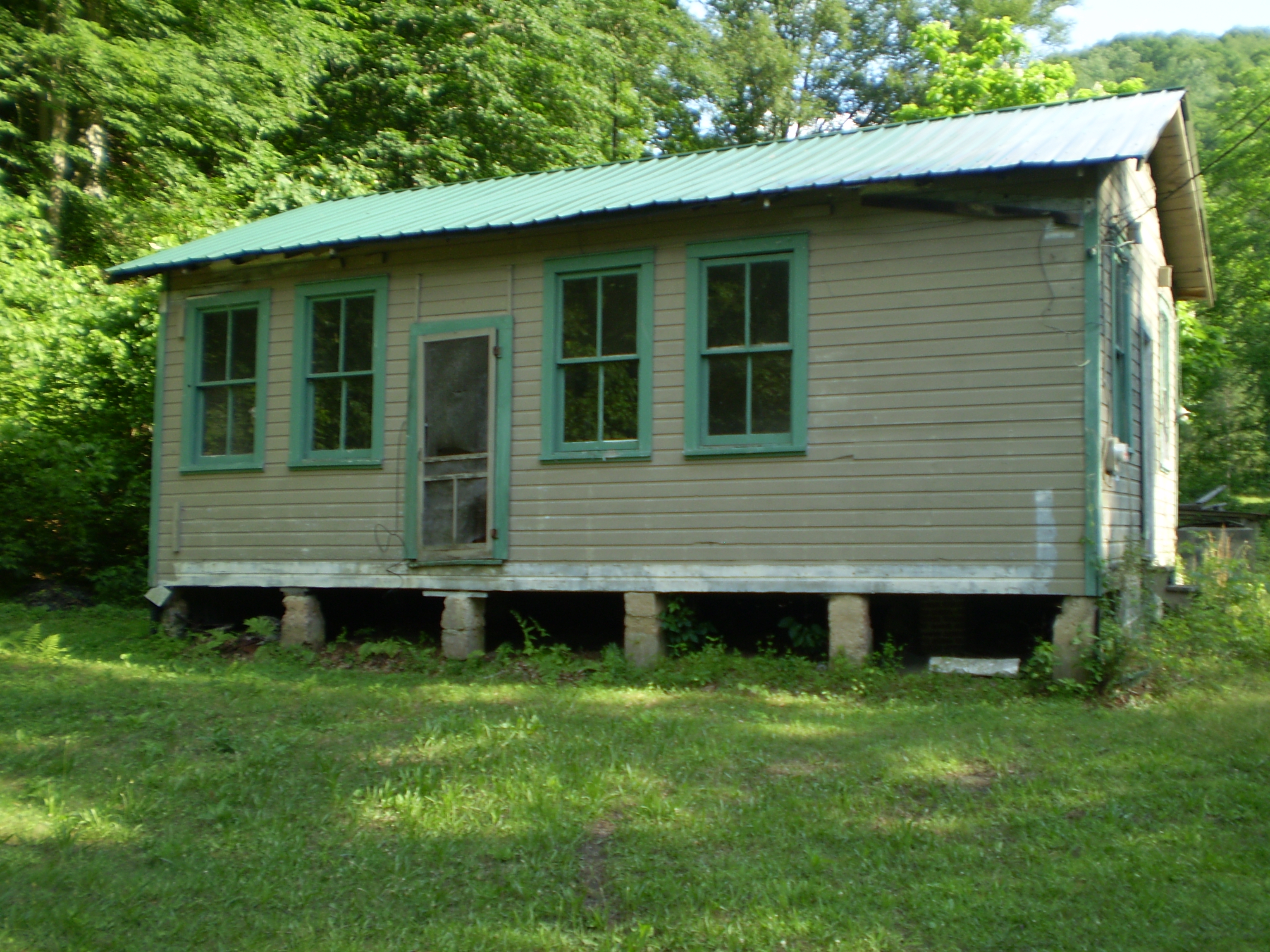
The old Piney School on West Fork, Logan County, West Virginia, 2008

The old Piney School on West Fork, Logan County, West Virginia, 2008

In Search of Ed Haley 240

12 Wednesday Feb 2014

Posted by Brandon Ray Kirk in Ed Haley, Music

≈ Leave a comment

Tags

Cincinnati, Doc White, Ed Haley, Ella Haley, Harts Creek, history, Jeff Duty, Laury Hicks, music, Ugee Postalwait, West Virginia, writing

A few days later, I called Ugee Postalwait with a whole bunch of questions, mostly related to my recent trip to Harts. I asked her if Laury Hicks ever went to Harts Creek with Ed.

“Oh, yeah,” she said immediately. “All through them places. Dad had a car and he had a driver, and they’d go a lot of places. Anybody was willing to take Dad any place.”

“Did Doc White ever take them anywhere?” I asked.

“Oh, yeah,” Ugee said. “They’ve all run around together. He was a photographer, he could make teeth, he was a doctor, he was everything — and he learned it all in the penitentiary. He was a mid-wife. He could do anything. Played the fiddle. He was crazy about the railroad. He had a railroad steam engine and all that stuff back of his house. He was a smart man. Even my dad doctored with him.”

Ugee remembered Ed playing a tune called “Getting off the Raft” and figured her father also played it.

“I don’t remember Dad ever playing it but if Ed played it he played it, too,” she said. “Whatever one played, the other’n played. They was just that close together, John. They was just that way.”

I asked if Laury ever talked about a fiddler named Jeff Duty and she said, “Yeah, he talked about a fiddler by that name.”

What about Cain Adkins?

“Adkins. That sounds right.”

“Ought to be some people in Cincinnati to know Ed Haley real well,” Ugee said, kind of changing the direction of our conversation. “Him and Ella went down there and played music a lot. They made some money there. Whenever they’d get close and need some money they would go to Cincinnati and stay maybe for three or four days.”

In Search of Ed Haley 237

09 Sunday Feb 2014

Posted by Brandon Ray Kirk in Coal, Ed Haley, Harts, Timber

≈ Leave a comment

Tags

Atenville, Bob Lewis, Cabell Record, Eden Park, education, Ferrellsburg, Fry, Guyandotte River, Harts, Harts Creek, history, Lincoln County, moonshine, oil, rafting, timbering, Toney, West Virginia, writing

For the moment, timber remained king of the local economy. There were saw mills, large-scale timbering and news of a “firm from the East” locating in the area. “A firm from the East is getting ready to put men at work in the woods making barrel staves in the near future, near the Logan and Lincoln county line,” the Cabell Record reported in June of 1900. “Twenty thousand logs went out from Big Ugly and Hart’s creek last week,” it reported later in December. “There is a general activity in the timber business on Hart’s creek this winter,” the paper reported in January of ’01. “About fifty men are at work there getting out logs.”

With the coming of the railroad, Harts residents were also excited about the potential of extractive industries, like coal, natural gas, and even oil. “Everyone along the valley is talking coal these days,” the Record reported on December 6, 1900. “People with coal on their lands are jubilant over the prospects.” In January of 1901, the Record stated, “Hart’s creek people are enthusiastic over the prospects of striking oil or gas in that section. They have been encouraged very much by experienced oil men, who will work more wells in the spring on Little and Big Hart.”

Unprecedented economic opportunity seemed to be at everyone’s fingertips. “The valley will soon be dotted with small towns,” the Record accurately predicted on January 24, 1901. “Every day people are coming in to locate, and the future of the Guyan valley is promising.” On April 4, 1901, the Record wrote: “More timber went out of the valley in the late rise than has gone down in several years. Rafts followed one right after the other for several days. Bob Lewis is doing a lot of work on Hart’s creek now. He has got a large number of men in the woods chopping and has now on hand a grand lot of timber for the market.”

A major problem during this prosperous time involved an overabundance of alcohol. “A man claiming to be a Deputy U.S. Marshal or Revenue officer, was along the river the most of past week investigating reports regarding the sale of liquor without the proper Government permit,” the Record reported on April 5, 1900. “It is said that he ‘hooked’ on to plenty of clues and found where cider was ‘spiked’ quite heavily.”

On April 25, the Record offered this: “The past few days have been busy ones along the river. Timber men have been busy trying to save their stuff. At Nine, Fourteen, Big Ugly and Hart the stream has been filled with men rafting and working about logs. The river was higher than it has been for many years, and much damage was done to property along the streams and the big creeks.” On May 2, it stated: “Considerable dressed timber that was lying in the mouth of Big Ugly broke loose during the high water last week, but was caught below the Falls. The stuff is very valuable and is used in ship building, being transported to various ports in the East, and it is reported that some of it gets to England and Scotland.”

Alcohol continued to plague the valley. In June 1901, the Record offered this small dispatch: “From all reports plenty of ‘kill me quick’ liquor is being sold along the river these days. A big batch of indictments and arrests may result from it.” By fall, the Record wrote of the moonshiners and distillers: “They do business despite all protest.” Essentially giving up its attack upon the liquor men, it suggested that the Lincoln County Court “grant licenses to the saloons that do business openly near Big Ugly and Hart’s creek” because it “might as well get the revenue from this source.” In December, the Record reported, “It is said that the coming Lincoln county court may grant license to some saloons. Will it extend to those who openly violate the law along the river and don’t care?”

Once the railroad was completed in 1904, the newspaper’s predictions about “small towns dotting the valley” became a reality. In 1904, Ferrellsburg and Toney were established in Harts Creek District, followed by Atenville, Eden Park, and Fry in 1908. In 1904, there were 15 schools in the district and 482 students enrolled (out of 714 enumerated).

In Search of Ed Haley 235

07 Friday Feb 2014

Posted by Brandon Ray Kirk in Ed Haley, Harts, Lincoln County Feud

≈ Leave a comment

Tags

Addison Vance, Al Brumfield, Benjamin Fowler, Bill Fowler, Cain Adkins, Charley Brumfield, Ed Haley, Effie Fowler, Emzy Petrie, Ferrellsburg, genealogy, George H. Thomas, George Washington Fowler, Harts Creek, Henry H. Hardesty, history, Isham Roberts, James P. Mullins, John H. Adkins, John H. Napier, John W Runyon, Milt Haley, Salena Vance, writing

The Lincoln County Courthouse — which holds deed records, vital statistics, and criminal records for the Harts Creek District — burned on November 19, 1909, taking with it whatever records might have existed pertaining to the 1889 feud. Thanks to a now-forgotten arsonist reportedly hired by a gas company to eliminate locals’ claims to mineral rights, we can locate little information in the courthouse on Milt Haley’s death or Brumfield family antics. However, somehow, we do have access to Lincoln County land records since 1867 and they reveal quite a bit about the happenings at the mouth of Harts Creek in the late 1880s. (The Logan County Courthouse, which holds similar records on Ed Haley and his family, has fared little better: it was burned by Yankee soldiers during the Civil War.)

Al Brumfield, according to Brandon’s research, first settled with his wife in a small, boxed house on property owned by his mother and located just below the mouth of Harts Creek at the Shoals along the Guyandotte River. In 1888, some seven years after his marriage, he secured his first piece of property on Brown’s Branch, courtesy of his mother. More importantly, according to land records (in one of those moments where written records confuse the story by totally conflicting with oral tradition), he did not own any property at the mouth of Harts Creek at the time of the Haley-McCoy trouble. Al apparently bought land there from Bill Fowler immediately after the Haley-McCoy trouble. The earliest documented account of him owning the log boom was an 1895 deed, which partially read, “…about three hundred yards above the mouth of said creek where the log boom is now tied.”

One thing for certain: Brumfield wasted little time in eliminating his business competitors at the mouth of Harts Creek immediately following the Haley-McCoy murders. In 1889, he had four primary rivals: (1) Bill Fowler; (2) John Runyon; (3) Isham Roberts and, to a lesser extent, (4) James P. Mullins. Fowler was his cousin, Runyon was no relation, and Roberts was his brother-in-law. Mullins was located more than a mile up Harts Creek at Big Branch and operated a business that was likely past its prime.

In 1890, Brumfield acquired two tracts of land (a 95-acre tract worth 113 dollars and a 25-acre tract worth 75 dollars) from Runyon. We don’t know what price was paid for this land (thanks to the courthouse fire) but considering the circumstances it may have helped save Runyon’s life in the wake of his possible role in the Haley-McCoy fiasco. In that same year, a stubborn Bill Fowler sold two valuable lots on the west side of Guyan River totaling 165 acres to Isaac Adkins, not Al Brumfield. Fowler was apparently resisting the urge to sell out to his ambitious younger cousin who had reportedly burned his business. One tract was 75 acres and worth six dollars per acre, while the other was 90 acres and worth four dollars per acre. The property was worth 810 dollars. Meanwhile, in 1891, Brumfield’s brother-in-law, Isham Roberts, who was referenced in a circa 1884 history as a “prosperous young merchant” at the mouth of Harts Creek, sold out and moved upriver near Fowler Branch (present-day Ferrellsburg).

Not only did Fowler, Runyon and Roberts sell out — they moved away completely. Fowler took his wife and four children (Bettie, age 15, Effie, age 14, Benjamin Franklin, age 12, and George Washington, age 10) and moved to Central City in Huntington. In May of 1892, his wife bought Lot 6 Block 88 in Central City from Susan Porter and her husband. On October 19, she deeded it to Louis H. Taliaferro, who deeded it back to William Fowler, who deeded it back to Taliaferro, who deeded it back to Mrs. Fowler. The Fowlers were in Central City in 1900. According to family tradition, Roberts moved to Oklahoma because of his wife’s disapproval of the violent deeds committed by her family. Several years later, she sold her interest in her father’s estate to Charley Brumfield — the man who had murdered her father in 1891.

Aside from businessmen, the 1889 troubles drove away other important citizens from Harts. First was Cain Adkins, a doctor, lawman, preacher and schoolteacher. In 1891, Cain Adkins sold 40 acres to John H. Adkins, who thereafter claimed the remainder of the farm. Two years later, in 1893, John and his wife Sallie deeded “the Canaan Adkins Farm” (205 acres) to Salena Vance for $607.50. In 1895, Vance and others sold the farm to J.A. Chambers, who in turn deeded it to Louis R. Sweetland in 1897. Thereafter, Salena Vance acquired the property again (jointly with her children, John and Nettie Toney) and sold it to George H. Thomas and E.O. Petrie in 1913. Later that year, Petrie sold his half-interest to Thomas. In 1914, the property contained a 300-dollar building.

In addition to Preacher Cain, John H. Napier, a doctor and in-law to Adkins, seems to have fled the community around 1890. According to Hardesty’s History of Lincoln County, West Virginia (c.1884), Napier settled near the mouth of Harts Creek in 1879. His wife, Julia Ann Ross, was a niece to Cain Adkins. Her older sister married Cain Adkins’ brother-in-law, Addison Vance, of Piney. John was listed in the 1880 census as a thirty-seven-year-old physician with a wife (age 30) and five children, as well as a nephew. He did not own property locally, although his occupation as a doctor and businessman might have made him particularly threatening to an ambitious person like Al Brumfield. “Mr. Napier is a prosperous merchant in Hart Creek district, with business headquarters at the mouth of the creek,” Hardesty wrote.

In Search of Ed Haley 234

06 Thursday Feb 2014

Posted by Brandon Ray Kirk in Culture of Honor, Ed Haley, Lincoln County Feud

≈ Leave a comment

Tags

Aaron Adkins, Al Brumfield, Bill Abbott, Bill Adkins, Bill Fowler, Billy Adkins, Brandon Kirk, Cain Adkins, crime, Fed Adkins, feud, Green McCoy, Harts Creek, history, Isaac Adkins, John W Runyon, Mac Adkins, Milt Haley, Paris Brumfield, Ras Fowler, West Virginia, Will Adkins, writing

In the months following my trip to Harts, Brandon finished his undergraduate work at college and moved into a three-room house at Ferrellsburg. He spent his mornings and afternoons teaching in the local schools and his evenings hanging out with Billy Adkins. One night, he interviewed Billy’s father, Bill, Sr. — that colorful old fiddler laid up with Alzheimer’s. As Billy asked his father questions, Brandon crouched in the doorway prepared to write down his answers. At first they weren’t even sure if Bill was awake. Then, his eyes still closed, he began to tell a little bit of what he knew about the Brumfields and their 1889 troubles.

Al Brumfield, Bill said, put in a four-log-wide boom at the mouth of Harts Creek and charged a tax on all logs passing through it. John Runyon arrived on the scene just as Brumfield was making a small fortune and put in a rival business. “John Runyon was against the Brumfields,” Bill said. He bought twelve Winchester rifles and armed several men to protect his property, then hired Milt Haley and Green McCoy to kill Brumfield. In the ambush, Al was shot in the arm and his wife was shot in the mouth. Haley and McCoy immediately left the area but were soon caught on Tug Fork and jailed in Kentucky. A Brumfield posse got the necessary legal papers and brought the two back to Harts through the Twelve Pole Creek region.

They were on their way down Harts Creek when a spy warned them of an ambush organized by “old man Cain Adkins” at the mouth of Big Branch. Thereafter, the Brumfields went over a mountain to the Guyandotte River and crossed it in boats. They took Haley and McCoy to an old log house later owned by Tucker Fry where they were killed by a mob that included Bill’s uncles Will Adkins and Mac Adkins.

Bill said his uncle Will Adkins died just after the Haley-McCoy killings on November 23, 1889.

“He got drowned in the backwater over here,” he said. “They had a boom across the creek four logs wide. He fell off in the backwater there and drowned hisself. I think Dad was the cause of it. Him and old Bill Abbott was in a row with each other. Uncle Will come along and heard them. He started across there to see what was wrong, to help Dad out if he needed any help. Of course, he fell in that water and drowned himself. He’s buried up on the hill at Ferrellsburg. Old Bill Fowler bought his tombstone. Boy, she’s a big’n. I bet it cost him right smart of money. Uncle Will was named after old Bill Fowler. He was kin through marriage. He married Granddad Aaron’s sister.”

Bill said John Runyon’s attack on Brumfield was one of several violent attempts to secure the property at the mouth of Harts Creek. A little later, Paris Brumfield feuded with Bill Fowler, a local merchant, miller, farmer, and a saloon operator. Fowler was a highly successful businessman; unfortunately, he built his interests on land that Brumfield desperately wanted. Finally, presumably after some trouble, the Brumfields “burned Bill Fowler out”. Bill’s father, Fed Adkins, said he stood at the riverbank watching barrels of alcohol explode straight into the sky as Fowler’s store and saloon burned away.

“The whiskey run into the river,” one Fowler descendant later told Brandon. “They said he had big costly horses and it burned them, too.”

In 1890, after intense pressure from the Brumfields, Fowler sold his property at the mouth of Harts Creek (two tracts of land totaling 165 five acres on the west side of the river) to Isaac Adkins. One tract, according to land records at the Lincoln County Courthouse, was 75 acres and worth six dollars per acre, while the other was 90 acres worth four dollars per acre. Fowler left Harts and settled at Central City in present-day Huntington. Al Brumfield, meanwhile, acquired the Fowler property and employed Ras Fowler, a son of Bill, to work his store. The younger Fowler was a schoolteacher and postmaster. Actually, he was postmaster at the time of the Haley-McCoy trouble.

← Older posts
Newer posts →

Feud Poll 1

If you had lived in the Harts Creek community during the 1880s, to which faction of feudists might you have given your loyalty?

Categories

  • Adkins Mill
  • African American History
  • American Revolutionary War
  • Ashland
  • Atenville
  • Banco
  • Barboursville
  • Battle of Blair Mountain
  • Beech Creek
  • Big Creek
  • Big Harts Creek
  • Big Sandy Valley
  • Big Ugly Creek
  • Boone County
  • Breeden
  • Calhoun County
  • Cemeteries
  • Chapmanville
  • Civil War
  • Clay County
  • Clothier
  • Coal
  • Cove Gap
  • Crawley Creek
  • Culture of Honor
  • Dingess
  • Dollie
  • Dunlow
  • East Lynn
  • Ed Haley
  • Eden Park
  • Enslow
  • Estep
  • Ethel
  • Ferrellsburg
  • Fourteen
  • French-Eversole Feud
  • Gilbert
  • Giles County
  • Gill
  • Green Shoal
  • Guyandotte River
  • Halcyon
  • Hamlin
  • Harts
  • Hatfield-McCoy Feud
  • Holden
  • Hungarian-American History
  • Huntington
  • Inez
  • Irish-Americans
  • Italian American History
  • Jamboree
  • Jewish History
  • John Hartford
  • Kermit
  • Kiahsville
  • Kitchen
  • Leet
  • Lincoln County Feud
  • Little Harts Creek
  • Logan
  • Man
  • Matewan
  • Meador
  • Midkiff
  • Monroe County
  • Montgomery County
  • Music
  • Native American History
  • Peach Creek
  • Pearl Adkins Diary
  • Pecks Mill
  • Peter Creek
  • Pikeville
  • Pilgrim
  • Poetry
  • Queens Ridge
  • Ranger
  • Rector
  • Roane County
  • Rowan County Feud
  • Salt Rock
  • Sand Creek
  • Shively
  • Spears
  • Sports
  • Spottswood
  • Spurlockville
  • Stiltner
  • Stone Branch
  • Tazewell County
  • Timber
  • Tom Dula
  • Toney
  • Turner-Howard Feud
  • Twelve Pole Creek
  • Uncategorized
  • Warren
  • Wayne
  • West Hamlin
  • Wewanta
  • Wharncliffe
  • Whirlwind
  • Williamson
  • Women's History
  • World War I
  • Wyoming County
  • Yantus

Feud Poll 2

Do you think Milt Haley and Green McCoy committed the ambush on Al and Hollene Brumfield in 1889?

Blogroll

  • Ancestry.com
  • Ashland (KY) Daily Independent News Article
  • Author FB page
  • Beckley (WV) Register-Herald News Article
  • Big Sandy News (KY) News Article
  • Blood in West Virginia FB
  • Blood in West Virginia order
  • Chapters TV Program
  • Facebook
  • Ghosts of Guyan
  • Herald-Dispatch News Article 1
  • Herald-Dispatch News Article 2
  • In Search of Ed Haley
  • Instagram
  • Lincoln (WV) Journal News Article
  • Lincoln (WV) Journal Thumbs Up
  • Lincoln County
  • Lincoln County Feud
  • Lincoln County Feud Lecture
  • LinkedIn
  • Logan (WV) Banner News Article
  • Lunch With Books
  • Our Overmountain Men: The Revolutionary War in Western Virginia (1775-1783)
  • Pinterest
  • Scarborough Society's Art and Lecture Series
  • Smithsonian Article
  • Spirit of Jefferson News Article
  • The Friendly Neighbor Radio Show 1
  • The Friendly Neighbor Radio Show 2
  • The Friendly Neighbor Radio Show 3
  • The Friendly Neighbor Radio Show 4
  • The New Yorker
  • The State Journal's 55 Good Things About WV
  • tumblr.
  • Twitter
  • Website
  • Weirton (WV) Daily Times Article
  • Wheeling (WV) Intelligencer News Article 1
  • Wheeling (WV) Intelligencer News Article 2
  • WOWK TV
  • Writers Can Read Open Mic Night

Feud Poll 3

Who do you think organized the ambush of Al and Hollene Brumfield in 1889?

Recent Posts

  • Logan County Jail in Logan, WV
  • Absentee Landowners of Magnolia District (1890, 1892, 1894)
  • Charles Spurlock Survey at Fourteen Mile Creek, Lincoln County, WV (1815)

Ed Haley Poll 1

What do you think caused Ed Haley to lose his sight when he was three years old?

Top Posts & Pages

  • Tom Dula: Trial and Hanging in Statesville, NC (2020)
  • Logan County Jail in Logan, WV
  • "Holly Creek" John Mullins Grave in Clintwood, VA (2018)
  • Levisa Hatfield (1927-1929)
  • Confederate Reunions in Logan County, WV (1911-1914)

Copyright

© Brandon Ray Kirk and brandonraykirk.wordpress.com, 1987-2023. Unauthorized use and/or duplication of this material without express and written permission from this blog’s author and/or owner is strictly prohibited. Excerpts and links may be used, provided that full and clear credit is given to Brandon Ray Kirk and brandonraykirk.wordpress.com with appropriate and specific direction to the original content.

Archives

  • February 2025
  • January 2025
  • October 2023
  • September 2023
  • December 2022
  • November 2022
  • May 2022
  • April 2022
  • February 2022
  • November 2021
  • October 2021
  • September 2021
  • June 2021
  • May 2021
  • April 2021
  • March 2021
  • February 2021
  • January 2021
  • December 2020
  • November 2020
  • October 2020
  • July 2020
  • June 2020
  • May 2020
  • April 2020
  • March 2020
  • February 2020
  • January 2020
  • December 2019
  • November 2019
  • October 2019
  • September 2019
  • August 2019
  • July 2019
  • June 2019
  • May 2019
  • April 2019
  • March 2019
  • February 2019
  • January 2019
  • December 2018
  • November 2018
  • October 2018
  • September 2018
  • August 2018
  • July 2018
  • June 2018
  • May 2018
  • April 2018
  • March 2018
  • February 2018
  • January 2018
  • December 2017
  • November 2017
  • October 2017
  • September 2017
  • August 2017
  • July 2017
  • June 2017
  • May 2017
  • April 2017
  • March 2017
  • February 2017
  • January 2017
  • December 2016
  • November 2016
  • October 2016
  • September 2016
  • August 2016
  • July 2016
  • June 2016
  • May 2016
  • April 2016
  • March 2016
  • February 2016
  • January 2016
  • December 2015
  • November 2015
  • October 2015
  • September 2015
  • August 2015
  • July 2015
  • June 2015
  • May 2015
  • April 2015
  • March 2015
  • February 2015
  • January 2015
  • December 2014
  • October 2014
  • September 2014
  • August 2014
  • July 2014
  • June 2014
  • May 2014
  • April 2014
  • March 2014
  • February 2014
  • January 2014
  • December 2013
  • November 2013
  • October 2013
  • September 2013
  • August 2013
  • July 2013
  • June 2013
  • May 2013
  • April 2013
  • March 2013
  • February 2013
  • January 2013
  • December 2012
  • November 2012

Enter your email address to follow this blog and receive notifications of new posts by email.

Join 2,927 other subscribers

Tags

Appalachia Ashland Big Creek Big Ugly Creek Blood in West Virginia Brandon Kirk Cabell County cemeteries Chapmanville Charleston civil war coal Confederate Army crime culture Ed Haley Ella Haley Ferrellsburg feud fiddler fiddling genealogy Green McCoy Guyandotte River Harts Harts Creek Hatfield-McCoy Feud history Huntington John Hartford Kentucky Lawrence Haley life Lincoln County Lincoln County Feud Logan Logan Banner Logan County Milt Haley Mingo County music Ohio photos timbering U.S. South Virginia Wayne County West Virginia Whirlwind writing

Blogs I Follow

  • OtterTales
  • Our Appalachia: A Blog Created by Students of Brandon Kirk
  • Piedmont Trails
  • Truman Capote
  • Appalachian Diaspora

BLOOD IN WEST VIRGINIA is now available for order at Amazon!

Blog at WordPress.com.

OtterTales

Writings from my travels and experiences. High and fine literature is wine, and mine is only water; but everybody likes water. Mark Twain

Our Appalachia: A Blog Created by Students of Brandon Kirk

This site is dedicated to the collection, preservation, and promotion of history and culture in Appalachia.

Piedmont Trails

Genealogy and History in North Carolina and Beyond

Truman Capote

A site about one of the most beautiful, interesting, tallented, outrageous and colorful personalities of the 20th Century

Appalachian Diaspora

  • Subscribe Subscribed
    • Brandon Ray Kirk
    • Join 789 other subscribers
    • Already have a WordPress.com account? Log in now.
    • Brandon Ray Kirk
    • Subscribe Subscribed
    • Sign up
    • Log in
    • Report this content
    • View site in Reader
    • Manage subscriptions
    • Collapse this bar
 

Loading Comments...