Tags
Appalachia, culture, family, genealogy, history, Kentucky, life, Morehead, music, photos, Ralph Haley, U.S. South

Ralph Haley, 1915-1920

01 Tuesday Jan 2013
Posted in Ed Haley
Tags
Appalachia, culture, family, genealogy, history, Kentucky, life, Morehead, music, photos, Ralph Haley, U.S. South
Ralph Haley, 1915-1920
31 Monday Dec 2012
Posted in Ed Haley
Tags
Appalachia, culture, Ella Haley, genealogy, history, Kentucky, life, Morehead, music, photos, U.S. South

Ella Trumbo Haley, 1908-1920
31 Monday Dec 2012
Posted in Big Harts Creek, Culture of Honor
Tags
Appalachia, crime, Doc Workman, Ferrellsburg, Flora Workman, genealogy, Harts Creek, history, life, Logan Banner, Logan County, murder, mystery, Ray Watts, Roma Elkins, Simpkins Cemetery, true crime, U.S. South, West Fork, West Virginia, Workman Fork, World War I, writing
Fifty-six years ago, someone shot Wilson “Doc” Workman in cold blood at the front door of his little frame house on Harts Creek. Today, his unsolved murder is largely forgotten.
“Workman, 63, was found dead by his estranged wife, Mrs. Flora Workman, at 6 a.m. Friday at his home on Workman Fork of the West Fork of Harts Creek in Logan County,” the Logan Banner reported on Monday, April 23, 1956. “The victim died as a result of a stomach wound inflicted by a 20-gauge single barrel shotgun which was found lying across his left leg.”
Doc Workman was a man in the twilight of his life. By all accounts, he was a well-liked resident of the community. He was a quiet farmer, a former timberman, a veteran of the Great War and the father of nine children.
“Daddy and Mommy sure liked him,” said the late Roma Elkins, a native of nearby Ferrellsburg, in a 2004 interview. “He’d bring us a big water bucket full of eggs and wouldn’t let us pay him for them.”
Initially, Logan County sheriff Ray Watts and state law enforcement officers suspected robbery as the motive for Workman’s murder.
“Reports said Workman had been known to carry large sums of money around on his person and was believed to have between $400 and $500 at the time of his death,” the Banner reported. “Only a few dollars was found in the home after the shooting.”
On Sunday, April 22, Workman’s funeral was held at his home on Workman Fork. The service began at 2 p.m. and concluded with the burial at Simpkins Cemetery on West Fork.
On Monday, the Banner ran Workman’s obituary on its front page, listing his wife, nine children, four brothers and three sisters, most of whom lived in Logan County.
27 Thursday Dec 2012
Posted in Big Harts Creek, Ed Haley, Spottswood
Tags
Appalachia, culture, genealogy, Harts Creek, history, Lawrence Haley, life, Liza Mullins, Logan County, photos, U.S. South, West Virginia

Lawrence Haley with Aunt Liza on Harts Creek, 1950-1953
26 Wednesday Dec 2012
Posted in Music
Tags
Appalachia, culture, Ed Zane Adkins, genealogy, guitar, history, life, Lincoln County, music, photos, U.S. South, Watson Adkins Jr., West Virginia
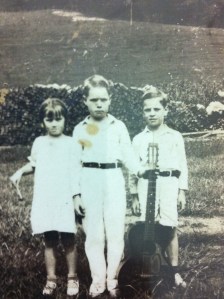
Adkins Family in Harts, about 1932
25 Tuesday Dec 2012
Posted in Harts, Pearl Adkins Diary, Women's History
Tags
Appalachia, culture, genealogy, history, life, Lincoln County, Margaret Adkins, photos, U.S. South, West Virginia

“Aunt Marg,” 1870s
24 Monday Dec 2012
Posted in Ed Haley
Tags
Appalachia, Ed Haley, Ella Haley, genealogy, history, Kentucky, life, photos, Ralph Haley, U.S. South
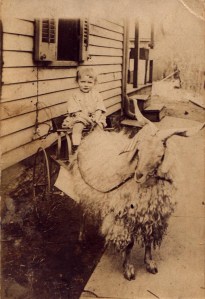
Ralph Haley, circa 1916
22 Saturday Dec 2012
Posted in Ed Haley
Tags
Appalachia, Calhoun County, Ed Haley, fiddler, genealogy, history, John Hartford, Laury Hicks, music, photos, U.S. South, West Virginia
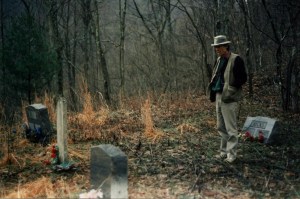
John Hartford at the Laury Hicks Grave, 1996
21 Friday Dec 2012
Tags
Appalachia, Calhoun County, fiddler, genealogy, history, Laury Hicks, Minnie Hicks, music, photos, U.S. South, West Virginia, writing
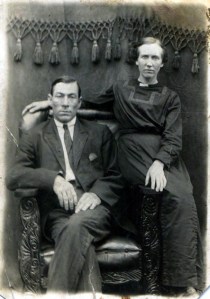
Laury and Minnie Hicks of Calhoun County, WV, 1920s
16 Sunday Dec 2012
Posted in Harts
Tags
Appalachia, blind, Cat Fry, culture, genealogy, Harts Creek, history, life, Lincoln County, photos, U.S. South, West Virginia, writing
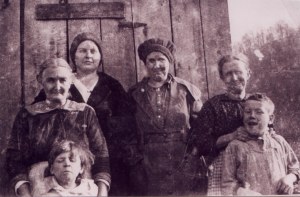
Adkins Women with Children, 1910-1920
16 Sunday Dec 2012
Posted in Pearl Adkins Diary
Tags
Appalachia, Cora Adkins, culture, genealogy, Harts Creek, history, Inez Adkins, life, Lincoln County, photos, West Virginia, writing

Inez (McCann) Adkins and Cora Adkins, circa 1920s
11 Tuesday Dec 2012
Posted in Culture of Honor
Tags
Appalachia, Bob Dingess, crime, culture, genealogy, Harts Creek, history, life, Logan County, photos, U.S. South, West Virginia, writing

Bob Dingess, 1908-1914
09 Sunday Dec 2012
Posted in Big Harts Creek, Ed Haley, Spottswood
Tags
Appalachia, Ashland, Ashland Cemetery, Buck Fork, Clifford Belcher, Connie Woods, Dingess, Ed Belcher, Ed Haley, Ella Haley, fiddle, fiddler, fiddling, genealogy, George Greasy Adams, guitar, Harts Creek, history, Hoover Fork, Jackson Mullins, Jeff Baisden, John Frock Adams, John Hartford, Johnny Hager, Kentucky, Lawrence Haley, Liza Mullins, Logan, Logan County, Maynard's Store, music, Nashville, Peach Creek, Peter Mullins, Ralph Haley, Sol Bumgarner, square dances, Trace Fork, Turley Adams, Violet Mullins, Weddie Mullins, West Virginia
At some point, Connie showed up with a small entourage of women toting some of Joe Mullins’ old pictures. My eyes immediately went to a large, framed photograph of two serious mustachioed men. Turley said one was Weddie Mullins — his grandfather on “both sides” of the family tree — while the other was Ed Haley’s Uncle Peter Mullins. Both men were brothers. Turley said his grandfather Weddie — Ed’s uncle — was murdered at the little town of Dingess just after the turn of the century.
Lawrence said, “Mom and Pop used to play at Dingess — just a little community over in MingoCounty.”
That got us back on the subject of Ed, although most of the commentary was choppy and mixed between looking at photographs. One of the girls said, “We’ve heard talk of Ed all our lives.” Another made the unusual remark, “He could see lightning. Some way he could feel it or something and tell it was hitting.” Someone said Ella could tell the difference between the Haley children by their smell.
Turley, who had been fairly quiet throughout our visit, said to Lawrence, “Bernie Adams used to play a lot of music with your dad.”
Violet said, “Bernie’s the one took him in the chicken house for the toilet. They stayed all night up at our house. Robert Martin and Bernie and Ed and them played music all night. I can remember it. I was just a little girl. Mother said Ed played many a time where she was raised up over in the head of Francis Creek.”
Lawrence said, “You know, these different places like Hoover and places like that don’t ring a bell to me. I can remember going down here to the end of Trace, and maybe down to Smoke House, and up to George Adams’ who lived on up this way, and up to that store — Maynard’s Store — and buying candy, but that’s about the limit of my travel, except coming up from the mouth of Harts.”
Basically, the next half-hour or so was a giant “get to know everybody session” — mostly between Lawrence and the locals. I sort of hung back a little, taking it all in, while Lawrence spoke of and listened to stories about his father. There was a glow about his face that had been absent in Ashland.
At one juncture, he told Connie how her grandparents, Peter and Liza Mullins, raised his father.
“Oh, really?” she said. “I didn’t know that. Now I remember Granny. They wanted me to stay all night with her and I was always afraid she’d die in her sleep or something. That’s terrible.”
She asked Lawrence if he remembered Uncle Jeff — “he was Granny’s brother and he was kinda slow.”
Violet said, “He liked to go to all these dinner meetings they’d have out in the country. He’d walk for miles and miles.”
Connie asked Lawrence if Ed ever played at Logan — the seat of government for Logan County — and he said, “Yeah, he used to play around Logan quite a bit and Peach Creek. He’d play up there during court days especially. Back in them days, the town would load up. I’ve been there with him during those times. The old courthouse, I think it faced toward the river. One side of it was on Stratton Street.”
Connie asked where Ed was buried and Lawrence said, “He’s buried in the Ashland Cemetery in Ashland. Mom’s buried in the same cemetery but not with him. By the time my mother died — she died three years after Pop — they’d filled that section up.”
I’d never really thought about that. Ed and his wife were not buried together, the kind of seemingly minor detail tossed out randomly that took on somewhat of a greater meaning at a later date. I made a note to myself right then that I would visit Ed’s grave in Ashland before heading back to Nashville.
Violet wondered about Lawrence’s older brother, Clyde.
“Clyde’s out in Stockton, California,” he said. “He’s what I call the black sheep of the family. Never married. He just followed the sun for work. When it was summertime, he’d go north; when it was wintertime, he’d go south.”
Just then, an old man called Bum showed up at Turley’s. Bum remembered Ed and his family well. He asked Lawrence about the Haleys. It was hard to focus on their conversation — everyone in the room seemed to be talking at once — but I heard Bum mention something about how Lawrence’s brother Ralph used to hang from tree limbs by his “sticky toes” and would “do anything.”
“That’s exactly how he got killed,” Lawrence said. “He was hanging by his toes and he was gonna let go with his toes and flip over and land on his feet but he didn’t make it. He was just active like that. See, Ralph danced around these carnivals and fairs and places.”
A few minutes later, things quieted down a little. I moved over near Bum to ask him about Haley. His answers seemed to come through his nose more than his mouth and were usually followed by a little chuckle. He was great. Bum said he was 67 years old and first saw “Uncle Ed” in the thirties.
“He lived down in Ashland and he’d come up pretty often,” Bum said. “People come from everywhere to listen at him play whenever they’d have them big dances and stuff. He’d play half the night. Yeah, I’ve been right there.”
I asked Bum about Ed’s tunes and he said, “Ah, he played so many… There was one religious tune he’d put the bow under the fiddle, and the hair, he’d turn it right over and slip his fiddle between it, and play that. I forgot what it was.”
Bum told me all about the old dances.
“They used to have a big working,” he said. “About every family on this creek and Harts Creek down here, they’d all gather up and hoe one man’s field out and then move to the next one. And they’d all go to each other’s farms that way and help each other, and when they got done one man would have a big dance. They’d have a dance on Saturday night. They’d have them at just about every home, mostly at Uncle Peter’s up here, in the house. Like one room in there, they’d gather everything up and take it outside and they’d have a dance in there, and when they got through they’d put the furniture all back in. Anybody that wanted to come was invited. They’d have food right in the house. There were usually three or four around to call the reel: ‘Dosy doe and here she comes and there she goes.'”
“It’d just be Uncle Ed and John Hager playing?” I asked.
“Well, Ed mostly,” Bum said. “Uncle Johnny, he played some with him. Uncle Ed, he played by himself most all of these dances. Mrs. Haley played with him a lot. She played the mandolin, guitar or accordion.”
“Did Johnny Hager play the banjo about like Grandpa Jones?” Turley asked Bum.
“Yeah, over-handed they call it,” Bum said. “Molly O’Day, she played that way. My grandpaw would whittle out two little sticks and he’d sit and beat on them strings and Ed a playing the fiddle.”
“Ed played with Ed Belcher,” Turley said.
“Yeah, I’ve heard Pop talk about Ed Belcher,” Lawrence said.
Now who was Ed Belcher?
“He played the guitar,” Bum said. “He could play the piano, too. They’d get together at times and play together. They’d go up Buck Fork.”
Bum said he last saw Ed Haley “over here on that mountain yonder” at Clifford Belcher’s beer joint.
“He’d go down there and play and people’d give him beer and stuff. That’s about all he wanted. I run into him over there one night. I said, ‘Uncle Ed, where you been?’ He said, ‘I ain’t been no where but right here. I come up here to sit around and play music a while.’ I bought him a beer and he sat there and played music. Well, a Conley boy run in and went to playing and thought he was better than Ed and everything. Ed finally told that boy, said, ‘Why don’t you quit playing that music? You can’t play. You’re cutting my music up too much.’ That boy come back at him, you know, and aimed to fight him. He said, ‘Shut up, old man. You don’t know what you’re a talking about.’ I was standing there and I told him, I said, ‘Now listen. If you jump on that man, you’ll have me to fight and him both.’ And Ed took his fiddle and hit that feller right down over the head with it and busted that fiddle all to pieces.”
Lawrence laughed.
Turley said Ed Haley was high-tempered, as well as strong, and hinted at his mean streak.
“Dad said Peter had a dog that Ed couldn’t get along with at all. Ed told Uncle Johnny, ‘You get me close to him and I’ll hit him in the mouth. I’ll knock him out.’ And he said Ed hit that dog and killed him with his fist. Hit him in the ear and killed him. That’s what my daddy told.”
Bum was very familiar with Ed Haley’s family on Trace. He said Uncle Peter Mullins was “pretty bad to get out and get drunk and get into it with people.” He knew all about Ed’s uncle Weddie Mullins’ murder at an election in Dingess. “There used to be a train come in there and they’d bring flour and stuff over there and people’d go over there to Dingess and get it,” he said. “They’d take wagons and go through these hills, like up Henderson and all them places and they got into it over there.” Bum wasn’t sure who shot Weddie but knew that his killer survived the fracas. Once the news reached Harts Creek, John Adams got a pistol from Jackson Mullins and rode to Dingess where he found Weddie’s killer laid up in a bed clinging to life. Someone told him the guy probably wouldn’t make it so (like something out of a Hollywood Western) he pulled out a .38 pistol and said, “I know he won’t,” and shot him in cold blood.
I wasn’t exactly sure who any of these people were — Jackson Mullins, John Adams — but I had the impression that they were some relation to Ed Haley. At that juncture, I just let the tape recorder roll and tried to take notes and absorb everything, figuring that what seemed like unimportant details would perhaps later develop into major items of interest.
08 Saturday Dec 2012
Posted in Ed Haley
Tags
Appalachia, Big Sandy River, Ceredo, Clifton Mullins, Connie Mullins, culture, Ed Haley, fiddler, genealogy, Guyandotte River, Harts, Harts Creek, Hatfield-McCoy Feud, history, Huntington, Imogene Haley, John Hartford, Johnny Hager, Kenova, Lawrence Haley, Logan County, Loretta Mullins, music, Pat Haley, Peter Mullins, Trace Fork, U.S. South, West Virginia, writing
Early the next morning, Lawrence and I boarded my Cadillac and drove out of Ashland across the Big Sandy River into West Virginia. We drove past little towns named Kenova and Ceredo on I-64 then turned off onto Route 10 just south of Huntington. For the next hour, we weaved our way on this curvy, two-lane road toward Harts, cruising past small settlements named Salt Rock, West Hamlin, Pleasant View, Branchland, Midkiff and Ranger — all situated on the Guyandotte River. Finally, after what seemed like an eternity, we saw a tiny green and white sign planted to the right of the road reading “Harts, Unincorporated.” Just past it was a beautiful two-story white home, which Lawrence quickly pointed out as the place where Ed’s mother was murdered in the Hatfield-McCoy Feud. Excited, I quickly pulled over and took a picture, then took off in a cloud of gravel and dust.
Lawrence and I turned right onto a narrow paved road and snaked our way up Harts Creek, bypassing a high school, trailers, Depression-era framed houses and newer brick homes. It was beautiful country. Cold weather was barely gone and the hillsides were a faint blush of green buds. Lawrence motioned toward the creek — which was up somewhat due to spring rains — and told again how difficult it was to get up Harts Creek in his younger days.
“Biggest part of the time, you was down in the creek bed there, if the weather was right. If it was times like this you had to take to the hillside but the road usually followed the creek bed. It seemed like it took us all day walking up here, but they didn’t have the roadway up on the side of the hill like this.”
After a ride of some fifteen minutes, we reached Trace Fork, the place where Ed Haley was born over one hundred years ago. We drove a short distance up the branch to the site of Peter Mullins’ cabin, which had burned or been torn down about fifteen years earlier. Lawrence pointed out the only remaining relics from the original farm: a lonely tree and an old smokehouse.
After taking in the sights and smells, we went to see Joe Mullins, who lived in a small white house just down the bottom. We first met Joe’s daughters, Connie and Loretta, who said Joe had gone to Chapmanville and would probably be out for most of the day. Lawrence introduced himself as “Ed Haley’s son,” which caused Connie to giggle and say, “Oh, yeah. Don’t we have a picture of him?”
Loretta said, “We got a lot of pictures.”
“The old fiddle,” Connie said. “Remember the old fiddle that used to be up there in that old house?”
What old house?
“That old smokehouse up there at the old house,” Connie said. “There was an old fiddle up in the top of it.”
There was more giggling, as if the two had just shared a secret joke.
I said to Connie, “You don’t think you could find that do you, just to see it?”
She said, “No, I doubt it.”
Loretta said, “We could probably find the picture.”
Boy that would be great.
“I don’t know about right this minute. How long are you gonna be around?”
“Long enough for you to find that picture,” I said.
The next thing I knew, Connie walked us to Uncle Peter Mullins’ old smokehouse and flung open a door. I took a few steps inside — past old furniture and piles of God-knows-what — and quickly spotted a decorative metal lid with Ed and Johnny Hager’s picture on it. In the picture, a copy of which I had first seen at Lawrence’s, Haley was slim and decked out in a suit with a derby and dark glasses. Hager stood beside him with a banjo. Lawrence said it was taken at White Sulphur Springs in eastern West Virginia.
At some point, Connie showed us a large, framed portrait of a woman she identified as Ed’s mother, Emma Jean Haley — the same picture Pat Haley had seen on her visit to Harts Creek several years ago. Connie said Lawrence could have both pictures.
07 Friday Dec 2012
Posted in Timber
Tags
Appalachia, Boone County, culture, genealogy, history, John P Fowler, life, Lincoln County, photos, timbering, U.S. South, West Virginia, writing

John P. Fowler of Lincoln and Boone counties
Writings from my travels and experiences. High and fine literature is wine, and mine is only water; but everybody likes water. Mark Twain
This site is dedicated to the collection, preservation, and promotion of history and culture in Appalachia.
Genealogy and History in North Carolina and Beyond
A site about one of the most beautiful, interesting, tallented, outrageous and colorful personalities of the 20th Century
 Brandon Ray Kirk