Tags
Appalachia, art, genealogy, Harts Creek, history, Jackson Mullins, John Hartford, Logan County, Milt Haley, Turley Adams, West Virginia
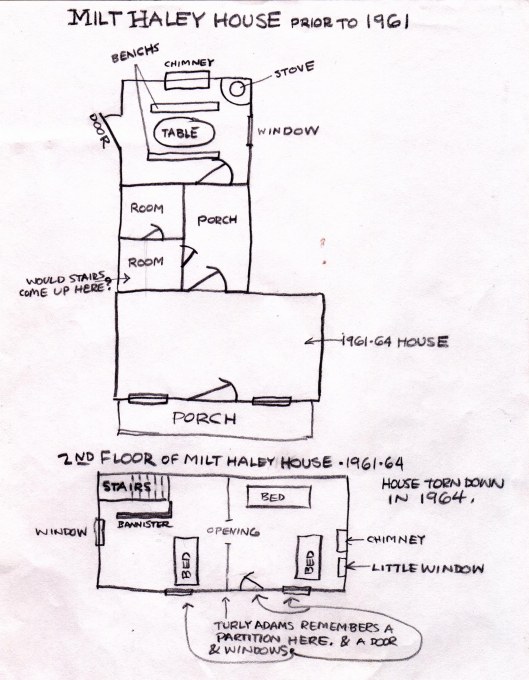
Jackson Mullins Home, Sketch by John Hartford, 1993

04 Thursday Apr 2013
Posted in Big Harts Creek, Ed Haley, John Hartford, Spottswood
Tags
Appalachia, art, genealogy, Harts Creek, history, Jackson Mullins, John Hartford, Logan County, Milt Haley, Turley Adams, West Virginia
Jackson Mullins Home, Sketch by John Hartford, 1993
04 Thursday Apr 2013
Posted in Harts, Pearl Adkins Diary
Tags
Appalachia, Fed Adkins, genealogy, Harts, history, life, Lincoln County, Pearl Adkins, photos, West Virginia
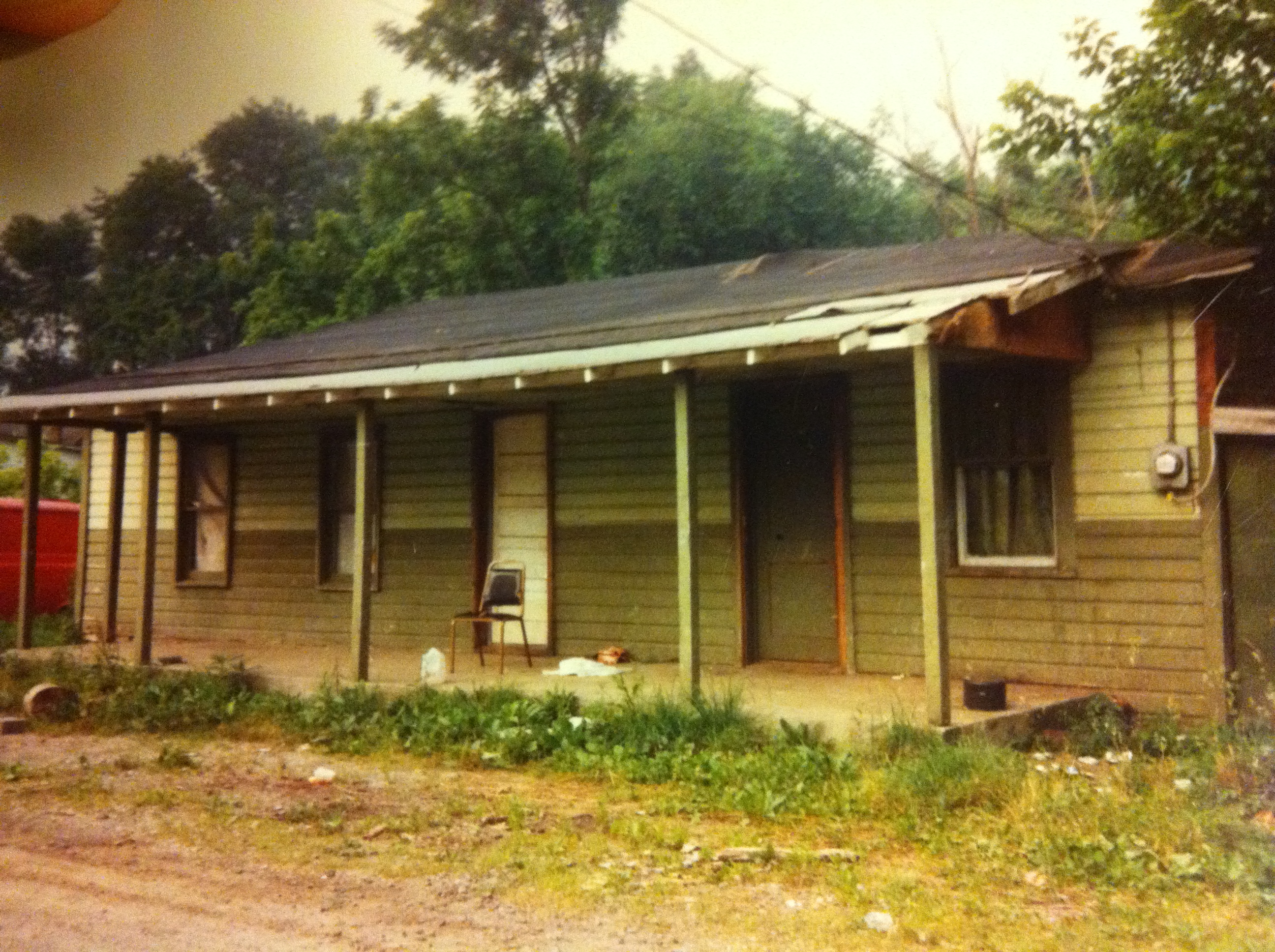
P.B. “Fed” Adkins home in Harts, Lincoln County, WV, 1980s
26 Tuesday Mar 2013
Posted in Big Harts Creek, Ed Haley, John Hartford, Lincoln County Feud, Spottswood
Tags
Appalachia, culture, Ed Haley, genealogy, Harts Creek, history, John Hartford, life, Logan County, photos, Sol Bumgarner, Trace Fork, U.S. South, West Virginia

Sol Bumgarner, a key source of information about Ed Haley and the history of Trace Fork of Harts Creek, Logan County, WV, 1993
10 Sunday Mar 2013
Posted in Culture of Honor, Whirlwind
Tags
Appalachia, culture, genealogy, Harts Creek, history, Logan County, photos, U.S. South, West Virginia, Whirlwind

Couple from Whirlwind, West Virginia, 1890-1915
06 Wednesday Mar 2013
Posted in Ashland, Cemeteries, Ed Haley, Music
Tags
Allie Trumbo, Appalachia, Ashland, Ashland Cemetery, Bath Avenue, Boyd County, Calvary Episcopal Church, Cincinnati, Cleveland, Clyde Haley, Ed Haley, Ella Haley, Francis M. Cooper, genealogy, history, Huntington, Jack Haley, John Hartford, Kentucky, Lawrence Haley, Lezear Funeral Home, Michigan, Minnie Hicks, Mona Haley, Morehead, Noah Haley, Ohio, Patsy Haley, South Point, William Trumbo
After Ed’s death, Ella lived with Lawrence and his family in Ashland. Every Thursday, she went to Cincinnati where she sold newspapers until Saturday. On Saturday nights, Lawrence would meet her at the bus station in Ashland and bring her home. She and Lawrence would then go into her bedroom where she would empty out her bounty from special slips Aunt Minnie had sewn into her bodice and count her money. It was somewhat of a humbling job for Ella; her own brother Allie Trumbo would call her “Penny Elly” and tease her for taking in pennies and nickels at Cincinnati. The whole experience came to a humiliating end when she “wet” on herself at the bus depot one afternoon. Apparently, no one would help her to a bathroom.
Pat said Ella took to her bed shortly afterwards and didn’t live much longer.
The day after Thanksgiving in 1954, Ella died of a stroke while staying with Jack and Patsy in Cleveland. Lawrence showed me her obituary from a Huntington newspaper:
HALEY – Funeral services for Mrs. Martha Haley, 66, 4916 Bath Avenue, who died Friday night at the home of a son, Allen Haley, at Cleveland, O., will be held today at 3:30 P.M., at the Lezear Funeral Home by the Very Rev. Francis M. Cooper, rector of the Calvary Episcopal Church. Burial will be in Ashland Cemetery. The body is at the funeral home.
Mrs. Haley suffered a stroke while visiting her son. She was born July 14, 1888, at Morehead, Ky., a daughter of Mr. and Mrs. William Trumbo.
Surviving are three other sons, Lawrence Haley, Ashland, Noah E. Haley, Cleveland, and Clyde F. Haley, Michigan; one daughter, Mrs. Mona Mae Smith, South Point, O.; a brother, Allie Trumbo, Cincinnati; and nine grandchildren.
Sensing that Ella’s death might be a sensitive subject, I just kind of left it at that.
04 Monday Mar 2013
Posted in Big Harts Creek, Ed Haley, Music
Tags
Appalachia, banjo, Boone County, Ed Haley, fiddler, genealogy, history, Johnny Hager, Logan County, music, photos, U.S. South, West Virginia
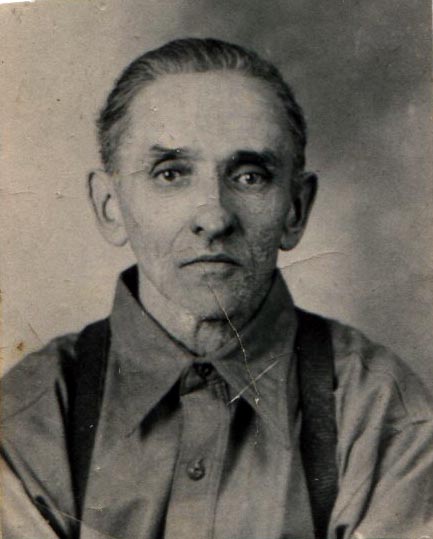
Johnny Hager (1876-1955), a banjo player and fiddler who lived in Boone County, West Virginia
22 Friday Feb 2013
Posted in Ed Haley
Tags
blind, Clyde Haley, Ella Haley, Frank Creech, genealogy, history, Kentucky, Lawrence Haley, life, Mona Haley, Noah Haley, Pat Haley, Ralph Haley, writers, writing
Later that evening, Lawrence showed a 1989 home movie of him reminiscing with Clyde, Noah and Mona about their father at Christmas. I immediately focused in on Clyde, a natural storyteller who swooped his arms at just the right moments and embellished every detail. He mostly talked about Ed getting into a fight with someone named Frank Creech.
“Frank’s the one that Pop put the chair rungs down around his head and was choking him to death till Ralph got him,” Clyde said. “Frank said something pretty nasty to Mom about keeping her mouth shut. Boy, he no sooner got it outta his mouth than Pop had that cane-bottom chair right down across the top of his head. Pop reached through there with his left hand — I’ll remember it just as plain as if it was happening right now — and got his throat with his left hand, and then he was reaching for his Barlow knife in the pocket of his old coat and Ralph got the knife out of his hand.”
Pat said Clyde reminded her of Ed the most on the tape but pointed out that “Pop was a bigger man than Clyde. He had a heavier face. When he died, I would say he weighed about 180. He was a tall man — 5’11”, something like that. He had very blue eyes. They were very cloudy. If you were speaking to him, you would think he was looking at you. He had peculiar facial expressions.”
Pat said she and Lawrence had told Clyde about me — that he was somewhere near Stockton, California.
“Well, he was there for, I would say, eighteen months and he hangs around all the rough, low-down places,” she said.
What about Noah?
“Noah is an eccentric,” Pat said, a little later when Lawrence was out of ear shot. “Noah is a gambler. He has a very good income every month and it makes me angry because he draws twice as much as Larry and he blows it all away and when they’re in trouble they come to Larry. Of course, he won’t turn them down. He just doesn’t want to know anything about them. Noah will stop in here once in a while. I think Noah looks a lot like Pop.”
21 Thursday Feb 2013
Posted in Ed Haley, Women's History
Tags
Appalachia, blind, Ella Haley, genealogy, history, Kentucky, Lexington, photos, U.S. South

Ella Trumbo postcard, c.1910
19 Tuesday Feb 2013
Posted in Civil War, Clay County, Music
Tags
Appalachia, civil war, Clay County, fiddle, fiddler, fiddling, genealogy, history, Kim Johnson, Marshall Cottrell, music, photos, West Virginia

Marshall Cottrell, Fiddle Player and Confederate Veteran from Clay County, WV. Photo courtesy of Kim Johnson.
18 Monday Feb 2013
Posted in Big Harts Creek, Culture of Honor
Tags
Appalachia, Charlie McCoy, crime, Frank Fleming, genealogy, Harts Creek, history, John Fleming, John Henan Fry, life, Lincoln County, U.S. South, West Virginia, writing

Newspaper article, 1909
15 Friday Feb 2013
Posted in Big Harts Creek, Ed Haley, Hamlin, Harts, Huntington, Lincoln County Feud
Tags
Al Brumfield, Appalachia, Bob Adkins, Charleston, Charley Brumfield, crime, Emma Jane Hager, genealogy, Goldenseal, Griffithsville, Hamlin, Harts, Harts Creek, history, Hollena Brumfield, Huntington, Imogene Haley, John Hartford, Lawrence Haley, Lincoln County, Lincoln County Feud, Milt Haley, Paris Brumfield, Philip Hager, West Hamlin, West Virginia
The next day, Lawrence and I decided to go see 89-year-old Bob Adkins in Hamlin, West Virginia. In a recent Goldenseal article, Bob had given his biography, including his family’s connection to the story of Milt’s murder. Since reading his narrative, I’d been anxious to ask him about Milt, as well as to confirm or disprove my suspicion that his father’s first wife Emma Jane Hager was the same person as Ed’s mother.
To get to Bob’s house, we took Route 10 out of Huntington to Lincoln County. We turned off onto Route 3 just inside the county line at West Hamlin, then drove on for about ten minutes, crossed a hill and cruised into Hamlin — Lincoln County’s seat of government. Bob Adkins’ nice two-story house sat just past a block of small struggling businesses and through the only red light in town. We found Bob out back relaxing on a patio near a flower garden in full bloom.
After all the introductions, I mentioned my theory about Ed’s mother, which Bob shot out of the water right away. He was positive that Emma Jane Hager was not the same person as Emma Haley.
“No, Emma Jane Hager was old man Philip Hager’s daughter,” Bob said. “Dad got her from Griffithsville, 10 miles toward Charleston. Dad come down there and stole her.”
Bob knew all about Milt’s death but stressed that what he knew about it was hear-say, that he didn’t want to get sued and that we couldn’t take his word as gospel because there was “so dern many of ’em a shootin’ and a bangin’ around amongst each other” in Harts that he sometimes got his stories confused. Maybe Bob did have a foggy memory, as he claimed, but I found him to be a walking — or rather, sitting — encyclopedia of Harts Creek murders.
“I was born and raised up there until I was nineteen years old, but I was never afraid,” Bob said. “I walked all hours of the night and everything and do as I please, but I always tended to my business, you know. Kin to most of them. I never bothered nobody. Nobody never bothered me, but that doesn’t say they wouldn’t shoot you. Well, all you had to do was tend to your own business.”
Bob eased into the story of Milt’s death by giving Lawrence and I some background on the Brumfields. He knew a lot about them because Hollena Brumfield, the woman Milt supposedly shot, was his mother’s aunt and “about half way raised her.” She was a Dingess prior to marrying Al Brumfield.
“Now those Dingesses up there, I never knew of them to bother anybody much,” Bob said of his kinfolk. “Some of the older ones shot and banged around a little bit. But look out for them Brumfields. They was into it all the time. If they couldn’t get anybody else to shoot, they’d shoot theirselves — their own people.”
Al Brumfield’s father Paris was the most notorious of the old Brumfields.
“Well, one thing, he killed an old pack peddler up there at Hart, took his stuff and threw him in the river,” Bob said of the Brumfield patriarch. “And he killed another man, too. I forget the other fellow’s name. Son, he was a mean old man, I’ll tell you that. Why, he’d kill anybody. He lived about three quarters of a mile from the mouth of the creek down the river there in at the end of a bottom, see?”
Bob kind of chuckled.
“Yeah, killed that old pack peddler,” he said. “That’s what they said he did. I don’t know. He was a mean old devil. And boy, he’d killed two men.”
I wanted to know more about the Brumfields since they seemed to have been so wrapped up in the story of Milt Haley.
“What happened to Paris Brumfield?” I found myself asking.
“I tell you, old Paris, he got what was coming to him,” Bob said. “He was as mean as a snake and he would beat up on his wife every time he got drunk. And Paris’ wife got loose from him and she came down to her son Charley’s for protection. Charley was a grown man and was married and had a family and he lived down the road a quarter of a mile. Charley told her to come on in the house and there’d be nobody to bother her there and he told her to stay back in the room and he would take care of it. Old Paris, he was drunk and he didn’t get exactly where she was and he finally figured out where she was and old Paris come down there to get his wife. When he come down, Charley, his son, was setting on the porch with a Winchester across his lap. A Winchester is a high-powered gun, you know? And that day and time, they had steps that came up on this side of the fence and a platform at the top of the fence and you walked across the platform and down the steps again. That kept the gates shut so that the cattle and stuff couldn’t come into the yard. Well, he got up on that fence and Charley was setting on the porch with that Winchester. He said, ‘Now, Paw don’t you step across that fence. If you step across that fence, I’m going to kill you.’ And Paris quarreled and he fussed and he cussed and he carried on. That was his wife and if he wanted to whip her, he could whip her. He could do as he pleased. He was going to take his wife home. Charley said, ‘Now, Paw. You have beat up on my mother your last time. You’re not going to bother Mother anymore. If you cross that step, I am going to kill you.’ And he kept that up for a good little while there. ‘Ah, you wouldn’t shoot your own father.’ Drunk, you know? And Charley said, ‘You step your foot over that fence, I will.’ Paris was a little shaky of it even if he was drunk. Well, after a while he said, ‘I am coming to get her,’ and when he stepped over that fence, old Charley shot him dead as a doornail.”
You mean he killed his own father?
“His own father,” Bob said. “He killed him. That got rid of that old rascal. And that ended that story. They never did even get indicted for that or nothing. Everybody kept their mouth shut and nobody didn’t blame Charley for it because old Paris had beat up on his mother, you know? Everyone was glad to get rid of him.”
26 Saturday Jan 2013
Posted in Ed Haley
Tags
Appalachia, blind, culture, Ed Haley, Ella Haley, genealogy, history, life, music, photos, U.S. South
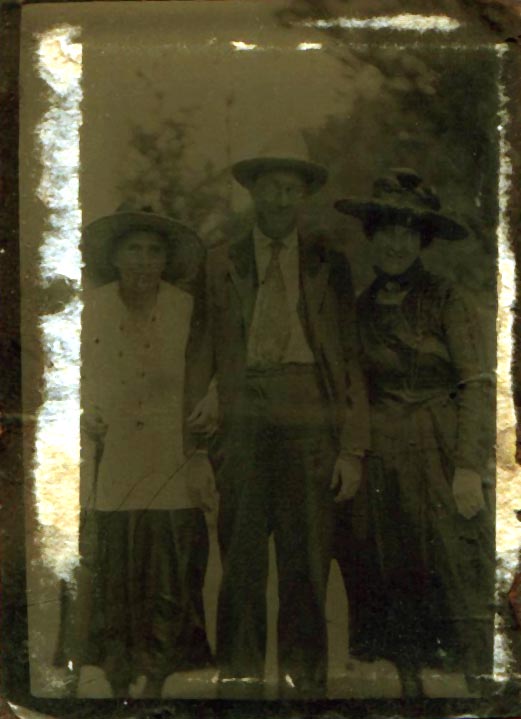
Ella Haley, Ed Haley, Margaret Arms, 1925-1945
20 Sunday Jan 2013
Posted in Ed Haley, Music, Women's History
Tags
Appalachia, culture, Ed Haley, Ella Haley, genealogy, history, Kentucky, Mona Haley, photos
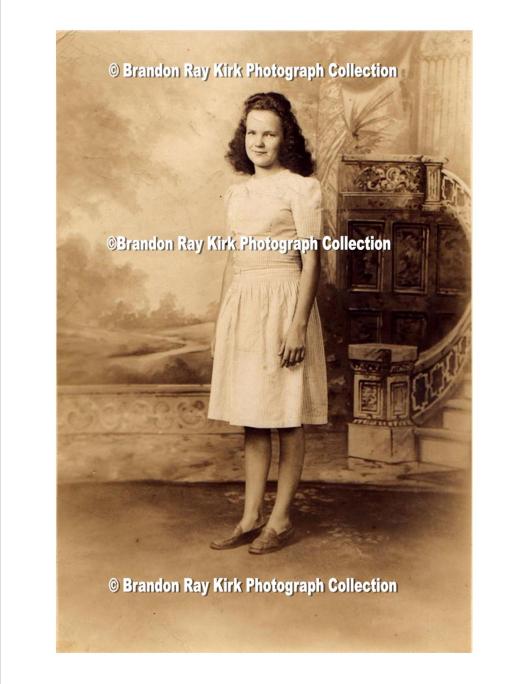
Mona Haley, daughter of J.E. “Ed” Haley and Ella (Trumbo) Haley
18 Friday Jan 2013
Posted in Ed Haley
Tags
Appalachia, culture, Ed Haley, genealogy, Harts Creek, history, John Hartford, life, Logan County, photos, Roxie Mullins, West Virginia

Roxie Mullins, 1991
18 Friday Jan 2013
Posted in Ed Haley
Tags
Appalachia, Ashland, Ed Haley, Ella Haley, genealogy, history, John Hartford, Kentucky, Lawrence Haley, life, Milt Haley, Noah Haley, U.S. South, writing
Lawrence Haley and I spent an hour or so driving around Ashland looking at many of the sites where Ed had lived in town. Not one single residence was still standing. As we visited each site, I noticed that the Haley residences seemed to have been in poor areas of town…although I didn’t suggest this to Lawrence.
“They never did own a home,” Lawrence said of his parents. “They always rented. About eight different places in Ashland and one in Catlettsburg that I can remember.”
In 1933, according to city directories, Ed and Ella lived at 805 45th Street. The next year, Ella received a postcard at 1030 45t Street. The 45th Street area of Ashland — renamed Blackburn Avenue in recent years — was a long street situated to the back of town, with schools and churches intermixed occasionally with small residences. It was the longest street in town.
Lawrence guided me to 37th Street, also known as Ward Hollow, where the Haleys settled around 1937-38. Ward Hollow, I discovered, was recently cleared entirely of homes and filled with dirt as part of some planned business development. It was nothing like Lawrence or Curly Wellman remembered it.
“This was a two-lane road at that time,” Lawrence said, looking up the hollow where he once lived. “And they was a bunch of houses sat up on the bank. There wasn’t too many trees up through there. About twelve to fifteen houses — small homes, twenty-five or thirty foot long. We lived in a three-bedroom house. I was just a kid then.”
In 1944, the Haleys moved downtown to 105 17th Street, the spot where Haley made his home recordings. From this location, presently occupied by a dull gas building and a partially empty lot near the floodwall, Haley could easily walk up 17th Street past City Hall to the post office or Central Park.
In 1947, the Haleys were briefly at 5210 45th Street, before settling at 1040 Greenup Avenue. Two years later, Ella was listed in city directories at 932 45th Street. Today, this spot is almost wiped out, although a Little Caesar’s pizza is on the corner of a modern building at 933 45th Street.
Around 1950, the Haleys lived at 2144 Greenup Avenue. This spot, where Ed Haley died in 1951, is the current site of a Boyd County Ford parking lot and Pathways, Inc. “They’ve got a mental health center there where Pop died,” Lawrence said.
In 1952, Ella lived at 932 45th Street.
As Lawrence and I made our way around town, I suggested going to see his older brother Noah who had recently moved back to town.
“Well that’ll be fine John, but if he’s playing cards I ain’t even gonna go around him because that’s one of his vices,” he said. “He used to go down there to Covington, Kentucky, some and lose his shirt. Two or three shady people have been after him to collect his debts.”
It seemed as if each of the Haley children had some kind of a major hang-up, which kept me thinking about Milt Haley’s genetics — as well as Ed’s. I asked Lawrence if Noah was a drinker and he said, “He doesn’t drink any more. I think he’s got to the point where drinking aggravates his system too much.” There was also the restlessness. Milt Haley came to Harts Creek from “over the mountain” — probably the Tug Valley — and married a local girl. After the trouble with Al Brumfield, he hid out in Kentucky. Ed Haley, perhaps taking a genetic cue from his father, left Harts Creek at a young age and roamed throughout West Virginia and eastern Kentucky. Even after marrying and settling down in Ashland, it was a Haley ritual to always be on the go — moving through town or taking off on a season-long jaunt. Lawrence Haley did not seem to “inherit” that desire, preferring to live the quiet life of a laborer and postman in Ashland. But his half-brother Ralph had went overseas during World War II and then on to live in Cincinnati. His brother Clyde had been all over the United States — everywhere from Alaska to New Orleans. Likewise, Jack had moved away to Cleveland and Mona had been in different cities in Ohio.
Noah, a veteran of the Pacific Theater and longtime resident of Cleveland, was apparently a roamer, too. “He moves around,” Lawrence said. “The last place he lived was up on Winchester Avenue in an apartment out over a garage. He’s getting ready to go out to California, I guess. He’s about 71.”
16 Wednesday Jan 2013
Posted in Big Harts Creek, Culture of Honor, Halcyon
Tags
Appalachia, crime, culture, Doc Workman, genealogy, Harts Creek, history, Logan County, murder, mystery, photos, true crime, U.S. South, West Fork, West Virginia, Workman Fork

Wilson “Doc” Workman Home, about 2002
09 Wednesday Jan 2013
Posted in Ed Haley
Tags
Alaska, blind, California, Cleveland, Clyde Haley, Ed Haley, genealogy, Harts Creek, Hawaii, history, Japan, John Hartford, Kentucky, Lawrence Haley, Liza Mullins, Louisiana, Milt Haley, Montana, New York, Noah Haley, Ohio, Pacific Theatre, Pike County, Scoffield Barracks, Virginia, World War II
I asked Lawrence if he’d heard from any of his brothers or sister and he said, “I’ve got one that lives in town now. He moved back from Cleveland, Ohio. He lives in town. Noah was a little bit… You might want to talk to him, I don’t know. But Noah, he went away, I guess, in 1939. He went in the service. He was at Scoffield Barracks in Hawaii when the Japanese… He was in all that Pacific Theater. I think he was wounded a couple of times. The Japanese bayoneted him one time in a bonsai attack or something. It left Noah a little bit shell-shocked or something. He gets a pension from it. He’s not together all there, I guess. You know, in a way, if you talked to him you’d never notice it. He was married to a woman of Hungarian descent and raised a family — a boy and a girl. He had a problem with the girl, too. She was having a problem with a boyfriend or something and her boyfriend was there at the house. Well, the boy had a pistol or some sort of a gun and she went and got that pistol and said, ‘If you don’t love me,’ or something and she shot herself. She committed suicide. I think it was non-intentional. It was just a bluff.”
I said to Lawrence, “Well now, aren’t your other brothers, they’re all kind of hard to get along with, aren’t they?”
“Yeah, a little bit odd,” he answered. “Clyde just moved out and took off and went his way, I guess. Followed the sun, I call it. We’d hear from him in Louisiana one year and the next year he might be in Montana or Upper State New York. He did hobo. Noah went to see him about ten years ago out in California and they started back and Noah was going to stop and get some gasoline. Clyde said, ‘No, don’t stop here and get gas. I’ll get your gasoline.’ He went over to this big church and told them he was on the road back to Ohio and didn’t have money to get there. I guess they give them a tank of gas and they come all the way back from California like that. Clyde was good at that. He did work and we’d get his W-2 forms. He never did turn in his income tax, I don’t think. He’d send his W-2 forms home. Some years he was out on an oil rig in Louisiana. Apparently during the time he was working for them they had rigs off the coast of Alaska.”
Hearing Lawrence speak of his brothers caused me to ask if maybe any of Milt Haley’s “stuff” — which I now presumed to be sort of bad — might’ve come down in their genetics.
“I don’t know, John,” he said. “I couldn’t say. They never met their granddad. I don’t think… My dad, if he’d been a sighted man, he’d probably been as gentle as a lamb. But he had frustrations in his own life.”
“Sometimes in a situation like that, sometimes a gene will come and it won’t get everybody,” I said, pressing Lawrence a little further. “Like it’ll skip your dad, and like skip you, but pick out a brother there and one over there.”
Lawrence totally disagreed.
“Well, I don’t think any of them… And I really don’t think my grandfather, from what I’ve heard of that tale… It was caused by hard times. I’m not trying to defend my grandpa because, hell, it don’t make any difference to me now.”
Milt in so many ways seemed like a critical character in the story: an ambiguous rogue — a key player in causing Ed’s blindness and inspiring his music, whose very genetic attributes or deficiencies might still live on strongly in his grandchildren.
I wondered if Lawrence knew where Milt came from before his settlement on Harts Creek.
“I think maybe over in Old Virginia or over in Pike County,” he said. “I understand there’s some Haleys in Pike County. I’d ask Aunt Liza, ‘Where’d Milt Haley come from?’ ‘Well, he come from over the mountain.’ Now, that’s as far as I could get from her.”
Lawrence thought his father had resolved his hard feelings toward the Brumfields in later years.
“Pop was supposed to have made the remark that if he’d had his eyesight he’d hunted down the people that killed his dad,” Lawrence said. “But afterwards, him and one of the Brumfield sons, they settled their trouble.”
I said, “Well obviously if your grandmother was at the Brumfields’ house the night she got shot, there was no animosity between her and the Brumfields.”
I was starting to understand how the tragedies of Ed’s early life, as well as the legacy of his father, had manifested itself into the pain, rage, and lonesomeness I’d been so drawn to in his music. I kept telling Lawrence, “We’re gonna have to go back up Harts Creek,” but it would be a year before we actually did so.
06 Sunday Jan 2013
Posted in Ed Haley
Tags
Appalachia, culture, Ed Haley, genealogy, Harts Creek, John Hartford, Lawrence Haley, life, photos, U.S. South, West Virginia

Connie Mullins and Lawrence Haley, Harts Creek, WV, 1991
05 Saturday Jan 2013
Posted in Ferrellsburg
Tags
Appalachia, culture, Frank Davis, genealogy, Harts Creek, history, life, Lincoln County, photos, U.S. South, West Virginia, writers
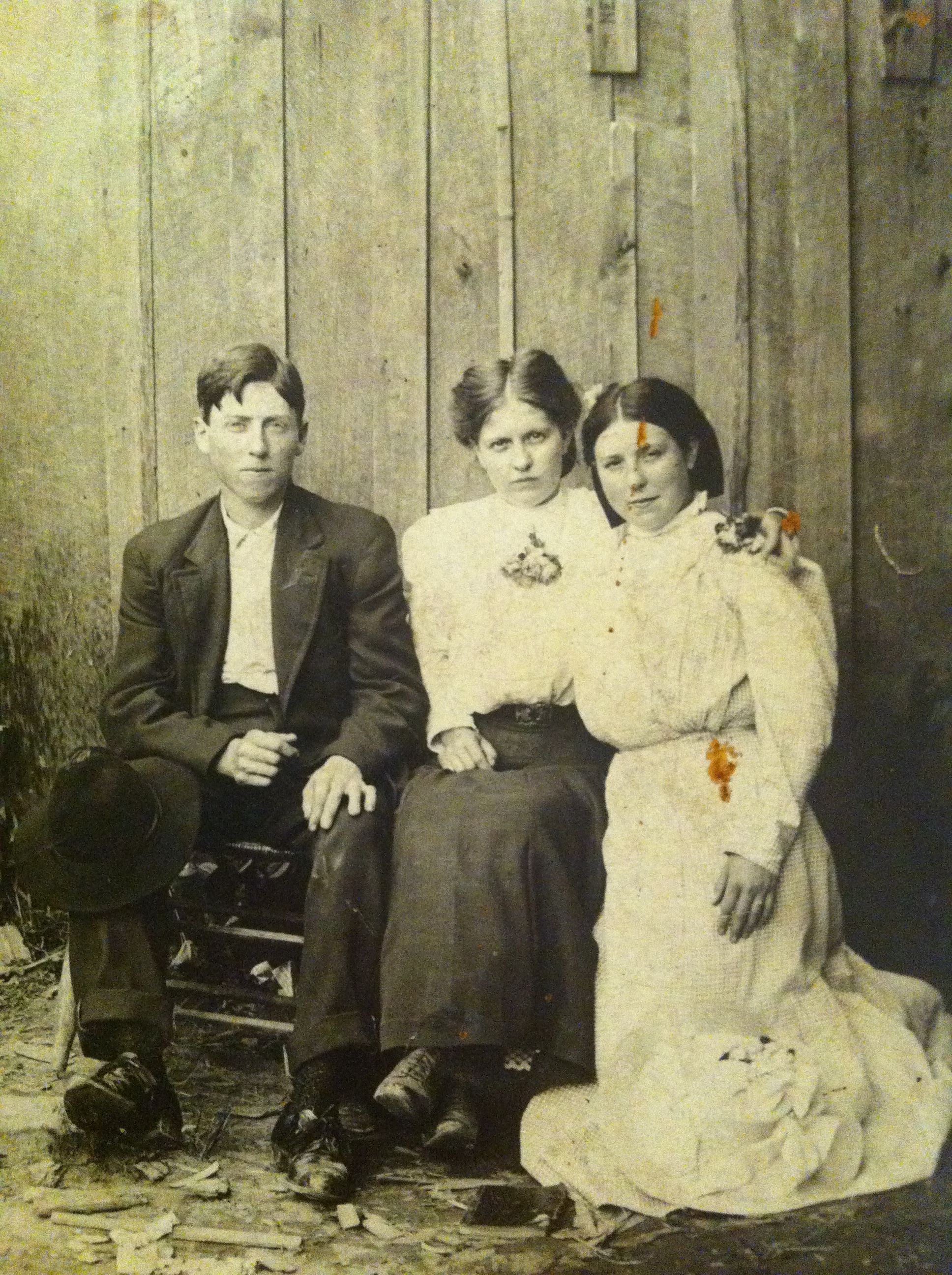
Harts Creek Residents, 1910-1920
01 Tuesday Jan 2013
Posted in Ed Haley
Tags
Appalachia, culture, genealogy, Harts Creek, history, Jack Haley, Lawrence Haley, life, Liza Mullins, Logan County, photos, West Virginia

Jack Haley, Aunt Liza, Lawrence Haley, 1948-1953
Writings from my travels and experiences. High and fine literature is wine, and mine is only water; but everybody likes water. Mark Twain
This site is dedicated to the collection, preservation, and promotion of history and culture in Appalachia.
Genealogy and History in North Carolina and Beyond
A site about one of the most beautiful, interesting, tallented, outrageous and colorful personalities of the 20th Century
 Brandon Ray Kirk