• About

Brandon Ray Kirk

~ This site is dedicated to the collection, preservation, and promotion of history and culture in my section of Appalachia.

Brandon Ray Kirk

Tag Archives: genealogy

James Wilson Sias

09 Wednesday Oct 2013

Posted by Brandon Ray Kirk in Civil War, Fourteen, Wewanta

≈ Leave a comment

Tags

Appalachia, civil war, Fourteen, Fourteen Mile Creek, Fourteen Post Office, genealogy, history, James Wilson Sias, Lincoln County, photos, Union Army, West Virginia

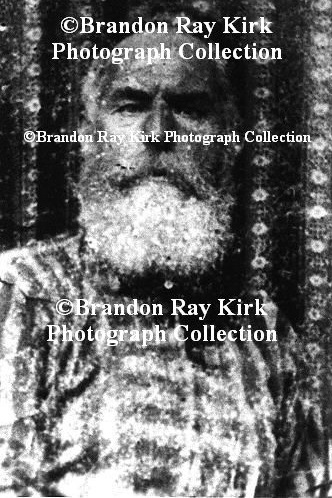
James W Sias

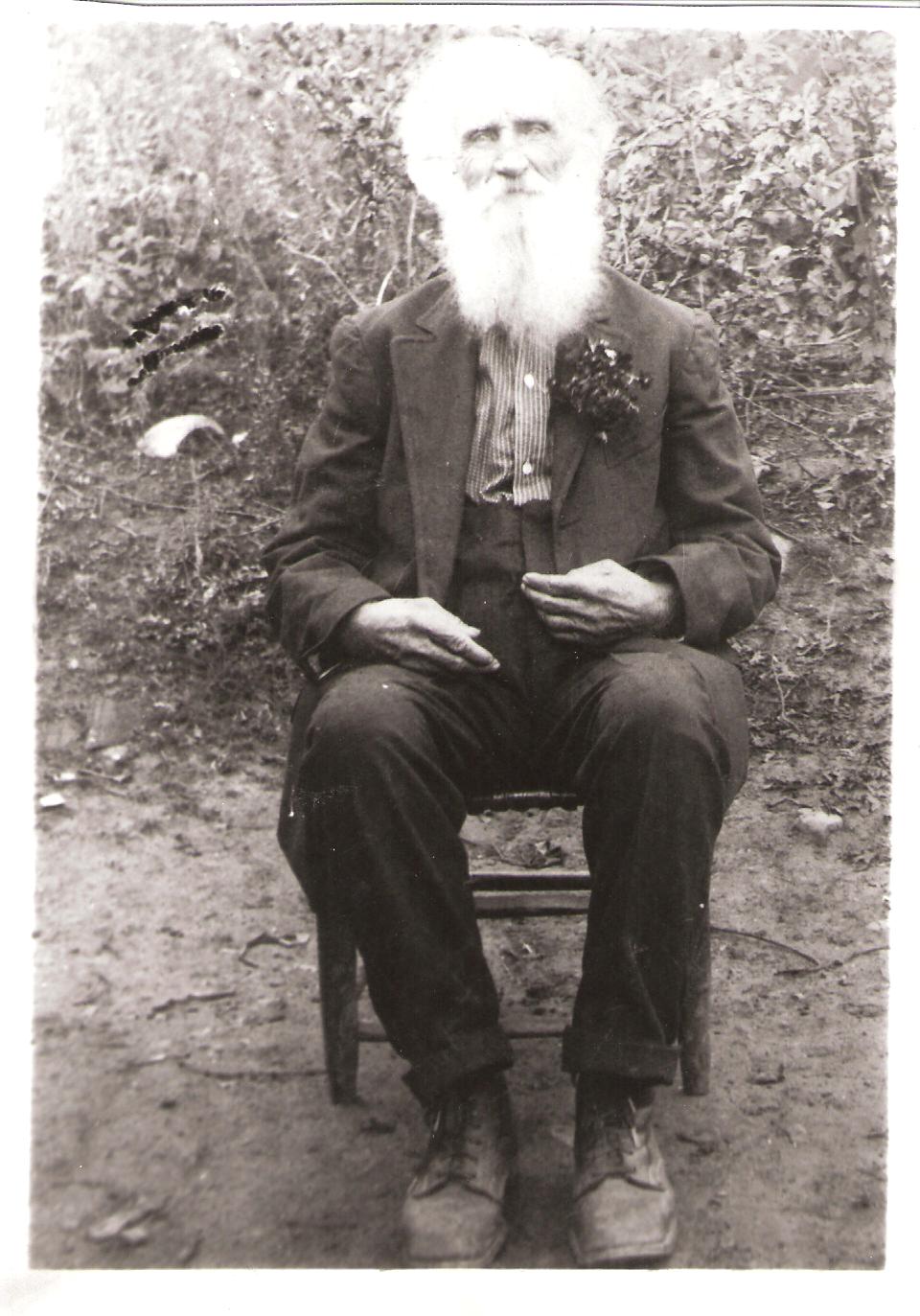
James Wilson Sias, Union veteran and postmaster of Fourteen in Lincoln County, WV


Ike Gartin

08 Tuesday Oct 2013

Posted by Brandon Ray Kirk in Civil War, Little Harts Creek

≈ 4 Comments

Tags

Appalachia, civil war, culture, genealogy, history, Isaac Gartin, life, Lincoln County, Little Harts Creek, photos, U.S. South, West Virginia

Isaac G. "Ike" Gartin, Confederate veteran and resident of Little Harts Creek, West Virginia.

Isaac G. “Ike” Gartin, Confederate veteran and resident of Little Harts Creek in Lincoln County, West Virginia.

Caleb Headley 1

08 Tuesday Oct 2013

Posted by Brandon Ray Kirk in Civil War, Fourteen

≈ Leave a comment

Tags

154th Regiment, Appalachia, Caleb Headley, civil war, Fourteen Mile Creek, genealogy, Hardesty's History of Wetzel County, history, Lincoln County, Mexican War, Monongalia County, Nancy Ann Headley, New Jersey, Revolutionary War, Sarah Headley, Thomas Headley, Tyler County, U.S. South, Ward Adkins, West Virginia, Wetzel County, Will Headley

In the years following the Civil War, Caleb Headley migrated from Wetzel County, West Virginia to the Sulphur Spring Fork of Fourteen Mile Creek in Lincoln County, bringing with him a young wife and some degree of knowledge about medicine. Behind him were Pennsylvania roots, a soldier’s experience in the Mexican and Civil wars, as well as a failed marriage. About fifteen years later, he passed away and was buried on a hill near his home.

Today, Ward Adkins, an 81-year-old walking encyclopedia of Sulphur Spring history, is the best source on Dr. Headley’s life. He was partly raised by Headley’s son, Will, his step-grandfather, who told Adkins what little he knew about his father and eventually gave him a very important family heirloom: a geography book containing genealogical information in his father’s handwriting.

Caleb Headley was born on April 11, 1808, the first son and second child of Dr. Thomas and Sarah (Asher) Headlee, in Pennsylvania. Thomas was born around 1775 in New Jersey and was the son of a Revolutionary War veteran. Sarah was born around 1785 in Virginia.

Caleb had seven known or suspected brothers and sisters: Elizabeth Headley, born about 1807, Mary Headley (c.1811-1881), Anthony Headley (August 11, 1812 – January 1, 1894), Jerusha Headley (March 16, 1815 – May 16, 1884), Sarah Headley (August 22, 1817 – June 18, 1900), Elisha Headley (August 24, 1820 – August 2, 1895), and Nancy Headley, born about 1822.

In 1822, according to Hardesty’s History of Wetzel County, Thomas Headley settled in Tyler County, (West) Virginia with his family where he taught young Caleb what he knew about doctoring prior to his death, which reportedly occurred around 1830 in Monongalia County, (West) Virginia.

On November 2, 1826, Caleb married Nancy Ann Wright in Pennsylvania. Nancy was born on October 15, 1808 in Virginia. Her parents were born in Maryland.

Caleb and Nancy had ten children: Charity Headley, born March 1, 1828; Elizabeth Jane Headley, born June 2, 1829; Thomas J. Headley, born November 23, 1831; Joshua Headley, born April 7, 1832; Sarah A. Headley, born December 8, 1833; Caleb Samuel Headley, born March 30, 1836 or 1837; George Washington Headley, born May 21, 1839; Benjamin Franklin Headley (May 31, 1841 – April 11, 1918), Anthony Headley, born June 3, 1844, and Elijah Headley, born August 1, 1850.

During the 1830s and ’40s, Caleb lived in Tyler County where he was, by his own admission, a practicing physician, member of the Methodist Church and for sixteen years a justice of the peace.

“I don’t think Caleb had any schooling to be a doctor,” Adkins said, in a 2003 interview. “As far as I know, the only thing he had as far as a medical education was studying under his daddy. His daddy was a doctor.”

In 1846, the portion of Tyler County occupied by Headley became Wetzel County.

Some time between 1846 and 1848, Headley reputedly served as a lieutenant in the Mexican War. While no military records have been located at the present time to verify his service, one of his sons made the claim that he had been an officer in the war.

“His son Will told me that he was an officer in a war with Mexico,” said Adkins.

In the 1850 Wetzel County Census, Caleb appeared in the Green District as a 40-year-old farmer (not physician) with $200 worth of real estate. His wife was 32 years old, while the children were listed as follows: Thomas (age 17, farmer, in school), Sarah (age 16, in school), Samuel (age 13, in school), Washington (age 10, in school), Franklin (age 9, in school), and Anthony (age 6).

In 1860, the Headleys maintained their residence in Green District.

When the Civil War began in 1861, Headley joined with most of his neighbors and sided with the North.

“Wetzel County, Virginia, was one of the counties which supported the Union during the War Between the States,” Mary Curtis, a genealogist, wrote in 1959. “The large majority of the settlers were from Pennsylvania and the Piedmont areas of Virginia where slaves were not common, so that their interests lay with the North.”

According to Hardesty’s History of Lincoln County, Headley was captain of a company in the Union army. According to military records, he was captain of Company C, 154th Regiment.

“He was captain of a company in the Civil War,” said Adkins. “That’s in Hardesty’s. And Will said he was an officer. He didn’t know what rank, you know. I was told that he was shot in the back. His backbone was just barely hanging together. I think he was discharged in Ohio.”

Several of Headley’s sons fought for the North. Caleb Samuel, later a resident of Porters Falls in Wetzel County, “served a short time in the Union army as lieutenant,” according to Hardesty’s History of Wetzel County. Anthony, later a resident of Pine Grove in Wetzel County, “was a soldier with the Federal army, serving in Company I, 15th West Virginia Infantry, and he participated in all the fortunes of that regiment, engaging in its battles and witnessing the surrender of Lee at Appomattox.” His term of service was from August 24, 1862 until June 30, 1865.

In 1866, 50-something-year-old Headley settled in present-day Lincoln County and joined the Christian church. By that time, he had separated from his wife Nancy and was involved in an intimate relationship with 16-year-old Sarah Farley of Logan County. The two had their first child on May 1 then married on May 25 in Catlettsburg, Kentucky.

Headley’s separation from his first wife has been a hot topic of conversation among his local descendants.

“They had a rumor going that Dr. Caleb run off and left his first wife, but Will said it wasn’t so,” said Adkins. “I heard his wife died when their son Elijah was fifteen years old, which would have been around 1865.”

However, according to Wetzel County census records, Nancy was very much alive after the separation. In 1870 and 1880, she referred to herself in both census schedules as a widow.

Lincoln County Feud

08 Tuesday Oct 2013

Posted by Brandon Ray Kirk in Ed Haley, Harts, Lincoln County Feud

≈ Leave a comment

Tags

Appalachia, crime, culture, feud, genealogy, Harts, history, life, Lincoln County, Paris Brumfield, photos, West Virginia

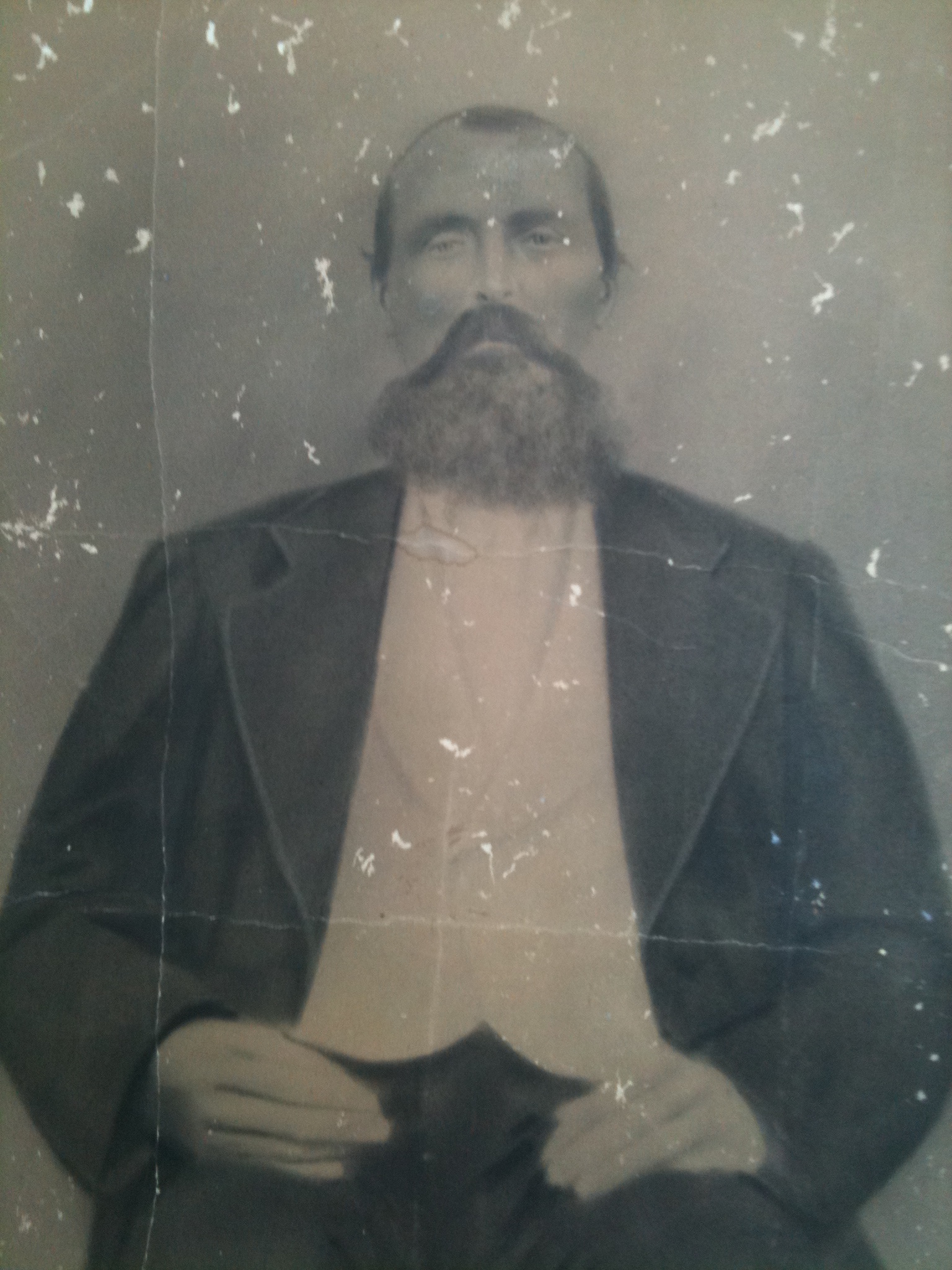
Paris Brumfield (1838-1891), Lincoln County feudist.

Paris Brumfield, Lincoln County feudist, 1880-1891.

In Search of Ed Haley 179

08 Tuesday Oct 2013

Posted by Brandon Ray Kirk in Ed Haley

≈ 2 Comments

Tags

Bob Adkins, Boney Lucas, Brandon Kirk, Charley Brumfield, crime, feud, genealogy, history, Lawrence Kirk, Paris Brumfield, Ray Kirk, West Virginia, writing

After about thirty minutes of talking with Brandon, I was convinced that he loved the families of Harts and was wrapped up in its history. He was not only serious business but he really — I mean really — knew his stuff.

Brandon flipped a few pages in his photo album, then pointed to a picture of a black-bearded, broad-shouldered giant of a man and said, “That’s Paris Brumfield.” I’d heard a lot about him from Bob Adkins and Lawrence Kirk — and never forgot what they said about him being killed by his own son. He was Brandon’s great-great-great-grandfather.

According to the Lambert Collection, Paris Brumfield was one of the most feared loggers in the Guyandotte Valley – a man who “gloried in shooting people.” He frequently stirred up trouble in the town of Guyandotte with his friends, Jerome Shelton of West Hamlin and Pete Dingess of Harts Creek. Shelton often got drunk and wandered through the streets of Guyandotte screaming “I am God!” and other obscenities. He climbed on ladders and pretended to make speeches to taunt officers and citizens. Wild cheering from loggers always followed his cry of “Millions bow down to me!” Wilburn Bias was the only marshal in Guyandotte who Paris and his gang feared, although others like a Mr. Fuller sometimes tried to arrest him. One marshal, J. “Doc” Suiter, once came to Brumfield’s hotel room to make an arrest, but a brawl ensued in which both men crashed through a window. At some point, while rafting on the Guyan River, Paris slammed his raft into Doc’s after seeing that it was fouled on some shoals.

Brumfield was a real rabble-rouser. Not only did he drink heavily and abuse his wife: in the late 1870s he took a mistress for himself. This woman, one Keziah Ramey, originally from the Kiah’s Creek area of Wayne County, moved near Paris at Harts and quickly produced him four children. Paris was a reported murderer as well, according to local history. There are rumors about him killing pack-peddlers and someone named Charlie Hibbits (whose body was put on the “Ha’nt Rock”). Reportedly, he also murdered a man who disturbed a fiddler playing his favorite song, “Golden Slippers”. These stories are likely untrue, as the only murder positively linked to him was his shooting of a local man named Boney Lucas.

Bob Adkins had told me about it. “They had a fight right there at the mouth of West Fork and Boney got loose and he run through the creek there,” Bob had said a few years earlier. “And Paris’ daughter Rat, she run and got the gun and brought it to Paris and, by george, he shot Lucas with a Winchester right across the creek. Lucas tried to get away.” Brandon’s grandfather Ray Kirk said the trouble was “over logs,” while Lawrence Kirk said it was brought on by arguments between their children at school. Either way, their fatal confrontation occurred at the Narrows of Harts Creek, where Al Brumfield later built his infamous log boom. Paris had gone to a store on the creek with his daughter when he noticed Lucas working there in a timber crew. He and Lucas “had words,” then Lucas attacked him, initially with the butt-end of his axe. In no time, one of Brumfield’s arms was almost completely severed from his shoulder — courtesy of Lucas’ axe. Paris hollered for his daughter to give him a pistol that he’d tucked into a grocery bag, then used it to shoot Boney in self-defense.

Life in the Brumfield home was difficult. At one point, during the fall of 1891, Ann Brumfield fled to her son Charley’s home for protection. I knew from Bob Adkins what had happened next.

On November 11, 1891, the Ceredo Advance reported: “The noted desperado of Lincoln county — Paris Brumfield — was shot five times by his son Charles, on Tuesday of last week [Nov. 3]. Paris was drinking and attempted to take the life of his wife, when the son interfered with the above result. The wounded man lived only a few hours after having been shot. Paris killed several men during his life and it is said that no man could get the drop on him, but finally one of his own flesh and blood ended his career. The son has not been arrested, and probably will not be.”

In 1892, The Logan County Banner reported: “We think the papers in the State have been a little harsh with Paris Brumfield. From what we have learned we do not blame his son for killing him in the defense of his mother, and we deeply sympathize with the young man in having to imbue his hands in the blood of his father. Paris Brumfield was an overbearing man and dangerous when in whisky, yet he was surrounded by a people not noted for angelic sweetness of temper, and he was driven to many an act of which he was ashamed. There was, however, a good side to the man. He was generous and brave, and no one was ever turned [away in] hunger from his door; and, remembering his kindness to the poor, we are willing to draw the curtain over his many grievous faults.”

Brandon said many old-timers around Harts heard that Paris’ ghost would jump up behind Charley every time he got on a horse to go anywhere.

U.B. Buskirk: West Virginia Timber Boss 2

30 Monday Sep 2013

Posted by Brandon Ray Kirk in Logan, Timber

≈ 1 Comment

Tags

Betty Shoals, Cincinnati, Cole and Crane Company, Dave Straton, Dr. Bedford Moss, Fred B. Lambert, genealogy, Henry Clay Ragland, Hinchman House, history, John Thomas Moore, Kentucky, Logan, Louisville, Pecks Mill, rafting, Roughs of Guyan, Standard Mercantile Store, timbering, Urias Buskirk, West Virginia, writing

The Peter Morgan affair, as well as subsequent related events, had a profound impact on young U.B. Buskirk, who would become Logan’s wealthiest citizen in future years, but he chose not to divulge any information about it to Fred B. Lambert, regional historian. Instead, he discussed another murder involving Dave Straton, the son of Maj. William Straton of Logan.

“Once in 1870 or 1871, 200 or 300 rafters came to Barboursville. All got drunk. There was no room in the hotels. There were many fights and a wild time generally. Scott Lusher and Dave Straton were fighting in the street. Then John Thomas Moore was killed by Dave Straton. John Thomas Moore owned the Burnet House, a two-story building, and kept a hotel and bar room. It was near the Flour Mill at the corner of Water Street and Main Street (exactly where the First Methodist Church now stands). He had rented the upstairs for a dance.”

After 1870, Urias and Louisa Buskirk divorced and young U.B. went to stay with Dr. Bedford Moss in Barboursville.

“My parents fell out and Dr. Moss of Barboursville wanted a boy so I went to live with him,” Buskirk said. “This was about 1874 (September). I remember Henry Poteet, the Thornburgs, Baileys. John Wigal was my teacher. I went there April 1874.”

Throughout the 1870s, then, Buskirk lived in Dr. Moss’ home and received a Cabell County education. His father spent the decade in and out of court over the Morgan murder, while his mother married twice: first to Thomas Buchanan, a Civil War veteran, in 1874 and then to Henry Clay Ragland, future editor of the Logan County Banner, in 1878.

In 1880, young U.B. Buskirk left Dr. Moss and returned to Logan County.

“I left there on July 2, 1880 and came back to Logan,” he said.

After his return to Logan, Buskirk took a teaching position at Pigeon Creek for one year, then used the money he saved to pursue a life in business. His father, a local businessman, may have encouraged this venture.

“In 1881 I was a merchant at Logan,” he said. “I worked at this for 25 years. I bought deer skins, even bear skins, ginseng, etc.”

By the early 1890s, Buskirk was Logan’s wealthiest citizen, with business interests in timber, coal, and real estate. In 1892, he opened the Standard Mercantile Store (later the Guyan Mercantile Company). He served on the town council and built a livery on Hudgins Street. In 1896, he began construction of a mansion at 404 Cole Street.

“I first engaged in timbering, pushing timber into the river, for C. Crane and Co., about 1897,” he told Lambert. “They bought only portable timber. They had three double band mills in Cincinnati. They were in business 25 or 30 years before that.”

In his interview with Lambert, Buskirk showed a real familiarity with the timber industry — particularly its rafting era — as it existed in the Guyandotte Valley in the late 1800s. He sprinkled his stories with memories of people and geography.

“Rafting was rarely done beyond the mouth of Little Huff, just up above Ep Justice’s,” he said. “Most of the Justice family came to Logan. Ben lived on Main Island Creek. He moved to Huntington and died there.”

The upper Guyan Valley was difficult to navigate on rafts because of two geographical features, namely the “Roughs” and the “Betty Shoals.”

“The ‘Roughs of Guyan’ extended 14 miles from the mouth of Gilbert Creek to the forks of the river as the junction of the Clear Fork and the Guyan,” Buskirk said. “The Betty Shoals were just below the mouth of Gilbert Creek. A preacher Fontaine drowned there. His body was recovered.”

Peck’s Mill was a familiar site to raftsmen as they plied their way downriver toward the timber market in Guyandotte and Huntington.

“Peck’s Mill was built by Mr. White in the late ’60s and sold to J.E. Peck Sr. and Ed Peck,” Buskirk said. “R.W. Peck Sr. was sheriff in 1880.”

Logan County rafstmen heading toward the Ohio River usually made it to the Harts area of southern Lincoln County on their first day of travel.

“At the end of the first day’s run, raftsmen put up at Big Ugly, seven miles below Harts Creek — on the right going down,” Buskirk said. “Rafts ran 8-9 miles per hour coming down and reached Logan in 2-3 hours.”

A little further downriver, near West Hamlin, was the “Falls of Guyan,” an actual waterfall and hindrance to river traffic.

“The Falls were dangerous but were removed, as was Dusenberry Dam,” Buskirk said. “The Jordan Sands shifted. Men sometimes had to cut through the sands here and elsewhere to get pushboats through them.”

Upon reaching the town of Guyandotte, loggers sold their rafts and took their money to local saloons and hotels.

“Mrs. Carroll at Guyandotte kept 3-4 businessmen but not raftsmen,” Buskirk said.

Unfortunately, Fred Lambert’s interview ends on that note, leaving no personal record of his later life. Actually, his interview stops at the very moment when Buskirk was at a high point in his personal, economic, and political life. This makes sense considering that Lambert was probably most interested in his genealogy and connections to the timber industry, not his biography.

As a result, we must rely on local historians to briefly conclude the man’s life story.

At the end of 1897, Buskirk completed construction of a mansion at 404 Cole Street in Logan — known in later years as the Hinchman House — then promptly went to Cincinnati and married Frances “Fantine” Humphrey.

Mr. and Mrs. Buskirk settled in their Logan mansion, where they had three children: Voorheis (Buskirk) McNab, born January 2, 1899, Dr. Joseph Randolph Buskirk, born July 30, 1900, and Dr. James Humphrey Buskirk.

On May 15, 1909, Buskirk sold his home in Logan to Ettie Robinson (the wife of former sheriff and councilman, S.B. Robinson) and moved to Cincinnati. He kept in touch with his friends in Logan and died a wealthy man on March 14, 1956 at the age of 94 in Louisville, Kentucky.

U.B. Buskirk: West Virginia Timber Boss 1

29 Sunday Sep 2013

Posted by Brandon Ray Kirk in Logan, Timber

≈ 8 Comments

Tags

36th Virginia Volunteer Infantry Regiment, C.R. Williams, civil war, crime, Frank Buskirk, Fred B. Lambert, genealogy, Guy Lawson, history, Holland, Logan, Logan Wildcats, Peter Morgan, Thomas Buchanan, Thomas Buskirk, Urias Buskirk, Urias Guy Buskirk, West Virginia, writing

In the early decades of the twentieth century, Fred B. Lambert, local historian and educator, interviewed Urias Beckley Buskirk, a former resident of Logan, West Virginia, who had amassed a great deal of wealth in coal and timber. Buskirk spoke primarily of his family history and the timber industry as it existed around the turn of the century.

“I was born November 22, 1862 in the City of Logan,” Buskirk began. “My father was Urias Buskirk, a Pennsylvania Dutchman of Erie Co., Pa. My grandfather was Joseph Van Buskirk who lived in Erie Co., Pa., with one or two older children. My mother was Louisa Goings, of Lawrence Co., Kentucky, a daughter of William Goings.”

In early Logan County records, Urias “Guy” Buskirk, father to U.B., was listed as a shoemaker (1856), bootmaker (1859), and merchant (1860).

“We are a family of shoemakers,” the younger Buskirk told Lambert. “My father’s grandfather and all of his boys were shoemakers, even in Holland. All had a big demand. My father did that here — probably made 10 cents an hour clear.”

Urias Buskirk married Louisa (Goings) West on October 6, 1856 in Logan County. Louisa was a daughter of Alex and Mary (Skidmore) Goings. She was first married to James West. The Buskirks had six children: James Bilton, born about 1853, Ann Brooke, born about 1857, John L., born about 1859, Urias Beckley (the subject of this sketch), George, born about 1866, and Robert W. “Bob”, born about 1869.

“I am a brother of James Bilton Buskirk, a hotel man of Logan, postmaster and storekeeper,” Buskirk told Lambert. “My sister was Ann Buskirk who married James A. Sidebottom of Boone County. One of my brothers was John Buskirk who, at the time of his death, lived at Apple Grove in Mason County but was buried at Logan.”

Buskirk gave more detailed genealogy for his younger brothers, George and Bob.

“My brother George married Mollie Henderson, a daughter of the late James R. Henderson of Montgomery Co., Va., a sheriff,” he said. “Their daughter Mattie died single while Tina married John Maynard and had two children. My brother Bob married Moldah Hamilton. They had no children. Then he married a widow with two children from Arkansas. They had one son, Robert, Jr., who was born the day after his father’s death.

In recounting events of his early life to Lambert, Buskirk could have drawn on the two sensational events of his childhood: the Civil War, which ended in 1865, and his father’s murder of Peter Morgan in 1870. More than likely, he was too young to have had any personal memories of the war, but his father, a private in Company E of the 45th Battalion Virginia Infantry, surely told him stories, as did his relatives Thomas V., a private in Company G of the 16th Virginia Cavalry, and Francis S., a private in Company D of the 36th Virginia Infantry (Logan Wildcats).

Or maybe not.

For whatever reason, Buskirk limited his childhood memories to a single but interesting line: “When I was a small boy, a bear was chased through the streets of Logan.”

In the spring of 1870, Urias Buskirk, the father of U.B. and a merchant in Logan, shot and killed Peter D. Morgan, a former Logan County constable and sergeant in the Logan Wildcats. Morgan was reportedly engaged in an affair with Buskirk’s wife and had threatened to kill him. In an 1874 trial, Buskirk pled self-defense for the murder in front of a hung jury at Wayne. A Cabell County jury finally acquitted him of the crime in 1879.

A newspaper story from the period offers some insight into the murder.

“In May, 1870, the community here was startled by the intelligence that a murder had been committed — a cold-blooded, deliberate murder,” the Democratic Banner of Guyandotte, West Virginia, reported on Thursday, August 27, 1874. “The murdered man was Peter D. Morgan; the murderer supposed to be Urias Buskirk. Buskirk had a bad reputation, and on account of his troubles had been compelled to leave; he had a pretty little wife, and Morgan had been in a liaison with her during his absence as well as after his return. Buskirk had threatened to kill Morgan, and on the evening he was killed said that he should not be surprised at any time to hear of Morgan’s brains being blow out. One night Buskirk was at Morgan’s store with a rifle, Morgan was at the counter waiting on some customers, and while standing there some one standing outside the window, with deadly aim, sent a bullet crashing through his brain. The blood gushed over the lady’s face he was waiting on and over the goods, and he fell to the floor a corpse. Buskirk, a few minutes afterward, went to a doctor who lived near and told him ‘he heard a gun go off, and should not wonder if some one was killed.’ He was arrested on suspicion, but escaped from jail and remained for two years returning in 1872. He was then re-arrested, and had a trial but the jury disagreed.”

“His counsel moved for a change of venue and his trial moved to Wayne Court-house, where it took place, after several postponements, last March, and resulted in another disagreement,” the story continued. “He is now out on bail, Morgan, who was killed left a very pretty widow, and since his death she has been living a rather fast life, having had an amour with one C.R. Williams, prosecuting attorney of the county, who was also one of the principal witnesses against Buskirk. On Tuesday morning, Guy Lawson, brother of Mrs. Morgan, met Williams and accused him of debauching his sisters; from words they rapidly came to blows; then pistols were drawn, and an indiscriminate firing begun. The friends of the parties rush in; C.R. Williams shot Lawson, and Frank Buskirk, brother of the one who is accused of murder, took up for him, and shot both of the Williamses. It was at first reported that C.R. Williams and Lawson were both killed, but that was a mistake.”

“Lawson was shot in the left breast near the heart, and is not likely to recover; C.R. Williams was shot under the left eye, the ball passing down into his mouth, knocking out several of his teeth; R.B. Williams shot in the left leg, and a man named Dingess behind the left ear, but the ball did not enter the skull,” the story concluded. “The doctors think all will recover except Lawson. In the height of the affray Thomas Buskirk appeared on the ground with his wife, and stopped the fight by jumping right in between  the combatants and swearing he would kill the next man who fired a shot. He was greatly commended for his action, as the combatants had friends who had rushed to the scene — many of them armed — and it seemed likely there would be a bloody affray. Several parties have been arrested. Most of the original combatants were under the influence of whisky. It is a mixed up affair, and we should not be surprised to hear of a renewal of the combat.”

Lt. Col. Vincent “Clawhammer” Witcher

28 Saturday Sep 2013

Posted by Brandon Ray Kirk in Civil War

≈ Leave a comment

Tags

34th Battalion Virginia Cavalry, Appalachia, civil war, Confederacy, Confederate Army, genealogy, history, photos, U.S. South, Vincent A. Witcher, Wayne County, West Virginia

Vincent A.

Lt. Col. Vincent A. “Clawhammer” Witcher, commander of the 34th Battalion Virginia Cavalry

West Virginia Farming Scene

27 Friday Sep 2013

Posted by Brandon Ray Kirk in Big Harts Creek

≈ Leave a comment

Tags

Appalachia, culture, Farmers, genealogy, Great Depression, Hiawatha Adams, history, life, Logan County, photos, U.S. South, West Virginia

Big Harts Creek, Logan County, West Virginia, c.1938

Big Harts Creek, Logan County, West Virginia, c.1938

West Virginia Timber Scene

21 Saturday Sep 2013

Posted by Brandon Ray Kirk in Harts, Timber

≈ 1 Comment

Tags

Appalachia, Clyde Holton, culture, genealogy, Harts, history, life, Lincoln County, photos, timbering, U.S. South, Ward Brumfield, West Virginia

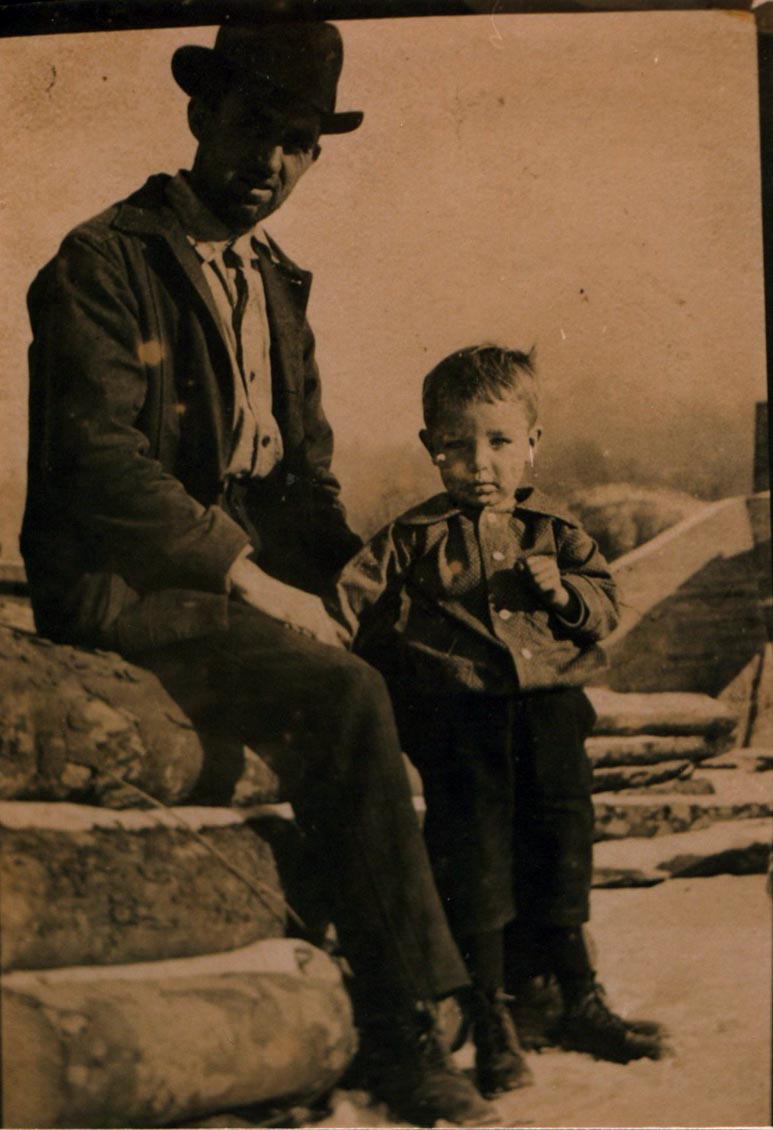
Deputy Sheriff Ward Brumfield with nephew Clyde Holton, taken in Harts, West Virginia, 1915-1920

Deputy Sheriff Ward Brumfield with nephew Clyde Holton, taken in Harts, West Virginia, 1918-1920

What Happened to John Fleming?

20 Friday Sep 2013

Posted by Brandon Ray Kirk in Fourteen

≈ Leave a comment

Tags

Appalachia, culture, Fourteen Mile Creek, genealogy, history, John Henan Fry, life, Lincoln County, photos, U.S. South, West Virginia

JohnHFry

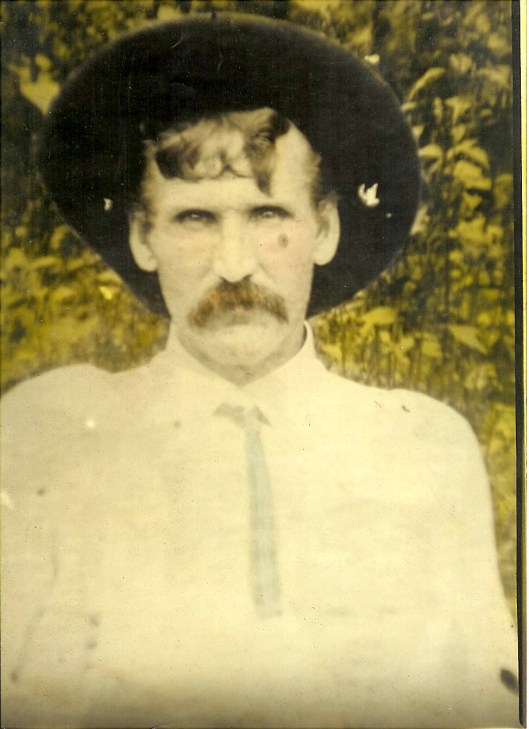
John Henan Fry

In Search of Ed Haley 171

18 Wednesday Sep 2013

Posted by Brandon Ray Kirk in Ed Haley

≈ Leave a comment

Tags

Appalachia, Ashland, blind, Ed Haley, Ella Haley, genealogy, history, Kentucky, Lawrence Haley, life, Mona Haley, Pat Haley, writing

“So when Larry and I got there, my mother-in-law, she was the one opened the door. I fell in love with her right away. And I didn’t see Ed until the next day. He was in bed and he was also hard-of-hearing and he didn’t hear us come in. Mom led us inside and, of course, Jack’s wife Patsy had the house very clean.”

One of the first things they did after arriving was eat a meal.

“Mom asked Lawrence, she said, ‘’awrencey boy, are you hungry?’ He said, ‘We’re starving, Mom.’ Well, Mom called upstairs and told Pat and Jack that we was here and they came down and Mom told Patsy we were hungry and Pat said, ‘Well, we don’t have much ready to eat. Would you like sausage and eggs?’ Well, I thought that was fine. But when these little patties came up… There was an oilcloth on the table — everything was clean and nice but the silverware was in a Mason jar in the middle of the table. I was just amazed that nobody set the table like I had been used to. I’d never seen sausage fried black. After dinner, they told us they had the bedroom upstairs fixed up for us. My mother-in-law had bought a new bedspread and new doilies for the dresser and Patsy had bought a lamp and some doilies and a picture for the wall. She’d really tried to fix up the room and make it nice for us. Mom had bought a very nice wardrobe and a dresser. The bed was Mom’s. The other furniture had belonged to Patsy and Jack.”

The next morning, Pat first met Ed.

“He came into the dining room and I was in the dining room, me and Larry. Larry just said, ‘Pop, this is Patricia.’ He just, you know, said, ‘Howdy do.’ And I went up to him to shake his hand. Larry had told me that I would have to go to him. If you looked at Ed Haley, it looked as though he was looking right at you. When I got up to him, Larry put his hand on my head and told him I was as short as Mom. Larry had told me that Pop would put his hands on me and check my head and face and my arms to see what kind of woman I was. He took his fingers — that’s the way he checked your features. And he could tell how you was built. Then he patted me on the shoulder to see what sort of made woman I was. But he had the smoothest hands. They were not a bit rough. Larry took Pop’s hand and put it on my belly and said, ‘See here, Pop.'”

Pat said she met Mona later that day.

“Mona came over the next day after I got here — her and her husband and her mother-in-law and her sister-in-law. Sometime after that, Mona came over and was playing a mandolin and her and Mom was playing. Mom played me some English tunes. And I don’t know how come they played but they got Pop to play a tune or two and he wouldn’t play much because he had whittled on his fingers and made them raw. He always loved my salmon. Course he called them salmon cakes. I call them croquettes.”

Leet, West Virginia

18 Wednesday Sep 2013

Posted by Brandon Ray Kirk in Big Ugly Creek, Timber

≈ Leave a comment

Tags

Appalachia, Big Ugly Creek, culture, genealogy, history, Leet, life, Lincoln County, photos, timbering, West Virginia

Leet, West Virginia, 1905-1920

Leet, West Virginia, 1905-1920

In Search of Ed Haley 165

05 Thursday Sep 2013

Posted by Brandon Ray Kirk in Ed Haley

≈ Leave a comment

Tags

Allie Trumbo, Ella Haley, genealogy, history, Kentucky, Kentucky School for the Blind, life, Lula Lee, Luther Trumbo, Morehead, S.H. Childers, U.S. South, writing

When I got back in Nashville, I arranged all of Ella’s postcards into chronological order in the hopes of discovering some new revelation. Most of the cards were dated between 1908-1918, the years immediately prior to her marriage to Ed. Individually they carried only short messages from family and friends, but together they formed an interesting story line detailing events from Ella’s “single years.”

Ella was at the Kentucky School for the Blind in Louisville throughout the first part of 1908. She returned home to Morehead during her summer break, where friends wrote her fondly from Louisville, Nashville, Richmond, and Paducah. There was one card from “Bridget” – probably the same one that Lawrence remembered his mother visiting in Mt. Healthy, Ohio.

“Suppose you think I have forgotten you but think of you every day,” the card read. “Company season has started in and we are having plenty of visitors. Wish you were one. Your cousin Lula is expecting to go West for her health. She was much grieved to hear of the death of Aunt Henrette. Answer soon with love.”

In June of 1909, Ella received a card from “Loula Lee” in Denison, Texas. This was no doubt the same Lula Lee who Lawrence Haley had remembered playing music on the streets of Ashland at the same time as his parents, likely the same person as “cousin Lula” referenced in other cards.

“Hello Ella how are you,” Loula wrote. “all wright I hope. Got out here all right and I like Very Well. It is hot as Summer out here.”

There was also a card from Nellie Motts in South Portsmouth, Ohio.

“I rec’d your card a few days ago and was very glad to hear from you. I am having a delightful vacation. How did you enjoy the Fourth?”

Then this from “Mabel” in Mississippi: “I am away down in the Sunny South. Awful warm weather. I will be glad to get back to Kentucky.”

Ella was back in Louisville that fall where her brother Allie Trumbo sent several cards to her.

“Luther is at home now,” one read. “Please write within 23 hours this time.”

Luther was Ella’s other brother and a future soldier in World War I.

“Hello Allie,” she responded. “It seems as though you keep the road hot sending cards. Now I have written within 23 hours. What more do you bid me to do? The girls are waiting on you.”

Allie wrote back: “how is everything. We had a little rain last week. Please write within 22 hrs. I just got your letter out of the office and will write to you soon.”

“Thank you for the pretty card,” someone wrote from Providence, Rhode Island. “Am glad you are having a pleasant year. Be sure and do good work.”

More from Allie: “I couldn’t make out all of your card but I enjoy it very much. I will send you some cards of our town which will show the bridge and george’s house and part of grandmaw’s.”

“how are you?” one from someone named Cora in Morehead read. “We have biscuits this morning for breakfast and I am going to have fried potatoes for dinner and when I got your card last night we had beef steak.”

“You have been sending me the ugliest cards you can find,” Allie writes. “Try and do better. The creek was Higher than it ever was before Tuesday night.”

In November 1909, there was a “Forget-Me-Not” card from S.H. Childers postmarked in Hellier, Kentucky.

“I do insist on you sending me one of those pictures,” Childers wrote. “Never mind what it looks like.”

There were more from Childers, often signed, “Your lonely friend,” with passages reading, “I am not quite well now. Haven’t don any thing for two weeks. They tell me I am love sick but I don’t think that’s it.”

Bridget sent a Christmas card, signing her last name as Welsh, while another friend, “Flossie,” wrote a few months later.

“You may think I have forgotten you but indeed I have not,” she wrote. “Hope you are having a good time playing in the snow.”

In May 1910, Allie wrote from Portsmouth, Ohio.

“I came from Ashland on this Boat. We got here all O.K. and have got a job. Go to work Tuesday. I like to stay here.”

For the next several weeks, Ella received mail at 115 Woodland Avenue in Lexington, Kentucky. By June of 1910, she was back in Morehead. A card was sent there to “Miss Bridget Welsh & Miss Ella Trumbo” from Miss Henderson in Little Rock, Arkansas.

In July, there was another card reading, “Know you and Bridget are enjoying each others company.”

Late in August 1910 there was a card from “Aunt Anna” to Ella and Bridget: “arrived here all right. Am well and having a fine time. hope you are both enjoying good health.”

On September 7, “Oma” wrote: “Received your pretty card. I guess you will sure hate to see Bridget leave.”

Later in September was a card sent “With Fond Love” and stamped with a fanciful signature from S.H. Childress at the Sunset Ranch in Rhine, Washington.

“I have at last made up my mind to vacate Ky. and have done so. Will write you all a bout my future home when I get my slate.”

It seemed clear that this “S.H. Childress” was the same “S.H. Childers” who’d written Ella the previous fall. He wrote again in December.

“I believe is your first Xmas at home and I trust it will be the happiest you have ever spent.”

In Search of Ed Haley 164

04 Wednesday Sep 2013

Posted by Brandon Ray Kirk in Ed Haley

≈ 1 Comment

Tags

Ashland, fiddling, genealogy, Jack Haley, John Hartford, Kentucky, Lawrence Haley, Morehead, music, Pat Haley, Patsy Haley, Ralph Haley, Scott Haley

A few days later, I was in Ashland at Pat Haley’s house, where the Haley clan had gathered in for Lawrence’s funeral. All of Lawrence’s kids were there, of course (Beverly, Steve and David), as was Clyde and Mona. I also spotted Noah, who introduced me to his son, James Edward Haley (Ed’s namesake). Pat made a point to introduce me to Patsy Haley and her son Scott, who were in from Cleveland. A little later, I played Ed’s fiddle for Lawrence’s service and it sounded so good that I seriously considered making it my main fiddle on stage. I quickly slipped into “the zone” and it was the first time I seemed to experience (as crazy as it may seem) the sensation of Ed and Lawrence both whispering in my ear, guiding me along, looking over my shoulder, and saying things like, “Easy now, don’t play so many notes.” “Yeah, try that and see if it works.” “You’re getting too far away from the melody.”

After the funeral, I returned to Pat’s and played for the family in the kitchen. I wasn’t really sure what to expect. I mean, with Lawrence gone it would have been really easy for the Haleys to say, “Thanks for showing an interest in Pop, now see ya later,” but instead they took me into their fold — with Pat leading the way.

There were a few new stories. For instance, Patsy’s son Scott Haley told me about “catching” his father Jack in private moments playing a fiddle right along with Ed’s records. I was excited to hear that and could easily imagine that Jack was the child who had inherited Ed’s talent for the fiddle. But when I asked Pat and Steve about it they gave Scott’s claim little credence. They said Jack might have tried to play with the records but he couldn’t really play anything. They fancied Scott’s memory to be a lot like the one they had of Lawrence, who occasionally strung up Ed’s fiddle (backwards because he was left-handed) and attempted to play along with the records. I never forgot the possibility, though, that Jack Haley could play the fiddle, which seemed to irritate Pat.

Before I left Ashland, Pat gave me Ed’s records. She said she wanted me to keep them because I would “know what to do with them.”

“I have a real love-hate relationship with those records,” Steve said jokingly. “When we were kids we had to tip-toe through the house to keep from scratching them.”

Pat also loaned me Ella’s postcards and explained why Lawrence hadn’t wanted me to see them on my first visit roughly four years earlier. Apparently, they alluded to the fact that Ella had conceived Ralph not by a previous marriage — but out of wedlock. Pat said Ella was boarding with a Mr. Payne and giving piano lessons to his five-year-old daughter in Farmers, Kentucky, when she became pregnant. Mr. Payne promptly returned her to her family in nearby Morehead.

In Search of Ed Haley

23 Friday Aug 2013

Posted by Brandon Ray Kirk in Ed Haley

≈ Leave a comment

Tags

Appalachia, Ashland, genealogy, history, Kentucky, life, Mona Haley, photos

Mona Haley, 1945

Mona Haley, 1945

In Search of Ed Haley

16 Tuesday Jul 2013

Posted by Brandon Ray Kirk in Ed Haley

≈ Leave a comment

Tags

blind, Ella Haley, genealogy, Lawrence Haley, photos

Ella Haley with Lawrence Haley, 1950s

Ella Haley with Lawrence Haley, 1950s

In Search of Ed Haley 141

08 Monday Jul 2013

Posted by Brandon Ray Kirk in Ed Haley

≈ Leave a comment

Tags

Allie Trumbo, Ella Haley, genealogy, Kentucky, Kentucky School for the Blind, Laura Belle Whitt, Luther Trumbo, Morehead, Texas Anna Trumbo, Thomas Trumbo, Vansant-Kitchen Company, William Trumbo, writing

Ella Trumbo — Ed Haley’s future wife — was born in February of 1888, roughly a year after the feud’s conclusion. She was born with “runny eyes” but went blind after a doctor prescribed “bad medicine.” When the drops were put into Ella’s eyes, the family ignored her crying because they thought she was acting out with what Pat Haley called “the Trumbo temper.” Thereafter, she fell on two separate occasions, losing an eye each time. Mona said her eyes actually “burst one at a time,” leaving her face with empty sockets. Ella told Mona that all she remembered seeing was “the light of day.” Supposedly, Jesse James once stopped at her father’s vegetable stand in Morehead and gave her money because she was a little blind girl.

Some time between 1893 and 1899, Laura Belle Trumbo died, leaving a great void in Ella’s life. The situation was complicated when her father remarried to a woman named Nannie around 1899. Nannie, or Nan, as she was called, was born in April of 1878 — making her barely older than William’s oldest child, Zora. Ella did not like her stepmother, Pat said, because she was really close to her father. She found comfort among her friends at the Kentucky School for the Blind, which she attended from the age of about four years until she was nineteen or twenty years old.

In 1900, the Trumbos were listed as renters in the 1900 Rowan County Census (Morehead Precinct): William was a thirty-eight-year-old farmer, Nannie was twenty-two, Zora was twenty-one, Texas Anna was fifteen, Ella was twelve, Allie was nine and Luther was several months old. Zora worked as a day laborer, while Texas Anna and Ella attended school. All could read and write except the youngest two children.

Thomas Trumbo — Ella’s grandfather — died in October of 1909 and was buried on Triplett Creek.

“Thomas Trumbo was buried on a point overlooking his property, a place he had chosen because it was where the morning light first struck,” according to one local history.

A year later, in 1910, William Trumbo was listed in the Rowan County census (Morehead Precinct #1). William was a fifty-eight-year-old farmer, Nannie was thirty-two years old, Ella was a twenty-one-year-old blind music teacher, Allie W. was an 18-year-old working at odd jobs, and Luther was sixteen years old. William’s mother, Celia, was listed in the home as seventy-two years old, with five of her seven children alive. Willie A. Campbell, a forty-six year old widow, was listed in the home as a ward. All could read and write. Celia died four years later on January 13 or 14, 1914 and was buried beside of her husband on Triplett Creek.

By 1920, William had left Morehead and settled at Clyffeside Park in Ashland, where he was listed in a city directory as an employee of the Vansant-Kitchen Company. “In the timber-boom era of the 1880s to the early 1900s, Ashland and the immediate vicinity had several saw mills, among them the famous Vansant-Kitchen Mill,” wrote one early history. “Located at Keyes Creek, this mill depended principally on the river for bringing the timber from the forests to Ashland. It made use in the early days also of the splash-dam system of floating logs down Keyes Creek, but as the timber in that area became harder to reach, the system no longer worked well and a narrow-gauge railway was built up the creek to haul the timber from the jobs far up the hollows.”

Following William’s death, Nan remarried to a Brewer.

In Search of Ed Haley 140

06 Saturday Jul 2013

Posted by Brandon Ray Kirk in Ed Haley

≈ 7 Comments

Tags

Days of Darkness, Ella Haley, genealogy, history, Jean Thomas, John Martin, Kentucky, Laura Belle Whitt, Lincoln County Crew, Martin-Tolliver Feud, Morehead, William Trumbo, writing

William M. Trumbo — Ella Haley’s father — was born in October of 1861 to Thomas Isaac and Celia Ann (Oxley) Trumbo of Morehead, Kentucky. Thomas Isaac was a son of John L. and Sarah (Manley) Trumbo of Bath or Fleming County, Kentucky, while Celia Ann was the daughter of Prior and Isabel (Neal) Oxley. She was born in Kentucky or Ohio or Indiana (it varies in each census record). Thomas and Celia lived in Morehead across Triplett Creek from Dr. Raine’s Cottage Hotel. In 1870, Thomas was listed in the Rowan County Census as the county jailor. There were six children living in his home, aged newborn to 13 years, including son, William, who was 11. Daughter Lucy was living at Pine Grove with her new husband, John Martin — later a key participant in the Martin-Tolliver feud. The Thomas Trumbo home survived until at least 1984, according to one local history. (“The Thomas Isaac Trumbo House stands across Triplett Creek from the Raine Hotel. Dr. Raine’s Cottage Hotel was the site of many feud incidents.”)

William Trumbo married Laura Belle Whitt around 1878. They were the parents of five children: Zora Trumbo, born March 1879; Texas Anna Trumbo, born January 1885; Martha Ella, born February 1888; Allie W. Trumbo, born May 1891; and Luther Trumbo, born March 1893.

The Trumbos made their home in Morehead, where William was listed in the 1880 census as twenty-one years old. In 1884, Laura Belle Trumbo — William’s wife (who became pregnant in the spring of that year) — inadvertently played a key role in initiating the Martin-Tolliver Feud while at a pre-election dance in Morehead.

“During the evening Mrs. William Trumbo got tired, excused herself, and went upstairs to what she thought was her room,” writes John Edd Pearce in Days of Darkness: The Feuds of Eastern Kentucky (1994). “It was not. By mistake she got into the room of H.G. Price, a wealthy timber dealer and owner of the steamboat Gerty. When Price returned to his room, he was pleased to find on his bed what seemed to be a bonus, and he attempted to make the most of the situation. Mrs. Trumbo screamed, fled, and told her husband of her horrible experience.”

Unfortunately for Price, Mrs. Trumbo was related by marriage to the Logan and Martin families, both of whom made dangerous enemies.

“On election day Trumbo sought out Price and demanded that he apologize publicly to his wife,” writes Pearce. “Price replied — not dishonestly — that he had done nothing wrong, had found Mrs. Trumbo on his bed, and had done what any man would have done under the circumstances. A fight broke out. Friends of the men joined in, to the cheers of drunken onlookers.”

John Martin, a brother-in-law to Mrs. Trumbo, jumped in on the Trumbo side and soon got into a shooting scrape with Floyd Tolliver — which effectively ended the brawl. But tensions remained throughout the fall.

“It was a bleak day in December, 1884, following the August election in Rowan County when John Martin and his wife Lucy Trumbo and two of their small children climbed into their jolt wagon out on Christy Creek and rode into town,” writes Jean Thomas in Blue Ridge Country (1942). In no time at all, Martin bumped into Tolliver, who he shot dead before turning himself in to authorities. Not long thereafter, a mob of men shot Martin to death on a train at Farmers, a settlement about five miles from Morehead.

“When the train bearing John Martin’s bullet-torn body reached Morehead, he was carried, still breathing, into the old Central Hotel where he died that night,” writes Thomas. “In the meantime his distracted wife had sent for their children and her mother who was staying with the family on the farm on Christy Creek. An old darky who had long lived at the county seat mounted his half-blind mule and rode out along the lonely creek that cold winter night to carry the sad tidings to the Martin household. He also rode ahead of them on the journey back with the corpse of John Martin later that same night.”

Along the way, Granny Trumbo — Ella’s grandmother — warned the children gathered in the back of the wagon, “Hush! No telling who’s hid in the brush to kill us.” Years later, the children remembered how she sat “bravely erect on the board seat of the wagon beside her widowed daughter, gripped the reins and urged the weary team onward along the frozen road, keeping close behind the silent horseman ahead.”

It was the first violent acts in a three-year row that would claim twenty lives, almost destroy a town and inspire the song, “The Rowan County Crew”, supposedly written by Blind Bill Day. Ironically, this tune had the same melody and lyrical rhythms as “The Lincoln County Crew”, a song partly composed about the murder of Ed Haley’s father.

In Search of Ed Haley

30 Sunday Jun 2013

Posted by Brandon Ray Kirk in Ed Haley

≈ Leave a comment

Tags

Ashland, genealogy, Kentucky, Lawrence Haley, life, photos

Lawrence Haley, asleep after work, 1950s

Lawrence Haley, asleep after work, 1950s

← Older posts
Newer posts →

Feud Poll 1

If you had lived in the Harts Creek community during the 1880s, to which faction of feudists might you have given your loyalty?

Categories

  • Adkins Mill
  • African American History
  • American Revolutionary War
  • Ashland
  • Atenville
  • Banco
  • Barboursville
  • Battle of Blair Mountain
  • Beech Creek
  • Big Creek
  • Big Harts Creek
  • Big Sandy Valley
  • Big Ugly Creek
  • Boone County
  • Breeden
  • Calhoun County
  • Cemeteries
  • Chapmanville
  • Civil War
  • Clay County
  • Clothier
  • Coal
  • Cove Gap
  • Crawley Creek
  • Culture of Honor
  • Dingess
  • Dollie
  • Dunlow
  • East Lynn
  • Ed Haley
  • Eden Park
  • Enslow
  • Estep
  • Ethel
  • Ferrellsburg
  • Fourteen
  • French-Eversole Feud
  • Gilbert
  • Giles County
  • Gill
  • Green Shoal
  • Guyandotte River
  • Halcyon
  • Hamlin
  • Harts
  • Hatfield-McCoy Feud
  • Holden
  • Hungarian-American History
  • Huntington
  • Inez
  • Irish-Americans
  • Italian American History
  • Jamboree
  • Jewish History
  • John Hartford
  • Kermit
  • Kiahsville
  • Kitchen
  • Leet
  • Lincoln County Feud
  • Little Harts Creek
  • Logan
  • Man
  • Matewan
  • Meador
  • Midkiff
  • Monroe County
  • Montgomery County
  • Music
  • Native American History
  • Peach Creek
  • Pearl Adkins Diary
  • Pecks Mill
  • Peter Creek
  • Pikeville
  • Pilgrim
  • Poetry
  • Queens Ridge
  • Ranger
  • Rector
  • Roane County
  • Rowan County Feud
  • Salt Rock
  • Sand Creek
  • Shively
  • Spears
  • Sports
  • Spottswood
  • Spurlockville
  • Stiltner
  • Stone Branch
  • Tazewell County
  • Timber
  • Tom Dula
  • Toney
  • Turner-Howard Feud
  • Twelve Pole Creek
  • Uncategorized
  • Warren
  • Wayne
  • West Hamlin
  • Wewanta
  • Wharncliffe
  • Whirlwind
  • Williamson
  • Women's History
  • World War I
  • Wyoming County
  • Yantus

Feud Poll 2

Do you think Milt Haley and Green McCoy committed the ambush on Al and Hollene Brumfield in 1889?

Blogroll

  • Ancestry.com
  • Ashland (KY) Daily Independent News Article
  • Author FB page
  • Beckley (WV) Register-Herald News Article
  • Big Sandy News (KY) News Article
  • Blood in West Virginia FB
  • Blood in West Virginia order
  • Chapters TV Program
  • Facebook
  • Ghosts of Guyan
  • Herald-Dispatch News Article 1
  • Herald-Dispatch News Article 2
  • In Search of Ed Haley
  • Instagram
  • Lincoln (WV) Journal News Article
  • Lincoln (WV) Journal Thumbs Up
  • Lincoln County
  • Lincoln County Feud
  • Lincoln County Feud Lecture
  • LinkedIn
  • Logan (WV) Banner News Article
  • Lunch With Books
  • Our Overmountain Men: The Revolutionary War in Western Virginia (1775-1783)
  • Pinterest
  • Scarborough Society's Art and Lecture Series
  • Smithsonian Article
  • Spirit of Jefferson News Article
  • The Friendly Neighbor Radio Show 1
  • The Friendly Neighbor Radio Show 2
  • The Friendly Neighbor Radio Show 3
  • The Friendly Neighbor Radio Show 4
  • The New Yorker
  • The State Journal's 55 Good Things About WV
  • tumblr.
  • Twitter
  • Website
  • Weirton (WV) Daily Times Article
  • Wheeling (WV) Intelligencer News Article 1
  • Wheeling (WV) Intelligencer News Article 2
  • WOWK TV
  • Writers Can Read Open Mic Night

Feud Poll 3

Who do you think organized the ambush of Al and Hollene Brumfield in 1889?

Recent Posts

  • Logan County Jail in Logan, WV
  • Absentee Landowners of Magnolia District (1890, 1892, 1894)
  • Charles Spurlock Survey at Fourteen Mile Creek, Lincoln County, WV (1815)

Ed Haley Poll 1

What do you think caused Ed Haley to lose his sight when he was three years old?

Top Posts & Pages

  • Baisden Family Troubles
  • Jeff and Harriet Baisden
  • Stephen Hart: Origins of Harts Creek (1896/1937)
  • Early Coal Mines in Logan County, WV
  • Jeff Baisden

Copyright

© Brandon Ray Kirk and brandonraykirk.wordpress.com, 1987-2023. Unauthorized use and/or duplication of this material without express and written permission from this blog’s author and/or owner is strictly prohibited. Excerpts and links may be used, provided that full and clear credit is given to Brandon Ray Kirk and brandonraykirk.wordpress.com with appropriate and specific direction to the original content.

Archives

  • February 2025
  • January 2025
  • October 2023
  • September 2023
  • December 2022
  • November 2022
  • May 2022
  • April 2022
  • February 2022
  • November 2021
  • October 2021
  • September 2021
  • June 2021
  • May 2021
  • April 2021
  • March 2021
  • February 2021
  • January 2021
  • December 2020
  • November 2020
  • October 2020
  • July 2020
  • June 2020
  • May 2020
  • April 2020
  • March 2020
  • February 2020
  • January 2020
  • December 2019
  • November 2019
  • October 2019
  • September 2019
  • August 2019
  • July 2019
  • June 2019
  • May 2019
  • April 2019
  • March 2019
  • February 2019
  • January 2019
  • December 2018
  • November 2018
  • October 2018
  • September 2018
  • August 2018
  • July 2018
  • June 2018
  • May 2018
  • April 2018
  • March 2018
  • February 2018
  • January 2018
  • December 2017
  • November 2017
  • October 2017
  • September 2017
  • August 2017
  • July 2017
  • June 2017
  • May 2017
  • April 2017
  • March 2017
  • February 2017
  • January 2017
  • December 2016
  • November 2016
  • October 2016
  • September 2016
  • August 2016
  • July 2016
  • June 2016
  • May 2016
  • April 2016
  • March 2016
  • February 2016
  • January 2016
  • December 2015
  • November 2015
  • October 2015
  • September 2015
  • August 2015
  • July 2015
  • June 2015
  • May 2015
  • April 2015
  • March 2015
  • February 2015
  • January 2015
  • December 2014
  • October 2014
  • September 2014
  • August 2014
  • July 2014
  • June 2014
  • May 2014
  • April 2014
  • March 2014
  • February 2014
  • January 2014
  • December 2013
  • November 2013
  • October 2013
  • September 2013
  • August 2013
  • July 2013
  • June 2013
  • May 2013
  • April 2013
  • March 2013
  • February 2013
  • January 2013
  • December 2012
  • November 2012

Enter your email address to follow this blog and receive notifications of new posts by email.

Join 2,927 other subscribers

Tags

Appalachia Ashland Big Creek Big Ugly Creek Blood in West Virginia Brandon Kirk Cabell County cemeteries Chapmanville Charleston civil war coal Confederate Army crime culture Ed Haley Ella Haley Ferrellsburg feud fiddler fiddling genealogy Green McCoy Guyandotte River Harts Harts Creek Hatfield-McCoy Feud history Huntington John Hartford Kentucky Lawrence Haley life Lincoln County Lincoln County Feud Logan Logan Banner Logan County Milt Haley Mingo County music Ohio photos timbering U.S. South Virginia Wayne County West Virginia Whirlwind writing

Blogs I Follow

  • OtterTales
  • Our Appalachia: A Blog Created by Students of Brandon Kirk
  • Piedmont Trails
  • Truman Capote
  • Appalachian Diaspora

BLOOD IN WEST VIRGINIA is now available for order at Amazon!

Blog at WordPress.com.

OtterTales

Writings from my travels and experiences. High and fine literature is wine, and mine is only water; but everybody likes water. Mark Twain

Our Appalachia: A Blog Created by Students of Brandon Kirk

This site is dedicated to the collection, preservation, and promotion of history and culture in Appalachia.

Piedmont Trails

Genealogy and History in North Carolina and Beyond

Truman Capote

A site about one of the most beautiful, interesting, tallented, outrageous and colorful personalities of the 20th Century

Appalachian Diaspora

  • Subscribe Subscribed
    • Brandon Ray Kirk
    • Join 789 other subscribers
    • Already have a WordPress.com account? Log in now.
    • Brandon Ray Kirk
    • Subscribe Subscribed
    • Sign up
    • Log in
    • Report this content
    • View site in Reader
    • Manage subscriptions
    • Collapse this bar
 

Loading Comments...