Tags
bluegrass, country, culture, Cumberland River, fiddler, history, John Hartford, life, Madison, music, Nashville, photos, Tennessee

John Hartford’s front porch, Madison, TN.

22 Wednesday Jan 2014
Posted in John Hartford, Music
10 Friday Jan 2014
Posted in Ed Haley
Tags
Appalachia, banjo, Boone County, culture, fiddle, fiddler, fiddling, history, Johnny Hager, life, music, photos, U.S. South, West Virginia
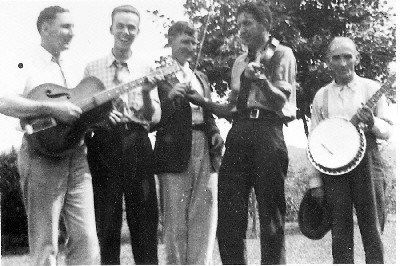
Johnny Hager on extreme right holding a banjo, Boone County, WV, 1950s.
27 Wednesday Nov 2013
Posted in Big Harts Creek, Chapmanville, Ed Haley, Harts, Music
Tags
Al Brumfield, Anthony Adams, Ashland, Bill's Branch, blind, Brandon Kirk, Cain Adkins, Cecil Brumfield, Chapmanville, Charley Davis, Cow Shed Inn, Crawley Creek, Dave Brumfield, Dick Thompson, Earl Brumfield, Ed Haley, Ellum's Inn, fiddler, fiddling, Fisher B. Adkins, Green McCoy, Harts Creek, Henderson Dingess, Hoover Fork, Hugh Dingess, John Brumfield, Kentucky, Lincoln County, Lincoln County Schools, Logan, Logan County, Milt Haley, music, Piney Fork, Smokehouse Fork, Trace Fork, Trace Mountain, West Fork, West Virginia, writing
A few days after visiting Earl Brumfield, Brandon dropped in on his good friends, Charley Davis and Dave Brumfield. Davis was an 88-year-old cousin to Bob and Bill Adkins. Brumfield was Davis’ son-in-law and neighbor. They lived just up Harts Creek near the high school and were familiar with Ed Haley and the story of his father, Milt. Charley said he once saw Ed in a fiddlers’ contest at the old Chapmanville High School around 1931-32. There were two other fiddlers in the contest — young men who were strangers to the area — but Ed easily won first place (a twenty-dollar gold piece). He was accompanied by his wife and a son, and there was a large crowd on hand.
Dave said Ed was mean as hell and laughed, as if it was just expected in those days. He said Ed spent most of his time drinking and playing music in all of the local dives. Sometimes, he would stop in and stay with his father, Cecil Brumfield, who lived in and later just down the road from the old Henderson Dingess place on Smoke House Fork. Dave remembered Ed playing at the Cow Shed Inn on Crawley Mountain, at Dick Thompson’s tavern on main Harts Creek and at Ellum’s Inn near Chapmanville. Supposedly, Ed wore a man out one time at a tavern on Trace Mountain.
Dave said he grew up hearing stories about Ed Haley from his mother’s people, the Adamses. Ed’s blindness was a source of fascination for locals. One time, he was sitting around with some cousins on Trace who were testing his ability to identify trees by their smell. They would put first one and then another type of limb under his nose. Dave said Ed identified oak and walnut. Then, one of his cousins stuck the hind-end of an old cat up under his nose. Ed smiled and said it was pussy willow.
Dave said he last saw Ed around 1945-46 when he came in to see his father, Cecil Brumfield. Ed had gotten drunk and broken his fiddle. Cecil loaned him his fiddle, which Ed never returned. Brumfield later learned that he had pawned it off in Logan for a few dollars to buy a train ticket to Ashland. Cecil bought his fiddle back from the shop and kept it for years.
Dave’s stories about Milt Haley were similar to what his Aunt Roxie Mullins had told me in 1991. Milt supposedly caused Ed’s blindness after getting angry and sticking him head-first into frozen water. Not long afterwards he and Green McCoy were hired by the Adamses to kill Al Brumfield over a timber dispute. After the assassination failed, the Brumfields captured Milt and Green in Kentucky. Charley said the two men were from Kentucky — “that’s why they went back there” to hide from the law after the botched ambush.
The vigilantes who captured Milt and Green planned to bring them back to Harts Creek by way of Trace Fork. But John Brumfield — Al’s brother and Dave’s grandfather — met them in the head of the branch and warned them to take another route because there was a rival mob waiting for them near the mouth of the hollow. Dave said it was later learned that Ben and Anthony Adams — two brothers who had ill feelings toward Al Brumfield — organized this mob.
The Brumfield gang, Dave and Charley agreed, quickly decided to avoid the Haley-McCoy rescue party. They crossed a mountain and came down Hoover Fork onto main Harts Creek, then went a short distance down the creek and turned up Buck Fork where they crossed the mountain to Henderson Dingess’ home on Smoke House Fork. From there, they went up Bill’s Branch, down Piney and over to Green Shoal, where Milt played “Brownlow’s Dream” — a tune Dave said (mistakenly) was the same as “Hell Up Coal Hollow”. Soon after, a mob beat Milt and Green to death and left them in the yard where chickens “picked at their brains.” After Milt and Green’s murder, Charley said locals were afraid to “give them land for their burial” because the Brumfields warned folks to leave their bodies alone.
Brandon asked about Cain Adkins, the father-in-law of Green McCoy. Charley said he had heard old-timers refer to the old “Cain Adkins place” on West Fork. In Charley’s time, it was known as the Fisher B. Adkins place. Fisher was a son-in-law to Hugh Dingess and one-time superintendent of Lincoln County Schools.
In the years following the Haley-McCoy murder, the Brumfields continued to rely on vigilante justice. Charley said they attempted to round up the Conleys after their murder of John Brumfield in 1900, but were unsuccessful.
24 Tuesday Sep 2013
Tags
Appalachia, Cabell County, culture, fiddler, Fred B. Lambert, history, life, Morris Wentz, photos, U.S. South, West Virginia
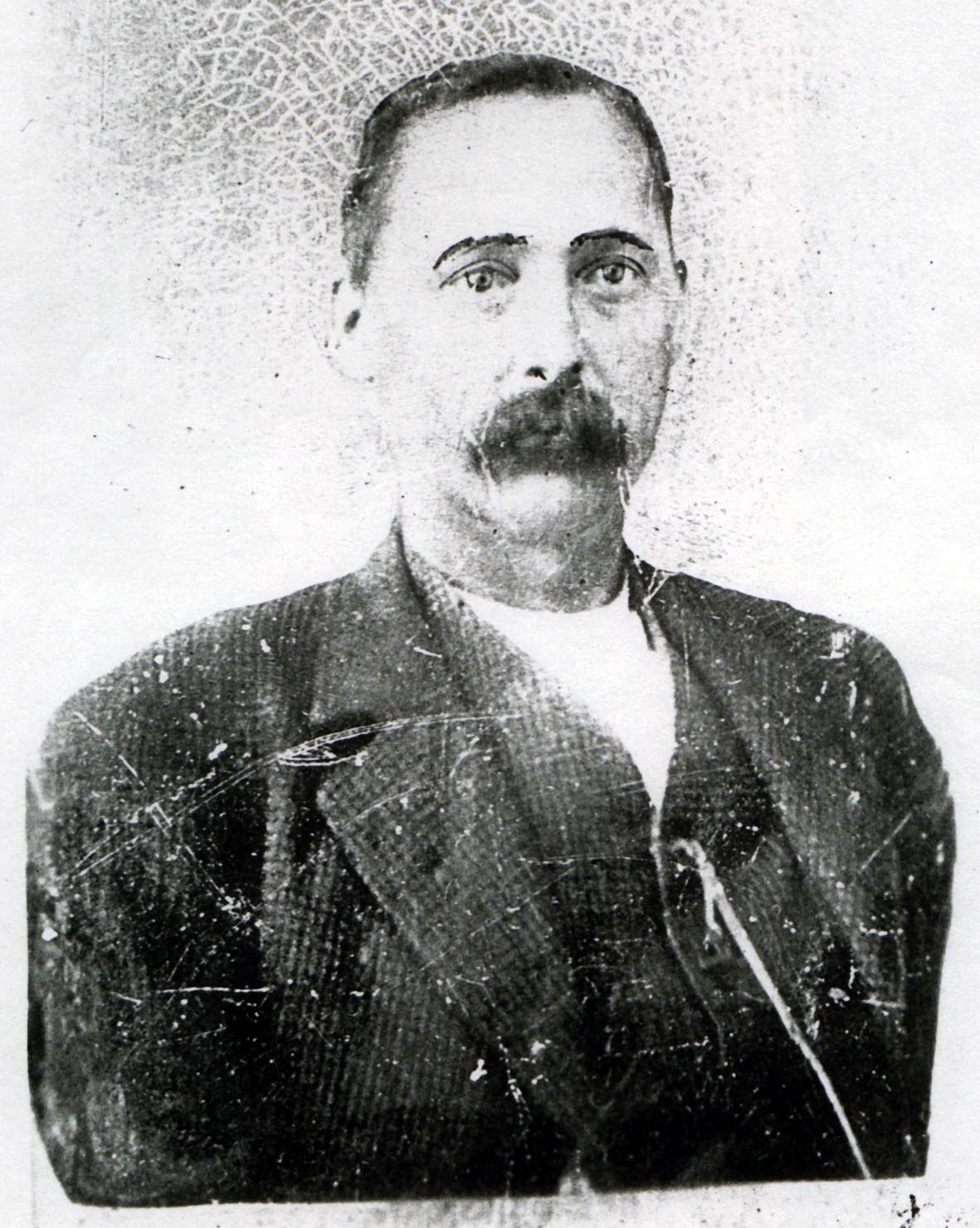
Morris Wentz, West Virginia fiddler
23 Monday Sep 2013
Posted in Music
Tags
Appalachia, Cabell County, fiddler, fiddling, Fred B. Lambert, Guyandotte River, history, J.T. "Pomp" Wentz, music, photos, steamboats, West Virginia

J.T. “Pomp” Wentz, riverboat captain in the Guyandotte Valley. From the Fred B. Lambert Papers, Special Collections Department, Morrow Library, Marshall University, Huntington, WV.
20 Friday Sep 2013
Tags
Anthony Riggs, Barboursville, fiddler, fiddling, Fred B. Lambert, George Stephens, Guyandotte River, history, Morton Milstead, music, Percival S. Drown, Samp Johnson, writing
The next morning, I went to see the Lambert Collection at the Morrow Library in Huntington, West Virginia. According to information at the library, the late Fred B. Lambert (1873-1967), a schoolteacher and administrator, had spent “at least sixty years of his life collecting information about West Virginia history” into a 500-notebook collection, mostly focusing on Cabell, Lincoln, Wayne, and Logan Counties. His notes on fiddling and old-time music were incredibly detailed. In some cases, he documented the first time a tune arrived in the Guyandotte Valley. Incredibly, none of his work was published outside of The Llorrac, an old high school yearbook from the 1920s.
As I flipped through his notebooks, it was difficult to keep my focus — there were stories about murders, genealogy, and life on the river. I took great interest in the stories about early fiddlers in the Guyan Valley. It helped put Ed — at least his early years — into a sort of regional context, the culmination of years of musical evolution. Any one of the mid-nineteenth century Guyan fiddlers may have actually known Ed Haley or, more likely, his father Milt.
In the 1830s and 1840s, according to Lambert’s research, George Stephens was a dominant fiddler in the Cabell County towns situated at or near the mouth of the Guyandotte River.
“George Stephens was a fiddler of wider reputation than most of those old time artists of the ‘fiddle and the bow,'” wrote one Percival S. Drown in a 1914 letter. “In his repertoire was ‘Bonaparte’s Retreat from Moscow,’ ‘Bonaparte Crossing the Rhine,’ ‘Cold, Frosty Morning,’ ‘Puncheon Floor,’ ‘Possum Creek,’ ‘Pop Goes the Weasel,’ ‘Pretty Betty Martin,’ ‘Carry Me Back to Old Virginia,’ ‘Hail Columbia,’ and ‘Star Spangled Banner.’ He had another tune and words ‘Big John, Little John, Big John Bailey.’ The tune Stephens seemed to throw himself away most on was the ‘Peach Tree.’ The meter and time governing this tune permitted its use and adaptation for dance music, and applying a long drawn bow with correct harmony and concord of sound, he carried the listener away in dreamy thought and recollection.
“When about midnight after the day of the ‘quilting,’ ‘Corn Husking,’ and ‘Log Rolling,’ when the ‘dance was on,’ Stephens, well-liquored up on Dexter Rectified, would have his face turned over his right shoulder apparently as much asleep as awake, but never missing a note of the ‘Peach Tree’, while the dancers would be ‘hoeing down’ for dear life. All at once he would order ‘Promenade to Seats’, cease playing, adjust himself in his seat and exclaim with energy ‘if I aint a lilter damme.’ Seemingly he was suddenly inspired with an exalter opinion of his greatness as a fiddler. As much as to say at the same time ‘and don’t you forget it.’ Then he might resen his bow and break out with a few stanzas of ‘Puncheon Floor’ or a tune he called ‘Soap Suds Over the Fence,’ to be followed by a slow tune so everyone could march to the supper table in the kitchen, across the yard (It was a common thing in those dear old times, for the kitchen to be detached from the ‘big house’).”
Samp Johnson was another top local fiddler, according to Percival Drown.
“‘Samp’ Johnson was the first fiddler I heard play ‘Arkansas Traveler’. One of his favorite places to play was at McKendree’s Tavern in Barboursville [on Main Street]. His favorite for playing was during Court days, when fiddler’s drinks were full and plentiful. The sun [was] full at 2 o’clock that day. Court day. The Town was full of visitors, chiefly ‘hayseed’, most of whom were fully equipped for home when they could tear themselves away from ‘Samp’ Johnson’s music. I well remember the day. McKendree’s second story porch was crowded with the audience. Roll Bias, who was a character in his day, lived far up Guyan River. He usually had business ‘at Court’. He was prosperous, in a way. I think he paid for all the drinks flowing from the attraction furnished by Johnson’s music in the street. While endowed with good common sense he could neither write his own or any other name. Poor ‘Samp’ Johnson came to his death at the Falls of Guyan when driving logs at high tide of the river, date not far from the time (1852) of my leaving the State.”
Another great fiddler in that era was Anthony Riggs.
“Anthony Riggs’ favorite tune that I more distinctly remember than others he played was called ‘Annie Hays,'” Drown wrote. “It was that fiddler’s favorite tune and one to suit the step and time for reels, and other ‘figures’ so called. Like all fiddlers of his class, he played ‘Nachez Under the Hill’, now known as ‘Turkey in the Straw.'”
Morton Milstead of Ohio “would come over to Cabell, stay around a few days, in the early 30s, I heard it said, and played the fiddle for drinks, mostly,” Drown wrote. “Milstead was rated as a high-class musician, as I recollect the talk of him. Never heard Milstead play but once, and I well remember now after a lapse of 65 or 70 years that his performance was much below that of George Stephens, Anthony Riggs, or ‘Samp’ Johnson, from my viewpoint at least.”
30 Friday Aug 2013
Posted in Calhoun County, Ed Haley, Music
Tags
Akron, Appalachia, Calhoun County, culture, fiddler, fiddlers, fiddling, history, Kerry Blech, life, music, Ohio, photos, Rector Hicks, U.S. South, West Virginia

Rector Hicks, fiddler from Calhoun County, West Virginia, c.1976. Photo courtesy of Kerry Blech
30 Friday Aug 2013
Posted in Ed Haley
Tags
Bob Hutchison, Braxton County, Ed Haley, fiddler, Harold Postalwait, history, Ohio, Ray Alden, Ron Chacey, Ugee Postalwait, Ward Jarvis, West Virginia, writing
By the mid-1990s, after several years of research, word had begun to leak out about my interest in Ed Haley. Around the first of 1995, Bluegrass Unlimited ran a story that prompted Bob Hutchison, a musician from Alledonia, Ohio, to write me.
“I played with an old fella down in Athens county (Ward Jarvis) who had played a lot and learned a lot from Ed Haley,” he wrote. “He played banjo with Ed and learned a lot of his tunes when he was a young man. He said Ed was the best he’d ever seen. Ward was in his 70’s when I got to know him and he was no slouch himself on the fiddle. He said Ed was big on different tunings on the fiddle. I learned the Icy Mountain tune from Ward that he had learned from Ed. Other tunes I remember him crediting Ed with were Camp Chase, Jimmy Johnson, Three forks of Reedy. Banjo Tramp was another of Ed’s. Ward has been dead for several years… Ward was originally from Braxton Co. W.Va.”
Ray Alden offered more information about Jarvis.
“In 1972 I went to Amesville, Ohio to visit instrument craftsman Ron Chacey,” he wrote. “Ron, on a very foggy night, brought me through some hilly back roads up to see Ward Jarvis, who had moved to the area in 1943 from Braxton County, West Virginia. Ward was 78 years old. I remember that special evening in which Ward played many unusual tunes, such as ‘Icy mountain,’ as well as a Kenny Baker Tune he had just learned from a record. It was lucky, since I didn’t have a tape recorder that evening, that Richard Carlin later went to tape Ward Jarvis [in 1976]. Old time musicians Dana Loomis and Grey Larson joined Richard and accompanied Ward at that session. Ward’s source for ‘Banjo Tramp’ was Ed Haley, who had a substantial influence over the Ohio River Valley Musicians in Ward’s younger days.”
Ray Alden’s statement about how Ed influenced a number of “Ohio River Valley Musicians” made me realize that thinking of him as a “Kentucky fiddler” or even a “West Virginia fiddler” was inaccurate. Early on, I’d dismissed the “Kentucky” label used on the Parkersburg Landing album, since he was born and raised in Logan County, West Virginia, and spent a great deal of time in central West Virginia, a hub for great musicians. Also, Lawrence Haley once said that he preferred to think of his father as a West Virginia fiddler because of how he was treated in Ashland. But I had to think, especially after reading Ray Alden’s statement, that it would be best to refer to Haley (in geographical terms) as a middle Ohio River Valley fiddler (or maybe even a Guyandotte-Big Sandy Valley musician) since his sphere of influence wasn’t limited to a single state.
Sometime in the middle of January 1995, I met Ugee Postalwait’s son at one of my shows in Birmingham, Alabama. It was my first encounter with Harold Postalwait, a rather robust man — clean-shaven with a beer gut and decked out in a snap-up shirt, cowboy hat and boots shined to perfection. He showed me Laury Hicks’ fiddle and some old family photographs.
19 Monday Aug 2013
Tags
Appalachia, Doc Holbrook, Ed Haley, fiddler, fiddling, history, John Hartford, Laury Hicks, music, West Virginia, Wilson Douglas, writing
I called Wilson Douglas a few weeks later, still blown away by Ed’s incredibly fast fiddling on the Holbrook recordings. I raved about it to Wilson — how it was like a “rush of music” — who showed no surprise that he fiddled with so much of what he called “drive.”
“Now, they’s another tune I thought about that Haley played, he called it ‘Dance Around Molly’,” he said. “My god, Haley could play that. It’s a real good tune. Got a lot of drive about it. ‘They’s so many tunes,’ Ed said, ‘a man can’t learn them all, but I guess he can keep trying.'”
I played Ed’s recording of “Fifteen Days in Georgia” for Wilson and asked him if he played that fast at Laury Hicks’ house.
“About the same, John,” he said. “He was a great hand to play a tune in whatever time it was pitched in. He didn’t overplay his notes. And he played the solid driving note. He didn’t skip over it like skipping over with a motor boat.”
Wilson said one of the tunes that Ed played at Laury Hicks’ grave was “Arkansas Traveler”.
13 Tuesday Aug 2013
Posted in Ed Haley
Tags
Appalachia, Edden Hammons, fiddler, history, life, music, photos, West Virginia

Edden Hammons (1875-1955), West Virginia fiddler
30 Sunday Jun 2013
Posted in Ed Haley
Tags
Appalachia, Ashland, Bonaparte's Retreat, Ed Haley, fiddler, history, John Hartford, Kentucky, Lawrence Haley, Lost Indian, music, Napoleon Bonaparte, writing
Later that evening, back in Ashland, Lawrence and I talked about Haley’s tunes. Ed told him all about “Bonaparte’s Retreat”.
“When the French first went in, they was pushing the Russians pretty hard,” Lawrence said. “The high string going in. The Russians were retreating. When they got to a certain point, the cannons started booming and the Russians started turning the tide on them. Part of the highs, I guess, was the French Napoleon troops coming out in a hurry and the Russians right behind them and then they’d be a spell of like an old dirge or something, like they was coming out defeated. They was slacking off on ’em and letting them retreat back out of there. They knew they wasn’t gonna make it on account of the weather. Just gonna let them freeze to death. Then they’d boom the cannon and push them a little bit faster. Then the dirge come up again. That’s the way Pop kinda explained it to me. He’d say, ‘Now you listen to these cannons boom. The Russians are getting ready to turn the tide on Napoleon’s troops’.”
Lawrence had no idea where Ed heard that story.
“Same way with ‘Lost Indian’,” he said. “It seemed like, the way he explained it, this old Indian would look at something and see a far off peak that he recognized and he’d be happy and hooping and hollering and trying to get over to it and then whenever he’d get over there he would find out it wasn’t the place he thought it was. And he’d sit down and kind of reminisce, I guess, and feel bad towards his self because he wasn’t where he thought he was at so he could get home. He’d stand up and look around again and maybe see another peak or familiar point as being close to his tribe and he’d go to it with a little bit of enthusiasm and glee because he thought he’s getting home and it’d turn out the same way. He wasn’t getting no where. He was still a ‘lost Indian’.”
29 Saturday Jun 2013
Posted in Ed Haley

Wilson Douglas, Kim Johnson, and John Hartford, 1994
29 Saturday Jun 2013
Posted in Ed Haley
Tags
Babe Hale, banjo, Charlotte Spaulding, Ed Haley, fiddler, Grace Marcum, John Hartford, Johnny Hager, Josie Cline, Milt Haley, Mont Spaulding, Tug River, writing
Charlotte Spaulding, Grace’s daughter, guided Lawrence, Pat, and I to see 81-year-old Babe Hale. I told him about my interest in Ed’s life and he started talking about his Aunt Josie. I showed him one picture of Ed and he said, “That looks just like her almost.” I pulled out Ed’s picture from Parkersburg Landing and he said, “Looks more like Uncle Mont.” I was pretty sure that there was some kind of family connection between Ed and Mont and Josie, especially when Babe said his brother George Hale had went by the nickname of “Milt.” Maybe Josie and Mont were somehow Milt Haley’s children by a previous marriage.
“Josie’s mom and dad are buried down here at Grey Eagle,” Babe said. “He was killed in a raft. You know, they used to take logs down the river. They’s big rafts, trees tied together. And he was killed that way. He was killed on a raft.”
Babe told me more about Josie Cline — some very peculiar details.
“Josie collected toll up there, and when I’d go across, I had to pay, too. It didn’t make any difference to her: she’s gonna get three cents some way or other. But she was really manly. She wore men’s shoes and everything.”
So she wore a long dress all the time?
“Oh yeah,” Babe said. “She was really an old-fashioned woman.”
Charlotte said, “She looked like a man, didn’t she, Babe?”
I asked Babe what tunes she and Mont played and he said, “Oh, God, ‘Sourwood Mountain’ and everything. No, they could really knock it off now, both of them.”
We went to Grace’s briefly before heading back to Ashland. I was under the impression that Grace might have confused Ed with Mont Spaulding, although she had claimed to know about Ed’s banjo-picking friend, Johnny Hager.
“Yeah, he played the banjo with her,” she had said. “He was a little man. He was with them. They was two or three people traveled with them.”
25 Tuesday Jun 2013
Posted in Ed Haley
17 Monday Jun 2013
Posted in Ed Haley
Tags
Appalachia, culture, Ed Haley, fiddler, French Carpenter, history, John Hartford, Kim Johnson, music, Steve Haley, West Virginia, Wilson Douglas, writing
That evening, we all gathered in Wilson’s kitchen and played music. It was clear in watching Wilson play that his style was different from Ed’s, but he knew all kinds of great tunes: “Abe’s Retreat”, “Coo Coo’s Nest”, “Fourteen Days in Georgia”, “Walkin’ in the Parlor”, “Boatin’ Up Sandy”, and “Brushy Run”. He had a real sense of humor. When I played “Stony Point”, he just kinda looked at me laughing, then said, “John, that ain’t ‘Stony Point’. Can I kid you a little? Now, Ed Haley wouldn’t like that.”
Every now and then, between tunes, Wilson told me more little things about Ed. He said Ed wouldn’t change his style for anyone and hated when someone asked him to play fast. He said Ed used to tell him to sometimes play it “lazy” and slow a piece down for different effects, such as at the end of “Birdie”. Wilson remembered that he played “Billy in the Lowground” with a double wind-up.
Wilson really bragged on Ed’s version of “Forked Deer”.
“Anybody that tried to play ‘Forked Deer’ with Ed Haley had to be crazy,” he said. “Oh god, he’d put that B-flat in there and he’d have a little grin on his face. He didn’t laugh very much. I’d watch that fiddle like a hawk. I’d watch them notes but god they were fast. And he;d play that ‘Sweet Sixteen’…”
Now, what was “Sweet Sixteen”?
“Well now, that’s got three titles,” Wilson said. “‘Too Young to Marry’, ‘Chinky Pin’, and all that. Ed said most people just smothered it to death on the bass, but he didn’t. Him and Clark Kessinger both played it about the same. Now John, he just used two notes on that bass.”
Wilson said Ed played “Callahan” in the key of A, then said, “And he played ‘Charleston Number One’ but he called it ‘Goin’ to Charleston’. I tell you where he got it from. He borrowed it from them old Possum Hunters in Nashville way back in ’37 and ’38.”
Wilson said Ed also got a lot of tunes from French Carpenter, the last of the old-time Carpenter fiddlers (and Wilson’s distant cousin) in central West Virginia. Ed used to spend a week or two at a time with French listening to him play cross-key tunes, like “Camp Chase”.
“There was one thing about Carpenter,” Wilson said. “Now Ed Haley was a better fiddler all around, but what Carpenter played he was good. He didn’t have no inferiority complex. He done a good job playing in front of Ed Haley. He’d say, ‘Well, now Ed, if you want to hear me, fine. I’ll give you what I’ve got.'”
I asked Wilson if Ed played “Shelvin’ Rock” and he said, “He liked it, but he never did play it. He liked to get French to play it. He’d sit, you know, and grin. He’d say, ‘By god, you got the bow, Carpenter, to play that tune.'”
Ed and French played “Devil in Georgia”, although Haley called it “Deer Walk”.
Over the next few hours, Wilson played me a lot of tunes, many of which he’d heard Ed play. The tunes had strange names, some familiar but most not: “Elzic’s Farewell”, “Little Rose”, “Mouth of Old Stinson”, “Old Aunt Jenny With Her Nightcap On”, “Run Here Granny”, and “What Are We Gonna Do With the Baby-O” (in the key of E).
There were other tunes that he only remembered Ed playing, like “Bostony”, “Brickyard Joe”, “Dusty Miller”, “Jimmy in the Swamp”, “Katy Hill”, “Lost Indian”, “Old Joe”, “Pumpkin Ridge”, “Snowbird on the Ashbank”, “Sweet Georgia Brown”, “Twinkle Twinkle Little Star”, and “Waynesboro Reel”.
Wilson thought Ed fiddled “Red-Haired Boy” in the key of A, “Mississippi Sawyer” in G, and “Coo Coo’s Nest” in A or G, and said he played “Running Up the Stairs” so well “it’d make a person cry.”
Wilson remembered that Ed had some strange titles for his tunes. He said he used to call some tune with a common name “Dance Around Molly”, then added, “And he played another tune, I never could get it in my mind. Ed called it ‘Raccoon in a Pine Top’. I’ll be danged if he wouldn’t break that bass out — it’d sound like ‘Over the Waves’ or something.”
Wilson said, “You know, John, if I had a lot of time, like a week, I could tell you a lot of things about Ed Haley. When you get old, all that stuff comes to you, then you forget it.”
Hoping to pull something from his memory, I played tunes I knew from long ago and asked, “Did Ed play anything like this?”
He came up with something almost every time.
Ed also played “Fine Times at Our House” but called it “George Booker”, which is interesting in that the old-time Texas fiddlers also call it that.
I told Wilson what Lawrence Haley had said about Ed loving Scott Joplin and ragtime. He thought for a moment, then said, “Well, he may’ve done it, but now, he stayed with hoedowns all the time I heard him. Course he’s afraid to play anything else: them old people didn’t know what that kind of music was.”
In other words, he played what they wanted to hear.
“Absolutely. And he made money by it. And he played straight. He didn’t fancy it up no way. He didn’t want you to change a tune one note. He wanted it like it was. He said, ‘Cut it off at the stump like it is.'”
I said, “He didn’t take tunes and add stuff to it?” and Wilson said, “If he thought it was appropriate he would. The man had enough skill, he could play anything he wanted to.”
Steve and I hung around with Wilson until late that night, talking more about Ed’s music and playing tunes. We eventually pried ourselves away and headed back to Lawrence’s in Ashland.
16 Sunday Jun 2013
Posted in Ed Haley
Tags
Calhoun County, fiddler, French Carpenter, Ivy Helmick, Jarvis Hicks, Jesse Hicks, John Hartford, John McCune, Laury Hicks, music, Tom Carpenter, Wilson Douglas, writing
About that time, we loaded up in my car and headed to the old Hicks homeplace in Calhoun County. On the way, we stopped at a plain brick building situated at the mouth of Stinson Creek. Wilson said it was the location of an old tavern called “Copperhead Junction” — one of the roughest places around in Ed’s time.
“I would’ve rather went to Vietnam than in there,” Wilson said.
Ugee Postalwait later told me that it was called the “Bloody Bucket” — a scene of excessive drinking, fighting, and shootings — and partly inspired a tune Ed played called “The Mouth of Stinson”.
“Tom Carpenter and French played that,” Wilson said. “John McCune was supposed to have composed it. They said John wouldn’t work a lick at nothing. All he ever did was fiddle. In the old days when they were logging that country they had a picnic at the mouth of Stinson. Old Harmon Carpenter was there that day. They had some musicians there. One of these fellows was a Hamrick and one was a Cheneth. They was loggers, lumberjacks, bull of the woods — strong men. They got to wrestling. I don’t know if they were drinking or not. They weighed over 200 pounds apiece. They wrestled three or four hours; finally they just quit. The next day this Cheneth got sick — evidently pulled something inside. That night he died. It was a sad time. That’s how the ‘Mouth of Stinson’ started.”
The Laury Hicks place was just a short distance away from Stinson. It was so overgrown and snaky-looking that we had to settle for just staring at it up the hill from the road. Just up through the weeds, we knew, was the family cemetery where Ed had played at Laury’s grave in the winter of 1937.
“Laury Hicks was a good rough fiddler,” Wilson said. “The first time Ed come over there nobody could take Hicks on the ‘Blackberry Blossom’ or the ‘Arkansas Traveler’. Ed said, ‘Wilson, I heard that feller fiddling when I come up the road. By God, I thought I was up against it. I thought I’d done come to the wrong place. But after he played them two tunes, I seen I was all right.'”
Hearing that was a little surprising based on what I’d heard from Ugee Postalwait about Ed and Laury playing tunes together almost note for note.
But Wilson was sure about it.
“John, it’d sound like shit. Now that’d be just like me playing against Ed Haley. That’d be the biggest joke in the world.”
From there, Wilson, Kim, Steve and I went to a nearby hollow and talked on the porch with ninety-six-year-old Ivy (Postalwait) Helmick, a tiny, skinny lady with silver hair and a black cat planted on her lap. Her daughter Maxine remembered Ed coming around and keeping everyone up playing music.
We drove on down the road and turned up Wilson’s Branch to visit Jesse Hicks, Laury’s daughter-in-law who lived in a nice wooden house. We sat with her on the porch for a few minutes before a man stopped and hollered at us from his car in the road. He said he was Jarvis Hicks, Jesse’s grandson, and it was clear that he was wondering who all the strangers were hanging out on his grandmother’s porch. We walked down and told him who we were and what we were doing and said he’d heard that Ed and his great-grandfather Hicks made a deal that whoever lived longer would sit on the other’s coffin and play the fiddle. Jarvis got out of his car at that point, mentioning something about having one of Ed’s records (a “great big record on fast speed”), which sounded suspiciously like Parkersburg Landing. Unfortunately, I never got to find out because he seemed unwilling to let us listen to it. After some small talk, he said he was in a hurry to “go eat an elk from Wyoming,” and raced away.
15 Saturday Jun 2013
Posted in Ed Haley
Tags
A.P. Carter, Appalachia, Arthur Smith, Chubby Wise, Earl Scruggs, Ed Haley, fiddler, Georgia Slim Rutland, history, John Hartford, music, Wilson Douglas, writing
Wilson’s memories seemed to be flowing, so I tried not to interrupt him with questions.
“You know, Ed would talk to me after he figured out I was gonna try to play the fiddle,” he said. “He’d say, ‘Now, play your fiddle with some soul about it. Don’t start these trembling notes. That’s for some violinist in Germany.’ And another thing he would do, you can’t fiddle with the other man’s tricks. There’d be some little old chicken fiddlers around and come over and play about like I do. They’d rear back. Ed would listen at it and never criticize them and then when he started to play he would drop them to the floor. The man would come down on the fingerboard, playing half way down on that neck. It was so clear I couldn’t get over it. But the bow was as smooth. It must have been an imported bow. That danged bow was six inches longer than any bow I ever saw. But I didn’t want to ask him about it. You couldn’t interrogate him no way. And don’t ask him to show you how to play a tune. He didn’t show nobody nothing.”
I asked Wilson if Ed ever heard Bill Monroe and he said, “He talked about all them guys. Now John don’t get me wrong. He said Monroe was a pretty good singer. He said pretty good. Well I’d say Monroe was a A-1 singer, but I wasn’t gonna disagree with Ed. He liked the Carter family. And he said, ‘That old A.P. Carter and Mother Maybelle and them they got the soul about it.’ And he said, ‘Wilson, you know I don’t trust none of them Nashville people. I don’t wanna get involved with them.’ He said, ‘They’ll knife you. They’ll play your tunes, then walk somewhere and make a lot of money out of it.'”
What about banjo-pickers, like Earl Scruggs?
“Oh, no. By god, you’d push the wrong button. He didn’t like Scruggs. No, he liked the clawhammer banjo. He said they could get in and they could get out where it belongs. But I didn’t say nothing. I claimed the Fifth Amendment. I liked both of them, but I wasn’t gonna tell him nothing. I learned Ed Haley. I knowed when to talk and when not to talk. Now he’d cuss you out, don’t you think he wouldn’t.”
Wilson said he only heard Ed compliment a few Nashville musicians over the years. He said Georgia Slim Rutland, who stayed a lot with him in Ashland during the winter of 1937-38, was great on “Southern tunes” and couldn’t be beaten on “Billy in the Lowground”. He felt that Arthur Smith was “hell on them Blues,” complemented his versions of “Bonaparte’s Retreat” and “Katy Hill”, and even played his “Blackberry Blossom”.
“And now he did say a little something about Chubby Wise,” Wilson said. “He liked a few of Wise’s tunes, but he didn’t go in excess about it. But now that was it. Them Possum Hunters and them Fruit Jar Drinkers, he couldn’t stand them.”
13 Thursday Jun 2013
Posted in Ed Haley
13 Thursday Jun 2013
Posted in Ed Haley
Tags
Bernard Postalwait, Calhoun County, Ed Haley, fiddler, history, Laury Hicks, Logan, music, Natchee the Indian, Roane County, West Virginia, Wilson Douglas, writing
Wilson said Ed hung out with his buddies for a month or so, then made plans to head back down to Ashland or to Logan County.
“About a week before he’d get ready to go to Logan, we’d say, ‘Now Ed, stay another week. They is some big farmers coming out of Roane County, and you can make a little money there’,” Wilson said. “And that Postalwait, a week or two before he knew about when Ed was gonna leave, he’d [give Ed] some homebrew — and ah God it’d knock your hat off. Bernard would say, ‘Now Ed, hang on a few days, now. We’ll help you get some more money.’ Aw, he’d cuss around, ‘Well, I’ll stay another week, and that’s it.’ When that homebrew’d work off, Postalwait would bring him just a little bit about noon that day before the session. By God, he’d just lick his lips, you know, and he’d say, ‘That’s fine,’ but he’d never let him get none before the session. Well he’d stay that week and we’d tell all the aristocrats that had money. Some of them old retired ladies, they liked to hear him and they would bring a little money.”
“Well, he’d leave over there maybe with sixty or seventy dollars,” Wilson said. “Then he’d head for Logan and the coalfields, and they would begin to make money, stay up there two or three weeks. Back to Ashland, and then in the fall, he’d come back to Calhoun County. Let everybody build up a little, you know? And if they was nobody down there to meet him, he’d catch that what we call the ‘mail hack’ — a man that carried the mail with a little buggy and a team of horses. Everybody hollered, ‘Well where’re you gonna be?’ ‘I’m over at Hicks’, boys!’ That danged house was full. The yard was full. Minnie Hicks’d have a big pot of beans and three gallon of coffee. And it was just about every night.”
Wilson had really specific memories of Ed playing at Laury Hicks’ house.
“He’d sit there in an old split-backed chair, by god, and never miss a note,” he said. “And his endurance never slowed up. He patted his feet a little bit, but not in excess. Any time Haley was just sitting around, his fingers constantly moved all the time just like he was playing the fiddle. And there was no fine tuners. The man didn’t have a chin rest — he didn’t have no use for a chin rest.”
What kind of strings did he use?
“John, in them days, there were no super sensitive strings,” Wilson said. “It was the old Bird, and the old Gibson, and them Black Diamonds. They cost twenty-five cents. And he played them strings and them white bone keys and that old fiddle. And I tried to remember what kind of fiddle he had but it didn’t matter much whether it was any good or not. He could make it play. Now John, another thing I want to mention to ya. Now, Ed Haley’s bridge was almost flat. He didn’t have much roll in his bridge.”
Wilson said Ed didn’t have a lot of rosin on his fiddle because he didn’t use much on his bow.
What was he like?
“You couldn’t punch the wrong button,” Wilson said. “He didn’t want you to ask him about any ‘Orange Blossom Special’ or ‘Boil the Cabbage Down’. You had to be real careful. We didn’t talk a lot, but he took a liking to me. I picked up enough nerve to ask him why he didn’t go onto WSM way back there in ’37 and ’38. ‘Well,’ he said,’‘I don’t like them people. I don’t trust them. And another thing, they’ve got no soul about their music.’ And if you mentioned Natchee the Indian, you punched the wrong button. Ah, there’s so much stuff about him — I don’t want to leave nothing out. I remember this one night in particular it was about 3:30 in the morning. Some lady come in there. She was about half-stooped on that homebrew. Said, ‘Ed, I wanna hear the ‘Old Spinning Wheel in the Parlor’.” He said, ‘Damn the ‘Old Spinning Wheel in the Parlor’. I’m tired. I’m quitting.’ That’s the way he was.”
13 Thursday Jun 2013
Posted in Ed Haley
Tags
culture, fiddler, history, John Hartford, life, music, photos, Steve Haley, Wilson Douglas

John Hartford, Wilson Douglas, Steve Haley, Clendenin, West Virginia, 1994
Writings from my travels and experiences. High and fine literature is wine, and mine is only water; but everybody likes water. Mark Twain
This site is dedicated to the collection, preservation, and promotion of history and culture in Appalachia.
Genealogy and History in North Carolina and Beyond
A site about one of the most beautiful, interesting, tallented, outrageous and colorful personalities of the 20th Century

 Brandon Ray Kirk