Tags
Appalachia, banjo, culture, fiddle, fiddler, history, life, music, photos, Telmage Godfrey, U.S. South, West Virginia, William Bertie Lester, Wyoming County

Telmage Godfrey and William Bertie Lester of Wyoming County, 1922
10 Sunday Mar 2013
Posted in Music
Tags
Appalachia, banjo, culture, fiddle, fiddler, history, life, music, photos, Telmage Godfrey, U.S. South, West Virginia, William Bertie Lester, Wyoming County
Telmage Godfrey and William Bertie Lester of Wyoming County, 1922
24 Sunday Feb 2013
Posted in Ed Haley
Tags
blind, Clyde Haley, Ed Haley, Ella Haley, fiddle, fiddler, Great Depression, Green McCoy, Harts Creek, history, Imogene Haley, Lawrence Haley, Milt Haley, Mona Haley, music, Noah Haley, Peter Mullins, writing
We all met up with Mona later in the day. She acted surprised that I was even interested in seeing her again, joking, “I’m good for something, aren’t I?” She was extremely talkative and almost immediately took over the conversation in a way that gave me the impression she really knew a great deal about Ed and Ella’s music. It was quite a different presentation than my first meeting with her.
“See my brothers don’t know about music like I know about music,” she said right away. “They know the tunes and they know the keys and stuff, but I don’t think they listened like I did. I paid attention to Pop’s music because I love music. I always loved music.”
She told Lawrence, “You don’t have the ear for it like I do.”
It was the first time I had heard someone be so candid with Lawrence. He seemed a little put off by it, muttering, “Probably not.”
We told Mona about talking with Bob Adkins and she said, “Pop’s mother was supposed to had the whole side of her face blown away. Now whether she was killed or not, I don’t know. That happened on Harts Creek and that’s what made Milt Haley get in with Green McCoy ’cause one of the Hatfields shot my dad’s mother’s face away. Side of her face. Well now, that’s how I understood it. But I’ve heard it said about that sinkhole that fills up with blood where that Milt Haley and Green McCoy was beat to death — buried in the same grave — and every time it rains, the grave fills up with blood.”
Noah said of Milt, “Well, ain’t he the guy that shot the person that shot Pop’s mom in the face? I thought Pop’s dad shot and killed the guy that shot his mother in the face.”
Mona wasn’t sure about that but said, “I know that Pop said that if he could see, he would get the guy that hurt his mother. Shot her. Her name was Emma Jean.”
Mona was sure the measles had caused her father to go blind, not Milt or ice water.
“No,” she said emphatically, “Ice water wouldn’t make you go blind. He had the measles.”
She said Ed started playing the fiddle when he was small and never talked about learning from anyone.
“Did you know that he started out on a cornstalk homemade fiddle?” she asked me. “I heard that his uncle or somebody up in the hills made him a cornstalk fiddle. Musta been Uncle Peter, I don’t know. Uncle Peter was a crippled man. His foot was turned backwards.”
Noah said, “He was a mean one, too.”
Mona knew little else about Ed’s life on Harts Creek.
“I don’t know if I told you about him talking about… As a young boy he was sitting on one of those log fences that goes this way — zig-zag, I call it — and it was a bull pasture inside. And he always carried a pistol with him. For what, I don’t know. It was a bull pasture fence he was sitting on and he was playing his little cornstalk fiddle and somebody come back behind him and was playing a joke on him by acting like a bull — you know, making noises like a bull. So Pop pulled that pistol out and shot and missed him by about an inch.”
Mona was quick to mention Ella, pointing out that “she figures in a lot of this, too.” I agreed, of course, but hadn’t been able to find out much about her from Lawrence, who seemed to keep his memories of her to himself. Every time Pat brought her name up, he said things like, “John doesn’t want to hear about Mom — he wants to know about Pop.” He always said it in a straightforward way that I knew to basically avoid the subject, as did Pat.
Mona said her parents met when Ella came to one of Ed’s “concerts”.
“I remember a lot of things about Mom,” she said. “Me and Mom was close. She walked around to feel if there was dirt on the floor — to see if it was clean — and if it wasn’t heads would roll. And she could cook. I remember back, I guess, during the Depression, her making lard cans full of soup so she could feed the neighbors and she had big bread pans full of cornbread for the dogs. And she could type as good as any typist.”
Mona looked at Lawrence and said, “Remember that whistle she had for us? It was like a calliope whistle. It was plastic or tin or something. And every one of us had a different tune. Each one of us knew our tunes. Different note.”
Mona’s pride in Ed and Ella seemed a little more on-the-surface than what I had detected with Lawrence.
“If there was a movie made, then there should’ve been one made about that — two blind people raising kids,” she said. “I’m just in awe of them and how they took care of all of us kids. They kept food and they kept shelter for us and we never went hungry. And they kept clothes on us. And I just don’t know how they done it. We always had a stable home. They always kept us occupied. We’d sit around in the wintertime and they’d give us soda crackers and apples and tell us to take a bite of one of them and then try to say a tongue twister.”
Mona said, “And we’re all reasonably intelligent,” although she jokingly pointed out that there were “some rogues in the family.”
Noah smiled and said, “I don’t know but one rogue.”
Mona knew exactly who he meant, so she told me, “That’s my other brother Clyde he’s talking about. He’s a rogue, but he’s all right.”
She said she was probably the real rogue of the family.
“Mom was real strict with me, but I was pretty head-strong,” she said. “I was rougher than all the boys put together, I reckon. At least that’s what they told me.”
19 Tuesday Feb 2013
Posted in Civil War, Clay County, Music
Tags
Appalachia, civil war, Clay County, fiddle, fiddler, fiddling, genealogy, history, Kim Johnson, Marshall Cottrell, music, photos, West Virginia

Marshall Cottrell, Fiddle Player and Confederate Veteran from Clay County, WV. Photo courtesy of Kim Johnson.
12 Tuesday Feb 2013
Posted in Ashland, Big Sandy Valley, Ed Haley, Music
Tags
Ashland, Big Sandy River, Blackberry Blossom, Blaze Starr, Bluegrass Meadows, Boyd County, Clark Kessinger, Dave Peyton, Delbarton, Duke Williamson, Ed Haley, fiddle, fiddler, fiddlers, fiddling, Georgia Slim Rutland, Grand Ole Opry, Hank Williams, Herald-Dispatch, history, Huntington, Jennies Creek, John Fleming, John Hartford, Kentucky, Lawrence Haley, Lynn Davis, McVeigh, Mingo County, Minnie Pearl, Molly O Day, Molly O'Day, music, Parkersburg Landing, Pike County, Pond Creek, Short Tail Fork, Shove That Hog's Foot, Skeets Williamson, Snake Chapman, Texas, West Virginia, Williamson
Early that summer, I was back at Lawrence Haley’s in Ashland with plans to visit Lynn Davis in Huntington, West Virginia. Lynn had been mentioned in the Parkersburg Landing liner notes as a source for Haley’s biographical sketch and was the widower of Molly O’Day, the famous country singer. Snake Chapman had told me that Molly and her family were close friends to Haley, who visited their home regularly in Pike County, Kentucky. I was sure Lynn would have a lot of great stories to tell about Ed. At our arrival, he was incredibly friendly — almost overwhelming us with the “welcome mat.” All we had to do was mention Ed’s name and he started telling us how he and Molly used to pick him up in Ashland and drive him up the Big Sandy Valley to see Molly’s father in southeastern Kentucky.
“That was back in the early forties,” he said. “We’d come to Ashland and get him at his home up on Winchester about 37th Street. They was a market there or something you turned up by and we’d go there and pick him up and take him up to Molly’s dad and mother up in Pond Creek, Kentucky — above Williamson. There’s an old log house up there — it’s been boarded up and sort of a thing built around it so people couldn’t get in and tear it up or something — but it’s falling down. He’d stay up there with Molly’s dad and mother for several days. They’d take him to Delbarton, a coal town over there from Williamson, and they’d just drive him around, buddy. Now Molly’s brother, he really loved Ed’s fiddling.”
Lynn was referencing Skeets Williamson, Molly’s older brother and a good fiddler by all accounts. Lynn showed me an album titled Fiddlin’ Skeets Williamson (c.1977), which referenced him as “one of country music’s more skilled fiddlers during the 1940’s — one of the best in his day.”
Skeets was born in 1920 at McVeigh, Kentucky, meaning he was approximately 35 years younger than Haley. As a child, he played music with Molly and his older brother Duke Williamson, as well as Snake Chapman. “During these years, the famous fiddler of Eastern Kentucky, Blind Ed Haley, became a tremendous influence on him,” the album liner notes proclaimed. “Skeets (along with Clark Kessinger) still contend that Haley was the greatest fiddler who ever played.” During a brief stint on Texas radio, Skeets met Georgia Slim Rutland, the famous radio fiddler who spent a year listening to Haley in Ashland.
I asked Lynn more about his trips to Haley’s home on 37th Street.
“We used to go down to his house and Molly’d say, ‘Uncle Ed, I’d just love to hear you play me a tune.’ Well he’d be sitting on the couch and he’d just reach over behind the couch — that’s where he kept his fiddle. He always had it in hand reach. So he would get it out of there, man, and fiddle.”
Sometimes Lynn and Molly would join in, but they mostly just sat back in awe.
“You’ve seen people get under the anointing of the Holy Ghost, John,” Lynn said. “Well now, that’s the way he played. I mean, I’ve seen him be playing a tune and man just shake, you know. It was hitting him. I mean, it was vibrating right in his very spirit. Molly always said, ‘I believe that fiddlers get anointed to the fiddle just like a preacher gets anointed to preach.’ They feel it. Man, he’d rock that fiddle. He’d get with rocking it what a lot of people get with bowing. It was something else. But he got into it man. He moved all over.”
Lynn said Ed was a “great artist” but had no specific memories of his technique. He didn’t comment on Ed’s bowing, fingering or even his fiddle positioning but did say that he mostly played in standard tuning. Only occasionally did Ed “play some weird stuff” in other tunings.
Lynn’s memories of Haley’s tunes seemed limited.
“Well, he played one called ‘Bluegrass Meadows’,” he said. “He had some great names for them. Of course one of his specials was ‘Blackberry Blossoms’. He liked that real good, and he’d tell real stories. He would be a sawing his fiddle a little while he was telling the story, and everybody naturally was just quiet as a mouse. You know, they didn’t want to miss nothing.”
What kind of stories?
“Well, I know about the hog’s foot thing. He said they went someplace to play and they didn’t have anything to eat and those boys went out and stole a hog and said they brought it in and butchered it and heard somebody coming. It was the law. They run in and put that hog in the bed and covered it up like it was somebody sleeping. And Ed was sitting there fiddling and somebody whispered to him, said, ‘Ed, that hog’s foot’s stickin’ out from under the cover there.’ So he started fiddling and singing, ‘Shove that hog’s foot further under the cover…’ He made it up as he went.”
The next thing I knew, Lynn was telling me about his musical career. He’d been acquainted with everybody from country great Hank Williams to Opry star Minnie Pearl. We knew a lot of the same people — a source of “bonding” — and it wasn’t long until he started handing me tapes and records of Molly O’Day and Georgia Slim Rutland. He said he had a wire recording of Ed and Ella somewhere, but couldn’t find it. He promised me though, “When I find this wire — and I will find it — it’s yours.”
Sometime later, he called Dave Peyton, a reporter-friend from the Huntington Herald-Dispatch, to come over for an interview. With Peyton’s arrival, Lynn (ever the showman) spun some big tales.
“Now, Molly’s grandfather on her mother’s side was the king of the moonshiners in West Virginia and he was known as ‘Twelve-Toed John Fleming’,” Lynn said. “He had six toes on each foot. Man, he was a rounder. Little short fella, little handlebar mustache — barefooted. He was from the Short Tail Fork of Jenny’s Creek. And the reason they called it that, those boys didn’t have any britches and they wore those big long night shirts till they was twelve or fourteen years old.”
Lynn was on a roll.
“I preached Molly’s uncle’s funeral. Her uncle is the father of Blaze Starr — the stripper. That’s Molly’s first cousin. In her book, she said she would walk seven miles through the woods to somebody that had a radio so she could hear her pretty cousin Molly sing. She was here in town about three or four months ago. We had breakfast a couple times together. She’s not stripping anymore. She makes jewelry and sells it. She’s about 60 right now.”
27 Sunday Jan 2013
Posted in Ed Haley, John Hartford, Music
Tags
Appalachia, Ashland, Boyd County, culture, Ed Haley, fiddle, history, John Hartford, Kentucky, Lawrence Haley, photos

Lawrence Haley with his father’s fiddle, Ashland, KY, 1991. Photo by John Hartford.
27 Sunday Jan 2013
Tags
Appalachia, Ashland, blind, Clark Kessinger, Doc Holbrook, Ed Haley, Ella Haley, fiddle, fiddler, fiddlers, fiddling, Georgia Slim Rutland, history, John Hartford, Kentucky, mandolin, music, Slim Clere
The cassette player was giving Slim fits. I used the opportunity to ask him more about Ed. His answers came swift and sure, leaving little room for doubt.
Me: What kind of strings did Ed Haley use?
Slim: Believe it or not — gut. He used an aluminum-wound A, an aluminum-wound gut D and a silver-wound G. Professional stuff.
Me: Did Ed use a flat bridge or a round bridge?
Slim: I would say a round bridge.
Me: Did he ever talk about who he learned from or any of that?
Slim: No, but I think Clark Kessinger stole some of his stuff.
Me: When Ed played, was it loud?
Slim: He played very soft. He wasn’t rough.
I could hear Slim’s wife talking — she was helping him with the cassette player. Slim told her I was on the other end of the line and she got on the telephone and said, “Are you the one that does the riverboat things? I have seen you on Ralph Emery’s show. I have enjoyed you tremendously because you’re different.” That flattered me, of course, but I had more questions for Slim, who was still battling the tape player.
Me: Did you ever hear Ed sing?
Slim: No, but I’ve heard people say that he could play a guitar well.
Me: Was he easy to get to know?
Slim: He was a very congenial guy. You’d go around where he was playing, he’d hand you his fiddle. “Here,” he’d say. In other words, he was a very cordial guy.
Me: Did you ever see him play away from his wife?
Slim: He always had that woman with him. And when she played with him it seemed like she was straining to keep her eyes closed. She did not have a happy look on her, I remember that. But she played a Taterbug mandolin; they had a good tone.
I asked Slim where he first met Ed and he said, “I knew him a long, long time – maybe 25 years. Down in Ashland, Kentucky. Well, I know exactly where he used to live down there. He lived in a little old four-room house that had a bunch of steps going up on the porch there. And he used to sit out there on the porch and rock and fiddle. I think it was a kind of open rocker. I don’t think the chair had those high handrails on them. It didn’t matter to him. He relaxed that way, see.”
I asked Slim to describe how Ed looked.
“His hair was a kind of a dark brown, I believe,” he said. “He was fair complected and his hands were as soft as a rag. He had a little hand — and his fingers were pointed. It seems to me like his eyes were pretty well blanked out. He didn’t wear glasses, like most blind men do. And his wife didn’t either. He didn’t have too much action. Being blind, he didn’t have any personality or anything like that. You almost had to close your eyes to appreciate the guy. He always had that woman with him. She kept good time. Of course, she didn’t make any runs or nothing. And he had a son that was a good guitar player but he was ashamed to play with Ed and his mother because they were blind.”
Slim remembered Doc Holbrook, although he didn’t necessarily equate him as Ed’s good friend.
“Doc Holbrook is the one that loaned Clark Kessinger a fiddle to play on. See, there was years and years that Clark never did own a fiddle. And when Doc Holbrook wanted his fiddle back, Clark got mad at him for taking his fiddle away from him. Doc said, ‘You’ve had it all this time. Had a chance to buy it and never would.'” I wondered if this was the same fiddle that Ed had given Doc but Slim didn’t know about any of that.
Slim confirmed that Ed was acquainted with Georgia Slim Rutland, the popular radio fiddler. “Yeah, I bumped into Georgia Slim in Macon, Georgia in a contest in 1937 and I was telling him what a great country this was up here and when I came back up here, here he was.” I had heard that Georgia Slim moved to Ashland just to hear Ed Haley and Slim sort of agreed. “Well, he was down there a while. I remember I told him about Ed Haley myself.”
31 Monday Dec 2012
Posted in Ed Haley
Tags
Al Brumfield, Ed Haley, feud, fiddle, George Fry, Green McCoy, history, John Hartford, Kennie Lamb, Lincoln County Crew, Milt Haley, music, Paris Brumfield, Stephen Green, writing
When I arrived back in Nashville, I set about lining up Ed’s fiddle as close as I could to how he would have wanted it. I had John Hedgcoth make a duplicate bridge, then strung it all up so that if he were to walk in the room it would suit him. After about a week, though, the neck started pulling up. I loosened the strings and called Kennie Lamb, a violin expert and craftsman in Baton Rouge, Louisiana. Kennie picked the fiddle up in Nashville and hand-carried it back to Louisiana for minimal restoration.
A few weeks later, I received a letter from him:
John,
The Markings in Red Corrspond to the Haley Bridge. The only exception being that the D string on the Original Bridge has two notches very close together. I have Marked a D notch in Red but the unmarked D notch will line up with one of the Original notches so you can take your choice on where you believe Mr. Haley Kept the D String.
I have noticed one other interesting thing: Mr. Haley “or Some one” has played this fiddle with the bridge set Almost 1/2 inch to the rear of where it should be set. NOTe: the Markin[g]s where the feet of the bridge once stood. The bridge was in this position for Many a year: Before the neck was out of Alignment and probably before the damage and subsequent repair to the back button the Original bridge may have been tall enough to sustain the rearward Position. The Old Gentleman may have positioned it to the rear in Order to lower the strings or being blind he may not have known exactly where the bridge was supposed to stand. Of course the fiddle would off note badly in the Position but I have seen many such “And Worse” Positions. I hope I have Accomplished what you wanted.
Around the time Kennie’s letter arrived in the mail, Stephen Green, an archivist at the Appalachian Center Sound Archive in Berea, Kentucky, sent me a Summer 1986 article from a West Virginia magazine called Goldenseal. It told all about Milt Haley’s murder and was based on a song called “The Lincoln County Crew”, as sung by Irma Butcher of Bear Creek in northwestern Lincoln County. The song was very similar to Cox’s “A West Virginia Feud-Song”.
Butcher first heard her version around 1910 from fiddler Keenan Hunter, a friend to her banjo-picking father, Press Blankenship. In 1978, she played it for Michael M. Meador at the Vandalia Gathering, West Virginia’s annual statewide folk festival in Charleston.
Come all dear friends and people, come fathers, mothers too;
I’ll relate to you the story of the Lincoln County Crew;
Concerning bloody rowing and many a thieving deed;
Come friends and lend attention, remember how it reads.
‘Twas in the month of August, all on a very fine day,
Al Brumfield he was wounded, they say by Milt Haley;
The people did not believe it, nor hardly think it so,
They say it was McCoy that struck the fatal blow.
They shot and killed Boney Lucas, a sober and innocent man,
Who leaves a wife and children to do the best they can;
They wounded poor Oak Stowers, although his life was saved,
He meant to shun the drug shop, that stood so near his grave.
Allen Brumfield he recovered, in some months to come to pass,
And at the house of George Frye, those men they met at last;
Green McCoy and Milt Haley about the yard did walk,
They seemed to be uneasy and no one wished to talk.
They went into the house and sat down by the fire,
But little did they think, dear friends, they’d met their final hour;
The sting of death was near them when a mob rushed in at the door,
And a few words passed between them concerning the row before.
The people all got frightened and rushed clear out of the room,
When a ball from some man’s pistol lay the prisoners in their tomb;
Their friends had gathered ’round them, their wives did weep and wail,
Tom Ferrell was arrested and soon confined in jail.
Confined in jail at Hamlin to stay there for awhile,
In the hands of Andrew Chapman to bravely stand his trial;
But many talked of lynching him, but that was just a fear,
For when the trial day came on, Tom Ferrell, he came out clear.
I suppose this is a warning, a warning to all men;
Your pistols will cause trouble, on this you can depend;
In the bottom of a whiskey glass, a lurking devil dwells;
And burns the breast of those who drink, and sends their souls to hell.
29 Saturday Dec 2012
Posted in Ed Haley
Tags
Doc Holbrook, Ed Haley, fiddle, history, J P Fraley, John Hartford, Kentucky, Laury Hicks, Lawrence Haley, Maysville, music, Sherman Luther Haley, Ugee Postalwait, Wilson Douglas, writing
I met Lawrence a few weeks later at the Fraley Family Festival near Grayson, Kentucky. He gave me Ed’s newly located bridge and I showed him Ed’s fiddle — pointing out all of the things I had discovered about it. I specifically pointed out a “V-shape” pattern worn into the varnish on its back toward its bottom. At its top were what appeared to be “sweat marks” where Ed rotated the fiddle and slid his fingers up to get notes in second and third position (which contradicted what Snake Chapman had said about him rarely getting out of first position except when, every once in a while a finger would sneak and grab a note or two from the upper positions). As we talked about such things, J.P. Fraley showed up along with Nancy McClellan, a local folklorist.
After some small talk, I played “Half Past Four” for Lawrence on his dad’s fiddle.
“Where he got a name like that, I don’t know,” he said. “I think, though, it was possibly when my oldest brother Sherman Luther Haley was born. My mother went into labor about 4:30 in the morning. He was named after one of Mom’s brothers. It was the one that died.”
I said, “Now, I’m not totally used to these Black Diamond strings and I’m not playing it note for note the way Ed did. I’m just scratching the surface.”
Lawrence said, “I know. Them old records are hard to hear.”
“There is so much on them records you wouldn’t believe what’s in there,” I said. “Just all kinds of little things. Like his notes, he gets certain long notes and they’re like words. Some of them are moans. And he uses certain little tones.”
Lawrence said, “I notice a lot of you guys, it looks like it’s really hard work for you to do this. Pop never had a bit of trouble playing a fiddle. It wasn’t work to him. If he enjoyed the group he was with, you could absolutely hear it in his music. If he had good accompaniment, he’d stay all day.”
“I’m also curious about that bridge because I think he might have played with a little bit lower action than what I’ve got here,” I said.
Lawrence said, “Yeah, a little bit lower. You could look at that bridge I brought you.”
I said, “Yeah, I’ve already had it on and looked at it. The thing that’s interesting about that is if you look at that bridge, that bridge has been handled a lot because he would feel of it and that’s why all that finger grease is on it. I can just see him. What I may do, I may try that on but what I might do is carve a duplicate of that because sometimes when they get old, they’ll crack.”
Nancy McClellan asked Lawrence, “Were there other fiddlers in the family?” and he said, “No, I couldn’t play. I was left-handed and when I was a little tiny fella I nicked the whole end of this finger off and I didn’t have any meat on the end of it and that hindered me from picking a violin, see. I couldn’t work up a callus on it. Bone’s right underneath it.”
You know, I’d never really thought much about that — the fact none of the Haley children played the fiddle. Ralph, of course, was a guitar player — but he wasn’t actually Ed’s son. It was only natural that the kids — no matter how intense their exposure or no matter their possible distaste — would at some point pick up a fiddle and at least try it. This had been Lawrence’s confession — and his reason for not carrying it any further.
J.P. played a little on Ed’s fiddle and commented on the Black Diamond strings. “Have these strings been on there all that time?”
“No,” I said.
“Where’d you find them?”
I said, “I’ve got a friend that used to carry them and he had a couple of sets and he gave them to me.”
J.P. said, “I can remember when they was a quarter. Wonder what those fiddlers would have done if they’d had access to the strings and stuff that we can get now?”
There was a little pause then J.P. said, “Remember I was telling you about a tune called ‘Maysville’? It had to do with Maysville, Kentucky. I don’t know where the people in Elliott County learned it. They was a tobacco house down there and those people had to wagon tobacco from back in Elliott County plumb to Maysville to sell it.”
Lawrence said, “Pop played a lot of pieces named after…”
J.P. interrupted, “Now he played ‘Maysville’.”
Lawrence continued, “He played a piece of music that I really liked that he called ‘Catlettsburg’.”
Lawrence said to J.P., who still held Ed’s fiddle, “That isn’t as fine a fiddle as you played that used to belong to my dad that the Holbrooks got.”
J.P. said, “Paul’s got it. Well, what he done… That’s a good fiddle, too. He let me have it. I told him if he ever wanted it back… It was in the awfulest shape that ever was. But I had it fixed up. Not embellished now. Just restored. And suddenly Dr. Holbrook’s daughter was gonna take violin lessons. They took it. There’s something else he told me. See, I didn’t know the old Dr. Holbrook…”
Lawrence said, “He’s the one delivered me.”
J.P. said, “His son Paul — our doctor — told me that old man Holbrook went to fiddling, too. Well, Paul said that he supposedly took Ed and Ella to Columbus to do a record.”
Lawrence said, “That was that ‘Over the Waves’, I think. Big aluminum record.”
J.P. said, “It was the closest thing to a commercial record that Ed ever made.”
Lawrence spoke some about his father’s travels.
“Pop didn’t get all the way down into Old Virginia, I don’t think. He made it to Beckley and Bluefield and places like that. I can remember walking from Morehead to Farmers right down the railroad track. They went down there to somebody’s house to play — I was just a kid then — and seemed to me like they played all night.”
Nancy McClellan said, “Well, that’s what Wilson Douglas said happened up there in Calhoun County, West Virginia. He said a fiddler named Laury Hicks would ask for ‘The Black-Eyed Susan’ and said Laury Hicks would sit there and cry while Ed Haley played.”
I told about my recent visit with Laury’s daughter Ugee Postalwait and Lawrence said, “When Pop come around and they was playing, she’d get fiddle sticks and she’d just clog around Pop’s fiddle and every time he’d note it she beat the sticks on that. Dance right around him.”
27 Thursday Dec 2012
Posted in Ed Haley
Tags
Ed Haley, fiddle, Harts Creek, history, John Hartford, John Hedgecoth, Lawrence Haley, Logan County, music, Nashville, Noah Mullins, Steve Haley, U.S. South, West Virginia, writing
When I got back in Nashville, I ranted and raved over Haley’s fiddle before taking it downtown to John Hedgecoth, an instrument repairman. John and I went over its every detail. We fitted a bridge to it and put Black Diamond strings on it (the brand Haley supposedly used), then I brought it home and played on it for about two weeks. I focused on learning Ed’s version of a fabulous tune called “Half Past Four”.
“It just sounds like a dream,” I said to Lawrence when I called him. “You play on it real light and it’s got that sound in it.”
“Well, that’s great, John,” he said.
“Now I had to put a chin rest on it and I am using a shoulder rest with it because that’s what I’m used to and I had to put tuners on it because I like to keep it in tune,” I said.
“Okay. Well, that’s all right,” Lawrence laughed.
I said, “I tell you what’s interesting about it. It looks like at one time the back had been taken off and re-glued.”
Lawrence said, “Yeah, it got damp and the glue came loose on it and I guess that back warped or something. I don’t think it was completely off. Well, my son Steve had somebody down there in Nashville to repair it but that bridge — that thing looked real odd to me. I had an old bridge here. It’s in a drawer around here somewhere, I’d say, and I’ll look for it. I never really got it strung up since then. I just figured, well, there’s enough glue on that old fiddle that it ain’t gonna sound right anyway. If you use too much glue, you’re gonna lose a lot of the resonance in the wood.”
I said, “Now, it also looks like at one time the neck was broken out of it and reglued.”
Lawrence said, “Well now, it was not in the best of shape when Steve snuck it out of here. He took it out and had it repaired for me for a Christmas present. I just figured it’s gonna lay around here and just deteriorate again, maybe draw dampness some way or it’ll fall apart anyway. I just thought since you showed so much interest in it I’ll just let you have it.”
I said, “Well, I sure appreciate that. One of the things… The fingerboard, when you look at it straight on, lays over to the right in a funny kind of an angle.”
Lawrence said, “Yeah, that’s what I figured. I don’t remember it being like that. That fingerboard, it looked to me like it had some wear on it where my dad had fingered it so much. It looked like it had slight indentations from his fingers. I didn’t know whether it would fret right.”
I said, “And also, the sound post is an inch back from where it ought to be.” I wasn’t sure if Ed had kept it there or not; I felt it likely that it had fallen over in the decades after his death and been misplaced by some half-wit repairman.
I got Ed’s fiddle and played “Half Past Four” for Lawrence, who said, somewhat amused, “You’re trying to play one of his pieces. Sounds pretty good. Well, maybe some time down the line you’ll get that ‘Cacklin’ Hen’ down. It’s just working at it. And that fiddle does sound good from over the phone.”
I said, “It’s got a little overtone in it that none of these other fiddles have and when I go back and listen to those tapes I hear that overtone in there.”
Lawrence said, “Maybe you got a prize there. I don’t know. I think everybody agrees that you should have it. Steve seems to know more about you than what we do. I don’t know how he does but he’s a musician too, you know. He taught high school band for a while and he plays in a jazz band some. Plays the trumpet. His wife’s a musician. She’s a church organist — used to be. Two of the children… One of them’s in some kind of Nashville junior symphony. Plays the cello. The other plays the violin.”
I told Lawrence I wanted to be sure and go back to Harts Creek in the fall and find out more about his dad’s early years there.
“All right,” he said. “We’ll go back up there. I don’t think anybody up there, once they find out who you are will have any objections. One of my second cousins, Noah Mullins, he killed one of the revenuers that come up through there and that give Harts Creek a bad name, I guess. Those days are gone. I believe the second time up there everybody’d be glad to see you and talk to you like they were this last time. They won’t be any problem about that. People are a little suspicious if they don’t know who you are. But if they know you got a purpose and reason for being up there that isn’t detrimental to their causes they ain’t gonna jump you or anything or give you problems.”
27 Thursday Dec 2012
Tags
Black Sheep, David Haley, Ed Haley, fiddle, fiddling, history, John Hartford, Lawrence Haley, music, Nashville, Ohio, St. Clairsville, Steve Haley, writing
In Nashville, I spent several months working with Ed’s music and calling Lawrence Haley with questions and comments. I continued to study every intricate detail of Ed’s fiddling — supplementing it with recently learned facts about his life as well as devoting some attention to his songs. When I called Lawrence with questions about new “discoveries,” he said my visit to Ashland had inspired one of his granddaughters to take up the fiddle. I was very curious about that because of my belief in genetic memory. Who knew what secrets she had locked away inside her DNA? I told him I would bring her one of my fiddles the next time I saw him.
A few months later, I met Lawrence and his family at my show in St. Clairsville, Ohio. It was the first time Lawrence had seen me play on stage and I was ridiculously nervous. He listened intently from backstage and kept his criticisms to a minimum. He said his father played a lot faster than I did and really bragged on how Pop played the fiddle while singing, like with the tune “Black Sheep.”
In a quiet country town not very far away
There lived a rich and aging man whose hair was few and gray.
He had three sons, his only ones, Jack and Tom was sly.
Ted was honest as could be and could not tell a lie.
When we gathered on the bus, I gave Lawrence’s granddaughter one of my fiddles.
“Well I have something to give you, too,” Lawrence said before making a quick trip to his car. He returned with Ed’s fiddle, which he reached to me and said, “We brought something for you. We’re not using it and we know you would appreciate it and know its value.”
I carefully turned Ed Haley’s fiddle over in my hands.
It was a tremendously emotional experience.
“Are you sure you want to do this?” I asked.
Lawrence said he had talked about it with his sons Steve and David and every one agreed it was the right thing to do.
“I discussed it with the kids here,” he said. “David, he kind of showed a little bit of objection but I told him, ‘Well, John’s gonna bring a fiddle up here to Andrea. I just may as well turn loose of this one because it’s just gonna lay here and deteriorate. Why not let John have this one?’ He agreed to it. If anybody would’ve had any objections I think Steve would because his girls are both string instrumentalists. But they didn’t seem to mind too much so you got it and we won’t worry about it anymore.”
I immediately took Ed’s fiddle to my bedroom on the bus, put it in a case and laid it on the bed for safety.
26 Wednesday Dec 2012
Posted in Ed Haley
09 Sunday Dec 2012
Posted in Big Harts Creek, Ed Haley, Spottswood
Tags
Appalachia, Ashland, Ashland Cemetery, Buck Fork, Clifford Belcher, Connie Woods, Dingess, Ed Belcher, Ed Haley, Ella Haley, fiddle, fiddler, fiddling, genealogy, George Greasy Adams, guitar, Harts Creek, history, Hoover Fork, Jackson Mullins, Jeff Baisden, John Frock Adams, John Hartford, Johnny Hager, Kentucky, Lawrence Haley, Liza Mullins, Logan, Logan County, Maynard's Store, music, Nashville, Peach Creek, Peter Mullins, Ralph Haley, Sol Bumgarner, square dances, Trace Fork, Turley Adams, Violet Mullins, Weddie Mullins, West Virginia
At some point, Connie showed up with a small entourage of women toting some of Joe Mullins’ old pictures. My eyes immediately went to a large, framed photograph of two serious mustachioed men. Turley said one was Weddie Mullins — his grandfather on “both sides” of the family tree — while the other was Ed Haley’s Uncle Peter Mullins. Both men were brothers. Turley said his grandfather Weddie — Ed’s uncle — was murdered at the little town of Dingess just after the turn of the century.
Lawrence said, “Mom and Pop used to play at Dingess — just a little community over in MingoCounty.”
That got us back on the subject of Ed, although most of the commentary was choppy and mixed between looking at photographs. One of the girls said, “We’ve heard talk of Ed all our lives.” Another made the unusual remark, “He could see lightning. Some way he could feel it or something and tell it was hitting.” Someone said Ella could tell the difference between the Haley children by their smell.
Turley, who had been fairly quiet throughout our visit, said to Lawrence, “Bernie Adams used to play a lot of music with your dad.”
Violet said, “Bernie’s the one took him in the chicken house for the toilet. They stayed all night up at our house. Robert Martin and Bernie and Ed and them played music all night. I can remember it. I was just a little girl. Mother said Ed played many a time where she was raised up over in the head of Francis Creek.”
Lawrence said, “You know, these different places like Hoover and places like that don’t ring a bell to me. I can remember going down here to the end of Trace, and maybe down to Smoke House, and up to George Adams’ who lived on up this way, and up to that store — Maynard’s Store — and buying candy, but that’s about the limit of my travel, except coming up from the mouth of Harts.”
Basically, the next half-hour or so was a giant “get to know everybody session” — mostly between Lawrence and the locals. I sort of hung back a little, taking it all in, while Lawrence spoke of and listened to stories about his father. There was a glow about his face that had been absent in Ashland.
At one juncture, he told Connie how her grandparents, Peter and Liza Mullins, raised his father.
“Oh, really?” she said. “I didn’t know that. Now I remember Granny. They wanted me to stay all night with her and I was always afraid she’d die in her sleep or something. That’s terrible.”
She asked Lawrence if he remembered Uncle Jeff — “he was Granny’s brother and he was kinda slow.”
Violet said, “He liked to go to all these dinner meetings they’d have out in the country. He’d walk for miles and miles.”
Connie asked Lawrence if Ed ever played at Logan — the seat of government for Logan County — and he said, “Yeah, he used to play around Logan quite a bit and Peach Creek. He’d play up there during court days especially. Back in them days, the town would load up. I’ve been there with him during those times. The old courthouse, I think it faced toward the river. One side of it was on Stratton Street.”
Connie asked where Ed was buried and Lawrence said, “He’s buried in the Ashland Cemetery in Ashland. Mom’s buried in the same cemetery but not with him. By the time my mother died — she died three years after Pop — they’d filled that section up.”
I’d never really thought about that. Ed and his wife were not buried together, the kind of seemingly minor detail tossed out randomly that took on somewhat of a greater meaning at a later date. I made a note to myself right then that I would visit Ed’s grave in Ashland before heading back to Nashville.
Violet wondered about Lawrence’s older brother, Clyde.
“Clyde’s out in Stockton, California,” he said. “He’s what I call the black sheep of the family. Never married. He just followed the sun for work. When it was summertime, he’d go north; when it was wintertime, he’d go south.”
Just then, an old man called Bum showed up at Turley’s. Bum remembered Ed and his family well. He asked Lawrence about the Haleys. It was hard to focus on their conversation — everyone in the room seemed to be talking at once — but I heard Bum mention something about how Lawrence’s brother Ralph used to hang from tree limbs by his “sticky toes” and would “do anything.”
“That’s exactly how he got killed,” Lawrence said. “He was hanging by his toes and he was gonna let go with his toes and flip over and land on his feet but he didn’t make it. He was just active like that. See, Ralph danced around these carnivals and fairs and places.”
A few minutes later, things quieted down a little. I moved over near Bum to ask him about Haley. His answers seemed to come through his nose more than his mouth and were usually followed by a little chuckle. He was great. Bum said he was 67 years old and first saw “Uncle Ed” in the thirties.
“He lived down in Ashland and he’d come up pretty often,” Bum said. “People come from everywhere to listen at him play whenever they’d have them big dances and stuff. He’d play half the night. Yeah, I’ve been right there.”
I asked Bum about Ed’s tunes and he said, “Ah, he played so many… There was one religious tune he’d put the bow under the fiddle, and the hair, he’d turn it right over and slip his fiddle between it, and play that. I forgot what it was.”
Bum told me all about the old dances.
“They used to have a big working,” he said. “About every family on this creek and Harts Creek down here, they’d all gather up and hoe one man’s field out and then move to the next one. And they’d all go to each other’s farms that way and help each other, and when they got done one man would have a big dance. They’d have a dance on Saturday night. They’d have them at just about every home, mostly at Uncle Peter’s up here, in the house. Like one room in there, they’d gather everything up and take it outside and they’d have a dance in there, and when they got through they’d put the furniture all back in. Anybody that wanted to come was invited. They’d have food right in the house. There were usually three or four around to call the reel: ‘Dosy doe and here she comes and there she goes.'”
“It’d just be Uncle Ed and John Hager playing?” I asked.
“Well, Ed mostly,” Bum said. “Uncle Johnny, he played some with him. Uncle Ed, he played by himself most all of these dances. Mrs. Haley played with him a lot. She played the mandolin, guitar or accordion.”
“Did Johnny Hager play the banjo about like Grandpa Jones?” Turley asked Bum.
“Yeah, over-handed they call it,” Bum said. “Molly O’Day, she played that way. My grandpaw would whittle out two little sticks and he’d sit and beat on them strings and Ed a playing the fiddle.”
“Ed played with Ed Belcher,” Turley said.
“Yeah, I’ve heard Pop talk about Ed Belcher,” Lawrence said.
Now who was Ed Belcher?
“He played the guitar,” Bum said. “He could play the piano, too. They’d get together at times and play together. They’d go up Buck Fork.”
Bum said he last saw Ed Haley “over here on that mountain yonder” at Clifford Belcher’s beer joint.
“He’d go down there and play and people’d give him beer and stuff. That’s about all he wanted. I run into him over there one night. I said, ‘Uncle Ed, where you been?’ He said, ‘I ain’t been no where but right here. I come up here to sit around and play music a while.’ I bought him a beer and he sat there and played music. Well, a Conley boy run in and went to playing and thought he was better than Ed and everything. Ed finally told that boy, said, ‘Why don’t you quit playing that music? You can’t play. You’re cutting my music up too much.’ That boy come back at him, you know, and aimed to fight him. He said, ‘Shut up, old man. You don’t know what you’re a talking about.’ I was standing there and I told him, I said, ‘Now listen. If you jump on that man, you’ll have me to fight and him both.’ And Ed took his fiddle and hit that feller right down over the head with it and busted that fiddle all to pieces.”
Lawrence laughed.
Turley said Ed Haley was high-tempered, as well as strong, and hinted at his mean streak.
“Dad said Peter had a dog that Ed couldn’t get along with at all. Ed told Uncle Johnny, ‘You get me close to him and I’ll hit him in the mouth. I’ll knock him out.’ And he said Ed hit that dog and killed him with his fist. Hit him in the ear and killed him. That’s what my daddy told.”
Bum was very familiar with Ed Haley’s family on Trace. He said Uncle Peter Mullins was “pretty bad to get out and get drunk and get into it with people.” He knew all about Ed’s uncle Weddie Mullins’ murder at an election in Dingess. “There used to be a train come in there and they’d bring flour and stuff over there and people’d go over there to Dingess and get it,” he said. “They’d take wagons and go through these hills, like up Henderson and all them places and they got into it over there.” Bum wasn’t sure who shot Weddie but knew that his killer survived the fracas. Once the news reached Harts Creek, John Adams got a pistol from Jackson Mullins and rode to Dingess where he found Weddie’s killer laid up in a bed clinging to life. Someone told him the guy probably wouldn’t make it so (like something out of a Hollywood Western) he pulled out a .38 pistol and said, “I know he won’t,” and shot him in cold blood.
I wasn’t exactly sure who any of these people were — Jackson Mullins, John Adams — but I had the impression that they were some relation to Ed Haley. At that juncture, I just let the tape recorder roll and tried to take notes and absorb everything, figuring that what seemed like unimportant details would perhaps later develop into major items of interest.
04 Tuesday Dec 2012
Posted in Ed Haley
Tags
Appalachia, Ashland, banjo, Chapmanville, Charley Gore, East Tennessee Blues, Ed Haley, Ethel, fiddle, fiddler, fiddling, Fire on the Mountain, Great Depression, Harts, Harts Creek, Hell Among the Yearlings, history, Ira Gore, John Hartford, Johnny Hager, Kentucky, Lawrence Haley, Lee Trick Gore, Liza Mullins, Logan County, Mag Gore, Mona Haley, music, Ode Curry, Peter Mullins, Stoney Ferrell, The Dying Californian, U.S. South, West Fork, West Virginia, Wild Horse
Later in the evening, Pat put me in touch with Lee “Trick” Gore, an Ashland preacher and musician who remembered Ed Haley from his childhood days on Harts Creek. We met Gore the following day at his home in what was my first meeting with someone from Ed’s birthplace. He was a polite man with a loud clear voice, somewhat thick in stature and decked out in a tie and button-up sweater.
“I understand what you’re trying to do,” Gore said right away.
It wasn’t long until he and Lawrence were in a deep discussion about the people and places in and around Harts.
“We used to spend a week or two with Aunt Liza or Uncle Peter,” Lawrence said, prompting Gore. “Most of the time we’d ride the train up there and get off at Harts. They run passenger trains up into coalfields then. We’d get off there at the mouth of Hart and walk up and it was nothing but creek. You’d ford that creek a dozen times trying to stay close to the road and the road was in the creek half the time. You had to wade the creek half the way up through there. It’d take us half the day it seemed like.”
Lawrence said his father spent some time in Chapmanville, a town upriver from Harts about nine miles.
“I remember staying in Chapmanville, too. There was a beer joint or something that Pop wanted to stop at. They was some guy in there got to down-mouthing Pop. Stoney Ferrell, that’s exactly who it was. This guy kept aggravating him and Pop just edged toward his voice, you know. Instead of carrying a blind man’s cane, Pop carried a big heavy cattle cane. He got pretty close to him and he reached out and grabbed him around the neck with that cane.”
Gore said Ed used to come see his uncle Charley Gore at Ferrellsburg, a settlement about two miles upriver from Harts.
“Uncle Charley was a fiddler,” he said. “Charley was the principal of the school and Ed stayed with him. Well, once a year he’d happen by. That was right on the heels of the Depression. I was twelve. I was just learning to play the guitar then.”
Gore looked at Lawrence and said, “Either you or Mona was leading him.”
I asked Gore what Ed looked like at that time and he said, “He just dressed ordinary. He never dressed up, but he wasn’t dirty looking or nothing like that — just old-fashioned.”
He stopped for a moment, lost in thought, then said, “He was just something else. He was far ahead of a lot of fiddlers, buddy. There wasn’t none of this grinding on that violin. When he played it, it was just as smooth in that bow hand. I know he played ‘Hell Among the Yearlings’, ‘Fire on the Mountain’ and ‘The Wild Horse’. Uncle Charley played those tunes, too. I guess he learned them from Ed Haley.”
“I wish my daddy was alive,” Gore said. “Boy, he could tell you about Ed Haley because he loved him. Uncle Charley loved him dearly. And Ed knew that he was welcome at our house and that’s where he hung his hat buddy — where he was welcome. Do you know how I think of him? I think of him as kind of a mountain poet. He sung religious songs and them old mournful mountain tunes. It seems to me like he sung a song called ‘The Dying Californian’. I can’t remember the poetry to it, but it was a mile long.”
Ed sang while fiddling it.
Gore said Ed sometimes traveled with “Little Johnny” Hager, a banjo player who used to stay weeks at a time with his family when he was a boy. Lawrence Haley had shown me a picture earlier of Ed with Johnny Hager in Webster Springs in 1914.
I asked Gore if he knew that Ed could play the banjo and he said, “Seems like I heard him play it when him and Johnny was together. No doubt he could play it.”
Gore asked Lawrence if he remembered a man his father used to play with named Ode Curry (he didn’t), then said, “Ode Curry was just a fella that played the banjo and sang and he had a big nose, as well as I remember, and it’d vibrate when he’d sing because he sung through his nose. But let me tell you something: they would give him all he could drink to play and Ode knew some of the lonesomest, heart-breaking songs you ever listened to.”
Gore got his guitar and sang several songs for me, then whistled the melody for “East Tennessee Blues” and named it as one of Haley’s tunes. He said, “That’s funny how things come back to you when you sit down and get to talking about it, and reminiscing.”
I encouraged him to “play another tune and see what it stirs up,” so he strummed and whistled out a few more melodies.
At some point, Gore’s wife said she remembered seeing Haley play at Logan Court House and in a nearby coal town named Ethel.
Just before Lawrence and I left, Gore called his 85-year-old aunt, Mag Gore, about Haley. “Mag was a singer,” he said. “She married Ira Gore, her third cousin. She couldn’t get out of the Gore family.” He spoke with her briefly on the phone, then told us: “The only thing she remembers was that her husband Ira went to town one day and Ed Haley come home with him because Ira had a little bit of that good ol’ ‘moon’ they make over on the West Fork. They was a sipping that a little bit.”
West Fork, Gore said, was a tributary of Harts Creek with its headwaters in Logan County.
02 Sunday Dec 2012
Posted in Ed Haley
Tags
2144 Greenup Avenue, Appalachia, Ashland, Ashland Cemetery, Bake Lee, Bill Bowler, Charlie Ferguson, Ed Haley, Ella Haley, fiddle, fiddler, fiddling, Freeman's Shoe Store, Ghost Riders in the Sky, guitar, history, Imogene Haley, Ironton, John Hartford, Kentucky, Lawrence Colliver, Lawrence Haley, Lazear Funeral Home, Logan County, Milt Haley, music, Noah Haley, Ohio, Over the Waves, Pat Haley, Patsy Haley, radio, Steve Haley, The Shadow, U.S. South, West Virginia, Winchester Avenue, writers, writing
I asked about Ed during that time period. Lawrence said he stayed in a little room just back of the kitchen, which was furnished with a chair, cot, wardrobe and small radio. His fiddle was always on top of the wardrobe, although he seldom played it.
“He listened to the radio quite a bit,” Lawrence said. “You surely have heard of Vaughn Monroe, his version of ‘Ghost Riders in the Sky’. Pop had a transistor radio he carried up to his ear. ‘Goddamn,’ he’d let out, ‘That’s some tune.’ Cause he felt hell was a place where you had to do something you done all your life. I never heard him try to play it but he’d listen to it and listen to it. He’d say, ‘That’s some hell, ain’t it?'”
Pat said, “Pop would shiver when he would hear ‘Ghost Riders in the Sky’. Pop heard it once or twice on that little radio he carried, and he kept his ear right to it.”
I found it strangely odd that Haley had such a high opinion of the tune — maybe he just liked the words.
The cowpokes loped on past him and he heard one call his name,
If you want to save your soul from hell a-riding on our range,
Then, cowboy, change your ways today, or with us you will ride,
A-trying to catch the devil’s herd across these endless skies.
Yippee-yi-ya, yippee-yi-yo, ghost riders in the sky.
Lawrence said Ed eventually gave up on music broadcast over the radio and started tuning in to programs like “The Shadow.”
“We had a great old big crank-up record player and we had a great old big stack of thick RCA records a quarter of an inch thick, I guess,” he said. “They played a lot of them. I guess they learned some pieces of music off of that. ‘Over the Waves’, I guess that’s been around for a hundred years. Pop was pretty good at those slow pieces, too.”
Pat said she never had a real conversation with Ed, so I guess he kind of kept to himself. She remembered him having a white, foot-long beard, which he was very proud of and combed out every day. She said she had a picture of him with Lawrence and Ella in the back yard at 2144 Greenup but couldn’t find it. It was taken in the fall of 1950, when Lawrence was called back into the service.
Around that time, Bill Bowler, a blind guitar player in town, came and asked Ed to play a gig for the grand opening of Freeman’s Shoe Store in Ironton, Ohio. It was kind of a big deal — there was some type of parade going on. Pat said, “We were so happy somebody had finally got him out because he just all of a sudden stopped playing.” Lawrence drove the two over in his brother Noah’s car, then came home. Pat said, “Larry had hardly got back and was telling his mother, ‘Yes, he sat Pop down with Bill Bowler,’ and the next thing we knew Pop came through the front door just cursing a blue streak.” Something had really upset Ed at the shoe store, but the family never did know what happened or how he made it home. Lawrence said, “He just saw that they wasn’t nothing over there for him. He didn’t tell me that I done wrong by taking him over there or anything. He just wasn’t happy, so he didn’t stay.”
Not long afterwards, Lawrence saw his dad play for the last time at Charlie Ferguson’s. He said Noah got him so drunk that he sat down on the floor and played until he fell over. I wanted Lawrence to show me how Ed was playing at Ferguson’s, which he did after joking, “Now John, I don’t want you to involve me in what my dad did.” As he sat there in the floor with my fiddle, Pat laughed and said, “Oh boy, this was a good idea.”
Pat told me about February 3, 1951, the snowy day Ed passed away at home.
“It was very, very cold. My son Stephen was born January 27th, and it was exactly a week later. Pop was in the front room listening to the radio and he came through our bedroom around three o’clock. He had my daughter Beverly on his shoulders and he took her off and he rubbed his head in her tummy and he said, ‘Mmm, you smell so good. You don’t smell like those pissy-ass babies out in the country.’ The children in the country apparently didn’t wear diapers a lot of times and we always kept rubber pants on Beverly and of course the baby powder. After my father-in-law had played with my little girl, he went through and asked my sister-in-law, ‘Patsy, when will supper be ready?’ She was fixing dinner and she said, ‘Aw shortly, Pop.’ And he said, ‘Well I’m going to take a nap.’ He had a room in the back of the house. And we had a nephew Ralph Mullins living with us. He was born in 1946, so he was about five years old. And he took little cars and he was running them up and down while Poppy was napping.”
Pat said, “And when Patsy got dinner ready, she called for Pop to come to the table. My mother-in-law got a little bit irritated because Pop didn’t come. Larry and his brother Jack had been working on a car outside and they went in to check Pop.” Lawrence said, “Mom went in and lifted up his hand and said, ‘Ed.’ Shook his hand, you know. She said, ‘I can’t get him awake. I know he’s alive. I can hear him breathe.’ Well, when she was lifting up his hand, you know, she was pumping out his last breath of air.” Pat said, “And the boys told their mother then that Pop was dead. But the whole time Ralphy had been playing with his cars, so Pop apparently did not cry out in pain. That was it. He just passed away. It was a massive coronary that took him.”
“Pop died just as peaceful a death as could be, I reckon,” Lawrence said. “He died in his sleep.”
When the Ashland newspaper ran Ed’s obituary on Sunday, February 4, 1951, it mistakenly referred to him as the “flower huckster” of Winchester Avenue. Much to the embarrassment of the family, the newspaper had confused Ed with Bake Lee, a blind man in the area who sold pencils and flowers on sidewalks. Bake usually worked the streets with his wife, Lula Lee, an old schoolmate of Ella’s who played the mandolin and French harp.
“Mr. Haley, who had been blind for 65 years, was a familiar figure on Ashland’s streets, having sold flowers in the 1400 block on Winchester Avenue for several years,” the paper partially read. “A resident of Ashland for 35 years, he was born in Logan County, W.Va., a son of Milton and Emma Mullins Haley.”
Lawrence showed me a copy of his father’s corrected obituary: “HALEY: Funeral services for James Edward Haley, 67, retired musician, who died Saturday at his home, 2144 Greenup Avenue, will be conducted at 2 p.m. tomorrow at the Lazear Funeral Home with the Rev. Lawrence Colliver officiating. Burial will be in AshlandCemetery. The body is at the funeral home.”
No one played the fiddle at Ed’s funeral.
“Had a little organ music,” Lawrence said. “I don’t reckon they was anybody he’d care for playing at his funeral.”
Pat said she heard that Ed didn’t look “natural” because the funeral home had shaved off his white beard. Ella had his favorite flower, morning glory, carved on his tombstone.
29 Thursday Nov 2012
Posted in Ed Haley
Tags
Akron, Appalachia, Asa Neal, Ashland, books, Calhoun County, Catlettsburg, Clay County, Clyde Haley, Columbus, Doc Holbrook, Doc White, Ed Haley, Ella Haley, feud, fiddle, fiddler, fiddlers, fiddling, Greasy George Adams, Greenup, Greenup County, Harts Creek, Ivydale, J P Fraley, Jack Haley, John Hartford, Kentucky, Laury Hicks, Lawrence Haley, Minnie Hicks, music, Noah Haley, Ohio, Over the Waves, Parkersburg Landing, Pat Haley, Ralph Haley, Sanitary Dairy, Ugee Postalwait, West Virginia, writing
Eight days later, I was with Lawrence Haley in Ashland looking at Ed Haley’s fiddle and holding old family photographs while he talked as if he’d just seen his father the day before. Pat was gone for the day, so it was just Lawrence and I, talking carefully in the kitchen with funeral home silence in the background. Lawrence — or Larry, as his wife called him — was a short, stocky man with thinning hair and a very straightforward manner. I could tell that he was a no-nonsense kind of guy and that it would serve me best to walk on pins and needles for a while. I also had the impression that in talking with me he hoped to correct some of the errors in the Parkersburg Landing liner notes. He was very careful with his words. Occasionally one of the Haley grandchildren would come in and sit nearby as quiet as a mouse before leaving to play in the yard.
In the initial small talk, I looked over Ed Haley’s fiddle, which appeared to be of an inexpensive Czech variety. It was stained brown and was without strings and a bridge. According to Lawrence, his father acquired it during the early 1940s. He confirmed that it was the one used to make the home recordings featured on Parkersburg Landing but was not the one pictured on Parkersburg Landing. He said Ed used “regular old steel strings — no cat-gut at all” and remembered that he always kept his fiddle on an old “pump-type” organ at home. He had the bridge somewhere around the house in a drawer, which he promised to find.
“If you ever find that bridge, we ought to rig that thing up and put some strings on it,” I said.
Lawrence reached me Ed’s bow, which he said was the same one he used the last ten years of his life. “He just used the same bow,” he said. “Whenever he got another fiddle, he’d change the bow.” I looked it over and noticed that it was as heavy as a log.
I started questioning Lawrence slowly with important but seemingly mundane questions about Ed’s music. I wondered if Ed knew what key he was playing in and Lawrence said, “Sure. Well, when my brother Ralph first started playing, Pop’d tell him which key to change to in a piece of music. He’d just lean over to Ralph and tell him.”
I asked Lawrence if he remembered the names of Ed’s favorite fiddle players and he said, “I couldn’t tell you, John. He’s mentioned a few fiddle players but I couldn’t tell you their name now.” Lawrence said he didn’t even remember many of Ed’s local fiddling buddies because he was a kid “wanting to get out and do something else.”
“I don’t even remember Doc White as far as that goes,” he said. “But I remember Laury Hicks up in Calhoun County, which is the next county right against Clay County there.”
I had read about Haley’s friendship with fiddler Laury Hicks on Parkersburg Landing. Hicks was a veterinarian in Calhoun County, West Virginia.
“One of Ed’s lifelong friends was an Ivydale physician named Laury Hicks,” it read. “Shortly before he died, Hicks requested that he be able to hear Ed Haley one more time. Ed arrived too late and it is said that he played over Laury’s grave for hours into the night.”
I asked about Asa Neal, the great Portsmouth fiddler. “Yeah, Asa Neal,” Lawrence said. “I’ve heard my dad talk about him. But I never seen the guy to my knowledge.”
He seemed to know the most about a local physician and casual fiddler named Doc Holbrook, whose name J.P. Fraley had mentioned to me. “They was long-time friends,” Lawrence said. “Doc Holbrook was a physician that practiced medicine in the county seat of Greenup County, which is also named Greenup. He was a fiddle buff and apparently a pretty good one because my dad wouldn’t a fooled with him if he hadn’t showed a lot of promise in playing the violin.”
This was a little confusing. Ed apparently had several doctor friends: Doctor Laury Hicks, Doc White and Doc Holbrook.
“They tell a tale about how Pop would come down to Greenup County and he’d go to where Doctor Holbrook had his practice. He had it in part of his home — had a riverfront home there. When Dad would go over to visit Doctor Holbrook, regardless of how many patients Doctor Holbrook had in his office, he’d shut his office up — he might have a half a dozen patients sitting out there — and him and Pop’d go in and play the fiddle half the day. That’s hear-say, but that’s what they tell me.”
I really liked that image.
Lawrence said his father made a recording for Doc one time, which he assumed was in the hands of Holbrook family descendants.
“Doctor Holbrook wanted this particular piece of music called ‘Over the Waves’ and he bundled my dad and mother up one day and, since there was no recording studios around this area, he took them to Columbus, Ohio where they had a good soundproof recording studio and had them make this piece of music. Now, whether they was other pieces of music made at the same time, I really don’t know. There probably was.”
In addition to giving Doc records, Ed also gave him a fiddle. “Pop had a real good copy of a Stradivarius, and it had a real good mellow tone and a real good solid deep resonance to it,” Lawrence said. “I think it was the one that he give to Doc Holbrook.” Lawrence said it was also still in the Holbrook family. “Doc had a son who had an office down at the Second National Bank Building and he inherited that fiddle,” he said. “J.P. Fraley was supposed to’ve taken that fiddle to the Smithsonian or at some kind of a centennial or something. But that was Pop’s fiddle.”
I asked Lawrence if his father had perfect pitch.
“Yes,” he said. “He never used a pitch pipe or anything. He tuned the fiddle by ear. One of his fiddles, I think had that little tuner on that high key. I never seen one on every string, though. It took him maybe four or five thumps on his strings to get them in tune. You know, them keys would get awful dry and squeaky in their pegs — in their holes — and they’d strip a lot of times and if it was a real dry season or something and it wasn’t holding in tune, he’d blow moist breath on them pegs to get them to hold in place.”
Lawrence had no idea where Ed got any of his tunes, except for one song.
“My dad and mother used to say they played a certain piece of music they heard from this old fella by the name of Greasy George. I won’t say his last name. Greasy George had apparently stolen a pig from somebody and had put it in a small pen close to the house. And two or three days later, he was sitting on the porch playing the fiddle and he saw the sheriff coming up the drive and he began to play a piece of music my dad plays. I don’t know the name of it, except that it went something like this: ‘Shove that hog’s foot further in the bed, further in the bed, further in the bed. Shove that hog’s foot further in the bed. Katy, can’t you understand me now?’ And his purpose in singing those words was trying to get his wife to hide that pig under a blanket, I think. Or that’s what my dad and mother inferred to me — that he wanted his wife to hide that pig somewhere. Mom was telling me about it.”
I asked Lawrence how Ed met his mother.
“I really don’t know,” he said. “Pop was either in Catlettsburg or somewhere around here close. My grandfather on my mother’s side, he moved from Morehead up here to Ashland. People followed work wherever they could get it. My granddad was an old timber man, I guess. They mighta been some work around here for him. In fact, I’m pretty sure at the time my dad met my mother, my grandfather was working at an old stave mill over here — where they make barrel staves. I guess Pop was playing and somebody heard him and told my mother that she ought to come hear him play. Somebody thought that my mother — which was supposed to be a trained musician — they wanted her to hear this old fiddle player. And they got them together that-a-way, I guess. Just a chance-type meeting. They got together and raised a family.”
Lawrence tried to describe the extent of Pop’s travels, a crucial detail in ascertaining the extent of his influence as he was primarily a non-recording, non-radio fiddler. “His travels, as far as being too enormously wide, was restricted to about a three state area, I guess. But apparently his influence got around eventually. Like you say, he might be the granddaddy of Texas style contest music. Far be it from me to dispute it. I really think if he’d been around during the sixties when old-time fiddling was coming back and everybody was wanting to hear this fiddle music, I think he could’ve been worth something. I think he could’ve made a little bit of money at that time. And he might not’ve wanted to do that, see. He didn’t want to do it back in the twenties when they was making recordings around.”
I said, “Well, he’d been on the street. He knew what was going on out there. That’s where life is lived.”
Lawrence said, “Well, that’s why he always steered away from these commercial record companies. The way I feel about my dad, if somebody wants to learn about his music or play it, maybe it might not be completely forgotten. I don’t want to make a dime out of it. If there’s any money anywhere to be made out of it that might come to Pop, turn it over to the Foundation for the Blind. I don’t want to make anything off of my dad. He brought me into this world and raised me up and I’ve had a pretty good life.”
I asked Lawrence what Ed did when he was sitting around home and he said, “He liked to chew tobacco. He’d take this old twist — Stader’s twist, they called it — and he’d take his pocketknife and cut that up and put it down in his pocket. It was picked right off a farm. In fact, that picture of him on the front of that album, I think he had a chew of tobacco in his mouth then. He always carried a vegetable can with him to spit in. Mom never did like it but it was just almost a part of him when he was around the house, except when he’d get out on the porch — then he’d spit out in the yard.”
Lawrence said his dad liked to play music on the porch.
“We lived down on 17th Street and he’d get out on the front porch with that banjo or fiddle and he’d sit on the front porch and play. He’d cross his legs and sit up on the banister where he could spit easy or he’d just sit down with a banjo and play it.”
Lawrence had no clue what happened to Ed’s banjo. “It was one of those things that left when I was in the service, I guess. And Mom’s mandolin disappeared. The accordion my mother had, she let Aunt Minnie have it because Aunt Minnie played the organ some and she wanted to try that accordion. They took it up there and she left it up there for Aunt Minnie and then the house burnt down. It was not a very expensive accordion.”
Aunt Minnie, Lawrence said, was Laury Hicks’ widow in Calhoun County, West Virginia. Lawrence mentioned that I should get in touch with their daughter, Ugee (Hicks) Postalwait, in Akron, Ohio. “I guess she must be close to 81 or 82,” he said. “She was a young woman when I was just a kid. She would dance around Pop when he played and while he was noting the fiddle she’d be up there hitting them strings that he was noting. It had a real nice little ring to it. She heard him like these people hear you right now. She heard him live, danced around it and played on it and everything else. She said all that scratch on the records didn’t sound like Ed Haley. It’s not the same.” I said I would call Ugee when I got back to Nashville.
Lawrence told me a little about his childhood trips to Harts Creek — the place of Ed’s birth. “Most of the time we’d ride the train up there and get off at Harts and then maybe walk and it seemed to me like it took us half the day to get up Harts Creek. You’d ford that creek half a dozen times and the road was in the creek half time time.”
I asked him if Ed carried his fiddle all the way up there and he said, “Most of the time he carried the fiddle. I’ve seen him carry nothing but a fiddle — not even a case a lot of times. He’d carry it out in the open.” He said Ed never played it or thumped on it while walking — “he’d tuck it under his arm and go.” What if it rained? “That’s another thing,” he said. “I can’t remember any instance like that, but I imagine he’s had instances like that. But I know he has went around with a fiddle with no case — just a fiddle and a bow. Same way with Mom. She didn’t have a case for her mandolin.”
At that point, Lawrence showed me several family photographs, including a wonderful picture of his family just before his birth in 1928.
“I was born just a year before the Depression hit,” he said. “They was two of us just babies when the Depression started. Ralph, Clyde, Noah and Jack were stepped from five to fifteen. A lot of times it was skimpy eating and at other times it was pretty good. We never starved or anything. We’d go down to an old dairy just below us called Sanitary Dairy and get a big lard bucket full of buttermilk for a dime, and I could take a piece of cornbread and a glass of buttermilk and make a meal out of it. I’ve done that a lot. I’ve taken ten cents when Mom could scrape up a dime and us kids would all walk downtown to one of them ten-cent movies and stay all day and be starving to death when we came home and there wouldn’t be nothing but cold cornbread and pinto beans or something like that. That’s the way our life went, during the Depression anyway.”
There was another remarkable photo of Ed and his family just after the Depression started. “Everybody can tell you about hard times in the Depression,” Lawrence said. “I know in my second summer Mom said she fed me fresh corn and I took the trots and liked to wasted away from diarrhea. That was about 1930. We made it anyway.”
As Lawrence showed me a few family pictures, his wife Pat showed up with a few of her “bingo buddies.” Pat was a very polite English lady with dark hair and a small frame who wore large glasses. We said our “hellos” and I played a few tunes.
Once the guests left, I spoke more about Ed Haley with Pat and Lawrence in the kitchen. With Pat’s presence, Lawrence’s demeanor was a little different. I could tell that he wanted to present his dad to me in just such a way and he almost openly resented any input from Pat. There was a slight tension in the air. At one point, Lawrence said to Pat, “Go ahead Pat. You tell it. You know more about it than I do.” Pat took it all in stride. She just wanted to be helpful. In any case, Lawrence gave me the impression — and this was very important — that if I did or said anything to his disfavor I would be more than welcome to hit the road. Ironically, and contrary to what I had heard, he seemed more over-protective of his father’s story than his music. Needless to say, it took me a while to get up enough nerve to pull out my tape recorder and record his memories.
26 Monday Nov 2012
Posted in Ed Haley
Tags
Appalachia, Ashland, Billy in the Lowground, Birdie, Blackberry Blossom, blind, books, Catlettsburg, Charleston, Clovis Hurt, Columbus, Doc Holbrook, Ed Haley, fiddle, fiddler, Flannery's Dream, Forked Deer, Grayson, Greenup, history, J P Fraley, James A Garfield, John Hartford, Kentucky, Lawrence Haley, logging, Morehead, music, Ohio, Old Sledge, Parkersburg Landing, Portsmouth, Ralph Haley, Rounder Records, Route 60, Snake Chapman, Soldiers Joy, Tennessee Wagner, The Wild Rose of the Mountain, West Virginia, Wild Wagner, writing
A few days later, while re-reading the liner notes for Parkersburg Landing, I focused in on the name of J.P. Fraley as one of the informants for Ed’s biographical information. Encouraged by my success in contacting Snake, I got J.P.’s telephone number from a mutual friend and just called him up. He lived near Grayson, Kentucky, a small town southwest of Ashland and roughly mid-way between Ashland and Morehead on Route 60. I could tell right away that Ed Haley was one of his favorite subjects.
As soon as I mentioned Haley’s album, J.P. just took off. “You know, he never did make a commercial record. Those little old things, they had a cardboard center. They was home recordings. At the time, Rounder was a making the record that I did, The Wild Rose of the Mountain, and I told them about Ed Haley. And we was lucky with Lawrence, one of his boys…”
J.P. stopped.
“John, I’ll tell you quickly the story of it. Lawrence was really proud of his daddy, but people around Ashland would say, ‘Aw, he was just a bum.’ Well, he wasn’t a bum. Anyway, I got a hold of Lawrence and he was dubious about even letting us make an album of the records. He was pretty well put out because his daddy never did get recognition, but I told him Rounder was legitimate. He said, ‘I’ll go with you and take them records.’ He insisted on it. He was on the verge of being a retired postman. So he went to the Smithsonian and finally come out with the album. It tickled me to death that they did it.”
J.P. paused and then said, “Well, so much for that. I’m on your nickel,” – as if what he’d just told me was something I didn’t really care to hear.
I asked him to tell me more, specifically about his memories of seeing Haley on the street. He said, “You know, he fascinated me. When I was just a kid learning to fiddle, my daddy was a merchant. He’d take me into Ashland and stand me on the street just to listen to this blind fiddler and his boy play. I was about twelve or fourteen. Well, even earlier than that I was listening to him on the street – watching him – and I swear to god, his fingers, when he played the fiddle just looked like they was dancing. It was out of this world. Now, I don’t know which world’s fair it was, but they picked him up – I think it was Mr. Holbrook, the doctor – and took him to the world’s fair and the critics in New York – might have been ’35 or somewhere in there – wrote about him. Said he was a ‘fiddling genius.’ Just what I already knew, and I was just a kid.”
In the 1940s, one of J.P.’s friends, Clovis Hurt, had a run-in with Haley at Murphy’s Ten Cent Store in Ashland. “Clovis Hurt played fiddle in a band. He discovered Ed playing on the street and it just had him washed away. So Clovis told Ed that he was a fiddler. Ed said, ‘Have you got a fiddle?’ He said, ‘Yeah.’ Ed said, ‘Where’s it at?’ He said, ‘It’s in the car.’ Ed said, ‘Get it and play me a tune.'” J.P. chuckled. “Now, this happened. They was several of us around there when this took place. Clovis never did like Ed after what happened. He got his fiddle out and he played a tune called ‘Grandmaw’s Chickens’. It sounded like a whole flock of them – scared chickens. Ed said, ‘Listen, I wanna tell you something. Don’t you play the fiddle in public anymore. You’re just a learning it a little bit.’ Clovis hated him. Well, I mean he didn’t hate him, but he said he didn’t like him. Said he didn’t have any personality. I said, ‘Well, Clovis, he didn’t have to have. He made it with the fiddle.’ But he was nice enough.”
So Ed wasn’t afraid to speak his mind, even though he was blind?
“Oh, no,” J.P. said. “I’ve heard him get loud. He would actually try to fight if somebody bothered him. He’d tell them, ‘Come around here.'”
Haley apparently had a cranky side: according to Parkersburg Landing, he “was known for his irascible moods and anyone who did not properly appreciate music was liable to his scorn.
I asked J.P. about Haley’s fiddle and he said, “Well, Ed wouldn’t fool with a cheap instrument. Over the years, he had several fiddles. This doctor I told you about – Doc Holbrook – he had one of Ed’s fiddles and I got to keep it for two or three years.”
As for Haley’s technique, J.P. said he “leaned” the fiddle against his chest when playing and held the bow at its end. I wondered if he played long or short bow strokes. “He done it both. I know when he played for his own benefit he used more bow. But he played a lot for dances and as they used to say they had to play ‘quick and devilish.'”
Did he play in cross-key?
“Oh Lord, yeah.”
What about bluegrass music? Did he like it?
“I honestly don’t think Ed woulda fooled with it. He didn’t do a whole lot of double-stopping or too many minors and stuff.”
Being an avid collector of fiddle tunes, I was very curious about Haley’s repertoire. J.P. said, “Oh, Lord. I play some of his tunes: ‘Birdie’ and ‘Billy in the Lowground’. And he played tunes like ‘Old Sledge’. He played all the standards like ‘Soldiers Joy’ and ‘Forked Deer’ and all of that. ‘Wagner’. He didn’t call it ‘Tennessee Wagner’, but he called it ‘Wild Wagner’. He played a tune that I woulda loved to learned – one called ‘Flannery’s Dream’. He was limited but now he would play hymns, too – especially on the street, on account of this is the whole Bible Belt. He played some waltzes. They were crudely pretty. I don’t remember him a singing at all, but now I have heard his wife sing and him backing her on the fiddle.”
I asked J.P. if he remembered Haley playing the eastern Kentucky version of “Blackberry Blossom” and he said yes – that he played it, too. He knew a little bit about the tune’s history: “Well, General Garfield was a fiddler. A lot of people didn’t know it. I guess it had to be in the Civil War. The ‘Blackberry Blossom’ – the old one – was General Garfield’s favorite tune. Ed – I never will forget it – he told me that that was General Garfield’s ‘Blackberry Blossom’.” This “Garfield’s Blackberry Blossom”, J.P. said, was a different tune entirely than the one made famous by Arthur Smith. J.P. said local fiddler Asa Neal also played the tune. “He was from around the Portsmouth area. He’s dead, and he was quite a fiddler. Now, he knew Ed. Fact of the matter, he learned a lot from Ed, but he was about Ed’s age.”
J.P. said Haley never talked about where he learned to play. “I have an idea that it was probably a lot like I learned. See Catlettsburg was a jumping off place, I call it, for loggers and coal miners and rousters and so forth, and they was always some musicians in them. And Ed had this ability – he couldn’t read – but he had an ear like nobody’s business. If he heard a tune and liked it, he’d play it and he’d just figure out his own way to do it.”
J.P. was on a roll: “See, Ed has become more or less of a legend now…and rightfully so. His range was from, say, Portsmouth, Ohio to Ashland, Catlettsburg, and up to Charleston, West Virginia. I think he was at Columbus, Ohio, and then he went to the world’s fair. He played consistently up and down the river. He made good money on the boats.”
I asked J.P. how Haley got around to all of those places and he said, “What he would do, especially when that boy was living… He drank all the time and it was easy for him with his cronies. Somebody would move him here or yonder in a car. But now, like if he was a going to Portsmouth or someplace, usually Mr. Holbrook – he lived down at Greenup – he’d take him anywhere he wanted him to. And doctored him. I mean, if he got sick or anything, he took care of him.”
Doc Holbrook “was a pretty famous doctor in the area. He was known pretty well for a pneumonia doctor, which was hard to find then.”
J.P. kept mentioning “that boy” – meaning one of Haley’s sons – so I asked him about Haley’s family, particularly Lawrence. He said, “Fact of the matter, I didn’t know Lawrence at all. I had done something. I don’t know what it was. I think I’d played at the Smithsonian and had given Ed credit for some of the tunes and Lawrence read about it. And he called me and he almost cried thanking me for recognizing his daddy for what he could do. You see, when it comes to his daddy, he’s got up like a shield. He’ll say, ‘You can come this far, but you ain’t gonna go no farther.’ But once you know him, well, he became a good friend of mine. Now Annadeene, my wife, she worked with his wife a little while at a sewing factory and she broke a lot of ice, too. They’re on good terms with us.”
I told J.P. how much I’d like to meet Lawrence and his family sometime and he said, “Well, I’ll tell you, John. You’re welcome to yell at us anytime you want to and we’ll get you in contact with them.”
26 Monday Nov 2012
Posted in Ashland, Big Sandy Valley, Ed Haley, Matewan, Music, Pikeville, Williamson
Tags
Appalachia, Art Stamper, Arthur Smith, Ashland, Big Sandy River, Billy Lyons, Blackberry Blossom, blind, Charles Wolfe, Clark Kessinger, Clayton McMichen, Duke Williamson, Ed Haley, fiddle, fiddler, fiddlers, fiddling, Fox in the Mud, Frazier Moss, Fred Way, Ft. Gay, Grand Ole Opry, history, Huntington, Joe Williamson, John Hartford, Kentucky, Kermit, Kirk McGee, Levisa Fork, Louisa, Mark Howard, Matewan, Mississippi River, Molly O'Day, music, Nashville, Natchee the Indian, Ohio River, Old Sledge, Packet Directory, Paintsville, Parkersburg Landing, Pikeville, Prestonsburg, Red Apple Rag, River Steamboats and Steamboat Men, Robert Owens, Roy Acuff, Sam McGee, Skeets Williamson, Snake Chapman, square dances, St. Louis, Stacker Lee, Stackolee, steamboats, Tennessee Valley Boys, Tri-State Jamboree, Trouble Among the Yearlings, Tug Fork, West Virginia, Williamson, WSAZ
Back in Nashville, I was knee-deep in Haley’s music, devoting more time to it than I care to admit. I talked so much about it that my friends began to tease me. Mark Howard, who was producing my albums at the time, joked that if Ed’s recordings were of better quality, I might not like them so much. As my obsession with Haley’s music grew, so did my interest in his life. For a long time, my only source was the liner notes for Parkersburg Landing, which I had almost committed to memory. Then came Frazier Moss, a fiddling buddy in town, who presented me with a cassette tape of Snake Chapman, an old-time fiddler from the Tug Fork of the Big Sandy in eastern Kentucky. On the tape, Snake said he’d heard Haley play the “old original” version of “Blackberry Blossom” after he “came in on the boats” at Williamson, West Virginia.
The boats?
This was making for a great story. I was already enthralled by Haley’s fiddling…but to think of him riding on “the boats.” It was the marriage of my two loves. I immediately immersed myself in books like Captain Fred Way’s Packet Directory 1848-1983: Passenger Steamboats of the Mississippi River System Since the Advent of Photography in Mid-Continent America (1983) to see which boats ran in the Big Sandy Valley during Haley’s lifetime. Most of the boats were wooden-hulled, lightweight batwings – much smaller than the ones that plied the Mississippi River in my St. Louis youth – but they were exciting fixtures in the Big Sandy Valley culture.
“I have seen these boats coming down the river like they were shot out of a cannon, turning these bends, missing great limbs hanging over the stream from huge trees, and finally shooting out of the Big Sandy into the Ohio so fast that often they would be nearly a mile below the wharf boat before they could be stopped,” Captain Robert Owens wrote in Captain Mace’s River Steamboats and Steamboat Men (1944). “They carried full capacity loads of sorghum, chickens and eggs. These days were times of great prosperity around the mouth of Sandy. Today, great cities have sprung up on the Tug and Levisa forks. The railroad runs on both sides, and the great activity that these old-time steamboats caused has all disappeared.”
During the next few weeks, I scoured through my steamboat photograph collection and assembled pictures of Big Sandy boats, drunk with images of Haley riding on any one of them, maybe stopping to play at Louisa, Paintsville, Prestonsburg and Pikeville, Kentucky on the Levisa Fork or on the Tug Fork at Ft. Gay, Kermit, Williamson, and Matewan, West Virginia.
Finally, I resolved to call Snake Chapman and ask him about his memories. It was a nervous moment – for the first time, I was contacting someone with personal memories of Ed Haley. Snake, I soon discovered, was a little confused about exactly who I was and why I was so interested in Haley’s life and then, just like that, he began to offer his memories of Ed Haley.
“Yeah, he’s one of the influences that started me a fiddling back years ago,” Snake said, his memories slowly trickling out. “I used to go over to Molly O’Day’s home – her name was Laverne Williamson – and me and her and her two brothers, Skeets and Duke, used to play for square dances when we first started playing the fiddle. And Uncle Ed, he’d come up there to old man Joe Williamson’s home – that’s Molly’s dad – and he just played a lot for us and then us boys would play for him, me and Cecil would, and he’d show us a lot of things with the bow.”
Molly O’Day, I knew, was regarded by many as the most famous female vocalist in country music in the 1940s; she had retired at a young age in order to dedicate her life to the church.
“And he’s the one that told me all he could about old-time fiddling,” Snake continued. “He said, ‘Son, you’re gonna make a good fiddler, but it takes about ten years to do it.'”
I told Snake about reading in the Parkersburg Landing liner notes how Haley reportedly wished that “someone might pattern after” him after his death and he totally disagreed. He said, “I could have copied Uncle Ed – his type of playing – but I didn’t want to do it because he told me not to. He told me not to ever copy after anyone. Said, ‘Just play what you feel and when you get good, you’re as good as anybody else.’ That was his advice.”
I didn’t really know what to make of that comment. I mean, was Haley serious? Was he speaking from personal experience or was it just something he told to a beginning fiddler for encouragement?
After that, my conversation with Snake consisted of me asking questions – everything from how much Haley weighed to all the intricate details of his fiddling. I wondered, for instance, if Ed held the bow at the end or toward the middle, if he played with the fiddle under his chin, and if he ever tried to play words in his tunes. I wanted to know all of these things so that I could just inhabit them, not realizing that later on what were perceived as trivial details would often become major items of interest.
Snake answered my questions precisely: he said Haley held the bow “up a little in the middle, not plumb on the end” and usually played with the fiddle at his chest – “just down ordinarily.” He also said Haley “single-noted” most of his bow strokes, played frequently in cross-key, hated vibrato and used a lot of “sliding notes.” He seldom got out of first position, only occasionally “going down and getting some notes” that he wanted to “bring in the tune” and he definitely tried to play words in his music.
“The old fiddlers through the mountains here – and I guess it’s that way everywhere – they tried to make the fiddle say the words of the old tunes,” Snake said.
“Uncle Ed, he was a kind of a fast fiddler,” he went on. “Most old-time fiddlers are slow fiddlers, but he played snappy fiddling, kindly like I do. Ah, he could do anything with a fiddle, Uncle Ed could. He could play a tune and he could throw everything in the world in it if he wanted to or he could just play it out straight as it should be. If you could just hear him in person because those tapes didn’t do him justice. None of them didn’t. To me, he was one of the greatest old-time fiddlers of all time. He was telling me, when I was young, he said, ‘Well, I could make a fiddle tune any time I want to,’ but he said he just knowed so many tunes he didn’t care about making any more. He played a variety of tunes that a lot of people didn’t play, and a lot of people couldn’t play. He knew so many tunes he wouldn’t play one tune too long.”
I asked Snake about Haley’s repertoire and he said, “He played an old tune called ‘Old Sledge’ and it was one of his good ones. He played tunes like ‘Trouble Among the Yearlings’, but when he was gonna play it he called it ‘Fox in the Mud’. He made that up himself. One of the favorite tunes of mine he played was the old-time way of playing ‘Blackberry Blossom’ and he played it in G-minor. Ed could really play it good. They was somebody else that made the tune. Uncle Ed told me who it was – Garfield. He said he was a standing fiddling near a big blackberry patch and it was in bloom at the mouth of the hollow one time and this fella Garfield played this tune and he asked this fella Garfield what the name of the tune was. He said, ‘Well, I ain’t named it, yet,’ and he turned around and spit in that blackberry patch with a big bunch of ambeer and said, ‘We’ll just call it ‘Blackberry Blossom’.”
Snake laughed.
“Yeah, Uncle Ed, he had tales behind every one of them like that, but that’s where he said he got the name of it. He said he named it there…spitting in the blackberry blossom.”
Snake only remembered Haley singing “Stacker Lee”, a tune I’d heard him fiddle and sing simultaneously on Parkersburg Landing:
Oh Stacker Lee went to town with a .44 in his hand.
He looked around for old Billy Lyons. Gonna kill him if he can.
All about his John B. Stetson hat.
Stacker Lee entered a bar room, called up a glass of beer.
He looked around for old Billy Lyons, said, “What’re you a doin’ here?
This is Stacker Lee. That bad man Stacker Lee.”
Old Billy Lyons said, “Stacker Lee, please don’t take my life.
Got a half a dozen children and one sweet loving wife
Looking for my honey on the next train.”
“Well God bless your children. I will take care of your wife.
You’ve stole my John B. Stetson hat, and I’m gonna take your life.”
All about that broad-rimmed Stetson hat.
Old Billy Lyons said, “Mother, great God don’t weep and cry.”
Oh Billy Lyons said, “Mother, I’m bound to die.”
All about that broad-rimmed Stetson hat.
Stacker Lee’s mother said, “Son, what have you done?”
“I’ve murdered a man in the first degree and Mother I’m bound to be hung.”
All about that John B. Stetson hat.
Oh Stacker Lee said, “Jailor, jailor, I can’t sleep.
Old Billy Lyons around my bedside does creep.”
All about that John B. Stetson hat.
Stacker Lee said, “Judge, have a little pity on me.
Got one gray-haired mother dear left to weep for me.”
All about that broad-rimmed Stetson hat.
That judge said, “Old Stacker Lee, gonna have a little pity on you.”
I’m gonna give you twenty-five years in the penitentiary.”
All about that John B. Stetson hat.
It was one awful cold and rainy day
When they laid old Billy Lyons away
In Tennessee. In Tennessee.
Snake said Haley used to play on the streets of Williamson, West Virginia where he remembered him catching money in a tin cup. In earlier years, he supposedly played on the Ohio River and Big Sandy boats and probably participated in the old fiddlers’ contests, which Snake’s father said was held on boat landings. These impromptu contests were very informal and usually audience-judged, meaning whoever got the most applause was considered the winner. Sometimes, fiddlers would just play and whoever drew the biggest crowd was considered the winner.
I asked Snake if he ever heard Ed talk about Clark Kessinger and he said, “Skeets was telling me Ed didn’t like Clark at all. He said, ‘That damned old son-of-a-gun stands around and tries to pick up everything he can pick up from you.’ And he did. Clark tried to pick up everything from Uncle Ed. He was a good fiddler, too.”
Snake said Clayton McMichen (the famous Skillet Licker) was Haley’s favorite fiddler, although he said he knew just how to beat him. This made me think of the line from Parkersburg Landing, “In regard to his own fiddling, Haley was not particularly vain, although he was aware that he could put ‘slurs and insults’ into a tune in a manner that set him apart from all other fiddlers.” (I wasn’t exactly sure he meant by slurs and insults.)
Snake could tell that I was really into Haley.
“Try to come see me and we’ll make you as welcome as we possibly can,” he said. “I tell you, my wife is poorly sick, and I have a little trouble with my heart. I’m 71. Doctors don’t want me to play over two or three hours at a time, but I always like to meet other people and play with them. I wouldn’t have no way of putting you up, but you can come any time.”
Just before hanging up, I asked Snake if he had any Haley recordings. He said Skeets Williamson had given him some tapes a few years back and “was to bring more, but he died two years ago of cancer.” Haley had a son in Ashland, Kentucky, he said, who might have more recordings. “I don’t know whether he’s got any of Uncle Ed’s stuff or not. See, most of them old tapes they made, they made them on wire recordings, and I don’t know if he’s got any more of his stuff than what I’ve got or not.”
I told Snake I would drive up and see him in the spring but ended up calling him a week later to ask him if he knew any of Ed’s early influences. He said Ed never talked about those things. “No sir, he never did tell me. He never did say. Evidently, he learned from somebody, but I never did hear him say who he learned from.” I felt pretty sure that he picked up tunes from the radio. “Ed liked to listen to the radio, preferring soap operas and mystery chillers, but also in order to hear new fiddle tunes,” the Parkersburg Landing liner notes read. “A good piece would cause him to slap his leg with excitement.” I asked Snake if he remembered Haley ever listening to fiddlers on the radio and he said, “I don’t know. He must have from the way he talked, because he didn’t like Arthur Smith and he liked Clayton McMichen.”
What about pop tunes? Did he play any of those?
“He played ragtime pretty good in some tunes,” Snake said. “Really you can listen to him play and he slides a little bit of ragtime off in his old-time fiddling – and I never did hear him play a waltz in all the time I ever heard him play. He’d play slow songs that sound old lonesome sounds.”
Snake quickly got into specifics, mentioning how Haley only carried one fiddle around with him. He said, “He could tune right quick, you know. He didn’t have tuners. He just had the keys.”
Did fiddlers tune low back in those days?
“I’d say they did. They didn’t have any such thing as a pitch-pipe, so they had to tune just to whatever they liked to play.”
Haley was the exception.
“Well, it seemed like to me he tuned in standard pitch, I’m not sure. But from hearing his fiddling – like we hear on those tapes we play now – I believe he musta had a pitch-pipe at that time.”
I wondered if Haley spent a lot of time messing around with his fiddle, like adjusting the sound post, and Snake said, “No, I never did see him do that. He might have did it at home but when he was out playing he already had it set up the way he wanted to play.”
Surprisingly, Snake didn’t recall Haley playing for dances. “I don’t think he did because I never did know of him playing for a dance. He was mostly just for somebody to listen to, and what he did mostly was to make money for a living playing on the street corner. I seen him at a fiddling contest or two – that was back before I learned to play the fiddle. That’s when I heard him play ‘Trouble Among the Yearlings’. He won the fiddling contest.”
What about playing with other fiddlers?
“Well, around in this area here he was so much better than all the other fiddle players, they all just laid their fiddles down and let him play. The old fiddlers through here, they wasn’t what I’d call too good fiddlers. We had one or two in the Pikeville area over through there that played a pretty good fiddle. Art Stamper’s dad, he was a good old-time fiddler, and so was Kenny Baker’s dad.”
After hanging up with Snake, I gave a lot of thought to Haley reportedly not liking Arthur Smith. His dislike for Smith was documented on Parkersburg Landing, which stated plainly: “Another fiddler he didn’t care for was Arthur Smith. An Arthur Smith record would send him into an outrage, probably because of Smith’s notoriously uncertain sense of pitch. Cecil Williamson remembers being severely lectured for attempting to play like ‘that fellow Smith.'”
Haley probably first heard Smith over the radio on the Grand Ole Opry, where he debuted in December of 1927. Almost right away, he became a radio star, putting fiddlers all over the country under his spell. His popularity continued to skyrocket throughout the 1930s, during his collaboration with Sam and Kirk McGee. In the late thirties, Haley had a perfect chance to meet Smith, who traveled through southern West Virginia and eastern Kentucky with the Tennessee Valley Boys. While unlikely, Haley may have met him at fiddling contests during the Depression. “In the thirties, Haley occasionally went to fiddle contests to earn money,” according to Parkersburg Landing. At that same time, Smith was participating in well-publicized (usually staged) contests with Clark Kessinger, Clayton McMichen and Natchee the Indian. Haley, however, tended to avoid any contest featuring Natchee the Indian, who “dressed in buckskins and kept his hair very long” and was generally a “personification of modern tendencies toward show fiddling.”
In the early 1940s, Haley had a perfect opportunity to meet Smith, who appeared regularly on WSAZ’s “Tri-State Jamboree” in Huntington, West Virginia. Huntington is located several miles up the Ohio River from Ashland, Kentucky and is West Virginia’s second largest city.
In the end, Haley’s reported low opinion of Smith’s fiddling was interesting. Arthur Smith was one of the most influential fiddlers in American history. Roy Acuff regarded him as the “king of the fiddlers,” while Dr. Wolfe referred to him as the “one figure” who “looms like a giant over Southern fiddling.” Haley even had one of his tunes – “Red Apple Rag” – in his repertoire. Maybe he got a lot of requests for Smith tunes on the street and had to learn them. Who knows how many of his tunes Haley actually played, or if his motives for playing them were genuine?
Writings from my travels and experiences. High and fine literature is wine, and mine is only water; but everybody likes water. Mark Twain
This site is dedicated to the collection, preservation, and promotion of history and culture in Appalachia.
Genealogy and History in North Carolina and Beyond
A site about one of the most beautiful, interesting, tallented, outrageous and colorful personalities of the 20th Century
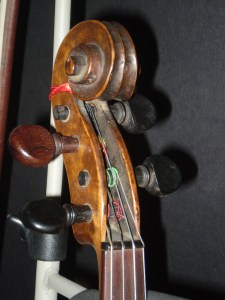
 Brandon Ray Kirk