Tags
Appalachia, culture, Ferrellsburg, Guyandotte River, history, life, Lincoln County, photos, West Virginia
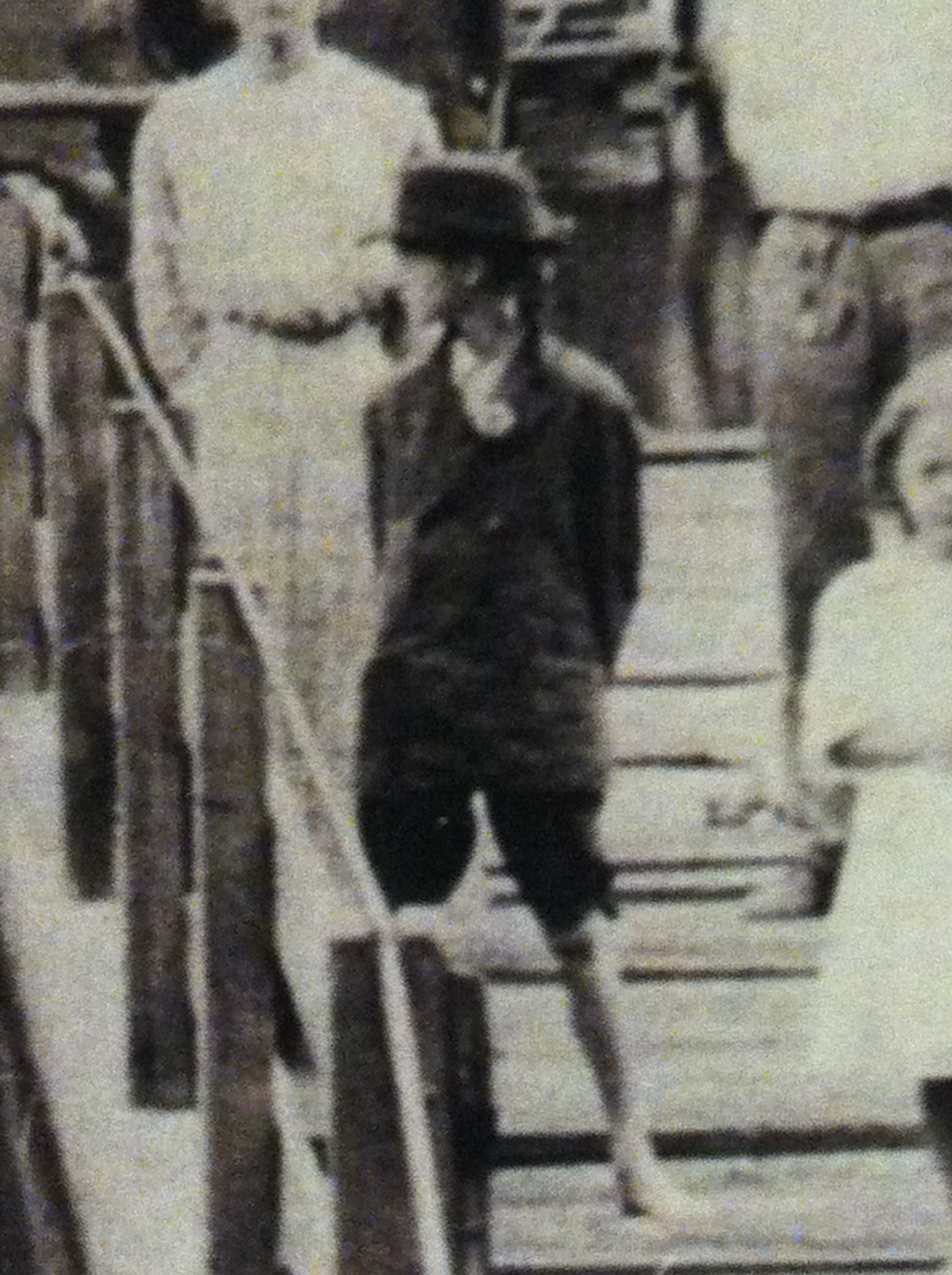
Ferrellsburg Ferry, Lincoln County, West Virginia, 1905-1915
25 Friday Oct 2013
Posted in Ferrellsburg, Women's History
Tags
Appalachia, culture, Ferrellsburg, Guyandotte River, history, life, Lincoln County, photos, West Virginia
Ferrellsburg Ferry, Lincoln County, West Virginia, 1905-1915
25 Friday Oct 2013
Posted in Big Ugly Creek, Ferrellsburg, Music
Tags
Archibald Harrison, Arena Ferrell, Big Ugly Creek, C&O Railroad, Cleme Harrison, Daniel Fry, Don McCann, Ferrellsburg, genealogy, George W. Ferrell, Guy Harrison, Guyandotte River, Guyandotte Valley, Harold Ray Smith, Harts Creek District, history, Keenan Ferrell, Laurel Hill District, Lincoln County, Logan County, Martha E. Harrison, Martha Harrison, music, Nancy Fry, Nine Mile Creek, Phernatt's Creek, Tazewell County, Virginia, writing
Around the turn of the century, in the years just prior to the arrival of the C&O Railroad in the Guyandotte Valley, George W. Ferrell, a musician in present-day Ferrellsburg, busily wrote songs about local personalities and events. Today, Ferrell’s solitary grave is marked with an ornate tombstone that sits at the edge of what was, until recent years, a garden.
George W. Ferrell was born on October 10, 1874 to Archibald B. and Martha E. (Fry) Harrison. Archibald was the son of Guy P. and Cleme (Harmon) Harrison of Tazewell County, Virginia. Mary was the daughter of Daniel H. and Nancy P. (Bailey) Fry of Logan County. Ferrell’s birthplace is not known because, soon after his parents married in 1865, they left the area, settling at first in Kentucky and then elsewhere.
In 1878, George, then four years old, returned to Lincoln County with his parents. In 1880, his family lived near the mouth of Big Ugly Creek or at the “Bend,” just across the Guyandotte River. Shortly thereafter, they made their home at Phernatt’s Creek, further downriver in Laurel Hill District.
By 1889, Ferrell’s father — who was perhaps recently divorced from his mother — had sold all of the family property in Harts Creek District and at Phernatt’s Creek and relocated to Nine Mile Creek.
Details concerning Ferrell’s early life remain elusive. It is not known who influenced him musically or when he even started writing or playing music. There is no indication of his father or mother being musicians but his mother’s first husband, Jupiter Fry, was a well-known fiddler on Big Ugly. Some of his first songs may have been inspired by his father’s stories of the Civil War.
At some point in his young life, and for reasons unknown, Ferrell was adopted by Keenan and Arena Ferrell, a childless couple at Ferrellsburg in Lincoln County.
“I heard he was just a big old boy when the Ferrells took him in,” said Don McCann, current owner of the property surrounding Ferrell’s grave. “They didn’t have any children of their own.”
In the 1900 Lincoln County Census, Ferrell was listed as their 25-year-old adopted son. More than likely, he was assisting the Ferrells in the operation of their store and business interests.
It is easy to see how Ferrell would have become acquainted with his future foster parents.
“His father worked a lot of timber around Big Ugly or Green Shoal,” said Harold R. Smith, Lincoln County genealogist and historian. “And that would have put him in close contact with the Ferrells at Ferrellsburg.”
But why was he not living with his mother (wherever she was), who died in 1901, or his maternal grandmother, who was alive on Big Ugly? And what was his connection to the Ferrells?
25 Friday Oct 2013
Posted in Ed Haley
Tags
Bill Brumfield, Branchland, Ed Haley, Ferrellsburg, fiddling, history, Isaiah Mullins, Lawrence Kirk, Lincoln County, Mildred Cook, music, Paris Brumfield, writing
That evening, Brandon and I went to see Lawrence Kirk at his nice single-story home on Fowler Branch in Ferrellsburg, West Virginia. We sat around the kitchen table where Lawrence pulled out a map of the Tug Valley and showed us the route taken by the Brumfield posse after they apprehended Milt and Green in Kentucky. We made plans to re-trace the route the next afternoon.
I said, “Of course, they had to ford back and forth at the low water mark of the river. They were on horseback weren’t they?”
“Yeah, they rode horses back through there,” Lawrence answered.
I asked, “Do you reckon they had Green and Milt on the same horse or on different horses?”
“I figure they had a horse for all of them,” he said.
Reckon they had their hands tied?
“I imagine they did.”
Brandon asked if Lawrence’s grandfather Bill Brumfield had been in the Haley-McCoy mob. He was a younger brother to Al and a teenager at the time of the killings.
“Never did know,” he said. “I doubt that he was. I believe I’d a heard something about it. See, he was pretty young at the time.”
Bob Adkins had remembered Bill as a “mean old devil,” and most people around Harts said he was the roughest of Paris Brumfield’s sons.
“The old man, as bad as he was to fool with that liquor, he tried to keep order, but he’d get drunk hisself and he’d get out of hand, see,” Lawrence said. “Well, his son — my uncle — my mother’s brother — shot him and killed him. They said they was just on a big binge there at my grandfather’s.”
At midnight, we were still huddled around Lawrence’s kitchen table talking and looking over maps when Brandon’s mother showed up wearing flannel pajamas with a letter from Mildred Cook of Branchland, Lincoln County. According to the letter, Mildred was the daughter of Isaiah Mullins and a cousin to Ed Haley.
“I remember when Mr. Haley came up Little Hart and played the fiddle for me, my two brothers, sister and My Dad,” the letter partially read. “He had a little boy with him about 8 years old. Mr. Haley came to our house 1931. I was 11 years old. He was just visiting when he come to our house. He was there approx. 2 hours. The Best I can remember Ed Haley played ‘Wildwood Flower’ and ‘Turkey in the Straw.’ He went on up little Harts Creek after he stayed and talked a while.”
20 Friday Sep 2013
Posted in Ferrellsburg
Tags
Admiral S. Fry, Archibald Harrison, Arena Ferrell, Burl Adkins, Burns Chair Factory, Elmer Evans, Ferrellsburg, Fisher B. Adkins, George W. Ferrell, Georgia Stowers, Hansford Adkins, history, James Stowers, Keenan Ferrell, Kennis Altizer, Lincoln Republican, Martha Harrison, Martin Sanders, Melissa Adkins, Noah Sanders, Walt Stowers, Wilburn Sanders, William Isaacs
Ferrellsburg Post Office was established on December 27, 1904 by George W. Ferrell, a 30-year-old general store merchant and musician.
George W. Ferrell was born on October 10, 1874 to Archibald B. and Martha E. (Fry) Harrison. In the 1890s, Keenan S. and Arena (Sanders) Ferrell, a childless couple who made their home at Fowler Branch, adopted him. The Ferrells were proprietors of a large general store business, which they named G.W. Ferrell & Company. Young Ferrell was active in the family business. According to a 1902-03 business directory, he acted as proprietor of the store. At that same time, from December 22, 1902 until 1904, he served as postmaster of Green Shoal. In 1904, Green Shoal was discontinued to Ferrellsburg. According to postal records, Ferrell served as postmaster of Ferrellsburg from December 27, 1904 until January 23, 1906. “They claimed Ferrellsburg was named after him,” said the late Roma Elkins of Ferrellsburg. On August 6, 1905, Ferrell died of tuberculosis.
On January 23, 1906, Arena Ferrell became postmaster. Arena was born around 1859 to Martin and Elizabeth (Mitchell) Sanders in Russell County, Virginia. She married Keenan Ferrell on April 6, 1877 in Logan County. The Ferrells had come to the Green Shoal area in the late 1890s. In 1895, Arena had bought land on the east side of the Guyan River from A.S. Fry, a postmaster and businessman at the mouth of Green Shoal. The next year, she bought land on the west side of the Guyan River from John Q. Adams. In 1897, she bought land at Fowler Branch, where she occupied a two-story log home and operated a general store. The store was listed in business directories as G.W. Ferrell & Company from 1904 until 1913. Arena served as merchant, while D. Kennis Altizer of Huntington was salesman. In 1913, Ferrell sold out to Hansford Adkins and moved to Green Shoal, where she briefly owned a hotel.
Wilburn Sanders, a nephew to Arrena Ferrell served as Ferrellsburg postmaster from 1906 until 1909. Born around 1882 to Noah Baldwin and Nancy Ann (Haner) Sanders, he married Addie Jones and later moved to Ogden, Utah. In 1906, Ferrellsburg had a population of 200 people and had a telephone connection at the Ferrell store.
Fisher B. Adkins, a popular schoolteacher was postmaster at Ferrellsburg from 1909 until 1914. Born in October of 1879 to Burl and Melissa (Adkins) Adkins of Harts, Fisher lived at West Fork with his wife, the former Beatrice Dingess. The couple had one child, Hope. A 1913 newspaper story in the Lincoln Republican referred to Fisher as “one of the leading educators of the county” who is “well up in educational matters.” Within months, he would win election as county superintendent of schools (1915-1919).
Joseph Walt Stowers became postmaster at Ferrellsburg on February 18, 1914. Born March 1, 1876 to James and Emily (Haner) Gillenwater-Stowers, Walt was raised on Green Shoal and had family connections to nearby Big Creek in Logan County. In 1908 he purchased jointly with Enos Adkins a one-acre tract of land in Ferrellsburg from the Ferrells and opened a store business under the name of Stowers & Adkins. “Walt Stowers bought the old Ferrell store and reworked it…renovated it,” said the late Vergia Rooney of Texas. According to newspaper accounts of that time, Stowers was president of the stockholders in the Burns Chair Factory and considered attending medical school in Louisville. Instead, he improved his store building, increasing its value from $100 in 1910 to $900 in 1912. In June of 1914, Stowers became the sole proprietor of the store. In that same time frame, he married Georgia Adkins, reportedly a daughter of Rayburn Adkins of Wayne County. The couple never had any children but partially raised several nephews. During the next two decades, from the World War I era until the Great Depression, Walt Stowers was the chief businessman in Ferrellsburg. He was also the longest serving postmaster, giving up the position with his death on February 10, 1934. Thereafter, his widow served as postmistress until January 12, 1938.
Following Georgia Stowers’ term, William Isaacs was postmaster from January 12 until April 1, 1938. Isaacs was a resident of upper Ferrellsburg. “Old man Isaacs lived above the schoolhouse in old man I.M. Nelson’s house,” according to Elkins. At the same time that Isaacs became postmaster, he also bought much land from Georgia Stowers. Within a year, he sold most of the land and soon moved to Barboursville where he was involved in the realty business. Georgia was also in Cabell County by 1939, where she lived at 1600 16th Street, Huntington.
Elmer Evans became postmaster at Ferrellsburg on November 28, 1938.
21 Wednesday Aug 2013
Posted in Ed Haley
Tags
Abner Vance, Baptist Fry, Ben Walker, Ferrellsburg, George Fry, Hezekiah "Carr" Adkins, history, Jake Adkins, Lincoln County, Low Gap, West Virginia, writing, Yantus Walker
Benjamin Wade Walker, the man who organized the Milt Haley burial party, was born in June of 1851 in southwest Virginia. He came to Harts when he was very young with his mother Marinda (Steele) Davis and a few siblings. The family settled near Green Shoal where Marinda soon married Baptist T. Fry. Baptist was the uncle of George Fry — at whose home the Haley-McCoy murders took place — as well as his closest neighbor in 1889. Walker, then, was a step-first cousin (and former neighbor) to George Fry, perhaps explaining why he was inclined to remove Milt Haley and Green McCoy’s battered corpses from his yard and bury them.
Around 1877, Walker married Juliantes Adkins, a daughter of Enos “Jake” and Leticia McKibbon (Toney) Adkins, large landowners at Douglas Branch. Julia was also a first cousin to Al Brumfield. Mr. and Mrs. Walker settled on Walker’s Branch at Low Gap near West Fork. About 1883, Hezekiah “Carr” Adkins sold them this property, 25 acres on Guyan River originally part of a 260-acre 1855 survey for Abner Vance. The Walkers raised nine daughters and a grandson.
In 1889, following Milt and Green’s murder, Walker risked harm by organizing a burial party for them. He reportedly buried the men on his property. A year later, in 1890, he was ordained a minister in the United Baptist Church. In 1898, he was a founding member of the Low Gap United Baptist Church, which met for over forty years in a school building that still stands near the site of the old Walker homestead. He was president of the district board of education in 1902, 1911, 1912, and 1914. He died in December 1917.
“Rev. B.W. Walker, one of the best known citizens of the county, died at his home at Ferrellsburg, on last Wednesday, after a lingering illness of dropsy,” according to a front page story in the Lincoln Republican dated Thursday, January 3, 1918. “Rev. Walker was a great worker in the Master’s vineyard and had been a consistent Christian for years. He is survived by his wife and eight daughters. Burial services were conducted at the Low Gap cemetery.”
At the funeral, Walker’s beard was full of snow.
19 Sunday May 2013
Posted in Timber
Tags
Appalachia, culture, Ferrellsburg, genealogy, life, Lincoln County, logging, Low Gap, Pat Kirk, photos, timbering, U.S. South, West Virginia

Pat Kirk hauling timber, Low Gap (near Ferrellsburg), Lincoln County, West Virginia, 1908-1920
31 Monday Dec 2012
Posted in Big Harts Creek, Culture of Honor
Tags
Appalachia, crime, Doc Workman, Ferrellsburg, Flora Workman, genealogy, Harts Creek, history, life, Logan Banner, Logan County, murder, mystery, Ray Watts, Roma Elkins, Simpkins Cemetery, true crime, U.S. South, West Fork, West Virginia, Workman Fork, World War I, writing
Fifty-six years ago, someone shot Wilson “Doc” Workman in cold blood at the front door of his little frame house on Harts Creek. Today, his unsolved murder is largely forgotten.
“Workman, 63, was found dead by his estranged wife, Mrs. Flora Workman, at 6 a.m. Friday at his home on Workman Fork of the West Fork of Harts Creek in Logan County,” the Logan Banner reported on Monday, April 23, 1956. “The victim died as a result of a stomach wound inflicted by a 20-gauge single barrel shotgun which was found lying across his left leg.”
Doc Workman was a man in the twilight of his life. By all accounts, he was a well-liked resident of the community. He was a quiet farmer, a former timberman, a veteran of the Great War and the father of nine children.
“Daddy and Mommy sure liked him,” said the late Roma Elkins, a native of nearby Ferrellsburg, in a 2004 interview. “He’d bring us a big water bucket full of eggs and wouldn’t let us pay him for them.”
Initially, Logan County sheriff Ray Watts and state law enforcement officers suspected robbery as the motive for Workman’s murder.
“Reports said Workman had been known to carry large sums of money around on his person and was believed to have between $400 and $500 at the time of his death,” the Banner reported. “Only a few dollars was found in the home after the shooting.”
On Sunday, April 22, Workman’s funeral was held at his home on Workman Fork. The service began at 2 p.m. and concluded with the burial at Simpkins Cemetery on West Fork.
On Monday, the Banner ran Workman’s obituary on its front page, listing his wife, nine children, four brothers and three sisters, most of whom lived in Logan County.
29 Saturday Dec 2012
Posted in Music
Tags
Appalachia, culture, Ferrellsburg, guitar, history, Jap Mullins, life, Lincoln County, music, photos, U.S. South, West Virginia
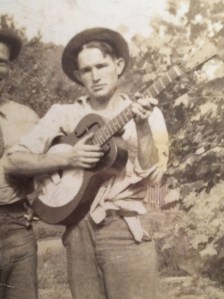
Jap Mullins of Ferrellsburg, 1936-1945
05 Wednesday Dec 2012
Posted in African American History, Ferrellsburg
Tags
Appalachia, culture, Ferrellsburg, history, life, Lincoln County, photos, U.S. South, West Virginia, writing

Ferrellsburg Ferry, 1900-1915
01 Saturday Dec 2012
Posted in Harts, Pearl Adkins Diary, Women's History
Tags
Adkins Conspiracy Case, Appalachia, Beecher Avenue, Billy Adkins, Custer McCann, Fed Adkins, Ferrellsburg, Guyandotte River, Harts, history, Isaac Adkins Branch, Lincoln County, Pearl Adkins, polio, Rinda Adkins, Sand Creek, U.S. South, Watson Adkins, West Virginia, writers, writing
Some years ago, I located a diary kept by Pearl Adkins, a physically handicapped and romantically frustrated intellect. A life-long resident of Harts, West Virginia, Pearl was born on August 1, 1904 to Fed and Rinda (Davis) Adkins. At the time of her birth, her parents resided in a two-story plank house situated at the mouth of Isaac Adkins Branch on Guyandotte River. Her father’s involvement in the famous Adkins conspiracy case of 1907 and subsequent incarceration in the West Virginia state penitentiary and loss of property disrupted her childhood and prompted a move. In 1908, the family relocated to a rental dwelling situated above the Adkins store, just back of the original homeplace. Between 1914 and 1916, Pearl and her family lived elsewhere in Hart Bottom. Thereafter, they resided at Sand Creek (1916-1921), then Ferrellsburg — a community above Hart. At this latter location, the Adkins clan briefly operated a store.
“I knew Pearl real well,” said Custer McCann, an 83-year-old retired schoolteacher and Harts resident in June 2002. “I worked for her brother Watson Adkins and stayed around there a lot. She was Watson’s half-sister. She was highly intelligent and she read widely. I’d say she was self-educated. She was a very kind-hearted person. I never did hear her say a bad word about any one.”
Polio crippled Pearl at a young age.
“I’ve always heard my sister Inez [Pearl’s friend and sister-in-law] say that Pearl walked until she was twelve years old,” said McCann. “She had a sick spell and never got over that. But her mother did a real job taking care of her. When she got out of bed, they’d put her in a wheelchair. She had no control with her legs at all.”
According to the genealogy notebooks of nephew Billy Adkins of Harts, “Pearl was five feet, one inch tall and had brown hair and blue eyes. She was a very intelligent woman. She read a lot. She was a very wise woman and counseled people. She was a good listener.”
Pearl’s three volume diary appears to chronicle thoughts and events from January 30, 1922 until May 6, 1928, although it is full of undated or vaguely dated entries. At the time of her writing, Pearl was a young woman approximately eighteen to twenty-four years old still living at home with her parents. The family resided on Beecher Avenue in a small single-story house situated on property owned by Watson Adkins.
Writings from my travels and experiences. High and fine literature is wine, and mine is only water; but everybody likes water. Mark Twain
This site is dedicated to the collection, preservation, and promotion of history and culture in Appalachia.
Genealogy and History in North Carolina and Beyond
A site about one of the most beautiful, interesting, tallented, outrageous and colorful personalities of the 20th Century
 Brandon Ray Kirk