• About

Brandon Ray Kirk

~ This site is dedicated to the collection, preservation, and promotion of history and culture in my section of Appalachia.

Brandon Ray Kirk

Tag Archives: Ed Haley

In Search of Ed Haley 238

10 Monday Feb 2014

Posted by Brandon Ray Kirk in Ed Haley, Music

≈ 2 Comments

Tags

Appalachia, Billy Adkins, Boone County, Brandon Kirk, Chapmanville, Ed Haley, fiddler, Guyandotte Voice, history, John Hartford, Johnny Hager, Louise Johnson, music, Simeon Bias, West Virginia, writing

As Brandon and Billy dug up more information in West Virginia, I received a letter in the mail from Louise (Adkins) Johnson of Powderly, Texas. She’d read an article about my Ed Haley search in a now-defunct Chapmanville newspaper called The Guyandotte Voice.

“I was so pleased to hear some one mention Blind Ed & his wife,” Johnson wrote. “I’m 72 yrs. old, was born and raised, in Boone Co. just over the hill from Chapmanville, W.V. My Uncle Simeon Bias & his wife Bertha (Baisden) & my family were (I guess you could say backwood singers & musicians) but Ed & his wife came to my Uncle Sim’s often & everyone played. I remember my brother was 3 1/2 or 4 (he’s 65 now) had the most beautiful blonde curls, & Ed would feel his head and say how pretty he was. They would stay a couple of wks. at a time. If you would contact the older people of Bias Branch in Boone Co. you may be able to find out more about them.”

“Now Johnny Hager lived with my mother & Daddy my sister, my Brother & me all our growing up yrs. @ home,” Louise continued. “He was a handy man, & a fiddle player. I also have his picture. He had no family as my Parents knew of, & he stayed more with us, some time’s a neighbor would need him to come live with them, to build them an out house for them. He was noted for the best out houses, he earned his keep by living with & helping others. A very neat man.”

In Search of Ed Haley 235

07 Friday Feb 2014

Posted by Brandon Ray Kirk in Ed Haley, Harts, Lincoln County Feud

≈ Leave a comment

Tags

Addison Vance, Al Brumfield, Benjamin Fowler, Bill Fowler, Cain Adkins, Charley Brumfield, Ed Haley, Effie Fowler, Emzy Petrie, Ferrellsburg, genealogy, George H. Thomas, George Washington Fowler, Harts Creek, Henry H. Hardesty, history, Isham Roberts, James P. Mullins, John H. Adkins, John H. Napier, John W Runyon, Milt Haley, Salena Vance, writing

The Lincoln County Courthouse — which holds deed records, vital statistics, and criminal records for the Harts Creek District — burned on November 19, 1909, taking with it whatever records might have existed pertaining to the 1889 feud. Thanks to a now-forgotten arsonist reportedly hired by a gas company to eliminate locals’ claims to mineral rights, we can locate little information in the courthouse on Milt Haley’s death or Brumfield family antics. However, somehow, we do have access to Lincoln County land records since 1867 and they reveal quite a bit about the happenings at the mouth of Harts Creek in the late 1880s. (The Logan County Courthouse, which holds similar records on Ed Haley and his family, has fared little better: it was burned by Yankee soldiers during the Civil War.)

Al Brumfield, according to Brandon’s research, first settled with his wife in a small, boxed house on property owned by his mother and located just below the mouth of Harts Creek at the Shoals along the Guyandotte River. In 1888, some seven years after his marriage, he secured his first piece of property on Brown’s Branch, courtesy of his mother. More importantly, according to land records (in one of those moments where written records confuse the story by totally conflicting with oral tradition), he did not own any property at the mouth of Harts Creek at the time of the Haley-McCoy trouble. Al apparently bought land there from Bill Fowler immediately after the Haley-McCoy trouble. The earliest documented account of him owning the log boom was an 1895 deed, which partially read, “…about three hundred yards above the mouth of said creek where the log boom is now tied.”

One thing for certain: Brumfield wasted little time in eliminating his business competitors at the mouth of Harts Creek immediately following the Haley-McCoy murders. In 1889, he had four primary rivals: (1) Bill Fowler; (2) John Runyon; (3) Isham Roberts and, to a lesser extent, (4) James P. Mullins. Fowler was his cousin, Runyon was no relation, and Roberts was his brother-in-law. Mullins was located more than a mile up Harts Creek at Big Branch and operated a business that was likely past its prime.

In 1890, Brumfield acquired two tracts of land (a 95-acre tract worth 113 dollars and a 25-acre tract worth 75 dollars) from Runyon. We don’t know what price was paid for this land (thanks to the courthouse fire) but considering the circumstances it may have helped save Runyon’s life in the wake of his possible role in the Haley-McCoy fiasco. In that same year, a stubborn Bill Fowler sold two valuable lots on the west side of Guyan River totaling 165 acres to Isaac Adkins, not Al Brumfield. Fowler was apparently resisting the urge to sell out to his ambitious younger cousin who had reportedly burned his business. One tract was 75 acres and worth six dollars per acre, while the other was 90 acres and worth four dollars per acre. The property was worth 810 dollars. Meanwhile, in 1891, Brumfield’s brother-in-law, Isham Roberts, who was referenced in a circa 1884 history as a “prosperous young merchant” at the mouth of Harts Creek, sold out and moved upriver near Fowler Branch (present-day Ferrellsburg).

Not only did Fowler, Runyon and Roberts sell out — they moved away completely. Fowler took his wife and four children (Bettie, age 15, Effie, age 14, Benjamin Franklin, age 12, and George Washington, age 10) and moved to Central City in Huntington. In May of 1892, his wife bought Lot 6 Block 88 in Central City from Susan Porter and her husband. On October 19, she deeded it to Louis H. Taliaferro, who deeded it back to William Fowler, who deeded it back to Taliaferro, who deeded it back to Mrs. Fowler. The Fowlers were in Central City in 1900. According to family tradition, Roberts moved to Oklahoma because of his wife’s disapproval of the violent deeds committed by her family. Several years later, she sold her interest in her father’s estate to Charley Brumfield — the man who had murdered her father in 1891.

Aside from businessmen, the 1889 troubles drove away other important citizens from Harts. First was Cain Adkins, a doctor, lawman, preacher and schoolteacher. In 1891, Cain Adkins sold 40 acres to John H. Adkins, who thereafter claimed the remainder of the farm. Two years later, in 1893, John and his wife Sallie deeded “the Canaan Adkins Farm” (205 acres) to Salena Vance for $607.50. In 1895, Vance and others sold the farm to J.A. Chambers, who in turn deeded it to Louis R. Sweetland in 1897. Thereafter, Salena Vance acquired the property again (jointly with her children, John and Nettie Toney) and sold it to George H. Thomas and E.O. Petrie in 1913. Later that year, Petrie sold his half-interest to Thomas. In 1914, the property contained a 300-dollar building.

In addition to Preacher Cain, John H. Napier, a doctor and in-law to Adkins, seems to have fled the community around 1890. According to Hardesty’s History of Lincoln County, West Virginia (c.1884), Napier settled near the mouth of Harts Creek in 1879. His wife, Julia Ann Ross, was a niece to Cain Adkins. Her older sister married Cain Adkins’ brother-in-law, Addison Vance, of Piney. John was listed in the 1880 census as a thirty-seven-year-old physician with a wife (age 30) and five children, as well as a nephew. He did not own property locally, although his occupation as a doctor and businessman might have made him particularly threatening to an ambitious person like Al Brumfield. “Mr. Napier is a prosperous merchant in Hart Creek district, with business headquarters at the mouth of the creek,” Hardesty wrote.

In Search of Ed Haley 233

05 Wednesday Feb 2014

Posted by Brandon Ray Kirk in Big Harts Creek, Ed Haley, Whirlwind

≈ 7 Comments

Tags

Callohill McCloud, Ed Haley, Frank Adams, George Adams, Grover Adams, Harts Creek, history, J.P. Douglas, Lincoln Republican, Lindsey Blair, moonshining, Perris Hensley, Peter Jonas, Peter Mullins, Reece Dalton, Sol Adams, Sol Riddell, W.J. Bachtel, West Virginia, Whirlwind, William Farley, William Tomblin, writing

In that same year, 1912, according to a state business directory, there were a variety of folks with business interests in Whirlwind, West Virginia. Sol Riddell was the postmaster, a lawyer, and part owner of a general store named Mullins & Riddell. Peter Mullins was a carpenter, D. Adams was an apiarist, Grover Adams dealt in ginseng, Sol Adams was a miller and lumber dealer, W.J. Bachtel was a teacher, Reece Dalton dealt in livestock and M. Tomblin was a teamster. Reverend Perris Hensley and Reverend William Tomblin were area preachers.

Between 1916-1918, roughly the time Ed Haley left Harts Creek for Ashland, Kentucky, many of these same folks were listed in business directories for Whirlwind. James Mullins was postmaster in 1916, as well as the local general store operator and photographer. William Farley was a mail dealer. In 1918, Frank Adams was a mail carrier. Sol Adams operated a saw mill. Lindsey Blair was a watchmaker. Callahill McCloud dealt in poultry. C.M. Mullins dealt in ginseng. J.M. Mullins operated a flour mill.

By that time, Peter Mullins served as a sort of surrogate father to Ed Haley. It was Uncle Peter who had given Ed a cornstalk fiddle when he was a young boy and who kept him for years. As Ed became a young man who frequently left Harts with his music, Uncle Peter toiled on Trace Fork as a farmer and occasional timberman. He was perhaps best known for his moonshining, an art form with a long history in his pedigree. In January of 1919, he appeared in The Lincoln Republican in an article titled “Four Moonshiners Caught in Raid.”

A constable and owner of a general store was one of the four men arrested Saturday night in Harts Creek district and taken to Huntington Sunday for arraignment before United States Commissioner J.P. Douglas on a charge of illegally manufacturing liquor. The men were found on Trace Fork of Harts creek.

Peter Mullins is the constable and owns a general store on Harts creek. He is known as ‘Shooting Pete’ and is now in the Cabell county jail in default of bond. In his store were found 900 pounds of meal and 209 pounds of flour. Sol Adams, Peter Jonas and George Adams, the other three arrested, gave bond. All are held to the grand jury at the April term of federal court. At the home of Geo. Adams, were found 200 pounds of meal, 100 pounds of light brown sugar, 200 pounds of bran or ships stuff and one barrel of mash, made up, which Adams said was for his hogs. He had one hog, according to the men on the raid. The arrests were made on Saturday by G.C. Rutheford and Hartley Ferguson, deputy marshals; H.D. Sims and G.L. Hannan, of the internal revenue department; M.E. Ketchem, Frank Adkins and W.F. Porter of the state prohibition commissioner’s force.

In Search of Ed Haley

27 Monday Jan 2014

Posted by Brandon Ray Kirk in Big Harts Creek, Ed Haley

≈ Leave a comment

Tags

Appalachia, culture, Ed Haley, Ewell Mullins, genealogy, Harts Creek, history, Logan County, photos, West Virginia

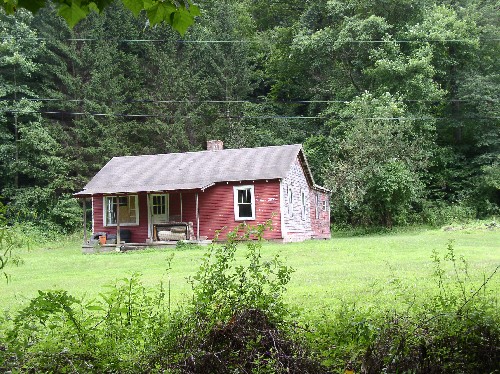
Ewell Mullins residence (part of the old Ed Haley property), Trace Fork of Harts Creek, Logan County, WV, c.2000

Ewell Mullins residence (part of the old Ed Haley property), Trace Fork of Harts Creek, Logan County, WV, 2006

In Search of Ed Haley 232

27 Monday Jan 2014

Posted by Brandon Ray Kirk in Big Harts Creek, Ed Haley, Whirlwind

≈ Leave a comment

Tags

Albert Dingess, Albert Gore, Alice Dingess, Anthony Adams, Burl Adams, Chloe Mullins, Dave Dingess, David Kinser, Ed Haley, Ewell Mullins, Frank Collins, genealogy, Henry Blair, history, Imogene Haley, Jackson Mullins, Joe Adams, John McCloud, Liza Mullins, Peter Mullins, Sewell Adams, Sol Adams, Sol Riddell, Spottswood, Thomas J. Wysong, Weddie Mullins, Whirlwind, writing

In spite of new economic developments, educational opportunities for young Ed Haley were limited. As far as can be ascertained, he received no formal education as a child. In that Victorian era of prosperity and refineries, schools (and other forms of improvement) were slow to arrive in the mountains of Appalachia. Joe Adams, whose father was Ed’s age and who was raised at the mouth of Trace Fork, summed it up this way: “All the education they got, they got theirselves.” (He had heard the old-timers speak of the McGuffey Readers.) In August of 1897, Ed got his first chance for an education when Sophia and David Kinser donated land on Trace Fork to the district board of education for the purpose of building a schoolhouse. So far as is known, this was the first school built on the branch. It was easy to picture Ed showing up to visit and entertain students with his amazing fiddle playing…and perhaps to occasionally sit in on school.

In February of 1898, as Ed approached his teen years, Weddie and Peter Mullins swapped property on Trace Fork. Weddie deeded his land to Peter’s wife Liza, who likewise sold her land to Weddie. Thereafter, Peter made his home in the spot where Lawrence Haley and I had visited in the early ’90s, while Weddie lived at the Jackson Mullins home. A few years later, after Weddie was murdered, his widow remarried to Lee Farley — brother to Burl — causing many people to refer to their home as the “old Lee Farley place” (as opposed to the Jackson Mullins place).

In May 1898, the Logan County Court appointed Henry Blair, Jr. as guardian of Ed Haley “an infant under the age of 14 years.” Blair and Albert Dingess paid the bond of 100 dollars. Haley was listed with his maternal grandparents, Jackson and Chloe Mullins, in the 1900 census.

By that time, the Emma Haley property had dropped in value to 33 dollars. Then, for reasons unknown, the value of “Emmagene Haley’s” property increased to $5.50 an acre for a total worth of $110 in 1906. Maybe Uncle Peter or Weddie had made an improvement on the property or maybe someone had appraised it for timber. In any case, Ed would’ve inherited it outright at that time as a person of legal adult age. More than likely, he had no idea of its worth.

The timber boom led directly to the creation of new towns on Harts Creek. Around 1902, a new post office was created at the mouth of Smoke House Fork called Spottswood. According to a 1904 business directory, Sol Adams was a justice at Spottswood. In 1906, Anthony Adams was the operator of a general store, as was J.M. Adams and James Thompson. Berl Adams was a blacksmith, Sewell Adams was a logger, Francis Collins was a miner, Albert Gore was a constable, David Dingess was a lawyer and Sol Riddell was a teacher. Joseph Adams dealt in walnut lumber, while Reverend John McCloud handled local religious matters. Alice Adams was the postmistress at Spottswood. A little later, Berl Adams, Albert Dingess, Alice Adams, Charles Dingess, William Farley and Thomas J. Wysong opened up general stores.

Later, other post offices opened on Harts Creek. In 1910, according to local tradition, Whirlwind Post Office opened in the head of Harts Creek. This replaced Spottswood as Ed Haley’s local post office, although he was traveling away from Harts quite a bit at that time. Whirlwind was roughly sixteen miles from Logan and nine miles from Dingess. (I had seen the remnants of Whirlwind post office on my recent visit to Harts Creek.) It served 250 people and received mail daily.

Ed Haley, meanwhile, sold the only piece of land he would ever own in March of 1911 to his first cousin Ewell Mullins for 25 dollars (1/5 of its appraisal value as per the assessor). In the deed, Jonas Branch was called Gunnel Branch and the size of the tract was given as 25 acres. The deed read as follows:

Beginning at a rock at the mouth of the Gunnel Branch on the right side of Trace creek thence up the hill to the top of the hill; thence up the ridge to opposite a ash corner on a cliff thence down the hill to the ash thence cross the creek to a plum tree thence up the hill to a beech thence a strait line to the top of the hill thence around the ridge to point on the u[p]per side of the Gunnel Branch thence down the point to a stake on the bank of branch thence down the branch and with the division between Ed Haley and Liza Mullins and crossing the creek to the beginning, containing 25 acres more or less.

Tax books first listed the property in Mullins’ name in 1912 and valued it at $140.

In Search of Ed Haley 231

24 Friday Jan 2014

Posted by Brandon Ray Kirk in Ed Haley

≈ Leave a comment

Tags

Andrew D. Robinson, Ben Adams, Boney Lucas, Chloe Mullins, Ed Haley, Harts Creek, Henderson Dingess, history, Imogene Haley, Jackson Mullins, Logan County Banner, logging, McCloud & Company, Paris Brumfield, Peter Mullins, timbering, Turley Adams, Van Prince, Warren, Weddie Mullins, West Virginia, writing

Ed Haley was born in 1885 at Warren, a small post office established the previous year five miles up Harts Creek just below the mouth of Smoke House Fork. It was a place of 300 to 500 people chiefly led in its daily affairs by Henderson Dingess, Andrew Robinson, Anthony Adams, Ben Adams, and Burl Farley — all connected genealogically through the Adams family. At Warren, in 1884, the primary business was a general store called McCloud & Company. Henderson Dingess, father to Hollena and the patriarch of the clan, was a distiller and storekeeper. Ben Adams, a brother-in-law to Dingess, was a general store operator. Andrew Robinson was the local postmaster. Van Prince was a physician, perhaps assisting in Ed Haley’s birth or in the treatment of his measles.

Henderson Dingess, a prominent personality from that era, was the son of pioneer parents, born in 1829 to John and Chloe (Farley) Dingess. His wife, Sarah Adams (1833-1920), was a daughter of Joseph and Dicie (Mullins) Adams, who settled on Harts Creek from Floyd County, Kentucky, in the late 1830s. Henderson and Sarah lived in a two-story log house on land partly granted to him by the Commonwealth of Virginia in 1856. There, at the mouth of Hog Pen Branch, they raised eleven children, many of whom were active in the 1889 troubles. In the late 1880s, roughly the time of Milt Haley’s murder, Henderson and Sarah owned a 93-acre tract of land on Smoke House with a building valued at $100. They also owned an additional 350 acres on main Harts Creek and a 44-acre tract on nearby Crawley Creek worth $6.00 per acre with a $20 building on it.

At that time, Harts was caught up in the regional timber boom. According to The Logan County Banner, an estimated one million dollars worth of timber went out of the area in 1889. Perhaps prompted by this capitalistic invasion of the local economy, violence became the norm in Harts. Beginning with Paris Brumfield’s murder of Boney Lucas “over logs” in the early 1880s, there were at least six area killings before the turn of the century. (The Brumfields were involved in four of them and the Dingesses in three.) It was an era when Harts lost its innocence and began to earn the rough reputation it still carries today.

More than likely, following the horrific events of 1889, little Ed Haley and his mother lived for a brief time with Jackson and Chloe Mullins on Trace Fork. This changed a little later when, in 1891, Jackson and Chloe began to deed property to their three children. On March 18, they deeded their homestead to son Peter for 25 dollars. Deed records specify the property as a 20-acre tract of land, which began somewhere around the mouth of Trace and continued up to the Jackson Mullins Branch (basically the present-day Turley Adams property). The following day, Jackson and Chloe deeded another 20-acre tract to son Weddie Mullins for 25 dollars. This tract basically included everything from Jackson Mullins Branch to Jonas Branch.

On March 19, 1891, Jackson and Chloe deeded Imogene Haley 20 acres of land on Trace Fork for 25 dollars. In the property index, Imogene’s surname was spelled as “Hauley”, while the deed referred to her as “Immagin A. Haley.” Her land began at Jonas Branch and continued on up the creek. In the original deed, it was described as follows:

Beginning at the mouth of William Jonas branch thence up the Branch with the center of the branch to a _______ tree on the right hand side of the Branch as you go up the branch near a Chestnut that ________ on the left side of said branch thence acrosf the fields to some willow bushes at the front of the hill thence up the point with the center of the point to the brow of the Mountain thence with the brow of the Mountain to Mary Mullins line thence down the mountain to a bush thence a strate line crosfing the creek to a ash thence up the hill to the back line of the parties of the first part thence down the creek with the line of the said opposite the mouth of William Jonas branch thence down the hill a strate line to the Beginning supposed to contain 20 acres more or less.

An 1891 tax book listed “Emigene Hawley’s” property as being worth $2.00 per acre and having a total worth of $40. Records do not indicate if there was a house or building located on the property. In any case, Emma died soon after: an 1892 tax book lists her property under the name of “Immogen Hailey heirs”, which would have been Ed Haley. More than likely, seven-year-old Ed remained living in the home of his grandparents, Jackson and Chloe, for several more years.

At that time, Logan County was in the middle of a timber boom, which gave employment to Ed’s family on Trace Fork. “Some of the finest timber in the State is found in Logan county,” writes The Mountain State: A Description of the Natural Resources of West Virginia (1893). “Magnificent forests of oak, poplar, ash, lynn, maples, beech, birch, pines, hickory and other varieties still cover the greater part of the county in their primitive state. For thirty years timber men have been at work, destroying the forests and still in all this time not over a fourth of the timber has been removed. As an estimate of the value of the timber still standing in Logan county, three million dollars will not be far amise.”

In Search of Ed Haley 226

16 Thursday Jan 2014

Posted by Brandon Ray Kirk in Big Harts Creek, Ed Haley

≈ Leave a comment

Tags

Alice Dingess, Andy Thompson, Bill Brumfield, Billy Adkins, blind, Bob Dingess, Ed Haley, Ella Haley, Ferrellsburg, fiddling, Harts, Harts Creek, history, John Hartford, Wash Farley, writing

Billy recommended that we visit Bob Dingess, a man of advanced age who was related to and personally remembered almost everyone in Ed’s story. His father was Dave Dingess, a younger brother to Hollena Brumfield, while his mother was a daughter to Anthony Adams. His first wife was a daughter to Charley Brumfield, while his current wife was Robert Martin’s niece. Bob was a close cousin to Bob Adkins and Joe Adams, as well as many of the Brumfields. He was a fine old man — a retired schoolteacher and elementary principal — who could probably tell us more about Harts Creek history than any one alive.

We drove to Bob’s small white house, which sat just below the mouth of Smoke House on Big Harts Creek, and knocked at his back door, where a nurse met us. She knew Billy and invited us inside, through the kitchen and into a dark stuffy living room. There, we met Bob and his wife. Bob was bundled up in a light black jacket, oblivious to the enormous August heat. A somewhat tall man, he had an alertness to his movements that was surprising and enviable. He was very friendly. We all sat down on couches to talk about Ed Haley. I was sure that Bob’s heater was running; in no time at all, my sinuses were ready to explode.

When Billy told him that we were interested in finding out about Ed Haley, he said, “You have to give me a little time on this. My memory jumps on me. I’m no spring chicken and I have to think.”

But it was obvious that his mind was sharp as a tack when he started telling about his memories of Ed.

“Now Ed Haley, he left here after so long,” Bob said. “He went to Kentucky and he married there. He had a blind woman and she played the mandolin and he played the violin and they had a lot of the meanest boys you ever saw. I first saw him in 1918, during the First World War. Well on Saturday I’d go to Ferrellsburg to haul groceries. That’s the only way to get them. No bridge at Hart. And bless your heart, here that man and them four children come off’n that train, and that old woman, and I got a wagon load of groceries and set them on it and them boys fought and that old man he just slapped and knocked and kicked among them. And the old man, he wouldn’t tell them nothing — he was blind — and she couldn’t tell them nothing, either. And I finally got them up here at the house, and when I got them there Mom made me unload the wagon and says, ‘Get ’em away from here.’ And we took them up yonder to old man John Adams’ then, and let them go. They stayed a month up there.”

I asked how Ed dressed.

“Well, he was all right now, boys,” Bob said. “Don’t worry about him. He took care of everything. He’d laugh and talk, too. You’d think he could see. After you’d get him located and get him in the house, you know, he could get up and walk about through the house.”

Bob didn’t think Ed was the best fiddler he ever heard.

“Nah,” he said. “He couldn’t play this fancy music like Bill Monroe and them played. The old-time fiddle, he was good…old-time music. ‘Comin’ Around the Mountain’. He had a dozen songs.”

Bob said Ed used to play at the old pie suppers on Harts Creek.

“See, I was born in ’04, and I went to these frolics where they had pie suppers and socials and all these gals gathered and these men,” he said. “About every weekend the girls’d go to one home and they’d kill chickens and bake cakes and bake pies and everything and they’d auctioneer them off. If you had a pretty girl, buddy you’d better have a little pocketbook because somebody’s gonna eat with her and knock you out. Mother always give me a little money and I’d just pick me out one and get her. Yeah, planned all week, the girls would. We did that once a week unless they was some special occasion. We’d start at Bill Brumfield’s down yonder. From Bill’s, we’d come to Andy Thompson’s, come from Andy Thompson we went to Rockhouse to Uncle Wash Farley’s. Uncle Sol over here, he wouldn’t let them have it but just once in a while. Mom would let them have it about every three or four months up here. But on up the hollow up yonder it was a regular thing. Them days is gone, though. You couldn’t have that now. No fighting, no quarreling, everybody got along happy.”

I wanted to know more about Ed.

“Ed Haley, here’s what they’d do,” Bob said. “They’d put him and her on a mule and he’d be in front and she’d ride astraddle behind and hold him. And somebody else’d have to carry their musical instruments, see? And when they got them up there then they had to lead them and get them in the house and get them located. And somebody’d slip around and give him a big shot of liquor and her and they’d say, ‘All right, old-man, let ‘er go.’ ‘Big Rock Candy Mountain’, boy here she’d go. He’d sing it. He was a good singer. And his old woman, she didn’t look like she was very much, but she was a singer. She was a little woman, blind. But she’d sing right with him. Yeah, ‘Turkey in the Straw’. Ah, that ‘Grapevine twist,’ man, ‘circle eight and all get straight.’ Ah man, them girls had them old rubber-heeled shoes and they’d pop that floor. It was an all-night affair. He’d play a while, then he’d rest a while, then he’d start again. Along about midnight, they’d drink that liquor in them half a gallon jugs. You know, I was a boy and I wasn’t allowed to drink too much but now them old-timers they would drink that liquor. ‘Bout one o’clock, she’d start again, and when the chickens was a crowing and daylight was coming still they were on the floor. They would lay all day and sleep.”

In Search of Ed Haley 225

15 Wednesday Jan 2014

Posted by Brandon Ray Kirk in Big Harts Creek, Ed Haley, Whirlwind

≈ 2 Comments

Tags

Billy Adkins, Creed Conley, Ed Haley, fiddling, Harts Creek, history, John Hartford, Logan, Minnie Smith, Sherman Smith, Sol Adams, West Virginia, Whirlwind, writing

After lunch, Billy suggested that we go see Sherman and Minnie Smith, who lived a little further up the creek at the old Whirlwind Post Office. Minnie was the granddaughter of Solomon Adams and a great-granddaughter to Anthony Adams. Her father was a nephew to Melvin Kirk, who helped bury Milt and Green.

We soon pulled up to an incredible two-story log home with a remodeled front. We first spoke with Minnie’s husband Sherman who was busy dismantling a chimney labeled “S.A. 1875.” Minnie came out of the house, recognized Billy and started talking to us like we were neighbors. We raved over her log house for several minutes, which caused her to tell us how her grandfather Sol Adams had built it of yellow poplar in 1869. We later discovered that he was born in that year.

We gathered in chairs and sofas in a dimly lit living room with a low ceiling, while Sherman stood nearby in a doorway leading into the kitchen. We told them about my interest in Ed Haley, which caused Sherman to tell about seeing him in Logan when he was a boy. He said Ed was usually by himself but sometimes had a banjo-picker with him.

“Ed Haley used to play here when I was a girl,” Minnie said, adding that she was born in 1933. According to Minnie, Ed played for dances in the Workman home. Her parents would clear all of the furniture out of the living room and an adjacent room on Saturday. Ed came before the dance started and was fed properly, then as people started showing up he was “set up” on a stool in the doorway between the two cleared rooms. From there, he could entertain two rooms of people instead of just one. Minnie remembered him playing tunes like “Blind Man Stackolee” and “Fire on the Mountain”. Creed Conley was usually the caller and would have people dancing so wildly that they’d bump heads. Most were drunk. Minnie said someone passed a hat around for Ed’s pay toward the end of the dance.

In Search of Ed Haley 223

13 Monday Jan 2014

Posted by Brandon Ray Kirk in Ed Haley

≈ Leave a comment

Tags

Alice Dingess, Clifford Belcher, Ed Haley, Ewell Mullins, Frank Farley, Geronie Adams, Great Depression, history, Jeff Mullins, Joe Adams, Logan, moonshine, Peter Mullins, Sewell Adams, Tennis Mullins, Ticky George Adams, Virgil Farley, Will Farley, writing

After talking for some time about Ed’s music, our conversation drifted toward his family on Harts Creek.

“Old man Peter Mullins, everybody called him ‘Reel-foot Peter’ cause he had his foot cut off here and had a special shoe made,” Joe said, referencing Ed’s uncle. “He walked kindly on his heel. He worked on log jobs but he couldn’t do much. He gathered ginseng. He made most of his money on moonshine. He hauled it up to Black Bottom in Logan and sold it. He liked to drink. They drunk moonshine most of the time. They were good old people.”

Now would Ed drink a lot with Uncle Peter when he was around Harts?

“Old man Ed every now and then he’d take a few drinks of it,” Joe said. “I’ve seen him pretty high. It didn’t take much of that moonshine to get in your hair. I’ve seen it just as clear as a crystal. You could look through the bottle just like looking right on in a looking glass and you could shake it and about seven beads’d pop up there on top of it and they’d just roll around and around. And you couldn’t smell it. I’ve seen some that you’d look at and it’d look like muddy water and you could smell it through the bottles. But they made good whiskey. They generally made it out of chop or corn and if they’d double it back and use good clear water it was good. You could just turn it up and it wouldn’t take your breath.”

Brandon asked what Ed was like when he was “feeling high” and Joe said, “He seemed like he was in a good mood about all the time. When I was around him I never did hear him say nothing out of the way to nobody. Old man Ed, he was a fine old man but he got over here at a beer garden. Clifford Belcher had a beer garden on this mountain — it was the meanest place that ever was — and he was over there playing one night and they was a big bunch of them a playing cards and the law come in to arrest them all. Some of them boys jumped out the window. And Ed got into it with somebody in there and they said that fellow said something and Ed just come over and took that fiddle by the neck and busted it all to pieces over that fellow’s head. I don’t know what he said to him but I come along there after it happened. They arrested a whole bunch of them fellows and put them in a cattle truck, the state police did, and took them to jail. They was about fifteen or twenty of them. They was Geronie Adams and Virgil Farley and Frank Farley. They loaded them up and hauled them to Logan and them fellows a cussing. They said, ‘You just might as well keep quiet. You’re going to jail.’ I think they took Ed to jail, too.”

Brandon said he’d heard several old-timers talk about how people used to play jokes on Ed when he was at Trace and Joe agreed.

“They played all kinds of tricks on him,” he said. “They was an old man stayed up here, old man Jeff Mullins. He was Peter’s wife’s brother. They called him dumb, but now he wasn’t as dumb as they thought he was. He stayed up there when Ed and them was up there and they was all the time playing pranks on Ed and him. Tennis Mullins, Ewell’s boy, he was big and fat and he run the store all the time. He was all the time fooling with Ed and old man Jeff.”

I asked how Ed took it when people joked with him and Joe said, “He was good about it. He never got mad. I know up there one time they was out there at old man Peter’s where they was a bridge there and they was a bunch of trees there. And old man Ewell Mullins, he was all the time fooling with Ed. He told Ed, he said, ‘We’ll climb a tree here to the top and let them cut it down.’ Well, Ed couldn’t see. Ewell, he climbed up the first limb about ten feet high and said, ‘Cut ‘er down boys!’ He jumped off about the time it started to fall. And Ed climbed right in the top of it. I bet he was forty feet up there. And they cut it and it fell and skinned him all over and liked to killed him. Ewell never would tell him though that he was just up a little bit on the tree.”

Joe said he also remembered Ed’s uncle Ticky George Adams.

“The old man as far as I know he never did work on no public works of no kind or draw no release or nothing,” he said. “He kept his family… He went from house to house — and everybody raised all kind of stuff and had cattle and plenty of milk and butter and eggs and everything — and every place he stopped they give him something. He had a little pole on his back with a sack on it. You’d see him a going bent over just kindly in a long run. He’d go up Trace and go through the head of Trace. And old man George would go around that a way and come down Rockhouse by Will Farley’s and back up through my Uncle Sewell’s and Aunt Alice’s down here. Everybody’d give him something. They’d give him a stick of butter or give him some milk or give him some meat or give him some eggs or something another. That’s the way he raised his family. Those Hoover times was hard.”

In Search of Ed Haley 222

11 Saturday Jan 2014

Posted by Brandon Ray Kirk in Ed Haley

≈ Leave a comment

Tags

Cary Mullins, Ed Belcher, Ed Haley, fiddle, fiddling, Harts Creek, history, Joe Adams, Logan County, music, Noah Mullins, West Virginia, writing

When I pressed Joe for specific details about Ed’s technique he said, “He’d play up on the bow about four or five inches, but he played the full stroke with the bow all the time. He didn’t jiggle it.”

I asked if he always sat down when he played and Joe said, “I’ve seen him sitting down and standing up both. They said he danced, but I never did see him dance none. He pat his foot when he played. You’d never hardly know he was patting it. He just patted one foot. He had that chin rest…”

“So Ed put the fiddle up under his chin?” I interrupted.

“He put it up under his chin and played,” Joe confirmed. “Ed Belcher, he played with it under his chin, too. Now Robert Martin, sometimes he’d have it under his chin, sometimes he’d have it down here on his chest.”

Brandon asked if Ed packed his fiddle in a case and Joe said, “Yeah, he had a case. If it was raining or something, I’ve seen him with it under his coat. He had two or three bows. I’ve seen him take the bow loose… He took the end of it loose and put it under the string and played some kind of a tune. They was just one tune he played like that. I believe it was some kind of a religious song. I don’t know how he done it.”

I asked Joe if Ed sang any and he said, “I heard him sing a little bit one or two times on one or two tunes. He’d play a verse and then he’d sing a little bit but not much. Seems to me like that his wife sung a little bit with him on some of them but they didn’t do too much singing. He’d play a little bit, then sing a little bit. They was just a few tunes that he done like that. He didn’t play none of this modern music or nothing like that. He played old-time tunes, like ‘The Arkansas Traveler’. He’d play that and some of them boys’d be sitting off someplace and talking about the big rock in the field and all about the feller digging the taters out and that old sow rooting them out. Ed would play the music and they’d put that in. They’re all dead now, them boys that used to do that. Noah Mullins and my brother Howard and Burl Mullins and Cary and them.”

Joe’s memories seemed to stretch back fondly to that time.

“Yeah, it was all right,” he said. “Every time I played with him he played ‘Lady of the Lake’. Real old tunes.”

Joe said Ed played “Love Somebody”, “Birdie”, “Brownlow’s Dream”, “Hell Up Coal Hollow”, “Hell Among the Yearlings”, “Wild Hog in the Red Brush”, and “Jenny’s Creek”. He also played “Mockingbird” with “everything in it.”

“He’d make the bird holler and everything else,” Joe said.

I asked Joe if Ed played a tune for a long time and he said, “Well, some of his tunes he played a long time and some of them were just short and sweet. He put a lot extra in them sometimes. It went along with it but if you didn’t know him pretty well and watch what you was doing you’d get off. It just come natural for me to follow him because he played good time.”

In Search of Ed Haley 221

10 Friday Jan 2014

Posted by Brandon Ray Kirk in Ed Haley

≈ Leave a comment

Tags

Appalachia, Arthur Smith, banjo, Ed Belcher, Ed Haley, fiddlers, George Mullins, Geronie Adams, Grand Ole Opry, Harts Creek, history, Joe Adams, Johnny Hager, Logan County, music, Robert Martin, West Virginia, writing

I wondered if people around Trace listened to the radio, especially the Grand Ole Opry, in the early days.

“They was a few radios,” Joe said. “We had one here. We ordered it from a company called Jim Brown. It had five batteries. And like Jerry Clower said, you’d take them and set them in front of the fire and get them hot and then plug them in, they’d play. They was kindly hard to get — they didn’t cost much. I think they was about ten or twelve dollars for all of them. But Robert Martin had one on top of that hill and my brother had one on Twelve Pole, and on Saturday night when the Grand Ole Opry come on, it was a sight to watch these people a going. It come in good and clear. Robert learned a lot of Arthur Smith tunes off the radio. Yeah, Arthur Smith come down there at Branchland and stayed a week with him and I was talking to Robert after he left and he said, ‘I wish you boys’d come down.’ I said, ‘Well, if you’d a let us know, we woulda come.'”

Brandon said to Joe, “I remember you were telling me last time I talked to you that you thought Robert Martin was about the best around.”

Joe said, “In the modern music. Now, in the old-time music, you’d take Ed Haley and Johnny Hager and Ed Belcher. Ed Belcher, he stayed at George Mullins’ and he was like my brother: he was an all around musician. He could tune a piano and play it, he could play an organ. He could play anything he picked up. I never did hear him play a banjo but he could play anything on the fiddle or guitar. He’d note the guitar all the time. He played like these fellers play on Nashville. They was several people around here had banjos and played. Geronie Adams — Ticky George’s boy — he played a banjo a little bit. And they was a fella — Johnny Johnson — played with Robert Martin out on that hill. He was from someplace in Kentucky.”

I asked Joe what kind of banjo style Johnny Hager played.

“He played the old…,” he started. “They’s some of them calls it the ‘overhand’ and some of them call it just ‘plunking’ the banjo. They was several people played like that. Bob Dingess down here, he played that a way a little bit. My dad, he played the banjo and he played that.”

I asked Joe how Ed dressed in the early forties.

“Well, he wore dress pants most of the time,” he said. “He wore mostly colored shirts — blue or green or just any color. Work shirts. Most of the time he wore suspenders with them. And had buttons sewed on them to buttom them with. Buttons on the inside. Mostly he wore slippers. They was a lace-up slipper. Three laces. He could tie his shoes just as good as you could tie yorn. He wasn’t a big man — he was a little small man. About 5’4″, 5’5″.”

Brandon asked what Ed was like when he wasn’t playing and Joe said, “Well, he’d just sit around and talk and tell tales about first one thing and then another. They’d just talk about how hard they was raised and how they come up.”

Did the ladies like him?

Joe said, “They all liked him but they wasn’t girlfriends. If he went into a place to play, they’d all come around and hug him and talk to him.”

In Search of Ed Haley 220

08 Wednesday Jan 2014

Posted by Brandon Ray Kirk in Ed Haley

≈ Leave a comment

Tags

Billy Adkins, crime, Ed Haley, fiddlers, fiddling, George Mullins, Harts Creek, history, Joe Adams, Johnny Hager, music, Peter Mullins, Robert Martin, Ticky George Adams, writing

The next day, Billy and Brandon suggested that we visit 70-year-old Joe Adams on Trace Fork. Joe had all the right genealogical connections to know about many of the major characters in Ed and Milt’s story. According to Billy’s records, both of Joe’s grandfathers were brothers to Ben Adams, a key player in the 1889 feud. Joe’s grandmother was a Mullins, while the other was a half-sister to Burl Farley. (Burl Farley of course was in the Brumfield mob and even “gave the order to shoot” Milt and Green, according to some sources.) Brandon reminded me that he had talked with Joe earlier in the summer and heard him speak about having played music with Ed in his younger days.

As we pulled up to Joe’s nice house at the mouth of Trace, he and his wife met us at the end of their driveway. Joe, I noticed right away, looked a lot like Kenny Baker and was dressed in work clothes, indicating that he was probably in the middle of some project (a garden, working under a truck hood…). When we got out of the car, Mrs. Adams laughed and jokingly said, “Billy, is that you? What are you a doing up here?” Billy told them who I was and the reason for our visit and Joe basically said, “Well, come up to the porch and I’ll tell you boys all I can.” We gathered in chairs and swings under Joe’s carport where the conversation just took off. Joe was born in 1925.

I asked Joe when he first played with Ed and he said, “I’d say that was around ’40 up to ’43. It was before I went in the Army. We was down there at old man Peter Mullins’ — just out in the yard up there. They had a big old porch and they had a bunch of seats out under a bunch of big apple trees and stuff. Big shade. Had a swing out there. And I said, ‘How about bringing your fiddle out and playing a few tunes?’ And he told one of them boys — I forgot which one it was — said, ‘Go in there and bring my fiddle out here.’ He didn’t have it in a case that day but they brought it out and he played ‘Red Wing’ and he played ‘Soldiers Joy’ and he played ‘The Arkansas Traveler’ and he said, ‘Well, I’m tired now,’ and he just laid the fiddle down and we just quit. Sat around and talked a few minutes. He had some of them boys take it back and put it back in the house when he got through playing it. He took good care of his fiddle.”

“Now after I come out of the Army in ’46 and it seems to me like I seen Ed once after that and he left here and I never did see him anymore,” Joe said.

Brandon asked Joe where he remembered Ed staying on Harts Creek.

“I remember him staying up there with old man Peter and Liza and he stayed there off and on for years,” he said. “His wife and some of the children were there. Aunt Rosie married George Mullins on Buck Fork — he stayed up there a lot, too. Johnny Hager stayed with Ticky George Adams — old man George and Vic — that lived up in that holler up here at this store. Greasy George lived across the creek. And old man Ed, he’d go up there.”

What about Johnny Hager?

“Johnny Hager, he played a fiddle, too,” Joe said. “He didn’t play much. Just once in a while maybe he’d pick it up and play one tune. I had an older brother that’s dead, Howard — he played with them a lot. He played a fiddle, a guitar, mandolin, accordion, anything. He played anything he picked up. And we played around here for years.”

Joe said, “I played with a man lived right up in the head of this creek — I don’t know whether you ever heard tell of him — Robert Martin. He lived on top of the hill back there. Him and John Martin was the only two houses back there. He was a good fiddler. Robert played like ‘Lady of the Lake’ and ‘Blackberry Blossom’ and ‘Sugar Tree Stomp’. He had one he said he made it hisself and he made it for old man Will Farley — he called ‘Possom Creek’.”

Robert Martin left Harts, Joe said, after his brother John was murdered at Big Branch.

“You may have heard something about that,” he elaborated. “When they got in that trouble and his brother got killed down here at Big Branch they claimed that Robert cut him, but I don’t think so. I think it was somebody else. And he moved down here at Branchland and me and my brother’d go down there and play with him. He lived on that riverbank and he’d come out there and play with the fiddle till the bow got plum wet and he’d take it in and hang it up and go get another one. We played lots of times till three or four o’clock in the morning with him and then we’d come back to the house.”

In Search of Ed Haley 219

07 Tuesday Jan 2014

Posted by Brandon Ray Kirk in Ed Haley, Green Shoal, Harts, Lincoln County Feud, Music, Toney

≈ Leave a comment

Tags

Appalachia, banjo, Bell Morris, Billy Adkins, Brandon Kirk, Bud Workman, Bumble Bee, Charley Davis, crime, Dave Dick, Don Morris, Ed Haley, Greasy George Adams, Green McCoy, Green Shoal, Harts, history, Hollena Brumfield, Hollene Brumfield, Hugh Dingess, Irvin Workman, Milt Haley, Peter Mullins, Ranger, Route 10, Toney, writing

Back at Billy’s, the subject of the “murder table” came up again. Supposedly, the table upon which Milt and Green had eaten their last meal somehow eventually ended up in the possession of Billy’s family. He suggested visiting his aunt Don Morris, who as a child had eaten from the table many times. Taking the cue, we loaded in the car and drove up Route 10 to Don’s house. Don lived at Toney, a small residential settlement just upriver from Green Shoal.

Don was a pleasant lady — very eager to help — and was aged probably in her seventies. After all the introductions, I asked her about the table. She said her grandfather Irvin Workman must have gotten it soon after the 1889 troubles. “He had it way back when he was raising his family,” Don said. “Then my dad, Bud Workman, when he moved out with my mother, they took the table with them.”

I asked, “Who told you that table was the Haley-McCoy table?” and she said, “My dad. It was in his father’s house before it was in his.”

“And you said that people would come by to see it?” I asked. “Who would come to see it?”

Don said, “I imagine it was relatives of the people that was involved in it.”

Don seemed to remember the table well, so I asked her for some paper so I could try to sketch it based on her memories. I started out asking about the length of the table, the style of its legs, and so forth…estimating everything by comparing it to Don’s current table. It was like doing a police sketch. After I had a rough drawing of the table, I asked her about the size and angle of the bullet holes.

Satisfied, I asked Don if she’d heard anything about Milt and Green’s death.

“It was pretty complicated,” she said. “Well, they got those men in and fed them. They knew they was gonna kill them all the time and they let them eat first. I can’t remember too much about the actual thing, because they didn’t talk too much about it in the family. Grandpa did sometimes. Well, I understood they shot them around the table after they ate. But it was execution style. Now, I couldn’t swear to it.”

Don figured the only light in the room was a kerosene lamp in the middle of the table. There was a story, Brandon said, that Hugh Dingess “shot out the lights” just before the murders — which presumably meant this lamp. While this may have occurred (perhaps so no one could witness the subsequent murders and thus testify in a future trial), it seemed unlikely. I mean, the room was probably really crowded if only half the people supposedly there were actually there and shooting in the room would have seemed dangerous. Of course, shooting a kerosene lamp could have set the whole house on fire.

“Well, I have heard they did, and I’ve heard they didn’t, so I couldn’t say which is true,” Don said of the lights. “I don’t think they could have without burning down the table.”

Brandon asked, “Was one of the men supposed to have played music before they killed him?” and she said, “He sang, didn’t he? It seems to me he played the banjo and sang a song. I guess they thought since they was going out anyway they might as well go out in style.”

I said, “Now, I heard that the wives went down there to try to plead for their lives and they turned them away. Have you ever heard that?”

Don answered, “Yes, I’ve heard that, but whether or not it’s true I’m not sure. My husband’s mother Bell Morris was related to the McCoys.”

I said, “Just for the record, what happened to that old house?” and she said, “I bet it burned.”

Don wondered why I was so interested in Milt Haley and I explained that I was researching the story of his son, Ed Haley, of which he was a very important part. I asked if she ever heard Ed play and she said, “I’m not sure, seems that maybe I did a long time ago. I think Haley played with Dave Dick. Dave played banjo. He was blind.” Brandon said Charley Davis had described Dick as a “pretty good” banjo-picker who mostly played “little ditties” like “Bumble Bee”. He lived downriver around Ranger but stayed in Harts for a week or so at a time with different families, sometimes playing for dances. Kids used to imitate him by bumping into things.

After mentioning Ed’s name to Don our conversation dwindled off to me asking if she knew people like Peter Mullins, Greasy George, or Hollena Brumfield. She gave answers like, “Well, I used to know a Peter Mullins. His foot was turned back. I remember watching him go up the hill there at the house.” As for Hollena Brumfield: “I knew one down here at this big old house at Hart. They put in a restaurant and you know it didn’t do too well. She said, ‘We got hotdogs on ice.’ Yeah, I knew those people.”

In Search of Ed Haley 217

31 Tuesday Dec 2013

Posted by Brandon Ray Kirk in Ed Haley

≈ 2 Comments

Tags

Big Ugly Creek, Billy Adkins, Boney Lucas, Doska Adkins, Durg Fry, Ed Haley, Eunice Ferrell, Fred B. Lambert, George Fry, history, Jupiter Fry, Leander Fry, Solomon Mullins, writing

As we headed out of Big Ugly, we dropped Eunice and Doska off at their homes and said our “thank yous” and “goodbyes.” Billy suggested leaving the creek by a different route than Green Shoal, so we could see the grave of Ed’s great-great-grandfather, Money Makin’ Sol Mullins. That sounded good to me, I said. Plus, it was such a beautiful day; the extra drive with our windows down would be a nice way to take in all the fresh air and scenery.

We drove out of Big Ugly on a paved road and then over a mountain that dumped us at a gravel road on the Ellis Fork of the North Fork of Big Creek in Boone County. Sol’s grave was a few feet from the road in a weed patch. His headstone read, “SOLOMON MULLINS, FEB 23, 1782  NC – AUG 28, 1858, A GENIUS IN HIS OWN TIME.” Quite an epitaph for a counterfeiter. On the back of the headstone were the names of his sons: Peter (Ed’s ancestor) of Harts Creek, Alexander of Kentucky, Eli of Kentucky and Spencer of Harts. The footstone mentioned his military service and provided conflicting dates from what was given on his headstone: “SOLOMON MULLINS, 16 KY MILITIA, WAR OF 1812, FEB 20, 1782 – AUG 25, 1858.”

His wife’s headstone listed the names of their daughters: Matilda, Jenny, Margaret, and Dicie (Hollena Brumfield’s grandmother).

Back at Billy’s, we pulled out the Fry family history and looked up information on Lewis “Jupiter” Fry (1843-1924), the fiddler Mayme referenced as her father’s favorite.

“Known as Jupiter because he was interested in astronomy, he owned a telescope and predicted the weather to his family and associates,” the history read. “He also owned a typewriter and typed his own contracts. He never hired a lawyer when he was hauled into court, but represented himself and pleaded his own case. Once when he was involved in a feud over his land, he shot a man. The victim survived and Jupiter was not sentenced. He was a tall, thin man who was well-known for his fiery temper. Lewis owned and operated a grocery store at Gill of Lincoln County for many years. He also operated a push boat, running it from Gill to Guyandotte to buy groceries.”

Jupiter’s younger brother Anderson “Durg” Fry (1849-c.1938) was also a fiddler. He married a first cousin, Drusilla Lucas, and lived at Durg Frye Hollow on the Laurel Fork of Big Ugly. Drusilla was a sister to Boney Lucas and a first cousin to George Fry.

“Durg, of average height, was truly a mountaineer, a great hunter who practically stayed in the woods: coon hunting, trapping, hunting ginseng and catching ground hogs,” according to the Fry history. “He sold lots of animal furs, butchered cattle and hogs for others, and also made molasses. He smoked a pipe and chewed tobacco. He had a dog he called ‘Rat,’ and told others that when he died he hoped the Lord gave him back Rat and 1,000 acres for hunting ground. Durg loved to tell stories and relate stories of the past.”

Mayme Ferrell had told us nothing about Leander Fry (1856-c.1896), who seems to have been the best of the family fiddlers. The Fry history simply said that he “could play the violin well,” while the Lambert Collection had mentioned him as “a great fiddler” who “used to come down [the Guyan River to Guyandotte] from Lincoln on timber to play the fiddle.” Billy said his father used to play a tune called “The Ballad of Lee Fry”. Leander’s biography was vague: so far as we could tell, he never married nor had any children.

In Search of Ed Haley 216

30 Monday Dec 2013

Posted by Brandon Ray Kirk in Big Ugly Creek, Ed Haley

≈ 3 Comments

Tags

Bill Duty, Billy Adkins, Chloe Mullins, Durg Fry, Ed Haley, fiddlers, genealogy, Green McCoy, history, Hollena Brumfield, John Wesley Berry, Jupiter Fry, Mayme Ferrell, Milt Ferrell, Milt Haley, music, writing

I asked Mayme who her father’s favorite fiddler was and she laughed and said, “I suppose my daddy’s favorite fiddler was a man named Jupiter Fry. He married my daddy’s aunt.”

Billy asked, “Was he a brother to Durg Fry?”

“Yes,” she said. “You smart people. He went to New York one time and won a fiddling contest. He used to live down the creek here on the Laurel Fork of Big Ugly. My daddy used to go around there to Uncle Jupiter’s — they didn’t have much — and they would play poker all night long with just two or three pennies. They were very, very poor. Not many people were very well off. You wouldn’t think it by looking at this dilapidated place now but we had quite a bit. All the buildings are torn down. We had plenty — enough for us. We had some money here all the time. But Uncle Jupiter was the best fiddler in the country at one time.”

I asked Mayme if Jupiter was a right- or left-handed fiddler and she said, “Oh goodness, I don’t know. I don’t remember Uncle Jupiter. I remember Durg. He played some, too. He was right-handed. Durg would play and dance while he played. He did the hoedown. He did enjoy dancing.”

I asked Mayme if she remembered hearing any talk about Milt Haley and Green McCoy and she said, “Heavens, yes. Why didn’t I listen? Daddy talked about them. There was a great deal said but I just dismissed it from my mind. I didn’t try to remember it. Did Hollene Ferguson come in there in any way? She was a real kind person. I was there a few times. Incidentally, my mother’s daddy built that house.”

What was his name?

“John Wesley Berry. He was a riverboat captain and a carpenter from Guyandotte.”

I said, “I know Hollene put people up for the night and I’ve heard that Ed Haley had gone through there and stopped off and played the fiddle.”

“Well, Ed Haley frequented the place in this area,” Mayme said. “He’s been on this creek, too.”

She wasn’t sure if her father ever met Ed but she heard him talk about him.

Brandon figured they knew each other based on some interesting genealogical connections: one of Milt Ferrell’s uncles married Money Makin’ Sol Mullins’ granddaughter, while another uncle married a sister to Chloe Mullins (Ed’s grandmother).

I got kinda excited about Mayme confirming Ed’s trips through Big Ugly.

“Well see, we knew that he’d been to see Bill Duty a lot,” I said. “And we have found that Milt Haley, his father, was actually living in Bill Duty’s household at one time.”

“Milt Haley lived with Bill Duty before Bill Duty ever moved here, when he was still down in Logan County,” Brandon said, “and we think Milt may’ve moved up this way with Bill when he moved up here.”

“Well, I think maybe he did,” Mayme said quickly. “I think maybe he did. You’re awakening some old memories. I think he lived with them.

“Was there music in Bill Duty’s household?” I asked.

“I don’t know about that,” Mayme said. “Bill Duty married my daddy’s aunt.”

“Let me ask you a question,” I said to Mayme. “In the community back when you were a little girl did most people talk about the Haley-McCoy affair, or did they try not to talk about it for fear that somebody might hurt them or something?”

“I don’t think that there was any fear of being hurt,” she said. “They were not quite as notorious as the Hatfields and McCoys were.”

Just before we left, Mayme “made” me promise to come back and play for her in the fall.

I asked her for a favor: Could I go up into the old part of her house?

“Sure,” she said, “Just be careful.”

When I opened the door from the living room leading into the original cabin, I was so overwhelmed with sights and smells of the nineteenth century that it chilled me to the bone. It was dark, except for a little light streaming through a window, and everything was dilapidated, dusty, damp — and in most cases, ruined. A lot of the furniture had just rotted or collapsed to the floor and there were piles of papers everywhere at my feet. It was as if the people living there fifty years ago had just walked out, blew out the candles and never went back. Upstairs was the same. The whole experience made such an impression on me that I later began packing a picture of Mayme’s cabin in my fiddle case and eventually used it as a graphic on one of my albums.

In Search of Ed Haley 214

21 Saturday Dec 2013

Posted by Brandon Ray Kirk in Big Ugly Creek, Ed Haley

≈ Leave a comment

Tags

Big Ugly Creek, Bill Duty, Billy Adkins, blind, Doska Adkins, Ed Haley, Eunice Ferrell, fiddling, Jeff Duty, John Hartford, Milt Haley, Tom Ferrell, writing

A few days later, Brandon and I left the festival and headed toward Charleston and on to Harts via Corridor G and Boone County. We reached Harts around three in the morning and parked the bus at the local Fas Chek near a fire station and bridge. Brandon’s uncle Ron Lucas, the manager of the store, had given us permission to park there. The next morning, Billy Adkins met us at the bus and we decided to see Doska Adkins, a woman of advanced age and granddaughter of Bill Duty. Maybe Doska would know about Milt Haley living with her grandfather, who had settled on nearby Big Ugly Creek.

In no time at all, Brandon, Billy and I were charging over Green Shoal Mountain talking genealogy and well on our way to Big Ugly country.

About twenty minutes later, we turned off of the main road into Fawn Hollow and began climbing a rocky driveway toward Doska’s house. We soon spotted Doska cutting brush out near her yard. She was a small-framed woman crowned with a tuft of white hair, having every bit the appearance of “the helpless old widow” — barring the machete in her hand, of course. I could tell right away that things were about to get interesting.

We followed Doska into her home, stepping quickly past a barking dog tied up on her porch. Inside, on the living room wall we spotted a mass of more than forty bushy squirrel tales hanging together in a pattern, which she said were her hunting trophies for the season. Sensing our interest in such things, she showed us a stuffed squirrel that she herself had killed, stuffed and mounted onto a small log. Before we could really ask her anything about Milt Haley, she told us all about how to pickle squirrels for later eating, then opened a desk drawer full of snake rattlers…more trophies.

It took us a few minutes to sit down and actually focus on the reason for our visit. When I told Doska about my interest in Ed’s life, she said he used to stay with her father, Jeff Duty. It didn’t take him long to get familiar with a place, she said, and he couldn’t be fooled with paper money.

“How often would he come there to stay?” I asked.

She said, “Well, I don’t know how often. If I was around, I was real little. I don’t remember him but I’ve heard Daddy talk about him.”

Brandon asked Doska, “Did your dad and Ed play music together?” and she said, “Yeah.”

We wondered what songs Jeff Duty played.

“They was one he played on the fiddle that I thought was real pretty,” Doska said. “I think he called that the ’11th of January’ and he’d play a while and then he’d pick a piece in it. Yeah, man he used to sit on the porch of an evening down yonder where I was raised and play for us.”

Brandon asked, “Was your dad considered the best fiddler up around this part?”

Doska said, “He was pretty good and he could play a banjo, too.”

I asked if her grandfather Bill Duty ever talked about Milt Haley and she said, “No, all of my grandparents was dead before I was born. See, I was born in 1917 and I never seen nary one of my grandparents. Mommy used to have a picture of my grandpaw but I don’t know what happened to it.”

Billy asked her, “Was Ed Haley any relation to you at all?”

“No, he’d just come through here — I don’t know why — and he liked to stay at my daddy’s,” she answered. “Didn’t matter who come through this country. If they’d ask to stay all night somewhere they’d say, ‘You can go to old man Duty’s and stay all night.’”

Of course, knowing what we knew about Milt and the Dutys it seemed likely that Ed came around Jeff for reasons more than his hospitality. As Bill Duty’s son and a fiddler, he would’ve been an excellent source on Milt — the father Ed never really knew.

Doska said her grandfather Duty’s home was no longer standing on Broad Branch but I wanted to see the site anyway. (It was, after all, very possibly the place where Milt settled with the Duty family in the early 1880s.) We asked Doska to accompany us but she said she looked awful; she had been cutting brush all day, she said, and wasn’t dressed to go anywhere. After a while, though, we persuaded her to go with us.

On the way to Broad Branch, Billy suggested that we stop and see 89-year-old Eunice Ferrell. Eunice had settled on the creek years ago and married a son of the Tom Ferrell mentioned in “The Lincoln County Crew”. She was a very friendly Mormon, slumped over with age. I told her I was interested in “Blind Ed Haley,” an old fiddler from Harts Creek, and she said she didn’t know about him. Her father-in-law had been a fiddler, though. She knew something about Tom’s trouble with the Butchers.

“They said they was in a card game and this man was trying to run the horse over him,” she said. “And he killed him but he got out of it.”

We told Eunice that we were going to see the old Duty place on Broad Branch if she wanted to go and she was all for it. We helped her into the car and took off.

Along the way, I stopped the car so Doska could point out her father’s home — the place where Ed used to stay. Brandon said some “hippie-types” from a big city had moved into the place several years ago.

“Michael Tierney lives there now,” Eunice said. “He’s a lawyer. Catholic man. He’s a good neighbor.”

We were having a blast.

“I’m glad I come,” Eunice said.

In Search of Ed Haley 213

20 Friday Dec 2013

Posted by Brandon Ray Kirk in Ed Haley

≈ Leave a comment

Tags

Appalachia, Calhoun County, Doc White, Ed Haley, fiddling, history, Laury Hicks, life, moonshine, music, West Virginia, Wilson Douglas, writing

The next day, Wilson Douglas and Kim Johnson came on the bus where Wilson spun another one of his great stories, this time about Ed and Doc White.

Ed was already over at Laury Hicks’, but Laury was gone somewhere. That mail carrier brought the word through that Ed wanted Doc to come over and go down there to Bear Fork and play some music for that dance. Well, Doc lived in Ivydale. He played the fiddle a little, the banjo a little. He come down there and he got me one evening. Doc said, “Now, if you’ll drive, we’ll both go. We’ll hear Ed fiddle.” I said, “All right.” So we started. It must’ve been four o’clock in the evening. It was warm, you know. It was maybe the middle of August.

We stopped over on the Calhoun County line. That’s between Calhoun and Clay. Doc said, “Stop here. I know this old lady here. We’ll get some wine.” She had a bunch of green beans and set them out along the road selling them you know in little baskets. She said, “Now Doc, I’m gonna sell them beans right there for six dollars a basket.” Doc said, “My god, I don’t want to buy them beans.” So she kept on, you know. She looked at me and winked. Said, “Now Doc, better take a couple of baskets. Well, I’m gonna rake in here and show you how nice they are.” She had a quart jar of moonshine in each one of them. She was a bootlegging and Doc said, “Yeah, by god, yeah, I’ll take two baskets.”

We got down the road a little bit, Doc he pulled them two-quart fruit jars out and throwed them baskets and green beans over the hill. I said, “Now, look, Doc. If you get too drunk and cause trouble over there, they’ll throw all of us in jail.” Time we got to Bear Fork they was all drunk but me and I was a driving. Some old man there was calling that dance and Ed Haley was fiddling some of the prettiest fiddling I ever heard, but as the evening progressed the alcohol went to working on him. He lost his coordination. And he got so high, he was a making bad notes. Doc did, too. Doc was a talking fine — his glasses way down on the end of his nose. And Doc said, “Well, we better go home.” They liked Ed. They wanted to keep him all night. He said, “I gotta go with Doc and this boy. I gotta get back over to Laury Hicks’.” We come in the next morning. He was so drunk when we got back to Hicks’ I had to lead him up the steps. That’s the way it happened, all them things over there.

In Search of Ed Haley 212

19 Thursday Dec 2013

Posted by Brandon Ray Kirk in Ed Haley

≈ 3 Comments

Tags

Billy Adkins, Cliff Top, Ed Haley, John Hartford, John W Runyon, Johnny Hager, music, Pat Haley, Steve Haley, Tim Wendt, Tom Atkins, West Virginia, writing

Late in the summer of 1995, I boarded my bus and cruised along the familiar Kentucky interstate highway system toward something called the Appalachian String Band Festival at Cliff Top, West Virginia. J.P. Fraley and Wilson Douglas assured me it was of the fastest growing festivals in the region and would be a great place to learn more about Ed Haley. Along the way I picked up Brandon Kirk, who gave me the first draft of the Haley manuscript. Somewhere around Oak Hill, we eased off of the interstate onto a ridiculously curvy road and, after what seemed like hours, we arrived at Cliff Top — a Depression era CCC camp on top of a mountain filled with buses, automobiles, tents, campers, fiddlers, concessioneers, hippies, and just about anything else a person could imagine.

There were a lot of familiar faces milling about the grounds.

Brandon busily snapped pictures and kept saying things like, “So that’s Wilson Douglas?” or “Wow, that’s J.P. Fraley?” or “Virgil Alfrey? Cool.”

I wasted little time getting out my fiddle and playing with folks. There was an “Ed Haley buzz” at the camp. People were curious about my research into his life and music. Once I started playing in jam sessions, a lot of people asked if I was using an “extra-long bow.” At first, I wondered what the hell that was all about. Then, remembering how I had been busy working on Ed’s bowing style — his use of long bow and the Scotch snap (the little “stops”), I realized that I was (like Ed) creating the illusion of a longer bow. Wilson Douglas had once said that Ed’s bow was “six inches longer than any other kind of bow.” He was been sure of it. “A boy don’t miss nothing for he’s eager to learn,” he had said.

At some point Billy Adkins showed up with his teenage son Clint bringing news of new leads. He said he had found references to a “Runyon’s Branch” in old Harts deeds and had made contact with Tom Atkins, a genealogist and great-grandson to Cain Adkins who lived in Williamson. Cain, I remembered, was Green McCoy’s father-in-law. Billy left after a few hours saying that he’d see us in Harts in a couple of days.

At dinner, I met Jess Chambers, a Boone County resident and great-nephew to Ed’s friend, Johnny Hager. Jess didn’t know much about Ed but told us some interesting stories about Johnny’s background. In the late 1880s, Johnny took his mother and left the Mud River country of Boone County and headed West. Roxie Mullins had told me about that venture in 1991. “My mother, she was a Hager, and her mother went to the Western States and died there and was buried on the banks of the Wabash River,” Roxie said. “Uncle John told us — he was with her. Said she just lived there six months till she died.” Johnny returned to West Virginia around the turn of the century, Jess said, and soon persuaded Ed to travel with his music. No doubt, Johnny brought styles and tunes back with him from the West, which may have carried over to Ed. Wilson Douglas had told me Ed played a tune called “Boot Hill” that “came from out West back in the 1880s.” There was another tune in Ed’s recorded repertoire called “Poplar   Bluff”, which I recognized as the name of a Missouri town.

Later that evening, just at the start of a fiddling contest, Pat Haley showed up with her son Steve. Pat’s leg was healing up nicely. She looked much better than when I’d seen her in March, but her spirits were down. The doctors didn’t give her daughter Beverly long to live. Brandon took to Pat right away. He hung out with her for several hours until Steve drove her back to Ashland. Steve returned later that night and hung out till daylight with Brandon and my bus driver, Tim Wendt.

In Search of Ed Haley 211

14 Saturday Dec 2013

Posted by Brandon Ray Kirk in Ed Haley

≈ Leave a comment

Tags

Appalachia, Ed Haley, fiddle, fiddling, history, John Hartford, Laury Hicks, Lawrence Haley, music, Ugee Postalwait, West Virginia, writing

After pouring over all of this new information, I called Ugee Postalwait and asked if she could sing me any more of Ed’s songs. I hadn’t been thinking much about Laury Hicks lately and it seemed like a good time to just “check in” on that facet of Ed’s story. It wasn’t long until she was spinning this story that gave me insight into Ed’s ability to take a little melody and make it into a tune.

“One time when I was a little girl, somebody went up or down the road at night a singing, ‘Blue-eyed rabbit went away, the blue-eyed rabbit went to stay. Doodledy-do, doodledy do, doodledy do do doodledy do’,” Ugee said. “So I got up and that’s all I was singing all day long. Ed said, ‘What are you trying to sing?’ I said, ‘I’m a singing ‘Doodledy Doo’.’ Dad and him said, ‘Well it’s got a name. What is it?’ I said, ‘I don’t know.’ Said, ‘Where’d you hear it?’ I said, ‘I heard it in the night.’ Said, ‘Did you dream it?’ I said, ‘No, I didn’t dream it.’ They fooled around with that piece there for weeks trying to play it. When Ed Haley and Dad got done playing that, they had all kinds of runs in that there piece. One’d be a playing it and then the other’n, then they’d bring the different runs in on that song. Someone liked it real well when Ed was a playing it and wanted to know what the name of it was. He said, ‘Well, the one that give me the name of it said it was ‘Doodledy Doo’.’ Ed just laughed and would tell Aunt Rosie about him a playing that piece.”

This story was very interesting since I was starting to formulate this improvable theory that Ed first learned to play fiddle tunes by listening to his mother whistle or hum them. As a young widow who had lost her husband in tragic circumstances, she may well have been determined to pass along some of her beloved’s music to little Ed as best as she could. Of course, he may well have begun playing before Milt’s death, even “sneaking” and playing on his fiddle when his father was out working timber. (I’d had a similar experience with an old fiddle in my grandfather’s closet as a boy.)

I asked Ugee if Ed ever talked about where he learned to play and she said, “He told me about somebody leaving an old fiddle laying around when he was a boy. I don’t remember who the man was.” I told her his father had been a fiddler and asked if maybe he’d meant “my old man left an old fiddle laying around” and she said, “Some old man left an old fiddle laying around and I just wonder if it was his dad. And he picked that up and went to see-sawing on it and he said he found out he could play the fiddle. He said that was all he was good for: to play the fiddle. That’s all he studied. I asked him if he went to school to learn to play the fiddle. He said no.”

I just couldn’t shake the image of Ed playing on Milt’s fiddle. If he hadn’t fooled with it before Milt’s death, maybe he picked it up afterwards (“it was just laying around”) and learned to play with his mother’s help. I had these images of Emma whistling or singing Milt’s tunes to him and saying, “Yeah, do that.” “Don’t do that.” I got chills thinking about the way Ed may have began learning tunes and the way I used to ask Lawrence, “Did he do this?” “Did he play this?” Or the way he would say to me, “Pop didn’t do it like that.”

In Search of Ed Haley 205

28 Thursday Nov 2013

Posted by Brandon Ray Kirk in Ed Haley

≈ Leave a comment

Tags

Al Brumfield, Andy Thompson, Baptist Fry, Bill Brumfield, Dick Thompson, Ed Haley, George Fry, Green Shoal, history, logging, Millard Adams, Tucker Fry, writing

Brandon kept me up to date on his research by writing me incredibly detailed letters. I was becoming a fan of his writing style. In one letter, he identified the “murder house” where Green McCoy and Milt Haley were killed at Green Shoal.

“As you might recall, when we were trying to locate the George Fry home at Green Shoal, old-timers kept mentioning the homes of Tucker Fry and Baptist Fry as well. To avoid any confusion, I want to clarify so that you might keep the three names and the two houses straight. Baptist Fry was an uncle to George Fry. (His wife, Marinda, was the mother of Ben Walker, who helped bury Haley and McCoy.) Baptist’s home stood against the mountain at Fry across Route 10 where a maroon and white house stands today. When he died in 1881, it passed into the hands of his son Tucker Fry, who lived there with his wife and two children in 1889. The George Fry home — the one where Milt and Green were killed by most accounts — stood across present-day Route 10 and just upriver where Lonnie Lambert’s house is today.”

In another package, Brandon sent this scrap of information from the Doris Miller Papers at the Morrow Library in Huntington, West Virginia. “Al Brumfield — Harts,” it read. “Hollena. Logging people. — tied up logs. Kept overnight. Washed and ironed clothes. They went out and broke off tops of winter onions as they went thru garden to creek.”

Brandon also visited Dick Thompson at Thompson Branch of Harts Creek. Dick was a first cousin to Lawrence Kirk and a grandson to Bill Brumfield. He killed a man back in the early ’30s and served time in the state penitentiary. Dick welcomed Brandon into his home, which, incidentally was just down the hill from the site of the 1889 ambush of Al Brumfield.

Every six months or so, Dick said, Ed Haley and his family came to Harts by train. Not long after they arrived in Harts, somebody would haul them up the creek where they stayed all over. Everyone knew Ed, Dick said, and he “had some of the finest boys you ever seen.” He stayed with Dick’s father Andy Thompson and his grandfather Brumfield, two local moonshiners in the Cole Branch area of Harts Creek. (This was an interesting revelation, of course, because it meant that Ed, son of Milt Haley, visited with Bill, son of Paris Brumfield.)

Dick said Ed “could play anything on that fiddle” but he only remembered “Old Dan Tucker”. Ed used to tell a story about how he’d never stay at Old Dan Tucker’s again because he had to sleep in a feather bed that threw him to the floor. Dick said Ed played a lot in taverns with Bernie Adams, an excellent guitar player. Sometimes they made up to one hundred dollars a night. Ed played periodically in Dick’s tavern on Harts Creek. One night, around 1936-37, Dick closed up and took several men (including Ed) to a tavern in the head of nearby Crawley Creek. A little later, Ed got into it with Millard Adams and hit him over the head with his fiddle. (Another variation of the “fiddle over the head story…” Sol Bumgarner had told me that Ed did that to a Stollings, while Dave Brumfield implied that it happened around 1945, not in the late ’30s. Maybe Ed was just fond of using his fiddle as a weapon in fights.)

← Older posts
Newer posts →

Feud Poll 1

If you had lived in the Harts Creek community during the 1880s, to which faction of feudists might you have given your loyalty?

Categories

  • Adkins Mill
  • African American History
  • American Revolutionary War
  • Ashland
  • Atenville
  • Banco
  • Barboursville
  • Battle of Blair Mountain
  • Beech Creek
  • Big Creek
  • Big Harts Creek
  • Big Sandy Valley
  • Big Ugly Creek
  • Boone County
  • Breeden
  • Calhoun County
  • Cemeteries
  • Chapmanville
  • Civil War
  • Clay County
  • Clothier
  • Coal
  • Cove Gap
  • Crawley Creek
  • Culture of Honor
  • Dingess
  • Dollie
  • Dunlow
  • East Lynn
  • Ed Haley
  • Eden Park
  • Enslow
  • Estep
  • Ethel
  • Ferrellsburg
  • Fourteen
  • French-Eversole Feud
  • Gilbert
  • Giles County
  • Gill
  • Green Shoal
  • Guyandotte River
  • Halcyon
  • Hamlin
  • Harts
  • Hatfield-McCoy Feud
  • Holden
  • Hungarian-American History
  • Huntington
  • Inez
  • Irish-Americans
  • Italian American History
  • Jamboree
  • Jewish History
  • John Hartford
  • Kermit
  • Kiahsville
  • Kitchen
  • Leet
  • Lincoln County Feud
  • Little Harts Creek
  • Logan
  • Man
  • Matewan
  • Meador
  • Midkiff
  • Monroe County
  • Montgomery County
  • Music
  • Native American History
  • Peach Creek
  • Pearl Adkins Diary
  • Pecks Mill
  • Peter Creek
  • Pikeville
  • Pilgrim
  • Poetry
  • Queens Ridge
  • Ranger
  • Rector
  • Roane County
  • Rowan County Feud
  • Salt Rock
  • Sand Creek
  • Shively
  • Spears
  • Sports
  • Spottswood
  • Spurlockville
  • Stiltner
  • Stone Branch
  • Tazewell County
  • Timber
  • Tom Dula
  • Toney
  • Turner-Howard Feud
  • Twelve Pole Creek
  • Uncategorized
  • Warren
  • Wayne
  • West Hamlin
  • Wewanta
  • Wharncliffe
  • Whirlwind
  • Williamson
  • Women's History
  • World War I
  • Wyoming County
  • Yantus

Feud Poll 2

Do you think Milt Haley and Green McCoy committed the ambush on Al and Hollene Brumfield in 1889?

Blogroll

  • Ancestry.com
  • Ashland (KY) Daily Independent News Article
  • Author FB page
  • Beckley (WV) Register-Herald News Article
  • Big Sandy News (KY) News Article
  • Blood in West Virginia FB
  • Blood in West Virginia order
  • Chapters TV Program
  • Facebook
  • Ghosts of Guyan
  • Herald-Dispatch News Article 1
  • Herald-Dispatch News Article 2
  • In Search of Ed Haley
  • Instagram
  • Lincoln (WV) Journal News Article
  • Lincoln (WV) Journal Thumbs Up
  • Lincoln County
  • Lincoln County Feud
  • Lincoln County Feud Lecture
  • LinkedIn
  • Logan (WV) Banner News Article
  • Lunch With Books
  • Our Overmountain Men: The Revolutionary War in Western Virginia (1775-1783)
  • Pinterest
  • Scarborough Society's Art and Lecture Series
  • Smithsonian Article
  • Spirit of Jefferson News Article
  • The Friendly Neighbor Radio Show 1
  • The Friendly Neighbor Radio Show 2
  • The Friendly Neighbor Radio Show 3
  • The Friendly Neighbor Radio Show 4
  • The New Yorker
  • The State Journal's 55 Good Things About WV
  • tumblr.
  • Twitter
  • Website
  • Weirton (WV) Daily Times Article
  • Wheeling (WV) Intelligencer News Article 1
  • Wheeling (WV) Intelligencer News Article 2
  • WOWK TV
  • Writers Can Read Open Mic Night

Feud Poll 3

Who do you think organized the ambush of Al and Hollene Brumfield in 1889?

Recent Posts

  • Logan County Jail in Logan, WV
  • Absentee Landowners of Magnolia District (1890, 1892, 1894)
  • Charles Spurlock Survey at Fourteen Mile Creek, Lincoln County, WV (1815)

Ed Haley Poll 1

What do you think caused Ed Haley to lose his sight when he was three years old?

Top Posts & Pages

  • Civil War Gold Coins Hidden Near Chapmanville, WV
  • Micco in Logan County, WV (1916)
  • Salt Rock Petroglyphs (2018)
  • Adkins-Davis Family Cemetery (2011)
  • Early Coal Mines in Logan County, WV

Copyright

© Brandon Ray Kirk and brandonraykirk.wordpress.com, 1987-2023. Unauthorized use and/or duplication of this material without express and written permission from this blog’s author and/or owner is strictly prohibited. Excerpts and links may be used, provided that full and clear credit is given to Brandon Ray Kirk and brandonraykirk.wordpress.com with appropriate and specific direction to the original content.

Archives

  • February 2025
  • January 2025
  • October 2023
  • September 2023
  • December 2022
  • November 2022
  • May 2022
  • April 2022
  • February 2022
  • November 2021
  • October 2021
  • September 2021
  • June 2021
  • May 2021
  • April 2021
  • March 2021
  • February 2021
  • January 2021
  • December 2020
  • November 2020
  • October 2020
  • July 2020
  • June 2020
  • May 2020
  • April 2020
  • March 2020
  • February 2020
  • January 2020
  • December 2019
  • November 2019
  • October 2019
  • September 2019
  • August 2019
  • July 2019
  • June 2019
  • May 2019
  • April 2019
  • March 2019
  • February 2019
  • January 2019
  • December 2018
  • November 2018
  • October 2018
  • September 2018
  • August 2018
  • July 2018
  • June 2018
  • May 2018
  • April 2018
  • March 2018
  • February 2018
  • January 2018
  • December 2017
  • November 2017
  • October 2017
  • September 2017
  • August 2017
  • July 2017
  • June 2017
  • May 2017
  • April 2017
  • March 2017
  • February 2017
  • January 2017
  • December 2016
  • November 2016
  • October 2016
  • September 2016
  • August 2016
  • July 2016
  • June 2016
  • May 2016
  • April 2016
  • March 2016
  • February 2016
  • January 2016
  • December 2015
  • November 2015
  • October 2015
  • September 2015
  • August 2015
  • July 2015
  • June 2015
  • May 2015
  • April 2015
  • March 2015
  • February 2015
  • January 2015
  • December 2014
  • October 2014
  • September 2014
  • August 2014
  • July 2014
  • June 2014
  • May 2014
  • April 2014
  • March 2014
  • February 2014
  • January 2014
  • December 2013
  • November 2013
  • October 2013
  • September 2013
  • August 2013
  • July 2013
  • June 2013
  • May 2013
  • April 2013
  • March 2013
  • February 2013
  • January 2013
  • December 2012
  • November 2012

Enter your email address to follow this blog and receive notifications of new posts by email.

Join 2,927 other subscribers

Tags

Appalachia Ashland Big Creek Big Ugly Creek Blood in West Virginia Brandon Kirk Cabell County cemeteries Chapmanville Charleston civil war coal Confederate Army crime culture Ed Haley Ella Haley Ferrellsburg feud fiddler fiddling genealogy Green McCoy Guyandotte River Harts Harts Creek Hatfield-McCoy Feud history Huntington John Hartford Kentucky Lawrence Haley life Lincoln County Lincoln County Feud Logan Logan Banner Logan County Milt Haley Mingo County music Ohio photos timbering U.S. South Virginia Wayne County West Virginia Whirlwind writing

Blogs I Follow

  • OtterTales
  • Our Appalachia: A Blog Created by Students of Brandon Kirk
  • Piedmont Trails
  • Truman Capote
  • Appalachian Diaspora

BLOOD IN WEST VIRGINIA is now available for order at Amazon!

Blog at WordPress.com.

OtterTales

Writings from my travels and experiences. High and fine literature is wine, and mine is only water; but everybody likes water. Mark Twain

Our Appalachia: A Blog Created by Students of Brandon Kirk

This site is dedicated to the collection, preservation, and promotion of history and culture in Appalachia.

Piedmont Trails

Genealogy and History in North Carolina and Beyond

Truman Capote

A site about one of the most beautiful, interesting, tallented, outrageous and colorful personalities of the 20th Century

Appalachian Diaspora

  • Subscribe Subscribed
    • Brandon Ray Kirk
    • Join 789 other subscribers
    • Already have a WordPress.com account? Log in now.
    • Brandon Ray Kirk
    • Subscribe Subscribed
    • Sign up
    • Log in
    • Report this content
    • View site in Reader
    • Manage subscriptions
    • Collapse this bar
 

Loading Comments...