• About

Brandon Ray Kirk

~ This site is dedicated to the collection, preservation, and promotion of history and culture in my section of Appalachia.

Brandon Ray Kirk

Tag Archives: Ed Belcher

Frank Hutchison (1927, 2019)

10 Saturday Aug 2019

Posted by Brandon Ray Kirk in Cemeteries, Logan, Music

≈ 1 Comment

Tags

Appalachia, Brandon Kirk, cemeteries, Coney Isle, Ed Belcher, Elbert Garrett Family Cemetery, fiddler, Fort Branch, Frank Hutchison, genealogy, guitar, harp-organ, history, Lake, Logan Banner, Logan County, music, New York, Okeh Company, Omar Theatre, Peach Creek Theatre, piano, Sheila Brumfield Coleman, Stirrat Theatre, Stollings, West Virginia, West Virginia Rag, William Hatcher Garrett

Two Local Musicians Record LB 02.01.1927 1

Logan (WV) Banner, 1 February 1927.

Frank Hutchinson's Songs for Sale LB 03.08.1927

Logan (WV) Banner, 8 March 1927.

Frank Hutchinson LB 03.25.1927

Logan (WV) Banner, 25 March 1927.

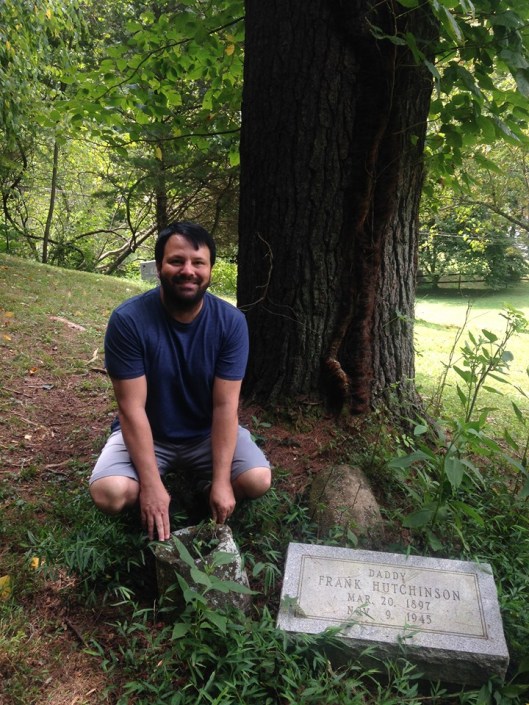
BK at Hutchison Grave 2

Here we are visiting the Frank Hutchison grave at the Elbert Garrett Family Cemetery at Lake, Logan County, WV. Photo by Sheila Brumfield Coleman. 10 August 2019

Big Creek News 08.13.1926

09 Friday Jun 2017

Posted by Brandon Ray Kirk in Banco, Big Creek, Chapmanville, Estep

≈ Leave a comment

Tags

A.D. Shriver, Abe Martin, Appalachia, Banco, Big Creek, Carlos Ferrell, Cecil Butcher, Chapmanville, Ed Belcher, Ella Jane Toney, Estep, F.W. Saltsman, genealogy, Grace Workman, history, Julia Thomas, Logan, Logan Banner, Logan County, Mae Shriver, Manila, organ, Ottie Vance, Polly Ellis, Princess Butcher, Robert Chapman, Roy Chapman, Walter Ferrell, West Virginia, Wilbur Walford

Abe Martin from Big Creek in Logan County, West Virginia, offered the following items, which the Logan Banner printed on August 13, 1926:

We are having fine weather and a lively time in Big Creek.

Mr. and Mrs. Ed Belcher of Logan motored to Big Creek where they visited Miss Harmon for a short time.

Cecil Butcher of Chapmanville and Miss Ottie Vance of this place to enjoy motoring.

Mrs. Mae Shriver was seen playing croquet at her mother-in-law’s, Mrs. A.D. Shriver, Saturday.

F.W. Saltsman, the agent, sure does his duty.

Roy Chapman, son of Mr. and Mrs. Robert Chapman, is very ill at present. We hope he will be well soon and his parents, relatives, and friends have our sympathy.

Carlos and Walter Ferrell and Misses Grace Workman and Ella Jane Toney of Chapmanville were joy riding Sunday afternoon.

Wilbur Walford of this place has been very ill for the past few weeks, but we are glad to say is some better.

Miss Princess Butcher seemed to be downhearted Sunday. Cheer up, Princess. Archie will be back soon.

Mrs. Polly Ellis has been visiting relatives at Estep and Banco. We sure do miss her in Big Creek.

Julia Thomas seemed to be blue Sunday. Cheer up, Julia. He’ll come back.

Come on Chapmanville and Manila and Banco. We know writing is hard work but the hands that work will make the world go and for pep we don’t lack. This is our motto: Work ahead and never look back.

Mr. Adams sure does believe in playing the organ. Don’t you imagine he gets tired?

In Search of Ed Haley 346

31 Thursday Jul 2014

Posted by Brandon Ray Kirk in Big Harts Creek, Ed Haley, Lincoln County Feud, Shively

≈ Leave a comment

Tags

Alton Conley, Big Creek, blind, Blood in West Virginia, Brown's Run, Burl Farley, Charles Conley Jr., Charlie Conley, Clifford Belcher, Conley Branch, crime, Ed Belcher, Ed Haley, Ella Haley, fiddler, fiddling, Green McCoy, Green Shoal, Guyandotte River, Harts Creek, history, John Brumfield, Lincoln County Feud, Logan, Logan County, Milt Haley, Mona Haley, music, Robert Martin, Smokehouse Fork, Warfield, West Virginia, Wirt Adams, writing

From Clifton’s, we went to see Charlie Conley, Jr., a fiddler who lived on the Conley Branch of Smokehouse Fork of Harts Creek. Wirt Adams had mentioned his name to us the previous summer. We found Charlie sitting on his porch and quickly surrounded him with a fiddle, tape recorder, and camera.

When I told him about my interest in Ed Haley’s life, he said Ed played so easy it was “like a fox trotting through dry leaves.”

Charlie said Ed was a regular at Clifford Belcher’s tavern.

“Right there, that’s where we played at on the weekends,” he said. “He used to play there a lot, the old man Ed Haley did. Me and another boy, Alton Conley — he’s my brother-in-law, just a kid… I bought him a guitar and he learned how to play pretty good. He could second pretty good to me, but he couldn’t keep up with that old man. He knowed too many notes and everything for him. The old man realized he was just a kid.”

Charlie told us an interesting story about how Ed came to be blind.

“Milt and Burl Farley, they was drinking where Burl lived down at the mouth of Browns Run. And Ed was just a little baby — been born about a week. Old man Burl said to Milt, ‘Take him out here and baptize him in this creek. It’ll make him tough.’ And it was ice water. He just went out and put him in that creek and baptized the kid and the kid took the measles and he lost his eyes. That’s how come him to be blind.”

That was an interesting picture: Milt and Burl hanging out on Browns Run. We had never really thought about it, but there was a great chance that all the men connected up in the 1889 troubles knew each other pretty well and maybe even drank and played cards together on occasion. For all we knew, Milt may have worked timber for Farley.

Brandon asked Charlie if he knew what happened to Milt Haley.

“They said the Brumfields killed him,” Charlie said. “Him and his uncle was killed over at a place called Green Shoal over on the river somewhere around Big Creek. They were together when they got killed. That was way back. I never knew much about it.”

Obviously Green McCoy wasn’t Ed’s uncle, but I had to ask Charlie more about him.

“All I can tell you is he was old man Ed’s uncle,” he said. “They lived over there on the river, around Green Shoal.”

So Ed was raised on the river?

“No, he lived down here on the creek, right where that old man baptized him in that cold water at the mouth of Browns Run,” Charlie said. “That’s where he was born and raised at, the old man was.”

I guess Charlie meant that Green lived “over there on the river,” which was sorta true.

He didn’t know why Milt Haley was killed, but said, “Back then, you didn’t have much of a reason to kill a man. People’d get mad at you and they wouldn’t argue — they’d start shooting. Somebody’d die. I know the Conleys and the Brumfields had a run in over there on the river way back. Oh, it’s been, I guess, ninety year ago. Man, they had a shoot-out over there and right to this day they got grudges against the Conley people. I’ve had run-ins with them several times. I say, ‘Look man, this happened before my time. Why you wanna fool with me for?’ But they just had a grudge and they wouldn’t let go of it.”

When we asked Charlie about local fiddlers, he spoke firstly about Robert Martin.

“They said Robert was a wonderful fiddler,” he said. “I had a half-brother that used to play a guitar with him when he played the fiddle named Mason Conley. I used to play with his brothers over there on Trace and with Wirt and Joe Adams. Bernie Adams — he was my first cousin. They said Robert was a wonderful fiddler.”

What about Ed Belcher?

“Yeah, Ed was pretty good, but he couldn’t hold old man Ed Haley a light to fiddle by. Belcher was more of a classical fiddler. Now, he could make a piano talk, that old guy could. I knowed him a long time ago. I noticed he’d go up around old man Ed and every oncest in a while he’d call out a tune for him to play. Ed’d look around and say, ‘Is that you, Belcher?’ Said, ‘Yeah,’ and he’d set in a fiddling for him. Maybe he’d throw a half a dollar in his cup and walk on down the street.”

Brandon said to Charlie, “Ed Belcher lived up at Logan, didn’t he?” and Charlie blew us away with answer: “Well now, old man Ed Haley lived up there then at that time. They lived out there in an apartment somewhere. The little girl was about that high the last time I seen her.”

Well, that was the first I heard of Ed living in Logan — maybe it was during his separation from Ella, or maybe there was an earlier separation, when Mona was a little girl.

I asked about a tune called “Warfield” and Charlie said, “That ‘Warfield’ is out of my vocabulary, buddy. I’ve done forgot them old tunes, now.”

In Search of Ed Haley 329

28 Saturday Jun 2014

Posted by Brandon Ray Kirk in Big Harts Creek, Culture of Honor, Ed Haley, Lincoln County Feud, Spottswood, Timber

≈ Leave a comment

Tags

accordion, Al Brumfield, Andy Mullins, banjo, Bernie Adams, Billy Adkins, Birdie, Blackberry Blossom, Brandon Kirk, Charles Conley Jr., Chinese Breakdown, Clifford Belcher, Crawley Creek Mountain, Down Yonder, Ed Belcher, Ed Haley, fiddle, fiddler, guitar, Harts, Harts Creek, history, Hollene Brumfield, Joe Adams, John Hartford, Johnny Hager, Logan, Logan County, Milt Haley, music, piano, Pop Goes the Weasel, Raggedy Ann, Soldiers Joy, Spanish Fandango, timbering, Trace Fork, West Virginia, Wirt Adams, writing

Satisfied that we’d taken up enough of Andy’s day, we drove up Trace Fork to see Wirt Adams, an older brother to Joe Adams. Wirt was busy installing a waterbed but took a break to talk with us. “Well, come on in boys, but I’ve only got a few minutes,” he seemed to say. Inside, however, after I had pulled out my fiddle and he had grabbed a mandolin, he seemed ready to hang out with us all day.

I told Wirt that I was trying to find out about Haley’s life. He said old-timers in the neighborhood used to tell stories about Ed playing for dances on Saturday nights with Johnny Hager, a banjo-picker and fiddler. Ed eventually left Harts Creek and got married but came back to stay with his cousins every summer.

Wirt said he sometimes bumped into him in local taverns:

“It was in the forties,” he said. “About ’47, ’48, ’49, ’50 — along there somewhere. We called it Belcher’s beer garden. It was a roadhouse over on Crawley Hill. Well, I just come in there from the mines and Ed was there and he heard somebody say that I was there and he said, ‘Come on over here Wirt and play one.’ I think the fella that’d been playing with him had got drunk and passed out. Well I played one or two with him and then Charley Conley and them boys come in and Charley says, ‘C’mon over here Wirt and get in with us.’ Ed said, ‘Don’t do that, you’re playing with me.’ I really wasn’t playing with him. I had my mine clothes on. I just come in there and picked up Bernie Adams’ old guitar. If you was playing they’d sit you a beer up there — no money in it. Mostly for fun, we thought. We’d gang up on Saturday night somewhere and play a little. Sometimes they’d dance.”

Wirt felt that Ed was “a good fiddler, one of the best in that time.”

I asked him about Ed’s bowing and he said, “It didn’t look like he moved it that far over the whole thing [meaning very little bow usage] but he played tunes where he did use the long stroke. But most of it was just a lot of movement but not no distance. Just hacking, I call it. Him and Johnny Hager were the only two fellas I know who done that.”

Brandon wondered about Ed’s tunes.

“Well, he played that ‘Blackberry Blossom’ — that was one of his favorites — and then he played ‘The Old Red Rooster’ and he played ‘Raggedy Ann’ and ‘Soldiers Joy’. He had one he called ‘somethin’ in the shucks’. I forget the name of it. Anyhow, it was one of the old tunes. And ‘Pop Goes the Weasel’, I’ve heard him play that.”

I asked if Ed played “Birdie” and he said, “Yeah. Now, that’s one of Charley’s favorites. ‘Chinese Breakdown’, that was one of Ed’s. ‘Down Yonder’.”

Wirt told us more about Johnny Hager and Ed Belcher.

“Johnny Hager was a banjo player but he could play the fiddle, too. He played the old ‘overhand’ [on the banjo]. He was a good second for somebody. Now Ed Belcher was a different thing altogether. He played all kinds of stuff. He played classical, he could play hillbilly. He played a piano, he played accordion, he played a banjo, he played a guitar. He was a good violin player. He tuned pianos for a living. Well, I’d call him a professional musician. They had talent shows in Logan. He’d sponsor that. He’d be like the MC and these kids would go in and play. He was a head musician. He was good. He could do ‘Spanish Fandango’ on the guitar and make it sound good. He could play all kinds of tunes. I never could play with him but then he could take the piano and make it talk, too. He was just an all-around musician.”

Brandon asked Wirt if he knew the story about how Ed came to be blind.

“Milt Haley was Ed’s dad,” Wirt said matter-of-factly. “They said his dad was kind of a mean fella and he took Ed out when he was a little kid — held him by the heels — and ducked him in the creek. He had some kind of a fever in wintertime. I’ve heard that, now. Ed never would talk about it. I never heard him mention his dad.”

Wirt had only heard “snippets” about Milt’s death.

“It was pretty wild times,” he said. “I understand the whole thing was over timberworks. These people, they’d have a splash dam on this creek and they’d get their logs and haul them in this bottom at the mouth of Trace — this was one of them. They had a splash dam and when the water got up they’d knock that dam out and that’d carry the logs down to Hart and they had a boom and them Brumfields owned the boom. They charged so much a log. Some way over that, there was some confusion. But I’ve seen Aunt Hollene. She was supposed to been riding behind old man Al Brumfield, her husband, and they shot at him and hit her.”

After Milt was caught, he made a last request.

“They said they asked him if he wanted anything and he wanted them to bring him a fiddle,” Wirt said. “He wanted to play a tune. Now this is hearsay but I’ve heard it several times. They said he played the fiddle and they hung him.”

John Edward “Ed” Belcher

05 Thursday Jun 2014

Posted by Brandon Ray Kirk in Ed Haley, Logan, Music

≈ 4 Comments

Tags

Appalachia, Ed Belcher, fiddler, fiddlers, fiddling, genealogy, history, Logan, Logan County, music, photos, violin, West Virginia

belcher

John Edward “Ed” Belcher (1886-1970), violinist and resident of Logan, WV

In Search of Ed Haley 314

05 Thursday Jun 2014

Posted by Brandon Ray Kirk in Big Harts Creek, Ed Haley, Logan, Music

≈ Leave a comment

Tags

banjo, Brandon Kirk, Buck Fork, Buffalo Creek, Dixie Mullins, Donna Samson, Ed Belcher, Ed Haley, Falling Water, fiddle, fiddler, genealogy, George Mullins, guitar, Harts Creek, history, James Belcher, Logan, Logan County, Logan Theatre, Mary Belcher, music, piano, Putnam County, Rhoda Mullins, Scott District, timbering, West Virginia, writing

Not long after talking with Vergia, Brandon located Donna Samson, a daughter of Ed Belcher, in Logan, West Virginia. Belcher, we were told, was a multi-instrumentalist who played music with Ed Haley at George Mullins’ home on the Buck Fork of Harts Creek.

John Edward Belcher was born in 1886 or 1889, the son of James and Mary (Thomas) Belcher. The Belchers lived in Scott District, Putnam County, in 1900. Donna thought her father was from Buffalo Creek in Logan County. She said her family was once heavily involved in the sawmill business. As a young man, Ed played music with his brother Henry. At some point, he took music lessons and learned to read and write music. He could play the piano, banjo, guitar, and “could make a violin cry.” In the 1910s and 1920s, he played the violin in an orchestra during silent movies at the Logan Theatre. About that same time, he also operated a boarding house near the train station (likely a convenient “stopping off place” for Ed Haley when he came into Logan).

“He always kept music around his home,” Donna said.

Belcher played ragtime and loved to play “Falling Water” on the piano in his later years.

Donna said her father met her mother Rhoda Mullins (1919-1990) while at a dance in Logan. Rhoda was staying in town with her sister Dixie, who was a local schoolteacher. They were the daughters of George Mullins of Harts Creek. Her father, she added, was some thirty years older than her mother, who was his second wife.

Ed Belcher died in 1970. His death record gives his occupation as “Piano repair, tuner.”

Boone County’s “Little Johnny” Hager 2

13 Tuesday May 2014

Posted by Brandon Ray Kirk in Big Creek, Big Harts Creek, Big Ugly Creek, Calhoun County, Music

≈ Leave a comment

Tags

Akron, Arthur Smith, banjo, Bertha Bias, Big Creek, blind, Boone County, Boone County Genealogical Society, Broad Branch, Calhoun County, Chapmanville, Clay County, Dave Brumfield, Dicy Thomas, Dolly Bell, Ed Belcher, Ed Haley, Ella Haley, fiddle, fiddler, Garretts Fork, genealogy, Greenview, Harts Creek, Harvey Hicks, Hewetts Creek, history, Hubert Baisden, Irene Hager, Jeff Baisden, Jeff Duty, Jess Chambers, Johnny Hager, Kanawha County, Kansas, Kentucky, Kith and Kin, Laury Hicks, life, Little Coal River, Logan County, Lydia Johnson, Madison, Mary Baisden, Morehead, music, North Fork, Ohio, Powderly, Riland Bias, Robert Martin, Rowan County, Sampson Thomas, Simon Bias, Spruce Fork, Texas, Trace Fork, Turley Adams, Ugee Postalwait, Victoria Adams, West Virginia, Wilson Craddock, writing

After his return to West Virginia, Johnny Hager took immediate notice of the large number of musicians who lived in the head of Big Harts Creek. His first cousin, Jefferson “Jig-Toe” Baisden (1879-1970), was a dancer and banjo-picker. J. E. “Ed” Belcher (1889-1970), who played several instruments, and Robert Martin, an Arthur Smith-style fiddler, were other significant musicians in the area. Ed Haley (1885-1951), a blind fiddler from Trace Fork, particularly caught Hager’s attention. Johnny’s desire to absorb Haley’s music was understandable because, as Jess Chambers stated, “It was a badge of honor to have played with Ed Haley.” Jeff Baisden, a cousin to both men, may have introduced the pair.

Johnny could supposedly play any instrument and his trip out to Kansas allowed him to soak up a variety of western tunes and playing styles which were completely new to folks in Logan County. Both of these qualities, his diverse musical capabilities and his unique musical background, ensured that he an Ed Haley had many intense music sessions. According to Turley Adams, Johnny’s great-nephew, Hager encouraged Ed to take his show on the road and volunteered to serve as Haley’s “eyes” on such trips. This willingness to travel, coupled with his apparent competence as a musician, made Johnny a perfect sidekick to Ed. Haley and Hager were both unmarried, a convenience which allowed them to roam the country with few cares or responsibilities.

Johnny and Ed traveled to various places in West Virginia but are particularly remembered up around the Calhoun-Clay County area north of Kanawha County. Aside from being populated with rural folks similar to Hager’s neighbors in Logan and Boone Counties, the area was also endowed with a host of great musicians. Haley and Hager wintered there as young men with a fiddler named Lawrence “Laury” Hicks (1880-1937). Ugee (Hicks) Postalwait of Akron, Ohio, a daughter of Laury Hicks, said that Ed and Johnny first came and visited her father in the early 1910s. Hager was a tall, slim banjo-picker. When Ed and Johnny left Laury’s home in the spring, with Johnny leading the way, Ugee and her brother stood on the bank by the house and “hollered and cried after them.”

Most agree that Johnny’s travels with Ed Haley ended around 1914 when Haley married Ella Trumbo, a blind music instructor from Morehead in Rowan County, Kentucky. Haley’s habit of cursing and drinking also helped end the partnership. Hager did not care for it.

For the most part, Johnny spent the remainder of his life playing music while boarding with his Baisden kinfolk on the North Fork of Big Creek. Irene Hager, a daughter of Hubert E. and Mary (Pauley) Baisden, remembered Johnny playing music on her father’s front porch in the late 1920s. Her father, a banjo-picker, lived at Greenview and the Big Branch of Spruce Fork of Little Coal River in Boone County. Hubert Baisden was Johnny’s first cousin. Hager boarded with him for several weeks at a time. One of Hager’s chores at the Baisden home was to keep wood in the stove. Irene said that Johnny often talked about his early travels with Ed Haley.

Johnny Hager was a man with little roots and family, a fellow who never had a real home. Many from Harts Creek remember that Hager was simply from the “the North Fork of Big Creek.” Dave Brumfield, a great-nephew, said that Hager stayed in that vicinity with a Thomas family. No doubt, this Thomas family was headed by Sampson Thomas who married Dicy Adams, a sister-in-law to Johnny’s sister Victoria Adams. Incidentally, just over the mountain from North Fork was the Broad Branch of Big Ugly Creek where lived a fiddler named Jefferson “Jeff” Duty (born about 1877). During Hager’s stay on the North Fork, he probably visited this musician (and any others in this locality) to learn a few new licks.

Hager also stayed with Simon and Bertha (Baisden) Bias on Bias Branch in Boone County. Mrs. Bias’ grandfather, Riland Baisden, was a brother to Johnny Hager’s mother. He spent a lot of time on the Garretts Fork of Big Creek with the Barkers before leaving them to stay with Wilson Craddock’s family on Hewitts Creek in Boone County. Mr. Craddock’s widow has a necklace which Johnny gave her during his time there. Lydia (Adkins) Johnson of Powderly, Texas, recalled that Hager lived with her mother and father during her “growing up years at home” in the late 1920s and 1930s. Johnson “was born (around 1923) and raised in Boone Co. just over the hill from Chapmanville.” Hager was a hard worker and was very efficient at “old-time” carpentry jobs and such tasks as digging wells. According to Johnson: “[Johnny] was a handy man, & a fiddle player. (Sometimes) a neighbor would need him to come live with them, to build them an out house for them. He was noted for the best out houses, he earned his keep by living with & helping others.”

Lydia Johson described Johnny as “a very neat man” and Dolly Bell agreed, stating that he always kept his hair cut and his face shaved. He never wore suits and never dated women so far as any of his family knew. In Irene Hager’s words, he “was a pretty straight fellow” and Dave Brumfield said he never drank when visiting his father’s home on Harts Creek.

NOTE: Originally published in “Kith and Kin of Boone County, West Virginia” Volume XXII

Published by Boone County Genealogical Society

Madison, West Virginia, 1997

Dedicated to the late Dolly (Hager) Bell

In Search of Ed Haley 266

14 Friday Mar 2014

Posted by Brandon Ray Kirk in Big Harts Creek, Ed Haley, Music

≈ Leave a comment

Tags

Billy Adkins, Brandon Kirk, Carolyn Johnnie Farley, Ed Belcher, Ed Haley, fiddler, fiddling, George Mullins, guitar, Harts Creek, Hattie Farley, history, Hollene Brumfield, Lewis Farley, Logan County, Mary Ann Farley, Mason Conley, music, Rosa Mullins, West Virginia, writing

The next day — the 106th anniversary of Milt Haley’s death – Billy Adkins suggested that we go see Carolyn “Johnnie” Farley on Brown’s Run of Smoke House Fork. She was a granddaughter to Burl Farley, one of the ringleaders of the Brumfield mob. There were other interesting connections: her grandmother was Hollena Brumfield’s sister and her mother was Ben Adams’ niece. Her ancestors, then, represented both sides of the trouble, helping to make her a great source on the 1889 feud. Billy said she was old enough to remember Ed, too. His notes showed her as being born in 1924.

Without really hesitating, we went outside through a small rain shower and boarded the car and took off up the creek. We were oblivious to the poor weather and kept pointing to spots that were probably only significant to us.

“Now that was part of the old Al Brumfield farm.”

“There’s where the old boom was.”

“Here’s where the ambush took place.”

Our fascination with all the sites continued after we turned up the Smoke House Fork.

“There’s the Hugh Dingess Elementary School.”

“There’s the old Henderson Dingess place.”

“There’s where the old Dingesses are buried.”

“There’s Cecil Brumfield’s place. Ed used to visit there.”

We finally reached Browns Run. Johnnie Farley’s white house was just up the branch on the left, accessed by a muddy driveway filled with ruts and sharp jutting rocks. We parked behind the house, where several wooly dogs and a flock of tiny chickens surrounded us — three strangers ankle-deep in mud holes.

Almost immediately, Johnnie came out the back door and spotted Billy — one of the most recognized and popular guys in Harts — and told us to come on inside. She led us through the kitchen and a hallway, past a giant photograph of her grandmother, Mary Ann Farley (Hollena’s sister), and into a very dim living room. We all sat down on furniture that was literally surrounded by papers, books and pictures. Johnnie was obviously a packrat — a woman after my own heart.

Billy began introducing Brandon and I, but Johnnie stopped him short and looked at me with her ice blue eyes and said, “Oh I know who you are. I’ve got some of your records.” Her spirit and energy were immediately apparent — she spoke as if we were old friends. Her husband sat quietly nearby in a comfortable chair. He was in poor health.

I asked Johnnie if she remembered Ed and she said, “Yes, I knowed Ed Haley. He used to come through this country and pick and play the fiddle. I knowed Uncle Ed good. That old man could stop at any man’s house and they’d take him in and keep him all night and feed him. And he’d come through and stop you know and Mom and the girls would have a meal on the table. They’d just say, ‘Uncle Ed, come on.’ And they’d help him, show him the wash-pan and stuff, let him wash his hands, and he’d just go sit right down and eat with us. Whenever he’d come through out of the Chapmanville area he’d stay with one of my uncles and aunts that lived across the hill. That was George and Rosa Mullins. He’d go across the mountain ’cause he liked drinking and they had it over there — moonshine. And he stayed there week in and week out. People was good to him. He wasn’t mistreated.”

I asked Johnnie how old she was when Ed used to come around and she said, “I was about 10, maybe 12.”

She tried to describe him.

“Well, Ed was a little bit maybe heavier than you are, ’bout as tall. I know he kinda had a great, big belly on him. He was a great big fat man. I’d say Ed weighed around 170 pound. To my recollection, Ed had slim hands and slim fingers. He wore shaded glasses and he wore an overcoat — a brown one — and he had an old brown hat. I believe he smoked a pipe. He wore real old-fashioned shoes and old yarn socks. Uncle Ed drunk a lot. He was a good person. He was humble. He didn’t bother nobody. The only harm you could say he done was to hisself and that was drinking. He was around a lot of people, but Uncle Ed didn’t talk too much. He wouldn’t confront his own feelings. He wouldn’t open up fully to nobody.”

I asked Johnnie if she ever saw Ed drunk and she said, “I never did see him drunk — really drunk, no. I’ve seen him drink but not drunk.”

What about singing?

“No. I heard him fiddle but never sing. He played old tunes. ‘Turkey in the Straw’ and just quite a lot of the old-fashioned first fiddle player’s tunes. Uncle Ed was a good fiddler. He could make a fiddle talk. Mason Conley played the guitar and he’d get with him and play. And they was an old man traveled a lot with him named Ed Belcher. They had an old tune they played called ‘Sally Goodin’.”

Now, what happened to Ed Haley?

“I believe Ed died up around Ed Belcher and them. He drinked himself to death.”

In Search of Ed Haley 222

11 Saturday Jan 2014

Posted by Brandon Ray Kirk in Ed Haley

≈ Leave a comment

Tags

Cary Mullins, Ed Belcher, Ed Haley, fiddle, fiddling, Harts Creek, history, Joe Adams, Logan County, music, Noah Mullins, West Virginia, writing

When I pressed Joe for specific details about Ed’s technique he said, “He’d play up on the bow about four or five inches, but he played the full stroke with the bow all the time. He didn’t jiggle it.”

I asked if he always sat down when he played and Joe said, “I’ve seen him sitting down and standing up both. They said he danced, but I never did see him dance none. He pat his foot when he played. You’d never hardly know he was patting it. He just patted one foot. He had that chin rest…”

“So Ed put the fiddle up under his chin?” I interrupted.

“He put it up under his chin and played,” Joe confirmed. “Ed Belcher, he played with it under his chin, too. Now Robert Martin, sometimes he’d have it under his chin, sometimes he’d have it down here on his chest.”

Brandon asked if Ed packed his fiddle in a case and Joe said, “Yeah, he had a case. If it was raining or something, I’ve seen him with it under his coat. He had two or three bows. I’ve seen him take the bow loose… He took the end of it loose and put it under the string and played some kind of a tune. They was just one tune he played like that. I believe it was some kind of a religious song. I don’t know how he done it.”

I asked Joe if Ed sang any and he said, “I heard him sing a little bit one or two times on one or two tunes. He’d play a verse and then he’d sing a little bit but not much. Seems to me like that his wife sung a little bit with him on some of them but they didn’t do too much singing. He’d play a little bit, then sing a little bit. They was just a few tunes that he done like that. He didn’t play none of this modern music or nothing like that. He played old-time tunes, like ‘The Arkansas Traveler’. He’d play that and some of them boys’d be sitting off someplace and talking about the big rock in the field and all about the feller digging the taters out and that old sow rooting them out. Ed would play the music and they’d put that in. They’re all dead now, them boys that used to do that. Noah Mullins and my brother Howard and Burl Mullins and Cary and them.”

Joe’s memories seemed to stretch back fondly to that time.

“Yeah, it was all right,” he said. “Every time I played with him he played ‘Lady of the Lake’. Real old tunes.”

Joe said Ed played “Love Somebody”, “Birdie”, “Brownlow’s Dream”, “Hell Up Coal Hollow”, “Hell Among the Yearlings”, “Wild Hog in the Red Brush”, and “Jenny’s Creek”. He also played “Mockingbird” with “everything in it.”

“He’d make the bird holler and everything else,” Joe said.

I asked Joe if Ed played a tune for a long time and he said, “Well, some of his tunes he played a long time and some of them were just short and sweet. He put a lot extra in them sometimes. It went along with it but if you didn’t know him pretty well and watch what you was doing you’d get off. It just come natural for me to follow him because he played good time.”

In Search of Ed Haley 221

10 Friday Jan 2014

Posted by Brandon Ray Kirk in Ed Haley

≈ Leave a comment

Tags

Appalachia, Arthur Smith, banjo, Ed Belcher, Ed Haley, fiddlers, George Mullins, Geronie Adams, Grand Ole Opry, Harts Creek, history, Joe Adams, Johnny Hager, Logan County, music, Robert Martin, West Virginia, writing

I wondered if people around Trace listened to the radio, especially the Grand Ole Opry, in the early days.

“They was a few radios,” Joe said. “We had one here. We ordered it from a company called Jim Brown. It had five batteries. And like Jerry Clower said, you’d take them and set them in front of the fire and get them hot and then plug them in, they’d play. They was kindly hard to get — they didn’t cost much. I think they was about ten or twelve dollars for all of them. But Robert Martin had one on top of that hill and my brother had one on Twelve Pole, and on Saturday night when the Grand Ole Opry come on, it was a sight to watch these people a going. It come in good and clear. Robert learned a lot of Arthur Smith tunes off the radio. Yeah, Arthur Smith come down there at Branchland and stayed a week with him and I was talking to Robert after he left and he said, ‘I wish you boys’d come down.’ I said, ‘Well, if you’d a let us know, we woulda come.'”

Brandon said to Joe, “I remember you were telling me last time I talked to you that you thought Robert Martin was about the best around.”

Joe said, “In the modern music. Now, in the old-time music, you’d take Ed Haley and Johnny Hager and Ed Belcher. Ed Belcher, he stayed at George Mullins’ and he was like my brother: he was an all around musician. He could tune a piano and play it, he could play an organ. He could play anything he picked up. I never did hear him play a banjo but he could play anything on the fiddle or guitar. He’d note the guitar all the time. He played like these fellers play on Nashville. They was several people around here had banjos and played. Geronie Adams — Ticky George’s boy — he played a banjo a little bit. And they was a fella — Johnny Johnson — played with Robert Martin out on that hill. He was from someplace in Kentucky.”

I asked Joe what kind of banjo style Johnny Hager played.

“He played the old…,” he started. “They’s some of them calls it the ‘overhand’ and some of them call it just ‘plunking’ the banjo. They was several people played like that. Bob Dingess down here, he played that a way a little bit. My dad, he played the banjo and he played that.”

I asked Joe how Ed dressed in the early forties.

“Well, he wore dress pants most of the time,” he said. “He wore mostly colored shirts — blue or green or just any color. Work shirts. Most of the time he wore suspenders with them. And had buttons sewed on them to buttom them with. Buttons on the inside. Mostly he wore slippers. They was a lace-up slipper. Three laces. He could tie his shoes just as good as you could tie yorn. He wasn’t a big man — he was a little small man. About 5’4″, 5’5″.”

Brandon asked what Ed was like when he wasn’t playing and Joe said, “Well, he’d just sit around and talk and tell tales about first one thing and then another. They’d just talk about how hard they was raised and how they come up.”

Did the ladies like him?

Joe said, “They all liked him but they wasn’t girlfriends. If he went into a place to play, they’d all come around and hug him and talk to him.”

In Search of Ed Haley 81

20 Wednesday Mar 2013

Posted by Brandon Ray Kirk in Big Harts Creek, Cemeteries, Ed Haley, John Hartford, Music, Spottswood

≈ 1 Comment

Tags

accordion, Bernie Adams, blind, Clifford Belcher, Ed Belcher, Ed Haley, Ewell Mullins, fiddle, guitar, harmonica, history, Hoover Fork, Inez, John Adams, John Hartford, Johnny Adams, Johnny Hager, Kentucky, Liza Mullins, Milt Haley, music, Peter Mullins, Robert Martin, Turley Adams, Violet Adams, West Fork

Satisfied with our stop on West Fork, Lawrence and I said our farewells to the Kirks and went to see Turley and Violet Adams on Trace Fork. After some small talk about new developments, Turley told us about his uncle Johnny Hager and father Johnny C. Adams traveling with Ed in the early days. He said Uncle Johnny was the one who got Haley to take his music on the road, while his father just traveled around with them.

“They left here playing music together,” Turley said. “My father just helped them take care of their musical instruments — carried it around and stuff — but they done the music. He would sing with somebody but he never did sing by hisself. And Ed Belcher, I think, played with them then. He could play anything but played a guitar mostly.”

So where all did they travel to?

“They played up at Logan on the radio at one time,” Turley said. “They had a program on up there, Ed Belcher did. Oh man, that’s been back in the thirties. Maybe ’36, ’35. I was just a little bitty boy. I just heard these tales — I don’t know them for sure.”

I asked about Johnny Hager.

“I was just a great old big boy the last time I seen Johnny Hager,” Turley said. “He came to our house, stayed around a little while and left. He was kindly a small fella. My dad was, too. Ed would make two of ary one of them. He was a great big feller, Ed was. Now Ewell Mullins, they was all buddies. Now Johnny Hager and Ed could play music. I heard an old guy on television one day talking about how him and Ed used to play in front of a church somewhere together. Yeah, he called him ‘Blind Fiddling Ed Haley.’ Said he’s just a real good friend to him. But he lives in Inez, Kentucky, that feller does.”

I said, “Well, isn’t Inez where Milt is supposed to be from?”

Turley said, “Milt, now my dad just could remember him. He said he was a hard-working fellow and when he’d come in home he’d just tell them boys, ‘Right now, we got to have a fight and get everything settled and we’ll be all right.’ They liked to fight. I guess that was Ed and he had how many more — two more?”

I said, “You mean Ed had brothers?” and Turley said, “I think he did. I believe my dad said he had a brother and one of them got in a fight one time and he bit Milt’s ear off right in the yard right down there. Now, they was Milt’s boys. I guess Ed is Milt’s boy, ain’t he?”

Lawrence said he’d never heard of his father ever having any brothers or sisters, but it sure was a strange coincidence that we heard a story about “Milt’s ear” right after hearing Bob Adkins’ account of Green and “the nick.” Maybe Milt had the nick — which would’ve reversed their roles in Bob’s story of their final days.

So Ed had brothers?

“Far as I know, they was two or three more of them from the tales they told, you know,” Turley said. “Uncle Peter and Aunt Liza used to tell it. Said every time they come home — Milt and them boys — said he’d just fight with all of them at one time. Have a good time. Say, ‘Now we’re friends.’ Back then, that’s what they believed in.”

This was a major development.

“I just heard these tales,” Turley said. “I don’t know how true they are. About Milt coming home and say, ‘Now, we’ll straighten ‘er out right now and we won’t have no more problems while I’m here.’ That’s the way he run his family, you know. That old woman said, ‘I’ll agree to that. That’s the way it ought to be done.’ I don’t guess she could do anything with them boys.”

Hoping for clues about Ed’s “brothers,” I asked if any of the old gravestones in the cemetery behind Turley’s had any writing on them. Unfortunately, Violet said all the markers had rolled down the hill in recent years and the land had leveled out to where it didn’t even resemble a cemetery. All she knew about the cemetery was that there was a “big grave” in it at one time that belonged to a woman with the last name of Priest (she was the only person buried there who her mother-in-law had actually known).

Turley said he last heard Ed play the fiddle at Clifford Belcher’s tavern on Harts Creek where he played for money and drinks. Violet remembered him playing music all night at her father’s home on Hoover Fork with Robert Martin (her great-uncle) and Bernie Adams. She described Bernie as a “real skinny” bachelor who sang “a little bit but not much” and who “was a real good guitar player, but he never would hardly play.”

“He’d get to drinking and he’d play but if he wasn’t drinking he wouldn’t play,” she said.

Turley said Bernie could also play the banjo, harmonica, fiddle and accordion.

In Search of Ed Haley 78

07 Thursday Mar 2013

Posted by Brandon Ray Kirk in Ed Haley

≈ Leave a comment

Tags

Bernie Adams, blind, Ed Belcher, Harts Creek, history, Iris Williams, John Hartford, Lawrence Haley, Lawrence Kirk, Lincoln County, Logan, Milt Haley, music, West Virginia, writing

The next day, Lawrence and I went to find Milt Haley’s grave on the West Fork of Harts Creek. It had been two years since our initial trip up the Guyandotte Valley and I was excited to once again plant my feet on the grounds of Ed Haley’s childhood. We followed Bob Adkins’ directions to the West Fork of Harts Creek, where we found a confusing sign labeled “East Fork Road” pointing us across a stone bridge and past a somewhat large red brick church. Lower West Fork was very much different from my memories of main Harts Creek — more sparsely settled. It was surprisingly beautiful farm country with a view of an almost-forgotten agrarian way of life. There were old barns, cattle and tiny farms all along the nice little road.

Not surprisingly, Lawrence and I were unable to find the Milt Haley grave, which we figured was located in a thicket on top of one of the surrounding mountains. Hoping for the best, we decided to ask for directions at a nice-looking house. We chose a neat little white home, where an older lady came out and showed almost complete confusion as we asked about Ed Haley, Milt Haley and a grave. Once she figured out what we were talking about, though, she introduced herself as Iris Williams, said she was part-Brumfield and pointed toward the grave just down the road and to the right on a hill. She said her older brother Lawrence Kirk would know all about it. She went back inside and called Lawrence, who said he’d come right over and tell us what he knew about Ed Haley and the Haley-McCoy murders.

It wasn’t long until Lawrence Kirk pulled into the driveway and popped out of his car. He was a short stocky 70-something-year-old fellow with thinning hair and glasses. He made his way toward the porch, grinning and waving a newspaper. He said he had seen me on TV and unraveled the paper, which featured a front-page story about our recent visit to see Lynn Davis in Huntington.

In one of those “strange contact moments,” I introduced him to Lawrence Haley. It was a first-ever meeting of men whose ancestors had shot it out along Harts Creek over one hundred years earlier. They seemed to like each other right away and made it clear they held no grudges over their ancestors’ troubles. This was great news — no barriers to information flow. However, I have to admit, I got a little adrenaline rush in thinking that Lawrence and I were now in “enemy territory.” In my mind, the 1889 feud was still smoldering in the hearts and minds of at least a few people.

Instead, we all sat on Mrs. Williams’ front porch with Mr. Kirk, who remembered Ed well.

“I’ve heard Ed Haley play up there at the courthouse square many of a time in Logan with Ed Belcher,” he said. “They’d get together up there sometimes and play all day. I’d be with my dad up there when I was a youngster. I kinda got acquainted with the old man, enough to speak to him. He’d always ask you who it is. ‘Yeah, I know some Kirks,’ he’d say.”

Mr. Kirk said he used to see Ed and his wife on the Logan-Williamson bus that ran between the coalfields and Huntington.

“I felt sympathetic towards them,” he said. “They were blind — handicapped — and I’d notice them. I can’t remember that well about him. I can’t remember too much how he was dressed. It bears on my mind about ever time I ever saw him he was bald-headed. I’m not sure…but he played that fiddle.”

Mr. Kirk last saw Ed play music on a Sunday just before the election of 1948 or ’50 at the Harts Tavern. His uncle Taylor Brumfield was the owner of the tavern. Ed was there with Bernie Adams, who Mr. Kirk called “a pretty good guitar player.”

“Bernie was bad to drink,” he said. “He just drunk liquor until it finally killed him, I reckon.”

Ed was “being pretty sassy” at the tavern.

“They wasn’t giving him enough money to please him, you know,” Mr. Kirk said. “They was buying him a few drinks but he felt like fellows ought to throw him in a few dollars of money along. But that bunch there, they had to have their quarters to buy some beer with.”

Ed told Bernie, “Well hell, let’s go. This tight bunch here won’t buy a man no beer. Can’t get a crowd together no how.”

Bernie said, “Now, Ed. Don’t get to talking too rough about these fellows around Harts. Some of your folks didn’t have too good a relation with these Brumfields around here.”

“Aw, to hell with these damn Brumfields,” Ed said. “There’s nobody afraid of these Brumfields.”

I almost fell off the porch laughing.

In Search of Ed Haley 24

09 Sunday Dec 2012

Posted by Brandon Ray Kirk in Big Harts Creek, Ed Haley, Spottswood

≈ Leave a comment

Tags

Appalachia, Ashland, Ashland Cemetery, Buck Fork, Clifford Belcher, Connie Woods, Dingess, Ed Belcher, Ed Haley, Ella Haley, fiddle, fiddler, fiddling, genealogy, George Greasy Adams, guitar, Harts Creek, history, Hoover Fork, Jackson Mullins, Jeff Baisden, John Frock Adams, John Hartford, Johnny Hager, Kentucky, Lawrence Haley, Liza Mullins, Logan, Logan County, Maynard's Store, music, Nashville, Peach Creek, Peter Mullins, Ralph Haley, Sol Bumgarner, square dances, Trace Fork, Turley Adams, Violet Mullins, Weddie Mullins, West Virginia

At some point, Connie showed up with a small entourage of women toting some of Joe Mullins’ old pictures. My eyes immediately went to a large, framed photograph of two serious mustachioed men. Turley said one was Weddie Mullins — his grandfather on “both sides” of the family tree — while the other was Ed Haley’s Uncle Peter Mullins. Both men were brothers. Turley said his grandfather Weddie — Ed’s uncle — was murdered at the little town of Dingess just after the turn of the century.

Lawrence said, “Mom and Pop used to play at Dingess — just a little community over in MingoCounty.”

That got us back on the subject of Ed, although most of the commentary was choppy and mixed between looking at photographs. One of the girls said, “We’ve heard talk of Ed all our lives.” Another made the unusual remark, “He could see lightning. Some way he could feel it or something and tell it was hitting.” Someone said Ella could tell the difference between the Haley children by their smell.

Turley, who had been fairly quiet throughout our visit, said to Lawrence, “Bernie Adams used to play a lot of music with your dad.”

Violet said, “Bernie’s the one took him in the chicken house for the toilet. They stayed all night up at our house. Robert Martin and Bernie and Ed and them played music all night. I can remember it. I was just a little girl. Mother said Ed played many a time where she was raised up over in the head of Francis Creek.”

Lawrence said, “You know, these different places like Hoover and places like that don’t ring a bell to me. I can remember going down here to the end of Trace, and maybe down to Smoke House, and up to George Adams’ who lived on up this way, and up to that store — Maynard’s Store — and buying candy, but that’s about the limit of my travel, except coming up from the mouth of Harts.”

Basically, the next half-hour or so was a giant “get to know everybody session” — mostly between Lawrence and the locals. I sort of hung back a little, taking it all in, while Lawrence spoke of and listened to stories about his father. There was a glow about his face that had been absent in Ashland.

At one juncture, he told Connie how her grandparents, Peter and Liza Mullins, raised his father.

“Oh, really?” she said. “I didn’t know that. Now I remember Granny. They wanted me to stay all night with her and I was always afraid she’d die in her sleep or something. That’s terrible.”

She asked Lawrence if he remembered Uncle Jeff — “he was Granny’s brother and he was kinda slow.”

Violet said, “He liked to go to all these dinner meetings they’d have out in the country. He’d walk for miles and miles.”

Connie asked Lawrence if Ed ever played at Logan — the seat of government for Logan County — and he said, “Yeah, he used to play around Logan quite a bit and Peach Creek. He’d play up there during court days especially. Back in them days, the town would load up. I’ve been there with him during those times. The old courthouse, I think it faced toward the river. One side of it was on Stratton Street.”

Connie asked where Ed was buried and Lawrence said, “He’s buried in the Ashland Cemetery in Ashland. Mom’s buried in the same cemetery but not with him. By the time my mother died — she died three years after Pop — they’d filled that section up.”

I’d never really thought about that. Ed and his wife were not buried together, the kind of seemingly minor detail tossed out randomly that took on somewhat of a greater meaning at a later date. I made a note to myself right then that I would visit Ed’s grave in Ashland before heading back to Nashville.

Violet wondered about Lawrence’s older brother, Clyde.

“Clyde’s out in Stockton, California,” he said. “He’s what I call the black sheep of the family. Never married. He just followed the sun for work. When it was summertime, he’d go north; when it was wintertime, he’d go south.”

Just then, an old man called Bum showed up at Turley’s. Bum remembered Ed and his family well. He asked Lawrence about the Haleys. It was hard to focus on their conversation — everyone in the room seemed to be talking at once — but I heard Bum mention something about how Lawrence’s brother Ralph used to hang from tree limbs by his “sticky toes” and would “do anything.”

“That’s exactly how he got killed,” Lawrence said. “He was hanging by his toes and he was gonna let go with his toes and flip over and land on his feet but he didn’t make it. He was just active like that. See, Ralph danced around these carnivals and fairs and places.”

A few minutes later, things quieted down a little. I moved over near Bum to ask him about Haley. His answers seemed to come through his nose more than his mouth and were usually followed by a little chuckle. He was great. Bum said he was 67 years old and first saw “Uncle Ed” in the thirties.

“He lived down in Ashland and he’d come up pretty often,” Bum said. “People come from everywhere to listen at him play whenever they’d have them big dances and stuff. He’d play half the night. Yeah, I’ve been right there.”

I asked Bum about Ed’s tunes and he said, “Ah, he played so many… There was one religious tune he’d put the bow under the fiddle, and the hair, he’d turn it right over and slip his fiddle between it, and play that. I forgot what it was.”

Bum told me all about the old dances.

“They used to have a big working,” he said. “About every family on this creek and Harts Creek down here, they’d all gather up and hoe one man’s field out and then move to the next one. And they’d all go to each other’s farms that way and help each other, and when they got done one man would have a big dance. They’d have a dance on Saturday night. They’d have them at just about every home, mostly at Uncle Peter’s up here, in the house. Like one room in there, they’d gather everything up and take it outside and they’d have a dance in there, and when they got through they’d put the furniture all back in. Anybody that wanted to come was invited. They’d have food right in the house. There were usually three or four around to call the reel: ‘Dosy doe and here she comes and there she goes.'”

“It’d just be Uncle Ed and John Hager playing?” I asked.

“Well, Ed mostly,” Bum said. “Uncle Johnny, he played some with him. Uncle Ed, he played by himself most all of these dances. Mrs. Haley played with him a lot. She played the mandolin, guitar or accordion.”

“Did Johnny Hager play the banjo about like Grandpa Jones?” Turley asked Bum.

“Yeah, over-handed they call it,” Bum said. “Molly O’Day, she played that way. My grandpaw would whittle out two little sticks and he’d sit and beat on them strings and Ed a playing the fiddle.”

“Ed played with Ed Belcher,” Turley said.

“Yeah, I’ve heard Pop talk about Ed Belcher,” Lawrence said.

Now who was Ed Belcher?

“He played the guitar,” Bum said. “He could play the piano, too. They’d get together at times and play together. They’d go up Buck Fork.”

Bum said he last saw Ed Haley “over here on that mountain yonder” at Clifford Belcher’s beer joint.

“He’d go down there and play and people’d give him beer and stuff. That’s about all he wanted. I run into him over there one night. I said, ‘Uncle Ed, where you been?’ He said, ‘I ain’t been no where but right here. I come up here to sit around and play music a while.’ I bought him a beer and he sat there and played music. Well, a Conley boy run in and went to playing and thought he was better than Ed and everything. Ed finally told that boy, said, ‘Why don’t you quit playing that music? You can’t play. You’re cutting my music up too much.’ That boy come back at him, you know, and aimed to fight him. He said, ‘Shut up, old man. You don’t know what you’re a talking about.’ I was standing there and I told him, I said, ‘Now listen. If you jump on that man, you’ll have me to fight and him both.’ And Ed took his fiddle and hit that feller right down over the head with it and busted that fiddle all to pieces.”

Lawrence laughed.

Turley said Ed Haley was high-tempered, as well as strong, and hinted at his mean streak.

“Dad said Peter had a dog that Ed couldn’t get along with at all. Ed told Uncle Johnny, ‘You get me close to him and I’ll hit him in the mouth. I’ll knock him out.’ And he said Ed hit that dog and killed him with his fist. Hit him in the ear and killed him. That’s what my daddy told.”

Bum was very familiar with Ed Haley’s family on Trace. He said Uncle Peter Mullins was “pretty bad to get out and get drunk and get into it with people.” He knew all about Ed’s uncle Weddie Mullins’ murder at an election in Dingess. “There used to be a train come in there and they’d bring flour and stuff over there and people’d go over there to Dingess and get it,” he said. “They’d take wagons and go through these hills, like up Henderson and all them places and they got into it over there.” Bum wasn’t sure who shot Weddie but knew that his killer survived the fracas. Once the news reached Harts Creek, John Adams got a pistol from Jackson Mullins and rode to Dingess where he found Weddie’s killer laid up in a bed clinging to life. Someone told him the guy probably wouldn’t make it so (like something out of a Hollywood Western) he pulled out a .38 pistol and said, “I know he won’t,” and shot him in cold blood.

I wasn’t exactly sure who any of these people were — Jackson Mullins, John Adams — but I had the impression that they were some relation to Ed Haley. At that juncture, I just let the tape recorder roll and tried to take notes and absorb everything, figuring that what seemed like unimportant details would perhaps later develop into major items of interest.
Feud Poll 1

If you had lived in the Harts Creek community during the 1880s, to which faction of feudists might you have given your loyalty?

Categories

  • Adkins Mill
  • African American History
  • American Revolutionary War
  • Ashland
  • Atenville
  • Banco
  • Barboursville
  • Battle of Blair Mountain
  • Beech Creek
  • Big Creek
  • Big Harts Creek
  • Big Sandy Valley
  • Big Ugly Creek
  • Boone County
  • Breeden
  • Calhoun County
  • Cemeteries
  • Chapmanville
  • Civil War
  • Clay County
  • Clothier
  • Coal
  • Cove Gap
  • Crawley Creek
  • Culture of Honor
  • Dingess
  • Dollie
  • Dunlow
  • East Lynn
  • Ed Haley
  • Eden Park
  • Enslow
  • Estep
  • Ethel
  • Ferrellsburg
  • Fourteen
  • French-Eversole Feud
  • Gilbert
  • Giles County
  • Gill
  • Green Shoal
  • Guyandotte River
  • Halcyon
  • Hamlin
  • Harts
  • Hatfield-McCoy Feud
  • Holden
  • Hungarian-American History
  • Huntington
  • Inez
  • Irish-Americans
  • Italian American History
  • Jamboree
  • Jewish History
  • John Hartford
  • Kermit
  • Kiahsville
  • Kitchen
  • Leet
  • Lincoln County Feud
  • Little Harts Creek
  • Logan
  • Man
  • Matewan
  • Meador
  • Midkiff
  • Monroe County
  • Montgomery County
  • Music
  • Native American History
  • Peach Creek
  • Pearl Adkins Diary
  • Pecks Mill
  • Peter Creek
  • Pikeville
  • Pilgrim
  • Poetry
  • Queens Ridge
  • Ranger
  • Rector
  • Roane County
  • Rowan County Feud
  • Salt Rock
  • Sand Creek
  • Shively
  • Spears
  • Sports
  • Spottswood
  • Spurlockville
  • Stiltner
  • Stone Branch
  • Tazewell County
  • Timber
  • Tom Dula
  • Toney
  • Turner-Howard Feud
  • Twelve Pole Creek
  • Uncategorized
  • Warren
  • Wayne
  • West Hamlin
  • Wewanta
  • Wharncliffe
  • Whirlwind
  • Williamson
  • Women's History
  • World War I
  • Wyoming County
  • Yantus

Feud Poll 2

Do you think Milt Haley and Green McCoy committed the ambush on Al and Hollene Brumfield in 1889?

Blogroll

  • Ancestry.com
  • Ashland (KY) Daily Independent News Article
  • Author FB page
  • Beckley (WV) Register-Herald News Article
  • Big Sandy News (KY) News Article
  • Blood in West Virginia FB
  • Blood in West Virginia order
  • Chapters TV Program
  • Facebook
  • Ghosts of Guyan
  • Herald-Dispatch News Article 1
  • Herald-Dispatch News Article 2
  • In Search of Ed Haley
  • Instagram
  • Lincoln (WV) Journal News Article
  • Lincoln (WV) Journal Thumbs Up
  • Lincoln County
  • Lincoln County Feud
  • Lincoln County Feud Lecture
  • LinkedIn
  • Logan (WV) Banner News Article
  • Lunch With Books
  • Our Overmountain Men: The Revolutionary War in Western Virginia (1775-1783)
  • Pinterest
  • Scarborough Society's Art and Lecture Series
  • Smithsonian Article
  • Spirit of Jefferson News Article
  • The Friendly Neighbor Radio Show 1
  • The Friendly Neighbor Radio Show 2
  • The Friendly Neighbor Radio Show 3
  • The Friendly Neighbor Radio Show 4
  • The New Yorker
  • The State Journal's 55 Good Things About WV
  • tumblr.
  • Twitter
  • Website
  • Weirton (WV) Daily Times Article
  • Wheeling (WV) Intelligencer News Article 1
  • Wheeling (WV) Intelligencer News Article 2
  • WOWK TV
  • Writers Can Read Open Mic Night

Feud Poll 3

Who do you think organized the ambush of Al and Hollene Brumfield in 1889?

Recent Posts

  • Logan County Jail in Logan, WV
  • Absentee Landowners of Magnolia District (1890, 1892, 1894)
  • Charles Spurlock Survey at Fourteen Mile Creek, Lincoln County, WV (1815)

Ed Haley Poll 1

What do you think caused Ed Haley to lose his sight when he was three years old?

Top Posts & Pages

  • About
  • U.B. Buskirk of Logan, WV (1893-1894)
  • Perry A. Cline Deed to Anderson Hatfield (1877)
  • Hugh Dingess Family Cemetery (2014)
  • Anderson Blair Account with William A. Dempsey (1854-1855)

Copyright

© Brandon Ray Kirk and brandonraykirk.wordpress.com, 1987-2023. Unauthorized use and/or duplication of this material without express and written permission from this blog’s author and/or owner is strictly prohibited. Excerpts and links may be used, provided that full and clear credit is given to Brandon Ray Kirk and brandonraykirk.wordpress.com with appropriate and specific direction to the original content.

Archives

  • February 2025
  • January 2025
  • October 2023
  • September 2023
  • December 2022
  • November 2022
  • May 2022
  • April 2022
  • February 2022
  • November 2021
  • October 2021
  • September 2021
  • June 2021
  • May 2021
  • April 2021
  • March 2021
  • February 2021
  • January 2021
  • December 2020
  • November 2020
  • October 2020
  • July 2020
  • June 2020
  • May 2020
  • April 2020
  • March 2020
  • February 2020
  • January 2020
  • December 2019
  • November 2019
  • October 2019
  • September 2019
  • August 2019
  • July 2019
  • June 2019
  • May 2019
  • April 2019
  • March 2019
  • February 2019
  • January 2019
  • December 2018
  • November 2018
  • October 2018
  • September 2018
  • August 2018
  • July 2018
  • June 2018
  • May 2018
  • April 2018
  • March 2018
  • February 2018
  • January 2018
  • December 2017
  • November 2017
  • October 2017
  • September 2017
  • August 2017
  • July 2017
  • June 2017
  • May 2017
  • April 2017
  • March 2017
  • February 2017
  • January 2017
  • December 2016
  • November 2016
  • October 2016
  • September 2016
  • August 2016
  • July 2016
  • June 2016
  • May 2016
  • April 2016
  • March 2016
  • February 2016
  • January 2016
  • December 2015
  • November 2015
  • October 2015
  • September 2015
  • August 2015
  • July 2015
  • June 2015
  • May 2015
  • April 2015
  • March 2015
  • February 2015
  • January 2015
  • December 2014
  • October 2014
  • September 2014
  • August 2014
  • July 2014
  • June 2014
  • May 2014
  • April 2014
  • March 2014
  • February 2014
  • January 2014
  • December 2013
  • November 2013
  • October 2013
  • September 2013
  • August 2013
  • July 2013
  • June 2013
  • May 2013
  • April 2013
  • March 2013
  • February 2013
  • January 2013
  • December 2012
  • November 2012

Enter your email address to follow this blog and receive notifications of new posts by email.

Join 2,925 other subscribers

Tags

Appalachia Ashland Big Creek Big Ugly Creek Blood in West Virginia Brandon Kirk Cabell County cemeteries Chapmanville Charleston civil war coal Confederate Army crime culture Ed Haley Ella Haley Ferrellsburg feud fiddler fiddling genealogy Green McCoy Guyandotte River Harts Harts Creek Hatfield-McCoy Feud history Huntington John Hartford Kentucky Lawrence Haley life Lincoln County Lincoln County Feud Logan Logan Banner Logan County Milt Haley Mingo County music Ohio photos timbering U.S. South Virginia Wayne County West Virginia Whirlwind writing

Blogs I Follow

  • OtterTales
  • Our Appalachia: A Blog Created by Students of Brandon Kirk
  • Piedmont Trails
  • Truman Capote
  • Appalachian Diaspora

BLOOD IN WEST VIRGINIA is now available for order at Amazon!

Blog at WordPress.com.

OtterTales

Writings from my travels and experiences. High and fine literature is wine, and mine is only water; but everybody likes water. Mark Twain

Our Appalachia: A Blog Created by Students of Brandon Kirk

This site is dedicated to the collection, preservation, and promotion of history and culture in Appalachia.

Piedmont Trails

Genealogy and History in North Carolina and Beyond

Truman Capote

A site about one of the most beautiful, interesting, tallented, outrageous and colorful personalities of the 20th Century

Appalachian Diaspora

  • Subscribe Subscribed
    • Brandon Ray Kirk
    • Join 787 other subscribers
    • Already have a WordPress.com account? Log in now.
    • Brandon Ray Kirk
    • Subscribe Subscribed
    • Sign up
    • Log in
    • Report this content
    • View site in Reader
    • Manage subscriptions
    • Collapse this bar
 

Loading Comments...