• About

Brandon Ray Kirk

~ This site is dedicated to the collection, preservation, and promotion of history and culture in my section of Appalachia.

Brandon Ray Kirk

Tag Archives: Charleston Gazette

Jack Dempsey (1928)

02 Tuesday Oct 2018

Posted by Brandon Ray Kirk in Sports

≈ Leave a comment

Tags

Appalachia, Armand Emanuel, boxing, California, Charleston, Charleston Gazette, Estelle Dempsey, Gene Tunney, history, Hollywood, Jack Dempsey, James J. Corbett, Logan Banner, Los Angeles, Mickie Walker, Mike McTigue, New York City, photos, San Francisco, Summers Street, Virginia Street, West Virginia

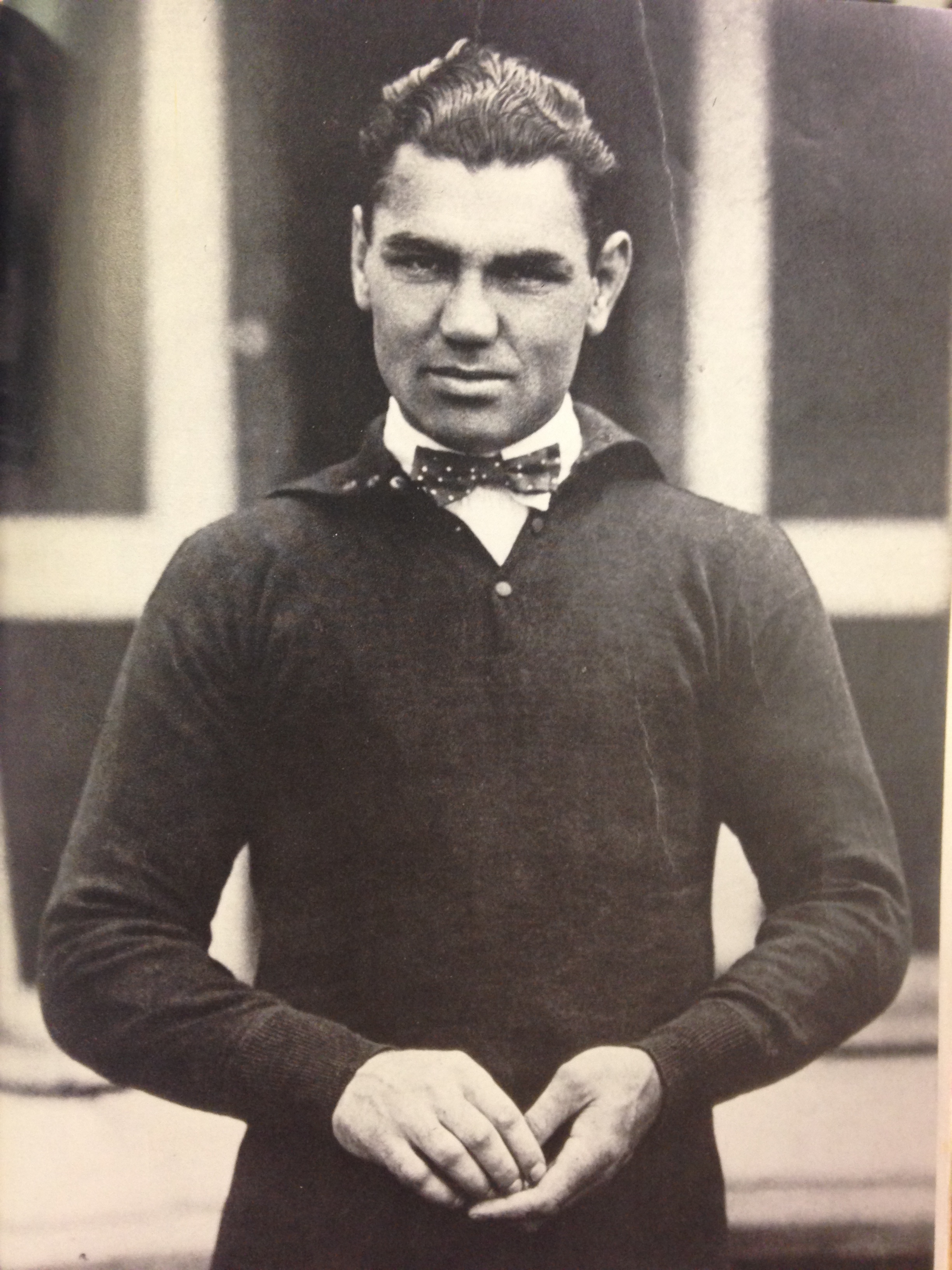
The following items relating to Jack Dempsey, heavyweight champion of the world from 1919-1926, were printed in the Logan Banner of Logan, WV, in 1928:

IMG_8125.JPG

Jack Dempsey, 1924. Photo credit unknown.

“Fight Gene, Sure” Says Jack Dempsey

Jack Dempsey has begun light training, says a dispatch from Los Angeles, but says he is merely trying to keep fit.

“There’s nothing in the wind. I don’t want to get fat, and the only way to keep from it is to have a regular training diet,” he is quoted as having said.

“Fight Tunney again? Sure. But I’m not in the mood to do any elimination bouting to get another crack at the title.

“Of course, I might take on one or two preliminary scraps if there was a definite program in sight, but there’s absolutely nothing to report that one has been drawn up.”

Source: Logan (WV) Banner, 10 January 1928

***

DEMPSEY WINS ANOTHER TILT

Jack Dempsey came out with flying colors in court at New York City last week when a jury decided that he did not owe his former manager something like $700,000. Kearns sued Dempsey claiming that he was entitled to a certain percentage of the profits earned by Dempsey, but the jury decided in favor of Dempsey, and did not award Kearns one penny. It was a sad blow for the former manager of the former champion, who now makes a living piloting Mickie Walker, middle-weight champion.

Now that Dempsey has all the legal worries off his mind he will get down to business to pick up a little soft dough managing his twenty-two-year-old protégé, Armand Emanuel, of San Francisco. Dempsey sent word to Emanuel last Wednesday to start for New York at once, as he had a mach in view. Emanuel boarded the first train from San Francisco east.

When Emanuel arrives in New York, James J. Corbett, former heavy-weight champion, will look him over. Corbett is a graduate of the Olympic Club in San Francisco and so is Emanuel. The latter was the national amateur heavyweight title in 1925. He has been a professional since 1926. He has not lost a decision in 28 bouts. His last fight took place in San Francisco Monday night when he fought a draw with the veteran Mike McTigue, of New York City.

Source: Logan (WV) Banner, 1 May 1928

***

DEMPSEY LIVED IN CHARLESTON CLAIMS GAZETTE

Jack Dempsey, retired pugilist and former world’s champion, once spent several months in Charleston, according to several here who knew him well. He is said to have made his headquarters in the old Hauck and Schmit billiard room at Summers and Virginia streets. He is remembered as serving as “bouncer” in the place, living in a room above. He kept in the best of condition, taking long walks and engaging in boxing exhibitions that finally took him to other sections.

Now Mr. Dempsey is in New York where he went from Hollywood, Calif., to see the Tunney-Heeney fight. Estelle Taylor Dempsey, his wife, has left the Pacific coast to see Jack in New York to make a movie picture, it is stated.

Source: Logan (WV) Banner, 3 August 1928

“Ben Bolt” Not Written in Logan (1926)

15 Saturday Jul 2017

Posted by Brandon Ray Kirk in Logan

≈ Leave a comment

Tags

Alice Lawson, Aracoma, assistant postmaster, Ben Bolt, Charleston Gazette, Edgar Allan Poe, George T. Swain, George Washington, Guyandotte River, history, Karl Myers, Logan, Logan Banner, Logan County, logging, mayor, New York Mirror, Pennsylvania, poems, poetry, postmaster, rafting, Rafting on the Guyandotte, Savage Grant, St. Albans, Thomas Dunn English, timbering, Vicie Nighbert, Walt Whitman, West Virginia, writers

Thomas Dunn English (1819-1902) was a Pennsylvania-born writer who lived briefly in present-day Logan, WV, before the Civil War. At one time, many Loganites believed he wrote his famous work titled “Ben Bolt” while a resident of Logan, then called Aracoma. For more information about his biography, follow this link: https://www.wvencyclopedia.org/articles/2205

The following story appeared in the Logan Banner on November 23, 1926:

“Logan gains quite a bit of notoriety from the fact that the song ‘Ben Bolt’ was written here,” said G.T. Swain in his short history of Logan county, published in 1916. Dr. English wrote “Ben Bolt” for the New York Mirror about 10 years before he ever came to Logan. So here explodeth another nice literary myth–if a myth concerning “Ben Bolt” may be called a literary one. They even tell how Dr. English laid aside his law and medicine practice, his novel writing, and his duties as assistant postmaster and politician and dreamily to go to the shades of certain elm trees overlooking the Guyandotte and there wrote the poem to a sweetheart of other days. The truth is that English wrote the poem while in the east at the request of “The Mirror” and while trying to compose a sea song he suddenly hit upon the sentimental mood and dashed it off, tacking the first four lines of the sea song-in-the-making onto the one in question. He sent it to the editor and told him the story and remarked that if it was not worth using to burn it. It was always a matter of chagrin to Dr. English that it was the best received piece he ever wrote and his prestige in congress was largely due to his fame from the song.

“For information relating to Dr. English we are indebted to Mrs. Vicie Nighbert, who gave us the information as told to her by her mother, and to Mr. Bryan [who] was personally acquainted [with English, now in his] 80th year and living at present in Straton street,” said Mr. Swain. “Mr. Bryan was personally acquainted with Dr. English, having at one time been postmaster of the town and employed Dr. English as assistant postmaster.”

English was mayor of Logan, according to Swain, in 1852. Mr. Swain said that Dr. English suddenly disappeared while living in Logan and showed up again with a woman and two children. Dr. English announced at the time that he had married a widow but rumors around the Logan chimney corners had it that the versatile gentleman had added that of wife stealing to his accomplishments. He did not permit the woman to visit or receive but a few friends “and she always carried a look of apprehension.” It is known that English, by act of the general assembly, had the names of the children changed to his own.

Although the whole thing is not worth refuting or proving, English did not write his “Ben Bolt” as told in Logan county. Mrs. Nighbert told the author of this historical sketch that “Dr. English used to often visit the large elm trees that stood by the bank of the Guyandotte near the woman’s residence. It was beneath the shade of the elm that stands today by the railroad bridge that he composed the song ‘Ben Bolt.'” Dr. English was a frequent visitor to the home of the Lawson’s, but the story to the effect that this song was dedicated to Alice Lawson is only imaginary for there was at that time none of the Lawson children bearing the name of Alice, nor were any of the girls at that time large enough to attract the attention of Dr. English.

The “Ben Bolt” myth is comparable to the story around Charleston that Poe wrote some of his works at St. Albans. Poe was never at St. Albans. It is like that pet tradition of the Huntington D.A.R. that George Washington surveyed lands in the Savage grant, the first grants involving the present site of Huntington.

Dr. English wrote a thousand rimes and jingles and couplets but no poems. “Ben Bolt” is a spurt of sentimentality of which the author was ashamed. Its popularity began when the German air was adapted to it, and has lived only on the strength of the music which is a sort the folk will not forget.

BEN BOLT

Don’t you remember sweet Alice, Ben Bolt…

Sweet Alice whose hair was so brown.

Who wept with delight when you gave her a smile.

And trembled with fear at your frown?

In the old churchyard in the valley, Ben Bolt.

In a corner obscure and alone,

They have fitted a slab of the granite so grey,

And Alice lies under the stone.

And so forth. English was at a loss how to open the verses when he hit upon the idea of tacking the first four lines of a sea song he was trying to compose for Willis, editor of “The Mirror,” and his last lines reflect the influence of the idea:

Your presence a blessing, your friendship a truth.

Ben Bolt, of the salt sea gale.

English wrote “Rafting on the Guyandotte” and two other “poems” while waiting on the return of a friend he was visiting, taking about an hour to [write] the poem. The opening to his poem is:

Who at danger never laughed,

Let him ride upon a raft

Down Guyan, when from the drains

Pours the flood from many rains,

And a stream no plummet gauges

In a furious freshet rages

With a strange and rapturous fear

Rushing water he will hear;

Woods and cliffsides darting by,

These shall terribly glad his eye.

He shall find his life blood leaping

Feel his brain with frenzy swell;

Faster with the current’s sweeping;

Hear his voice in sudden yell…

And so on for a 100 lines or more he describes the thrills of rafting. It would be interesting to have the collectors of West Virginia verse to rise up [illegible] now and tell exactly their reaction to this “beautiful verse” and why they like it, or why they attach importance to the scribbling pastimes of Dr. English, politician, physician, and lawyer.

Although he went to congress on “Ben Bolt,” there is no legitimate claims to list him as a West Virginia poet. Karl Myers writes much better verse than English ever achieved. A sixth grade pupil of native brightness a notch or two above his classmates can write pages of rhymes as good as the rafting poem. It is the sort of rhyme that is easier to do than not to do, once you establish the swing of it. Youngsters have been known to turn in history examination papers done in rhyme as good as this. But West Virginia is so anxious to claim some poets. Why this should worry the state is a mystery, for European critics say that the whole of America has produced but a poet and a half… Edgar Allan Poe the poet and Walt Whitman the half poet. So why should we feel sensitive about it?

Source: Charleston Gazette via the Logan Banner, 23 November 1926.

Joseph E. Chilton

11 Tuesday Apr 2017

Posted by Brandon Ray Kirk in Hamlin, Lincoln County Feud

≈ Leave a comment

Tags

Appalachia, Blood in West Virginia, Boone County, Charleston, Charleston Gazette, Coal River, genealogy, governor, Gretna, Hamlin, Henry H. Hardesty, history, Jacob B. Jackson, Joseph E. Chilton, Kanawha County, Kanawha Ring, Kuna and Walls, lawyer, Lincoln County, Louisiana, Mary Elizabeth Chilton, Pelican Publishing Company, politics, prosecuting attorney, teacher, West Virginia, West Virginia University, William Edwin Chilton

From “Hardesty’s History of Lincoln County, West Virginia,” published by H.H. Hardesty, we find this entry for Joseph E. Chilton, who resided at Hamlin in Lincoln County, West Virginia:

Was born at the mouth of Coal river, Kanawha county, (now) West Virginia, December 6, 1855, and came to Lincoln county in 1878. He is a son of William Edwin and Mary Elizabeth (Wilson) Chilton. Joseph E. Chilton taught in the public schools of Kanawha county, West Virginia, five years, two years of which were spent in Charleston. He read law in the office of Kuna and Walls while teaching, and at the age of twenty-one was admitted to the bar. In 1880 he was elected prosecuting attorney of the counties of Lincoln and Boone, West Virginia, which office he still holds. Mr. Chilton is a regent of West Virginia University, having been appointed by Gov. Jackson in October, 1882.

Source: The West Virginia Encyclopedia, Vol. 7 (Richwood, WV: Jim Comstock, 1974), p. 109.

NOTE: Mr. Chilton briefly appears in my book, Blood in West Virginia: Brumfield v. McCoy. For more on the very important Chilton family, follow this link: https://www.wvencyclopedia.org/articles/1167

What happened to John Fleming? 1

30 Friday Nov 2012

Posted by Brandon Ray Kirk in Big Harts Creek, Big Sandy Valley, Fourteen, Harts

≈ Leave a comment

Tags

A.L. Smith, Adkins Conspiracy Case, Albert Adkins, Arty Fleming, Bill Brumfield, Charleston Gazette, Charley Brumfield, Christian Fry, Cosby Fry, crime, Dan Cunningham, Elizabeth Fry, Elizabeth Lizzie Fleming, Elliott Northcott, Emory Mullins, Fed Adkins, Fourteen Mile Creek, Harts Creek, Henry Mullins, history, J.P. Douglas, Jake Davis, John Fleming, John H. Mullins, John Henan Fry, Kentucky, Lace Marcum, Lillie Fleming, Lincoln County, Logan County, Luraney Fleming, Man Adkins, Margaret Adkins, Pike County, Preston Fleming, Raleigh County, Robert Fleming, Rosa Mullins, Squire Dial, Thomas H. Harvey, Upper Elkhorn Creek, West Virginia, Willard Fleming, Willard Frye, William Brumfield, William Fleming, William M.O. Dawson, writers, writing, Wyoming County

Over one hundred years ago, John Fleming, a desperado twice sentenced to serve time in the West Virginia State Penitentiary, escaped from the Lincoln County jail and disappeared forever in the mountains of the Big Sandy Valley.

John P. Fleming was born in February 1868 to Preston and Arty (Mullins) Fleming at Upper Elkhorn Creek in Pike County, Kentucky. Nothing is known of his early life except that he had a daughter named Roxie by Lucy Mullins in 1887. In the late 1880s, John and his family migrated to West Virginia and settled in the Abbott Branch area of Logan County, just above Harts Creek. In 1891, his brother William married Luraney Frye, a daughter of Christian and Elizabeth (Hunter) Frye, in Logan County. In 1897, his sister Sarah married Squire Dial in Logan County. The next year, brother Robert, or Bob, married Lillie Dempsey, also in Logan County.

On December 25, 1892, Fleming murdered his uncle, John H. Mullins, at Big Creek, Logan County. Essentially, the story went like this: Mr. Mullins’ sons, Henry and Emory, were in a quarrel and Fleming intervened. The elder Mullins came to settle the matter and Fleming fled across a creek. Mullins pursued, knife in hand. At the creek, Fleming shot his uncle. He was immediately taken before Squire Garrett, who discharged him. When a new warrant was sworn out for him, he fled the county. In March of 1893, his wife attempted to meet him but became ill and died at Dunlow, Wayne County. Fleming was at her bedside when authorities arrested him. A Logan County jury found him guilty of second degree murder and Judge Thomas H. Harvey sentenced him to eighteen years in the West Virginia state penitentiary in Moundsville. In the 1900 census, he is listed there under the name of “J.P. Flemons,” inmate. Curiously, he claimed to have been married for one year.

During Fleming’s incarceration, his siblings continued to marry into local families. In 1900, brother Willard married Caroline Caldwell, a daughter of Floyd Caldwell, in Logan County. In 1902, sister Lucy married James F. Caldwell, a son of Hugh Caldwell, in Logan County. Around 1903, brother George married Minnie Tomblin.

After his release from prison, John married Sarah Elizabeth “Lizzie” Frye, a daughter of John Henan and Ida Cosby (Headley) Frye. The Fryes lived on Sulphur Springs Fork of Fourteen Mile Creek, several miles below Harts Creek. Lizzie, born around 1887, was roughly eighteen years younger than John. They may have become acquainted through John’s brother, William, who had married Lizzie’s aunt, Luraney Frye, in 1891.

“Aunt Lizzie was married to John Fleming,” said Willard Frye, an elderly resident of Frye Ridge, in a 2003 interview. “John was a mean man who packed two .45 pistols. He was a member of Charley Brumfield’s gang. He was mean to Aunt Lizzie.”

Fleming’s involvement in the Brumfield gang soon led to more prison time. In the summer of 1907, the “feudist,” as newspapers would later call him, became entangled in the peculiar “Adkins conspiracy case.”

A little earlier, in December of 1906, Margaret Adkins, Fisher B. Adkins, Floyd Enos Adkins, Albert G. Adkins and Fed Adkins — all associates in an Adkins general store business in Harts — took out a four-month loan for $600 from the Huntington National Bank. By April 1907, they had not paid any money toward the loan and asked for a four-month extension. In late June or July, Margaret Adkins, sister to Fed, filed a bankruptcy petition. On July 3, the District Court of the United States for the Southern District of West Virginia adjudged her bankrupt. J.P. Douglass (later a Speaker of the West Virginia House of Delegates) was appointed as receiver in the case and arrived in Hart to survey the business. A.L. Smith stood guard at the store.

On July 5, after the government had taken control of the merchandise in the store, a vigilante group called the Night Riders robbed the store and hid the various goods in neighbors’ homes and barns.

Following the robbery, detectives descended on Harts in an effort to unravel the details of the crime. The most famous of these detectives was Dan Cunningham, a one-time participant in the Hatfield-McCoy Feud. More recently, Mr. Cunningham had been employed by Governor William M.O. Dawson in Raleigh and Wyoming Counties. During his Harts Creek investigation, he boarded with locals and eavesdropped on conversations between suspects. Those involved in the store heist, meanwhile, used various means to suppress information. But as the pressure of the investigation bore down on locals, neighbors began to snitch on each other.

By December of 1907, the State had evidence against eleven men in what the Charleston Gazette called “the celebrated Adkins Bankruptcy Case” which “if proven by witnesses for the government, will equal any novel ever written by Victor Hugo.” Those accused — described by the Huntington Herald-Dispatch as “eleven brawny mountaineers” — were Fed Adkins, Charles Brumfield, Albert “Jake” Davis, Manville Adkins, John Fleming, Willard Fleming, Robert “Bob” Fleming, John Adkins, Albert G. Adkins, Floyd Enos Adkins and William “Bill” Brumfield. The state charged the gang with “conspiracy to defraud the government and to impede the administration of justice after the government had taken possession of Adkins store.”

U.S. District Attorney Elliott Northcott prosecuted the case, while Lace Marcum argued for the defendants. In opening remarks on December 5, according to the Herald-Dispatch, District Attorney Northcott fiercely denounced “the eleven men who have been a terror to the country surrounding the village of Hart, in Lincoln county, for the past six months. He stated in words burning with bitterness that the government expected to prove beyond any reasonable doubt that crimes that would narrow the very souls of every juror had been committed in the vicinity of Hart, and had the story been told him three weeks ago he would have thought it a piece of fiction pure and simple… He also alluded to the fact that the government would prove by witnesses who would tell of the horror that had been created in the neighborhood: houses burned, men shot down from ambush, houses with unprotected women had been shot up and the inmates terrorized until they were afraid to venture outdoors. It was a thrilling recital of the worst crimes that have taken place in this state in a decade.” According to the Herald-Dispatch, the eleven defendants “showed but little interest except to look at each other and smile when the crimes were talked of.”

In Marcum’s opening remarks on December 5, he stated that he would prove the goods found at the homes of the defendants were there several weeks before the Adkins store went bankrupt.

On December 6, Northcott questioned Rosa “Sis” Mullins, a sister to Emory and a resident of Abbotts Branch, who swore that she saw John Fleming’s brothers — Bob and Willard — go by her house the night of the robbery on their way to the Adkins store.

“Nearly every witness who testified yesterday,” the Charleston Gazette reported on December 7, “showed just how desperate these defendants are, and the testimony of Capt. Dan Cunningham unraveled a tale of horror that was realistic in every sense of the word.”

On December 7, Lace Marcum began his defense of John Fleming and the ten other Harts men. Bob Fleming, John’s brother, was the second witness called to the stand. He swore that he knew nothing of the robbery until the day after it happened and that he never saw any of the stolen goods. Willard Fleming, John’s other brother, said he stayed with Charley Brumfield the night of the robbery and saw no one armed. John, referenced in one newspaper account as being a “paroled prisoner,” testified along the same lines, as did all the defendants who were called to the stand. “The entire list of defendants swore to very near the same thing,” reported the Gazette.

For the most part, Marcum’s defense of the eleven Harts men had little chance of success considering the evidence against them. In his closing remarks, he was forced to put them at the court’s mercy by claiming that they had acted the way they did because they didn’t know any better. In the end, ten of the accused were sentenced to twelve- or eighteen-month terms in the West Virginia state penitentiary.
Feud Poll 1

If you had lived in the Harts Creek community during the 1880s, to which faction of feudists might you have given your loyalty?

Categories

  • Adkins Mill
  • African American History
  • American Revolutionary War
  • Ashland
  • Atenville
  • Banco
  • Barboursville
  • Battle of Blair Mountain
  • Beech Creek
  • Big Creek
  • Big Harts Creek
  • Big Sandy Valley
  • Big Ugly Creek
  • Boone County
  • Breeden
  • Calhoun County
  • Cemeteries
  • Chapmanville
  • Civil War
  • Clay County
  • Clothier
  • Coal
  • Cove Gap
  • Crawley Creek
  • Culture of Honor
  • Dingess
  • Dollie
  • Dunlow
  • East Lynn
  • Ed Haley
  • Eden Park
  • Enslow
  • Estep
  • Ethel
  • Ferrellsburg
  • Fourteen
  • French-Eversole Feud
  • Gilbert
  • Giles County
  • Gill
  • Green Shoal
  • Guyandotte River
  • Halcyon
  • Hamlin
  • Harts
  • Hatfield-McCoy Feud
  • Holden
  • Hungarian-American History
  • Huntington
  • Inez
  • Irish-Americans
  • Italian American History
  • Jamboree
  • Jewish History
  • John Hartford
  • Kermit
  • Kiahsville
  • Kitchen
  • Leet
  • Lincoln County Feud
  • Little Harts Creek
  • Logan
  • Man
  • Matewan
  • Meador
  • Midkiff
  • Monroe County
  • Montgomery County
  • Music
  • Native American History
  • Peach Creek
  • Pearl Adkins Diary
  • Pecks Mill
  • Peter Creek
  • Pikeville
  • Pilgrim
  • Poetry
  • Queens Ridge
  • Ranger
  • Rector
  • Roane County
  • Rowan County Feud
  • Salt Rock
  • Sand Creek
  • Shively
  • Spears
  • Sports
  • Spottswood
  • Spurlockville
  • Stiltner
  • Stone Branch
  • Tazewell County
  • Timber
  • Tom Dula
  • Toney
  • Turner-Howard Feud
  • Twelve Pole Creek
  • Uncategorized
  • Warren
  • Wayne
  • West Hamlin
  • Wewanta
  • Wharncliffe
  • Whirlwind
  • Williamson
  • Women's History
  • World War I
  • Wyoming County
  • Yantus

Feud Poll 2

Do you think Milt Haley and Green McCoy committed the ambush on Al and Hollene Brumfield in 1889?

Blogroll

  • Ancestry.com
  • Ashland (KY) Daily Independent News Article
  • Author FB page
  • Beckley (WV) Register-Herald News Article
  • Big Sandy News (KY) News Article
  • Blood in West Virginia FB
  • Blood in West Virginia order
  • Chapters TV Program
  • Facebook
  • Ghosts of Guyan
  • Herald-Dispatch News Article 1
  • Herald-Dispatch News Article 2
  • In Search of Ed Haley
  • Instagram
  • Lincoln (WV) Journal News Article
  • Lincoln (WV) Journal Thumbs Up
  • Lincoln County
  • Lincoln County Feud
  • Lincoln County Feud Lecture
  • LinkedIn
  • Logan (WV) Banner News Article
  • Lunch With Books
  • Our Overmountain Men: The Revolutionary War in Western Virginia (1775-1783)
  • Pinterest
  • Scarborough Society's Art and Lecture Series
  • Smithsonian Article
  • Spirit of Jefferson News Article
  • The Friendly Neighbor Radio Show 1
  • The Friendly Neighbor Radio Show 2
  • The Friendly Neighbor Radio Show 3
  • The Friendly Neighbor Radio Show 4
  • The New Yorker
  • The State Journal's 55 Good Things About WV
  • tumblr.
  • Twitter
  • Website
  • Weirton (WV) Daily Times Article
  • Wheeling (WV) Intelligencer News Article 1
  • Wheeling (WV) Intelligencer News Article 2
  • WOWK TV
  • Writers Can Read Open Mic Night

Feud Poll 3

Who do you think organized the ambush of Al and Hollene Brumfield in 1889?

Recent Posts

  • Logan County Jail in Logan, WV
  • Absentee Landowners of Magnolia District (1890, 1892, 1894)
  • Charles Spurlock Survey at Fourteen Mile Creek, Lincoln County, WV (1815)

Ed Haley Poll 1

What do you think caused Ed Haley to lose his sight when he was three years old?

Top Posts & Pages

  • About
  • Perry A. Cline Deed to Anderson Hatfield (1877)
  • U.B. Buskirk of Logan, WV (1893-1894)
  • Aracoma High School in Logan, WV (1929)
  • The C&O Shops at Peach Creek, WV (1974)

Copyright

© Brandon Ray Kirk and brandonraykirk.wordpress.com, 1987-2023. Unauthorized use and/or duplication of this material without express and written permission from this blog’s author and/or owner is strictly prohibited. Excerpts and links may be used, provided that full and clear credit is given to Brandon Ray Kirk and brandonraykirk.wordpress.com with appropriate and specific direction to the original content.

Archives

  • February 2025
  • January 2025
  • October 2023
  • September 2023
  • December 2022
  • November 2022
  • May 2022
  • April 2022
  • February 2022
  • November 2021
  • October 2021
  • September 2021
  • June 2021
  • May 2021
  • April 2021
  • March 2021
  • February 2021
  • January 2021
  • December 2020
  • November 2020
  • October 2020
  • July 2020
  • June 2020
  • May 2020
  • April 2020
  • March 2020
  • February 2020
  • January 2020
  • December 2019
  • November 2019
  • October 2019
  • September 2019
  • August 2019
  • July 2019
  • June 2019
  • May 2019
  • April 2019
  • March 2019
  • February 2019
  • January 2019
  • December 2018
  • November 2018
  • October 2018
  • September 2018
  • August 2018
  • July 2018
  • June 2018
  • May 2018
  • April 2018
  • March 2018
  • February 2018
  • January 2018
  • December 2017
  • November 2017
  • October 2017
  • September 2017
  • August 2017
  • July 2017
  • June 2017
  • May 2017
  • April 2017
  • March 2017
  • February 2017
  • January 2017
  • December 2016
  • November 2016
  • October 2016
  • September 2016
  • August 2016
  • July 2016
  • June 2016
  • May 2016
  • April 2016
  • March 2016
  • February 2016
  • January 2016
  • December 2015
  • November 2015
  • October 2015
  • September 2015
  • August 2015
  • July 2015
  • June 2015
  • May 2015
  • April 2015
  • March 2015
  • February 2015
  • January 2015
  • December 2014
  • October 2014
  • September 2014
  • August 2014
  • July 2014
  • June 2014
  • May 2014
  • April 2014
  • March 2014
  • February 2014
  • January 2014
  • December 2013
  • November 2013
  • October 2013
  • September 2013
  • August 2013
  • July 2013
  • June 2013
  • May 2013
  • April 2013
  • March 2013
  • February 2013
  • January 2013
  • December 2012
  • November 2012

Enter your email address to follow this blog and receive notifications of new posts by email.

Join 2,925 other subscribers

Tags

Appalachia Ashland Big Creek Big Ugly Creek Blood in West Virginia Brandon Kirk Cabell County cemeteries Chapmanville Charleston civil war coal Confederate Army crime culture Ed Haley Ella Haley Ferrellsburg feud fiddler fiddling genealogy Green McCoy Guyandotte River Harts Harts Creek Hatfield-McCoy Feud history Huntington John Hartford Kentucky Lawrence Haley life Lincoln County Lincoln County Feud Logan Logan Banner Logan County Milt Haley Mingo County music Ohio photos timbering U.S. South Virginia Wayne County West Virginia Whirlwind writing

Blogs I Follow

  • OtterTales
  • Our Appalachia: A Blog Created by Students of Brandon Kirk
  • Piedmont Trails
  • Truman Capote
  • Appalachian Diaspora

BLOOD IN WEST VIRGINIA is now available for order at Amazon!

Blog at WordPress.com.

OtterTales

Writings from my travels and experiences. High and fine literature is wine, and mine is only water; but everybody likes water. Mark Twain

Our Appalachia: A Blog Created by Students of Brandon Kirk

This site is dedicated to the collection, preservation, and promotion of history and culture in Appalachia.

Piedmont Trails

Genealogy and History in North Carolina and Beyond

Truman Capote

A site about one of the most beautiful, interesting, tallented, outrageous and colorful personalities of the 20th Century

Appalachian Diaspora

  • Subscribe Subscribed
    • Brandon Ray Kirk
    • Join 787 other subscribers
    • Already have a WordPress.com account? Log in now.
    • Brandon Ray Kirk
    • Subscribe Subscribed
    • Sign up
    • Log in
    • Report this content
    • View site in Reader
    • Manage subscriptions
    • Collapse this bar
 

Loading Comments...