• About

Brandon Ray Kirk

~ This site is dedicated to the collection, preservation, and promotion of history and culture in my section of Appalachia.

Brandon Ray Kirk

Tag Archives: Cat Fry

Interview with James Davis of Harts, WV (1997)

17 Sunday Aug 2014

Posted by Brandon Ray Kirk in Big Harts Creek, Culture of Honor, Harts, Lincoln County Feud

≈ Leave a comment

Tags

Ben Adams, Ben Walker, Bill Fowler, Billy Adkins, Brandon Kirk, Cat Fry, Chapmanville High School, Charley Davis, Ed Haley, French Bryant, Fry, Green McCoy, Harts Creek, Henderson Dingess, history, Iris Williams, James Davis, John Brumfield, John Hartford, John W Runyon, Kentucky, Lincoln County, miller, Milt Haley, Spring Branch, West Fork, West Virginia, writing

That evening, Brandon and I met up with Billy Adkins and went to see James Davis on West Fork. James lived on Spring Branch of West Fork, a little hollow just across the creek from Iris Williams. A few years back, his older brother Charlie had told Brandon about seeing Ed win a twenty dollar gold piece in a contest at the old Chapmanville High School.

We found the eighty-something-year-old James laying on the couch with a little fuzzy dog crawling all over him like a monkey. He said he didn’t remember Ed, so I mentioned how he was Milt Haley’s son, which got an immediate reaction. He had heard the story of Milt’s death from Cat Fry, although he didn’t immediately offer up any details. Actually, James was hesitant to talk about the 1889 murders — almost as if the participants were still around and living next door. His answers to our questions were very evasive.

We learned from James that it was Bill Fowler (not John Runyon or Ben Adams) who hired Milt and Green to ambush Al. It was all over competition between businesses. Fowler was a saloon operator and a gristmill operator, while Brumfield ran a log boom.

“They was all there making money,” he said. “You know how that stirs up trouble. Some a making a little more money than others. They was bucking one another, like money men does.”

Milt and Green ambushed Al and Hollena one Sunday as they rode down the creek on a single horse after a visit with Henderson Dingess. In the attack, Mr. Brumfield was shot through the arm, while his wife was shot in the face. Milt and Green were soon captured in Kentucky by the Adkinses and Brumfields, who held them them at Fry. Neither man would admit to anything so John Brumfield shot one of them in the head. He reputedly put his toe at the hole and said, “I put a bullet right there.”

Brumfield was himself shot in the head a few years later.

French Bryant, “who was pretty hard to handle,” was also involved in the killings.

Afterwards, people were afraid to touch Milt’s and Green’s bodies until Ben Walker allowed them to be buried on his property. The whole event “shook people up pretty bad.” Fowler sold out at the mouth of Harts and moved away.

Vergia Rooney recalls the “murder house”

03 Tuesday Jun 2014

Posted by Brandon Ray Kirk in Culture of Honor, Ed Haley, Green Shoal, Lincoln County Feud

≈ Leave a comment

Tags

Al Brumfield, Arena Ferrell, blind, Brandon Kirk, Cat Fry, crime, feud, Green McCoy, Green Shoal, Harts, history, Hollene Brumfield, Ida Taylor, J.L. Caldwell, Jake Davis, Jim Brumfield, Lincoln County, Lon Lambert, Mae Brumfield, Milt Haley, Paris Brumfield, Virgie Rooney, Watson Lucas, West Virginia, writing

In the early summer of 1996, Brandon made contact with Vergia Rooney, a daughter of Jim Brumfield and granddaughter of Paris Brumfield. Vergia was born in 1899 (making her the oldest person interviewed in this project) and was raised on Green Shoal. She was an older sister to Ida Taylor, with whom we had spoken in 1995. She had lived in Texas since 1930.

Vergia said Al Brumfield practically raised her father, who was young when his parents died. Later, when Vergia was about five years old, she went with her father to visit Al at his beautiful two-story white house in Harts. As far as she remembered, Al was well-dressed, clean-shaven, and had dark hair. He was blind, so he wore dark glasses and kept a cane near him. “He was suffering from a progressive illness he had which terminated to him being blind,” Vergia said. For much of the visit, Al sat in the first story front room facing the river, what he called the “sitting room.” He eventually adjourned to the kitchen where he sat at the table and had coffee and a piece of cake.

Vergia said Al’s home was nice and had a store built next to it so close that the two buildings almost touched each other. The whole place was busy with workers, all of whom were supervised by Aunt Hollena Brumfield. Vergia didn’t remember Al having a gristmill but he did have a large barn just up the creek in a bottom. A little further, behind Mae Brumfield’s present-day house, was his log boom, which had in earlier years been the scene of a lot of trouble.

This “earlier trouble,” of course, was the 1889 feud, which Vergia said started when some “McCoy outlaws” became jealous over the Brumfield boom and ambushed Al and Hollena as they rode a single horse down the creek. It was never proven, but Milt Haley and Green McCoy were accused of committing the ambush. They were taken to a two-story, log house at the mouth of Green Shoal and beaten to death by a Brumfield mob.

Vergia’s grandmother Cat Fry hid under a bed during the killings.

The morning after Milt and Green’s murder, Vergia’s mother spotted their bodies on her way to school.

“It was an awful sight,” Vergia said. “They were draped on the front steps and yard. One of them lay across the doorstep going into the house.”

There was never a trial because people like Cat Fry, who knew a lot about the killings, seldom discussed it. Vergia didn’t hear anyone mention the names of the participants when she lived in Harts because many of the people involved were still alive in the community.

Vergia said the murders occurred at the present-day Lon Lambert place at the mouth of Green Shoal. It was vacant when she first remembered it and was in terrible condition. At that time, it faced upriver and had a front and back door, which she remembered swinging open at times, with two steps leading into each of the two doorways. There were windows in the front and back of the house. It had, at most, two rooms on the bottom floor. The upstairs was used as a “drying room” for apples and peaches. Around 1905, Al Davis moved in and remodeled it. He tore the downriver side (back) away, which had pretty much collapsed, and boxed in the old door on the front of the house. A new front door was constructed to face the railroad tracks.

Vergia’s memories of Al Davis living in and remodeling the old Fry home were interesting in that he never owned the property. From 1902 until 1915, the property was in the hands of J.L. Caldwell, who likely rented it to Davis and perhaps others. Watson Lucas bought it in 1919 from Arena Ferrell.

“I am unable to remember in detail about the house as I never was inside the home until Watson Lucas brought the property,” Vergia later wrote Brandon. “I was there twice but several times after the Lamberts purchased the property from Watson Lucas. There were 2 BR, 1 LR-Kitchen, DR and bath room downstairs and I believe, there was a ladder [inside the house] utilized to [get] upstairs for awhile. I was never upstairs, but I think there [were] two rooms upstairs later on.”

Watson’s daughter-in-law Mabel Lucas remembered the home when she moved to Harts in 1939-40 as having four rooms downstairs and two rooms upstairs. There was no staircase in the house; to get upstairs, one had to climb a set of steps built outside against the upriver side of the building. So far as Mabel knew, the place was a frame house (not log), insinuating that the old Fry home had been torn down in previous years.

In Search of Ed Haley 269

17 Monday Mar 2014

Posted by Brandon Ray Kirk in Big Harts Creek, Culture of Honor, Ed Haley, Lincoln County Feud, Little Harts Creek

≈ 1 Comment

Tags

Ben Adams, Billy Adkins, Bob Mullins Cemetery, Brandon Kirk, Cat Fry, Chapmanville, Eunice Mullins, Ewell Mullins, Greasy George Adams, Green McCoy, Harts Creek, Hell Up Coal Hollow, history, Hugh Dingess, Imogene Haley, John Frock Adams, John Hartford, Johnny Hager, Little Harts Creek, Louie Mullins, Milt Haley, Oris Vance, Peter Mullins, Sherman McCoy, Sol Bumgarner, Spicie McCoy, Ticky George Adams, Turley Adams, writing

Back in the car, I mentioned to Brandon and Billy that we hadn’t made any real progress on learning what happened to Emma Haley. Billy suggested trying to locate her grave in the old Bob Mullins Cemetery at the mouth of Ticky George Hollow on Harts Creek. He said it was one of the largest and oldest cemeteries in the area. I told him that I was all but sure that Emma was buried in one of the “lost” graves on the hill behind Turley Adams’ house but wouldn’t mind checking it out anyway.

We drove out of Smoke House and up main Harts Creek to the Bob Mullins Cemetery, which was huge and very visible from the road. We parked the car and walked up a steep bank into a large number of gravestones. Some were modern and easily legible but most were of the eroded sandstone vintage with faded writing or completely unmarked. I located one stone with crude writing which read “E MULL BOR 69 FEB ?8 DEC 1 OCT 1899.” It could have easily been Emma Haley — who was born around 1868 and died before 1900. However, Brandon read it as “E MULL19 SEP 188?-1? OCT 1891.” We couldn’t agree on the markings well enough to satisfy ourselves.

As we stood at the “E MULL” grave, Brandon pointed across Harts Creek.

“Greasy George lived over there where that yellow house is,” he said.

He then pointed across Ticky George Hollow to Louie Mullins’ house, saying, “That’s where ‘John Frock’ Adams lived.”

John Frock was Ed Haley’s uncle and a suspect in the Al Brumfield ambush at Thompson Branch.

“Ticky George lived on up in the hollow,” Brandon said.

We walked down the hill to speak with Louie but learned from his wife Eunice Mullins that he’d passed away several years ago. Eunice was a daughter of Greasy George Adams. She said Ed used to play music at her father’s home. She also confirmed that Ewell Mullins, her father-in-law, bought Ed’s property on Trace. He lived there for years and was a storekeeper before moving to the site of her present home, where he operated yet another store. Ed played a few times at this latter location before it was torn down around 1950.

From Eunice’s, we went to Trace Fork to take a closer look at Ed’s old property. Along the way, as we drove by Uncle Peter’s place, we bumped into Sol Bumgarner walking near the road. He invited us up to his house, where we hung out for about half an hour on the porch. I played a few fiddle tunes and asked about people like Uncle Peter, Ben Adams, and Johnny Hager.

Bum said Uncle Peter Mullins lived at the present-day location of a tree and swing near the mouth of the hollow in a home that was part-log. Ben Adams, he said, lived further up Trace and hauled timber out of the creek with six yoke of cattle. He remembered Ed’s friend Johnny Hager standing on his hands and walking all over Trace.

I reminded Bum of an earlier story he told about Ed splintering his fiddle over someone’s head at Belcher’s tavern on Crawley Creek. He really liked that story — which he re-told — before mentioning that Ed composed the tune “Hell Up Coal Hollow” and named it after the Cole Branch of Harts Creek. Cole Branch, Brandon said, was the home of his great-great-grandfather Bill Brumfield who kept the hollow exciting around the turn of the century.

After an hour or so on Trace Fork, we decided to see Oris Vance, an old gentleman on Little Harts Creek who Billy said was knowledgeable about early events in Harts. We drove out of Harts Creek to Route 10, then turned a few minutes later onto Little Harts Creek Road. As we progressed up the creek on a narrow paved road past trailers, chicken coops, and old garages, I noticed how the place quickly opened up into some beautiful scenery with nice two-story brick homes.

In the head of Little Harts Creek, near the Wayne County line, we found Oris walking around outside in his yard. He was a slender, somewhat tall fellow, well-dressed, and obviously intelligent. His grandfather Moses Toney was a brother-in-law to Paris Brumfield. Toney and his family had fled the mouth of Harts Creek due to Brumfield sometime before the 1889 feud.

Oris told us the basic story of Milt Haley’s and Green McCoy’s murders as we knew it up to their incarceration at Green Shoal. He said Hugh Dingess, a grandson to the “old” Hugh Dingess, was his source for the tale. At Green Shoal, one of the prisoners begged the Brumfield gang not to kill him so that he could see his children, but the mob gave no mercy and blew Milt’s and Green’s brains out.

“Cat Fry looked out of a window in the top of the house and saw out into the yard,” Oris said, apparently referencing her view of their grisly corpses.

Oris said he saw Green McCoy’s widow at a singing convention in Chapmanville in the early ’30s. She was an alto singer in a gospel quartet with her guitar-playing son. When Oris saw her, she was sitting with songbooks in her lap near a hotdog sale across the road from the old high school.

In Search of Ed Haley 251

26 Wednesday Feb 2014

Posted by Brandon Ray Kirk in Ed Haley, Lincoln County Feud, Music

≈ Leave a comment

Tags

Admiral S. Fry, Al Brumfield, Arena Ferrell, Boney Lucas, Burbus Toney, Cat Fry, Charles Lucas, Christian Fry, crime, Eliza Fry, Evermont Ward Fry, genealogy, George Fry, George McComas, George W. Ferrell, Green Shoal, Guyandotte, history, James L. Caldwell, Jesse James, John Brumfield, Milt Haley, Paris Brumfield, The Lincoln County Crew, Watson Lucas, West Virginia, writing

According to the Fry history, A.S. Fry eventually moved to Guyandotte, a river town in Cabell County, “where he built and owned a hotel. The Jesse James gang, who robbed a Huntington bank, stayed in his hotel for several nights.” His son George, meanwhile, took control of the family interests at Green Shoal. He presumably lived in the family homestead, where he was located at the time of Milt and Green’s murder in 1889. Deed records refer to it “as the old A.S. Fry homestead above the mouth of Green Shoals” and describe it as follows:

BEGINNING at the mouth of Green Shoals Creek, thence up with the meanderings of said creek to a survey made by C.T. fry, thence with the line of same to a white oak corner on a point, thence up the said point with the line of Chas. Lucas to the top of the mountain, thence running with the ridge to the head of a little ravine to a dog-wood corner made by C.T. Fry, thence down the hollow with C.T. Fry’s and B.C. Toney’s lands to a walnut corner made by said C.T. Fry, thence down the hill with John Fry’s and B.C. Toney’s line to the river, thence down with meanderings of the river to the place of beginning, containing seventy-five acres, more or less.

Although the deed was vague in giving its coordinates, it clearly proved that the “A.S. Fry homestead” — and thus the site of Milt and Green’s murder — was on the same side of the river as the railroad tracks.

By 1889, when the Brumfield gang took over the Fry house, George and his wife Eliza had a six-year-old daughter and a one-year-old son. Cat Fry, a niece, also lived in the home. The family was connected to various participants in the 1889 troubles. Eliza’s older brother was married to Paris Brumfield’s sister, while two of her sisters were married to Brumfield’s nephews. These marriages were perhaps complicated when Paris murdered Mrs. Fry’s brother, Boney Lucas.

Following the Haley-McCoy murders, George Fry suffered some bad luck. In 1892, his wife reportedly had an illegitimate child by John Brumfield (Al’s younger brother). Four years later, his father sold the family homestead on Green Shoal to Arena Ferrell, a local storekeeper. George’s wife died around 1902 “when her children were young” (according to one source) and was buried in the old Fry Cemetery at Green Shoal. A.S. Fry himself was murdered at his hotel in 1904. George afterwards moved to Guyandotte where he died on May 19, 1905. Control of family businesses thereafter went to his brother Evermont Ward Fry, who was still alive as late as October 1939.

As for the “murder house” itself, Arena Ferrell deeded it to her adopted son George W. Ferrell, who is credited with writing “The Lincoln County Crew” — the song about Milt’s death. In 1899, he sold it to George R. McComas, who in turn sold it to J.L. Caldwell three years later. (This was probably the same J.L. Caldwell referred to in George Fry’s 1880 letter.) It was around that time (1902-04) when the railroad came through the Guyan Valley, which apparently had a direct effect on the “murder house.”

“The railroad now runs through one side of the house as well as that of the school building,” Ward told Fred Lambert. “This school was about one fourth mile above our residence.”

In 1915, Caldwell sold the property back to Arena Ferrell. Then, in 1919, it was transferred to Watson Lucas, whose heirs sold it to the current owners, the Lamberts, in the 1960s.

In Search of Ed Haley 230

22 Wednesday Jan 2014

Posted by Brandon Ray Kirk in Ed Haley, Lincoln County Feud

≈ Leave a comment

Tags

Ben Adams, Bert Dingess, Billy Adkins, Cat Fry, crime, Ferrellsburg, feud, Fisher B. Adkins, Garnet Adkins, Green McCoy, history, Hollene Brumfield, Hugh Dingess, Johnny Golden Adkins, Milt Haley, writing

As we stood at Runyon’s Branch staring at weeds and trying to imagine John Runyon’s 1889 spread, Billy said Garnet Adkins and her son Johnny lived nearby. Garnet was a granddaughter of Hugh Dingess and had been raised at Huey Fowler Hollow just off the hill from the Haley-McCoy grave. Perhaps more interesting, her son Johnny had told Billy recently that his grandfather Adkins used to talk about John Runyon being his neighbor.

We quickly drove to Garnet’s where Billy spotted Johnny working with a mule in the yard. In no time, we were in the living room listening to Garnet talk about the Haley-McCoy murders.

“Well, I’ve heard Mommy talk about it, but it’s been so long ago I’ve about forgot about it,” she said. “She said her and Cat Adkins got in there and got in under the bed — or behind the bed or something — when they was a doing that.”

Your mother was there?

“Yeah, she was just a young’n, though,” Garnet said. “She said one of them said to the other… One had the headache and he said, ‘I can’t eat no supper.’ And he said, ‘You better eat your supper. This’ll be the last supper you’ll ever eat.’ And they just took them out there and killed them. I guess they shot them, I don’t know.”

I asked Garnet if she thought the mob might have shot Milt and Green at the table right after they ate and she said, “No, they took them outside, I think. I’ve heard Mommy talk about it. See Cat lived there in that house where Mommy was at. That’s where they killed them at.”

Garnet said she had seen the house.

“Yeah, I’ve saw it,” she said. “It’s up here across from Fry.”

Wait a minute. That was the same side of the river as what Lawrence Kirk had shown me in 1993.

Milt and Green were killed on the other side of the river, right?

“No,” Garnet said.

Her son Johnny, however, agreed with the popular notion that the killings took place at the Fry house on Green Shoal.

“That’s what Granddad Aaron said,” Johnny said. “An old hued log house is what Granddad said. He said it sat there at Fry. There where Lon Lambert lives.”

Garnet insisted otherwise: “It was on this side of the river, just an old flat house.”

Perhaps sensing that we were not going to agree on the location of the murders, Garnet changed the direction of the conversation.

“You know, that was a mighty cruel thing to take them men out and kill them,” she said. “They claimed my granddaddy Hugh Dingess was in on that but I don’t believe he was. Course Aunt Hollene was his sister, you know. Aunt Hollene came up there to his house one Sunday and lord it scared me to death when I seen her face. I run off and hid. She was mean as a hound dog. She carried a pistol and a watch and pocketbook and all kinds of stuff in a big apron pocket swinging down on her.”

Billy said to Johnny, “Down here on this end of the creek, we’d never heard about Ben Adams a being in on it, had we?”

Johnny answered, “Yeah, oh yeah. Well he knowed them Adamses. That’s the reason they brought them in this other way ’cause they was supposed to been, Granddad told me, men a waiting to take them away from them fellers when they brought them back in here. But they come this other way — the back way — on horses. Come back in through Chapmansville and down this a way. They thought they’d be a coming down Harts Creek but they didn’t come that way. They brought them down around the river way.”

Garnet said Milt and Green’s grave wasn’t marked when she was a little girl.

“They just threw them in a hole really,” she said. “Somebody said Ben Walker buried them.”

Johnny said, “Well now Mother. didn’t they come over there and visit that grave after you was a great big girl?”

“Yeah, I was a young woman,” she said. “Now I don’t know where she was from. I just heard them talk about their uncle living over there in Fisher’s place where Irv Workman lives. They went up that hill a crying and carrying on and I didn’t know what to think. I was just an old big young’n there with the young’ns. Mommy and Poppy both was gone. And I’d think, ‘Lord, who in the world is that coming up through there carrying on like that?’ And I kept seeing them motioning over there across the creek to where Fisher’s place was talking about…  Seems to me the man’s name was Ben. Ben Adkins.”

To get an idea of when it was that people used to come to the grave I asked Garnet what year she was born.

“I was born in 1909,” she said. “June 26th. I was born up here at Ferrellsburg.”

In Search of Ed Haley 228

19 Sunday Jan 2014

Posted by Brandon Ray Kirk in Big Harts Creek, Ed Haley

≈ Leave a comment

Tags

Al Brumfield, Ben Adams, Billy Adkins, Bob Dingess, Burl Farley, Cat Fry, Ferrellsburg, feud, French Bryant, Green McCoy, history, Hugh Dingess, John Hartford, Milt Haley, Ross Fowler, Ward Brumfield, writing

Bob said the Brumfields left Hugh’s with Milt and Green when they heard about the existence of an Adams mob nearby.

“They took them up over the ridge and down and crossed into Ferrellsburg up at Fry,” he said.

They went to the home of Tucker Fry, who took all of the women away from the place.

“I think maybe they stayed there a day and night or something like that a trying to make them tell who hired them to do that,” Bob said. “They was a trying to get them men to tell who hired them to kill Al Brumfield. And they took one of them outside and lectured him while the other was inside. When they took him back in, they said, ‘He won’t talk.'”

Bob said the mob even took Milt and Green into different rooms trying to get a confession but they just blamed the shooting on each other. Finally, French Bryant “blew Haley’s brains out with a gun.” Burl Farley hollered and everyone shot Haley and McCoy “all to pieces.” Cat Fry, who was about ten years old at the time, hid in a corner or in the fireplace and witnessed their deaths. “It was very cruel,” Bob said.

The mob returned to their homes after killing Milt and Green and it wasn’t long until the “murder house” was burned to the ground so there’d be no evidence against them.

I asked Bob if he remembered the house and he said, “Aunt Cat, she told me it was a two-room log house. One of them old-timers, big ones. They all slept in one room. Big fireplace in the other one. I never was in that house.”

Bob said that hard feelings over the feud lingered for years, especially toward Ben Adams. “After Haley and them was killed, old man Ben Adams never done no good at timber,” he said. “He run a mountain still up there — moonshine — and he had cabins built and he had men there and ever man had a Winchester and you couldn’t do much a bothering him ’cause old man Ben was a mean man.”

So what happened to Ben, we wondered.

“Ben died in 1912,” Bob said rather undramatically, “and was buried up yonder on the hill.”

According to Bob, the 1889 feud eventually ended because most of the participants were related and ultimately wanted to see it put to rest. “Here’s the thing,” Bob said. “The Adamses and Dingesses all married through each other and the Brumfields married into the Dingess clan. Everybody was kindly keeping a steel tongue because they didn’t want no more feuding more’n what they had and they didn’t want the young people to really know anything about it — how cruel it was. Dad up here never would talk about it. Nobody talked. Years and years and years in here it was just gossip. People a talking that didn’t know a thing on earth about it. It was a rumor. Someone would tell one story and someone would tell another.”

Every now and then a bit of the story leaked out, mostly from eyewitness Cat Fry. “Aunt Cat down here, now, was a little eight-year-old girl in the same house when they was killed,” Bob said. “She would very seldom talk about it but once in a while if nobody was around sometimes she’d start off a telling me about it some. She wouldn’t hardly tell you names. Nobody wanted to hear it. They wanted to let it die down and forget all about it.”

Bob remembered French Bryant well. “He was a big 200-pound 6’4″ tall mean man,” Bob said. “He’d carry a pistol on him that hung on his hip — one of these cap ‘n balls. He lived just over the hill up yonder and he made liquor and sold it all the time up that holler. Nobody lived up there. He had two miles of a hollow there to himself and he had a big dapple gray stud horse about fourteen, fifteen hundred pounds. He’d get on that horse and go to Ferrellsburg and if the river wasn’t too big he’d swim him across that river and he’d get him a load of groceries and put them on his back and then swim that horse back.” Bob told Billy, “People didn’t fool with that old man, either. Right when you leave the mouth of Hart and come up there at the schoolhouse — just across the creek starting up West Fork — there was a big house there and old man Ross Fowler lived there. I never did know what Ross done, but old man French went there… They didn’t have no lamp oil, they had pine knots. He took a sack full of pine knots there and set them afire and burnt creation up — burnt them out of house and home. Nobody ever knowed he did it, of course. He was a mean old cuss but he didn’t bother nobody in his last days. He made a little liquor and sold it and that’s the only way the old man could make it.”

Just before we left Bob’s, he told us a very important bit of information about Ed’s relationship with Al Brumfield’s oldest son, Ward. “Like I started to say a while ago, they was a feud between the Brumfields and the McCoys,” he said. “But remember, Ward Brumfield was a very fine man. He was a handsome man. Ward was a wonderful person. He was a first cousin to me and I have to congratulate him. He’d get up and him and Ed Haley’d hug each other and they’d prance and dance on the floor and just love each other. They’d both sit down at the table to eat together. Ward and him forgot all the past. Ward and Ed Haley was good friends.”

In Search of Ed Haley 227

17 Friday Jan 2014

Posted by Brandon Ray Kirk in Ed Haley

≈ Leave a comment

Tags

Al Brumfield, Ben Adams, Bob Dingess, Brooke Dingess, Burl Farley, Cat Fry, Dave Dingess, feud, French Bryant, genealogy, history, Hollene Brumfield, Hugh Dingess, John W Runyon, Milt Haley, moonshine, Peter Mullins, timbering, writing

I asked Bob about Milt and he said, “I don’t know too much about the first Haley. I think he was a rambler and just traveled here and there and got in with them Mullinses up there making liquor and moonshine and stuff. I’ve been told that he married Peter Mullins’ sister and he stayed there among them a long time. They was two or three clans of them Mullinses. They was a bunch of horse-thieves and stealers who come out of Kentucky. Well, they run them out of Kentucky. They aimed to kill them and they got into Harts Creek in that wilderness section back in there. They was gamblers, they was moonshiners and they was always in a fight and trouble with each other. They couldn’t trust each other. The men wouldn’t work a lick and the poor old women did the work and the men just sat in the yard or played cards or drunk liquor and that was the way they done it.”

Talking about Milt got us into the story of his feud with the Brumfields.

“See, that all happened before I was born,” Bob said. “That happened in ’89 you see and all I know is what my mother and what Aunt Cat down at Hart told me. Now, I was told this: that Al Brumfield controlled all timber that went out of Harts Creek down there and he had an apparatus put in right above the mouth of the creek to catch the timber and not let them go in the river. All right. Ben Adams up here was a millionaire nearly at that time and had all of this big poplar timber in this creek for miles up and down here. Ben Adams had a lot of timber down there and the way I got it some logs got lost. Well, he undertook to make Al pay for the timber since Al was responsible for it and taking the ten-cents-a-log to hold it in the creek for them till they got it rafted and Al wouldn’t do it. And Al went to get a gun to kill him and Ben Adams run up Harts Creek and took the Big Branch and took that ridge on back home. He got away from Al. Well, it was always figured that Ben Adams hired these two men to kill Al so he could get that timber out of here. Now, I’ve been told that.”

I asked Bob about John Runyon and he said, “I never heard of John Runyon. But, somehow, down yonder in that curve… You see, these men had done gone there and planted themselves waiting for these people to come.”

Bob said Milt and Green were laying in ambush when Al and Hollena Brumfield came riding along. Al rode one horse, while Hollena and Bob’s father Dave rode another.

“My dad was a riding behind Aunt Hollene and Al was in front and somehow when them men started he saw the gun and he fell over on the other side of his horse and hung to the saddle till he got around that point. He put his arms around the horse’s neck and had his leg up so they couldn’t… They was two shots fired. I don’t know which one of them was shot first but they shot Aunt Hollene right through the cheek. The bullet went in right on the left side of her cheek right at her ear and come out right above her nose. Dad jumped off the horse when they shot her and throwed his hand up and they shot him through his hand then they got away. And Dad took part of his shirt and tore it up and tied it and put it around her head to keep her from bleeding to death. I don’t guess he paid too much attention to that hand as long as he got her took care of.”

I said to Bob, “So, did Al gallop off at that point?” and he answered, “As far as I know, he made a get-away. He went on down the hollow, fast speed I imagine. He knowed they was a gonna kill him.”

“Well now, what about Haley and McCoy?” I asked.

“So far as we know, they run and took the mountain,” Bob said. “They was hid in the bushes, see? But Dad recognized them and knowed who they was. Aunt Hollene did, too. They never did get along in here after that. They run them men back through that country back yonder and caught them almost at Dingess on the N&W. And they was a clan of Dingesses back in there and they headed them off for them and they caught them. Ah, they was a mean bunch of men in here, then. Of course, I knew old man French Bryant — he was a ringleader in it. Old man Burl Farley. A lot of Brumfields and Dingesses and everything else involved in it. And they brought them back to Uncle Hugh’s up here.”

In Search of Ed Haley 197

13 Wednesday Nov 2013

Posted by Brandon Ray Kirk in Ed Haley

≈ Leave a comment

Tags

Al Brumfield, Bill Brumfield, Cat Fry, Charley Brumfield, Green McCoy, Hollena Brumfield, Ida Taylor, Jim Brumfield, John Fry, Letilla Dial, Milt Haley, writing

At that point, Ida gave us her account of the Haley-McCoy murders.

“Some man that lived down there at Hart had a business and Al Brumfield had a business,” she said. “Al Brumfield, he wanted to get rid of him so he would get all the trade and so he was supposed to paid them so much to kill him. And they hid as they come out of Harts Creek, they said, one Sunday afternoon, I believe. They were hired to shoot and kill Al, but they hit the woman. She was riding on behind him on a horse. I can remember seeing her. She married again after that — a Ferguson. She wasn’t a very large woman. She died with a big hole in her cheek there where they shot her. They said they went into Kentucky and got them and they was supposed to delivered them back to the law over at Hamlin, our county seat. And they stopped down there to stay overnight. That was supposed to been the house of John Fry across the track there, I was told. That was a stop-off place. Do you know where Lonnie lives now? Well now, there’s where the log house stood.”

Ida stopped, thinking, then said, “I used to hear Dad and them talk about it. He said where their horses were tied in those fences… You know how they used to build the old log rail fences? He said they tore that place apart that night, those horses and all the shooting and everything going on. And said when they were eating supper that night — Green McCoy and Milt Haley — said one looked over to the other’n and told him, said, ‘You better eat all you want because this will be our last meal.’ Sure enough it was. Started shooting them in the bed and they was handcuffed together. I don’t know what hour it was but it was some time in the nighttime, you know, after they’d gone to bed. Now Grandma Cat was at that house that night when those men were killed. And they said when that was going on she hid up a chimney — big open fireplace. She hid up in there. It was kindly a rough time, they said.”

I asked Ida if she ever heard anyone mention the names of the vigilantes.

“Who was in the pack?” she said, laughing. “People just surmised it, I guess. I wasn’t told but my daddy, he always thought Uncle Charley — that was one of his brothers — was in on it. He was a huge man, Uncle Charley was. As well as I remember, he was real fair-complected. He finally got killed afterwards. Uncle Charley, I went to his funeral. He was a big, fat round-faced fellow and he had bullet wounds in his cheeks. Back then, the undertakers, you know, they didn’t have all that stuff to work with then.”

Brandon asked Ida if Bill Brumfield was in the gang and she said, “Uncle Bill? Now, I never did hear his name mentioned. He was accused of murdering, you know, but not them.”

Billy said, “They was about 20 or 30 of them. Wild times.”

I asked Ida if she ever saw the “murder house” and she said, “No, but my mother told me about it. At that time, she was going to school around at what they call the Toney Addition. And she said when they went out of Green Shoal that morning to school, you know, Milt and Green was laying out in the yard still handcuffed together. Mother thought they was colored people. They were beat up, I guess, and shot, you know, and blood all together — that’s the reason she thought they looked like colored people. That’s what she said. Now, she seen them. And I remember tales they’d left a little stream of blood run down through the yard. There was blood all over. I remember that very clearly, her telling us that.”

Ida said the old Fry home at the mouth of Green Shoal was torn down years ago, probably when the site was “built up” by the railroad around 1904.

In Search of Ed Haley 196

12 Tuesday Nov 2013

Posted by Brandon Ray Kirk in Ed Haley

≈ Leave a comment

Tags

Boney Lucas, Cat Fry, Charley Brumfield, crime, genealogy, history, Hollena Brumfield, Ida Taylor, Jim Brumfield, Letilla Dial, Paris Brumfield, Sarah Lucas, writing

To get to Ida’s house, we drove a short distance up Green Shoal Road, a somewhat narrow strip of pavement that snaked its way alongside the creek. We were welcomed inside by some of her family, who knew Billy and Brandon. Just inside the door, I spotted Ida sitting in a chair near a bed and a fireplace. In the initial small talk, we learned that Ida was born on Green Shoal in 1914 and had lived there all of her life. Brandon began by showing her a picture of her grandfather, Paris Brumfield. She said her father Jim Brumfield (1880-1965) had spoken of him.

“Dad said he kindly mistreated their mother,” she said. “He drinked an awful lot. The children were afraid of him. Now, I can remember Dad talking about seeing him get killed. Uncle Charley was the one killed him, his own son. I think Dad said he was about 16 years old — maybe older. Dad said he was hid up on the hill behind a foddershock when Uncle Charley shot him. Said he was laying down the drawbars and said Charley told him not to come any farther and he just kept going and he shot him in the back. He said he saw the dust jump out of his jacket. He’s told us kids that lots of times.”

Jim was practically raised by his brother Al in Harts because his mother died not too long after his father’s murder. In 1900, he was with his brother John at Chapmanville when they were attacked by the Conleys. He was stabbed and carried a piece of the knife blade in his body for the rest of his life. A little later, he fell out with his older siblings (Al, Rachel, and Charley), who he felt had “swindled” him out of some of the family property.

Brandon asked Ida if she remembered going to visit Hollena Brumfield and she said, “I never was there. Dad didn’t think much of her as a sister-in-law.”

Ida said she’d kinda been raised away from all the Brumfields around Harts.

“They used to come here, but we never was down in there too much,” she said. “The first time I was ever in Uncle Charley’s house is when I attended his funeral. And Uncle Bill’s house, I never was there at all. But I always liked him. He was here quite a bit, Uncle Bill was, you know. Spent a little time in jail for killing a man. I was afraid of him, though. He was a little guy and wore a little sandy mustache. He dodged around up in here after they found this man dead. He’d been dead quite a while and he’s supposed to got beat up at Uncle Bill’s house. I think he beat him up with an axe handle as well as I remember. They carried him back in there someplace. That’s what we were told. Billie killed Uncle Bill. Said he was drinking whiskey out of a half a gallon jar and Billie slipped around the house and shot him. They thought that was over his mother, too. They was really rough down in there.”

Ida said she heard about the Haley-McCoy killings from her mother Letilla Dial and grandmother Cat Fry (the infamous “Aunt Cat”). Ida’s mother Til was raised by Sarah Lucas, who married a Brumfield and then later a Workman. Hearing the name Lucas caused me to ask Ida if she knew anything about Boney Lucas.

“Oh, yeah,” she said. “They was raised up on the creek here. Boney Lucas — I’m not sure but I believe that was Aunt Sarah Workman’s brother. I can remember hearing her talk about Boney Lucas. Now, they were raised down here someplace in a log house.”

In Search of Ed Haley 192

03 Sunday Nov 2013

Posted by Brandon Ray Kirk in Ed Haley

≈ 1 Comment

Tags

Al Brumfield, Black John Adkins, Cain Adkins, Cat Fry, Fed Adkins, feud, Green McCoy, history, John W Runyon, Milt Haley, Paris Brumfield, Will Adkins, writing

Brandon asked Billy what he knew about the old vigilantes around Harts Creek, and he said his grandfather Fed Adkins had been affiliated with the Brumfields and their gang. (We use the word “affiliated” lightly since Fed and Hollena Brumfield supposedly had a long-term affair that produced an illegitimate daughter in 1892.) They were a rough bunch, Billy said, but usually had good intentions.

“These guys’d set big poles — big switches — on the porches of whoever they wanted to try and correct in some way,” he said. “When you got up that morning and saw switches sitting on your front porch — big long poles I’m talking about, what we’d call saplings — you knew to straighten up. And if what they didn’t do wasn’t corrected, they’d hold them and whip them with those big long switches. And if that didn’t work, they’d burn their house down.”

I had to interrupt Billy by asking, “Would you know what it was you was doing wrong?”

“Yeah, oh yeah,” he said. “You was either interfering with some of their business practices or courting the wrong woman.”

Billy said the Haley-McCoy trouble started when John Runyon moved to Harts and put in a store and saloon across the creek from Al Brumfield. There was intense competition between him and Brumfield. At some point, Runyon went to Washington, DC, and tried to have the government declare Harts Creek as a navigable stream — and thus force Brumfield to dismantle his log boom. Billy heard that Al was in the process of arranging Runyon’s death when Milt and Green ambushed him. They fled to the Mingo County area after accidentally shooting Al’s wife, Hollena.

Billy said his great-uncle Will Adkins was in the mob that executed Milt and Green. Several other participants were recorded in his notebooks: “Paris Brumfield, Al Brumfield, Charley Brumfield, Bill Brumfield, Albert Dingess and other Dingesses, Will Adkins, Black John Adkins (held the horses), French Bryant.” Billy figured his grandfather Fed Adkins was also in the gang, because he hung pretty close to his brother Will and cousin “Black John” Adkins, a mulatto.

Brandon wondered why the Adkinses sided with the Brumfields in the feud since many of the old stories pitted them as enemies.

“Dad and them was real close with the Brumfields,” Billy said. “They fought amongst each other but they still was together when they needed to be.”

Billy’s notebooks finished the story.

“The mob from Harts went to get them with extradition papers. Old Cane Adkins and John Runyon had another mob at Big Branch (another story goes at the mouth of Smokehouse) to ambush and recapture and free Haley and McCoy. But a spy tipped the Harts boys off and they went up Smokehouse, Bill’s Branch, down Piney, up Frank and Catherine Fleming’s hollow, down Abbott’s Branch and killed them at the George Fry house where Gov. Sperry’s house is now.”

Billy corrected the Gov. Sperry part of his notation, saying, “That’s written back 25 years ago, this is, so it wouldn’t be there. I’d be where Doran Lambert owns now. There’s a nun lives there.”

I told Billy, “Now, there’s a story that they came in and told everybody to clear out and there was a little girl in the house and she hid in the fireplace and she saw the whole thing happen.”

“Is that supposed to be Aunt Cat?” he asked. “Yeah, I’ve heard that but I don’t know whether that’s true or not.”

I continued, “And then Roxie Mullins said that after it happened the girl ran out of the house and jumped over the bodies and ran out into the woods.”

Billy said, “Would she have been old enough to done that?”

I said, “I guess, she was the one that told Bob Adkins the story.”

Okay, so how old was she? Based on Billy’s notes, she was born in 1862, making her 27 years old in 1889…a far cry from the “child witness” portrayed in stories. Her reasons for being present at George Fry’s at the time of the murders probably had something to do with the fact that George had married her aunt (and his first cousin).

So who was the “child witness” to Milt and Green’s murder? Maybe it was Cat’s seven-year-old daughter Letilla, who Brandon said later married one of Paris Brumfield’s sons. Or was it George Fry’s six-year-old daughter, Bertha?

And what were the chances that Cat had just made up her version of the story?

“Cat Fry and all of them, they’d tell you anything in the world,” Billy said. “I’m not saying it weren’t true, but just ’cause they told you that don’t mean it was true.”

Billy said Cain Adkins and his family were the ones who fetched Milt and Green’s bodies from Green Shoal for burial. Brandon figured the burial party probably crossed the Guyandotte using the old Ferrellsburg ferryboat.

A Harts mob eventually found John Runyon in Kentucky.

“John Runyon, he went to Kentucky, the way I heard it, and a group from here went to find him,” Billy said. “My grandfather and my uncle was supposed to have been in the bunch and some of the Brumfield boys. They was a big posse of them and they found the creek that John Runyon lived on and they said they had come to get him. He walked out and met them and he said, ‘Boys, you sure you want to take me?’ And they said, ‘Yeah, we come to getcha.’ He said, ‘Boys, I don’t wanna see anybody get hurt but you better look around you.’ And they started looking and they’s probably 150 or 200 rifles up on both hillsides pointed right down at them in the creek. They’s riding up the creek there. They wasn’t any road. And he said, ‘Now, the best thing you can do is turn around and go right back to Harts Creek.’ And they did. They didn’t look back.” Billy laughed, “He said, ‘Now don’t look back.'”

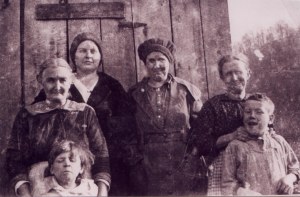
In Search of Ed Haley 190

01 Friday Nov 2013

Posted by Brandon Ray Kirk in Ed Haley

≈ Leave a comment

Tags

Appalachia, Billy Adkins, Cain Adkins, Cat Fry, crime, feud, George Fry, Green McCoy, history, Lola McCann, Milt Haley, Vinnie Workman, writing

Before heading to Billy’s, we became knee-deep in conversation about Milt Haley’s death. Billy told us about the Brumfields retrieving Milt and Green in Kentucky.

“Now, I don’t know where they come from over there,” he said. “I know they had a bogus warrant, the people that went to get them. They made up a fake warrant and got them. Then when they started back down through here, they was a big bunch of people was waiting to attack them. That was Cain Adkins and them and his family. They was fields full of them up on Big Branch. And somebody tipped them off, and so they went up what’s called Bill’s Branch. And so they took up Bill’s Branch and down Piney and then over to Frank Fleming holler.”

From Frank Fleming hollow, the Brumfield gang went over a mountain and crossed the river to a Fry house near the mouth of Green Shoal. At some point, according to Lola, a group of men came in and shot out the lights. Cat Fry crawled under a bed while either Milt or Green shouted to the other, “Stand up and die like a man!” Lola heard that one of the men “died a praying and the other died a cussing.”

I asked Billy if he’d heard how Milt and Green were killed.

“I’ve heard so many stories, I don’t know,” he said. “I just heard they was shot. I heard they was tied up to a tree. Tied to a chair back to back in the kitchen.”

Lola said she heard that Milt and Green were shot and hung.

“The table Milt and Green had their last meal on ended up with my grandmother, Vinnie Thompson Workman,” Billy said. “And there was bullet holes in the table.”

I asked Billy if he had any pictures of the “murder house” and he said, “No, I don’t know of anybody would. It’s where Doran’s house is. It was over there against the hill — an old log house. Of course, the railroad and stuff wasn’t there, you see. That was the old John and Catherine Fry house to start with. And then John’s son Baptist, he lived there next. That was my grandmaw’s grandpaw. And after he died, I guess this George Fry lived there. Charley Fry and George Fry both lived there and I don’t remember which one lived there when they killed them there.”

At that point, Lola completely changed the direction of the conversation when she said, “Billy, Cain Adkins was kin to us.” She’d never met Cain and had no clue what happened to him but knew that he once owned most of the lower end of West Fork at one time. All the old-timers referred to him as “Uncle Cain” because he’d been a well-respected person in the community.

Lola said George Thomas (one of Ed’s cousins, we later learned) owned the Cain Adkins farm in the years prior to her birth. Her father bought the place from him around 1905. At that time, the only remnant of Cain’s life there was his apple orchard by the creek. The Haley-McCoy grave was on the family lands.

“You go up almost to the top where it gets real flat,” Lola said. “They’s a path used to be up there. It’s up pretty much on the hill. It ain’t way up there, I’d say the first flat.”

Brandon asked her, “Now, did you tell me that some old woman used to come up there and decorate that grave?”

“They always came as long as they lived, I guess, and decorated the grave,” Lola said. “That was their wives. I was only four or five years old, but I can remember seeing them. One of them was tall and slim. But they stopped at our house every time they come.”

In Search of Ed Haley 68

19 Tuesday Feb 2013

Posted by Brandon Ray Kirk in Ed Haley

≈ Leave a comment

Tags

Al Brumfield, Bob Adkins, Brooke Dingess, Cat Fry, feud, Green McCoy, Harts Creek, history, Hugh Dingess, Jake Adkins, John Hartford, Lawrence Haley, Lincoln County, Milt Haley, West Virginia

The next day, Al and his posse headed for Hugh Dingess’ “great old big house” on Harts Creek. Bob’s mother Brooke Dingess was a witness to events that followed.

“They stayed all night there and they wanted to be awful sure that they were right, you know,” Bob said. “See, they didn’t want to kill somebody that was innocent. Well they took Haley outside and put handcuffs behind him and gagged him so he couldn’t make a noise and stuck a gun in his back and told him if he made any noise they’d shoot him, see? And a funny thing happened out there, though. He broke loose from them and pretty near got away.

“And then they told McCoy that they had taken Milton down there to hang in the orchard, and if he had anything to say he had better be saying it, see? He broke down and cried and he told them the truth about it. And he told them that they pulled straws on which one would do the shooting and it fell on Green and he got sick — vomited — and he just couldn’t do it. So Haley said, ‘You ain’t got no nerve. Give me the gun and I’ll do it.’ And he claimed Haley was the one that shot. He didn’t do it.”

As if to prove his story, Green then said something to the effect of, “You go down there and check at that sinkhole and you’ll see a pile of shavings that I whittled with my long razor.”

Bob said, “Well, Haley came out and cursed McCoy and told him he didn’t have any nerve and said everything to him. Said that fellow just cried and said, ‘Now, you know I’m telling every bit the truth.'”

Bob said the mob was convinced by McCoy’s confession, but I felt it had a few holes in it. First of all, what if Green skewed the truth by blaming everything on Milt — who he thought was dead — in the hopes of saving his own life? Second of all, why would he and Milt have only had one gun between them for their ambush? Of course, maybe these details were worked out by subsequent confessions not remembered by any living person today. In any case, the mob was apparently satisfied.

Bob said, “They didn’t do anything to them there. They weren’t nobody’s fool, now. They didn’t want any murder going on around their home; then it would be too easy to pin it on them. They’d go to somebody else’s home.”

Bob said his aunt Catherine Fry — an eyewitness to subsequent events — told him the rest of the story about Milt’s murder. He said she was nineteen years old at the time and lived at the mouth of Green Shoal on the Guyandotte River. She said a mob arrived at her home during the night and woke her from her sleep.

“Well, Cat said the first thing she knew she was sitting in the living room — the front room, you know,” Bob said. “They had whiskey there. A lot of drinking going on and a whole bunch of them… Must have been ten to fifteen maybe. The Brumfields and Dingesses all mixed up, you know. Haley and McCoy were back in the bedroom under guard. They had them both in bed.”

Milt continued to verbally abuse Green for admitting their guilt.

“Around ten o’clock, somebody shot the lamp out and Cat run and jumped behind a flour barrel over in the kitchen corner until the fracas was over.”

Milt and Green were shot in bed then pulled out in the yard where the mob “took an axe and cut their heads open and shot them all up — shot them all to pieces.”

I asked Bob what happened next and he said, “They got on their horses and left — walked off and left them. Al Brumfield was one of the head fellows who was there and he was a first cousin of Dad’s. Evidently somebody else took his horse. He came down to Grandfather’s house, which was his uncle by marriage and he told Grandpaw what they had done. Grandpaw told him to go on upstairs and go to bed. No, he did not want to do that because he was afraid those McCoy and Haley people might come in on him, friends or something, [and trap him in the house]. He slept up in the hollow under a beech tree up there. It was summertime, you know. I bet he didn’t sleep good and if he did he shouldn’t have. And the next morning he got out and he ate his breakfast with Grandpaw and then he went on to Harts — home, you know?”

In the next few days, someone hauled Milt and Green’s bodies to the West Fork of Harts Creek and buried them in a single, unmarked grave.

Bob gave us directions to the grave, which he’d last seen as a boy.

“You go up main Harts Creek. It’s not over a mile, I don’t think. It’s the first big creek that turns off to your left. You turn to the left there across the creek and go up that road about a mile or a mile and a quarter and they’s a little hollow there and they’s a house right in there. It’s been a good while since I been up there. If you’ll ask some of them people there, they’ll tell you right where it is.”

Lawrence and I planned to go to Harts in a few days and find it.

Bob said, “We lived there in a house right down below there for one year before we came down here. We sold our old farm up there and we had no where to go and we moved over there on an uncle of mine’s farm. And I farmed one summer right down below there. I went up there and saw that. Had just a little stone. Two of them there. They was buried in the same grave. Them stones may be torn down and gone now. We left there in 1919 or ’20.”

Harts Creek Residents

16 Sunday Dec 2012

Posted by Brandon Ray Kirk in Harts

≈ Leave a comment

Tags

Appalachia, blind, Cat Fry, culture, genealogy, Harts Creek, history, life, Lincoln County, photos, U.S. South, West Virginia, writing

Harts Creek Residents, 1910-1920

Adkins Women with Children, 1910-1920

Feud Poll 1

If you had lived in the Harts Creek community during the 1880s, to which faction of feudists might you have given your loyalty?

Categories

  • Adkins Mill
  • African American History
  • American Revolutionary War
  • Ashland
  • Atenville
  • Banco
  • Barboursville
  • Battle of Blair Mountain
  • Beech Creek
  • Big Creek
  • Big Harts Creek
  • Big Sandy Valley
  • Big Ugly Creek
  • Boone County
  • Breeden
  • Calhoun County
  • Cemeteries
  • Chapmanville
  • Civil War
  • Clay County
  • Clothier
  • Coal
  • Cove Gap
  • Crawley Creek
  • Culture of Honor
  • Dingess
  • Dollie
  • Dunlow
  • East Lynn
  • Ed Haley
  • Eden Park
  • Enslow
  • Estep
  • Ethel
  • Ferrellsburg
  • Fourteen
  • French-Eversole Feud
  • Gilbert
  • Giles County
  • Gill
  • Green Shoal
  • Guyandotte River
  • Halcyon
  • Hamlin
  • Harts
  • Hatfield-McCoy Feud
  • Holden
  • Hungarian-American History
  • Huntington
  • Inez
  • Irish-Americans
  • Italian American History
  • Jamboree
  • Jewish History
  • John Hartford
  • Kermit
  • Kiahsville
  • Kitchen
  • Leet
  • Lincoln County Feud
  • Little Harts Creek
  • Logan
  • Man
  • Matewan
  • Meador
  • Midkiff
  • Monroe County
  • Montgomery County
  • Music
  • Native American History
  • Peach Creek
  • Pearl Adkins Diary
  • Pecks Mill
  • Peter Creek
  • Pikeville
  • Pilgrim
  • Poetry
  • Queens Ridge
  • Ranger
  • Rector
  • Roane County
  • Rowan County Feud
  • Salt Rock
  • Sand Creek
  • Shively
  • Spears
  • Sports
  • Spottswood
  • Spurlockville
  • Stiltner
  • Stone Branch
  • Tazewell County
  • Timber
  • Tom Dula
  • Toney
  • Turner-Howard Feud
  • Twelve Pole Creek
  • Uncategorized
  • Warren
  • Wayne
  • West Hamlin
  • Wewanta
  • Wharncliffe
  • Whirlwind
  • Williamson
  • Women's History
  • World War I
  • Wyoming County
  • Yantus

Feud Poll 2

Do you think Milt Haley and Green McCoy committed the ambush on Al and Hollene Brumfield in 1889?

Blogroll

  • Ancestry.com
  • Ashland (KY) Daily Independent News Article
  • Author FB page
  • Beckley (WV) Register-Herald News Article
  • Big Sandy News (KY) News Article
  • Blood in West Virginia FB
  • Blood in West Virginia order
  • Chapters TV Program
  • Facebook
  • Ghosts of Guyan
  • Herald-Dispatch News Article 1
  • Herald-Dispatch News Article 2
  • In Search of Ed Haley
  • Instagram
  • Lincoln (WV) Journal News Article
  • Lincoln (WV) Journal Thumbs Up
  • Lincoln County
  • Lincoln County Feud
  • Lincoln County Feud Lecture
  • LinkedIn
  • Logan (WV) Banner News Article
  • Lunch With Books
  • Our Overmountain Men: The Revolutionary War in Western Virginia (1775-1783)
  • Pinterest
  • Scarborough Society's Art and Lecture Series
  • Smithsonian Article
  • Spirit of Jefferson News Article
  • The Friendly Neighbor Radio Show 1
  • The Friendly Neighbor Radio Show 2
  • The Friendly Neighbor Radio Show 3
  • The Friendly Neighbor Radio Show 4
  • The New Yorker
  • The State Journal's 55 Good Things About WV
  • tumblr.
  • Twitter
  • Website
  • Weirton (WV) Daily Times Article
  • Wheeling (WV) Intelligencer News Article 1
  • Wheeling (WV) Intelligencer News Article 2
  • WOWK TV
  • Writers Can Read Open Mic Night

Feud Poll 3

Who do you think organized the ambush of Al and Hollene Brumfield in 1889?

Recent Posts

  • Logan County Jail in Logan, WV
  • Absentee Landowners of Magnolia District (1890, 1892, 1894)
  • Charles Spurlock Survey at Fourteen Mile Creek, Lincoln County, WV (1815)

Ed Haley Poll 1

What do you think caused Ed Haley to lose his sight when he was three years old?

Top Posts & Pages

  • History for Boone County, WV (1928)
  • Origin of Place Names in Logan County, WV (1937)
  • Early Anglo Settlers of Logan, WV (1937)
  • Early Coal Mines in Logan County, WV
  • White Family History at Pecks Mill, WV (1937)

Copyright

© Brandon Ray Kirk and brandonraykirk.wordpress.com, 1987-2023. Unauthorized use and/or duplication of this material without express and written permission from this blog’s author and/or owner is strictly prohibited. Excerpts and links may be used, provided that full and clear credit is given to Brandon Ray Kirk and brandonraykirk.wordpress.com with appropriate and specific direction to the original content.

Archives

  • February 2025
  • January 2025
  • October 2023
  • September 2023
  • December 2022
  • November 2022
  • May 2022
  • April 2022
  • February 2022
  • November 2021
  • October 2021
  • September 2021
  • June 2021
  • May 2021
  • April 2021
  • March 2021
  • February 2021
  • January 2021
  • December 2020
  • November 2020
  • October 2020
  • July 2020
  • June 2020
  • May 2020
  • April 2020
  • March 2020
  • February 2020
  • January 2020
  • December 2019
  • November 2019
  • October 2019
  • September 2019
  • August 2019
  • July 2019
  • June 2019
  • May 2019
  • April 2019
  • March 2019
  • February 2019
  • January 2019
  • December 2018
  • November 2018
  • October 2018
  • September 2018
  • August 2018
  • July 2018
  • June 2018
  • May 2018
  • April 2018
  • March 2018
  • February 2018
  • January 2018
  • December 2017
  • November 2017
  • October 2017
  • September 2017
  • August 2017
  • July 2017
  • June 2017
  • May 2017
  • April 2017
  • March 2017
  • February 2017
  • January 2017
  • December 2016
  • November 2016
  • October 2016
  • September 2016
  • August 2016
  • July 2016
  • June 2016
  • May 2016
  • April 2016
  • March 2016
  • February 2016
  • January 2016
  • December 2015
  • November 2015
  • October 2015
  • September 2015
  • August 2015
  • July 2015
  • June 2015
  • May 2015
  • April 2015
  • March 2015
  • February 2015
  • January 2015
  • December 2014
  • October 2014
  • September 2014
  • August 2014
  • July 2014
  • June 2014
  • May 2014
  • April 2014
  • March 2014
  • February 2014
  • January 2014
  • December 2013
  • November 2013
  • October 2013
  • September 2013
  • August 2013
  • July 2013
  • June 2013
  • May 2013
  • April 2013
  • March 2013
  • February 2013
  • January 2013
  • December 2012
  • November 2012

Enter your email address to follow this blog and receive notifications of new posts by email.

Join 2,925 other subscribers

Tags

Appalachia Ashland Big Creek Big Ugly Creek Blood in West Virginia Brandon Kirk Cabell County cemeteries Chapmanville Charleston civil war coal Confederate Army crime culture Ed Haley Ella Haley Ferrellsburg feud fiddler fiddling genealogy Green McCoy Guyandotte River Harts Harts Creek Hatfield-McCoy Feud history Huntington John Hartford Kentucky Lawrence Haley life Lincoln County Lincoln County Feud Logan Logan Banner Logan County Milt Haley Mingo County music Ohio photos timbering U.S. South Virginia Wayne County West Virginia Whirlwind writing

Blogs I Follow

  • OtterTales
  • Our Appalachia: A Blog Created by Students of Brandon Kirk
  • Piedmont Trails
  • Truman Capote
  • Appalachian Diaspora

BLOOD IN WEST VIRGINIA is now available for order at Amazon!

Blog at WordPress.com.

OtterTales

Writings from my travels and experiences. High and fine literature is wine, and mine is only water; but everybody likes water. Mark Twain

Our Appalachia: A Blog Created by Students of Brandon Kirk

This site is dedicated to the collection, preservation, and promotion of history and culture in Appalachia.

Piedmont Trails

Genealogy and History in North Carolina and Beyond

Truman Capote

A site about one of the most beautiful, interesting, tallented, outrageous and colorful personalities of the 20th Century

Appalachian Diaspora

  • Subscribe Subscribed
    • Brandon Ray Kirk
    • Join 787 other subscribers
    • Already have a WordPress.com account? Log in now.
    • Brandon Ray Kirk
    • Subscribe Subscribed
    • Sign up
    • Log in
    • Report this content
    • View site in Reader
    • Manage subscriptions
    • Collapse this bar
 

Loading Comments...