• About

Brandon Ray Kirk

~ This site is dedicated to the collection, preservation, and promotion of history and culture in my section of Appalachia.

Brandon Ray Kirk

Tag Archives: Caleb Headley

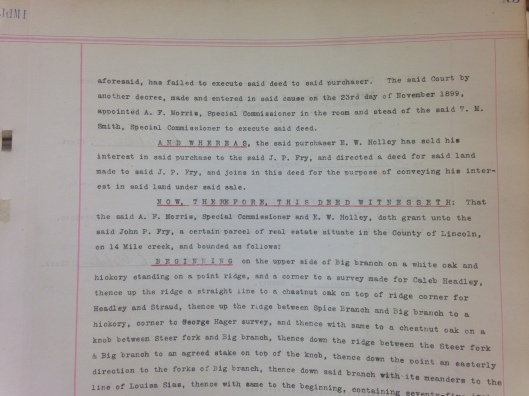
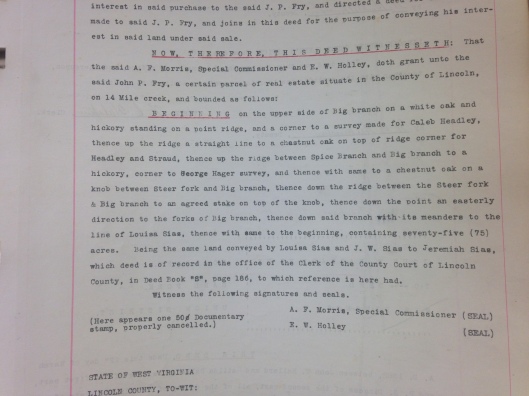
A.F. Morris and E.W. Holley Deed to John P. Frye (1900)

09 Sunday Sep 2018

Posted by Brandon Ray Kirk in Fourteen, Wewanta

≈ Leave a comment

Tags

A.F. Morris, Appalachia, Big Branch, Caleb Headley, E.W. Holley, Fourteen Mile Creek, genealogy, George Hager, history, James Wilson Sias, Jeremiah Sias, John P. Frye, Laurel Hill District, Lincoln County, Louisa Sias, Steer Fork, Sulphur Spring Fork, T.M. Smith, West Virginia

Morris and Holley to John P. Fry 1

Deed Book ___, page ___, Lincoln County Clerk’s Office, Hamlin, WV. John P. Frye is my great-great-grandfather.

Morris and Holley to John P. Fry 2

Deed Book ___, page ___, Lincoln County Clerk’s Office, Hamlin, WV.

Morris and Holley to John P. Fry 3

Deed Book ___, page ___, Lincoln County Clerk’s Office, Hamlin, WV.

Caleb Headley

28 Tuesday Feb 2017

Posted by Brandon Ray Kirk in Civil War, Fourteen, Wewanta

≈ Leave a comment

Tags

Anthony Headley, Appalachia, Ballard Headley, Benjamin F. Headley, Caleb D. Headley, Caleb Headley, Caleb S. Headley, Catlettsburg, Christian Church, civil war, commissioner of revenue, Elisha Headley, Elizabeth J. Headley, Elizabeth Jane Farley, Fourteen, Fourteen Mile Creek, genealogy, George W. Headley, Guyandotte River, Henry H. Hardesty, history, Ida Cosby Fry, Johnny Headley, justice of the peace, Kentucky, Lincoln County, Logan County, Margaret Headley, Methodist Church, Nancy Headley, Pennsylvania, physician, Sarah A. Headley, Sarah Headley, Sulphur Spring Fork, Thomas Headley, Thomas J. Headley, Union Army, Virginia, West Virginia, Wetzel County, Will Headley, William Farley

From “Hardesty’s History of Lincoln County, West Virginia,” published by H.H. Hardesty, we find this entry for Caleb Headley, who resided at Fourteen in Lincoln County, West Virginia:

Has for nearly fifty years been a practicing physician. He was born in Pennsylvania in 1808, and his parents Thomas and Sarah (Asher) Headley, are both deceased. Caleb Headley has been twice married, his first wife, Nancy Wright, a Pennsylvanian, left him eight children: Elizabeth J., born June 2, 1829; Thomas J., November 23, 18931; Sarah A., December 8, 1833; Caleb S., March 30, 1838; George W., May 21, 1839; Benjamin F., May 31, 1841; Anthony, June 3, 1844; Elisha, born August 1, 1850. Mr. Headley was again married in Catlettsburg, Kentucky, to Sarah A. Farley, and the children of this union number six, born as follows: John T., April 20, 1867; Ida C., March 23, 1869; Caleb D., February 22, 1872; William F., August 25, 1875; Margaret, March 28, 1878; Ballard C., April 14, 1880. Mrs. Headley was born in Logan county, (now) West Virginia, May 26, 1849, and her parents, William and Elizabeth Jane (Clark) Farley, settled in Lincoln county in 1844. Caleb Headley came to Lincoln county in 1866, and is now a prosperous farmer, owning 600 acres of good land on Fourteen-mile creek, a portion of which is heavily timbered with oak, poplar and pine; coal and iron ore in abundance. There is a fine sulphur spring upon the land, on the creek three miles from Guyan river, which has been visited by people from many parts of the United States, and it is pronounced of excellent medicinal quality by all. Dr. Headley was commissioner of revenue one term, and was justice of the peace sixteen years in Wetzel county, West Virginia. He was in the late war, and ranked as captain of a company. Dr. Headley was a member of the Methodist Church for forty years, but on coming to Lincoln county, there was no church of that denomination, and he united with the Christian Church. His father was also a physician for many years. Direct mail to Fourteen, Lincoln county, West Virginia.

Source: The West Virginia Encyclopedia, Vol. 7 (Richwood, WV: Jim Comstock, 1974), p. 135.

Note: Caleb Headley is my great-great-great-grandfather through his daughter, Ida Cosby (Headley) Fry.

Harts area teachers, 1871-1883

06 Tuesday Jan 2015

Posted by Brandon Ray Kirk in Big Harts Creek, Harts, Lincoln County Feud

≈ Leave a comment

Tags

Alice Dingess, Almeda Chapman, Appalachia, Belle Adkins, Bill Fowler, Cain Adkins, Caleb Headley, education, Elias Adkins, Elisha Vance, Elizabeth Elkins, Harts Creek District, Henry Shelton, Henry Spears, Isaac Nelson, J.B. Pullen, J.W. Stowers, Jennie Riddell, John B. Pullen, John Gore, John Neace, John Stowers, John W. Gartin, Lincoln County, Philip Hager Sr., Stephen Lambert, teacher, Thomas H. Buckley, Thomas P. Moore, Van Prince, Verna Riddell, West Virginia, West Virginia Educational Directory

The Fred B. Lambert Papers, the West Virginia Educational Directory, and the Annual Report of the General Superintendent of Public Schools provides the following information regarding Harts area teachers in Lincoln County for 1871 to 1883:

Lincoln County, 1871

Elias Adkins, 4 certificate

Philip Hager, 4 certificate

Caleb Headlee, no grade on certificate

Thomas P. Moore, 4 certificate

Isaac Nelson, 5 certificate

V.B. Prince, 4 certificate

Henry Spears, 4 certificate

Lincoln County, 1872

Cannan Adkins, 4 or 5 certificate (varies by source)

Elizabeth Elkin, 3 certificate

W.T. Fowler, 5 certificate

J.W. Gartin, 5 certificate

Philip Hager, 3 certificate

Stephen Lambert, 3, 4, or 5 certificate (varies by source)

Elisha W. Vance, 5 certificate

NOTE: This year, two log school houses were “neatly and substantially gotten” up in Harts Creek District.

Lincoln County, 1873

T.H. Buckley, 1 certificate

Elizabeth Elkin, 2 certificate

John Neace, 4 certificate

Lincoln County, 1877-1878

Belle Adkins, 3 certificate

Canaan Adkins, 2 certificate

Thomas H. Buckley, 2 certificate

Alice Chapman, 2 certificate

Almeda Chapman, 2 certificate

Alice Dingess, 1 certificate

John Gore, 2 or 3 certificate (varies by source)

Stephen Lambert, 5 certificate

Henry Shelton, 1 certificate

NOTE: Total youths in county (2771); total students (2199); average daily attendance for county students: 47 percent.

Lincoln County, 1879-1880

Bell Adkins, 2 certificate

Alice Chapman, 1 certificate

Almeda Chapman, 1 certificate

J.W. Stowers, 2 certificate

Lincoln County, 1883

John B. Pullen, 2 certificate

Jennie Riddel, 2 certificate

Verna Riddel, 1 certificate

John Stowers, __

NOTE: I spelled names as they were spelled in the record.

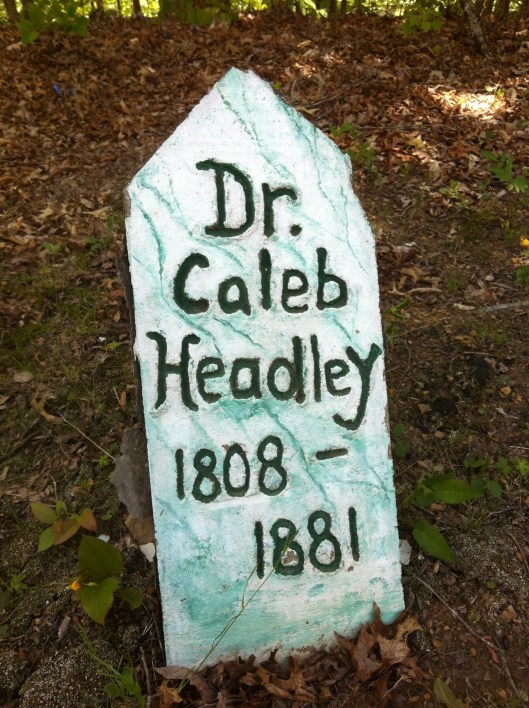
Caleb Headley grave

18 Sunday May 2014

Posted by Brandon Ray Kirk in Cemeteries, Civil War, Fourteen, Wewanta

≈ 22 Comments

Tags

Brandon Kirk, Caleb Headley, cemeteries, Fourteen, Fourteen Mile Creek, genealogy, history, Lincoln County, photos, Sulphur Spring Fork, West Virginia

IMG_2665

Caleb Headley grave, Sulphur Spring Fork of Fourteen Mile Creek, Lincoln County, WV, 2014


In Search of Ed Haley 200

19 Tuesday Nov 2013

Posted by Brandon Ray Kirk in Ed Haley, Harts

≈ Leave a comment

Tags

Abner Vance, Andrew D. Robinson, Anthony Adams, Burl Farley, Cain Adkins, Caleb Headley, Elisha Vance, Enoch Baker, Evermont Ward Brumfield, George T. Holton, Henry H. Hardesty, Imogene Haley, Jeremiah Lambert, John H. Napier, Milt Haley, Patton Thompson, Robert Mullins, writing

Cain Adkins arrived on the West Fork of Harts Creek around 1870. During the decade, he purchased a 40-acre farm from his father-in-law, Abner Vance, situated on West Fork and valued at $2.00 (and then $4.00) per acre. In 1880, according to census records, Adkins was a farmer and neighbor to Boney Lucas (his son-in-law), Elisha Vance (his brother-in-law), Abner Vance, Overton McCloud (his brother-in-law) and Marvel Vance (his brother-in-law). In 1881, Abner Vance deed him a 25-acre tract. In that same year, he was listed in land records as owning a $50 building on the 40-acre tract. The next year, the value of his 25-acre tract increased from $1.50 per acre to $2.00 per acre. In 1884, he bought 140 more acres from A.A. Low, attorney, and E. and O. Estep. One part of this, a 40-acre tract, contained a building valued at $100. It was situated between his 25-acre tract and a 185-acre 1852 grant and an 860-acre 1856 grant to Isaiah Adkins. The other 100-acre tract of land was part of the 247-acre 1856 grant to Vance.

According to the Adkins family history, Cain was a United Baptist preacher, farmer, teacher, and justice of the peace. He taught school throughout the 1870s, according to educational records. But he was best known as a preacher; his name appears frequently in county marriage books. In 1877, he married Burl Farley (a member of the future 1889 mob) and Mary Ann Dingess, sister to Hollena Brumfield. In 1884, he married Milt Haley and Emma Mullins: “Thomas M. Hauley, age 25, born Cabell County, son of B.H. Hauley and N. Muncy, married Imogene Mullins, age 15, born Logan County, daughter of J. Mullins and C. Gore, on the 22nd day of March 1884 by Canaane Adkins, Minister, at Logan, WV.”

Cain’s various occupations would have made him a real renaissance man in the community. First of all, as a country doctor, he would have been in contact with most local families. As a teacher, he would have taught many of the local children at his school. In those days, church congregations usually met in schoolhouses — as there were no church buildings — so Cain would have preached to many members of the community at his school. Again, this occupation would put him in close touch with many locals — preaching funerals, marrying people, and so forth. As a law officer, he would have had to deal with local criminal activity — which (in addition to his preaching) may have put him in direct conflict with Paris Brumfield.

In addition to Adkins, Roberts, Mullins and Fowler, John H. Napier, a 41-year-old physician, was a prominent resident at the mouth of Harts Creek. John had settled in Harts in 1879 with his young wife (a niece to Cain Adkins), five children and a nephew. He quickly took up business, although he never bought property. “Mr. Napier is a prosperous merchant in Hart Creek district, with business headquarters at the mouth of the creek,” Hardesty wrote.

By the mid-1880s, the local economy was humming along, spurred by the timber industry. In 1884, the same year that Milt Haley and Emma Haley were married, a new post office called Warren was established five miles up Harts Creek on the bank of its south side below the mouth of Smokehouse Fork. In that vicinity, which encompassed Milt Haley’s section of the community, Andrew D. Robinson was postmaster, Van B. Prince (a former schoolteacher) was a physician, Benjamin Adams was a general store operator and Joseph Williamson was a mason. Henderson Dingess (father to Hollena Brumfield) and Benjamin Hager were distillers, and Anthony Adams and Robert Mullins were blacksmiths. McCloud & Company was the major general store in the vicinity. The post office serviced three to five hundred people semi-weekly.

At that time, according to Hardesty, Jeremiah Lambert of the Bend of the River was a justice of the peace and Aaron Adkins of Little Harts Creek was a constable. Evermont W. Brumfield — a brother to Paris Brumfield — was the county jailer. Patton Thompson was a constable and a deputy-sheriff. Caleb Headley — a brother-in-law to Burl Farley — was a physician on Fourteen Mile Creek. There were ten public school buildings in the district with a student population of 334. George Thomas Holton of Fourteen was a local schoolteacher. Enoch Baker, a Nova Scotian, was busy in timber with a “lower dam” on Brown’s Run of Smokehouse Fork according to 1883 deed records.

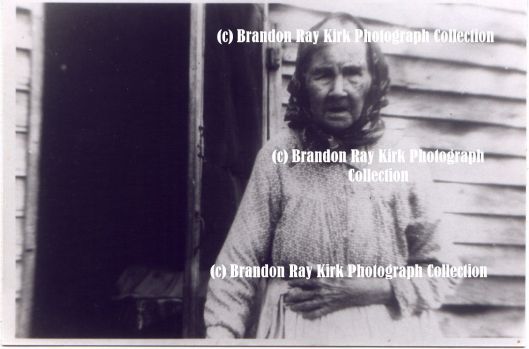
Sarah Ann (Farley) Headley

01 Friday Nov 2013

Posted by Brandon Ray Kirk in Fourteen, Wewanta, Women's History

≈ Leave a comment

Tags

Appalachia, Caleb Headley, Elizabeth Jane Farley, Fourteen, Fourteen Mile Creek, genealogy, history, Lincoln County, midwife, photos, Sarah Headley, Sulphur Spring Fork, U.S. South, West Virginia, William Floyd Farley

sarah-farley-headley-copyright

Sarah Ann (Farley) Headley, daughter of William F. and Jane (Clark) Farley and wife of Caleb Headley. Sarah (1849-1945) is my great-great-great-grandmother. She lived at Sulphur Spring Fork of Fourteen Mile Creek in Lincoln County, WV.

Caleb Headley 5

19 Saturday Oct 2013

Posted by Brandon Ray Kirk in Fourteen

≈ Leave a comment

Tags

Appalachia, Caleb Headley, Fourteen, genealogy, Gladys Kirk, history, Johnny Headley, Moses Headley, Sarah Headley, Ward Adkins, West Virginia, Will Headley, writing

On July 18, 1903, Billy and Sarah Sias, with Sarah and Moses C. Headley, sold 30 of the remaining 34 acres of Caleb Headley’s estate to Cosby (Headley) Fry. It was located just across the creek from Caleb’s old home place.

“Beginning on a beech and white oak corner to John H. Fry & the company on a point below the Hinkles branch thence,” the deed for this 30-acre tract reads, “with John H. Fry line to Albert Neace corner thence with said Neace line to S.A. Sias corner thence down the creek with the meander of said creek to the mouth of the branch opposite Sarah Headley house she now lives in thence up said branch to the mouth of the first drain on the lower side of said branch thence up said drain to the back line between the company & Caleb Headley deceased thence with said line to the beginning it being part of Caleb Headley’s deceased.”

The remaining four acres of Caleb Headley’s estate remained in tax books from 1903 until 1910, when it was dropped with the following notation: “improper by sheriff.” Oddly enough, its value had risen from $2.50 per acre to $4.00 per acre in 1905.

In 1903, the same year Sarah and Moses Headley sold the remainder of the family estate to the Frys, they bought 45 acres of land (containing the original home place) from Sarah Sias. They kept it until 1909, when they sold it to Zack Neace. In 1918, Neace sold it to Van Alford, a son-in-law to Johnny Headley.

By the early twenties, Sarah Headley still made her home with her single sons, Ballard and Moses. In 1922, Moses married Lizzie Nelson (at his residence according to records) and soon left Sulphur for good. First, he settled in Chapmanville, then South Charleston, where he died and was buried.

“Uncle Mose married Lizzie Nelson and moved to Chapmanville,” said Ward Adkins, late resident of Sulphur Springs, in a 2003 interview. “He lived in a log cabin he had built and moved in there before they even finished a floor.”

In 1924, Ballard Headley married Claire D. Clark. About that same time, Will Headley opened a store near his home at the mouth of Sulphur.

“They had a small grocery store, him and Maw, from about 1924 until about 1927 just over from where the church house is now,” said Adkins.

In July of 1929, Johnny Headley’s wife, Emaline, died of dysentery flux and he remarried early the following year to widow named Emarine Elkins.

Throughout that time, Sarah Headley just came and went, staying with first one relative and then another.

“Ever since I can remember she would drop in and maybe stay a week with us, then she’d go somewhere else and stay,” said Adkins. “She’d go up on Harts Creek a lot of times and stay. She’d stay with Bal maybe a week and Uncle Johnny over on Steer Fork.”

“She used to come to Grandpa Johnny Headley’s and stay a few nights,” said the late Gladys Kirk, a granddaughter of Johnny Headley and a resident of West Fork. “Then she would go on back to Will’s. I was small at that time, maybe eight or nine years old. She wouldn’t do anything. She’d sit around. She was too feeble to cook or anything. She held on to a big red handkerchief she packed with her everywhere she went. It was folded. We never got to look in it but it looked like she had something in it. She told someone it was her burying clothes, whatever that meant. And when Grandmaw Headley would get meals ready Grandma Sarah would make the kids line up and she’d say, ‘They’s nobody going to the table to eat until they washed their hands.'”

Around 1935-36, Sarah Headley moved in with Will permanently.

“I guess she finally got too old to go from place to place,” said Adkins. “Anyhow, she come to our house and stayed there till she died. She’d got rid of her furniture by then but she had a whole set of these old big woven baskets she kept her clothes in. She was a kind person. I liked to hear her tell tales, you know. And I don’t know how many skirts she would have on at once. Six or seven — maybe more. She’d pull up that apron, run her hand down in there, get her pipe and her tobacco out. She died in 1945 when I was away fighting in World War II.”

Caleb Headley 3

14 Monday Oct 2013

Posted by Brandon Ray Kirk in Fourteen

≈ Leave a comment

Tags

Appalachia, Burl Farley, Caleb Headley, Cole and Crane Company, genealogy, history, John Henan Fry, Johnny Headley, Moses Headley, Sarah Headley, Ward Adkins, Will Headley, writing

In 1881, Dr. Caleb Headley died of a lingering Civil War wound, leaving his young widow, Sarah, in a tough predicament. As the 32-year-old mother of six children — ranging in age from fifteen to two — she assumed charge of the family estate (a $100 house and 455 total acres), all of which was situated on a creek where she had no in-laws or immediate family to assist her. She chose not to remarry but did commence some sort of an affair with a Porter, which resulted in the birth of a son named Moses C. Headley on December 20, 1884.

The initial task of keeping the family afloat financially fell on Caleb’s oldest son, Johnny Headley. “After Caleb died, Uncle Johnny had to keep Grandma Sarah, and his brothers and sisters,” said Ward Adkins, an 81-year-old step-great-grandson to Doctor Headley, in a 2003 interview. “He ran rafts and made whisky and he farmed to make money. Everybody made whisky. It wasn’t a big thing.” In the mid-1880s, Johnny Headley married Emaline Susan Sias, a daughter of Henry C. and Sarah (Plumley) Sias, and settled on nearby Steer Fork.

Sarah, meanwhile, deeded off large parts of her property to provide for her remaining children. In 1884, she sold 174 acres of the family property to William A. “Billy” Sias, a neighbor and son of the local postmaster. Two years later, she sold 160 acres adjoining the homeplace to John Neace.

Around that time, her oldest daughter, Ida Cosby Headley, married John Henan Fry, a son of Christian T. and Elizabeth (Hunter) Fry of Green Shoal. They settled near Sarah on Sulphur. “Old man John Henan Fry was a quiet, docile kind of fellow and easy-going,” said Adkins. “Aunt Cos was awful good to kids, but now some of her boys were pretty rough and kind of sneaky. They’d pilfer a few things along the way from neighbors. They said they had a big cave up in that hollow and it was plumb full of chicken feathers and bones and geese feathers where they’d steal them chickens and things and take them up there and eat them. They just done as they pleased.” John Henan and Cosby Fry remained nearby until 1923, when they moved to Daisy in Logan County. (In 1925, Everett and Annie Sias bought their property.)

In the late 1880s, based on tax records, Sarah Headley’s financial woes continued. The valuation of her home, estimated at $100 from 1882 until 1887, dropped to $50 by 1890, before finally leaving the record books altogether by 1891. In that same time frame, the Headley home was destroyed by fire.

“Will said when he was eleven or twelve years old, the house burned and the family almost starved to death,” said Adkins. “He said the corn crib was close enough to the house when it burned that the fire parched all the corn. Well, they ground that corn up in an old coffee grounder, I guess. Then they’d ‘thrash’ birds at night using pine knots for light. One would kick the brush pile and scare the birds out and the other one would take the brush and knock them down. And Will said they’d clean them birds and cook them in with that parched corn they ground up and make a gruel. They ate that all winter. They had it tough. Grandma Sarah dug may apples and sold them for three cents per hundred pound.”

In this time of extreme hardness, Will Headley, Sarah’s third oldest son, went to live with her brother, Burl Farley, a wealthy timber man on Big Harts Creek in Logan County.

“When Will was about twelve year old, he went up on Harts Creek somewhere to stay with his uncle Burl Farley,” said Adkins. “Uncle Burl was pretty well to do. He worked for Cole and Crane Timber Company up on Pigeon Creek — the Brown’s Fork of Pigeon, I believe Will said. Will worked up there with him. Uncle Burl ran the timber part of it and Granddad took care of the stables and ran errands.”

“Will used to pushboat for a company on the Guyan River,” Adkins continued. “They took stuff out like ginseng. He told me it was so cold one winter — you might have heard them talk about that cold Friday or cold Saturday — his ears froze and busted. He said they bought chickens where they tied up for the night and they would dip them down in the water and pull them back out and all them feathers would just pull right out. He called it ‘scalding them’ but it wasn’t. It was just so cold it shrunk their skin up and the feathers come out easy.”

Caleb Headley 2

09 Wednesday Oct 2013

Posted by Brandon Ray Kirk in Fourteen

≈ Leave a comment

Tags

Appalachia, Caleb Headley, Fourteen Mile Creek, Henry Farley, history, Lincoln County, medicine, Sarah Headley, Ward Adkins, West Virginia, Will Headley, writing

The new “Mrs. Headley” — Sarah Farley — was born on May 26, 1849 to William Floyd and Elizabeth Jane (Clark) Jones-Farley in Logan County, (West) Virginia. She was a full 21 years younger than Caleb’s oldest child and barely older than his youngest child by his first wife. Her grandfather was Captain Henry Farley, who led an Indian raid down the Guyandotte River through present-day Logan County in the early 1790s and was one of the county’s earliest settlers.

Caleb and Sarah Headley had the following children: Lat. Headley, born May 1, 1866, died before 1870; John Timothy Headley, born April 20, 1867, married Emaline Susan Sias then Emarine Elkins in 1930, died March 29, 1956; Ida Cosby Headley, born March 23, 1869, married John Christian Henon Frye, died September 22, 1948; Caleb David Headley, born February 22, 1872, died about 1895; William Franklin “Will” Headley, born August 25, 1875, married Caroline Lucas, died January 1960; Margaret Headley, born March 28, 1878, married Zachary T. Neace, died 1911; and Ballard P. Headley, born April 14, 1880, married Claire D. Clark in 1924, died circa 1958.

Headley, a doctor, and Sarah, a midwife, combined to serve the medical needs of the community.

“Doctor Headley treated whatever ailed people,” said Ward Adkins, in a 2003 interview. “And Grandma Sarah was a midwife from the time she was young. She delivered way over a hundred babies, practically all of us. People paid them with whatever they had: chickens, garden stuff.”

In the 1870 Lincoln County Census (Harts Creek District, Household #16), Headley was listed as 62 years old, while Sarah was 27, John was 3 and Cosby was 1. Caleb had $160 worth of real estate and $350 of personal property.

Two years later, in 1872, Headley bought 145 acres of land valued at one dollar per acre from George Hager.

“Beginning at a chestnut oak, corner to Harman Stroud on the ridge between the Big Branch and the Sulphur Spring Branch,” according to the deed, “thence N. 20 W. 100 poles to a white oak and ash on the middle point of Big Branch, thence S. 87 E. 85 poles to a stake a corner to Daniel Messer, thence with his line, S. 70 E. 196 poles to a white oak and beech, a corner to Brumfield’s heirs lands, thence S. 5 W. 160 poles to a double beech, thence N. 55 W. 84 poles to a maple corner to Corbin Estep, thence with his line, S. 71 W. 43 poles to a locust, thence N. 45 W. 155 poles more or less and with Stroud’s calls to the beginning.”

In 1879, Headley purchased 62 acres worth one dollar per acre from a land company.

“Beginning at a poplar on the John Fry Branch,” reads the deed, “thence south 52 poles to a white oak S. 30 E. 40 poles to a ‘sour gum’ E. 70 W. 156 poles to a stake, N. 45 E. 153 poles to a poplar and beech in the old Hager Line, then with it S. 16 E. 77 poles to the beginning.”

In 1880, Caleb was listed in the Harts Creek District of Lincoln County as a 72-year-old physician. Interestingly, this was the first instance in which Headley, who claimed to have been a practicing physician for nearly fifty years in an interview conducted during the early 1880s, declared his occupation as anything other than farming.

“I know Will said he could cure cancer,” said Adkins. “He said he was born with a cancer on his stomach and he had to sleep on a pillow until he was four years old. He had to wait until that sore was large enough for his daddy to take it off. Will had a scar as big as a fifty-cent piece on his stomach. He showed it to me several times. He said, ‘That’s where Paw took the cancer off of me.’ Grandpaw Neace told me that, too. He took one off of some of their family. He died with his secret, though. He never did tell nobody what he knew.”

In 1881, Headley bought 150 acres of land worth two dollars per acre from G.W. Hager, giving him a total property acreage of 357.

The following year, he either purchased more land or surveyed his existing properties. Tax books record him with the following tracts: 210 acres worth two dollars per acre containing a $100 building; 200 acres worth $1.50 per acre; and 45 acres worth $1.50 per acre. In total, according to tax records, he owned 455 acres worth $888.

Around that time, Henry H. Hardesty published a biographical sketch on Headley and several of his neighbors in a Lincoln County history.

“Caleb Headley is now a prosperous farmer, owning 600 acres of good land on Fourteen-mile creek, a portion of which is heavily timbered with oak, poplar and pine; coal and iron ore in abundance. There is a fine sulphur spring upon the land, on the creek three miles from Guyan river, which has been visited by people from many parts of the United States, and it is pronounced of excellent medicinal quality by all.”

This sulfur spring, which provided the entire creek with a name and generated some interest as a spot for healing is still remembered by older residents of the area today.

“It was just up here around the curve from my house,” said Adkins. “It’s not there now. It’s been destroyed. It had a round rock and that rock was about two feet high and it was dressed all the way around. And someone had hollowed it out about two inches from the edge and it sat right down in that spring. People used to gather there when I was growing up to play marbles and pitch horseshoes. Dad used to send us up there to get him a bucket of water after we come out of the field. Sulfur is a blood purifier, they said.”

Not long after providing his biography to Hardesty, Caleb Headley passed away.

“Doctor Headley died in, I believe it was 1881,” said Adkins. “Will said his dad died when he was about six years old and he was born in August of 1875. I think he finally died of a Civil War wound.”

Tax records do not list Headley’s property as being in his estate until 1886.

Caleb Headley 1

08 Tuesday Oct 2013

Posted by Brandon Ray Kirk in Civil War, Fourteen

≈ Leave a comment

Tags

154th Regiment, Appalachia, Caleb Headley, civil war, Fourteen Mile Creek, genealogy, Hardesty's History of Wetzel County, history, Lincoln County, Mexican War, Monongalia County, Nancy Ann Headley, New Jersey, Revolutionary War, Sarah Headley, Thomas Headley, Tyler County, U.S. South, Ward Adkins, West Virginia, Wetzel County, Will Headley

In the years following the Civil War, Caleb Headley migrated from Wetzel County, West Virginia to the Sulphur Spring Fork of Fourteen Mile Creek in Lincoln County, bringing with him a young wife and some degree of knowledge about medicine. Behind him were Pennsylvania roots, a soldier’s experience in the Mexican and Civil wars, as well as a failed marriage. About fifteen years later, he passed away and was buried on a hill near his home.

Today, Ward Adkins, an 81-year-old walking encyclopedia of Sulphur Spring history, is the best source on Dr. Headley’s life. He was partly raised by Headley’s son, Will, his step-grandfather, who told Adkins what little he knew about his father and eventually gave him a very important family heirloom: a geography book containing genealogical information in his father’s handwriting.

Caleb Headley was born on April 11, 1808, the first son and second child of Dr. Thomas and Sarah (Asher) Headlee, in Pennsylvania. Thomas was born around 1775 in New Jersey and was the son of a Revolutionary War veteran. Sarah was born around 1785 in Virginia.

Caleb had seven known or suspected brothers and sisters: Elizabeth Headley, born about 1807, Mary Headley (c.1811-1881), Anthony Headley (August 11, 1812 – January 1, 1894), Jerusha Headley (March 16, 1815 – May 16, 1884), Sarah Headley (August 22, 1817 – June 18, 1900), Elisha Headley (August 24, 1820 – August 2, 1895), and Nancy Headley, born about 1822.

In 1822, according to Hardesty’s History of Wetzel County, Thomas Headley settled in Tyler County, (West) Virginia with his family where he taught young Caleb what he knew about doctoring prior to his death, which reportedly occurred around 1830 in Monongalia County, (West) Virginia.

On November 2, 1826, Caleb married Nancy Ann Wright in Pennsylvania. Nancy was born on October 15, 1808 in Virginia. Her parents were born in Maryland.

Caleb and Nancy had ten children: Charity Headley, born March 1, 1828; Elizabeth Jane Headley, born June 2, 1829; Thomas J. Headley, born November 23, 1831; Joshua Headley, born April 7, 1832; Sarah A. Headley, born December 8, 1833; Caleb Samuel Headley, born March 30, 1836 or 1837; George Washington Headley, born May 21, 1839; Benjamin Franklin Headley (May 31, 1841 – April 11, 1918), Anthony Headley, born June 3, 1844, and Elijah Headley, born August 1, 1850.

During the 1830s and ’40s, Caleb lived in Tyler County where he was, by his own admission, a practicing physician, member of the Methodist Church and for sixteen years a justice of the peace.

“I don’t think Caleb had any schooling to be a doctor,” Adkins said, in a 2003 interview. “As far as I know, the only thing he had as far as a medical education was studying under his daddy. His daddy was a doctor.”

In 1846, the portion of Tyler County occupied by Headley became Wetzel County.

Some time between 1846 and 1848, Headley reputedly served as a lieutenant in the Mexican War. While no military records have been located at the present time to verify his service, one of his sons made the claim that he had been an officer in the war.

“His son Will told me that he was an officer in a war with Mexico,” said Adkins.

In the 1850 Wetzel County Census, Caleb appeared in the Green District as a 40-year-old farmer (not physician) with $200 worth of real estate. His wife was 32 years old, while the children were listed as follows: Thomas (age 17, farmer, in school), Sarah (age 16, in school), Samuel (age 13, in school), Washington (age 10, in school), Franklin (age 9, in school), and Anthony (age 6).

In 1860, the Headleys maintained their residence in Green District.

When the Civil War began in 1861, Headley joined with most of his neighbors and sided with the North.

“Wetzel County, Virginia, was one of the counties which supported the Union during the War Between the States,” Mary Curtis, a genealogist, wrote in 1959. “The large majority of the settlers were from Pennsylvania and the Piedmont areas of Virginia where slaves were not common, so that their interests lay with the North.”

According to Hardesty’s History of Lincoln County, Headley was captain of a company in the Union army. According to military records, he was captain of Company C, 154th Regiment.

“He was captain of a company in the Civil War,” said Adkins. “That’s in Hardesty’s. And Will said he was an officer. He didn’t know what rank, you know. I was told that he was shot in the back. His backbone was just barely hanging together. I think he was discharged in Ohio.”

Several of Headley’s sons fought for the North. Caleb Samuel, later a resident of Porters Falls in Wetzel County, “served a short time in the Union army as lieutenant,” according to Hardesty’s History of Wetzel County. Anthony, later a resident of Pine Grove in Wetzel County, “was a soldier with the Federal army, serving in Company I, 15th West Virginia Infantry, and he participated in all the fortunes of that regiment, engaging in its battles and witnessing the surrender of Lee at Appomattox.” His term of service was from August 24, 1862 until June 30, 1865.

In 1866, 50-something-year-old Headley settled in present-day Lincoln County and joined the Christian church. By that time, he had separated from his wife Nancy and was involved in an intimate relationship with 16-year-old Sarah Farley of Logan County. The two had their first child on May 1 then married on May 25 in Catlettsburg, Kentucky.

Headley’s separation from his first wife has been a hot topic of conversation among his local descendants.

“They had a rumor going that Dr. Caleb run off and left his first wife, but Will said it wasn’t so,” said Adkins. “I heard his wife died when their son Elijah was fifteen years old, which would have been around 1865.”

However, according to Wetzel County census records, Nancy was very much alive after the separation. In 1870 and 1880, she referred to herself in both census schedules as a widow.

In Search of Ed Haley 146

08 Thursday Aug 2013

Posted by Brandon Ray Kirk in Ed Haley

≈ Leave a comment

Tags

Burbus Toney, Cain Adkins, Caleb Headley, civil war, education, Elias Adkins, Green Shoal, Harts Creek, history, Philip Hager, Thomas H. Buckley, West Virginia, writing

In 1855 Green Shoal became the first post office in the Harts area, with Burbus C. Toney acting as postmaster. At that time, the Kiah’s Creek United Baptist Church in nearby Wayne County served the religious needs of the community. Politically, the area was overwhelmingly Democratic and aligned itself with the South during the War Between the States. One study of veterans places the percentage of Harts-area Confederate veterans at 90 percent. Locals were more concerned with states’ rights than slavery; there were fewer than thirty slaves in the entire area just prior to the war. Likewise, in 1890, there were only seven Union veterans living in Harts; most had arrived after the war.

In the late 1860s, Harts residents continued their efforts to improve educational opportunities for young people by constructing a school on the West Fork of Harts Creek.

“The school started in 1865 in an old hunter’s cabin,” said Kile Topping. “The teacher had to take guns with him to school because there were wild animals in the woods. All the students studied out loud and listened to the squirrels jump off of trees on to the top of the cabin. There was no floor in the school and students would stump their toes on briers.”

In 1867 Lincoln County was formed from Cabell County and, within two years, had pulled the lower section of Harts Creek within its boundaries from Logan County and Wayne County. The formation of this new county bisected the community of Harts into halves: those who lived on the upper part of the creek — such as Jackson Mullins — were in the Chapmanville District of Logan County and those who lived along the lower portion of the creek — such as Al Brumfield — were in the Harts Creek District of Lincoln County.

Within a short time, the people of Harts were caught in the industrial wave overtaking the nation. The arrival of the timber industry changed the community forever from a stereotypical mountain agricultural-oriented place to one of small-scale commerce. Settlements with impressive store buildings and homes formed along the riverbank and at the mouth of local creeks. New people moved into the area from eastern Kentucky looking for work in timber, helping to change the genealogical make-up of the community. Flatboats, pushboats, small steamboats, ferry boats, and rafting were all themes from this era.

Things were looking up in terms of education as well. “Harts Creek Township has never had a fair opportunity to place her schools in good condition,” wrote county superintendent James Alford in 1871. “A portion of this township formerly belonged to Logan county, and a portion to Wayne county, and school affairs became considerably confused in making this township. But the citizens are manifesting great interest in their schools, and will no doubt, at no distant day, have their schools in full operation; and, with the assistance of competent teachers, make great improvement in the youth of the township.” It was worse in Logan County: “Chapmansville Township, in which I reside, has had no schools taught in it until the last year,” wrote county superintendent C.S. Stone. “The opposers of the free schools fought the thing back until last year, when the cause of education gained the ascendancy.”

In 1871, Harts area teachers were Canaan Adkins, Stephen Lambert, and William T. Fowler, and (likely) Elisha W. Vance and J.W. Gartin. All had No. 5 Certificates (the lowest) except for Lambert, who had a 4. Teachers listed in educational directories for the following year were: Caleb Headlee, Thomas P. Moore, Isaac Nelson, Henry Spears, V.B. Prince and (possibly) Elias Adkins, Philip Hager and J.B. Pullen. Moore, Prince and Spears had a No. 4 Certificate, while Nelson had a 5 and Headlee had “no grade on certificate.”

The county superintendent was full of compliments for the Harts area in his 1872 report. “Hart’s creek has also built two school houses this year,” wrote Superintendent J.W. Holt. “The buildings are of logs, but are really neatly and substantially gotten up, and reflect credit upon the contractors and the township. This township is exhibiting a very commendable spirit upon the subject of education, and in the course of another year will have her school affairs in good working order.” Attendance was low in the region. In 1872, Superintendent C.S. Stone of Logan County wrote: “It appears that the mass of the people do not take hold of the thing right; they do not appreciate properly the great benefit of a general education. They generally admit that schools are the thing they want, and that public schools are the only means that will diffuse a general education, but there is something in its operative influences not altogether right.”

In the late 1870s, an agitated superintendent Marion Vickers wrote of the educational situation: “There is a great irregularity in the attendance of our children. Is not this non-attendance too large for an enlightenend community? How can the children of our country receive the many benefits of our school system, unless they are sent to school. Should not parents consider that they are depriving their children of that which will be of more benefit to them than anything else within their power to give? While passing around and seeing so many naturally intelligent youths growing up in ignorance, with almost every possible opportunity offered for improvement, I am almost ready to say: ‘Give us a compulsory system of education.'” In that time frame, 1877-1878, the Harts teachers were: John Gore, T.H. Buckley and Canaan Adkins and (maybe) Henry Shelton. Buckley and Adkins had No. 2 Certificates.”

Feud Poll 1

If you had lived in the Harts Creek community during the 1880s, to which faction of feudists might you have given your loyalty?

Categories

  • Adkins Mill
  • African American History
  • American Revolutionary War
  • Ashland
  • Atenville
  • Banco
  • Barboursville
  • Battle of Blair Mountain
  • Beech Creek
  • Big Creek
  • Big Harts Creek
  • Big Sandy Valley
  • Big Ugly Creek
  • Boone County
  • Breeden
  • Calhoun County
  • Cemeteries
  • Chapmanville
  • Civil War
  • Clay County
  • Clothier
  • Coal
  • Cove Gap
  • Crawley Creek
  • Culture of Honor
  • Dingess
  • Dollie
  • Dunlow
  • East Lynn
  • Ed Haley
  • Eden Park
  • Enslow
  • Estep
  • Ethel
  • Ferrellsburg
  • Fourteen
  • French-Eversole Feud
  • Gilbert
  • Giles County
  • Gill
  • Green Shoal
  • Guyandotte River
  • Halcyon
  • Hamlin
  • Harts
  • Hatfield-McCoy Feud
  • Holden
  • Hungarian-American History
  • Huntington
  • Inez
  • Irish-Americans
  • Italian American History
  • Jamboree
  • Jewish History
  • John Hartford
  • Kermit
  • Kiahsville
  • Kitchen
  • Leet
  • Lincoln County Feud
  • Little Harts Creek
  • Logan
  • Man
  • Matewan
  • Meador
  • Midkiff
  • Monroe County
  • Montgomery County
  • Music
  • Native American History
  • Peach Creek
  • Pearl Adkins Diary
  • Pecks Mill
  • Peter Creek
  • Pikeville
  • Pilgrim
  • Poetry
  • Queens Ridge
  • Ranger
  • Rector
  • Roane County
  • Rowan County Feud
  • Salt Rock
  • Sand Creek
  • Shively
  • Spears
  • Sports
  • Spottswood
  • Spurlockville
  • Stiltner
  • Stone Branch
  • Tazewell County
  • Timber
  • Tom Dula
  • Toney
  • Turner-Howard Feud
  • Twelve Pole Creek
  • Uncategorized
  • Warren
  • Wayne
  • West Hamlin
  • Wewanta
  • Wharncliffe
  • Whirlwind
  • Williamson
  • Women's History
  • World War I
  • Wyoming County
  • Yantus

Feud Poll 2

Do you think Milt Haley and Green McCoy committed the ambush on Al and Hollene Brumfield in 1889?

Blogroll

  • Ancestry.com
  • Ashland (KY) Daily Independent News Article
  • Author FB page
  • Beckley (WV) Register-Herald News Article
  • Big Sandy News (KY) News Article
  • Blood in West Virginia FB
  • Blood in West Virginia order
  • Chapters TV Program
  • Facebook
  • Ghosts of Guyan
  • Herald-Dispatch News Article 1
  • Herald-Dispatch News Article 2
  • In Search of Ed Haley
  • Instagram
  • Lincoln (WV) Journal News Article
  • Lincoln (WV) Journal Thumbs Up
  • Lincoln County
  • Lincoln County Feud
  • Lincoln County Feud Lecture
  • LinkedIn
  • Logan (WV) Banner News Article
  • Lunch With Books
  • Our Overmountain Men: The Revolutionary War in Western Virginia (1775-1783)
  • Pinterest
  • Scarborough Society's Art and Lecture Series
  • Smithsonian Article
  • Spirit of Jefferson News Article
  • The Friendly Neighbor Radio Show 1
  • The Friendly Neighbor Radio Show 2
  • The Friendly Neighbor Radio Show 3
  • The Friendly Neighbor Radio Show 4
  • The New Yorker
  • The State Journal's 55 Good Things About WV
  • tumblr.
  • Twitter
  • Website
  • Weirton (WV) Daily Times Article
  • Wheeling (WV) Intelligencer News Article 1
  • Wheeling (WV) Intelligencer News Article 2
  • WOWK TV
  • Writers Can Read Open Mic Night

Feud Poll 3

Who do you think organized the ambush of Al and Hollene Brumfield in 1889?

Recent Posts

  • Logan County Jail in Logan, WV
  • Absentee Landowners of Magnolia District (1890, 1892, 1894)
  • Charles Spurlock Survey at Fourteen Mile Creek, Lincoln County, WV (1815)

Ed Haley Poll 1

What do you think caused Ed Haley to lose his sight when he was three years old?

Top Posts & Pages

  • Early Anglo Settlers of Logan, WV (1937)
  • Alice Dingess piano
  • History for Boone County, WV (1928)
  • Battle of Curry Farm (1864)
  • Thomas C. Whited

Copyright

© Brandon Ray Kirk and brandonraykirk.wordpress.com, 1987-2023. Unauthorized use and/or duplication of this material without express and written permission from this blog’s author and/or owner is strictly prohibited. Excerpts and links may be used, provided that full and clear credit is given to Brandon Ray Kirk and brandonraykirk.wordpress.com with appropriate and specific direction to the original content.

Archives

  • February 2025
  • January 2025
  • October 2023
  • September 2023
  • December 2022
  • November 2022
  • May 2022
  • April 2022
  • February 2022
  • November 2021
  • October 2021
  • September 2021
  • June 2021
  • May 2021
  • April 2021
  • March 2021
  • February 2021
  • January 2021
  • December 2020
  • November 2020
  • October 2020
  • July 2020
  • June 2020
  • May 2020
  • April 2020
  • March 2020
  • February 2020
  • January 2020
  • December 2019
  • November 2019
  • October 2019
  • September 2019
  • August 2019
  • July 2019
  • June 2019
  • May 2019
  • April 2019
  • March 2019
  • February 2019
  • January 2019
  • December 2018
  • November 2018
  • October 2018
  • September 2018
  • August 2018
  • July 2018
  • June 2018
  • May 2018
  • April 2018
  • March 2018
  • February 2018
  • January 2018
  • December 2017
  • November 2017
  • October 2017
  • September 2017
  • August 2017
  • July 2017
  • June 2017
  • May 2017
  • April 2017
  • March 2017
  • February 2017
  • January 2017
  • December 2016
  • November 2016
  • October 2016
  • September 2016
  • August 2016
  • July 2016
  • June 2016
  • May 2016
  • April 2016
  • March 2016
  • February 2016
  • January 2016
  • December 2015
  • November 2015
  • October 2015
  • September 2015
  • August 2015
  • July 2015
  • June 2015
  • May 2015
  • April 2015
  • March 2015
  • February 2015
  • January 2015
  • December 2014
  • October 2014
  • September 2014
  • August 2014
  • July 2014
  • June 2014
  • May 2014
  • April 2014
  • March 2014
  • February 2014
  • January 2014
  • December 2013
  • November 2013
  • October 2013
  • September 2013
  • August 2013
  • July 2013
  • June 2013
  • May 2013
  • April 2013
  • March 2013
  • February 2013
  • January 2013
  • December 2012
  • November 2012

Enter your email address to follow this blog and receive notifications of new posts by email.

Join 2,925 other subscribers

Tags

Appalachia Ashland Big Creek Big Ugly Creek Blood in West Virginia Brandon Kirk Cabell County cemeteries Chapmanville Charleston civil war coal Confederate Army crime culture Ed Haley Ella Haley Ferrellsburg feud fiddler fiddling genealogy Green McCoy Guyandotte River Harts Harts Creek Hatfield-McCoy Feud history Huntington John Hartford Kentucky Lawrence Haley life Lincoln County Lincoln County Feud Logan Logan Banner Logan County Milt Haley Mingo County music Ohio photos timbering U.S. South Virginia Wayne County West Virginia Whirlwind writing

Blogs I Follow

  • OtterTales
  • Our Appalachia: A Blog Created by Students of Brandon Kirk
  • Piedmont Trails
  • Truman Capote
  • Appalachian Diaspora

BLOOD IN WEST VIRGINIA is now available for order at Amazon!

Blog at WordPress.com.

OtterTales

Writings from my travels and experiences. High and fine literature is wine, and mine is only water; but everybody likes water. Mark Twain

Our Appalachia: A Blog Created by Students of Brandon Kirk

This site is dedicated to the collection, preservation, and promotion of history and culture in Appalachia.

Piedmont Trails

Genealogy and History in North Carolina and Beyond

Truman Capote

A site about one of the most beautiful, interesting, tallented, outrageous and colorful personalities of the 20th Century

Appalachian Diaspora

  • Subscribe Subscribed
    • Brandon Ray Kirk
    • Join 787 other subscribers
    • Already have a WordPress.com account? Log in now.
    • Brandon Ray Kirk
    • Subscribe Subscribed
    • Sign up
    • Log in
    • Report this content
    • View site in Reader
    • Manage subscriptions
    • Collapse this bar
 

Loading Comments...