Tags
Appalachia, banjo, culture, Fourteen Mile Creek, genealogy, history, Holly Sias, life, Lincoln County, music, photos, West Virginia

Holly “Hod” Sias, Lincoln County, West Virginia, 1925-1940.

29 Friday Nov 2013
Tags
Appalachia, banjo, culture, Fourteen Mile Creek, genealogy, history, Holly Sias, life, Lincoln County, music, photos, West Virginia
Holly “Hod” Sias, Lincoln County, West Virginia, 1925-1940.
23 Monday Sep 2013
Posted in African American History, Civil War, Ed Haley, Music
Tags
Babe McCallister, banjo, Ben France, Billy Walker, Charley Dodd, civil war, fiddling, Henry France, Henry Peyton, history, J.T. "Pomp" Wentz, Jack McComas, Lincoln County, Morris Wentz, West Virginia, William S. Rogers
By the time of the Civil War, Benjamin France of Cabell County was the chief fiddler in the lower Guyandotte Valley. One person interviewed by Fred B. Lambert referred to him as “the best of all” in a list of fiddlers that included even Ed Haley. Of course, I was immediately interested in him.
According to Lambert’s notes, France was born in 1844. He “learned on a gourd fiddle, and was able to play when he entered the army. He served as a Rebel soldier, throughout the Civil War, entering the army, at the age of 17 years. He was noted as one of the best fiddlers of his time. He won two or three times, in contests, but his medals do not show when, nor whether they were first rank. Henry France, his nephew, says he could play all the old fiddle tunes, and could play all night without repeating the same tunes even once.”
France was a resident of Long Branch, near the Lincoln County line and died in 1918.
“From Cabell County, the principal fiddlers were Morris Wentz, Ben France, William S. Rogers and Charley Dodd,” according to J.T. “Pomp” Wentz, a riverboat captain who spoke with Lambert. “Banjoes were not used so much, in those days, but later Rev. Billy Walker and others used to play them very well. As a fiddler, Ben France played with the most ease of any man I ever saw. Morris Wentz played with some difficulty compared with Mr. France, but he could play almost anything. Morris Wentz used to play: ‘The Cold Frosty Morning’, ‘Going Back to Dixie’, ‘The Arkansas Traveler’, ‘Bonaparte’s Retreat’ (this pleased Billy Bramblett, the Frenchman), ‘Ducks in the Pond’, ‘The Puncheon Floor’, ‘Hop Light Ladies’, ‘The Boatsman’, ‘The Cackling Hen’, ‘Sourwood Mountain’, ‘Soldiers Joy’, ‘Little Birdie’, ‘Old Dan Tucker’, ‘Granny Will Your Dog Bite?’, ‘Liza Jane’, ‘The Shelvin’ Rock’, ‘Knock Kneed Nannie’, ‘Chippy, Get Your Hair Cut’, ‘The Rebel Raid’, ‘Turkey in the Straw’, ‘Sugar In the Gourd’, ‘Ginny, the Gal With the Blue Dress On’, ‘Old Joe Clark’, ‘Birdie’, ‘Old Napper’, ‘The Forked Duck’. After dancing the ‘set’ down, they would close with the ‘winder’.”
Apparently, the popular tunes of the day were “Forked Deer” and “The Peach Tree”.
“Babe McCallister, ‘a darkey’ owned by a farmer named McCallister from upper Mud River, was a master of ‘Forked Deer’,” one fiddler raved. “He ‘played the fiddle with the ‘free arm movement,’ the wrist joint only working, the elbow joint still, while the wrist joint was in active movement. To hear the coon on ‘Forked Deer’, his favorite tune, and call the cotillion figure was a great treat. Could I have inherited such talent with my fondness of and for the violin, it would have been dead easy that I should tour the universe and earn a million playing only ‘Forked Deer’ and ‘Peach Tree’.”
Further up the Guyandotte River from the Cabell County towns, in present-day Lincoln County, were fiddlers of lesser note.
“Some of the best fiddlers I ever knew in Lincoln County, were Henry Peyton, father of ‘Blind’ Bill Peyton, and Jack McComas, both of whom played before the Civil War,” said Pomp Wentz.
24 Saturday Aug 2013
Posted in John Hartford, Music
Tags
Appalachia, banjo, bluegrass, culture, history, John Hartford, life, Museum of Appalachia, music, Norris, photos, Tennessee

John Hartford banjo, Museum of Appalachia, Norris, TN. 15 May 2012
17 Saturday Aug 2013
Posted in Ed Haley
Tags
Ashland, banjo, Brown Mule, Ed Haley, Ed Morrison, Ella Haley, fiddling, history, John Hartford, Kentucky, Lawrence Haley, music, writing
I asked Lawrence about Ed’s friends — if he remembered any of the fiddlers who came to see his father.
“I may have met a bunch of them and seen more than what you’ve got named, but as far as knowing them by name I wouldn’t know them by name,” he said. “And I probably wouldn’t recognize 90-percent of them by sight, either. Well Ed Morrison, I know Pop knew him. I didn’t know he was a fiddler, though. I just knew he was somebody that’d come around Pop every now and then. It slowed down quite a bit in my teenage years when we moved down close to town. Now, I don’t know if that was because of his heart condition or what John, I really don’t know. I think Pop had got a little bit grouchy about some things. If it was somebody he appreciated and liked he might play with them, but a lot of times, ‘I just don’t feel like it.’ If they come, they come to get him to get him to go somewhere. It might be 50 miles away or it might be two houses away. That was usually the way it was.”
I wondered if there was a big difference in Ed’s fiddling as he got older.
“Well, not really too much in his fiddling,” Lawrence said. “You know he’d just get tired. He wouldn’t play quite as much a lot of times. I know the last time we took him anywhere my brother Noah wanted him to play for one of his friend’s wedding. I think it was just get-together afterwards — sort of like a reception — only these kids just had a bunch of friends and some beer and stuff. And Pop sat there and he played and played and played and finally — they was giving him beer, I think — and it must’ve worked on him and he just fell over asleep, almost in a semi-doze. You could talk to him and he’d answer you, but he couldn’t hold a bow up any longer. He just more or less sat there in a sleepy daze. And me and my wife took him home, and that was it. He’d play some, but he wouldn’t play much for anybody after that.”
I asked Lawrence if Ed ever just sat around the house and played by himself and he said, “Well, I’ve seen him do that. He’d sit out on the front porch… There at 17th Street, we had a great wide banister and he’d sit up on that banister and play. It was pretty wide. He’d sit on that banister where he could spit out off a the porch and chew his tobacco and play for his own satisfaction. He might’ve been listening to something on the radio and come out and try it a few times and maybe play something he thought he might’ve got rusty on or some of his own music that he thought he needed to practice up on. I’ve seen him do that maybe for two or three hours at a time. The last time I reckon I seen him out like that, he was playing the banjo, though. He wasn’t playing the fiddle.”
Lawrence reminded me that his father liked to chew tobacco.
“He usually carried a can around the house like a brown coffee can as a spittoon,” he said. “He’d go out to farmers he knew and get him a few leaves of tobacco and make him a few twists, you know. It was twisted up like a double roll and he’d cut him off a piece of that and it just dry as a bone and stick that in his jaw. He always carried a little plug of Brown Mule or something like that to kinda take the dryness out of that twist or put a little sweetening in it or something. He would cut him off a little bit of sweetener and use that dry twist he’d twisted up hisself. In fact, he had a little chest he kept most of his tobacco products in. He might have 50 or 75 twists of tobacco and, you know, other products of tobacco. He smoked a pipe too, so he would have crumbled tobacco in cans and things. And he would put slices of apple — certain types of apple — in with it to kinda flavor it and things, and he kept it all in this one chest he had.”
Wow — I’d never heard or thought about Ed having a chest (or really anything else) before. I asked Lawrence if Ed had many possessions and he said, “Not a great deal, John. Just his clothes and just his violin and just his dinner table and I guess a bed to sleep in. What really would a blind man want other than that? Pop carried a good sharp knife. Did his own honing of his knife and things like that. He would whet it on a concrete banister if he couldn’t find a regular rock. He might’ve had a rock in that chest, I don’t know.”
Back to Ed’s chest — how big was it?
“Ah, it was about the size of an Army footlocker,” Lawrence said. “Just a little bit smaller than that, only it was just made out of wood. It wasn’t made out of plywood. It was made out of tongue-and-groove board. It’s long gone.”
I asked Lawrence how many fiddles his father owned in his life and he said, “I really don’t know. I imagine he had four or five dozen somebody had give him, or he’d bought or ordered. The fancy fiddles with all the inlay and all that stuff, I don’t think he’d a cared for that at all. It wouldn’t a made a bit of sense to him to have that. If he could just get the mellow sound or the sound that he liked out of it… Now, I don’t know whether it was mellow he liked or what. It was kind of a harsh music he played, I guess. I know he could get mellow music whenever he wanted it and he could make a fiddle slur or do whatever he wanted to with it.”
Lawrence paused and said, “I’m trying to tell you: a lot of stuff I don’t know about my dad. About the only thing that I really know, they was no fiddler around this area that could come any ways close to him that I ever heard. Other than that, he got out amongst his friends I guess and he came home with stories to tell and stuff, and I guess he told Mom if she wanted to hear them and if he didn’t want to tell her anything he didn’t tell her anything. Sometimes he’d come home with money, sometimes he might not come home with any money in his pockets.”
29 Saturday Jun 2013
Posted in Ed Haley
Tags
Babe Hale, banjo, Charlotte Spaulding, Ed Haley, fiddler, Grace Marcum, John Hartford, Johnny Hager, Josie Cline, Milt Haley, Mont Spaulding, Tug River, writing
Charlotte Spaulding, Grace’s daughter, guided Lawrence, Pat, and I to see 81-year-old Babe Hale. I told him about my interest in Ed’s life and he started talking about his Aunt Josie. I showed him one picture of Ed and he said, “That looks just like her almost.” I pulled out Ed’s picture from Parkersburg Landing and he said, “Looks more like Uncle Mont.” I was pretty sure that there was some kind of family connection between Ed and Mont and Josie, especially when Babe said his brother George Hale had went by the nickname of “Milt.” Maybe Josie and Mont were somehow Milt Haley’s children by a previous marriage.
“Josie’s mom and dad are buried down here at Grey Eagle,” Babe said. “He was killed in a raft. You know, they used to take logs down the river. They’s big rafts, trees tied together. And he was killed that way. He was killed on a raft.”
Babe told me more about Josie Cline — some very peculiar details.
“Josie collected toll up there, and when I’d go across, I had to pay, too. It didn’t make any difference to her: she’s gonna get three cents some way or other. But she was really manly. She wore men’s shoes and everything.”
So she wore a long dress all the time?
“Oh yeah,” Babe said. “She was really an old-fashioned woman.”
Charlotte said, “She looked like a man, didn’t she, Babe?”
I asked Babe what tunes she and Mont played and he said, “Oh, God, ‘Sourwood Mountain’ and everything. No, they could really knock it off now, both of them.”
We went to Grace’s briefly before heading back to Ashland. I was under the impression that Grace might have confused Ed with Mont Spaulding, although she had claimed to know about Ed’s banjo-picking friend, Johnny Hager.
“Yeah, he played the banjo with her,” she had said. “He was a little man. He was with them. They was two or three people traveled with them.”
11 Tuesday Jun 2013
Tags
Ashland, banjo, Bernard Postalwait, Calhoun County, Clay County, Clay Court House, Doc White, Ed Haley, fiddler, fiddlers, fiddling, Ivydale, Kim Johnson, Laury Hicks, Lawrence Haley, Minnora, music, Riley Puckett, Roane County, Steve Haley, West Virginia, Wilson Douglas, writing
In mid-summer of 1994, I was back in Ashland visiting Lawrence Haley. Lawrence, I noticed right away, was indeed in poor health. His overall appearance wasn’t good; actually, he seemed convinced that he probably wouldn’t get any better. Pat was ever so cheerful, saying that he would be back to his old self soon enough. Lawrence’s son Steve had driven in from Hendersonville, Tennessee, to serve as his replacement on any “Ed Haley trips.”
Early the next morning, Steve Haley and I left Ashland to see Wilson Douglas, the old-time fiddler who remembered Ed Haley in Calhoun County, West Virginia. We drove east on I-64 past Charleston, West Virginia, where we exited off onto a winding, two-lane road leading to Clendenin, an old oil town on the Elk River. We soon turned onto a little gravel driveway and cruised up a hill to Wilson’s nice two-story home. We parked and walked up to the porch where we met Wilson and his banjo-picker, Kim Johnson. Inside, he told me more about seeing Ed at Laury Hicks’ home. He was a great storyteller, so we naturally hung onto his every word.
“Laury Hicks got in touch with Ed Haley,” he began. “So, in them days, you come to Charleston by train and from Charleston to Clay Court House by train. All right, when you got to Clay Court House, you caught the B&O train on up to Otter, which is Ivydale. Well, the word would come out and they’d be somebody there in an old car or something to pick him up and take him about fifteen, 20 miles over to Hicks’ in Calhoun County. Well, the word’d get around, you know, and my god, it was just like a carnival a coming to town. And my dad had an old ’29 model A Ford pick-up truck. Well, gas was 11 cents a gallon. So, what we’d do, we’d take our pennies or whatever we had, we’d get us that old truck up — had a big cattle rack on it — and everybody’d load in that thing. Say, ‘Well, Ed Haley’s over at Laury Hicks’. Let’s go, boys!’ Everybody would grab their loose pennies, which were very few, and we’d get over there.
“Well, it’d be probably dark, or a little before, when he would start fiddling — about maybe eight o’clock — and last until three in the morning. And he would never repeat hisself unless somebody asked him. We just sat and never opened our mouth and he’d scare [them other fiddlers]. I’d sit there till I’d get so danged sleepy, I’d think I couldn’t make it. He’d start another tune and it’d just bring me up out of there. And that Chenneth on that banjo. And then they was a fellow, he lived down the road about seven or eight miles, a fellow by the name of Bernard Postalwait. And this man was a “second Riley Puckett” on the guitar. Well, Ed’d send for him. By god, they’d never miss a note. Ed had a little old tin cup sitting there. Everybody’d put some money in it, you know. And they was some rich feller, but I can’t think of that danged guy’s name, he liked fiddle music. He’s the only man in Roane County that had any money. Well, he’d give a few one-dollar bills, you know, and he’d mention a tune. Well, if he give him a dollar, he’d play it for fifteen minutes. Well, by the time the night ended, he’d have five or six dollars, which was equivalent to fifty now. Well the next night, we’d go over — all of us’d work that day. Next night, the same thing: we’d be right back over.”
Wilson said Ed would get drunk with Bernard Postalwait and “disappear” to some rough establishments. Bernard was with Ed when he played his fiddle at Laury Hicks’ grave.
Ed also ran around with a casual fiddler named Benjamin F. “Doc” White (1885-1973) of Ivydale. Doc was a banjo-picker, veteran of the Indian Wars, schoolteacher, midwife, doctor, photographer, local judge and dentist (he even pulled his own teeth). He took Ed to “court days” and other events where he could make money.
“I was around old Doc a lot,” Wilson said. “God, he was a clown. He had kids all over West Virginia. He couldn’t fiddle much but he tried.”
Doc asked Ed one night, “Ed, how do you play them tunes without changing keys?” and Ed said, “Well Doc, I change them with my fingers!”
Wilson said Ed wasn’t being sarcastic.
It seemed like Wilson knew a lot of stories about Ed’s “running around days” with guys like Postalwait and White — which would have been great to hear to get a better understanding of him — but he refused to be very specific. He did tell one story:
They went over to a place called Minnora. That’s over where Laury Hicks lived. Doc White and Ed. Somebody else was with them, I think that Bernard Postalwait. They went down there to a Moose Lodge or something and they had a little fiddle contest or something. Well, now, Ed said, “I ain’t gonna play in this contest.” Said, “I’d ruther be a judge.” Now Old Doc White, you know, he had quite a bit of money. I don’t know, they’s four or five fiddlers that played. Old Doc played a tune, you know. They said, “What do you think, Ed?” Well, Ed said, “Boys, I hate to say it. By God, old Doc’s gotcha all mastered.” Course Ed was wanting a drink of liquor, you know. After it was over, by God, they got drunk, all of them. Doc couldn’t play much, but Ed said, “Well, that old Doc’s got you boys bested.”
02 Sunday Jun 2013
Posted in John Hartford, Music
Tags
Appalachia, banjo, bluegrass, culture, fiddle, fiddler, history, John Hartford, Museum of Appalachia, music, Norris, photos, Tennessee
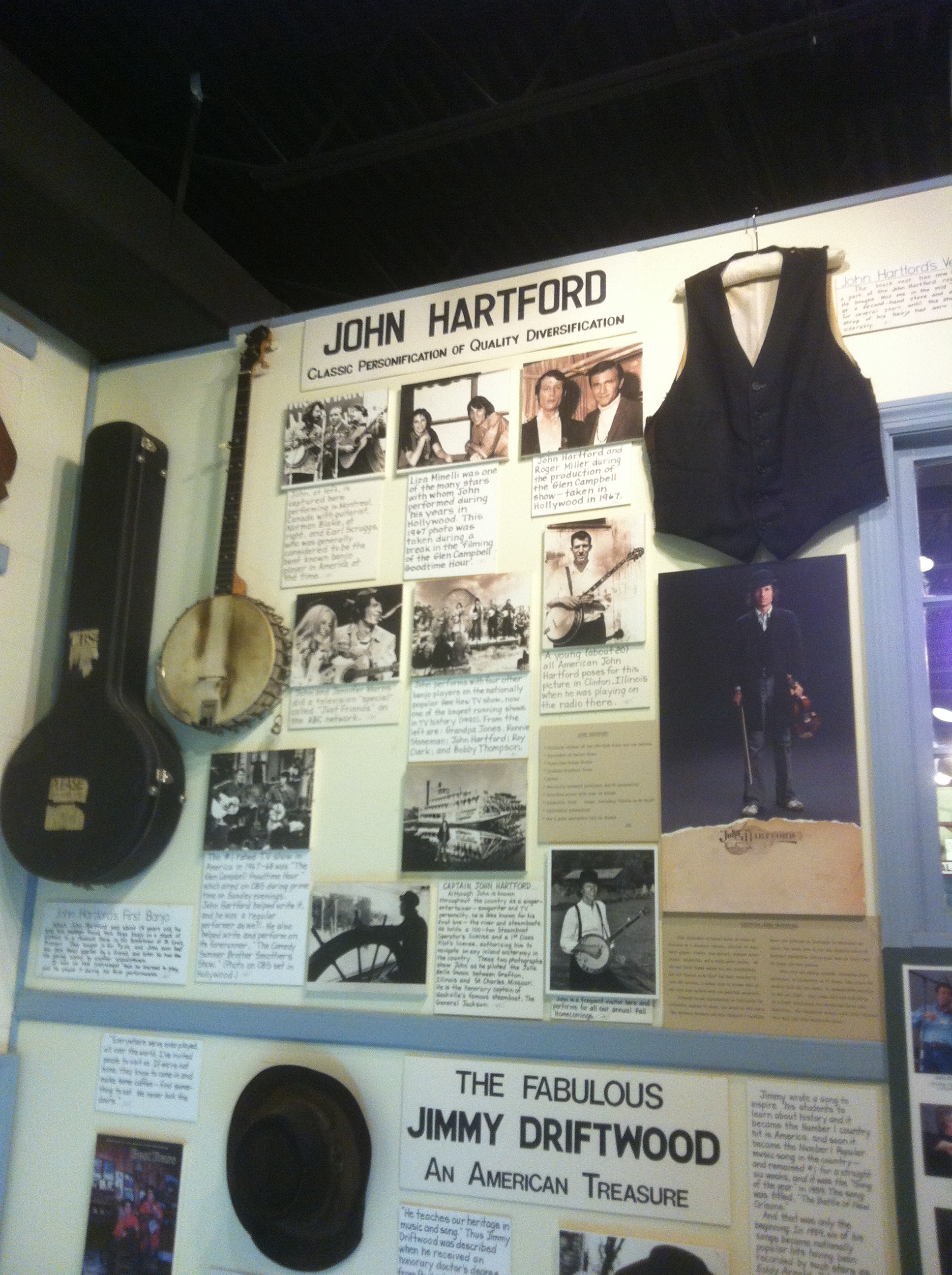
John Hartford display, Museum of Appalachia, Norris, Tennessee, 2011-2012
23 Thursday May 2013
Tags
Appalachia, banjo, culture, history, life, photos, U.S. South

Old Mullins family photo (with banjo player at center in the back row)
19 Sunday May 2013
Posted in Music
Tags
Appalachia, banjo, Cush Adams, Harts Creek, history, Logan County, music, photos, U.S. South, West Virginia

Baisden family members, Trace Fork of Big Harts Creek, Logan County, West Virginia, 1940s.
18 Saturday May 2013
Posted in Big Harts Creek, Music
Tags
banjo, Clifford Dalton, culture, Ezra Jake Dalton, fiddler, Harts Creek, history, James Browning, life, Lincoln County, music, photos, West Virginia

Clifford Dalton, James Browning, and Ezra “Jake” Dalton of Harts Creek, Lincoln County, West Virginia, 1935-1950
27 Saturday Apr 2013
Posted in John Hartford
Tags
banjo, bluegrass, culture, fiddler, John Hartford, music, Nashville, photos, Tennessee, U.S. South
1 9 9 5
24 Wednesday Apr 2013
22 Monday Apr 2013
Posted in Music
Tags
Appalachia, banjo, culture, genealogy, Harts Creek, history, life, Logan County, music, photos, Stella Mullins, U.S. South, West Virginia

Stella Baisden Mullins, a resident of Trace Fork of Harts Creek, Logan County, West Virginia, 1930-1955
22 Monday Apr 2013
Posted in Ed Haley
Tags
Ashland, banjo, Ella Haley, fiddle, Kentucky, Lawrence Haley, Molly O Day, Mona Haley, music, Patsy Haley, Ralph Haley, Wilson Mullins
After securing Patsy’s telephone number from Lawrence Haley, I called her up with questions about Ed’s background. Patsy said she first met Ed just after Thanksgiving in 1946 when she and Jack moved in with the family at 105 17th Street in Ashland. At the time, Mona and her husband Wilson Mullins lived there, as did Mona’s son, “little Ralph.” She was in daily contact with Pop for the next three months.
I asked if Ed drank a lot in those days. “Sir, I never saw the man drunk,” she said, in a very pronounced Cleveland accent. “I know one time he went off with his son to play for some people that were having a party and I guess he got kinda high on the horse then, but he never came home.”
Patsy said Ed never played on the street after she came into the family but would play around the house for the kids. She remembered Ed putting the fiddle on his shoulder and playing tunes like “Black Jet” and “Lightning Express”.
“Pop had one special song for me,” she said. “It was, ‘I took a fat gal by the hand the other afternoon and someone yelled out where’s the string that goes with your balloon?’’ because I was a little on the chubby side. Oh, that man could play anything. He could listen to the radio and play popular music. He played the guitar. Beautiful banjo. I don’t think he used a pick.”
Around 1948, Molly O’Day came to see Ed at his home on 45th Street in Ashland. She brought her husband and fiddling brother — and a lot of recording equipment. Everyone settled in the living room, where Ed played the fiddle, “long neck” banjo and mandolin. Patsy said it seemed like they were just “horsing around,” although there was one song that Molly wanted to hear “real bad.” She didn’t recall much else about the visit because she mostly stayed with Ella and little Ralph in the kitchen.
Patsy said Ed never told any stories but she heard from Ella how his parents were killed on Harts Creek. It was a totally different account from anything I’d heard. “Mom Haley told me that they were both murdered in the log cabin,” she said. “Now, that’s not what happened according to what everybody has been telling me from down in Kentucky.”
I asked Patsy why she thought Ella would have told her something that was apparently untrue and she said, “Well, they might’ve just not wanted me to know everything. They thought I was just one of them big city girls from Los Angeles.”
She had also heard how Ed came to be blind.
It was measles that did it — that’s what Mom Haley told me — and that they left him out in his buggy in the sun.”
14 Sunday Apr 2013
Tags
Appalachia, Armco, Ashland, banjo, Billy in the Lowground, Blackberry Blossom, Brownlow's Dream, Cacklin Hen, Clyde Haley, Dill Pickle Rag, Ella Haley, fiddle, fiddler, fiddling, Flop-Eared Mule, history, John Hartford, Kentucky, music, Roy Clark
Clyde’s memories of Ed playing in contests were much more detailed than anything I had heard from the other kids.
“I’ve seen him go to contests and look like a farmer and he won every one he ever got into,” he said. “He’d go down to the Armco there in Ashland — they’d put up a bandstand up there — and when they’d have contests they had these eight or ten fiddlers up on the stage and he’d be up in all that mess. He fiddled with some of the best that there was in that country in that particular part of the time. I know he had a lot of people used to come to the house and play music with him.”
I asked Clyde what tunes Ed won contests with and he said, “Well, ‘Cacklin’ Hen’, ‘Billy in the Lowground’ and tunes like that. Not any particular ones. He could play any kind of music if he knew it. If he knew the words, he could make music like nobody you ever heard in your life. He had one tune called the ‘Flop-Eared Mule’. I remember ‘Brownlow’s Dream’, ‘Blackberry Blossom’ and ‘Dill Pickle Rag’.”
Gradually easing into specifics, I wondered if Ed held the bow in the middle or out on the end.
“It would depend on what kind of music he was playing,” Clyde said matter-of-factly. “I’ve seen him hold a fiddle bow down at the end, where the hair hooks up. Depending on the tune, the fastness of the tune, he could hold a bow anywhere he wanted to.”
Did he bow with short strokes or long strokes?
“Well, it would depend on which way he was sitting,” Clyde said. “If he was sitting on a chair with his right leg put out far… He never held the fiddle like anybody else I ever saw. He held it way low on his chest, almost down to his belt-line. My dad had long arms, you know. He was a long, thin man. We have a tendency to want to exaggerate a little bit and say he was bigger than he was, but I knew him pretty well. His hands were real thin — looked like a piano player. He could finger that fiddle like nobody you ever heard or saw.”
I asked if Ed picked the banjo and Clyde said, “Oh, yes. He was better with a banjo than he was with his fiddle. It didn’t have a thumb-string on it. I tried to learn how to play the banjo, too, but I never could do any good at it. Well, my mother bought me a fiddle in the store somewhere and she tried to get me to learn how to play the fiddle because she knew she was gonna be dead one of these days and him too and she wanted to have all that music made for posterity. My mom didn’t want me to do it, but my dad wanted me to. He called me his favorite son and said he wanted me to carry on his tradition. I tried, but I got my fingers cut off when I was a lot younger — two-thirds of my first and second fingers on my left hand — and that messed me up from noting. Ralph was the one that played with my dad a lot. He played the guitar like Roy Clark played. He had a big Martin guitar that was a double-header and he could play on both necks of it at the same time. Ralph was a good musician. He died in 1945.”
Clyde talked a lot about Ed being a drinker, which was something Lawrence kind of kept “under wraps”.
“He was a rip-snorter, don’t think he wasn’t,” he said. “You know, he could be pretty boisterous when he wanted to be. Ed Haley was a mean person — believe me he was. I loved him… He used to take me because he knew I liked to go with him. He would give me a drink every once in a while. He knew I got to liking that and he’d take me with him just about everywhere he went. I think he was the one who got me to drinking too when I was a kid and it’s the worst thing I could’ve done. Course I had no control over it then.”
I asked Clyde what Ed’s drink of choice was and he said, “Whiskey. He wasn’t a beer drinker much, or wine. He didn’t go much for that kind of stuff. He drank moonshine when he could get it, and he generally got it.”
Clyde had seen Ed drunk but said it didn’t hurt his fiddle playing.
“I think if anything, it made it better.”
12 Friday Apr 2013
Posted in Ed Haley, John Hartford, Music
Tags
8th of January, banjo, Battle of New Orleans, Black and Jet, blind, Clyde Haley, Ed Haley, Ella Haley, fiddle, history, Indian Squaw, John Hartford, Lawrence Haley, Lost Indian, mandolin, Matilda Ziegler Magazine for the Blind, measles, moonshine, music, Paddy on the Turnpike, Pigeon on the Gate, Portsmouth, Reader's Digest, The Lightning Express, U.S. Army
Clyde paused, then asked, “Did Lawrence show you them pictures of my dad? Did you ever see him in that big coat?”
Before I could answer, he took off again, “He wore that long as I remember about him, and he’d go to the bootlegger and get him a pint of moonshine — one in each pocket in that overcoat — and he’d go over to Portsmouth. I’ve seen him have an old clay pipe in his coat pocket and he smoked that when he was out playing anywhere. He smoked Strader’s Natural Leaf Tobacco. He’d take out his pocketknife and chop it up real fine and put it in his pipe. He also chewed Brown Mule tobacco and he carried a tobacco can in his pocket to spit in. He always had a cane with him. Always. He’d feel with it. That was his ‘seeing eye-dog.’ And if anybody’d look him in the eyes, his eyeballs were real messed up from the measles. That’s exactly what put him blind. My mother had a accident with her daddy’s wagon. He had a carnival wagon. I think she started out in her life teaching kids, but then she had so many kids herself she got away from that. She could’ve been a music teacher.”
Clyde said, “I wish you could’ve known him personally. He could pin you down somewhere and tell you stories that you wouldn’t believe could happen. And I’ve thought a lot of times about things he told, and it had to be true ’cause how else could they happen without somebody really knowing it?”
I kept hearing these references to Ed’s story-telling abilities and was becoming somewhat fascinated. “What kind of stories did he tell?” I asked Clyde.
“Well, just like a hillbilly mountaineer, you’d get him started on a story and he wouldn’t quit,” Clyde said. “He was a storyteller’s storyteller. I tell you, he could tell some big ones. My dad could walk you down talking the Bible and he wasn’t a religious man. Well, my mother would read that Ziegler Magazine, you know, and that was a lot like blind people’s Reader’s Digest. My mother would read to him. They’d sit for hours and hours at a time and he’d drink and she’d read the magazine to him. Used to be so much of it, it would get monotonous.”
Right away, I thought Clyde’s memory of Ella reading to Ed for hours as he drank was one of the best lines I’d heard up to that point. I mean, it really told an incredible amount about their life at home. As I thought about that image, Clyde told about his father playing music on the streets.
“My dad done most of his street playing over there in Ironton,” he said. “And he didn’t like to go out on the street and play with my mother. He didn’t like to go anywhere with her. It made him feel lower than he was. My mother played a mandolin. She had an old five-string Gibson banjo, too. One of them short ones. Banjo-mandolin, they called it.”
Clyde said Ed sometimes put out a hat for money when he was playing on the street, but never a tin cup. Ella did that.
“She had a Army drinking cup — one of those old-time tin cups,” he said. “My mother would put it out because my mother played an accordion, too. Things like ‘Stackolee’, ‘Black and Jet’… My mother and my father sang that. They had a duo, you know. Did you ever hear ‘The Lightning Express’? About the conductor on the railroad and he got run over by that train in the end of it?”
I hadn’t, so I asked Clyde to name more of his father’s tunes.
“‘Forked Deer’, and all the old-timers,” he said. “He was real well-versed in most of them.”
What about “Indian Squaw”?
“‘Indian Squaw’?” he said. “Yeah, yeah. He knew ‘The Lost Indian’ and all the old tunes like ‘Paddy on the Turnpike’ and ‘Pigeon on the Gate’. And he even made one tune for my brother Lawrence called ‘8th of January’ and that was one of the best tunes I ever heard him play.”
Of course, “8th of January” was an old fiddle tune commemorating Andrew Jackson’s victory against the British at the Battle of New Orleans — not Lawrence Haley’s birthday — but it sure was interesting that Clyde made the correlation.
How about waltzes? I asked.
“Well, he knew quite a few of them, you know,” Clyde said. “He was a fiddler’s fiddler. Most of his tunes that he played, my mother played with him on piano or an accordion. And my dad, you could call the name of a tune, and he knew it by heart. He didn’t have to study about it, he just played it.”
10 Sunday Mar 2013
Posted in Music
Tags
Appalachia, banjo, culture, fiddle, fiddler, history, life, music, photos, Telmage Godfrey, U.S. South, West Virginia, William Bertie Lester, Wyoming County

Telmage Godfrey and William Bertie Lester of Wyoming County, 1922
04 Monday Mar 2013
Posted in Big Harts Creek, Ed Haley, Music
Tags
Appalachia, banjo, Boone County, Ed Haley, fiddler, genealogy, history, Johnny Hager, Logan County, music, photos, U.S. South, West Virginia
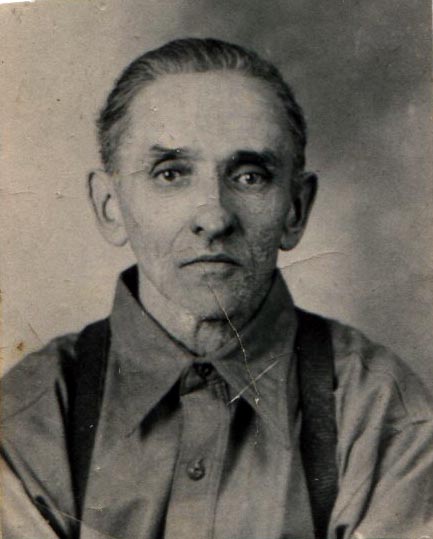
Johnny Hager (1876-1955), a banjo player and fiddler who lived in Boone County, West Virginia
04 Monday Mar 2013
Tags
Appalachia, banjo, Big Rock Candy Mountain, bowing, Calhoun County Blues, Carroll County Blues, Ed Haley, fiddler, fiddling, Ghost Riders in the Sky, Hell Among the Yearlings, history, John Hartford, Mona Haley, music, Pretty Polly, Soutwood Mountain, Sweet Betsy from Pike, Ugee Postalwait
Talking about Ed’s records caused me to ask Mona about his technique and tunes. She said her father was a long bower – that he used “one end of the bow to the other,” except on songs requiring short, quick strokes. Interestingly, she had no recollection of him ever “rocking” the fiddle while playing (as is so fondly remembered by some eyewitnesses) and said he patted his foot softly in half-time (never picking up his whole foot and stomping). He didn’t keep a chin rest on his fiddle because “it got in his way.”
Mona said Ed knew “millions” of pieces, including “Hell Among the Yearlings” (her favorite), “Big Rock Candy Mountain” and “Sourwood Mountain”. She recognized “Carroll County Blues” (what Ugee Postalwait called “Calhoun County Blues”) as a Haley tune when I played it for her. She said Ed played “Pretty Polly” and “Sweet Betsy from Pike” drop-thumb style on the banjo (no fingerpicks). He loved “Ghost Riders in the Sky” — which he never could learn — and would say of the tune, “Lord god almighty, would you listen to that?” When Ed thought about or heard a tune he liked, Mona said he would pat his hands together.
24 Sunday Feb 2013
Posted in Music
Tags
Appalachia, banjo, culture, history, music, photos, U.S. South, West Virginia, William Bertie Lester, Wyoming County
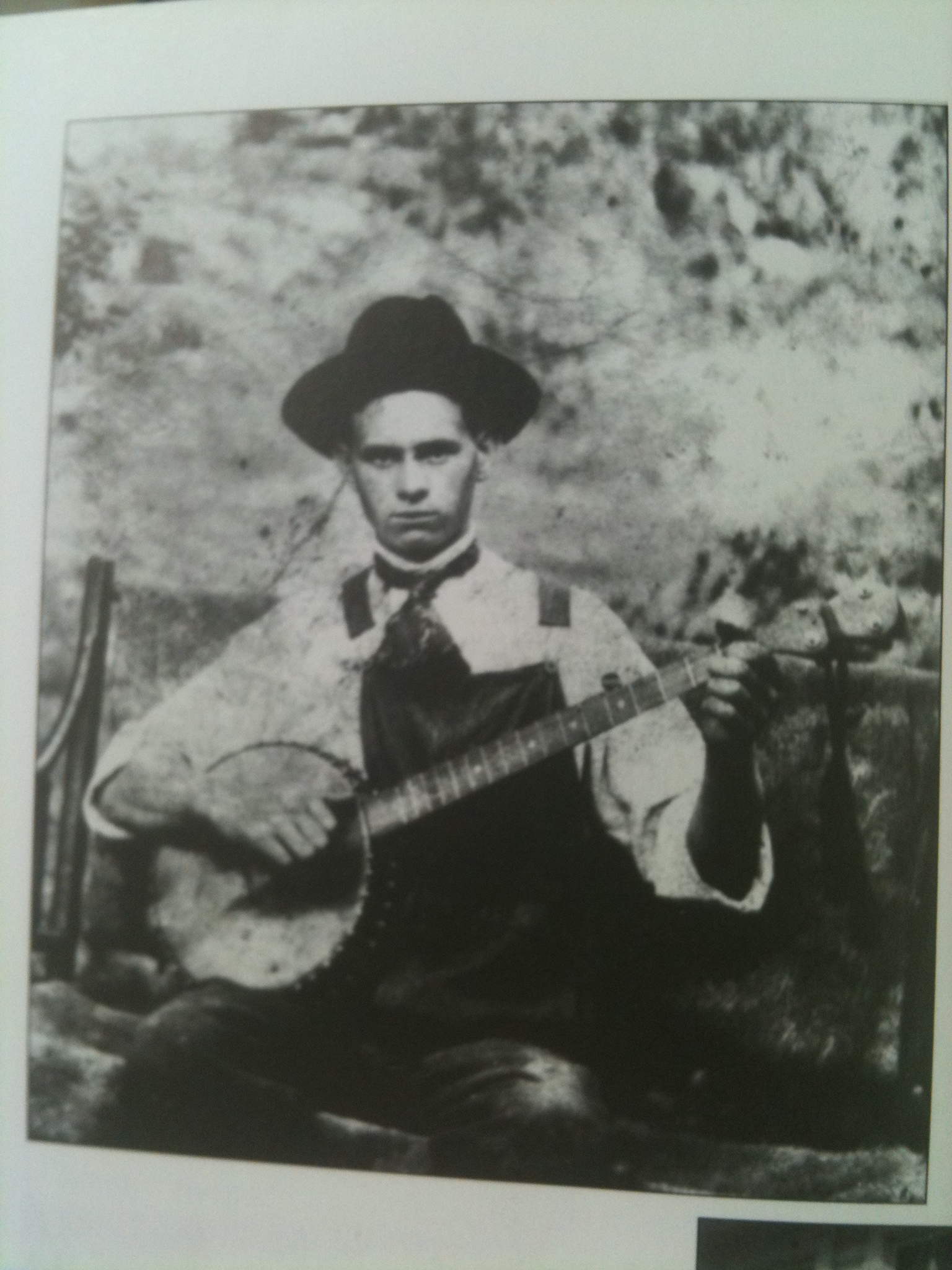
William Bertie Lester, Wyoming County, 1900-1925
Writings from my travels and experiences. High and fine literature is wine, and mine is only water; but everybody likes water. Mark Twain
This site is dedicated to the collection, preservation, and promotion of history and culture in Appalachia.
Genealogy and History in North Carolina and Beyond
A site about one of the most beautiful, interesting, tallented, outrageous and colorful personalities of the 20th Century

 Brandon Ray Kirk