Tags
Appalachia, crime, Devil Anse Hatfield, French Ellis, genealogy, history, L.H. Thompson, Logan County, West Virginia

19 Monday Oct 2020
Posted in Hatfield-McCoy Feud
Tags
Appalachia, crime, Devil Anse Hatfield, French Ellis, genealogy, history, L.H. Thompson, Logan County, West Virginia
19 Monday Oct 2020
Posted in Battle of Blair Mountain, Coal, Logan
Tags
Appalachia, Battle of Blair Mountain, coal, Coal River, George Hensley, history, Jim Aldeman, Logan, Logan Banner, Logan County, Mine Wars, Mote Thompson, Sam Mullins, Watt Aldeman, West Virginia
From the Logan Banner of Logan, WV, comes this item dated April 7, 1922 about the arrest of more union miners relating to the “armed march” on Logan County:
State Police Bring in Five More Miners
State policemen arrived in Logan Sunday evening with five more men whom they had arrested on Coal River and other points in that section of the state who were charged with being “red necks” or members of the armed body of miners who marched on Logan last August.
Jim and Watt Aldeman, Mote Thompson, George Hensley and Sam Mullins constituted the party under arrest. These men escaped the officers for many months, but the ferreting out process of the state officers goes merrily on and it is understood they are still valiantly seeking others for whom they have warrants and the number now charged with participation in the march and now in jail or under bond will be constantly augmented until the entire number have been rounded up and their names registered with the keeper of the Logan jail.
19 Monday Oct 2020
Posted in Logan
Tags
Appalachia, election, Election of 1924, Emmet Scaggs, Guyandotte Valley, history, Logan, Logan Banner, Logan County, politics, sheriff, West Virginia

16 Friday Oct 2020
Posted in Coal
Tags
Appalachia, barber, Barnabus, coal, history, J.A. Roberts, Logan County, Main Island Creek Coal Company, Micco, photos, West Virginia
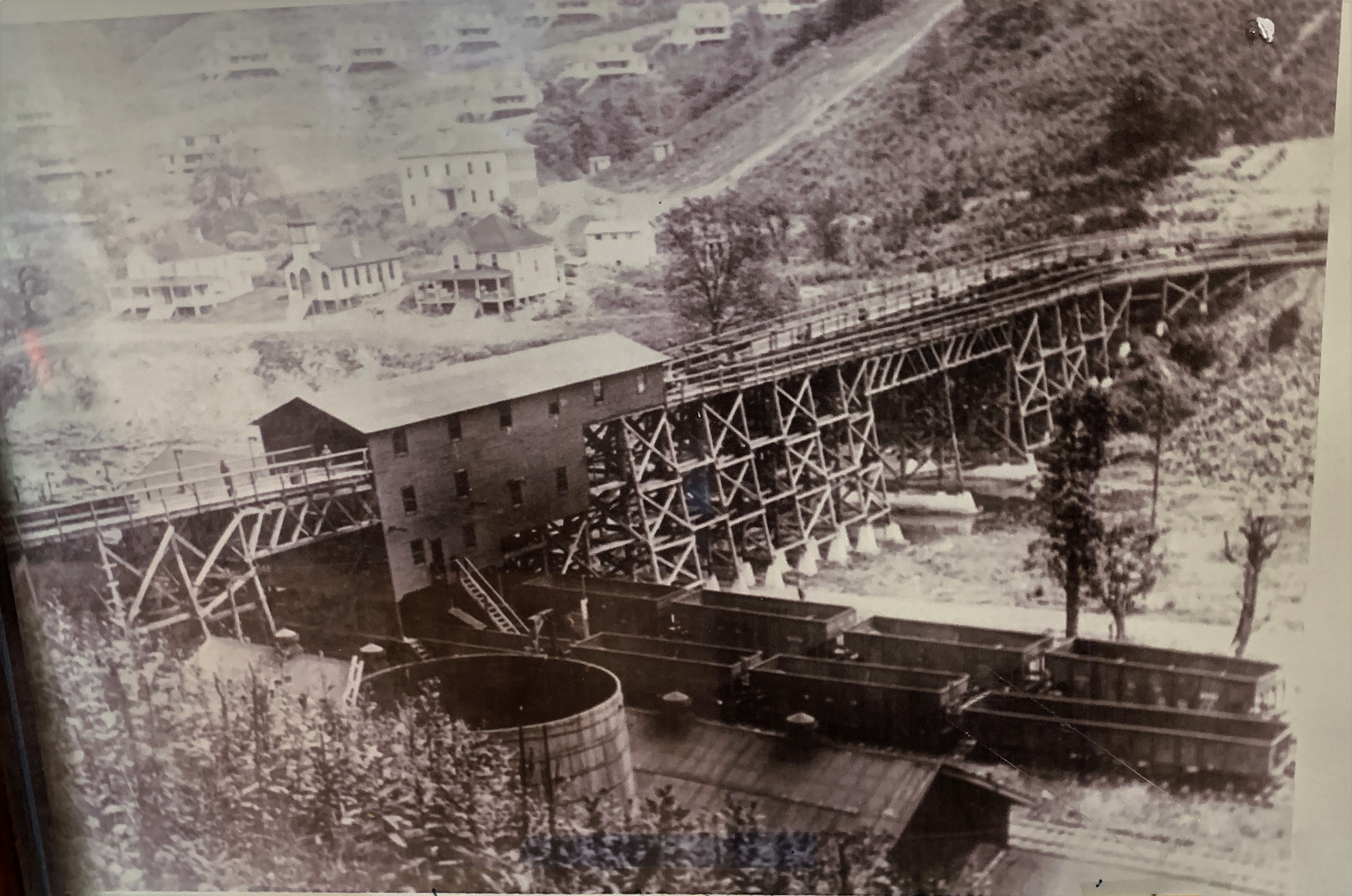
WELCOME AWAITS ALL AT THE NEW TOWN OF MICO
Mico is growing and Mico is going to be one of West Virginia’s best and most up-to-date mining towns. There are now one hundred houses here, and another hundred are under construction. There are also two pool rooms and a motion picture theatre in which to secure entertainment and while the hours away pleasantly.
The Main Island Creek Coal company conducts in this section one of the best stores, pool rooms and barber shops on the creek; they are well lighted, sanitary, bright and new. The pool room contains three fine tables and the barber shop is equipped with two chairs and all modern appliances and conveniences. There is also a reading room where the public may go and look over the newspapers and periodicals free of charge.
J.A. Roberts, formerly of Barnabus, is now installed as manager of the poolroom and barbershop and is working diligently to provide satisfactory service for his large and growing trade.
It is true that there are no sidewalks or hard roads here at this time, but such improvements are contemplated and may be expected soon. The people of Mico are looking forward to the time when the locality will be one of the model mining camps of the entire state, and they are confident and we will enjoy having you here.
It is a pleasure to come up to the pool room and play in a nice, clean, well-managed place, get a slick shave and hair cut, and then go home and greet the family with a smile and a kiss and not go in drunk, ragged and with hair long and unkempt, growl at the little ones and the wife. Nothing like that goes here. We are trying to live happily and make the other fellow happy by smiles. Come and see us. You will enjoy your visit and we will enjoy having you here.
Source: Logan (WV) Banner, 4 May 1916.
16 Friday Oct 2020
Tags
Appalachia, Harry Durham, Logan, Logan Banner, Logan County, poems, poet, poetry, Taplin, West Virginia, writers, writing
From the Logan Banner of Logan, WV, comes this poem written by Harry Durham of Taplin titled “The Wanderer,” published November 20, 1928:
THE WANDERER
I have been in sunny Italy.
I have been in flowery France.
I have seen the silvery moonbeams
On the Alpine mountains dance.
I have been in quaint old China.
I have trod Great Britain’s land.
I have seen the heat elfs dancing
On Sahara’s burning sand.
I have rode the rattling rikas
Thru far Yokohama’s street.
I’ve eaten in snow-clad Igloos
Strips of frozen walrus meat.
I have sailed the broad Atlantic.
I have whaled in Arctic ice.
Steered a bastard thru Magellan.
Rounded bleak Cape Horn twice.
And the wanderlust keepings calling,
Mocking, just around the bend,
Leering me by empty promise
To a homeless, friendless end.
But its call is fainter growing
And its beck no longer thrills
For I’ve found a golden milestone
In the West Virginia hills.
For no matter where I’ve wandered
On a vain and empty quest,
I have left my heart behind me
In the land I love the best.
And when I sign articles
On that last and endless trip,
Let me sail thru-out the ages
On this rugged square rigged ship.
For I ask no sweeter nectar
Than to quaff its crystal rills.
For I’ve known a golden milestone
In the West Virginia hills.
16 Friday Oct 2020
Posted in Wayne
Tags
Appalachia, history, Logan Banner, photos, Wayne, Wayne County, Wayne County Courthouse, Wayne County News, West Virginia
16 Friday Oct 2020
Posted in Battle of Blair Mountain, Logan
Tags
Appalachia, Battle of Blair Mountain, crime, Don Chafin, H.A. White, Kanawha County, Logan, Logan County, Mine Wars, Mingo County, sheriff, United Mine Workers of America, West Virginia
From the Logan Banner of Logan, WV, comes this item dated September 2, 1921 about Kanawha County sheriff H.A. Walker and his role in the “armed march” on Logan County, WV, by UMWA miners:
IS KANAWHA PROUD OF HER SHERIFF?
We presume the citizens of Kanawha county are justly proud of their sheriff, H.A. Walker.
When Kanawha county citizens, all miners, last week decided that since Logan county was enjoying an unbroken peace of seventeen years, or from the time coal operations began, it would probably overlook the state pistol toting law and the United States treason laws and remain peacefully subservient thus allowing them to pass as quietly through Logan county as possible which might include pillaging a few homes and only a murder or two. Did Logan’s sheriff permit it? Let’s see.
This mob was allowed to gather in Kanawha county by their sheriff who visited their camp, saw armed sentinels and is said to have received authentic information of pillaging and looting and auto holdups in his county yet sends in the report of “everything orderly.” This then means that a person or several hundred persons may carry arms in Kanawha county so long as they are orderly even though he or they should hold up an auto or two “to see if the driver was carrying whiskey to the campers along the road.”
For shame, Kanawha. You permit a man to hold this high office who allows all of this in violation of his sacred oath, because he fears to disarm these men who came down through Boone leaving a trail of blood along the way, into Logan where families forsake their homes at two o’clock in the morning and drive to Logan city for protection; where every available man is pressed into service for fighting while his mother, wife, daughter and sister spend sleepless days and nights preparing food for him.
You should be pleased, Kanawha, that some of your citizens have produced this reign of terror, but it remained for Logan county’s sheriff to uphold the laws of the State of West Virginia and the laws of the United States and stop this mad rush of Kanawha county citizens into Mingo which would have ended in a manner which God alone knows.
There is no place in modern civilization for the Kanawha demonstration. It is wrong in principle, subservient to anarchy and flagrantly outrageous in the reputation it gives the state. It is the fault of Sheriff Walker that the name of West Virginia is once again disgraced as one of the United States, but thanks to Sheriff Don Chafin and Logan county citizens, the laws are upheld before the more serious encounters ensued.
16 Friday Oct 2020
Posted in African American History, Logan, Women's History
Tags
African-Americans, Appalachia, Aracoma High School, Cheyney, Cheyney Normal School, education, history, L. Jean Bayes, Logan, Logan Banner, Logan County, Pennsylvania, teacher, teachers, West Virginia, West Virginia State College, Wilberforce University
In April of 1929, the Logan Banner profiled numerous prominent African-American residents of Logan County, West Virginia.

Miss L. Jean Bayes
Elementary Department, Aracoma High School
Miss Bayes is a graduate of Wilberforce University and has done work at West Virginia State College and Cheyney Normal, Cheyney, Pa. She has taught for eleven years in West Virginia, seven of which have been engaged in Logan county. She is a member of the Teachers’ State and National Educational movements. She is very energetic in the promotion of civic, religious and the political welfare of her county and state. She tends her efforts zealously for the welfare and uplift of her people in a wide scope of interest. Social handicaps appeal strongly to her humanitarian impulses, and she is a veritable Good Samaritan in this sphere of necessity. Miss Bayes possibly has not a superior among the women of her race in the state as an organizer and effective public speaker. As a teacher she is effective. She knows her subject and her pupil and brings both together harmoniously and beneficially. In the community, Miss Bayes is always constructive and outstanding in whatever she undertakes and easily outdistances all competitors in her program. Her ____ is widespread, for she is possessed with a purpose and strength of character that makes her a natural leader among her people.
09 Friday Oct 2020
Posted in Huntington, Logan
Tags
A.S. Bryan, Appalachia, Aracoma Lodge 99, banker, banking, C.C. Crane, C.H. Bronson, Charleston, Cincinnati, Cole and Crane Company, Ettye Robertson, First Presbyterian Church, genealogy, Gilbert, Guyan Valley Bank, Harry N. Robertson, history, Huntington, Independent Order of Odd Fellows, Indianapolis, J. Murray Robertson, John Edwin Robertson, Kentucky, Knight Templars, Logan, Logan Banner, Logan County, Louisville, Mae Robertson, Mary S. Robertson, masons, merchant, Ohio, politics, Portsmouth, Robert S. Shrewsbury, Ruby Robertson Parris, sheriff, Shriners, Spring Hill Cemetery, Stirrat, Sydney Robertson, W.B. Miles, West Virginia, Wheeling Consistory
From the Logan Banner of Logan, WV, comes this obituary for former sheriff Sidney B. Robertson, dated June 22, 1923:
S.B. Robertson Dies At Huntington Home
Former sheriff of Logan county, Sidney B. Robertson, of 501 Fifth Avenue, Huntington, died Monday afternoon at 5:40 o’clock after a lingering illness. He has been in failing health for over a year, but it was not until about four months ago that his condition was regarded as serious. The best medical skill in the country was employed in his behalf, but none could make a diagnosis of his condition.
Funeral services will be conducted this afternoon, at 2:30 o’clock at the late home by the Rev. J.L. Mauze, pastor of the First Presbyterian church of which Mr. Robertson was a member. The body will be interred in Spring Hill Huntington cemetery following the services.
Mr. Robertson was born, August 3, 1864, and was the son of Mr. and Mrs. John Edwin Robertson. He early entered into business, and was prominent in lumber circles for some time, being associated with the late C.C. Crane, of Cincinnati, in that business. He served as sheriff of this county from 1900 to 1904 and following that engaged in the wholesale grocery business, until the time of his retirement, a year ago, which was necessitated by ill health. He had extensive holdings in coal mines of the county.
Mr. Robertson was in Logan about a month ago with Laryed Buskirk, on business connected with the purchase of the Stirrat-Gilbert right-of-way–at that time Mr. Robertson was in very poor health and told friends that it was doubtful if he would ever be in Logan again.
On February 22, 1884, he was married to Ettye Bryan, of Logan, daughter of Mr. and Mrs. A.S. Bryan. Four children were born of this union. Fifteen years ago, in the fall of 1907, the family moved to Huntington, which has been their home since that date.
Mr. Robertson was prominent in Masonry. He was a member of the Huntington chapter, No. 53, was a Shriner in the Charleston Beni Kedem temple, was a member of the Kanawha Commandery of Knight Templars of Charleston, held the thirty-second degree in Masonry in the in the Wheeling Consistory, and was past master of Aracoma lodge 99, of this city. He was also a member of the Logan chapter of I.O.O.F. He was at one time president of the Guyan Valley Bank and held a great number of offices in the different companies in which he was interested. He was a member of the First Presbyterian church of Huntington and was a member of the Men’s Bible class of that church.
Mr. Robertson is survived by his wife, Mrs. Ettye Robertson, three sons, Dr. J.E. Robertson, of Louisville, Ky., Harry N. Robertson of Logan, and J. Murray Robertson, of Huntington, an uncle, Sydney Robertson of Mana, Ark., three sisters, Mrs. C.H. Bronson and Mrs. W.B. Miles of Huntington, and Mrs. Mae Robertson of Pawtucket, R.I., and three grand children, Robert S. Shrewsbury of Huntington, John Edwin Robertson, Jr., of Louisville, Ky., and Mary S. Robertson of Logan.
Mr. Robertson’s only daughter, Mrs. Ruby Robertson Parrish, met a tragic death only a few weeks ago, dying as a result of injuries received when the family automobile went over a cliff near Portsmouth, O., while returning from the Memorial Day races at Indianapolis.
09 Friday Oct 2020
Posted in Logan
Tags
Appalachia, baseball, boxing, football, history, Logan, Logan Banner, Logan County, racing, Sports, The Virginian, West Virginia

09 Friday Oct 2020
Tags
Appalachia, hunting, Logan, Logan Democrat, poet, poetry, poets, West Virginia, writers, writing
From the Logan Democrat of Logan, WV, comes this poem written by J. Rush Cook titled “Faithful Rover,” published January 21, 1915:
FAITHFUL ROVER
Old Rover was a faithful dog,
He stuck through thick and thin;
With me he crossed a thousand logs,
We’ve waded a hundred bogs
With the mud up to his chin.
We’ve hunted together, day and night,
He’s treed ten thousand mice;
He never retreated in a fight
Whether in darkness or in light,
And never barked but thrice.
One on the scent, one at the tree–
His gait was swift and strong;
Third, a long–that was for me,
Where e’er I might be,
To hustle and hurry along.
And when I’d reach the long sought spot,
Always on top of the hill,
A lookin’ wise there Rover sot,
Jump up and round he’d hop–
Could never keep him still.
And then, of course, the tree I’d cut
Old Rover sitting night;
Perhaps three, four feet at the butt
Pretty hard to crack such a nut!
But I did it without a sigh.
Down in the top old Rover would go,
To catch the game, you see;
But always in the tree below,
Old Rover would try to show,
Was the game for him and me.
With this repeated till at the foot,
He’d start up t’other side,
And then to me it began to look
As plain as an open book,
That Rover had surely lied.
I don’t think he meant to lie,
His guilt I could not own;
But in his eagerness to try
He always looked too high,
As others I have known.
Old Rover was built for strength,
Was deep across the chest–
His hips didn’t lack for breadth,
Neither his legs for length–
‘Tis needless to tell the rest.
He had a curl in his tail
As nearly all dogs do,
But he straightened it out on the trail–
It might hook on a briar or rail
And get to bleeding, too.
The scent of the game be lost–
The smell of blood is strong,
This he knew at any cost,
If this trail he happened to cross
The game would surely be gone.
Old Rover has passed away
To the happy hunting ground;
And there I hope he’ll stay
And tree his game each day,
And do his own cutting down.
05 Monday Oct 2020
Posted in Logan

05 Monday Oct 2020
Posted in Chapmanville, Logan
Tags
A.K. Bowling, Appalachia, Bess Bowling, Burl Elder, Chapmanville, Charleston, Clinton Ferrell, Earnie Ward, Fannie Brown, Floyd Barker, genealogy, Gicetto, history, hunting, Inez Barker, Jim Barker, Lizzie Mounts, Logan Banner, Logan County, Lonnie Mounts, Mont Tabor, Peach Creek, West Virginia
An unknown correspondent from Chapmanville, West Virginia, offered the following news, which the Logan Banner printed on January 4, 1924:
As every one else has quit writing I will take up my old job.
Mrs. Jim Barker and daughter Zell were visiting in Chapmanville Sunday.
Mr. Floyd Barker and Miss Lizzie Mounts seemed to enjoy themselves at the depot Sunday.
Miss Fannie Brown spent Xmas in Huntington. She reported a good time.
Mr. and Mrs. Lonnie Mounts are again back home after a visit in Charleston.
Mrs. A.K. Bowling and daughter Bess was shopping in Logan Monday.
Mr. Clinton Ferrell is spending his vacation here rabbit hunting.
Miss Inez Barker looks down-hearted now days. Cheer up, Inez. You may get a letter some day.
Mr. Earnie Ward sure enjoys going to Peach Creek. Would like to know what the attraction is.
Mr. Mont Tabor left Wednesday for Gicetto, W.Va. after spending a few days with friends here.
Mrs. Burl Elder of Peach Creek was visiting relatives here Wednesday.
Boys, but we would like to know what has become of Ima Nutt. We haven’t heard from him for so long.
06 Monday Jul 2020
Posted in Ferrellsburg
Tags
Appalachia, Ferrellsburg, genealogy, history, Lincoln County, Martha Mullins, photos, West Virginia
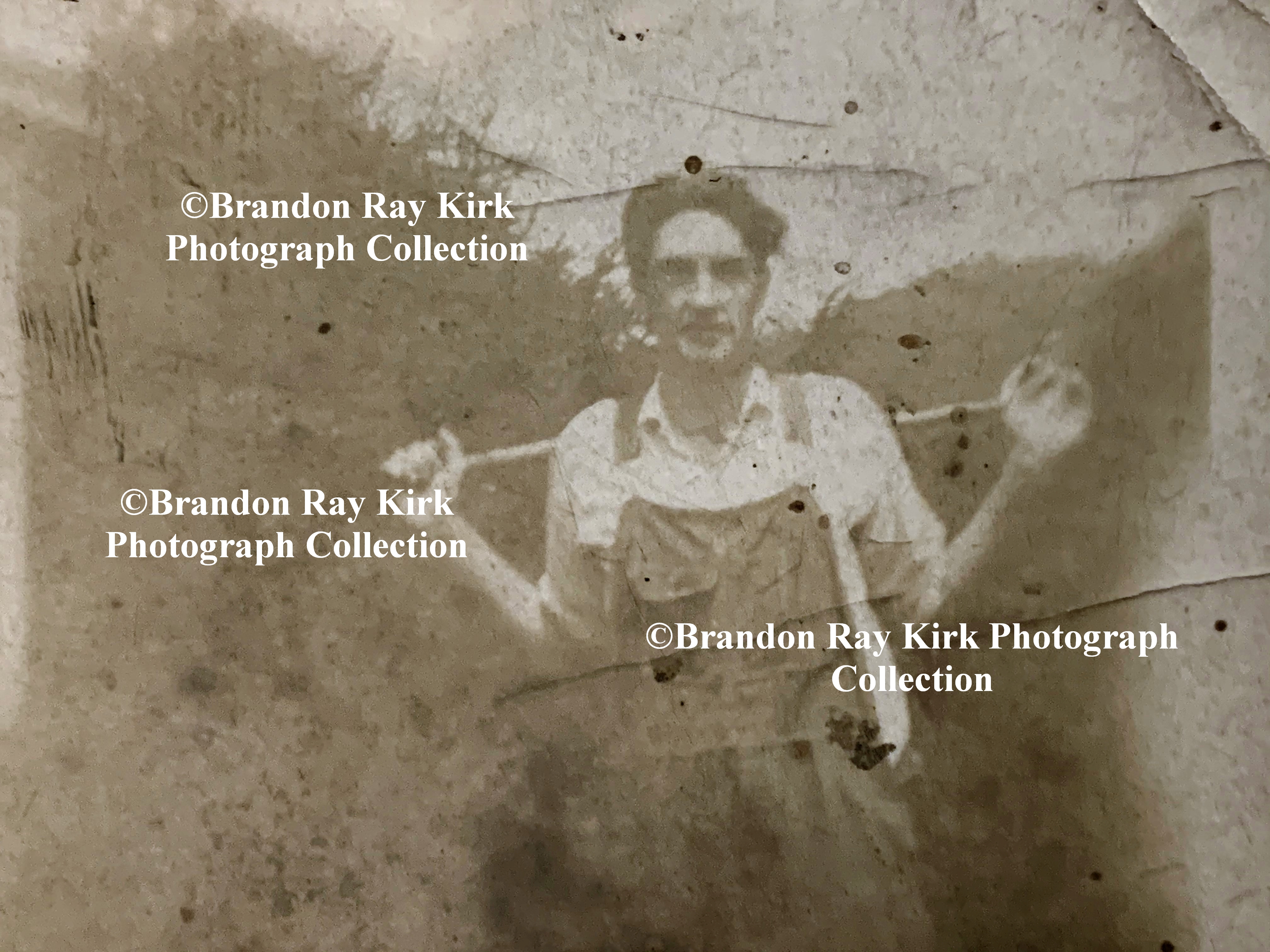
Unknown person. Ferrellsburg, Lincoln County, WV. From the photos of Martha (Farley) Mullins.
06 Monday Jul 2020
Posted in Big Harts Creek, Chapmanville, Civil War, Huntington, Logan, Poetry
Tags
Anna Meadows, Appalachia, Chapmanville, Charles S. Whited, Charleston, civil war, Craneco, deputy clerk, Ella Godby, Ewell Deskins, genealogy, George W. McClintock, H.A. Callahan, Harriet Totten, Harts Creek, Hattie Rothrock, history, Huntington, J. Green McNeely, J.C. Cush Avis, John A. Totten, John W. Buskirk, Logan, Logan Banner, Mud Fork, poetry, preacher, Raleigh County, Robert Whited, Russell County, Slagle, Southern Methodist Church, T.C. Whited, teacher, Thomas Harvey Whited, U.S. Commissioner, Virginia, W.B. Johnson, W.G. Whited, W.W. Beddow, West Virginia
From the Logan Banner we find this entry for Thomas C. Whited, who resided at Logan, West Virginia:
“Uncle Tom” Whited, United States commissioner, one of the county’s oldest citizens, and poet, came to Logan, or the present site of Logan, on October 11, 1877.
He was born on a Russell county, Virginia, farm in a one-room log cabin on November 25, 1854, the son of Robert and Anna Meadows Whited, who reared a family of ten children, nine boys and one girl.
“Uncle Tom” has only one brother living, the Rev. Charles S. Whited, a preacher in Raleigh county. His sister is dead.
His home was broken up by the Civil War, and Mr. Whited began the life of a vagabond, wandering about over the country seeking happiness, but never finding it until he came to Logan. He discovered the little frontier settlement as he was making his way on foot back to his Virginia home to take a job in a store.
“I just dropped in here, tired and sore-footed and decided to attend a teacher’s examination that was advertised for the town–mostly just to see what kind of a certificate I could get among strangers,” Mr. Whited said.
He received his certificate and taught his first term of school at the mouth of Mud Fork in 1877. Then followed terms at Chapmanville, Craneco, Logan and Hart’s Creek until 1883 when he was asked to take a position in the clerk’s office as deputy clerk.
Among the well-known citizens that “Uncle Tom” taught in his educational forays in Logan county were the Rev. J. Green McNeely; Ewell Deskins; Mrs. Ella Godby of Huntington, mother of Mrs. W.W. Beddow of Slagle; J.C. (Cush) Avis, and several of the Conley family.
From the position as deputy clerk, Mr. Whited rose in succession to circuit clerk, county superintendent of schools, city councilman, and United States Commissioner. He served a total of 18 years as circuit clerk of Logan county.
In 1930 Federal Judge George W. McClintic appointed “Uncle Tom” United States Commissioner which office he will hold for life unless removed by the judge on charges of misconduct.
“Uncle Tom” is a poet of no mean ability. His poetry is recognized throughout the county and some think his best work was a poem dedicated to the old elm tree in the court house square which was recently cut down.
He was instrumental in saving the tree when it was just a sprout and John W. Buskirk was about to dig it up to plant a locust orchard near the site of the present courthouse. “Uncle Tom” requested that the sprout be left to grow. It was not moved from the original spot where it sprouted until it was cut down in 1931, Mr. Whited said.
Mr. Whited married Miss Harriet Totten, daughter of the Rev. John A. Totten, pastor of the Southern Methodist Church in Logan, on March 4, 1887.
The couple reared a family of five children–two boys and three girls. All are still living. They are Mrs. W.B. Johnson, W.G. Whited, and Mrs. H.A. Callahan, all of Logan; Mrs. Hattie Rothrock, Charleston; and Thomas Harvey Whited whose residence is unknown.
Though 81 years old, “Uncle Tom” still manages the affairs of U.S. Commissioner and finds time to dash off a line or so of poetry now and then.
Source: Logan (WV) Banner, 17 April 1937.
05 Sunday Jul 2020
Posted in Big Sandy Valley, Hatfield-McCoy Feud
Tags
Appalachia, Beech Creek, Devil Anse Hatfield, genealogy, history, Mingo County, photos, Valentine Wall Hatfield, West Virginia

Valentine “Wall” Hatfield (1834-1890), a brother to Anse Hatfield, lived at Beech Creek, present-day Mingo County, WV. The family holds the original image.
05 Sunday Jul 2020
Posted in Battle of Blair Mountain, Coal, Logan
Tags
American Civil Liberties Union, Appalachia, Battle of Blair Mountain, Frank Keeney, history, J.T. Morris, Kiwanis Club, Logan, Logan Banner, Macbeth, Morgan County, Raleigh Register, Rotary Club, United Mine Workers of America, West Virginia
From the Logan Banner of Logan, WV, comes this bit of history regarding the Armed March, or the Battle of Blair Mountain, dated March 30, 1923:
Morris Tells of Logan’s Invasion
Speaking before the Kiwanis club at its luncheon last Friday noon, J.T. Morris, who is now located at MacBeth, Logan county, told in some detail of the visit to Logan county on Sunday, March 4th, of the emissaries of the American Civil Liberties Union, characterizing the “invasion” as a “fizzle,” and stating that free speech was as free in Logan county as anywhere else in the country, but that both the mine workers and mine operators of the county were unalterably opposed to the United Mine Workers of America, and were in solid compact against it.
Mr. Morris stated that every mine worker in the Logan field was bound by his contract of employment to resist encroachment of the U.M.W.A., and that the employers in turn were bound in the same way and would resist to the last ditch. It was under these contracts, approved by a decision of the United States supreme court, the speaker said, that the recent injunctions against the United Mine Workers of America had been secured, and that these injunctions covered every means of attack except that brought about through the American Civil Liberties Union; which has also been busy with propaganda in the interest of C. Frank Keeney in Morgan county.
Their method of approach, widely advertised by inflammatory statements, Mr. Morris described as an insult to the people of Logan county. What was actually said at the meeting was very tame in comparison, he said. They merely generalized on the subject of free speech, and that didn’t worry Loganites, for any man can come into Logan and speak without hindrance so long as he stays within the limits of the law, of common decency and of the public interest.
Mr. Morris read extracts from the addresses of what he dubbed the “wise men of the east.”
Logan county is a unit in its resentment against its defamers. The bar association, the clergy, the chamber of commerce, the Rotary club–all have passed stirring resolutions condemning the insults heaped on the community.
Reprinted from the Raleigh Register
28 Sunday Jun 2020
Posted in Beech Creek, Big Sandy Valley

Doc and Sarah (Hatfield) Mayhon of Beech Creek, Mingo County, WV.
28 Sunday Jun 2020
Posted in Battle of Blair Mountain, Coal
Tags
A.M. Belcher, Appalachia, Battle of Blair Mountain, David Moore, Edward Reynolds, Elmer Ashworth, history, J.E. Miller, J.W. Swanner, L.C. Davis, Logan Banner, Ohio, Pomeroy, prosecuting attorney, United Mine Workers of America, Vulcan, West Virginia
On May 11, 1923, the Logan Banner printed this item relating to the “Armed March” or the Battle of Blair Mountain:
STATE’S WITNESSES ARE SHOT TO DEATH IN OHIO BY MARCHER
J.W. Swanner and Edward Reynolds, Chief Witnesses in Houston Trial, Murdered By Fugitive
POMEROY, O., May 9.–J.W. Swanner and Edward Reynolds, West Virginia miners, were shot and killed in the mining camp of Vulcan, near here, at 10 o’clock this morning by J.E. Miller, a coal miner. Miller gave as his reason that he feared the two men had come to kidnap him and take him back to West Virginia in connection with the Logan armed march.
Miller’s wife went to the door of their house when Swanner knocked. She closed the door and called to Miller who came to the door with his revolver. He fired through the glass at Swanner, shooting him in the left breast. Reynolds, who was a lame man, attempted to run away and Miller stepped outside the door and fired three shots into Reynolds’ back. Both men died almost instantly.
Were Unarmed
Persons who saw the shooting telephoned to the sheriff’s office at Pomeroy and Deputy Sheriffs Elmer Ashworth and David Moore responded and arrested Miller at his house.
Search of the bodies of Swanner and Reynolds disclosed that they were unarmed. Swanner had in his pocket a letter from A.M. Belcher, offering Miller immunity if the latter would return to West Virginia to testify in the armed march trials.
Swanner and Reynolds had both turned state’s evidence in these cases. When this fact became known the feeling expressed in the mining camp was that both men had got what they deserved. This section is very strongly union in sentiment.
Prosecuting Attorney L.C. Davis…
[I cropped the story here by mistake.]
24 Wednesday Jun 2020
Posted in Big Sandy Valley, Wharncliffe
Tags
Appalachia, Ben Creek, Big Sandy River, Mingo County, Norfolk and Western Railroad, photos, Tug Fork, West Virginia, Wharncliffe

The old railroad town of Wharncliffe is gone. 30 May 2020

Mouth of Ben Creek, Mingo County, WV. 30 May 2020
Writings from my travels and experiences. High and fine literature is wine, and mine is only water; but everybody likes water. Mark Twain
This site is dedicated to the collection, preservation, and promotion of history and culture in Appalachia.
Genealogy and History in North Carolina and Beyond
A site about one of the most beautiful, interesting, tallented, outrageous and colorful personalities of the 20th Century
 Brandon Ray Kirk