Tags
Abe Keibler, Appalachia, fiddle, fiddlers, history, John Hartford, Kentucky, music, photos, Roger Cooper, South Shore, U.S. South

Roger Cooper, Abe Keibler, and John Hartford at South Shore, KY, 1996

28 Monday Apr 2014
Tags
Abe Keibler, Appalachia, fiddle, fiddlers, history, John Hartford, Kentucky, music, photos, Roger Cooper, South Shore, U.S. South
Roger Cooper, Abe Keibler, and John Hartford at South Shore, KY, 1996
28 Monday Apr 2014
Tags
Abe Keibler, Asa Neal, Big Indian Hornpipe, Big Rock Candy Mountain, Birdie, Charley Keibler, Ed Haley, Ella Haley, fiddlers, fiddling, Greenup, Grey Eagle, Henry Keibler, history, Jim Keibler, John Hartford, John Lozier, Kentucky, Morris Allen John Keibler, music, Ohio, Portsmouth, Portsmouth Airs, Pretty Polly, Roger Cooper, Sam Keibler, Turkey in the Straw, writing
As Abe and I fiddled the afternoon away, Roger Cooper and John Lozier showed up. In ensuing conversation, John mentioned to Abe that he didn’t remember his father, Jim. Abe said it was because his dad had died young.
“My uncle raised me from seven year old and raised Morris Allen from three months old,” he said.
Which uncle?
“Uncle John and Uncle Henry raised me,” he said.
I said to Abe, “How many fiddling Keiblers were there all told?”
“Well, there weren’t many — just that one generation,” he said. “John — that was the oldest — Charley — that was the next one — and my dad and Sam. Them was the four fiddlers.”
His mind was starting to pull out great memories.
“Grandpa wouldn’t allow them to bring a fiddle into the house to saw around on and learn and they got a hold of an old fiddle and took it out in the cornfield. And the three brothers, he kept seeing them going out and he told Grandma, ‘Them boys are into something. I’m gonna follow them and see what they’re into.’ So he goes out there and Uncle John — that was the best fiddler — he was a playing and my dad was a dancing and he said, ‘Well now, John, you can bring your fiddle into the house.’ He had learnt to play it then pretty good.”
I asked Abe where he first heard Ed play and he said, “Greenup, Kentucky. Up here at the county seat. He played around the courthouse there and people donated him money. He had a cup on the neck of his fiddle and they’d drop five-dollar bills in it. When that old mill was a running and whiskey was in, he’d come around there to that mill on payday and maybe take a thousand dollars away from there. I was about eighteen years old when I heard him. He was a good fiddler. He could play ‘Birdie’ and all that. Played it in C or G either one. He played and sung a lot of songs — ‘Big Rock Candy Mountain’. He could play anything.”
Abe said he usually saw Ed at the courthouse on Labor Day or the Fourth of July. Ed always wore a hat and was dressed in a suit. He placed the fiddle under his chin, pulled a long bow and ran his fingers all up and down the neck of the fiddle. Abe said he “could play anything” but he only remembered “Grey Eagle”, “Big Indian Hornpipe”, “Portsmouth Airs”, and “Turkey in the Straw”. His wife normally sang while he played the fiddle, although he sang “Pretty Polly”. Abe never got to talk much to him because the crowds kept him so busy playing the fiddle.
I asked Abe if he ever played with Asa Neal and he said, “No, I never did play none with Asa but he was a pretty good fiddler. I remember when we first moved to Portsmouth in ’23, he couldn’t play nothing on the old Blues, but he got to be a pretty good fiddler. He used slip notes.”
27 Sunday Apr 2014
Tags
Abe Keibler, Appalachia, Charley Keibler, family, fiddlers, history, John Keibler, life, music, Ohio, photos, Portsmouth
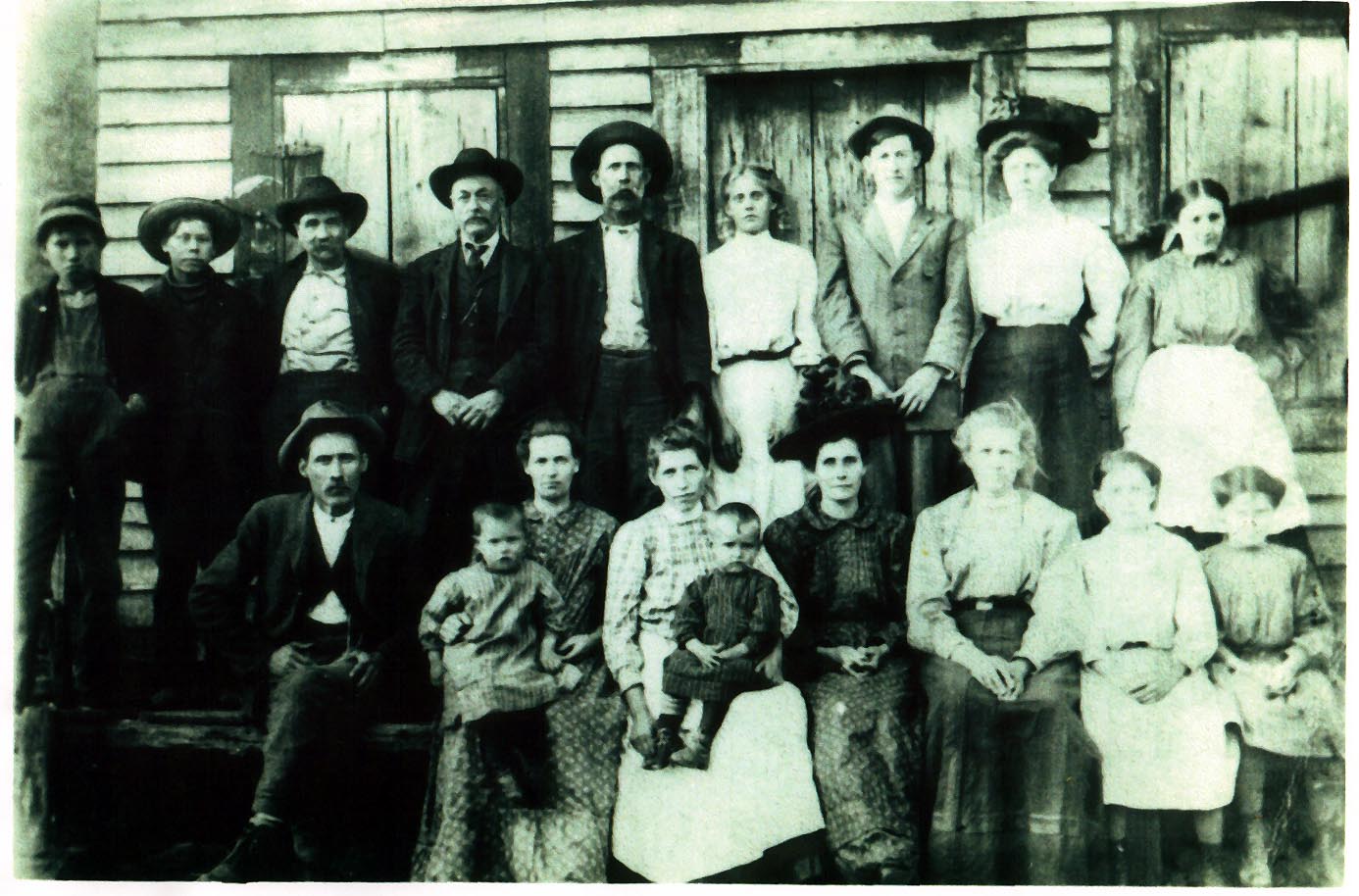
The Keibler family of Portsmouth, Ohio
27 Sunday Apr 2014
Tags
Abe Keibler, banjo, Boatin' Up Sandy, Charley Keibler, Cold Frosty Morning, Cotton-Eyed Joe, fiddle, fiddlers, Germany, Girl With the Blue Dress On, guitar, history, Jim Keibler, John Keibler, Kentucky, Morris Allen, music, Ohio, Old Coon Dog, Parkersburg Landing, Portsmouth, Rye Whiskey, Sally Goodin, Sally Got Drunk on Irish Potatoes, South Shore, Stumptail Dolly, Susan's Gone to the Ball With Her Old Shoes On, We'll All Go to Heaven When the Devil Goes Blind, writing
Later that day, I went to see 88-year-old Abe Keibler in nearby South Shore, Kentucky. Abe was the last surviving member of the old fiddling Keiblers and a first cousin to fiddler Morris Allen, one of the sources for Parkersburg Landing.
“My grandfather, he was sixteen years old when he landed in here from Germany and he got a job out here at an old furnace,” Abe said. “He couldn’t even speak the language when he first come here, they said, and he didn’t play nothing.”
“Wow,” I said, “So fiddling started with your dad and uncles?”
“My uncles and dad, yeah,” Abe confirmed. “Jim was my dad’s name. He played a banjo — the old claw-hammer style.
Abe was raised up in a family of fiddlers, but he originally played the guitar. He began to play the fiddle at the age of 55. He wasted little time in showing me the old family fiddle, which he inherited from his uncle John Keibler. It was a good-looking instrument with a good tone, although the bridge was ready to collapse.
“Way back before I was born some fella came into Portsmouth when they had the old saloons in and he had this old fiddle and couldn’t play it,” Abe explained. “My uncle John, he seen that it was a good fiddle and he wanted to buy it and this guy wouldn’t talk about selling it. My uncle Charley, he was a left-handed fiddler. He said, ‘Now John, if you want that fiddle, I can buy it for ten dollars.’ So he bought it. It’s been in our family around ninety years or maybe close to a hundred.”
Abe said the old fiddle was hard to tune — it had seen some rough times.
“My uncle fell and busted the top all to pieces. I had a fella that made fiddles put that top off of another old fiddle on it. My uncle had patent keys put on it and I had them took out and wood keys put in it.”
I tuned the Keibler fiddle as best as I could, then reached it back with a request for a tune I’d heard Abe mention called “We’ll All Go to Heaven When the Devil Goes Blind”. He couldn’t remember it but said it was the same thing as “Stumptail Dolly”. He scratched out a melody in the key of G, then said, “Some of them called that the ‘Girl With the Blue Dress On’. ‘Old Coon Dog’ is all I ever heard it called.”
He also played “Boatin’ Up Sandy”, “Sally Goodin” (in G), “Rye Whiskey” (which he called “Cold Frosty Morning”), “Sally Got Drunk on Irish Potatoes”, “Cotton-Eyed Joe”, and “Susan’s Gone to the Ball With Her Old Shoes On” (key of G).
Every now and then, I joined in with my fiddle.
“I’m gonna learn you how to play a fiddle yet,” Abe said.
10 Thursday Apr 2014
Tags
Abe Keibler, Adams County, Asa Neal, banjo, Blue Creek, Charlie Fry, Clark Kessinger, Ed Haley, Ella Haley, fiddle, fiddling, Great Depression, Harry Frye, history, John Hartford, John Keibler, John Lozier, Kentucky, moonshine, music, Natchee the Indian, Norfolk and Western Railroad, Ohio, Portsmouth, Sam Cox, South Portsmouth, West End Jubilee, Winding Down the Sheets, writing
About two weeks later, I called John Lozier, the harp player in South Portsmouth, Kentucky. I wanted to hear more about his memories of Ed in Portsmouth, Ohio.
“That there’s where I met Ed Haley at — sitting on Market Street back in about ’28 or ’29 playing for nickels and dimes,” he said. “And his wife had a banjo-uke of some kind. It was about an eight-stringed instrument, but it wasn’t a ukelele and it wasn’t a banjo. And she was blind. They raised five children.”
I had some very specific questions about Ed’s fiddling, which John answered in short measure. I wondered, for instance, if he was a loud or soft fiddler.
“When Ed played, he played so soft and so low that you had to listen,” he said. “It was just like pouring water through a funnel.”
Where did Ed Haley put the fiddle?
“He put it up under his chin.”
Did he play a long bow or a short bow?
“I think he used all of his bow. In other words, he didn’t waste any of it. He played an awful lot of hornpipes.”
I asked John about Asa Neal, the great Portsmouth fiddler whose skill was preserved only on a few cassette tapes floating amongst an “underground” network of old-time music enthusiasts.
“Asa Neal was a good fiddler and he copied after Clark Kessinger,” John said. “He lived over here in Portsmouth and worked on a section on the N&W. I don’t know how he played as well as he did — fingers clamped around them old pick handles all day long. He was kindly rough and a little loud, but he could play a lot of fiddle. Lord, I’ve eat at his house many a time.”
I asked John if Ed knew Asa Neal and he said yes, then added, “Ed Haley and them used to get in a contest when they used to have the West End Jubilee down on Market Street in Portsmouth and Clark Kessinger would come down. Someone asked Charlie Fry one time, said, ‘What are you gonna play?’ and he told him. He said, ‘Well, Clark Kessinger’s gonna do that.’ He said, ‘That’s all right — I’ll use that rolling bow on him.’ Charlie Fry, he had a boy that was a tenor banjo player and he was good. His name was Harry Frye.”
John seemed to regard the Keiblers — who were apparently his kinfolk — as the best among local fiddlers.
“I remember Uncle John Keibler,” he said. “Uncle John Keibler was the best fiddler they was in the country. He was another Ed Haley — he played all of his life. ‘Winding Down the Sheets’, now there’s an old Keibler tune. Did you know there’s one of the Keibler boys up here yet left that plays? Abe Keibler. Lives right above me about four mile in a housing project up here at South Shore. He’s got sugar awful bad, but he’s one of the younger ones of the old set. He’s one of the boys of the seven I told you about and they all played. Now one of them has got the old fiddle that Grandpa brought over here from Germany. Made in 1620 or 1720. A Stradivarius. Abe’s boy’s got it.”
I asked John if Ed knew the Keiblers and he said, “I don’t know whether he did or not. He knew the Mershon boys that lived over on Pond Creek and around over in there. They was a bunch of Mershon boys that played fiddle and banjo there. Some of them were pretty good and some was rough. They was good for a square dance, but they couldn’t play with Ed Haley.”
John was on a roll: “At one time, they was more good musicians around Portsmouth — during the Depression — and they wasn’t no work and they just sat around and played cards and drank a little moonshine and got good. None of them ever went anyplace. And they was just some great fiddlers. Sam Cox, he was a banjo player. You know Natchee the Indian? He lived down around Blue Creek somewhere in Adams County. He’d play the bow over the fiddle and under and upside down and lay down… But Ed Haley never did do that. Ed Haley would just sit and roll it out just as smooth — just spit it right out on the street for ya. Smoothest fiddler I ever heard.”
19 Sunday May 2013
Posted in Ed Haley
Tags
Abe Keibler, blind, Catlettsburg, Ed Haley, fiddler, Greenup, history, Kentucky, music, New Boston, Ohio, Portsmouth, writing
A few days later, I called Abe Keibler, “last of the old Keibler fiddlers” in the Portsmouth area. The Keiblers had been top fiddlers in that part of the country according to Roger Cooper.
“I didn’t play with him, but I heard him play all the time,” Abe said of Ed. “That was back in the twenties when I was a hearing him. I’m 86. I was about eighteen or nineteen year old the first time I heard him. I saw him at Greenup, the county seat of Greenup County, on Labor Days and Fourth of July. He was on the courthouse ground playing around there. I remember one time he was playing on one side of the courthouse and they was a church group started up right behind him and he just stopped right then. He said, ‘I ain’t got nothing again’ the church, but this fiddling don’t go with church.’ And he went around on the other side away from them, you know. He was a nice old fella.”
I asked Abe to describe Ed and he said, “He dressed comely like. He had to wear a suit of clothes. He wore a hat. He was blind, I guess, about all his life. He knowed your voice if he’d ever talked to you. I remember one time a doctor up there came around and asked Ed to play ‘Turkey in the Straw’ and he said, ‘Hello, Doc! I ain’t seen you in a long time.’ Yeah, he was a good old man. He had the fiddle under his chin and held the bow back down there on the end. He was all over that neck a playing. And if you asked him to play a tune – I don’t care, maybe half a dozen – he’d play what you asked for. His wife played the mandolin and sung with him. They sung a lot of them old tunes back there. ‘Big Rock Candy Mountain’ was his main tune – he sung and played it on the fiddle. He played them old-time fiddle tunes. He mostly played down in the standard and in the ‘C’. He played ‘Sally Goodin’ and all them old tunes back there. ‘Turkey in the Straw’. He played some hornpipes, like ‘Big Indian Hornpipe’ and ‘Grey Eagle’.”
I had a lot of detailed questions for Abe about things Ed might have said when he was playing on the street, but he said Ed never got time to talk much.
“When I was around him, they was a crowd there and they kept him busy,” he said. “Quick as he could play one, somebody else had one in. They just kept him a playing all the time. He’d have a big crowd around him. Over there at New Boston, he had big crowds over there. He lived in Catlettsburg but he come down to New Boston when the mill was a running full and played there on them waiting stations and a lot of them mill-men come out there and they give him lots of money. He always had a cup on the neck of his fiddle and they dropped dollars. Back there then, why, they’d just throw their money in to him – five dollars, tens, and everything – and they was big money there then. He made a lot of money back in them days.”
17 Friday May 2013
Posted in Ed Haley
Tags
Abe Keibler, Asa Neal, Charley Keibler, fiddle, fiddler, Germany, Henry Keibler, history, John Keibler, Kentucky, music, Portsmouth, writing
After listening to the Lozier tape, I played a 1992 interview/jam session with Abe Keibler, last of the old fiddling Keiblers in South Shore, Kentucky.
“The first Keibler to come into this area was my grandfather, Henry C. Keibler,” Abe said. “He come here when he was 21 years old from Germany. I don’t know whether he played any music or not but they was some good ones in the uncles that raised me. The fiddlers was John and Sam and Henry and Charley but Uncle John Keibler, he was the best fiddler in the whole bunch. He won contest after contest. [When he was young and learning to play a fiddle,] his dad wouldn’t let him bring it into the house. My aunt told me he didn’t want to hear him screeking around on it, you know, so he took it out in the cornfield. My grandpap said, ‘Well, them boys is into something. I’m gonna slip out there to see what they’re into.’ And he sneaked out there and the old son was a picking the banjo, and him the fiddle and some a dancing. Then he said to him, ‘Well John, you can bring your fiddle in home now.’ Then he brought it in and it didn’t bother him no more. He was playing then good.”
Abe said, “Then I had an uncle, Charley ‘Shorty’ Keibler — they said he was an awful good left-handed fiddler, but I never heard him, see. Uncle Charley died young. He’s the one bought that old fiddle that I was raised with. Uncle Charley lived over in Portsmouth. Back then, they had old saloons and my other uncle John he tried to buy [this fiddle from a man there]. But [this man, he wouldn’t sell it to John. He] told Uncle Charley, he said, ‘Now, Charley, if you want that fiddle I’ll sell it to you for ten dollars.’ Well, he bought it [from the man] and Uncle John give him the money and he kept it over the years. He wouldn’t let me touch that fiddle though ’til I was sixteen years old. He didn’t want to hear me jigging around on it. He thought you ought to already know how to play, I guess. [Uncle John], he had a stroke and he tried to tune it up one day and he couldn’t tune it. And he told his nephew, said, ‘Take that fiddle and give it to Henry.’ Uncle John died on September 6, 1932. Then in ’55, I think it was, Uncle Henry said to his sister, ‘I’m gonna give old Abraham this fiddle. Next time he comes down I’ll give it to him.’ I went down and he said, ‘There’s the fiddle. She’s yours. Now, do whatever you want with it.’ He couldn’t play much then. He was sick. Henry died in 1959.”
On the tape, someone asked Abe about the Glenn Brothers, who I had heard about in connection with Clark Kessinger.
“Abe Glenn, I was named after him,” he said. “Bob Glenn, they said he was a real fiddler. I never heard either one — that was before my time. They said he was really about as good as you could find.”
Abe also remembered Asa Neal.
“When he first come here to play, he couldn’t play a hornpipe nor nothing — just them old blues. When I was about sixteen year old, he come there to my uncle’s and he learnt to play all of these old tunes. He used a lot of slip notes but he could get them in there, boy. He learnt to be a good fiddler, ol’ Asa.”
On the tape, Abe mostly played old standards — “Sally Goodin”, “Turkey in the Straw”, “Liza Jane” — but every now and then he came out with some obscure tunes, like “Portsmouth Airs”, “Headwaters of Tygart” and “Old Coon Dog”.
28 Monday Jan 2013
Tags
Abe Glenn, Abe Keibler, Asa Neal, Berea College, Bob Glenn, Buddy Thomas, Clark Kessinger, Ed Haley, fiddlers, Gus Meade, history, John Harrod, John Hartford, John Keibler, John Lozier, Kentucky, Lewis County, music, Ohio, Portsmouth, Roger Cooper, South Shore, writing
A few days later, I called Roger Cooper, a fiddler in Lewis County, Kentucky. Roger was a protégé of Buddy Thomas, the eastern Kentucky fiddler who captured the interest and won the hearts of folklorists in the 1970s. Roger was more than happy to talk with me but said, “Really, I don’t know very much about Ed Haley. Course, I’m just like 43 years old myself so I never did see him or nothing, but a lot of guys around here knew him and would see him and stuff. I’ve heard quite a bit of talk about him. He’d come down to the Portsmouth area and play sometimes. And the Portsmouth area had lots of fiddlers around during the 20s and 30s and on up into about the 50s before they started dying off. There was stories going around about how he played.”
I asked Roger if he knew anything about Asa Neal, the famous Portsmouth fiddler.
“Asa Neal, from what they say about him, he was from down here in this county starting out and lived on a shanty boat and I guess he went on up towards Portsmouth,” Roger said. “He even made some records, I think.”
I told Roger that I figured Asa and Clark Kessinger were Ed’s two chief competitors and he said, “Well, Clark Kessinger, he gave Ed Haley a lot of credit as to learning some stuff from him himself.”
Roger felt there were a lot of other good fiddlers in the area aside from Asa Neal and Clark Kessinger.
“There was six fiddlers in South Shore — that’s just across the river from Portsmouth — all brothers — Keiblers — and there was six of them played the fiddle and they was supposed to been the best around here,” Roger said. “They was a German people. Uncle John Keibler was supposed to have been the best. The old guys around here, they say they learned from the Glenn Brothers out of West Virginia. Their names were Bob and Abe Glenn. Those Glenns would come down through here and sometimes they’d stay maybe a year with those Keiblers and they learned a lot of tunes off them Glenns. They all say that Bob Glenn was a great fiddler. I’ll tell you a little story. John Keibler was over there and Ed Haley was playing in Portsmouth, you know, like for nickels and dimes, so he went over to see him and asked Ed if he could play him a tune. And Ed let him have the fiddle and after he played the tune he thought he was Glenn playing. He went over and started feeling of him. He said, ‘Are you Glenn? You sound just like him.’ That’s what Morris Allen told me. He was a nephew to the Keiblers.”
“I wish I could tell you more about Ed Haley myself,” Roger said. “An old man and some boys named Mershon, they was awful good fiddlers. The old man Mershon, he musta been something great. One of his boys came home and said, ‘Dad, I found a fiddle player that can beat you.’ He said, ‘Well, I’ll just have to go hear him.’ He said, ‘Well, come tomorrow and go with me and you can hear him.’ He took him into Portsmouth and there was Ed Haley playing for nickels and dimes and that old man watched him play for a while and said, ‘Boy, he is a great fiddler but he don’t play like I do.’ That’s all he had to say about it. Evidently, Ed really showed him some stuff. All I can hear from any of these guys around here, they just talk like there was hardly any way of describing how Ed Haley could play. They all just seem to think he was the greatest that ever was. And them old German fiddlers, it’d take something to win them over.”
Roger recommended that I contact Abraham Keibler — a nephew to “those good fiddlers” — who took up the fiddle himself when he was around 50 years old. He also suggested John Lozier, an 82-year-old harmonica player who used to watch Ed play in Portsmouth.
“He said Ed Haley was the smoothest fiddler he’d heard in his life,” Roger said of Lozier.
We talked a lot about the old tunes played in eastern Kentucky.
“A lot of those kinds of tunes I just didn’t get to get on tape or nothing and I wasn’t far enough along and my memory’s not that good, but I can tell you somebody that you really should talk to is John Harrod down there. John Harrod, he plays an awful lot of tunes and he’s researched them for years. He don’t try to be no star fiddler or nothing but he’s got a real good bow lick. He’s got bow licks down like a lot of the fiddlers in this area — the old ones. And he’s a real fine fella along with it. He researched all the old fiddlers, him and Gus Meade. I think he’s some kind of a schoolteacher. Also, he has a lot to do with Berea College.”
Roger gave me John’s telephone number just before we hung up. I put it away for later reference, trying to keep my focus on Ed Haley and not getting lost researching the fiddle music of eastern Kentucky in general.
Writings from my travels and experiences. High and fine literature is wine, and mine is only water; but everybody likes water. Mark Twain
This site is dedicated to the collection, preservation, and promotion of history and culture in Appalachia.
Genealogy and History in North Carolina and Beyond
A site about one of the most beautiful, interesting, tallented, outrageous and colorful personalities of the 20th Century
 Brandon Ray Kirk