History for Boone County, WV (1927)

Tags

, , , , , , , , , , , , , , , , , , , , , , , , , , , , , , , , , , , , , , , , , , , ,

From the Logan Banner of Logan, WV, comes this bit of history about Boone County in a story dated December 9, 1927:

BOONE COUNTY

Boone county was created in 1847 of parts of Kanawha, Cabell and Logan counties. Its area is 06 miles, 65 miles larger than Logan, and in 1920 its population was 18,145. It is divided into five magisterial districts, as follows: Crook, Peytona, Scott, Sherman and Washington.

Boone county commemorates in West Virginia the name of Daniel Boone, the pathfinder to the west. It is an honor worthily bestowed, for who has not heard of Daniel Boone and the story of his efforts as an explorer, hunter, land-pilot and surveyor. His was a romantic life, picturesque and even pathetic. For more than a century he has he has been held as the ideal of the frontiersman, perhaps for the reason that his course in life was not marked by selfishness and self-seeking. He fought with the Indians, but was not tainted with the blood-lust that so often marred the border warrior and made him even more savage than the red man whom he sought to expel; he built and passed on to newer fields, leaving to others the fruits of his industry and his suffering. As a man needing plenty of “elbow room,” his places of residence mark the border between civilization and savagery for a period of fifty years. And there was a time, a period of nearly ten years, when his cabin home was on the banks of the Kanawha, a short distance above the present City of Charleston.

Daniel Boone was born in the Schulykill Valley, Pennsylvania, on November 2, 1734, but in 1750 removed with his parents to the Yadkin Valley, in North Carolina. Here he grew to manhood, married and reared a family, but was active as an Indian trader, frontiersman and defender of the feeble settlement. He was with Braddock’s army at its defeat on the Monongahela in 1755, and a few years later became the founder and defender of Kentucky. He strove with the red man with force and stratagem, and many are the fire-side tales recounted and retold in West Virginia homes of his prowess with the rifle; his ready plans and nimble wit that helped him out of situations that seemed almost impossible. Many, perhaps, are without foundation of fact; others contain enough of truth to leaven the story. Of his service to the western settlers, records preserved in the archives of state and nation show that he was indefatigable. At the Indian uprising in 1774, Boone was sent out to warn the settlers and surveyors, ranging from the settlement on the Holston river throughout all of what is now southern West Virginia to Lewisburg. In 1788, after he had lost his property in Kentucky through defective titles and failure to properly enter land grants, Boone and his family removed to Point Pleasant, at the mouth of the Great Kanawha, where they remained about one year. Contrary to his habit, his next move was toward the east to a site near the City of Charleston. When Kanawha county was formed in 1789 Boone was a resident and was named the first Lieutenant Colonel of the militia, and the following year, 1790, was elected a member of the lower house of the Virginia assembly. Colonel Boone left the Kanawha valley in 1799, removing to Missouri where he had been granted a thousand arpents of land by the Spanish government and had been appointed a Syndic for the Femme-Osage district–a local office combining the duties of sheriff, jury and military commandant. Colonel Boone died at the home of his youngest son, Colonel Nathan Boone, on the Femme Osage river, Missouri, September 26, 1820. His remains, with those of his wife, were some years later taken to Frankfort, Kentucky, and re-interred with pomp and ceremony. A monument erected by the state marks his last resting place.

Madison, the present county seat, is located at the junction of Pond Fork and Spruce Fork, which form Coal River, is 603 feet above sea level and in 1920 had a population of 604. It was incorporated as a town by the circuit court of that county in 1906. At the organization of the county in 1847, the seat of justice was located on the lands of Albert Allen, at the mouth of Spruce Fork, opposite the present town of Madison. The original court house was burned by Federal troops during the Civil War, and for a time thereafter the seat of justice was located at the Ballardsville Methodist Church. In 1866 the court house was re-located on the lands of Johnson Copley, opposite the old site, and the public buildings erected, which were used until 1921 when the present fine court house was erected.

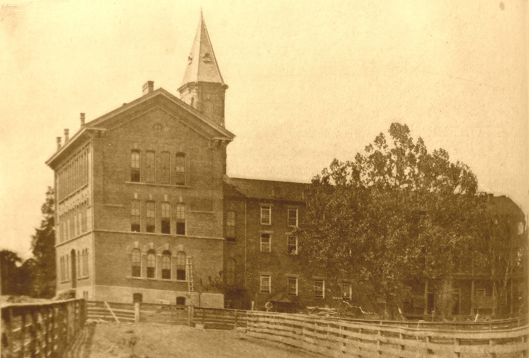
The West Virginia Synodical School maintained and operated by the Presbyterian church, occupies the site of the original court house, opposite the present county seat.

Danville, another incorporated town in that county, had a population of 327 in 1920.

Source: Logan (WV) Banner, 9 December 1927.

Old Trees at Boone Courthouse, Hangings LB 03.22.1927.JPG

Logan (WV) Banner, 22 March 1927.

William R. Duty Deed to John F. Duty (1887)

Tags

, , , , , , , , , , , , , ,

Bill Duty to John Duty 1

Deed Book 59, page 429, Lincoln County Clerk’s Office, Hamlin, WV.

Bill Duty to John Duty 2

Deed Book 59, page 430, Lincoln County Clerk’s Office, Hamlin, WV.

Bill Duty to John Duty 3

Deed Book 59, page 430, Lincoln County Clerk’s Office, Hamlin, WV.

Guyan Valley High School Graduates (1929-1931)

Tags

, , , , , , , , , , , , , , , , , , , , , , , , , , , , , , , , , , , , , , , , , , , , , , , , , , , , , , , ,

Fred B. Lambert, a prominent educator in the Guyandotte Valley, compiled this list of early Guyan Valley High School graduates. Guyan Valley High School was located in Pleasant View, Lincoln County, WV.

gv 1929.jpg

Guyan Valley High School, 1929. Photo credit unknown.

List of 1929 graduates

  1. Edgar Ray Midkiff     Smith, WV
  2. Jennings Orlando Midkiff     Smith, WV
  3. Gilmer Odell McClellan     Branchland, WV
  4. Olive Maude Triplett     West Hamlin, WV
  5. Dennis Nathan Roy     Hubball, WV
  6. Glenna Naoma Roy     Hubball, WV
  7. Rhoda Irene Messinger     Branchland, WV

List of 1930 graduates

  1. Clyde Okra Adkins     West Hamlin, WV
  2. Bessie Arix     Smith, WV
  3. Ruel Dial     Branchland, WV
  4. Thern Hodge     West Hamlin, WV
  5. Virginia Louese Johnson     Branchland, WV
  6. Sarah Nelson     Gill, WV
  7. Ruth Lucas Stowers     Milton, WV
  8. Elva Mae Adkins     West Hamlin, WV
  9. Dorothy Beatrice Roy     Hubball, WV
  10. David Keith Smith     West Hamlin, WV

List of 1931 graduates

  1. Ida Lee Adkins     West Hamlin, WV
  2. Ruth Dewdrops Adkins     West Hamlin, WV
  3. Thomas Wondel Adkins     Midkiff, WV
  4. Guidna Bates     Sheridan, WV
  5. William Earl Bias     West Hamlin, WV
  6. Mable Virginia Chapman     Hubball, WV
  7. Ella Mae Covey     West Hamlin, WV
  8. Glada Ellen Cyfers     Gill, WV
  9. Irma Holton      Branchland, WV
  10. Gilbert Garmon Isaac     Smith, WV
  11. Hilbert Harmon Isaac     Smith, WV
  12. Maude Jewel Jaynes     West Hamlin, WV
  13. Helena Johnson     West Hamlin, WV
  14. Freda Marie McComas     West Hamlin, WV
  15. Glenna Helena Midkiff     West Hamlin, WV
  16. Virginia Catherine Scites     Midkiff, WV
  17. Helena Scraggs     West Hamlin, WV
  18. Mildred Vivian Smith     West Hamlin, WV
  19. Alvin Franklin Watts     Branchland, WV
  20. Helen Mary Yost     West Hamlin, WV
IMG_1194.JPG

Guyan Valley Middle School, c.2017.

Source: Fred B. Lambert Papers, Special Collections Department, James E. Morrow Library, Marshall University, Huntington, WV.

Hugh Toney Letter to Edward Chapman (1861)

Tags

, , , , , , , , , , , , , , , ,

Rev. J. Green McNeely (1871-1943) located the following letter written by Hugh Toney to Edward Chapman when he razed a log cabin situated on the property that later became the Logan Country Club, near Chapmanville.

Camp Narrows, Va.

March 26, 1861

Dear Friend:

I saw the officers of the 11th Virginia Cavalry about your horses. Col. French and Maj. Smith both say that your horse shall be give up if the horse can be found.

I have not been able to find out anything about who got your horse yet. The horses were sent off to North Carolina. If I have any chance to get your horse, I will attend to the matter for you. If you know the man’s names or any of the men’s names that was present when your horse was taken, write to me their names.

I have made careful inquiries about Ira Woodram’s horse. I have not been able to find out anything about his horse, also John’s. I can’t bear that horses were taken.

I can’t find out who took them, it being uncertain about getting your horse or pay for him the way matters stand at this time.

Your friend,

Hugh Toney

Source: Logan (WV) Banner, 25 June 1941.

Civil War Gold Coins Hidden Near Chapmanville, WV

Tags

, , , , , , , , , ,

From W.C. Jameson’s Buried Treasures of the Appalachians (1991, pp. 204-205) comes this story of buried treasure near Chapmanville, WV:

In Fayette County during the War Between the States, a contingent of Union soldiers was escorting a large payroll–a wagon full of gold coins–to a Yankee encampment in the area. As the party traveled along the winding trails through the dense woods, scouts told the commanding officer that a Confederate patrol was rapidly approaching from the east.

The Union officer ordered the escort into a full gallop in the hope of outdistancing the rebels, but after trying to elude the enemy for about five miles, it became clear that they would soon be overtaken. Anticipating a skirmish, the officer halted the wagon and ordered the canvas bags that held the Union payroll taken from the wagon and buried it a short distance from the trail. While troopers hastily dug a pit in which to hide the gold, the officer noted the surroundings in his journal. He wrote that the payroll was hidden on the west side of the Guyandotte River, near a small settlement named Chapmanville.

Once the hole was filled, the soldiers remounted and rode on. About an hour later, the Confederates overtook the Union soldiers and opened fire. The Yankees sought cover and returned fire, but they were disorganized and greatly outnumbered. The fighting lasted about two hours, and when it was over, all of the Yankee soldiers lay dead.

The rebel soldiers searched the wagon for the money and found it empty. Suspecting the gold had been buried shortly before the engagement, they retraced the Yankees’ trail for several miles, without finding the payroll.

Returning to the site of the skirmish, the Confederates stripped the Union soldiers of anything of value and left the corpses to rot in the sun. An unknown soldier took the commanding officer’s journal and he tossed it into the trunk and forgot it. In the early 1930s, someone discovered an old journal and searched unsuccessfully for the buried coins.

The directions in the journal claimed the gold was buried at a point where the old road and the Guyandotte River came within twenty yards of one another. Since the war, however, the road has been all but obliterated by the more modern thoroughfare, and the river has shifted its course.

If the Union payroll of gold coins was not uncovered by the shifting river and washed downstream, the Civil War cache is probably still lying just a few inches beneath the soil near Chapmanville.

For more information about buried treasure in Appalachia, read Mr. Jameson’s book, which can be found here: https://www.amazon.com/Buried-Treasures-Appalachians-W-C-Jameson/dp/0874831261

Elizabeth Adkins Deed to Jacob K. Adkins (1901)

Tags

, , , , , , , , , , , , , , , , , , , , , ,

Elizabeth Adkins to Jacob K. Adkins 1

Deed Book 59, page 272, Lincoln County Clerk’s Office, Hamlin, WV. This deed involves the heirs of Henry and Mary “Polly” (Dalton) Adkins, Sr.

Elizabeth Adkins to Jacob K. Adkins 2

Deed Book 59, page 273, Lincoln County Clerk’s Office, Hamlin, WV.

History for Wyoming County, WV (1927-1928)

Tags

, , , , , , , , , , , , , , , , , , , , , , , , , , , , , , ,

From the Logan Banner of Logan, WV, comes this bit of history about Wyoming County, dated 1927 and 1928:

Wyoming County In the Public Eye

Now that three railroads are contesting for the authority to build a branch line across Wyoming county, increased interest is shown in the probable early development in that bailiwick.

Wyoming has coal resources equal to those of any other county in the state, it is said, and it has wide valleys of fine farming land, and an unusually picturesque mountain country. Like Mingo, it was carved out of Logan territory, its formation having been authorized by an act of the general assembly passed January 26, 1850. With an area of 507.30 square miles it is more than 50 miles larger than this county, yet its population in 1920 was only 15,180.

That county’s valuation for taxation purposes exceeded $28,000,000 last year.

Wyoming county is divided into seven magisterial districts, as follows: Baileysville, Barkers Ridge, Center, Clear Fork, Huff’s Creek, Oceana and Slab Fork districts.

Wyoming county was stricken off from the older county of Logan, which took its name from a celebrated Indian chief. Another county was formed from Logan, many years later, and to this was given the name of Mingo, the tribe to which Logan belonged. Logan, Mingo and Wyoming are the three counties in West Virginia whose names are derived from the original settlers.

Wyoming county bears the name of an Indian tribe, and this tribe was later honored by having its name adopted by one of our great western States. While the derivation of the name, in its application to the county, seems to be clear, the origin of the name itself is veiled in obscurity. By some authorities it is said to be a corruption of the Indian Maughwaiwama, signifying a plain, or open space. Others assert that it is a creation of Thomas Campbell, the poet, and author, of “Gertrude of Wyoming.”

Pineville, the present county seat, is located near the center of the county. It has an elevation of 1,323 feet above the level of the sea and had a population of 304 in 1920. Later estimates do not greatly increase this figure. Pineville became the county seat years ago, having secured the removal of the seat of justice from the older town of Oceana.

Mullens, a prosperous town and center of the coal industry, had a population of 1,425 in 1920.

Oceana, long the county seat before its removal to Pineville, had at the last census a population of 90.

Source: Logan (WV) Banner, 25 November 1927.

***

WYOMING COUNTY HAS NEW JAIL–NATIVE STONE USED–COST $150,000

Wyoming county’s new jail at Pineville has been accepted by the architects and will be formally turned over within the next few days.

Erected at a cost of approximately $150,000, the new bastille is perhaps one of the finest buildings of its kind in the southern part of the state. It is built of native stone throughout, and is a most imposing and beautiful building and one of which the county may well pride itself, says the Mullins Advocate.

It is three full stories high above the basements, heated by vapor, containing room for 70 prisoners with comfort, and can accommodate twice that number, if necessary. The cells and jail construction is of tool proof steel, equipped with the latest locking devices. A prisoner when confined in a cell, must go through three sets of tool proof steel bars to make an escape.

The building contains a large and comfortable residence for the jailer, including a large, well furnished and equipped kitchen, is supplied with hot and cold water throughout, including shower baths on the inside corridors of the jail, padded cells for the insane, hospitals for the sick and detention rooms for juveniles of both sexes.

In the basement there is an incinerator, together with a laundry and large supply rooms.

The building was formally approved on January 9th by A.F. Wysong of the firm of Wysong & Bengston architects, of Charleston, who had the construction of this building in charge. Early Brothers, of Mullens, contractors, constructed the building, while the heating system was installed by the Guyan Heating and Plumbing company, of Mullens. The plumbing was done by Wickline of Princeton. Mr. Wysong, after going over the jail carefully, approved the construction and recommended payment of the balance due on the several contracts.

Source: Logan (WV) Banner, 17 January 1928.

Wife of Logan Banner Editor George A. Dean Disappears (1912-1913)

Tags

, , , , , , , , , , , , , , , , , , , , , , , , , , , , , , , , , , , , ,

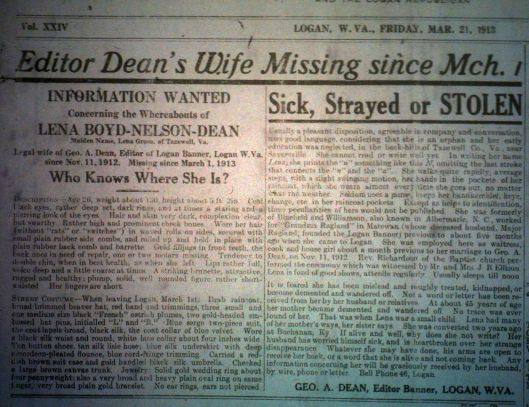
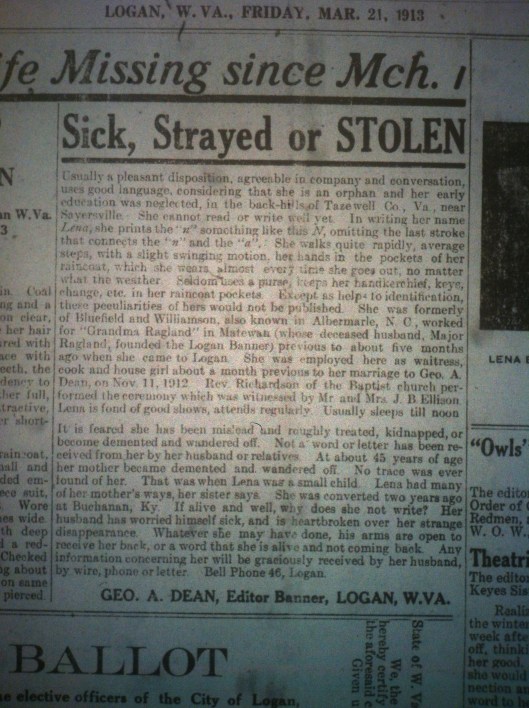
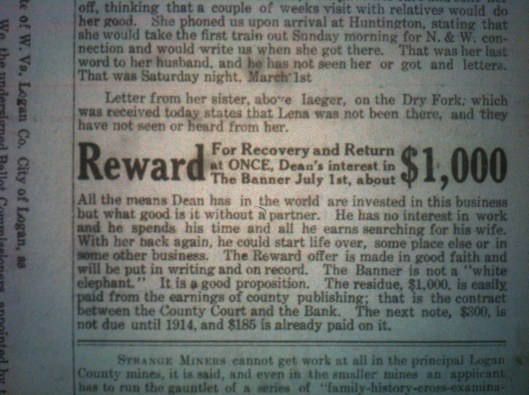
In 1912, Logan Banner editor George A. Dean married the former Lena Gross, who soon thereafter disappeared. Here are a few stories about the event:

Editor Dean Married

On Monday, Nov. 11 in the minister’s study, Geo. A. Dean and Miss Lena Gross of Virginia, were united in marriage by Rev. W.L. Richardson.

Mr. Dean is the hustling editor of the Logan Banner and is well-known in this city and surrounding country as a man of push and energy, while the bride was one of the charming dining room girls at the Hotel Jefferson.

Mr. and Mrs. Dean will be at home to their friends after Nov. 18.

Source: Logan (WV) Democrat, 14 November 1912.

***

George A. Dean Logan Banner LB 01.24.1913.JPG

Logan (WV) Banner, 24 January 1913.

***

Editor of “Most Fearless Weekly” on the Trail

West Virginia editors who have failed to receive the Logan Banner on their exchange tables during the past three weeks, no doubt, marveled at its absence. But there is a reason–a tragic, gnawing reason which has caused the editor, Geo. A. Dean to suspend temporarily editorial duties and to embark upon a quest which means more to him than journalistic honors or the mere touch of hollow gold.

Readers of the Banner will remember that there appeared graven upon its front page four months ago Mr. Dean’s and his wife’s own announcement of their marriage. The paragraph attracted more than usual attention, partly because of its unique construction and partly because of the unusual manner of its presentation, but more than all because Mr. Dean was very prominently in the editorial limelight because of recent rather prominent mention in Collier’s Weekly. But that is history, and in mere prelude to the situation which now confronts him: to-wit: that of a married man, wifeless, disconsolate, yearning for the things that were.

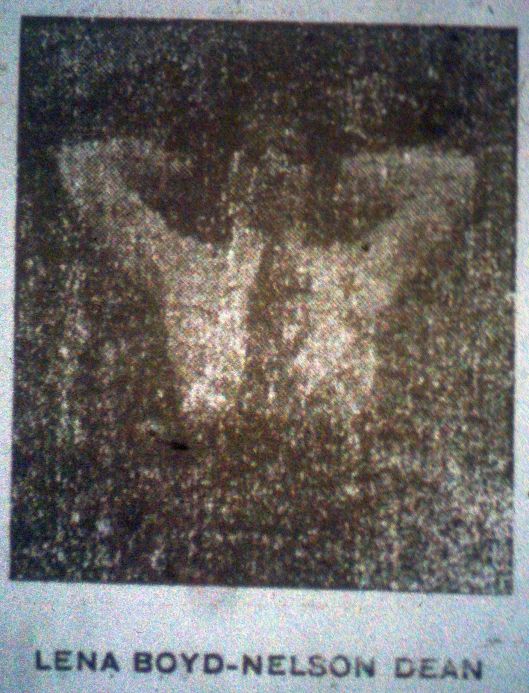
Mr. Dean, who has been in Huntington and vicinity for two days seeking a trace of his evanished spouse, speaks frankly of his bereavement, and is importunate that the home-loving public shall, if possible, assist him in finding and restoring his lost treasure. In brief, Lena Boyd Nelson Dean has gone away and, some fear, forever departed. She went without the tender formality of a farewell husband’s kiss. She went away surreptitiously, mysteriously. She went, and Mr. Dean, who has sounded the very depths of heaven and earth, is no whit the wiser whither. Descriptive circulars, telling her height, weight, complexion, color of eyes and hair, manner of dress, and all that pertains to accurate and dependable description have been scattered broadcast all over the territory in which it might be surmised that she would be obscuring herself from the eyes of love and yearning. Mr. Dean stated last night, in conversation with the Herald-Dispatch, that he had absolutely no heart for business, that he had known no rest, no surcease from the terrible heart-longing that had seized upon him and held with tenacious grip from the morning of his wife’s departure. He has searched high and low. He has communicated with every known relative of his wife, without being able to get even the shadow of a clue tending to lead to the discovery of her whereabouts. He gives the following verbal photograph, which is almost as good as the ordinary studio product, and much better than a tintype:

Lena Boyd Nelson Dean, formerly of Williamson and Matewan and Bluefield. Four months ago she served as waitress, cook, and house girl at Logan, W.Va. Last seen at Kenova on Sunday morning, March 2. Physical description: Age 26. Height 5 ft. 2. Coal-black eyes given to starry twinkle. Raven black hair. Rather full lips. Gold filling in front teeth. Deep, well modulated musical voice, with a tendency to coarseness in time of cold. Can not read or write much as her early education was neglected. Her costume is described as being strict in the style of today. Raincoat, drab-colored; blue-serge, two piece coat suit. Beaver hat, embellished with four black ostrich plumes. Leather suitcase, canvass trunk and gold-headed umbrella.

Mr. Dean feels that his wife may have returned to one of the three occupations ascribed to her in the opening paragraphs.

He has important mail for her, both registered and ordinary, and is awaiting anxiously any news of her, and his arms are open to her return. The Logan editor’s plight is positively pitiful. He has grown emaciated, hollow-eyed, faded, wan. The tireless vigil, the ceaseless search, the anxious waiting hours, have all played their part in preying upon his splendid vitality. He is discouraged but not defeated, and will continue the search as long as human endurance will permit, or else sooner find the partner of his joys and immediate cause of his great and overpowering grief. His plight has elicited much sympathy. For what is life without a partner?

Source: Huntington (WV) Herald-Dispatch via Logan (WV) Democrat, 13 March 1913.

***

George A. Dean's Wife Missing LB 03.21.1913 1

Logan (WV) Banner, 21 March 1913.

George A. Dean's Wife Missing LB 03.21.1913 2

Logan (WV) Banner, 21 March 1913.

George A. Dean's Wife Missing LB 03.21.1913 3

Logan (WV) Banner, 21 March 1913.

George A. Dean's Wife Missing LB 03.21.1913 4

Logan (WV) Banner, 21 March 1913.

George A. Dean's Wife Missing LB 03.21.1913 5

Logan (WV) Banner, 21 March 1913.

George A. Dean's Wife Missing LB 03.21.1913 6

Logan (WV) Banner, 21 March 1913.

Jack Dempsey and Bill “Bear Cat” Clemons (1926)

Tags

, , , , , , , , , ,

From the August 20, 1926 issue of the Logan Banner of Logan, WV, comes this bit of history about heavyweight champion boxer Jack Dempsey:

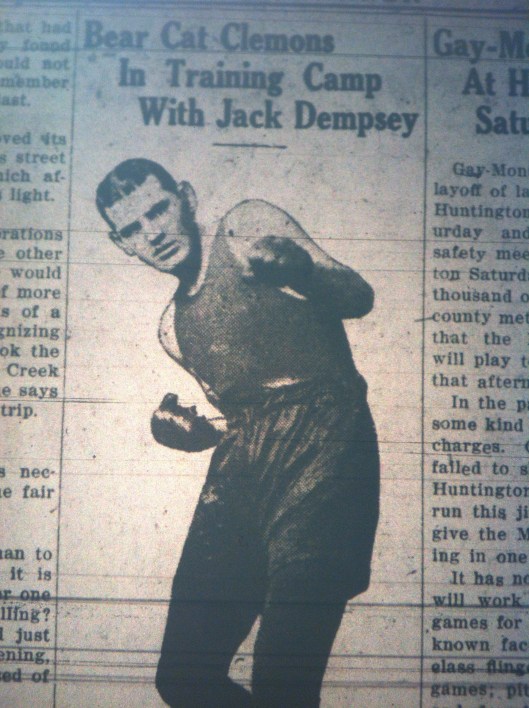
Bear Cat Clemons Training with Jack Dempsey LB 08.20.1926 3

Bear Cat Clemons, once upon a time the idol of the fistic fans of the Guyan Valley, is now in Jack Dempsey’s training camp at Sarasota Lake, New York, where Dempsey is training for his fight with Gene Tunney in New York, September 16.

Clemons goes two rounds with Dempsey every day. The champion lambasts him furiously and messes up his features, but he always is back the next day for more. When Dempsey and Clemons face each other in the squared circle, it is Logan county versus Logan county.

Source: Logan (WV) Banner, 20 August 1926.

John Philip Sousa to Visit Huntington (1900)

Tags

, , , , , , , , , , , ,

SOUSA COMING TO HUNTINGTON

THE CELEBRATED BAND MASTER AND “MARCH KING” WILL GIVE A CONCERT AT DAVIS THEATRE WEDNESDAY AFTERNOON, MARCH TWENTY-FIRST

Sousa Coming HA 03.12.1900 2

Sousa is now on his sixteenth semiannual concert tour, a brief trip of only eight weeks, before going to the Paris Exposition and on a rather protracted European engagement. Sousa and his band will open at the Paris Exposition April 14, having been appointed the official American band. The forthcoming tour will extend no farther west than Omaha. Our own city is in for a concert on Wednesday afternoon only, March 21. The programmes for this tour are especially prepared and are illuminated with bright things. The soloists are Miss Blanche Duffield, soprana and Miss Bertha Bucklin, violinist. Seat sale opens March 14th.

Source: Huntington (WV) Advertiser, 12 March 1900.

Aaron Adkins Deed to Moses Adkins (1906)

Tags

, , , , , , , , , , , , , , , ,

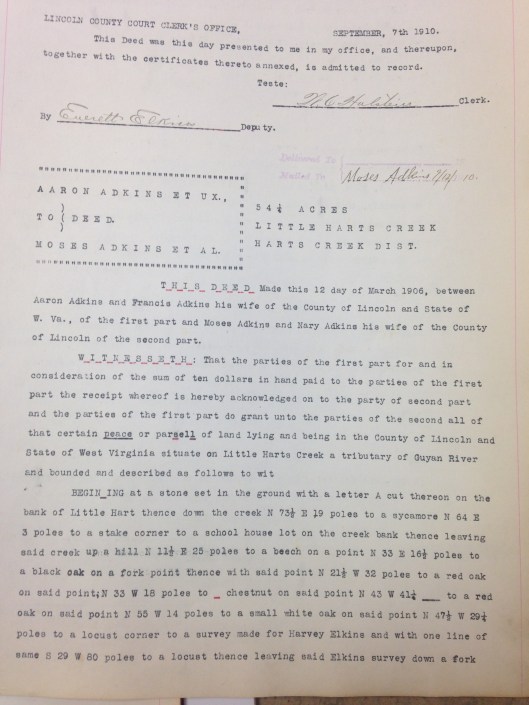
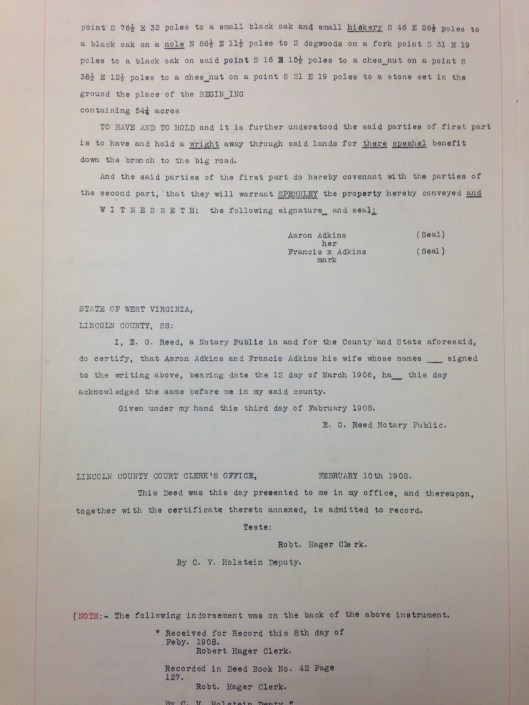
Aaron Adkins to Moses Adkins 1

Deed Book 59, page 481, Lincoln County Clerk’s Office, Hamlin, WV. Note: The deed references “a school house lot.”

Aaron Adkins to Moses Adkins 2

Deed Book 59, page 482, Lincoln County Clerk’s Office, Hamlin, WV.

Chapmanville News 04.06.1928

Tags

, , , , , , , , , , , , , , , , , ,

An unknown correspondent from Chapmanville in Logan County, West Virginia, offered the following items, which the Logan Banner printed on April 6, 1928:

The Platonian Literary Society of the Chapmanville school entertained the Demosthenian Literary Society Friday evening, with a party at the school building. Every student present reported a very enjoyable time.

We are sorry to report the death of Mr. and Mrs. A. Lunsford’s baby, which occurred Saturday, March 31.

Mrs. Renner spent the week end in Huntington with homefolks.

Mrs. Inez Barker Grace spent the week end in Huntington with Mr. and Mrs. W.D. Nunley.

Mrs. A.F. Carper who has been very sick is able to be out again.

Miss Glenna Beckett of Charleston is visiting homefolks here at the present time.

Sid Ferrell of Henlawson spent Sunday in Chapmanville.

History for Boone County, WV (1928)

Tags

, , , , , , , , , , , , , , , , , , , , , , , , , , , , , , , , , , , , , , , ,

A story titled “Old Times in Boone County Told About By Historian” and printed in the Logan Banner in Logan, WV, on April 20, 1928 provides some history for Boone County:

Old-timers and students of local history should be interested in the following excerpt from the history of Boone county by Prof. W.W. Hall. The family names mentioned are familiar ones.

What is here reproduced was taken from the Coal Valley News:

About the year of 1798 Isaac Barker reared a pole cabin on the brow of the hill on the lower side of White Oak Creek, near old lock seven. This was the first white man’s home established in Boone county. The second settler in the county was Johnson Kinder, a brother-in-law of Barker. He settled on Kinder Hill a few months after Barker came. The first settler on Little Coal River was John Halstead, who settled at the mouth of Camp creek about 1800. A few months later Jackie Dolin was married to Isaac Barker’s daughter and led his blushing bride, attired in her homespun, through the trackless forest up Brush creek and over the hill to a scantily furnished home on Camp creek. Not long after this Thomas Price, a daring hunter from North Carolina, wandered over the Wilderness Road through Cumberland Gap to Maysville, Kentucky, where he embarked in a canoe, ascended the Ohio, the Kanawha, the Coal and the Little Coal rivers to the present site of the town of Danville, and became the first settler there.

For some years after the coming of the white men there were no churches, but when an Old Baptist or Methodist preacher would arrive in the settlement, word was passed around to the neighbors and that night earnest prayers, exhortations and hallelujahs would ascend from those rude homes. The first church erected in the county was the Olive Branch Baptist church at the mouth of Turtle creek. The first term of the circuit court held in the county after its organization in 1847 was held in this church. The grand jury made its investigations while seated on the framing in Ballard’s old water mill near by, and the petit jury retired to the paw paw bushes below to consider their verdicts.

The daring hunters, adventurous pioneers and brave soldiers who came from the best families in the east to establish home in the wilderness, were not contented to let their children grow up without the rudiments of an education, so they established Old Field schools in the slave cabins, tanneries, country churches and abandoned dwellings, when an itinerant teacher who could read, write and cipher a little came along. The first free school in the county was taught by John Morris, just after the Civil War, in an old house abandoned by Dr. Church. The old house stood across the hollow from W.H. Turley’s present residence in Madison. Within the next year or two a log school house was erected near the upper end of Danville and another on the point across the river from Hadalton. The children of Madison had to go to Danville or Hadalton to school until 1885, when the people of Madison, by mandamus, compelled the board of education to give them a school. The first school house erected in Madison is now used by Dr. Smoot for a barn. While the course of study in these early schools was meager and the work crude, yet they did succeed in inspiring a few boys to strive for higher education. Former United States Senator John E. Kenna was born in Boone county and attended his first schools in a log house on Big Coal river. Dr. Marshall A. Estep, an eminent physician of Texas, and his brother, Judge Charles L. Estep, of Huntington and Logan, were reared in the “Promised Land,” the name of their father’s mountain home on the summit of Spruce Ridge, and attended their first schools in a log house on the Spruce Fork. One of these early log school houses still stands on the head of Mud river, remote from the highways frequented by trade and travelers. Two of the most recent prosecuting attorneys of the county, two clerks of the circuit court, two of the clerks of the county court, four county superintendents of schools, chief U.S. Marshal for the southern district of West Virginia, and two prosperous dental surgeons attended school when boys in that little log school house on the head of Mud. The attendance in it was never large.