• About

Brandon Ray Kirk

~ This site is dedicated to the collection, preservation, and promotion of history and culture in my section of Appalachia.

Brandon Ray Kirk

Category Archives: Native American History

Salt Rock Petroglyphs (2018)

23 Friday Mar 2018

Posted by Brandon Ray Kirk in Native American History, Salt Rock

≈ Leave a comment

Tags

Appalachia, Billy Adkins, Brandon Kirk, Cabell County, Dave Vance, Fraulein Adkins, history, Native American History, Native Americans, petroglyphs, photos, Salt Rock Petroglyphs, West Virginia

IMG_6594

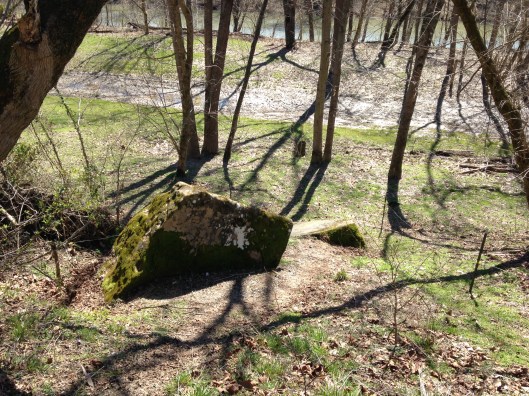
Petroglyphs…down below! Salt Rock, Cabell County, WV. 18 March 2018. For more information about West Virginia petroglpyhs, follow this link: https://www.wvencyclopedia.org/articles/1844

IMG_6562.JPG

Making our way down to the petroglyphs… 18 March 2018.

IMG_6564

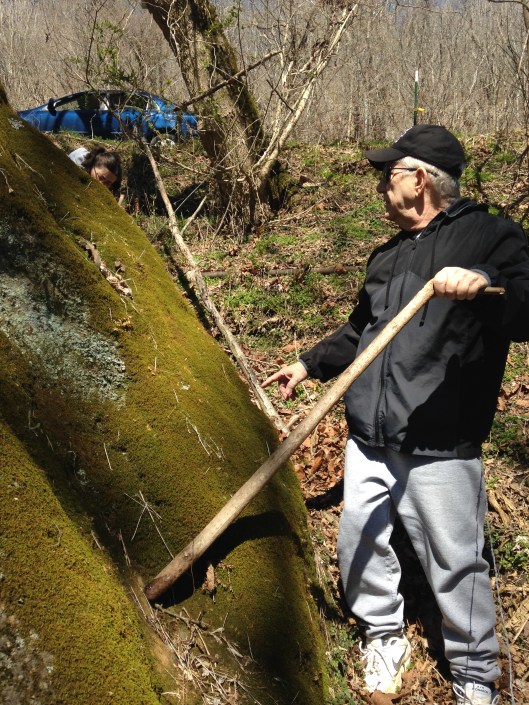
Billy Adkins carefully exploring the petroglyphs. 18 March 2018. For more info, follow this link: https://www.theclio.com/web/entry?id=22877

IMG_6566

Billy Adkins looking over the petroglyphs. 18 March 2018.

IMG_6573

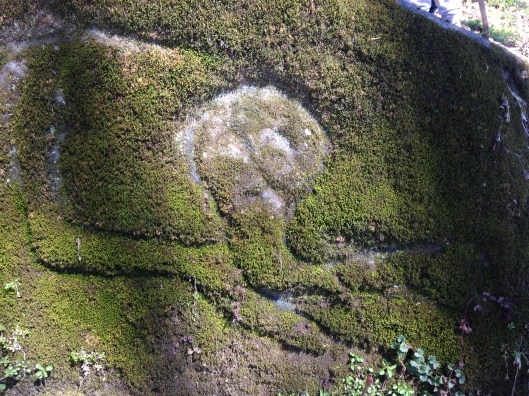
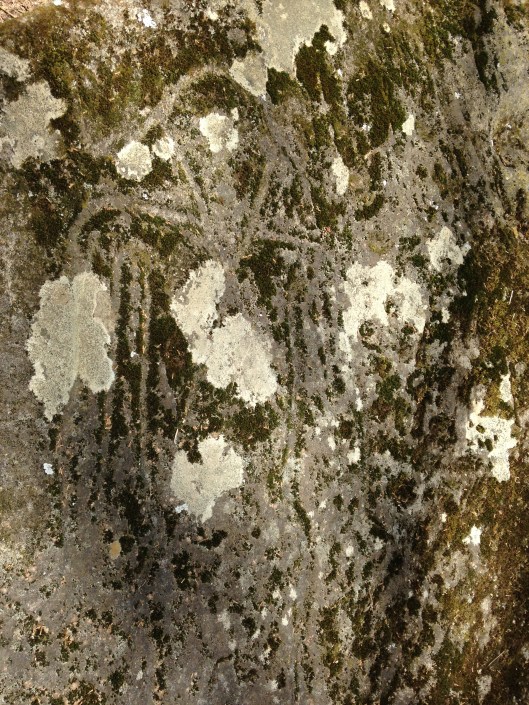
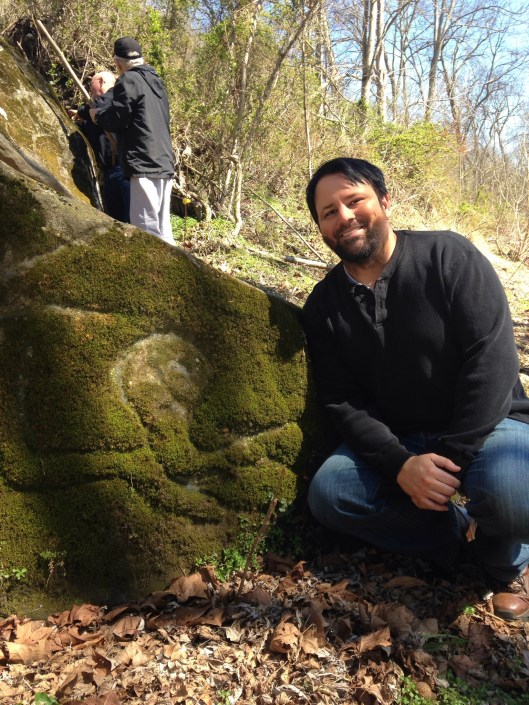
“Alien” petroglyph. 18 March 2018.

IMG_6567

“Alien” petroglyph. 18 March 2018.

IMG_6575

Petroglyphs just below me. 18 March 2018. Photo by Fraulein Adkins.

IMG_6580

These petroglyphs are one of the most impressive Native American sites located in southwestern West Virginia. 18 March 2018. Photo by Fraulein Adkins.

IMG_6587

Billy Adkins. 18 March 2018.

IMG_6605

My favorite: the “alien” petroglyph. 18 March 2018. Photo by Fraulein Adkins.

IMG_6592

Petroglyph crew: Dave Vance, Billy Adkins, and Fraulein Adkins. 18 March 2018.

IMG_6590

Our guide: Dave Vance. 18 March 2018.


Dingess Petroglyphs (2018)

15 Thursday Mar 2018

Posted by Brandon Ray Kirk in Dingess, Native American History

≈ Leave a comment

Tags

Appalachia, Brandon Kirk, Dingess, Dingess Petroglyphs, history, Laurel Lake Wildlife Management Area, Mingo County, Native American History, Native Americans, petroglyphs, photos, Phyllis Kirk, West Virginia

IMG_6253

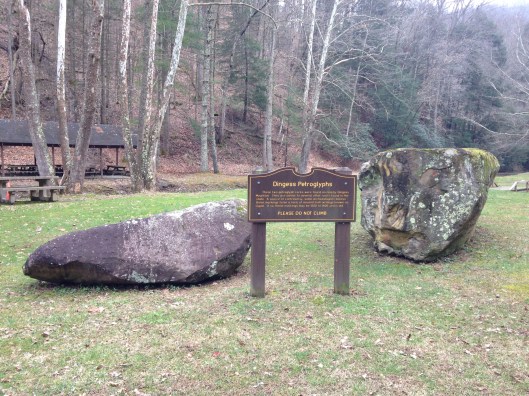
Dingess Petroglyphs, Laurel Lake Wildlife Management Area, Dingess, WV. 10 March 2018.

IMG_6254

Dingess Petroglyphs, Laurel Lake Wildlife Management Area, Dingess, WV. 10 March 2018.

IMG_6256

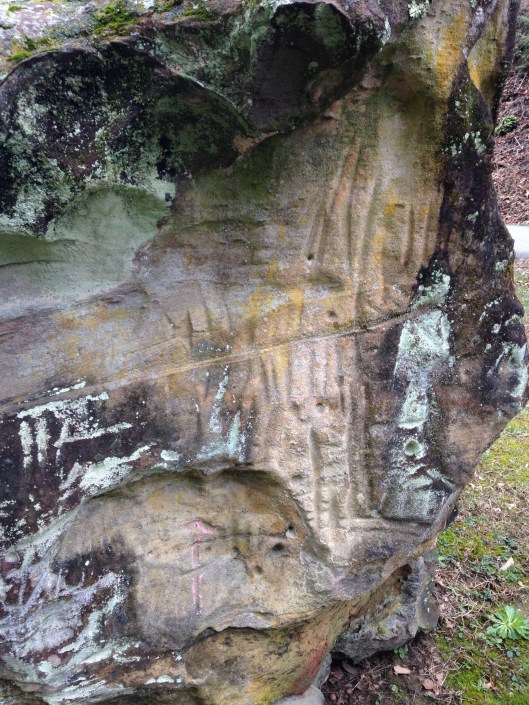
Dingess Petroglyphs, Laurel Lake Wildlife Management Area, Dingess, WV. 10 March 2018. Photo by Mom.

IMG_6255

Dingess Petroglyphs, Laurel Lake Wildlife Management Area, Dingess, WV. 10 March 2018.

George T. Swain to Write Logan County History (1927)

04 Sunday Mar 2018

Posted by Brandon Ray Kirk in Battle of Blair Mountain, Coal, Hatfield-McCoy Feud, Logan, Native American History

≈ Leave a comment

Tags

Appalachia, Aracoma, books, coal, feuds, genealogy, George T. Swain, Hatfield-McCoy Feud, history, Kingsport, Logan, Logan Banner, Mine Wars, Native American History, Native Americans, Tennessee, West Virginia, Woodland Press

From the Logan Banner of Logan, WV, comes this item about George T. Swain’s effort to write a history of Logan County dated May 27, 1927:

New Logan County History is Written

G.T. Swain, the Author, Says It May Be Ready For Distribution In 60 Days.

Announcement was made yesterday by G.T. Swain that his manuscript, on which he has been working for the past several years, of a complete history of Logan county, is practically completed and he plans to leave here within the next ten days for Kingsport, Tenn., where he will place it in the hands of a publisher.

It is understood the book will be published with cloth binding, the cover title to be printed in gold letters, and the work will cover approximately 400 pages. It will give traditions and legends of the tribe of Indians that inhabited this valley, details of the invasion and battle here when Aracoma was killed, the early life of the pioneers and who they were, as well as incidents occurring here during the early years.

It will contain a full history of the Hatfield-McCoy feud which occurred partly on Logan soil and a full and complete account of the mine war. Organizations of the coal companies that developed the valley will be given in full and even the names of the first white male and female child born in the valley will be recorded.

In addition to the historical data which have been obtained after laborious work the book will contain biographical sketches and pictures of approximately fifty prominent men who helped in the development of the great Guyan valley coal field. The completed book is expected to be ready for distribution within 60 days.

NOTE: To order a reprint of Swain’s history book, go here: http://www.woodlandpress.com/book/local-history/history-logan-county-west-virginia

NOTE: It’s very important for local newspapers to promote works by historians/writers!

History of Logan County as Political Subdivision (1926)

02 Tuesday Jan 2018

Posted by Brandon Ray Kirk in Giles County, Holden, Logan, Native American History, Tazewell County

≈ Leave a comment

Tags

Accawmack Shire, Appalachia, Augusta County, Botetourt County, Cabell County, Cayuga, Charles City Shire, Charles River Shire, Elizabeth City Shire, Essex County, Fincastle County, G.W. Bickley, Giles County, Henrico Shire, history, James City Shire, John Logan, Kanawha County, King and Queen County, King William County, Littletown Tazewell, Logan Banner, Logan County, Mingo County, Montgomery County, Ohio, Orange County, Russell County, Simon Cotterel, Spottsylvania County, Tazewell County, Virginia, Warroskuyoak Shire, Warwick River Shire, Washington County, West Virginia, Wheeling, Wythe County, Yellow Creek, York County

From the Logan Banner of Logan, WV, comes this item relating to county history dated October 22, 1926:

AS POLITICAL SUBDIVISION, LOGAN CO. IS DESCENDANT OF FIRST EIGHT SHIRES

Logan county was formed in 1824 from parts of Tazewell, Giles, Cabell and Kanawha. In 1895 Logan was bisected in two almost equal parts, from the southernmost of which Mingo was created. Logan’s area is 455.82 square miles; Mingo’s 423,50_ square miles.

Tracing this county’s ancestry back through Tazewell it will be found to have a long line of distinguished progenitors.

The county was named after John Logan, a famous Cayuga Indian but not a chief, who was changed from a staunch friend to an unrelenting foe of the whites after his family had been murdered at Yellow Creek, Ohio, not far from Wheeling.

Tazewell was formed from Wythe and Russell in 1799. It derived its name from a political strategem. Simon Cotterel, representative from Russell, introduced a bill to authorize the creation of a new county. A Mr. Tazewell, representing Norfolk County, opposed the measure. Cotterel induced him to suspend his opposition pending the rewriting of the bill. Then Cotterel erased the proposed name and substituted that of Tazewell. That silenced the objector, who then voted for the amended measure. According to G.W. Bickley’s history of Tazewell County, the Tazewell referred to was not Littletown Tazewell, who was governor of the state from 1834 to 1836.

At that time Tazewell county had an area of 3,000 square miles–two and a half times the size of Rhode Island and more than six times the six of Logan county.

Wythe county was formed from Montgomery in 1789, Russell from Washington in 1786, Washington and Montgomery from Fincastle in 1772, Botetourt from Augusta in 1769, Augusta from Orange in 1738, Orange from Spottsylvania in 1724, Spottsylvania from King and Queen, Essex, and King William in 1720, King William from King and Queen, and through a series of changes, descended from Charles River Shire, which was changed to York county, in 1643. Ten years before that “The General Assembly holden at James City the 21st of August, 1633, divided Virginia Colony into eight shires, named James City, Henrico, Warwick River, Warroskuyoak, Charles City, Elizabeth City, Accawmack and Charles River.”


One-Armed Indian Doctor Visits Huntington, WV (1886)

08 Friday Dec 2017

Posted by Brandon Ray Kirk in Huntington, Native American History

≈ Leave a comment

Tags

Appalachia, Cabell County, Gallipolis, history, Huntington, Huntington Advertiser, Indian, King of Pain, medicine, medicine man, Native American History, Native Americans, Ohio, Queen of the Valley, Utawaun, West Virginia

From the Huntington Advertiser of Huntington, WV, come these interesting historical items about a Native American visitor to town in 1886:

The one-armed Indian doctor, who pulls teeth for the love of his species and sells compounds known as the “King of Pain” and the “Queen of the Valley” for a livelihood, is in the town. The crowds that nightly surround his wagon demonstrate that the American people have queer ideas of entertainment. Many people take advantage of the aborigine’s gratuitous services, and as he tosses in the air black and crumbling snags and molars with hideous roots, the crowd manifests its pleasure by generous applause. The doctor will remain as long as the harvest of snags holds out, the crowd remains appreciative, and last but not least, as long as the sale of the “King” and “Queen” does not lag.

Source: Huntington (WV) Advertiser, 15 May 1886.

***

U-ta-wa-un, the Indian medicine man and lightning tooth-puller, visited this city this week and pulled an astonishing number of decayed teeth, lectured on temperance and dispensed the King of Pain and the Queen of the Valley to the eager populace. On Thursday the aborigine departed for Gallipolis.

Source: Huntington (WV) Advertiser, 3 July 1886.

Narrows, VA (2017)

25 Monday Sep 2017

Posted by Brandon Ray Kirk in Civil War, Giles County, Native American History

≈ Leave a comment

Tags

Abraham Wood, Appalachia, Blacksburg, Brandon Kirk, Confederate Army, George Crook, Giles County, history, John McCausland, MacArthur Inn, Monroe County, Montgomery County, Mountain Lake, Narrows, Native Americans, New River, Norfolk and Western Railroad, North Carolina, Phyllis Kirk, Stonewall Jackson, Tazewell County, The Crooked Road, Thomas Batts, Union Army, Virginia, West Virginia, William B. Giles, Wood's River

IMG_7883

Plenty of my ancestors once lived in Giles County, VA. 10 August 2017.

IMG_7887

Here we are near Narrows, VA. 10 August 2017. Photo by Mom.

IMG_7890

Entering Narrows, VA. 10 August 2017. The New River is visible on the right.

IMG_7891

I enjoyed this little section of old buildings in Narrows, VA. 10 August 2017.

IMG_7893

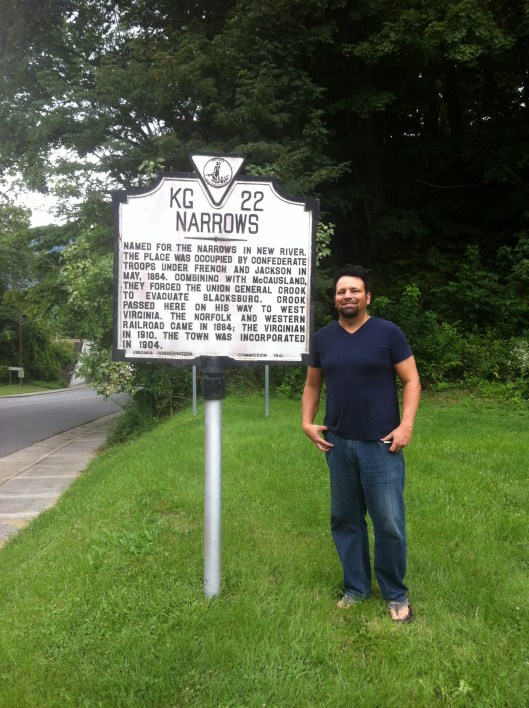
Narrows, VA. 10 August 2017. For more info, follow this link: http://townofnarrows.org/history/

IMG_7894

Confederate victory here in Narrows, VA. 10 August 2017. Photo by Mom.

IMG_7934

The MacArthur Inn in Narrows, VA. 10 August 2017. For more info, follow this link: http://www.macarthur-inn.com/

IMG_7897

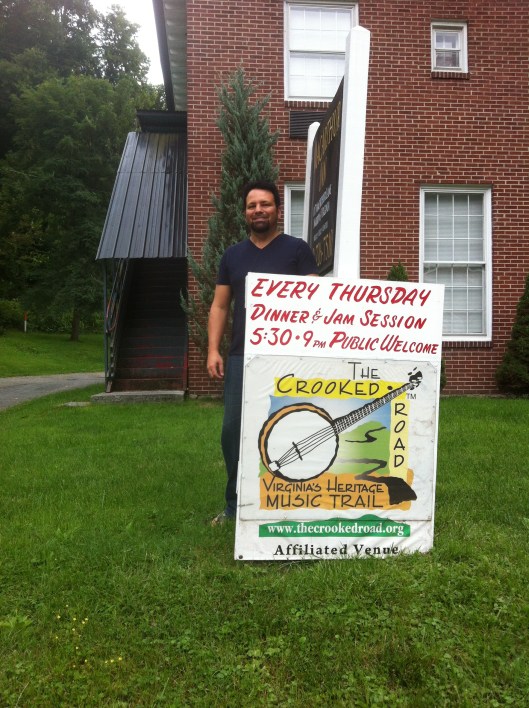
Bluegrass music every Thursday at MacArthur Inn in Narrows, VA. 10 August 2017. Photo by Mom. For more info, follow this link: https://www.myswva.org/tcr

Welcome to Burke’s Garden, VA (2015)

16 Saturday Sep 2017

Posted by Brandon Ray Kirk in Native American History, Tazewell County

≈ Leave a comment

Tags

Andrew Lewis, Appalachia, Brandon Kirk, Burke's Fort, Burkes Garden, farming, French and Indian War, Garden Mountain, history, James Burke, James Patton, Mary Thompson, Native Americans, North Caorlina, photos, Tazewell County, Thomas Ingles, Virginia

_IGP1625.JPG

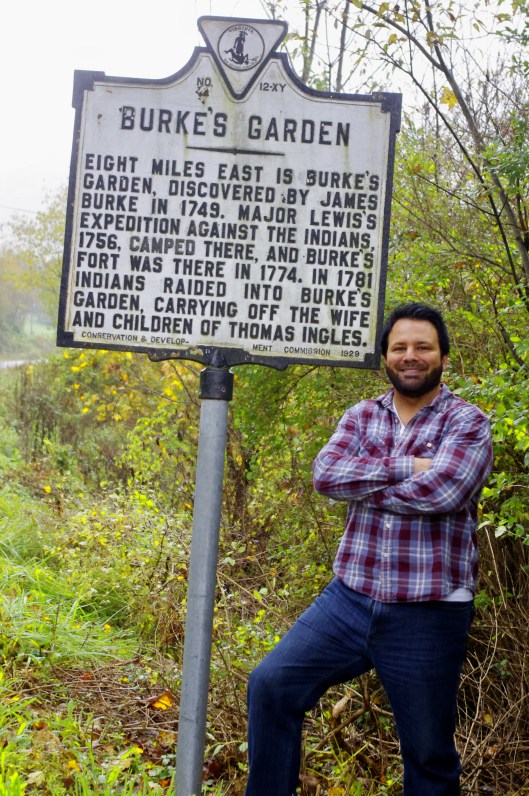
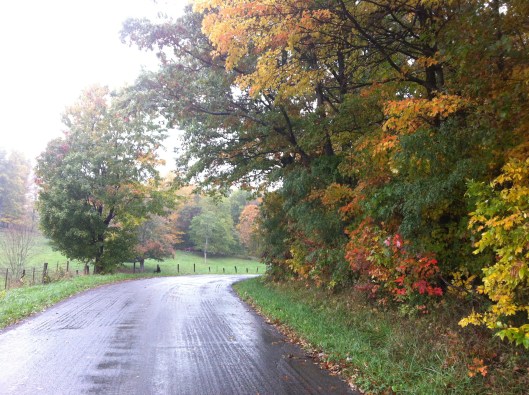
Burke’s Garden, Tazewell County, VA. October 2015. Photo by Mom.

IMG_7056.JPG

Burke’s Garden, Tazewell County, VA. October 2015.

IMG_7076.JPG

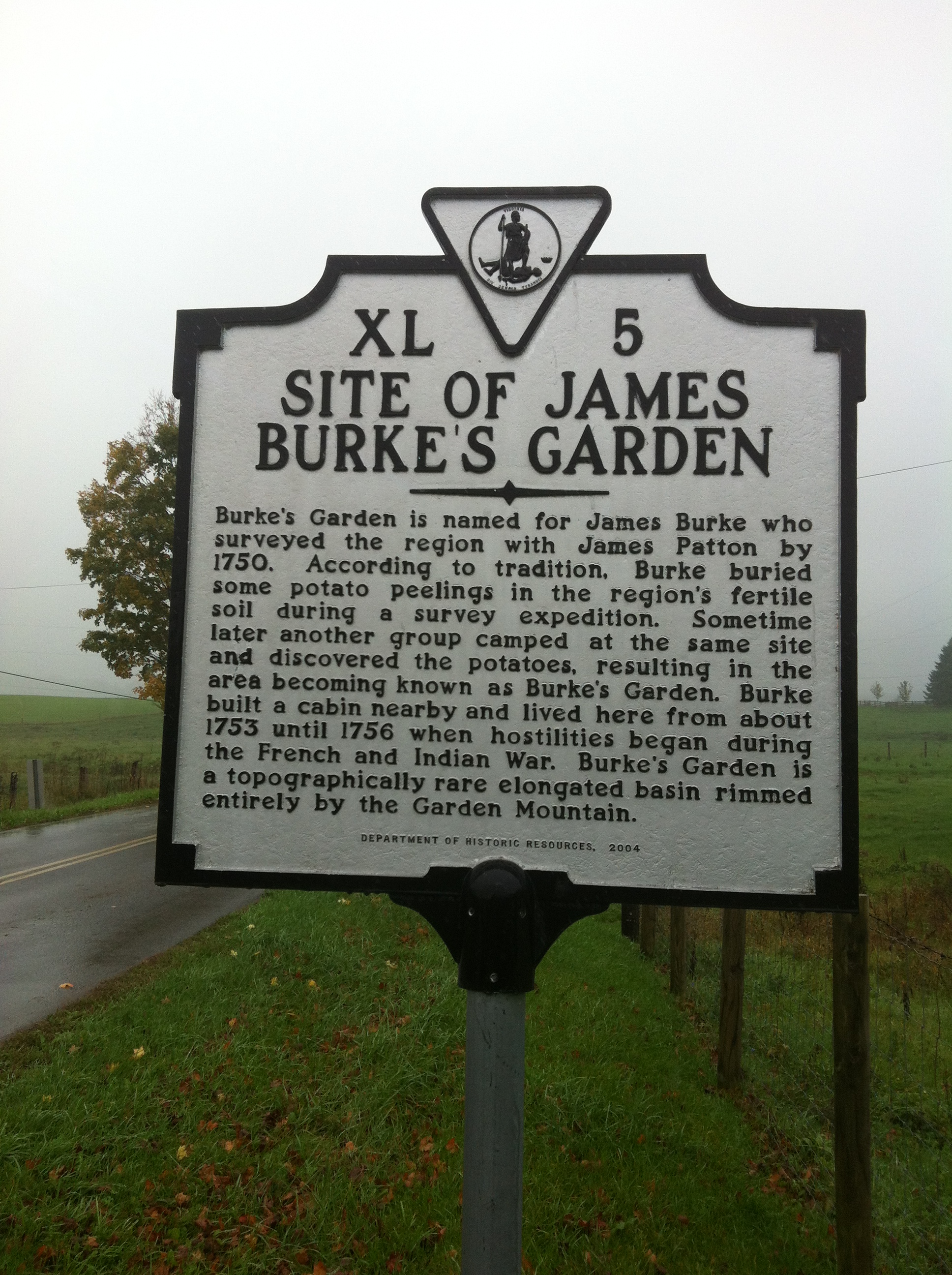
Burke’s Garden, Tazewell County, VA. October 2015. James Patton, referenced on this historical marker, is my direct ancestor through his daughter, Mary (Patton) Thompson.

IMG_7086.JPG

Burke’s Garden, Tazewell County, VA. October 2015.

William Lucas, Revolutionary War Veteran of Giles County, VA

20 Sunday Aug 2017

Posted by Brandon Ray Kirk in American Revolutionary War, Big Creek, Giles County, Native American History

≈ 1 Comment

Tags

Abraham Trigg, American Revolution, Anthony Lawson, Botetourt County, Cabell County, Charles Lucas, Christian Snidow, Crump's Bottom, Culbertson's Bottom, David Price Lucas, Evan Shelby, Farley's Fort, Fort Chiswell, Giles County, Greenbrier County, Hezekiah Adkins Jr., Hezekiah Adkins Sr., James Burns, James Johnston, John Lucas, Joshua Butcher, justice of the peace, Kathleen Lucas, Logan County, Logan Court House, Lucas' Fort, Margaret Elizabeth Price, McGriff's Fort, Monroe County, Montgomery County, Muddy Creek, Muddy Fort, Nathaniel Mullins, Native Americans, New River, North Carolina, Parker Lucas, Parker Lucas Sr., Pittsylvania County, Ralph Lucas, Rich Creek, Sinking Creek, Summers County, Thomas Burke, Thomas Farley, Virginia, William Campbell, William H. Snidow, William Lucas, William Preston, William R. Lucas, Woods' Fort, Wythe County

William Lucas was born on 25 July 1749 to Charles and Kathleen Lucas in Pittsylvania County, Virginia. He married Margaret Elizabeth Price. They lived on Sinking Creek in present-day Giles County, Virginia. Lucas served in the American Revolutionary War (see pension records below). He was my great-great-great-great-great-grandfather. I descend through two of his grandsons, David Price Lucas (born c.1811) and William R. Lucas (born 1825).

***

Pension Application of William Lucas (R6507 VA)

***

Logan County November the 9th 1832

We the undersigned Justices of the peace for the County of Logan and State of Virginia, do hereby certify, that at the request of William Lucas, who from age and infirmity, is at present unable to attend at the courthouse of said County; We attended at the house of his son where he now lives; And he the said William Lucas, being duly Sworn, according to Law, made the following declaration in order to obtain the benefit of an act of Congress in favour of revolutionary soldiers, passed on the 7th day of June 1832. That he enlisted in the company of Virginia Militia commanded by Captain Abraham Trigg in
Montgomery County Virginia; (The regiment was then Commanded by Colo. [Evan] Shelby; at an early period in our revolutionary War; and served in said Company and in said Regiment under the orders of General [William] Campbell in Carolina until the end of his eighteen months tour of Service [see endnote], when he again enlisted into Captain [James] Burns Company in the Regiment commanded by Colo [William] Preston Lieutenants name Snidow [Christian Snidow, pension application S17112] for some time, when he was discharged. He also Joined with his two Brothers in Montgomery County, in hireing men as Substitute, as the Law required, and he has never received any remuneration for his services. he is now 82 years of age, very infirm & poor & certainly well entitled to his Country’s aid; for he is intirely dependent on Charity for his support. Given under our hands & seals this 7th day of September in the year eighteen hundred & thirty two.

[signed] Nath’l Mullins [and] Anthony Lawson

***

Giles County To Wit [18 Jan 1833]

We Ralph Lucas and Wm H. Snidow two of the Justices of the peace in and for the said County of Giles do hereby certify that James Johnston [S5640] & Parker Lucas [S8868] appeared personally before us in said county and each being duly sworn according to Law the said James Johnston deposeth and said that in the year 1781 he served as a private in the army of the revolutionary war under the command of Capt James Burns on a call of the militia from the county of Montgomery that the company in which he served continued in Service about two months and he further sayeth that Wm. Lucas (who he understands now resides in the county of Logan and State of Virginia) Served as a private with him in the said company commanded by Capt James Burns which tour Served by Lucas he believes was about two months and further this Deponent sayeth not

James hisXmark Johnston

***

And the said Parker Lucas doth state that William Lucas he understands and believes now resides in the County of Logan and State of Virginia Served as a Private in the Virginia Militia Company in the Revolutionary war which Company was Commanded by Capt. James Burns which tower of Service he believes was about three months and Rendered in the State of North Carolina and he states further that the said William Lucas served Three months at Culbertson’s Bottom under Capt Thomas Burk which tour of Duty the said William Lucas served with this deponent and further this Deponent sayeth not.

Parker hisXmark Lucas

***

Virginia Giles County to Wit [28 Jan 1833]
We Ralph Lucas and Wm. H Snidow two of the Justices of the peace in and for the said County of Giles do hereby Certify, That Christian Snidow Sen personally appeared before us in said county and he first being duly sworn according to Law the s’d Christian Snidow deposeth and says that in year 1776 he served as a private under the command of Capt Thomas Burke on a call of the militia from the County of montgomery that the company in which he served continued in service about three months. And he further sayeth that that Wm. Lucas (who he now understands resides in the county of Logan) and State of Virginia served as a private with him in the said company commanded By Capt Thos. Burke which tour served by Lucas he believes was about three months, and he further sayeth that he served as Lieutenant in the year 1778 under the command of Cap James Burns that the company in which he served continued in service about two months and the said Wm Lucas served as a private under the command of Capt James Burns the same period above mentioned.

***

Virginia Giles County To Wit [28 Jan 1833]
We Ralph Lucas and Wm. H Snidow two of the Justices of peace in and for the said County of giles do hereby certify that Thomas Farley [W7244] appeared personally before us in said county and being first sworn duly according to law the said Thomas Farley deposth and said that in the year 1781 he served as a private in the army of the revolutionary war under the command of Capt Beirnes [sic] on a call of the militia from the county of Montgomery, and that he belives said Tour lasted about two months, and that he also knows that the said William Lucas served a Tour of Three months under the Command of Captain Thomas Burk, and Further this deponant sayeth not

Thomas hisXmark Farley

***

State of Virginia } To Wit
Logan County }
On this 16th day of February 1833 Personally appeared before me a justice of the peace for the County aforesaid William Lucas a resident of the county of Logan and State of Virginia aged Eighty three years on the 25th day July 1832 who first being duly sworn according to law doth on his Oath make the following declaration in order to obtain the benefit of the provision made by the Act of Congress passed the 7th day of June 1832 That he was drafted in the Militia service in the year 1781 by the order of Col. William Preston and that he served three Months in a company commanded by Capt Thomas Burk at Culvertsons bottom in the County of Montgomery Virginia and was then marched to Muddy fort [probably one of the forts on Muddy Creek] Greenbrier County and served their three months under the same Capt Burk against the Indians and was then ordered by Colo Wm Preston to march in the company commanded by Captain James Burns to fort Chissel [sic: Fort Chiswell in present Wythe County VA.] and then marched into North Carolina in the same company of Capt James Burns and Lieutenant Snidow and after serving two months was discharged by Colonel William Preston in North Carlina in the year 1781 – He hereby relinquishes every claim whatever to a pension or an annuity (except the present) and he declares that his name is not on the pension Roll of any agency in any state. Sworn to and subscribed the day and year aforesaid before me. Joshua Butcher, J. Peace.

William hisXmark Lucas

***

Virginia Giles County to wit
This day Parker Lucas Se’r personally appeared before the undersigned justices of the peace in and for said County, and made oath in due form of law, that William Lucas now of the County of Logan who he understands is now applying for a Pension, that the said William Lucas was forted at McGriffs Fort in the year 1772 to the best of his recollection, for a term of something like three months, and that in the year 1773 the said Lucas was forted at Lucas’s Fort [John Lucas’s Fort on New River] For a term of about three months, and in the year 1774 the said Lucas was forted at Bargers Fort [possibly Barager’s Fort, then and now in Montgomery County] for a like term of about three months, and that in the year 1777 to the best of this affiants recollection the said Lucas was stationed at Farleys Fort [at present Crumps Bottom in Summers County WV] and that in 1778 (as he believes) the said Lucas was stationed at Woods’ fort [Wood’s Fort on Rich Creek in present Monroe County WV] for the term of three months, and that the foregoing services were rendered in defence of the white People against the Indians, and that in the year 1781 (as this affiant believes) the said Lucas served a tour of Service in the militia under the command of Captain James Burns in the State of North carolina which tour he thinks lasted for the term of three months.

Parker Lucas Sr

We do certify that the foregoing affidavit was sworn to before us in the County of Giles and State aforesaid this 18th day of April 1834

Ralph Lucas J.P. [and] Wm. H. Snidow J.P.

***

Virginia Cabell County to wit

This Day Came Hezekiah Adkins, Sen’r [R290] personally appeared before me the under signed Justice of the peace in and for said County and made oath in due form of law that William Lucas now of the County of Logan who he understands is now applying for a pension that the said William Lucas he believes was forted at Mcgriffs fort but dont recollect how long the foresaid H Adkins to the best of his recollection the said Lucas was forted at Lucas fort for a turm about Three months and that the said Lucas was forted at wood and fort for the turm about three months and that the foregoing services ware rendered in defence of the white people against indians and this affiant believes that the said Lucas served two towers and believes one of them under preston and dont recollect how Long

Hezekiah Adkins

I do certify that the said Hezekiah Adkins Senr is a or dained preacher of the gospel and do also certify that the forgoing affidavid was sworn to before me in County of Cabell and state of Virginia this 13th day of October 1834 Hezekiah Adkins Jur

***

Logan County Va. November the 1st day 1834
We the undersigned Justices of the peace for the County of Logan in the State of Virginia Do hereby certify that at the request of William Lucas who, from old age and infirmity, is unable to attend at the Courthouse of said County; We attended at the house of his son John Lucas, where he now lives, and the said William Lucas, being duely Sworn, in form of Law, made the following, declaration, in order to obtain, the benefit of an Act passed by Congress on the 7 day of June 1832. That he was drafted, in the year 1772 to go on a tour of Service; to protect the frontier of Virginia, a gainst the Indians, and also in 1773 and a gain in 1777 he was drafted, for the same Service, & was stationed at Farleys fort on New river for 3 months; and in 1778 he was Stationed at Woods fort for 3 months; He was shortly after drafted into the Virginia Militia, & served a tour of three months, in the Regiment Commanded by Colonel Shelby; in the Company of Captain Abraham Trigg, was with the army under Gen’l. Campbell in Carolina, at the end of this tour He enlisted into the regiment Commanded by his neighbour Col. Preston, and served a tour of three months, in the Company of James Burns; Lieut Snidow, when he was discharged. He also enlisted with his brothers in hiring substitutes, as the Law required; and alltho’ his brother in Giles County [Parker Lucas], in better circumstances has received a pension, he has received nothing in payment for his services, whatever; He is now 84 years of Age, and very infirm, and poor; and certainly well entitled to his Countrys aid; in the time of his great need; and utter inability to help himself–: He relinquishes every other Claim except the present, to any pension; & his name is on no pension Roll whatever in any State–

William hisXmark Lucas

Sworn to, and subscribed before us this 1st day of November 1834
[signed] Anthony Lawson J.P.  Nath’l. Mullins JP

***

The following interogatories were then put by us as are required by the War office:

Agent of pension

1. Question. Where and in what year were you born?
Answer I was born in Pittsylvania County Va. in the year 1749.

2. Question Have you any record of your age &c?
Answer. I have no record of my age, nor do I know of any.

3. Question. Where were you living when called into service, where have you lived since, and where do you now live?
Answer. I was living in Botetourt County Va. – I have lived Chiefly since in Montgomery
County; and now, & for 7 years last past in Logan County Virginia –

4. Question. How were you called into service, were you drafted, or were you a Substitute, and if a substitute for whom?
Answer. I was drafted frequently & also volunteered –

5. Question. State the names of some of the regular officers, who were with the troops where you served; such continental and Militia Regiments, as you can recollect & the general circumstances of our services.
Answer. I remember the names of Col Shelby, Col Preston; Capt Trigg, Capt [Thomas] Burke, Capt. [John] Lucas; Capt Burns; & Lieut Snidow.

6. Question. Did you ever receive a discharge from the service, & if so; by whom was it given; and what has become of it?
Answer. I believe that I received a discharge from Col. Preston but have lost it many years ago–

NOTES:
A letter in the file explains that Lucas’ first declaration was questioned by the Pension Office because the claim for a militia tour of 18 months was out of the ordinary. The claim for a pension was ultimately rejected because Lucas’s later declarations were inconsistent with each other and the supporting statements. In his own pension application James Johnston did not claim to have served in 1781.

Hezekiah Adkins (1759-1842)

04 Tuesday Jul 2017

Posted by Brandon Ray Kirk in Cemeteries, Giles County, Harts, Native American History

≈ 8 Comments

Tags

American Revolution, Appalachia, Beech Fork, Beech Fork State Park, Billy Adkins, Brandon Kirk, cemeteries, Continental Line, genealogy, Giles County, Harts, Hezekiah Adkins, Hezekiah Adkins Cemetery, history, Isaac Adkins, John Lucas, Lincoln County, Missionary Baptist, Molly Adkins, Montgomery County, Native Americans, New River, photos, preacher, Revolutionary War, Ronnie Adkins, tourism, Virginia, Wayne County, West Virginia, Winslow

IMG_6407

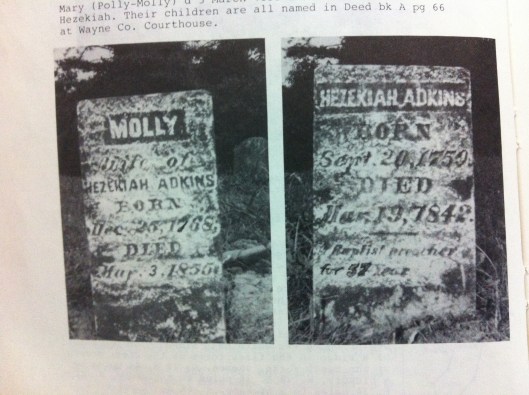
In 1990, Ronnie Adkins published THE definitive Adkins genealogy book. A great many researchers appreciated his work on Hezekiah Adkins’ line of the family. Hezekiah Adkins was born in 1759 in Virginia, served in the American Revolutionary War, moved from Giles County, Virginia, to present-day Wayne County, West Virginia, about 1810, and died in 1842. His grave markers are yet visible at Winslow on Beech Fork in Wayne County, WV. If you visit the grave site, you will find Hezekiah Adkins buried on the left and his wife Mary “Molly” buried on the right (unlike in this photo). Any Adkins researcher owes a great debt to Ronnie Adkins and his book. THANK YOU, RONNIE.

IMG_2228

Here is a photo of my good friend and mentor Billy Adkins visiting the grave site in 1991. Years ago, Billy assisted Ronnie in gathering information about members of the Adkins family who settled in the Harts area of Lincoln County, WV.
IMG_6301

Here is Hezekiah’s grave as it appears today (left). His wife Molly is buried to the right.

IMG_6299

Hezekiah Adkins is my paternal great-great-great-great-great-great-grandfather through his son, Isaac Adkins (1790-1854).

IMG_6300

Here is Molly Adkins’ grave as it appears today. She is my great-great-great-great-great-great-grandmother.

IMG_6303

Hezekiah Adkins has a nice military marker positioned at his feet.

IMG_6338

I recently visited Hezekiah Adkins’ grave. 30 June 2017.

IMG_6336

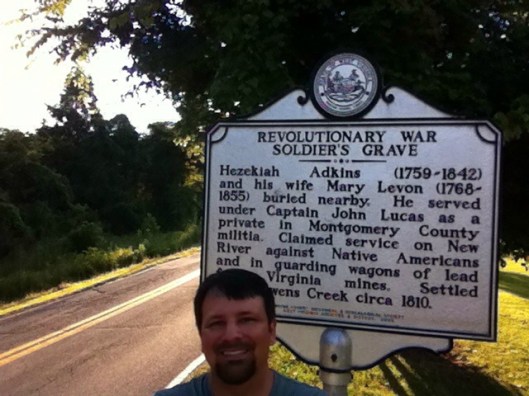
A short distance from the cemetery, beside of the highway, is this great historical marker commemorating Hezekiah Adkins’ service in the Revolutionary War. Beech Fork State Park is less than five minutes away. 30 June 2017.

Chapmanville District Schools (1927) 2

15 Thursday Jun 2017

Posted by Brandon Ray Kirk in Big Harts Creek, Civil War, Halcyon, Native American History, Queens Ridge, Shively, Spottswood, Stone Branch, Warren, Whirlwind, Yantus

≈ Leave a comment

Tags

Albert Thornton, Alice Dingess, Alonzo, Anna Adams, Appalachia, Battle of Cloyd's Mountain, Beatrice Adams, Ben Adams, Bob Dingess, Brown's Run, Browns Run School, Buck Fork, Buck Fork School, Bud Dingess School, Bulwark School, Chapmanville District, civil war, Cole Adams, Confederate Army, Conley School, Crawley Creek, Daisy Dingess, Dalton School, Dave Dingess School, Dixie Mullins, E. Burton, East Fork, Ed Dalton, education, Edward Chapman, F.M. McKay, Fisher B. Adkins, Fisher Thompson, genealogy, George Doss, George Mullins School, Harts Creek, history, Hoover School, Howard Adams, Hugh Dingess School, Ina Dingess, Ivy Branch School, J.A. Vickers, J.L. Thomas, John Conley, John Dingess, L.D. Stollings, Lee Dingess School, Limestone Creek, Local History and Topography of Logan County, Logan County, Lower Trace School, Manor School, Marsh Fork, Melvin Plumley, Middle Fork, Native Americans, Pigeon Roost, Piney School, Reuben Conley, Road Fork, Rocky School, Sallie Dingess, Smokehouse Fork, Stephen Hart, Striker School, T. Doss, Thelma Dingess, Three Fork School, Tim's Fork, Timothy Dwight, Twelve Pole Creek, Ula Adams, Union Army, West Fork, West Virginia, White Oak School, Workman School, World War I

Teachers identified the following schools in Chapmanville District of Logan County, WV, and offered a bit of local history in 1927:

Dave Dingess School, est. 1814

Ula Adams, teacher

One room frame school

“Harts Creek derived its name from Steven Harts, said to have been killed by Indians on the creek.”

Striker School, est. about 1874

Edward Chapman, teacher

One room frame building

Three Fork School, est. 1878

One room frame building, originally a log house

Nine Confederate veterans live here: George Doss, T. Doss, L.D. Stollings, Ed Dalton, Ruben Conley, John Conley, Ben Adams, E. Burton, Melvin Plumley. A Union veteran lives here; he originated elsewhere. Three branches of Crawley Creek are Road Fork, Middle Fork, and Pigeon Roost. Alonzo is the local post office.

Bulwark School, est. 1880

Robert Dingess, teacher

One room frame building

“All fought on the Confederate side” during the Civil War. One man gained great merit from our district as a marksman with the American marines during World War I.

Lee Dingess School, est. 1891

Cole Adams, teacher

One room frame

Five local men served in the Confederate Army.

Browns Run School, est. 1892

Ina Dingess, teacher

One room frame building

“Sent several soldiers to help the South.” The fork is named for a Brown who lived at its mouth.

Buck Fork School, est. 1894

No teacher given

One room frame building

A Church of Christ exists nearby. Three local men served in the Confederate Army. One local soldier lost both hands in World War I.

Ivy Branch School, est. 1895

Anna Adams, teacher

Albert Thornton was the first teacher here. “Trace Fork received its name from the original road leading to Twelve Pole Creek.”

Hugh Dingess School, est. 1897

Sallie Dingess, teacher

One room frame building

Conley School, est. 1897

J.L. Thomas, teacher

One room frame building

The first house built on Smoke House Fork at its mouth had no chimney for quite a while and smoked badly.

Dalton School, est. 1897

Thelma Dingess, teacher

One room frame building

“This district furnished a lot of Civil War veterans and played her part.”

Bud Dingess School, est. 1904

Beatrice Adams, teacher

One room frame building

“East Fork named on account of its being the most Eastern fork of Harts Creek.” One local soldier served in the Confederate Army.

Hoover School, est. 1910

Howard Adams, teacher

One room frame building

A Christian Church exists in the vicinity. Four local men served in the Confederate ARmy. “Harts Creek named from Steven Harts murdered by Indians.” Three boys went from here and one was wounded at the battle of Argonne.

George Mullins School, est. 1910

Dixie Mullins, teacher

One room frame building

“Buck Fork named from large number of male deer on creek.”

Rocky School (no date)

Daisy Given Dingess, teacher

References an Indian mound on Pigeon Roost where tomahawks, arrowheads, etc. can be found. Indian burial ground.

Under the Tim’s Fork entry, it says that John Dingess was killed in battle at Cloyd’s farm. Tim’s Fork is named for Timothy Dwight, who lived there.

Lower Trace School, est. 1919

Alice Dingess, teacher

Two room frame building

“Sent several soldiers to help the South.” Also, “Harts Creek named from Steven Harts.”

Piney School, est. 1921

F.M. McKay, teacher

One room building

No permanent churches exist locally; people meet occasionally in one of the school houses. Four local men served in the Confederate Army. “Piney was named because of so much pine growing there.”

White Oak School, est. 1922

Fisher Thompson, teacher

One room rented frame building

Manor School, est. 1923

Located at Limestone

Workman School, est. 1924

Fisher B. Adkins, teacher

One room frame building

Marsh Fork derived its name from the marshy land near its mouth.

Source: Local History and Topography of Logan County by J.A. Vickers (Charleston, WV: George M. Ford, State Superintendent, 1927).

Chapmanville District Schools (1927) 1

14 Wednesday Jun 2017

Posted by Brandon Ray Kirk in African American History, Banco, Big Creek, Big Harts Creek, Chapmanville, Civil War, Guyandotte River, Holden, Native American History, Stone Branch, Timber

≈ Leave a comment

Tags

36th Virginia Volunteer Infantry Regiment, African-Americans, Appalachia, Battle of Kanawha Gap, Big Creek, Big Creek School, Burley Stollings, Buzzard Hill, Chapmanville District, Chapmanville School, Charles I. Stone, civil war, Confederate Army, Crispin Stone, Daisy Pettit, Daisy School, Dare Devils, Ed Stone School, Edith Richardson, education, Fort Sumter, French Dingess, Garrett Fork, genealogy, George Hill, Godby Branch, Guyandotte River, history, Holden, Hugh Thompson School, Hugh Toney, J.A. Vickers, J.G. Beymer, John Conley, John Garrett, John Godby, John stone, Kitchen School, Lane School, Local History and Topography of Logan County, Logan County, Lot W. Adams, Mabel Lowe, Native American History, Native Americans, Pigeon Mountain, Poplar Camp Creek, Prudential Coal Mine, Rosa Barker, Sid Ferrell, Simon Girty, Spanish-American War, Stone Branch, Stone Branch School, Thomas Huff, Thomas School, Union Army, Vette, Violet H. Agee, West Virginia, World War I

Teachers identified the following schools in Chapmanville District of Logan County, WV, and offered a bit of local history in 1927:

Big Creek School, est. 1852

Edith Richardson, teacher

Big Creek School was built of logs in 1870. Crispin S. Stone taught the first free school in his kitchen in 1870. A log building was erected the next year by the people. A Baptist Church exists here as of 1906. Many soldiers of the Civil War served from here. Two are still living. George Hill of Holden served in the Spanish-American War. Sid Ferrell of Big Creek was wounded in World War I when he left the trenches ahead of his command. The first merchant started here in 1904. Prudential was the first coal mine, just below here, in 1905. The first gas well was drilled here in 1909. Big Creek was formerly named “vette.” On the left of Big Creek (stream) looking downstream is Buzzard Hill and on the right is Pigeon Mountain. Pigeon Hill was named due to the great number of pigeons resting there. Big Creek was formerly called Poplar Camp Creek from a surveyor’s camp made of logs. The town was pretty well built up since 1902.

Lane School, est. 1887

Mable Lowe, teacher

Two room frame building

Four Confederate soldiers and one Union soldier lived here during the war. Garrett Fork was named for John Garrett, an old soldier.

Under the entry for Godby Branch: Godby Branch was named for John Godby. Old settlers claim that Simon Girty who married an Indian squaw lived on Godby Branch for several years. He cut his name on a large beech tree that fell in 1890. John Godby told the story.

Chapmanville School, est. 1892

Lot W. Adams, teacher

Four rooms and two outside rooms

There is a large Indian mound in Chapmanville. French Dingess reportedly fired the first gun at Fort Sumter. The Guyandotte River was reportedly named from the Indian word meaning “narrow bottoms.” Company D, 36th Virginia Infantry, known as the Dare Devils, organized here in May 1861 with Charles I. Stone as captain. Later it combined with Co. C, 36th Virginia Volunteer Infantry and was known as the Logan Wildcats with Hugh Toney as captain. The Battle of Chapmanville Mountain was fought in the fall of 1861 here. Major Davis was wounded and captured and his original is still kept by his relatives. He charged fifty cents a month per pupil and the textbooks were free. A large beech and a large white oak plainly marked a corner trees on the Thomas Huff 850-acre survey made on June 3, 1784.

Stone Branch School (colored), est. 1902

Violet H. Agee, teacher

Kitchen School, est. 1905

Uses three one-room buildings

John Stone said there were a few straggling bands of Indians here when he came to Stone Branch in 1807 but committed no depredations after he settled. John Stone taught the first school in this district and maybe in the county at Stone Branch in 1812. The textbooks were made by him with goose quill pens.

Hugh Thompson School, est. 1916

J.G. Beymer, teacher

One room frame building

A school house erected in 1916 was blown down in a heavy storm, killing John Conley, an old citizen who had taken shelter under the floor. The house was not used for school this year but was rebuilt the following year.

Ed Stone School, est. 1919

Rosa Barker, teacher

One room frame building

One Confederate soldier lived here during the war.

Thomas School, est. 1919

Burley Stollings, teacher

One room frame building

Two Confederate soldiers lived here during the war.

Daisy School, est. 1920

Daisy Pettit, teacher

One room frame house

Source: Local History and Topography of Logan County by J.A. Vickers (Charleston, WV: George M. Ford, State Superintendent, 1927).

Burrell Spurlock

19 Wednesday Apr 2017

Posted by Brandon Ray Kirk in Civil War, Coal, Hamlin, Native American History, Timber

≈ 3 Comments

Tags

7th West Virginia Cavalry, Allen Spurlock, Appalachia, Battle of Floyd Mountain, Battle of Lynchburg, Battle of New River Bridge, Boone County, Burrell Spurlock, Charles Spurlock, civil war, coal, Eli Spurlock, Elizabeth Spears, Emily Alice Spurlock, Emily Spurlock, Evermont Green Spurlock, farming, genalogy, Hamlin, Henry H. Hardesty, history, Lawrence County, Leander Filmore Spurlock, Lincoln County, Louisa Jane Spurlock, Maria Spurlock, Mary Elizbaeth Spurlock, Mary Spurlock, Methodist Episcopal Church, Native Americans, Ohio, Phoebe Jane Spurlock, Preston Spears, Robert Spurlock, Sarah Ellen Spurlock, Thomas Preston Spears, timber, Union District, Victoria Spurlock, West Virginia, Wirt Spurlock

From “Hardesty’s History of Lincoln County, West Virginia,” published by H.H. Hardesty, we find this entry for Burrell Spurlock, who resided near Hamlin in Lincoln County, West Virginia:

Son of Eli and Mary (Cummings) Spurlock, was born in Boone county, (now) West Virginia, April 14, 1833, and in Lincoln county, January 7, 1857, he wedded Phoebe Jane, daughter of Preston and Elizabeth (Haskins) Spears. The children of this union number twelve, born as follows: Emily, December 17, 1858, died February 21, 1859; Louisa Jane, December 25, 1859; Emily Alice, October 10, 1861, died January 19, 1880; Robert, September 17, 1864; Allen and Wirt, twins, October 25, 1867; Evermont Green, born February 17, 1870; Sarah Ellen, May 20, 1873, died September 22, 1878; Victoria, February 19, 1876; Leander Filmore, June 30, 1878, died December 8, 1878; Maria, March 26, 1880; Mary Elizabeth, July 7, 1883. Mrs. Spurlock was born in Lawrence county, Ohio, June 10, 1840; she has been a member of the Methodist Episcopal Church for fifteen years. A brother of Mrs. Spurlock, Thomas Preston Spears, served in teh late war in the Federal army, and died a prisoner. The subject of this sketch was in the civil war, serving in the Federal army, in Company K, 7th West Virginia Cavalry. He enlisted, March 10, 1864, participated in the battles at Floyd Mountain, New River Bridge, Lynchburg, fighting continuously from Lynchburg to Kanawha valley, and was discharged August 5, 1865. Charles Spurlock, grandfather of Burrell, was born and raised ____. The country then was inhabited mostly by Indians. Burrell Spurlock is a farmer in union district, owning 360 acres of farming land, located on Big Laurel, nine miles from Hamlin. The timber on this land consists of pine, poplar, locust, sugar, maple, beech, hickory, and oak; good orchard; superior cannel and stone coal, and iron ore. Address Mr. Spurlock at Hamlin, Lincoln county, West Virginia.

Source: The West Virginia Encyclopedia, Vol. 7 (Richwood, WV: Jim Comstock, 1974), p. 132.

Native American Mound in Boone County, WV (1898)

05 Wednesday Apr 2017

Posted by Brandon Ray Kirk in Boone County, Native American History

≈ Leave a comment

Tags

Appalachia, Boone County, burial mound, history, Indian Creek, Jackson County, Logan County Banner, mounds, Native American History, Native Americans, Racine, W.D. Fontaine, West Virginia

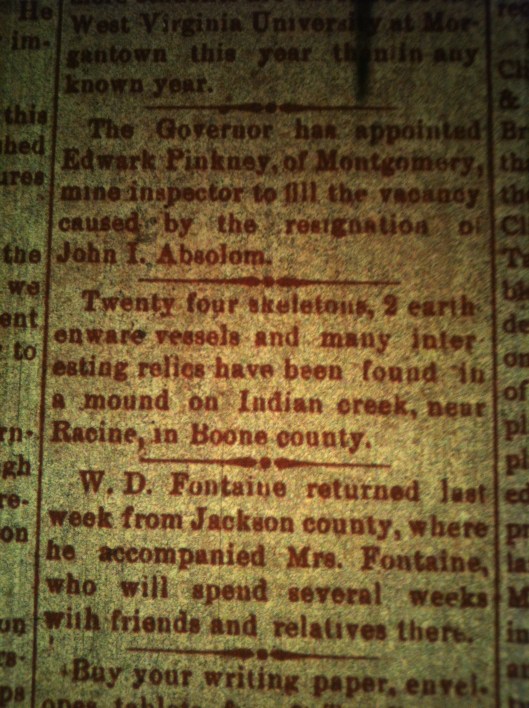
Boone County Mound LCB 04.21.1898

Logan County Banner (Logan, WV), 21 April 1898.

Native American Skeleton Found in Logan, WV (1893)

03 Monday Apr 2017

Posted by Brandon Ray Kirk in Civil War, Logan, Native American History, Wyoming County

≈ 2 Comments

Tags

Appalachia, Aracoma, archaeology, civil war, G.W. Lawson, history, Julia Altizer, Lincoln County, Logan, Logan County Banner, Logan Court House, Mouth of Sycamore, Native American History, Native Americans, Oceana, Stone Coal, West Virginia, Wyoming County

Indian body found LCB 08.10.1893.JPG

Logan County Banner (Logan, WV), 10 August 1893. At the time of this story, Logan was known as Aracoma or Logan Court House.

Poor Whites (1896)

18 Sunday Sep 2016

Posted by Brandon Ray Kirk in African American History, Coal, Native American History

≈ Leave a comment

Tags

Adirondack Mountains, Allegheny Mountains, Appalachia, Blue Ridge Mountains, Chattanooga, Chattanooga Times, Cherokee, Choctaw, culture, history, Huntington, Huntington Advertiser, indentured servants, Native Americans, New York, North Carolina, Pennsylvania, slavery, Tennessee, Virginia, West Virginia

On July 15, 1896, the Huntington Advertiser of Huntington, West Virginia, printed a story titled “The Poor Whites: Origin of a Distinct Class Living in the South.” Subtitled “The ‘Cracker of the Hills’ is the Direct Descendant of the ‘Sold Passengers’ Who Came to This Country in the Seventeenth Century,” the story initially appeared in the Chattanooga Times of Chattanooga, Tennessee. And here it is:

The notion that the poor white element of the southern Appalachian region is identical with the poor people generally over the country is an error, and an error of enough importance to call for correction. The poor white of the south has some kinfolk in the Adirondack region of New York and the Blue and Alleghany [sic] mountains of Pennsylvania, but he has few relatives any place else about the Mason-Dixon line. The states of New York and Pennsylvania were slave states until the early part of this century.

This poor white mountaineer descends direct from those immigrants who came over in the early days of the colonies; from 1620 to about or some time after the Revolutionary war period, as “sold passengers.” They sold their services for a time sufficient to enable them to work out their passage money. They were sold, articled to masters, in the colonies for their board and fixed wage, and thus they earned the cost of their migration.

The laws under which they were articled were severe, as severe as apprentice laws in those days. The “sold passenger” virtually became the slave of the purchaser of his labor. He could be whipped if he did not do the task set [before] him, and woe to the unlucky wight [sic] if he ran away. He was sure to be caught and cruelly punished.

And though he was usually a descendant of the lowest grade of humanity on the British islands, he still had enough of the Anglo-Saxon spirit about him to make him an unsatisfactory chattel.

From 1620 forward–the year when the Dutch landed the first cargo of African slaves on the continent–the “sold passenger” was fast replaced by negroes, who took more naturally and amiably to the slave life.

The poor white naturally came to cherish a bitter hatred for the blacks that were preferred over him. He already hated his domineering white master. When he was free to go, he put as many miles as his means and his safety from Indian murderers permitted between himself and those he hated and hoped he might never see again. In that early time the mountain region was not even surveyed, let alone owned by individual proprietors.

The English, Scotch, Irish and continental immigrant who had some means sat down on the rich valleys, river bottoms and rolling savannahs, and the poor white was made welcome to the foothills and mountain plateaus.

These descendants of the British villain of the feudal era grew and multiplied, became almost as distinct a people from the lords of the lowlands as the Scotch highlander was, as related to his lowland neighbor, in the sixteenth and seventeenth centuries.

The stir of the period since the close of our civil war has made somewhat indistinct the line that separates the mountaineer from the plainsman of the south, especially in the foothills and at points where the two have intermingled in traffic, in the schoolhouse and church, and especially where the poor whites have been employed at mining, iron making, etc. But go into the mountains far enough and you will find the types as clear cut as it was 100 years ago, with its inimitable drawling speech and curious dialect, its sallow complexion, lanky frame, lazy habits and immorality–all as distinctly marked as they were when hundreds of these people found Cherokee wives in Georgia and Tennessee in the early part of the century and bleached most of the copper out of the skin of the Choctaw as well as out of the Cherokee.

It is a pity that some competent anthropological historian has not traced the annals of this interesting and distinctive section of our population, and made record of it in the interest of science, no less than in the interest of the proper education and elevation of the mountain people. It has become, especially in the Piedmont section of the south, a most important labor element. The cotton mill labor by thousands comes from the “Cracker of the Hills,” and it is destined o become a great power, that labor population, social and political.

The redemption of the poor white began when slavery went down in blood and destruction, and it has gone on faster and traveled further than some of us think.

Native American Mounds (2016)

18 Sunday Sep 2016

Posted by Brandon Ray Kirk in Native American History

≈ Leave a comment

Tags

Appalachia, Ashland, Boyd County, Central Park, history, Kentucky, Mound Builders, Native Americans, photos

IMG_1116.JPG

Central Park, Ashland, Boyd County, KY. April 2016.

Native American Remains in Logan, WV (1895)

09 Monday May 2016

Posted by Brandon Ray Kirk in Logan, Native American History

≈ 3 Comments

Tags

Appalachia, history, J.B. Wilkinson, Logan, Logan County, Logan County Banner, Main Street, Native Americans, West Virginia

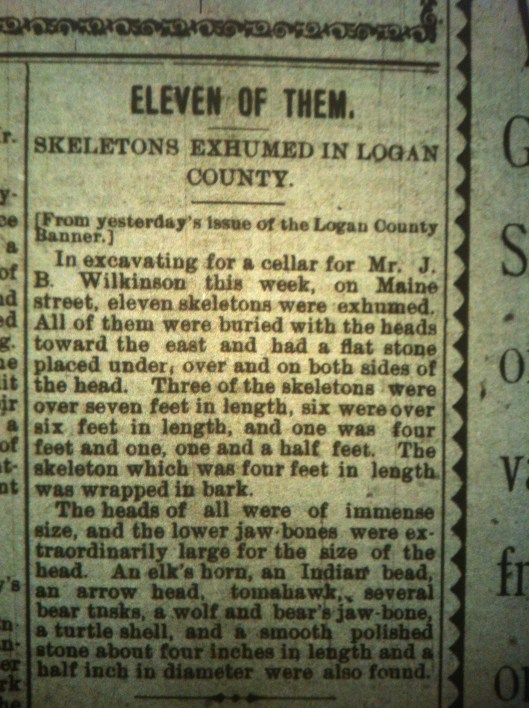
Native American Remains LCB 08.07.1895 2

Logan County Banner, 7 August 1895.

Adams Cemetery (2015)

27 Saturday Feb 2016

Posted by Brandon Ray Kirk in Big Harts Creek, Cemeteries, Native American History, Spottswood, Whirlwind

≈ 2 Comments

Tags

Adams Cemetery, Appalachia, cemeteries, genealogy, Harts Creek, history, Hoover Fork, Hoover Fork Road, Logan County, McCloud Branch, West Virginia

The Adams Cemetery, which I visited on 4 April 2015, is located just above the mouth of McCloud Branch of Hoover Fork of Harts Creek in Logan County, West Virginia. Driving up Hoover Fork Road, the small and mostly forgotten cemetery is barely visible to the right. Folk tradition says these are Native American graves.

Row 1

unmarked rock headstone and footstone

Row 2

unmarked rock headstone partially buried at pine tree and rock footstone

unmarked rock headstone and small rock footstone

short square rock headstone and small rock footstone

rock headstone reading “JO ADAMS, B. JAN ________” in top line with “____7” in next line; rock footstone

Native American Remains in Logan, WV (1895)

21 Thursday Jan 2016

Posted by Brandon Ray Kirk in Logan, Native American History

≈ 5 Comments

Tags

Appalachia, archaeology, history, Huntington, J.B. Wilkinson, Logan, Logan County, Logan County Banner, Native American History, West Virginia

Indian Skeletons HA 08.09.1895

Source: Huntington Advertiser, 09 August 1895


Burkes Garden, Virginia (2015)

18 Wednesday Nov 2015

Posted by Brandon Ray Kirk in Native American History

≈ 1 Comment

Tags

Appalachia, Burkes Garden, French and Indian War, Garden Mountain, genealogy, history, James Burke, James Patton, Native Americans, U.S. South, Virginia

IMG_7076

I recently visited Burkes Garden, Virginia, which was explored by my ancestor, James Patton. 10 October 2015

← Older posts
Newer posts →

Feud Poll 1

If you had lived in the Harts Creek community during the 1880s, to which faction of feudists might you have given your loyalty?

Categories

  • Adkins Mill
  • African American History
  • American Revolutionary War
  • Ashland
  • Atenville
  • Banco
  • Barboursville
  • Battle of Blair Mountain
  • Beech Creek
  • Big Creek
  • Big Harts Creek
  • Big Sandy Valley
  • Big Ugly Creek
  • Boone County
  • Breeden
  • Calhoun County
  • Cemeteries
  • Chapmanville
  • Civil War
  • Clay County
  • Clothier
  • Coal
  • Cove Gap
  • Crawley Creek
  • Culture of Honor
  • Dingess
  • Dollie
  • Dunlow
  • East Lynn
  • Ed Haley
  • Eden Park
  • Enslow
  • Estep
  • Ethel
  • Ferrellsburg
  • Fourteen
  • French-Eversole Feud
  • Gilbert
  • Giles County
  • Gill
  • Green Shoal
  • Guyandotte River
  • Halcyon
  • Hamlin
  • Harts
  • Hatfield-McCoy Feud
  • Holden
  • Hungarian-American History
  • Huntington
  • Inez
  • Irish-Americans
  • Italian American History
  • Jamboree
  • Jewish History
  • John Hartford
  • Kermit
  • Kiahsville
  • Kitchen
  • Leet
  • Lincoln County Feud
  • Little Harts Creek
  • Logan
  • Man
  • Matewan
  • Meador
  • Midkiff
  • Monroe County
  • Montgomery County
  • Music
  • Native American History
  • Peach Creek
  • Pearl Adkins Diary
  • Pecks Mill
  • Peter Creek
  • Pikeville
  • Pilgrim
  • Poetry
  • Queens Ridge
  • Ranger
  • Rector
  • Roane County
  • Rowan County Feud
  • Salt Rock
  • Sand Creek
  • Shively
  • Spears
  • Sports
  • Spottswood
  • Spurlockville
  • Stiltner
  • Stone Branch
  • Tazewell County
  • Timber
  • Tom Dula
  • Toney
  • Turner-Howard Feud
  • Twelve Pole Creek
  • Uncategorized
  • Warren
  • Wayne
  • West Hamlin
  • Wewanta
  • Wharncliffe
  • Whirlwind
  • Williamson
  • Women's History
  • World War I
  • Wyoming County
  • Yantus

Feud Poll 2

Do you think Milt Haley and Green McCoy committed the ambush on Al and Hollene Brumfield in 1889?

Blogroll

  • Ancestry.com
  • Ashland (KY) Daily Independent News Article
  • Author FB page
  • Beckley (WV) Register-Herald News Article
  • Big Sandy News (KY) News Article
  • Blood in West Virginia FB
  • Blood in West Virginia order
  • Chapters TV Program
  • Facebook
  • Ghosts of Guyan
  • Herald-Dispatch News Article 1
  • Herald-Dispatch News Article 2
  • In Search of Ed Haley
  • Instagram
  • Lincoln (WV) Journal News Article
  • Lincoln (WV) Journal Thumbs Up
  • Lincoln County
  • Lincoln County Feud
  • Lincoln County Feud Lecture
  • LinkedIn
  • Logan (WV) Banner News Article
  • Lunch With Books
  • Our Overmountain Men: The Revolutionary War in Western Virginia (1775-1783)
  • Pinterest
  • Scarborough Society's Art and Lecture Series
  • Smithsonian Article
  • Spirit of Jefferson News Article
  • The Friendly Neighbor Radio Show 1
  • The Friendly Neighbor Radio Show 2
  • The Friendly Neighbor Radio Show 3
  • The Friendly Neighbor Radio Show 4
  • The New Yorker
  • The State Journal's 55 Good Things About WV
  • tumblr.
  • Twitter
  • Website
  • Weirton (WV) Daily Times Article
  • Wheeling (WV) Intelligencer News Article 1
  • Wheeling (WV) Intelligencer News Article 2
  • WOWK TV
  • Writers Can Read Open Mic Night

Feud Poll 3

Who do you think organized the ambush of Al and Hollene Brumfield in 1889?

Recent Posts

  • Logan County Jail in Logan, WV
  • Absentee Landowners of Magnolia District (1890, 1892, 1894)
  • Charles Spurlock Survey at Fourteen Mile Creek, Lincoln County, WV (1815)

Ed Haley Poll 1

What do you think caused Ed Haley to lose his sight when he was three years old?

Top Posts & Pages

  • Baisden Family Troubles
  • About
  • Ran'l McCoy's Final Months (1914)
  • Jeff and Harriet Baisden
  • Origin of Place Names in Logan County, WV (1937)

Copyright

© Brandon Ray Kirk and brandonraykirk.wordpress.com, 1987-2023. Unauthorized use and/or duplication of this material without express and written permission from this blog’s author and/or owner is strictly prohibited. Excerpts and links may be used, provided that full and clear credit is given to Brandon Ray Kirk and brandonraykirk.wordpress.com with appropriate and specific direction to the original content.

Archives

  • February 2025
  • January 2025
  • October 2023
  • September 2023
  • December 2022
  • November 2022
  • May 2022
  • April 2022
  • February 2022
  • November 2021
  • October 2021
  • September 2021
  • June 2021
  • May 2021
  • April 2021
  • March 2021
  • February 2021
  • January 2021
  • December 2020
  • November 2020
  • October 2020
  • July 2020
  • June 2020
  • May 2020
  • April 2020
  • March 2020
  • February 2020
  • January 2020
  • December 2019
  • November 2019
  • October 2019
  • September 2019
  • August 2019
  • July 2019
  • June 2019
  • May 2019
  • April 2019
  • March 2019
  • February 2019
  • January 2019
  • December 2018
  • November 2018
  • October 2018
  • September 2018
  • August 2018
  • July 2018
  • June 2018
  • May 2018
  • April 2018
  • March 2018
  • February 2018
  • January 2018
  • December 2017
  • November 2017
  • October 2017
  • September 2017
  • August 2017
  • July 2017
  • June 2017
  • May 2017
  • April 2017
  • March 2017
  • February 2017
  • January 2017
  • December 2016
  • November 2016
  • October 2016
  • September 2016
  • August 2016
  • July 2016
  • June 2016
  • May 2016
  • April 2016
  • March 2016
  • February 2016
  • January 2016
  • December 2015
  • November 2015
  • October 2015
  • September 2015
  • August 2015
  • July 2015
  • June 2015
  • May 2015
  • April 2015
  • March 2015
  • February 2015
  • January 2015
  • December 2014
  • October 2014
  • September 2014
  • August 2014
  • July 2014
  • June 2014
  • May 2014
  • April 2014
  • March 2014
  • February 2014
  • January 2014
  • December 2013
  • November 2013
  • October 2013
  • September 2013
  • August 2013
  • July 2013
  • June 2013
  • May 2013
  • April 2013
  • March 2013
  • February 2013
  • January 2013
  • December 2012
  • November 2012

Enter your email address to follow this blog and receive notifications of new posts by email.

Join 2,925 other subscribers

Tags

Appalachia Ashland Big Creek Big Ugly Creek Blood in West Virginia Brandon Kirk Cabell County cemeteries Chapmanville Charleston civil war coal Confederate Army crime culture Ed Haley Ella Haley Ferrellsburg feud fiddler fiddling genealogy Green McCoy Guyandotte River Harts Harts Creek Hatfield-McCoy Feud history Huntington John Hartford Kentucky Lawrence Haley life Lincoln County Lincoln County Feud Logan Logan Banner Logan County Milt Haley Mingo County music Ohio photos timbering U.S. South Virginia Wayne County West Virginia Whirlwind writing

Blogs I Follow

  • OtterTales
  • Our Appalachia: A Blog Created by Students of Brandon Kirk
  • Piedmont Trails
  • Truman Capote
  • Appalachian Diaspora

BLOOD IN WEST VIRGINIA is now available for order at Amazon!

Blog at WordPress.com.

OtterTales

Writings from my travels and experiences. High and fine literature is wine, and mine is only water; but everybody likes water. Mark Twain

Our Appalachia: A Blog Created by Students of Brandon Kirk

This site is dedicated to the collection, preservation, and promotion of history and culture in Appalachia.

Piedmont Trails

Genealogy and History in North Carolina and Beyond

Truman Capote

A site about one of the most beautiful, interesting, tallented, outrageous and colorful personalities of the 20th Century

Appalachian Diaspora

  • Subscribe Subscribed
    • Brandon Ray Kirk
    • Join 787 other subscribers
    • Already have a WordPress.com account? Log in now.
    • Brandon Ray Kirk
    • Subscribe Subscribed
    • Sign up
    • Log in
    • Report this content
    • View site in Reader
    • Manage subscriptions
    • Collapse this bar
 

Loading Comments...