• About

Brandon Ray Kirk

~ This site is dedicated to the collection, preservation, and promotion of history and culture in my section of Appalachia.

Brandon Ray Kirk

Category Archives: John Hartford

In Search of Ed Haley 349

05 Tuesday Aug 2014

Posted by Brandon Ray Kirk in Ed Haley, John Hartford, Music

≈ Leave a comment

Tags

Ashland, Bobby Taylor, Brandon Kirk, Ed Haley, Ed Haley Fiddle Contest, fiddling, Good Old Country Town Where I Was Born, Green McCoy, Harold Postalwait, history, J P Fraley, Jimmy McCoy, John Hartford, Kentucky, Mona Haley, music, Ugee Postalwait, writing

In September, Brandon and I met in Ashland for the “Second Annual Ed Haley Memorial Fiddle Festival.” Before the contest, we talked with Mona, who’d written down the words to three of Ed’s old songs on yellow notebook paper. It was the first time I’d seen any lyrics for “Good Old Country Town Where I Was Born”:

Oh, the days are sad and the nights are long

And the whole wide world is going wrong

And it’s all because I’m far away from home.

When I bow my head and close my eyes

It’s then I stop and realize:

Oh, what a fool I was to ever roam.

There’s a long, long trail a winding

To a land that’s fair and bright.

It’s a trail I’m always finding

When I go to sleep at night.

I dream of climbing up the hills

Where I used to hear those whippoorwills

In the good old country town where I was born.

I tried to figure out just what it’s all about,

Why I ever left home.

I got a notion in my head

The old hometown was most too dead.

I learned a thing or two

As you’re a bound to do

When you’re a roaming around.

I made up my mind right now

I’d soon be homeward bound.

Oh the sun shines brighter every day

And the breezes blow your blues away

In the good old country town I’m longing for.

It’s a place where clothes don’t make the man

And they mean it when they shake your hand

And a stranger won’t be turned from any door.

It’s a land of milk and honey

Where the folks are on the square.

Though they don’t have lots of money

You’re always welcome there.

I know I’m just a small town guy

But I’m going back to live and die

In the good old country town where I was born.

When I get off at the station

And I see those happy smiles,

I can tell the whole creation

I would walk a thousand miles

Just to be back there where the skies are blue

And to know my friends are always true

In that good old country town where I was born.

That afternoon, everyone headed to the contest, which was held in a downtown auditorium. There were a lot of familiar faces. J.P. Fraley and Bobby Taylor were judges. Contest organizers seated the Haley family at the front of the crowd. Mixed among the family were Brandon, Ugee Postalwait, Harold Postalwait, and Jimmy McCoy, a great-grandson of Green McCoy.

In Search of Ed Haley 347

01 Friday Aug 2014

Posted by Brandon Ray Kirk in Big Harts Creek, Ed Haley, John Hartford, Music, Shively

≈ Leave a comment

Tags

Arkansas Traveler, Billy in the Lowground, Birdie, Black Bottom, Brandon Kirk, Brushy Fork of John's Creek, Charles Conley Jr., Charlie "Goo" Conley, Charlie Conley, Dixie Darling, Dood Dalton, Down Yonder, Drunken Hiccups, Ed Haley, Ella Haley, fiddle, fiddler, fiddling, Garfield's Blackberry Blossom, Goin' Across the Sea, Handome Molly, Harts Creek, Hell Among the Yearlings, history, I Don't Love Nobody, John Hartford, Logan, Logan County, music, Pickin' on the Log, Stackolee, The Fun's All Over, Twinkle Little Star, West Virginia, Wog Dalton, writing

After a few minutes of downplaying his ability, Charlie had his wife fetch his fiddle from inside the house. With some hesitation, he put it against his chest and took off on “The Fun’s All Over”.

After he’d finished, I asked him if Ed played with the fiddle at his chest and he said no — he put it under his chin.

Charlie played some more for us: “Birdie”, “Stagolee”, “Twinkle Little Star”, and “I Don’t Love Nobody”.

He seemed a little displeased with his playing, remarking, “Boys when your fingers stop working like they used to, you don’t do as you want to. You do as you can.”

Brandon asked Charlie, “Do you remember how Ed pulled his bow when he played?”

“He held it like that toward the middle and just shoved it,” Charlie said. “He played a long stroke. When he’d be playing a long stroke, I’d be a playing a short stroke and every now and then you’d see him turn his head around and listen to ya. If you missed a note, buddy, he called you down right there. ‘That ain’t right,’ he’d say. ‘That ain’t right.’ Man, he’d sit in playing ‘er again just like a housefire.”

I asked, “When Ed would play a tune, how long would he play it for?”

“He’d play as long as they’d dance,” he said.

Would he play it for fifteen minutes?

“No, hell, he’d play for an hour at a time,” Charlie said. “After he finished a tune, he’d hit another’n.”

I wondered if Ed ever played “Down Yonder”.

“Yeah, I’ve heard him play it,” Charlie said. “He played everything in the world, Ed did.”

What if someone asked him to play something he didn’t like?

“He’d shake his head no and he’d play something else,” Charlie said. “That’s just the way he was…he was a stubborn old man. He had one he played he called ‘Handsome Molly’.”

“That’s almost ‘Goin’ Across the Sea’,” I said. “Did Ed play ‘Goin’ Across the Sea’?”

Charlie said, “Yeah, that old woman would sing it.”

I got out my fiddle, hoping to get Charlie’s memory working on more of Ed’s tunes. I played “Blackberry Blossom” and “Brushy Fork of John’s Creek” with little response other than, “Yep, those are some of old man Ed’s tunes.”

Then, when I played “Hell Among the Yearlings”, Charlie caught me off guard by saying, “That’s called ‘Pickin’ on the Log’.”

At that juncture, he took hold of his fiddle and played “Arkansas Traveler” and “Billy in the Lowground”.

I could tell he was loosening up, so I got him to play “Warfield”. It was about the same thing as the Carter Family’s “Dixie Darling”, to which it would be real easy to sing:

Goodbye girls, we’re goin’ to Warfield.

Goodbye girls, we’re goin’ to Warfield.

Goodbye girls, we’re goin’ to Warfield.

Naugatuck’s gone dry.

It was great to watch Charlie because he was the first active fiddler I’d met on Harts Creek.

During our visit, Brandon and I were able to formulate some idea of Charlie’s background. He was born in 1923. His father Charlie, Sr. went by the nickname of “Goo” to distinguish him from his uncle Charlie Conley — the one who’d killed John Brumfield in 1900. Charlie’s earliest memories of fiddling were of watching his father play “some” on old tunes like “Drunken Hiccups”. He also remembered Dood Dalton.

“Yeah, I’ve heard him play,” he said. “I don’t know how good he was, but I’ve heard him jiggle around on the fiddle. He used to come up home. I was raised right up in the head of this creek up here. Him and my daddy was double first cousins and my daddy had an old fiddle. They’d get it out and they’d play on it half of the night — first one and then another playing on it — but I couldn’t make heads or tails of what they was playing.”

Charlie didn’t know that his great-grandfather Wog Dalton had been a fiddler.

Charlie told us a little bit about his early efforts at fiddling.

“My daddy had that old fiddle and I heard him fool with it so much I said to myself, ‘Well, I’ll just see if I can do anything with it.’ And I started fooling with it and the more I fooled with it the more I wanted to fool with it and I just got to where I could play it a little bit.”

Charlie got good enough to fiddle for dances all over Logan County, sometimes getting as much as fifty dollars a night at Black Bottom in Logan.

“You had to duck and dodge beer bottles all night,” he said. “Man, it was the roughest place I ever seen in my life. They’d get their guts cut out, brains knocked out with beer bottles and everything.”

It sounded a lot like my early days back home.

I asked Charlie how he met Ed and he said, “I got acquainted with him up there at Logan when him and his wife played under that mulberry tree there at that old courthouse. And I’d hear about him playing square dances. I was playing over there at this place one time — he was there. This guy had got him to come there and play, too. He just sit down there, buddy, and we set in playing. We fiddled to daylight. People a dancing, I’m telling you the truth, the dust was a rolling off the floor.”

Charlie said the last dance he remembered on Harts Creek was in 1947.

In Search of Ed Haley 345

30 Wednesday Jul 2014

Posted by Brandon Ray Kirk in Big Harts Creek, Ed Haley, Harts, John Hartford

≈ Leave a comment

Tags

Alice Baisden, Brandon Kirk, Clifton Mullins, Connie Mullins, Dicy Baisden, Ed Haley, Ewell Mullins, Harts, Harts Creek, Harts Fas Chek, history, John Hartford, Liza Mullins, music, Peter Mullins, Sol Bumgarner, Trace Fork, Von Tomblin, West Virginia, writing

A few days later, Brandon and I loaded up the bus and headed to Harts where we arrived about midnight and parked at the Fas Chek. The next morning, we drove to Trace Fork to scope out the hollow. Initially, we stopped to see Von Tomblin, Ewell Mullins’ daughter, who lived next door to “Ed Haley’s place.” Von said she thought the back part of her father’s house was original; we were welcome to walk over and check it out.

“Just be sure and watch for snakes,” she said.

We trudged over through the field to the maroon house where we cluelessly looked at it.

Eventually, Brandon pointed down the bottom to the site of Uncle Peter’s place at the mouth of Jonas Branch. A few minutes later, as we sat in a swing under a tree at Uncle Peter’s place, taking in the sights and smells, Clifton Mullins came walking up with a big grin on his face, decked out in a Hank Williams, Jr. T-shirt. We told him we were trying to figure out just how old Ewell’s house was and he suggested that we walk up the hollow and ask Bum about it.

In no time whatsoever, we were on the porch with Bum, Shermie, and two sisters named Alice and Dicy. We had a very confusing — but potentially crucial — conversation about Ewell’s place:

Brandon: Now Ewell had an older home before that one, didn’t he?

Bum: They built onto it, what they done.

Brandon: Which is the old part?

Bum: The back part again’ the hill.

Brandon: Now, Ewell bought that place off of Ed.

Bum: Well now, Ewell built the front part. But the log house that was here, Ed or some of them built it. Some of his people. Older house there. If I ain’t badly mistaken, it was a log house. Got different grooves on it now than what it was.

Brandon: Was you ever in the old place?

Bum: Yeah. Had four or five rooms.

Brandon: When did Ewell tear it down?

Bum’s sister: I think all they tore down was the kitchen part to it.

Brandon: So part of Ewell’s house is the old place?

Bum: They took out the back here again’ the hill.

Brandon: Is part of the old log home still there?

Bum: It’s covered up now.

Brandon: But they’s log under that?

Bum: Yeah, I think it is.

We eventually headed down the hollow to Clifton’s, where his sister Connie showed us more family photographs. Clifton showed us his storage building, which featured Aunt Liza’s beautiful spinning wheel on piles of bags and boxes. Brandon and I agreed right then and there that we would give just about anything to have it. For all we knew, Liza had used it to make or mend Ed’s clothes when he was a boy.

In Search of Ed Haley 344

26 Saturday Jul 2014

Posted by Brandon Ray Kirk in Ed Haley, John Hartford, Lincoln County Feud, Music

≈ Leave a comment

Tags

Ashland, banjo, Bobby Taylor, Brandon Kirk, Charleston, Clyde Haley, Cultural Center, Deborah Basham, Ed Haley, Ella Haley, Forked Deer, Green McCoy, Grey Eagle, history, Jack Haley, John Hartford, Kentucky, Lawrence Haley, life, mandolin, Michigan, Milt Haley, Mona Haley, music, Pat Haley, Patsy Haley, Ralph Haley, Ralph Mullins, Rounder Records, San Quentin, Scott Haley, Smithsonian Institution, Steve Haley, West Virginia, writing

Around that time, Brandon and I received confirmation from Doug Owsley at the Smithsonian that he was interested in exhuming the Haley-McCoy grave. Doug gave us instructions on what we needed to do before his office could actually become involved — most importantly, to get permission from the state authorities, as well as from Milt’s and Green’s descendants. We felt pretty good about our chances of getting support from the family but weren’t sure what to expect from “officials.” For some guidance in that department, we called Bobby Taylor and Deborah Basham at the Cultural Center in Charleston, who told us all about exhumation law and codes in West Virginia. They felt, considering the interest of the Smithsonian, that we would have no trouble on the bureaucratic end of things.

Meanwhile, Rounder Records was in the final stages of releasing a two-CD set of Ed’s recordings called Forked Deer. The sound quality was incredible on the re-masters although to the uninitiated ear some of the music still sounded like it was coming from behind a waterfall in a cellophane factory. In addition to Forked Deer, Rounder was slated to release two more CDs of Ed’s music under the title of Grey Eagle in the near future.

I was very excited about all of these tunes getting out because I had fantasies of some “young Turk” fiddler getting a hold of them and really doing some damage.

In July, I called Pat Haley to tell her about the CDs, but we ended up talking more about her memories of Ed.

“I know when we lived in 1040 Greenup — when I first came over here — Pop would play very little. Only if he was drinking and maybe Mona would get him to play. I never knew of Pop ever playing sober. I didn’t hear Pop play too much but then his drinking days were just about over. But Mom would play. They had a mandolin and might have been a banjo and Mom would play a little bit. I didn’t know their brother, Ralph. He passed away, I believe, in ’46 or ’47 and I didn’t come into the family until ’48 — when I met Larry — but we married in ’49.”

Pat and I talked more about Ed’s 1951 death.

“Larry and I lived with Mom and Pop on 2144 Greenup Avenue and little Ralph lived with us,” she said. “Clyde had just come home from San Quentin, and a couple of months before Pop died Patsy was due to have Scott and so she moved into the house with us. Her and Jack had the front living room as their bedroom so that Patsy could be close to the hospital. Scott was born January 4th. My Stephen was born January 27th. We were all in the same house when Pop died. But about three days before Pop died, Clyde decided to rob his mother and came in in the middle of the night and stole her sweeper and radio while we were sleeping and he was picked up by the police and he was in jail when his daddy died. He didn’t get to come to his daddy’s funeral. His mother’s either, actually. He was in a Michigan prison when his momma died.”

John Hartford Guest House

26 Saturday Jul 2014

Posted by Brandon Ray Kirk in John Hartford, Music

≈ Leave a comment

Tags

bluegrass, Brandon Kirk, history, John Hartford, life, Madison, music, Nashville, photos, Tennessee

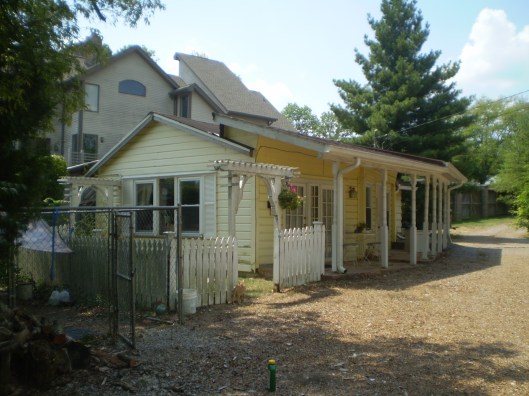
John Hartford Guest House

John Hartford guest house, Madison, TN. This is where I often stayed when visiting John.

In Search of Ed Haley 343

25 Friday Jul 2014

Posted by Brandon Ray Kirk in Calhoun County, Ed Haley, John Hartford, Music

≈ Leave a comment

Tags

Akron, Banjo Tramp, Black Sheep, Calhoun County, Canton, Chloe, Ed Haley, fiddle, fiddlers, fiddling, Gus Meade, harp, Jo LaRose, John Hartford, Kerry Blech, Laury Hicks, Lawrence Haley, music, Ohio, Parkersburg Landing, Ragpicker Bill, Rector Hicks, Rounder Records, Stackolee, Sugar in the Morning, Tommy Jarrell, Traditional Music and Dance in Northeast Ohio, West Virginia

Not long after visiting Ugee, I received some great information in the mail regarding Rector Hicks, a fiddler and nephew to Ed’s friend Laury Hicks. Rector grew up watching his uncle Laury play the fiddle.

“Rector was born out in the country around Chloe, Calhoun County, West Virginia, in 1914,” Joe LaRose wrote in Traditional Music and Dance in Northeast Ohio (March 1985). “His father was a good mouth harp player, but no one else in his family played music. Rector learned from fiddlers who lived in his area, beginning to play the instrument when he was around ten years old. Rector learned a lot from time spent with a distant cousin, Laury Hicks, a generation older than Rector and one of the foremost fiddlers in the area. ‘I don’t know of a fiddle player, really, that played like him. Ed Haley said Laury was the best fiddler he ever heard on the old time tunes, you know, and old fast ones. Hisself, he said that. And I always thought he was.'”

While at Laury’s, Rector Hicks also had the opportunity to see Ed.

“He was hard to figure out,” Rector told LaRose. “When I was around him most I didn’t know too much about fiddling, and a lot of that stuff I could pick up now if I was around him. How he got all that in there with his bow like he did you’d never believe it. He just set there this way (passes the length of the bow back and forth across the strings) but everything seemed like it just come in there. If you’d hear him play… Now that record, that’s not Ed Haley. That’s him, but that’s no good. You don’t get a lot of what he puts in. But he puts every note in that thing. His left hand, his fingers just flew. But his right hand… He just set there and his fiddle laid on his arm, set there and rocked. That’s the way he played. All them fastest tunes he played, didn’t seem like he put any of the bow in hardly. But it was all in there.”

Rector seemed to idolize Haley, at least according to Kerry Blech, a fiddling buff and friend of mine.

“Rector, when he was a teenager, had saved up some money and got him a pretty good fiddle and when Ed would come and stay at Laury’s house Rector would always come over,” Kerry wrote. “For a couple of years, Ed would tease him and say, ‘Well, I really like that fiddle you got, Rector. We should swap.’ And once he did and went off and played in some other town, then came back through about a week later and got his fiddle back. Rector said he was just really thrilled to’ve had Ed’s fiddle for even a week.”

As Rector got older and learned more about the fiddle, he really patterned after Haley’s style.

“Rector’s approach to playing has much in common with Haley’s,” LaRose wrote of Hicks. “Like Haley, Rector holds his fiddle against his upper arm and chest and supports it with his wrist (he does not rock the fiddle under the bow, though, like Haley did.) Rector uses a variety of bow strokes. Like Haley, he uses the length of the bow, sometimes playing a passage of several notes with one long stroke, deftly rocking the bow as he plays. He will accent the melody at chosen times with short, quick strokes. Rather than overlay the melody with a patterned or constant bow rhythm as some dance-oriented fiddlers do, Rector adapts his bowing to the melody of the particular tune he’s playing. Much of the lilt and movement of his tunes is built into the sequence of notes played with his left hand.”

Rector apparently kept in touch with Ed’s family, who he sometimes visited long after Haley’s death, and was very disappointed with the quality of fiddling on the Parkersburg Landing album.

“When I met Rector in the mid-70s, the Haley LP had just come out and Rector called me up to tell me it was awful,” Kerry wrote. “He said it was not representative of the man’s genius. He told me that he knew the man, and although many years had passed, the Haley genius was still in his mind’s eye. He also said that there were many other home recordings beyond what Gus Meade had copied. He said that Haley’s children had split up the recordings, that Lawrence had a number of them, and that a daughter, who lived in the Akron-Canton area, had over a hundred of them, and that Rector occasionally went over there and listened. He said that the family was irritated by how the Rounder record came to be and did not want to be involved with any of us city folk any more, afraid that someone would exploit their father’s music.”

At that time in his life, Rector mostly played Tommy Jarrell tunes but also several Ed Haley tunes, like “Birdie”, “Sugar in the Morning” (“Banjo Tramp”), “Ragpicker Bill”, “Black Sheep”, and “Staggerlee”.

John Hartford (1997)

24 Thursday Jul 2014

Posted by Brandon Ray Kirk in Ed Haley, John Hartford, Music

≈ Leave a comment

Tags

Alabama, bluegrass, Brandon Kirk, Ed Haley, fiddler, fiddling, history, John Hartford, music, photos, Rogersville, Ugee Postalwait

John Hartford plays for Ugee Postalwait in Rogersville, Alabama, 1997

John Hartford plays his fiddle for Ugee Postalwait in Rogersville, Alabama, 1997

In Search of Ed Haley 341

23 Wednesday Jul 2014

Posted by Brandon Ray Kirk in Calhoun County, Ed Haley, John Hartford, Music

≈ Leave a comment

Tags

Alabama, blind, Brandon Kirk, Calhoun County, Clyde Haley, Ed Haley, Ella Haley, genealogy, history, Jack Haley, John Hartford, Lawrence Haley, Mona Haley, Noah Haley, Ralph Haley, Rogersville, Ugee Postalwait, West Virginia, writing

Ugee said, “I never will forget the first time I seen Ella. I’d fixed cabbage for supper — big head of cabbage. Next morning, Ed said, ‘Where’s the cabbage?’ I said, ‘Well you don’t want cabbage for breakfast.’ ‘Oh,’ Ella said, ‘We love cabbage for breakfast.’ I went and got that cabbage and heated it up. I wish you’d a seen her eating that cabbage. I didn’t know anyone ate cabbage for breakfast. I was a fixing eggs and bacon.”

Brandon asked about Ella’s appearance.

“Ella wasn’t no bad looking woman at all,” Ugee said. “She was a nice looking woman, I thought. When I seen her, she had had three kids and she was a little heavier then. She kept herself nice-looking. She liked to wear nice dresses and she liked to wear hose. You’d be surprised to see her wash them kids and clean them. Now really you would. She’d pick them kids up and say, ‘Come here, you’ve got a dirty face.’ How she knowed they had a dirty face, I don’t know.”

I asked Ugee if Ed ever got into any fights, because his face looked lop-sided in one of his pictures.

“Aw, he’s fell a lot of times,” she said. “I’ve seen his boy Clyde and that Ralph — wasn’t his son, but he called him his son — I’ve seen them lead him across logs and let him fall down and laugh about it. Yeah, they didn’t care for doing anything like that. No wonder when he’d get up, if he could get to one of them, he’d whoop one of them. They was into everything. I never seen Lawrence or Jack either one into anything. But you turned Ralph or Clyde loose anyplace, they might ‘weigh’ chickens and kill your chickens. Maybe put a string around their neck and hold them up and maybe kill two or three hens — choke them to death. Why, Ed’d get mad. Ella would, too, over things like that. She’d say, ‘My, my, my.’ They’d run in and grab their purse and take their money. Ella’d buy anything they wanted.”

Even though Ed’s kids treated him rough, Ugee said he “liked to joke and talk and laugh. I never seen Ed Haley mad but once in my life. Me and him almost fit, too, that time. He whooped Clyde. He oughta whipped Clyde but not like he did. Clyde aimed to jerk him off the porch. If he had, he’d a killed him. And he jerked his belt off and he went to whooping Clyde. And he was whooping hard. He was trying to beat him to death. I walked out on the porch and said, ‘That’s enough, Ed.’ And he said, ‘Damn him. He tried to kill me.’ I grabbed a hold of the belt. He said, ‘Ugee, let loose of it.’ I said, ‘I ain’t letting loose of it. You’ve whooped him enough and I don’t want to see no more of that. While I’m living, don’t you ever hit one of them kids with a belt. I don’t allow that.’ He said, ‘I’ll whip them with a belt when I’m damn good and ready.’ I said, ‘You’ll not whip them here — not like that.’ I mean, he was beating him.”

Brandon asked if the other boys were mean to Ed or ever got whipped and Ugee said, “Clyde’s the only one I ever seen him whoop. They was about to send him to reform school — stealing, I think. He musta been about fourteen years old. That there Ralph, he was ornerier than… That Ralph even shot hisself with a gun to see how it’d feel to be shot. That was up where we lived. My mother doctored him. Mona, she was ornery. She’d steal off her mom. Take stuff out and destroy it. She was pretty as she could be. She’d just look at you as if to say, ‘I’ll do as I please.’ Ed swore she was just like her aunt on her mother’s side. And Noah was sneaking — dangerous sneaking. He was into everything and he’d lie. Noah was awful bad about gambling.”

Ugee really contrasted Ralph, Clyde, Noah, and Mona with Jack and Lawrence.

“Jack and Lawrence was gentlemen,” she said. “None of them come up with Lawrence, far as I’m concerned. He would lead his mom and dad anyplace. I can see how careful he was. That little hand of his leading his mother around this mud hole, ’round this log and stuff. Really, I’m not taking up for him because he’s dead or anything like that. I always called him ‘my little boy.’ He was always littler than the rest of them.”

In Search of Ed Haley 340

21 Monday Jul 2014

Posted by Brandon Ray Kirk in Calhoun County, Ed Haley, John Hartford, Music

≈ Leave a comment

Tags

Alabama, Arnoldsburg, Ashland, Bill Day, Brandon Kirk, Buttermilk Mountain, Calhoun County, Catlettsburg, Cincinnati, Doc White, Ed Haley, Ella Haley, England, fiddlers, fiddling, George Hayes, Grand Ole Opry, Great Depression, Harvey Hicks, history, Jean Thomas, Jilson Setters, John Hartford, Kentucky, Laury Hicks, Minnie Hicks, Mona Haley, music, Nashville, Nora Martin, Rogersville, Rosie Day, Sweet Florena, Ugee Postalwait, West Virginia, writing

I asked Ugee if Laury ever listened to the Grand Ole Opry and she said, “Yes. He got to hear it the year before he died. He got a radio. Let’s see, what is his name? George Hayes. We had Hayeses that lived down at Arnoldsburg. And he brought Dad up a little radio when Dad was down sick.”

Now, did Ed Haley ever hear the Grand Ole Opry?

“Oh, yes. He heard it down in Kentucky.”

Did he like it?

“No. He went to Cincinnati one time. They was a gonna make records — him and Ella — but they wanted to pick out the one for him to play. Nobody done him that a way. So he said, ‘I’ll pick my own.’ He went to Nashville once. I don’t know as he went to the Grand Ole Opry but he went to Nashville. Somebody drove him, took him down. But when he found out what they done, he didn’t have no use for that.”

Ugee made it clear that she had missed out on most of Ed’s wild times. She knew nothing about his running around with people like Doc White or chasing women. She did say he was bad about telling “dirty jokes.”

“Many a time he’s told me, ‘All right, Ugee. You better get in the kitchen. I’m gonna tell a dirty joke.’ And he’d tell some kind and you could hear the crowd out there just a dying over it. Ella’d say, ‘Mmm, I’ll go to the kitchen, too.'”

I asked Ugee about Ed’s drinking and she told the story again about her brother Harvey giving him drinks to play “Sweet Florena”. She sang some of it for me:

Oncest I bought your clothes, sweet Florena.

Oncest I bought your clothes, sweet Florene

Oncest I bought your clothes but now I ain’t got no dough

And I have to travel on, sweet Florene.

After finishing that verse, Ugee said, “That’s part of the song. And Ella didn’t like to hear that song. I think it reminded her of some of his old girlfriends or something. And she didn’t like for him to play ‘Buttermilk Mountain’, either. He’d throw back his head and laugh. She’d say, ‘Don’t play that thing. I don’t want to hear that thing.’ But she’d second it. She’d draw her eyes close together.”

Brandon asked Ugee about her aunt Rosie Hicks, who was Laury’s sister and a close friend to the Haley family. She said Aunt Rosie was working in Ed’s home in Catlettsburg when she met Blind Bill Day (her sixth husband) during the early years of the Depression. It was a rocky marriage, according to Rosie’s only child, Nora (Davis) Martin.

“I was gonna tell you about him hitting Aunt Rosie,” Ugee said. “He came through the house and Aunt Rosie was upstairs quilting and all at once — Nora said she was in the kitchen cooking — and she heard the awfulest noise a coming down the stairs and said, ‘Mommy had old Bill Day by the leg and was bringing him bumpety-bump down the stairs, dragging him. Got him in the kitchen. He just walked up and hit her with that left hand right in the mouth. She just jerked his britches off of him and started to sit his bare hind-end on the cook stove — and it red hot.’ And Nora said, ‘Oh, Mommy, don’t do that. You’ll kill him.’ She said, ‘That’s what I’m a trying to do.’ And she grabbed her mother and him both and jerked them away from there.”

Ugee was more complimentary of Day’s colleague, Jean Thomas.

“I’ve got cards from her and letters and pictures,” she said. “I’ve been to her house — stayed all night with her. She was nice. She was too good to Bill Day. She spent money on him and give him the name of Jilson Setters. Sent him to England and he played for the queen over there.”

Brandon wondered if Bill Day was a very good fiddler.

“Well, I’m gonna tell ya, I stayed all night with Aunt Rosie and Bill Day one time,” Ugee said. “They lived on 45th Street in Ashland, Kentucky. My brother took me and my mom down there and he hadn’t seen Aunt Rosie for a long time. She’d married again and she lived down there in Ashland, Kentucky. And we aimed to see Ed and Ella, but they was in Cincinnati playing music. That’s who we went to see. So Harvey, he filled hisself up with beer. That’s the first time I ever seen a quart bottle of beer. Anyway, we went up there to hear Uncle Bill play. Harvey laid down on the bed like he was sick. He wasn’t sick: he wanted me just to listen to that fellow play that fiddle. He knowed I’d get sick of it. And he played that song about the Shanghai rooster. I never got so tired in my life of hearing anything as I did that. He only played three pieces. Harvey laid there, he’d say, ‘Play that again. I love it.’ And I had to sit there and listen to it, ’cause I didn’t want to embarrass him by getting up and walking out. I walked over to Harvey and I said, ‘You’re not sick and you’re not tired, so you get up.’ Said, ‘Ugee, I’ve got an awful headache. I drove all the way down here.’ I said, ‘That bottle that you drank give you the headache, so you get up and you listen to your Uncle Bill.’ He went to the toilet. I said, ‘I’m telling you right now — you’re gonna listen to Uncle Bill if I have to listen to him.’ Harvey said, ‘I’m not listening to him no longer. I’ve heard all I want to hear of Uncle Bill.’ I got Harvey up and then I run and jumped in the bed and I covered my head up with a pillow. But we stayed all night and Aunt Rosie went home with us. She told him she’s a going up to Nora’s, but she went to Calhoun with us in the car, and I reckon while she’s gone old Bill tore up the house. I don’t think they lived together very long after that ’cause it wasn’t very long till she come back home. It was home there at my dad’s.”

Brandon asked if Day ever played with Ed in Calhoun County and Ugee said, “Oh, no. If he had, Dad woulda kicked him out.”

Okay, I thought: so Laury had no tolerance for lesser fiddlers. What about Ed?

“Ed Haley, if somebody was playing a piece of music and they wasn’t hitting it right, he’d stick his hands in his pockets and say, ‘Goddamn, goddamn,'” Ugee said. “Dad’d say, ‘Boy, ain’t he good?’ Ed would cuss a blue streak. Then after the man was gone, whoever it was, Dad and Ed would go to mocking him. Dad and Ed Haley was like brothers. They loved each other. Ella and Mom, too. Jack was the baby the first time I seen Ed after he was married. They was expecting Lawrence, so they named him after my dad. Then when she had Mona, why instead of calling her Minnie, she named her after Mom.”

In Search of Ed Haley 339

20 Sunday Jul 2014

Posted by Brandon Ray Kirk in Calhoun County, Ed Haley, John Hartford, Music

≈ Leave a comment

Tags

Alabama, banjo, Booger Hole, Brandon Kirk, Calhoun County, Dixie, Ed Haley, Elizabeth Hicks, fiddle, fiddlers, fiddling, Gid Tanner, Hinkey Dinkey Dee, Jasper McCune, Jim McCune, John Hartford, John McCune, Laury Hicks, Minnie Hicks, Mount Airy, music, North Carolina, Perry Meadows, Ralph Haley, Rogersville, Skillet Lickers, Tom McCune, Ugee Postalwait, Washington Hicks, West Fork Gals, West Virginia, writing

As Ugee spoke about her life, I pulled out the Laury Hicks fiddle and began to play. For Ugee, hearing it painted pictures and conjured up images from long ago. Her eyes teared up, full of emotion and melancholy.

“I never thought I’d hear Dad’s fiddle played again,” she said, after I played one tune.

For the next half-hour, I played for her, intermittently asking things like, “Did you ever hear Ed play ‘The Star Spangled Banner’?”

“I certainly have.”

What about “Dixie”?

“Oh my god, yes. Him and Dad both played ‘Dixie’.”

Did they play “West Fork Gals”?

“Oh, yeah. I don’t think they was any fiddling pieces back then they didn’t know.”

Before putting the fiddle back in the case, I asked what Ed did when he needed repairs on his fiddles.

“They didn’t work on their fiddles very much,” Ugee said. “They kept their fiddles in good shape. I’ve seen Dad string the bow hair off a horse’s tail. Seen him do that a many a time. He’d string up the bows for Ed, too. Dad could do all of that.”

Did Ed trade fiddles a lot?

“Oh, yeah. Anybody that came along. He’s been there with three or four. He used to come and try to trade some of them off to Dad. Sometimes Dad’d trade with him, sometimes he didn’t. I’ve seen my dad have as high as seven fiddles.”

I showed Ed’s fiddle to Ugee and she said, “Ed Haley got that fiddle from Dad. Ed traded him a real dark-looking fiddle. Ed got my guitar, too. He wanted it for Ralph.”

Brandon asked Ugee about her father’s background, a very important thing considering his strong presence in Ed’s life. She said he was born in 1880 to Washington and Elizabeth (McCune) Hicks in Calhoun County.

“Well, he come very near to getting killed when he was young,” she said. “Perry Meadows stabbed him seven times with a knife right around the heart in a fight. They didn’t think he’d live at all. He told Perry if he lived, ‘I’ll get you.’ He liked to beat Perry to death after he got older. Old Mrs. Meadows was gonna indict Dad over it it but Dad rode a pony horse and went with Ab Moss’ mother to Mount Airy, North Carolina. Back then, they wasn’t no roads — just trails. Took his big dog with him named Ring. He come very near to beating Perry to death, though, I guess. They was friends afterwards. Perry lived down the road just about half a mile below us. Dad never cared that much about Perry but he treated him right.”

Ugee spoke little about Laury’s bachelor days but implied that his musical skill and talent at square dancing made him popular with the ladies.

“They wouldn’t have a square dance in the country without having Laury Hicks,” she bragged.

She felt Laury inherited his musical talent from his mother’s side of the family, the McCunes. Laury’s uncle Jim McCune, who lived at the infamous “Booger Hole,” had musical children: John was a good fiddler on two or three tunes, while Jasper was the best banjoist in the area. Another son Tom “could play the banjo, but he was the best whistler I ever heard in my life. Dad give him a dollar a day to come up and whistle for him when he was bad sick.”

“All them McCunes could play music and they could dance, too,” Ugee said, before adding that they were mostly known as singers.

In 1904, Laury married Minnie Shaver. Because he was so close to his mother (he was her “favorite”), he remained living at home with his new bride. Years later, he played his fiddle and sang for his mother at her deathbed. Ugee sang all she could remember of the song:

There was an old man, he had a wooden leg.

He had no tobaccer but tobaccer he’d beg.”

“That was Grandpap Hicks’ favorite and the night that Granny died in 1923 I was putting her to bed and he was just see-sawing on the fiddle. She said ‘Laury, play your dad’s tune,’ and he said, ‘Oh Mam, I have to change the key.’ She said, ‘Don’t make no difference. Play Wash’s piece.’ I never will forget: I went to the kitchen and he was playing that and he hollered, ‘Hey, Ugee! Come here quick!’ And I come back in and seen they was something wrong with Granny. And I run and aimed to work with her…she was gone.”

Ugee couldn’t remember the title of her grandfather’s favorite tune, nor any more words to it, but Brandon later found those lyrics in a song recorded by Gid Tanner and His Skillet Lickers called “Hinkey Dinkey Dee”.

In Search of Ed Haley 338

19 Saturday Jul 2014

Posted by Brandon Ray Kirk in Calhoun County, Ed Haley, John Hartford, Music, Roane County

≈ 1 Comment

Tags

Akron, Alabama, blind, Brandon Kirk, Calhoun County, Christmas, crime, Ed Haley, Ella Haley, fiddle, fiddling, Harvey Hicks, history, John Hartford, Johnny Hager, Laury Hicks, Marietta, measles, Milt Haley, music, Ohio, Parkersburg, Rogersville, Soldiers Joy, Spencer, Stinson, Ugee Postalwait, Webster Springs, West Virginia, writing

On April 12, 1997, Brandon and I went to see Ugee Postalwait in Rogersville, Alabama. For the most part, she repeated a lot of the same stories I’d heard before, maybe with a new detail or two here and there. We began with her memories of Ed and Johnny Hager, who came to her father’s house around 1913. Brandon asked her specific questions about Johnny, which caused her to say: “He was a little short fella, slender. He was a nice person. Well-mannered. He was a good banjo-player. John Hager was a good friend of Dad and Mom’s both — all of us. Us kids, too. He used to write Mom and Dad. He wrote them from Webster Springs and he wrote them from Greenbrier. Different places where he was at. John wrote a letter back home and said he quit traveling with Ed ’cause Ed drank. He couldn’t take it. I’ve often wondered and studied about what become of him.”

Later, Ed sometimes came with a guitar player, but Ugee couldn’t recall his name.

Brandon was curious to know how far Ed traveled with his music, so he asked if Ed and Ella ever played around Parkersburg.

“I’m pretty sure they have,” Ugee said, “and Marietta, too. Harvey took them up to Akron to play music and they crowded that street so bad up there that they passed a law up there, you couldn’t stand on the corner and play music any more. They wouldn’t allow them to stand on the street. They had to move. See, they was such a crowd got around them.”

I asked, “How much do you reckon Ed would take in of a night?”

Ugee said, “I have seen Ed and Ella take in as much as a hundred dollars right there in Spencer.”

Wow, were they using a cup or a hat to collect money?

“They never used no cup. Just sit a box down or hat down and people come through and throwed money in it. Anyone that come along and dropped money in there, they’d play just the same.”

Would he play me anything I’d ask for?

“Why sure. He’d play it for you and then maybe if you asked for it again he might play you something else and call it that. He didn’t care to rename songs, like ‘Soldiers Joy’. He might call that ‘Runnin’ the Soldier’ or ‘Runnin’ the Track’ or something like that.”

I reminded Ugee that she heard Ed say he just picked up a fiddle and started playing it when he was small and she said, “Oh, yeah. He’d sit in the floor and play on that fiddle. Somebody brought something in that had two strings on it. He wasn’t very old. Just barely a walking, he said. Just like him a talking to me one time, telling me about his dad. Telling about them a lynching him. He said, ‘Goddamn him, they oughta lynched him.’ And I never asked him why. Why would a man say that about his dad? Maybe he was thinking about that man putting him in that barrel of water and causing him to be blind. But Ella’s eyes, they was ate out with blue vitriol.”

Ugee fully believed that measles had caused Ed’s blindness because they almost “put her blind,” too, when she was a girl.

“I must have been about five years old,” she said. “Well, Ed musta been there, too. Musta been the same year he was there that I had the measles and I went blind in my eyes. Couldn’t see nothing for three or four days. Had Granny’s bed set up by the side of the fireplace. I remember that instead of springs, it had rope. And Christmas time come up. And Dad, he played Santa Claus, I reckon. He got me jellybeans. I couldn’t see nothing for two or three weeks. I didn’t think I’d ever see again. Back then, they called them the ‘big’ measles and the ‘little’ measles. The big ones, they called the German measles. And I had them bad. Harvey come around — he was older than I was — he’d say, ‘You stink’, ’cause he could smell that fever on me.”

Brandon asked Ugee what year she was born in, to kind of help us better understand the time frame of her memories.

“I was born in 1907,” she said. “I got married in 1924. I left and went to Akron, but we come back ever month for a long time. If we knowed Ed was a coming in, we was there. I moved back in 1930. We lived on the farm until 1941. Then we went to a farm at the mouth of Stinson.”

At some point, Ugee moved back to Akron, where she lived when I first met her in 1991.

7th Annual Benny Martin Days (1999)

09 Wednesday Jul 2014

Posted by Brandon Ray Kirk in John Hartford, Music

≈ Leave a comment

Tags

banjo, Benny Martin, bluegrass, Brandon Kirk, buck dancing, fiddle, history, John Hartford, John Henry's Music Barn, music, Sparta, Tennessee

Benny Martin Days, 1999

7th Annual Benny Martin Days, 1999

1st Annual Ed Haley Fiddle Contest

07 Monday Jul 2014

Posted by Brandon Ray Kirk in Ashland, Big Sandy Valley, Ed Haley, John Hartford, Music

≈ 1 Comment

Tags

Annadeene Fraley, Ashland, banjo, Brandon Kirk, Ed Haley, Ed Haley Fiddle Contest, fiddlers, fiddling, history, J P Fraley, John Hartford, Kentucky, mandolin, Mike Compton, music, Nancy McClellan, Paul David Smith, Peter Even, photos

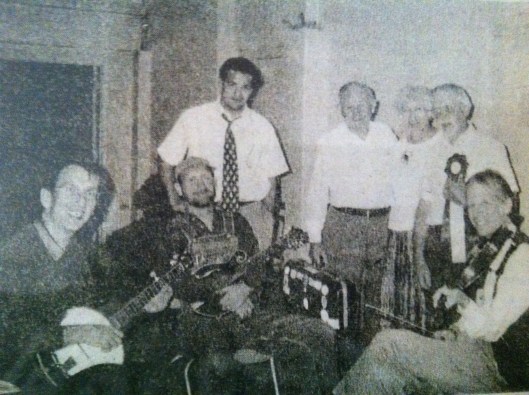
Ed Haley Contest 1

(L-R) Peter Even, Mike Compton, Brandon Kirk, J.P. Fraley, Nancy McClellan, Paul David Smith, and John Hartford.

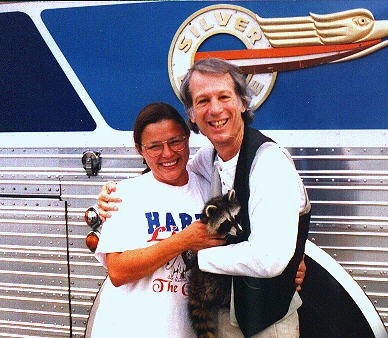
Phyllis Kirk and John Hartford (with ‘coon)

05 Saturday Jul 2014

Posted by Brandon Ray Kirk in Harts, John Hartford, Music, Women's History

≈ Leave a comment

Tags

Harts, John Hartford, life, Lincoln County, music, photos, Phyllis Kirk, raccoon, West Virginia

Phyllis Kirk with John Hartford (and her pet raccoon), Harts, Lincoln County, WV, c.1995

Phyllis Kirk (and her pet raccoon) with John Hartford, Harts, Lincoln County, WV, c.1995

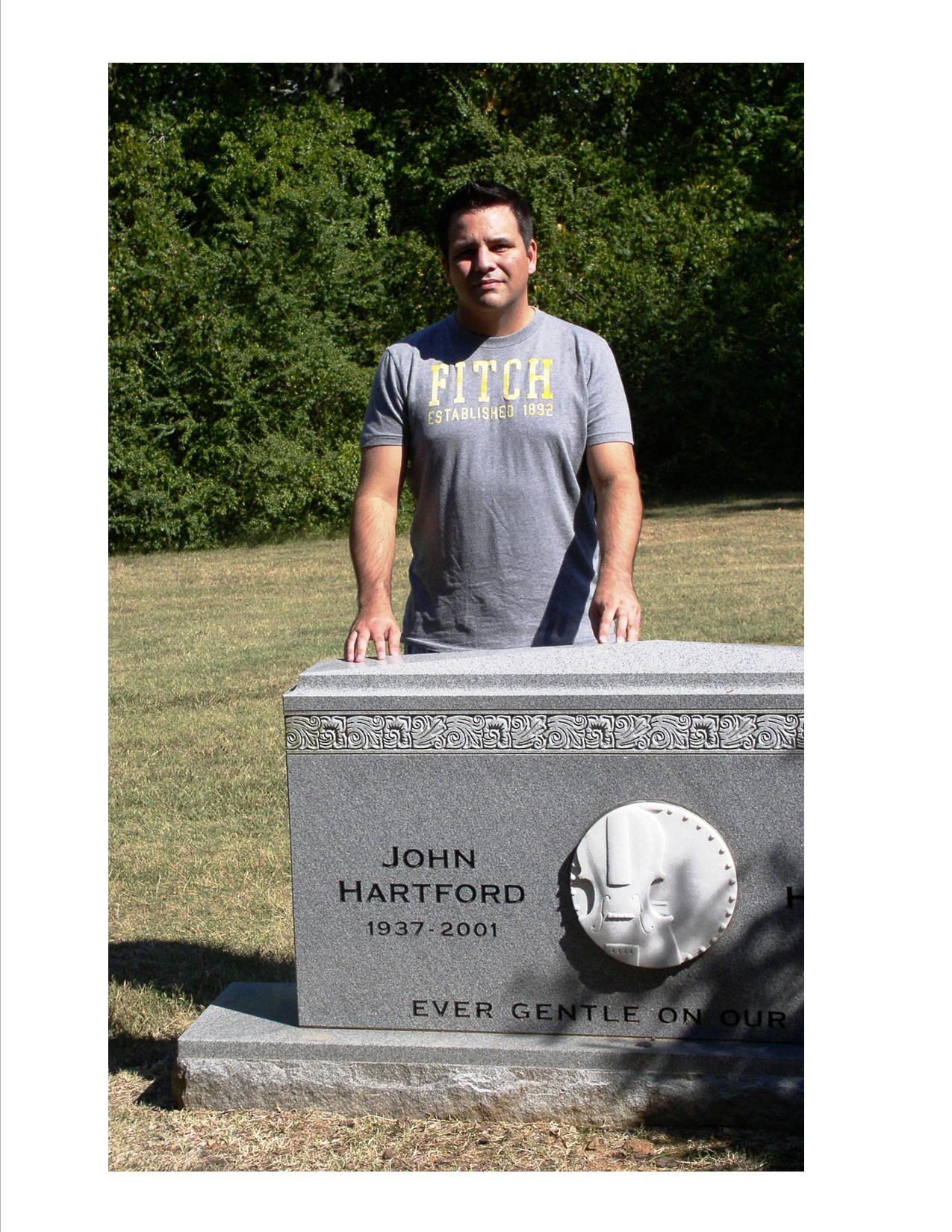
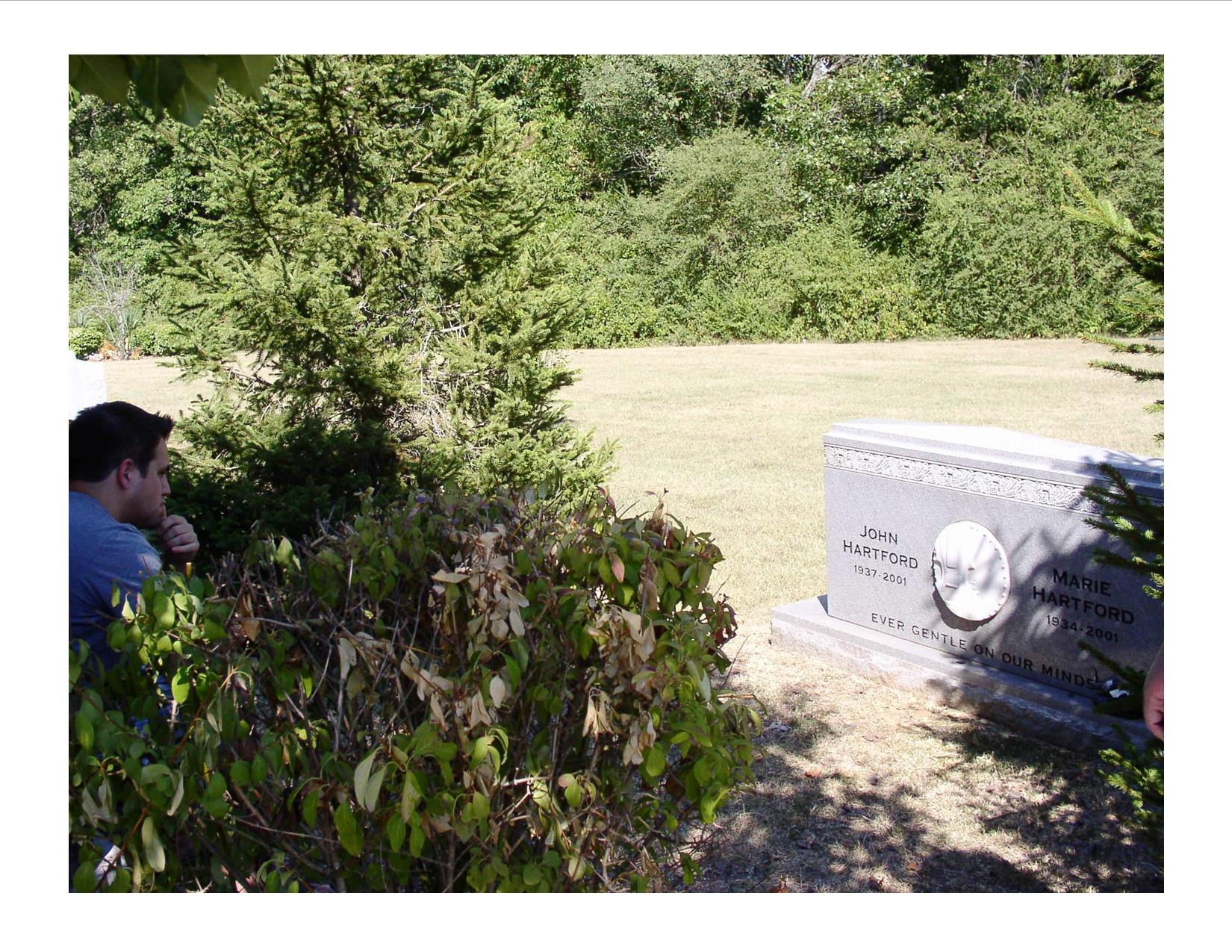
John Hartford’s grave

24 Tuesday Jun 2014

Posted by Brandon Ray Kirk in John Hartford, Music

≈ 1 Comment

Tags

bluegrass, Brandon Kirk, John Hartford, Marie Hartford, music, Nashville, photos, Tennessee

John Hartford's grave, Madison, TN, August 2008

John Hartford’s grave, Madison, TN, August 2008

John 2

John Hartford’s grave, Madison, TN, August 2008

John Hartford’s vest and hat

13 Friday Jun 2014

Posted by Brandon Ray Kirk in John Hartford, Music

≈ Leave a comment

Tags

bluegrass, culture, history, John Hartford, life, Museum of Appalachia, music, Norris, photos, Tennessee, U.S. South

John Hartford's vest and hat, Museum of Appalachia, Norris, TN 5.15.2012

John Hartford’s vest and hat, Museum of Appalachia, Norris, TN 5.15.2012

John Hartford at the Hicks grave (1996)

14 Wednesday May 2014

Posted by Brandon Ray Kirk in Calhoun County, Ed Haley, John Hartford, Music

≈ Leave a comment

Tags

Appalachia, Brandon Kirk, Calhoun County, cemeteries, Hicks Family Cemetery, history, John Hartford, Kim Johnson, Laury Hicks, music, photos, U.S. South, West Virginia, Wilson Douglas

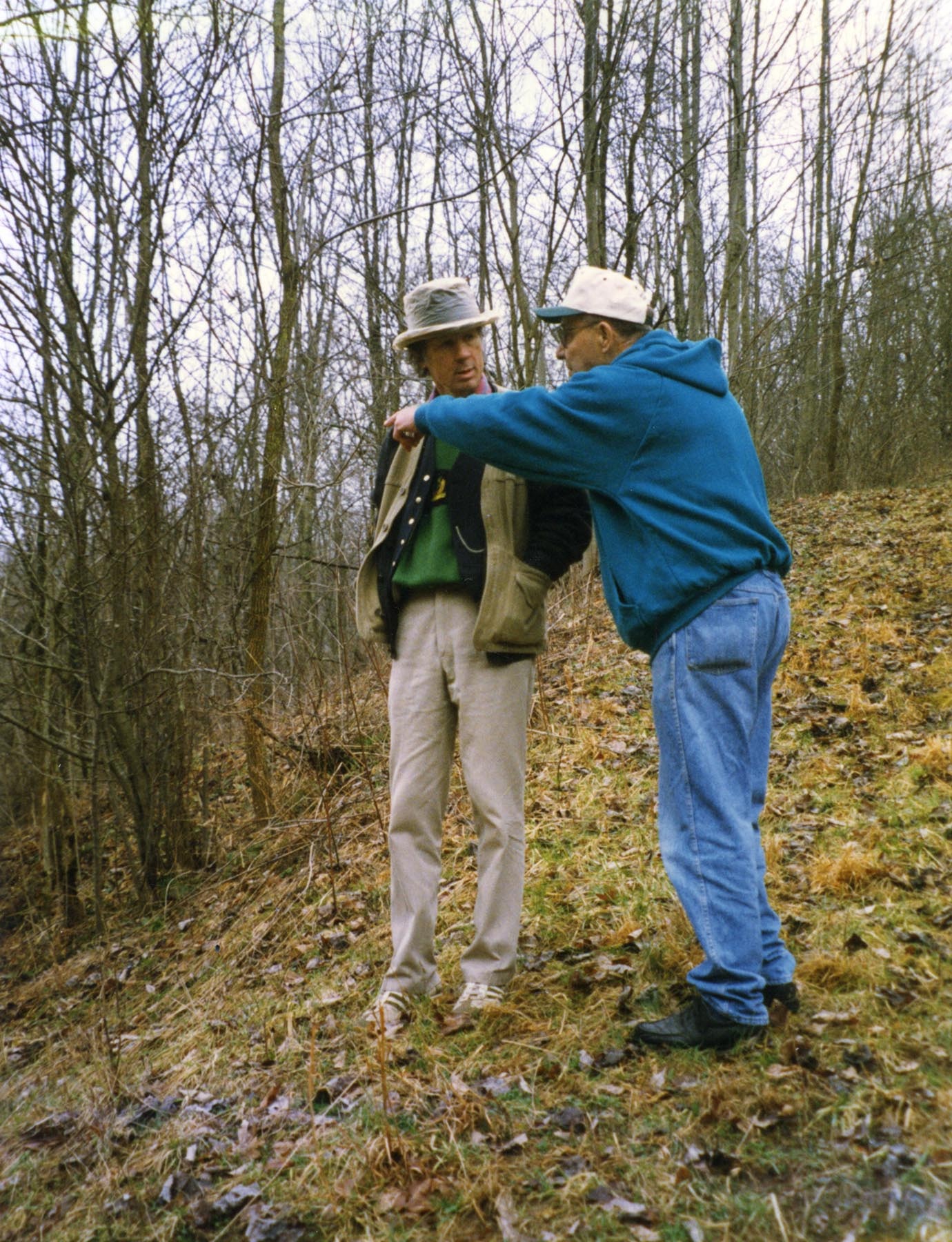
Wilson Douglas and John Hartford, Calhoun County, WV, 1996

Wilson Douglas and John Hartford, Calhoun County, WV, 1996

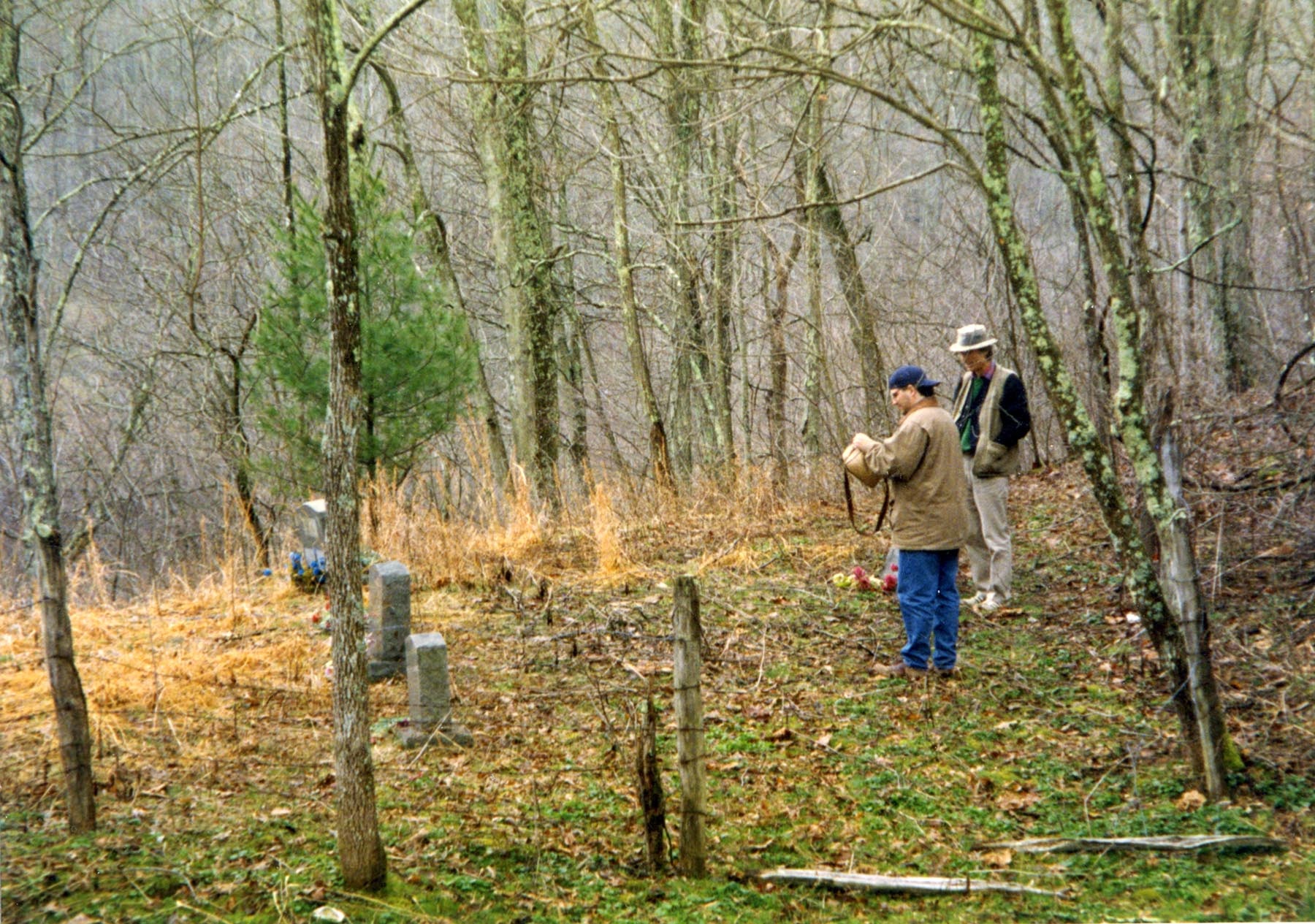
Brandon Kirk and John Hartford at the Laury Hicks grave, Calhoun County, WV, 1996

John Hartford and I at the Laury Hicks grave, Calhoun County, WV, 1996

John and I at the Laury Hicks grave, Calhoun County, WV, 1996

John and I at the Laury Hicks grave, Calhoun County, WV, 1996

Gideon Marcum Home

26 Saturday Apr 2014

Posted by Brandon Ray Kirk in Dingess, John Hartford

≈ 1 Comment

Tags

Appalachia, Dingess, Gideon Marcum, history, John Hartford, Mingo County, Moses Marcum, photos, U.S. South, West Virginia

John Hartford took this photograph of an old cabin at Dingess in Mingo County, WV, March 1995

John Hartford took this photograph of the Gideon Marcum home at Dingess in Mingo County, WV, March 4, 1995

In Search of Ed Haley 283

07 Monday Apr 2014

Posted by Brandon Ray Kirk in Ed Haley, John Hartford, Music

≈ Leave a comment

Tags

Air Force, Ashland, Ashland High School, Beverly Haley, Biloxi, C&O Railroad, David Haley, Ed Haley, history, Kentucky, Lawrence Haley, life, Minnie Hicks, Mississippi, music, Pat Haley, Ugee Postalwait, writing

A few days after my visit with Ugee, Lawrence Haley’s daughter Beverly Williams died of cancer. Beverly had asked me to sing at her funeral, so I loaded up my bus and rode to Ashland. After the funeral, I played a bunch of Ed’s tunes in Pat’s kitchen. Once again, I could almost feel Lawrence’s presence. There was something about the location and having all the Haleys around that brought out Ed’s music in a marvelous way.

In quiet times, Pat spoke more with me about family affairs.

“Larry went to the Ashland high school until his senior year and he left when he was seventeen to join the Air Force,” she said. “He said he never ever wanted his children to ask him about the war and him not be able to say he went to fight. He got his GED when he was in Biloxi, Mississippi. He wanted his diploma from the Ashland high school but he never got it.”

After marrying, Pat said she and Lawrence settled in Ashland where he went to work for the C&O Railroad to help support the family (including his parents).

I told Pat about my recent visit to see Ugee Postalwait, who seemed to be rekindling a strong bond with the Haleys by telephone.

David, Pat’s son, remembered Ugee’s mother, Minnie Hicks.

“She called Mom and Dad and wanted them to come up and see her,” he said. “She said he didn’t think she was gonna be around much longer and wanted to see them. So Dad got off work and by the time he and Mom got ready and got up there it was two o’clock in the morning. She told them they could sleep as long as they wanted. At six o’clock in the morning, she was saying, ‘You fellas gonna sleep all day?’ She was ready to go. She was just an old farmer. Went to bed early and got up early.”

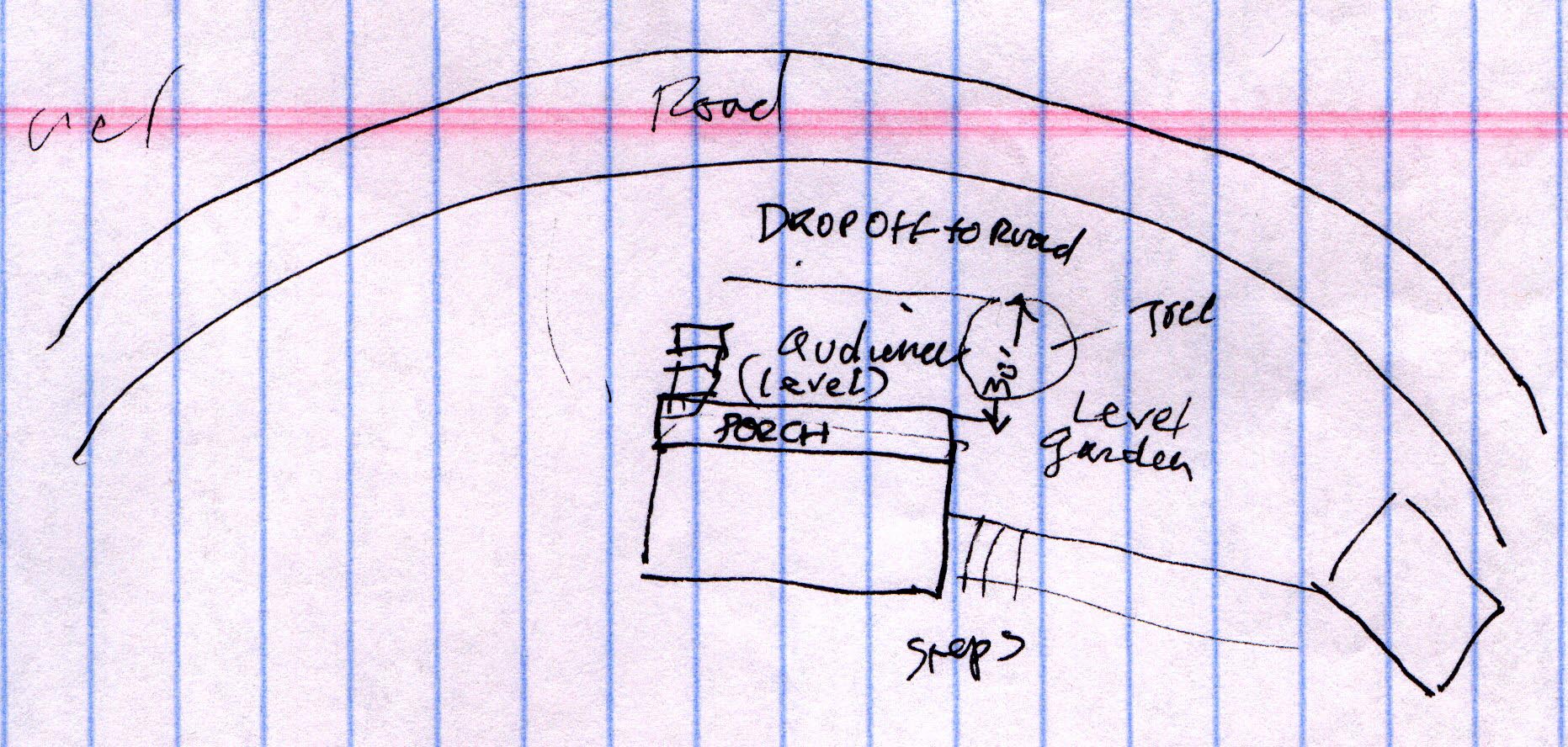
Hartford Sketch of the Hicks Home

30 Sunday Mar 2014

Posted by Brandon Ray Kirk in Ed Haley, John Hartford

≈ Leave a comment

Tags

Appalachia, art, Calhoun County, fiddlers, fiddling, history, John Hartford, Laury Hicks, Minnie Hicks, music, Ugee Postalwait, West Virginia

John Hartford's sketch of the Laury Hicks home in Calhoun County, WV, 1996

John Hartford’s sketch of the Laury Hicks home in Calhoun County, WV, 1996

← Older posts
Newer posts →

Feud Poll 1

If you had lived in the Harts Creek community during the 1880s, to which faction of feudists might you have given your loyalty?

Categories

  • Adkins Mill
  • African American History
  • American Revolutionary War
  • Ashland
  • Atenville
  • Banco
  • Barboursville
  • Battle of Blair Mountain
  • Beech Creek
  • Big Creek
  • Big Harts Creek
  • Big Sandy Valley
  • Big Ugly Creek
  • Boone County
  • Breeden
  • Calhoun County
  • Cemeteries
  • Chapmanville
  • Civil War
  • Clay County
  • Clothier
  • Coal
  • Cove Gap
  • Crawley Creek
  • Culture of Honor
  • Dingess
  • Dollie
  • Dunlow
  • East Lynn
  • Ed Haley
  • Eden Park
  • Enslow
  • Estep
  • Ethel
  • Ferrellsburg
  • Fourteen
  • French-Eversole Feud
  • Gilbert
  • Giles County
  • Gill
  • Green Shoal
  • Guyandotte River
  • Halcyon
  • Hamlin
  • Harts
  • Hatfield-McCoy Feud
  • Holden
  • Hungarian-American History
  • Huntington
  • Inez
  • Irish-Americans
  • Italian American History
  • Jamboree
  • Jewish History
  • John Hartford
  • Kermit
  • Kiahsville
  • Kitchen
  • Leet
  • Lincoln County Feud
  • Little Harts Creek
  • Logan
  • Man
  • Matewan
  • Meador
  • Midkiff
  • Monroe County
  • Montgomery County
  • Music
  • Native American History
  • Peach Creek
  • Pearl Adkins Diary
  • Pecks Mill
  • Peter Creek
  • Pikeville
  • Pilgrim
  • Poetry
  • Queens Ridge
  • Ranger
  • Rector
  • Roane County
  • Rowan County Feud
  • Salt Rock
  • Sand Creek
  • Shively
  • Spears
  • Sports
  • Spottswood
  • Spurlockville
  • Stiltner
  • Stone Branch
  • Tazewell County
  • Timber
  • Tom Dula
  • Toney
  • Turner-Howard Feud
  • Twelve Pole Creek
  • Uncategorized
  • Warren
  • Wayne
  • West Hamlin
  • Wewanta
  • Wharncliffe
  • Whirlwind
  • Williamson
  • Women's History
  • World War I
  • Wyoming County
  • Yantus

Feud Poll 2

Do you think Milt Haley and Green McCoy committed the ambush on Al and Hollene Brumfield in 1889?

Blogroll

  • Ancestry.com
  • Ashland (KY) Daily Independent News Article
  • Author FB page
  • Beckley (WV) Register-Herald News Article
  • Big Sandy News (KY) News Article
  • Blood in West Virginia FB
  • Blood in West Virginia order
  • Chapters TV Program
  • Facebook
  • Ghosts of Guyan
  • Herald-Dispatch News Article 1
  • Herald-Dispatch News Article 2
  • In Search of Ed Haley
  • Instagram
  • Lincoln (WV) Journal News Article
  • Lincoln (WV) Journal Thumbs Up
  • Lincoln County
  • Lincoln County Feud
  • Lincoln County Feud Lecture
  • LinkedIn
  • Logan (WV) Banner News Article
  • Lunch With Books
  • Our Overmountain Men: The Revolutionary War in Western Virginia (1775-1783)
  • Pinterest
  • Scarborough Society's Art and Lecture Series
  • Smithsonian Article
  • Spirit of Jefferson News Article
  • The Friendly Neighbor Radio Show 1
  • The Friendly Neighbor Radio Show 2
  • The Friendly Neighbor Radio Show 3
  • The Friendly Neighbor Radio Show 4
  • The New Yorker
  • The State Journal's 55 Good Things About WV
  • tumblr.
  • Twitter
  • Website
  • Weirton (WV) Daily Times Article
  • Wheeling (WV) Intelligencer News Article 1
  • Wheeling (WV) Intelligencer News Article 2
  • WOWK TV
  • Writers Can Read Open Mic Night

Feud Poll 3

Who do you think organized the ambush of Al and Hollene Brumfield in 1889?

Recent Posts

  • Logan County Jail in Logan, WV
  • Absentee Landowners of Magnolia District (1890, 1892, 1894)
  • Charles Spurlock Survey at Fourteen Mile Creek, Lincoln County, WV (1815)

Ed Haley Poll 1

What do you think caused Ed Haley to lose his sight when he was three years old?

Top Posts & Pages

  • About
  • Perry A. Cline Deed to Anderson Hatfield (1877)
  • Tom Dula: Dula Cemetery (2020)
  • Tom Dula: Ann Melton Grave (2020)
  • Hugh Dingess Family Cemetery (2014)

Copyright

© Brandon Ray Kirk and brandonraykirk.wordpress.com, 1987-2023. Unauthorized use and/or duplication of this material without express and written permission from this blog’s author and/or owner is strictly prohibited. Excerpts and links may be used, provided that full and clear credit is given to Brandon Ray Kirk and brandonraykirk.wordpress.com with appropriate and specific direction to the original content.

Archives

  • February 2025
  • January 2025
  • October 2023
  • September 2023
  • December 2022
  • November 2022
  • May 2022
  • April 2022
  • February 2022
  • November 2021
  • October 2021
  • September 2021
  • June 2021
  • May 2021
  • April 2021
  • March 2021
  • February 2021
  • January 2021
  • December 2020
  • November 2020
  • October 2020
  • July 2020
  • June 2020
  • May 2020
  • April 2020
  • March 2020
  • February 2020
  • January 2020
  • December 2019
  • November 2019
  • October 2019
  • September 2019
  • August 2019
  • July 2019
  • June 2019
  • May 2019
  • April 2019
  • March 2019
  • February 2019
  • January 2019
  • December 2018
  • November 2018
  • October 2018
  • September 2018
  • August 2018
  • July 2018
  • June 2018
  • May 2018
  • April 2018
  • March 2018
  • February 2018
  • January 2018
  • December 2017
  • November 2017
  • October 2017
  • September 2017
  • August 2017
  • July 2017
  • June 2017
  • May 2017
  • April 2017
  • March 2017
  • February 2017
  • January 2017
  • December 2016
  • November 2016
  • October 2016
  • September 2016
  • August 2016
  • July 2016
  • June 2016
  • May 2016
  • April 2016
  • March 2016
  • February 2016
  • January 2016
  • December 2015
  • November 2015
  • October 2015
  • September 2015
  • August 2015
  • July 2015
  • June 2015
  • May 2015
  • April 2015
  • March 2015
  • February 2015
  • January 2015
  • December 2014
  • October 2014
  • September 2014
  • August 2014
  • July 2014
  • June 2014
  • May 2014
  • April 2014
  • March 2014
  • February 2014
  • January 2014
  • December 2013
  • November 2013
  • October 2013
  • September 2013
  • August 2013
  • July 2013
  • June 2013
  • May 2013
  • April 2013
  • March 2013
  • February 2013
  • January 2013
  • December 2012
  • November 2012

Enter your email address to follow this blog and receive notifications of new posts by email.

Join 2,925 other subscribers

Tags

Appalachia Ashland Big Creek Big Ugly Creek Blood in West Virginia Brandon Kirk Cabell County cemeteries Chapmanville Charleston civil war coal Confederate Army crime culture Ed Haley Ella Haley Ferrellsburg feud fiddler fiddling genealogy Green McCoy Guyandotte River Harts Harts Creek Hatfield-McCoy Feud history Huntington John Hartford Kentucky Lawrence Haley life Lincoln County Lincoln County Feud Logan Logan Banner Logan County Milt Haley Mingo County music Ohio photos timbering U.S. South Virginia Wayne County West Virginia Whirlwind writing

Blogs I Follow

  • OtterTales
  • Our Appalachia: A Blog Created by Students of Brandon Kirk
  • Piedmont Trails
  • Truman Capote
  • Appalachian Diaspora

BLOOD IN WEST VIRGINIA is now available for order at Amazon!

Blog at WordPress.com.

OtterTales

Writings from my travels and experiences. High and fine literature is wine, and mine is only water; but everybody likes water. Mark Twain

Our Appalachia: A Blog Created by Students of Brandon Kirk

This site is dedicated to the collection, preservation, and promotion of history and culture in Appalachia.

Piedmont Trails

Genealogy and History in North Carolina and Beyond

Truman Capote

A site about one of the most beautiful, interesting, tallented, outrageous and colorful personalities of the 20th Century

Appalachian Diaspora

  • Subscribe Subscribed
    • Brandon Ray Kirk
    • Join 787 other subscribers
    • Already have a WordPress.com account? Log in now.
    • Brandon Ray Kirk
    • Subscribe Subscribed
    • Sign up
    • Log in
    • Report this content
    • View site in Reader
    • Manage subscriptions
    • Collapse this bar
 

Loading Comments...