• About

Brandon Ray Kirk

~ This site is dedicated to the collection, preservation, and promotion of history and culture in my section of Appalachia.

Brandon Ray Kirk

Category Archives: Ed Haley

In Search of Ed Haley 313

02 Monday Jun 2014

Posted by Brandon Ray Kirk in Ed Haley

≈ Leave a comment

Tags

Catlettsburg, Dinky Coffman, Ella Haley, history, John Hartford, John Simon, Kentucky, music, Ohio, Portsmouth, Portsmouth YMCA, writing

Early in June 1996, I received a letter from John Simon, which conveyed more information about John Lozier’s memories of Ed Haley. Basically, Lozier said he played music with Ed and Ella around 1932 at the YMCA in Portsmouth, Ohio. Dinky Coffman, who was in charge of the entertainment, hired the three musicians often. “Sometimes Dinky would also take them into the railroad yards to play for groups of men,” Simon wrote. “They got a couple dollars for each day’s entertainment.” At that time, Ed lived at Catlettsburg, Kentucky. “The Haleys later divorced but continued to live in the same house on separate ends and continued to perform together,” Simon wrote.

In Search of Ed Haley 311

28 Wednesday May 2014

Posted by Brandon Ray Kirk in Ed Haley, Harts, Lincoln County Feud

≈ 1 Comment

Tags

Al Brumfield, Ann Brumfield, Appalachia, Ben Adams, Bob Adkins, Brandon Kirk, Burl Adams, Cain Adkins, crime, Daisy Ross, Ed Haley, Green McCoy, Guyandotte River, Harts, Harts Creek, Henderson Dingess, history, Howard Dalton, Imogene Haley, Joe Adams, John Frock Adams, John Hartford, John W Runyon, Lawrence Haley, Lawrence Kirk, Lincoln County, Logan County, Major Adkins, Milt Haley, Paris Brumfield, Peter McCoy, Sallie Dingess, Trace Fork, West Virginia, writing

Two months later, Brandon was still digging, but in a different way. He was knee-deep in land records at the Lincoln and Logan County court houses. He was curious — based on the economic aspect of the 1889 feud — to know about property ownership for feudists, particularly those with land around the mouth of Harts Creek.

He started with the Brumfields.

In 1889, Paris Brumfield owned 771 acres of land worth $1020, while his wife owned 367 acres worth $483. Al Brumfield had 295 acres (195 acres on Brown’s Branch and 100 acres on the Guyan River) worth $642. By combining Al’s totals to that of his parents, the Brumfields owned a total of 1433 acres of land worth $2143. A little further up Harts Creek, Henderson and Sarah Dingess owned 546 acres (five tracts) worth $1234.50 with a building valued at 100 dollars.

How did these totals compare to the land holdings of their enemies?

Well, Cain Adkins owned 205 acres worth $420 (with no buildings listed for 1889), while John Runyon owned 100 acres worth $187.50. Ben Adams owned at least 340 acres in Lincoln and Logan Counties (2 tracts) worth $380. By combining Ben’s property with that of Adkins and Runyon they owned 645 acres worth $987.50 — not even half of the Brumfield family holdings.

Based on these records, we realized that it might have been the financial superiority of the Brumfields and Dingesses which caused Adams, Runyon, and/or Adkins to act out against them (through Milt and Green).

But there was also a reason for the Brumfields to feel a little threatened themselves: John Runyon, whose 100 acres of property was situated geographically closest to them near the mouth of Harts Creek, had accumulated his estate in only three years of residence in Harts. His first tract, totaling 75 acres, was worth $1.50 and was deeded by A.S. “Major” Adkins in 1887. The other tract, totaling 25 acres and worth three dollars per acre, was deeded in 1888. Neither tract contained a building, according to land records.

Al’s 100 acres near the mouth of Harts Creek, in contrast, reflected eight years of effort.

Brumfield was likely concerned that Runyon had acquired so much land at the mouth of Harts in such a short time, especially since it was property that he wanted for himself.

It was immediately clear in looking at the feud in mild economic terms that Milt Haley and Green McCoy were pawns in a larger game between local elites. While Paris Brumfield, Al Brumfield, Cain Adkins, John Runyon, and Ben Adams were leading citizens, property owners and businessmen, Milt and Green were timber laborers and musicians who owned no property whatsoever. Based on what we’d heard from Daisy Ross, it was easy to see why Green might have took a shot at Paris, but why did he attack Al? And what was Milt’s motivation for even getting involved in the whole mess? Was he pulled into the fray because of his friendship to Green, as Daisy Ross had said? Or did he have connections to Ben Adams (a possible economic dependence on the timber-boss, his residence nearby Adams on Trace, or the fact his wife was related to Ben)?

And what did either man hope to gain from the assassination of Al Brumfield? I mean, that’s a hell of a lot to risk for a side of bacon and a few dollars. I had this nagging suspicion that they were maybe innocent of the crime, but Brandon was pretty well convinced of their guilt (as had been Lawrence Haley). He did, however, leave an opening by pointing out how Bob Adkins, Howard Dalton, Joe Adams and Lawrence Kirk had all heard that they were innocent. Bob and Joe had actually mentioned other suspects: Burl Adams, a nephew to Ben Adams, and John “Frock” Adams, a half-brother to Ed’s mother (who later shot his wife’s head off with a shotgun in his front yard). There was also the testimony of Preacher McCoy, who said Milt and Green were “as innocent as Jesus Christ on the cross.”

In Search of Ed Haley 310

26 Monday May 2014

Posted by Brandon Ray Kirk in Big Harts Creek, Ed Haley, Ferrellsburg, Lincoln County Feud

≈ Leave a comment

Tags

8th of January, Arkansas Traveler, Big Branch, Billy Adkins, Billy in the Lowground, Blackberry Blossom, Brandon Kirk, Dood Dalton, Ed Haley, Ferrellsburg, fiddling, Green McCoy, Green Shoal, Harts Creek, Henderson Dingess, history fiddle, Lop-Eared Mule, Milt Haley, Mingo County, Soldiers Joy, Ward Browning, West Fork, West Virginia, writing

A week or so later, Brandon and Billy visited Ward Browning, an older gentleman in Ferrellsburg whose wife was a descendant of Henderson Dingess. Ward said Milt Haley was from “back in the country at the head of Harts toward Mingo County.” The first year of Ed’s life, Milt dipped him repeatedly in water because someone told him it would make a baby healthy; instead, it made him go blind. Milt was hired with Green McCoy to kill the Brumfields. Later, they were captured and taken across the river from Green Shoal and kept under a dogwood bush where they were beaten through the night and then killed around daylight.

Ward said he used to see Ed Haley at Dood Dalton’s home on Big Branch in the late 1930s. Ed would stay around Dood’s place for two or three weeks at a time. He was a “star” — the best around. He and Dood sat on the porch and played for crowds of people in the yard who clapped their hands and had a good time. There was never any trouble. No one took him for granted. He sometimes made up to four dollars a day playing there in hard Depression times.

Ward said Ed carried his fiddle in a case and kept a stick to find his way in the road. He had a great personality and would tell wild stories of his exploits. He drank heavily and was “bad to fight,” but was always sober at Dood’s. Ward said he played “Billy in the Lowground”, “Lop-Eared Mule”, “Arkansas Traveler”, “Soldiers Joy”, “Blackberry Blossom”, and ‘8th of January”.

Brandon was also busy at the Haley-McCoy grave on West Fork. He seemed to be coming around on my idea to exhume Milt Haley and Green McCoy. I’d joked him relentlessly that we might do it only to find it completely empty. He was still against the idea, although his curiosity was getting the better of him.

“As I had been dwelling a lot on the Haley-McCoy grave recently, I finally decided to satisfy my curiosity to a limited extent,” he wrote. “I borrowed a metal detector and raced up to the grave on West Fork at the edge of dark to see what it would pick up (belt buckle, handcuffs, perhaps even the murder weapon). I first tested it on my keys, which I laid upon the ground. Running the detector over them caused a loud buzz. I then placed a pile of leaves over the keys and the detector still buzzed. As a last preliminary test, I laid a thick rock on top of my keys and ran the machine over it and it still registered the buzz. Content that the machine worked fairly well, I then eagerly began gliding it over the grave. Unfortunately, I picked up no real buzz. There was one spot that seemed to repeatedly register a slight buzz but nothing conclusive.”

Brandon signed his letter, “Digging Around (Almost Literally)…”

In Search of Ed Haley 309

23 Friday May 2014

Posted by Brandon Ray Kirk in Big Harts Creek, Ed Haley, Music

≈ Leave a comment

Tags

Andy Mullins, Ashland, banjo, Ben Adams, Bernie Adams, Bill Adkins, Brandon Kirk, Buck Fork, Claude Martin, Clyde Haley, Devil Anse Hatfield, Devil's Dream, Dingess, Drunkard's Hell, Ed Haley, Ella Haley, fiddling, George Baisden, George Mullins, Greasy George Adams, Harts, Harts Creek, Henderson Branch, history, Hoover Fork, John Frock Adams, Johnny Canub Adams, Kentucky, Lincoln County, Logan County, Mona Haley, music, Ralph Haley, Roxie Mullins, Sally Goodin, Soldiers Joy, Ticky George Adams, Trace Fork, Weddie Mullins, West Virginia, Wilson Mullins, writing

Throughout the winter 1996, Brandon kept busy interviewing folks around Harts for new Ed Haley-Milt Haley leads. In March, he wrote me about recent developments, including the death of Bill Adkins, Sr. — the old fiddler in Harts. At Bill’s wake, Brandon met Andy Mullins, who had recently moved back to Harts Creek after settling in Michigan in 1952. He was the son of Roxie Mullins.

Andy said, when he was a child, Ed Haley spent summers with his parents. Ed also stayed with George Mullins on Buck Fork, George Baisden (a banjo player) in the head of Hoover Fork, “old John Adams” on main Harts Creek, and Johnny Adams (Ticky George’s son) on Trace Fork. Ed had a big, fat belly. Sometimes, he came with his wife, a quiet woman who would eat dinner and then sing for an hour or so while playing the mandolin. Their daughter “Mona Mae” traveled with them, as did her husband, Wilson Mullins.

Andy didn’t remember much about Ed’s other children. He said Clyde stayed six months at a time on Harts Creek and “wouldn’t work a lick” and “couldn’t stay out of trouble.” He heard that Ralph used to hang upside down from a bridge in Ashland.

When Ed was young, Andy said, he supposedly played a lot of music with George Baisden. Later, he played with Bernie Adams and Claude Martin. Andy remembered that Ed didn’t saw the fiddle — he played smooth — and he was a good singer. His voice was like a bell. When he played music with Bernie and Claude, people gathered in and brought food and booze. Andy never saw Ed drunk, although he would get pretty high. Ed and Bernie were hateful. Somebody might request a tune and Ed would say, “What do you think I am, a steam engine?” — then play it five minutes later. Andy remembered Ed playing “Devil’s Dream”, “Drunkard’s Hell,” “Soldiers Joy” and “Sally Goodin”.

Andy was familiar with Ben Adams, who he said operated a mill-dam at Greasy George’s place on main Harts Creek. Ben used this dam to back the creek all the way up to Henderson Branch. Before turning it loose, he would go and tell people to get out of their homes. His nephew, “old John Adams” (a.k.a. “Long John” or “John Frock”), was the one who went to Dingess and killed the man who had shot Ed’s uncle, Weddie Mullins. Andy said the doctor had this man on a table working on him when John showed up and “wasted” him. John Frock let Ed cut his fingernails one time and he cut them up so badly that his fingers bled. (Mona had told me a similar story, except she thought that Ed had cut Devil Anse Hatfield’s nails.)

In Search of Ed Haley 308

21 Wednesday May 2014

Posted by Brandon Ray Kirk in Ed Haley

≈ Leave a comment

Tags

Ashland, Billy in the Lowground, Bonaparte's Retreat, Charles Gardner, Charleston, Dallas, Done Gone, fiddling, Flatfoot Nash, French Carpenter, Georgia Slim Rutland, Gunboats Through Georgia, history, John Hartford, Kentucky, music, West Virginia, Wilson Douglas, writing

Back in Nashville, I called Wilson Douglas to thank him for being such a good host on my recent trip to West Virginia. I also had a few questions, starting with whether or not Ed played a tune called “Gunboats Through Georgia”.

“Oh, yeah,” Wilson said. “Well, they wasn’t very many, John, that he didn’t play. And he played a danged tune, him and French Carpenter, called the ‘Flatfoot Nash’.”

Wilson paused, then said, “I told you about Ed Haley commending Georgia Slim, didn’t I? He said he believed that Georgia Slim was the best fiddler on some of them there Southern tunes he ever heard. He said nobody could touch him on the ‘Billy in the Lowground’. Now, Georgia Slim — way back there in ’37, ’38 — he went and stayed with Ed Haley a lot in the wintertime.”

Wilson’s memories of Georgia Slim caused me to recall my theory that Ed was a grandfather of the Texas contest fiddling style. I hadn’t thought much about that lately so I called up Charles Gardner, an authority on Texas fiddling. Charles said Georgia Slim had influenced a lot of Texas fiddlers when he played over Dallas radio in the early 1940s. At that time, he was fresh from the Ashland-Charleston area, his playing no doubt filled with Haley and Kessinger licks. It seemed very possible to me that the unfamiliar parts he played on tunes like “Done Gone” and “Bonaparte’s Retreat” were learned from Ed or at least based on his approach.

Harts c.2000

20 Tuesday May 2014

Posted by Brandon Ray Kirk in Big Harts Creek, Ed Haley, Harts, Spottswood, Whirlwind

≈ 6 Comments

Tags

Adams Branch, basketball, Beecher Avenue, Ben Walker, Billy Adkins, Bob Adkins, Bob Mullins Cemetery, Brumfield Avenue, Buck Fork, Bulwark Branch, Charles Brumfield, Crawley Creek Mountain, CSX Railroad, Ed Haley, Eden Park, genealogy, Guyandotte Valley, Hannah Baptist Church, Harts, Harts Creek, Harts High School, Heartland, Henderson Branch, history, Hoover Church of the General Assembly, Hoover Fork, Huntington, Ivy Branch, John Hartford, Kiahs Creek, Lambert Branch, Lincoln County, Logan County, McCloud Branch, Mingo County, Mount Era Baptist Church, Mountaineer Missionary Baptist Church, Pilgrims Rest Church, politics, Railroad Avenue, Republican, Rockhouse Fork, Route 10, Sand Creek, Smokehouse Fork, Trace Fork, Trace Old Reguarl Baptist Church, Twelve Pole Creek, Upper Trace Fork School, Ward Avenue, Wayne County, West Fork, Whirlwind, Workman Branch, writing

The community of Harts sits indiscreetly in the narrow section of the Guyandotte Valley on land that makes up the northernmost region of the Logan County coalfield and what was once “feud country.” Located some ten miles from a four-lane federal corridor linking the state capital to eastern Kentucky and fifty miles up a two-lane rural highway from Huntington, the second largest city in West Virginia, it is a settlement just on the cusp of modernization. It is a treasure trove of hidden history, quickly disappearing even in the minds of its locals, who have little if any recollection of its booming timber era or the exciting times of the railroad hey-day. It’s really the kind of place you might drive through without noticing much — or never have a reason to drive through at all.

Basically, Harts is an old timber town divided in the center by a lazy muddy river and intersected by a two-lane highway, Route 10. On the west side of the river — site of the old Brumfield business headquarters — is an empty store, a tavern-turned-church-turned-beauty shop, a garage, and a brick tabernacle. On the east side is an old brick general store, a nice video rental establishment, a state highways headquarters, an old wooden general store, a small brick post office, a fire department, a grocery store, a hardware store, a general merchandise store, a Victorian general store-turned-restaurant, and a new brick Head Start center. Running between those buildings on the east side is a track owned by CSX (formerly C&O) Railroad. Just behind the businesses are a few dozen houses of all vintages: brick, wooden, single-story, two-story… There are no street signs or traffic lights or even stop signs.

Route 10 connects Harts with the city of Huntington to the north and with the Logan coalfields to the south. From town, Big Harts Creek Road heads west up the creek to West Fork or Smokehouse Fork, while a little unnamed road diverges north past the tracks toward extinct post offices named Eden Park and Sand Creek. The four streets in town are paved but very few locals even know their proper names, which are Railroad, Beecher, Ward, and Brumfield Avenues. Just down the river is a brick house-turned-bank, a rural health clinic, a brick construction company headquarters, a new coalmine development area called Heartland, and a mechanic shop/gas station (owned incidentally by one Charles Brumfield).

Culturally, Harts might be thought of as an inconspicuous Harlequin romance and Wild West show gone wild, at least in its not-so-distant past. Many of the rabble rousers and roustabouts are long since dead. Actually, somewhat to my disappointment, a lot of the old families are gone completely from the area and no one really feuds any more. Many residents seem to work as schoolteachers or run small stores or work in the coalmines or draw government relief. People are nice and treat each other well. Most are related or at least seem to be. They watch TV or go to church or tend their yards or hunt or fish or ride four-wheelers or hop on the four-lane at Chapmanville and drive to Wal-Mart some 45 miles away. Old-timers are quick to say that Harts has a bad reputation for no reason — the only two murders within town limits occurred almost a century ago. There are no parks, museums or movie theatres — and only a few registered Republicans. It’s the kind of place where you can leave your doors unlocked at night or if you’re gone all day…and feel safe about it.

I have to admit, after several visits to Harts, I loved it. On one visit, I learned from Billy Adkins that the old Ben Walker farm was for sale…and seriously considered buying it. (I passed on the idea when I realized that my wife would never forgive me for it.) Harts, then, would remain a place to “see.” I began telling folks out on the road that it was “my Ireland.” It represented a desire on my part to get back to the kind of places where (at least in my romantic imagination) a lot of fiddle playing originated. A lot of my friends were from these kind of places. For them, when they wanted to tap into that ancestral ancient tone, they thought of Ireland, whether they were Irish or not. For me, coming from St. Louis, Harts was the closest I could ever hope to get to that. Such places are at the heart of the music I love.

Venturing up Harts Creek, the first thing you really notice is Harts High School, a forty-some-year-old two-and-a-half-story yellow brick structure near the mouth of West Fork with a gymnasium, annex building, and a baseball field, all situated on what was a prison camp during the early fifties and, a little further back in time, the upper reaches of the Al Brumfield property (and, a little further still, an Indian camp). In many ways, this school is the lifeblood of the community — at least in the lower section of the creek. In the mid-sixties, just as Harts began to turn away from its violent past, the high school basketball team won a state championship and began building a program known regionally for its successes. Today, basketball is what this community is best known for — not the murders or moonshining traditions of years past — with crooked politics maybe finishing a close second.

A little further up the creek, just below the Logan County line, a few miles past an old country store, a little restaurant, another baseball field, and a place of worship named the Cole Branch Church of Jesus Christ of the First Born. From there, the road forks left onto the Smoke House Fork of Big Harts Creek, location of the Hugh Dingess Elementary School and Dingess, Butcher, Farley and Conley country; or the road forks right into the head of Harts Creek to “Ed Haley country.” Of course, no one calls it that. People think of it as “Adams country” or “Mullins country” and really, that’s about all there ever was in that section. Ed himself is often identified with the Mullins family — his mother’s people. The adults in this part of Harts Creek vote in Logan County — not Lincoln — and send their kids on buses over Crawley Creek Mountain to Chapmanville High School. This section of the creek — where gunshots once rang out regularly and where moonshine was so readily found — is now remarkably quiet and low-key outside of the occasional marijuana bust. Unfortunately, it seems to have lost its musical tradition as well.

Trace Fork, the site of Ed Haley’s birth, is attributed by Ivy Branch in its head, Adams Branch, and Boardtree Branch toward its middle and Jonas and Dry House Branch toward its mouth. There are several small family cemeteries on Trace, with the maroon-bricked Mountaineer Missionary Baptist Church at its mouth. In previous days, the Upper Trace Fork School (now Trace Old Regular Baptist Church) sat in its headwaters, where the Logan-Lincoln-Mingo county line meets. As a matter of fact, Ivy Branch heads near Kiah’s Creek at the Wayne-Mingo County line, while Boardtree Branch heads at McCloud Branch of Twelve Pole Creek in Mingo County. Adams Branch heads at Rockhouse Fork in Lincoln County.

A little further up the main creek is Buck Fork, an extensive tributary comparable to West Fork or Smokehouse in size. It is the ancestral home of the Mullins, Bryant, and Hensley families whose names still dominate the mailbox landscape. In previous decades, it was the location of the Hensley School and Mt. Era Church. Just below Buck Fork on main Harts Creek is a large Adams family cemetery, while just above it is the equally large Bob Mullins family cemetery.

Continuing up Harts Creek is Hoover Fork, home of the Mullins, Adams, and Carter families as well as the Hoover Church of the General Assembly. Henderson Branch, home seat for Tomblins and Mullinses is the next tributary, followed by Lambert Branch (at Whirlwind) and Workman Branch. Bulwark Branch follows (populated by Carters and Workmans), trailed by Brier Branch (Smiths) and Tomblin Branch. In the headwaters of Harts Creek are Tomblins, Daltons, and Blairs, as well as the Pilgrims Rest Church and Hannah Baptist Church.

In all sections of Harts, gossip reigns supreme as a source of local entertainment. (This in spite of Bob Adkins’ warning that people should “tend to their own business.”) Maybe that’s why we hear so much about a 100-year-old murder when we ask about it and a bunch of other things we don’t ask about. Genealogy is super important. When you sit down to talk with someone, the first thing they want to know is how you fit into the community pedigree. It’s a way of squaring you up.

In Search of Ed Haley 307

18 Sunday May 2014

Posted by Brandon Ray Kirk in Calhoun County, Civil War, Ed Haley, Music

≈ 2 Comments

Tags

Ashland, Atlanta, Big Ugly Creek, Birdie, blind, Boatin' Up Sandy, Catlettsburg, Chapmanville, Charleston, Cincinnati, civil war, Clark Kessinger, Coalton, Crawley Creek, Ed Haley, Ella Haley, fiddlers, fiddling, Girl With the Blue Dress On, Godby Branch School, Grantsville, Grayson, Great Depression, Green Shoal, Harts School, history, Hugh Dingess School, John Hartford, Kentucky, Lawrence Haley, Logan, Margaret Arms, Mona Haley, music, Orange Blossom Special, Pat Haley, Ralph Haley, Slim Clere, Sweet Georgia Brown, Tennessee Waggoner, The Old Lady Carried the Jug Around the Hill, Wewanta, writing

We hadn’t played long until Slim was telling me more about his background.

“I came from a line of Irish fiddlers,” he said. “My dad, his brothers, and his dad…  The old man was so good on the fiddle — he was in the Civil War — my grandfather — that the soldiers all chipped in and bought him a fiddle and he didn’t have to fight. He was from Coalton on the road to Grayson out back of Ashland.”

Slim said his dad played “The Old Lady Carried the Jug Around the Hill” and “Girl With the Blue Dress On”.

Here comes the girl with the blue dress on, the blue dress on, with the blue dress on.

Everybody’s crazy about the girl with the blue dress on…

I asked him if his father played “Catlettsburg” and he said yes, although it was not the same version as what Ed played.

“My dad played it,” Slim said. “He played ‘Birdie’, ‘Tennessee Waggoner’. He got these two fingers cut when he was working at a steel mill and his fingers stayed stiff so he had to play the rest of his life with these two fingers. I don’t remember when he played with all five ’cause I was too small. He played ‘Boatin’ Up Sandy’.”

Every now and then, Slim would tell me something about Ed.

“Every Saturday Ed would go to a county courthouse someplace,” he said. “Believe it or not, he was in Grantsville one time when I was up there, sitting on the steps up there at the courthouse. I walked over, I said, ‘Ed, aren’t you out of place?’ He said, ‘You’re liable to find me anywhere.'”

I asked Slim if he ever saw Ed drunk and he said, “I don’t think I ever saw him sober. He didn’t get too high. Seemed like it give him more pep.”

I asked Slim if he remembered Sweet Georgia Brown coming to see Ed in Ashland and he said, “He was up in Ashland at one time. We called him Brownie. Well, he wasn’t around Ed too much. Ed was a close guy. He didn’t associate with a lot of people. Now, he liked me pretty well…but most fiddle players don’t like fiddle players.”

Speaking of fiddlers, Slim said he had met a lot of them during his lifetime. I wondered if he ever met any as good as Ed and he said, “Clark Kessinger was the closest. I think Clark learned from him. See when Clark made records for Brunswick — they had a studio down in Ashland — Ed wouldn’t play on it. He wouldn’t make records. Didn’t want to. He wouldn’t play over the radio. He said they wasn’t any money in that. He wanted to be somewhere somebody could throw a nickel or dime in that cup. He was very poor. He wasn’t starving to death, but — his wife was blind, too — there was no way that they could make any money. And he had a 17- or 18-year-old boy — he was a good guitar player, but he wouldn’t play with him. I don’t remember what his name was. He was ashamed of his father and mother — to get out in public. Not for any personal reasons…just the fact he could see and they couldn’t.”

Slim began talking about his own career in music, mostly his Depression-era radio work. He mentioned working with or meeting people like Bill and Charlie Monroe and Earl Scruggs and even credited himself with bringing “Orange Blossom Special” to Charleston from Atlanta in October of 1938. He kind of caught us by surprise when he spoke of having played all through the Guyandotte Valley.

“We played personal appearances up and down through there,” Slim said. “Played schools and theaters: Godby Branch School, up on Crawley Creek — one room school — and Hugh Dingess School — it was about an eight-room red brick building — Green Shoal, Wewanta. Harts School, I guess I must have played that school fifteen times. From about ’39 on up to 50-something. Everybody turned out when we played Harts. It was supposed to be the meanest place they was on the Guyan at that time. Came across Big Ugly Creek there. See, it goes from Lincoln County over into Boone. I used to broadcast down in there. I’d say, ‘All you Big Ugly girls be sure to come out and see us now.'”

I asked Slim if he played with any local musicians and he said, “No, we went in and played the show. Once in a while, we’d have amateur contests and they’d come in. Well, we’d have fiddling conventions at big high schools.”

I asked Slim if he ever saw Ed around Harts and he said, “No, not down there. Only time I ever seen Ed was around Ashland and Logan and Chapmanville. He played at the bank in Chapmanville. Chapmanville was 12 miles from Logan.”

Later that night, Brandon and I found some more family photographs in a box at Pat Haley’s. One was of Ella, while others were of Margaret Arms. Margaret was a real “mystery lady”: nobody seemed clear on her relationship to the Haley family. Lawrence Haley had remembered her as a cousin to either Ed or Ella, while Mona called her “Margaret Thomas” and said she lived in Cincinnati.

Slim Clere and John Hartford

16 Friday May 2014

Posted by Brandon Ray Kirk in Ed Haley, Music

≈ Leave a comment

Tags

Appalachia, Brandon Kirk, fiddlers, John Hartford, music, photos, Slim Clere, South Charleston, U.S. South, West Virginia

Slim Clere, John Hartford, and myself at Slim's home in South Charleston, WV, 1996

Here I am with Slim Clere and John Hartford at Slim’s home in South Charleston, WV, 1996

In Search of Ed Haley 306

16 Friday May 2014

Posted by Brandon Ray Kirk in Ed Haley, Music

≈ 1 Comment

Tags

Ashland, Atlanta, Bert Layne, Bill Day, Blackberry Blossom, blind, Clayton McMichen, Dill Pickle Rag, Ed Haley, Ed Morrison, Ella Haley, fiddle, fiddlers, Gary, Goodnight Waltz, Grand Ole Opry, history, Indiana, Jesse Stuart, John Carson, Kentucky, Lowe Stokes, mandolin, music, Ohio, Over the Waves, Portsmouth, Riley Puckett, Slim Clere, South Charleston, South Shore, Sweet Bunch of Daisies, Theron Hale, Vanderbilt University, Wednesday Night Waltz, West Virginia, World War I, WSM

The next day, after a few hours of sleep at Wilson’s house, Brandon and I drove to see fiddler Slim Clere in South Charleston, West Virginia. Slim was born in Ashland around the time of the First World War and knew a lot about Ed. We were parked behind his two-story house and were unloading our “gear” when he appeared out of a back door and led us inside his house (past some type of home recording studio) and up a flight of stairs. We sat down in the living room where we met his wife, a vivacious middle-aged woman who fetched several scrapbooks at Slim’s request. We flipped through the pages while Slim told us about some of his early experiences.

“I knew Jesse Stuart in 1934,” he said. “He lived at South Shore, Kentucky, across the river from Portsmouth, Ohio. He went to Vanderbilt. I believe he did play football. He used to date Theron Hale’s daughter that used to be at WSM at the Grand Ole Opry. I thought maybe he might marry her but he didn’t. Well anyway, I went away. I left my home and went to Atlanta. Well I went to Gary, Indiana, and everywhere, and worked with Bert Layne and Riley Puckett and some of those old-timers. I knew old Fiddlin’ John Carson. I never did meet Lowe Stokes. He lost an arm in a hunting accident. At one time he was a better fiddle player than McMichen. But Mac come out of it. He really could play. I patterned a lot of my style after him.”

Slim pointed to a picture of himself in his youth and said, “That’s back when I had hair and teeth.”

I was anxious to talk about Ed, so I asked Slim if he could remember the first time he ever saw him.

“I grew up knowing him,” Slim said. “He used to come down to the Ashland Park there every Sunday and sit around and fiddle for nickels and dimes on a park bench and I’d sit on there and watch him play.”

Slim said Ed Haley, Ed Morrison, and Bill Day were his primary influences during his younger days in Ashland.

“He was hot stuff,” Slim said of Haley.

He described Ed as a “loner” but said his wife was always with him.

“The old lady chorded a taterbug mandolin,” he said.

Ed played on a little yellow fiddle, which he wouldn’t let anyone “get a hold of,” and kept a cup between his legs for money. Down at his feet on the ground was his old wooden case, “made like a coffin.”

How much would you have to put in the cup to get him to play a tune?

“Didn’t matter,” Slim said.

Could he tell how much you dropped into the cup?

“He’d know just to the tee what it was,” he said. “He could tell the difference between a penny and a dime.”

Would the length of how long he played the tune depend on how much you dropped in the cup?

“No, he liked to play.”

Slim and I got our fiddles out and played a lot of tunes — or parts of tunes — back and forth for about a half an hour. I wanted to know all about Ed’s technique and repertoire. Slim said he “cradled” his fiddle against his chest (“all the old-timers used to do that”) and held the bow way out on the end with his “thumb on the underneath part of the frog.” He moved very little when playing.

“The only action he had was in that arm…and it was smooth as a top,” Slim said. “He fingered his stuff out. He didn’t bow them out. He played slow and beautiful and got the melody out of it. Now, he could play stuff like ‘Dill Pickle Rag’ where you had to cross them strings and that ‘Blackberry Blossom’ was one of his favorites. He played ‘Goodnight Waltz’, ‘Wednesday Night Waltz’. I don’t think ‘The Waltz You Saved For Me’ had been invented yet. He played ‘Over the Waves’ and ‘Sweet Bunch of Daisies’. He didn’t double-stop it, though.”

John Hartford at the Hicks grave (1996)

14 Wednesday May 2014

Posted by Brandon Ray Kirk in Calhoun County, Ed Haley, John Hartford, Music

≈ Leave a comment

Tags

Appalachia, Brandon Kirk, Calhoun County, cemeteries, Hicks Family Cemetery, history, John Hartford, Kim Johnson, Laury Hicks, music, photos, U.S. South, West Virginia, Wilson Douglas

Wilson Douglas and John Hartford, Calhoun County, WV, 1996

Wilson Douglas and John Hartford, Calhoun County, WV, 1996

Brandon Kirk and John Hartford at the Laury Hicks grave, Calhoun County, WV, 1996

John Hartford and I at the Laury Hicks grave, Calhoun County, WV, 1996

John and I at the Laury Hicks grave, Calhoun County, WV, 1996

John and I at the Laury Hicks grave, Calhoun County, WV, 1996

In Search of Ed Haley 305

14 Wednesday May 2014

Posted by Brandon Ray Kirk in Calhoun County, Clay County, Ed Haley, Music

≈ Leave a comment

Tags

Appalachia, Arnoldsburg, Ashland, banjo, Ben Friend, Bernard Postalwait, Bill Stutler, Bob Carr, Brandon Kirk, Calhoun County, Camp Chase, Charleston, civil war, Clay, Clay County, Clendenin, Ed Haley, Ed Williams, Edden Hammons, fiddlers, fiddling, history, Hog Run Hollow, Jack McElwain, John Hartford, Kentucky, Kim Johnson, Laury Hicks, Lawrence Haley, Lincoln Republican, Luther Carder, music, Pat Haley, Pisgah Bridge, Richwood, Sol Carpenter, St. Albans, Ugee Postalwait, West Virginia, William E. Chilton, Williams River, Wilson Douglas, writing

Brandon and I got a good night’s sleep at Pat Haley’s home in Ashland, then took off the next morning to see Wilson Douglas in Clendenin, West Virginia. I wanted to hear more about his memories of Ed, play some music, and go see the old Laury Hicks homeplace. Wilson met us on his porch with Kim Johnson, a banjo player. We all went inside and got settled, where Kim mentioned that Laury first invited Ed to his house after meeting him in St. Albans, near Charleston. Wilson was quick to offer new details about Ed — of a more seedy variety. He said Ed “ran around” a lot with Bernard Postalwait when he was in the area. They usually got drunk and went “women crazy” and stayed gone all night. Hicks apparently had a “wild side,” too. Wilson hinted that he was a moonshiner who sometimes left home on timber jobs…and never showed up.

We wasted little time in taking off to see some of Ed’s old stomping grounds in Clay and Calhoun Counties. There was a slight drizzle, just enough to wet everything.

Our first stop was the Hicks homeplace, which had been overtaken by weeds on my previous visit in 1994. The weeds were gone this time, so we got out of the car and maneuvered through the rotting remains of an outhouse, chicken coop, cellar base, parts of an old fence, and scattered boards — all damp and colored dark brown due to the light rain dropping down around us.

It was a far cry from the “old days” when (according to Ugee Postalwait) the family had farmed corn, wheat and cane all the way back up the mountain to the head of Hog Run Hollow. Gone were the apple and peach orchards. Gone were the gardens down by the creek (now taken in by the paved road). And, most obviously, gone was the old Hicks home, the last of four houses built on the site (the final one having been constructed in 1936).

We soon made our way up the hill to the cemetery, where Brandon took pictures. I just kind of stared at Laury’s grave — picturing Ed playing there after Laury’s death in 1937.

As we came off the hill, Wilson said Hicks was rumored to have died from “some bad cases of VD.”

Later that day, Wilson showed us Clay, the seat of government for Clay County. This was the place where Ed Haley arrived by train from Charleston enroute to the home of Laury Hicks. Lawrence Haley once told me about his father walking from Clay to Arnoldsburg, a town some thirty miles away. Brandon had found this great article titled “Old-Time Fiddlers Will Gather At Clay Saturday” from a 1921 edition of the Lincoln Republican.

Clay, W.Va., Jan. 10 — Elaborate preparations are being made in the little city of Clay for the old-time fiddlers’ contest which will be held on Saturday night, January 22. An attendance surpassing anything ever held in Clay is expected, and the hospitable citizens of this town have appointed a committee to look after the welfare of its guests. Similar contests have been held in various other sections of West Virginia this winter, but they cannot even compare to the one which will be held in Clay, it is predicted. Old-time fiddlers from far and near are coming to compete, and, if possible, carry off the honors of the evening.

Among some of the celebrated old-time fiddlers who will be here is “Jack” McElwaine of Erbacon, in Webster county. “Jack” has played the fiddle for more than fifty years, and between times has been justice of the peace, preached the gospel and practiced law. He learned to play under Saul Carpenter, the most famous old-time fiddler of them all, and who played himself out of Camp Chase during the Civil war. Another fiddler equally famous is “Edin” Hammons, who hails from the head of Wiliams river, and whose sole occupation all through life has been hunt, trap and play the fiddle. “Edin” has killed more bears, deer and played the fiddle more than any other man on Williams River.

It is said that Senator William E. Chilton and Colonel Bob Carr of Charleston have been given invitations to attend the contest and compete with these old-time fiddlers.

Several local celebrities are expected to enter the contest, and the old mountaineer fiddlers are looking forward to this part of the contest with great pleasure and saying “the city fellers will have to fiddle some to beat them.” No complete list of the fiddlers who enter the contest has been made public, but some fifteen or twenty are expected. Ben Friend, Ed Williams, Luther Carder and “Bill” Stutler, men who have been winning prizes in other contests, will be there.

People of Clay and surrounding country are looking forward to this event with great anticipation and pleasure. The last contest of the kind was held at Richwood, Thursday night of last week, and fully 200 persons were unable to get into the theater where it was held.

There are very few of the real old time fiddlers who play the old mountain tunes living today, and within a very short time there will be none left and no one to take their place. The younger generation has neither talent nor desire for this kind of music. At any rate, one can not find a young man of today who can play the fiddle in the “good old-fashioned way.”

Clay, I found, was a small shell of a town with a nice old courthouse sitting high on the hill. There was the typical arrangement of buildings: sagging old businesses hinting at lost prosperity, a small bank, dollar stores, a car dealership, a post office, and a Gino’s restaurant. No red lights and basically one two-lane thoroughfare through town. There was a hotel with the weekly newspaper office headquartered beneath where, I was told, you could go in late and help yourself to a key and then pay for your room the next morning on your way out. After passing through town and crossing the Pisgah Bridge, we spotted an old section of residences and a community church. The track bed was still visible but the railroad was long gone.

Bernie Adams and Ed Haley

13 Tuesday May 2014

Posted by Brandon Ray Kirk in Big Harts Creek, Ed Haley, Music, Whirlwind

≈ Leave a comment

Tags

Barbara Mullins, Bernie Adams, culture, Ed Haley, fiddle, fiddler, genealogy, guitar, Harts Creek, history, life, Logan County, music, photos, Trace Fork, U.S. South, West Virginia

Bernie Adams and Ed Haley with Barbara Mullins, Trace Fork of Harts Creek, Logan County, WV, c.1941

Bernie Adams and Ed Haley with Barbara Mullins, Trace Fork of Harts Creek, Logan County, WV, c.1941

In Search of Ed Haley 304

13 Tuesday May 2014

Posted by Brandon Ray Kirk in Ed Haley, Stiltner

≈ Leave a comment

Tags

Angeline Lucas, Brandon Kirk, Cain Adkins, Daisy Ross, East Lynn, Faye Smith, genealogy, Green McCoy, Harts Creek, history, John Hartford, Kenova, Lee Adams, Lincoln County, Lynza John McCoy, Mary McCoy, Spicie McCoy, Stiltner, Twelve Pole Creek, Wayne County, West Fork, West Virginia, writing

Things got kind of quiet after that. I asked Faye if we were wearing her mother out and she said, “No, I don’t think so. She sits there and… Of course, she makes quilts. She’s made twenty since the first of the year. We’ve got them stacked upstairs. She made sixty-four the year before last. Last year she only made fifty-four. I don’t know how many she’ll make this year. She makes them upstairs. She pulls herself up there — you know, a handrail.”

Brandon asked if Daisy sold her quilts and Faye said, “Yeah, she sells them. Well, she gives us kids all one every year for our birthday. I’ve probably got forty or fifty.”

I asked how much they sold for and Faye said, “Thirty dollars.”

I said, “Have you got one you’d sell me?” and Faye laughed and said, “I’ve got a dozen if you want them. As a matter of fact, she’s even got her name and the date she completed it on each quilt.”

Faye looked over at her mother and said loudly, “He wants to buy one of your quilts.”

Daisy said, “Well, they’re upstairs.”

Brandon, Faye, and I went upstairs and fished through a bunch of quilts in a bedroom. We bought several; they were great souvenirs.

Back downstairs, Daisy told us more about Green McCoy’s “other family” in Eden, Kentucky.

“He had two children by his first wife,” she said. “Mary come and seen us and we was all tickled about it. I don’t know how she found us. She’d come to Kenova and stayed with some woman and found out where we lived up there above East Lynn in Stiltner way up in the country in a hollow. And she stayed a week or two. I don’t know how long she was aiming to stay, but she’d stayed with some lady and cleaned house and she cleaned out her wardrobe and took it with her and the law came and got ‘er. We don’t know what ever happened to Mary — we never heard from her no more. She was from down in Kentucky somewhere. I was just a little girl when she come up there.”

As for Green’s other child: “They had another’n, but I don’t know whether it was a girl or a boy.”

Not long before we left, Daisy revealed a final interesting connection between Green McCoy’s family and Cain Adkins’ family. She said Green McCoy had a brother named John who came around Cain’s place on Harts Creek.

“He’d go up there when Mom and Green lived out there in one of Grandpaw’s shacks. I think he was younger than Green.”

He might have been the same John McCoy, Brandon said, who land records showed owning 526 acres on Twelve Pole in Lincoln County in 1883.

About two years after Green’s death, John had a fling with Spicie’s sister, Angeline Lucas (Boney’s widow).

“Aunt Angeline went and had a young’n by him,” Daisy said.

A little later, she married Lee Adams and had seven more children, bringing her total to fourteen.

In Search of Ed Haley 303

11 Sunday May 2014

Posted by Brandon Ray Kirk in Ed Haley, Lincoln County Feud, Music, Stiltner

≈ Leave a comment

Tags

banjo, Brights Disease, Cain Adkins, Cain Adkins Jr., Catlettsburg, Chillicothe, Columbus, crime, Daisy Ross, Ed Haley, Faye Smith, fiddlers, fiddling, genealogy, Goble Fry, Green McCoy, Green McCoy Jr., guitar, Harkins Fry, history, Indian Girl, Kenova, Kentucky, Laurel Creek, Luther McCoy, Mariah Adkins, McCoy Time Singers, Monroe Fry, music, Ohio, Oscar Osborne, Salty Dog, Sherman Luther Haley, Sherman McCoy, Spicie McCoy, Time Has Made A Change, Wayne County, WCMI, West Virginia, Winchester Adkins, writing

After the feud, Cain Adkins settled on Laurel Creek in Wayne County and never returned to Harts. Not long afterward, he began suffering from some type of lingering illness.

“Grandpaw, he played a fiddle,” Daisy said. “They had him to play the fiddle on his deathbed. Somebody came in and they wanted to hear a song and he played it for him. He said, ‘They ain’t no harm in a fiddle. If they’s any harm, it’s when no one plays it.’ I’ve heard Mom tell the last song he played, but I don’t know what it was he played. Mom said it made him feel better.”

Cain died of Brights Disease in 1896.

His widow Mariah lived many more years.

“Grandmaw was a good person — she went to church every Sunday. The last ten years she went blind and stayed with Mom. Mom waited on her.”

She died in 1931.

It took Spicie years to forgive the Brumfields for killing Green. Even after remarrying Goble Fry (her first cousin) in 1893, she was unable to cope with Green’s death and always cried when recounting the tale of his murder. For years, her bitterness kept her from joining the church.

“She felt like he hadn’t done nothing to be killed for ’cause she loved him better than anything,” Daisy said. “Before she was baptized, my brother Sherman had went off to work — him and a bunch of boys — and they was all telling what church their mother belonged to and Sherman said to Mom, ‘Mom, I had to tell them you didn’t belong to the church.’ ‘Well,’ she said, ‘I can’t forgive the Brumfields.’ He said, ‘You can’t forget it, but you got to forgive them or you’ll go to the same place where they did.’ I heard him say that. I was a young woman.”

These were apparently inspiring words, because Spicie was baptized soon afterwards and formed a gospel quartet, “The McCoy Time Singers.” Her son, Sherman McCoy, was a key member.

“Brother Sherman could play any kind of instrument, but banjo is what he played mostly,” Daisy said. “He played all kinds of pretty tunes on the banjo that wasn’t gospel. And when he was on WCMI he wanted people to write in and tell him to play the gospel music, but he had to play the one that got the most requests and he didn’t get very much requests for the gospel. But Mom and Sherman sung them gospel songs on there. They had a program on WCMI one time.”

Daisy said the only known recordings of the McCoy Time Singers had been destroyed years ago.

“They made records of their quartet singing and they peeled up. Got damp. Monroe, my brother, got some and even wrapped them in cloth and they still peeled.”

I wanted to know more about Sherman McCoy, so I got out my banjo and played a little bit for Daisy. She said he played a lot with his uncle, Winchester Adkins (one of the best fiddlers in Wayne County), and a guitar player named Oscar Osborne.

“Brother Sherman was one of the best banjo players I ever heard,” Daisy said. “I’ve heard them on television but I’ve never heard anything to beat Brother Sherman. He played a guitar and taught music lessons. He played all kinds of jigs. Did you ever play ‘The Indian Girl’? He didn’t like to play that one very much because he had to tune it different but that was the prettiest tune I ever heard on the banjo. It sounded like he had more than ten fingers.”

I asked Daisy about Sherman playing with Ed Haley and she said, “He played music with Ed Haley and they played in Catlettsburg.”

That’s all she knew about it but I wondered just how well they actually knew each other. Was it possible that Ed named his oldest child Sherman Luther Haley after Sherman McCoy? I could just picture them loafing together as young bachelors.

Daisy said Green McCoy’s other son, Green Jr., was a singing instructor. She remembered the first time he came into contact with a guitar.

“Uncle Cain, he played a guitar,” she said. “He come down one time and wanted Green to see his guitar. Green only seen that guitar one time and worked a week and got him a guitar and tuned it up and was playing on it. He was gifted.”

What happened to him?

Faye said, “Uncle Green, he hadn’t been dead but I’d say about eight or ten years. He played a guitar good.”

Daisy said Green’s son Luther plays the guitar on the radio in the Columbus-Chillicothe area.

“Uncle Green said he was absolutely the best he ever heard,” she said.

She didn’t know much about Luther or have any recordings of him but had a videocassette tape of Green Jr. picking the guitar and singing in 1975. (I couldn’t help but note that Green Jr. and Ed Haley both had sons named Luther.)

Spicie’s children by Goble Fry also were talented musicians, hinting at a musical strain in her genetics as well.

“Uncle Monroe was a Fry — that was Mom’s brother — and Harkins — they both played music,” Faye said. “But now, Uncle Monroe could play, I guess, about any type of instrument. I remember him playing ‘Salty Dog’ one time.”

Daisy really bragged on her brother Harkins Fry, a music teacher and songwriter. He wrote one gospel song called “Time Has Made A Change”, which Daisy and Faye sang for us:

Time has made a change in the old homeplace.

Many of my friends have gone away,

Some never more in this life I shall see.

Time has made a change in me.

Time has made a change in the old homeplace.

Time has made a change in each smiling face,

And I know my friends can plainly see

Time has made a change in me.

In my childhood days I was well and strong.

I could climb the hillside all day long,

But I’m not today what I used to be.

Time has made a change in me.

When I reach my home in that land so fair.

Meet my friends awaiting me over there.

Free from toil and pain I shall ever be.

Time has made a change in me.

In Search of Ed Haley 302

04 Sunday May 2014

Posted by Brandon Ray Kirk in Culture of Honor, Ed Haley, Lincoln County Feud, Stiltner

≈ 1 Comment

Tags

Angeline Lucas, Bill Frazier, Brandon Kirk, Cain Adkins, Cain Adkins Jr., Daisy Ross, Faye Smith, feud, Harts Creek, history, John Hartford, Laurel Creek, Lee Adams, Lena Adkins, Lincoln County, Liza Adkins, Mariah Adkins, Mittie Adkins, Napier Ridge, Ranger, Sherman McCoy, Spicie McCoy, Stiltner, Wayne County, West Virginia, Winchester Adkins, writing

I asked Daisy again about her mother’s escape from Harts Creek.

“Grandpaw and the oldest boy had to come on out and come down into Wayne County to save their lives,” she said.

This seeming abandonment of his family in such a dark time appeared to be a blemish on Cain’s otherwise “spotless record.” I thought about that and said, “Seems to me like the safest way to get everybody out was to get the menfolk out first. And also, too, the menfolk could have got out of there quicker without the womenfolk.”

Faye said, “Well, I remember Grandmaw saying the Brumfields said they’d kill everything from the housecat up. I guess that’s why Grandpaw left, but I still wonder why he left the womenfolk. I can’t help it if it is my great-grandpaw.”

Not long after Cain left Harts, Daisy’s grandmother, Mariah Adkins, killed twelve sheep and some hogs and stored the meat in barrels, then loaded the barrels and all of the other family possessions onto a rented push-boat.

“They couldn’t get nobody to row the boat,” Daisy said. “Grandmaw tried to hire a colored man and he said he would, but he said, ‘I know they’d kill me.’ So they had to do it all theirselves. And Mom and Sissy done the rowing.”

“It was a pretty big size boat cause they had all the stuff they had in their house and their barrels of meat all in there,” Daisy said. “But they couldn’t get nobody to row the boat. Grandmaw tried to hire a colored man and he said he would but he said, ‘I know they’d kill me.’ So they had to do it all theirselves. And Mom and Sissy done the rowing.”

Those on the boat were 46-year-old Mariah Adkins, 23-year-old Spicie McCoy, 18-year-old Mittie Adkins, 13-year-old Lena Adkins, 13-year-old Liza Adkins, nine-year-old Cain Adkins, Jr., and one-year-old Sherman McCoy. Daisy wasn’t sure if Aunt Angeline (aged 28) was on the boat with her six kids, including a newborn.

“I don’t know whether she was already down here or not,” she said. “She didn’t come on the boat with them, I don’t think. She come down and married Lee Adams and lived out on the Napier Ridge.”

Daisy gave a chilling account of the ride down-river.

“Mom was about four months along with my brother Green and she had that little baby. Sherman was about a year and a half old — and it was raining and cold. 8th day of January. They come down through there and the peach trees was in full bloom, she said. Had been kind of a warm spell and the peach trees bloomed out that year. Mom said she was cold; she was numb.”

As they crept out of Harts, little Sherman McCoy pulled a long hair pin from his mother’s hair and stuck it repeatedly in her breast. She was afraid to take it from him because he might cry and alert the Brumfields of their exodus.

“He’d take that straight pin and poke it in her breast and pull it out,” Daisy said. “She knowed she was gonna be drowned every minute, so she wouldn’t scold him for it. She said, ‘It didn’t hurt and he had fun at it.’ He was just a little fella.”

It was the beginning of a rough ride: Mariah almost tipped the boat twice before allowing her daughter Mittie to pilot it.

The Adkinses spent the night at Ranger where they stored their goods at a local home. The next day, they got off the boat at Branchland and crossed over a mountain to Laurel Creek in Wayne County.

“Then they got Bill Frazier from Stiltner to go back up there to Ranger in a wagon — he was a young man then — and haul whatever they had stored down there,” Daisy said. “By the time he got there, the hams and meat didn’t have much meat on them.”

This story about the Adkins family’s exodus constituted one of those unforgettable tales in our search. Hearing about the Brumfield threat to kill “everything from the housecat up” caused Brandon to feel horrible that his ancestors would’ve perhaps harmed innocent women and children. Things had apparently come to that in Harts. Women shot from ambush. Young widows. Orphans. The entire community seemed to be coming undone. Of course, the determination of the women and children to survive their horrible ordeal was both inspiring and awesome, especially considering they weren’t the strong, raw-boned mountaineer women which one imagines them to have been. (Spicie McCoy only weighed about 91 pounds.)

John Hartford’s Sketch of Milt Haley

01 Thursday May 2014

Posted by Brandon Ray Kirk in Ed Haley, Lincoln County Feud

≈ Leave a comment

Tags

Appalachia, art, crime, Daisy Ross, feud, John Hartford, Milt Haley, photo, U.S. South

John Hartford's sketch of Milt Haley, drawn in Kenova, WV, 1996

John Hartford’s sketch of Milt Haley, drawn in Kenova, WV, 1996

In Search of Ed Haley 299

29 Tuesday Apr 2014

Posted by Brandon Ray Kirk in Ed Haley, Lincoln County Feud

≈ Leave a comment

Tags

Ben Walker, Boney Lucas, Brandon Kirk, Cain Adkins, Daisy Ross, diphtheria, education, Faye Smith, feud, Flora Adkins, genealogy, Green McCoy, history, Huntington, Kenova, Low Gap United Baptist Church, Mariah Adkins, medicine, Melvin Kirk, murder, Nancy Adkins, Paris Brumfield, Spicie McCoy, Wayne County, West Virginia, writing

The day after visiting Abe Keibler, I met Brandon Kirk in Huntington, West Virginia. We made the short drive into Wayne County where we located the home of Daisy Ross in Kenova. Her daughter, Faye Smith, met us at the door and told us to come in — her mother was waiting on us. She led us through a TV room and into the dining room where we found Daisy seated comfortably in a plush chair. She was hard of hearing, so Faye had to repeat many of our questions to her.

We first asked Daisy about Cain Adkins. Daisy said he was a United Baptist preacher, schoolteacher, and “had several different political offices.” He was also a “medical doctor” and was frequently absent from home on business.

“I would imagine Grandpaw Cain — I’m not bragging – was pretty well off at that time compared to other people,” Faye said.

Daisy didn’t think Cain was educated — he “just had the brains. Mom said he could be writing something and talk to you all the time.” He was also charitable.

“Lots of times when he doctored, they didn’t have no money,” Daisy said. “They’d give him meat or something off of the farm,” things like dried apples and chickens. “He had little shacks built and would bring in poor people that didn’t have no homes and Grandpaw would keep them and Grandmaw would have to furnish them with food. Kept them from starving to death.”

Cain seemed like a great guy.

Why would the Brumfields have any trouble with him?

Daisy had no idea.

We had a few theories, though, based on Cain’s various occupations. First, as a schoolteacher in the lower section of Harts Creek, he may have provoked Brumfield’s wrath as a possible teacher of his children. As a justice of the peace, he was surely at odds with Paris Brumfield, who we assume (based on numerous accounts) was often in Dutch with the law. As a preacher, Cain may have lectured citizens against living the “wild life” or condemning those locals already engaged in it, which would’ve also made him an “opposing force” to Brumfield.

There is some reason to believe that Cain was a potent religious force in the community during the feud era. Unfortunately, the earliest church record we could locate was for the Low Gap United Baptist Church, organized by Ben Walker and a handful of others in 1898. Melvin Kirk was an early member. More than likely, Cain was an inspiration to Walker, who was ordained a preacher in 1890.

Brandon asked Daisy what she knew about Boney Lucas’ murder.

“They killed him before they killed Green McCoy,” she said.

But why?

“I don’t know,” she said. “They mighta had trouble, too.”

Then came an incredible story, indicating that Boney Lucas was no saint, either.

“He lived about a week after he was hurt,” she said. “He wanted to be baptized and the preachers around there wouldn’t baptize him because he didn’t belong to the church. Grandpaw said, ‘I’ll baptize him.’ Grandpaw was a good preacher. He said, ‘I’ll baptize you, Boney.’ So they made a scaffold and they took him out there and somebody helped him and they baptized him before he died.”

Brandon said, “So Boney was kind of a rough character,” and Faye said, “See, he was connected with Grandpaw’s family and they didn’t tell things. If some of the family was mean, they didn’t get out and tell things.”

Cain had more bad luck when two of his daughters, Nancy and Flora, died of diphtheria.

“They buried them little girls out from the house somewhere up on the hill,” Daisy said. “I don’t know where they were buried. Mom never showed me. I guess they just had rocks for tombstones, you know.”

John Hartford visits Abe Keibler 1996

28 Monday Apr 2014

Posted by Brandon Ray Kirk in Ed Haley, Music

≈ Leave a comment

Tags

Abe Keibler, Appalachia, fiddle, fiddlers, history, John Hartford, Kentucky, music, photos, Roger Cooper, South Shore, U.S. South

Roger Cooper, Abe Keibler, and John Hartford at South Shore, KY, 1996

Roger Cooper, Abe Keibler, and John Hartford at South Shore, KY, 1996

In Search of Ed Haley 298

28 Monday Apr 2014

Posted by Brandon Ray Kirk in Ed Haley, Music

≈ Leave a comment

Tags

Abe Keibler, Asa Neal, Big Indian Hornpipe, Big Rock Candy Mountain, Birdie, Charley Keibler, Ed Haley, Ella Haley, fiddlers, fiddling, Greenup, Grey Eagle, Henry Keibler, history, Jim Keibler, John Hartford, John Lozier, Kentucky, Morris Allen John Keibler, music, Ohio, Portsmouth, Portsmouth Airs, Pretty Polly, Roger Cooper, Sam Keibler, Turkey in the Straw, writing

As Abe and I fiddled the afternoon away, Roger Cooper and John Lozier showed up. In ensuing conversation, John mentioned to Abe that he didn’t remember his father, Jim. Abe said it was because his dad had died young.

“My uncle raised me from seven year old and raised Morris Allen from three months old,” he said.

Which uncle?

“Uncle John and Uncle Henry raised me,” he said.

I said to Abe, “How many fiddling Keiblers were there all told?”

“Well, there weren’t many — just that one generation,” he said. “John — that was the oldest — Charley — that was the next one — and my dad and Sam. Them was the four fiddlers.”

His mind was starting to pull out great memories.

“Grandpa wouldn’t allow them to bring a fiddle into the house to saw around on and learn and they got a hold of an old fiddle and took it out in the cornfield. And the three brothers, he kept seeing them going out and he told Grandma, ‘Them boys are into something. I’m gonna follow them and see what they’re into.’ So he goes out there and Uncle John — that was the best fiddler — he was a playing and my dad was a dancing and he said, ‘Well now, John, you can bring your fiddle into the house.’ He had learnt to play it then pretty good.”

I asked Abe where he first heard Ed play and he said, “Greenup, Kentucky. Up here at the county seat. He played around the courthouse there and people donated him money. He had a cup on the neck of his fiddle and they’d drop five-dollar bills in it. When that old mill was a running and whiskey was in, he’d come around there to that mill on payday and maybe take a thousand dollars away from there. I was about eighteen years old when I heard him. He was a good fiddler. He could play ‘Birdie’ and all that. Played it in C or G either one. He played and sung a lot of songs — ‘Big Rock Candy Mountain’. He could play anything.”

Abe said he usually saw Ed at the courthouse on Labor Day or the Fourth of July. Ed always wore a hat and was dressed in a suit. He placed the fiddle under his chin, pulled a long bow and ran his fingers all up and down the neck of the fiddle. Abe said he “could play anything” but he only remembered “Grey Eagle”, “Big Indian Hornpipe”, “Portsmouth Airs”, and “Turkey in the Straw”. His wife normally sang while he played the fiddle, although he sang “Pretty Polly”. Abe never got to talk much to him because the crowds kept him so busy playing the fiddle.

I asked Abe if he ever played with Asa Neal and he said, “No, I never did play none with Asa but he was a pretty good fiddler. I remember when we first moved to Portsmouth in ’23, he couldn’t play nothing on the old Blues, but he got to be a pretty good fiddler. He used slip notes.”

Keiblers

27 Sunday Apr 2014

Posted by Brandon Ray Kirk in Ed Haley, Music

≈ Leave a comment

Tags

Abe Keibler, Appalachia, Charley Keibler, family, fiddlers, history, John Keibler, life, music, Ohio, photos, Portsmouth

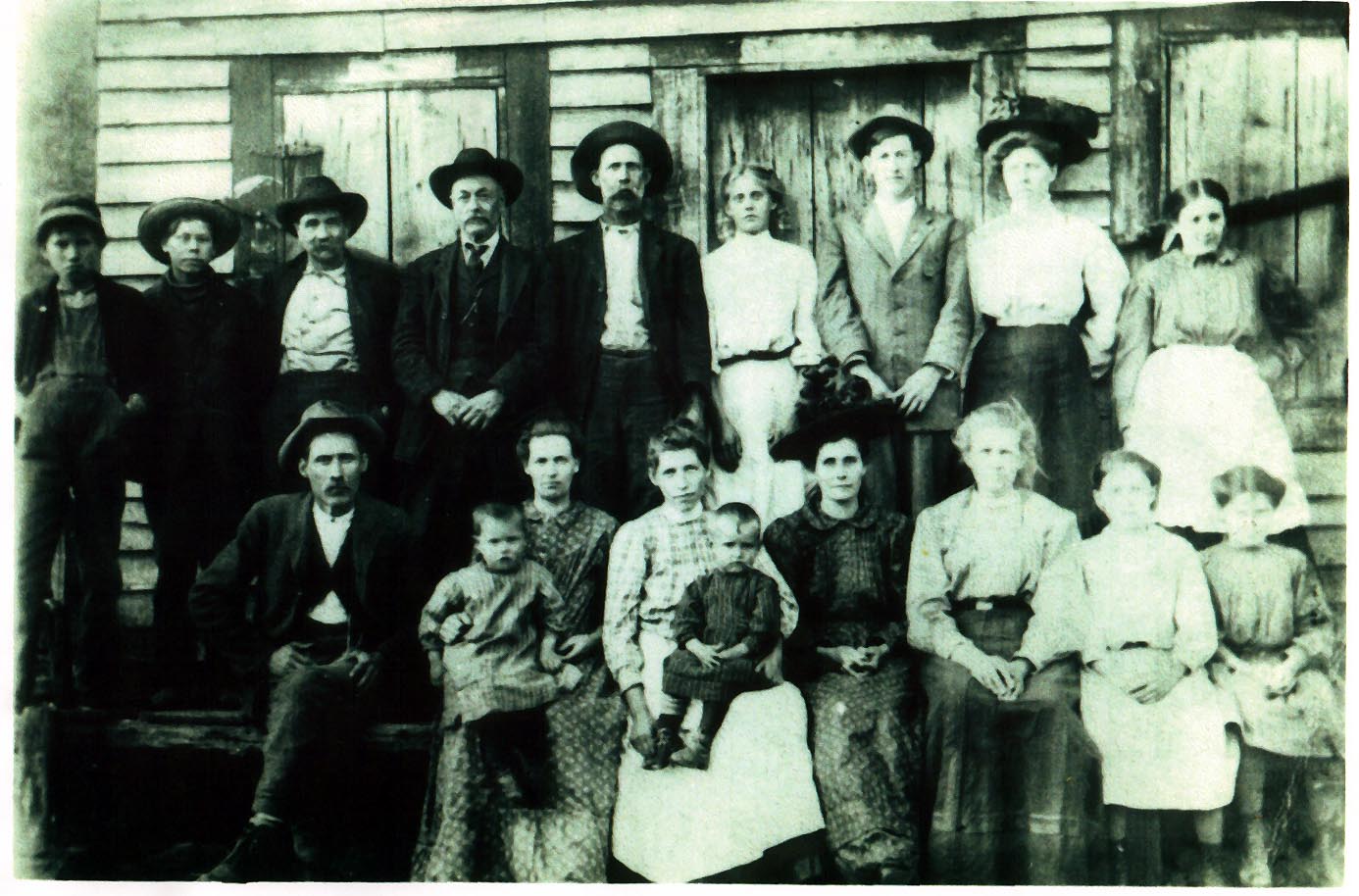
The Keibler family of Portsmouth, Ohio

The Keibler family of Portsmouth, Ohio

← Older posts
Newer posts →

Feud Poll 1

If you had lived in the Harts Creek community during the 1880s, to which faction of feudists might you have given your loyalty?

Categories

  • Adkins Mill
  • African American History
  • American Revolutionary War
  • Ashland
  • Atenville
  • Banco
  • Barboursville
  • Battle of Blair Mountain
  • Beech Creek
  • Big Creek
  • Big Harts Creek
  • Big Sandy Valley
  • Big Ugly Creek
  • Boone County
  • Breeden
  • Calhoun County
  • Cemeteries
  • Chapmanville
  • Civil War
  • Clay County
  • Clothier
  • Coal
  • Cove Gap
  • Crawley Creek
  • Culture of Honor
  • Dingess
  • Dollie
  • Dunlow
  • East Lynn
  • Ed Haley
  • Eden Park
  • Enslow
  • Estep
  • Ethel
  • Ferrellsburg
  • Fourteen
  • French-Eversole Feud
  • Gilbert
  • Giles County
  • Gill
  • Green Shoal
  • Guyandotte River
  • Halcyon
  • Hamlin
  • Harts
  • Hatfield-McCoy Feud
  • Holden
  • Hungarian-American History
  • Huntington
  • Inez
  • Irish-Americans
  • Italian American History
  • Jamboree
  • Jewish History
  • John Hartford
  • Kermit
  • Kiahsville
  • Kitchen
  • Leet
  • Lincoln County Feud
  • Little Harts Creek
  • Logan
  • Man
  • Matewan
  • Meador
  • Midkiff
  • Monroe County
  • Montgomery County
  • Music
  • Native American History
  • Peach Creek
  • Pearl Adkins Diary
  • Pecks Mill
  • Peter Creek
  • Pikeville
  • Pilgrim
  • Poetry
  • Queens Ridge
  • Ranger
  • Rector
  • Roane County
  • Rowan County Feud
  • Salt Rock
  • Sand Creek
  • Shively
  • Spears
  • Sports
  • Spottswood
  • Spurlockville
  • Stiltner
  • Stone Branch
  • Tazewell County
  • Timber
  • Tom Dula
  • Toney
  • Turner-Howard Feud
  • Twelve Pole Creek
  • Uncategorized
  • Warren
  • Wayne
  • West Hamlin
  • Wewanta
  • Wharncliffe
  • Whirlwind
  • Williamson
  • Women's History
  • World War I
  • Wyoming County
  • Yantus

Feud Poll 2

Do you think Milt Haley and Green McCoy committed the ambush on Al and Hollene Brumfield in 1889?

Blogroll

  • Ancestry.com
  • Ashland (KY) Daily Independent News Article
  • Author FB page
  • Beckley (WV) Register-Herald News Article
  • Big Sandy News (KY) News Article
  • Blood in West Virginia FB
  • Blood in West Virginia order
  • Chapters TV Program
  • Facebook
  • Ghosts of Guyan
  • Herald-Dispatch News Article 1
  • Herald-Dispatch News Article 2
  • In Search of Ed Haley
  • Instagram
  • Lincoln (WV) Journal News Article
  • Lincoln (WV) Journal Thumbs Up
  • Lincoln County
  • Lincoln County Feud
  • Lincoln County Feud Lecture
  • LinkedIn
  • Logan (WV) Banner News Article
  • Lunch With Books
  • Our Overmountain Men: The Revolutionary War in Western Virginia (1775-1783)
  • Pinterest
  • Scarborough Society's Art and Lecture Series
  • Smithsonian Article
  • Spirit of Jefferson News Article
  • The Friendly Neighbor Radio Show 1
  • The Friendly Neighbor Radio Show 2
  • The Friendly Neighbor Radio Show 3
  • The Friendly Neighbor Radio Show 4
  • The New Yorker
  • The State Journal's 55 Good Things About WV
  • tumblr.
  • Twitter
  • Website
  • Weirton (WV) Daily Times Article
  • Wheeling (WV) Intelligencer News Article 1
  • Wheeling (WV) Intelligencer News Article 2
  • WOWK TV
  • Writers Can Read Open Mic Night

Feud Poll 3

Who do you think organized the ambush of Al and Hollene Brumfield in 1889?

Recent Posts

  • Logan County Jail in Logan, WV
  • Absentee Landowners of Magnolia District (1890, 1892, 1894)
  • Charles Spurlock Survey at Fourteen Mile Creek, Lincoln County, WV (1815)

Ed Haley Poll 1

What do you think caused Ed Haley to lose his sight when he was three years old?

Top Posts & Pages

  • New Year's Raid (1888): Randolph McCoy's Testimony
  • Civil War Gold Coins Hidden Near Chapmanville, WV
  • Feudist Jim McCoy (1929)
  • Paw Paw Incident: Dan Whitt Deposition (1889)
  • Paw Paw Incident: W.S. Ferrell Deposition (1889)

Copyright

© Brandon Ray Kirk and brandonraykirk.wordpress.com, 1987-2023. Unauthorized use and/or duplication of this material without express and written permission from this blog’s author and/or owner is strictly prohibited. Excerpts and links may be used, provided that full and clear credit is given to Brandon Ray Kirk and brandonraykirk.wordpress.com with appropriate and specific direction to the original content.

Archives

  • February 2025
  • January 2025
  • October 2023
  • September 2023
  • December 2022
  • November 2022
  • May 2022
  • April 2022
  • February 2022
  • November 2021
  • October 2021
  • September 2021
  • June 2021
  • May 2021
  • April 2021
  • March 2021
  • February 2021
  • January 2021
  • December 2020
  • November 2020
  • October 2020
  • July 2020
  • June 2020
  • May 2020
  • April 2020
  • March 2020
  • February 2020
  • January 2020
  • December 2019
  • November 2019
  • October 2019
  • September 2019
  • August 2019
  • July 2019
  • June 2019
  • May 2019
  • April 2019
  • March 2019
  • February 2019
  • January 2019
  • December 2018
  • November 2018
  • October 2018
  • September 2018
  • August 2018
  • July 2018
  • June 2018
  • May 2018
  • April 2018
  • March 2018
  • February 2018
  • January 2018
  • December 2017
  • November 2017
  • October 2017
  • September 2017
  • August 2017
  • July 2017
  • June 2017
  • May 2017
  • April 2017
  • March 2017
  • February 2017
  • January 2017
  • December 2016
  • November 2016
  • October 2016
  • September 2016
  • August 2016
  • July 2016
  • June 2016
  • May 2016
  • April 2016
  • March 2016
  • February 2016
  • January 2016
  • December 2015
  • November 2015
  • October 2015
  • September 2015
  • August 2015
  • July 2015
  • June 2015
  • May 2015
  • April 2015
  • March 2015
  • February 2015
  • January 2015
  • December 2014
  • October 2014
  • September 2014
  • August 2014
  • July 2014
  • June 2014
  • May 2014
  • April 2014
  • March 2014
  • February 2014
  • January 2014
  • December 2013
  • November 2013
  • October 2013
  • September 2013
  • August 2013
  • July 2013
  • June 2013
  • May 2013
  • April 2013
  • March 2013
  • February 2013
  • January 2013
  • December 2012
  • November 2012

Enter your email address to follow this blog and receive notifications of new posts by email.

Join 2,925 other subscribers

Tags

Appalachia Ashland Big Creek Big Ugly Creek Blood in West Virginia Brandon Kirk Cabell County cemeteries Chapmanville Charleston civil war coal Confederate Army crime culture Ed Haley Ella Haley Ferrellsburg feud fiddler fiddling genealogy Green McCoy Guyandotte River Harts Harts Creek Hatfield-McCoy Feud history Huntington John Hartford Kentucky Lawrence Haley life Lincoln County Lincoln County Feud Logan Logan Banner Logan County Milt Haley Mingo County music Ohio photos timbering U.S. South Virginia Wayne County West Virginia Whirlwind writing

Blogs I Follow

  • OtterTales
  • Our Appalachia: A Blog Created by Students of Brandon Kirk
  • Piedmont Trails
  • Truman Capote
  • Appalachian Diaspora

BLOOD IN WEST VIRGINIA is now available for order at Amazon!

Blog at WordPress.com.

OtterTales

Writings from my travels and experiences. High and fine literature is wine, and mine is only water; but everybody likes water. Mark Twain

Our Appalachia: A Blog Created by Students of Brandon Kirk

This site is dedicated to the collection, preservation, and promotion of history and culture in Appalachia.

Piedmont Trails

Genealogy and History in North Carolina and Beyond

Truman Capote

A site about one of the most beautiful, interesting, tallented, outrageous and colorful personalities of the 20th Century

Appalachian Diaspora

  • Subscribe Subscribed
    • Brandon Ray Kirk
    • Join 787 other subscribers
    • Already have a WordPress.com account? Log in now.
    • Brandon Ray Kirk
    • Subscribe Subscribed
    • Sign up
    • Log in
    • Report this content
    • View site in Reader
    • Manage subscriptions
    • Collapse this bar
 

Loading Comments...