• About

Brandon Ray Kirk

~ This site is dedicated to the collection, preservation, and promotion of history and culture in my section of Appalachia.

Brandon Ray Kirk

Category Archives: Ed Haley

Parkersburg Landing 69

21 Thursday Feb 2013

Posted by Brandon Ray Kirk in Ed Haley

≈ Leave a comment

Tags

Appalachia, Ashland, banjo, Bonaparte's Retreat, Ed Haley, fiddler, history, John Hartford, Kentucky, Lawrence Haley, music, Pat Haley, Red Apple Rag, U.S. South, writing

     That night, I played some of Ed’s tunes for Lawrence in his kitchen. In spite of the great story opening up about Milt Haley, I didn’t lose sight of the music and my quest to understand it. As I played, Lawrence was brutally honest.

     “Notice how you’re using a fourth of the bow?” he said. “Pop played all over it.”

     “Did you hear a few real strong driving notes in that and then some really weak ones that didn’t hardly get out?” he asked.

     “Pretty good — but never just like my dad,” he stated flatly.

     The closest I came to gaining his approval was when I played “Bonaparte’s Retreat”.

     “You got a pretty good version of that,” he said. “Nothing too wrong with that.”

     “Your cannons sounded very good,” Pat added politely.

     When I played Ed’s “Red Apple Rag”, Lawrence said there was one part — what I call the “House of David Blues” part — that didn’t belong in the song, even though I knew Ed had played it there in the home recordings. He remembered his father playing “House of David Blues” as a separate tune and singing:

Bring it on down to my house honey,
Ain’t nobody home but me.
Bring it on down to my house honey,
I need the company.

Now a nickel is a nickel
And a dime’s a dime.
You show me yours and I’ll show you mine.
Bring it on down to my house honey,
Ain’t nobody home but me.

     I asked again about Haley’s banjo and Pat said she remembered that it was still around when she first came to Ashland in the late 1940s. She thought it belonged to Ella, but Lawrence said, “No, Mom played what they call a banjo-mandolin. It wasn’t too many years that I remember her playing one. Pop probably had a banjo. He’d just as soon sit down and play the banjo a lot of times. Or he’d play the guitar a lot. He played it like he did the fiddle. He’d make runs and everything else. He could sit down and play a organ or piano if he wanted to. I’ve seen him sit down on that old pump organ we had and he’d start pumping and he’d just play it for a while.”

     I wondered if Ed’s talent as, or even fondness for, being a multi-instrumentalist had been somewhat overstated. It seemed a little odd that, among the hundreds of home recordings, there was not one single sample of him playing anything but the fiddle. Of course, I didn’t bring this up to Lawrence because I totally believed him. Besides, he seemed a little cranky.

     Pat said she remembered Ed playing something about “going down the Mississippi” and Lawrence said it was the “Battle of New Orleans”.

     “Pop used to play that a long time ago,” he said. “That and ‘Soldier’s Joy’ and all those old pieces like that. ‘Arkansas Traveler’ and ‘Mississippi Sawyer’.”

In Search of Ed Haley 68

19 Tuesday Feb 2013

Posted by Brandon Ray Kirk in Ed Haley

≈ Leave a comment

Tags

Al Brumfield, Bob Adkins, Brooke Dingess, Cat Fry, feud, Green McCoy, Harts Creek, history, Hugh Dingess, Jake Adkins, John Hartford, Lawrence Haley, Lincoln County, Milt Haley, West Virginia

The next day, Al and his posse headed for Hugh Dingess’ “great old big house” on Harts Creek. Bob’s mother Brooke Dingess was a witness to events that followed.

“They stayed all night there and they wanted to be awful sure that they were right, you know,” Bob said. “See, they didn’t want to kill somebody that was innocent. Well they took Haley outside and put handcuffs behind him and gagged him so he couldn’t make a noise and stuck a gun in his back and told him if he made any noise they’d shoot him, see? And a funny thing happened out there, though. He broke loose from them and pretty near got away.

“And then they told McCoy that they had taken Milton down there to hang in the orchard, and if he had anything to say he had better be saying it, see? He broke down and cried and he told them the truth about it. And he told them that they pulled straws on which one would do the shooting and it fell on Green and he got sick — vomited — and he just couldn’t do it. So Haley said, ‘You ain’t got no nerve. Give me the gun and I’ll do it.’ And he claimed Haley was the one that shot. He didn’t do it.”

As if to prove his story, Green then said something to the effect of, “You go down there and check at that sinkhole and you’ll see a pile of shavings that I whittled with my long razor.”

Bob said, “Well, Haley came out and cursed McCoy and told him he didn’t have any nerve and said everything to him. Said that fellow just cried and said, ‘Now, you know I’m telling every bit the truth.'”

Bob said the mob was convinced by McCoy’s confession, but I felt it had a few holes in it. First of all, what if Green skewed the truth by blaming everything on Milt — who he thought was dead — in the hopes of saving his own life? Second of all, why would he and Milt have only had one gun between them for their ambush? Of course, maybe these details were worked out by subsequent confessions not remembered by any living person today. In any case, the mob was apparently satisfied.

Bob said, “They didn’t do anything to them there. They weren’t nobody’s fool, now. They didn’t want any murder going on around their home; then it would be too easy to pin it on them. They’d go to somebody else’s home.”

Bob said his aunt Catherine Fry — an eyewitness to subsequent events — told him the rest of the story about Milt’s murder. He said she was nineteen years old at the time and lived at the mouth of Green Shoal on the Guyandotte River. She said a mob arrived at her home during the night and woke her from her sleep.

“Well, Cat said the first thing she knew she was sitting in the living room — the front room, you know,” Bob said. “They had whiskey there. A lot of drinking going on and a whole bunch of them… Must have been ten to fifteen maybe. The Brumfields and Dingesses all mixed up, you know. Haley and McCoy were back in the bedroom under guard. They had them both in bed.”

Milt continued to verbally abuse Green for admitting their guilt.

“Around ten o’clock, somebody shot the lamp out and Cat run and jumped behind a flour barrel over in the kitchen corner until the fracas was over.”

Milt and Green were shot in bed then pulled out in the yard where the mob “took an axe and cut their heads open and shot them all up — shot them all to pieces.”

I asked Bob what happened next and he said, “They got on their horses and left — walked off and left them. Al Brumfield was one of the head fellows who was there and he was a first cousin of Dad’s. Evidently somebody else took his horse. He came down to Grandfather’s house, which was his uncle by marriage and he told Grandpaw what they had done. Grandpaw told him to go on upstairs and go to bed. No, he did not want to do that because he was afraid those McCoy and Haley people might come in on him, friends or something, [and trap him in the house]. He slept up in the hollow under a beech tree up there. It was summertime, you know. I bet he didn’t sleep good and if he did he shouldn’t have. And the next morning he got out and he ate his breakfast with Grandpaw and then he went on to Harts — home, you know?”

In the next few days, someone hauled Milt and Green’s bodies to the West Fork of Harts Creek and buried them in a single, unmarked grave.

Bob gave us directions to the grave, which he’d last seen as a boy.

“You go up main Harts Creek. It’s not over a mile, I don’t think. It’s the first big creek that turns off to your left. You turn to the left there across the creek and go up that road about a mile or a mile and a quarter and they’s a little hollow there and they’s a house right in there. It’s been a good while since I been up there. If you’ll ask some of them people there, they’ll tell you right where it is.”

Lawrence and I planned to go to Harts in a few days and find it.

Bob said, “We lived there in a house right down below there for one year before we came down here. We sold our old farm up there and we had no where to go and we moved over there on an uncle of mine’s farm. And I farmed one summer right down below there. I went up there and saw that. Had just a little stone. Two of them there. They was buried in the same grave. Them stones may be torn down and gone now. We left there in 1919 or ’20.”

Bob Adkins Interview, Part 2 (1993)

18 Monday Feb 2013

Posted by Brandon Ray Kirk in Breeden, Ed Haley, Guyandotte River, Hamlin, Harts, John Hartford, Lincoln County Feud

≈ Leave a comment

Tags

Al Brumfield, Appalachia, Bob Adkins, Breeden, Cincinnati, crime, feud, feuds, Green McCoy, Guyandotte River, Harts Creek, Henderson Dingess, history, Hollene Brumfield, John Dingess, John Hartford, John W Runyon, Kentucky, Lincoln County Feud, Milt Haley, Norfolk and Western Railroad, Thompson Branch, Tug River, Twelve Pole Creek, West Virginia

Wow. So what about Al Brumfield, the guy who got into the feud with Milt?

“Well, he was a little more tamer fellow than old Paris but he was kind of a rough character — mean as a snake,” Bob said. “All those Brumfields were, you know. They was a tough outfit, all of them was.”

Al and his wife Hollena lived in a large white house at the mouth of Harts Creek, which Bob said had recently burned. They had a store and log boom nearby and kept a boat tied up at the riverbank for easy access across the Guyandotte. Things were going great for them until John Runyon (who Bob called “the root of all evil”) moved in from Kentucky.

“That fellow Runyon, he had a saloon and a store right across the creek there at the mouth of Harts, you know — a shebang,” Bob said. “And Aunt Hollene and Al Brumfield, they had a big store over there on the other side of the creek, over on the lower side of the creek. They was competitors in a way, you know. This fellow Runyon hired these two thugs to kill them, so as to get rid of their competition. And he hired Milt Haley and Green McCoy to kill them. They got a side of bacon and a can of lard and five dollars to do that…each. And these fellows, Milt Haley and Green McCoy, were two characters. I don’t know why they ever took a chance on that. Them boys got into that before they knew what they was into. Them Brumfields was mean as the devil up there.”

Bob spun out the details of Milt and Green’s ambush of Al Brumfield.

“Every Sunday, Al and Hollene would get on their horse and they’d ride up to the Forks of Big Hart about ten miles to visit her father. He was old Henderson Dingess, my great-grandfather. Al had a fine riding horse and he’d get on the horse and she’d ride behind him, see? And they’d been up there on a pretty summer day, and they’d done had dinner with her father.”

Haley and McCoy, meanwhile, laid in wait for them in a sinkhole at Thompson Branch with a .30/.30 Winchester.

“And Al and Hollene came along about three or four o’clock in the evening and those thugs laywaid them on the side of the hill up there as they came back down Harts Creek. They shot at Al’s head. That horse jumped and that bullet missed his head and hit Hollene right in the face right there and the bullet knocked her teeth out and came out this side here. It knocked her off of the horse.”

Al was carried on down the creek by his horse, which “sprang and run” so Milt and Green came off the hill toward his wife.

“They aimed to shoot Aunt Hollene again — and she a laying there in the road, her eyes full of blood. She couldn’t see hardly who it was. But she begged them not to shoot her anymore, because she figured they’d already killed her. She told them she was dying and begged them out of it.”

At that point, Al came back up along the creek bed shooting toward them “and they got scared and they run.”

Bob said, “Well, the Brumfields didn’t know who it was so they watched all around to see who it was. They watched Runyon like a hawk but he changed his name and walked right off. He left his store, his saloon and his family and went back to Kentucky. They hunted for years for him but they never did find him. He never poked his head around there anymore, not even to contact his family.”

Milt and Green also disappeared from the neighborhood — which caused locals to assume that they were guilty of some role in the trouble.

“And these two guys just left their family and went into Kentucky and just deserted their families,” Bob said. “Then they knew who it was. And they started looking for them.”

Al Brumfield put out a $3,000 reward for their capture. Detectives were told to search in river towns, as both men had run rafts out of the Guyan River.

A detective caught Green McCoy first in a Cincinnati restaurant. He identified him by noticing a nick in one of his ears. Just before apprehending him, the detective walked up and said, “I think you’re the man I’m looking for.” Once caught, Green gave the whereabouts of Milt, who was found working a butter churn on a steamboat at the river. Both men were jailed. Al Brumfield was informed of their capture by letter.

Brumfield organized two of his brothers-in-law and perhaps one of his brothers into a posse and rode to the rendezvous point (presumably in the vicinity of Cincinnati). He posed as a sheriff, paid the reward, took possession of the two men, then headed across eastern Kentucky and up the Tug River to Williamson. He and his gang rode a train on the N&W across Twelve Pole to Breeden, where they crossed the mountain and spent a night at the home of John Dingess, Hollena’s brother. Dingess ran a large country store and saloon, Bob said, but “nothing exciting happened around there.”

Bob Adkins Interview, Part 1 (1993)

15 Friday Feb 2013

Posted by Brandon Ray Kirk in Big Harts Creek, Ed Haley, Hamlin, Harts, Huntington, Lincoln County Feud

≈ Leave a comment

Tags

Al Brumfield, Appalachia, Bob Adkins, Charleston, Charley Brumfield, crime, Emma Jane Hager, genealogy, Goldenseal, Griffithsville, Hamlin, Harts, Harts Creek, history, Hollena Brumfield, Huntington, Imogene Haley, John Hartford, Lawrence Haley, Lincoln County, Lincoln County Feud, Milt Haley, Paris Brumfield, Philip Hager, West Hamlin, West Virginia

The next day, Lawrence and I decided to go see 89-year-old Bob Adkins in Hamlin, West Virginia. In a recent Goldenseal article, Bob had given his biography, including his family’s connection to the story of Milt’s murder. Since reading his narrative, I’d been anxious to ask him about Milt, as well as to confirm or disprove my suspicion that his father’s first wife Emma Jane Hager was the same person as Ed’s mother.

To get to Bob’s house, we took Route 10 out of Huntington to Lincoln County. We turned off onto Route 3 just inside the county line at West Hamlin, then drove on for about ten minutes, crossed a hill and cruised into Hamlin — Lincoln County’s seat of government. Bob Adkins’ nice two-story house sat just past a block of small struggling businesses and through the only red light in town. We found Bob out back relaxing on a patio near a flower garden in full bloom.

After all the introductions, I mentioned my theory about Ed’s mother, which Bob shot out of the water right away. He was positive that Emma Jane Hager was not the same person as Emma Haley.

“No, Emma Jane Hager was old man Philip Hager’s daughter,” Bob said. “Dad got her from Griffithsville, 10 miles toward Charleston. Dad come down there and stole her.”

Bob knew all about Milt’s death but stressed that what he knew about it was hear-say, that he didn’t want to get sued and that we couldn’t take his word as gospel because there was “so dern many of ’em a shootin’ and a bangin’ around amongst each other” in Harts that he sometimes got his stories confused. Maybe Bob did have a foggy memory, as he claimed, but I found him to be a walking — or rather, sitting — encyclopedia of Harts Creek murders.

“I was born and raised up there until I was nineteen years old, but I was never afraid,” Bob said. “I walked all hours of the night and everything and do as I please, but I always tended to my business, you know. Kin to most of them. I never bothered nobody. Nobody never bothered me, but that doesn’t say they wouldn’t shoot you. Well, all you had to do was tend to your own business.”

Bob eased into the story of Milt’s death by giving Lawrence and I some background on the Brumfields. He knew a lot about them because Hollena Brumfield, the woman Milt supposedly shot, was his mother’s aunt and “about half way raised her.” She was a Dingess prior to marrying Al Brumfield.

“Now those Dingesses up there, I never knew of them to bother anybody much,” Bob said of his kinfolk. “Some of the older ones shot and banged around a little bit. But look out for them Brumfields. They was into it all the time. If they couldn’t get anybody else to shoot, they’d shoot theirselves — their own people.”

Al Brumfield’s father Paris was the most notorious of the old Brumfields.

“Well, one thing, he killed an old pack peddler up there at Hart, took his stuff and threw him in the river,” Bob said of the Brumfield patriarch. “And he killed another man, too. I forget the other fellow’s name. Son, he was a mean old man, I’ll tell you that. Why, he’d kill anybody. He lived about three quarters of a mile from the mouth of the creek down the river there in at the end of a bottom, see?”

Bob kind of chuckled.

“Yeah, killed that old pack peddler,” he said. “That’s what they said he did. I don’t know. He was a mean old devil. And boy, he’d killed two men.”

I wanted to know more about the Brumfields since they seemed to have been so wrapped up in the story of Milt Haley.

“What happened to Paris Brumfield?” I found myself asking.

“I tell you, old Paris, he got what was coming to him,” Bob said. “He was as mean as a snake and he would beat up on his wife every time he got drunk. And Paris’ wife got loose from him and she came down to her son Charley’s for protection. Charley was a grown man and was married and had a family and he lived down the road a quarter of a mile. Charley told her to come on in the house and there’d be nobody to bother her there and he told her to stay back in the room and he would take care of it. Old Paris, he was drunk and he didn’t get exactly where she was and he finally figured out where she was and old Paris come down there to get his wife. When he come down, Charley, his son, was setting on the porch with a Winchester across his lap. A Winchester is a high-powered gun, you know? And that day and time, they had steps that came up on this side of the fence and a platform at the top of the fence and you walked across the platform and down the steps again. That kept the gates shut so that the cattle and stuff couldn’t come into the yard. Well, he got up on that fence and Charley was setting on the porch with that Winchester. He said, ‘Now, Paw don’t you step across that fence. If you step across that fence, I’m going to kill you.’ And Paris quarreled and he fussed and he cussed and he carried on. That was his wife and if he wanted to whip her, he could whip her. He could do as he pleased. He was going to take his wife home. Charley said, ‘Now, Paw. You have beat up on my mother your last time. You’re not going to bother Mother anymore. If you cross that step, I am going to kill you.’ And he kept that up for a good little while there. ‘Ah, you wouldn’t shoot your own father.’ Drunk, you know? And Charley said, ‘You step your foot over that fence, I will.’ Paris was a little shaky of it even if he was drunk. Well, after a while he said, ‘I am coming to get her,’ and when he stepped over that fence, old Charley shot him dead as a doornail.”

You mean he killed his own father?

“His own father,” Bob said. “He killed him. That got rid of that old rascal. And that ended that story. They never did even get indicted for that or nothing. Everybody kept their mouth shut and nobody didn’t blame Charley for it because old Paris had beat up on his mother, you know? Everyone was glad to get rid of him.”

Parkersburg Landing 65

13 Wednesday Feb 2013

Posted by Brandon Ray Kirk in Ed Haley

≈ Leave a comment

Tags

Appalachia, Ashland, blind, Ed Haley, Ed Morrison, fiddler, history, John Hartford, Kentucky, Lawrence Haley, life, music, U.S. South, writers, writing

     About an hour later, Lawrence and I headed back to his house where we spent the evening talking at his kitchen table. I hung onto his every word hoping for some little detail about Ed.

     “Pop smoked a pipe,” he said. “He’d fill it up with tobacco and then he might take a cut apple and put apples in it to flavor it. He enjoyed his tobacco. He would go to a lot of places to people he knew and they’d give him maybe a hand of tobacco and he’d make his own twists out of it. Mom never could stop him from chewing. He was fairly clean with it around the house. He usually kept a good size vegetable can for a spittoon. If he was setting in a chair, he’d put it down in the chair and he’d pick it up and hold it up close to his mouth and spit in it.”

     Lawrence spoke more about the extent of his father’s travels.

     “Pop’s range was northeastern Kentucky mostly,” he said. “West Virginia and southeastern Ohio. In West Virginia, he might’ve took it all in except maybe the far panhandle up in there. I think he’d been as far as Morgantown. I can remember being up the Big Sandy River with them on the West Virginia side and at Louisa.”

     Lawrence didn’t think Ed made it to Hazard and Harlan.

     I asked if there was much money to be made in the coalfields and he said, “They had money, I guess, when mines were running good. And I guess during the timber business when them guys grabbed logs down out of the Sandy at Catlettsburg.”

     I really wanted to get at the source of Ed’s music, but Lawrence said his father never discussed his early life or musical influences with any of the kids. Lawrence never heard him talk about those things with buddies either because most of them stopped coming around by the time he was a teenager.

     I jarred his memory a little bit when I mentioned the name Ed Morrison, whose father (Christopher Columbus Morrison) had learned “Blackberry Blossom” from General Garfield during the War Between the States.

     “Ed Morrison, as far as I know, lived right out here on Belmont Street for a while,” he said. “He was a buddy of Pop’s.”

     Thinking back to Ed’s experience on Harts Creek, I wondered if a lot of his music came from pain.

     “No, I don’t think Pop was…,” Lawrence said. “He mighta been…”

     “Anger?” I asked.

     “Anger, yeah, maybe.”

     That made sense to me. He sure had a lot to be angry about.

In Search of Ed Haley 64

12 Tuesday Feb 2013

Posted by Brandon Ray Kirk in Ashland, Big Sandy Valley, Ed Haley, Music

≈ 1 Comment

Tags

Ashland, Big Sandy River, Blackberry Blossom, Blaze Starr, Bluegrass Meadows, Boyd County, Clark Kessinger, Dave Peyton, Delbarton, Duke Williamson, Ed Haley, fiddle, fiddler, fiddlers, fiddling, Georgia Slim Rutland, Grand Ole Opry, Hank Williams, Herald-Dispatch, history, Huntington, Jennies Creek, John Fleming, John Hartford, Kentucky, Lawrence Haley, Lynn Davis, McVeigh, Mingo County, Minnie Pearl, Molly O Day, Molly O'Day, music, Parkersburg Landing, Pike County, Pond Creek, Short Tail Fork, Shove That Hog's Foot, Skeets Williamson, Snake Chapman, Texas, West Virginia, Williamson

Early that summer, I was back at Lawrence Haley’s in Ashland with plans to visit Lynn Davis in Huntington, West Virginia. Lynn had been mentioned in the Parkersburg Landing liner notes as a source for Haley’s biographical sketch and was the widower of Molly O’Day, the famous country singer. Snake Chapman had told me that Molly and her family were close friends to Haley, who visited their home regularly in Pike County, Kentucky. I was sure Lynn would have a lot of great stories to tell about Ed. At our arrival, he was incredibly friendly — almost overwhelming us with the “welcome mat.” All we had to do was mention Ed’s name and he started telling us how he and Molly used to pick him up in Ashland and drive him up the Big Sandy Valley to see Molly’s father in southeastern Kentucky.

“That was back in the early forties,” he said. “We’d come to Ashland and get him at his home up on Winchester about 37th Street. They was a market there or something you turned up by and we’d go there and pick him up and take him up to Molly’s dad and mother up in Pond Creek, Kentucky — above Williamson. There’s an old log house up there — it’s been boarded up and sort of a thing built around it so people couldn’t get in and tear it up or something — but it’s falling down. He’d stay up there with Molly’s dad and mother for several days. They’d take him to Delbarton, a coal town over there from Williamson, and they’d just drive him around, buddy. Now Molly’s brother, he really loved Ed’s fiddling.”

Lynn was referencing Skeets Williamson, Molly’s older brother and a good fiddler by all accounts. Lynn showed me an album titled Fiddlin’ Skeets Williamson (c.1977), which referenced him as “one of country music’s more skilled fiddlers during the 1940’s — one of the best in his day.”

Skeets was born in 1920 at McVeigh, Kentucky, meaning he was approximately 35 years younger than Haley. As a child, he played music with Molly and his older brother Duke Williamson, as well as Snake Chapman. “During these years, the famous fiddler of Eastern Kentucky, Blind Ed Haley, became a tremendous influence on him,” the album liner notes proclaimed. “Skeets (along with Clark Kessinger) still contend that Haley was the greatest fiddler who ever played.” During a brief stint on Texas radio, Skeets met Georgia Slim Rutland, the famous radio fiddler who spent a year listening to Haley in Ashland.

I asked Lynn more about his trips to Haley’s home on 37th Street.

“We used to go down to his house and Molly’d say, ‘Uncle Ed, I’d just love to hear you play me a tune.’ Well he’d be sitting on the couch and he’d just reach over behind the couch — that’s where he kept his fiddle. He always had it in hand reach. So he would get it out of there, man, and fiddle.”

Sometimes Lynn and Molly would join in, but they mostly just sat back in awe.

“You’ve seen people get under the anointing of the Holy Ghost, John,” Lynn said. “Well now, that’s the way he played. I mean, I’ve seen him be playing a tune and man just shake, you know. It was hitting him. I mean, it was vibrating right in his very spirit. Molly always said, ‘I believe that fiddlers get anointed to the fiddle just like a preacher gets anointed to preach.’ They feel it. Man, he’d rock that fiddle. He’d get with rocking it what a lot of people get with bowing. It was something else. But he got into it man. He moved all over.”

Lynn said Ed was a “great artist” but had no specific memories of his technique. He didn’t comment on Ed’s bowing, fingering or even his fiddle positioning but did say that he mostly played in standard tuning. Only occasionally did Ed “play some weird stuff” in other tunings.

Lynn’s memories of Haley’s tunes seemed limited.

“Well, he played one called ‘Bluegrass Meadows’,” he said. “He had some great names for them. Of course one of his specials was ‘Blackberry Blossoms’. He liked that real good, and he’d tell real stories. He would be a sawing his fiddle a little while he was telling the story, and everybody naturally was just quiet as a mouse. You know, they didn’t want to miss nothing.”

What kind of stories?

“Well, I know about the hog’s foot thing. He said they went someplace to play and they didn’t have anything to eat and those boys went out and stole a hog and said they brought it in and butchered it and heard somebody coming. It was the law. They run in and put that hog in the bed and covered it up like it was somebody sleeping. And Ed was sitting there fiddling and somebody whispered to him, said, ‘Ed, that hog’s foot’s stickin’ out from under the cover there.’ So he started fiddling and singing, ‘Shove that hog’s foot further under the cover…’ He made it up as he went.”

The next thing I knew, Lynn was telling me about his musical career. He’d been acquainted with everybody from country great Hank Williams to Opry star Minnie Pearl. We knew a lot of the same people — a source of “bonding” — and it wasn’t long until he started handing me tapes and records of Molly O’Day and Georgia Slim Rutland. He said he had a wire recording of Ed and Ella somewhere, but couldn’t find it. He promised me though, “When I find this wire — and I will find it — it’s yours.”

Sometime later, he called Dave Peyton, a reporter-friend from the Huntington Herald-Dispatch, to come over for an interview. With Peyton’s arrival, Lynn (ever the showman) spun some big tales.

“Now, Molly’s grandfather on her mother’s side was the king of the moonshiners in West Virginia and he was known as ‘Twelve-Toed John Fleming’,” Lynn said. “He had six toes on each foot. Man, he was a rounder. Little short fella, little handlebar mustache — barefooted. He was from the Short Tail Fork of Jenny’s Creek. And the reason they called it that, those boys didn’t have any britches and they wore those big long night shirts till they was twelve or fourteen years old.”

Lynn was on a roll.

“I preached Molly’s uncle’s funeral. Her uncle is the father of Blaze Starr — the stripper. That’s Molly’s first cousin. In her book, she said she would walk seven miles through the woods to somebody that had a radio so she could hear her pretty cousin Molly sing. She was here in town about three or four months ago. We had breakfast a couple times together. She’s not stripping anymore. She makes jewelry and sells it. She’s about 60 right now.”

In Search of Ed Haley 63

11 Monday Feb 2013

Posted by Brandon Ray Kirk in Ed Haley

≈ Leave a comment

Tags

Bonaparte's Retreat, Brooks Hardway, Clark Kessinger, Dusty Miller, Ed Haley, Emery Bailey, fiddler, fiddling, French Carpenter, Gerry Milnes, history, Jimmy Johnson Bring Your Jug Around the Hill, John Cottrell, John Hartford, Laury Hicks, Lost Indian, Mississippi Sawyer, music, Old Sledge, Sally Ann Johnson, Sally Goodin, Sol Carpenter, Spencer, Stackolee, Ward Jarvis, West Virginia, writing

After listening to Gerry’s tape, I gave Brooks a call. His voice was extremely weak compared to the 1988 interview, indicating that his health had taken a turn for the worse. As I introduced myself and tried to explain the reason for my call he told me to speak up because his hearing wasn’t very good. Just when I figured he hadn’t heard a word I said, he remarked, “I’ve got a lot of tapes of you, John. I’ve been listening to you for twenty years.” He also had Ed’s record, which he said was a good representation of his fiddling.

“It had his zip on the bow,” Brooks said. “The record that I’ve got was made off of some old discs that his wife had saved. They was a record man visited him and talked with him and wanted him to make records but at that time they just paid you for it and that was it. And Ed said, ‘I won’t make a record unless you give me royalty on it. You’ll have to give me a percentage of what you make on it.’ So he never made no records.”

I wanted to know more about the “zip” in Ed’s bowing, but Brooks didn’t remember any specifics.

“No, at the time I met Ed Haley I was just a big young boy entering into manhood,” he said. “But I’ll never forget Ed Haley and his fiddle as long as I live. My my, he fiddled fast. He had the smoothest bow hand I ever heard. Soft as silk — soft as a woman’s voice. And he had fingers like a baby. You see, he never did work any. I think he went blind at about nine years old.”

I asked where Ed positioned the fiddle when playing and he said, “He held the fiddle high on his shoulder. Not on his arm nor not up under his chin.”

As for Ed’s tunes, Brooks said, “He played these old Clay County-Braxton-Calhoun-Gilmer tunes. These old John Cottrell tunes — ‘Mississippi Sawyer’. The old-time ‘Sally Goodin’ — mercy mercy he could play ‘Sally Goodin’. And ‘Sally Ann Johnson’.”

I asked Brooks where he used to see Ed and he basically repeated what he had told Gerry Milnes about him playing at the courthouse in Spencer, West Virginia. I wondered if there was a crowd around him.

“You betcha there was a crowd,” Brook said. “Generally, they was ten or fifteen men standing around up as close to old Ed as they could get. He was sitting on a chair and had that tin cup on the arm of that chair. Them nickels and dimes was just cracking in that tin cup. I even put a quarter in his tin cup. Course he’d empty it every little bit. That was back in the late 20s, early 30s. You take a tin cup half full of nickels and dimes and you could buy a pretty good sack of groceries with it. It wasn’t like it is today.”

In spite of Ed’s popularity, no one in the crowd danced.

“Them old farmers wouldn’t hit a lick with their feet,” Brooks said.

Brooks said he never heard Ed play the banjo but got really excited when I asked him about his singing.

“Oh, I’m glad you mentioned it,” he said. “The first time I heard ‘Stackolee’, Ed Haley played it and sung it sitting in the courthouse yard at Spencer. Now I’m telling you, he could make you hump up when he’d sing that song. And he knew it the old original way. That’s the first time I ever heard a man sing with a fiddle. Back in that day, it was seldom you heard a man do that. French Carpenter, he was a good singer with the fiddle. He was a good old-time fiddler. His daddy was named Solly Carpenter. Old Sol Carpenter’s favorite was Emery Bailey. He was fifty years ahead of his time.”

I asked if Emery Bailey was as good as Ed Haley and Brooks said, “He wasn’t as good as Ed Haley by no means. Ed Haley was far ahead of everybody at that day and time. But Emery Bailey was one among the best of the fiddlers in Calhoun-Braxton-Clay-Gilmer Counties. Now, there’s a contemporary of Ed Haley — have you heard of Clark Kessinger? He could fiddle just about… Well, not as good — there was nobody could fiddle as good as Ed Haley could, but I’ll tell you, Clark Kessinger could come close to him.”

Brooks pointed out that being a fiddler in those days wasn’t necessarily a good thing.

“No, at that time the fiddle was looked down upon. People wouldn’t fool with a fiddler,” he said. “The fiddle seemed to be a disgrace. You take a man going along the road with a fiddle and he was looked down upon and talked about.”

Things got kind of quiet, then I asked him if Ed played a tune called “Jimmy Johnson Bring Your Jug Around the Hill”.

“Oh, you betcha,” Brooks said. “Ward Jarvis learned to play that just about as good as Ed played it, too. Ward Jarvis was among the best fiddlers in the country.”

Brooks said Ed also played “Dusty Miller” and “Lost Indian”. He played everything in the standard key.

“Now you take a lot of tunes that some of our country fiddlers — Laury Hicks and Ward Jarvis and others… French Carpenter. They would tune their fiddle and put it up in A — they called it the high key. Ed never changed his fiddle that I seen.”

Brooks didn’t remember Ed playing some of his most famous cross-key pieces, like “Old Sledge” or “Bonaparte’s Retreat”.

“Now them’s Sol Carpenter tunes that you’re talking about,” he said. “That’s back a generation behind Ed Haley.”

In Search of Ed Haley 62

06 Wednesday Feb 2013

Posted by Brandon Ray Kirk in Ed Haley, Music

≈ 2 Comments

Tags

Brooks Hardway, Calhoun County, Chicken Reel, Clark Kessinger, Ed Haley, Emery Bailey, fiddler, fiddling, Frank Santy, Gerry Milnes, history, Homer Bailey, John McCune, Laury Hicks, music, Parkersburg Landing, Roane County, Senate Cottrell, Spencer, Stinson, Ward Jarvis, West Virginia, writing

At that point, Gerry asked Brooks about Ed Haley, and it was clear from his remarks that he thought he was an incredible fiddler.

“I’ve saw Ed Haley and stood and listened to him and sat in houses and listened to Ed Haley play,” he said. “Ed Haley is the best fiddler I ever listened to and I’ve heard a lot of them. And I’m a pretty good judge of what good fiddling is. And Ed Haley was the slickest, hottest… He bluegrassed it — he’s another fellow that was 50 years ahead of his time, like I mentioned about Emery Bailey. Ed Haley could lay the leather on that fiddle bow and so smooth it was out of this world.”

Brooks told Gerry about seeing Ed at the Roane County Courthouse in West Virginia before the Depression.

     I walked up in the courthouse at Spencer one time back in the 20s and there was a crowd in the courthouse yard and there sat Ed Haley fiddling. He had a tin cup sitting there on a little stand. Ed Haley wouldn’t play unless that tin cup kept rattling with nickels and dimes. A dollar bill was out of this world in them days. I listened to Ed Haley play and Homer Bailey, Emery’s brother, was at the stock pen. The stock pen was just across the stream from the courthouse and I hurried to tell Homer. I wanted Homer to hear Ed Haley. I said, “Homer, Ed Haley’s over here at the courthouse yard playing the fiddle. Let’s go over and hear him play a tune or two.” And as we was crossing the bridge going back over the courthouse Homer said, “Plum honor, Brook. I wonder if he can fiddle ‘Chicken Reel’ as good as Emery can?” I said, “I don’t know but we’ll find out pretty soon now and you be the judge.”

     And we walked up close to Ed. Ed wasn’t playing — there wasn’t no nickels going in the cup. I put a big Bull Moose nickel in the cup and rattled it and I said, “Ed, I’d like to hear you play ‘Chicken Reel’.” And he reared back and leveled off on that fiddle and you never heard such a ‘Chicken Reel’ in all my life. Homer turned sideways and bent over and held his head right forward towards Ed Haley and took that tune in. Shortly, when Ed quit playing, Homer looked at me with a big gold-toothed smile and said, “Plum honor, Emery can’t play it can he, Brook?” So he really took a spell over Ed Haley. But Emery was good on it but that was what Ed Haley would do for a fiddler. When you heard Ed play, that was it.

Brooks said to Gerry, “Now Emery Bailey never did see Ed Haley but Clark Kessinger copied Ed Haley fiddling. Ed Haley made a statement before he died. He said he hoped that his type of fiddling had rubbed off on somebody that could carry the thing along and keep it going. Well now, Clark Kessinger was the man. He could imitate Ed Haley’s stroke. But I had the privilege of seeing and hearing Ed Haley play. Nobody could fiddle as good as Ed Haley could, but Clark Kessinger could come close to him.”

Gerry asked Brooks what brought Ed into the Calhoun County area of West Virginia.

“I would say it was Laury Hicks,” Brooks said. “Laury Hicks was another fiddler. Laury Hicks had his own stroke. He never copied nobody. Laury Hicks was rough as a cob but my my he could put stuff on a fiddle that was out of this world. They lived on Stinson, over in that Nebo country. And he would go down to Charleston and bring Ed Haley up and keep him a week — maybe two. Ed enjoyed that. That was free board for Ed, you see. That day and time, it was nippity tuck to make a living if a man didn’t live on a patch of land somewhere. And Laury picked up a lot of his stuff, too.”

Brooks told about a time when Ed was staying with Hicks and visited John McCune, an old fiddler who lived “in that Nebo country” a half-mile below Hicks.

   Now, Frank Santy told me this and Ward Jarvis and Senate Cottrell. They fiddled till midnight and Laury thought of old John McCune. He couldn’t play much but he had one tune that they said he was out of this world on. Laury thought of that and he said, “Ed, if you ain’t too tired I’d like to go down to John McCune’s and have him fiddle a tune for you.” Ed was going home the next morning and he said, “We may not have time to do that tomorrow.” And they went down to old John McCune’s John got out of the bed and fiddled that tune. And Ed Haley sat there and listened to it. When John got through, Ed Haley said, “Mr. McCune, you never need to hesitate to play that tune for anybody. There’s nobody living that can beat you playing that tune.” So that was an honor to John McCune on his number.

Brooks knew a little about Ed playing over Laury’s grave, which I had first read about on the Parkersburg Landing liner notes.

“When Laury Hicks was on his dying bed, he said, ‘I would like to have Ed Haley play a few tunes over my grave when I’m dead and gone.’ And Ed Haley made a special trip up to Stinson and fiddled over Laury Hicks’ grave. They said he played some of the sweetest tunes they ever listened to. He took a little group with him and he played the fiddle over Laury’s grave. That’s a true story.”

In Search of Ed Haley 61

02 Saturday Feb 2013

Posted by Brandon Ray Kirk in Ed Haley

≈ 1 Comment

Tags

Braxton County, Brooks Hardway, Calhoun County, Emery Bailey, Frank Santy, French Carpenter, Gerry Milnes, history, music, Sol Carpenter, Ward Jarvis, West Virginia, Willie Santy, writing, Yew Piney Mountain

Later that fall, I met Gerry Milnes, an old-time West Virginia fiddler and banjo-picker, at the Tennessee Banjo Institute in Cedar of Lebanon State Park near Nashville. Gerry said he’d heard a lot about Ed Haley through his interviews of older musicians in central West Virginia. It was obvious that he was some type of folklorist but I didn’t realize to what degree until a few months later when I received a letter in the mail declaring him to be the coordinator of the Augusta Heritage Center in Elkins, West Virginia. In his letter, he wrote about his suspicion of Ed learning tunes from Jack McElwain (1856-1938), who he called “the premier fiddler in the state of West Virginia around the turn of the century.” He felt there were clues in Haley’s repertoire: his “Old Sledge” was a McElwain specialty and his “Garfield’s Blackberry Blossom” was very much like McElwain’s “Yew Piney Mountain”.

A few months later, Gerry sent me a cassette tape of a 1988 interview with Brooks Hardway. Brooks was an old-time banjo player who knew first hand about all of the old musicians in north-central West Virginia — “Laury Hicks country.” He also knew about Ed Haley. On the tape, he gave a little bit of information about his own life, important to note in order to keep his stories in context.

“I’m 81 today,” Brooks said. “I was born at Walnut, West Virginia. Walnut is in Calhoun County. I was seven years old when we moved over to the Left Hand Fork of West Fork. My daddy bought a store at Gip. So there’s where I grew up from seven until I got married at the age of 32. Grandpa Santy moved from Walnut to Gip when we did and he lived in a little country Jenny Lynd house where we did. And he had a boy named Willie Santy. He was a clawhammer banjo-picker. I would give the world if I could do it like he did. But he had a hook with his thumb that I never could learn. That is, to get down and hit that second string and walk it back up with his thumb. My goodness, he could put the double shuffle on them tunes.”

Brooks’ maternal family, the Santys, was a key player in the musical history of Calhoun County. Aside from his uncle Willie Santy, who was apparently an accomplished banjo player, his great-uncle Frank Santy was a popular left-handed fiddler.

“When I was a boy — ten, twelve, fourteen — he played for dances on the West Fork,” Brooks said. “He’d fiddle all night and they’d charge fifteen cents a set and he’d have the next morning five or six dollars. Frank Santy could fiddle ‘Piney Mountain’ so good it’d bring chills of hilarity throughout your body. It’s an old Clay County number. I think he learned it from old Sol Carpenter — one of the original old-time fiddlers. Old Senate Cottrell, that was his favorite tune.”

Ward Jarvis, a son of Jim Jarvis who lived in the head of Walnut in Braxton County, was a good banjo picker and fiddler.

“I practically stayed at Jim Jarvis’ and played with Ward,” Brooks said. “Will played a banjo and I played a banjo and guitar. We’d cut wood of a daytime and burn it up of a night a playing the fiddle, banjo and guitar. Ward Jarvis is the origin of my clawhammering the banjo. Ward Jarvis was one of the best. He played the banjo for a while while he was a young man. And Ward Jarvis played the banjo with Frank Santy and then he got to picking Frank’s fiddle up and he learned to play that fiddle and he got better than Frank was. Frank got jealous of him and dropped him.”

Emery Bailey was a top fiddler in Calhoun County, according to Brooks.

“Emery Bailey was the top of the tops at that day and time,” he said. “Emery Bailey fiddled 50 years ahead of his time. Emery lived just below where we did and he had a brother named Homer. Now they was at the top of the list in their day in fiddling and banjo-picking. They had a contest at Sutton one time — old time fiddlers’ contest — and Emery went. That woulda been back in the late 20s or early 30s. When Emery come back I asked him what he did. ‘Plum honor Brooks, they didn’t let me play. They wouldn’t let me enter the contest.’ I said, ‘Did you play a tune or two for them, Emery?’ Emery said, ‘Plum honor I fiddled ‘Sally Goodin’, Brooks. They said I didn’t fit in an old-time fiddlers’ contest.’ I said, ‘What was wrong?’ Emery said, ‘I think I put too much diddle on the bow.’ Now Emery’d been laying the leather to ‘Sally Goodin’.”

How did Emery Bailey compare to Ward Jarvis?

“Now Ward Jarvis always was more of an old-time, old-fashioned fiddler,” Brooks said. “He had a different lick to what Emery had. Wherever Ward played in a contest in that day and time he took first place. He had the best shuffle I believe I ever heard.”

Brooks was also familiar with French Carpenter, one of the most well-known fiddlers from Clay County.

     I never heard Solly Carpenter play but I’ve heard his son French Carpenter play. I was at my grandpa’s house… I was ten or eleven, twelve years old and looked down the road and seen a man coming up the road with a flour poke in his hand and we watched him till he got up in front of Grandpa’s house and it was French Carpenter with the fiddle in a flour poke and about four inches of the neck of it sticking out the top of that poke and he had his hand around that fiddle neck. Well, Grandpa never let a man with a fiddle or a banjo pass the house without stopping him and bringing him in so he halted French Carpenter and French Carpenter stayed all night with Grandpa Santy and they had music and the house was full of people that night. First time I’d ever seen French Carpenter and he was the first man that we in that part of the country ever heard sing with the fiddle. And he played some of the sweetest tunes that I ever listened to and sung them and fiddled till twelve or one o’clock in the night and held the attention of them people. You could have heard a pin drop a listening to French Carpenter sing them pretty songs.

In Search of Ed Haley 60

30 Wednesday Jan 2013

Posted by Brandon Ray Kirk in Big Sandy Valley, Ed Haley, Huntington, Music, Pikeville, Williamson

≈ 2 Comments

Tags

Appalachia, Beaver Creek, Big Sandy River, Bill Necessary, Carter Caves State Park, Curly Wellman, Ed Haley, Ella Haley, fiddler, fiddling, Floyd County, Fraley Family Festival, Grayson, history, Huntington, J P Fraley, John Hartford, Kentucky, Lawrence Haley, Levisa Fork, Lynn Davis, Mingo County, Molly O Day, Molly O'Day, Mona Hager, music, Nashville, Paintsville, Prestonsburg, Snake Chapman, Tug Fork, U.S. South, Ugee Postalwait, West Virginia, Williamson, writers, writing

A few months later, I met Lawrence Haley at the Fraley Family Festival at Carter Caves State Park near Grayson, Kentucky. Lawrence and I spoke with Bill Necessary, a musician who saw Ed and Ella all over the Big Sandy Valley when he was about twenty years old. He said they rode a train up Levisa Fork to Paintsville, the seat of government for Johnson County, where they spent the day playing music at the courthouse. From there, they continued by train to Prestonsburg, county seat of Floyd County. At times, they went into the nearby coal camps of Beaver Creek and played at theatres. From Prestonsburg, they took the train to Pikeville, the county seat of Pike County, and then continued over to the Tug River around Williamson, county seat of Mingo County, West Virginia.

“Aw, they took in the whole dern country up through there,” Bill said. “By the time they made that circuit, why it’d be time for them to come again. I guess they’d tour a couple of weeks. By God, I just followed them around, son.”

Lawrence didn’t remember going to all of those places with Ed but did remember staying with Molly O’Day’s family around Williamson. Bill said Molly’s widow Lynn Davis was still living around Huntington, West Virginia.

Bill said Ed always wore a long overcoat — “rain or shine” — and even played in it. He never sang or entered contests.

“He was pretty up to date on music at that time,” Bill said. “His notes were real clear, boy.”

Back in Nashville, I worked really hard trying to figure out Ed’s bowing. There was a lot of contradictory information to consider. Snake Chapman said he bowed short strokes, indicating a lot of sawstrokes and pronounced note separation. J.P. Fraley, Slim Clere, Lawrence and Mona said that he favored the long bow approach and only used short strokes when necessary, like for hoedowns. Preacher Gore, Ugee Postalwait and Curly Wellman spoke about how smooth his fiddling was, which kind of hinted at him being a long bow fiddler. All were probably accurate in some respect. It seemed plain to me that one reason why there were so many contrasting and sometimes completely opposite accounts of how or even what Ed played was that everyone I’d talked to witnessed him playing at different times and places during his musical evolution. All along the way, he was experimenting, looking for that “right combination” or playing the style needed to create the sounds popular in a certain area. Even what I could actually hear on his home recordings was really just a glimpse into the world of his fiddling as it existed at that moment toward the end of his lifetime.

In Search of Ed Haley 59

28 Monday Jan 2013

Posted by Brandon Ray Kirk in Ed Haley, Music

≈ Leave a comment

Tags

Abe Glenn, Abe Keibler, Asa Neal, Berea College, Bob Glenn, Buddy Thomas, Clark Kessinger, Ed Haley, fiddlers, Gus Meade, history, John Harrod, John Hartford, John Keibler, John Lozier, Kentucky, Lewis County, music, Ohio, Portsmouth, Roger Cooper, South Shore, writing

A few days later, I called Roger Cooper, a fiddler in Lewis County, Kentucky. Roger was a protégé of Buddy Thomas, the eastern Kentucky fiddler who captured the interest and won the hearts of folklorists in the 1970s. Roger was more than happy to talk with me but said, “Really, I don’t know very much about Ed Haley. Course, I’m just like 43 years old myself so I never did see him or nothing, but a lot of guys around here knew him and would see him and stuff. I’ve heard quite a bit of talk about him. He’d come down to the Portsmouth area and play sometimes. And the Portsmouth area had lots of fiddlers around during the 20s and 30s and on up into about the 50s before they started dying off. There was stories going around about how he played.”

I asked Roger if he knew anything about Asa Neal, the famous Portsmouth fiddler.

“Asa Neal, from what they say about him, he was from down here in this county starting out and lived on a shanty boat and I guess he went on up towards Portsmouth,” Roger said. “He even made some records, I think.”

I told Roger that I figured Asa and Clark Kessinger were Ed’s two chief competitors and he said, “Well, Clark Kessinger, he gave Ed Haley a lot of credit as to learning some stuff from him himself.”

Roger felt there were a lot of other good fiddlers in the area aside from Asa Neal and Clark Kessinger.

“There was six fiddlers in South Shore — that’s just across the river from Portsmouth — all brothers — Keiblers — and there was six of them played the fiddle and they was supposed to been the best around here,” Roger said. “They was a German people. Uncle John Keibler was supposed to have been the best. The old guys around here, they say they learned from the Glenn Brothers out of West Virginia. Their names were Bob and Abe Glenn. Those Glenns would come down through here and sometimes they’d stay maybe a year with those Keiblers and they learned a lot of tunes off them Glenns. They all say that Bob Glenn was a great fiddler. I’ll tell you a little story. John Keibler was over there and Ed Haley was playing in Portsmouth, you know, like for nickels and dimes, so he went over to see him and asked Ed if he could play him a tune. And Ed let him have the fiddle and after he played the tune he thought he was Glenn playing. He went over and started feeling of him. He said, ‘Are you Glenn? You sound just like him.’ That’s what Morris Allen told me. He was a nephew to the Keiblers.”

“I wish I could tell you more about Ed Haley myself,” Roger said. “An old man and some boys named Mershon, they was awful good fiddlers. The old man Mershon, he musta been something great. One of his boys came home and said, ‘Dad, I found a fiddle player that can beat you.’ He said, ‘Well, I’ll just have to go hear him.’ He said, ‘Well, come tomorrow and go with me and you can hear him.’ He took him into Portsmouth and there was Ed Haley playing for nickels and dimes and that old man watched him play for a while and said, ‘Boy, he is a great fiddler but he don’t play like I do.’ That’s all he had to say about it. Evidently, Ed really showed him some stuff. All I can hear from any of these guys around here, they just talk like there was hardly any way of describing how Ed Haley could play. They all just seem to think he was the greatest that ever was. And them old German fiddlers, it’d take something to win them over.”

Roger recommended that I contact Abraham Keibler — a nephew to “those good fiddlers” — who took up the fiddle himself when he was around 50 years old. He also suggested John Lozier, an 82-year-old harmonica player who used to watch Ed play in Portsmouth.

“He said Ed Haley was the smoothest fiddler he’d heard in his life,” Roger said of Lozier.

We talked a lot about the old tunes played in eastern Kentucky.

“A lot of those kinds of tunes I just didn’t get to get on tape or nothing and I wasn’t far enough along and my memory’s not that good, but I can tell you somebody that you really should talk to is John Harrod down there. John Harrod, he plays an awful lot of tunes and he’s researched them for years. He don’t try to be no star fiddler or nothing but he’s got a real good bow lick. He’s got bow licks down like a lot of the fiddlers in this area — the old ones. And he’s a real fine fella along with it. He researched all the old fiddlers, him and Gus Meade. I think he’s some kind of a schoolteacher. Also, he has a lot to do with Berea College.”

Roger gave me John’s telephone number just before we hung up. I put it away for later reference, trying to keep my focus on Ed Haley and not getting lost researching the fiddle music of eastern Kentucky in general.

Lawrence Haley (1991)

27 Sunday Jan 2013

Posted by Brandon Ray Kirk in Ed Haley, John Hartford, Music

≈ Leave a comment

Tags

Appalachia, Ashland, Boyd County, culture, Ed Haley, fiddle, history, John Hartford, Kentucky, Lawrence Haley, photos

Lawrence Haley with Ed Haley Fiddle

Lawrence Haley with his father’s fiddle, Ashland, KY, 1991. Photo by John Hartford.

In Search of Ed Haley 58: Slim Clere Recollects Ed Haley

27 Sunday Jan 2013

Posted by Brandon Ray Kirk in Ashland, Ed Haley, Music

≈ Leave a comment

Tags

Appalachia, Ashland, blind, Clark Kessinger, Doc Holbrook, Ed Haley, Ella Haley, fiddle, fiddler, fiddlers, fiddling, Georgia Slim Rutland, history, John Hartford, Kentucky, mandolin, music, Slim Clere

The cassette player was giving Slim fits. I used the opportunity to ask him more about Ed. His answers came swift and sure, leaving little room for doubt.

Me: What kind of strings did Ed Haley use?

Slim: Believe it or not — gut. He used an aluminum-wound A, an aluminum-wound gut D and a silver-wound G. Professional stuff.

Me: Did Ed use a flat bridge or a round bridge?

Slim: I would say a round bridge.

Me: Did he ever talk about who he learned from or any of that?

Slim: No, but I think Clark Kessinger stole some of his stuff.

Me: When Ed played, was it loud?

Slim: He played very soft. He wasn’t rough.

I could hear Slim’s wife talking — she was helping him with the cassette player. Slim told her I was on the other end of the line and she got on the telephone and said, “Are you the one that does the riverboat things? I have seen you on Ralph Emery’s show. I have enjoyed you tremendously because you’re different.” That flattered me, of course, but I had more questions for Slim, who was still battling the tape player.

Me: Did you ever hear Ed sing?

Slim: No, but I’ve heard people say that he could play a guitar well.

Me: Was he easy to get to know?

Slim: He was a very congenial guy. You’d go around where he was playing, he’d hand you his fiddle. “Here,” he’d say. In other words, he was a very cordial guy.

Me: Did you ever see him play away from his wife?

Slim: He always had that woman with him. And when she played with him it seemed like she was straining to keep her eyes closed. She did not have a happy look on her, I remember that. But she played a Taterbug mandolin; they had a good tone.

I asked Slim where he first met Ed and he said, “I knew him a long, long time – maybe 25 years. Down in Ashland, Kentucky. Well, I know exactly where he used to live down there. He lived in a little old four-room house that had a bunch of steps going up on the porch there. And he used to sit out there on the porch and rock and fiddle. I think it was a kind of open rocker. I don’t think the chair had those high handrails on them. It didn’t matter to him. He relaxed that way, see.”

I asked Slim to describe how Ed looked.

“His hair was a kind of a dark brown, I believe,” he said. “He was fair complected and his hands were as soft as a rag. He had a little hand — and his fingers were pointed. It seems to me like his eyes were pretty well blanked out. He didn’t wear glasses, like most blind men do. And his wife didn’t either. He didn’t have too much action. Being blind, he didn’t have any personality or anything like that. You almost had to close your eyes to appreciate the guy. He always had that woman with him. She kept good time. Of course, she didn’t make any runs or nothing. And he had a son that was a good guitar player but he was ashamed to play with Ed and his mother because they were blind.”

Slim remembered Doc Holbrook, although he didn’t necessarily equate him as Ed’s good friend.

“Doc Holbrook is the one that loaned Clark Kessinger a fiddle to play on. See, there was years and years that Clark never did own a fiddle. And when Doc Holbrook wanted his fiddle back, Clark got mad at him for taking his fiddle away from him. Doc said, ‘You’ve had it all this time. Had a chance to buy it and never would.'” I wondered if this was the same fiddle that Ed had given Doc but Slim didn’t know about any of that.

Slim confirmed that Ed was acquainted with Georgia Slim Rutland, the popular radio fiddler. “Yeah, I bumped into Georgia Slim in Macon, Georgia in a contest in 1937 and I was telling him what a great country this was up here and when I came back up here, here he was.” I had heard that Georgia Slim moved to Ashland just to hear Ed Haley and Slim sort of agreed. “Well, he was down there a while. I remember I told him about Ed Haley myself.”

Ella Haley, Ed Haley, and Margaret Arms

26 Saturday Jan 2013

Posted by Brandon Ray Kirk in Ed Haley

≈ Leave a comment

Tags

Appalachia, blind, culture, Ed Haley, Ella Haley, genealogy, history, life, music, photos, U.S. South

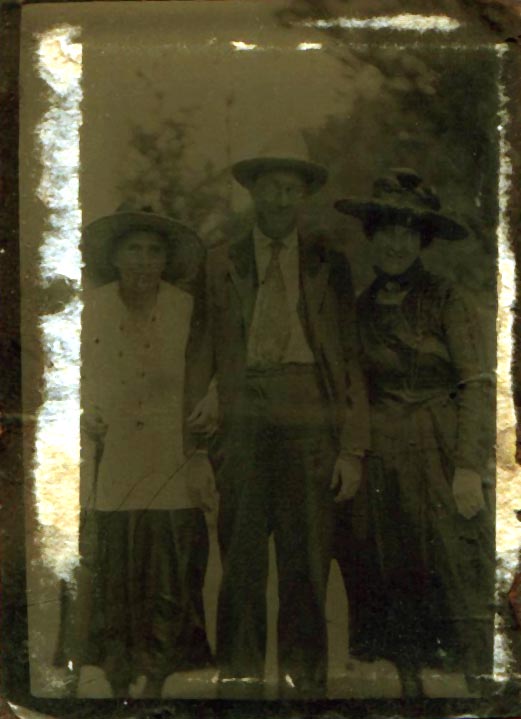
Ella Haley, Ed Haley, Margaret Arms, 1925-1945

Ella Haley, Ed Haley, Margaret Arms, 1925-1945

Parkersburg Landing 57

26 Saturday Jan 2013

Posted by Brandon Ray Kirk in Ed Haley

≈ Leave a comment

Tags

Appalachia, Ashland, blind, Clayton McMichen, Ed Haley, fiddler, history, John Hartford, Kentucky, life, music, Riley Puckett, Slim Clere, U.S. South, writing

     Curly Wellman had also recommended that I talk with Slim Clere, an Ashland-born fiddler whose telephone number I secured from a friend, Curly Fox. As I told him about my interest in Ed Haley, he was very rigid and formal; he kept referring to me as “sir.” Things loosened up once I mentioned the name Curly Wellman and asked if he had learned anything from watching Ed play.

     “Well, I would say yes that I did,” he said. “He had a style of his own. Now I picked up my backward bowing from him. What he would do, he noted out a lot of stuff. Like he was playing ‘Devil’s Dream’, he bowed it out with a straight slur all the way down. And you didn’t hear him return his bow from one end to the other. Ed was the smoothest violin player. Mostly always long bow, but you never would know it. He never made a bobble and he wasn’t a double-noter. Now, he was not a waltz man. He could play a waltz, though.”

     Slim said Ed had a unique bow hold.

     “What he did when he bowed his violin… You know when you put your finger under the frog on the stick? He gripped the whole thing with his thumb under the whole frog, like you’d do a butcher knife.” As for Ed’s fiddle placement: “He played it right on top of his collar bone there. He let it sit on his wrist.”

     “He was hot stuff,” Slim said. “He didn’t know what a different position was — he just reached up and got it — but he knew where it was. His favorite tune was ‘Blackberry Blossom’ and ‘Cacklin’ Hen’. And there was nobody in the world that could beat him playing ‘Dill Pickle Rag’.”

     Slim remembered playing against Ed in a contest one time at the Paramount Theatre in Ashland during the Depression.

     “Every contest Ed ever got into, he won. They had a contest down there at the Paramount Theatre at Ashland one time — that’s our home. He and I was both born in the same place. There was four or five fiddle players in the contest and they drew numbers: 1, 2, 3, 4, 5… They didn’t allow anybody else to play the same tune the guy played before and his heart was set on playing ‘Cacklin’ Hen’. A guy got up and he said, ‘I’m gonna play ‘Cacklin’ Hen’.’ Ed smiled. I told the guy that was playing with me, I said, ‘He’s got a trick up his sleeve.’ He said, ‘Why?’ and I said, ‘This guy played his tune. When he looks like that, you know that he’s thinking and he’s gonna win.’ And they came around to Ed and said, ‘What’re you gonna play Mr. Haley?’ and he said, ‘I’m gonna play ‘The Speckled Pullet’ and she cackles, too.’ And he played ‘Cacklin’ Hen’ and cackled himself into first place. I thought that was the cutest thing I ever heard in my life.”

     Slim’s memories of Ed were broken up with stories about his own musical career. We knew a lot of the same people. I asked him again about Ed playing in contests — something no one seemed to remember in great detail.

     “Oh yea, he played in contests all the time,” Slim said. “He liked the money. They had them a bunch of theatres in Ashland. They had the Paramount and the Grand and the Capital and they would have contests in county fairs. Then he used to do a lot of barnstorming on courthouse steps. See, by being blind he didn’t have to get permits or anything like that.”

     Slim said he bumped into Ed all over West Virginia.

     “I’ve seen him in Logan, I’ve seen him in Williamson, in Grantsville, seen him in Spencer, in Charleston, Huntington. And he could always smell me when I was around him. He’d say, ‘I smell Slim Clere.’ Everybody had a smell to him and all you had to do was say, ‘How’re you doing, Ed?’ and he knew you by name just right now, see. He was an old trooper. He knew what it was all about. He wasn’t a dummy. He used to come down there to Central Park and I’d go down there and sometimes I’d play his fiddle. He liked to hear other people play because he got his ideas that way.”

     Slim said he wanted to play me some music by Ernie Hodges, an old fiddling teacher who he felt was as good as Ed. I could hear him over the telephone trying to get a tape working in the cassette player — buttons popping, an occasional “dad-burn-it,” etc. As he struggled with the tape, he talked more about some of the people he’d worked with back in his radio days. “Curly Fox, he was with the old school that I was with. McMichen and John Carson and Gid Tanner — all of them. I worked with them down in Georgia. I worked with Bert Layne and Riley Puckett in Gary, Indiana, till they sent for me to come to Atlanta. Ed reminded me so much of Riley.”

In Search of Ed Haley 56

25 Friday Jan 2013

Posted by Brandon Ray Kirk in Ed Haley, Huntington, Music

≈ 1 Comment

Tags

Ashland, Boyd County, Curly Wellman, Dixie Lee, Ed Haley, history, Huntington, Hymns from the Hills, John Hartford, Kentucky, Laverne Williamson, Lawrence Haley, Lynn Davis, McVeigh, Molly O Day, Molly O'Day, Mountain Fern, Mountaineer Jamboree, music, Nashville, Snake Chapman, U.S. South, WEMM-FM, West Virginia, writers, writing

Back in Nashville, I followed up on some leads from Curly Wellman. I focused in on Molly O’Day, the famous singer who grew up hearing Ed’s music at her parents’ home in McVeigh, Kentucky. Snake Chapman and Lawrence Haley had both implied a strong connection between she and Ed. Named Laverne Williamson at birth, she initially used the stage names Dixie Lee and Mountain Fern. In 1941, she married Lynn Davis; the following year, she changed her name to Molly O’Day. During the 1940s, she was one of the leading female vocalists in country music.

“Uncomfortable with fame, Lynn and Molly found consolation in religion and evangelism from 1950,” according to Mountaineer Jamboree. “More often than not Huntington or its suburbs has been their home and since 1974 they have had a program called ‘Hymns from the Hills’ on WEMM-FM radio which features country gospel records and inspirational talk. Molly O’Day continued as a familiar voice on WEMM-FM radio in Huntington until she was diagnosed with cancer. She ‘went home to be with the Lord’ on December 4, 1987, and Lynn Davis has continued their radio ministry alone.”

I definitely wanted to look up Molly’s widower the next time I was in Ashland.

Hartford Christmas Party

22 Tuesday Jan 2013

Posted by Brandon Ray Kirk in Ed Haley

≈ Leave a comment

Tags

Christmas, history, John Hartford, Lawrence Haley, life, music, Nashville, Pat Haley, photos, Steve Haley, Tennessee, U.S. South

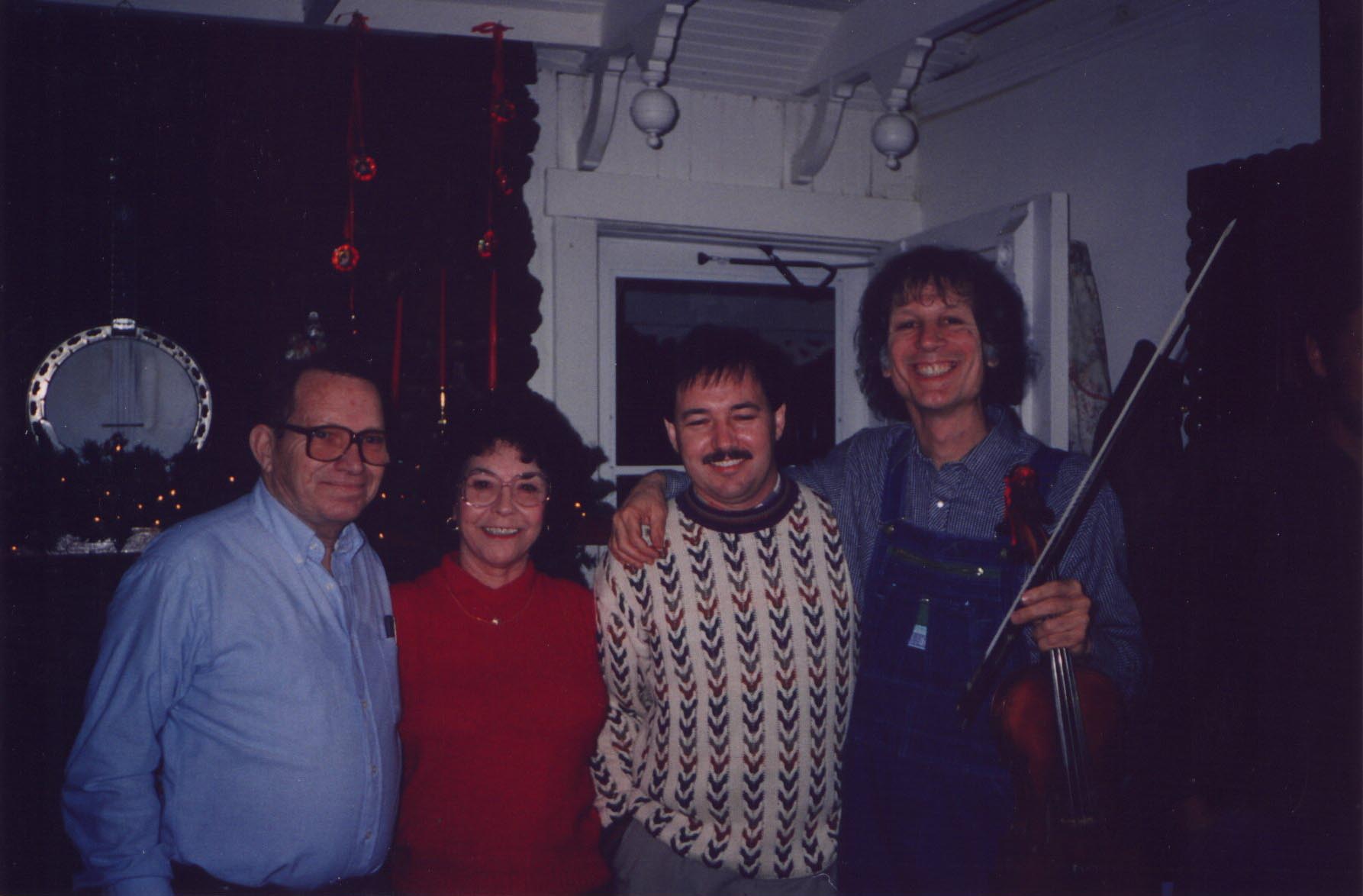
Lawrence Haley, Pat Haley, Steve Haley, and John Hartford at a Christmas Party, Nashville, TN, 1991-1994

Lawrence Haley, Pat Haley, Steve Haley, and John Hartford at a Hartford Christmas Party, Madison, TN, 1991-1994

Parkersburg Landing 56

22 Tuesday Jan 2013

Posted by Brandon Ray Kirk in Ed Haley

≈ Leave a comment

Tags

Ashland, culture, Ed Haley, history, Ironton, John Hartford, Kentucky, life, Mona Haley, music, Ohio, Ralph Haley, U.S. South, writing

     Mona was about fourteen years old when Ed made the dining room recordings at 17th Street. I had some detailed questions for her, since — unlike Lawrence, who was away in the service — she had first-hand memories of the whole experience.

Mona: My brother played a guitar…

Me: And you played the mandolin on some of them?

Mona: I don’t remember which one. I don’t remember but you can hear it in the background.

Me: What kind of room were those records made in?

Mona: Dining room.

Me: How big a room was it?

Lawrence: Not very big. Twelve feet by twelve feet, I guess.

Me: You put the recorder on the table and he’d sit up next to the table and play?

Mona: Yeah, it was on the table. It was an old one where they had to brush the curls off the record. He wasn’t holding the fiddle over the table.

Me: What time of the day were they made in?

Mona: Different times. He didn’t make them all in one day.

Lawrence: It mostly depended on when Ralph had the time, I guess.

Mona: Yeah and — again — it depended on whether Pop felt like it.

Me: Was he drinking during any of those records?

Mona: No.

Me: Do you think those records were a pretty good representation of how he played or do you think he played a lot better than what’s on those records?

Mona: He played a lot better than what was on the records because some of them was a little too fast. You know, the speed on them. When he was in a good mood you could just hear the happiness in it.

Me: So a lot of that’s not on the records?

Mona: No, a lot of it’s lost forever.

     In the car on the way home, Lawrence told me more about why he thought Ed never recorded commercially. “He was a kind of a proud man. But I’m like Curly Wellman: if he’d been alive back when these people first started coming to me back thirty years ago he could’ve made a bundle of money if he’d a wanted to. If he hadn’t been afraid of being taken by recording companies and things.”

     As we made our way through town, Lawrence pointed out a spot on Greenup Avenue where Pop used to play: “Right here on this empty corner there used to be a two or three story building. It was a big restaurant called Russ’ place. Pop used to play on the sidewalk out here on his own when he felt like it, if the weather was good. He’d go in there and stay all day and play a while and drink a while and talk a while and go back and play a while.”

In Search of Ed Haley 55

21 Monday Jan 2013

Posted by Brandon Ray Kirk in Ed Haley

≈ 2 Comments

Tags

culture, Doc Holbrook, Ed Haley, fiddler, history, Ironton, John Hartford, Lawrence Haley, life, Mona Haley, music, Ohio, U.S. South, writing

     I asked Mona and Lawrence how they passed the day when they were young and traveling with Ed.

     “Oh, I’d probably go to a movie,” Mona said. “Mom would give me money and send me to a walk-in movie. Just go get something to eat. Or sit around and watch them. All the people was standing around and most of them was dancing.”

     She and Lawrence said Ella kept a cup attached to the head of her mandolin to catch the money; Pop only put a hat out when playing by himself. He was very serious about his work, Mona said.

     “Most of the time he worked hard,” she said. “When he was working he wouldn’t drink.”

     Lawrence agreed, “He didn’t get much to drink, you know, when he was sitting out on the courthouse square — they wouldn’t have stood for that, for one thing. Maybe at a fair or something he might take a drink or two. Or out on the streets.”

     “Or unless he was at a square dance and somebody would bring him a beer and that’d get him started,” Mona added.

     Mona remembered Pop getting in “a lot” of fiddlers’ contests but didn’t recall any specifically. She said he paid Doc Holbrook for her delivery with 25 dollars and a silver cup he’d won in a contest.

     “We never could get that silver cup back,” she said.

     Lawrence figured Doc’s son had the cup.

     “He’s got a fiddle of Pop’s, too,” he said. “He’s right in Ashland.”

     I wanted to know more about Ed being in contests but everyone kind of drew a blank about it. Mona joked with Lawrence about a time they were in a contest as children.

     “Mom made up a song for me,” she said. “Had me a dress made.”

     I got her to sing it for me.

See my pretty ruffled dress.

See my pretty pocket.

See my pretty handkerchief.

See my pretty locket.

     Lawrence said Mona won first prize in the contest and I was very quick to tell her that to be Ed’s daughter she probably had a lot of musical talent. She wasn’t willing to admit that but said, “I think I got more than any of the boys had.”

     I asked if she ever tried playing the fiddle and she said, “Yeah, I could play ‘Over the Waves’ on a fiddle and that’s it.”

     Okay — I was very curious.

     I asked if she could show me how Ed held the bow and she said sure — that he held it like she holds a pool stick, “real loose with straight fingers.”

     I reached my fiddle and bow to her and she showed me how Pop held the bow (little finger on top of the stick), then started playing “Over the Waves”. Her hands had an incredible economy of motion — almost as if they were “miniaturizing” the music. In watching her, I got a real feel for Ed’s technique and it was hard not to imagine Ed playing in a way similar to Vassar Clements. Mona clapped when I played for her but said I only played “a little bit” like Pop.

Mona Haley (1940s)

20 Sunday Jan 2013

Posted by Brandon Ray Kirk in Ed Haley, Music, Women's History

≈ Leave a comment

Tags

Appalachia, culture, Ed Haley, Ella Haley, genealogy, history, Kentucky, Mona Haley, photos

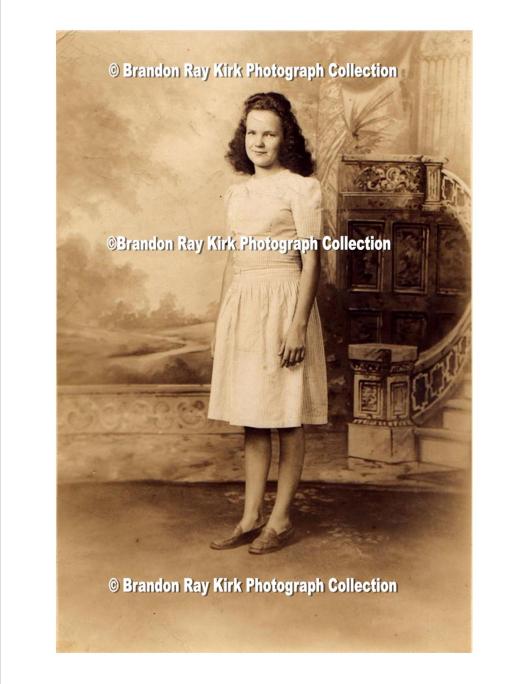
Mona Haley

Mona Haley, daughter of J.E. “Ed” Haley and Ella (Trumbo) Haley

← Older posts
Newer posts →

Feud Poll 1

If you had lived in the Harts Creek community during the 1880s, to which faction of feudists might you have given your loyalty?

Categories

  • Adkins Mill
  • African American History
  • American Revolutionary War
  • Ashland
  • Atenville
  • Banco
  • Barboursville
  • Battle of Blair Mountain
  • Beech Creek
  • Big Creek
  • Big Harts Creek
  • Big Sandy Valley
  • Big Ugly Creek
  • Boone County
  • Breeden
  • Calhoun County
  • Cemeteries
  • Chapmanville
  • Civil War
  • Clay County
  • Clothier
  • Coal
  • Cove Gap
  • Crawley Creek
  • Culture of Honor
  • Dingess
  • Dollie
  • Dunlow
  • East Lynn
  • Ed Haley
  • Eden Park
  • Enslow
  • Estep
  • Ethel
  • Ferrellsburg
  • Fourteen
  • French-Eversole Feud
  • Gilbert
  • Giles County
  • Gill
  • Green Shoal
  • Guyandotte River
  • Halcyon
  • Hamlin
  • Harts
  • Hatfield-McCoy Feud
  • Holden
  • Hungarian-American History
  • Huntington
  • Inez
  • Irish-Americans
  • Italian American History
  • Jamboree
  • Jewish History
  • John Hartford
  • Kermit
  • Kiahsville
  • Kitchen
  • Leet
  • Lincoln County Feud
  • Little Harts Creek
  • Logan
  • Man
  • Matewan
  • Meador
  • Midkiff
  • Monroe County
  • Montgomery County
  • Music
  • Native American History
  • Peach Creek
  • Pearl Adkins Diary
  • Pecks Mill
  • Peter Creek
  • Pikeville
  • Pilgrim
  • Poetry
  • Queens Ridge
  • Ranger
  • Rector
  • Roane County
  • Rowan County Feud
  • Salt Rock
  • Sand Creek
  • Shively
  • Spears
  • Sports
  • Spottswood
  • Spurlockville
  • Stiltner
  • Stone Branch
  • Tazewell County
  • Timber
  • Tom Dula
  • Toney
  • Turner-Howard Feud
  • Twelve Pole Creek
  • Uncategorized
  • Warren
  • Wayne
  • West Hamlin
  • Wewanta
  • Wharncliffe
  • Whirlwind
  • Williamson
  • Women's History
  • World War I
  • Wyoming County
  • Yantus

Feud Poll 2

Do you think Milt Haley and Green McCoy committed the ambush on Al and Hollene Brumfield in 1889?

Blogroll

  • Ancestry.com
  • Ashland (KY) Daily Independent News Article
  • Author FB page
  • Beckley (WV) Register-Herald News Article
  • Big Sandy News (KY) News Article
  • Blood in West Virginia FB
  • Blood in West Virginia order
  • Chapters TV Program
  • Facebook
  • Ghosts of Guyan
  • Herald-Dispatch News Article 1
  • Herald-Dispatch News Article 2
  • In Search of Ed Haley
  • Instagram
  • Lincoln (WV) Journal News Article
  • Lincoln (WV) Journal Thumbs Up
  • Lincoln County
  • Lincoln County Feud
  • Lincoln County Feud Lecture
  • LinkedIn
  • Logan (WV) Banner News Article
  • Lunch With Books
  • Our Overmountain Men: The Revolutionary War in Western Virginia (1775-1783)
  • Pinterest
  • Scarborough Society's Art and Lecture Series
  • Smithsonian Article
  • Spirit of Jefferson News Article
  • The Friendly Neighbor Radio Show 1
  • The Friendly Neighbor Radio Show 2
  • The Friendly Neighbor Radio Show 3
  • The Friendly Neighbor Radio Show 4
  • The New Yorker
  • The State Journal's 55 Good Things About WV
  • tumblr.
  • Twitter
  • Website
  • Weirton (WV) Daily Times Article
  • Wheeling (WV) Intelligencer News Article 1
  • Wheeling (WV) Intelligencer News Article 2
  • WOWK TV
  • Writers Can Read Open Mic Night

Feud Poll 3

Who do you think organized the ambush of Al and Hollene Brumfield in 1889?

Recent Posts

  • Logan County Jail in Logan, WV
  • Absentee Landowners of Magnolia District (1890, 1892, 1894)
  • Charles Spurlock Survey at Fourteen Mile Creek, Lincoln County, WV (1815)

Ed Haley Poll 1

What do you think caused Ed Haley to lose his sight when he was three years old?

Top Posts & Pages

  • Civil War Gold Coins Hidden Near Chapmanville, WV
  • Red Rock Cola in Logan, WV (1939)
  • George Fry Last Will and Testament (1793)
  • John Hartford's grave
  • About

Copyright

© Brandon Ray Kirk and brandonraykirk.wordpress.com, 1987-2023. Unauthorized use and/or duplication of this material without express and written permission from this blog’s author and/or owner is strictly prohibited. Excerpts and links may be used, provided that full and clear credit is given to Brandon Ray Kirk and brandonraykirk.wordpress.com with appropriate and specific direction to the original content.

Archives

  • February 2025
  • January 2025
  • October 2023
  • September 2023
  • December 2022
  • November 2022
  • May 2022
  • April 2022
  • February 2022
  • November 2021
  • October 2021
  • September 2021
  • June 2021
  • May 2021
  • April 2021
  • March 2021
  • February 2021
  • January 2021
  • December 2020
  • November 2020
  • October 2020
  • July 2020
  • June 2020
  • May 2020
  • April 2020
  • March 2020
  • February 2020
  • January 2020
  • December 2019
  • November 2019
  • October 2019
  • September 2019
  • August 2019
  • July 2019
  • June 2019
  • May 2019
  • April 2019
  • March 2019
  • February 2019
  • January 2019
  • December 2018
  • November 2018
  • October 2018
  • September 2018
  • August 2018
  • July 2018
  • June 2018
  • May 2018
  • April 2018
  • March 2018
  • February 2018
  • January 2018
  • December 2017
  • November 2017
  • October 2017
  • September 2017
  • August 2017
  • July 2017
  • June 2017
  • May 2017
  • April 2017
  • March 2017
  • February 2017
  • January 2017
  • December 2016
  • November 2016
  • October 2016
  • September 2016
  • August 2016
  • July 2016
  • June 2016
  • May 2016
  • April 2016
  • March 2016
  • February 2016
  • January 2016
  • December 2015
  • November 2015
  • October 2015
  • September 2015
  • August 2015
  • July 2015
  • June 2015
  • May 2015
  • April 2015
  • March 2015
  • February 2015
  • January 2015
  • December 2014
  • October 2014
  • September 2014
  • August 2014
  • July 2014
  • June 2014
  • May 2014
  • April 2014
  • March 2014
  • February 2014
  • January 2014
  • December 2013
  • November 2013
  • October 2013
  • September 2013
  • August 2013
  • July 2013
  • June 2013
  • May 2013
  • April 2013
  • March 2013
  • February 2013
  • January 2013
  • December 2012
  • November 2012

Enter your email address to follow this blog and receive notifications of new posts by email.

Join 2,925 other subscribers

Tags

Appalachia Ashland Big Creek Big Ugly Creek Blood in West Virginia Brandon Kirk Cabell County cemeteries Chapmanville Charleston civil war coal Confederate Army crime culture Ed Haley Ella Haley Ferrellsburg feud fiddler fiddling genealogy Green McCoy Guyandotte River Harts Harts Creek Hatfield-McCoy Feud history Huntington John Hartford Kentucky Lawrence Haley life Lincoln County Lincoln County Feud Logan Logan Banner Logan County Milt Haley Mingo County music Ohio photos timbering U.S. South Virginia Wayne County West Virginia Whirlwind writing

Blogs I Follow

  • OtterTales
  • Our Appalachia: A Blog Created by Students of Brandon Kirk
  • Piedmont Trails
  • Truman Capote
  • Appalachian Diaspora

BLOOD IN WEST VIRGINIA is now available for order at Amazon!

Blog at WordPress.com.

OtterTales

Writings from my travels and experiences. High and fine literature is wine, and mine is only water; but everybody likes water. Mark Twain

Our Appalachia: A Blog Created by Students of Brandon Kirk

This site is dedicated to the collection, preservation, and promotion of history and culture in Appalachia.

Piedmont Trails

Genealogy and History in North Carolina and Beyond

Truman Capote

A site about one of the most beautiful, interesting, tallented, outrageous and colorful personalities of the 20th Century

Appalachian Diaspora

  • Subscribe Subscribed
    • Brandon Ray Kirk
    • Join 787 other subscribers
    • Already have a WordPress.com account? Log in now.
    • Brandon Ray Kirk
    • Subscribe Subscribed
    • Sign up
    • Log in
    • Report this content
    • View site in Reader
    • Manage subscriptions
    • Collapse this bar
 

Loading Comments...