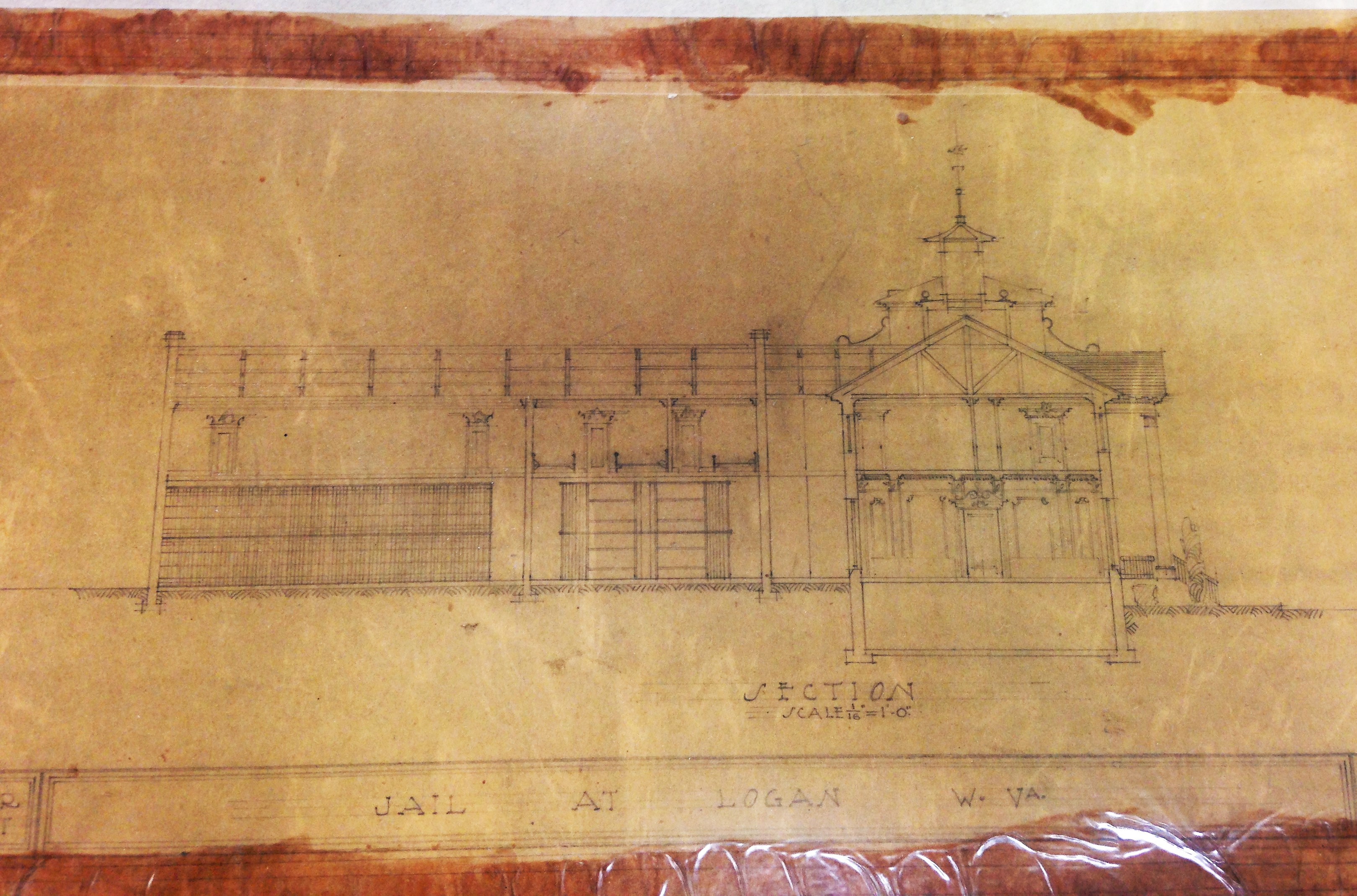
Logan County Jail in Logan, WV
19 Wednesday Feb 2025

19 Wednesday Feb 2025
18 Tuesday Feb 2025
Posted in Big Sandy Valley, Matewan, Tazewell County
Tags
A.D. Bright, A.M. Bailey, Alex McClintock, Anthony Lawson, Appalachia, C.B. Taylor, C.R. McNutt, Canada, Charleston, Cincinnati, Cora McInturff, E.H. Stewart, Egbert Mills Jr., Elkhorn Sandy River Trust Company, George W. Duty Jr., Grayton Mining Company, Grayton Water Works and Improvement Company, H.R. Phillips, H.S> White, H.W. Sibley, Howard S. Graham, J.C. Williamson, J.D. Sergeant, J.E. Price, Jacob Smith, James Hatfield, James OKeeffe, L.M. Hall, Lewis Ferrell, Logan County, M.F. Meighen, Magnolia District, McDowell County, Mercer County, Mingo County, Morehead, Moundsville, New York, Philadelphia, Pike County, Richard Torpin Jr., Roanoke, Rowan County, Sauel Walton, Stuart Wood, Tazewell County, Virginia, W.E. Chilton, W.W. Adams, Warren Alderson, West Virginia, Wheeling, William P. Payne
What follows is a list of absentee landowners in Magnolia District of Logan County, WV, for 1890, 1892, and 1894… There are three significant types of absentee landowners: 1) those who live outside of Logan County; 2) those who live in Logan County but outside of Magnolia District; and 3) those who own property, for example, at Mate Creek but reside, for example, at Grapevine Creek (both within the district). This list does not include the latter type.
1890
J.D. Sergeant, Philadelphia, PA, 9495.91 acres
James O’Keeffe, Tazewell County, VA, 2963 acres
Stuart Wood, Philadelphia, PA, 2813 acres
Walton and O’Keeffe, Tazewell County, VA, 1933 acres
Elkhorn Sandy River Trust Company, no address given, 1699 acres
Warren Alderson, Morehead, KY, 800 acres
J.C. Alderson, Wheeling, 792 acres
J.D. Sergeant and James O’Keeffe, ________, 783.5 acres
E.H. Stewart, trustee, Roanoke, VA, 684 acres
Lewis Ferrell heirs, Pike County, KY, 600 acres
W.B. Payne, McDowell County, 582 acres
F. Stukenburgh, Cincinnati, OH, 350 acres
1892
Richard Torpin, Jr. et al, trustee, no residence given, 9326.66 acres
H.R. Phillips, NY, 6095 acres
J.E. Price, trustee, NY, 5853 acres
Samuel Walton, Tazewell County, VA, 4439.5 acres
Walton and O’Keeffe, Tazewell County, VA, 4102 acres
W.E. Chilton, trustee, Charleston, 3953.5 acres
Stuart Wood, Philadelphia, PA, 2813 acres
J.D. Sargeant, Philadelphia, PA, 1668.5 acres
James O’Keeffe, Tazewell County, VA, 1650 acres
C.R. McNutt, Mercer County, 1509 1/16 acres
H.S. White, Charleston, 1500 acres
Alderson and Adams, Wheeling, 920.5 acres
Alex McClintock, Lexington, KY, 843 acres
E.H. Stewart, Roanoke, VA, 684 acres
Jacob Smith, Pike County, KY, 550 acres
W.B. Payne, McDowell County, 532 acres
J.F. Paull, trustee, Wheeling, 509 acres
James Hatfield, Rowan County, KY, 147 acres
J.C. Alderson, Wheeling, 59 acres
H.W. Sibley, Tazewell County, VA, 36 acres
George W. Dewty, Jr., Pike County, KY, 22 acres
1894
Richard Torpin, Jr., trustee, no address given, 9326.66 acres
H.R. Phillips, trustee, NY, 6345 acres
Grayton Mining Company, Philadelphia, PA, 6022.5 acres
J.E. Price, trustee, NY, 5853 acres
Egbert Mills, Jr., trustee, NY, 4374.5 acres
Walton and O’Keeffe, Tazewell County, VA, 4052 acres
Stuart Wood, Philadelphia, PA, 3097 acres
C.R. McNutt, Mercer County, 3018 1/8 acres
L.M. Hall et al, Towanda, PA, 2572 acres
Howard S. Graham et al, trustee, Philadelphia, PA, 1790 acres
J.F. Poull, trustee, Wheeling, 954 acres
Alderson and Adams et al, Wheeling, 920.5 acres
J.D. Sergeant, Philadelphia, PA, 877.5 acres
Grayton Water Works and Improvement Company, Philadelphia, PA, 767 acres
E.H. Stewart, trustee, Roanoke, VA, 684 acres
W.B. Payne, McDowell County, 532 acres
J.C. Williamson, Pike County, KY, 470.5 acres plus three lots in Matewan
A.D. Bright, NY, 374 acres
Jacob Smith, Pike County, KY, 350 acres
C.B. Taylor, Canada, 200 acres
J.C. Alderson, Wheeling, 193 acres
H.W. Sibley, Tazewell County, VA, 36 acres
George W. Duty, Jr., Pike County, KY, 22 acres
Cora McInturff, KY, 1 acre
A.M. Bailey, McDowell County, 0.5 acres
B.F. Meighen, Moundsville, two lots in Matewan
Source: Land Book 1887-1892 and Land Book 1893-1899.
17 Monday Feb 2025
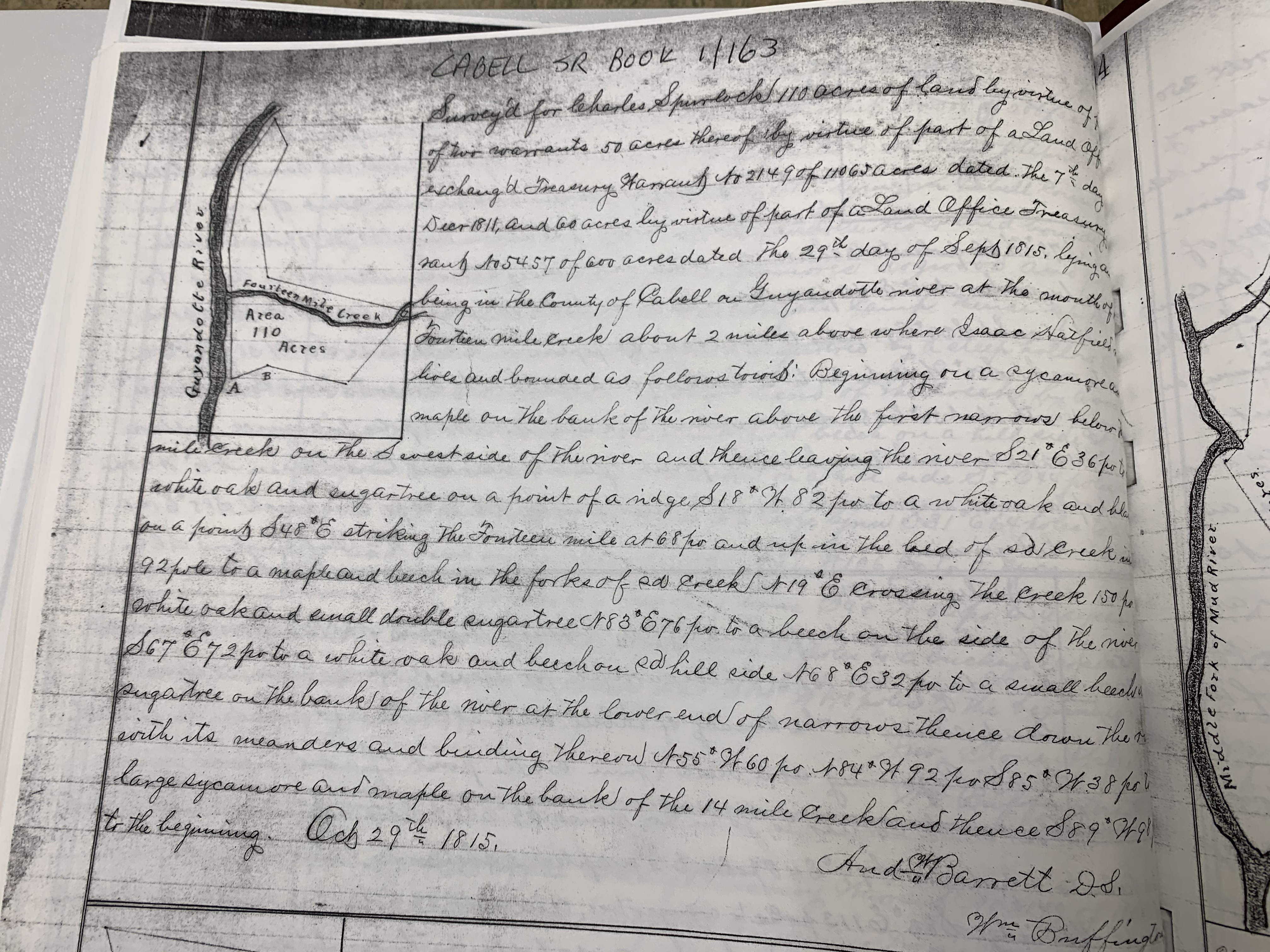
Posted in Fourteen
Tags
Andrew Barrett, Appalachia, Cabell County, Charles Spurlock, Fourteen Mile Creek, Guyandotte River, Isaac Hatfield, Lincoln County, Virginia, West Virginia, William Buffington
29 Wednesday Jan 2025
Posted in Big Sandy Valley, Hatfield-McCoy Feud, Pikeville, Williamson
Tags
Appalachia, Byrd Gilliam, Cap Hatfield, Catlettsburg, Crit Weddington, Detroit, Dollie McCoy, Fannie Charles, Finnie McCoy, Frank Phillips, Hatfield-McCoy Feud, Huntington, Jim McCoy, Kentucky, Lark McCoy, Logan Banner, M.A. Dunlap, Mossy Bottom, New York City, Pike County, Pike County News, Pikeville, Randolph McCoy, Raymond Daugherty, Stoney Amick, Tennis Hatfield, Williamson
Jas. McCoy, Old Feudist Leader, Dies
At Four Score Years Old, Warrior Dies with Boots Off at Pikeville Home
Last of McCoy Clan who Long Fought the Hatfields
“James McCoy, 80, the last of the men who were actively engaged in the Hatfield-McCoy feud about forty years ago, passed away last Friday in Pikeville at the home of Mr. and Mrs. Stoney Amick. But one other member of the older family survives him, Mrs. Fannie Charles of Williamson.
“The Hatfield-McCoy feud was one of the most noted struggles of the mountains in the last century. And of all the men on the McCoy side one could scarcely pick a more picturesque one than James McCoy.
“Soon after the fighting started and the two families became warring factions, all over an election dispute, James McCoy was made deputy sheriff of Pike county. Acting in this capacity he, at one time, arrested some of the Hatfield family and brought them to Pikeville for trial. In most every encounter he was usually found fighting for his family, and the Hatfields learned to fear the name of James McCoy.
“But the years have wiped out the hatred that once existed, the warring families having been induced to settle their differences some twenty-five years ago by a mountain preacher.
“For a long time Mr. McCoy has made his home with Mr. and Mrs. Stoney Amick in Pikeville. About a year ago he became ill with a sickness that, at his age, proved too serious and he died last Friday. The funeral services were held in the Presbyterian church last Saturday afternoon and the body was taken to Catlettsburg where he is now sleeping beside his wife, who passed away a number of years ago.
“A number of children survive him; Mrs. Stoney Amick of Pikeville, Mrs. Crit Weddington of Mossy Bottom, Byrd Gilliam of Huntington, Mrs. Raymond Daugherty of Detroit, Mich., Miss Dollie McCoy of Huntington, W.Va., Mrs. M.A. Dunlap of New York City, and Mr. Finnie McCoy of Douglas. Three other children have preceded Jim in death.
Source: Logan (WV) Banner reprinted from the Pike County (KY) News, 20 September 1929.
***
‘Cap’ Hatfield Speaks Kindly of Late Jim McCoy
Denies, However, That Decedent was Formidable Figure in the Feud, Thus Taking Issue with Obituary Writers
“‘Neither fear nor hatred ever ran strong in the Hatfields for the late Jim McCoy,’ declared ‘Cap’ Hatfield while here Wednesday. His statement was made to a Banner reporter when the subject of the recent death of the McCoy feudist was mentioned.
“According to Cap, who is credited with knowing more about the Hatfield-McCoy troubles than anyone else, living or dead, by reason of his leading part therein and of his amazing memory, Jim McCoy was among the least active of the recognized adherents of that clan. It is not believed that he killed any of the Hatfields or their supporters.
“Cap further stated that those of the Hatfield clan never felt particularly hostile to Jim McCoy and he mentioned the fact that when Tennis Hatfield had occasion to visit Pikeville, Ky., a year or more ago, he and Jim fraternized and even posed together for a picture. ‘I had long intended,’ continued Cap, ‘to ask and urge Jim McCoy to come over and visit me. Had he come I would have done my best to be considerate and hospitable. Jim did nothing against us that caused us to harbor hatred for him; he did only what was natural for him to do under the circumstances. But I insist the Hatfields did not fear him, nor did they consider him among the more dangerous men on the McCoy side. Frank Phillips, of course, was the outstanding gunfighter of the McCoy side.’
“Jim McCoy, son of Randall, who was commonly credited with leadership of the McCoy forces, died at his home in Pikeville, August 30. He was 80 years old.
“Perhaps it should be added that contrary to the statement widely published immediately after his death, Jim was not the last survivor of his clan’s feud fighters. Lark McCoy, who was more active as a feudist, is still living. It is said that both he and Jim were in the attacking party when Jim Vance was killed on Thacker mountain and when ‘Cap’ narrowly escaped death or capture.”
Source: Logan (WV) Banner, 20 September 1929.
28 Tuesday Jan 2025
Posted in Hatfield-McCoy Feud, Pikeville
Tags
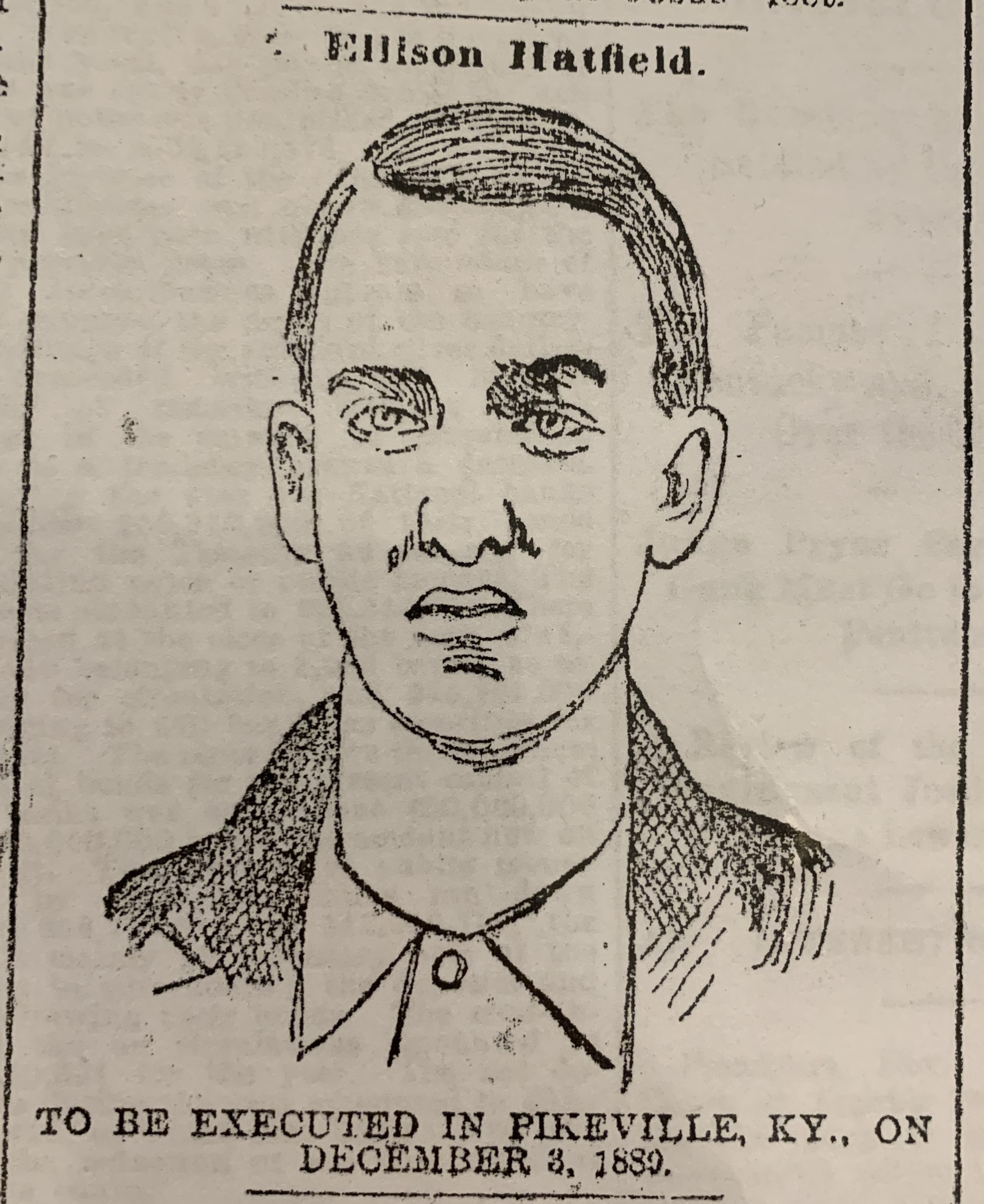
Appalachia, Ellison Hatfeild, Ellison Hatfield, Hatfield-McCoy Feud, Kentucky, Louisville Courier-Journal, Pike County, Pikeville
02 Monday Oct 2023
Posted in Cemeteries, Civil War, Hatfield-McCoy Feud, Pikeville
Tags
Alifair McCoy, Appalachia, Big Sandy News, Blackberry Creek, Calvin McCoy, Cap Hatfield, civil war, Devil Anse Hatfield, Dils Cemetery, Elias M. Hatfield, feuds, Harmon McCoy, Hatfield-McCoy Feud, Herald's Branch, history, Jim Vance, Johnse Hatfield, Kentucky, Melvin McCoy, Pike County, Pikeville, Randall McCoy, Randolph McCoy, Roseanna McCoy, Tom Dotson, Truda McCoy, Tug River
Oral history relating to Randolph “Ran’l” McCoy’s final years is scant. Most historians rely upon Truda Williams McCoy’s book The McCoys: Their Story (1976) for information about his life. Here are a few news items which may in some part be reliable that provides more information about Ran’l and his final months of life.
Randolph McCoy Falls into Fireplace (January 10, 1914)
“Randall McCoy, who was a leader in the McCoy-Hatfield feud, at Pikeville, Ky., thirty years ago, fell into an open fireplace yesterday [Jan. 9] and before he could be removed he was fatally burned.”
Norwich (CT) Bulletin, 10 January 1914; “Aged Feudist Dies,” Dakota Farmers’ Leader (Canton, SD), 16 January 1914. The Leader says, “McCoy was 86 years old.”
Randolph McCoy Falls into Fireplace (January 16, 1914)
“Uncle Randall McCoy, an aged man, fell backward into the fire at the home of his grandson, Melvin McCoy, on Herald’s Branch last Friday morning [Jan. 9], and before help could reach him he was badly burned. On account of his enfeebled condition he was unable to remove himself from the flames.”
“Aged Man Burns,” Big Sandy News (Louisa, KY), 16 January 1914
Randolph McCoy Died (March 28, 1914)
Randolph McCoy died on March 28, 1914. Thomas Dotson, who was born and raised among feudists on Blackberry Creek, writes that he did not know anyone who attended Ran’l’s funeral, adding that Elias M. Hatfield knew the correct location of his grave. Ran’l’s grave remained marked with a rock for numerous decades after his death.
Thomas Dotson, The Missing McCoys, p. 28.
Randolph McCoy Obituary (March 31, 1914)
“Pikeville, Ky., March 31.—This village ‘turned out’ today to pay a tribute to Randolph McCoy, the famous feud leader, who lies dead at his home on Blackberry Creek. He was burned last fall and never recovered from the accident. ‘Ran’ McCoy, a generation ago, was a leader in the Hatfield-McCoy feud that kept the hill clans in Breathitt county, Ky., in turmoil for a dozen years. The trouble began in the early sixties, when James Vance, a marriage relative of ‘Bad Anse’ Hatfield shot and killed Harmon McCoy, a brother of ‘Ran.’ The feud was revived when one of ‘Bad Anse’s’ sons, Johnson Hatfield, eloped with one of ‘Ran’ McCoy’s daughters. ‘Ran’ said in 1907, at his mountain home in Blackberry Creek, near Pikeville, that he was ninety-six, that three of his children had been killed in the feud, two of them in 1887, and that he had killed six of his enemies, in different combats. It was estimated at that time that forty persons had been killed and more than 100 injured in the forty years that the two clans had been at war. ‘Things aren’t what they used to be,’ he said, as he greeted several of his old Hatfield foes at his birthday celebration. ‘Think of a Hatfield coming up to my front door, unarmed, walking straight in, and me a-shaking hands with him. I remember the time when I’d have got him a quarter of a mile away, or he’d have got me.’ ‘Ran’ McCoy, in 1897, led a sheriff’s posse into the Tug river wilds in search of ‘Cap.’ Hatfield who had chopped his way out of the county jail with an axe, but Hatfield got away from the posse. ‘Ran’ was shot twice, at different times, but he bore what the mountaineers called a ‘charmed life.’ One of his daughters went crazy after her brother and sister were killed in 1887.”
“Feudist Dies Natural Death: He Kept Kentucky Hill Clans in Turmoil for Years—Notorious Outlaw Lived 103 Years,” The Union (SC) Times, 3 April 1914.
Randolph McCoy Obituary (April 3, 1914)
“Uncle Randall McCoy, one of the oldest citizens of Pike county, and a participant and leader in the Hatfield-McCoy feud which brought a reign of terror to Eastern Kentucky thirty years ago, died at the home of his grandson, Melvin McCoy, on Herald’s branch, last Saturday morning from the effects of injuries he received by falling backward into an open fire place last autumn. Funeral and interment were held Sunday afternoon at the Dils cemetery across the river. At his death Mr. McCoy was 89, and he was a conspicuous figure in the most noted feud in the history of Kentucky. On New Year’s night, twenty-seven years ago, the Hatfields made an attack on his home, and in a bloody battle one of his daughters and two sons were killed. His home was also burned to the ground. But he pursued his enemies with relentless courage, and after depleting their rank he drove the remainder of them either from the state or into hiding. At the close of the bloody war he removed with his family to Pikeville, and lived here until the time of his death.”
“Randall McCoy Died at 89,” Big Sandy News (Louisa, KY), 3 April 1914
Randolph McCoy Obituary (April 3, 1914)
“Pikeville, Ky.—Randall McCoy, nonagenarian and leader in the famous McCoy-Hatfield feud, died Saturday at the home of his grandson here of burns received last fall. Twenty-seven years ago Randall McCoy’s home was burned New Year’s night and one daughter and two sons killed by the Hatfield clan. He lost two brothers in a subsequent fight, but pursued the feud so relentlessly that he eventually forced his enemies into hiding or out of the state.”
“Noted Feudist Leader Passes,” Montpelier (ID) Examiner, 3 April 1914.
Randolph McCoy Obituary (April 3, 1914)
“Randolph McCoy, nonagenarian and leader in the famous McCoy-Hatfield feud, died at the home of his grandson at Pikeville, Ky., of burns received last fall.”
The Ely (MN) Miner, 3 April 1914; Audubon (IA) Republican, 9 April 1914; The Kadoka (SD) Press, 10 April 1914.
NOTE: This post will be edited and expanded as time permits.
29 Friday Sep 2023
Posted in Big Sandy Valley, Civil War, Hatfield-McCoy Feud
Tags
civil war, crime, Floyd Hatfield, Hatfield-McCoy Feud, Kentucky, Leonard Roberts, Preacher Anse Hatfield, Preservation Council Press, Randolph McCoy, Truda McCoy, West Virginia
Truda Williams McCoy’s The McCoys: Their Story (1976) is a classic book about the Hatfield-McCoy Feud. Truda, a McCoy descendant born in 1902 who married a grandson of Ran’l McCoy, collected her stories directly from feud participants and close family members prior to and during the 1930s. Truda was unable to publish her manuscript, but after her death in 1974 Dr. Leonard W. Roberts located and edited the manuscript, then published it through Preservation Council Press. In this 1982 interview, Dr. Roberts contemplates general issues about the feud:
Was the Hatfield-McCoy Feud one in which more people were killed?
I suppose there were fewer people killed in this feud than say some others, although we don’t have any documentation of that one. But the number killed runs anywhere from 20 to 75, let’s say, Hatfields and McCoys. Some of the elements in this fight might be noted. Notice the first time there was some fighting was over a hog that had pigs and the owner Randolph McCoy had marked his ears with a mark. He found those in a pen of a Hatfield. Now rather than pulling a gun—guns on each other—they weren’t that savage, all they wanted was law to take its course. Randolph simply went to the magistrate of the district and brought out a warrant against Floyd Hatfield for the return of his hogs. The old sow had had pigs, you see, by this time. And what happened? The magistrate was a Hatfield. And he knew it. Yet he thought that everybody would play fair and square. We had just come out of the Civil War. We were righting wrongs. They were going to, if they were ever going to. And it seemed they wanted law and order to take over. But it didn’t hardly take over in this case. The fellow Hatfield [presumably, he means Preacher Anse] who brought the trial decided on a jury. Rather than just have two or three testify here or there and let him then make the decision himself, he called in twelve jurors. And then they started voting. And they came out 7 to 5 in favor of Hatfield to keep the hogs.
What should we really remember about the feud? How is it important to us today?
Well that it was simply honest men and women living in a kind of rough and tumble era, especially just after the Civil War when emotions and values were pretty badly mocked and pretty badly thrown aside. But remember that some people including Hatfields and McCoys tried to see that law was established again. Rather than simply running amuck as they had done in small groups, robbing and killing. Remember the Civil War and the conditions of the times. Coming out of the war was this idea of posse or idea of organizing a group. It was almost as if any time there was a fight going between one man and another, pretty soon he was backed by fifteen or twenty men that he’d drawn in, either through persuasion or through kinship or access to mercenary ways—they offered him a piece of land or help him build his home or something of that kind to come in and fight—and so it developed in some cases into a kind of mercenary situation. But let’s remember that there weren’t too many actually killed and eventually the governors began to try to stop it and almost got in a war themselves. Finally threw the thing in the courts and even the Supreme Court made a decision about what states could do and what they couldn’t do in handling and controlling their citizens. So law and order did begin to develop. And of course we began to have the recovery of America after the Civil War. Timber. Lots of fuel and coal, things of this kind. So pretty soon, business began to boom in the mountains where there was plenty of timber, plenty of coal, plenty of resources. And so by 1900 the thing had sort of drifted over. And nowadays when you go into the area, here’s a McCoy that’s married to a Hatfield, Hatfield married to a McCoy, and down and down the line. And unless you name it to them they have forgotten about anything like a feud.
Is there anything else you would want someone to know about the story?
Well, I guess it’s generally unknown or understood that Hatfields and McCoys are simply decent, honest, migratory people who had come into the mountains from their areas back in the east and eventually further back, you know, in Scotland and Ireland. And they settled here in the mountains and they began to pick up land in the legal and rightful ways and establish their families. And actually the first decade or the first generation, they’d married within one another. They’d lived on the West Virginia side at the time and then later on the Kentucky side. What drove a wedge between them probably was not the Civil War alone but notice what the Civil War produced. It produced a separation of Virginia from West Virginia. Now how would you feel if you were fighting for your mother country living across here on the Tug River side and all at once you were, you became another state that was with the Union? So the people was thrown into kind of a quandary. The Hatfields on the West Virginia side were largely Southern because they were for the South and their mother country immediately was changed for the North. And so they were trying to live a decent life going along with the Southerners and here these people just across the river accusing them of course of rebellion and joining and fighting against the Union. That’s one big thing that we might leave out, the historical patterns and problems that developed pretty fast on the frontier here.
29 Friday Sep 2023
Tags
Appalachia, Asbury Stidham, blacksmith, brakeman, C.W. Small, carman, carpenter, Cleve Craddock, coal, Ethel, Jerry Stidham, Logan County, Lou Davis, mine foreman, mining, motorman, West Virginia

Posted by Brandon Ray Kirk | Filed under Coal, Ethel
28 Thursday Sep 2023
Posted in Big Sandy Valley, Civil War, Hatfield-McCoy Feud
Tags
Appalachia, Bill Staton, civil war, Confederate Army, Dr. Leonard W. Roberts, Harmon McCoy, history, Kentucky, Lexington, Paris McCoy, Randolph McCoy, Squirrel Huntin' Sam McCoy, Truda McCoy, Union Army
Truda Williams McCoy’s The McCoys: Their Story (1976) is a classic book about the Hatfield-McCoy Feud. Truda, a McCoy descendant born in 1902 who married a grandson of Ran’l McCoy, collected her stories directly from feud participants and close family members prior to and during the 1930s. Truda was unable to publish her manuscript, but after her death in 1974 Dr. Leonard W. Roberts located and edited the manuscript, then published it through Preservation Council Press. In this 1982 interview, Dr. Roberts recollects the story of Squirrel Huntin’ Sam McCoy and contemplates bigger questions about the feud:
Did Squirrel Huntin’ Sam McCoy ever kill anyone?
He doesn’t say that he did in his manuscript. He says that he protected people. Now outside of the manuscript, he tells a story to his grandson who was visiting that “Yes, I did kill a man. It’s not in my manuscript. I just skipped it. I didn’t like to have it in there.” Or something like that. But when he and his brother Paris were out hunting they ran into one of the Ellison [Bill Staton] boys—I can’t think of the name right quick—ran into one of the boys that was on the other side most of the time. And this boy began to shoot and pretty soon he and Paris had been shot through and had fallen to the ground and—what was his name—Ellison [Bill Staton] was on top and was trying to twist this fellow’s head off or something like that and Squirrel Huntin’ Sam said, “I saw then I just had to shoot.” And he got up and shot and killed him. But then in telling this story, he said, “The reason I don’t tell this story much, I dread that it happened.” And you ask him why and he’d say, “Well, when we went up there to him, my enemy’s gun was already empty.”
Why did this feud get such nationwide attention?
Well, about three or four things there that maybe I can’t think of… One at a time. Let’s start out with the, let’s say problems with the Civil War. It’s a long story, but one of Randolph McCoy’s brothers had gone into the army on the Union side in the State of Kentucky. Went and fought in Kentucky down around Lexington and central Kentucky. Got discharged. Come back home. By that time the rebels had been organizing posses and groups to patrol the whole situation. So they’d heard that Harmon—this was the person’s name—had come back home. Been out fighting for the Union. Now he’s come back home. So they traced him down. And it seems that he stayed with his family only one night after two years in the war until he was shot at. Nobody could go out and get wood or water. Why, they’d be shot at. So he slipped out after midnight and went to the little cave back on the hillside. Well, by then, by the time he escaped it had been snowing a bit. So this posse who had come after him traced him in the snow and found him back in that cave, dragged him out, and killed him. The war was going on then. And everybody was away from home fighting on one side the other. And that sort of didn’t take hold, didn’t cause any hard feelings, until they all came back. And then it was understood that Harmon’s—he had four sons and two daughters—the four sons seem to have sworn that they would avenge their father’s murder now or sometime else. So they started to look for the enemy and continued looking for almost twenty years almost before it broke out into fighting.
How does this feud compare to the other feuds?
When you read about… Now we’re beginning to study Appalachia really in some depth and we find out that there were probably two hundred small or large blood feuds that happened before the war, you know, fighting over which ones are going and why you’re going, during the war when the posses and the bushwhackers began to come in, and then as soon as it settled down and the South was whipped, we might say, or worsted, and they came back, those soldiers came back and began to try and establish their names, the first thing they’d try to do is run for office and then they would hear sharp criticism about what they did and how they fought for the enemy and how they were beaten and so forth. And so the feuds began to erupt soon after the Civil War all up and down the Mississippi, Ohio, and up and down the mountains and rivers and so forth of the middle area. See, we’re talking about the buffer area here. When the Civil War was going on was between Kentucky, Arkansas, Tennessee, those are buffer states that goes between North and South.
27 Wednesday Sep 2023
Posted in Hatfield-McCoy Feud, Logan
27 Wednesday Sep 2023
Posted in Big Sandy Valley, Hatfield-McCoy Feud, Pikeville
Tags
Appalachia, Bill Staton, Dr. Leonard W. Roberts, Hatfield-McCoy Feud, Judith Bowling, Kentucky, Orville McCoy, Paul McCoy, Pike County, Pikeville, Pikeville College, Preservation Council Press, Randolph McCoy, Squirrel Huntin' Sam McCoy, Truda McCoy
Truda Williams McCoy’s The McCoys: Their Story (1976) is a classic book about the Hatfield-McCoy Feud. Truda, a McCoy descendant born in 1902 who married a grandson of Ran’l McCoy, collected her stories directly from feud participants and close family members prior to and during the 1930s. Truda was unable to publish her manuscript, but after her death in 1974 Dr. Leonard W. Roberts located and edited the manuscript, then published it through Preservation Council Press. In this 1982 interview, Dr. Roberts recollects the story behind the book and how it led him to find another manuscript written by Squirrel Huntin’ Sam McCoy:
How did you get involved in Hatfield-McCoy research?
Well, if you want me to come right down to a fine point, it happened one spring when we were putting on a little program of art exhibitions and so forth in the little park of Pikeville, near Pikeville College, where I taught. And the leader of the arts and crafts just happened to be talking you know about how he would get up and steer the county and this sort of thing and finally he said something like, “We’d like to name this road from here to Williamson, West Virginia, the Hatfield-McCoy Highway, but we don’t know much about the Hatfields and McCoys. It’s just largely hearsay.” Well almost before he snapped off, a woman called him and said, “Wait a minute now, why my mother (which most people know was a poet) wrote a pretty good history of the feud, but she sent it off and she couldn’t get it published so she willed it to my brother and he has it in his trunk right now.” Well that liked to bowled a man over. We didn’t expect that sort of windfall. So I was on the group… I was secretary, actually. And as secretary, I got to go and hunt this person and she let me have a copy of this manuscript and I was reading it before we heard from the owner who began to object by saying he “hadn’t give permission for her to give that to you.” And so after a good bit of wrangling and so forth I finally got to read the manuscript. And it was an excellent almost unheard of story of the Hatfield-McCoy Feud. Because she had been a teacher. Truda McCoy was her name. And she had walked all over Pike County teaching and that sort of thing and interviewing people in the ‘30s. And built up a manuscript of four or five hundred pages. And there it was.
It reads almost like fiction with dialect and all. You edited this book. How much did you change it?
How much did I change it? I changed it so little that you can’t tell it really. As the editor said in the preface, Leonard has taken this material and seemingly has done a good job but we can’t see his tracks anywhere. I simply touched it here and there in a matter of maybe a word or something of this kind and that’s all that I did for it. And since it’s the first story written especially with the viewpoint of the McCoys, the only one that we have, alongside numbers of books by the Hatfields, this turns out to be probably the best history now and probably the best history we will ever have of the Hatfield-McCoy Feud entirely. She didn’t just talk about the McCoys. She showed the compassion and so forth of the Hatfields in the story, too.
How important was her documentation of where she found the stories?
Well, she knew that… Since she was trying to sell it apparently as documentary material, she footnoted it herself. Her material. I think that certainly is what saved the book and made it authentic. Because she, in the early thirties and even before that, had interviewed people still alive who knew about the feud and even had been in the feud, had fought and died and sweated in the feud. And she put those names, well she footnoted the original manuscript. I simply left it out to some extent and put them in separate statements below the end of chapters. So it seems an authentic book by having those documented there by the McCoys and Hatfields themselves.
Why were the people willing to talk to her?
That was the key to the entire thing because after the feud was over and everybody had been killed off that was going to be killed off the thing settled down into kind of a limbo. The Hatfields had been put away pretty well, you see, in the novels and books that had been written about them. But the McCoys had not had that much publicity and most of it seemed bad so they simply did not talk about the feud. Didn’t want to talk about the feud. And I’ve met people who still won’t talk about the feud. But some few that I got the names of from Mrs. McCoy’s book and from inquiring, while I was at their home they did let me hear from them. And especially when they showed me McCoy artifacts that they had. And them show me pictures on the wall that had been taken back during the time. And so you see the pictures are quite authentic and valuable too that fill the book.
What are the feelings today about the feud?
Well now that we have heard from the McCoys and they have taken… When this book came out, some McCoys maybe didn’t want to buy it. But when it caught on, you might say, we began to get orders from all over the United States from both Hatfields and McCoys, and in-laws and so forth, saying they were kin to the Hatfields and McCoys. So it seems except for rare exceptions the McCoys have simply gone ahead and accepted the story and accepted the material. And some have been willing to offer their information fairly freely. After the book came out, I’ve been able to collect a good bit of stuff, including the old Squirrel Huntin’ Sam McCoy manuscript that I found with another McCoy: Orville McCoy.
Does he talk about the feud?
Squirrel Huntin’ Sam McCoy was in the feud. And here’s the only person I’ve heard from on either side that really can tell almost all of the feud. So he fled under attack as late as 1910 from people who was still picking at him and went West. And when he settled out at Joplin… He first went all around the United States. But he settled in Joplin. And there in 1931… He got a little tablet, a schoolroom tablet, and he started writing and putting chapters and verses and subject matter of the heading and he was writing an epic. Wrote page after page, handwriting. And he condensed it. And he told a pretty good story in 52 pages of manuscript. And Orville McCoy had that and was willing, after the other book had come out and after he had learned me and came and visited me, and I promised him of course them royalties, that I was able to put together the Squirrel Huntin’ Sam McCoy manuscript.
12 Monday Dec 2022
Posted in Hatfield-McCoy Feud
Tags
Appalachia, Devil Anse Hatfield, history, Joe Hatfield, Logan County, Sarah Ann, sheriff, West Virginia

12 Monday Dec 2022
Posted in Barboursville, Coal, Guyandotte River, Huntington, Logan, Peach Creek
Tags
Appalachia, Barboursville, C.A. Coulter, Chesapeake & Ohio Railroad, Chesapeake and Ohio Historical Newsletter, coal, Empty Yard, Gay Coal and Coke Company, Guyandotte River, history, Huntington, Logan, Logan County, Mount Gay, Peach Creek, railroad, Red Onion, Slabtown, West Logan, West Virginia, World War I
From the Chesapeake and Ohio Historical Newsletter (June 1974) comes this history titled “The Shops at Peach Creek” composed by C.A. Coulter. This is Part 1 of Mr. Coulter’s account.
The railroad was first built to Logan in 1904, the first train arriving on September 9 of that year. The line was started at Barboursville, West Virginia, on the main line, and ran up the Guyan River for 65 miles to Logan. By 1913, rail lines had been run to the heads of all the main branches of the Guyan River in Logan County. As soon as the rail lines reached the branches, coal mines were built, and coal immediately began to move to outside markets.
The first shop facilities were built at Slabtown, a small settlement just north of Logan. Just when the shops were built, I have no record, but it was soon after trains had begun to arrive from Huntington. A short pit track, a shed track with a shed for the freight that was handled, a wye track, and a small yard of three tracks that held about fifty cars each were constructed. This yard is still in use, and is known now as the merchandise yard. Later, another yard was built just north of this one, with about three tracks; this was used to assemble the loaded coal cars. This yard was later lengthened and more tracks were added; it is now known as the Empty Yard. A yard office building was located along the main line between the two yards.
There was also an old bunkhouse located near the pit track at Slabtown, called the “Red Onion.” I have heard my father mention this many times, as he would lay up in it when he came in from the run from Huntington. I have heard him tell of how he would have to wait until someone got out of bed so he could get in and get a few hours of rest before being called back to Huntington. This was a long, hard run with the small, hand-fired G-4s, G-6s, and G-7s that were in use at that time. The trains were much shorter than they are today. By World War I, trains were lengthened to 55 loads for a single engine and 85 loads for a doubleheader. This limit held for many years until the Mallets and Mikados arrived, then the car limit was done away with.
The first carload of coal was run out of Logan County on Thanksgiving Day, 1905. It was loaded in wagons at the Gay Coal and Coke Company mine at Mt. Gay, about one mile south of Logan, and hauled and dumped into a coal car at Logan. The old coal loading records show that for 1905 about 55 carloads of coal were mined in the county. As the years passed, coal loadings began to boom, and by 1907 15 companies were operating in the county. By 1923, 148 mines were working in the county. According to the records, this was about the peak year for the number of mines in operation.
It was not long after the first small shop facilities were built at Logan that it became evident that a much larger one had to be built. The company finally decided to build at the present site of Peach Creek. Peach Creek was an old town, having been established as a small settlement about 1806. Quite a number of houses were clustered near the mouth of the small creek that emptied into the Guyan at this point. It is said that the town got its name from a small peach orchard that stood near the mouth of the creek.
I am not sure just when construction began on the new shops. It was some little time before 1916, as the company moved the shops from Logan in 1916. The town of Peach Creek was laid out in lots and streets at about the same time, as the town of West Logan, on the west side of the Guyan River. A swinging foot bridge across the river, near the site of the present highway bridge, connected the two towns. Soon, employees of the company began to build their homes in both towns.
08 Thursday Dec 2022
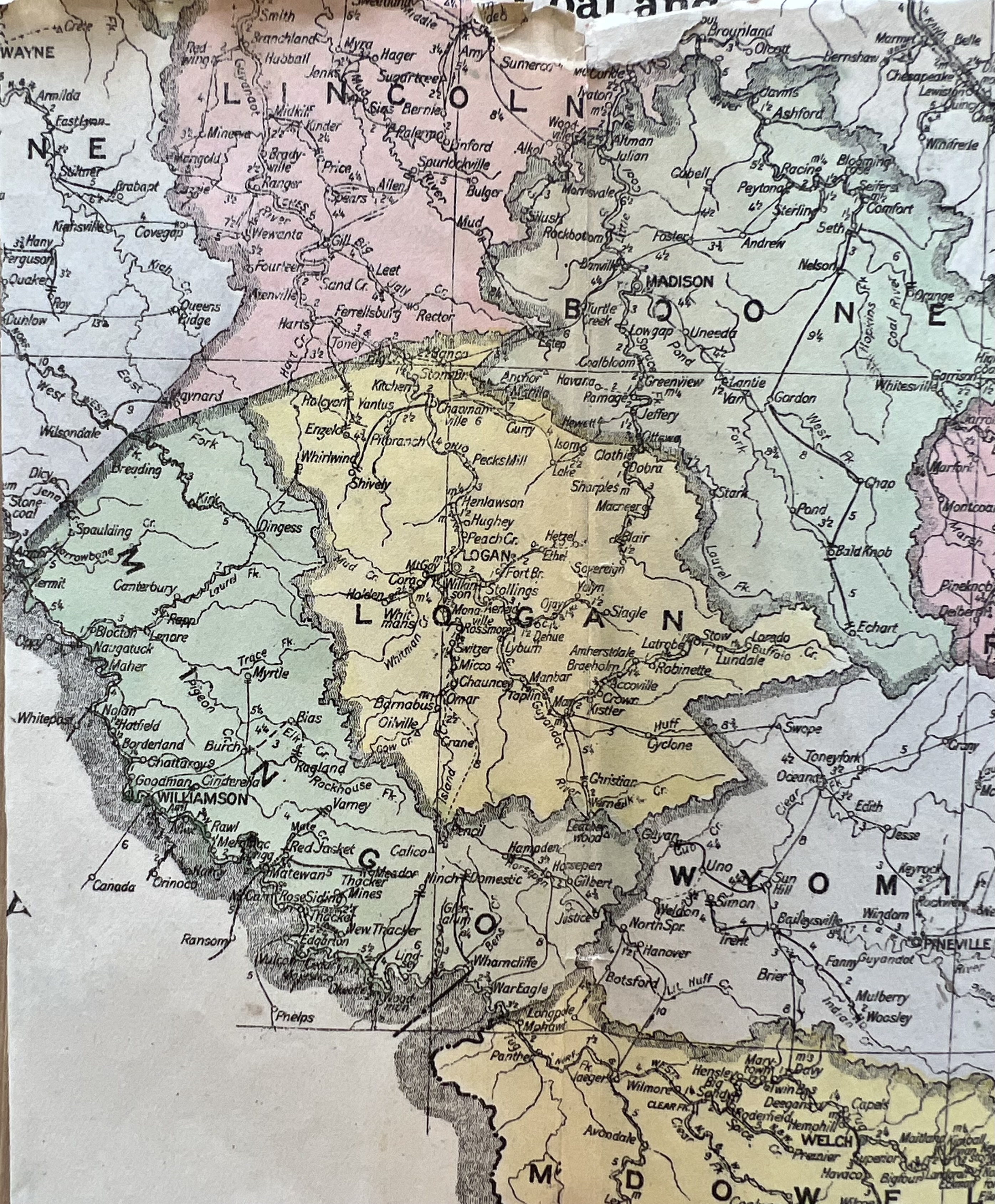
Posted in Atenville, Banco, Beech Creek, Big Creek, Big Harts Creek, Big Sandy Valley, Big Ugly Creek, Boone County, Breeden, Chapmanville, Clothier, Cove Gap, Crawley Creek, Dingess, Dunlow, East Lynn, Enslow, Ferrellsburg, Fourteen, Gilbert, Gill, Green Shoal, Guyandotte River, Halcyon, Hamlin, Harts, Holden, Kermit, Kiahsville, Kitchen, Leet, Little Harts Creek, Logan, Man, Matewan, Meador, Midkiff, Pecks Mill, Peter Creek, Queens Ridge, Ranger, Rector, Sand Creek, Spurlockville, Stiltner, Stone Branch, Toney, Twelve Pole Creek, Wayne, West Hamlin, Wewanta, Wharncliffe, Whirlwind, Williamson, Wyoming County, Yantus
Tags
Appalachia, Big Sandy River, Boone County, Guyandotte River, Hamlin, history, Lincoln County, Logan, Logan County, Madison, map, maps, McDowell County, Mingo County, Pineville, Polk's State Gazetteer and Business Directory, Tug Fork, Twelve Pole Creek, Wayne, Wayne County, Welch, West Virginia, Williamson, Wyoming County
08 Thursday Dec 2022
Posted in African American History, Barboursville, Civil War, Huntington, Kitchen, Music
Tags
Amie Dickinson, Annie Morris, Appalachia, Barboursville, Charles Morris, Charley Stone, Dyke Garrett, fiddler, fiddling, Guyandotte, Hiram Hill, history, Huntington, Jim Dingess, Kitchen, Lorenzo Dow Hill, Martha, Mary Hill, music, Ohio, Peter Hill, preacher, Scott Hill, slavery, slaves, Springfield, West Virginia
The following article, written by Frank Ball, is taken from a Huntington-area newspaper clipping. This is Part 2 of the story.
A year after the trip back from Virginia, the slaves of Lorenzo Hill were surprised and not a little dazed when he tried to convey to them the fact that they were free. They didn’t want to leave Ole Boss. They had no place to go. So they lived on with him and worked for him as usual. Uncle Scott stayed with his former owner until he was 21. And the slaves who were sold en route to Virginia returned often to visit the Hill farm.
At the age of 21, Scott Hill left the valley and went to Springfield, O. There he met and married Annie Morris, who was born the slave property of Charles Morris of Martha, near Barboursville, May 5, 1862. She remembers nothing of slave days, but remembers that she, too, lived on at the home of her former owner with her father and mother until she was 18. She often went back to visit the Morris home after she left it. In case of sickness there her services were always desired. She and her husband are the parents of 13 children, seven of whom are dead. The Hill family moved to Barboursville in 1891.
The father and mother of Scott Hill were the parents of 14 children, nine boys and five girls. All the children lived to be grown. Three are yet living. In addition to Uncle Scott there is a son, Peter Hill, and a daughter, Mrs. Amie Dickinson, of Huntington.
Mr. Hill’s father died in Huntington in 1913, and his mother in Guyandotte in 1909. Uncle Scott has long since passed his days of usefulness as a workman. He sits patiently by the bedside of his invalid wife daily, musing on the past. Friends have lately installed a radio for the aged couple by which they may hear directly from the outside world.
In his younger days, Mr. Hill pushed a cart about town selling fish to the citizens. For many years he was a familiar figure as he wheeled about the village, and his “feesh, fresh feesh” became a by-word among the youngsters. In addition he was a great hog raiser, and he made arrangements for swill from many of his neighbors who were glad to accommodate him.
He remembers well the old days and the old citizens of the valley. He likes to recall the mountain dances at Old Boss’, or across the river at Charley Stone’s or Jim Dingess’. The fiddler who sawed incessantly in the corner while others tripped the light fantastic was a stripling named Dyke Garrett. And in those early days, “Uncle Dyke” was not exactly adverse to sampling Old Boss’ brandies.
“I remember, though, when he made th’ change,” recalled Uncle Scott, “an’ I’ve follered him through a long an’ useful life. Fine feller, Uncle Dyke.”
07 Wednesday Dec 2022
Tags
Appalachia, Buffalo Creek, Charleston, coal, George W. Jones Collection, history, Logan County, Lundale, photos, West Virginia

07 Wednesday Dec 2022
Posted in Boone County, Guyandotte River, Hamlin
Tags
Abraham Lincoln, Appalachia, Boone County, Cabell County, Carroll District, Duval District, Guyandotte River, Hamlin, Hamlin Chapel, Harts Creek District, history, Jefferson District, Kanawha County, Laurel Hill District, Lincoln County, Logan County, Mud River, Putnam County, Sheridan District, Union District, Washington District, West Virginia
From West Virginians, published by the West Virginia Biographical Association in 1928, comes this profile of the Logan-Boone Highway in southwestern West Virginia:
Lincoln County
Lincoln County occupies a place in the southwestern section of the State, and is one of the few counties created by the State of which it is a component part. The organization of the county was authorized by an act of the legislature passed February 23, 1867, from a part of the counties of Cabell, Putnam, Kanawha and Boone. The formal organization of the county government was made on March 11, following, at the Hamlin Chapel, a short distance away from the present seat of justice. Lincoln county is drained by the Guyandotte and Mud rivers, and has a land area of 448.76 square miles. The population in 1920, according to the official enumeration of the United States Census Bureau, was 19,378. Later estimates from the same sources do not increase the figures. The county has a great diversity of natural resources, coal, oil and gas predominating. It also has large agricultural interests, and its horticultural products are of no inconsiderable value. The assessed valuation of property within the county, as returned at the 1927 assessment, is as follows: Real estate, $7,000,460; personal property, $3,666,350; public utility property, $8,751,297; total $19,418,107. The county is sub-divided into eight magisterial districts, Carrol, Duval, Harts Creek, Jefferson, Laurel Hill, Sheridan, Union and Washington. There are but few who are not familiar with the life story of the man whose name is borne by this country—the martyred Abraham Lincoln, rail-splitter, country lawyer and sixteenth President of the United States. No towering shaft; no swiftly flowing stream; no sub-division of this land of ours, welded into one by his work and sacrifice, is needed to keep his memory green. His name is so emblazoned on the pages of American history that it will remain bright, shining and untarnished long after letters engraved upon granite rocks are dimmed and dulled by the rust and erosion of the years as they come and go. Lincoln—homely in feature and tall in stature—grows with the years and honors are paid him and his memory that are accorded no other, save only Washington, the founder. Hamlin, the county seat, is named in memory and honor of Hannibal Hamlin, of Maine, Vice President of the United States during the first administration of Abraham Lincoln. The site was selected as a proper place for the county seat at the organization of the county, and was made the permanent county seat by legislative enactment of February 26, 1869. Hamlin has an elevation of 642 feet above sea level, and in 1920 had a population of 516. It is the only incorporated place in the county.”
NOTE: Hamlin is NOT named for Hannibal Hamlin!
NOTE: By 1869, all land was returned to Putnam and additional land was taken from Logan County.
05 Monday Dec 2022
Tags
Appalachia, Barboursville, Bill Herndon, Cabell County, civil war, Huntington, Main Street, Maurice E. Beckett, Morris Harvey College, Old Abraham, poems, poet, poetry, Tanyard Branch, Union Cavalry, West Virginia, writers

Posted by Brandon Ray Kirk | Filed under Barboursville, Civil War, Poetry
05 Monday Dec 2022
Posted in Big Sandy Valley, Boone County, Coal, Huntington, Logan, Native American History, Williamson
Tags
Appalachia, Aracoma, Aracoma Hotel, Boone County, Charleston, Chief Cornstalk, Chief Logan, coal, Daniel Boone, farming, history, Huntington, Kanawha County, Logan, Logan-Boone Highway, logging, Madison, Marmet, Midland Trail, mining, Tug Fork, West Virginia, West Virginia Biographical Association, Williamson
From West Virginians, published by the West Virginia Biographical Association in 1928, comes this profile of the Logan-Boone Highway in southwestern West Virginia:
Boone County, south of Kanawha, has been opened up by a hard road from Marmet, across the Kanawha from the Midland Trail. A second connection with Charleston is offered by a highway on the south side of the Kanawha. The county was named for Daniel Boone, the great hunter and Indian fighter, who lived in West Virginia many years. Madison is the county seat. Logan, county seat of Logan County, was named for Chief Logan, the speech-making Indian chief, who has been made one of the numerous story book heroes of the Indian race. Whether or not Chief Logan ever shot a deer or pitched his wig-wam in this county is much in doubt. The modern hotel at Logan, the Aracoma, further reflects the Indian influence with the name of this member of Chief Cornstalk’s family. Coal mining, lumbering and farming are the principal activities of Logan and Boone counties. Most of the road south is also hard-surfaced, and will eventually form the link between the Midland Trail to the North and the Huntington-Williamson highway along Tug River.
05 Monday Dec 2022
Posted in Big Sandy Valley, Hatfield-McCoy Feud, Timber
Tags
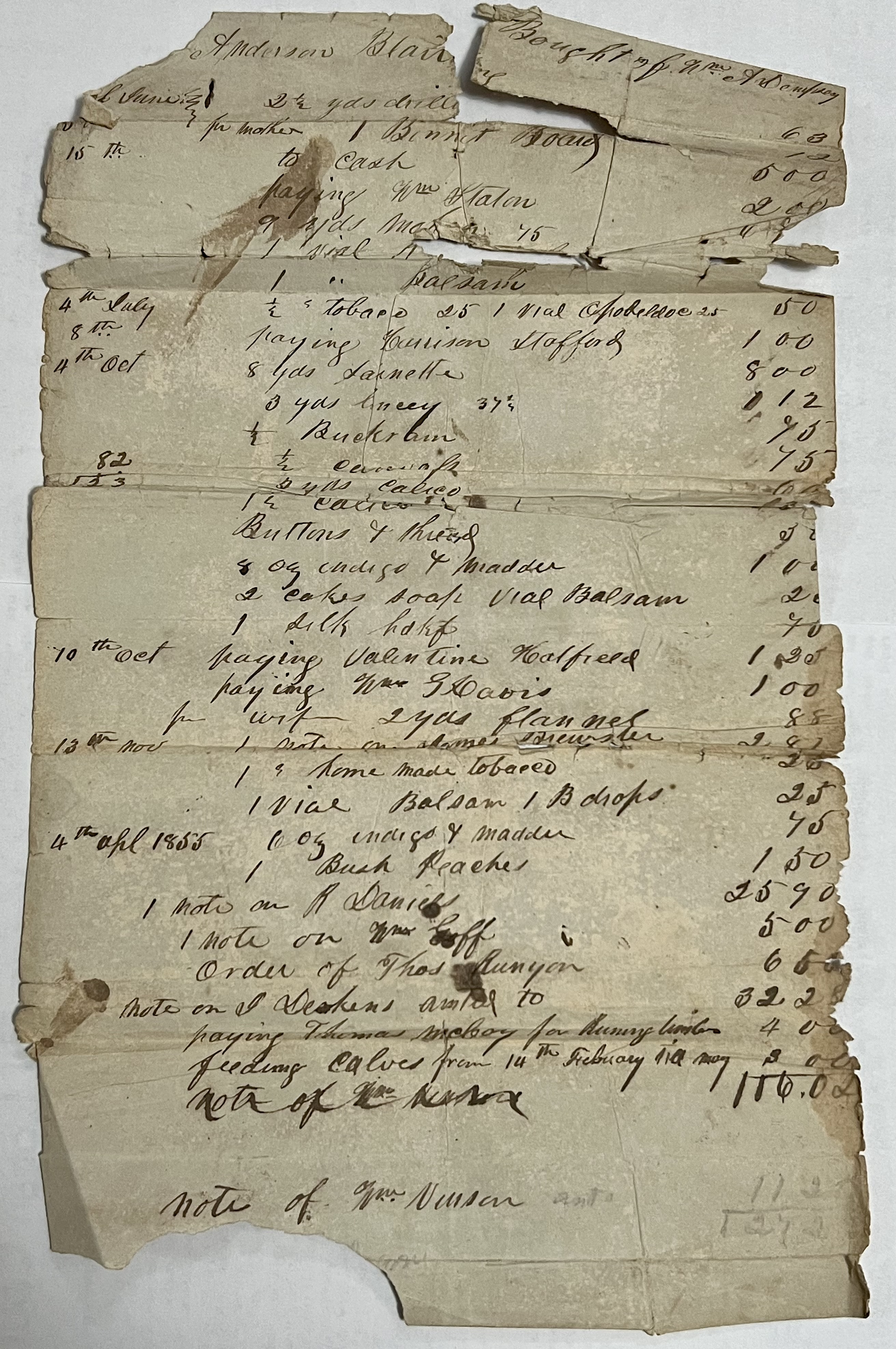
Anderson Blair, Appalachia, genealogy, Harrison Stafford, history, James Brewster, Logan County, logging, Mingo County, Thomas McCoy, Thomas Runyon, Valentine Hatfield, West Virginia, William A. Dempsey, William Staton, William Vinson
Writings from my travels and experiences. High and fine literature is wine, and mine is only water; but everybody likes water. Mark Twain
This site is dedicated to the collection, preservation, and promotion of history and culture in Appalachia.
Genealogy and History in North Carolina and Beyond
A site about one of the most beautiful, interesting, tallented, outrageous and colorful personalities of the 20th Century
 Brandon Ray Kirk