Tags
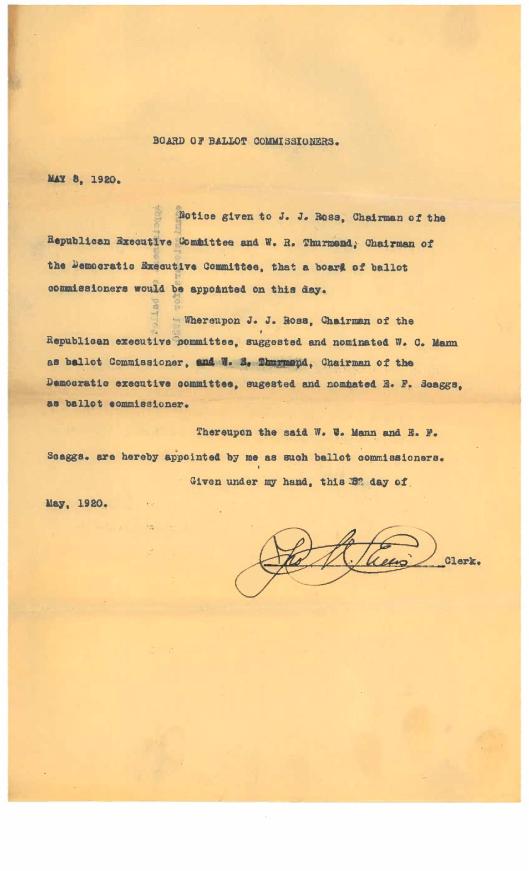
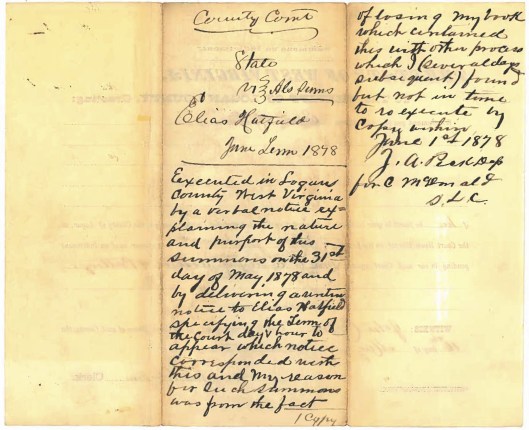
Appalachia, ballot commissioners, Democratic Party, Emmett F. Scaggs, history, J.J. Ross, Logan County, politics, Republican Party, W.C. Mann, W.R. Thurmond, West Virginia
Posted by Brandon Ray Kirk | Filed under Logan

06 Wednesday Feb 2019
Tags
Appalachia, ballot commissioners, Democratic Party, Emmett F. Scaggs, history, J.J. Ross, Logan County, politics, Republican Party, W.C. Mann, W.R. Thurmond, West Virginia
Posted by Brandon Ray Kirk | Filed under Logan
06 Wednesday Feb 2019
Posted in Logan
Tags
Appalachia, author, authors, Footprints from City to Farm, From the Rio Grande to the Rhine, genealogy, George Martin Nathaniel Parker, history, jails, John B. Wilkinson, Kentucky, Kingsport, Lights in the Old Home Window, Logan, Logan County, Mt. Nebo, North Carolina, Princeton, prison reform, Reservoir Hill, teacher, Tennessee, Tennis Hatfield, West Virginia, writers
From the Logan Banner of Logan, WV, comes this bit of history about author George Martin Nathaniel Parker, dated 1926:
WELL KNOWN AUTHOR FINDS LOGAN JAIL BEST MANAGED IN WEST VA.
EATS UNUSUAL DINNER OF PRISONERS
Having inspected more than 100 jails in West Virginia as a humanitarian effort to better conditions for his fellow man, G.M.N. Parker, author, editor, and former Logan school teacher, this week visited the Logan county jail and highly commended the administration of the institution under the jurisdiction of Sheriff Hatfield and the management of Jailer Kummler.
He wrote a description for The Banner giving his impressions of the Logan county institution. The writer was born in Mt. Nebo, N.C., and became a school teacher in his youth. Forty years ago he was persuaded by Judge John B. Wilkinson to come to Logan from Kentucky, where he then was teaching, to take charge of the school here in the old wooden building on Reservoir Hill. He taught here a year.
From the school work, Parker devoted himself to writing books in connection with editorial newspaper work. Of late years, he has made his home at Princeton, W.Va.
Published books of this writer include “From the Rio Grande to The Rhine,” “Lights In The Old Home Window,” and “Footprints From City to Farm.” His latest volume is “The Key to Continent,” now on the press.
“In this connection,” said Parker, “at Kingsport, Tenn., in the back woods one of the largest book publishing plants in the United States. Here my books are published. The plant turns out one and one-half million volumes monthly. The paper, cloth, and other materials used in the books are manufactured in one big plant. It ought to be a matter of pride to the South to realize that the biggest bookmaking plant in the nation is in Tennessee.
“I came back to Logan for a brief visit with old friends being hungry for the hills. I was born in the hills and like to come back to them from time to time.
“In addition to noting the remarkable change in the Logan county jail, I note other remarkable progressive changes in Logan.
“Of the 100 or more jails in West Virginia I have inspected, I find that the Logan county institution is the most progressive and best type and best operated institution of its kind.”
The article dealing with his visit at the Logan county jail follows:
Even at its best, human life ever has been and ever will be a continual battle; education battling against ignorance, society against selfishness, democracy against aristocracy, right against wrong.
Right is synonymous with law, and law is synonymous with legal master. As the rod is to the parent in the home, so is the prison to the legal master in the country. As the rod is to the home, so the prison is to correct disobedient men and women in the county.
Some prisons correct them only with punishment. These are usually political plums passed out as rewards for campaign activities, and those to whom they are passed go on the philosophy that the more the punishment, the more successful in the correction.
Under this philosophy, prison keepers swell their bank deposits by shrinking the prisoners’ food and by furnishing an inferior quality; a quality so poorly prepared that only the half-starved can eat it; so poorly prepared that the most consecrated Christian could not consistently say grace over it.
The prisons are no better. I have visited some whose floors were common cuspidors so thickly covered with tobacco quids that their sickening fumes almost knocked me back as I entered the door. On my way along the corridors, I have heard prisoners beg for bunks that were free from lice, and have seen green flies swarming in the cells.
We measure the strength of the chain by its weakest link. We measure the morale of the county by its prison. This measurement is an enviable tribute to Logan. In the management of the prison the county sees more than money; sees men. Sees more than punishment; sees purity. Seeing we are all human chameleons in that we absorb our surroundings; that suggestions are the steps in the mental and moral stairs; that cleanliness is the rising road. Logan county has adopted cleanliness as a creed and requires all prisoners to live up to it so that the air circulating through the cells is as free from offensive odors as the breezes that fit the leaves on the surrounding forest peaks.
A word about the way the jail food is prepared. Though a stranger and visitor, an unexpected one at that, I went to the prison when the court house clock was striking 12, and asked the keeper to let me eat dinner with the prisoners. He unlocked the iron door and passed me in—at the same time saying that dinner would be sent in directly.
I was not expecting roast lamb, quail on toast, an English pudding—neither did I get them. All I got were the old familiar Bs: bread, bacon, and beans. But they were good, as good as my mother prepared, way back when I plowed corn in Logan’s hills. In fact, while chasing a chunk of bacon around through my pan of beans—trying to make it stop long enough to cut off a mouthful with my spoon—I seemed again to be a plowboy—happy because I had more than I had when plowing barefooted on the backwoods farm.
Amid the rattling of spoons on the tin pans I watched the prisoners, most of them young, some good and some bad—some are good or better than you or I. All qualified and encouraged to go forth like the graduates from a school and bless the country with ideal citizenship.
I said then that Logan’s prison ought to become as famous as Denver’s juvenile court; that what Denver’s juvenile court was doing for boys and girls, Logan’s prison was doing for young men and young women.
Source: Logan (WV) Banner, 24 August 1926
02 Saturday Feb 2019
Posted in Big Sandy Valley, Hatfield-McCoy Feud
02 Saturday Feb 2019
Posted in Huntington, Irish-Americans, Logan
Tags
baseball, Brazil, Canada, England, genealogy, history, Huntington, Ireland, Jerry Crowley, Logan, Logan Banner, Logan County, Marietta, Mt. Gay, Murphy's Restaurant, New York, Ohio, repairman, Stratton Street, Syracuse, Wales, West Virginia
From the Logan Banner of Logan, WV, comes this bit of history about J.E. “Dad” Crowley, a familiar Irish repairman, in 1937:
J.E. “Dad” Crowley Here Since 1884 As Repairman
Ninety-Year-Old Irishman Worked on Sewing Machines In Brazil, England, Ireland, Wales and Canada; Never Sick A Day
This will be the first time that Jerry E. “Dad” Crowley’s name has been in a newspaper.
Not that Dad doesn’t have an interesting story to tell, but just because no one ever “discovered” him before. (Dad has never been in jail, either, though he has walked twice across the continent and calls himself a “tramp.”)
Dad Crowley, 90-year-old sewing machine repairman who has been working spasmodically in Logan county since 1884, was born in Syracuse, New York, member of a family of 14 children.
During the 90 years since the time of his birth he has walked twice across the United States, gone across the continent more than 100 times by rail and has repaired sewing machines in Brazil, Wales, England, Canada, and Ireland.
Dad says he has never been sick more than a half day in his life, has had only one contagious illness, has never taken a drop of medicine to date and up to now has had no ache or pain more serious than a toothache or a corn.
His only illness was whooping cough. He had this affliction at Marietta, Ohio, when he was 76 years old.
“I guess the Master just figured I was entering my second childhood and had better give me something to remind me of the fact,” Dad said with a chuckle.
“I just whooped ‘er out, though. No doctor, no medicine, no thing.”
“Dad” says he’s not bothered with any aches or pains now.
“I haven’t any teeth no, so—toothache won’t bother me, and my feet are so battered up that a pain there wouldn’t be noticeable.”
When asked how many miles he believed he had walked during his 90 years, the leathery, little Irishman—he’s “Shelalaigh Irish” and proud of it—rattled off the figure of 23, 367, 798, 363 miles without a blink of the eye, then later admitted that “I lost track of mileage after the first 20 billion miles.”
Dad declared that in his first and last job of work that he held for a person other than for himself he walked more than 10,000 miles.
He was operator of a treadmill for a Syracuse citizen named Hamilton from whom he learned the mechanism of the sewing machine, thus making it possible for him later to be independent of all bosses.
The whitehaired old chap repaired his first sewing machine on the Mounts farm in Mount Gay in 1884 when he first came into this section of West Virginia from Huntington.
Since that time during his intermittent visits to Logan county he has canvassed nearly every home here and has worked on many of the sewing machines in the county.
Dad is a close friend of the Murphys who operate a restaurant and poolroom on Stratton street. He affectionately calls Mrs. Murphy “Mom” because he thinks she looks like his mother, who died when he was only two years old.
Dad can be found at Murphy’s Restaurant any afternoon when the baseball scores are coming in. Baseball next to repairing sewing machines, is his consuming passion. One will find Dad wearing a cap on his graying locks, smiling broadly and ever ready to spin a yarn or talk baseball.
Source: Logan (WV) Banner, 1 July 1937
01 Friday Feb 2019
Posted in Hatfield-McCoy Feud
01 Friday Feb 2019
Tags
American Revolution, Andrew Lewis, Appalachia, Battle of Point Pleasant, Cayuga, Chief Cornstalk, Chief Logan, Daniel Greathouse, England, governor, Guyandotte Valley, history, Iroquois, James Logan, John Murray, Lord Dunmore, Michael Cresap, Mingo, Native American History, Native Americans, Ohio, Oneida, Pennsylvania, Six Nations, Susquehanna
From the Logan Banner of Logan, WV, comes this bit of history for Chief Logan, printed in 1937:
Family of Chief Logan Was Brutally Murdered After Battle of Pt. Pleasant
Chief Logan, the Cayuga Indian leader who was an important figure in the Indian Confederation in the early days of the Revolutionary war and for whom the city of Logan was named, was an instrument in the hands of Governor Dunmore, appointed by the English Parliament to conduct the affairs of the 13 colonies.
The family of Chief Logan was brutally murdered soon after the battle of Point Pleasant on October 10, 1774, in order to incite to new acts of murder and rapine the Indians whose order for fighting the courageous white settler was beginning to wane.
In the Battle of Point Pleasant the Indian Confederacy, commanded by Chief Cornstalk faced the white settlers under General Andrew Lewis and got a taste of the treatment they might expect in event England and the Colonies went to war with themselves on the side of the mother country.
Dr. Connelly, a deputy of Governor Dunmore, realized that the Indian desire for white scalps was somewhat satiated by the battle of Point Pleasant and the tribes were once gain becoming interested in their everyday life of hunting and shing. In order to offset this feeling of contentment, Dr. Connelly employed the English trader named Greathouse to incite the Indians to new acts of bloodshed.
Trader Greathouse knew of the popularity of the Cayuga chief Logan and rightly judged that an injustice done him would be an injustice to the majority of the tribes of the Confederacy.
Greathouse well-versed in the Indian situation west of the Alleghenies set out to the greatest harm to the Indians in the shortest time and chose the family of Chief Logan as the best possible victims of a white man’s outrage, knowing full well that Dr. Connelly had chosen a colonist well-known to the Indians to hold the “bag.”
The trader, posing as a representative of the English government, gained admittance to Chief Logan’s camp deep in the wilds of the Alleghenies while the latter was away on a hunting expedition. At an opportune moment when he knew that he would not be detected, Greathouse entered Chief Logan’s family circle of tepees and murdered the squaw and the Chief’s favorite children.
When the outrage was discovered by the braves, Greathouse, by instruction from Connelly, told of seeing a white Army officer’s horse near the camp that night before but though it to be of a courier. The unsuspecting braves took the explanation as good and allowed Greathouse to leave soon afterward.
Chief Logan returned from his hunting trip, found his family murdered and demanded retribution from the English.
Dr. Connelly definitely fixed the murder on a Captain Cresap, who at the time of the slaying was at his home in Maryland.
This, however, was enough for Chief Logan. A colonist, a member of the paleface band with whom a treaty had been made following the battle of Point Pleasant, had violated the trust. He returned to his Confederacy and began the work that Governor had anticipated.
The Indian tribes began new raids on the white settlers homes in the West and sufficiently retarded organization of a settlers’ regiment to allow Dunmore to make new inroads on the angry colonists in the East who were laying plans which culminated in the rebellion in 1776.
Dunmore’s strategy triumphed and probably held up the Revolution for at least a year.
Logan (WV) Banner, 19 April 1937
***
Life of Chief Logan Is An Interesting Narrative
Indian Chief Was Peaceful Until Massacre Of Family At Pt. Pleasant Changed Him To A Veritable Devil; Father Was French
Logan, chief of the Mingos, stands out as a romantic figure in the history of Indian warfare of this section.
His was a tragic role player on the shifting stage of border warfare between the white settlers who were attempting to penetrate the “wilderness” and the Indian tribes who were attempting to cling to their priority rights in this section before being pushed farther westward to the plains.
Logan was his place in history as an orator as well as a famed Indian warrior.
He was a true friend of the white man until, through the machinations of the English in an effort to incite the Indians to further bloodshed, his family was killed by a treacherous white trader named Greathouse.
Logan’s father was a French child who was captured by the Indians and adopted by the Oneida tribe that inhabited Eastern Pennsylvania and Western New York.
When he grew to manhood, he was possessed not only of a commanding stature, but of all the arts, wiles, traits, and characteristics endowed by nature and intellect to an Indian warrior.
By virtue of these he became chief of the tribe of the Susquehannas, who made their home in the Susquehanna valley of Pennsylvania.
The mother of Logan was a Mingo, or Cayuga, which tribe was a derelict branch of the Iroquois and the Six Great Nations.
It is believed that the influence of Logan’s mother on her son caused him to have attitude of tolerance and friendship toward the whites. Whether he husband influenced her sentiments for the whites is not definitely known.
As a matter of fact it was she who christened her son, the great and mighty warrior, “Logan,” in honor of James Logan, who was then secretary for Pennsylvania.
Logan’s Indian name was Tah-gah-jute, meaning “the young and mighty warrior.”
He was after a time chosen chief of the Mingo tribe of this section. As chief of the Mingos he was slow to anger, indulgent, considerate, and dealing in a kindly manner with those who dealt kindly with him.
Chief Logan married an Indian maiden whose name is not recorded. He reared a family in territory of the Guyandotte watershed and was relatively happy, living at peace, with man, until the English changed him from a peaceful Indian to a veritable devil by having massacred his family at a camp in the Ohio.
The stories of Chief Logan’s campaign against the white man after the atrocious murder of his family is recorded in history and tradition.
He lived to see his beloved hunting grounds desecrated by the white man and died a broken-hearted old chieftain somewhere in a camp on the Ohio.
A bronze replica of the mighty warrior has been erected in front of the courthouse at Williamson in memory of the Mingo chief. Logan and Logan county has honored his name by taking it for themselves.
Logan (WV) Banner, 1 May 1937
01 Friday Feb 2019
Tags
Appalachia, Beech Creek, Buchanan County, crime, genealogy, history, Logan County, McDowell County, Mingo County, sheriff, Virginia, West Virginia

Posted by Brandon Ray Kirk | Filed under Big Sandy Valley
01 Friday Feb 2019
Posted in Chapmanville, Coal, Logan
Tags
Appalachia, Arnold Christian, Chapmanville, Charley Bryant, Christian Church, Church of God, Clinton Ferrell, Everett Fowler, Fannie Brown, genealogy, George Chapman, history, John Bry, Logan, Logan Banner, Logan County, Lucy Ellis, Monaville, Newt Muncy, Sidney Ferrell, Tompkins mines, West Virginia
A correspondent named “Big Peat” from Chapmanville in Logan County, West Virginia, offered the following items, which the Logan Banner printed on March 17, 1922:
Our school is progressing nicely at this place.
We are having some nice weather now, and it makes us think about making gardens.
Charley Bryant was very seriously injured when he fell from the porch where he had been working for Arnold Christian Saturday.
Millard and Pearlie seemed to enjoy the sunshine Sunday.
Say, Jim, don’t you think you had more than your share of girls Sunday?
Rev. Carter of Monaville has moved to Chapmanville to take charge of the Church of God.
Annie looked blue Sunday.
Miss Fannie Brown was very ill Sunday, but we are glad to say she is able to be out again.
Miss Maud had a ten cent smile on Sunday.
We saw Rev. Hensley in town Sunday.
Miss Lucy Ellis is visiting out of town.
Mr. McNeeley looked tired Sunday. He said he was not used to walking so much in one day.
Mr. Clinton Ferrell of Logan was calling on some of our girls Sunday.
Sidney Ferrell was calling on his friends in Chapmanville Sunday.
We understand Everett Fowler is going to be the new manager of the Tompkins mines.
Clinton, were you with the blonde or the brunette Sunday?
Julius, did you dye those trousers white?
Is John Bry our bank boss now?
Mr. Newt Muncy, one of our business men here, attended services at the Holiness Church Sunday.
The Children’s Prayer meeting conducted at the Christian Church is well attended.
Mr. George Chapman was seen riding through our streets Monday.
Will call on you again if this escapes the waste basket.
Writings from my travels and experiences. High and fine literature is wine, and mine is only water; but everybody likes water. Mark Twain
This site is dedicated to the collection, preservation, and promotion of history and culture in Appalachia.
Genealogy and History in North Carolina and Beyond
A site about one of the most beautiful, interesting, tallented, outrageous and colorful personalities of the 20th Century






 Brandon Ray Kirk