Tags
Appalachia, crime, detective, Frank Phillips, genealogy, history, Logan County Banner, Shang Ferrell, Tennessee, U.S. South, West Virginia, Will Bevins, William Cole
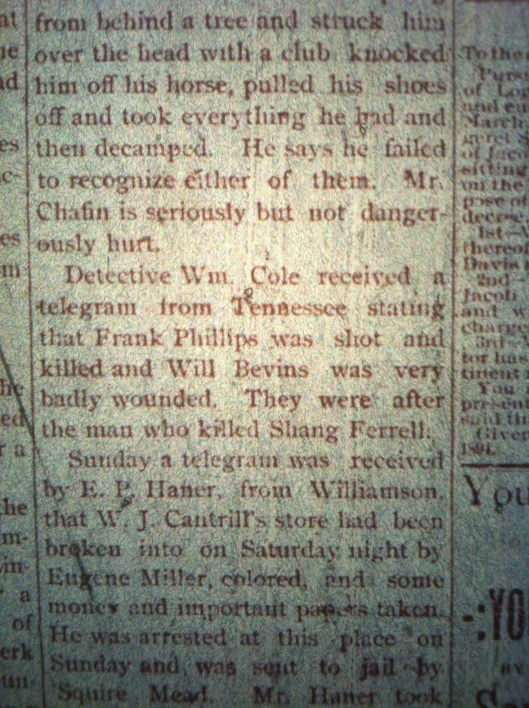
Source: Logan County (WV) Banner, 19 April 1894
22 Wednesday Apr 2015
Posted in Hatfield-McCoy Feud
Tags
Appalachia, crime, detective, Frank Phillips, genealogy, history, Logan County Banner, Shang Ferrell, Tennessee, U.S. South, West Virginia, Will Bevins, William Cole
Source: Logan County (WV) Banner, 19 April 1894
22 Wednesday Apr 2015
Posted in Logan
Tags
Andrew S. Bryan, Bath County, Bettie E. Bryan, Botetourt County, civil war, Covington, Cyrus Bryan, doctor, Elizabeth J. Bryan, genealogy, George E. Bryan, George E. Bryan Jr., Helen E. Bryan, Henry H. Bryan, Henry H. Hardesty, history, Hugh Bryan, Jane Bryan, Jefferson Medical College, John Dejernett, Kentucky, Logan, Logan County, Mary Bryan, Mary J. Bryan, Mary W. Bryan, Nancy E. Bryan, Nancy M. Bryan, Neddie Bryan, Ohio Medical College, physician, R.A. Brock, Randolph County, Russell J. Bryan, Russell L. Bryan, Samuel Leman, Virginia, Virginia and Virginians, West Virginia, William H. Bryan
From “Virginia and Virginians, 1606-1888,” published by H.H. Hardesty, we find this entry for Dr. Henry H. Bryan, who resided at Logan, West Virginia:
At the present time one of the most prominent members of his profession in the State of West Virginia, was born in Logan county, W.Va., April 28, 1852; he attended three years full course at the Ohio Medical College, after which he practiced medicine during nine years; then attended lectures at Jefferson Medical College, from which he graduated in 1882; on the 26th of November, 1884, he was joined in holy matrimony with Miss Bettie E. Lemon, who was born in Randolph county, W.Va., Feb. 8, 1863; the ceremony was performed in Randolph county by Rev. Bryan. Of this union two sons have been born: Neddie, April 14, 1886, and Russell L., Aug. 17, 1888. Dr. H.H. Bryan, with his interesting family, resides at Logan C.H., in one of the most beautiful homes in Logan county, and also owns a place in the mining flats of Randolph county. He is prominent not only for his professional skill, but for the readiness and cordiality with which he responds to the continued and extensive calls that are made upon him, and for the magnitude of his charity. As physician and as citizen he is honored and beloved wherever he is known. His ancestry for the past two generations is thus traced: Dr. Hugh Bryan, grandfather of the subject of this sketch, was born in Rockbridge county, Va., Oct. 2, 1801; he married Nancy M. Sawyers, who was born in Alleghany county, Va., in 1796. Dr. Hugh Bryan served as army surgeon during the late war; he died in Logan county, W.Va., March 1, 1870; his widow survived him but a short time, dying in the same county June 25, 1870. The records of the offspring of this couple are as follows: Mary J., born June 8, 1823, married to John Dejernett April 16, 1850; William H., Nov. 11, 1824, married Jane Titzer Aug. 1, 1855; an infant, June 18, 1826, lived only a few hours; Cyrus P., June 28, 1827, married to Mary W. Scott July 13, 1856; George E., Oct. 24, 1829, married to Mary Casebolt, June 4, 1851; Mathew J., Dec. 28, 1832, died Aug. 5, 1857; Andrew S., Sept. 6, 1835, married to Mary J. Dingess Oct. 15, 1856. George E. Bryan is a native of Covington, Va.; his wife of Ky. They are parents of the following sons and daughters: Dr. Henry H. Bryan, subject of this record; Nancy E., born Jan. 31, 1854; Russell J., born Dec. 12, 1856; George E., Jr., born Feb. 9, 1861; and Helen E., born Oct. 14, 1865. Dr. Henry H. Bryan’s wife is a daughter of Samuel Leman, who was born in Botetourt county, Va., in 1814; was married in Bath county, Va., in 1849, to Elizabeth J. Wood, who was born in that county in 1829; they are now living in Randolph county, Va.
Source: Dr. R.A. Brock, Virginia and Virginians, 1606-1888 (Richmond, VA: H.H. Hardesty, Publisher, 1888), p. 820-821
17 Friday Apr 2015
Posted in Big Harts Creek, Cemeteries, Halcyon
Tags
cemeteries, genealogy, Harts Creek, history, Logan County, Melvin Kirk Family Cemetery, photos, Piney Fork, U.S. South, West Fork, West Virginia
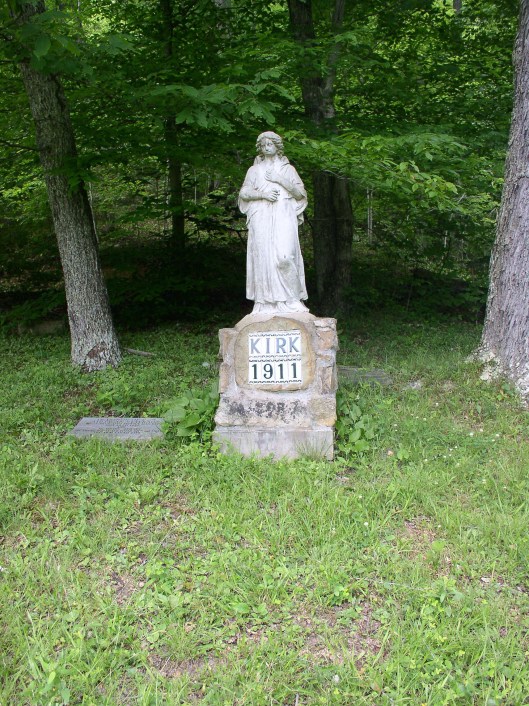
Kirk Cemetery, Piney Fork of West Fork of Harts Creek, Logan County, WV
17 Friday Apr 2015
Tags
4th Virginia Infantry, Almira Browning, Christian, civil war, Confederate Army, genealogy, Guyandotte River, Henry H. Hardesty, history, Jane Browning, Joseph Browning, Logan County, Milton G. Browning, Penelope Browning, R.A. Brock, Rebecca Browning, Richmond, Surelda Browning, Tazewell County, Thissey A. Browning, timbering, Venila Browning, Virginia, Virginia and Virginians, West Virginia, William C. Browning
From “Virginia and Virginians, 1606-1888,” published by H.H. Hardesty, we find this entry for William C. Browning, who resided at Christian, West Virginia:
Is one of the most prominent citizens of Logan county. With his large and interesting family he resides at his pleasant home, situated on Guyandotte River; besides a valuable saw mill and store, he owns extensive timber lands overlying valuable mineral deposits. His wife, Jane, nee Hatfield, was born in Logan county, W.Va., Dec. 25, 1830, and died July 23, 1890. Their children — Joseph, born March 18, 1854; Penelope, born Sept. 19, 1856; Thissey A., born Sept. 13, 1858; Almira, Nov. 12, 1860; Venila, born June 23, 1862; William A., Sept. 20, 1864; Milton G., June 21, 1866; Surelda, March 11, 1869; Rebecca, March 14, 1871 — all married but Rebecca. Mr. Browning is a native of Logan county, and was born Sept. 17, 1833; was married in that county Sept. 29, 1853. He enlisted in Co. B, 4th Va., Inf., in 1863; was commissioned second lieutenant and served in the Confederate army during the civil war. After having taken part in many desperate battles, was honorably discharged from duty in Tazewell county, Va., on account of sickness, and the war closed while he was at home. His address is Christian, Logan county, W.Va.
Source: Dr. R.A. Brock, Virginia and Virginians, 1606-1888 (Richmond, VA: H.H. Hardesty, Publisher, 1888), 819.
15 Wednesday Apr 2015
Posted in Guyandotte River, Harts
Tags
Al Brumfield, Appalachia, flood, Guyandotte River, Harts, history, Lincoln County, U.S. South, Watson Adkins, West Virginia

Harts, Lincoln County, WV, 1963. Note: The Al Brumfield-Watson Adkins home is visible to the right.
15 Wednesday Apr 2015
Posted in Big Harts Creek, Warren
Tags
A.B. Lowe, Aracoma, Cabell County, Harts Creek, history, Huntington, Island Creek, Lincoln County, Logan County, Logan County Banner, mail, Mud Fork, post offices, Trace Fork, Twelve Pole Creek, Warren Post Office, Wayne, Wayne County, West Virginia
This brief editorial regarding Warren Post Office appeared in the 6 March 1890 issue of the Logan County Banner, printed in Logan, WV.
“Warren, in Lincoln county, from which all the people on Harts Creek and upper Twelve Pole receive their mail, is eighteen miles from this place, but it takes us a full week to get a letter from that place. A letter arriving to this place from Warren has to go by Brownstown, thence by the C. & O. Ry. to Huntington, thence by Wayne C.H., and thence to Warren, a distance of two hundred miles. The route from Wayne C.H. to Warren should be extended up Harts Creek and Twelve Pole and then down the Mud Fork of Island Creek to this place, with new offices at the Mouth of the Trace Fork of Harts Creek and at or near A.B. Lowe’s on Twelve Pole.”
15 Wednesday Apr 2015
Posted in Culture of Honor
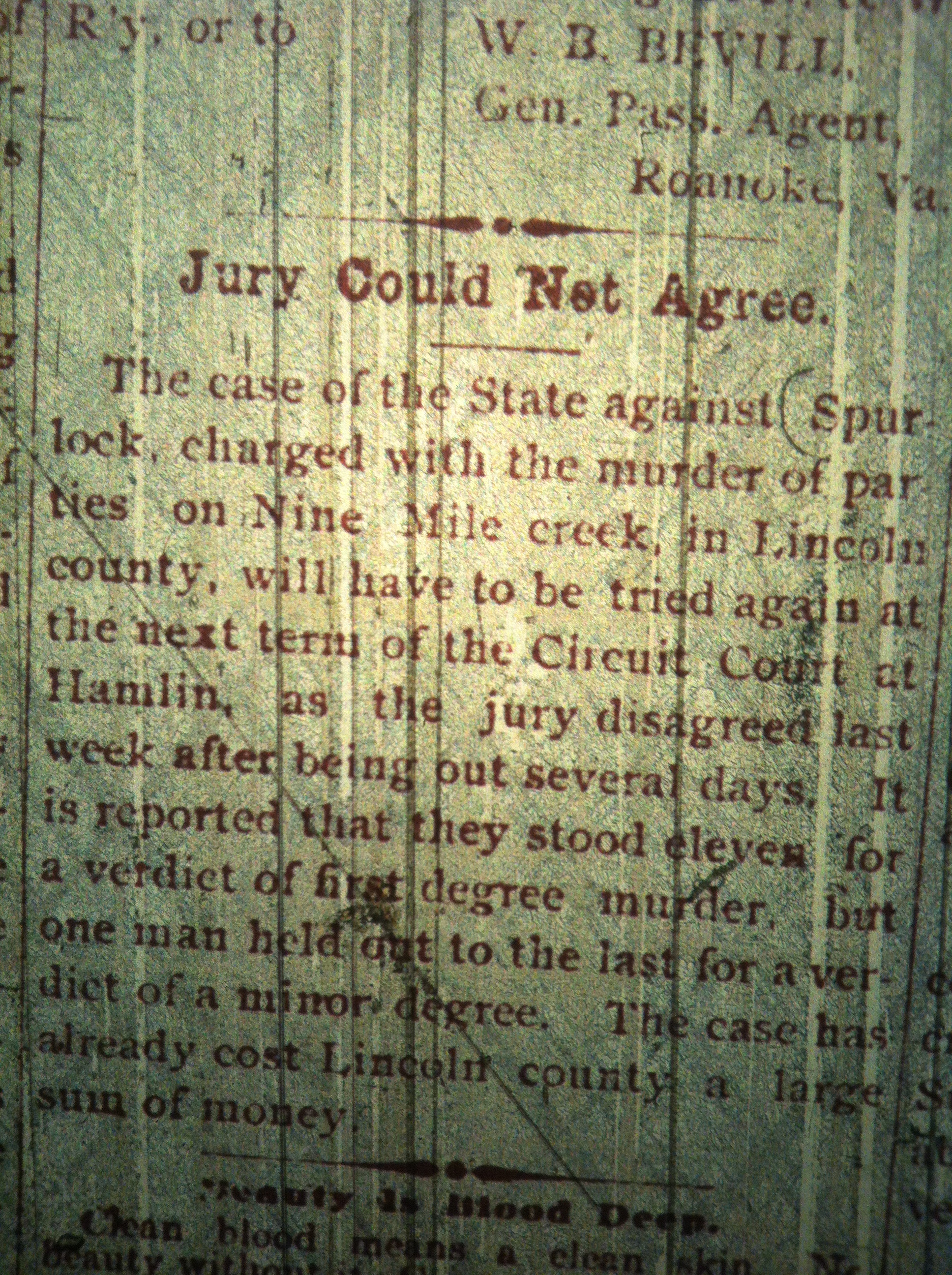
Logan County (WV) Banner, 7 September 1899
15 Wednesday Apr 2015
Posted in Big Harts Creek
Tags
Appalachia, Belle Dora Adams, culture, Daisy Adams, farming, Harts Creek, history, Howard Adams, hunting, life, Logan County, Major Adams, West Virginia
This history of early life in Logan County, West Virginia, was written by Howard and Daisy Adams. Howard (1906-1976) and Daisy (b.1915) were children of Major and Belle Dora Adams of Trace Fork of Harts Creek. Titled “The life of pioneers during the latter half of the eighteenth century and the beginning of the 19th century” and written in the late 1960s or early 1970s, their history marks the only known attempt by local people to reconstruct the story of pioneer life. This part of the history includes information regarding fall food preparation, the making of molasses, and hunting.
In the late summer and fall months, people were kept busy preparing and putting up or canning food for winter. Vegetables were pickled berries, picked and canned through the summer and fall. Corn and beans were pickled by cooking and putting in a big barrel. Salt was added and a good lid put on the barrel to keep out rats and insects. Boy, these were good in winter. Apples, peaches, pears, cherries, and plums were gathered and canned from the orchard, which had been set out earlier.
Now that good old molasses making took place. First, large stacks of wood were prepared and dried. Now the cane had to be cut and the blades pulled off or stripped and the heads cut off. Now a furnace built and an evaporator pan set on the furnace. A machine with cogs and wheels and a long crooked pole on top with a horse or mule pulling the pole round and round: this was called a cane mill. You see, as the mule went around the stalks of cane were put in between two or three big rollers set close together and the juice squeezed out of the stalks. The juice was caught in a big tub and then transferred to the big pan to be boiled into sorghum. I liked to lick sorghum from a paddle swiped through the molasses pan. Everybody had a good time at “lassy makin’ time,” even though it was hard work.
Cushaws, squashes and pumpkin were gathered into the cellar or crib. Corn gathering was done by pulling corn of the stalks some time it had been cut and shocked up. It was hauled into the crib with mules or horses or cattle.
Now that everything was gathered in, a little pleasure followed. Squirrel , rabbit, quail, pheasant, and coon and possum hunting was done by most all the pioneers. They obtained lots of their meat supply by hunting wild game. Some folks hunted animals for their skins, which were sold, bringing in a little cash.
14 Tuesday Apr 2015
Tags
Appalachia, Big Creek, Boone County, genealogy, Guyandotte River, history, Logan County, Logan County Banner, logging, North Fork, T.S. Godby & Co., timbering, Tolbert S. Godby, U.S. South, West Virginia, William J. Berry

Logan County Banner (Logan, WV), 16 July 1891
14 Tuesday Apr 2015
Posted in Man
Tags
Appalachia, Carlos H. Browning, Emmet Browning, farming, genealogy, Henry H. Hardesty, history, India Browning, James M. White, Lewis A. Browning, Logan County, Man, Mary H. Browning, Nora C. Browning, R.A. Brock, Sarah White, U.S. South, Virginia, Virginia and Virginians, West Virginia, Wythe County
From “Virginia and Virginians, 1606-1888,” published by H.H. Hardesty, we find this entry for Lewis A. Browning, who resided at Man, West Virginia:
Was born on Nov. 14, 1850, in Logan county, W.Va., and was united in marriage on Aug. 24, 1882, with Mary H. White, the marriage being solemnized in Logan county, where she was born May 4, 1857. She is a daughter of James M. White, who was born Dec. 3, 1817, in Wythe county, Va., and for a great number of years an honored and esteemed citizen of Logan county, where he still resides. Her mother, who was Sarah Browning before marriage, was born Oct. 9, 1819, and died April 1, 1884, in this county. The records of Mr. and Mrs. Browning’s children are as follows: Carlos H., born Feb. 5, 1883; Nora C., born July 27, 1884, and died May 16, 1885; Emmet, born May 8, 1885, and India, born March 4, 1888. Mr. Browning is one of the prosperous and successful farmers of his section. His post office address is Man, Logan county, W.Va.
Source: Dr. R.A. Brock, Virginia and Virginians, 1606-1888 (Richmond, VA: H.H. Hardesty, Publisher, 1888), 819.
13 Monday Apr 2015
Posted in Big Harts Creek, Cemeteries, Halcyon
Tags
Appalachia, cemeteries, genealogy, Harts Creek, Harvey Gore, Harvey Gore Family Cemetery, history, Logan County, Polly Gore, U.S. South, West Fork, West Virginia

Harvey Gore grave, located on West Fork of Harts Creek in Logan County, WV.

Polly (Hall) Gore grave, located on West Fork of Harts Creek in Logan County, WV.
13 Monday Apr 2015
Posted in Man
Tags
Alice B. Browning, Appalachia, Boone County, Buryle S. Browning, Christian, Ezera H. Browning, Francis S. Browning, genealogy, Grayson White, Guyandotte River, Haley W. Browning, Henry H. Hardesty, history, Isaac E. Browning, Jane Browning, justice of the peace, Lena T. Browning, Logan County, Minnie C. Browning, R.A. Brock, Rebecca J. White, Sarah A. Browning, Van D. Browning, Virginia and Virginians, West Virginia
From “Virginia and Virginians, 1606-1888,” published by H.H. Hardesty, we find this entry for Isaac E. Browning, who resided at Christian, West Virginia:
Was born in Logan county, W.Va., Sept. 2, 1849; married there to Mary A. White on 2d of November, 1869; his wife was born in the same county, March 23, 1848. The annals of their children are: Van D., born Aug. 30, 1870; Sarah A., born March 29, 1872, died Sept. 20, 1875; Buryle S., born Oct. 18, 1874; Alice B., born March 6, 1876; Lena T., born July 6, 1878; Minnie C., born June 2, 1882; Haley W., born April 4, 1886; Ezera H., born March 14, 1889; all reside with their parents. The subject of this record is one of the most highly respected citizens in Logan county having been elected justice of the peace in 1884, he held the office honorably and satisfactorily for two years. His home is beautifully situated on Guyandotte River, and he also owns extensive mineral and timber land. His address is Christian, Logan county, W.Va. His father, Francis S. Browning, was born in Logan county, W.Va., about the year 1825, and still resides in Boone county, same State; his mother, Jane (Spratt) Browning, was born in Logan county in 1823. Mrs. Isaac Browning’s father, Grayson White, was born in Logan county in 1828, and died there in 1851; her mother, whose maiden name was Rebecca J. Christian, was born in same county in 1830 and died there in 1886. The Browning family came from England in an early day. They were among the first settlers in Logan county, and are people of high standing and have held high positions in the State and county where they reside.
Source: Dr. R.A. Brock, Virginia and Virginians, 1606-1888 (Richmond, VA: H.H. Hardesty, Publisher, 1888), 818-819.
12 Sunday Apr 2015
Posted in Lincoln County Feud
12 Sunday Apr 2015
Posted in Big Harts Creek
Tags
Appalachia, banjo, Daisy Adams, farming, fiddle, guitar, Harts Creek, history, Howard Adams, Logan County, music, square dances, U.S. South, West Virginia
This history of early life in Logan County, West Virginia, was written by Howard and Daisy Adams. Howard (1906-1976) and Daisy (b.1915) were children of Major and Belle Dora Adams of Trace Fork of Harts Creek. Titled “The life of pioneers during the latter half of the eighteenth century and the beginning of the 19th century” and written in the late 1960s or early 1970s, their history marks the only known attempt by local people to reconstruct the story of pioneer life. This part of the history includes information regarding industry, clearing of land, farming, and square dances.
The chief industries in those days were farming, raising stock, and timbering. Farming began with axes, saws, and mattocks all swinging. A good piece of land was chosen and clearing it began by chopping and sawing down all the trees on it. The trees had to be trimmed up. That was cutting off all the branches as limbs and putting them in big heaps or piles. The logs of the trees had to be sawed in lengths so they could be rolled together in piles for hauling. All small bushes were grubbed up and put on the brush piles. Clearing land was done mostly during winter months as soon as the land was cleared of all trees and brush and it piled up. Then began the burning of brush and logs. This usually took two or three days and it was hard work. After the burning off was completed, a nice big field or new ground as it was called was now the farmer’s pride. Planting began by sowing seed beds and planting vegetables. Corn was planted in late April or early May. Usually it was hoed two times, once when about 8 to 12 inches high and again when it was about 24 to 30 inches high. People in those days swapped work or had “corn hoeing.” Everybody for several miles around came to help at the workings or corn hoeing. The women came along, too. They usually had quilting parties and also helped with the cooking. Boy, they sure had plenty to eat at the big workings. They had chicken and dumplings, beans, bacon, onions, and corn dodger and lots of other eats from the farm. Everybody gathered around after the day’s work was over.
As soon as supper was over and the dishes washed and put away the beds were moved out of the room called the big house. Then the young men and young women began dancing. Square dancing was a thrilling experience. Some one who knew how called out the reels. The dancers then performed the instruction of the caller. A string band consisting of a fiddle, banjo, and sometimes a guitar furnished the music for the dance. They had refreshments of wine or liquor most all the men took part in the drinking. The girls seldom ever drank. If anyone got drunk he was put out of the dancing or off the floor as they called it. Sometimes the boys would have fist fights over the girls which never amounted to much. After the dance was over, the beds were put back in the big house room and the neighbors all said good night and went home tired and sleepy. All these things happened as time moved along.
11 Saturday Apr 2015
Posted in Lincoln County Feud
Tags
Appalachia, author, Blood in West Virginia, book, books, Brandon Ray Kirk, history, Lincoln County Feud, photos, Scarborough Art and Lecture Series, Scarborough Library, Shepherd University, Shepherdstown, U.S. South, West Virginia

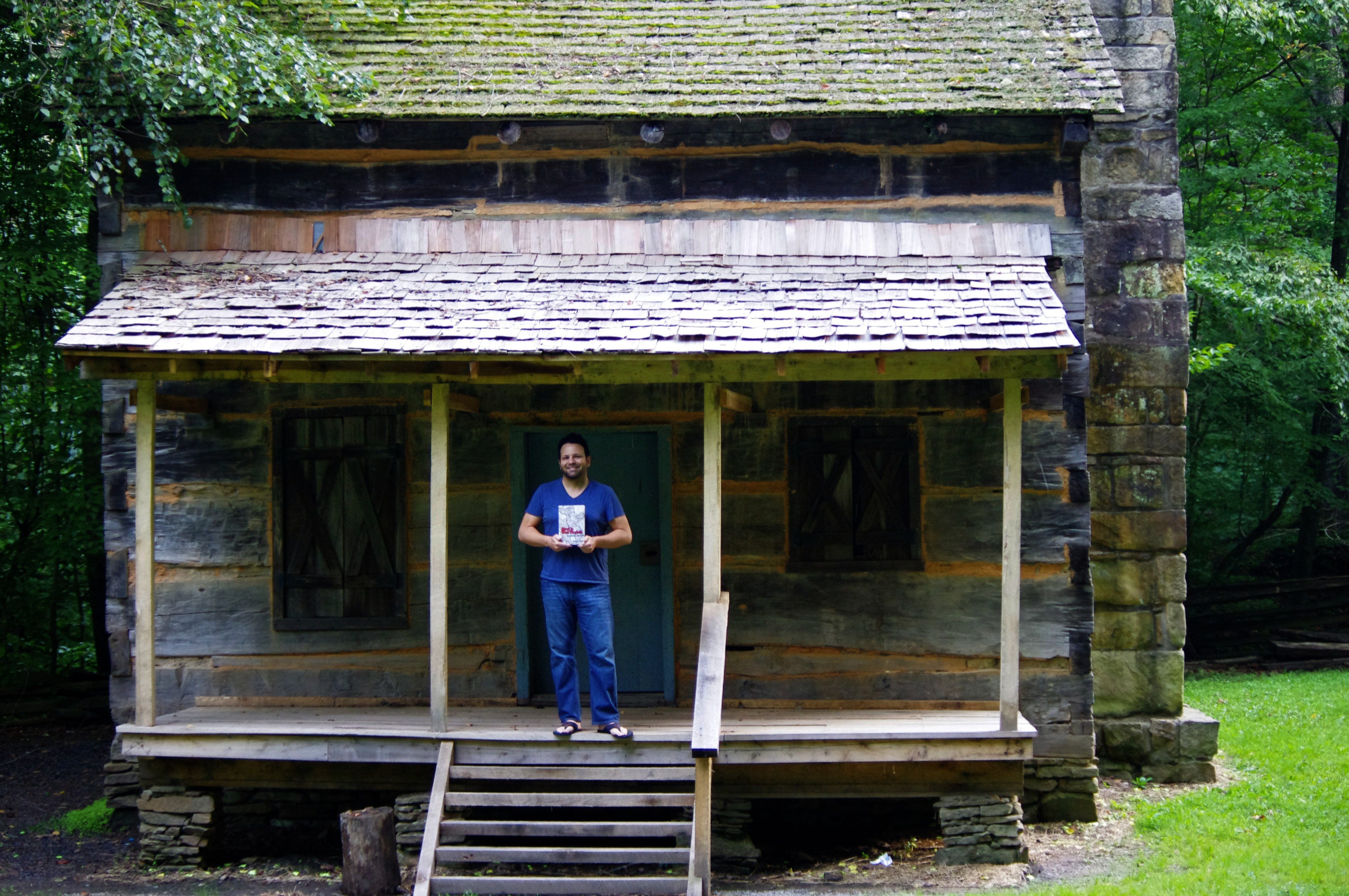
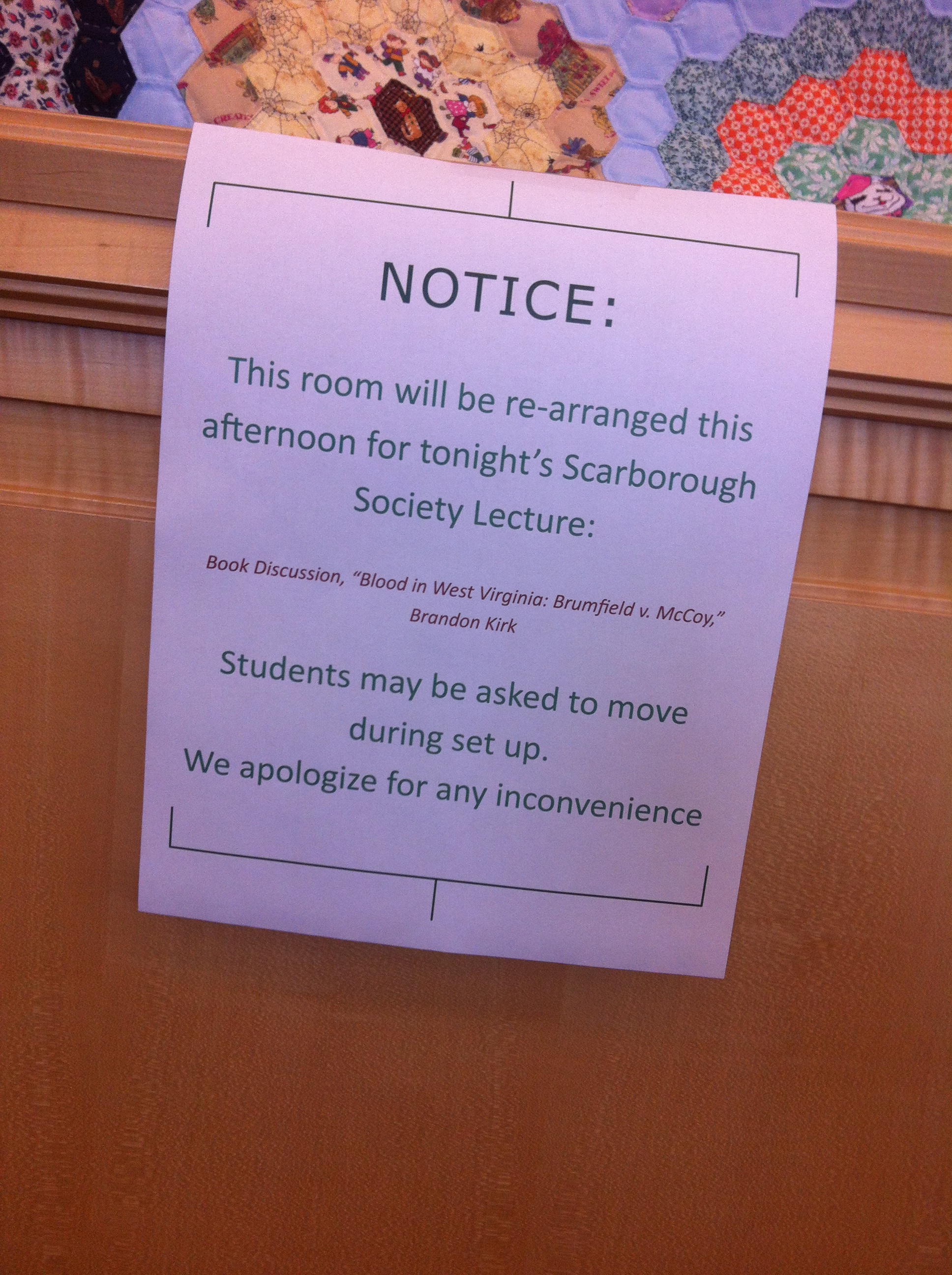
Earlier this week, I presented a lecture regarding the Lincoln County Feud to a wonderful audience in West Virginia’s oldest town: Shepherdstown. Here I stand near Shepherd University’s Scarborough Library, just before my lecture.
11 Saturday Apr 2015
Posted in Man
Tags
Ballard P. Browning, Burl T. Christian, Chloe Ann Christian, Christian, civil war, Elizabeth Canterbury, genealogy, Guyandotte River, Henderson Browning, Henry H. Hardesty, history, James H. Christian, Lee R. Browning, Logan County, Marsilla Christian, Mary Canterbury, North Carolina, R.A. Brock, Rebecca Browning, Roxie J. Browning, Samuel Canterbury, Sarah Christian, Virginia and Virginians, West Virginia, William C. Browning
From “Virginia and Virginians, 1606-1888,” published by H.H. Hardesty, we find this entry for Henderson Browning, who resided at Christian, West Virginia:
Was born in Logan county, W.Va., July 6, 1839, and was married to Elizabeth (Canterbury) Christian, of same county, Aug. 15, 1866. To this union have been born two sons and a daughter: Ballard P., born Aug. 8, 1867; Lee R., born May 3, 1869, died the following year; and Roxie J. The first and last of these children are unmarried, and reside with the parents. Roxie, the youngest, now 15 years of age, is the largest girl in the county, weighing 264 3/4 pounds, measuring 45 inches around the waist, and 54 1/2 around the shoulders. Mrs. Browning was first married to James H. Christian, who died in prison during the late war. Of this marriage four children were born: Marsilla, died in infancy, Burl T., Chloe Ann, and Sarah. The last three are married. William C. Browning and Rebecca (Tola), parents of the subject of this sketch, are both still living in Logan county, at an advanced age; the mother is a native of this county; the father was born in North Carolina; his parents were some of the first settlers in Logan county. Samuel and Mary (Toler) Canterbury, Mrs. Browning’s parents, were born in this county, where the mother still lives, now in her 86th year; the father died several years ago. Mr. Henderson Browning’s post office is Christian, Logan county, W.Va. He has a beautiful home situated on Guyandotte River.
Source: Dr. R.A. Brock, Virginia and Virginians, 1606-1888 (Richmond, VA: H.H. Hardesty, Publisher, 1888), 818.
08 Wednesday Apr 2015
Posted in Lincoln County Feud
Tags
Appalachia, Blood in West Virginia, book, books, Brandon Ray Kirk, feud, history, Lincoln County Feud, Scarborough Art and Lecture Series, Shepherd University, Shepherdstown
Tomorrow is the big day! Shepherdstown, WV, here we come!
06 Monday Apr 2015
Posted in Big Harts Creek, Cemeteries, Lincoln County Feud
Tags
Appalachia, Blood in West Virginia, Brandon Ray Kirk, cemeteries, Harts Creek, history, Lincoln County, Lincoln County Feud, photos, Salena Vance, U.S. South, West Fork, West Virginia

At or near the Salena Vance grave on West Fork of Harts Creek, Lincoln County, WV. Salena appears as a character in my book, “Blood in West Virginia: Brumfield v. McCoy.”
06 Monday Apr 2015
Posted in Big Harts Creek, Spottswood
Tags
Appalachia, Belle Dora Adams, culture, Daisy Adams, farming, Harts Creek, history, Howard Adams, life, Logan County, Major Adams, Trace Fork, U.S. South, West Virginia
This history of early life in Logan County, West Virginia, was written by Howard and Daisy Adams. Howard (1906-1976) and Daisy (b.1915) were children of Major and Belle Dora Adams of Trace Fork of Harts Creek. Titled “The life of pioneers during the latter half of the eighteenth century and the beginning of the 19th century” and written in the late 1960s or early 1970s, their history marks the only known attempt by local people to reconstruct the story of pioneer life. This part of the history includes information regarding hogs and the smoke house.
The hogs furnished the main meat supply. Most farmers let their hogs run loose out on the mast as they called it till late fall. Nuts were plentiful in those days. Around the last of November some of the largest hogs were called in and put up in a floored pen with a big trough placed inside the pen so the hogs could be watered and fed often. They were fed plenty of corn till around Christmas. Then they were butchered or killed for meat.
Hog killing time was a lot of fun and good eating. It began with the hogs being well fattened as they called it. Some big kettles were set in a furnace and filled with water, then a fire was built around the kettles to heat the water. Firewood was plentiful and they sure used a lot of it. A large barrel was set down in the ground about 2 feet. The barrel was tilted over to about a 45 degree angle. Next a board platform was made around 6 feet square. It was moved up till it touched the barrel. Now a hog was either shot or hit in the head with a hammer. Either way it was killed neat. A butcher knife was plunged in the hog’s neck, the point of the knife touching the heart. Now after the hog had bled most all of the blood out of it they dragged him up on the platform before the barrel. Now the hot water from the kettles was poured in the scalding barrel, then the hog would be pushed into the barrel by men and rolled over a time or two. Now they changed ends, with the hog scalding the whole hog. Well, the hair was scraped off with big knives. Now he was hanged up about 6 feet on some object. A stick called a gammor stick, which was about 2 feet long and 2 inches in diameter sharp on both ends, it was struck through the _____ of the hind legs of hog. This held him up while the intestines were removed by splitting the hog down his belly. Now some folks come from a long way just to roast the kidneys and _____. Next Mr. Hog was carried to the smoke house, laid on a heavy table and cut up as they called it.
First after the hog was laid on the cutting table its feet and head were cut off neat all the lean meat was cut out for making sausage. A lot of the fat was cut out for rendering lard. Now the 2 hams and 2 shoulders were cut off, leaving 2 big middlings. Now the pieces were carried in the smoke house, salted, and stacked in a big trough that had been made from a large log being chopped or dug out with a tool called a foot adz and axe. This trough was made to hold the pork. Now the meat had to be hung and smoked so a lot of hickory limbs about the size of your big finger and 3 feet long with a fork on the big end, these were tied to form a loop. These loops were slipped over poles laid on the joist in the smoke house. Now the meat had holes cut in it and the meat was hooked to the loop on the joist. Now for smoking: A fire made from green hickory wood was built on the ground under the meat so the smoke filtered up through the meat and it got smoked in the process. After it had been smoked several weeks it was taken down and sprinkled and covered with a mixture of black pepper, sugar, ashes, saltpeter, etc. Now it was again stacked in the big trough and covered up to keep out rats, mice, etc. Boy it was good eatin’.
The smoke house was also used to keep meat, a barrel of flour, a barrel of salt, a can of lard, and I remember we always kept a pair of old scales to weight farm products on. Also the family weighed each other to see who was the heaviest. Boy, this smoke house took a lot of paper and time but it played an important part in the lives of the pioneers.
06 Monday Apr 2015
Posted in Ferrellsburg, Lincoln County Feud
Tags
Appalachia, Ben Walker, Blood in West Virginia, Brandon Ray Kirk, cemeteries, Ferrellsburg, feud, genealogy, Haley-McCoy grave, history, Lincoln County, Lincoln County Feud, Low Gap, photos, Walker Branch, West Virginia

Ben Walker grave, located in the head of Walker Branch at Low Gap, near Ferrellsburg, Lincoln County, WV. Mr. Walker appears as a character in my book, “Blood in West Virginia: Brumfield v. McCoy.”
Writings from my travels and experiences. High and fine literature is wine, and mine is only water; but everybody likes water. Mark Twain
This site is dedicated to the collection, preservation, and promotion of history and culture in Appalachia.
Genealogy and History in North Carolina and Beyond
A site about one of the most beautiful, interesting, tallented, outrageous and colorful personalities of the 20th Century
 Brandon Ray Kirk