• About

Brandon Ray Kirk

~ This site is dedicated to the collection, preservation, and promotion of history and culture in my section of Appalachia.

Brandon Ray Kirk

Tag Archives: writing

Marc Harshman (2015)

30 Tuesday Jun 2015

Posted by Brandon Ray Kirk in Lincoln County Feud

≈ Leave a comment

Tags

Appalachia, Beckley, Blood in West Virginia, book, books, Brandon Kirk, Gretna, Louisiana, Marc Harshman, Pelican Publishing Company, poetry, Tamarack, U.S. South, West Virginia, West Virginia Writers Weekend, writers, writing

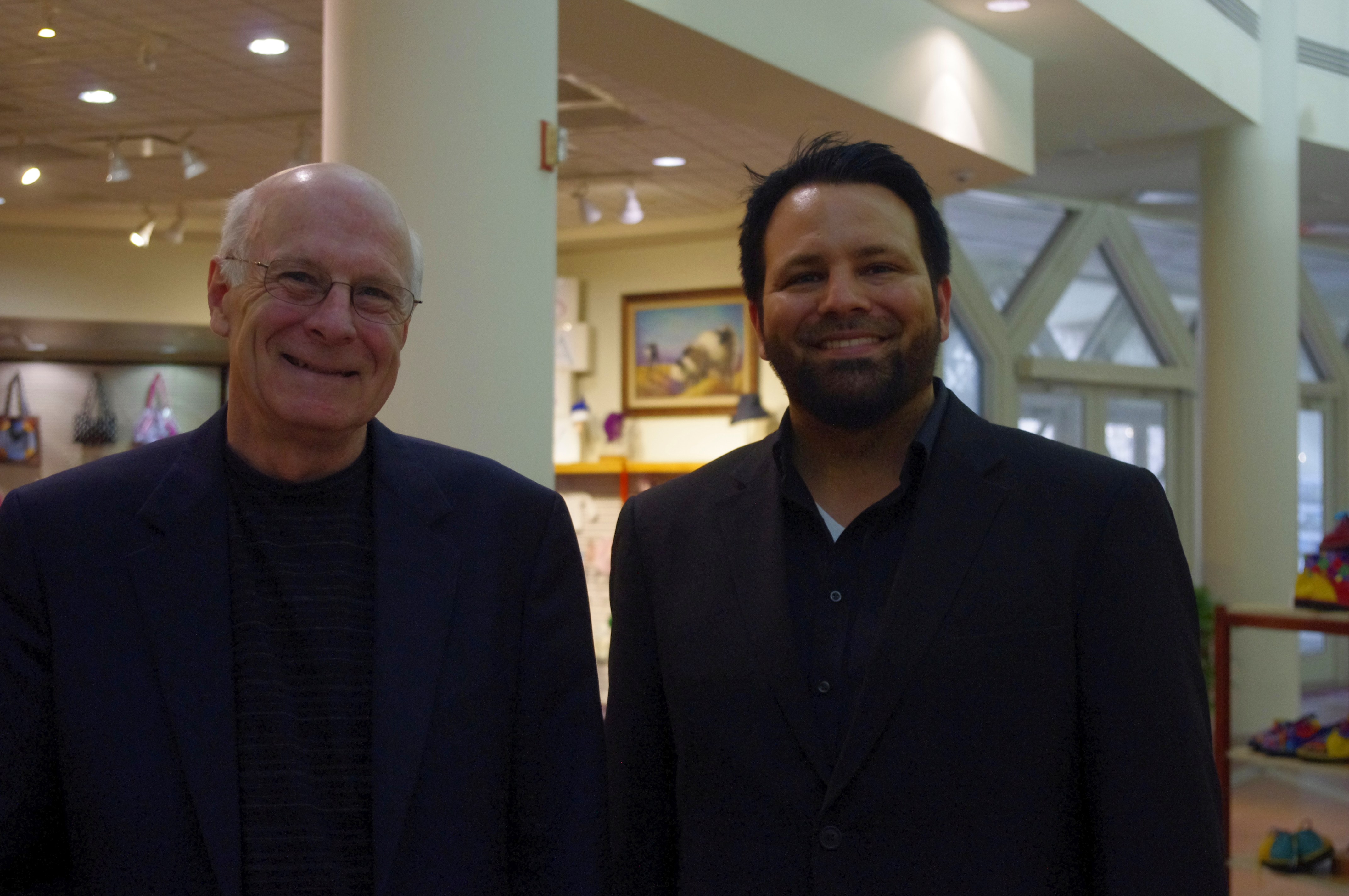
Here I am with West Virginia Poet Laureate Marc Harshman at West Virginia Writers Weekend, where I promoted my book, "Blood in West Virginia: Brumfield v. McCoy." 27 June 2015

Here I am with West Virginia Poet Laureate Marc Harshman at West Virginia Writers Weekend, where I promoted my book, “Blood in West Virginia: Brumfield v. McCoy.” 27 June 2015

West Virginia Writers Weekend (2015)

29 Monday Jun 2015

Posted by Brandon Ray Kirk in Lincoln County Feud

≈ Leave a comment

Tags

Appalachia, authors, Beckley, Blood in West Virginia, Brandon Kirk, history, Hugh Dingess, Kimberly Collins, Lincoln County Feud, Simple Choices, Tamarack, U.S. South, West Virginia, West Virginia Writers Weekend, writers, writing

At West Virginia Writers Weekend, I was fortunate to meet author Kimberly Collins ("Simple Choices") and her amazing family, who are descended from Hugh Dingess, an important character in my book

At West Virginia Writers Weekend, hosted by Tamarack, I was fortunate to meet author Kimberly Collins (“Simple Choices”) and her amazing family, who are descended from Hugh Dingess, an important character in my book. 27 June 2015

John Hartford’s Hands

26 Friday Jun 2015

Posted by Brandon Ray Kirk in John Hartford

≈ Leave a comment

Tags

banjo, bluegrass music, Brandon Kirk, country music, fiddle, fiddler, history, John Hartford, life, Madison, Marie Hartford, music, Tennessee, writers, writing

Let me try to describe John’s hands. They were very small in every way. He had frail hands as a gentleman might have, with little hair on them. I don’t recall that his fingers were unusually long. His knuckles were slightly larger than his actual fingers, maybe because his fingers were so thin. He kept his fingernails clean and filed smooth with a file. I remember he often filed his nails while on the bus during road trips; sometimes he filed his nails when conversations barely held his interest, half-listening. He absolutely never bit his fingernails. He seldom used his hands for any type of physical work because he didn’t want to risk hurting them; they were, he said, what paid the bills. The skin on his hands was somewhat loose and pale. When you shook his hand, it was very soft, although I’m sure he had slight callouses on the ends of his left hand fingers from playing the fiddle nearly every waking minute of the day. When I first met John at Morrow Library, he shook my hand and insisted that I call him John, not Mr. Hartford. When I later visited his home in Nashville during the summer for weeks or a month, before I had moved to Nashville, he would always shake my hand before I left for West Virginia. I recall at the end of my first trip how he stood in his driveway between his house and the guest house and remarked that we shouldn’t say goodbye because we would see each other again. John did not particularly like goodbyes; he preferred until next times. At the end of his life, upon commencement of his chemotherapy, he would shake very few people’s hand. Due to the chemotherapy, he was particularly concerned about germs. At that time, we shared a laptop and I always took care to clean the keys with alcohol before passing the laptop to him for manuscript review. I did this because I did not want to pass germs and make him ill; he never asked me to do it. Actually, I recall times he told me that it wasn’t necessary, but I did it anyway. Almost always, if he met someone at an event, they would greet him with a handshake, which he had to decline. It was awkward and in a peculiar way I think he enjoyed it. I may be mistaken, but it seems as if he contemplated or did in fact wear gloves for a short time just for handshakes. On a few occasions, he complained about having shaken hands with stout men who nearly crushed his hand; he detested an unnecessarily firm handshake because he said it might affect his ability to play. Later, after I moved to Nashville and visited and stayed many days and nights in his home I observed and he said that one of his favorite things to do was to sit with Marie on the bedroom couch at night and hold her hand while the two of them watched television. These were, of course, private moments and I only intruded if I had a question about the manuscript or a related matter. John’s wrists were small. He never wore a watch on his wrist, preferring instead to keep a pocket watch – usually tucked in his overalls front pocket or in the pocket of his vest, which he nearly always wore. If I remember correctly, his watch was colored gold, not silver. When I think of his hands, I see them holding a fiddle and bow at the dining room table and on stage, I see them moving across a banjo, I see them holding a fork and knife at dinner, I see them placing tiles on a Scrabble board during our games together, I see them holding a glass of red wine late at night during our conversations, I see them holding a book or a magazine at the couch by the fireplace, I see them gripping the wheel of his Cadillac on our way to Piccadilly Cafeteria, I see them pushing PLAY and turning up the volume on his car stereo…

Taylor Books

06 Saturday Jun 2015

Posted by Brandon Ray Kirk in Lincoln County Feud

≈ Leave a comment

Tags

Blood in West Virginia, books, Brandon Ray Kirk, Charleston, Gretna, Louisiana, Pelican Publishing Company, photos, Taylor Books, West Virginia, writers, writing

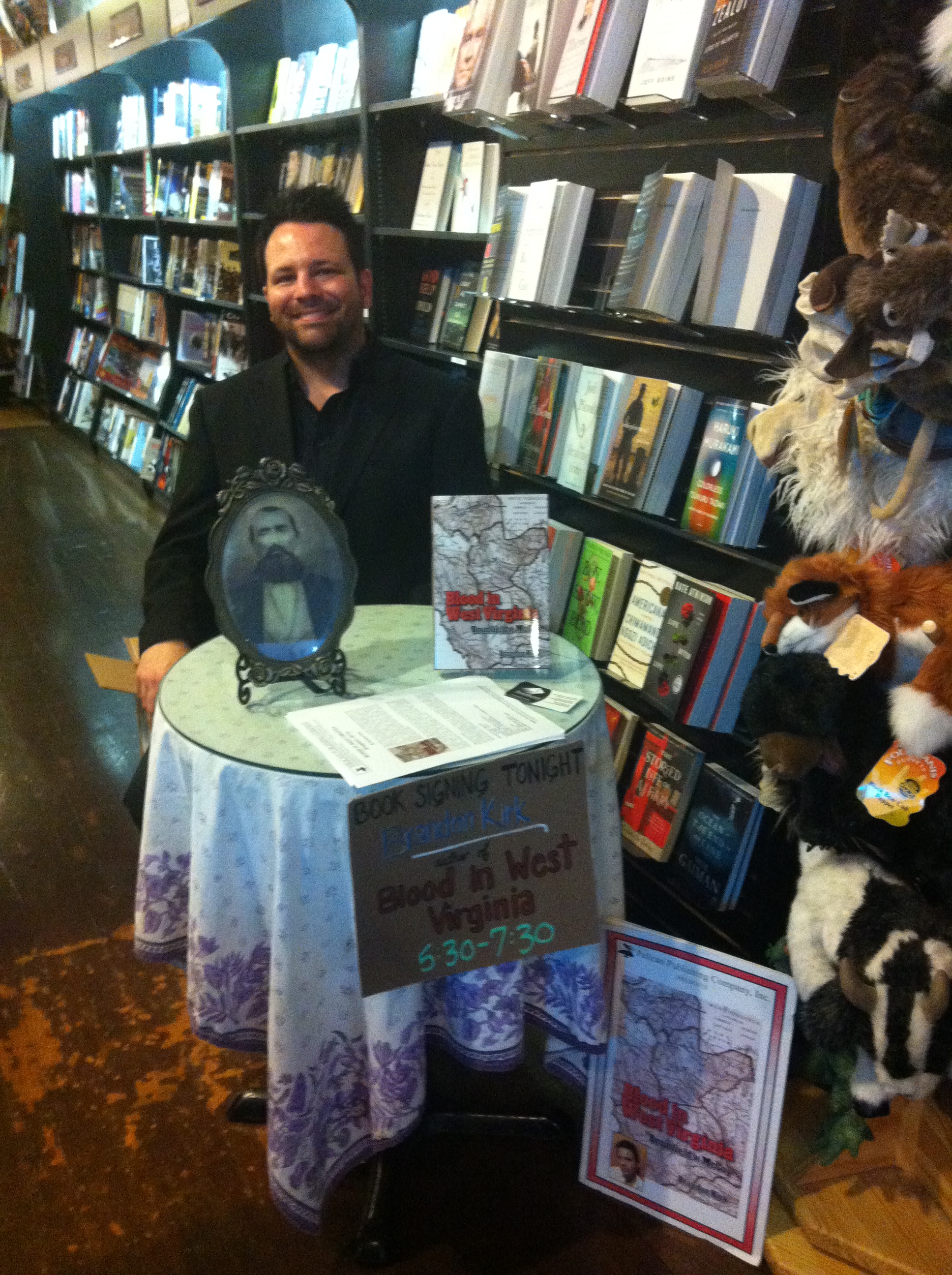
Taylor Books in Charleston, WV, 30 May 2015

Taylor Books in Charleston, WV, 30 May 2015

Taylor Books

05 Friday Jun 2015

Posted by Brandon Ray Kirk in Big Harts Creek, Harts, Lincoln County Feud

≈ Leave a comment

Tags

Appalachia, Blood in West Virginia, Brandon Ray Kirk, Charleston, genealogy, Gretna, history, Lincoln County Feud, Louisiana, Paris Brumfield, Pelican Publishing Company, photos, Taylor Books, West Virginia, writers, writing

Here I am meeting wonderful people at Taylor Books in Charleston, WV

Here I am meeting wonderful people on 30 May 2015 at Taylor Books in Charleston, WV

Memories Recalled (1946)

25 Monday May 2015

Posted by Brandon Ray Kirk in Big Harts Creek, Poetry, Spottswood

≈ Leave a comment

Tags

Appalachia, Belle Dora Adams, Daisy Adams, genealogy, Harts Creek, history, Howard Adams, Logan County, Major Adams, poetry, Trace Fork, West Virginia, writing

This history of early life in Logan County, West Virginia, was written by Howard and Daisy Adams. Howard (1906-1976) and Daisy (b.1915) were children of Major and Belle Dora Adams of Trace Fork of Harts Creek. Titled “The life of pioneers during the latter half of the eighteenth century and the beginning of the 19th century” and written in the late 1960s or early 1970s, their history marks the only known attempt by local people to reconstruct the story of pioneer life. This poem, dedicated to their father, appears at the end of the history. It is dated March 15, 1946.

There by the road stands our dear old home

Where once we did dwell.

With Mother and Dad we would roam

O’er our homestead we loved so well.

We would sit by the fire on a winter night

Talking happy and gay.

Sometimes Dad would read while the fire burns bright,

The Bible, and then, he would pray

That God would watch over his loved ones dear

And our neighbors all around.

We would feel God’s presence near

As we knelt in that circle round.

Mother was a favorite of us all.

Dad loved her very dear.

We did love to hear her call

When the evening time was near.

She could soothe away our worries and frowns

And make us want to smile.

Oh, how I wish we could now sit down

With Mother and Dad for a while.

On January tenth, nineteen and thirty-nine,

I shall never forget that day,

God called our mother, leaving us behind

To worry along on life’s way.

God needed another angel fair

To live in His heavenly domain,

So He took our mother, with her love so rare,

To dwell in that home of fame.

We sure loved our dear old dad,

Though he ruled us with a vim.

He was the best friend we ever had

And we thought the world of him.

I shall never forget that Saturday night,

As the clock was striking nine,

As we sat around the fireside bright

Dad left us behind.

It was on December 16, 1944,

While our friends were standing around,

We had done all we could and could do no more.

The Death Angel of the Lord came down.

He took the breath from our darling dad,

And Dad will suffer no more,

But our hearts will always be lonesome and sad

Until we meet on that golden shore.

Tamarack (2014)

28 Tuesday Apr 2015

Posted by Brandon Ray Kirk in Lincoln County Feud

≈ Leave a comment

Tags

Appalachia, authors, Beckley, Blood in West Virginia, books, Brandon Kirk, history, Lincoln County Feud, Pelican Publishing Company, Tamarack, U.S. South, West Virginia, writers, writing

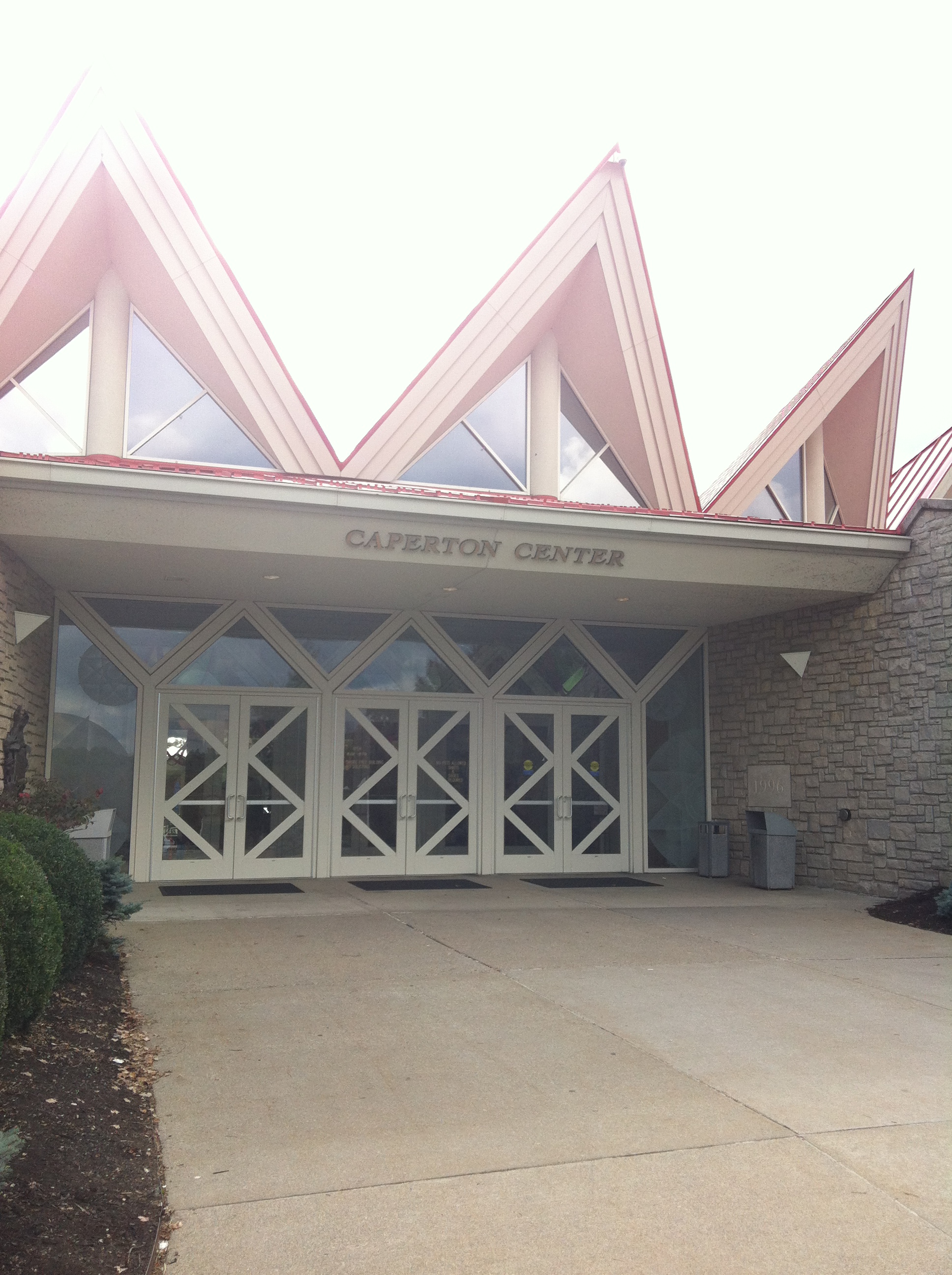
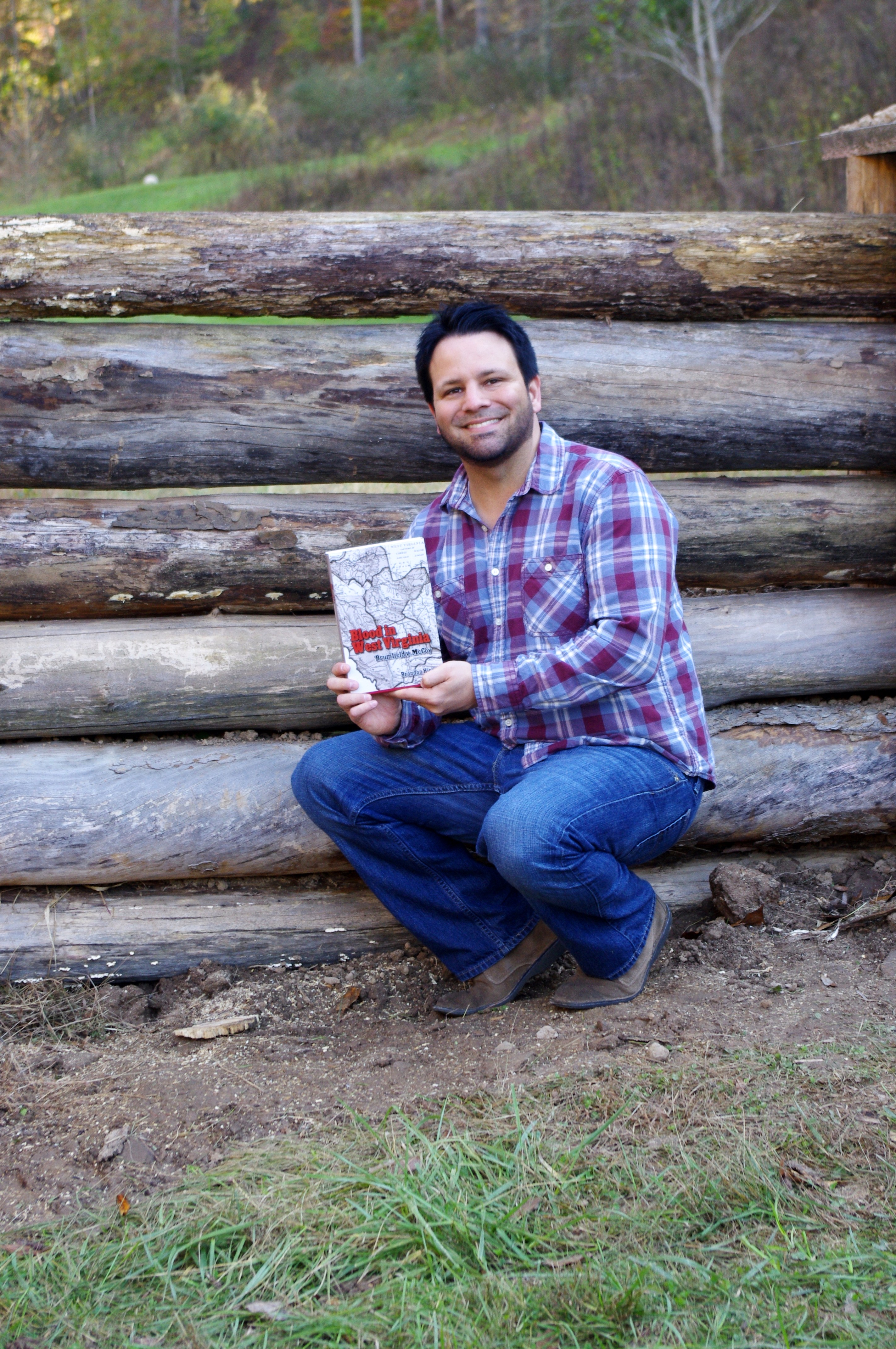
"Blood in West Virginia: Brumfield v. McCoy" is available for purchase at Tamarack in Beckley, West Virginia

“Blood in West Virginia: Brumfield v. McCoy” is available for purchase at Tamarack in Beckley, West Virginia

Scarborough Art and Lecture Series (2015)

12 Sunday Apr 2015

Posted by Brandon Ray Kirk in Lincoln County Feud

≈ Leave a comment

Tags

Appalachia, Blood in West Virginia, book, books, Brandon Ray Kirk, history, Lincoln County Feud, Scarborough Art and Lecture Series, Scarborough Library, Shepherd University, Shepherdstown, West Virginia, writing

IMG_0950

Scarborough Society Art and Lecture Series

27 Friday Mar 2015

Posted by Brandon Ray Kirk in Lincoln County Feud

≈ Leave a comment

Tags

Appalachia, Blood in West Virginia, book, books, Brandon Ray Kirk, feud, history, Lincoln County, Lincoln County Feud, Scarborough Library, Scarborough Society Art and Lecture Series, Shepherd University, Shepherdstown, West Virginia, writing

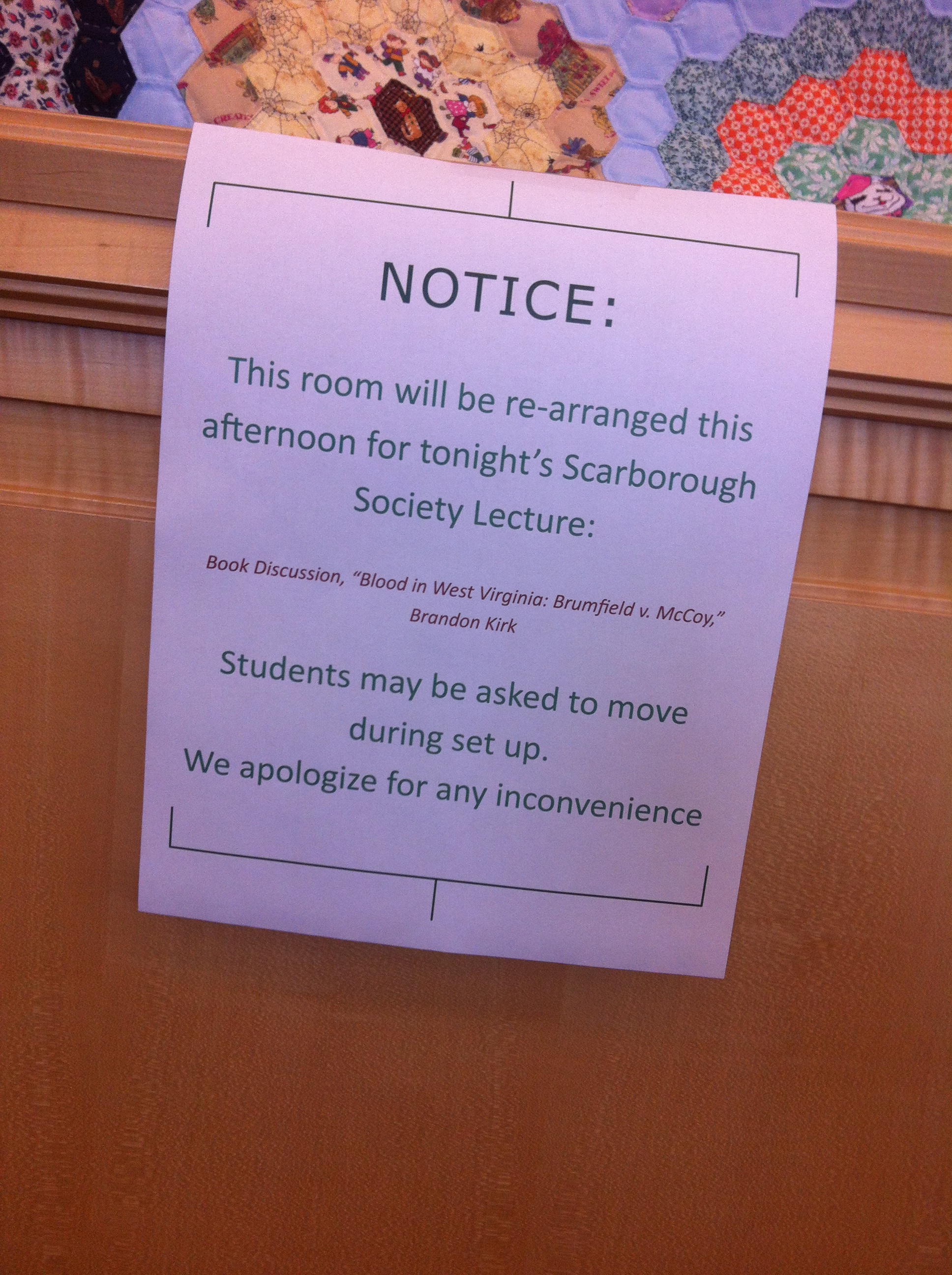
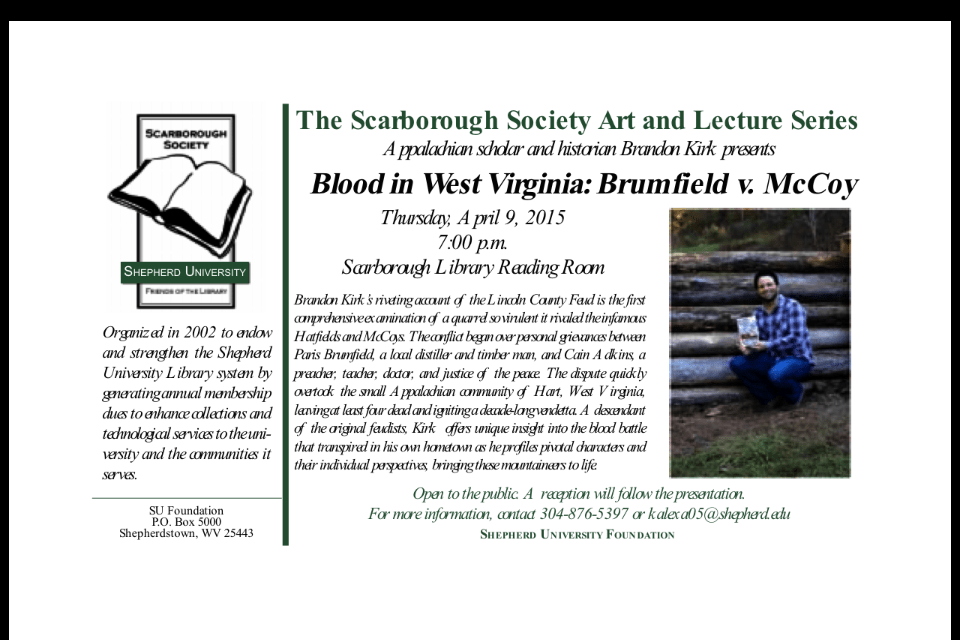
We are pleased to announce our upcoming appearance at Shepherd University in Shepherdstown, West Virginia, as part of the prestigious Scarborough Society Art and Lecture Series on April 9.

John’s Upper Office

05 Thursday Mar 2015

Posted by Brandon Ray Kirk in John Hartford

≈ Leave a comment

Tags

book, books, Brandon Ray Kirk, Ed Haley, history, John Hartford, Madison, photos, Tennessee, writing

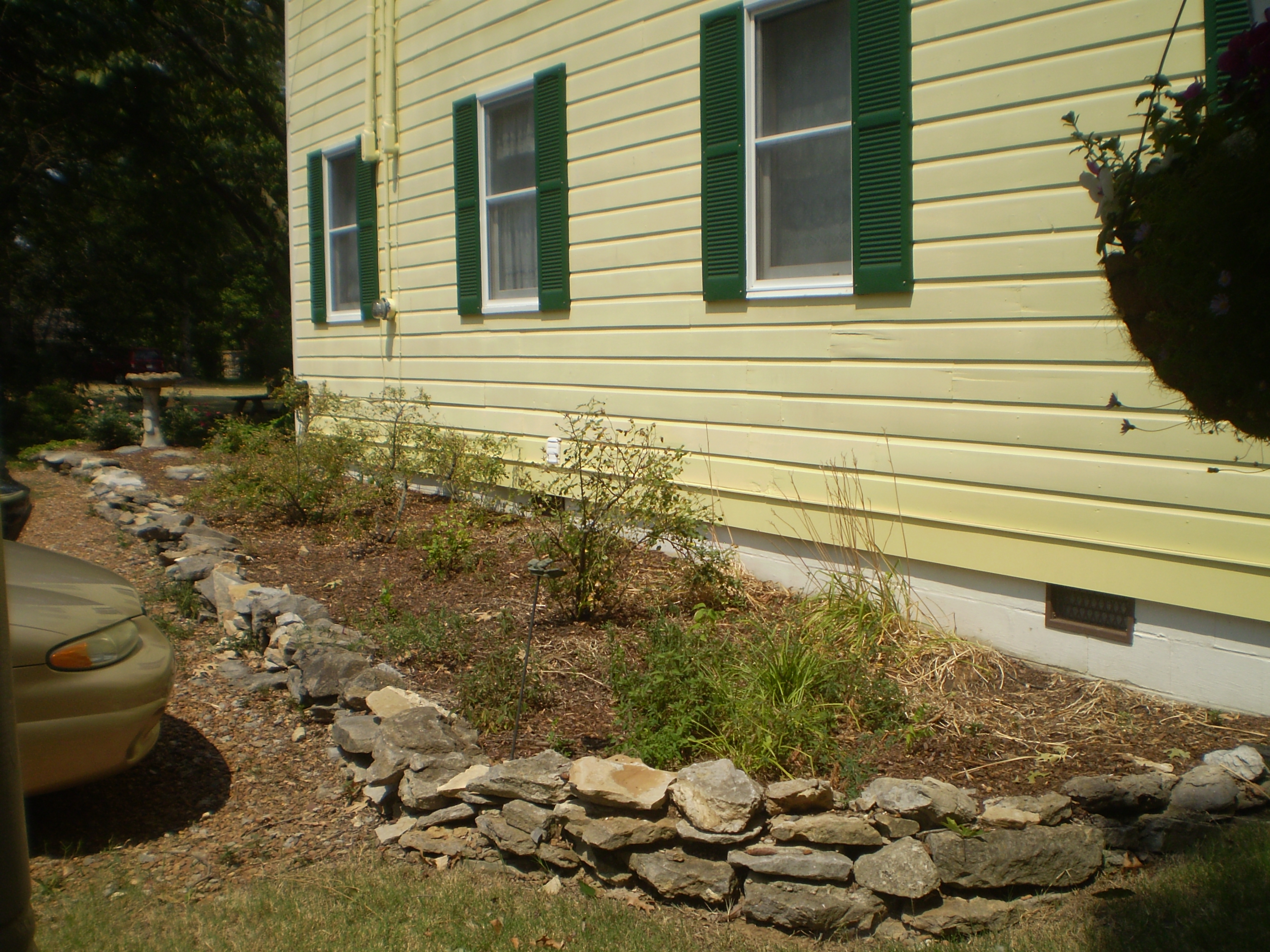
John Hartford's home in Madison, TN. The windows shown at right belonged to the "upper office," where I worked almost daily on the Ed Haley manuscript for three years.

John Hartford’s home in Madison, TN. The windows shown at right belonged to the “upper office,” where I worked almost daily on the Ed Haley manuscript for three years.

The Life of Pioneers 2

19 Thursday Feb 2015

Posted by Brandon Ray Kirk in Big Harts Creek, Spottswood, Warren

≈ Leave a comment

Tags

Appalachia, Belle Dora Adams, Daisy Adams, genealogy, Harts Creek, history, Howard Adams, log cabins, Logan County, Major Adams, West Virginia, writing

This history of early life in Logan County, West Virginia, was written by Howard and Daisy Adams. Howard (1906-1976) and Daisy (b.1915) were children of Major and Belle Dora Adams of Trace Fork of Harts Creek. Titled “The life of pioneers during the latter half of the eighteenth century and the beginning of the 19th century” and written in the late 1960s or early 1970s, their history marks the only known attempt by local people to reconstruct the story of pioneer life. This part of the history includes information regarding log cabins and interior furnishings.

Now for naming the rooms of the building. The larger building had a partition run across it cutting off 12 feet on one end and leaving 18 feet on the other end. The big room was called the “Big House” and the small one was just plain back room. The ell was called the kitchen. A ladder made of pins and driven in the logs formed a stairway to the upper floor of the main building. Some time they got hold of lumber and made a sort of winding stairway to the second floor of their houses.

Now for the heating system. Well, a section of logs was cut out in the end of the big house and back end of the kitchen a section of floor was left out for the hearth which was made of big flat rocks. Now two structures were erected made of rocks and clay. These rock structures were 2 or 3 feet in diameter and hollow. They towered on above the buildings. They were made hollow so the smoke from the fire would escape through them. They were called chimneys.

Now for the furniture of the pioneer. The furniture mostly consisted of beds. Usually 2 set in the big house, one on each side of the fireplace, one or 2 in the back room and 2 or 3 upstairs. A dresser which had a chest of drawers and a mirror or looking glass as it was called sat in the big house.

Also a chest of drawers without a mirror, but it had a big pitcher and bowl set on it. This was called the washstand. The drawers of these two pieces of furniture were filled with linens such as sheets, pillows, slips, towels, shirts, socks, dresses, etc. All important papers were kept in the top small drawers, as well as razor soap, shaving mugs, hair and clothes brushes, etc.

They had large wall clocks which were kept on shelves nailed up high on the wall to keep the children from them. These clocks were wound with keys or cranks. Some of them were wound each night and some run 8 days with one winding. They struck or banged away every hour and 1/2 hour. A small hammer hit a gong or a big spring inside the clock. Boy, you had to be a sound sleeper not to be waked by those old time clocks.

As clothes presses were unheard of, all clothing that couldn’t be put in the dresser drawers were hung on the wall or behind doors by nails in the walls.

Every body had a shotgun or an old hog rifle as it was called and it was set behind the door too.

Yes they had chairs made from hard wood. They were made by boring holes in pieces of round wood about 2 1/2 inches in diameter and putting little sticks called rounds in the holes. The bottoms or seats were made of hickory bark laced back and forth across the top rounds of chair. The back legs of a chair were longer than the front, reaching up to your shoulders when sitting down. They were held together with thin pieces of board for a back rest.

The Life of Pioneers 1

16 Monday Feb 2015

Posted by Brandon Ray Kirk in Big Harts Creek

≈ Leave a comment

Tags

Appalachia, Belle Dora Adams, culture, Daisy Adams, Harts Creek, history, Howard Adams, log cabins, Logan County, Major Adams, Trace Fork, weddings, West Virginia, writing

This history of early life in Logan County, West Virginia, was written by Howard and Daisy Adams. Howard (1906-1976) and Daisy (b.1915) were children of Major and Belle Dora Adams of Trace Fork of Harts Creek. Titled “The life of pioneers during the latter half of the eighteenth century and the beginning of the 19th century” and written in the late 1960s or early 1970s, their history marks the only known attempt by local people to reconstruct the story of pioneer life. This part of the history includes information regarding weddings and log cabins.

The settlements were few and far between, meaning the population was not crowded too much. Regardless of distances a few people, young men and young women, met and got acquainted and after a boy had gone to see one girl several times it was called going sparkin’ or courting. Well after a while they got to caring a lot for each other and found they were in love. Now they decided they loved each other dearly and wanted to get married. So the boy got up enough nerve and asked the parents of the girl for her hand in marriage. When the parents consented a date was set for the wedding. Next a marriage license was secured and a big dinner was prepared at the home of the bride. A parson was found and asked to perform the wedding ceremony. People or friends of both families came for several miles to attend the wedding. Rings and honeymoons were hardly ever mentioned by poor folks. As soon as the parson had performed the wedding and hand-shaking and qreeting, wishing both bride and groom good luck was over now, began the eating of the wedding dinner or supper, whichever name suited the hour of the day. Next wine or liquor was set up and a little drinking was done by all including most parsons too. If the boy failed to set up drinks to his friends the crowd would get out a lot of cow bells and ring them all around or sometimes a fence rail was brought in and the boy forced to ride the rail as it was called. Well so much for the wedding. Usually a square dance followed on the night of the wedding.

Now as the young man and his wife had to make a living for themselves they selected a tract of land or section as it was called. Sometimes people could file a claim on land. Other times it was bought cheap or a parent deeded his heir a piece of land. Most all the land in this county at this time was covered with forests of timber, such as large trees, brush, rock, etc. So first a clearing had to be made for a set of farm building by cutting down all the trees on the spot selected. The only available building material was the timber or logs cut down from clearing the land. A site was chosen for the dwelling house. Now enough logs were picked out and cut to the proper length for the building. A foundation was made using rocks around 12 inches square. They were piled up around the outside dimensions of foundation to correct height for leveling building. Now two long oak logs were laid on foundation rocks. These were laid the long way of building and called “bed sills.” Then smaller logs were laid crosswise on the sills spaced 2 or 3 feet apart. These were called sleepers. They were to support the floor of the house. The floor of a pioneer house was made by splitting large trees and turning the split of flat side up. They were notched on bottom and leveled up on the sleeper. A lot of chopping had to be done to get the floor level. These floor logs were called “Puncheons.” Now the walls of the house was made by the logs laid on top of each other and notched at the ends to hold them in place. A lot of old timers made two story houses, which were around 16 feet high. So far we have not mentioned the size of the house. The average house was 18 feet wide by 30 feet long and one story about 7/12 feet, a two story around 14 to 16 feet high. Now back to building our house. The logs were laid up to the roof. Even the gable ends and roof framing made of logs. Now the roof or cover for a house was made by cutting a large oak tree and sawing the tree in blocks 2 or 3 feet long. These blocks were split up into thin pieces about 1/2 inch thick and they were called boards. These were nailed or pined on roof timbers. Sometimes when there were no nails boards were weighted down with rocks or heavy timbers to keep them in place or to keep them from blowing off. Now we have the house built. They had to saw out doors and windows. Strips of wood were nailed or pined to outside of logs where a door or window was the be made. Window glass was not around in those days so a shutter was made of boards for to shut the windows or a sliding window made. Door locks were hard to find so the door which was made of boards too had to be held closed by a piece of wood 2 inches wide by 6 inches long by one inch thick nailed on inside door facing with one nail in its center. It turned around and around and was called a door button. Most houses had an ell attached to the main building. The ell was made of same construction as main house. Its size was about 14 feet wide and 20 feet long and one story high.

Meet the Author event

02 Friday Jan 2015

Posted by Brandon Ray Kirk in Lincoln County Feud

≈ 3 Comments

Tags

author, Blood in West Virginia, book, books, Boone County, Coal River Public Library, Lincoln County Feud, Racine, West Virginia, writing

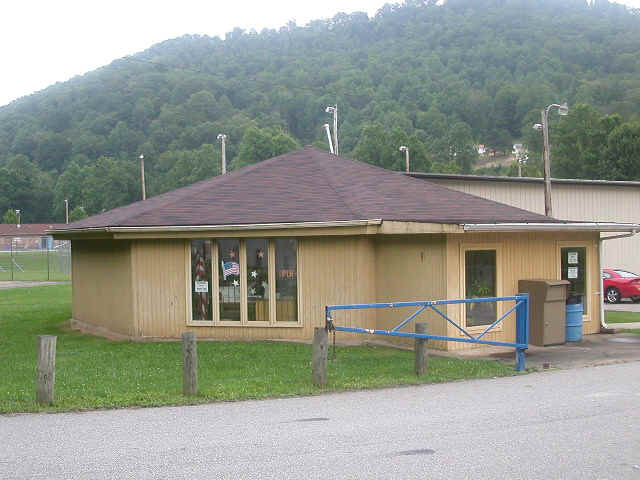
On January 3, my book and I will appear at the Coal River Public Library in Racine, WV, from 1 p.m. to 5 p.m. If you’re local, come see us!

Coal River Public Library, Racine, Boone County, West Virginia

Coal River Public Library, Racine, Boone County, West Virginia

http://www.amazon.com/Blood-West-Virginia-Brumfield-McCoy/dp/1455619183

Top 10 Pelican Publishing Best-Seller at Amazon

30 Thursday Oct 2014

Posted by Brandon Ray Kirk in Culture of Honor, Lincoln County Feud

≈ Leave a comment

Tags

Amazon, Appalachia, author, Blood in West Virginia, book, books, Brandon Kirk, history, Lincoln County, Merritts Creek Station, Pelican Publishing Company, Phyllis Kirk, West Virginia, writing

"Blood in West Virginia" Brumfield v. McCoy" is a Top 10 Best-Seller for Pelican Publishing Company at Amazon

“Blood in West Virginia” Brumfield v. McCoy” is a current Top 10 Best-Seller for Pelican Publishing Company at Amazon. Photo by Phyllis Kirk

Blood in West Virginia: Brumfield v. McCoy

20 Monday Oct 2014

Posted by Brandon Ray Kirk in Lincoln County Feud, Wyoming County

≈ 1 Comment

Tags

Appalachia, Beckley, Blood in West Virginia, book, books, Brandon Kirk, feuds, history, Lincoln County Feud, Mary Catherine Brooks, newspaper, Register-Herald, true crime, West Virginia, writing, Wyoming County Report

My book and I are featured in today’s Wyoming County Report, a supplement to the Register-Herald newspaper. The Register-Herald is produced in Beckley, southern West Virginia’s largest city. It carries a circulation of 29,000. Thanks to reporter, Mary Catherine Brooks, for writing such a nice story. http://m.wycoreport.com/news/article_1c9f77a6-559a-11e4-9b92-8766b49facd4.html?mode=jqm

Union veterans of Chapmanville District (1890)

07 Sunday Sep 2014

Posted by Brandon Ray Kirk in Chapmanville, Civil War

≈ 3 Comments

Tags

19th Kentucky Infantry, 1st Cavalry State Line, 1st Kentucky Infantry, 5th Virginia infantry, 7th West Virginia Cavalry, 9th Virginia Infantry, Allen K.M. Browning, Anna Woody, Barney Carter, Becky Aurelia Murray, Big Creek, Bryon Kelley, Chapmanville District, Charlotte Handy, civil war, Confederacy, David Thomas, doctor, Edwin F. Mitchell, Francis Murray, genealogy, Hannah Osborne, Harts, Harts Creek, Hiram Murray, history, Hoover Fork, Jane Riffe, Jim Vanderpool, John Rose, Kentucky, Lincoln County, Logan County, Logan District, Magnolia District, Mahulda Carter, Main Harts Creek Fire Department, Margaret Thomas, Marshall Kelley, Martha Thomas, Mary Ann Mullins, Nancy Branham, North Carolina, Parline Rose, Patterson Riffe, Peter Riffe, Pike County, Robert Vanderpool, Sally Ann Handy, Sarah Jane Carter, Sarah Vanderpool, Sidney Woody, Tazewell County, Tennessee, Union Army, Van Prince, Virginia, Warren, West Virginia, William Handy, William Kelley, Wise, Wise County, writing

During the War Between the States, the Chapmanville area of what is today Logan County, West Virginia, strongly supported the Confederacy. Logan County’s loyalty to the Confederacy was quite overwhelming. Its citizens supported secession and opposed the creation of West Virginia. Well over ninety-percent of all local veterans were Confederates. A few local men, however, did serve in the Union Army. At least seven Yankee soldiers lived in Chapmanville District after the war.

In June of 1890, Edwin F. Mitchell, enumerator of the federal census, made his way through Chapmanville District gathering information about local residents who had served in the U.S. Army, Navy, and Marine Corps during the late war. He ultimately compiled a short list of residents who had served the Union cause: Sidney T. Woody, Patterson Riffe, Martin Van Buren Prince, William Kelley, Robert Vanderpool, John Rose, and Allen K.M. Browning. It was a mixed bag of Yankees with hard-to-read loyalties. At least four of them were post-war settlers of the Chapmanville area, having served in Tennessee or Kentucky units. One of these migrants was an unenthusiastic Yankee who had been pressed into service by Federal troops. And of the two pre-war Logan County residents — Riffe and Prince — one served in both Confederate and Union military units. Regardless, these seven men reflected a very small percentage of the local population. In 1880, according to census schedules, Logan County had a population of 6,170 male residents and 1,795 families.

Sidney T. Woody, the first veteran listed by Mitchell in the 1890 census, was born around 1852 to Sidney and Anna (Tyree) Woody in North Carolina. During the war, from 1864-1865, he served as a private in a Tennessee regiment. By 1870, he was a resident of Logan District with his parents. In 1874, he married Sally Ann Handy, a daughter of William and Charlotte (Doss) Handy, in Logan County. They were the parents of at least ten children. Woody initially lived in Logan District with his family but spent his last years in the Chapmanville area.

Patterson Riffe, the second veteran identified in the 1890 census, was born on April 18, 1844 to Peter and Jane (Perry) Riffe in Logan County. In 1867, he married Martha B. Thomas, a daughter of David and Margaret (Mullins) Thomas, in Chapmanville. They were the parents of at least eight children. Early in the Civil War, Riffe served in Company A of the 1st Cavalry State Line (Confederate). In the latter part, from April 15, 1862 until August 8, 1865, he was a private with Company I of the 7th West Virginia Cavalry (Union). According to military records, Riffe was six feet tall with a fair complexion, gray eyes, and brown hair. He suffered a war-related injury caused by a horse falling on his leg. Riffe and his family were listed in the 1870, 1880, and 1900 censuses as occupants of Chapmanville District. He died on January 31, 1920 at Big Creek in Logan County.

Martin Van Buren Prince, the third person listed in the 1890 census, was born around 1835. Around 1856, he married Sarah Jane Carter, a daughter of Barney and Mahulda (Mullins) Carter, residents of the Hoover Fork of Harts Creek. Carter was a well-known Confederate officer in the war. During the war, Prince served as a private in Company F of the 5th Virginia Infantry. His dates of service were from August 10, 1861 until June 26, 1863. In 1884, Prince was listed in a business directory as “Van B. Prince, physician,” at Warren, a post office on Harts Creek in Lincoln County.

William Kelley, the fourth veteran in the 1890 census, was born around 1820 to Bryon Kelley in Wise or Tazewell County, Virginia. Around 1841, he married Hannah Osborne, with whom he had at least eight children. In 1850, he was a resident of Tazewell County. During the war, from November 4, 1862 until August 15, 1865, Kelley served in Company C of the 19th Kentucky Infantry. According to family tradition, Kelley was pressed into service by Yankees. “A bunch of Yankee recruiters came to Grandpa’s home and forced him to join up,” said the late Marshall Kelley of Harts. “He said he had to take his son with him because the rebels might come and kill him. Harvey was only about fifteen so they didn’t want him to go. But he went with Grandpa and was with him the whole time. He didn’t do any fighting. He just worked in the camp.” In 1870, Kelley was a resident of Pike County, Kentucky. Throughout the 1870s and early 1880s, Kelley fathered five or more children by different women before marrying Nancy Branham. They were the parents of at least five children. In the late 1880s, around 1888, Kelley sold his farm near Wise, Virginia and moved to the present-day site of the Main Harts Creek Fire Department. In 1890 or 1891, he sold out there to Tom Farley, his son-in-law, and moved back to Kentucky. Kelley died in February of 1902 in Cumberland, Kentucky or Clintwood, Virginia.

Robert Lee Vanderpool, the fifth Union man listed in the 1890 census, was born around 1849 to Jim and Sally (Beverly) Vanderpool. During the war, from May 1, 1864 until March 11, 1865, Vanderpool was a sergeant in Company G of the 1st Kentucky Infantry. Around 1871, Vanderpool married Becky Aurelia Murray, a daughter of Hiram and Francis (Thornsberry) Murray. He and Becky made their home in the Chapmanville District, where they reared at least seven children.

John Rose, the sixth person in the 1890 census, enlisted in Company G of the 1st Kentucky Infantry on the same day as Vanderpool. He was a private and was killed in battle during the war. In the 1880 census, Rose’s widow, Parline, was listed in the Chapmanville District of Logan County with four children. In 1890, Parline was still a widow and living at Warren. By 1900, no Roses lived in Logan County.

The last Union veteran listed in Mitchell’s 1890 enumeration was Allen K.M. Browning. During the war, Allen was a private in Company C of the 9th Virginia Infantry. He enlisted on January 15, 1862. He claimed some type of rupture as a war-related injury. In 1870, no one by Browning’s name lived in Logan County; in 1880, however, two local men appear by the name of “A.M. Browning.” One, aged 56, lived in the Logan District and was married with four children. The other, aged 45, lived in the Magnolia District and was married with six children. By 1900, there were no A.M. Brownings in Logan County census records.

John’s epilogue 2

31 Sunday Aug 2014

Posted by Brandon Ray Kirk in Ed Haley, John Hartford, Music

≈ 2 Comments

Tags

Arthur Smith, banjo, Ben Walker, Benny Martin, Bernie Adams, Billy Adkins, blind, Brandon Kirk, Buddy Emmons, Clayton McMichen, Doug Owsley, Durham, Ed Haley, fiddlers, fiddling, Green McCoy, Haley-McCoy grave, Harts, history, Imogene Haley, Indiana, Jeffersonville, John Hartford, Johnny Hager, Lawrence Haley, Mark O'Connor, Matt Combs, Melvin Kirk, Michael Cleveland, Milt Haley, Mona Haley, music, Nashville, North Carolina, Smithsonian, Snake Chapman, Tennessee, Texas Shorty, Ugee Postalwait, Webster Springs, West Virginia, Wilson Douglas, writing

When Ed first went out into the neighborhood with his dad’s fiddle and armed with his melodies (as interpreted by his mother) I think he probably caused not a small sensation amongst family and neighbors and his ear being as great as it was I think he picked up an incredible amount of other music really fast. I think he played with a lot of ornaments when he was a teenager and up into maybe even his thirties. Snake Chapman and Ugee Postalwait have alluded to this. Snake said the dining room recordings just didn’t sound as old-timey as he remembered Ed playing and Ugee said she remembered him and her dad talking about the little melodies between the notes. Of course Ed had to have been through a lot of subtle changes in style since that time. I think in later years he stripped a lot of the ornaments out of his fiddling in order to appeal to the Arthur Smith-Clayton McMitchen crowd who loved the radio style that was so much in vogue at that time. This might have helped make a little more money on the street. People have always liked to hear someone play and sound just like what they hear on the radio or a record. But I think if someone had asked Ed if he had done that consciously that he would have denied it and if he was in a bad mood they might have even had a fight on their hands.

I keep having this idea of Ed imitating other instruments on the fiddle because I’ve tried it myself and wouldn’t it be something that some of these great parts was really an imitation of John Hager’s banjo playing. I’d love to know where that passage is or whether it even exists.

It’s obvious that when Ed had good firm second that wouldn’t slow down for anything, he really leaned back on the beat and got in that little pocket where so many great musicians like to be. Ella and Mona really held up a good solid beat, but I’ll bet Ed was hard on them — a real taskmaster. It’s all in that rhythm section. Wilson Douglas told me one time that Ed always told him to play it real lazy. Texas Shorty, Benny Martin, and Buddy Emmons refer to it as holding on to the note as long as you can before you start the next one. This is an important part of Ed’s feel and sound and it really comes through on the dining room recordings. I get it by playing as slow as I can against a beat I hope is not gonna move, and then I swing the notes with a dotted note feel — a real lilt if I can get it — and just drag on the beat as hard as I can ’cause I know it’s not gonna slow down. I’d love to know just when Ed figured that out or if it was always there. I always think of Ed in his younger years playing on top of the beat or even ahead of it like I did when I was young and full of piss and vinegar. Actually when you’re playing alone you do hafta pretty well stay on top of the beat to hold the time or at least set it, cause you are the beat but you have to keep from rushing which we will tend do when we get to hard passages in order to get them over with. We’ll not do that no more. Mark O’Connor told me one time that while he is playing a tune he’ll play on top of and behind the beat on purpose. He described playing behind it as letting the beat drag you along…almost like water skiing. Oh, to have known what Ed and John Hager or Bernie Adams sounded like together.

I think Ed worked on his fiddling probably daily most of his life so it is fair to say that it was changing all the time. This would explain the varying descriptions of his playing that have come down. I’m sure they’re probably all accurate. Lawrence, Ugee, and Mona always said Ed played with great smooth long bow strokes and Snake Chapman always was adamant about him playing with short single strokes and Slim Clere said the same thing — that he bowed out everything — no bow slurs. Of course, in the dining room sessions you can hear both ways. It’s amazing how well Ed did without the feedback of working with a tape recorder. What an incredible ear he had. As far as I know, the only time he probably heard himself played back was the recordings we have. I hope there are others out there but I’ve come to doubt it.

Brandon and I have always had a gut feeling that if we’d dug down into the hillside a little further at Milt and Green’s grave we might have found something. We only went down five feet and then we were defeated by the rain. What if we had gone down the requisite six feet? What if, like the probe, Owsley had misjudged the bottom of the grave shaft due to the mud and water? What if it hadn’t rained and muddied up the work area? If Melvin Kirk and Ben Walker went so far as to bury the men in a deep grave, why not assume they would have gone for the standard six feet grave traditionally dug? In the following weeks, old timers around Harts kept telling Brandon and Billy, “If they didn’t dig at least six feet, it’s no wonder they didn’t find anything.” We didn’t want to question the professionalism of experts like the Smithsonian forensic team or seem like we wanted to find Milt and Green so badly that we couldn’t accept the concept that they were gone…but what if? The explanation that Doug Owsley gave us about the coal seam and underground stream made a lot of sense. Needless to say we were really disappointed. I had started to rationalize that not finding anything might indicate that they were buried in the nude and just thrown in the hole with no box or winding sheet or anything.

I was in Durham, North Carolina, the other day and I saw a fiddler on the street and I automatically found myself thinking of Ed. I didn’t have to fill in or rearrange much in my imagination to see him there playing on the street — even though this man was standing up, and played nothing like him. Of course when Ed was younger he probably stood up to play all the time like in the Webster Springs picture…dapper and wearing his derby. I always seem to picture Ed sitting down. Another great thrill for me is a young blind fiddler from Jeffersonville, Indiana, named Michael Cleveland who when he plays I can see Ed at nineteen. He stands up so straight he almost looks like he’s gonna fall over backward the way Lawrence said his dad did. When he plays I can’t take my eyes off of him thinking of Ed. Now my friend Matt Combs, who has done a lot of the transcriptions for this book, sits with me and plays Ed’s notes off of the paper, and I play off the top of my head, so in that sense it’s like playing with him.

I guess it’s time to just leave this alone and get back to my study of the fiddle. Maybe get geared up for “Volume Two.” I spend long hours here at the dining room table with my tape recorder and I can hear Lawrence and feel Ed as I try and play my way back into the past. I find that the study of Ed’s music leads me to the study of all music and the way it’s played.

John’s epilogue 1

28 Thursday Aug 2014

Posted by Brandon Ray Kirk in Ed Haley, John Hartford, Music

≈ Leave a comment

Tags

Brandon Kirk, Ed Haley, fiddle, fiddler, fiddling, history, Howdy Forrester, John Hartford, Lawrence Haley, music, Nashville, Tennessee, U.S. South, writing

For me a “tune” is a specific order of notes played by a certain person on a certain day at a certain time and given a certain name and if you want to really pin it down you could include the latitude and longitude of the event. If you were not there to personally witness this happening then the word of some one else is okay as long as you include that in the triangulation so that when you have put out this information you can lean back and say to your listener, “Now…you know as much about it as I do and you can draw your own conclusions.” This works for events and etc. Sometimes these sort of documented rumors are as close as we can get to the truth and it’s better than nothing.

I’ve been thinking about how much Ed probably wouldn’t like to think about a whole lot of what we have put in this book. For sure he didn’t like to talk about it, especially to his family. I guess I don’t blame him — he lived it. It’s easy for us to get into all of it from our totally secure positions here in 2000 knowing what we know. And from the vantage point of our research, there are probably some areas where we know things that Ed never did.

We decided to call this book “The Search for Ed Haley: Volume One” because we know that after it comes out people will be calling us saying, “Well, you didn’t call me,” and “You didn’t get that right,” and no telling what. But then that gives us fuel for Volume Two. Of course there is the chance (and it has crossed my mind) that when this book comes out that some of the old Harts Creek animosities might still be smoldering and some people might feel hurt. God, I hope not. Everybody has encouraged us and said it was time to bring out the truth.

In case you hadn’t figured it out, Brandon wrote most all of this book and I just went through and “Hartfordized” it. Even though I have my name up top, Brandon is the one who did all the work. A typical day for us would be Brandon back in the office transcribing taped interviews, making chapters out of them, and working and reworking the words. Me, I’ll be sitting at the dining room table out in the other room sawing on a fiddle. At first when Brandon would bring me a chapter I would go through it on the laptop and make corrections and reword some things. Then Brandon very quickly caught on to what it was I was after, and after awhile he would bring me chapters and I would just read them in amazement and not do anything to them, and we would just go on. It really is wonderful, ’cause even though we know every word in the book when we read it back we still learn things. “Oh, that’s why that happened that way. Well I’ll be damned.”

I’ve given this story a lot of thought and most of what I’m about to say is from instinct and gut reaction cause we didn’t necessarily have cold hard facts. I think Ed learned a lot from his mother in the period right after his dad’s death when he and her probably spent a lot of time in that cabin hid out together from the community at large and his only contact was through his mother’s family (his grandparents). Ed found a fiddle that his father had left behind (very possibly the one in the photograph which looks home made) and started sawing around on it. His mother in her grief over her late husband was probably all the time whistling and singing the old melodies, most of which he had played, and Ed picked them up much in the way that Howdy Forrester told me he picked up a lot of melodies from his mom’s whistling and singing around the house. They were the melodies Ed and his mother shared. His unusually natural technique developed because he had such a great ear and naturally not being able to see he was not in a position to pick up bad technical habits from other fiddlers. His mother probably coached him much in the same way that Lawrence coached me a hundred years later…saying things like, “That just don’t sound right.” “Pop never played that many notes.” “Pop’s groups of notes were smaller.” But then because we both could see, Lawrence also said things like, “Your bow hold don’t look like Pop’s” and “Pop held his fiddle down here and turned it.”

In Search of Ed Haley 356

20 Wednesday Aug 2014

Posted by Brandon Ray Kirk in Big Harts Creek, Culture of Honor, Ed Haley, Harts, Lincoln County Feud

≈ Leave a comment

Tags

Brandon Kirk, Ed Haley, feud, Green McCoy, Haley-McCoy grave, John Hartford, John Imlay, Lawrence Kirk, Lincoln County Feud, Low Gap, Malcolm Richardson, Melvin Kirk, Milt Haley, Smithsonian, Steve Haley, Walker Family Cemetery, writing

The following morning, Brandon and I met Steve Haley at the bus. Not long afterwards, two men drove up in a white SUV and eased out toward us. The Smithsonian forensic crew had arrived. They were dressed ordinary and casually, except for very “official-looking” black caps adorned with golden seals. The driver, a large man with a rough voice and commanding presence, introduced himself as Malcolm Richardson – or “Rich,” as he preferred to be called. The other fellow, younger than Rich, tall and seemingly jolly, was John Imlay. We almost immediately piled into their vehicle and headed for the grave.

Upon reaching the logging road at Low Gap, Rich decided not to use it to drive up to the grave. Instead, we parked just off the hill near the Walker Family Cemetery and headed up the hill on foot. We were barely there when Lawrence Kirk, who’d shown me the gravesite back in 1993, popped out of the bushes. He’d preferred to “rough it” up the hill, somehow making it up the slope and through the brush in a pair of dress shoes, offering his assistance with any questions Richardson and Imlay might have about the site. It was neat having Lawrence there since his grandfather Melvin Kirk had helped bury Milt and Green in 1889. Steve Haley’s presence also was noteworthy in that it marked the first time, so far as we knew, that any of Ed’s family had ever been to the site. (We don’t know if Ed went there.)

As we watched Rich and Imlay probe their metal rods into the grave, we clung to their every word — every theory, question and comment. I guess it would be fair to say that we were hoping for some kind of “breakthrough revelation” from their probing…but the whole thing was over in about thirty minutes. Still, we were all electrified with excitement. For the rest of the day, we talked about every minute detail of our “probing experience:” the rods, how they worked, what they revealed and so forth. Then came all of the wild theories about what was actually down in the grave. We could hardly wait until spring.

In Search of Ed Haley 355

19 Tuesday Aug 2014

Posted by Brandon Ray Kirk in Ed Haley, Harts, Holden, Music

≈ Leave a comment

Tags

Arkansas, Arkansas Traveler, Ashland, banjo, Brandon Kirk, Ed Haley, Ella Haley, fiddle, fiddler, fiddling, Grayson, Harts, history, Holden, Jim Tackett, John Hartford, John Tackett, Kentucky, Lincoln County, Logan County, Logan Court House, music, Ohio, Portsmouth, Red River, Reece Tackett, Trace Fork, West Fork, writing

The next day, Brandon and I visited Reece Tackett, a banjo-picker who lived in a nice yellow house just up West Fork. Reece was born in 1909 and raised around Grayson in eastern Kentucky. His grandfather, Jim Tackett, was a fiddler from the Red River area of Arkansas who played for square dances in large farmhouses. He taught Reece’s father, John Tackett, how to play the fiddle. Reece said his father played “the old way — not flashy.” He used a homemade fiddle and “had to go to pine trees to get rosin.” He moved to a farm about nine miles from Grayson, where he made fiddles and played close to home, never as far away as Portsmouth, Ohio.

Reece said he moved to Holden in Logan County when he was sixteen to work with his uncle and brother in the coalmines. He used to watch Ed Haley and his wife play “beautiful” tunes like “Arkansas Traveler” on weekends at the Logan Courthouse. He said Ed wasn’t a big man and had fingers “about like a lead pencil.” His wife played the mandolin.

“She was pretty good on her singing,” Reece said. “She was dressed like the real old ladies. She had the long dress on and the apron.”

Ella kept a cup fastened to herself somehow.

“I’ve tossed many a nickel and dime in their cup,” Reece said.

Sometimes, people would pretend to put money in their cup and then steal from it.

Ed was usually paid about ten or fifteen cents per tune. There were no dollars and most of the coal miners were paid in company script.

Reece said he moved to Harts in 1946 and had no idea that Ed was from Trace Fork or even lived in Ashland.

← Older posts
Newer posts →

Feud Poll 1

If you had lived in the Harts Creek community during the 1880s, to which faction of feudists might you have given your loyalty?

Categories

  • Adkins Mill
  • African American History
  • American Revolutionary War
  • Ashland
  • Atenville
  • Banco
  • Barboursville
  • Battle of Blair Mountain
  • Beech Creek
  • Big Creek
  • Big Harts Creek
  • Big Sandy Valley
  • Big Ugly Creek
  • Boone County
  • Breeden
  • Calhoun County
  • Cemeteries
  • Chapmanville
  • Civil War
  • Clay County
  • Clothier
  • Coal
  • Cove Gap
  • Crawley Creek
  • Culture of Honor
  • Dingess
  • Dollie
  • Dunlow
  • East Lynn
  • Ed Haley
  • Eden Park
  • Enslow
  • Estep
  • Ethel
  • Ferrellsburg
  • Fourteen
  • French-Eversole Feud
  • Gilbert
  • Giles County
  • Gill
  • Green Shoal
  • Guyandotte River
  • Halcyon
  • Hamlin
  • Harts
  • Hatfield-McCoy Feud
  • Holden
  • Hungarian-American History
  • Huntington
  • Inez
  • Irish-Americans
  • Italian American History
  • Jamboree
  • Jewish History
  • John Hartford
  • Kermit
  • Kiahsville
  • Kitchen
  • Leet
  • Lincoln County Feud
  • Little Harts Creek
  • Logan
  • Man
  • Matewan
  • Meador
  • Midkiff
  • Monroe County
  • Montgomery County
  • Music
  • Native American History
  • Peach Creek
  • Pearl Adkins Diary
  • Pecks Mill
  • Peter Creek
  • Pikeville
  • Pilgrim
  • Poetry
  • Queens Ridge
  • Ranger
  • Rector
  • Roane County
  • Rowan County Feud
  • Salt Rock
  • Sand Creek
  • Shively
  • Spears
  • Sports
  • Spottswood
  • Spurlockville
  • Stiltner
  • Stone Branch
  • Tazewell County
  • Timber
  • Tom Dula
  • Toney
  • Turner-Howard Feud
  • Twelve Pole Creek
  • Uncategorized
  • Warren
  • Wayne
  • West Hamlin
  • Wewanta
  • Wharncliffe
  • Whirlwind
  • Williamson
  • Women's History
  • World War I
  • Wyoming County
  • Yantus

Feud Poll 2

Do you think Milt Haley and Green McCoy committed the ambush on Al and Hollene Brumfield in 1889?

Blogroll

  • Ancestry.com
  • Ashland (KY) Daily Independent News Article
  • Author FB page
  • Beckley (WV) Register-Herald News Article
  • Big Sandy News (KY) News Article
  • Blood in West Virginia FB
  • Blood in West Virginia order
  • Chapters TV Program
  • Facebook
  • Ghosts of Guyan
  • Herald-Dispatch News Article 1
  • Herald-Dispatch News Article 2
  • In Search of Ed Haley
  • Instagram
  • Lincoln (WV) Journal News Article
  • Lincoln (WV) Journal Thumbs Up
  • Lincoln County
  • Lincoln County Feud
  • Lincoln County Feud Lecture
  • LinkedIn
  • Logan (WV) Banner News Article
  • Lunch With Books
  • Our Overmountain Men: The Revolutionary War in Western Virginia (1775-1783)
  • Pinterest
  • Scarborough Society's Art and Lecture Series
  • Smithsonian Article
  • Spirit of Jefferson News Article
  • The Friendly Neighbor Radio Show 1
  • The Friendly Neighbor Radio Show 2
  • The Friendly Neighbor Radio Show 3
  • The Friendly Neighbor Radio Show 4
  • The New Yorker
  • The State Journal's 55 Good Things About WV
  • tumblr.
  • Twitter
  • Website
  • Weirton (WV) Daily Times Article
  • Wheeling (WV) Intelligencer News Article 1
  • Wheeling (WV) Intelligencer News Article 2
  • WOWK TV
  • Writers Can Read Open Mic Night

Feud Poll 3

Who do you think organized the ambush of Al and Hollene Brumfield in 1889?

Recent Posts

  • Logan County Jail in Logan, WV
  • Absentee Landowners of Magnolia District (1890, 1892, 1894)
  • Charles Spurlock Survey at Fourteen Mile Creek, Lincoln County, WV (1815)

Ed Haley Poll 1

What do you think caused Ed Haley to lose his sight when he was three years old?

Top Posts & Pages

  • History for Boone County, WV (1928)
  • Origin of Place Names in Logan County, WV (1937)
  • Big Harts Creek Post Offices
  • Early Coal Mines in Logan County, WV
  • Post Offices of Wayne County, WV

Copyright

© Brandon Ray Kirk and brandonraykirk.wordpress.com, 1987-2023. Unauthorized use and/or duplication of this material without express and written permission from this blog’s author and/or owner is strictly prohibited. Excerpts and links may be used, provided that full and clear credit is given to Brandon Ray Kirk and brandonraykirk.wordpress.com with appropriate and specific direction to the original content.

Archives

  • February 2025
  • January 2025
  • October 2023
  • September 2023
  • December 2022
  • November 2022
  • May 2022
  • April 2022
  • February 2022
  • November 2021
  • October 2021
  • September 2021
  • June 2021
  • May 2021
  • April 2021
  • March 2021
  • February 2021
  • January 2021
  • December 2020
  • November 2020
  • October 2020
  • July 2020
  • June 2020
  • May 2020
  • April 2020
  • March 2020
  • February 2020
  • January 2020
  • December 2019
  • November 2019
  • October 2019
  • September 2019
  • August 2019
  • July 2019
  • June 2019
  • May 2019
  • April 2019
  • March 2019
  • February 2019
  • January 2019
  • December 2018
  • November 2018
  • October 2018
  • September 2018
  • August 2018
  • July 2018
  • June 2018
  • May 2018
  • April 2018
  • March 2018
  • February 2018
  • January 2018
  • December 2017
  • November 2017
  • October 2017
  • September 2017
  • August 2017
  • July 2017
  • June 2017
  • May 2017
  • April 2017
  • March 2017
  • February 2017
  • January 2017
  • December 2016
  • November 2016
  • October 2016
  • September 2016
  • August 2016
  • July 2016
  • June 2016
  • May 2016
  • April 2016
  • March 2016
  • February 2016
  • January 2016
  • December 2015
  • November 2015
  • October 2015
  • September 2015
  • August 2015
  • July 2015
  • June 2015
  • May 2015
  • April 2015
  • March 2015
  • February 2015
  • January 2015
  • December 2014
  • October 2014
  • September 2014
  • August 2014
  • July 2014
  • June 2014
  • May 2014
  • April 2014
  • March 2014
  • February 2014
  • January 2014
  • December 2013
  • November 2013
  • October 2013
  • September 2013
  • August 2013
  • July 2013
  • June 2013
  • May 2013
  • April 2013
  • March 2013
  • February 2013
  • January 2013
  • December 2012
  • November 2012

Enter your email address to follow this blog and receive notifications of new posts by email.

Join 2,925 other subscribers

Tags

Appalachia Ashland Big Creek Big Ugly Creek Blood in West Virginia Brandon Kirk Cabell County cemeteries Chapmanville Charleston civil war coal Confederate Army crime culture Ed Haley Ella Haley Ferrellsburg feud fiddler fiddling genealogy Green McCoy Guyandotte River Harts Harts Creek Hatfield-McCoy Feud history Huntington John Hartford Kentucky Lawrence Haley life Lincoln County Lincoln County Feud Logan Logan Banner Logan County Milt Haley Mingo County music Ohio photos timbering U.S. South Virginia Wayne County West Virginia Whirlwind writing

Blogs I Follow

  • OtterTales
  • Our Appalachia: A Blog Created by Students of Brandon Kirk
  • Piedmont Trails
  • Truman Capote
  • Appalachian Diaspora

BLOOD IN WEST VIRGINIA is now available for order at Amazon!

Blog at WordPress.com.

OtterTales

Writings from my travels and experiences. High and fine literature is wine, and mine is only water; but everybody likes water. Mark Twain

Our Appalachia: A Blog Created by Students of Brandon Kirk

This site is dedicated to the collection, preservation, and promotion of history and culture in Appalachia.

Piedmont Trails

Genealogy and History in North Carolina and Beyond

Truman Capote

A site about one of the most beautiful, interesting, tallented, outrageous and colorful personalities of the 20th Century

Appalachian Diaspora

  • Subscribe Subscribed
    • Brandon Ray Kirk
    • Join 787 other subscribers
    • Already have a WordPress.com account? Log in now.
    • Brandon Ray Kirk
    • Subscribe Subscribed
    • Sign up
    • Log in
    • Report this content
    • View site in Reader
    • Manage subscriptions
    • Collapse this bar
 

Loading Comments...