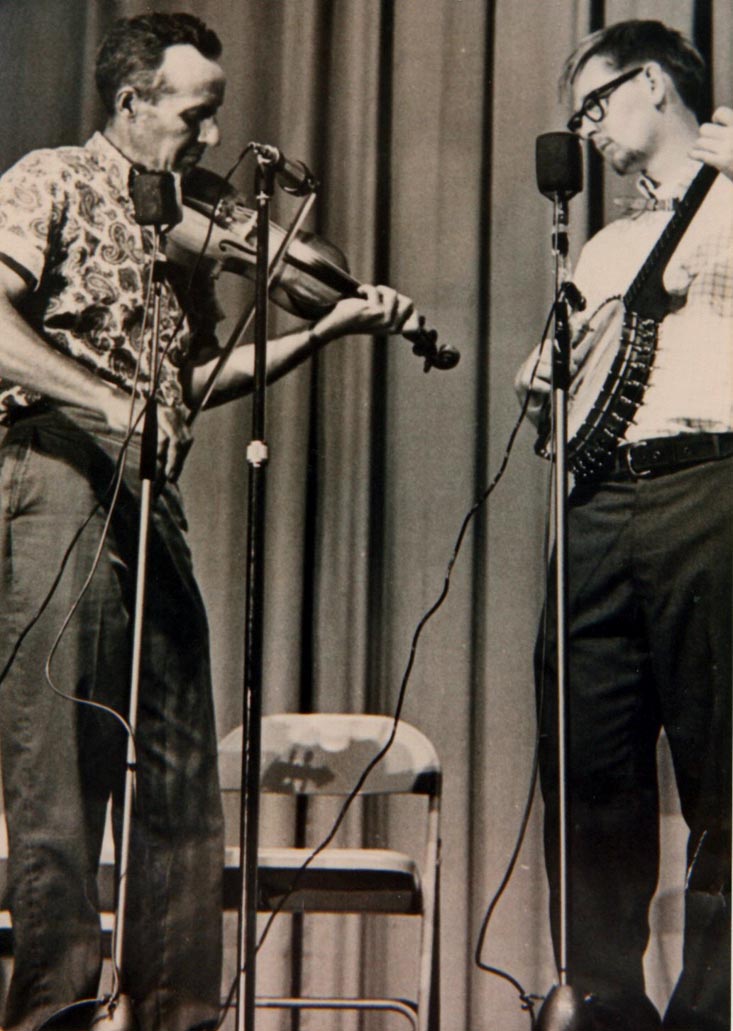
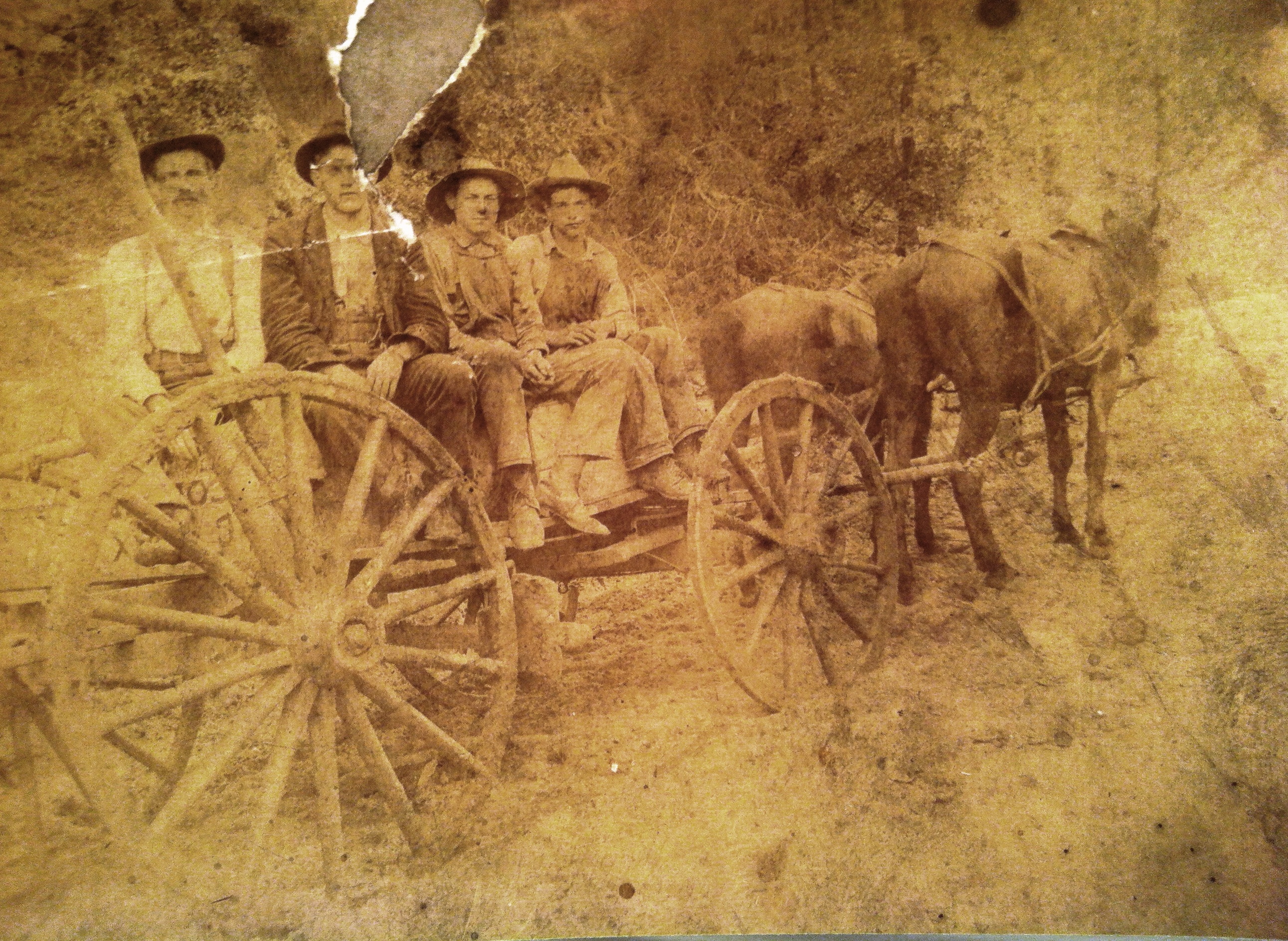
• About

Brandon Ray Kirk

~ This site is dedicated to the collection, preservation, and promotion of history and culture in my section of Appalachia.

Brandon Ray Kirk

Tag Archives: West Virginia

In Search of Ed Haley 108

11 Saturday May 2013

Posted by Brandon Ray Kirk in Ed Haley

≈ Leave a comment

Tags

blind, Clyde Haley, Ella Haley, fiddle, fiddler, Harts Creek, John Hartford, Kentucky School for the Blind, Lawrence Haley, Mona Haley, music, West Virginia, writing

I asked Lawrence if he knew anything about his brother Clyde supposedly trying to play the fiddle.

“Well, he never said anything about it to me and if he ever played the violin I never saw him, John,” he said. “But he did sit around and play a little on the guitar. Then he got away from home and got in some kind of industrial accident working in a woodshop or something and a band saw got his fingers. Mona, she’d take off with Pop a lot of times up into West Virginia and they’d be gone a week or two. She went with him as much as any of the rest of us did. Most of the time whenever I’d go, there’d be my mother, too.”

I told Lawrence what Wilson Douglas had said about Ed being able to get around extremely well on his own.

“I can remember, just like going up Harts Creek,” he said. “Remember where you turn off to the Trace Fork they got a big new church and stuff? They wasn’t anything in there then. They wasn’t even a road. People made their own footpaths around close to the hillside. Most of it was just pathways. And that’s how Pop could go from one house to another, I guess. He’d know when he was on that path — how many steps or something it was from his place to anybody else’s he wanted to go to. It’d be like if somebody could count the streets in succession — if they’re numbered streets… Mom could get around Ashland here anywhere she wanted to by herself, but Pop wasn’t too good at that. He couldn’t keep track of how many blocks he’d walked or where he’d started from a lot of times. He just didn’t have the training, I guess, to learn how to handle hisself as a blind man. Mom went to that Louisville School for the Blind. She was there about twelve or thirteen years, I reckon, and they taught her piano music.”

Lawrence told me more about his memories of his father’s appearance.

“He walked fairly fast and upright as a fence post with his shoulders throwed back,” he said. “He was no slouch. He set in his chair upright. A lot went through his mind, I know that. He used to tell me, ‘Son, if a man can think it up and imagine it, then it’s possible.’ In later years, he was always having some problems with his arms and hands. I remember him shaking his hand real vigorously, like he was trying to get circulation going back in it. He’d walk through the house a lot. ‘Course he’d go up and down the street some. If he felt like he wanted a beer or something, he might get out and go and play down at Russ’s Place half a day and drink what beer he wanted to and then he’d come home. I’ve seen Pop get pretty high at times.”

Lawrence said, “Well, I’ve tried to think and tell you everything I know my dad did. If I’m helping you at all, I’m tickled to death. I didn’t know him that long. He was about 44 or 45 when I was born. I went into the service when I was about eighteen and I wasn’t out of the service maybe a year and a half and he was dead.”
In Search of Ed Haley

09 Thursday May 2013

Posted by Brandon Ray Kirk in Ed Haley

≈ Leave a comment

Tags

Appalachia, Clay County, culture, fiddler, French Carpenter, history, life, music, photos, U.S. South, West Virginia, writing

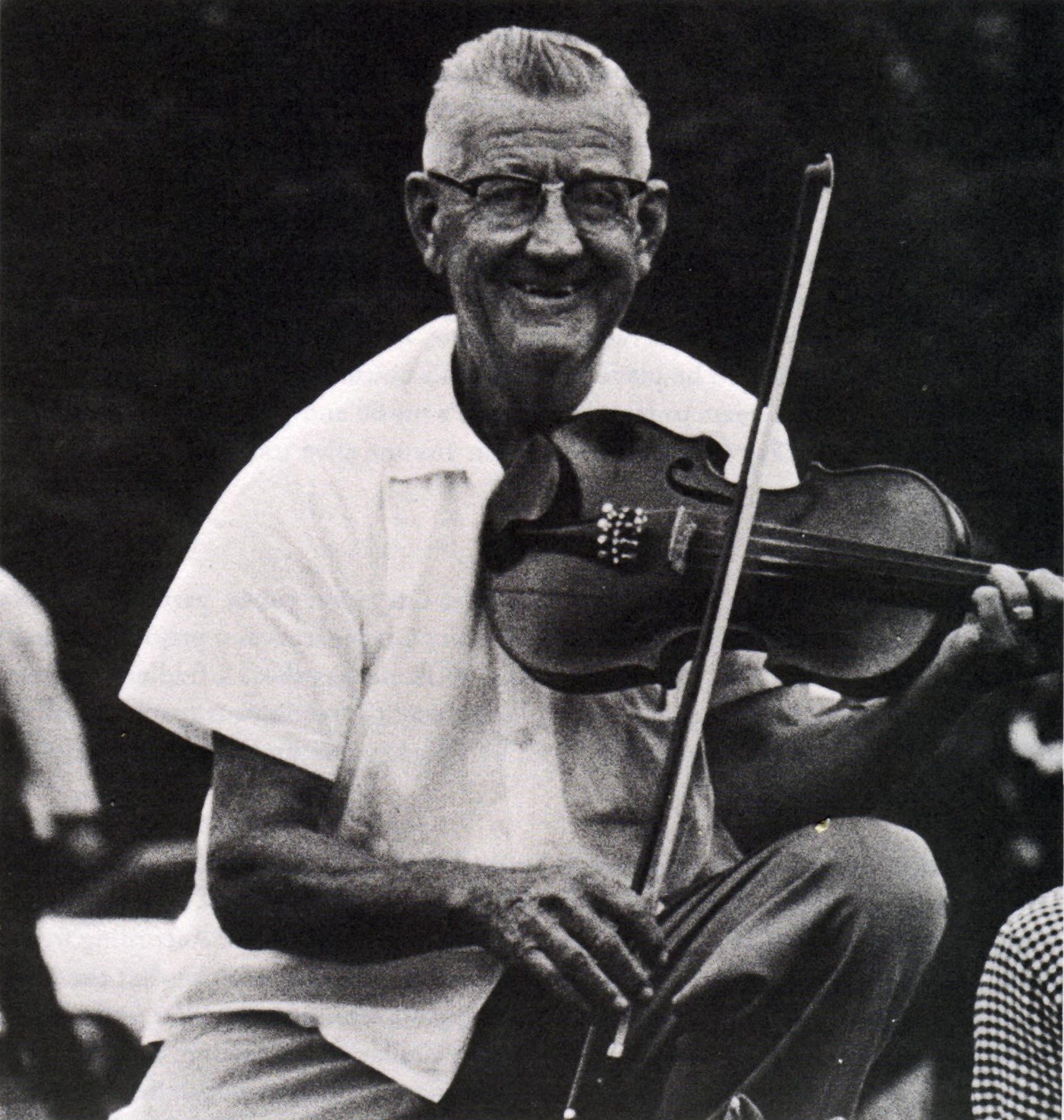
French Carpenter, 1955-1965

French Carpenter, fiddler from Clay County, West Virginia, 1955-1965

In Search of Ed Haley 106

09 Thursday May 2013

Posted by Brandon Ray Kirk in Ed Haley

≈ Leave a comment

Tags

Appalachia, Arthur Smith, Clark Kessinger, Ed Haley, fiddler, French Carpenter, history, John Hartford, music, Ugee Postalwait, West Virginia, Wilson Douglas, writing

Wilson well remembered Ed “rocking” the fiddle as he played.

“His violin rocked continuously on his chest,” he said. “I mean it rocked like a rocking chair. That’s the only fiddler I ever seen do that. He told me one time, he said, ‘Wilson, I don’t play the ‘Mockingbird’. It’s a hard matter to play the ‘Mockingbird’ unless the violin is placed under your chin.’ He really commended Arthur Smith on the ‘Mockingbird’ and Clark Kessinger, but he didn’t play the ‘Mockingbird’ at all. I’m sure he could’ve. He could play anything. I’ll put it this way, sir. I know a lot of great fiddle players. Well, I’ve seen French Carpenter — he was good — and Clark Kessinger was good but I think Haley was one of the greatest as far as I’m concerned. He was a legend in this country and in any country that knew about him.”

I asked Wilson about Ed’s fingers, like whether they came up off the fingerboard very high when he was fiddling.

“John, I’m gonna tell you like it is,” he said. “You could hardly tell the man was changing notes. His fingers practically stayed on the fingerboard and they moved like worms. Now that’s it in a nutshell. And his fingers was about as big around as a writing pencil. He had fingers more like some lady typist, you know what I mean. But I could understand: he never did any work to build his hands up other than play that fiddle. And he told me once — somebody had made the remark about not being able to note with your little finger, you know — Ed said, ‘Well, I’ll tell you what you gotta do to play the fiddle. You got to use all four of them and use your thumb, too, if you can.’ He had a sense of humor in a way, you know. And he said, ‘Son, get some soul out of your fiddle. Don’t play it to just hear the wind blow.'”

I asked Wilson if he remembered the names of Ed’s tunes.

“He played a tune he called ‘Harry in the Wildwood’,” he said. “Carpenter played it and I used to play it, but danged if I ain’t forgot it. It was a good tune. And then he played a tune he called the ‘Silver Lake’. It was on the bass. It was a four-string tune. God, he pulled a note on that bass that was out of this world. The more bass, the better he liked it.”

Wilson didn’t remember Ed singing much.

The only song he sung was “Frankie and Johnny”, which I had heard from Ugee Postalwait some time earlier. “Oh yeah,” Wilson added. “He called it ‘Old Billy Lyons’.” Unlike Ugee, who stressed Ed’s singing, Wilson emphasized Ed’s fiddling. “He had a beautiful voice,” Wilson said, “but he liked to concentrate on them hoedowns. He and Clark Kessinger would play that ‘Dunbar’ and he said, ‘Now, I’ll tell you Wilson. Clark plays that well, but they’s a little bit of bow work in there that he never did get, but I never would mention it to him.’ But he commended Clark constantly. I heard him say several times, ‘They’s very few men, maybe three out of a hundred, can play that fast and get clear notes.’ He liked Clark. He also liked Arthur Smith — some of Arthur’s tunes.”

I told Wilson that Haley supposedly hated Arthur Smith and he said, “Well, he said he didn’t know all that many tunes, but what he knew he was real unique at it, you know.”

I tried to jar more of Wilson’s memories of Ed’s repertoire by naming off some of the titles from Haley’s home recordings. He had some great comments.

“Oh God, that ‘Bonaparte’s Retreat’, he was good on that. But now that ‘Three Forks of Sandy’, they’s another tune related to that. I used to play it a little bit. He called it the ‘Three Forks of Reedy’. That’s a creek over here in Calhoun County. It empties into the Little Kanawha River. That tune is as old as the hills.”

When I mentioned “Hell Among the Yearlings”, Wilson said, “Oh God, he had the world beat on that.”

As for “Blackberry Blossom”:

“Well, he was awful good on the ‘Blackberry’. Well, to tell you the truth, they wasn’t nothing he was bad on. That’s the whole bottom line. Everything he played was good.”

I asked Wilson if he remembered what key Ed played a lot of his tunes in and he said, “Well, he played a lot of tunes in the key of C, like ‘West Virginia Birdie’ and the ‘Billy in the Lowground’ and ‘Callahan’. And he didn’t play much in the key of E. Very little in the key of E. Ed’s main key was G, C and D and A. However he could play in E-minor or he could play in A-sharp, or any of the sharps that he wanted to, but he stuck pretty close to the regular standard mountain music key.”

How about B-flat?

“Oh god, yeah. Like ‘Hey Old Man’ and the ‘Lost Indian’. Stuff like that. Oh yeah, he played a tune in B-flat, he called it ‘Boot Hill’. And he said the tune came from out West back in the old days. Somewhere back in the 18 and 80s.”

Wilson said he couldn’t play those tunes anymore.

“It’s been so long. I can remember a few tunes, but yet I can’t get them together anymore. I quit for about seventeen years.”

In Search of Ed Haley

08 Wednesday May 2013

Posted by Brandon Ray Kirk in Ed Haley

≈ Leave a comment

Tags

Appalachia, Calhoun County, culture, genealogy, history, life, Minnie Hicks, photos, Russell Shaver, U.S. South, West Virginia

Minnie Hicks (right) with son, Russell Shaver, and unknown woman, Calhoun County, West Virginia, 1900-1920

Minnie Hicks (right) with son, Russell Shaver, and unknown woman, Calhoun County, West Virginia, 1905-1915

In Search of Ed Haley 105

08 Wednesday May 2013

Posted by Brandon Ray Kirk in Ed Haley

≈ Leave a comment

Tags

Appalachia, blind, Calhoun County, Ed Haley, fiddle, fiddler, history, Laury Hicks, music, U.S. South, West Virginia, Wilson Douglas, writing

Taking Bobby Taylor’s advice, I decided to call Wilson Douglas and ask him more about Ed Haley.

“You know, he’d come to Calhoun County, West Virginia, which borders Clay County,” Wilson said. “And there was an old gentleman over there by the name of Laury Hicks. He played the banjo for him a lot and also the fiddle. Now, he was a hell of a fiddler. Ed said the first time he went over there, Hicks was setting on the porch playing the ‘Arkansas Traveler’ — him and Cheneth on the banjo. And he said, ‘Wilson, I thought I was up against it right there. That old Hicks was a powerful hoedown fiddler.’ I knew it when I was a boy.”

I asked Wilson how Ed looked back in those early days, hoping to glean more personal and less-musical memories this time around.

“He would weigh about 185 pounds and he had a large-like stomach on him and he had little tiny feet,” he said. “When he went to a strange place, he would have me to lead him one time to the kitchen, one time to the living room, one time to the outhouse and that was all after that. He didn’t ask you to go no place with him and he walked like a cat, you know — very quick, very active man. He moved like a mountain lion. I’d say, ‘Now slow down a little bit Ed, and I’ll let you get the feel.’ But he picked his feet up fast, you know what I mean? And he could tell if you was a tidy housekeeper or a messy housekeeper. When he wasn’t playing the fiddle, he was continually moving his fingers — just like he did it so much that he did it unconsciously. He was an oddball. He didn’t fool with very many people — very withdrawn. Now when he got with a gang of mountain people playing music, he was very talkative then.”

Wilson said, “I was sixteen or seventeen years old and he saw I was interested in the fiddle and he sorta took a liking to me and he talked to me quite a bit. He treated me nice but he was a very obnoxious, sarcastic man if he didn’t like you. If he liked you, fine, and if he didn’t, he’d do his thing and that was it. And I’m gonna tell you something about Ed Haley. In as much as he was blind, especially if he’d had a drink or two, he was a dangerous man. He was a mean man. But he had an awful sense of feel. He had this sense of knowing when anything was close. He knew when he wasn’t in danger. He said, ‘Wilson, I went to a place one time,’ and he said, ‘it was rough, the people was rough.’ And said, ‘This man took me to the outhouse. I come back and I thought I could go myself.’ And said, ‘I must’ve got a little bit out of the path. I was fixing to make a step and something told me not to do it and I pulled back.’ And said, ‘I turned around and went back,’ and said, ‘I just liked one step of falling in that big, dug well.’ Now, that was the kind of good sense of feeling he had, you see?”


In Search of Ed Haley 104

07 Tuesday May 2013

Posted by Brandon Ray Kirk in Ed Haley

≈ Leave a comment

Tags

Bobby Taylor, Clark Kessinger, Ed Haley, fiddle, fiddler, history, John Hartford, Lawrence Haley, music, Sam Jarvis, West Virginia, Wilson Douglas, writing

After talking with Mrs. Rutland, I called Bobby Taylor, a fiddling acquaintance and all-around nice guy in Dunbar, West Virginia. Bobby was a protégé of Clark Kessinger, the famous Charleston fiddler who regarded Haley as the best fiddler he ever heard. I told him about spending months trying to unlock the secrets behind Ed’s bowing before concluding that he played a long bow using the Scotch snap to get smoothness and note separation. Bobby agreed, telling how Clark Kessinger did the same kind of thing in “Sweet Sixteen” — “real fast and almost no bow. He would shuffle with his fingers.”

Bobby didn’t think that Ed used that one bow style for every tune, though.

“From what I could hear of Ed Haley’s fiddling, he done almost any type of style with the bow,” he said. “And I could hear his styles changing from one tune to the next and the way he would phrase. Like when I fiddle, it just depends on what mood I’m in and what style I want to play in. But Haley had to be what Kessinger would call a ‘down-bower,’ because Kessinger hated a ‘bow pusher.’ In other words, the accent’s on the up-bow. What little bit I can hear through all the scratches and everything, I hear Haley being a little more smoother, a little more fluid than Kessinger, but I still see the same bow. But Kessinger’s fast as greased lightning.”

I told Bobby how I’d really gotten into writing out Haley’s tunes note for note lately — every little slide — because I wanted to see what was going on.

“Of course, the deeper I get into it, the less I realize I know about it,” I said.

Bobby wasn’t surprised.

“Kessinger and Haley were both very complicated fiddlers, as any fiddler is,” he said. “But Kessinger was a master with the bow. I kid you not. I mean, that man could bow. Kessinger, if you listen at him fiddle, listen especially at his ‘Hell Among the Yearlings’. Man, could he fiddle that. Very few people realize how well he could fiddle it until you start really listening to what he’s doing with that bow and note correlation. It’s a masterpiece, his ‘Hell Among the Yearlings’ is. Just as Ed Haley, when I heard Ed Haley play it, I could hear where Kessinger got his idea. I could hear it all coming together. Now my style, when you get a real good guitar player that I like playing with, I have a tendency to throw Mike Humphreys into my mesh — a little bit of Kessinger — and I’ve had a lot of people tell me that I sound a great deal like Ed Haley when I do that because I play a little bigger note in a way — not quite as fast as Kessinger — and try to smooth it up a bit.”

“Lawrence has told me repeatedly about how his dad held the fiddle,” I said to Bobby, “that he didn’t stick it up under his chin but he sat it kinda there at his shoulder.”

Bobby chuckled and said, “That’s the way I hold it when I’m jamming.”

I asked Bobby if he rotated the fiddle slightly with it at that position and he said, “I don’t, but my father does. My father, I don’t think, ever met Ed Haley, but is certainly old enough to have known him. My father’s 82. But he’d always heard of him. His favorite fiddler was Sam Jarvis. He was a very prominent person — well educated. He sold insurance. He was my dad’s schoolteacher way out in a little one-room school. My father just says one word for Sam Jarvis, and he says he was ‘perfect.’ I remember when I was a small kid, my father pointed him out and talked to him for a little while and he introduced me. I’ll remember it as long as I live, he said, ‘Here is the greatest fiddler that ever lived, and someday you will learn to appreciate what I have said now.’ And to this day, if you ask me who the smoothest fiddler was I ever heard, it’s Sam Jarvis. Jarvis’ note was not of this world. He was the same age as Clark. He died in 1967.”

That was the first time I’d heard of Sam Jarvis, so — figuring that Ed likely knew him — I pressed Bobby for more information.

“Oh man, he could fiddle. Very little did he play professionally. He would just show up and terrorize the contest world occasionally. I never have heard about Sam Jarvis playing against Ed Haley, but Sam Jarvis only lost one contest in his life — and he was disqualified. You won’t catch anybody in the Charleston area that knew both the fiddlers — Kessinger and Jarvis — that will tell you Kessinger was better. The two greatest fiddlers, when you hear people talk, one’ll say Sam Jarvis and the other will say Ed Haley and most people say they wouldn’t turn their hand over for the difference.”

I asked Bobby who he thought Ed and Jarvis patterned their fiddling after and he said, “That is what is very interesting. They learned from old Edison records, somewhat. I know Jarvis did. They said that his dad wouldn’t hardly let him have a hold of the fiddle, he was so little. And he said that his feet wouldn’t even hit the floor, and he wrapped his toes around the rungs of the chair, and put the record on, and his dad said, ‘You can play the fiddle today if you’re careful with it.’ And he sat down with that record, and they said when they come home that evening, not only had he mastered the record — he had snowed the guy on the record. And he was not even six years old. So he was just automatic.”

Bobby said Wilson Douglas had been talking a lot about Ed Haley lately. Apparently, my telephone call to him had stirred some of memories.

“You will find that if you ask him off the top of his head something, he’ll say, ‘I don’t know,’ but you ask him two or three days later and he has the Brittanica version,” Bobby said.

In Search of Ed Haley

04 Saturday May 2013

Posted by Brandon Ray Kirk in Ed Haley

≈ Leave a comment

Tags

Appalachia, culture, genealogy, history, life, photos, Russell Shaver, U.S. South, West Virginia

Russell Shaver, 1925-1940

Russell Shaver, 1925-1940

In Search of Ed Haley 103

04 Saturday May 2013

Posted by Brandon Ray Kirk in Ed Haley

≈ Leave a comment

Tags

Appalachia, Clay County, Georgia Slim Rutland, Gilmer County, history, James Shaver, Lawrence Haley, music, Parkersburg, Russell Shaver, Ugee Postalwait, West Virginia, writing

That evening, I called Lawrence to tell him about speaking with the Holbrooks. When I mentioned them having one of Ed’s records, he reminded me about Ugee Postalwait’s half-brother Russell Shaver, who supposedly had others. Russell died several years ago, but his only grandson James Shaver lived in Parkersburg, West Virginia.

I got his number from directory assistance, then dialed him up. As soon as I mentioned Ed’s name and the records, James said, “He played the violin, right? Well, I remember hearing the record when I was a kid. I’m 41 and I was just a young kid — my grandfather raised me — and I remember listening to the record of Ed Haley playing the violin. I don’t know if it’s still around or not. I’d have to search the house and find out. Ed Haley, he was blind. I remember my grandfather talking about him. He used to come over to their house. I’m trying to think where my grandfather lived in the thirties. They lived up in Gilmer County or Clay County, the central part of West Virginia.”

James promised to try and locate the record.

The next day, I called Georgia Slim Rutland’s widow in Valdosta, Georgia to see if she knew anything about Slim staying with Ed in Ashland around 1938. Mrs. Rutland very emphatically said, “No, huh-uh, no. That’s not true, ’cause Slim was just in Ashland about a week. That’s all. He was there performing for about a week and that was it. He didn’t live there.” I told Mrs. Rutland that several people had told me he was enamored of Ed’s playing, as was Clark Kessinger, and she said, “Now, I’ve heard him speak of Clark Kessinger, yes. Lots of times. But now, I’ve never heard him mention a blind fiddle player. I’m sorry.”

In Search of Ed Haley

02 Thursday May 2013

Posted by Brandon Ray Kirk in Ed Haley

≈ Leave a comment

Tags

Appalachia, culture, genealogy, Harts Creek, history, Lawrence Haley, life, Liza Mullins, Logan County, photos, U.S. South, West Virginia

Lawrence Haley and Liza Mullins, Trace Fork of Harts Creek, Logan County, West Virginia, 1950-1954

Lawrence Haley and Liza Mullins, Trace Fork of Harts Creek, Logan County, West Virginia, 1950s

In Search of Ed Haley 100

30 Tuesday Apr 2013

Posted by Brandon Ray Kirk in Ed Haley

≈ Leave a comment

Tags

Bernard Postalwait, Edden Hammons, fiddler, French Carpenter, history, Jack McElwain, music, Osner Cheneson, Ward Jarvis, West Virginia, Wilson Douglas, writing

     Wilson tried to give me an idea of what kind of tunes Ed played — or rather didn’t play.

     “He wasn’t a hornpipe fiddler,” he said. “He might’ve been, but if he was he never did play them around me. And if you mentioned tunes like ‘Orange Blossom Special’ and the ‘Fire on the Mountain’ and ‘Boil the Cabbage Down’, why he just might give you a cussing. No, he didn’t like a tune like the ‘Fire on the Mountain’. I think he hated it because Natchee the Indian played it all the time. And if you asked him to play the ‘Sourwood Mountain’ or something like that, you got in trouble. He would smart you off. And if you asked him to play some of what he called ‘two string tunes’ if he wasn’t a feeling good why he’d just cuss you out. But if he felt good, he’d just laugh and say, ‘Well, I’ll play the damn thing. There’s not much to it, but I’ll do it.’ But, however, if somebody throwed a quarter in the cup, you know, by god he’d play that tune. You could figure on him playing it a good seven minutes anyway.”

     Wilson said Ed seldom re-tuned his fiddle for cross-key tunes.

     “In a tune in cross-key, all he did was change his notes,” he said. “He used to tell me, he said, ‘Wilson, I change my fingers instead of my notes.’ Now, I do a little bit of that, but I think them cross-key tunes — really I wouldn’t have never told him that — but I don’t think they sound right unless they’re tuned in the proper tuning. But he would get French Carpenter to play the cross-key tunes for him. I can remember that, you know. And Carpenter would say, ‘Well now Ed, you play them.’ Well Ed would say, ‘I can’t. I just don’t have the bow to play a lot of them cross-key tunes.’ So he’d set and listen to French Carpenter. However, French wasn’t in no class with him, but what French did, he was good, you know.”

     I said, “So, he learned a lot of tunes from French Carpenter?” and Wilson said, “Oh, yeah. Well, I was with French Carpenter for a long time.”

     I asked Wilson if he remembered any other people around Calhoun County who played with Ed.

     “Most of the time, it was just him and his wife,” he said. “She was a mandolin player. But then he had a fella over here in Calhoun County, a fellow by the name of Bernard Postalwait. He was one of the best guitar players, I guess, that ever was, but he was very withdrawn. He was really a ‘second Riley Puckett,’ and Ed wouldn’t have anybody else. Ed’d get him to follow his hoedowns you know, and then occasionally they would both find too much to drink somewhere and they’d wind up someplace else.”

     How about banjo players?

     “Oh yeah. An old guy by the name of Osner Cheneson, he’d play a lot with Ed. He was a claw-hammer banjo player from Calhoun County.”

     Wilson knew about other old fiddlers from other parts of West Virginia. When I mentioned the name Jack McElwain, he said, “Oh god, yeah. Now, he was right up there next to Ed Haley. Some of them Hammonses in Pocahontas County, now they knew of Ed and they liked Ed’s fiddling. Old Edden Hammons, he was a top fiddler in Pocahontas County. It was older stuff, but now the man could fiddle.”

     How about Senate Cottrell?

     “Yeah, well, he wasn’t that good, I never thought. But now there was another fiddler over there in Roane County, Ward Jarvis. He was good, too. Ed Haley liked his fiddling. He wasn’t as good as Ed, but he played a good fiddle.”

In Search of Ed Haley 99

29 Monday Apr 2013

Posted by Brandon Ray Kirk in Ed Haley

≈ Leave a comment

Tags

Appalachia, Calhoun County, fiddler, history, music, U.S. South, West Virginia, Wilson Douglas, World War II, writing

     I played a little for Wilson over the telephone to see what he thought of my bow stroke and he said, “You’ve got a lot of nice bow technique there. Now, that’s very close to Haley. Now, he plays a longer bow, but now you’re right on it as well as I remember. That’s the first time I’ve been reminded of him since ’55. You know, he died in ’55.” Hearing that made me feel good about my Scotch snap theory regarding Ed’s bowing, which I had been wearing out at home, although I noted that Wilson was off four years on Ed’s death date.

     Wilson said Ed played for dances all over Calhoun County.

     “Now when he got in a square dance where they was wound up, he played ‘Pigeon on the Gate’. That was a odd fiddle tune. He said it came out of Missouri somewhere. He’d play all night, you know. I believe he had more endurance at a dance than I used to have when I was younger. I’ve been around him when he would play for hours and never play the same tune twice, unless it was requested by somebody. But now what amazed me, he would play all night and maybe not play the same tune twice. And he told me, he said, ‘I know over a thousand fiddle tunes’.”

     I wondered if Ed drank at those dances, as Mona had said he was wont to do.

     “Now, if anybody had any alcoholic beverages around them places, they always kept that hid until after the fiddling session was over,” Wilson said. “If Haley took one drink of liquor, he could not play a bit. He would sort of get a chip on his shoulder and then he’d become violent, too. However, I could understand that. The man was blind and maybe he would go through a depressing stage.”

     Ed was deeply depressed during World War II, Wilson said, because his sons were away in the fighting.

     “We would go over to this place to hear him fiddle and he would not play one bit till I informed him what all Hitler was a doing, what the U.S. was doing, where all they were invading.”

     Wilson’s memories of Ed’s family were limited.

     “I saw one of his boys one time and I didn’t talk to him too much. He didn’t seem interested in music.”

     I asked Wilson if Ed ever told any stories and he said, “Na, he wouldn’t tell you nothing or he wouldn’t show ya nothing. He was real touchy, you know. You had to be careful not to punch the wrong buttons. He did not have the patience to show you anything on the violin. He wouldn’t show you where to slow up and show you no notes. He just wanted you to listen and think about it. He said a man ought to comprehend a tune and if he heard it a few times he ought to start at the outer edge of it and then finally it will dawn on you what to do. He said, ‘If you’re determined enough, you’ll finally get it.’ And in them days, you know, there was no tape recorders, so you just had to hear it over and over and do the best you could. I kind of believe his theory: I think fiddle playing is a gift and if you ain’t got a little of the gift, I don’t think you’ll get it.”

In Search of Ed Haley

28 Sunday Apr 2013

Posted by Brandon Ray Kirk in Ed Haley

≈ Leave a comment

Tags

Appalachia, Harts Creek, history, life, Logan County, Peter Mullins, photos, U.S. South, West Virginia, writing

Ed Haley Note, 1915

Ed Haley Property Tax Note, Trace Fork of Harts Creek, Logan County, West Virginia, 1915

In Search of Ed Haley 98

28 Sunday Apr 2013

Posted by Brandon Ray Kirk in Ed Haley

≈ Leave a comment

Tags

Appalachia, Calhoun County, Doc White, fiddler, French Carpenter, history, Ivydale, Laury Hicks, music, West Virginia, Wilson Douglas, writing

After some thought, I called Wilson Douglas, whose voice sounded “robotic,” like someone singing through an electric shaver. He said he had to talk through one of those little buzz boxes because he had lost his vocal chords to throat cancer several years ago. I asked him what he remembered about Ed coming to Laury Hicks’ house and he repeated a lot of what I had already read.

“Well now that’s a pretty long story,” Wilson began. “I knew him way back in ’38, ’39. As you know, he was a resident of Ashland, Kentucky, and he was born in Logan County, West Virginia. Well, he would come up to Ivydale, West Virginia, by train and then he would ride over on up into Calhoun County with the mail carrier. And he would get a ride with somebody over to Laury Hicks’, like with an old gentleman who used to be a country doctor, Dr. White. And while he was up in Calhoun County and Clay County, we’d go ever night — if we could get there anyway — and he’d play that fiddle about four or five hours at a time. Well, he’d go back to Ashland and stay a couple of months. I guess he was playing somewhere around in Kentucky. And then along in the fall he’d come back and maybe stay a month and then he’d catch the train to Logan County.”

I asked Wilson if he played a lot with Ed and he said, “Oh, well. No, I didn’t play a lot with him. I was just beginning to fiddle, you know, and he was my idol of a fiddler player. He mostly inspired me to fiddle, him and David French Carpenter of Clay County, West Virginia. I’m going to tell you, that there album [Parkersburg Landing] don’t give him credit.”

I asked Wilson if he remembered any of Ed’s tunes and he said, “Oh god, he played all the old tunes. Well, as you know, they all played the ‘Billy in the Lowground’, the ‘Tennessee Wagner’. I play one of Haley’s tunes: he called it the ‘Morning Flower’. Played in the key of A. I’ll have to think. Well, as you know, he called the ‘Stony Point’, the ‘Gilroy’. I learned that off of him. You know, all these tunes has got four or five different titles. And I played a little bit of his ‘Devil’s Dream’. He would play that to get warmed up.”

Did you ever hear him play “Blackberry Blossom”? I asked.

“Oh, by god yeah,” he said. “I remember him playing that. You know, Ed Haley told me he could hear a tune twice and play it, and I believe it.”

I said to Wilson, “Now, Ed Haley improvised a lot, didn’t he? Like take a tune and play it different kinda ways.”

“Well, he could play it about any way,” he said. “I’ll tell you what. He’d do a lot of that to show his skill, I think, but when you settled him down he didn’t vary the bow from one time to another. Now where they’s a gang of fiddlers around, you know, a little distant to him, trading tunes and messing around, he would show them up. I don’t think he did it just to be smart: he did it to show them that he could do it, you know. And what I liked about him: if he heard somebody play a tune, they’d say, ‘Well now Ed, am I getting it?’ And he’d say, ‘No, you’re not getting it.’ And if you were to get it, he’d say, ‘Yeah, that’s good enough. Drop it. Don’t try to do it no better than that.’ I liked that. He went straight to the point, and he told it like it was. If a fiddler got to fiddling too fast, he’d say, ‘Well, you’re losing the soul.’ Oh, he’d just cuss. Only tune to my knowledge that he really played fast was ‘Forked Deer’.”

I asked Wilson what he remembered about Ed’s bowing and he said, “Now, he played a long straight bow, but he put in the bow whatever the tune required. Every tune requires a different bow technique, as you know. Oh God, he played a long shuffle bow. I always thought he had the longest fiddle bow I’d ever seen. You know, he could tell if a fiddler was playing the short bow. He’d say, ‘Well son, don’t hold your bow up in the middle. Catch back on the frog of the bow. By god, you need to have bow if you’re gonna play that kind of music.'”

I asked Wilson if he thought Vassar Clements’ bowing was anything like Ed’s and he said, “No, no. By god, no. No, not in my book. Now, you know everybody’s entitled to his own opinion.”

Did Ed play with a tight or loose bow?

“He played a half-tight bow. He didn’t want any bouncing or want any wobbling.”

Wilson Douglas

27 Saturday Apr 2013

Posted by Brandon Ray Kirk in Clay County, Ed Haley, Music

≈ 4 Comments

Tags

Appalachia, Clay County, culture, fiddle, fiddler, history, life, music, photos, U.S. South, West Virginia, Wilson Douglas

Wilson Douglas, Clay County fiddler

Wilson Douglas, West Virginia fiddler

In Search of Ed Haley 97

27 Saturday Apr 2013

Posted by Brandon Ray Kirk in Ed Haley

≈ Leave a comment

Tags

Calhoun County, Clay County, Doc White, fiddler, guitar, history, Laury Hicks, music, West Virginia, Wilson Douglas, writing

     Around that time, I read up on Wilson Douglas, an old-time fiddler who remembered Ed Haley visiting Laury Hicks during the Depression. I had first heard of him several months earlier from J.P. Fraley’s circle of friends. Wilson came from a family of musicians in the Elk River Valley north of Charleston, West Virginia.

     “I was born October 22, 1922 in Clay County,” Wilson said in one published interview. “My grandfather, Martin Stephenson Van Buren Douglas was one of the greatest ballad singers of all times. My dad was Shirley Andrew Douglas and he was a beautiful banjoist! And my Grandmother Morris was an old-time square dance fiddler and all her brothers were top fiddlers on my mother’s side, the Morris side.”

     Wilson started playing music at a young age, first the guitar, then the fiddle.

     “I started on the guitar when I was nine years old and I played the guitar Carter-fashion,” he said. “And 1935-36 was a severe cold winter. I was 13 years old. I had played the guitar up until that time for various fiddlers. During that winter I lived about a mile from my grandmother’s. At that time she had the only old fiddle in the country to my knowledge. The old instrument was patched with solder, carpet tacks, and various other things. Every night I would take my guitar over there and play. She would play hoedown fiddle tunes half the night. She played mostly dance tunes on two or three strings. She seldom played the bass. The following winter her health failed and she began to lose interest in the violin. However, that fiddle began to sound good to me. Then I suddenly decided that I would quit playing the guitar and try to make some kind of fiddler out of myself. So I started saving my money to buy me a fiddle.”

     In a short time, Wilson found himself visiting at the home of Laury Hicks, where he first saw Haley.

     “There was an old gentleman that lived in Calhoun County joining Clay County by the name of Laury Hicks,” Wilson said. “He was a good old-time rough fiddler. I would ride a bicycle over to his home to hear him play the fiddle. Then somehow Laury Hicks contacted Ed Haley in Ashland, Kentucky. In about a month Haley came to Calhoun County. So the news got around through the country that Ed Haley was at Laury Hicks’. Everybody around went to hear him play. It was 12 miles from where I was raised over to Laury Hicks’ where Ed Haley’d come to. And if a gang didn’t gather up to go in an old ’29 Model-A Ford truck, we’d start walking. Maybe somebody’d come along in an old car and pick us up. And it was just like a dang carnival, you know. We just sat and never opened our mouth and he’d scare them fellers. Them fellers never tried to play. I was just dazed with that fiddle. He’d play until about 12 o’clock at night, and when he got tired, he’d quit. I was really not conscious of coming back home.””

     According to Wilson, the locals tried to keep Haley in that part of the country as long as possible.

     “Well, when he’d take a notion to go back to Kentucky, we’d all beg him to stay another week,” he said. “Doc White would say, ‘Ed, now listen. They’s a gang of people coming from Roane County, you can make some money. Now, you stay another week.’ Ed was bad to swear. Well, they’d talk him into it. Maybe some of these old farmers would come along. They’d had a tune and maybe their father played or some of their ancestors and they’d heard it. They’d say, ‘Well, Ed, play me this tune,’ and they’d hand him a dollar. Well, he’d play it for 15 minutes! They’d sit there with big tears. Well, he’d play till the money ran out and he’d quit!”

     Wilson told about the last time he saw Haley play at the Hicks home.

     “The last night, the last time I seen him, I was a big boy and I’d got over there,” he said. “I was sitting in this old split-bottom chair. Sleepy, you know. But every time he’d play a tune, I’d survive. And he said, ‘Son, what’s your name?’ I didn’t know that he knew that I’d been sitting in front of him. I told him. He said, ‘You’ve been over here every night, haven’t you?’ I said, ‘Yeah,’ and I said, ‘Mr. Haley, you’ve played tunes for everybody and I don’t have no money. I’m saving up to buy me a fiddle.’ He laughed! I said, ‘How about you playing me a tune?’ ‘All right. What is it?’ I said, ‘Play the ‘Black-Eyed Susie’.’ ‘Well, that’s really no tune. It’s just a little old thing.’ ‘Well,’ he said, ‘Damn it, I’ll play it. I don’t like to play it. Them’s single-line tunes, but I’ll play it for you.’ And he did, because I was interested, you see?”

West Virginia Timber Scene

27 Saturday Apr 2013

Posted by Brandon Ray Kirk in Timber

≈ Leave a comment

Tags

Appalachia, culture, genealogy, Lafayette Maynard, life, Lincoln County, Milton Maynard, photos, timbering, U.S. South, West Virginia, Winferd Lucas

West Virginia Timber Scene

Milton Maynard, Winferd Lucas, Lafayette Maynard, and unknown man, of Lincoln County, 1905-1928

In Search of Ed Haley 96

27 Saturday Apr 2013

Posted by Brandon Ray Kirk in Ed Haley, John Hartford, Music

≈ Leave a comment

Tags

Appalachia, Catlettsburg, Clyde Haley, Ed Haley, Ella Haley, fiddle, fiddlers, fiddling, Harts Creek, history, Irish lilt, Kenova, Kermit, Kevin Burke, Lawrence Haley, music, Nashville, Noah Mullins, Norfolk and Western Railroad, Patsy Haley, snap bowing, West Virginia, Williamson, writing

Nestled in Nashville, I worked obsessively on Ed Haley’s music. First, I made a real effort to transcribe it note for note and break it down “under the microscope.” Initially, I had tried to play it generally the way he did while keeping its spirit — with my own twists, of course, which is nearly impossible not to do. This time, though, I wanted to study it as you might a fabulous book — break it down, look at it mechanically… I made a huge discovery regarding Ed’s bowing during that time. With Lawrence’s help via telephone conversations, I deduced that Ed used what Scotch fiddlers call “snap bowing,” which is when you separate notes by applying pressure (“little stops”) with the bow — not by changing its direction. Of course, Ed didn’t use those patterns exclusively and mixed them with more conventional strokes.

I also spent a lot of time listening to Ed’s recordings and playing my versions of his songs into a tape recorder. One of the first things I figured out was that he used what fiddler Kevin Burke calls the “Irish lilt” to give his music a “dotted note feel.” It would be like playing a tune in triplets with the middle note taken out.

I also discovered that Lawrence was right about Ed not playing so many notes; instead, he created the illusion of doing so by phrasing his tunes in a way that gave them a nice “crooked” flavor.

Throughout these discoveries, Lawrence continued his role as my brutally honest fiddle teacher. His comments were surprisingly musical for someone who kept reminding me that he didn’t even play anything. When I played “Yellow Barber” for him over the telephone, he said, “That sounded right except when you get down to that low end, you’re doing a little skipping in there and it seemed to me like Pop played that a little bit smoother. Like he had a roll to his… And I noticed you had a few jumping notes in there that really I don’t remember hearing. Maybe you can hear them. Other than that, it sounded great to me.”

Lawrence seemed pleased with my playing of Ed’s “Catlettsburg”.

“That was good, John,” he said. “That was really good.”

I told him I didn’t know how Ed was able to get up into second position on that tune with the fiddle sitting at his shoulder.

“I always thought that he kinda controlled the violin with his thumb and the meaty part of his hand between his finger and thumb,” Lawrence said. “He could relax that up and down the neck of the violin or he could tighten that and he could still have the flexibility of his fingers, plus that give him the ability to rock that violin body underneath the bow, too.”

I was trying that and eventually got to where I could will my fingers into third position still holding the fiddle at my shoulder, which if you have to play for a long time is sure easier on the neck of the player.

I told Lawrence about talking with Clyde, especially about his memories of Ed mistreating him as a child.

“I don’t know, maybe my dad was mean to him when he was a young’n,” Lawrence said. “But I can’t remember my dad ever laying a hand on me to hurt me. I musta been a rowdy little kid ’cause it seemed like whenever Pop’d pick me up he’d call me ‘muddy duck’ because I was always dirty, I reckon, whenever he’d get a hold of me. He’d just rub my head or something like that and call me his ‘muddy duck.’ I don’t know where Clyde got his story from.”

Lawrence agreed that his dad sometimes abused his mother, although he placed a lot of blame for their marital problems on her.

“Well, he could be temperamental with my mother at times, but I think she was temperamental, too. I think my mother’s people had higher tempers than Dad’s people did. They seemed to be kinda quiet people. Noah Mullins was supposed to killed a revenuer up there at Harts. They waylaid a revenuer and they laid it on Noah, but Noah Mullins always seemed to me like just as quiet and as calm a fella as could be. But I had some of my uncles on my mother’s side, they were a little bit of a temperamental type of people. So I’d put some of the blame on my mother for her treatment of my dad. You know, a woman can upset a man and whip him quicker with words than he can whip her with his fists.”

I totally agreed, then asked Lawrence if he knew anything about the Muncys from Patsy’s genealogy.

“We’d ride the Norfork and Western train up from Kenova and stop at Kermit and stay there with Muncy people,” he said. “They lived in an apartment up over their store and filling station-type thing and they had one of them small monkeys. I went up there one day and got right at the top of the steps and was playing with that monkey and I musta made it mad and it made a rush at me and I musta jumped back and I went to the bottom of them steps. That made me remember it more than anything else. I can’t even remember that Pop played music while he was there for them. They mighta just talked. We used to stop there maybe and stay all night and Pop and Mom and me would go on to Williamson and they’d play at courthouse days or something there. Pop musta had people up in there, but he never said anything to me about it.”

Charles Ballard Workman and Fiddler

24 Wednesday Apr 2013

Posted by Brandon Ray Kirk in Big Creek, Music

≈ Leave a comment

Tags

Appalachia, banjo, Charles Ballard Workman, culture, fiddle, fiddler, genealogy, history, life, Logan County, music, U.S. South, West Virginia

Charles Ballard Workman and unknown fiddler

West Virginia Banjo Player

22 Monday Apr 2013

Posted by Brandon Ray Kirk in Music

≈ Leave a comment

Tags

Appalachia, banjo, culture, genealogy, Harts Creek, history, life, Logan County, music, photos, Stella Mullins, U.S. South, West Virginia

Stella Baisden Mullins of Trace Fork of Harts Creek, Logan County, West Virginia, 1930-1955

Stella Baisden Mullins, a resident of Trace Fork of Harts Creek, Logan County, West Virginia, 1930-1955

West Virginia Musicians

17 Wednesday Apr 2013

Posted by Brandon Ray Kirk in Music

≈ Leave a comment

Tags

Andy Mullins, Appalachia, culture, Dobie Mullins, genealogy, history, life, Logan County, music, photos, U.S. South, West Virginia

Mullins family of Harts Creek, Logan County, 1935-1955

Mullins family of Harts Creek, Logan County, 1935-1955

← Older posts
Newer posts →

Feud Poll 1

If you had lived in the Harts Creek community during the 1880s, to which faction of feudists might you have given your loyalty?

Categories

  • Adkins Mill
  • African American History
  • American Revolutionary War
  • Ashland
  • Atenville
  • Banco
  • Barboursville
  • Battle of Blair Mountain
  • Beech Creek
  • Big Creek
  • Big Harts Creek
  • Big Sandy Valley
  • Big Ugly Creek
  • Boone County
  • Breeden
  • Calhoun County
  • Cemeteries
  • Chapmanville
  • Civil War
  • Clay County
  • Clothier
  • Coal
  • Cove Gap
  • Crawley Creek
  • Culture of Honor
  • Dingess
  • Dollie
  • Dunlow
  • East Lynn
  • Ed Haley
  • Eden Park
  • Enslow
  • Estep
  • Ethel
  • Ferrellsburg
  • Fourteen
  • French-Eversole Feud
  • Gilbert
  • Giles County
  • Gill
  • Green Shoal
  • Guyandotte River
  • Halcyon
  • Hamlin
  • Harts
  • Hatfield-McCoy Feud
  • Holden
  • Hungarian-American History
  • Huntington
  • Inez
  • Irish-Americans
  • Italian American History
  • Jamboree
  • Jewish History
  • John Hartford
  • Kermit
  • Kiahsville
  • Kitchen
  • Leet
  • Lincoln County Feud
  • Little Harts Creek
  • Logan
  • Man
  • Matewan
  • Meador
  • Midkiff
  • Monroe County
  • Montgomery County
  • Music
  • Native American History
  • Peach Creek
  • Pearl Adkins Diary
  • Pecks Mill
  • Peter Creek
  • Pikeville
  • Pilgrim
  • Poetry
  • Queens Ridge
  • Ranger
  • Rector
  • Roane County
  • Rowan County Feud
  • Salt Rock
  • Sand Creek
  • Shively
  • Spears
  • Sports
  • Spottswood
  • Spurlockville
  • Stiltner
  • Stone Branch
  • Tazewell County
  • Timber
  • Tom Dula
  • Toney
  • Turner-Howard Feud
  • Twelve Pole Creek
  • Uncategorized
  • Warren
  • Wayne
  • West Hamlin
  • Wewanta
  • Wharncliffe
  • Whirlwind
  • Williamson
  • Women's History
  • World War I
  • Wyoming County
  • Yantus

Feud Poll 2

Do you think Milt Haley and Green McCoy committed the ambush on Al and Hollene Brumfield in 1889?

Blogroll

  • Ancestry.com
  • Ashland (KY) Daily Independent News Article
  • Author FB page
  • Beckley (WV) Register-Herald News Article
  • Big Sandy News (KY) News Article
  • Blood in West Virginia FB
  • Blood in West Virginia order
  • Chapters TV Program
  • Facebook
  • Ghosts of Guyan
  • Herald-Dispatch News Article 1
  • Herald-Dispatch News Article 2
  • In Search of Ed Haley
  • Instagram
  • Lincoln (WV) Journal News Article
  • Lincoln (WV) Journal Thumbs Up
  • Lincoln County
  • Lincoln County Feud
  • Lincoln County Feud Lecture
  • LinkedIn
  • Logan (WV) Banner News Article
  • Lunch With Books
  • Our Overmountain Men: The Revolutionary War in Western Virginia (1775-1783)
  • Pinterest
  • Scarborough Society's Art and Lecture Series
  • Smithsonian Article
  • Spirit of Jefferson News Article
  • The Friendly Neighbor Radio Show 1
  • The Friendly Neighbor Radio Show 2
  • The Friendly Neighbor Radio Show 3
  • The Friendly Neighbor Radio Show 4
  • The New Yorker
  • The State Journal's 55 Good Things About WV
  • tumblr.
  • Twitter
  • Website
  • Weirton (WV) Daily Times Article
  • Wheeling (WV) Intelligencer News Article 1
  • Wheeling (WV) Intelligencer News Article 2
  • WOWK TV
  • Writers Can Read Open Mic Night

Feud Poll 3

Who do you think organized the ambush of Al and Hollene Brumfield in 1889?

Recent Posts

  • Logan County Jail in Logan, WV
  • Absentee Landowners of Magnolia District (1890, 1892, 1894)
  • Charles Spurlock Survey at Fourteen Mile Creek, Lincoln County, WV (1815)

Ed Haley Poll 1

What do you think caused Ed Haley to lose his sight when he was three years old?

Top Posts & Pages

  • Civil War Gold Coins Hidden Near Chapmanville, WV
  • West Virginia Banjo Player 5
  • Chapmanville News 06.29.1926
  • "Holly Creek" John Mullins Grave in Clintwood, VA (2018)
  • Baisden Family Troubles

Copyright

© Brandon Ray Kirk and brandonraykirk.wordpress.com, 1987-2023. Unauthorized use and/or duplication of this material without express and written permission from this blog’s author and/or owner is strictly prohibited. Excerpts and links may be used, provided that full and clear credit is given to Brandon Ray Kirk and brandonraykirk.wordpress.com with appropriate and specific direction to the original content.

Archives

  • February 2025
  • January 2025
  • October 2023
  • September 2023
  • December 2022
  • November 2022
  • May 2022
  • April 2022
  • February 2022
  • November 2021
  • October 2021
  • September 2021
  • June 2021
  • May 2021
  • April 2021
  • March 2021
  • February 2021
  • January 2021
  • December 2020
  • November 2020
  • October 2020
  • July 2020
  • June 2020
  • May 2020
  • April 2020
  • March 2020
  • February 2020
  • January 2020
  • December 2019
  • November 2019
  • October 2019
  • September 2019
  • August 2019
  • July 2019
  • June 2019
  • May 2019
  • April 2019
  • March 2019
  • February 2019
  • January 2019
  • December 2018
  • November 2018
  • October 2018
  • September 2018
  • August 2018
  • July 2018
  • June 2018
  • May 2018
  • April 2018
  • March 2018
  • February 2018
  • January 2018
  • December 2017
  • November 2017
  • October 2017
  • September 2017
  • August 2017
  • July 2017
  • June 2017
  • May 2017
  • April 2017
  • March 2017
  • February 2017
  • January 2017
  • December 2016
  • November 2016
  • October 2016
  • September 2016
  • August 2016
  • July 2016
  • June 2016
  • May 2016
  • April 2016
  • March 2016
  • February 2016
  • January 2016
  • December 2015
  • November 2015
  • October 2015
  • September 2015
  • August 2015
  • July 2015
  • June 2015
  • May 2015
  • April 2015
  • March 2015
  • February 2015
  • January 2015
  • December 2014
  • October 2014
  • September 2014
  • August 2014
  • July 2014
  • June 2014
  • May 2014
  • April 2014
  • March 2014
  • February 2014
  • January 2014
  • December 2013
  • November 2013
  • October 2013
  • September 2013
  • August 2013
  • July 2013
  • June 2013
  • May 2013
  • April 2013
  • March 2013
  • February 2013
  • January 2013
  • December 2012
  • November 2012

Enter your email address to follow this blog and receive notifications of new posts by email.

Join 2,927 other subscribers

Tags

Appalachia Ashland Big Creek Big Ugly Creek Blood in West Virginia Brandon Kirk Cabell County cemeteries Chapmanville Charleston civil war coal Confederate Army crime culture Ed Haley Ella Haley Ferrellsburg feud fiddler fiddling genealogy Green McCoy Guyandotte River Harts Harts Creek Hatfield-McCoy Feud history Huntington John Hartford Kentucky Lawrence Haley life Lincoln County Lincoln County Feud Logan Logan Banner Logan County Milt Haley Mingo County music Ohio photos timbering U.S. South Virginia Wayne County West Virginia Whirlwind writing

Blogs I Follow

  • OtterTales
  • Our Appalachia: A Blog Created by Students of Brandon Kirk
  • Piedmont Trails
  • Truman Capote
  • Appalachian Diaspora

BLOOD IN WEST VIRGINIA is now available for order at Amazon!

Blog at WordPress.com.

OtterTales

Writings from my travels and experiences. High and fine literature is wine, and mine is only water; but everybody likes water. Mark Twain

Our Appalachia: A Blog Created by Students of Brandon Kirk

This site is dedicated to the collection, preservation, and promotion of history and culture in Appalachia.

Piedmont Trails

Genealogy and History in North Carolina and Beyond

Truman Capote

A site about one of the most beautiful, interesting, tallented, outrageous and colorful personalities of the 20th Century

Appalachian Diaspora

  • Subscribe Subscribed
    • Brandon Ray Kirk
    • Join 789 other subscribers
    • Already have a WordPress.com account? Log in now.
    • Brandon Ray Kirk
    • Subscribe Subscribed
    • Sign up
    • Log in
    • Report this content
    • View site in Reader
    • Manage subscriptions
    • Collapse this bar
 

Loading Comments...