Tags
Appalachia, crime, culture, feud, genealogy, Harts, history, life, Lincoln County, photos, West Virginia, Will Adkins

G.W. “Will” Adkins, member of the 1889 mob

02 Saturday Nov 2013
Posted in Lincoln County Feud
Tags
Appalachia, crime, culture, feud, genealogy, Harts, history, life, Lincoln County, photos, West Virginia, Will Adkins
G.W. “Will” Adkins, member of the 1889 mob
01 Friday Nov 2013
Posted in Fourteen, Wewanta, Women's History
Tags
Appalachia, Caleb Headley, Elizabeth Jane Farley, Fourteen, Fourteen Mile Creek, genealogy, history, Lincoln County, midwife, photos, Sarah Headley, Sulphur Spring Fork, U.S. South, West Virginia, William Floyd Farley
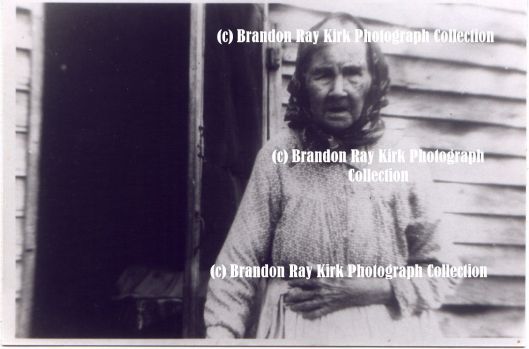
Sarah Ann (Farley) Headley, daughter of William F. and Jane (Clark) Farley and wife of Caleb Headley. Sarah (1849-1945) is my great-great-great-grandmother. She lived at Sulphur Spring Fork of Fourteen Mile Creek in Lincoln County, WV.
26 Saturday Oct 2013
Posted in Ed Haley
Tags
Al Brumfield, Brandon Kirk, Dingess, feud, Harts Creek, history, John Hartford, Lawrence Kirk, Tug River, Twelve Pole Creek, Weddie Mullins, West Virginia, writing
The next day, Lawrence’s son drove the four of us over to Inez, a small settlement on the Tug River and the seat of government for Martin County, Kentucky. According to written history, Milt and Green were captured and jailed there in 1889. We made our way to the courthouse, which was surrounded by a few interesting buildings where Brandon darted inside to seek out some record of Milt and Green’s incarceration. Unfortunately, many such records had been lost in an 1892 fire. (It’s said there’s nothing more convenient than a good courthouse fire.)
Just before we left town, Lawrence said, “Well, straight east from here at this courthouse about eight miles across the river is the mouth of Jenny’s Creek on the West Virginia side. That’s approximately the way they traveled with these people when they left Kentucky. They went up Jenny’s Creek out the head of Jenny’s Creek into Twelve Pole and out of Twelve Pole down Henderson Branch into Big Harts Creek. It’s a direct route through there. We’re goin’ to be traveling approximately that. We’re going to be going around some places on account of the road but we’ll come back to the mouth of Jenny’s Creek over there.”
As we crossed the Tug into Kermit, Lawrence said, “I don’t know how far they would travel in a day by horseback through these trails on these mountains but they would travel a long ways. I think they did it in a day from up here at Kermit. Yeah, they’d do it in a day.”
Lawrence directed us up Marrowbone Creek and over to the little town of Dingess on Twelve Pole Creek. He said the posse never came through there with Milt and Green but it was the closest we could get to their trail due to the layout of current roads. Dingess, I remembered, was the place where Ed Haley’s uncle Weddie Mullins was murdered in a shoot-out at the turn of the century. The little town was reportedly named after a brother-in-law of Al Brumfield.
The next big thrill was navigating cautiously along a gravel road and entering Harts Creek at the head of Henderson Branch. We followed that branch to its mouth then went on down the main creek past Hoover, Buck Fork, and Trace Fork before turning up Smoke House Fork. Lawrence guided us past Hugh Dingess Elementary School to the site of Hugh Dingess’ old home at the mouth of Bill’s Branch. He said the posse took Milt and Green up Bill’s Branch, over the mountain, and down Piney Creek. They followed Piney to its mouth, then went up West Fork to Workman Fork. From Workman Fork, they crossed the mountain to the Guyandotte River. We were only able to drive part of this latter leg of the trip.
25 Friday Oct 2013
Posted in Ferrellsburg, Women's History
Tags
Appalachia, culture, Ferrellsburg, Guyandotte River, history, life, Lincoln County, photos, West Virginia
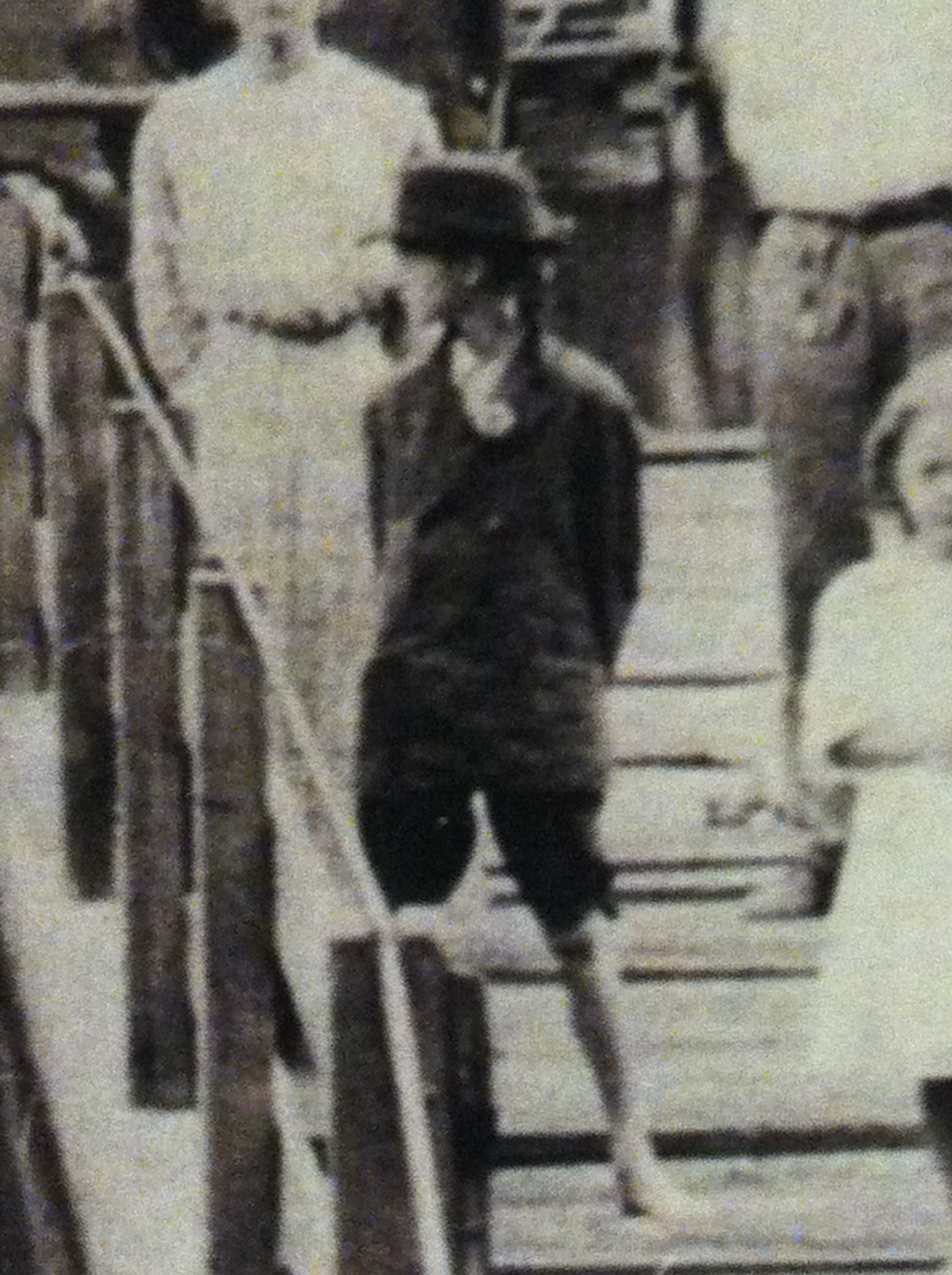
Ferrellsburg Ferry, Lincoln County, West Virginia, 1905-1915
25 Friday Oct 2013
Posted in Harts, Women's History
Tags
Appalachia, Caroline Brumfield, chickens, culture, farming, genealogy, history, life, Lincoln County, photos, West Virginia

Caroline Dingess Brumfield feeding chickens, Harts, West Virginia, 1920s
21 Monday Oct 2013
Posted in Culture of Honor, Ed Haley
Tags
Bill Brumfield, Bob Adkins, Brandon Kirk, Charley Brumfield, crime, Eustace Ferguson, Harts, history, Hollene Brumfield, John Hartford, Lincoln County, Paris Brumfield, Wesley Ferguson, West Virginia, writing
In thinking about the old Brumfields, Bob mentioned the name of Paris Brumfield, the patriarch of the clan. Brandon quickly pulled out Paris’ picture and reached it to Bob saying, “He was my great-great-great-grandfather.” Paris, we knew, was murdered by his son Charley in 1891.
“Son, he was a mean old man, I’ll tell you that,” Bob said, turning the picture upside down in his hands and slowly studying it under a magnifying glass. “He’d kill anybody. He beat up on Charley’s mother and she went down to Charley’s for protection. He went down to get his wife. He got up to the top of that fence and Charles told him, ‘You beat up on Mother the last time. You’re not coming in here.’ Paris said, ‘Ah, you wouldn’t shoot your own father.’ Drunk, you know. And Charley said, ‘You step your foot over that fence, I will.’ Directly he started in and that there ended it, son. Charley killed him right there.”
I said, “Now there was another Brumfield father-son murder later on. Who was that?”
“Ah, that was Charley’s brother,” Bob said. “Bill Brumfield, up on Big Hart. He’s a mean old devil. He ought to been killed. He had a way… He never shot anybody. He’d beat them to death with a club. He’d hold a gun on them and make them walk up to him and then take a club and beat their brains out. He come down there to Hart to get drunk once in a while and he’d run everything away from there. And Hollene set on that front porch of that little old store she had out there with that pistol in her apron and she cussed him. He knew she had that gun — he wouldn’t open his mouth to her. It was his sister-in-law, you know. He just set there and chewed his tobacco and spit out in the street. She’d tell him how mean he was, you know. But his own son killed him. He was beating up on his mother and you can’t do that if you got a son around somewhere. I don’t give a damn who you are, they’re gonna kill ya. He didn’t miss a thing there, that boy didn’t. I don’t think they did anything with him about it.”
This Bill Brumfield, I remembered, was Brandon’s great-great grandfather. As Bob spoke of his departed ancestor, I noticed how Brandon just sat there without taking any offense, as some might want to do. Gathering the information seemed more important than family pride — at least for the moment. Brandon asked Bob if he remembered anything about Charley and Ward Brumfield’s murder in 1926.
“What they got into was very foolish,” Bob said. “Charley would come up there — and Ward was his nephew — and they’d ride up into the head of Harts Creek and get them some whisky and they’d drink. They went up around them Adamses — they was kin to the Dingesses and Brumfields — and bought them a bottle of whisky from this guy and they got his wife to cook them a chicken dinner. She cooked them up a nice chicken dinner and, of course, they drank that liquor and was pretty dern high, I expect. They was sitting there eating and they was a damn fella… Who was that killed them? They’s so dern many of them a shooting and a banging around among each other that I couldn’t keep track of them. He was just kind of a straggler.”
Bob thought for a moment then said, “Eustace Ferguson. Now, Eustace Ferguson was a brother to Hollene’s second husband, Wesley. They had asked him to go with them and he caught an old mule or something and followed them. He was mad at them ’cause he didn’t like the Dingesses and Brumfields anyway. He followed them up there and they was eating dinner. He come in there and told them if they had anything to say they better say it ’cause he was gonna kill them. And Charley raised out of there and he said, ‘Well, by god, I’d just as soon die here as anywhere,’ and he started shooting and they just shot the devil out of each other. And he killed Charley and Ward and Charley shot him but he got somebody to get him to the doctor before the Brumfields got up there ’cause he knew them Brumfields would kill him if they got up there in time. He begged them not to report it till he had time to get to Chapmanville to get into the hand of the law. And those people wasn’t too friendly to the Brumfields and they kept it hid for about an hour or two before they reported that.”
I asked Bob if there were any dances around Harts in his younger days and he said, “Not in my time. They had a few dances ’round here and yonder but I was too young to go.”
Were there any dances at Al and Hollena Brumfield’s store?
“I don’t think so. They wasn’t the dancing type. I never was around her too much. Sometimes I’d be there and play with her grandchildren, Tom and Ed Brumfield. They were about my age.”
19 Saturday Oct 2013
Posted in Fourteen
Tags
Appalachia, Caleb Headley, Fourteen, genealogy, Gladys Kirk, history, Johnny Headley, Moses Headley, Sarah Headley, Ward Adkins, West Virginia, Will Headley, writing
On July 18, 1903, Billy and Sarah Sias, with Sarah and Moses C. Headley, sold 30 of the remaining 34 acres of Caleb Headley’s estate to Cosby (Headley) Fry. It was located just across the creek from Caleb’s old home place.
“Beginning on a beech and white oak corner to John H. Fry & the company on a point below the Hinkles branch thence,” the deed for this 30-acre tract reads, “with John H. Fry line to Albert Neace corner thence with said Neace line to S.A. Sias corner thence down the creek with the meander of said creek to the mouth of the branch opposite Sarah Headley house she now lives in thence up said branch to the mouth of the first drain on the lower side of said branch thence up said drain to the back line between the company & Caleb Headley deceased thence with said line to the beginning it being part of Caleb Headley’s deceased.”
The remaining four acres of Caleb Headley’s estate remained in tax books from 1903 until 1910, when it was dropped with the following notation: “improper by sheriff.” Oddly enough, its value had risen from $2.50 per acre to $4.00 per acre in 1905.
In 1903, the same year Sarah and Moses Headley sold the remainder of the family estate to the Frys, they bought 45 acres of land (containing the original home place) from Sarah Sias. They kept it until 1909, when they sold it to Zack Neace. In 1918, Neace sold it to Van Alford, a son-in-law to Johnny Headley.
By the early twenties, Sarah Headley still made her home with her single sons, Ballard and Moses. In 1922, Moses married Lizzie Nelson (at his residence according to records) and soon left Sulphur for good. First, he settled in Chapmanville, then South Charleston, where he died and was buried.
“Uncle Mose married Lizzie Nelson and moved to Chapmanville,” said Ward Adkins, late resident of Sulphur Springs, in a 2003 interview. “He lived in a log cabin he had built and moved in there before they even finished a floor.”
In 1924, Ballard Headley married Claire D. Clark. About that same time, Will Headley opened a store near his home at the mouth of Sulphur.
“They had a small grocery store, him and Maw, from about 1924 until about 1927 just over from where the church house is now,” said Adkins.
In July of 1929, Johnny Headley’s wife, Emaline, died of dysentery flux and he remarried early the following year to widow named Emarine Elkins.
Throughout that time, Sarah Headley just came and went, staying with first one relative and then another.
“Ever since I can remember she would drop in and maybe stay a week with us, then she’d go somewhere else and stay,” said Adkins. “She’d go up on Harts Creek a lot of times and stay. She’d stay with Bal maybe a week and Uncle Johnny over on Steer Fork.”
“She used to come to Grandpa Johnny Headley’s and stay a few nights,” said the late Gladys Kirk, a granddaughter of Johnny Headley and a resident of West Fork. “Then she would go on back to Will’s. I was small at that time, maybe eight or nine years old. She wouldn’t do anything. She’d sit around. She was too feeble to cook or anything. She held on to a big red handkerchief she packed with her everywhere she went. It was folded. We never got to look in it but it looked like she had something in it. She told someone it was her burying clothes, whatever that meant. And when Grandmaw Headley would get meals ready Grandma Sarah would make the kids line up and she’d say, ‘They’s nobody going to the table to eat until they washed their hands.'”
Around 1935-36, Sarah Headley moved in with Will permanently.
“I guess she finally got too old to go from place to place,” said Adkins. “Anyhow, she come to our house and stayed there till she died. She’d got rid of her furniture by then but she had a whole set of these old big woven baskets she kept her clothes in. She was a kind person. I liked to hear her tell tales, you know. And I don’t know how many skirts she would have on at once. Six or seven — maybe more. She’d pull up that apron, run her hand down in there, get her pipe and her tobacco out. She died in 1945 when I was away fighting in World War II.”
19 Saturday Oct 2013
Posted in Ed Haley, Music, Women's History
Tags
Appalachia, Clay County, culture, genealogy, guitar, history, life, Logan County, Nora Martin, photos, Ugee Postalwait, West Virginia

Nora (Douglas) Martin, daughter of Rosie Hicks Day, Clay County, WV, 1913-1925
15 Tuesday Oct 2013
Tags
Appalachia, Carol Caraco, Fred B. Lambert, history, Logan County, logging, Lucian Mitchell, Milt Haley, rafting, timbering, West Virginia, writing
Milt Haley, by all accounts, made his living as a timber man. He was probably lured “over the mountain” from the Tug River section by the timber industry that evolved in the Guyandotte Valley following the Civil War. It certainly played a role in his death. Really, for all practical purposes, logging was imbedded in the life fabric of every person living around Harts Creek in 1889…including little Ed Haley, who grew up in the era when timbering and steamboats gave way to coal and the railroad.
“Almost from the very beginning of history in this region, logs have been rafted on the Guyandotte and floated to Cincinnati and even to more distant markets,” according to Fred B. Lambert’s The Llorrac (1926). “In autumn, men with saws and axes went into the woods and cut down the trees. At first, the trees were so plentiful that they could be cut and rolled directly into the stream. In some cases, the bark was peeled from the logs and they were allowed to slide down the mountain side. But gradually the timber along the shore became scarce, and timbermen were compelled to go farther and farther into the hills or up the creeks, until now most of the virgin timber has been cut, and they are beginning on the second growth and, in some places, even on the third.”
The logging season began with the construction of logging camps “during the late winter and early spring months before the spring rains began to swell the creeks and rivers,” according to River Cities Monthly.
The men who came into these camps for work “were men in every sense of the word, and their beards of many days growth betrayed the fact that razors as well as some one to use them were quite scarce…,” Lambert wrote. They worked silently but would “yell like wild men” if something “unusual” happened. They were “master hands at swearing” and often fought amongst themselves, be it for sport or in fits of rage. Because of their wild nature, a foreman was often hired to regulate their activity. At night, they slept on bundles in crude log cabins. If the camp was large enough, a mess hall was constructed and a cook was hired to serve them bacon, beans, bread, coffee “or whatever may be brought into the camp from the surrounding country.”
According to Carol Caraco’s The Big Sandy (1979), loggers marked their timber by branding it with their initials. After branding their logs, they got them out of the hollow and to the river, usually by use of horse or oxen and cant hooks. Another often-used method involved splash dams. “When thousands of logs accumulated behind the timber and stone splash dam, a key wedge would be removed and the timber spewed forth,” Caraco wrote. As the logs made their way down the creek, many were jammed or land-locked along the bank.
At the mouth of creeks and rivers were “taker-ups” and booms. “The taker-ups were free-lance agents who caught and held unrafted logs until the owners appeared,” according to Caraco. “When their charge for this service proved excessive, the legislature standardized fees. Other times loose logs were stopped by a boom, a dam of huge poplar logs reinforced by a giant chain stretched across the stream.”
This boom concept, as well as questions about branding, were apparently at the heart of the 1889 troubles.
According to The Llorrac, “After the logs were all in the river, they were arranged into a raft and held in position by hickory pins driven through the small tiepoles. Later they were made more secure by the use of iron ‘chain dogs.’ Three men were required to build a raft; one to sight or place the logs, one to carry poles, and one to drive pins or chaindogs. They received a dollar a day each and it took about a day. The rafting was done in the fall and winter so as to be ready to go out on the first ‘log-tide’ of spring or early summer. An experienced raftsman always knew when it was safe to go. And well he did, for below him were the treacherous falls and shoals and eddies ready, without a moment’s notice, to hurl him to a terrible death. When the day came for the trip and the oarsmen decided that the river was at safe ‘log tide,’ the great ropes were loosened, the men took their places, the raft slowly moved into the current, and the wild ride was on.”
Based on Lambert’s notes, rafts moved at speeds of eight or nine miles per hour in convoys of fifty or more.
“There was an oarsmen at the bow’ and another behind, directing, with their strokes, every movement of the raft,” he wrote. “No one who has ever been near the river when rafts were passing, can fail to have heard the strange calls of the raftsmen to each other as they rounded the bends of the river or passed through dangerous chutes or rapids.”
“The man on the bow didn’t have to know much,” according to Lucian Mitchell, an old rafter who spoke with Lambert. “The man at the stern knew where to go, where the shoals were, and how to work up to the point on a hard bend and knew the Jordan sands at the mouth of Bear Creek. Sometimes a raft would cork the river by bowing and swing around in such a position as to get both ends afoul. If another raft came down it was rulable to hit this raft in the middle and cut it in two pieces.”
“This was a thrilling time,” The Llorrac claimed. “The front oar was often broken, leaving the raft unmanageable and, in the language of the raftsmen, it sometimes ‘swarped’ or turned completely around and even went to pieces. Let no one minimize the danger. If by accident, a man lost his balance and fell into the water, he was generally carried at once by the eddies to the bottom of the river; or, he drifted under the raft and was seen no more until his body was found, drifting far below, after many days or even months. In case they escaped these dangers they were still subject to sunken logs or great stones.”
Lucian Mitchell of Logan County downplayed the drowning aspect, saying, “Not many drowned. Most could swim.”
09 Wednesday Oct 2013
Posted in Fourteen
Tags
Appalachia, Caleb Headley, Fourteen Mile Creek, Henry Farley, history, Lincoln County, medicine, Sarah Headley, Ward Adkins, West Virginia, Will Headley, writing
The new “Mrs. Headley” — Sarah Farley — was born on May 26, 1849 to William Floyd and Elizabeth Jane (Clark) Jones-Farley in Logan County, (West) Virginia. She was a full 21 years younger than Caleb’s oldest child and barely older than his youngest child by his first wife. Her grandfather was Captain Henry Farley, who led an Indian raid down the Guyandotte River through present-day Logan County in the early 1790s and was one of the county’s earliest settlers.
Caleb and Sarah Headley had the following children: Lat. Headley, born May 1, 1866, died before 1870; John Timothy Headley, born April 20, 1867, married Emaline Susan Sias then Emarine Elkins in 1930, died March 29, 1956; Ida Cosby Headley, born March 23, 1869, married John Christian Henon Frye, died September 22, 1948; Caleb David Headley, born February 22, 1872, died about 1895; William Franklin “Will” Headley, born August 25, 1875, married Caroline Lucas, died January 1960; Margaret Headley, born March 28, 1878, married Zachary T. Neace, died 1911; and Ballard P. Headley, born April 14, 1880, married Claire D. Clark in 1924, died circa 1958.
Headley, a doctor, and Sarah, a midwife, combined to serve the medical needs of the community.
“Doctor Headley treated whatever ailed people,” said Ward Adkins, in a 2003 interview. “And Grandma Sarah was a midwife from the time she was young. She delivered way over a hundred babies, practically all of us. People paid them with whatever they had: chickens, garden stuff.”
In the 1870 Lincoln County Census (Harts Creek District, Household #16), Headley was listed as 62 years old, while Sarah was 27, John was 3 and Cosby was 1. Caleb had $160 worth of real estate and $350 of personal property.
Two years later, in 1872, Headley bought 145 acres of land valued at one dollar per acre from George Hager.
“Beginning at a chestnut oak, corner to Harman Stroud on the ridge between the Big Branch and the Sulphur Spring Branch,” according to the deed, “thence N. 20 W. 100 poles to a white oak and ash on the middle point of Big Branch, thence S. 87 E. 85 poles to a stake a corner to Daniel Messer, thence with his line, S. 70 E. 196 poles to a white oak and beech, a corner to Brumfield’s heirs lands, thence S. 5 W. 160 poles to a double beech, thence N. 55 W. 84 poles to a maple corner to Corbin Estep, thence with his line, S. 71 W. 43 poles to a locust, thence N. 45 W. 155 poles more or less and with Stroud’s calls to the beginning.”
In 1879, Headley purchased 62 acres worth one dollar per acre from a land company.
“Beginning at a poplar on the John Fry Branch,” reads the deed, “thence south 52 poles to a white oak S. 30 E. 40 poles to a ‘sour gum’ E. 70 W. 156 poles to a stake, N. 45 E. 153 poles to a poplar and beech in the old Hager Line, then with it S. 16 E. 77 poles to the beginning.”
In 1880, Caleb was listed in the Harts Creek District of Lincoln County as a 72-year-old physician. Interestingly, this was the first instance in which Headley, who claimed to have been a practicing physician for nearly fifty years in an interview conducted during the early 1880s, declared his occupation as anything other than farming.
“I know Will said he could cure cancer,” said Adkins. “He said he was born with a cancer on his stomach and he had to sleep on a pillow until he was four years old. He had to wait until that sore was large enough for his daddy to take it off. Will had a scar as big as a fifty-cent piece on his stomach. He showed it to me several times. He said, ‘That’s where Paw took the cancer off of me.’ Grandpaw Neace told me that, too. He took one off of some of their family. He died with his secret, though. He never did tell nobody what he knew.”
In 1881, Headley bought 150 acres of land worth two dollars per acre from G.W. Hager, giving him a total property acreage of 357.
The following year, he either purchased more land or surveyed his existing properties. Tax books record him with the following tracts: 210 acres worth two dollars per acre containing a $100 building; 200 acres worth $1.50 per acre; and 45 acres worth $1.50 per acre. In total, according to tax records, he owned 455 acres worth $888.
Around that time, Henry H. Hardesty published a biographical sketch on Headley and several of his neighbors in a Lincoln County history.
“Caleb Headley is now a prosperous farmer, owning 600 acres of good land on Fourteen-mile creek, a portion of which is heavily timbered with oak, poplar and pine; coal and iron ore in abundance. There is a fine sulphur spring upon the land, on the creek three miles from Guyan river, which has been visited by people from many parts of the United States, and it is pronounced of excellent medicinal quality by all.”
This sulfur spring, which provided the entire creek with a name and generated some interest as a spot for healing is still remembered by older residents of the area today.
“It was just up here around the curve from my house,” said Adkins. “It’s not there now. It’s been destroyed. It had a round rock and that rock was about two feet high and it was dressed all the way around. And someone had hollowed it out about two inches from the edge and it sat right down in that spring. People used to gather there when I was growing up to play marbles and pitch horseshoes. Dad used to send us up there to get him a bucket of water after we come out of the field. Sulfur is a blood purifier, they said.”
Not long after providing his biography to Hardesty, Caleb Headley passed away.
“Doctor Headley died in, I believe it was 1881,” said Adkins. “Will said his dad died when he was about six years old and he was born in August of 1875. I think he finally died of a Civil War wound.”
Tax records do not list Headley’s property as being in his estate until 1886.
09 Wednesday Oct 2013
Tags
Appalachia, civil war, Fourteen, Fourteen Mile Creek, Fourteen Post Office, genealogy, history, James Wilson Sias, Lincoln County, photos, Union Army, West Virginia
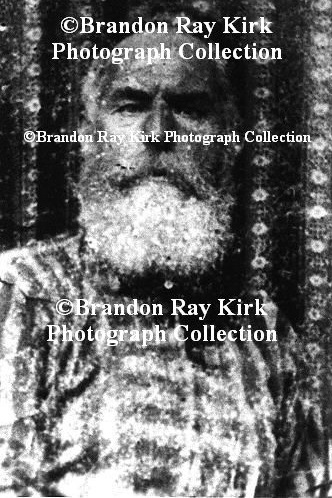
James Wilson Sias, Union veteran and postmaster of Fourteen in Lincoln County, WV
08 Tuesday Oct 2013
Posted in Civil War, Little Harts Creek
Tags
Appalachia, civil war, culture, genealogy, history, Isaac Gartin, life, Lincoln County, Little Harts Creek, photos, U.S. South, West Virginia
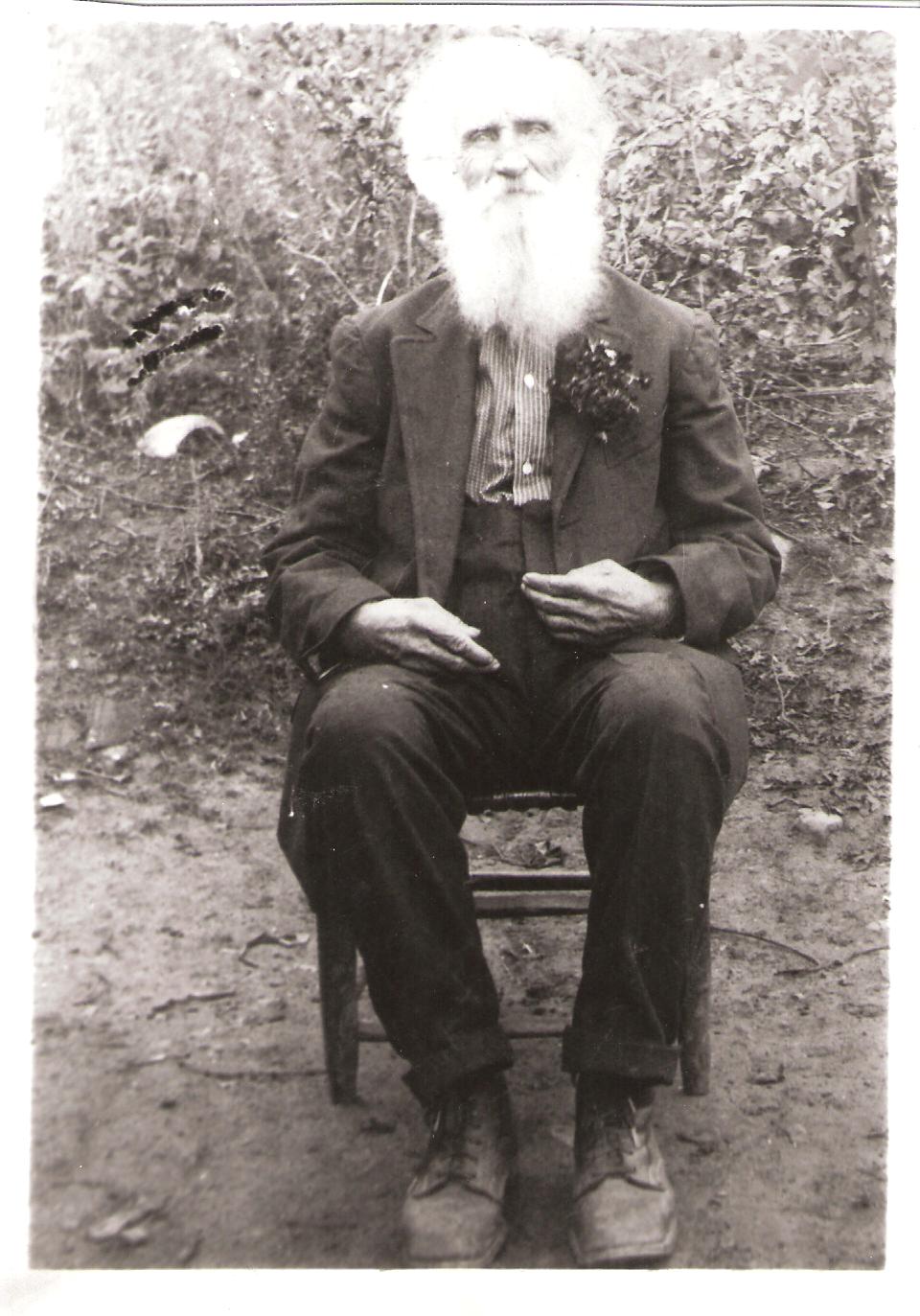
Isaac G. “Ike” Gartin, Confederate veteran and resident of Little Harts Creek in Lincoln County, West Virginia.
08 Tuesday Oct 2013
Tags
154th Regiment, Appalachia, Caleb Headley, civil war, Fourteen Mile Creek, genealogy, Hardesty's History of Wetzel County, history, Lincoln County, Mexican War, Monongalia County, Nancy Ann Headley, New Jersey, Revolutionary War, Sarah Headley, Thomas Headley, Tyler County, U.S. South, Ward Adkins, West Virginia, Wetzel County, Will Headley
In the years following the Civil War, Caleb Headley migrated from Wetzel County, West Virginia to the Sulphur Spring Fork of Fourteen Mile Creek in Lincoln County, bringing with him a young wife and some degree of knowledge about medicine. Behind him were Pennsylvania roots, a soldier’s experience in the Mexican and Civil wars, as well as a failed marriage. About fifteen years later, he passed away and was buried on a hill near his home.
Today, Ward Adkins, an 81-year-old walking encyclopedia of Sulphur Spring history, is the best source on Dr. Headley’s life. He was partly raised by Headley’s son, Will, his step-grandfather, who told Adkins what little he knew about his father and eventually gave him a very important family heirloom: a geography book containing genealogical information in his father’s handwriting.
Caleb Headley was born on April 11, 1808, the first son and second child of Dr. Thomas and Sarah (Asher) Headlee, in Pennsylvania. Thomas was born around 1775 in New Jersey and was the son of a Revolutionary War veteran. Sarah was born around 1785 in Virginia.
Caleb had seven known or suspected brothers and sisters: Elizabeth Headley, born about 1807, Mary Headley (c.1811-1881), Anthony Headley (August 11, 1812 – January 1, 1894), Jerusha Headley (March 16, 1815 – May 16, 1884), Sarah Headley (August 22, 1817 – June 18, 1900), Elisha Headley (August 24, 1820 – August 2, 1895), and Nancy Headley, born about 1822.
In 1822, according to Hardesty’s History of Wetzel County, Thomas Headley settled in Tyler County, (West) Virginia with his family where he taught young Caleb what he knew about doctoring prior to his death, which reportedly occurred around 1830 in Monongalia County, (West) Virginia.
On November 2, 1826, Caleb married Nancy Ann Wright in Pennsylvania. Nancy was born on October 15, 1808 in Virginia. Her parents were born in Maryland.
Caleb and Nancy had ten children: Charity Headley, born March 1, 1828; Elizabeth Jane Headley, born June 2, 1829; Thomas J. Headley, born November 23, 1831; Joshua Headley, born April 7, 1832; Sarah A. Headley, born December 8, 1833; Caleb Samuel Headley, born March 30, 1836 or 1837; George Washington Headley, born May 21, 1839; Benjamin Franklin Headley (May 31, 1841 – April 11, 1918), Anthony Headley, born June 3, 1844, and Elijah Headley, born August 1, 1850.
During the 1830s and ’40s, Caleb lived in Tyler County where he was, by his own admission, a practicing physician, member of the Methodist Church and for sixteen years a justice of the peace.
“I don’t think Caleb had any schooling to be a doctor,” Adkins said, in a 2003 interview. “As far as I know, the only thing he had as far as a medical education was studying under his daddy. His daddy was a doctor.”
In 1846, the portion of Tyler County occupied by Headley became Wetzel County.
Some time between 1846 and 1848, Headley reputedly served as a lieutenant in the Mexican War. While no military records have been located at the present time to verify his service, one of his sons made the claim that he had been an officer in the war.
“His son Will told me that he was an officer in a war with Mexico,” said Adkins.
In the 1850 Wetzel County Census, Caleb appeared in the Green District as a 40-year-old farmer (not physician) with $200 worth of real estate. His wife was 32 years old, while the children were listed as follows: Thomas (age 17, farmer, in school), Sarah (age 16, in school), Samuel (age 13, in school), Washington (age 10, in school), Franklin (age 9, in school), and Anthony (age 6).
In 1860, the Headleys maintained their residence in Green District.
When the Civil War began in 1861, Headley joined with most of his neighbors and sided with the North.
“Wetzel County, Virginia, was one of the counties which supported the Union during the War Between the States,” Mary Curtis, a genealogist, wrote in 1959. “The large majority of the settlers were from Pennsylvania and the Piedmont areas of Virginia where slaves were not common, so that their interests lay with the North.”
According to Hardesty’s History of Lincoln County, Headley was captain of a company in the Union army. According to military records, he was captain of Company C, 154th Regiment.
“He was captain of a company in the Civil War,” said Adkins. “That’s in Hardesty’s. And Will said he was an officer. He didn’t know what rank, you know. I was told that he was shot in the back. His backbone was just barely hanging together. I think he was discharged in Ohio.”
Several of Headley’s sons fought for the North. Caleb Samuel, later a resident of Porters Falls in Wetzel County, “served a short time in the Union army as lieutenant,” according to Hardesty’s History of Wetzel County. Anthony, later a resident of Pine Grove in Wetzel County, “was a soldier with the Federal army, serving in Company I, 15th West Virginia Infantry, and he participated in all the fortunes of that regiment, engaging in its battles and witnessing the surrender of Lee at Appomattox.” His term of service was from August 24, 1862 until June 30, 1865.
In 1866, 50-something-year-old Headley settled in present-day Lincoln County and joined the Christian church. By that time, he had separated from his wife Nancy and was involved in an intimate relationship with 16-year-old Sarah Farley of Logan County. The two had their first child on May 1 then married on May 25 in Catlettsburg, Kentucky.
Headley’s separation from his first wife has been a hot topic of conversation among his local descendants.
“They had a rumor going that Dr. Caleb run off and left his first wife, but Will said it wasn’t so,” said Adkins. “I heard his wife died when their son Elijah was fifteen years old, which would have been around 1865.”
However, according to Wetzel County census records, Nancy was very much alive after the separation. In 1870 and 1880, she referred to herself in both census schedules as a widow.
08 Tuesday Oct 2013
Posted in Ed Haley, Harts, Lincoln County Feud
Tags
Appalachia, crime, culture, feud, genealogy, Harts, history, life, Lincoln County, Paris Brumfield, photos, West Virginia
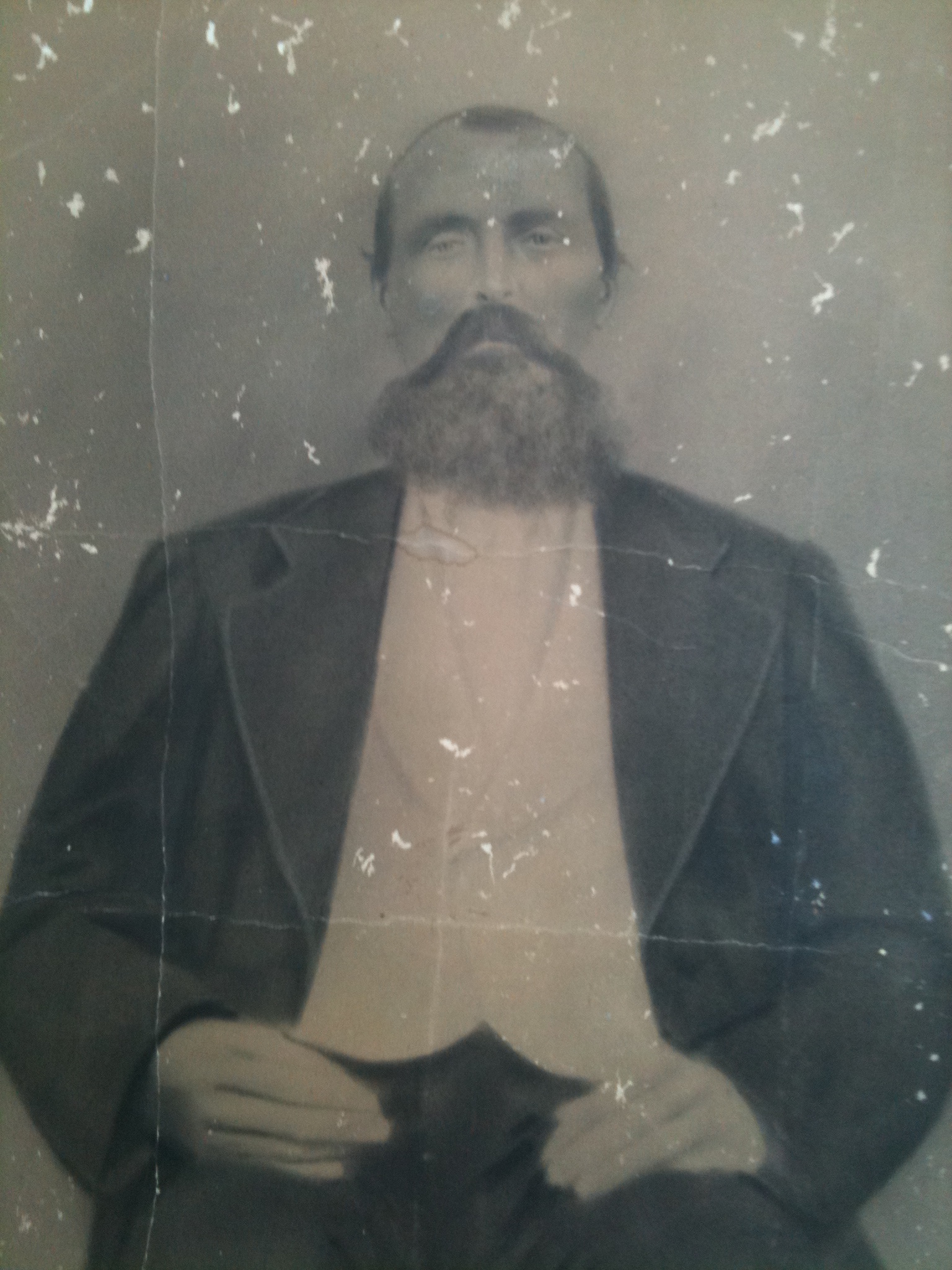
Paris Brumfield, Lincoln County feudist, 1880-1891.
08 Tuesday Oct 2013
Posted in Ed Haley
Tags
Bob Adkins, Boney Lucas, Brandon Kirk, Charley Brumfield, crime, feud, genealogy, history, Lawrence Kirk, Paris Brumfield, Ray Kirk, West Virginia, writing
After about thirty minutes of talking with Brandon, I was convinced that he loved the families of Harts and was wrapped up in its history. He was not only serious business but he really — I mean really — knew his stuff.
Brandon flipped a few pages in his photo album, then pointed to a picture of a black-bearded, broad-shouldered giant of a man and said, “That’s Paris Brumfield.” I’d heard a lot about him from Bob Adkins and Lawrence Kirk — and never forgot what they said about him being killed by his own son. He was Brandon’s great-great-great-grandfather.
According to the Lambert Collection, Paris Brumfield was one of the most feared loggers in the Guyandotte Valley – a man who “gloried in shooting people.” He frequently stirred up trouble in the town of Guyandotte with his friends, Jerome Shelton of West Hamlin and Pete Dingess of Harts Creek. Shelton often got drunk and wandered through the streets of Guyandotte screaming “I am God!” and other obscenities. He climbed on ladders and pretended to make speeches to taunt officers and citizens. Wild cheering from loggers always followed his cry of “Millions bow down to me!” Wilburn Bias was the only marshal in Guyandotte who Paris and his gang feared, although others like a Mr. Fuller sometimes tried to arrest him. One marshal, J. “Doc” Suiter, once came to Brumfield’s hotel room to make an arrest, but a brawl ensued in which both men crashed through a window. At some point, while rafting on the Guyan River, Paris slammed his raft into Doc’s after seeing that it was fouled on some shoals.
Brumfield was a real rabble-rouser. Not only did he drink heavily and abuse his wife: in the late 1870s he took a mistress for himself. This woman, one Keziah Ramey, originally from the Kiah’s Creek area of Wayne County, moved near Paris at Harts and quickly produced him four children. Paris was a reported murderer as well, according to local history. There are rumors about him killing pack-peddlers and someone named Charlie Hibbits (whose body was put on the “Ha’nt Rock”). Reportedly, he also murdered a man who disturbed a fiddler playing his favorite song, “Golden Slippers”. These stories are likely untrue, as the only murder positively linked to him was his shooting of a local man named Boney Lucas.
Bob Adkins had told me about it. “They had a fight right there at the mouth of West Fork and Boney got loose and he run through the creek there,” Bob had said a few years earlier. “And Paris’ daughter Rat, she run and got the gun and brought it to Paris and, by george, he shot Lucas with a Winchester right across the creek. Lucas tried to get away.” Brandon’s grandfather Ray Kirk said the trouble was “over logs,” while Lawrence Kirk said it was brought on by arguments between their children at school. Either way, their fatal confrontation occurred at the Narrows of Harts Creek, where Al Brumfield later built his infamous log boom. Paris had gone to a store on the creek with his daughter when he noticed Lucas working there in a timber crew. He and Lucas “had words,” then Lucas attacked him, initially with the butt-end of his axe. In no time, one of Brumfield’s arms was almost completely severed from his shoulder — courtesy of Lucas’ axe. Paris hollered for his daughter to give him a pistol that he’d tucked into a grocery bag, then used it to shoot Boney in self-defense.
Life in the Brumfield home was difficult. At one point, during the fall of 1891, Ann Brumfield fled to her son Charley’s home for protection. I knew from Bob Adkins what had happened next.
On November 11, 1891, the Ceredo Advance reported: “The noted desperado of Lincoln county — Paris Brumfield — was shot five times by his son Charles, on Tuesday of last week [Nov. 3]. Paris was drinking and attempted to take the life of his wife, when the son interfered with the above result. The wounded man lived only a few hours after having been shot. Paris killed several men during his life and it is said that no man could get the drop on him, but finally one of his own flesh and blood ended his career. The son has not been arrested, and probably will not be.”
In 1892, The Logan County Banner reported: “We think the papers in the State have been a little harsh with Paris Brumfield. From what we have learned we do not blame his son for killing him in the defense of his mother, and we deeply sympathize with the young man in having to imbue his hands in the blood of his father. Paris Brumfield was an overbearing man and dangerous when in whisky, yet he was surrounded by a people not noted for angelic sweetness of temper, and he was driven to many an act of which he was ashamed. There was, however, a good side to the man. He was generous and brave, and no one was ever turned [away in] hunger from his door; and, remembering his kindness to the poor, we are willing to draw the curtain over his many grievous faults.”
Brandon said many old-timers around Harts heard that Paris’ ghost would jump up behind Charley every time he got on a horse to go anywhere.
30 Monday Sep 2013
Tags
Betty Shoals, Cincinnati, Cole and Crane Company, Dave Straton, Dr. Bedford Moss, Fred B. Lambert, genealogy, Henry Clay Ragland, Hinchman House, history, John Thomas Moore, Kentucky, Logan, Louisville, Pecks Mill, rafting, Roughs of Guyan, Standard Mercantile Store, timbering, Urias Buskirk, West Virginia, writing
The Peter Morgan affair, as well as subsequent related events, had a profound impact on young U.B. Buskirk, who would become Logan’s wealthiest citizen in future years, but he chose not to divulge any information about it to Fred B. Lambert, regional historian. Instead, he discussed another murder involving Dave Straton, the son of Maj. William Straton of Logan.
“Once in 1870 or 1871, 200 or 300 rafters came to Barboursville. All got drunk. There was no room in the hotels. There were many fights and a wild time generally. Scott Lusher and Dave Straton were fighting in the street. Then John Thomas Moore was killed by Dave Straton. John Thomas Moore owned the Burnet House, a two-story building, and kept a hotel and bar room. It was near the Flour Mill at the corner of Water Street and Main Street (exactly where the First Methodist Church now stands). He had rented the upstairs for a dance.”
After 1870, Urias and Louisa Buskirk divorced and young U.B. went to stay with Dr. Bedford Moss in Barboursville.
“My parents fell out and Dr. Moss of Barboursville wanted a boy so I went to live with him,” Buskirk said. “This was about 1874 (September). I remember Henry Poteet, the Thornburgs, Baileys. John Wigal was my teacher. I went there April 1874.”
Throughout the 1870s, then, Buskirk lived in Dr. Moss’ home and received a Cabell County education. His father spent the decade in and out of court over the Morgan murder, while his mother married twice: first to Thomas Buchanan, a Civil War veteran, in 1874 and then to Henry Clay Ragland, future editor of the Logan County Banner, in 1878.
In 1880, young U.B. Buskirk left Dr. Moss and returned to Logan County.
“I left there on July 2, 1880 and came back to Logan,” he said.
After his return to Logan, Buskirk took a teaching position at Pigeon Creek for one year, then used the money he saved to pursue a life in business. His father, a local businessman, may have encouraged this venture.
“In 1881 I was a merchant at Logan,” he said. “I worked at this for 25 years. I bought deer skins, even bear skins, ginseng, etc.”
By the early 1890s, Buskirk was Logan’s wealthiest citizen, with business interests in timber, coal, and real estate. In 1892, he opened the Standard Mercantile Store (later the Guyan Mercantile Company). He served on the town council and built a livery on Hudgins Street. In 1896, he began construction of a mansion at 404 Cole Street.
“I first engaged in timbering, pushing timber into the river, for C. Crane and Co., about 1897,” he told Lambert. “They bought only portable timber. They had three double band mills in Cincinnati. They were in business 25 or 30 years before that.”
In his interview with Lambert, Buskirk showed a real familiarity with the timber industry — particularly its rafting era — as it existed in the Guyandotte Valley in the late 1800s. He sprinkled his stories with memories of people and geography.
“Rafting was rarely done beyond the mouth of Little Huff, just up above Ep Justice’s,” he said. “Most of the Justice family came to Logan. Ben lived on Main Island Creek. He moved to Huntington and died there.”
The upper Guyan Valley was difficult to navigate on rafts because of two geographical features, namely the “Roughs” and the “Betty Shoals.”
“The ‘Roughs of Guyan’ extended 14 miles from the mouth of Gilbert Creek to the forks of the river as the junction of the Clear Fork and the Guyan,” Buskirk said. “The Betty Shoals were just below the mouth of Gilbert Creek. A preacher Fontaine drowned there. His body was recovered.”
Peck’s Mill was a familiar site to raftsmen as they plied their way downriver toward the timber market in Guyandotte and Huntington.
“Peck’s Mill was built by Mr. White in the late ’60s and sold to J.E. Peck Sr. and Ed Peck,” Buskirk said. “R.W. Peck Sr. was sheriff in 1880.”
Logan County rafstmen heading toward the Ohio River usually made it to the Harts area of southern Lincoln County on their first day of travel.
“At the end of the first day’s run, raftsmen put up at Big Ugly, seven miles below Harts Creek — on the right going down,” Buskirk said. “Rafts ran 8-9 miles per hour coming down and reached Logan in 2-3 hours.”
A little further downriver, near West Hamlin, was the “Falls of Guyan,” an actual waterfall and hindrance to river traffic.
“The Falls were dangerous but were removed, as was Dusenberry Dam,” Buskirk said. “The Jordan Sands shifted. Men sometimes had to cut through the sands here and elsewhere to get pushboats through them.”
Upon reaching the town of Guyandotte, loggers sold their rafts and took their money to local saloons and hotels.
“Mrs. Carroll at Guyandotte kept 3-4 businessmen but not raftsmen,” Buskirk said.
Unfortunately, Fred Lambert’s interview ends on that note, leaving no personal record of his later life. Actually, his interview stops at the very moment when Buskirk was at a high point in his personal, economic, and political life. This makes sense considering that Lambert was probably most interested in his genealogy and connections to the timber industry, not his biography.
As a result, we must rely on local historians to briefly conclude the man’s life story.
At the end of 1897, Buskirk completed construction of a mansion at 404 Cole Street in Logan — known in later years as the Hinchman House — then promptly went to Cincinnati and married Frances “Fantine” Humphrey.
Mr. and Mrs. Buskirk settled in their Logan mansion, where they had three children: Voorheis (Buskirk) McNab, born January 2, 1899, Dr. Joseph Randolph Buskirk, born July 30, 1900, and Dr. James Humphrey Buskirk.
On May 15, 1909, Buskirk sold his home in Logan to Ettie Robinson (the wife of former sheriff and councilman, S.B. Robinson) and moved to Cincinnati. He kept in touch with his friends in Logan and died a wealthy man on March 14, 1956 at the age of 94 in Louisville, Kentucky.
29 Sunday Sep 2013
Tags
36th Virginia Volunteer Infantry Regiment, C.R. Williams, civil war, crime, Frank Buskirk, Fred B. Lambert, genealogy, Guy Lawson, history, Holland, Logan, Logan Wildcats, Peter Morgan, Thomas Buchanan, Thomas Buskirk, Urias Buskirk, Urias Guy Buskirk, West Virginia, writing
In the early decades of the twentieth century, Fred B. Lambert, local historian and educator, interviewed Urias Beckley Buskirk, a former resident of Logan, West Virginia, who had amassed a great deal of wealth in coal and timber. Buskirk spoke primarily of his family history and the timber industry as it existed around the turn of the century.
“I was born November 22, 1862 in the City of Logan,” Buskirk began. “My father was Urias Buskirk, a Pennsylvania Dutchman of Erie Co., Pa. My grandfather was Joseph Van Buskirk who lived in Erie Co., Pa., with one or two older children. My mother was Louisa Goings, of Lawrence Co., Kentucky, a daughter of William Goings.”
In early Logan County records, Urias “Guy” Buskirk, father to U.B., was listed as a shoemaker (1856), bootmaker (1859), and merchant (1860).
“We are a family of shoemakers,” the younger Buskirk told Lambert. “My father’s grandfather and all of his boys were shoemakers, even in Holland. All had a big demand. My father did that here — probably made 10 cents an hour clear.”
Urias Buskirk married Louisa (Goings) West on October 6, 1856 in Logan County. Louisa was a daughter of Alex and Mary (Skidmore) Goings. She was first married to James West. The Buskirks had six children: James Bilton, born about 1853, Ann Brooke, born about 1857, John L., born about 1859, Urias Beckley (the subject of this sketch), George, born about 1866, and Robert W. “Bob”, born about 1869.
“I am a brother of James Bilton Buskirk, a hotel man of Logan, postmaster and storekeeper,” Buskirk told Lambert. “My sister was Ann Buskirk who married James A. Sidebottom of Boone County. One of my brothers was John Buskirk who, at the time of his death, lived at Apple Grove in Mason County but was buried at Logan.”
Buskirk gave more detailed genealogy for his younger brothers, George and Bob.
“My brother George married Mollie Henderson, a daughter of the late James R. Henderson of Montgomery Co., Va., a sheriff,” he said. “Their daughter Mattie died single while Tina married John Maynard and had two children. My brother Bob married Moldah Hamilton. They had no children. Then he married a widow with two children from Arkansas. They had one son, Robert, Jr., who was born the day after his father’s death.
In recounting events of his early life to Lambert, Buskirk could have drawn on the two sensational events of his childhood: the Civil War, which ended in 1865, and his father’s murder of Peter Morgan in 1870. More than likely, he was too young to have had any personal memories of the war, but his father, a private in Company E of the 45th Battalion Virginia Infantry, surely told him stories, as did his relatives Thomas V., a private in Company G of the 16th Virginia Cavalry, and Francis S., a private in Company D of the 36th Virginia Infantry (Logan Wildcats).
Or maybe not.
For whatever reason, Buskirk limited his childhood memories to a single but interesting line: “When I was a small boy, a bear was chased through the streets of Logan.”
In the spring of 1870, Urias Buskirk, the father of U.B. and a merchant in Logan, shot and killed Peter D. Morgan, a former Logan County constable and sergeant in the Logan Wildcats. Morgan was reportedly engaged in an affair with Buskirk’s wife and had threatened to kill him. In an 1874 trial, Buskirk pled self-defense for the murder in front of a hung jury at Wayne. A Cabell County jury finally acquitted him of the crime in 1879.
A newspaper story from the period offers some insight into the murder.
“In May, 1870, the community here was startled by the intelligence that a murder had been committed — a cold-blooded, deliberate murder,” the Democratic Banner of Guyandotte, West Virginia, reported on Thursday, August 27, 1874. “The murdered man was Peter D. Morgan; the murderer supposed to be Urias Buskirk. Buskirk had a bad reputation, and on account of his troubles had been compelled to leave; he had a pretty little wife, and Morgan had been in a liaison with her during his absence as well as after his return. Buskirk had threatened to kill Morgan, and on the evening he was killed said that he should not be surprised at any time to hear of Morgan’s brains being blow out. One night Buskirk was at Morgan’s store with a rifle, Morgan was at the counter waiting on some customers, and while standing there some one standing outside the window, with deadly aim, sent a bullet crashing through his brain. The blood gushed over the lady’s face he was waiting on and over the goods, and he fell to the floor a corpse. Buskirk, a few minutes afterward, went to a doctor who lived near and told him ‘he heard a gun go off, and should not wonder if some one was killed.’ He was arrested on suspicion, but escaped from jail and remained for two years returning in 1872. He was then re-arrested, and had a trial but the jury disagreed.”
“His counsel moved for a change of venue and his trial moved to Wayne Court-house, where it took place, after several postponements, last March, and resulted in another disagreement,” the story continued. “He is now out on bail, Morgan, who was killed left a very pretty widow, and since his death she has been living a rather fast life, having had an amour with one C.R. Williams, prosecuting attorney of the county, who was also one of the principal witnesses against Buskirk. On Tuesday morning, Guy Lawson, brother of Mrs. Morgan, met Williams and accused him of debauching his sisters; from words they rapidly came to blows; then pistols were drawn, and an indiscriminate firing begun. The friends of the parties rush in; C.R. Williams shot Lawson, and Frank Buskirk, brother of the one who is accused of murder, took up for him, and shot both of the Williamses. It was at first reported that C.R. Williams and Lawson were both killed, but that was a mistake.”
“Lawson was shot in the left breast near the heart, and is not likely to recover; C.R. Williams was shot under the left eye, the ball passing down into his mouth, knocking out several of his teeth; R.B. Williams shot in the left leg, and a man named Dingess behind the left ear, but the ball did not enter the skull,” the story concluded. “The doctors think all will recover except Lawson. In the height of the affray Thomas Buskirk appeared on the ground with his wife, and stopped the fight by jumping right in between the combatants and swearing he would kill the next man who fired a shot. He was greatly commended for his action, as the combatants had friends who had rushed to the scene — many of them armed — and it seemed likely there would be a bloody affray. Several parties have been arrested. Most of the original combatants were under the influence of whisky. It is a mixed up affair, and we should not be surprised to hear of a renewal of the combat.”
29 Sunday Sep 2013
Posted in Big Harts Creek, Women's History
Tags
Appalachia, culture, Harts Creek, history, life, Liza McKenzie, Logan County, photos, U.S. South, West Virginia

Big Harts Creek, Logan County, West Virginia, circa 1940s
28 Saturday Sep 2013
Posted in Civil War
Tags
34th Battalion Virginia Cavalry, Appalachia, civil war, Confederacy, Confederate Army, genealogy, history, photos, U.S. South, Vincent A. Witcher, Wayne County, West Virginia

Lt. Col. Vincent A. “Clawhammer” Witcher, commander of the 34th Battalion Virginia Cavalry
27 Friday Sep 2013
Posted in Big Harts Creek
Tags
Appalachia, culture, Farmers, genealogy, Great Depression, Hiawatha Adams, history, life, Logan County, photos, U.S. South, West Virginia

Big Harts Creek, Logan County, West Virginia, c.1938
Writings from my travels and experiences. High and fine literature is wine, and mine is only water; but everybody likes water. Mark Twain
This site is dedicated to the collection, preservation, and promotion of history and culture in Appalachia.
Genealogy and History in North Carolina and Beyond
A site about one of the most beautiful, interesting, tallented, outrageous and colorful personalities of the 20th Century
 Brandon Ray Kirk