Tags
Appalachia, Brandon Kirk, genealogy, Harts, life, Lincoln County, Mae Brumfield, photos, West Virginia

Your humble author with his absolute dearest friend, Mae Brumfield, Harts, Lincoln County, WV, c.1995.

20 Thursday Feb 2014
Posted in Big Harts Creek, Harts
Tags
Appalachia, Brandon Kirk, genealogy, Harts, life, Lincoln County, Mae Brumfield, photos, West Virginia
Your humble author with his absolute dearest friend, Mae Brumfield, Harts, Lincoln County, WV, c.1995.
18 Tuesday Feb 2014
Posted in Ed Haley, Harts, Women's History
Tags
Appalachia, culture, Garnet Adkins, Harts, history, life, Lincoln County, photos, West Virginia

Garnet Dingess Adkins of Harts, Lincoln County, WV, c. 1995.
18 Tuesday Feb 2014
Posted in Big Sandy Valley, Civil War, Ed Haley
Tags
Andersonville Prison, Arthur I. Boreman, Ben Haley, Ben Haley Branch, Bessie Fraley, Bill Smith, Brandon Kirk, Cabell County, Cabell County Scouts, Cain Adkins, Catherine Haley, civil war, Ed Haley, history, Independent Company of Scouts, James H. Ferguson, James Haley, Jane McCoy, Kentucky, Kiahsville, Lick Creek, Lincoln County, Martha Spence, Peter McCoy, Quincy, Thomas McCoy, Wayne County, West Virginia, William A. Haley, writing
On March 20, 1865, Captain Benjamin R. Haley wrote West Virginia Governor Arthur I. Boreman about his capture the previous fall, the disbanding of his independent company of scouts and of his desire to join Captain James H. Ferguson’s Cabell County Scouts.
I have the Honor to Report the condition of my company of Ind. Scouts for Wayn County W.Va on the night of the 15th of Sept./64 we were Surrounded by 115 Rebells under command of Bill Smith in person I having only my Self and Seven of my men on duty when we were captured together with nine citizens whom I had cald in and armed to assist us in case we should be attacked we were all gobbled up with our armes and accouterments making in all Seventeen gunes with there accouterments. on my Return after Being parroled I Lernd that Senator Bowen had Recivd orders from you Excellency to take up the Remainder of the armes and accouterments and to Disband the men that was not captured. I have been bound to keep the parole they gave me for Life Sake not that I hold them a Legal Ware power yet for that and personal Safety I have kept it till now. I ernistly Desire an exchange as I wish to participate in defending my country with James H. Ferguson of Cabell County on whose List my name Shall Shortly appear.
On March 25, 44-year-old Haley enlisted in Ferguson’s Company of Cabell County Scouts at Guyandotte for one year, along with his sons William and 18-year-old James. Ben was appointed 2nd Sergeant on April 1, while William was appointed corporal. James was listed as a private in a muster roll dated May 25. The war, of course, wound down in the spring of 1865 and with it the military career of Ben Haley.
After the war, Haley settled in the headwaters of Ben Haley Branch, a tributary located at a small post office known as Kiahsville near the Wayne-Lincoln county line. In 1870, 50-year-old “Benjamin Hale” was listed with his family in the Sheridan District of newly created Lincoln County with $315 worth of real estate and $200 worth of personal property. His son William was also still in the area, having married Catherine O’Neil of Ireland in 1869. By 1880, 66-year-old Ben was back in Wayne County with 30-year-old Martha Deeryfield Spence and her children. His wife and younger children were no longer in the county.
During the 1880s, Ben Haley relocated to Quincy, Kentucky, perhaps around the time of Ed Haley’s birth in 1885. According to locals, nothing remains of his home on Ben Haley Branch except an old well. Just down the hill is Lick Creek, where Cain Adkins had been born in 1833.
In 1890, Catherine Haley was listed in the Special Union Veterans Census as a resident of the Laurel Hill District of Lincoln County. She gave John’s military information as follows: 9th West Virginia Infantry (Company G) from October 1862 until October 1864 and 1st West Virginia Infantry (Company F) from 1864 until June 1865. He suffered from consumption and was held in prison for nine months and fourteen days in Andersonville and Florence, South Carolina.
By 1900, there were no Haleys living in the Grant District of Wayne County.
Of Ben’s children, only Jane Haley currently has any descendants in the WayneCounty area. Jane married Thomas McCoy, Jr. (no relation to Green) and was the mother of Peter McCoy — the preacher who gave Milt and Green money for their escape in 1889. Peter died in 1963 but his daughter Bessie Fraley lives at the old homeplace on Route 37 near the family cemetery at the Wayne-Lincoln county line. When Brandon called her, she said her grandma Jane McCoy (Milt’s half-sister) was a “great big fat lady” who died before her birth in 1920. She had never heard of Milt Haley or even Ben Haley and had no idea that a Ben Haley Branch was only a few miles from her home.
17 Monday Feb 2014
Posted in Big Sandy Valley, Civil War, Ed Haley
Tags
5th West Virginia Infantry, Arthur I. Boreman, Ben Haley, Bill Smith, Camp Chase, Catlettsburg, civil war, Guyandotte, history, Independent Company of Scouts, James Buskirk, Jim Smith, Kentucky, steamboats, Stephen Strawther, Wash Watts, Wayne, Wayne County, West Virginia, William A. Haley, William T. Sherman, writing
On August 30, 1864, Captain Benjamin R. Haley wrote a letter to West Virginia Governor Arthur I. Boreman:
Sir I have the Honor of reporting to you the Success and condition of my company I have Lost no men tho there is Some ten cases of Sickness in my company owing to exposure in Scouting and Lying out in the night time we have had quiet times for the Last month untill the Last few days we now have Bill Smith and his gang in our midst which gives us much trouble and fatigue Looking out for him we also have Jim Smith the arch trator and a Small gang to Look after which is a great innoiance attended with considerable Trouble and Danger so upon the whole we have our hands full and in deed we may consider ourselves fourtunate if we are able to compete Successfully with them our armes are in good order and ammunition plenty for the ensuing month.
We have Arrested 9 Disloyal citizens which have been Sent away under Gen. Shermans order and two more who are now under trial at Catletts Burg Ky. Also one cofederate Soldier who was sent to Camp Chase whose name was Wash Wats. There has been Recently a trasaction in our county of Some importanc that a cirtain Rebel capt. James Buskerk who was experimenting with uncle Abe pills and took one too many So it worked him out of this wourld and also out of our way for ever and at the Same time there was one Stephen Strawther who took a very Heary Dose which is prooveing it is Supposed pretty fatal to him tho he may recover its affects for any thing we know yet we do hope it may have a good effect Let it work as it will it is an expressed opinion that if this Little company Should be removed the gurillas would be robbing Steam Boats between Catlettsburg & Guyandott and it is threatned Strongly as it is.
Attached to the August 30 letter was this message:
Sir wee are concious that our company is too weak to purform the Duty that is Required oweing to the increased numbers of gurilas and the Disbandment of the other three companies puting all together it becomes dangerous to Scout through the county or even to Hold a position in the County we have time and again Reported to the federal forces and with one Single exception have failed to get Help they invariably tell us to Remain with them and Keep out of Danger which you at once Se gives our County no protection at all now I have conversed with your warmest costituance and just friends and they all think it Due them and the intrust of our county that you Should give an order for more men now I can asure you the men can be recruited in a very Short time. You are aware that the term of Servis of the 5 Va Regt. is now about out and there are quite a number of them who have not nor will not reenlist also quite a number of them who Reside in wayn County and cannot Stay at home under existing circumstanses. They therefore would Readily enlist in a compey of this kind and Defend the Interest of the Loyal people of this county. There are also quite a number of citizens who would becom Souldiers in a Local Company like this be you assured we must have moor men or Suffer great Loss after Runing great Risks of our own Live we are held as usurpers of the Laws of Va and cald Borman Bogus theaves and cut throats by the Rebels and threatened with instantaneous Death when captured.
We are not at all Dismaid or intimidated at there threats not with Standing that there is plenty moor men to Help us we think it nothing more than Right they Should be permitted to do wee know they will do if armed and put at it we therefor petition you to give us the minimum number of a company Say eighty the Rank and file to be paid from the Date of there enlistment and for to be economical Say one Lieutenant.
On September 15, 1864, Haley was captured by a force under the command of Rebel Bill Smith. A few days later, on September 23, he was officially discharged from the 5th West Virginia Infantry, as was his son, William. The following day, the Wheeling Intelligencer reported on his capture:
A RAID: A few days ago the notorious rebel Bill Smith, with about sixty men, made a raid on Ceredo, situated on the Ohio river, in Wayne County in this state. They captured Capt. Ben. Hailey, and eight of his men, who belonged to the West Virginia State Guards, who were stationed at Ceredo for the protection of that point and surrounding neighborhood. They also captured all the male citizens of the place, with the exception of two old men, and robbed the Post Office of stationary and postage stamps, and other valuables, to the amount of about forty dollars, and robbed the citizens of all the horses in the neighborhood, and about seven hundred dollars. The guerillas left Ceredo with their prisoners and booty, going in the interior, in the direction of Wayne Court House, robbing the citizens of their horses and other property. The loyal citizens have been greatly annoyed for the want of necessary protection, ever since March or April last, the country being overrun by guerillas, committing depredations of the most shameful character, such as murdering citizens, robbing houses of bed clothing and their valuables, and taking money from citizens. It would be a great relief to the loyal citizens of Wayne County if the military authorities could possibly spare soldiers sufficient to protect said county from the bands of guerillas that are continually infesting the county, and driving the loyal citizens away from their homes.
16 Sunday Feb 2014
Posted in Big Harts Creek, Harts
Tags
Appalachia, Charley Davis, Elizabeth Davis, genealogy, Harts, life, Lincoln County, photos, West Virginia
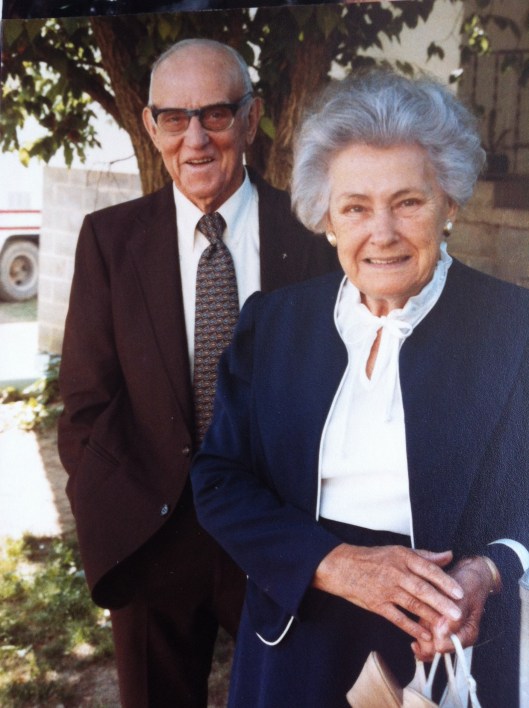
Charley and Elizabeth Davis, Harts, Lincoln County, West Virginia, 1988
16 Sunday Feb 2014
Posted in Big Sandy Valley, Civil War, Ed Haley
Tags
45th Kentucky Volunteer Mounted Infantry, Albert Gallatin Jenkins, Arthur I. Boreman, Ashland, Ben Haley, Buffalo Shoals, Catlettsburg, Ceredo, Cumberland Gap, Flemingsburg, Independent Company of Scouts, James Haley, John Bowen, Kentucky, Louisa, Morgan Garrett, Mount Sterling, Prestonsburg, Saltville, Vincent A. Witcher, Virginia, Wayne County, West Virginia, William A. Haley
On June 8, 1863, Benjamin R. Haley and his son James enlisted for one year of service in the 45th Kentucky Volunteer Mounted Infantry. The 45th was organized in the summer of 1863 as a battalion (four companies) whose purpose it was the protect the Virginia front and the counties of eastern Kentucky. On October 10, the 45th was upgraded to a regiment in Ashland. At that time, Haley was made captain of Company B, while son William A. Haley was made second lieutenant.
“During the early part of 1864 the regimental headquarters were at Mt. Sterling, Ky., from which point the 45th was continually employed in constant and arduous duty, covering the entire Virginia front from Cumberland Gap to Louisa, and keeping in check, by ceaseless activity, the rebel cavalry command concentrated in and about Abingdon, Va.,” according to Union Regiments of Kentucky.
In March of ’64, the 45th moved its headquarters further north to Flemingsburg, Kentucky. Haley, perhaps wishing to remain closer to his home in Wayne County, resigned on March 17, 1864. William absented himself from command at Prestonsburg, Kentucky, on April 24, 1864 while on the march to Saltville, Virginia. James A. was mustered out on December 24, 1864 at Catlettsburg.
On April 8, 1864, John Bowen, a resident of Buffalo Shoals, wrote West Virginia governor Arthur I. Boreman to request that Ben Haley be permitted to organize a company and provide more Union protection in Wayne County.
Dear Sir I wish to inform you that Mr. Morgan Garret has declined to raise a Scouting Company for this part of our county and has gone to Kentucky. Horse Stealing is Still going on here. We need a company for this part of the county very much. They have three companeys upon Sandy and I understand they are trying to get another one. I think if their are to be another company for this county it ought to be for this part of the county. I would recommend either Benjamin Haley or William Nixson for capt. of a company and I request that one of them be commisioned to raise a company as soon as possible as we need protection badly.
Governor Boreman heeded Bowman’s request. On April 28, 1864, 46-year-old Ben Haley organized an Independent Company of Scouts for Wayne County. Some 25 men enlisted at Ceredo to serve in Captain Ben Haley’s Company for twelve months. “The members of my com were organized and Sworn in to the Servis by Abel Segar Esq the only Justice of the Peace that is in the County that will attempt to Edecute his office,” Haley wrote to the governor. On May 7, he requested 25 hats, 25 pairs of boots, 25 woolen blankets, 25 rubber blankets, 25 haversacks, 50 flannel shirts, fifty pairs of drawers and fifty pairs of stockings. He also requested 25 Colt rifles, 4000 bullet cartridges, 25 bayonet scabbards, 25 waist belts, 12 screw drivers and two ball screws, among other items. On May 10, Haley took his oath of office and then signed an oath of allegiance to the United States of America on the following day.
On June 6, Haley wrote Governor Boreman:
Sir I have the Honor of reporting the condition of my co of Independent Scouts for Wayne Co West Va. We are in Camp at present in Ceredo. The men in good condition except 3 cases of sickness disserrtions non captured two rebels prisoners one of Rebel Witcher command & the other of Jenkins turned over to the post at Catllesburg Ky please instruction what to be don with Sick also what is to be don with capturd property horses guns in consequence of the U.S. Troops being Sent to the front we are very much trobled with Strong bands of gurillas which prevents our Scouting very far in the county notwithstanding we have Scouted considerable & have lost no man I think in my next months report I shall be able to give a good account of the Service of my men as they are brace & hardy. Men all Suplied with arms in good condition.
14 Friday Feb 2014
Posted in Big Harts Creek
Tags
Appalachia, Brandon Kirk, Emmett Dingess, genealogy, Harts Creek, life, Logan County, photos, Shively, West Virginia

Cousin Emmett Dingess and myself, Shively, Logan County, WV, 2011
13 Thursday Feb 2014
Posted in Big Ugly Creek, Dollie, Ed Haley, Women's History
Tags
Appalachia, Big Ugly Creek, culture, Eunice Ferrell, history, life, Lincoln County, photos, West Virginia

Eunice Peyton Ferrell of Big Ugly Creek, Lincoln County, WV, 1995
13 Thursday Feb 2014
Posted in Big Sandy Valley, Ed Haley, Music
Tags
Billy Adkins, Cain Adkins, fiddle, fiddler, Grand Ole Opry, Harts Creek, Lincoln County, Mingo Ramblers, Norfolk and Western, Stiltner, Tom Atkins, Wayne County, West Virginia, Williamson, Winchester Adkins, writing
A week later, I followed up on a lead from Billy Adkins and called Tom Atkins. Tom was a great-grandson of Cain Adkins and a genealogist in Williamson, West Virginia. It was a chance lead: Billy had called him to ask about Ed Haley’s genealogical connections in the Tug Valley only to discover that Tom’s grandfather was Winchester Adkins — a son to Cain.
When I called Tom, he said he knew almost nothing about Cain and only a little about his grandfather, Winchester Adkins. He said Winchester left the West Fork of Harts Creek at a young age and settled at Stiltner in Wayne County. He eventually moved to Williamson and worked as an engineer on the N&W Railroad. At that location, after a repeated “mix-up over his checks” he changed the spelling of his surname from “Adkins” to “Atkins.” He was also a well-known fiddler who tried his hand at professional music.
“I heard my mother tell someone here while back how many tunes my grandfather played,” Tom said. “It was a hundred and some. See, he just knew them by ear. And I believe that at one time he had a fiddle that was made by Cain — his father — and I don’t know who has that or whether it’s even in existence now ’cause we’ve had floods here. And I do know at one time he was a member of a group in Mingo County called the ‘Mingo Ramblers’ and they were on the Grand Ole Opry way back in the early days.”
Tom said that was all he knew because his grandfather died when he was four years old.
12 Wednesday Feb 2014
Posted in Big Harts Creek
Tags
Appalachia, culture, education, Harts Creek, history, life, Logan County, photos, Piney, Piney School, West Virginia

The old Piney School on West Fork, Logan County, West Virginia, 2008
12 Wednesday Feb 2014
Tags
Cincinnati, Doc White, Ed Haley, Ella Haley, Harts Creek, history, Jeff Duty, Laury Hicks, music, Ugee Postalwait, West Virginia, writing
A few days later, I called Ugee Postalwait with a whole bunch of questions, mostly related to my recent trip to Harts. I asked her if Laury Hicks ever went to Harts Creek with Ed.
“Oh, yeah,” she said immediately. “All through them places. Dad had a car and he had a driver, and they’d go a lot of places. Anybody was willing to take Dad any place.”
“Did Doc White ever take them anywhere?” I asked.
“Oh, yeah,” Ugee said. “They’ve all run around together. He was a photographer, he could make teeth, he was a doctor, he was everything — and he learned it all in the penitentiary. He was a mid-wife. He could do anything. Played the fiddle. He was crazy about the railroad. He had a railroad steam engine and all that stuff back of his house. He was a smart man. Even my dad doctored with him.”
Ugee remembered Ed playing a tune called “Getting off the Raft” and figured her father also played it.
“I don’t remember Dad ever playing it but if Ed played it he played it, too,” she said. “Whatever one played, the other’n played. They was just that close together, John. They was just that way.”
I asked if Laury ever talked about a fiddler named Jeff Duty and she said, “Yeah, he talked about a fiddler by that name.”
What about Cain Adkins?
“Adkins. That sounds right.”
“Ought to be some people in Cincinnati to know Ed Haley real well,” Ugee said, kind of changing the direction of our conversation. “Him and Ella went down there and played music a lot. They made some money there. Whenever they’d get close and need some money they would go to Cincinnati and stay maybe for three or four days.”
11 Tuesday Feb 2014
Posted in Big Ugly Creek, Ed Haley, Women's History
Tags
Appalachia, Big Ugly Creek, culture, Doska Adkins, genealogy, history, life, Lincoln County, photos, West Virginia

Doska Duty Adkins and her stuffed squirrel, Big Ugly Creek, Lincoln County, WV, August 1995
10 Monday Feb 2014
Tags
Appalachia, Billy Adkins, Boone County, Brandon Kirk, Chapmanville, Ed Haley, fiddler, Guyandotte Voice, history, John Hartford, Johnny Hager, Louise Johnson, music, Simeon Bias, West Virginia, writing
As Brandon and Billy dug up more information in West Virginia, I received a letter in the mail from Louise (Adkins) Johnson of Powderly, Texas. She’d read an article about my Ed Haley search in a now-defunct Chapmanville newspaper called The Guyandotte Voice.
“I was so pleased to hear some one mention Blind Ed & his wife,” Johnson wrote. “I’m 72 yrs. old, was born and raised, in Boone Co. just over the hill from Chapmanville, W.V. My Uncle Simeon Bias & his wife Bertha (Baisden) & my family were (I guess you could say backwood singers & musicians) but Ed & his wife came to my Uncle Sim’s often & everyone played. I remember my brother was 3 1/2 or 4 (he’s 65 now) had the most beautiful blonde curls, & Ed would feel his head and say how pretty he was. They would stay a couple of wks. at a time. If you would contact the older people of Bias Branch in Boone Co. you may be able to find out more about them.”
“Now Johnny Hager lived with my mother & Daddy my sister, my Brother & me all our growing up yrs. @ home,” Louise continued. “He was a handy man, & a fiddle player. I also have his picture. He had no family as my Parents knew of, & he stayed more with us, some time’s a neighbor would need him to come live with them, to build them an out house for them. He was noted for the best out houses, he earned his keep by living with & helping others. A very neat man.”
09 Sunday Feb 2014
Posted in Civil War, Logan, Music, Women's History
Tags
Appalachia, banjo, Cathy Grant, Chief Logan State Park, civil war, fiddler, fiddling, life, Logan, Logan County, music, photos, Union Army, West Virginia
 A Civil War re-enactor plays the banjo while Cathy Grant plays the fiddle at Chief Logan State Park in Logan County, WV, September 2002.
09 Sunday Feb 2014
Tags
Atenville, Bob Lewis, Cabell Record, Eden Park, education, Ferrellsburg, Fry, Guyandotte River, Harts, Harts Creek, history, Lincoln County, moonshine, oil, rafting, timbering, Toney, West Virginia, writing
For the moment, timber remained king of the local economy. There were saw mills, large-scale timbering and news of a “firm from the East” locating in the area. “A firm from the East is getting ready to put men at work in the woods making barrel staves in the near future, near the Logan and Lincoln county line,” the Cabell Record reported in June of 1900. “Twenty thousand logs went out from Big Ugly and Hart’s creek last week,” it reported later in December. “There is a general activity in the timber business on Hart’s creek this winter,” the paper reported in January of ’01. “About fifty men are at work there getting out logs.”
With the coming of the railroad, Harts residents were also excited about the potential of extractive industries, like coal, natural gas, and even oil. “Everyone along the valley is talking coal these days,” the Record reported on December 6, 1900. “People with coal on their lands are jubilant over the prospects.” In January of 1901, the Record stated, “Hart’s creek people are enthusiastic over the prospects of striking oil or gas in that section. They have been encouraged very much by experienced oil men, who will work more wells in the spring on Little and Big Hart.”
Unprecedented economic opportunity seemed to be at everyone’s fingertips. “The valley will soon be dotted with small towns,” the Record accurately predicted on January 24, 1901. “Every day people are coming in to locate, and the future of the Guyan valley is promising.” On April 4, 1901, the Record wrote: “More timber went out of the valley in the late rise than has gone down in several years. Rafts followed one right after the other for several days. Bob Lewis is doing a lot of work on Hart’s creek now. He has got a large number of men in the woods chopping and has now on hand a grand lot of timber for the market.”
A major problem during this prosperous time involved an overabundance of alcohol. “A man claiming to be a Deputy U.S. Marshal or Revenue officer, was along the river the most of past week investigating reports regarding the sale of liquor without the proper Government permit,” the Record reported on April 5, 1900. “It is said that he ‘hooked’ on to plenty of clues and found where cider was ‘spiked’ quite heavily.”
On April 25, the Record offered this: “The past few days have been busy ones along the river. Timber men have been busy trying to save their stuff. At Nine, Fourteen, Big Ugly and Hart the stream has been filled with men rafting and working about logs. The river was higher than it has been for many years, and much damage was done to property along the streams and the big creeks.” On May 2, it stated: “Considerable dressed timber that was lying in the mouth of Big Ugly broke loose during the high water last week, but was caught below the Falls. The stuff is very valuable and is used in ship building, being transported to various ports in the East, and it is reported that some of it gets to England and Scotland.”
Alcohol continued to plague the valley. In June 1901, the Record offered this small dispatch: “From all reports plenty of ‘kill me quick’ liquor is being sold along the river these days. A big batch of indictments and arrests may result from it.” By fall, the Record wrote of the moonshiners and distillers: “They do business despite all protest.” Essentially giving up its attack upon the liquor men, it suggested that the Lincoln County Court “grant licenses to the saloons that do business openly near Big Ugly and Hart’s creek” because it “might as well get the revenue from this source.” In December, the Record reported, “It is said that the coming Lincoln county court may grant license to some saloons. Will it extend to those who openly violate the law along the river and don’t care?”
Once the railroad was completed in 1904, the newspaper’s predictions about “small towns dotting the valley” became a reality. In 1904, Ferrellsburg and Toney were established in Harts Creek District, followed by Atenville, Eden Park, and Fry in 1908. In 1904, there were 15 schools in the district and 482 students enrolled (out of 714 enumerated).
07 Friday Feb 2014
Posted in Ed Haley, John Hartford
Tags
Appalachia, Brandon Kirk, history, Huntington, John Hartford, life, Marshall University, music, photos, West Virginia

My first meeting with John Hartford, Morrow Library, Huntington, West Virginia, 1 March 1995
06 Thursday Feb 2014
Tags
Appalachia, Bill Adkins, culture, genealogy, Harts, history, life, Lincoln County, photos, West Virginia
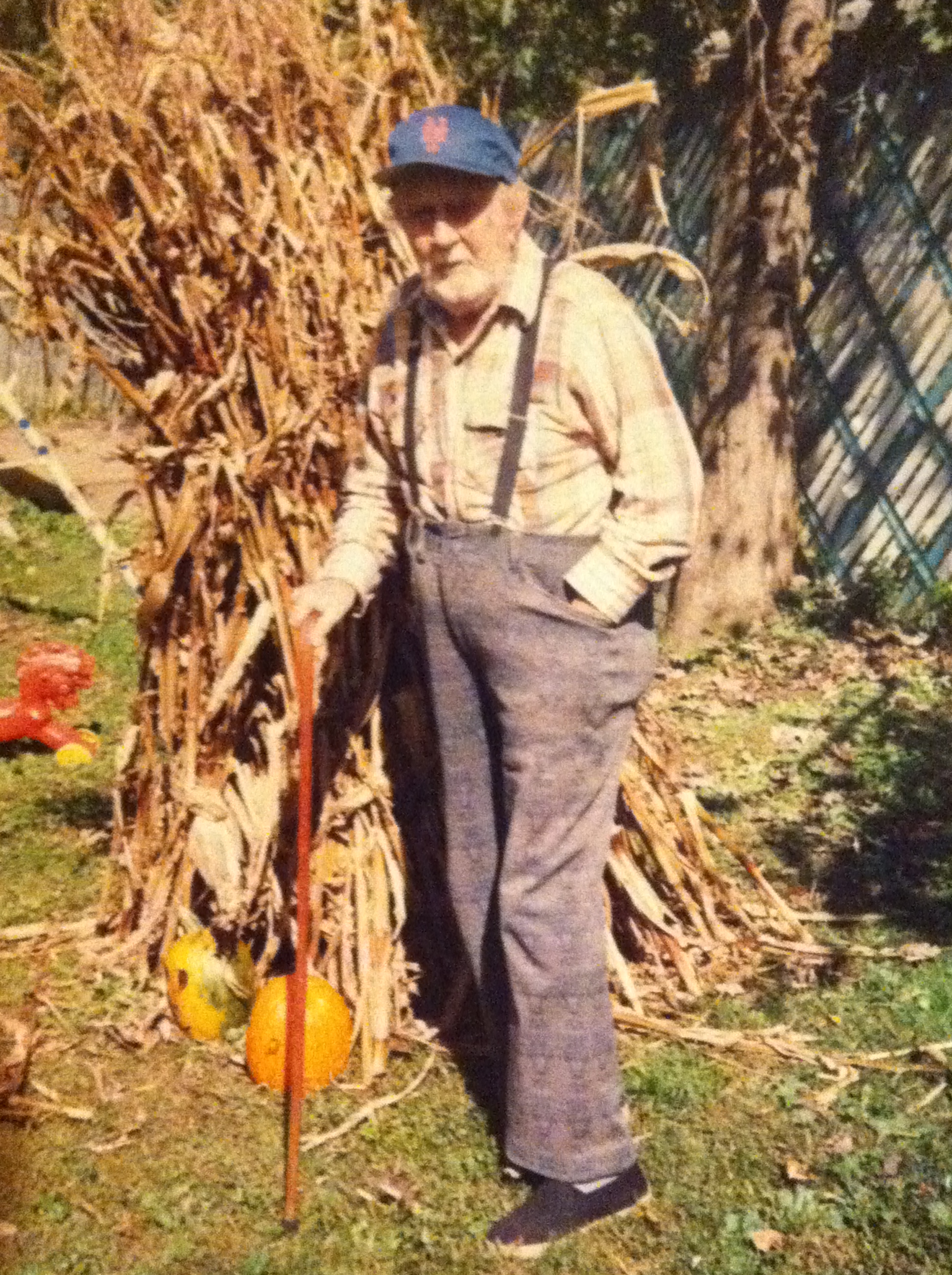
Bill Adkins of Harts, Lincoln County, West Virginia, c.1992
06 Thursday Feb 2014
Posted in Culture of Honor, Ed Haley, Lincoln County Feud
Tags
Aaron Adkins, Al Brumfield, Bill Abbott, Bill Adkins, Bill Fowler, Billy Adkins, Brandon Kirk, Cain Adkins, crime, Fed Adkins, feud, Green McCoy, Harts Creek, history, Isaac Adkins, John W Runyon, Mac Adkins, Milt Haley, Paris Brumfield, Ras Fowler, West Virginia, Will Adkins, writing
In the months following my trip to Harts, Brandon finished his undergraduate work at college and moved into a three-room house at Ferrellsburg. He spent his mornings and afternoons teaching in the local schools and his evenings hanging out with Billy Adkins. One night, he interviewed Billy’s father, Bill, Sr. — that colorful old fiddler laid up with Alzheimer’s. As Billy asked his father questions, Brandon crouched in the doorway prepared to write down his answers. At first they weren’t even sure if Bill was awake. Then, his eyes still closed, he began to tell a little bit of what he knew about the Brumfields and their 1889 troubles.
Al Brumfield, Bill said, put in a four-log-wide boom at the mouth of Harts Creek and charged a tax on all logs passing through it. John Runyon arrived on the scene just as Brumfield was making a small fortune and put in a rival business. “John Runyon was against the Brumfields,” Bill said. He bought twelve Winchester rifles and armed several men to protect his property, then hired Milt Haley and Green McCoy to kill Brumfield. In the ambush, Al was shot in the arm and his wife was shot in the mouth. Haley and McCoy immediately left the area but were soon caught on Tug Fork and jailed in Kentucky. A Brumfield posse got the necessary legal papers and brought the two back to Harts through the Twelve Pole Creek region.
They were on their way down Harts Creek when a spy warned them of an ambush organized by “old man Cain Adkins” at the mouth of Big Branch. Thereafter, the Brumfields went over a mountain to the Guyandotte River and crossed it in boats. They took Haley and McCoy to an old log house later owned by Tucker Fry where they were killed by a mob that included Bill’s uncles Will Adkins and Mac Adkins.
Bill said his uncle Will Adkins died just after the Haley-McCoy killings on November 23, 1889.
“He got drowned in the backwater over here,” he said. “They had a boom across the creek four logs wide. He fell off in the backwater there and drowned hisself. I think Dad was the cause of it. Him and old Bill Abbott was in a row with each other. Uncle Will come along and heard them. He started across there to see what was wrong, to help Dad out if he needed any help. Of course, he fell in that water and drowned himself. He’s buried up on the hill at Ferrellsburg. Old Bill Fowler bought his tombstone. Boy, she’s a big’n. I bet it cost him right smart of money. Uncle Will was named after old Bill Fowler. He was kin through marriage. He married Granddad Aaron’s sister.”
Bill said John Runyon’s attack on Brumfield was one of several violent attempts to secure the property at the mouth of Harts Creek. A little later, Paris Brumfield feuded with Bill Fowler, a local merchant, miller, farmer, and a saloon operator. Fowler was a highly successful businessman; unfortunately, he built his interests on land that Brumfield desperately wanted. Finally, presumably after some trouble, the Brumfields “burned Bill Fowler out”. Bill’s father, Fed Adkins, said he stood at the riverbank watching barrels of alcohol explode straight into the sky as Fowler’s store and saloon burned away.
“The whiskey run into the river,” one Fowler descendant later told Brandon. “They said he had big costly horses and it burned them, too.”
In 1890, after intense pressure from the Brumfields, Fowler sold his property at the mouth of Harts Creek (two tracts of land totaling 165 five acres on the west side of the river) to Isaac Adkins. One tract, according to land records at the Lincoln County Courthouse, was 75 acres and worth six dollars per acre, while the other was 90 acres worth four dollars per acre. Fowler left Harts and settled at Central City in present-day Huntington. Al Brumfield, meanwhile, acquired the Fowler property and employed Ras Fowler, a son of Bill, to work his store. The younger Fowler was a schoolteacher and postmaster. Actually, he was postmaster at the time of the Haley-McCoy trouble.
05 Wednesday Feb 2014
Posted in Big Harts Creek, Ed Haley
Tags
Appalachia, culture, genealogy, Harts Creek, history, life, Logan County, Peter Mullins, photos, West Virginia

Peter Mullins with unknown woman, circa 1890s
05 Wednesday Feb 2014
Posted in Big Harts Creek, Ed Haley, Whirlwind
Tags
Callohill McCloud, Ed Haley, Frank Adams, George Adams, Grover Adams, Harts Creek, history, J.P. Douglas, Lincoln Republican, Lindsey Blair, moonshining, Perris Hensley, Peter Jonas, Peter Mullins, Reece Dalton, Sol Adams, Sol Riddell, W.J. Bachtel, West Virginia, Whirlwind, William Farley, William Tomblin, writing
In that same year, 1912, according to a state business directory, there were a variety of folks with business interests in Whirlwind, West Virginia. Sol Riddell was the postmaster, a lawyer, and part owner of a general store named Mullins & Riddell. Peter Mullins was a carpenter, D. Adams was an apiarist, Grover Adams dealt in ginseng, Sol Adams was a miller and lumber dealer, W.J. Bachtel was a teacher, Reece Dalton dealt in livestock and M. Tomblin was a teamster. Reverend Perris Hensley and Reverend William Tomblin were area preachers.
Between 1916-1918, roughly the time Ed Haley left Harts Creek for Ashland, Kentucky, many of these same folks were listed in business directories for Whirlwind. James Mullins was postmaster in 1916, as well as the local general store operator and photographer. William Farley was a mail dealer. In 1918, Frank Adams was a mail carrier. Sol Adams operated a saw mill. Lindsey Blair was a watchmaker. Callahill McCloud dealt in poultry. C.M. Mullins dealt in ginseng. J.M. Mullins operated a flour mill.
By that time, Peter Mullins served as a sort of surrogate father to Ed Haley. It was Uncle Peter who had given Ed a cornstalk fiddle when he was a young boy and who kept him for years. As Ed became a young man who frequently left Harts with his music, Uncle Peter toiled on Trace Fork as a farmer and occasional timberman. He was perhaps best known for his moonshining, an art form with a long history in his pedigree. In January of 1919, he appeared in The Lincoln Republican in an article titled “Four Moonshiners Caught in Raid.”
A constable and owner of a general store was one of the four men arrested Saturday night in Harts Creek district and taken to Huntington Sunday for arraignment before United States Commissioner J.P. Douglas on a charge of illegally manufacturing liquor. The men were found on Trace Fork of Harts creek.
Peter Mullins is the constable and owns a general store on Harts creek. He is known as ‘Shooting Pete’ and is now in the Cabell county jail in default of bond. In his store were found 900 pounds of meal and 209 pounds of flour. Sol Adams, Peter Jonas and George Adams, the other three arrested, gave bond. All are held to the grand jury at the April term of federal court. At the home of Geo. Adams, were found 200 pounds of meal, 100 pounds of light brown sugar, 200 pounds of bran or ships stuff and one barrel of mash, made up, which Adams said was for his hogs. He had one hog, according to the men on the raid. The arrests were made on Saturday by G.C. Rutheford and Hartley Ferguson, deputy marshals; H.D. Sims and G.L. Hannan, of the internal revenue department; M.E. Ketchem, Frank Adkins and W.F. Porter of the state prohibition commissioner’s force.
Writings from my travels and experiences. High and fine literature is wine, and mine is only water; but everybody likes water. Mark Twain
This site is dedicated to the collection, preservation, and promotion of history and culture in Appalachia.
Genealogy and History in North Carolina and Beyond
A site about one of the most beautiful, interesting, tallented, outrageous and colorful personalities of the 20th Century
 Brandon Ray Kirk