
• About

Brandon Ray Kirk

~ This site is dedicated to the collection, preservation, and promotion of history and culture in my section of Appalachia.

Brandon Ray Kirk

Tag Archives: Ulysses Hinchman

Recollections of Laura Hinchman at Combs Addition, WV (1984), Part 1

24 Friday Jan 2020

Posted by Brandon Ray Kirk in African American History, Civil War, Coal, Guyandotte River, Huntington, Logan, Man, Timber, Women's History, Wyoming County

≈ 5 Comments

Tags

African-Americans, Alfred Beckley, Anna Brooke Hinchman, Bruno, Buffalo City, civil war, Claypool, Clean Eagle Coal Company, coal, Combs Addition, Confederate Army, Cyclone, Cyclone Post Office, Davin, Elk Creek, Forkner, genealogy, Guyandotte River, history, Hollow A. Davin, Huntington, John L. Lewis, Lake Claypool, Laura Hinchman, Logan, Logan County, logging, Lorenzo Dow HInchman, Mallory, Man, Man High School, Morris Harvey College, Oceana, Paul Hinchman, Pete Toler, postmaster, rafting, Raleigh County, Rosa Hinchman, splash dams, timbering, Ulysses Hinchman, United Mine Workers of America, Vic McVey, Walter Hinchman, West Virginia, Woodrow Hinchman, Wyoming County

Laura C. Hinchman was born on March 22, 1919 to Walter and Anna Brooke (McVey) Hinchman at Mallory in Logan County, WV. She was an educator for over fifty years and was very active in civic affairs. For more information about her background, see her obituary at this location: https://www.findagrave.com/memorial/140834185/laura-caryl-hinchman

The following interview of Ms. Hinchman was conducted on July 16, 1984. In this part of the interview, she discusses her ancestry, community history, timbering, and coal mining.

***

Miss Hinchman, how did your family first come to this area?

Well, when West Virginia was being settled, people who were willing to come here were given land grants by governors of Virginia over different periods of years. This property was given by the governor of the commonwealth of Virginia at that time, Governor Nicholson. It was given in 1815 to my great grandfather, Dr. Ulysses Hinchman, who was a member of the legislature. He had land holdings in Wyoming County, and he laid out the town of Oceana. He is recorded in a lot of the books of the history of Wyoming and Logan Counties. According to the West Virginia Blue Book, that is how Man got its name. At first it was called Buffalo City. Then they decided to change the name. They thought Hinchman was too long and there was already a place called Hinch, so they named it Man in honor of my great grandfather. Now, that’s according to the West Virginia Blue Book.

Do you remember what your grandparents were like?

Now, both my grandfather and grandmother Hinchman died before I was born, so I don’t remember either of them. At that time, this was all timber land. My grandfather Hinchman, whose name was Lorenzo Dow Hinchman, was a timberman. We have a lot of records here in the house where he kept books of how much he paid the men and how much he sold, and all that. After this was cleared, then, of course, it became farmland. Now, they had no way of getting the logs that were cut to a market. So down there just below Woodrow’s, and this happened several places, they built what was called splash dams. They made a dam and dammed the water up and filled it with logs. Then there would be a great big lot of excitement. Everybody would gather and they would tear the dam lose and let the logs float down to the Guyan River. There were men who went with them, I suppose on rafts, and rafted the logs together, and floated them down the Guyan River to the Guyandotte. Now, my mother’s father, who came from Raleigh County, was Uncle Vic McVey. Of course, I remember him well, he lived here with us until he died at the age of ninety-four. He was one of the men who followed floating those logs down the river, and then they would walk back from Huntington. They had places that they stayed on their way back. I don’t know how many days it took.

Now, my grandmother Hinchman was a Chambers, which is also one of the early settler families in this area. She was a schoolteacher. At that time, it was possible to teach school when you got through the eighth grade, you were given a certificate. All first teachers in the one room schools here were just graduates of the eight grade, because the high school at Man was not built until 1919 or 1920, and that’s all they had. Now some people taught after they finished the eighth grade, and then went on when it was possible. I have a cousin Lake Claypool–that’s another old family in this area for which Claypool is named–that she taught after she finished the eighth grade then she went on to Man and finished high school and then went to Morris Harvey. But all the older teachers were just eighth grade. There was a one room school down here at Claypool. There was a one room school up at Vance’s. There were several one room schools on Buffalo Creek. There was a one room school up–what’s that creek up Bruno called–Elk Creek. My grandmother was a teacher, but as I say, both died before I was ever born. Now then, this place was called Cyclone. This is where Cyclone was. My grandmother Hinchman kept the Cyclone Post Office here for forty years. After she passed away, my mother–she was a McVey–and she married my father, Walter Hinchman, in 1910, and came here. I had Aunt Rosa Hinchman, who had never married at that time, who helped her keep the post office. The mail was carried on horseback from Huntington and the West, came that way, and from Oceana, from that direction they carried it. The postmasters met here, and they ate dinner here every day. My mother–ever who all was here, and at that time, you never knew who might be there for dinner… But when this house was built, this part wasn’t part of it. The kitchen and the dining room were in separate buildings. Now, of course, in the south they had slaves and all, but I do recall their talking about on black man, by the name of Sam. I don’t remember much about him but that’s the only black person that they ever had here, you know, on the farm.

I do remember my granddad McVey quite well, and my great-grandfather came to Raleigh County with General Beckley and settled there. Then my mother’s grandfather was a Confederate soldier in the Civil War. His name was Zirkle, which is the German word for circle. He ran away from home during the Civil War and joined the Confederate Army. After the war he came here and settled. He also lived with us until he was in his nineties. But my mothers’ mother, my grandmother McVey, died when my mother was only, maybe two years old, so I never knew any of my real grandparents except, you know, my granddad McVey.

Were you born here, at this house?

I was born here on March 22, 1919. My father passed away in February of 1920 when I was eleven months old. There were three of us Hinchman children: Woodrow, Paul, and I was the youngest, of course. I don’t remember my father, but Woodrow does. Then my mother married Pete Toler when I was twenty-three months old, a year after my father died. I remember his as my real father because he reared me. He worked this farm and I remember the first time I called him Daddy, now I don’t know how old I was.

There was a mine at Davin that was first called Forkner, and it was changed to the name of Davin after Hollow A. Davin, a prominent man in Logan who probably owned the mine, and that started in 1923. Then the post office was taken up the creek and then we had a post office at Davin. Then my dad ran a coal cutting machine. Men took those jobs by contract and they were paid for the number of cars that they cut. They could work as many hours as they wanted. The men who loaded the coal–they may have loaded themselves, I don’t know–they loaded the coal into wooden cars. Now, in order to get credit of the coal car that they had loaded they had a–what was it called? Well, it was a little round piece of metal with a number on it that they hung on that coal car. The coal was hauled out of the mine by mule or ponies. There was a tipple and everything there at Davin. Then the Clean Eagle mine went in later, I don’t remember when, but my dad worked there, and he also worked at Mallory. But when we were children, we never saw our dad until the weekend because he went to work before daylight, before we ever thought of getting up and he never came in until after we had gone to bed. That sort of thing kept up with miners until John L. Lewis, you see, organized the union.
Old Hinchman Book at Pecks Mill in Logan County, WV (1936)

04 Monday Mar 2019

Posted by Brandon Ray Kirk in Civil War, Pecks Mill

≈ Leave a comment

Tags

129th Regiment Virginia Militia, 12th Regiment Virginia Militia, Abner Vance, Adam Browning, Appalachia, Barney Carter, Big Creek, Calvary Hatfield, Chapmanville District, Charles Staton, civil war, David Mullins, Eli Gore, Evans Ferrell, genealogy, George Avis, George Bryant, Gilbert Creek, Gordon Riffe, Granville Riffe, Green A. Clark, Guyandotte River, Hardy District, Harts Creek, Harvey Ellis, history, Huff's Creek, Jack Dempsey, James H. Hinchman, James J. Hinchman, John Chapman, John DeJournett, John Dempsey, John Hager, John Hatfield, John Starr, Joseph B. Browning, Joseph Hinchman, Logan Banner, Logan County, Louis White, Magnolia District, Martin Doss, Mingo County, Nathan Elkins, Pecks Mill, physician, Reece Browning, Triadelphia District, Ulysses Hinchman, Union District, Virginia, West Virginia, Wheeling, William Dempsey, William McDonald, William Stollings, Wyoming County

From the Logan Banner of Logan, WV, comes this bit of history for Logan County printed on November 3, 1936:

Time-Dimmed Record of Early Logan County Families in 1852-1877 Period in Old Books Found at Pecks Mill

Thumbing the now-dimmed pages of a yellowed book which recently came to light in old Peck’s Mill, members of Logan county’s oldest families may read in a painstakingly-kept record of the years 1852 to 1877 how their forefathers were brought into the world, married, educated, governed.

The record is written in pen and ink with the quaint flourishes and old-fashioned double letters of the 1800s by James J. Hinchman, who was clerk of the 12th regiment of the Virginia militia from 1852 to 1858; and by one, Ulysses Hinchman, who was clerk of the 129th regiment from 1858 to the Civil War; and later pastor, doctor, and trader.

The first entry, dated Nov. 3, 1852, records the meeting “at the house of Wm. McDonald near the mouth of Huffs Creek” of the Twelfth regiment of the Virginia militia in the days when Logan county was the property of Virginia.

Among the officers present were Major John Hager and Capt. James J. Hinchman, who was also clerk.

Most of the records at the first, which deal entirely with the regiment, are devoted to the salaries paid for “drumming and fifing,” the fines of 50 cents each for failure to report at meetings, and the excuse of members from duty “because of physical infirmities.”

Among the interesting entries is one relating, it is believed, to an ancestor of ex-champion Jack Dempsey, which reads:

“William Dempsey for fifing one day in Capt. Miller’s company.”

Two dollars, according to numerous accounts, was the regular salary paid for a day of fifing or drumming. For three days training, officers received $10.

Among regiment members mentioned are Calvary Hatfield and Reece Browning, forefathers of the Hatfield and Browning families of today.

On Sept. 10, 1858, the record is transferred to that of the 129th and is kept by Ulysses Hinchman. His first entry tells of a meeting at which John De Journett was elected colonel; K. McComas, first major; Reece Browning, second major; and Ulysses Hinchman, clerk. Officers attending were Captains George Avis, James H. Hinchman, John Starr, John Hatfield, John Chapman, and Barnabus Carter; and Lieutenants Martin Doss, George Bryant, Granville Riffe, Louis White, Charles Staton and Green A. Clark.

Interesting in these pages are the forming of new companies in which the names of the creeks and localities are for the most part the same as today. Among the familiar names are Huffs, Gilbert, Harts and Big Creek, Guyandotte river, and Trace Fork.

There is no mention of the Civil War, but it is mutely attested to by two entries, the first, dated 1862 at the bottom of one page and the second dated 1866 at the top of the next, which read:

“Apr. 5, 1862—Abner Vance and Nathan Elkins received their claims.

1866—Rec’d of Eli Gore, county treasurer for my last year’s services, $50.

“Ulysses Hinchman, superintendent of schools.”

The next year, we are gratified to learn, his salary has increased to $300.
We learn that Logan, which then included Mingo and Wyoming counties, was at that time composed of five districts, Union, Triadelphia, Hardy, Chapmanville, and Magnolia; and that the county’s finances were all handled through Wheeling, then the only city of size in West Virginia.

The records contain long lists of certificates awarded to teachers for $1, among the recipients being John Dempsey, Eli Gore, Joseph Hinchman, Harvey Ellis and Evans Ferrell.

In the midst of the records of 1866 and ’67 we come upon the terse paragraph which informs that:

“The sheriff failed to settle for taxes of 1861.”

The board of education’s budget for 1869 was $2077.60 and was apportioned to these clerks of the various townships; Union, David Mullins; Triadelphia, Gordon Riffe; Magnolia, Joseph B. Browning; Hardy, Adam Browning; and Chapmanville, Wm. Stollings. Increased expenses that year made it necessary to levy a tax of “5 cents on $100.”

An enumeration of all children “between the ages of 6 and 21” in 1868 totaled 2139.

In 1871, our patient scribe becomes “Dr. U.S. Hinchman” and the record his personal account book. We learn much of the practices and hardships of the first country doctors and that his troubles in collecting the pitifully small fees of those days were as great as those of any “specialist” of today.

Dr. Hinchman had no set rates, but based on his charges upon the number of miles traveled (usually 50 cents per mile); the number of days and nights spent, and—quite evidently—the circumstances of his patient.

His customary charge for a delivery, if it chanced to come in the day time, appeared to be $5.50; but if the child arrived in the night and required many miles of travel it was a more expensive proposition—the fees sometimes reaching as high as $9.

The birth of one of these $9 babies is graphically recorded as follows:

“Labor two nights and days–$7

10 miles at 50 cents–$5

Administering–$1

Received $5.”

The doctor’s highest charge was one of $10 on a case which required three days and nights.

Interspersed freely with the accounts of births, and sicknesses are frequent entries of marriages at $2 each.

Toward the last of the book, in 1877, the author’s handwriting becomes more labored and the fine shadings and flourishing gradually disappear—evidence that his years of soldiering, school teaching, and doctoring were taking their toll.

At this time, too, he begins to record not only his receipts, but his expenditures and trades, and we read, not without envy, of purchases of “one bushel of sweet potatoes, 50 cents,” and “one and a half bushel of Irish potatoes, 75 cents.”

One of the last entries, dated Aug. 1877, tells of his receiving for his professional services a large amount of coffee which he traded for $5 cash, a suit, and a round of shoes,” the latter evidently referring to horseshoes.

As, regretfully, we close the book; we feel that we know that patient and prolific old settler of Logan County, Ulysses Hinchman—his honor as a soldier and officer, his strict accounting of himself as a public official, his hardships and struggles as a country doctor; and through all, his conscientious, faithful keeping of records. And we share, with his descendants, a great pride in him.

Somehow we know that when, with failing hand, he concluded his long accounts in another book; his record was clear and straight—his house was in order.

Flick Amendment Ratified by Voters of Triadelphia Township, Logan County, WV (1871)

09 Sunday Sep 2018

Posted by Brandon Ray Kirk in Civil War, Man

≈ Leave a comment

Tags

Aaron Altizer, Albert G. Mitchell, Alexander Spratt, Alexander Trent, Appalachia, B.W. White, Ben H. White, civil war, Curtis Ballard, Democratic Party, F.M. White, Flick Amendment, genealogy, George S. Claypool, Harvey Buchanan, Harvey Ellis, history, Hugh Avis, Isaac Browning, James A. White, James H. Brown, James H. Hinchman, James M. White, James Spratt, Jasper Perry, John Claypool, John Riffe, Logan County, Louis Mitchell, Madison Ellis, Patterson Christian, Perry Altizer, Peter Riffe, Phillip Ellis, politics, Preston Perry, Reconstruction, Republican Party, Rhodes D. Ballard, Robert P. Spratt, Sidney Hinchman, Squire Ellis, Triadelphia District, Ulysses Hinchman, W.H.H. Flick, West Virginia, William A. Lee, William Claypool, William W. McDonald

After the Civil War, West Virginia law barred ex-Confederates from voting. The Flick Amendment of 1871, named for Republican W.H.H. Flick, sought to extend suffrage to ex-Confederates and freedmen. Most ex-Confederates were Democrats. Passage of the Flick Amendment ultimately meant that Democrats would rule West Virginia for the next 25 years.

***

Names of all persons voting at Aaron Altizer in Triadelphia Township of Logan County this 27th day of April 1871 on the Ratification or Rejection of the amendment of the constitution of the state of West Virginia.

Ben H. White

John Claypool

Albert G. Mitchell

Peter Riffe

Wm. Claypool

Squire Ellis

B.W. White

Phillip Ellis

Alexander Trent

Isaac Browning

Harvey Buchanan

James Spratt

Robert P. Spratt

Patterson Christian

Michell Carter

John Riffe

Hugh Avis

Harvey Ellis

Perry Altizer

Rhodes D. Ballard

Alexander Spratt

Madison Ellis

Curtis Ballard

Aron Altizer

Wm. W. McDonald

Jasper Perry

James M. White

James H. Brown

Louis Mitchell

F.M. White

Wm. A. Lee

Preston Perry

George S. Claypool

Jas. H. Hinchman

Wm. Wesly

Ulyses Hinchman

Sidney Hinchman

James A. White


Total No. Votes: Thirty Eight


Madison Ellis, Inspector

F.M. White, Inspector


James M. White, Clerk

Wm. A. Lee, Clerk


Tally of the votes cast at the Election held at Aaron Altizer’s in the Township of Triadelphia and county of Logan on the 27th day of April 1871 (on the Ratification or rejection of the proposed amendment to the constitution of the State of West Virginia).

Tally of Votes:

Total of Votes for Ratification: Thirty Eight

***

Compared to the gubernatorial election of 1870, voter turnout for the Flick Amendment was extremely low. West Virginia voters approved the amendment by a vote of 23,546 to 6,323. Only five counties, all located in the northern part of the state, voted against the amendment.

Logan County, WV, Jail (1879)

05 Monday Feb 2018

Posted by Brandon Ray Kirk in Logan

≈ Leave a comment

Tags

Appalachia, crime, genealogy, history, jail, James R. Perry, John B. Laidley, Logan, Logan County, Ulysses Hinchman, West Virginia

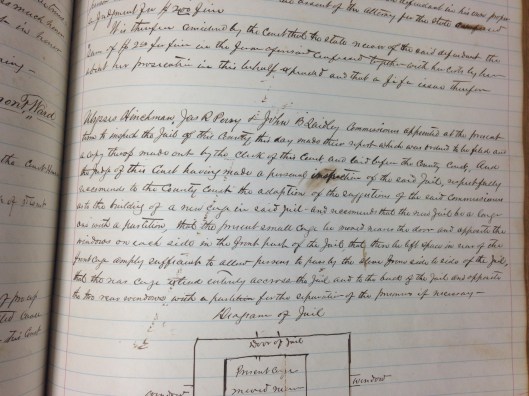
IMG_3501.JPG

Law Orders Book B (1875-1883), page 333, 3 October 1879, Logan County Circuit Clerk’s Office, Logan, WV.

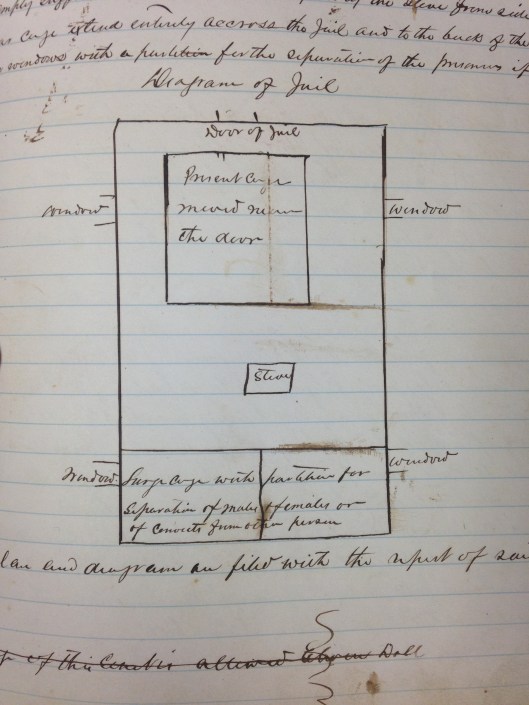
IMG_3502

Law Orders Book B (1875-1883), page 333, 3 October 1879, Logan County Circuit Clerk’s Office, Logan, WV. 

Lorenzo D. Hinchman

04 Saturday Jul 2015

Posted by Brandon Ray Kirk in Wyoming County

≈ Leave a comment

Tags

Appalachia, Cyclone, Elizabeth A. Hinchman, genealogy, Grace Hinchman, Henry H. Hardesty, history, Laura Hinchman, Logan County, Lorenzo D. Hinchman, Monroe County, R.A. Brock, Rebecca Hinchman, Revolutionary War, Richmond, Rosa Hinchman, timbering, U.S. South, Ulysses Hinchman, Virginia, Virginia and Virginians, Walter Hinchman, West Virginia

From “Virginia and Virginians, 1606-1888,” published by H.H. Hardesty, we find this entry for Lorenzo D. Chambers, who resided at Cyclone, West Virginia:

Son of Ulysses and Rebecca (McDonald) Hinchman, was born Dec. 25, 1833, in Logan county. W.Va. His father was born April 6, 1817, in Monroe county, W.Va., but was for many years an honored resident of Logan county, where he died March 7, 1882; his wife, and the mother of the subject of this sketch, was of one of the oldest and wealthiest families of this section; her father served with distinction six years in the Revolutionary war; she died April 3, 1887. Lorenzo D. Hinchman was married Jan. 25, 1870, to Elizabeth A. Chambers, who was born March 23, 1842, in Logan county, W.Va. They have issue: Laura, born Nov. 9, 1870; Grace, July 26, 1873; and Rosa, June 22, 1877; one son, Walter, was born Aug. 224, 1878. Mrs. Hinchman’s parents were both born in Monroe county, W.Va., and both died in Logan county; the father, born Aug. 2, 1790, died Jan. 14, 1876; and the mother, born Aug. 20, 1794, dying Sept. 9, 1876. Mr. Hinchman is engaged in the timber business in connection with farming: his post office is Cyclone, Logan county, West Virginia.

Source: Dr. R.A. Brock, Virginia and Virginians, 1606-1888 (Richmond, VA: H.H. Hardesty, Publisher, 1888), p. 832-833.

Feud Poll 1

If you had lived in the Harts Creek community during the 1880s, to which faction of feudists might you have given your loyalty?

Categories

  • Adkins Mill
  • African American History
  • American Revolutionary War
  • Ashland
  • Atenville
  • Banco
  • Barboursville
  • Battle of Blair Mountain
  • Beech Creek
  • Big Creek
  • Big Harts Creek
  • Big Sandy Valley
  • Big Ugly Creek
  • Boone County
  • Breeden
  • Calhoun County
  • Cemeteries
  • Chapmanville
  • Civil War
  • Clay County
  • Clothier
  • Coal
  • Cove Gap
  • Crawley Creek
  • Culture of Honor
  • Dingess
  • Dollie
  • Dunlow
  • East Lynn
  • Ed Haley
  • Eden Park
  • Enslow
  • Estep
  • Ethel
  • Ferrellsburg
  • Fourteen
  • French-Eversole Feud
  • Gilbert
  • Giles County
  • Gill
  • Green Shoal
  • Guyandotte River
  • Halcyon
  • Hamlin
  • Harts
  • Hatfield-McCoy Feud
  • Holden
  • Hungarian-American History
  • Huntington
  • Inez
  • Irish-Americans
  • Italian American History
  • Jamboree
  • Jewish History
  • John Hartford
  • Kermit
  • Kiahsville
  • Kitchen
  • Leet
  • Lincoln County Feud
  • Little Harts Creek
  • Logan
  • Man
  • Matewan
  • Meador
  • Midkiff
  • Monroe County
  • Montgomery County
  • Music
  • Native American History
  • Peach Creek
  • Pearl Adkins Diary
  • Pecks Mill
  • Peter Creek
  • Pikeville
  • Pilgrim
  • Poetry
  • Queens Ridge
  • Ranger
  • Rector
  • Roane County
  • Rowan County Feud
  • Salt Rock
  • Sand Creek
  • Shively
  • Spears
  • Sports
  • Spottswood
  • Spurlockville
  • Stiltner
  • Stone Branch
  • Tazewell County
  • Timber
  • Tom Dula
  • Toney
  • Turner-Howard Feud
  • Twelve Pole Creek
  • Uncategorized
  • Warren
  • Wayne
  • West Hamlin
  • Wewanta
  • Wharncliffe
  • Whirlwind
  • Williamson
  • Women's History
  • World War I
  • Wyoming County
  • Yantus

Feud Poll 2

Do you think Milt Haley and Green McCoy committed the ambush on Al and Hollene Brumfield in 1889?

Blogroll

  • Ancestry.com
  • Ashland (KY) Daily Independent News Article
  • Author FB page
  • Beckley (WV) Register-Herald News Article
  • Big Sandy News (KY) News Article
  • Blood in West Virginia FB
  • Blood in West Virginia order
  • Chapters TV Program
  • Facebook
  • Ghosts of Guyan
  • Herald-Dispatch News Article 1
  • Herald-Dispatch News Article 2
  • In Search of Ed Haley
  • Instagram
  • Lincoln (WV) Journal News Article
  • Lincoln (WV) Journal Thumbs Up
  • Lincoln County
  • Lincoln County Feud
  • Lincoln County Feud Lecture
  • LinkedIn
  • Logan (WV) Banner News Article
  • Lunch With Books
  • Our Overmountain Men: The Revolutionary War in Western Virginia (1775-1783)
  • Pinterest
  • Scarborough Society's Art and Lecture Series
  • Smithsonian Article
  • Spirit of Jefferson News Article
  • The Friendly Neighbor Radio Show 1
  • The Friendly Neighbor Radio Show 2
  • The Friendly Neighbor Radio Show 3
  • The Friendly Neighbor Radio Show 4
  • The New Yorker
  • The State Journal's 55 Good Things About WV
  • tumblr.
  • Twitter
  • Website
  • Weirton (WV) Daily Times Article
  • Wheeling (WV) Intelligencer News Article 1
  • Wheeling (WV) Intelligencer News Article 2
  • WOWK TV
  • Writers Can Read Open Mic Night

Feud Poll 3

Who do you think organized the ambush of Al and Hollene Brumfield in 1889?

Recent Posts

  • Logan County Jail in Logan, WV
  • Absentee Landowners of Magnolia District (1890, 1892, 1894)
  • Charles Spurlock Survey at Fourteen Mile Creek, Lincoln County, WV (1815)

Ed Haley Poll 1

What do you think caused Ed Haley to lose his sight when he was three years old?

Top Posts & Pages

  • Early Coal Mines in Logan County, WV
  • History for Boone County, WV (1928)
  • Early Anglo Settlers of Logan, WV (1937)
  • Origin of Place Names in Logan County, WV (1937)
  • Big Harts Creek Post Offices

Copyright

© Brandon Ray Kirk and brandonraykirk.wordpress.com, 1987-2023. Unauthorized use and/or duplication of this material without express and written permission from this blog’s author and/or owner is strictly prohibited. Excerpts and links may be used, provided that full and clear credit is given to Brandon Ray Kirk and brandonraykirk.wordpress.com with appropriate and specific direction to the original content.

Archives

  • February 2025
  • January 2025
  • October 2023
  • September 2023
  • December 2022
  • November 2022
  • May 2022
  • April 2022
  • February 2022
  • November 2021
  • October 2021
  • September 2021
  • June 2021
  • May 2021
  • April 2021
  • March 2021
  • February 2021
  • January 2021
  • December 2020
  • November 2020
  • October 2020
  • July 2020
  • June 2020
  • May 2020
  • April 2020
  • March 2020
  • February 2020
  • January 2020
  • December 2019
  • November 2019
  • October 2019
  • September 2019
  • August 2019
  • July 2019
  • June 2019
  • May 2019
  • April 2019
  • March 2019
  • February 2019
  • January 2019
  • December 2018
  • November 2018
  • October 2018
  • September 2018
  • August 2018
  • July 2018
  • June 2018
  • May 2018
  • April 2018
  • March 2018
  • February 2018
  • January 2018
  • December 2017
  • November 2017
  • October 2017
  • September 2017
  • August 2017
  • July 2017
  • June 2017
  • May 2017
  • April 2017
  • March 2017
  • February 2017
  • January 2017
  • December 2016
  • November 2016
  • October 2016
  • September 2016
  • August 2016
  • July 2016
  • June 2016
  • May 2016
  • April 2016
  • March 2016
  • February 2016
  • January 2016
  • December 2015
  • November 2015
  • October 2015
  • September 2015
  • August 2015
  • July 2015
  • June 2015
  • May 2015
  • April 2015
  • March 2015
  • February 2015
  • January 2015
  • December 2014
  • October 2014
  • September 2014
  • August 2014
  • July 2014
  • June 2014
  • May 2014
  • April 2014
  • March 2014
  • February 2014
  • January 2014
  • December 2013
  • November 2013
  • October 2013
  • September 2013
  • August 2013
  • July 2013
  • June 2013
  • May 2013
  • April 2013
  • March 2013
  • February 2013
  • January 2013
  • December 2012
  • November 2012

Enter your email address to follow this blog and receive notifications of new posts by email.

Join 2,925 other subscribers

Tags

Appalachia Ashland Big Creek Big Ugly Creek Blood in West Virginia Brandon Kirk Cabell County cemeteries Chapmanville Charleston civil war coal Confederate Army crime culture Ed Haley Ella Haley Ferrellsburg feud fiddler fiddling genealogy Green McCoy Guyandotte River Harts Harts Creek Hatfield-McCoy Feud history Huntington John Hartford Kentucky Lawrence Haley life Lincoln County Lincoln County Feud Logan Logan Banner Logan County Milt Haley Mingo County music Ohio photos timbering U.S. South Virginia Wayne County West Virginia Whirlwind writing

Blogs I Follow

  • OtterTales
  • Our Appalachia: A Blog Created by Students of Brandon Kirk
  • Piedmont Trails
  • Truman Capote
  • Appalachian Diaspora

BLOOD IN WEST VIRGINIA is now available for order at Amazon!

Blog at WordPress.com.

OtterTales

Writings from my travels and experiences. High and fine literature is wine, and mine is only water; but everybody likes water. Mark Twain

Our Appalachia: A Blog Created by Students of Brandon Kirk

This site is dedicated to the collection, preservation, and promotion of history and culture in Appalachia.

Piedmont Trails

Genealogy and History in North Carolina and Beyond

Truman Capote

A site about one of the most beautiful, interesting, tallented, outrageous and colorful personalities of the 20th Century

Appalachian Diaspora

  • Subscribe Subscribed
    • Brandon Ray Kirk
    • Join 787 other subscribers
    • Already have a WordPress.com account? Log in now.
    • Brandon Ray Kirk
    • Subscribe Subscribed
    • Sign up
    • Log in
    • Report this content
    • View site in Reader
    • Manage subscriptions
    • Collapse this bar
 

Loading Comments...