• About

Brandon Ray Kirk

~ This site is dedicated to the collection, preservation, and promotion of history and culture in my section of Appalachia.

Brandon Ray Kirk

Tag Archives: Paris Brumfield

In Search of Ed Haley 196

12 Tuesday Nov 2013

Posted by Brandon Ray Kirk in Ed Haley

≈ Leave a comment

Tags

Boney Lucas, Cat Fry, Charley Brumfield, crime, genealogy, history, Hollena Brumfield, Ida Taylor, Jim Brumfield, Letilla Dial, Paris Brumfield, Sarah Lucas, writing

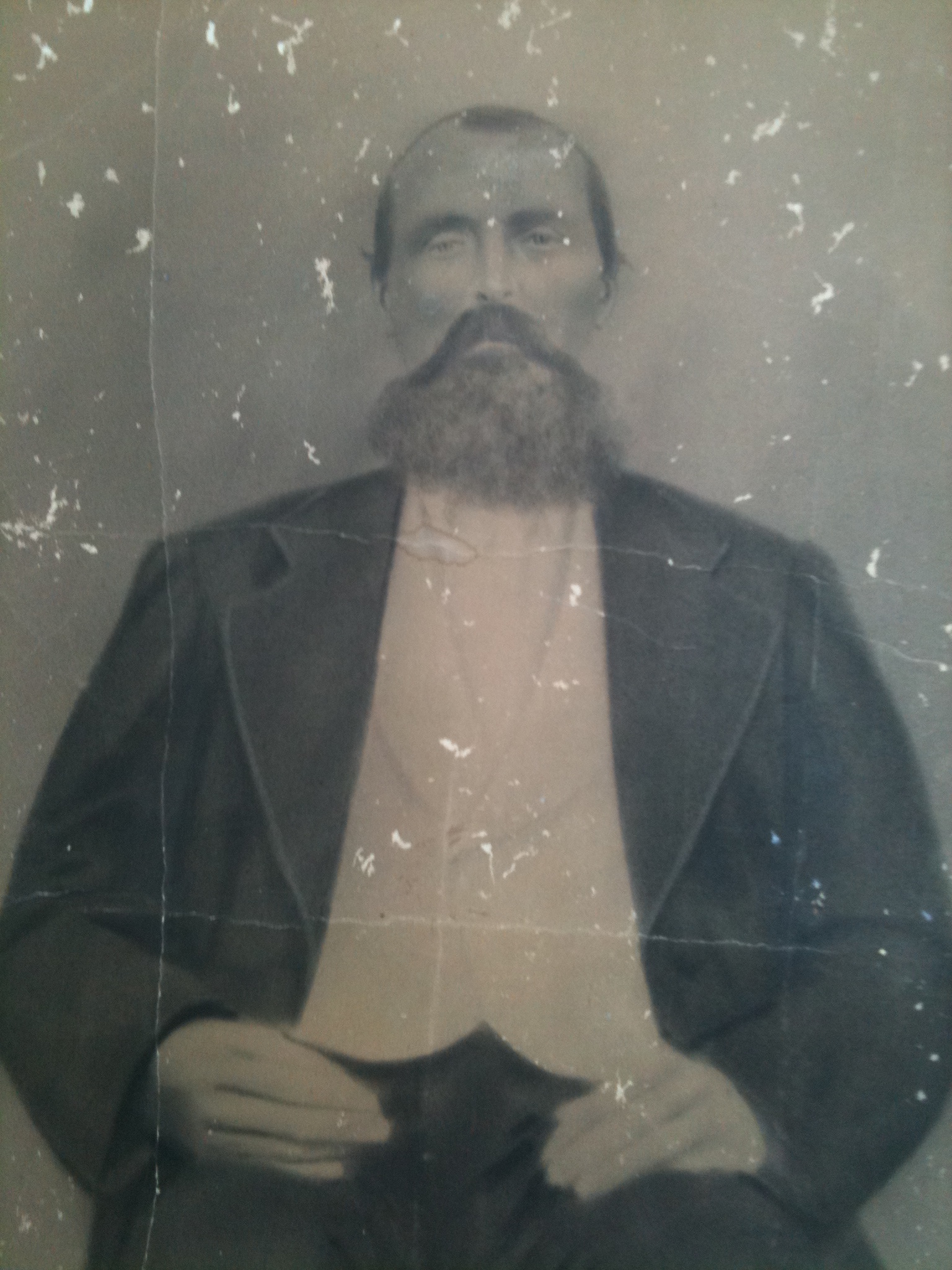
To get to Ida’s house, we drove a short distance up Green Shoal Road, a somewhat narrow strip of pavement that snaked its way alongside the creek. We were welcomed inside by some of her family, who knew Billy and Brandon. Just inside the door, I spotted Ida sitting in a chair near a bed and a fireplace. In the initial small talk, we learned that Ida was born on Green Shoal in 1914 and had lived there all of her life. Brandon began by showing her a picture of her grandfather, Paris Brumfield. She said her father Jim Brumfield (1880-1965) had spoken of him.

“Dad said he kindly mistreated their mother,” she said. “He drinked an awful lot. The children were afraid of him. Now, I can remember Dad talking about seeing him get killed. Uncle Charley was the one killed him, his own son. I think Dad said he was about 16 years old — maybe older. Dad said he was hid up on the hill behind a foddershock when Uncle Charley shot him. Said he was laying down the drawbars and said Charley told him not to come any farther and he just kept going and he shot him in the back. He said he saw the dust jump out of his jacket. He’s told us kids that lots of times.”

Jim was practically raised by his brother Al in Harts because his mother died not too long after his father’s murder. In 1900, he was with his brother John at Chapmanville when they were attacked by the Conleys. He was stabbed and carried a piece of the knife blade in his body for the rest of his life. A little later, he fell out with his older siblings (Al, Rachel, and Charley), who he felt had “swindled” him out of some of the family property.

Brandon asked Ida if she remembered going to visit Hollena Brumfield and she said, “I never was there. Dad didn’t think much of her as a sister-in-law.”

Ida said she’d kinda been raised away from all the Brumfields around Harts.

“They used to come here, but we never was down in there too much,” she said. “The first time I was ever in Uncle Charley’s house is when I attended his funeral. And Uncle Bill’s house, I never was there at all. But I always liked him. He was here quite a bit, Uncle Bill was, you know. Spent a little time in jail for killing a man. I was afraid of him, though. He was a little guy and wore a little sandy mustache. He dodged around up in here after they found this man dead. He’d been dead quite a while and he’s supposed to got beat up at Uncle Bill’s house. I think he beat him up with an axe handle as well as I remember. They carried him back in there someplace. That’s what we were told. Billie killed Uncle Bill. Said he was drinking whiskey out of a half a gallon jar and Billie slipped around the house and shot him. They thought that was over his mother, too. They was really rough down in there.”

Ida said she heard about the Haley-McCoy killings from her mother Letilla Dial and grandmother Cat Fry (the infamous “Aunt Cat”). Ida’s mother Til was raised by Sarah Lucas, who married a Brumfield and then later a Workman. Hearing the name Lucas caused me to ask Ida if she knew anything about Boney Lucas.

“Oh, yeah,” she said. “They was raised up on the creek here. Boney Lucas — I’m not sure but I believe that was Aunt Sarah Workman’s brother. I can remember hearing her talk about Boney Lucas. Now, they were raised down here someplace in a log house.”
In Search of Ed Haley 193

06 Wednesday Nov 2013

Posted by Brandon Ray Kirk in Ed Haley

≈ Leave a comment

Tags

Angeline Lucas, Billy Adkins, Boney Lucas, Don Morris, feud, Green McCoy, Harkins Fry, history, Imogene Haley, Milt Haley, music, Paris Brumfield, Sherman McCoy, Spicie McCoy, Tucker Fry, Vinnie Workman, writing

I said, “That’s the very same story that Ed Haley’s people told. They would have just as much shame about the incident as Ed Haley’s folks. I wonder if Spicie and Emma got together and got their stories straight before they went their separate ways? I wonder if Spicie knew Emma Jean?”

Billy said, “Grandmaw I believe said them women come over that night and begged for them men — for them not to kill them. She said her mother was telling her about it. Her mother was the Fry where they lived at there. They wouldn’t listen to them. Now I don’t know if that’s true or not. That’s just what was passed down to her. Now I’ll tell you, that table had bullet holes in it.”

Oh, yeah…the table where Milt and Green ate their final meal. Brandon asked Billy who had it last and he said, “My grandmother, Vinnie Workman. I don’t know whether I can remember it or if I was just told about it.”

I told Billy that it sure would be nice to find that table, so he called up his Aunt Don Morris, who had eaten many meals on it as a child. When he got off the telephone, he confirmed, “The table they had their last meal in ended up with my Grandmother Vinnie (Thompson) Workman. And there were bullet holes in the table. Of course my aunt wasn’t there, but she said she can verify there was bullet holes in the table under the bottom of it — not on the top of it. You know, how side pieces are on a table. But when they’d be under the table as kids playing under the table, they’d see the bullet holes. She doesn’t know where the table is.”

And why did Vinnie end up with the table?

“I don’t know,” Billy said. “Uncle Tucker Fry, the one that owned the house where they was killed at, was my grandmother’s uncle. He may have just give the table to her. They was just probably getting rid of it and she took it.”

After thinking about it for a while, Billy said the table might be stored in his parents’ abandoned house next door. We walked over to the dark house and searched in vain.

Back at Billy’s, we returned to the family histories. I noticed there seemed to be a great deal of musical talent in Green and Spicie McCoy’s family. The Fry history referred to Spicie as a “well-known quartet singer” and featured a photograph of her in a quartet with her son, guitarist Sherman McCoy, and her grandsons, Charles and Raymond McCoy. Whether their talent came from Spicie or Green (or both) I didn’t know, but I took note of the fact that some of the children by Spicie’s second husband were also musical. According to Adkins, Harkins Fry of Huntington was a “song writer and publisher, and music teacher.”

My head was filled with images of Milt, Green and Spicie playing dances around Harts.

There was another surprise: according to the Adkins book, Spicie’s sister Angeline married Monteville “Mounty P.” Lucas (a brother to Mrs. George Fry) – a.k.a. “Boney Lucas.” Boney, then, was a brother-in-law to Green McCoy — making his death closely connected to the troubles of 1889. He and Angeline had several children: Eliza Lucas (1877), Julie A. Lucas (1879), Millard Fillmore Lucas (1880-1971), Blackburn Lucas (1882-1946), Ruth “Spicey Jane” Lucas (1883-1971), Taylor Lucas (1889-1966) and Wilda Lucas, born in 1891. Boney died around 1891, according to the Adkins history, when the “Brumfield brothers killed him by cutting his throat while Angeline watched.” According to Billy’s notes, Boney was “killed by Paris Brumfield while he was running from Paris.”

In Search of Ed Haley 192

03 Sunday Nov 2013

Posted by Brandon Ray Kirk in Ed Haley

≈ 1 Comment

Tags

Al Brumfield, Black John Adkins, Cain Adkins, Cat Fry, Fed Adkins, feud, Green McCoy, history, John W Runyon, Milt Haley, Paris Brumfield, Will Adkins, writing

Brandon asked Billy what he knew about the old vigilantes around Harts Creek, and he said his grandfather Fed Adkins had been affiliated with the Brumfields and their gang. (We use the word “affiliated” lightly since Fed and Hollena Brumfield supposedly had a long-term affair that produced an illegitimate daughter in 1892.) They were a rough bunch, Billy said, but usually had good intentions.

“These guys’d set big poles — big switches — on the porches of whoever they wanted to try and correct in some way,” he said. “When you got up that morning and saw switches sitting on your front porch — big long poles I’m talking about, what we’d call saplings — you knew to straighten up. And if what they didn’t do wasn’t corrected, they’d hold them and whip them with those big long switches. And if that didn’t work, they’d burn their house down.”

I had to interrupt Billy by asking, “Would you know what it was you was doing wrong?”

“Yeah, oh yeah,” he said. “You was either interfering with some of their business practices or courting the wrong woman.”

Billy said the Haley-McCoy trouble started when John Runyon moved to Harts and put in a store and saloon across the creek from Al Brumfield. There was intense competition between him and Brumfield. At some point, Runyon went to Washington, DC, and tried to have the government declare Harts Creek as a navigable stream — and thus force Brumfield to dismantle his log boom. Billy heard that Al was in the process of arranging Runyon’s death when Milt and Green ambushed him. They fled to the Mingo County area after accidentally shooting Al’s wife, Hollena.

Billy said his great-uncle Will Adkins was in the mob that executed Milt and Green. Several other participants were recorded in his notebooks: “Paris Brumfield, Al Brumfield, Charley Brumfield, Bill Brumfield, Albert Dingess and other Dingesses, Will Adkins, Black John Adkins (held the horses), French Bryant.” Billy figured his grandfather Fed Adkins was also in the gang, because he hung pretty close to his brother Will and cousin “Black John” Adkins, a mulatto.

Brandon wondered why the Adkinses sided with the Brumfields in the feud since many of the old stories pitted them as enemies.

“Dad and them was real close with the Brumfields,” Billy said. “They fought amongst each other but they still was together when they needed to be.”

Billy’s notebooks finished the story.

“The mob from Harts went to get them with extradition papers. Old Cane Adkins and John Runyon had another mob at Big Branch (another story goes at the mouth of Smokehouse) to ambush and recapture and free Haley and McCoy. But a spy tipped the Harts boys off and they went up Smokehouse, Bill’s Branch, down Piney, up Frank and Catherine Fleming’s hollow, down Abbott’s Branch and killed them at the George Fry house where Gov. Sperry’s house is now.”

Billy corrected the Gov. Sperry part of his notation, saying, “That’s written back 25 years ago, this is, so it wouldn’t be there. I’d be where Doran Lambert owns now. There’s a nun lives there.”

I told Billy, “Now, there’s a story that they came in and told everybody to clear out and there was a little girl in the house and she hid in the fireplace and she saw the whole thing happen.”

“Is that supposed to be Aunt Cat?” he asked. “Yeah, I’ve heard that but I don’t know whether that’s true or not.”

I continued, “And then Roxie Mullins said that after it happened the girl ran out of the house and jumped over the bodies and ran out into the woods.”

Billy said, “Would she have been old enough to done that?”

I said, “I guess, she was the one that told Bob Adkins the story.”

Okay, so how old was she? Based on Billy’s notes, she was born in 1862, making her 27 years old in 1889…a far cry from the “child witness” portrayed in stories. Her reasons for being present at George Fry’s at the time of the murders probably had something to do with the fact that George had married her aunt (and his first cousin).

So who was the “child witness” to Milt and Green’s murder? Maybe it was Cat’s seven-year-old daughter Letilla, who Brandon said later married one of Paris Brumfield’s sons. Or was it George Fry’s six-year-old daughter, Bertha?

And what were the chances that Cat had just made up her version of the story?

“Cat Fry and all of them, they’d tell you anything in the world,” Billy said. “I’m not saying it weren’t true, but just ’cause they told you that don’t mean it was true.”

Billy said Cain Adkins and his family were the ones who fetched Milt and Green’s bodies from Green Shoal for burial. Brandon figured the burial party probably crossed the Guyandotte using the old Ferrellsburg ferryboat.

A Harts mob eventually found John Runyon in Kentucky.

“John Runyon, he went to Kentucky, the way I heard it, and a group from here went to find him,” Billy said. “My grandfather and my uncle was supposed to have been in the bunch and some of the Brumfield boys. They was a big posse of them and they found the creek that John Runyon lived on and they said they had come to get him. He walked out and met them and he said, ‘Boys, you sure you want to take me?’ And they said, ‘Yeah, we come to getcha.’ He said, ‘Boys, I don’t wanna see anybody get hurt but you better look around you.’ And they started looking and they’s probably 150 or 200 rifles up on both hillsides pointed right down at them in the creek. They’s riding up the creek there. They wasn’t any road. And he said, ‘Now, the best thing you can do is turn around and go right back to Harts Creek.’ And they did. They didn’t look back.” Billy laughed, “He said, ‘Now don’t look back.'”

In Search of Ed Haley 186

25 Friday Oct 2013

Posted by Brandon Ray Kirk in Ed Haley

≈ Leave a comment

Tags

Bill Brumfield, Branchland, Ed Haley, Ferrellsburg, fiddling, history, Isaiah Mullins, Lawrence Kirk, Lincoln County, Mildred Cook, music, Paris Brumfield, writing

That evening, Brandon and I went to see Lawrence Kirk at his nice single-story home on Fowler Branch in Ferrellsburg, West Virginia. We sat around the kitchen table where Lawrence pulled out a map of the Tug Valley and showed us the route taken by the Brumfield posse after they apprehended Milt and Green in Kentucky. We made plans to re-trace the route the next afternoon.

I said, “Of course, they had to ford back and forth at the low water mark of the river. They were on horseback weren’t they?”

“Yeah, they rode horses back through there,” Lawrence answered.

I asked, “Do you reckon they had Green and Milt on the same horse or on different horses?”

“I figure they had a horse for all of them,” he said.

Reckon they had their hands tied?

“I imagine they did.”

Brandon asked if Lawrence’s grandfather Bill Brumfield had been in the Haley-McCoy mob. He was a younger brother to Al and a teenager at the time of the killings.

“Never did know,” he said. “I doubt that he was. I believe I’d a heard something about it. See, he was pretty young at the time.”

Bob Adkins had remembered Bill as a “mean old devil,” and most people around Harts said he was the roughest of Paris Brumfield’s sons.

“The old man, as bad as he was to fool with that liquor, he tried to keep order, but he’d get drunk hisself and he’d get out of hand, see,” Lawrence said. “Well, his son — my uncle — my mother’s brother — shot him and killed him. They said they was just on a big binge there at my grandfather’s.”

At midnight, we were still huddled around Lawrence’s kitchen table talking and looking over maps when Brandon’s mother showed up wearing flannel pajamas with a letter from Mildred Cook of Branchland, Lincoln County. According to the letter, Mildred was the daughter of Isaiah Mullins and a cousin to Ed Haley.

“I remember when Mr. Haley came up Little Hart and played the fiddle for me, my two brothers, sister and My Dad,” the letter partially read. “He had a little boy with him about 8 years old. Mr. Haley came to our house 1931. I was 11 years old. He was just visiting when he come to our house. He was there approx. 2 hours. The Best I can remember Ed Haley played ‘Wildwood Flower’ and ‘Turkey in the Straw.’ He went on up little Harts Creek after he stayed and talked a while.”

In Search of Ed Haley 185

21 Monday Oct 2013

Posted by Brandon Ray Kirk in Culture of Honor, Ed Haley

≈ Leave a comment

Tags

Bill Brumfield, Bob Adkins, Brandon Kirk, Charley Brumfield, crime, Eustace Ferguson, Harts, history, Hollene Brumfield, John Hartford, Lincoln County, Paris Brumfield, Wesley Ferguson, West Virginia, writing

In thinking about the old Brumfields, Bob mentioned the name of Paris Brumfield, the patriarch of the clan. Brandon quickly pulled out Paris’ picture and reached it to Bob saying, “He was my great-great-great-grandfather.” Paris, we knew, was murdered by his son Charley in 1891.

“Son, he was a mean old man, I’ll tell you that,” Bob said, turning the picture upside down in his hands and slowly studying it under a magnifying glass. “He’d kill anybody. He beat up on Charley’s mother and she went down to Charley’s for protection. He went down to get his wife. He got up to the top of that fence and Charles told him, ‘You beat up on Mother the last time. You’re not coming in here.’ Paris said, ‘Ah, you wouldn’t shoot your own father.’ Drunk, you know. And Charley said, ‘You step your foot over that fence, I will.’ Directly he started in and that there ended it, son. Charley killed him right there.”

I said, “Now there was another Brumfield father-son murder later on. Who was that?”

“Ah, that was Charley’s brother,” Bob said. “Bill Brumfield, up on Big Hart. He’s a mean old devil. He ought to been killed. He had a way… He never shot anybody. He’d beat them to death with a club. He’d hold a gun on them and make them walk up to him and then take a club and beat their brains out. He come down there to Hart to get drunk once in a while and he’d run everything away from there. And Hollene set on that front porch of that little old store she had out there with that pistol in her apron and she cussed him. He knew she had that gun — he wouldn’t open his mouth to her. It was his sister-in-law, you know. He just set there and chewed his tobacco and spit out in the street. She’d tell him how mean he was, you know. But his own son killed him. He was beating up on his mother and you can’t do that if you got a son around somewhere. I don’t give a damn who you are, they’re gonna kill ya. He didn’t miss a thing there, that boy didn’t. I don’t think they did anything with him about it.”

This Bill Brumfield, I remembered, was Brandon’s great-great grandfather. As Bob spoke of his departed ancestor, I noticed how Brandon just sat there without taking any offense, as some might want to do. Gathering the information seemed more important than family pride — at least for the moment. Brandon asked Bob if he remembered anything about Charley and Ward Brumfield’s murder in 1926.

“What they got into was very foolish,” Bob said. “Charley would come up there — and Ward was his nephew — and they’d ride up into the head of Harts Creek and get them some whisky and they’d drink. They went up around them Adamses — they was kin to the Dingesses and Brumfields — and bought them a bottle of whisky from this guy and they got his wife to cook them a chicken dinner. She cooked them up a nice chicken dinner and, of course, they drank that liquor and was pretty dern high, I expect. They was sitting there eating and they was a damn fella… Who was that killed them? They’s so dern many of them a shooting and a banging around among each other that I couldn’t keep track of them. He was just kind of a straggler.”

Bob thought for a moment then said, “Eustace Ferguson. Now, Eustace Ferguson was a brother to Hollene’s second husband, Wesley. They had asked him to go with them and he caught an old mule or something and followed them. He was mad at them ’cause he didn’t like the Dingesses and Brumfields anyway. He followed them up there and they was eating dinner. He come in there and told them if they had anything to say they better say it ’cause he was gonna kill them. And Charley raised out of there and he said, ‘Well, by god, I’d just as soon die here as anywhere,’ and he started shooting and they just shot the devil out of each other. And he killed Charley and Ward and Charley shot him but he got somebody to get him to the doctor before the Brumfields got up there ’cause he knew them Brumfields would kill him if they got up there in time. He begged them not to report it till he had time to get to Chapmanville to get into the hand of the law. And those people wasn’t too friendly to the Brumfields and they kept it hid for about an hour or two before they reported that.”

I asked Bob if there were any dances around Harts in his younger days and he said, “Not in my time. They had a few dances ’round here and yonder but I was too young to go.”

Were there any dances at Al and Hollena Brumfield’s store?

“I don’t think so. They wasn’t the dancing type. I never was around her too much. Sometimes I’d be there and play with her grandchildren, Tom and Ed Brumfield. They were about my age.”

In Search of Ed Haley 183

16 Wednesday Oct 2013

Posted by Brandon Ray Kirk in Ed Haley, Timber

≈ Leave a comment

Tags

Appalachia, Cabell County, Doc Suiter, Dolph Spratt, fiddlers, Fred B. Lambert, Guyandotte River, history, John Thomas Moore, logging, Lucian Mitchell, Paris Brumfield, Thomas Dunn English, timbering, W.M. Carter, writing

The weather was also a problem for loggers, who often plied the river in freezing temperatures.

“I was on the water that cold Saturday, about 1900,” W.M. Carter of Ferrellsburg told Fred B. Lambert, regional historian. “People froze to death, finger and toe nails froze off, but we went on.”

Some loggers built fires on their rafts to battle the cold.

“I have had fires on a raft in winter by throwing sand between close logs,” Mitchell said.

For warmth and a little light-hearted comfort, the loggers drank whiskey along the way. A resident of the Salt Rock area told Lambert about hearing “a hundred men passing his home, one night, about 1896” who “were gloriously drunk and filled the air with such cursing and yelling as one hears not more than once in a lifetime.” Johnson’s Representative Men of Cabell County, West Virginia (1929) said “they were often so boisterous that children playing along the banks ran away in fright as they heard these raftsmen sweeping by, yelling and swearing lustily. Yet, they were only a lot of mountaineers taking their trips as high adventure.”

In addition to their whiskey, loggers also used music to alleviate the hardship of their trip. They always had one or two fiddlers with them who sometimes played on the ride downriver. Thomas Dunn English’s poem “Rafting on the Guyandot” hinted at that part of the journey with the line: “Where’s the fiddle? Boys, be gay!” The fiddles were brought out again after dark, when loggers were camped at various points on the riverbank, in the yard of inns or at houses along their route where people made a business of caring for them. Raftsmen spent their evening eating packed lunches (or fresh, home-cooked meals if they were lucky), drinking, dancing, then sleeping it all off in preparation for the next day.

I could just picture Milt Haley playing the fiddle under the stars and lifting the spirits of burly men who were gathered around their campfires.

“If no bad luck overtook them, they could make the whole journey to Guyandotte in one or two days,” according to The Llorrac.

At that location, their timber was caught in a boom, then examined by measuring crews, who paid them based on the quality and usability (per cubic foot) of each log.

“Here they were delivered to sawmills or run into the Ohio where they were gathered into ‘fleets’ containing many rafts,” Lambert wrote. “They were sold to lumber dealers in Cincinnati, Louisville, Jeffersonville, Indiana, or other cities, and floated down the river.”

Having rid themselves of their timber, the loggers found vacant hotel rooms or boarding houses in the town of Guyandotte and set about the business of “having a good time.” Locals had no choice but to surrender to them and prepare for the worst.

Ferrell’s Centennial Program put it thusly: “When the timbermen had anchored their rafts, the good people of the town anchored themselves at home.”

The whole scene was as exciting and dangerous as any thing in the Wild West. There were a lot of horrible atrocities, like when John T. Moore was burned to death after some loggers renting the upstairs of his large house caught the whole place on fire.

“I’ve seen some fancy fights in Huntington among the raftsmen,” Lucian Mitchell said. “Policemen usually didn’t interfere. Dolph Spratt of Mingo County or Paris Brumfield hit Doc Suiter. He toned down after that.”

After several days of hell-raising, loggers bought a final half-gallon of the best whiskey and made plans to return home. Most made their way back upriver on borrowed or rented horses and mules — or less dramatically by walking. (To get to Harts by foot was a six or seven day trip.)

“They often went in crowds of twenty-five to fifty,” Lambert wrote.

It was rare for them to return home sober, and when they did, it often warranted special attention by local newspapers.

“We note with satisfaction that the raftsmen all returned home safely,” one reported, “and we are pleased to say that the absence of drunkedness among them on this trip was indeed gratifying.”

Lincoln County Feud

08 Tuesday Oct 2013

Posted by Brandon Ray Kirk in Ed Haley, Harts, Lincoln County Feud

≈ Leave a comment

Tags

Appalachia, crime, culture, feud, genealogy, Harts, history, life, Lincoln County, Paris Brumfield, photos, West Virginia

Paris Brumfield (1838-1891), Lincoln County feudist.

Paris Brumfield, Lincoln County feudist, 1880-1891.

In Search of Ed Haley 179

08 Tuesday Oct 2013

Posted by Brandon Ray Kirk in Ed Haley

≈ 2 Comments

Tags

Bob Adkins, Boney Lucas, Brandon Kirk, Charley Brumfield, crime, feud, genealogy, history, Lawrence Kirk, Paris Brumfield, Ray Kirk, West Virginia, writing

After about thirty minutes of talking with Brandon, I was convinced that he loved the families of Harts and was wrapped up in its history. He was not only serious business but he really — I mean really — knew his stuff.

Brandon flipped a few pages in his photo album, then pointed to a picture of a black-bearded, broad-shouldered giant of a man and said, “That’s Paris Brumfield.” I’d heard a lot about him from Bob Adkins and Lawrence Kirk — and never forgot what they said about him being killed by his own son. He was Brandon’s great-great-great-grandfather.

According to the Lambert Collection, Paris Brumfield was one of the most feared loggers in the Guyandotte Valley – a man who “gloried in shooting people.” He frequently stirred up trouble in the town of Guyandotte with his friends, Jerome Shelton of West Hamlin and Pete Dingess of Harts Creek. Shelton often got drunk and wandered through the streets of Guyandotte screaming “I am God!” and other obscenities. He climbed on ladders and pretended to make speeches to taunt officers and citizens. Wild cheering from loggers always followed his cry of “Millions bow down to me!” Wilburn Bias was the only marshal in Guyandotte who Paris and his gang feared, although others like a Mr. Fuller sometimes tried to arrest him. One marshal, J. “Doc” Suiter, once came to Brumfield’s hotel room to make an arrest, but a brawl ensued in which both men crashed through a window. At some point, while rafting on the Guyan River, Paris slammed his raft into Doc’s after seeing that it was fouled on some shoals.

Brumfield was a real rabble-rouser. Not only did he drink heavily and abuse his wife: in the late 1870s he took a mistress for himself. This woman, one Keziah Ramey, originally from the Kiah’s Creek area of Wayne County, moved near Paris at Harts and quickly produced him four children. Paris was a reported murderer as well, according to local history. There are rumors about him killing pack-peddlers and someone named Charlie Hibbits (whose body was put on the “Ha’nt Rock”). Reportedly, he also murdered a man who disturbed a fiddler playing his favorite song, “Golden Slippers”. These stories are likely untrue, as the only murder positively linked to him was his shooting of a local man named Boney Lucas.

Bob Adkins had told me about it. “They had a fight right there at the mouth of West Fork and Boney got loose and he run through the creek there,” Bob had said a few years earlier. “And Paris’ daughter Rat, she run and got the gun and brought it to Paris and, by george, he shot Lucas with a Winchester right across the creek. Lucas tried to get away.” Brandon’s grandfather Ray Kirk said the trouble was “over logs,” while Lawrence Kirk said it was brought on by arguments between their children at school. Either way, their fatal confrontation occurred at the Narrows of Harts Creek, where Al Brumfield later built his infamous log boom. Paris had gone to a store on the creek with his daughter when he noticed Lucas working there in a timber crew. He and Lucas “had words,” then Lucas attacked him, initially with the butt-end of his axe. In no time, one of Brumfield’s arms was almost completely severed from his shoulder — courtesy of Lucas’ axe. Paris hollered for his daughter to give him a pistol that he’d tucked into a grocery bag, then used it to shoot Boney in self-defense.

Life in the Brumfield home was difficult. At one point, during the fall of 1891, Ann Brumfield fled to her son Charley’s home for protection. I knew from Bob Adkins what had happened next.

On November 11, 1891, the Ceredo Advance reported: “The noted desperado of Lincoln county — Paris Brumfield — was shot five times by his son Charles, on Tuesday of last week [Nov. 3]. Paris was drinking and attempted to take the life of his wife, when the son interfered with the above result. The wounded man lived only a few hours after having been shot. Paris killed several men during his life and it is said that no man could get the drop on him, but finally one of his own flesh and blood ended his career. The son has not been arrested, and probably will not be.”

In 1892, The Logan County Banner reported: “We think the papers in the State have been a little harsh with Paris Brumfield. From what we have learned we do not blame his son for killing him in the defense of his mother, and we deeply sympathize with the young man in having to imbue his hands in the blood of his father. Paris Brumfield was an overbearing man and dangerous when in whisky, yet he was surrounded by a people not noted for angelic sweetness of temper, and he was driven to many an act of which he was ashamed. There was, however, a good side to the man. He was generous and brave, and no one was ever turned [away in] hunger from his door; and, remembering his kindness to the poor, we are willing to draw the curtain over his many grievous faults.”

Brandon said many old-timers around Harts heard that Paris’ ghost would jump up behind Charley every time he got on a horse to go anywhere.

In Search of Ed Haley 178

29 Sunday Sep 2013

Posted by Brandon Ray Kirk in Ed Haley

≈ Leave a comment

Tags

Al Brumfield, Boney Lucas, Brandon Kirk, George Fry, George W. Ferrell, Green McCoy, Henderson Dingess, history, Hollene Brumfield, John Hartford, John W Runyon, Milt Haley, Paris Brumfield, The Lincoln County Crew, writing

After a few hours of digesting this material, I met Brandon Kirk in the hall near the copier. Brandon, a neatly groomed young man wearing a tie, was freighted down with satchels. We introduced ourselves and were soon in the study room where Brandon started fishing through his bags and pulling out letters, notebooks, folders and photo albums. Within a few minutes, the table was covered. It was as if someone had walked up with a giant garbage bag full of papers and dumped it all out in front of me.

One of the first things Brandon showed me was a small account of Milt Haley’s murder titled “The Brumfield-McCoy Feud”, which was originally published in a 1926 edition of Lambert’s Llorrac.

The Brumfield-McCoy Feud took place in the month of September, about 1888, some three miles up Hart’s Creek. Hollena Brumfield and her husband, Allen Brumfield, had been visiting Henderson Dingess, father of Mrs. Brumfield, one Sunday and were about two miles below Mr. Dingess’ on their way home. Green McCoy and Milt Haley laid in wait for them. Mr. and Mrs. Brumfield were riding down the creek, Mrs. Brumfield being on the same horse behind her husband. McCoy and Haley began shooting at them, one bullet striking Mr. Brumfield in the arm, and the other tearing away a portion of Mrs. Brumfield’s face, disfiguring her for life. Mr. Brumfield jumped from his horse and ran, and in that way escaped further injury. McCoy afterwards told that they were bribed by John Runyons with a barrel of flour and a side of bacon to McCoy, and twenty-five dollars in money to [Haley]. The murderers escaped into Kentucky but were captured a little later and brought back. Allen Brumfield supplemented the reward offered by the state with one of his own.

It seems the cause of the trouble was bad feeling between John Runyons and Al Brumfield. Runyons had a store and saloon at the mouth of Hart’s Creek. Brumfield had a store on Guyan River about a fourth of a mile below Hart, on the south side of the Guyan and sold whiskey on a houseboat. John Dingess [Mrs. Brumfield’s brother] was a bartender.

McCoy and Haley were brought back and kept over night at the house of George Fry. The next morning a number of men, presumably Brumfield’s friends came in, and the two prisoners were shot and killed.

Along with the above article was another version of “The Lincoln County Crew”, which gave George (and not Tom) Ferrell as the author.

Come all young men and ladies, come fathers, mothers, too;

I’ll relate to you the history of the Lincoln County crew.

Concerning bloody rows, and many a thieving deed,

Dear friend, pray lend attention to these few lines I say.

It was in the month of August all on a very fine day;

Allen Brumfield he got wounded they say by Milt Haley.

But Brumfield couldn’t believe it, nor hardly thought it so;

He said it was McCoy who shot that fatal blow.

They shot and killed Boney Lucas, a sober and innocent man,

And left his wife and children, to do the best they can.

They wounded Rufus Stowers, although his life was saved;

And he seemed to shun the grog shop, since he stood so near his grave.

Allen Brumfield he recovered, some weeks and months had past;

It was at the house of George Fry, these men they met at last.

Green McCoy and Milt Haley, about the yard did walk;

They seemed to be uneasy and no one wished to talk.

And then they went into the house, and sat down by the fire,

And little did they think, dear friends, they had met their final hour.

The sting of death was near them, _________________________

A few words passed between them concerning a row before.

The people some got frightened, began to rush out of the room;

When a ball from some one’s pistol laid the prisoners in the tomb.

Their friends then gathered ’round them, their wives to weep and wail;

Tom Ferrell was arrested, and soon confined to jail.

The butchers talked of lynching him, but that was all the fear;

And when the day of trial came, Tom Ferrell he came clear.

And then poor Paris Brumfield, relation to the rest,

He got three balls shot through him, they went straight through his breast.

The death of these few men have caused great trouble in our land;

Men to leave their wives and children to do the best they can.

Lincoln County’s still at war, they never, never cease;

Oh, could I only, only see my land once more in peace.

I composed this as a warning, a warning to all men;

Your pistols will cause trouble, on that you may depend.

In the bottom of the whiskey glass, the lurking devil dwells;

It burns the hearts of those who drink, and sends their soul to hell.

In Search of Ed Haley 122

02 Sunday Jun 2013

Posted by Brandon Ray Kirk in Ed Haley

≈ Leave a comment

Tags

Al Brumfield, Bill Fowler, Charley Brumfield, genealogy, George Ward, Guyandotte River, Henderson Dingess, history, Hollene Brumfield, John Brumfield, Paris Brumfield, West Virginia, writing

Allen Brumfield — the man Milt Haley supposedly ambushed — was born in March of 1860 at Harts, in what was then Logan County, Virginia. His parents were Paris and Ann B. (Toney) Brumfield. Paris was a Confederate veteran, storekeeper and local politician — and one of the most notorious figures in the early history of Harts. Ann was a red-haired orphan raised by a property-rich school-teaching aunt. In 1880, 20-year-old Al Brumfield was listed in census records as living with his cousin, W.T. “Bill” Fowler, the chief businessman in Harts. Al was recorded as a farmer but was likely watching Fowler’s business closely, learning everything he could. His father, meanwhile, a heavy-drinking violent sort, had recently moved his mistress (and her illegitimate children) near the family home.

Upon reaching manhood, Brumfield was relatively tall with sandy-colored hair. He was a Democrat in politics. He married Hollena Dingess around 1881, presumably in Lincoln County. Hollena was the daughter of Henderson and Sarah (Adams) Dingess, somewhat wealthy residents of the Smoke House Fork of Big Harts Creek. Al and Hollena had six known children: Henry Beecher Ward Brumfield (born April 1883), Grover Cleveland Brumfield (born January 1884), Hendrix Brumfield (born November 29, 1886), George Brumfield (born c.1888), Belle Brumfield (born January 19, 1892), and Shirley Brumfield (born May 1, 1894).

Soon after marrying, Al built a small, boxed house on the bank of the Guyandotte River at the Shoals just below Harts. Nearby, he ran a whiskey boat. He and his wife were equally ambitious in their desire to accumulate wealth and political power. In a bold move to corner the timber market in Harts, Brumfield constructed a boom at the Narrows on Harts Creek to catch all logs coming out of the creek. Each logger was assessed a ten-cent per log tax. In a short time, he was on his way to amassing a small fortune.

In the early 1890s, he forced his cousin Bill Fowler to sell him his important property at the mouth of Harts Creek, where he began construction of a beautiful two-story white home. It was completed in two years and was a real mansion in its day. Illuminated with carbide lighting at a time when few people in the valley had the monetary power to afford such a luxury, it was dubbed “The Light House” by loggers who plied the river.

Throughout the 1890s, Brumfield was the business kingpin in Harts. He complemented his timber business by operating a store, saloon, ferry, sawmill and gristmill — and protected his entire business interest by serving as leader of the local vigilante group. In 1899, he successfully petitioned the government to reinstate the Harts post office, which had been discontinued in 1894, and served as its postmaster from 1900 until 1905.

“There is a postoffice in Hart’s creek now, and Al Brumfield is the postmaster,” wrote The Cabell Record on Thursday, April 5, 1900.

Almost simultaneous with Brumfield’s successes were his personal tragedies. On November 3, 1891, his brother Charley murdered his father, which had numerous implications within the family. In that same time frame, Al took on a mistress who bore him two illegitimate children and caused a great deal of spousal grief. And poor Hollena — who had already been shot in the face — was severely crippled when a steam-operated gristmill exploded with her inside, throwing her sixty feet into the air and breaking her hip. A little later, around 1900, Brumfield’s son George died of stomach trouble. And on July 4, 1900, his brother John was murdered by Charley Conley at a Fourth of July celebration in Chapmanville.

Just after the turn of the century, Al began to suffer from some debilitating disease, which eventually caused him to go blind. “Al Brumfield, of Hart, recently returned from Cincinnati, where he had his eyes treated, says that his sight is better,” according to The Cabell Record of Thursday, May 2, 1901. “He was almost blind.” Hollena hired George Ward, a local Negro, to care for him. In 1904, perhaps sensing that he might not survive the sickness, he deeded much of his property to his wife.

Bob Adkins Interview, Part 1 (1993)

15 Friday Feb 2013

Posted by Brandon Ray Kirk in Big Harts Creek, Ed Haley, Hamlin, Harts, Huntington, Lincoln County Feud

≈ Leave a comment

Tags

Al Brumfield, Appalachia, Bob Adkins, Charleston, Charley Brumfield, crime, Emma Jane Hager, genealogy, Goldenseal, Griffithsville, Hamlin, Harts, Harts Creek, history, Hollena Brumfield, Huntington, Imogene Haley, John Hartford, Lawrence Haley, Lincoln County, Lincoln County Feud, Milt Haley, Paris Brumfield, Philip Hager, West Hamlin, West Virginia

The next day, Lawrence and I decided to go see 89-year-old Bob Adkins in Hamlin, West Virginia. In a recent Goldenseal article, Bob had given his biography, including his family’s connection to the story of Milt’s murder. Since reading his narrative, I’d been anxious to ask him about Milt, as well as to confirm or disprove my suspicion that his father’s first wife Emma Jane Hager was the same person as Ed’s mother.

To get to Bob’s house, we took Route 10 out of Huntington to Lincoln County. We turned off onto Route 3 just inside the county line at West Hamlin, then drove on for about ten minutes, crossed a hill and cruised into Hamlin — Lincoln County’s seat of government. Bob Adkins’ nice two-story house sat just past a block of small struggling businesses and through the only red light in town. We found Bob out back relaxing on a patio near a flower garden in full bloom.

After all the introductions, I mentioned my theory about Ed’s mother, which Bob shot out of the water right away. He was positive that Emma Jane Hager was not the same person as Emma Haley.

“No, Emma Jane Hager was old man Philip Hager’s daughter,” Bob said. “Dad got her from Griffithsville, 10 miles toward Charleston. Dad come down there and stole her.”

Bob knew all about Milt’s death but stressed that what he knew about it was hear-say, that he didn’t want to get sued and that we couldn’t take his word as gospel because there was “so dern many of ’em a shootin’ and a bangin’ around amongst each other” in Harts that he sometimes got his stories confused. Maybe Bob did have a foggy memory, as he claimed, but I found him to be a walking — or rather, sitting — encyclopedia of Harts Creek murders.

“I was born and raised up there until I was nineteen years old, but I was never afraid,” Bob said. “I walked all hours of the night and everything and do as I please, but I always tended to my business, you know. Kin to most of them. I never bothered nobody. Nobody never bothered me, but that doesn’t say they wouldn’t shoot you. Well, all you had to do was tend to your own business.”

Bob eased into the story of Milt’s death by giving Lawrence and I some background on the Brumfields. He knew a lot about them because Hollena Brumfield, the woman Milt supposedly shot, was his mother’s aunt and “about half way raised her.” She was a Dingess prior to marrying Al Brumfield.

“Now those Dingesses up there, I never knew of them to bother anybody much,” Bob said of his kinfolk. “Some of the older ones shot and banged around a little bit. But look out for them Brumfields. They was into it all the time. If they couldn’t get anybody else to shoot, they’d shoot theirselves — their own people.”

Al Brumfield’s father Paris was the most notorious of the old Brumfields.

“Well, one thing, he killed an old pack peddler up there at Hart, took his stuff and threw him in the river,” Bob said of the Brumfield patriarch. “And he killed another man, too. I forget the other fellow’s name. Son, he was a mean old man, I’ll tell you that. Why, he’d kill anybody. He lived about three quarters of a mile from the mouth of the creek down the river there in at the end of a bottom, see?”

Bob kind of chuckled.

“Yeah, killed that old pack peddler,” he said. “That’s what they said he did. I don’t know. He was a mean old devil. And boy, he’d killed two men.”

I wanted to know more about the Brumfields since they seemed to have been so wrapped up in the story of Milt Haley.

“What happened to Paris Brumfield?” I found myself asking.

“I tell you, old Paris, he got what was coming to him,” Bob said. “He was as mean as a snake and he would beat up on his wife every time he got drunk. And Paris’ wife got loose from him and she came down to her son Charley’s for protection. Charley was a grown man and was married and had a family and he lived down the road a quarter of a mile. Charley told her to come on in the house and there’d be nobody to bother her there and he told her to stay back in the room and he would take care of it. Old Paris, he was drunk and he didn’t get exactly where she was and he finally figured out where she was and old Paris come down there to get his wife. When he come down, Charley, his son, was setting on the porch with a Winchester across his lap. A Winchester is a high-powered gun, you know? And that day and time, they had steps that came up on this side of the fence and a platform at the top of the fence and you walked across the platform and down the steps again. That kept the gates shut so that the cattle and stuff couldn’t come into the yard. Well, he got up on that fence and Charley was setting on the porch with that Winchester. He said, ‘Now, Paw don’t you step across that fence. If you step across that fence, I’m going to kill you.’ And Paris quarreled and he fussed and he cussed and he carried on. That was his wife and if he wanted to whip her, he could whip her. He could do as he pleased. He was going to take his wife home. Charley said, ‘Now, Paw. You have beat up on my mother your last time. You’re not going to bother Mother anymore. If you cross that step, I am going to kill you.’ And he kept that up for a good little while there. ‘Ah, you wouldn’t shoot your own father.’ Drunk, you know? And Charley said, ‘You step your foot over that fence, I will.’ Paris was a little shaky of it even if he was drunk. Well, after a while he said, ‘I am coming to get her,’ and when he stepped over that fence, old Charley shot him dead as a doornail.”

You mean he killed his own father?

“His own father,” Bob said. “He killed him. That got rid of that old rascal. And that ended that story. They never did even get indicted for that or nothing. Everybody kept their mouth shut and nobody didn’t blame Charley for it because old Paris had beat up on his mother, you know? Everyone was glad to get rid of him.”

In Search of Ed Haley 44

01 Tuesday Jan 2013

Posted by Brandon Ray Kirk in Ed Haley

≈ Leave a comment

Tags

Al Brumfield, crime, George Fry, Green McCoy, Harts Creek, history, Hollene Brumfield, John W Runyon, Kentucky, Lincoln County, Lincoln County Crew, Milt Haley, Paris Brumfield, West Virginia, writing

Meador’s article was my first real glimpse into the story of Milt Haley’s death since talking with Roxie Mullins. I read it carefully and often.

“In 1889, around the time the Hatfields and McCoys were killing each other along the Tug River, another less known family war was occurring, not too far away, in Lincoln County. The details of the feud are sketchy today, and would be all but forgotten had its events not been recorded in a ballad known as ‘The Lincoln County Crew.’ In 1923, the text of the ballad, attributed to George Ferrell, and a brief explanation were published in The Llorrac, a Lincoln County historical journal published by the students and faculty at Carroll High School in Hamlin.”

Meador began with a somewhat interesting description of Harts at the time of Milt’s death.

“The community of Harts, isolated in southern Lincoln County near the Logan County line, was one of the places where citizens occasionally had to take the law into their own hands. Harts, on the Guyandotte River about midway between Huntington and Logan, was a convenient stopping place for travelers journeying between the two towns. Also it played host to the teams of rough-and-tumble men who rafted logs down the river to ports on the Ohio. Because of its location and because whiskey was sold there, Harts attracted more than its share of troublemakers. Differences were often settled with a gun, and killings sometimes avenged by the family of the murdered person.”

The impetus for the feud that claimed Milt’s life, according to Meador, was trouble between Allen Brumfield and John Runyon, two merchants at the mouth of Harts Creek.

“In Harts, in the latter decades of the 19th Century, lived a man by the name of Allen Brumfield. According to Irma Butcher, Brumfield lived in a large white house near the Guyandotte River bridge. The Llorrac relates that Brumfield operated a store near Harts and sold whiskey from a houseboat in the river. Allen Brumfield, according to The Llorrac, was not the only whiskey merchant in Harts. At the mouth of Harts Creek, a man by the name of John Runyons operated a store and saloon. For some reason there were hard feelings between Runyons and Brumfield, and Runyons is reported to have hired Milt Haley and Green McCoy to kill Brumfield. Payment for the two men is supposed to have been a barrel of flour, a side of bacon and $25.”

Now that was a real interesting twist to the story — no mention of Milt’s wife getting shot at the Brumfield place. Milt was apparently a hired gunman. In a way, I wasn’t surprised. From the very beginning, I had the impression that Milt was a bad character. Roxie Mullins had said he was “awful bad to drink and kept a Winchester loaded and sitting right by the side of his door. A whole mob killed him. They was afraid of him because he had a pretty bad name.” Lawrence had said, “When my dad was very young he didn’t like the whiny way my dad was acting so to make him more of a man he took him out and dropped him in a rain barrel through the ice.” And then there was the poverty aspect: I mean, to kill someone for a barrel of flour, a side of bacon and twenty-five dollars?

According to Meador’s article, Milt and Green supposedly ambushed Brumfield, a very common thing to do in those days.

“The day chosen by McCoy and Haley for their grim deed was a Sunday afternoon in mid-August of 1889. Allen Brumfield and his wife, Hollena, were returning on horseback from a visit to Mrs. Brumfield’s father, Henderson Dingess, who lived on Harts Creek. Mrs. Brumfield was on the same horse, behind her husband. From ambush and without warning, McCoy and Haley fired at the couple as they rode down the river. Their aim was good but not fatal. Allen Brumfield received a bullet in his arm and his wife was shot in the face. Brumfield jumped from his horse and by running was able to make his escape. Mrs. Brumfield also survived but was disfigured for life. Irma Butcher, who knows little about the history behind the ballad, remembers as a young girl visiting in the home of Allen Brumfield’s widow, Hollena, at Harts. Mrs. Butcher relates that widow Brumfield had a hole ‘the size of a quarter’ in her nose, where she had been shot during the feud.”

After the shooting, Milt and Green fled across the Kentucky state line to escape from the law.

“Haley and McCoy fled to Martin County, Kentucky, but in mid-October of that same year were captured and lodged in the Martin County jail. Their captors were no doubt attracted by the reward offered by the state of West Virginia and supplemented by Allen Brumfield.”

A posse fetched Milt and Green and brought them to Lincoln County.

“The accused gunmen were returned to West Virginia by way of Logan County, which was then a border county including what is now Mingo County. There they were turned over to a party of Lincoln County men headed by the aggrieved Brumfield himself. The group journeyed as far as Chapmanville by mid-afteroon and tried to find lodging for the night among the families there. No one would take them in, evidently because of a fear of mob violence. Still looking for overnight shelter, the party continued down the Guyandotte River. For some reason, the guard split so that a portion crossed to the other side, leaving but an officer and three men in charge of the prisoners. A few miles below Chapmanville this small company entered into Lincoln County, soon finding lodging at the house of George Frye. The Frye house was located near the mouth of Green Shoals at Ferrellsburg.”

At Green Shoal, Milt and Green were brutally murdered by a mob.

“About eight o’clock that evening, according to the Logan County Banner of October 31, 1889, an armed mob estimated at 20 or more men surrounded Frye’s house and demanded that the prisoners be turned over to them. Frye and his family were ordered into the kitchen and the guards were allowed to leave the house. The mob then rushed in, firing their guns. McCoy and Haley were dragged out into the front yard and shot several times. The angry crowd then took rocks and smashed in the skulls of the two men. Their bloody work accomplished, the mob disappeared into the darkness, leaving the neighbors to take care of the bodies.”

No one was brought to justice for the killings.

“The Logan County Banner, in relating the story of the murders of Haley and McCoy, said that there had been no arrests in connection with the killings even though it was generally well known in the area who had been involved. The paper also gave the impression that most local people were in agreement in condoning the action of the lynch mob. The paper itself seemed to justify the unlawful treatment of Haley and McCoy on the grounds that they had shot an innocent woman.”

At the end of Meador’s article was an interesting note about Paris Brumfield, father to Al, hinting at past trouble between the Brumfields and McCoy.

“Another mystery concerns a man by the name of Paris Brumfield, who is mentioned in Professor Cox’s version [of the song] as being murdered by his own son. A story quoted in the November 7, 1889, edition of the Logan County Banner, says that Paris Brumfield was engaged in a shooting scrape with Green McCoy about a year before the attack on Allen Brumfield.”

In Search of Ed Haley 43

31 Monday Dec 2012

Posted by Brandon Ray Kirk in Ed Haley

≈ Leave a comment

Tags

Al Brumfield, Ed Haley, feud, fiddle, George Fry, Green McCoy, history, John Hartford, Kennie Lamb, Lincoln County Crew, Milt Haley, music, Paris Brumfield, Stephen Green, writing

     When I arrived back in Nashville, I set about lining up Ed’s fiddle as close as I could to how he would have wanted it. I had John Hedgcoth make a duplicate bridge, then strung it all up so that if he were to walk in the room it would suit him. After about a week, though, the neck started pulling up. I loosened the strings and called Kennie Lamb, a violin expert and craftsman in Baton Rouge, Louisiana. Kennie picked the fiddle up in Nashville and hand-carried it back to Louisiana for minimal restoration.

     A few weeks later, I received a letter from him:

 John,

The Markings in Red Corrspond to the Haley Bridge. The only exception being that the D string on the Original Bridge has two notches very close together. I have Marked a D notch in Red but the unmarked D notch will line up with one of the Original notches so you can take your choice on where you believe Mr. Haley Kept the D String.

I have noticed one other interesting thing: Mr. Haley “or Some one” has played this fiddle with the bridge set Almost 1/2 inch to the rear of where it should be set. NOTe: the Markin[g]s where the feet of the bridge once stood. The bridge was in this position for Many a year: Before the neck was out of Alignment and probably before the damage and subsequent repair to the back button the Original bridge may have been tall enough to sustain the rearward Position. The Old Gentleman may have positioned it to the rear in Order to lower the strings or being blind he may not have known exactly where the bridge was supposed to stand. Of course the fiddle would off note badly in the Position but I have seen many such “And Worse” Positions. I hope I have Accomplished what you wanted.

     Around the time Kennie’s letter arrived in the mail, Stephen Green, an archivist at the Appalachian Center Sound Archive in Berea, Kentucky, sent me a Summer 1986 article from a West Virginia magazine called Goldenseal. It told all about Milt Haley’s murder and was based on a song called “The Lincoln County Crew”, as sung by Irma Butcher of Bear Creek in northwestern Lincoln County. The song was very similar to Cox’s “A West Virginia Feud-Song”.

     Butcher first heard her version around 1910 from fiddler Keenan Hunter, a friend to her banjo-picking father, Press Blankenship. In 1978, she played it for Michael M. Meador at the Vandalia Gathering, West Virginia’s annual statewide folk festival in Charleston.

Come all dear friends and people, come fathers, mothers too;

I’ll relate to you the story of the Lincoln County Crew;

Concerning bloody rowing and many a thieving deed;

Come friends and lend attention, remember how it reads.

 ‘Twas in the month of August, all on a very fine day,

Al Brumfield he was wounded, they say by Milt Haley;

The people did not believe it, nor hardly think it so,

They say it was McCoy that struck the fatal blow.

 They shot and killed Boney Lucas, a sober and innocent man,

Who leaves a wife and children to do the best they can;

They wounded poor Oak Stowers, although his life was saved,

He meant to shun the drug shop, that stood so near his grave.

Allen Brumfield he recovered, in some months to come to pass,

And at the house of George Frye, those men they met at last;

Green McCoy and Milt Haley about the yard did walk,

They seemed to be uneasy and no one wished to talk.

They went into the house and sat down by the fire,

But little did they think, dear friends, they’d met their final hour;

The sting of death was near them when a mob rushed in at the door,

And a few words passed between them concerning the row before.

The people all got frightened and rushed clear out of the room,

When a ball from some man’s pistol lay the prisoners in their tomb;

Their friends had gathered ’round them, their wives did weep and wail,

Tom Ferrell was arrested and soon confined in jail.

Confined in jail at Hamlin to stay there for awhile,

In the hands of Andrew Chapman to bravely stand his trial;

But many talked of lynching him, but that was just a fear,

For when the trial day came on, Tom Ferrell, he came out clear.

I suppose this is a warning, a warning to all men;

Your pistols will cause trouble, on this you can depend;

In the bottom of a whiskey glass, a lurking devil dwells;

And burns the breast of those who drink, and sends their souls to hell.

Parkersburg Landing 32

17 Monday Dec 2012

Posted by Brandon Ray Kirk in Ed Haley

≈ Leave a comment

Tags

Al Brumfield, Appalachia, Charles Wolfe, Ed Haley, Green McCoy, Harts Creek, history, John Hartford, Kentucky, Lawrence Haley, Milt Haley, music, Paris Brumfield, West Virginia, writing

     I was elated the entire trip home. As soon as I got back in Nashville, I called Dr. Wolfe and said, “I don’t even know where to begin to start telling you everything. I’ve got records and I got leads on where the rest of the recordings are. They just took me in and everything and as I got ready to go they gave me one of his canes for a souvenir. I’ve held one of his fiddles in my hand and looked at it. Now the other thing that Lawrence let me bring back are his reel-to-reel dubs of everything the Library of Congress has. There’s a bunch of tunes on there we haven’t heard: ‘Sourwood Mountain’ and ‘Dora Dean’.

     “Yesterday we went up to Harts Creek in West Virginia, his birthplace. He’s a West Virginian; he’s not a Kentuckian. And in fact, Lawrence, because of the way his dad was treated when he was alive around Ashland, says he prefers to think of him as being a West Virginian. Lawrence, being the youngest of the five brothers, he’s kind of the keeper of the flame more or less. I think being around him I really get a flavor of what the old man was like. Even when we went up into Harts Creek, why the old-timers up there said he talked just like Ed.”

     Dr. Wolfe asked me what my intentions were and I said, “I think what it amounts to is doing everything we can to preserve the music and the history because the story is incredible.”

     I wasted little time in listening to all of Ed’s recordings on a reel-to-reel player borrowed from Doug Dillard. It was an incredible experience. I thought I’d died and gone to heaven. I immediately focused in on Ed’s recording of “Brownlow’s Dream”, the tune Roxie Mullins said was Milt Haley’s last tune. It was an amazing four part version of a tune I had learned from Elmer Bird called “Jimmy Johnson”. Lawrence had recalled his father singing, “Old Jimmy Johnson bring your jug around the hill. If you can’t bring your jug, bring your still if you will.” Not long after going through the reels, I took them to Bruce Nemerov at the Center for Popular Culture in Murfreesboro. I had promised Lawrence I would get him good copies.

     A few weeks later, Dr. Wolfe called me with news of an old West Virginia ballad that mentioned the name of Milt Haley. It was titled “A West-Virginia Feud Song” and published in Professor J.H. Cox’s Folk-Songs of the South (1924). T.M. Martin of Marlinton, Pocahontas County, West Virginia, informed Cox about the tune in 1916, while S.S. Workman of Seebert, West Virginia, was the source for events surrounding it.

     “The fight, out of which this song grew, occurred, as near as he could remember, in 1890, at the house of George Fries, eleven miles east of Hamlin, Lincoln County, and the trial took place at Hamlin,” Cox wrote. “The trouble between the factions was of long standing. The McCoy mentioned was a close relative of the McCoys that fought with the Hatfields. George Pack helped Mr. Workman get this song together. They never saw it in print.”

     Events chronicled in the song lyrics seemed to be about Ed’s father, who was reportedly killed with a McCoy, but the account was so confusing that I really wasn’t sure.

Come all you men and ladies, and fathers and mothers too;

I’ll relate to you the history of the Lincoln County crew;

Concerning bloody rowing, and a many a threatening deed;

Pray lend me your attention, and remember how it reads.

It was all in the month of August, all on a very fine day,

Ale Brumfield he got wounded, they say by Milt Haley;

But Brumfield he recovered; he says it was not so,

He says it was McCoy that fired that fatal shot.

Two months have come and passed, now those men have met at last,

Have met at George Fries’ house, at George Fries’ house at last;

McCoy and Milt Haley, it’s through the yard did walk,

They seemed to be uneasy, with no one wished to talk.

They went into the house, sit down by the fire,

But little did they think they had met their fatal hour.

As the mob came rushing on them, the ladies left the room;

A ball from some man’s pistol lay McCoy in his tomb.

They shot and killed Boney Lukes, a sober and innocent man,

And left his wife and children to do the best they can;

They wounded old Ran Sawyers, although his life was save[d];

He seems to shun the drugshops, since he stood so near the grave.

Tom Feril was soon arrested and confined in jail;

He was put in jail in Hamlin to bravely stand his trial;

The Butchers threatened to lynch him, and that was all his fears;

The trial day it came on, Tom Feril he came clear.

There is poor old Perries Brumfield, he died among the rest;

He got three balls shot through him, they went through his breast.

The death of poor old Parris so lately has been done,

They say it was a hired deed, it was done by his son.

So go tell the nation around you it will never, never cease;

I would give this whole world around me to reach my home in peace;

In the bottom of a whiskey glass there is a lurking devil dwells,

It burns the breath of those who drink it and sends their souls to hell.

Lucian Mitchell recalls rafting timber in Guyandotte Valley

30 Friday Nov 2012

Posted by Brandon Ray Kirk in Timber

≈ Leave a comment

Tags

Guyandotte River, Henlawson, Hewett Lumber Company, history, Logan, Logan County, Lucian Mitchell, Paris Brumfield, rafting, timbering, West Virginia, writers, writing

     In the early decades of the twentieth century, Fred B. Lambert, a local historian and educator in southwestern West Virginia, interviewed Lucian Mitchell of Henlawson, Logan County, regarding his memories of the rafting industry in the Guyandotte Valley.

     “I was born July 20, 1885,” Mitchell began. “I ran many rafts. I worked for the Hewett Lumber Company about 1922 for 5 years and then for Jeff Gill, who bought and sold lumber. I often went on rafts and put up at Guyandotte with the Stephenson Hotel.”

     In those days, thousands of Guyan Valley logs were tied into rafts and piloted down the river by pilots to the now defunct town of Guyandotte.

     “It took two days to get out from Logan,” Mitchell said. “The man on the bow of the raft didn’t have to know much. The man at the stern knew where to go, where the shoals were and how to work up to the point on a hard bend and knew the Jordan sands at the mouth of Bear Creek.

     “Sometimes a raft would cork the river by bowing and swinging around in such a position as to get both ends foul. If another raft came down it was rulable to hit this raft in the middle and cut it in two pieces. Most raftsmen could swim so not many got drowned.”

     Among the many turn-of-the-century pilots, Elijah Mobley of Big Creek was memorable.

     “Elijah Mobley of Big Creek below Chapmansville was an eccentric river man — a pilot,” Mitchell said. “He went barefooted and bareheaded in summer and even went that way into Huntington — with his pants rolled up. He was killed by a C&O detective. He had been to Catlettsburg in the West Virginia prohibition days — three or four hoboes were with him — and he tried to bluff the detective by putting his hand in or near his pocket.”

     At some point, the loggers traveling downriver stopped their rafts and boarded overnight with local residents.

     “We took our lunches along and tied up at night,” Mitchell said. “I have stayed at Hubball with James Bench, with W.J. Hatfield at Ranger, with Norma Spurlock at Nine Mile and Burton Hensley at Dusenberry Dam. I stayed with a doctor who lived on the riverbank above Martha who kept about 600 to 700 game chickens. He lived some distance above the Turn Hole.”

     As these trips were often made in the winter months, raftsmen had to survive the freezing cold of river travel.

     “I have had fires on rafts in winter by closing small cracks between logs, but never knew of any cooking to be done,” Mitchell said.

     Upon arriving in Guyandotte, timbermen were paid for their logs and usually used their money to buy liquor and raise all kinds of hell.

     “I’ve seen some fancy fights in Huntington among the raftsmen,” Mitchell said. “Policemen usually didn’t interfere. Dolph Spratt of Mingo County or Paris Brumfield hit ‘Doc’ Suiter. He toned down after this.”

     At the end of his interview, Mitchell recalled the time the Cole and Crane log boom broke at the mouth of the Guyandotte River.

     “The Cole and Crane boom at Guyandotte broke once and came down and struck the piers of the suspension bridge and took it into the Ohio River,” he said.

Newer posts →

Feud Poll 1

If you had lived in the Harts Creek community during the 1880s, to which faction of feudists might you have given your loyalty?

Categories

  • Adkins Mill
  • African American History
  • American Revolutionary War
  • Ashland
  • Atenville
  • Banco
  • Barboursville
  • Battle of Blair Mountain
  • Beech Creek
  • Big Creek
  • Big Harts Creek
  • Big Sandy Valley
  • Big Ugly Creek
  • Boone County
  • Breeden
  • Calhoun County
  • Cemeteries
  • Chapmanville
  • Civil War
  • Clay County
  • Clothier
  • Coal
  • Cove Gap
  • Crawley Creek
  • Culture of Honor
  • Dingess
  • Dollie
  • Dunlow
  • East Lynn
  • Ed Haley
  • Eden Park
  • Enslow
  • Estep
  • Ethel
  • Ferrellsburg
  • Fourteen
  • French-Eversole Feud
  • Gilbert
  • Giles County
  • Gill
  • Green Shoal
  • Guyandotte River
  • Halcyon
  • Hamlin
  • Harts
  • Hatfield-McCoy Feud
  • Holden
  • Hungarian-American History
  • Huntington
  • Inez
  • Irish-Americans
  • Italian American History
  • Jamboree
  • Jewish History
  • John Hartford
  • Kermit
  • Kiahsville
  • Kitchen
  • Leet
  • Lincoln County Feud
  • Little Harts Creek
  • Logan
  • Man
  • Matewan
  • Meador
  • Midkiff
  • Monroe County
  • Montgomery County
  • Music
  • Native American History
  • Peach Creek
  • Pearl Adkins Diary
  • Pecks Mill
  • Peter Creek
  • Pikeville
  • Pilgrim
  • Poetry
  • Queens Ridge
  • Ranger
  • Rector
  • Roane County
  • Rowan County Feud
  • Salt Rock
  • Sand Creek
  • Shively
  • Spears
  • Sports
  • Spottswood
  • Spurlockville
  • Stiltner
  • Stone Branch
  • Tazewell County
  • Timber
  • Tom Dula
  • Toney
  • Turner-Howard Feud
  • Twelve Pole Creek
  • Uncategorized
  • Warren
  • Wayne
  • West Hamlin
  • Wewanta
  • Wharncliffe
  • Whirlwind
  • Williamson
  • Women's History
  • World War I
  • Wyoming County
  • Yantus

Feud Poll 2

Do you think Milt Haley and Green McCoy committed the ambush on Al and Hollene Brumfield in 1889?

Blogroll

  • Ancestry.com
  • Ashland (KY) Daily Independent News Article
  • Author FB page
  • Beckley (WV) Register-Herald News Article
  • Big Sandy News (KY) News Article
  • Blood in West Virginia FB
  • Blood in West Virginia order
  • Chapters TV Program
  • Facebook
  • Ghosts of Guyan
  • Herald-Dispatch News Article 1
  • Herald-Dispatch News Article 2
  • In Search of Ed Haley
  • Instagram
  • Lincoln (WV) Journal News Article
  • Lincoln (WV) Journal Thumbs Up
  • Lincoln County
  • Lincoln County Feud
  • Lincoln County Feud Lecture
  • LinkedIn
  • Logan (WV) Banner News Article
  • Lunch With Books
  • Our Overmountain Men: The Revolutionary War in Western Virginia (1775-1783)
  • Pinterest
  • Scarborough Society's Art and Lecture Series
  • Smithsonian Article
  • Spirit of Jefferson News Article
  • The Friendly Neighbor Radio Show 1
  • The Friendly Neighbor Radio Show 2
  • The Friendly Neighbor Radio Show 3
  • The Friendly Neighbor Radio Show 4
  • The New Yorker
  • The State Journal's 55 Good Things About WV
  • tumblr.
  • Twitter
  • Website
  • Weirton (WV) Daily Times Article
  • Wheeling (WV) Intelligencer News Article 1
  • Wheeling (WV) Intelligencer News Article 2
  • WOWK TV
  • Writers Can Read Open Mic Night

Feud Poll 3

Who do you think organized the ambush of Al and Hollene Brumfield in 1889?

Recent Posts

  • Logan County Jail in Logan, WV
  • Absentee Landowners of Magnolia District (1890, 1892, 1894)
  • Charles Spurlock Survey at Fourteen Mile Creek, Lincoln County, WV (1815)

Ed Haley Poll 1

What do you think caused Ed Haley to lose his sight when he was three years old?

Top Posts & Pages

  • Painting: Hatfield-McCoy Feud (2021)
  • Sliger Lumber Company (1895)
  • Stone Mountain Coal Company Headhouse is Burned in Matewan, WV (1921)
  • In Search of Ed Haley 114
  • "Revolutionary" John Mullins Grave in Clintwood, VA (2018)

Copyright

© Brandon Ray Kirk and brandonraykirk.wordpress.com, 1987-2023. Unauthorized use and/or duplication of this material without express and written permission from this blog’s author and/or owner is strictly prohibited. Excerpts and links may be used, provided that full and clear credit is given to Brandon Ray Kirk and brandonraykirk.wordpress.com with appropriate and specific direction to the original content.

Archives

  • February 2025
  • January 2025
  • October 2023
  • September 2023
  • December 2022
  • November 2022
  • May 2022
  • April 2022
  • February 2022
  • November 2021
  • October 2021
  • September 2021
  • June 2021
  • May 2021
  • April 2021
  • March 2021
  • February 2021
  • January 2021
  • December 2020
  • November 2020
  • October 2020
  • July 2020
  • June 2020
  • May 2020
  • April 2020
  • March 2020
  • February 2020
  • January 2020
  • December 2019
  • November 2019
  • October 2019
  • September 2019
  • August 2019
  • July 2019
  • June 2019
  • May 2019
  • April 2019
  • March 2019
  • February 2019
  • January 2019
  • December 2018
  • November 2018
  • October 2018
  • September 2018
  • August 2018
  • July 2018
  • June 2018
  • May 2018
  • April 2018
  • March 2018
  • February 2018
  • January 2018
  • December 2017
  • November 2017
  • October 2017
  • September 2017
  • August 2017
  • July 2017
  • June 2017
  • May 2017
  • April 2017
  • March 2017
  • February 2017
  • January 2017
  • December 2016
  • November 2016
  • October 2016
  • September 2016
  • August 2016
  • July 2016
  • June 2016
  • May 2016
  • April 2016
  • March 2016
  • February 2016
  • January 2016
  • December 2015
  • November 2015
  • October 2015
  • September 2015
  • August 2015
  • July 2015
  • June 2015
  • May 2015
  • April 2015
  • March 2015
  • February 2015
  • January 2015
  • December 2014
  • October 2014
  • September 2014
  • August 2014
  • July 2014
  • June 2014
  • May 2014
  • April 2014
  • March 2014
  • February 2014
  • January 2014
  • December 2013
  • November 2013
  • October 2013
  • September 2013
  • August 2013
  • July 2013
  • June 2013
  • May 2013
  • April 2013
  • March 2013
  • February 2013
  • January 2013
  • December 2012
  • November 2012

Enter your email address to follow this blog and receive notifications of new posts by email.

Join 2,925 other subscribers

Tags

Appalachia Ashland Big Creek Big Ugly Creek Blood in West Virginia Brandon Kirk Cabell County cemeteries Chapmanville Charleston civil war coal Confederate Army crime culture Ed Haley Ella Haley Ferrellsburg feud fiddler fiddling genealogy Green McCoy Guyandotte River Harts Harts Creek Hatfield-McCoy Feud history Huntington John Hartford Kentucky Lawrence Haley life Lincoln County Lincoln County Feud Logan Logan Banner Logan County Milt Haley Mingo County music Ohio photos timbering U.S. South Virginia Wayne County West Virginia Whirlwind writing

Blogs I Follow

  • OtterTales
  • Our Appalachia: A Blog Created by Students of Brandon Kirk
  • Piedmont Trails
  • Truman Capote
  • Appalachian Diaspora

BLOOD IN WEST VIRGINIA is now available for order at Amazon!

Blog at WordPress.com.

OtterTales

Writings from my travels and experiences. High and fine literature is wine, and mine is only water; but everybody likes water. Mark Twain

Our Appalachia: A Blog Created by Students of Brandon Kirk

This site is dedicated to the collection, preservation, and promotion of history and culture in Appalachia.

Piedmont Trails

Genealogy and History in North Carolina and Beyond

Truman Capote

A site about one of the most beautiful, interesting, tallented, outrageous and colorful personalities of the 20th Century

Appalachian Diaspora

  • Subscribe Subscribed
    • Brandon Ray Kirk
    • Join 787 other subscribers
    • Already have a WordPress.com account? Log in now.
    • Brandon Ray Kirk
    • Subscribe Subscribed
    • Sign up
    • Log in
    • Report this content
    • View site in Reader
    • Manage subscriptions
    • Collapse this bar
 

Loading Comments...