Tags
Ashland, Ashland City Cemetery, Boyd County, cemeteries, Ed Haley, fiddler, genealogy, history, Kentucky, music

Earlier this week, I re-visited the grave of Ed Haley at Ashland City Cemetery in Ashland, Kentucky.

08 Friday Jan 2016
Posted in Cemeteries, Ed Haley, Music
Tags
Ashland, Ashland City Cemetery, Boyd County, cemeteries, Ed Haley, fiddler, genealogy, history, Kentucky, music
Earlier this week, I re-visited the grave of Ed Haley at Ashland City Cemetery in Ashland, Kentucky.
04 Sunday Oct 2015
Posted in Ed Haley, John Hartford, Lincoln County Feud
Tags
Appalachia, Ashland, Ashland Daily Independent, Blood in West Virginia, books, Brandon Kirk, Dave Lavender, Ed Haley, Ed Haley Memorial Fiddle Contest, Empire Books, fiddlers, fiddling, Goldenseal, Greenup, Hannibal H. Holbrook, Harts Creek, Herald-Dispatch, history, Huntington, John Hartford, Kentucky, music, Poage Landing Days, Steve Haley, The Kentucky Explorer, U.S. South, West Virginia, writing
The Herald-Dispatch of Huntington, WV, and the Ashland (KY) Daily Independent have recently provided great coverage of the book and related research projects. Many thanks to these newspapers for supporting regional history. Here are the links to the stories:
I am honored that some of my writing will appear in forthcoming issues of Goldenseal and The Kentucky Explorer, two of my absolute favorite magazines. The Winter issue of Goldenseal will feature a story about Ed Haley’s background on Harts Creek and his later visits to the community. A smaller story details John Hartford’s search for Ed Haley in the Harts Creek area. The December issue of The Kentucky Explorer will feature a story about Ed Haley’s friendship with Dr. H.H. Holbrook of Ashland and Greenup.
04 Sunday Oct 2015
Tags
Appalachia, Ashland, blind, Ed Haley, Ed Haley Memorial Fiddle Contest, fiddle, fiddler, fiddling, Kentucky, life, music, Parkersburg Landing, photos, Rounder Records
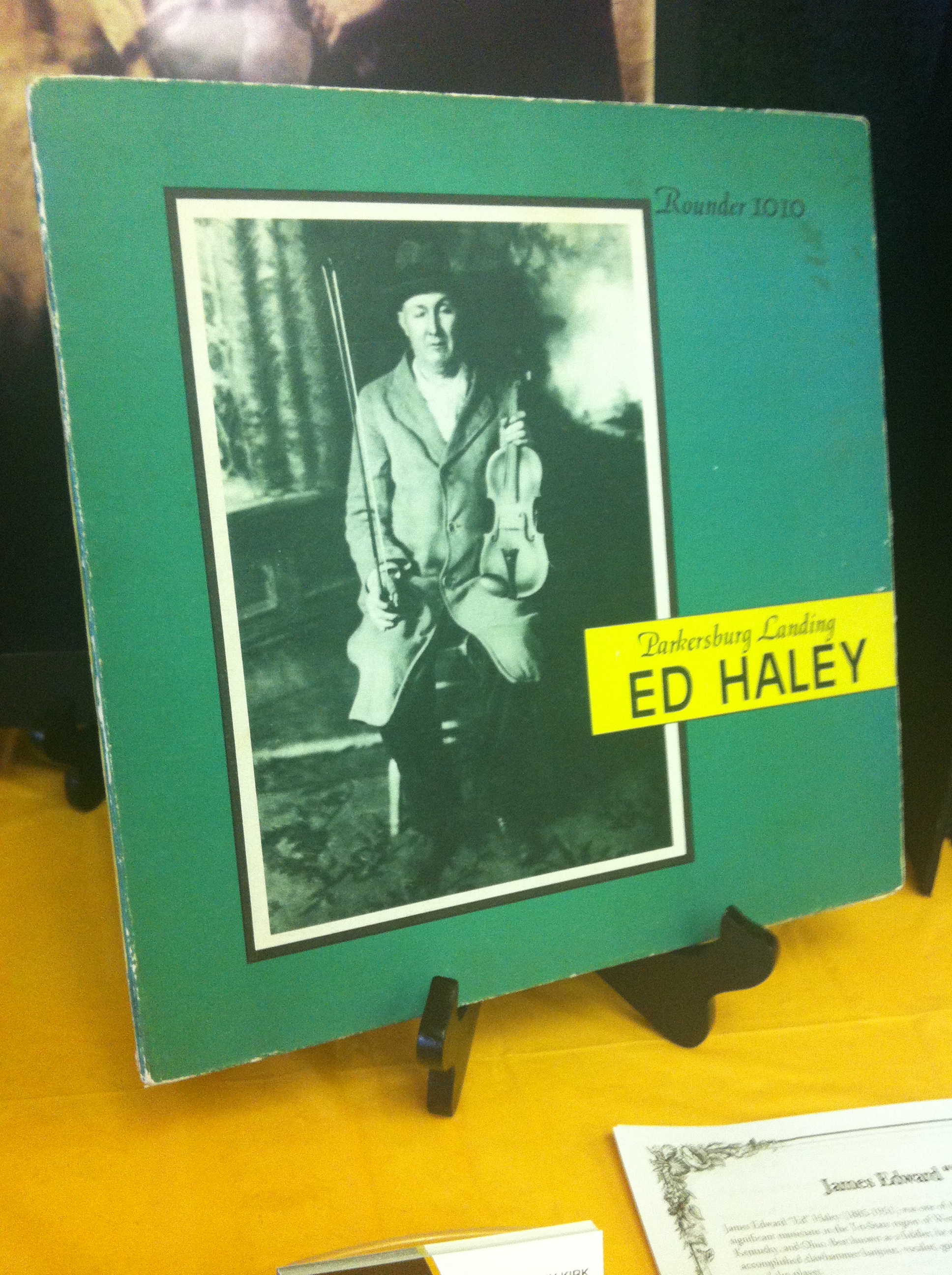
Parkersburg Landing album, Ed Haley Memorial Fiddle Contest, Ashland, Kentucky, 19 September 2015
04 Sunday Oct 2015
15 Saturday Aug 2015
Posted in Ed Haley, Music, Women's History
Tags
Appalachia, fiddle, fiddler, history, Josie Cline, Kentucky, Kermit, music, photos, U.S. South, Warfield, West Virginia

The fiddle of Josie (Spaulding) Cline, “Lady Champion Fiddler of Kentucky, Virginia, Ohio & West Virginia”
12 Wednesday Aug 2015
Posted in John Hartford, Music
Tags
banjo, bluegrass music, Cumberland River, fiddler, John Hartford, Madison, music, Nashville, photos, Tennessee
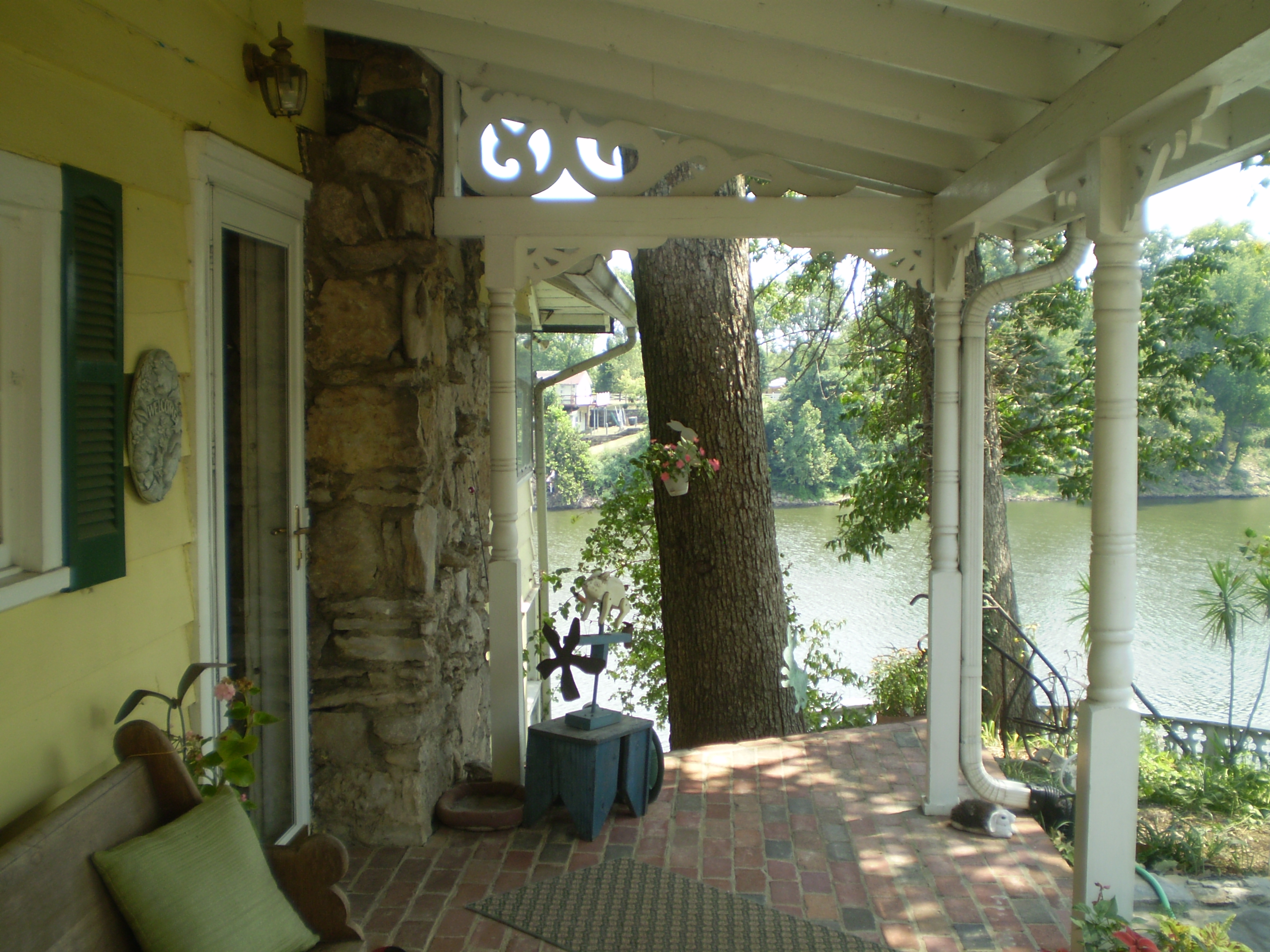
John Hartford’s porch, Madison, TN
26 Sunday Jul 2015
Posted in Big Harts Creek, Cemeteries, Whirlwind
Tags
Appalachia, Bernie Adams, cemeteries, guitarist, Harts Creek, history, Hoover Fork, John M. Adams Family Cemetery, Kathy Adams, Logan County, music, photos, U.S. South, West Virginia
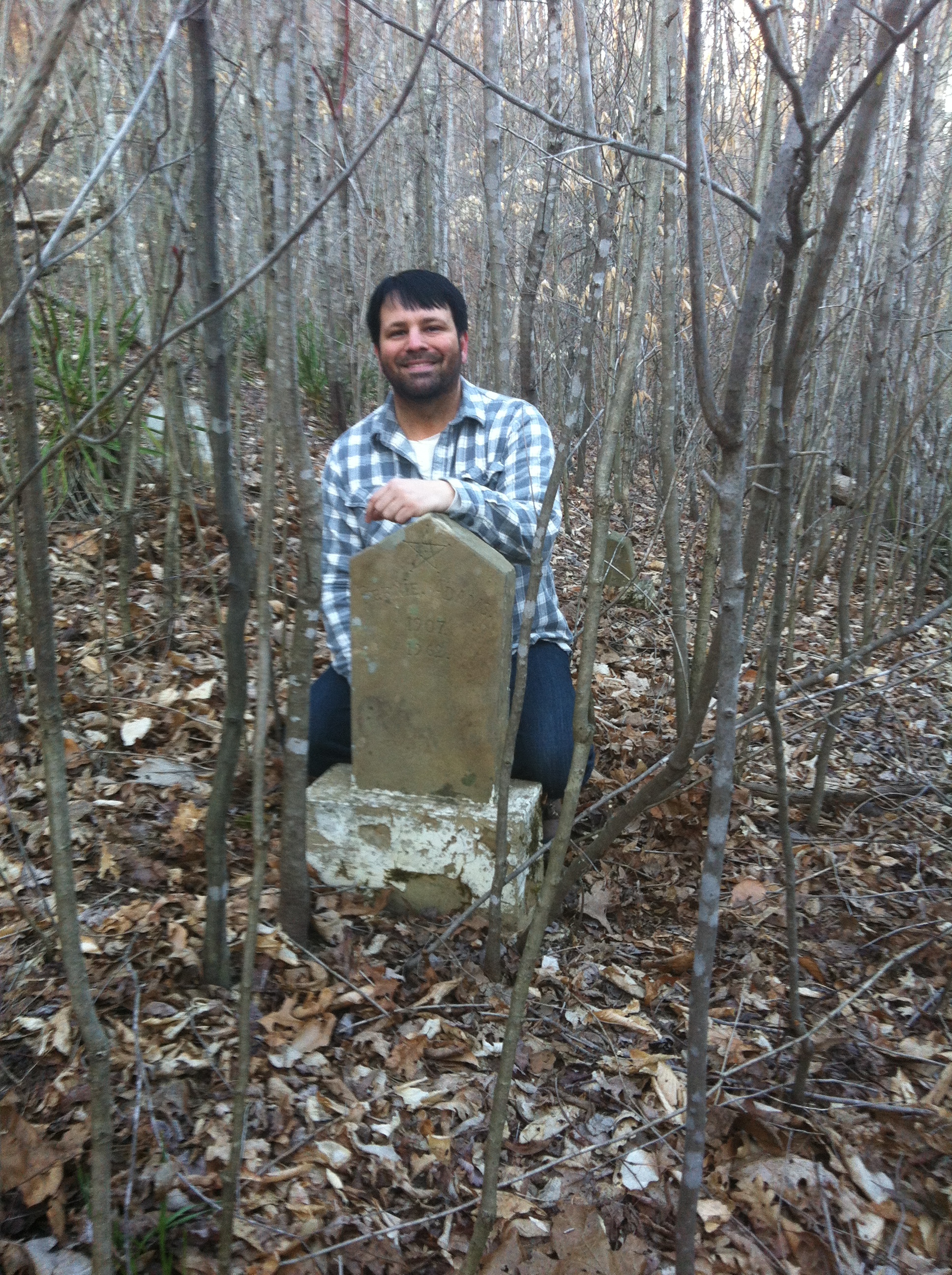
Thanks to Kathy Adams and her family, I located the Bernie Adams grave on Harts Creek earlier this year. 28 March 2015
26 Sunday Jul 2015
Tags
bluegrass, Ed Haley, life, music, Nashville, Paul Kowert, photos, Punch Brothers, Steve Haley, Tennessee
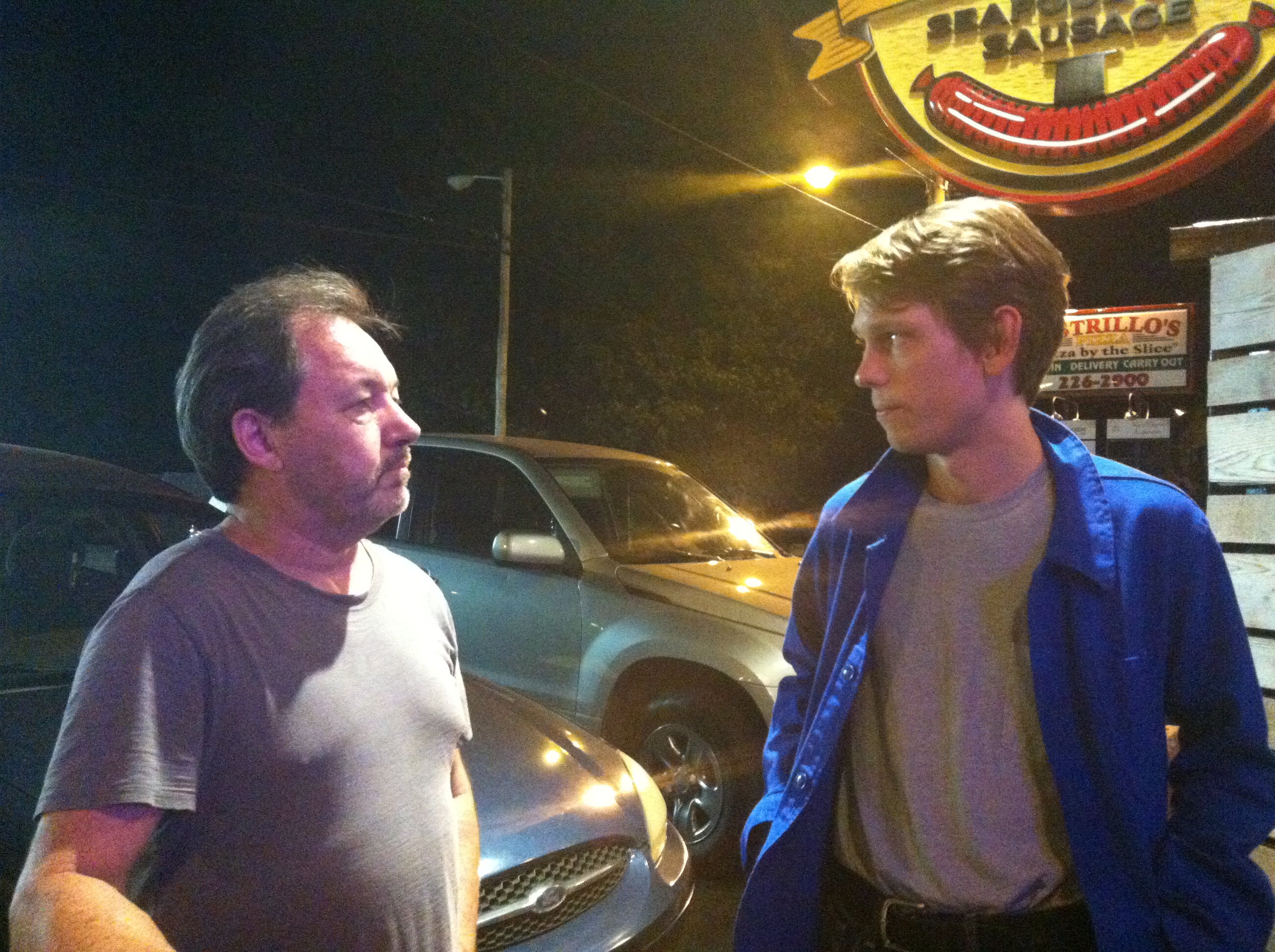
Steve Haley, grandson of Ed Haley, and Paul Kowert, of Punch Brothers, were two of my recent dinner companions in Nashvillle. Two outstanding fellows. 21 July 2015
26 Sunday Jul 2015
Posted in Cemeteries, John Hartford

During my recent trip to Nashville, I visited the final resting place of my late friends, John and Marie Hartford.
26 Friday Jun 2015
Posted in John Hartford
Tags
banjo, bluegrass music, Brandon Kirk, country music, fiddle, fiddler, history, John Hartford, life, Madison, Marie Hartford, music, Tennessee, writers, writing
Let me try to describe John’s hands. They were very small in every way. He had frail hands as a gentleman might have, with little hair on them. I don’t recall that his fingers were unusually long. His knuckles were slightly larger than his actual fingers, maybe because his fingers were so thin. He kept his fingernails clean and filed smooth with a file. I remember he often filed his nails while on the bus during road trips; sometimes he filed his nails when conversations barely held his interest, half-listening. He absolutely never bit his fingernails. He seldom used his hands for any type of physical work because he didn’t want to risk hurting them; they were, he said, what paid the bills. The skin on his hands was somewhat loose and pale. When you shook his hand, it was very soft, although I’m sure he had slight callouses on the ends of his left hand fingers from playing the fiddle nearly every waking minute of the day. When I first met John at Morrow Library, he shook my hand and insisted that I call him John, not Mr. Hartford. When I later visited his home in Nashville during the summer for weeks or a month, before I had moved to Nashville, he would always shake my hand before I left for West Virginia. I recall at the end of my first trip how he stood in his driveway between his house and the guest house and remarked that we shouldn’t say goodbye because we would see each other again. John did not particularly like goodbyes; he preferred until next times. At the end of his life, upon commencement of his chemotherapy, he would shake very few people’s hand. Due to the chemotherapy, he was particularly concerned about germs. At that time, we shared a laptop and I always took care to clean the keys with alcohol before passing the laptop to him for manuscript review. I did this because I did not want to pass germs and make him ill; he never asked me to do it. Actually, I recall times he told me that it wasn’t necessary, but I did it anyway. Almost always, if he met someone at an event, they would greet him with a handshake, which he had to decline. It was awkward and in a peculiar way I think he enjoyed it. I may be mistaken, but it seems as if he contemplated or did in fact wear gloves for a short time just for handshakes. On a few occasions, he complained about having shaken hands with stout men who nearly crushed his hand; he detested an unnecessarily firm handshake because he said it might affect his ability to play. Later, after I moved to Nashville and visited and stayed many days and nights in his home I observed and he said that one of his favorite things to do was to sit with Marie on the bedroom couch at night and hold her hand while the two of them watched television. These were, of course, private moments and I only intruded if I had a question about the manuscript or a related matter. John’s wrists were small. He never wore a watch on his wrist, preferring instead to keep a pocket watch – usually tucked in his overalls front pocket or in the pocket of his vest, which he nearly always wore. If I remember correctly, his watch was colored gold, not silver. When I think of his hands, I see them holding a fiddle and bow at the dining room table and on stage, I see them moving across a banjo, I see them holding a fork and knife at dinner, I see them placing tiles on a Scrabble board during our games together, I see them holding a glass of red wine late at night during our conversations, I see them holding a book or a magazine at the couch by the fireplace, I see them gripping the wheel of his Cadillac on our way to Piccadilly Cafeteria, I see them pushing PLAY and turning up the volume on his car stereo…
21 Sunday Jun 2015
Tags
Brandon Ray Kirk, history, Kentucky, McVeigh, Molly O'Day, music, photos, Pinsonfork, Tim Williamson

During my recent visit to McVeigh, Kentucky, Tim Williamson showed me the remnants of Molly O’Day’s childhood home. Tim is her nephew. To call this a powerful experience would be a great understatement. 13 June 2015
10 Wednesday Jun 2015
Posted in John Hartford
Tags
Brandon Ray Kirk, Cumberland River, John Hartford, life, Madison, music, Nashville, photos, Tennessee, U.S. South
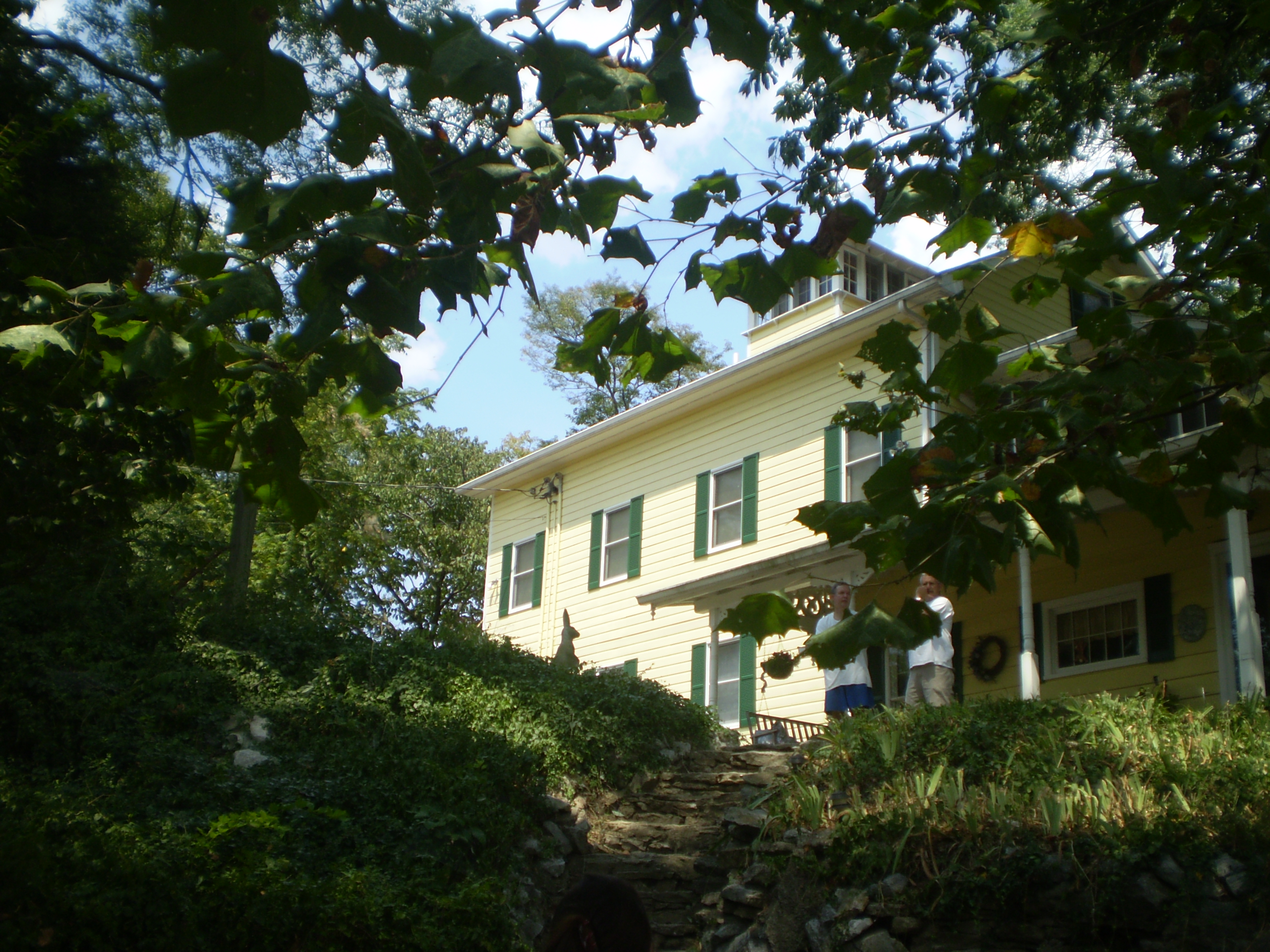
John Hartford’s home, Madison, TN. John liked to sit on a wicker sofa on this porch and read while listening to music through his earphones.
30 Thursday Apr 2015
Posted in East Lynn, Lincoln County Feud, Music, Stiltner
Tags
Appalachia, banjo, Blood in West Virginia, Cain Adkins, culture, East Lynn, Gospel, guitar, Harts Creek, Lincoln County, Lincoln County Feud, music, Spicie Frye, Stiltner, The Adkins Family, U.S. South, Wayne County, West Fork, West Virginia
The Adkins Family, operating out of Wayne County, West Virginia, is one of the Tri-State’s most talented, well-known, and enduring Gospel groups. You can read more about their musical history here: http://theadkinsfamily.waynewv.com/ I’m proud to say their ancestors once lived on the West Fork of Harts Creek in Lincoln County. I met many of them while researching my book, “Blood in West Virginia: Brumfield v. McCoy,” which details some of their family’s rich history. I encourage you to follow their Facebook page. If you enjoy Gospel music, you will not be disappointed. This is one amazing group of musicians. https://www.facebook.com/TheAdkinsFamilyGroup
30 Thursday Apr 2015
Posted in East Lynn, Lincoln County Feud, Music, Stiltner
Tags
Appalachia, Charles Bernard McCoy, culture, East Lynn, genealogy, Gladys Richardson Adkins, guitar, history, Lincoln County Feud, music, photos, Raymond McCoy, Sherman McCoy, Spicy Fry, Stiltner, The McCoy Time Singers, Wayne County, West Virginia
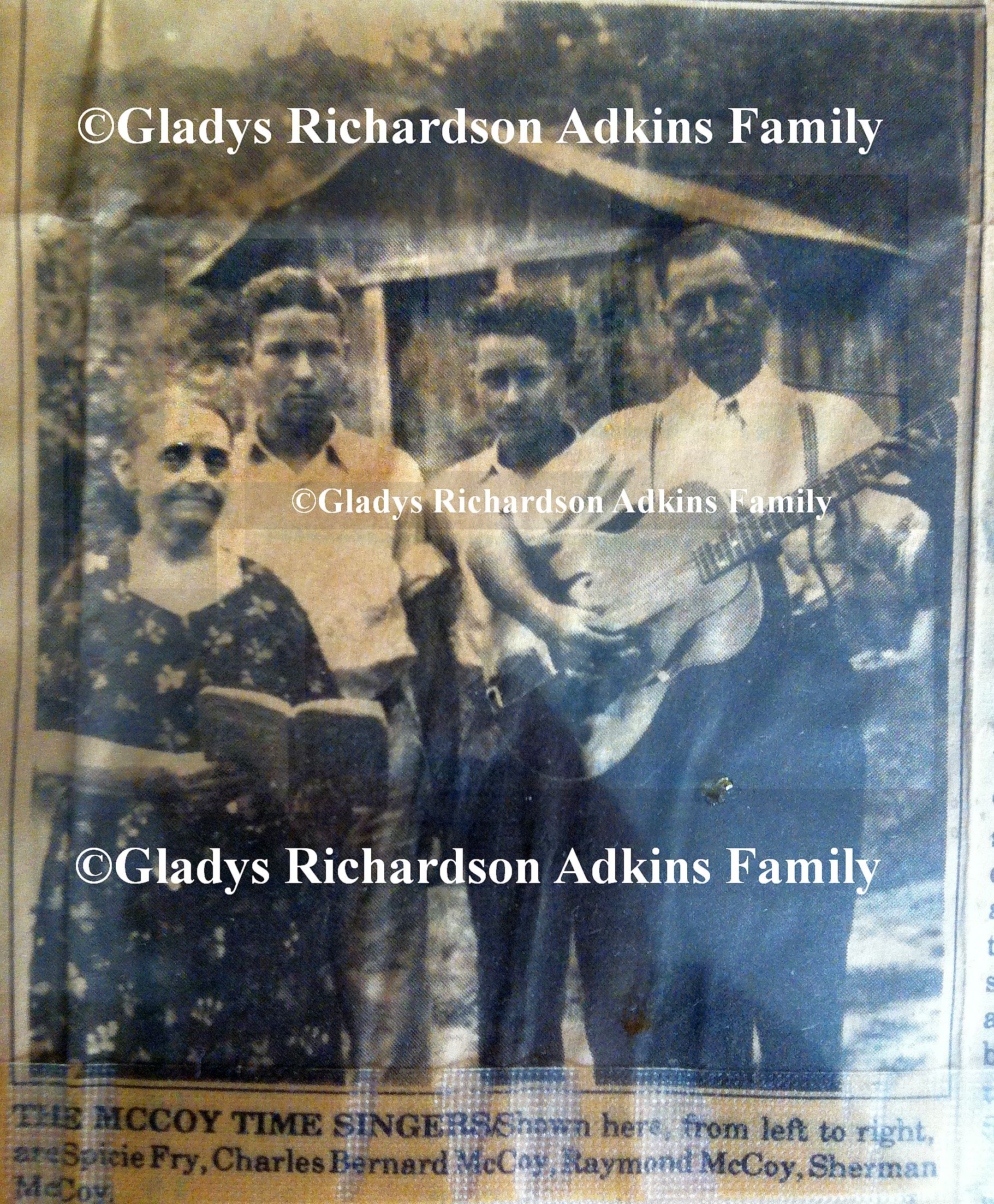
The McCoy Time Singers (l-r) of Wayne County, WV: Spicy Fry, Charles Bernard McCoy, Raymond McCoy, and Sherman McCoy
27 Monday Apr 2015
Posted in Ferrellsburg, Music
Tags
banjo, Ferrellsburg, fiddle, fiddlers, fiddling, guitar, history, Lincoln County, Lost John and His Allied Kentuckians, mandolin, Mullins & Elkins store, music, Triena, West Virginia

Lost John and his Allied Kentuckians

Mullins & Elkins Store, Ferrellsburg, Lincoln County, WV
12 Sunday Apr 2015
Posted in Big Harts Creek
Tags
Appalachia, banjo, Daisy Adams, farming, fiddle, guitar, Harts Creek, history, Howard Adams, Logan County, music, square dances, U.S. South, West Virginia
This history of early life in Logan County, West Virginia, was written by Howard and Daisy Adams. Howard (1906-1976) and Daisy (b.1915) were children of Major and Belle Dora Adams of Trace Fork of Harts Creek. Titled “The life of pioneers during the latter half of the eighteenth century and the beginning of the 19th century” and written in the late 1960s or early 1970s, their history marks the only known attempt by local people to reconstruct the story of pioneer life. This part of the history includes information regarding industry, clearing of land, farming, and square dances.
The chief industries in those days were farming, raising stock, and timbering. Farming began with axes, saws, and mattocks all swinging. A good piece of land was chosen and clearing it began by chopping and sawing down all the trees on it. The trees had to be trimmed up. That was cutting off all the branches as limbs and putting them in big heaps or piles. The logs of the trees had to be sawed in lengths so they could be rolled together in piles for hauling. All small bushes were grubbed up and put on the brush piles. Clearing land was done mostly during winter months as soon as the land was cleared of all trees and brush and it piled up. Then began the burning of brush and logs. This usually took two or three days and it was hard work. After the burning off was completed, a nice big field or new ground as it was called was now the farmer’s pride. Planting began by sowing seed beds and planting vegetables. Corn was planted in late April or early May. Usually it was hoed two times, once when about 8 to 12 inches high and again when it was about 24 to 30 inches high. People in those days swapped work or had “corn hoeing.” Everybody for several miles around came to help at the workings or corn hoeing. The women came along, too. They usually had quilting parties and also helped with the cooking. Boy, they sure had plenty to eat at the big workings. They had chicken and dumplings, beans, bacon, onions, and corn dodger and lots of other eats from the farm. Everybody gathered around after the day’s work was over.
As soon as supper was over and the dishes washed and put away the beds were moved out of the room called the big house. Then the young men and young women began dancing. Square dancing was a thrilling experience. Some one who knew how called out the reels. The dancers then performed the instruction of the caller. A string band consisting of a fiddle, banjo, and sometimes a guitar furnished the music for the dance. They had refreshments of wine or liquor most all the men took part in the drinking. The girls seldom ever drank. If anyone got drunk he was put out of the dancing or off the floor as they called it. Sometimes the boys would have fist fights over the girls which never amounted to much. After the dance was over, the beds were put back in the big house room and the neighbors all said good night and went home tired and sleepy. All these things happened as time moved along.
22 Sunday Mar 2015
Posted in Dingess
Tags
Appalachia, Commodore Andrew Perry, Dingess, Dingess tunnel, Elias Perry, genealogy, history, immigrants, Jack Mounts, Jim Spaulding, Logan, Logan County Banner, mandolin, miller, Mingo County, music, Perry mill, Peter Dingess, timbering, U.S. South, violin, Wayne County, West Virginia, William Mullins
“Quousquo Tandem,” a local correspondent at Dingess in present-day Mingo County, West Virginia, offered the following items, which the Logan County Banner printed on August 13, 1891:
Presuming upon the absence of any regular correspondent from this place I will give your readers the happenings at Dingess.
For the last few days there has been dearth of rain.
Health in general is good, except among some of those engaged in hard work and addicted to the too free use of water. An indisposition is prevalent at present, something akin to dysentery.
William Mullins, who was lately injured at the sawmill, is rapidly recovering.
Dingess now boasts of a string band, composed of a number of our Italian citizens, who are at present engaged in working in the tunnel, and “oft through the still night” may be heard the dulcet strains of the mandolin and violin cello ringing in harmony as they are gently wafted above.
Commodore Andrew Perry’s mill is running full time and things are speeding along nicely. Although not a large man, Commodore has a heart as big as the whole county, and he deserves all the success he is having.
Peter Dingess is hauling for the Perry mill and keeps an abundant supply of logs in the yard.
Jack Dingess has developed into a full-fledged “Boniface.” He has at present stopping with him some twelve or more men engaged in arching the tunnel. He sets a good table and has pleasant accommodations. At night, after the inner man has been refreshed all adjourn to the front porch, where an open air concert is rendered by the “string band,” in the delectation of all within hearing distance.
“Uncle” Jim Spaulding, son and daughter, and Jack Mounts left for a brief visit to their homes in Wayne county, last week.
Lias Perry is again with us looking well and hearty after his visit home.
31 Sunday Aug 2014
Posted in Ed Haley, John Hartford, Music
Tags
Arthur Smith, banjo, Ben Walker, Benny Martin, Bernie Adams, Billy Adkins, blind, Brandon Kirk, Buddy Emmons, Clayton McMichen, Doug Owsley, Durham, Ed Haley, fiddlers, fiddling, Green McCoy, Haley-McCoy grave, Harts, history, Imogene Haley, Indiana, Jeffersonville, John Hartford, Johnny Hager, Lawrence Haley, Mark O'Connor, Matt Combs, Melvin Kirk, Michael Cleveland, Milt Haley, Mona Haley, music, Nashville, North Carolina, Smithsonian, Snake Chapman, Tennessee, Texas Shorty, Ugee Postalwait, Webster Springs, West Virginia, Wilson Douglas, writing
When Ed first went out into the neighborhood with his dad’s fiddle and armed with his melodies (as interpreted by his mother) I think he probably caused not a small sensation amongst family and neighbors and his ear being as great as it was I think he picked up an incredible amount of other music really fast. I think he played with a lot of ornaments when he was a teenager and up into maybe even his thirties. Snake Chapman and Ugee Postalwait have alluded to this. Snake said the dining room recordings just didn’t sound as old-timey as he remembered Ed playing and Ugee said she remembered him and her dad talking about the little melodies between the notes. Of course Ed had to have been through a lot of subtle changes in style since that time. I think in later years he stripped a lot of the ornaments out of his fiddling in order to appeal to the Arthur Smith-Clayton McMitchen crowd who loved the radio style that was so much in vogue at that time. This might have helped make a little more money on the street. People have always liked to hear someone play and sound just like what they hear on the radio or a record. But I think if someone had asked Ed if he had done that consciously that he would have denied it and if he was in a bad mood they might have even had a fight on their hands.
I keep having this idea of Ed imitating other instruments on the fiddle because I’ve tried it myself and wouldn’t it be something that some of these great parts was really an imitation of John Hager’s banjo playing. I’d love to know where that passage is or whether it even exists.
It’s obvious that when Ed had good firm second that wouldn’t slow down for anything, he really leaned back on the beat and got in that little pocket where so many great musicians like to be. Ella and Mona really held up a good solid beat, but I’ll bet Ed was hard on them — a real taskmaster. It’s all in that rhythm section. Wilson Douglas told me one time that Ed always told him to play it real lazy. Texas Shorty, Benny Martin, and Buddy Emmons refer to it as holding on to the note as long as you can before you start the next one. This is an important part of Ed’s feel and sound and it really comes through on the dining room recordings. I get it by playing as slow as I can against a beat I hope is not gonna move, and then I swing the notes with a dotted note feel — a real lilt if I can get it — and just drag on the beat as hard as I can ’cause I know it’s not gonna slow down. I’d love to know just when Ed figured that out or if it was always there. I always think of Ed in his younger years playing on top of the beat or even ahead of it like I did when I was young and full of piss and vinegar. Actually when you’re playing alone you do hafta pretty well stay on top of the beat to hold the time or at least set it, cause you are the beat but you have to keep from rushing which we will tend do when we get to hard passages in order to get them over with. We’ll not do that no more. Mark O’Connor told me one time that while he is playing a tune he’ll play on top of and behind the beat on purpose. He described playing behind it as letting the beat drag you along…almost like water skiing. Oh, to have known what Ed and John Hager or Bernie Adams sounded like together.
I think Ed worked on his fiddling probably daily most of his life so it is fair to say that it was changing all the time. This would explain the varying descriptions of his playing that have come down. I’m sure they’re probably all accurate. Lawrence, Ugee, and Mona always said Ed played with great smooth long bow strokes and Snake Chapman always was adamant about him playing with short single strokes and Slim Clere said the same thing — that he bowed out everything — no bow slurs. Of course, in the dining room sessions you can hear both ways. It’s amazing how well Ed did without the feedback of working with a tape recorder. What an incredible ear he had. As far as I know, the only time he probably heard himself played back was the recordings we have. I hope there are others out there but I’ve come to doubt it.
Brandon and I have always had a gut feeling that if we’d dug down into the hillside a little further at Milt and Green’s grave we might have found something. We only went down five feet and then we were defeated by the rain. What if we had gone down the requisite six feet? What if, like the probe, Owsley had misjudged the bottom of the grave shaft due to the mud and water? What if it hadn’t rained and muddied up the work area? If Melvin Kirk and Ben Walker went so far as to bury the men in a deep grave, why not assume they would have gone for the standard six feet grave traditionally dug? In the following weeks, old timers around Harts kept telling Brandon and Billy, “If they didn’t dig at least six feet, it’s no wonder they didn’t find anything.” We didn’t want to question the professionalism of experts like the Smithsonian forensic team or seem like we wanted to find Milt and Green so badly that we couldn’t accept the concept that they were gone…but what if? The explanation that Doug Owsley gave us about the coal seam and underground stream made a lot of sense. Needless to say we were really disappointed. I had started to rationalize that not finding anything might indicate that they were buried in the nude and just thrown in the hole with no box or winding sheet or anything.
I was in Durham, North Carolina, the other day and I saw a fiddler on the street and I automatically found myself thinking of Ed. I didn’t have to fill in or rearrange much in my imagination to see him there playing on the street — even though this man was standing up, and played nothing like him. Of course when Ed was younger he probably stood up to play all the time like in the Webster Springs picture…dapper and wearing his derby. I always seem to picture Ed sitting down. Another great thrill for me is a young blind fiddler from Jeffersonville, Indiana, named Michael Cleveland who when he plays I can see Ed at nineteen. He stands up so straight he almost looks like he’s gonna fall over backward the way Lawrence said his dad did. When he plays I can’t take my eyes off of him thinking of Ed. Now my friend Matt Combs, who has done a lot of the transcriptions for this book, sits with me and plays Ed’s notes off of the paper, and I play off the top of my head, so in that sense it’s like playing with him.
I guess it’s time to just leave this alone and get back to my study of the fiddle. Maybe get geared up for “Volume Two.” I spend long hours here at the dining room table with my tape recorder and I can hear Lawrence and feel Ed as I try and play my way back into the past. I find that the study of Ed’s music leads me to the study of all music and the way it’s played.
28 Thursday Aug 2014
Posted in Ed Haley, John Hartford, Music
Tags
Brandon Kirk, Ed Haley, fiddle, fiddler, fiddling, history, Howdy Forrester, John Hartford, Lawrence Haley, music, Nashville, Tennessee, U.S. South, writing
For me a “tune” is a specific order of notes played by a certain person on a certain day at a certain time and given a certain name and if you want to really pin it down you could include the latitude and longitude of the event. If you were not there to personally witness this happening then the word of some one else is okay as long as you include that in the triangulation so that when you have put out this information you can lean back and say to your listener, “Now…you know as much about it as I do and you can draw your own conclusions.” This works for events and etc. Sometimes these sort of documented rumors are as close as we can get to the truth and it’s better than nothing.
I’ve been thinking about how much Ed probably wouldn’t like to think about a whole lot of what we have put in this book. For sure he didn’t like to talk about it, especially to his family. I guess I don’t blame him — he lived it. It’s easy for us to get into all of it from our totally secure positions here in 2000 knowing what we know. And from the vantage point of our research, there are probably some areas where we know things that Ed never did.
We decided to call this book “The Search for Ed Haley: Volume One” because we know that after it comes out people will be calling us saying, “Well, you didn’t call me,” and “You didn’t get that right,” and no telling what. But then that gives us fuel for Volume Two. Of course there is the chance (and it has crossed my mind) that when this book comes out that some of the old Harts Creek animosities might still be smoldering and some people might feel hurt. God, I hope not. Everybody has encouraged us and said it was time to bring out the truth.
In case you hadn’t figured it out, Brandon wrote most all of this book and I just went through and “Hartfordized” it. Even though I have my name up top, Brandon is the one who did all the work. A typical day for us would be Brandon back in the office transcribing taped interviews, making chapters out of them, and working and reworking the words. Me, I’ll be sitting at the dining room table out in the other room sawing on a fiddle. At first when Brandon would bring me a chapter I would go through it on the laptop and make corrections and reword some things. Then Brandon very quickly caught on to what it was I was after, and after awhile he would bring me chapters and I would just read them in amazement and not do anything to them, and we would just go on. It really is wonderful, ’cause even though we know every word in the book when we read it back we still learn things. “Oh, that’s why that happened that way. Well I’ll be damned.”
I’ve given this story a lot of thought and most of what I’m about to say is from instinct and gut reaction cause we didn’t necessarily have cold hard facts. I think Ed learned a lot from his mother in the period right after his dad’s death when he and her probably spent a lot of time in that cabin hid out together from the community at large and his only contact was through his mother’s family (his grandparents). Ed found a fiddle that his father had left behind (very possibly the one in the photograph which looks home made) and started sawing around on it. His mother in her grief over her late husband was probably all the time whistling and singing the old melodies, most of which he had played, and Ed picked them up much in the way that Howdy Forrester told me he picked up a lot of melodies from his mom’s whistling and singing around the house. They were the melodies Ed and his mother shared. His unusually natural technique developed because he had such a great ear and naturally not being able to see he was not in a position to pick up bad technical habits from other fiddlers. His mother probably coached him much in the same way that Lawrence coached me a hundred years later…saying things like, “That just don’t sound right.” “Pop never played that many notes.” “Pop’s groups of notes were smaller.” But then because we both could see, Lawrence also said things like, “Your bow hold don’t look like Pop’s” and “Pop held his fiddle down here and turned it.”
21 Thursday Aug 2014
Posted in Big Harts Creek, Ed Haley, Music
Tags
Appalachia, Bernie Adams, culture, Dood Dalton, fiddle, fiddler, fiddling, genealogy, guitar, Harts Creek, history, life, music, photo, U.S. South, West Virginia
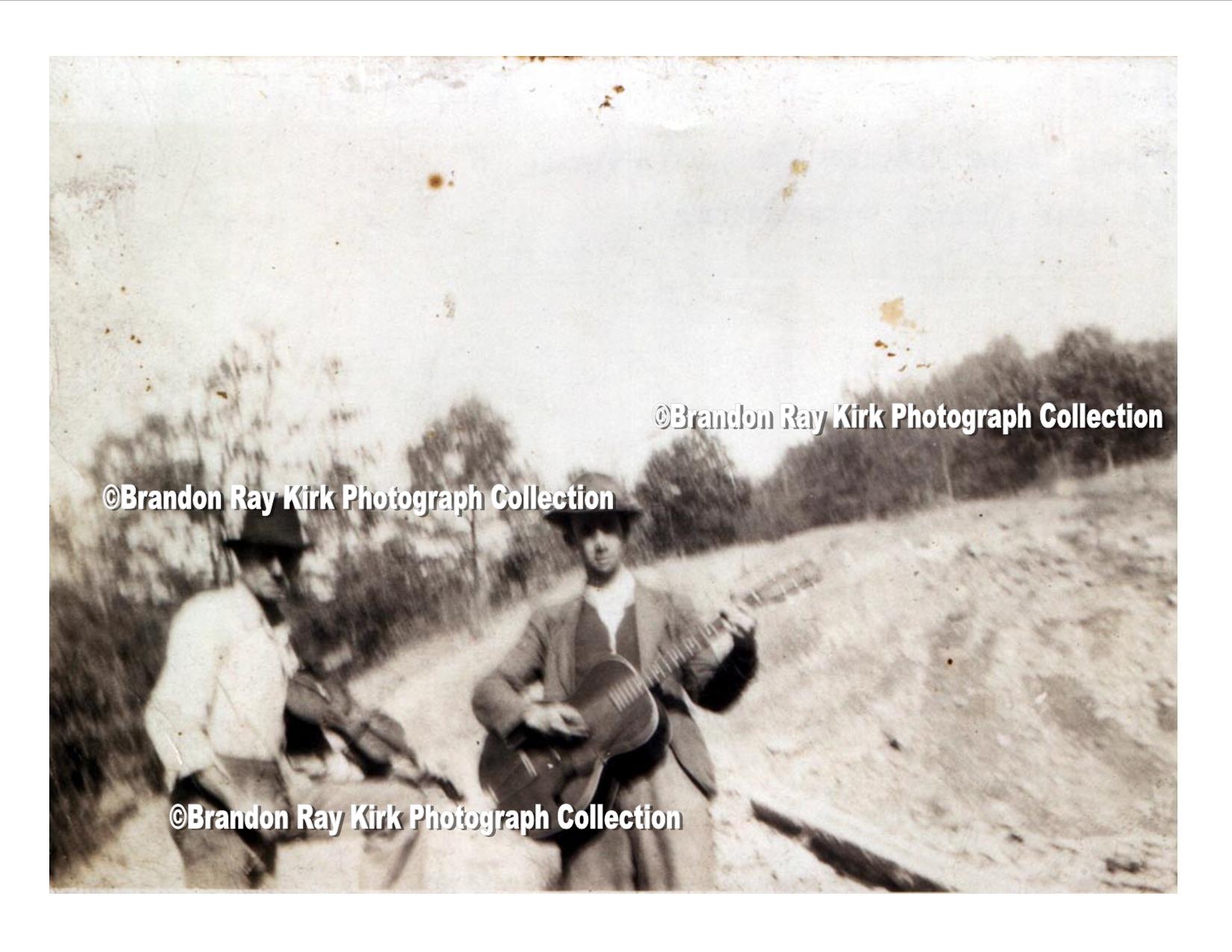
Dood Dalton and Bernie Adams, Harts Creek, WV
Writings from my travels and experiences. High and fine literature is wine, and mine is only water; but everybody likes water. Mark Twain
This site is dedicated to the collection, preservation, and promotion of history and culture in Appalachia.
Genealogy and History in North Carolina and Beyond
A site about one of the most beautiful, interesting, tallented, outrageous and colorful personalities of the 20th Century

 Brandon Ray Kirk